From: £725
From: $965
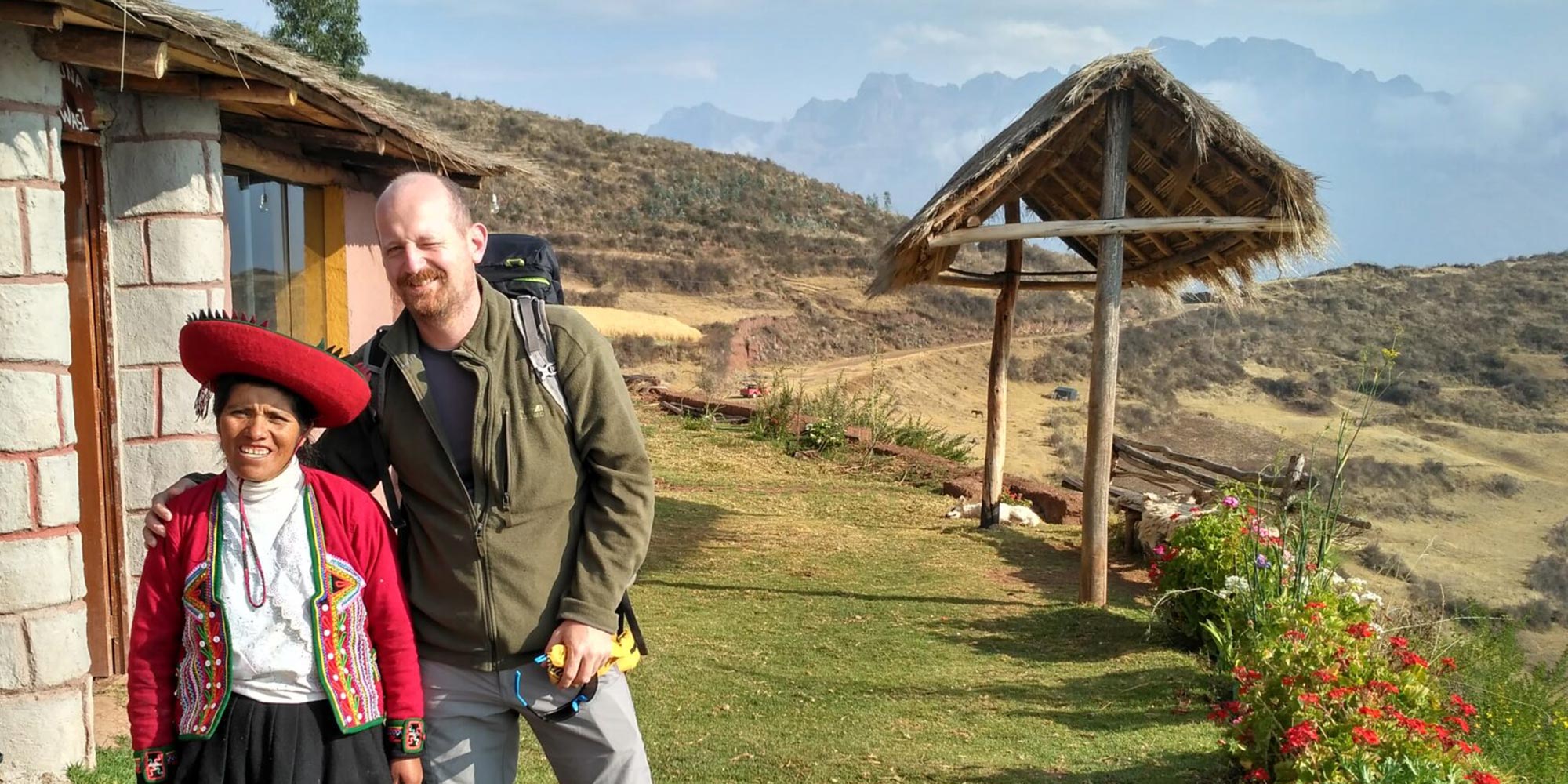
We begin with an early morning pick up from your hotel at 07:30 and drive to Patabamba (3,800m/12,467ft).
With daypacks on, we head into and through Andean landscapes that lead to the town of Tauca. This town is known for its archaeological remains and crops, such as tarwi, as well as a large quantity of cactus.
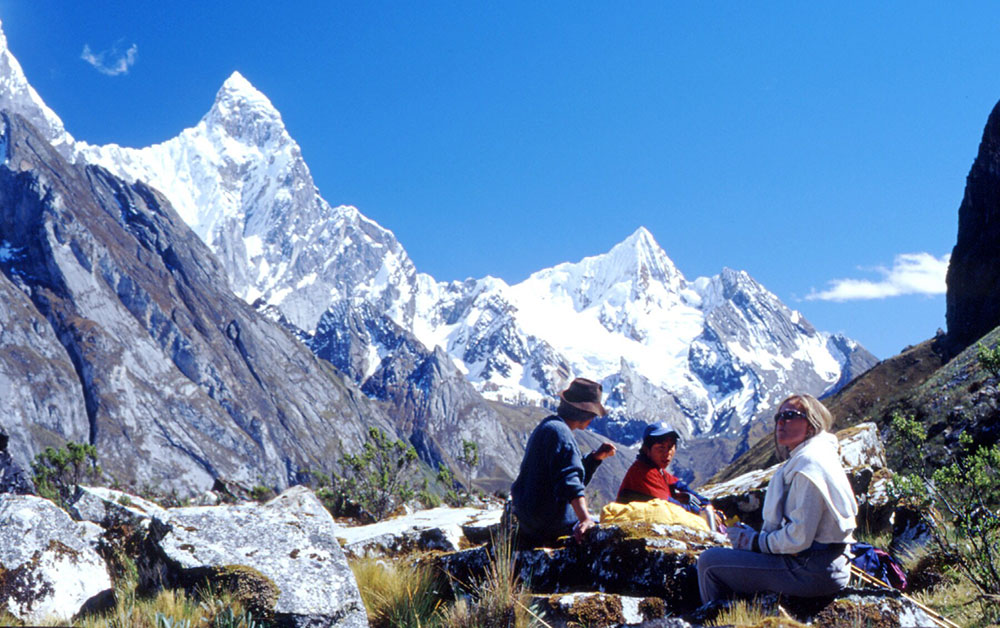
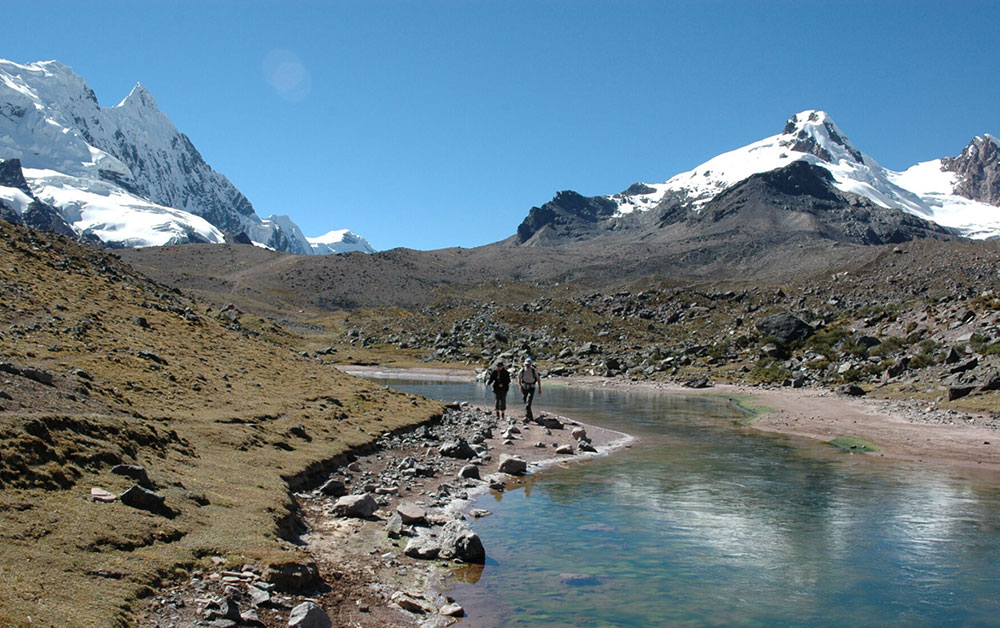
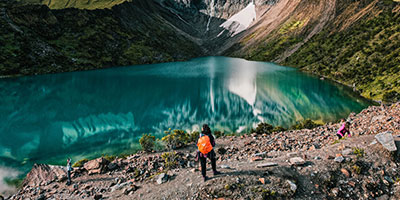
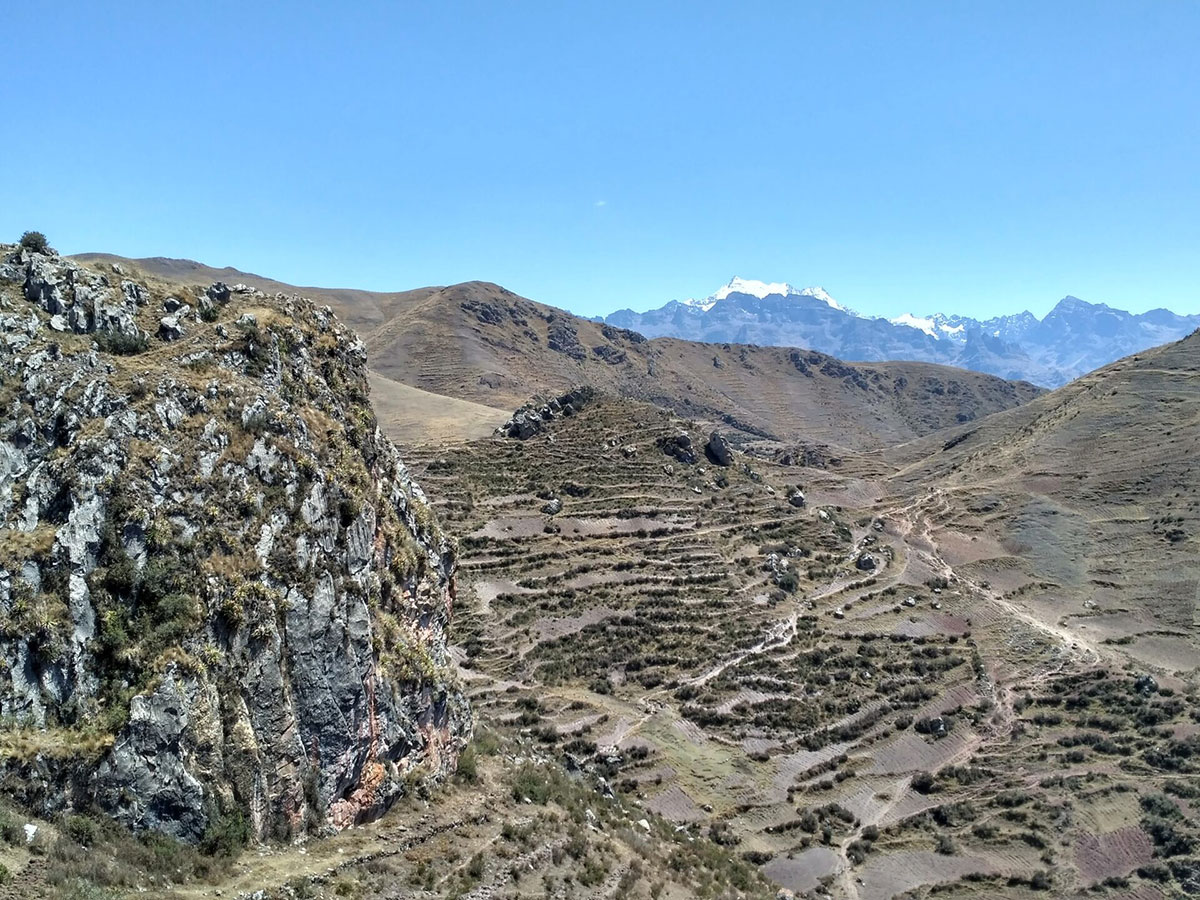
The path leads upwards still, and our destination is the Pukamarca pass at 4,200m/13,780ft. From here, we can enjoy views of the surrounding area, including the immense, snow-capped mountains of Veronica, Pitusiray, Chicon and San Juan.
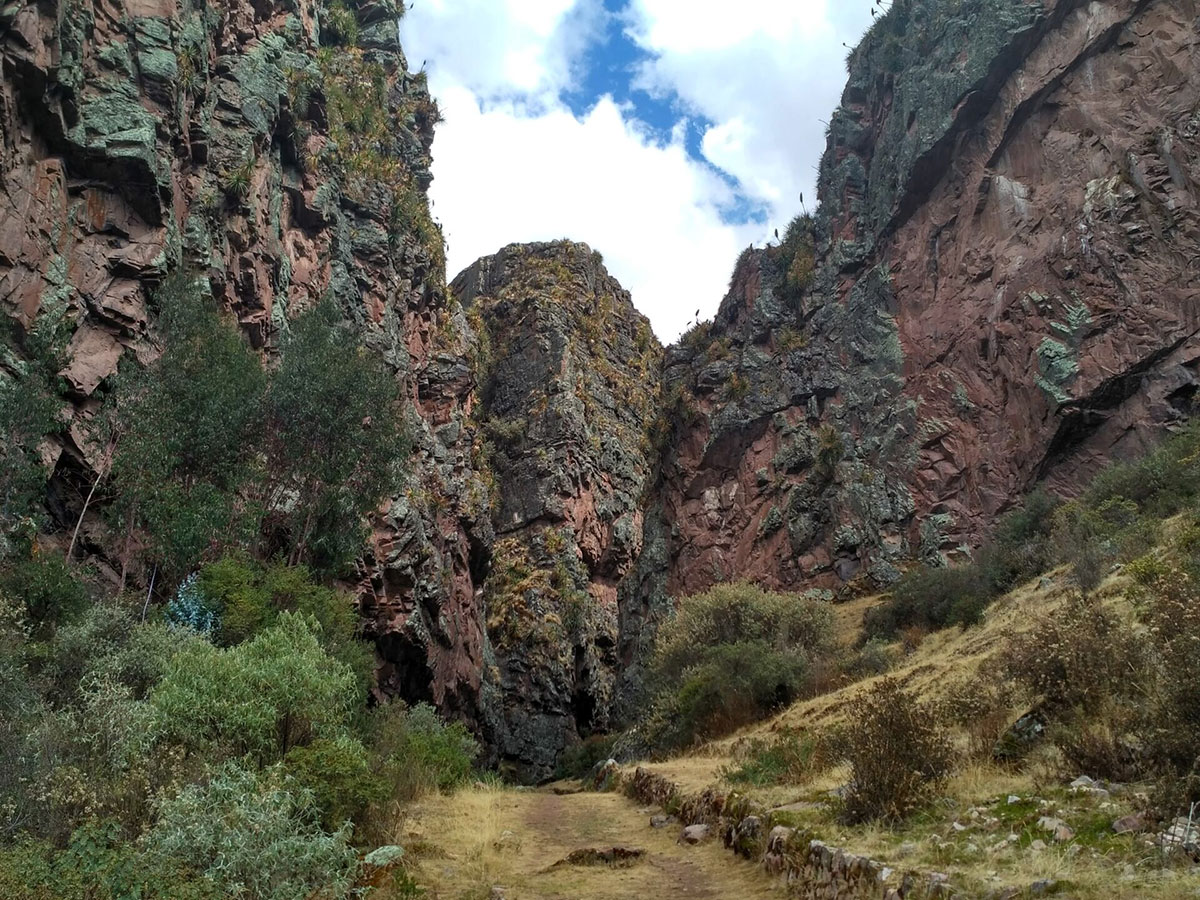
We descend towards the beautiful and remote Andean pueblo of Pukamarca (4,010m/13,156ft) where we stop and have a short break, admiring the views. As get back on the move, we walk down an ancient path to the Leon Punku Ravine. En route, we go through a narrow corridor between some immense rock walls.
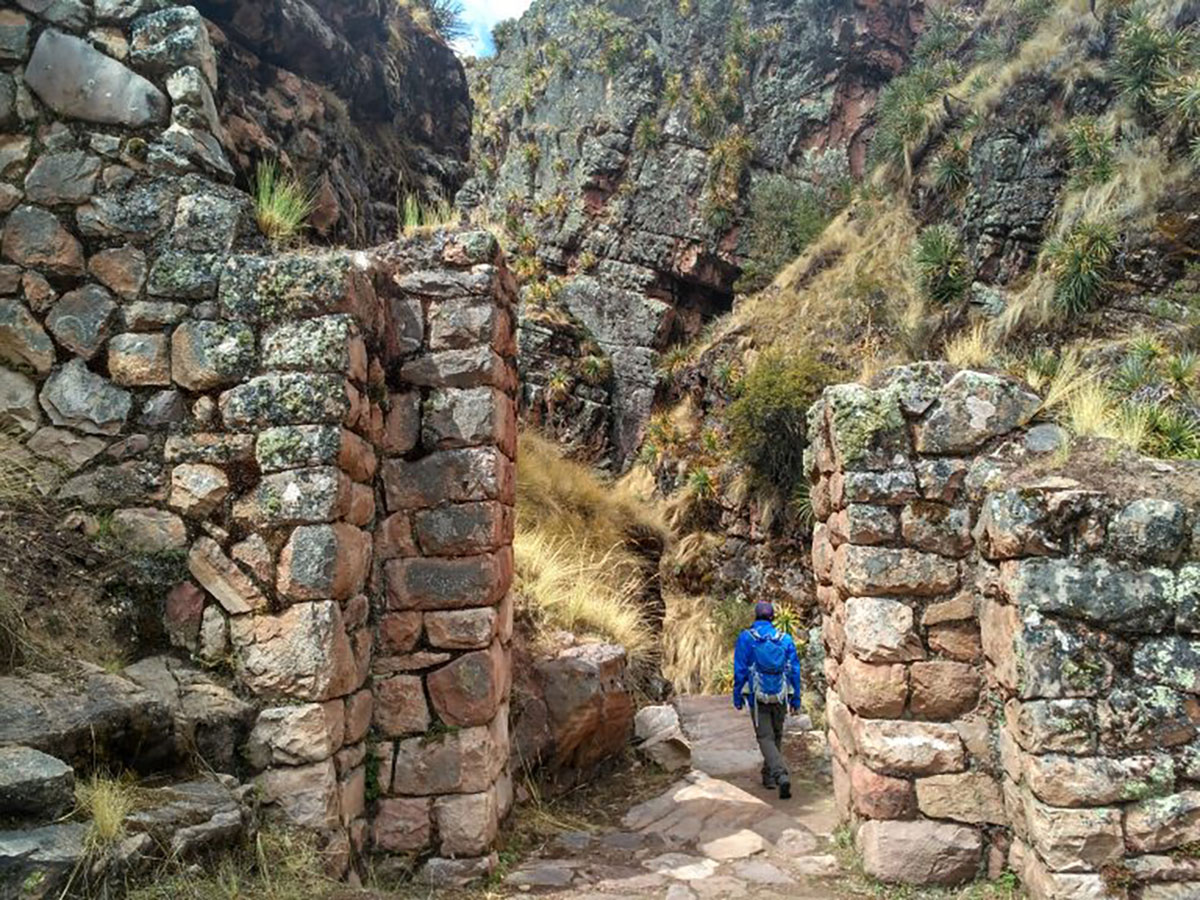
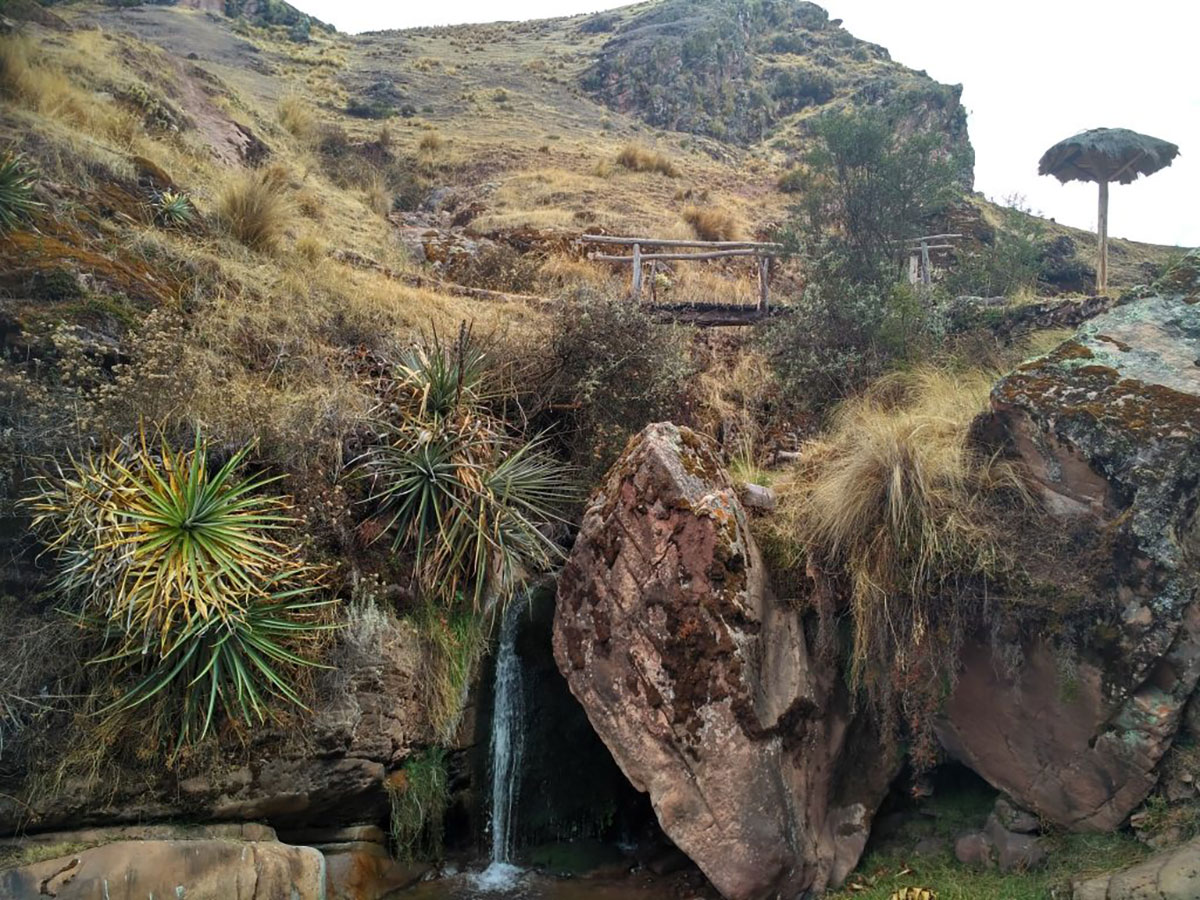
As we pick our way through, Inca remains, Inca bridges and sets of Inca stairs – some of the best Inca Stairs anywhere – are revealed. This canyon is absolutely magical. The majestic rocks and boulders, a beautiful geographical feature, guide the river to our destination, Huchuy Qosqo (3,600m/11,811ft).
Upon our arrival, we continue on past the ruins and to our accommodation for the night.
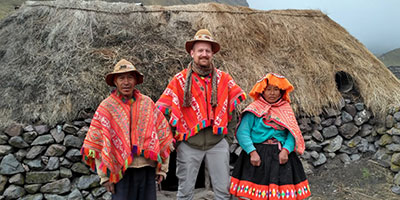
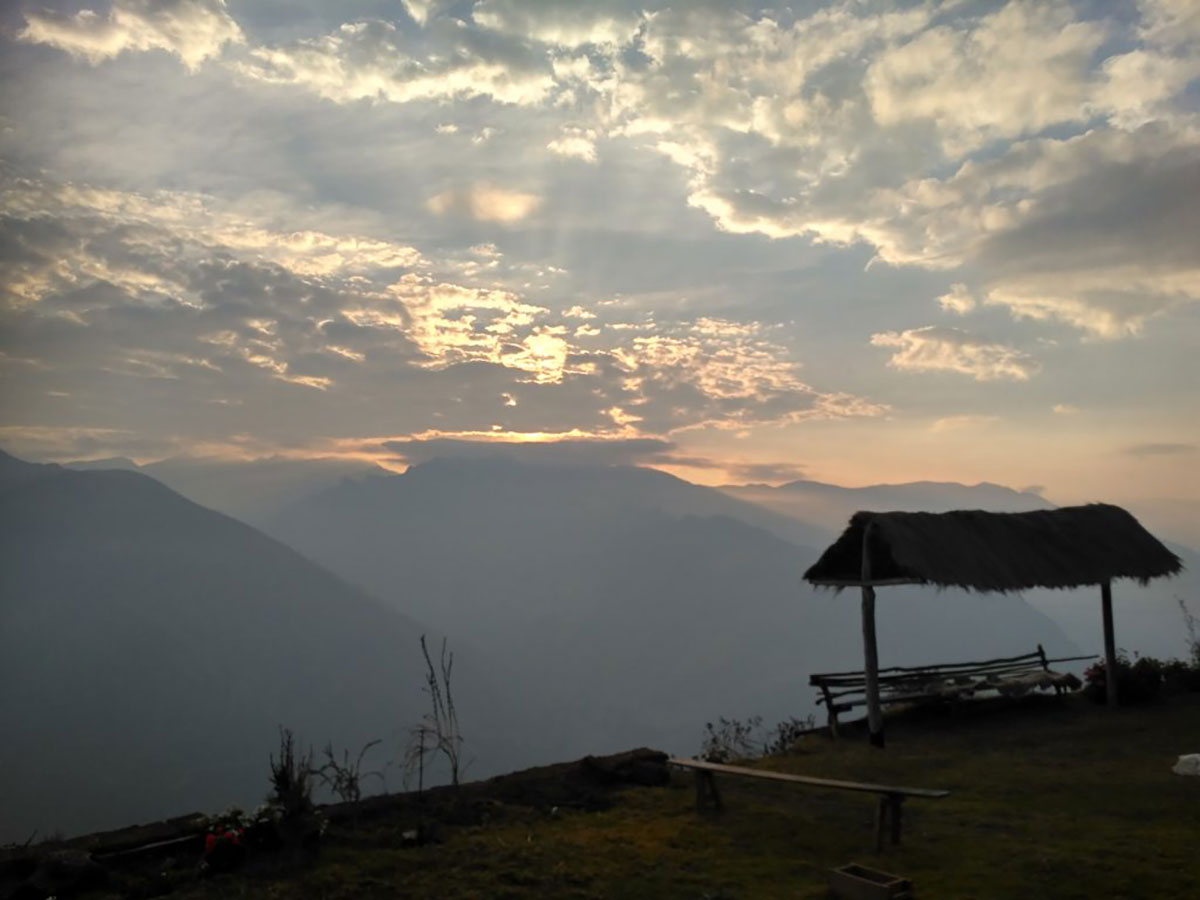
We have dinner and sleep in the typical home of a native of the area, just to the side of the Huchuy Qosqo ruins.
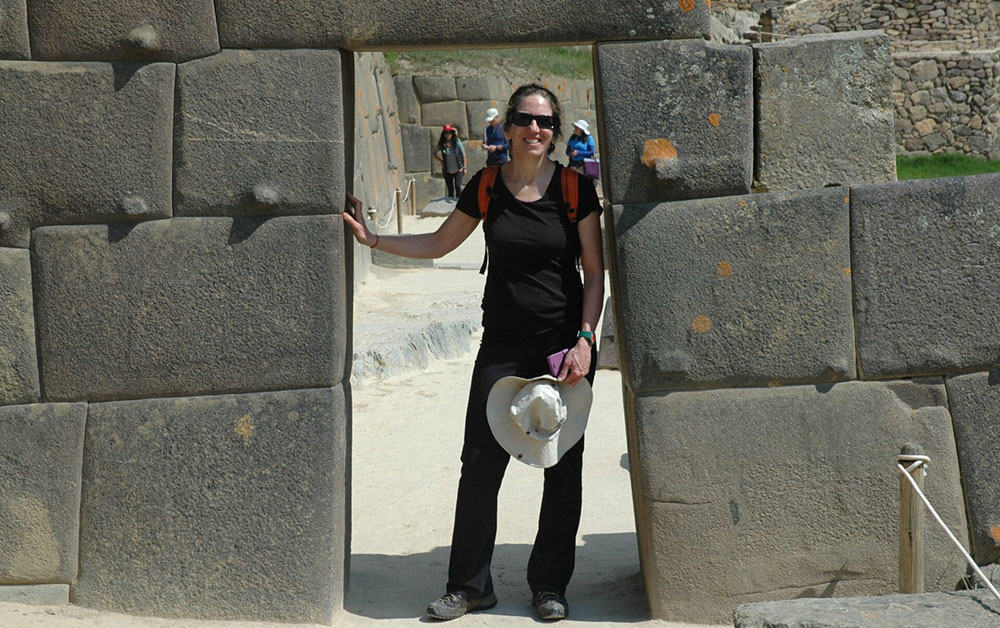
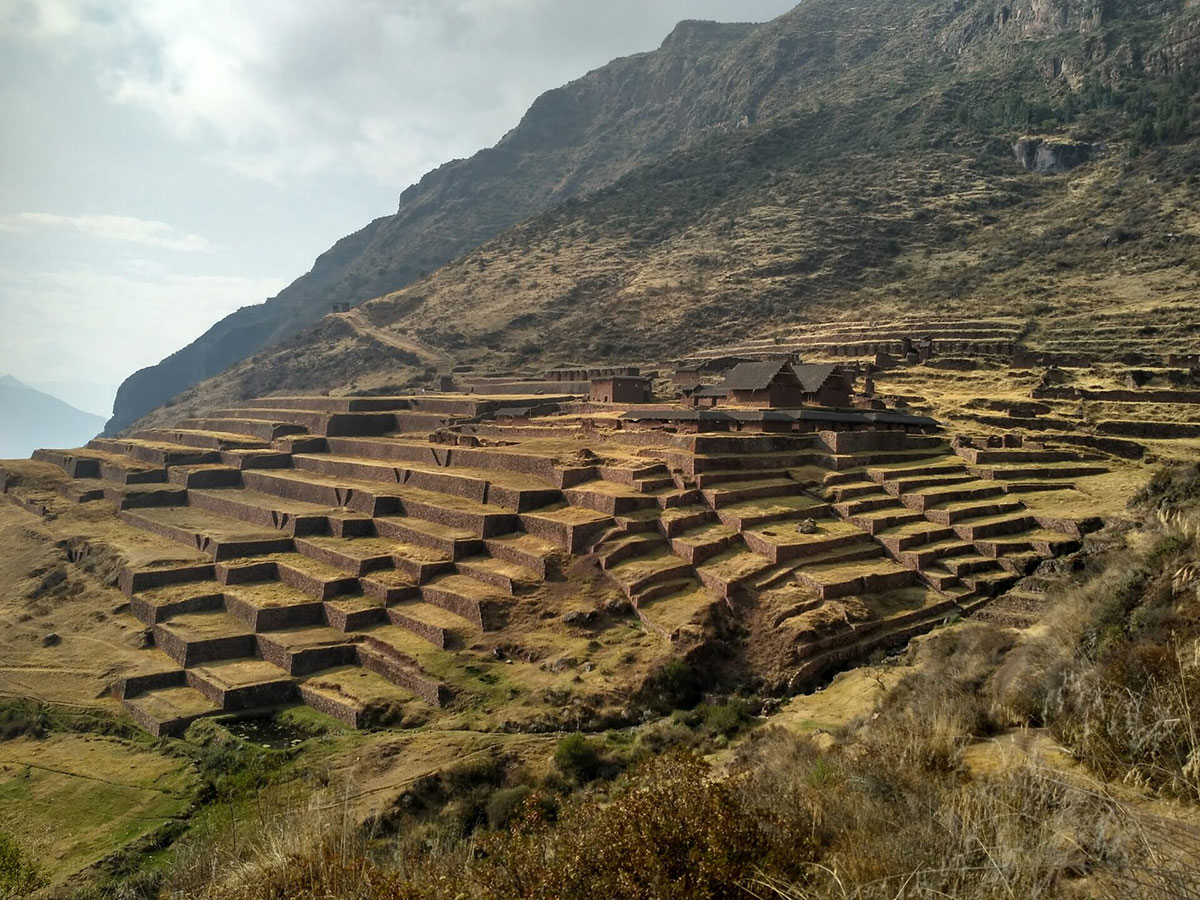
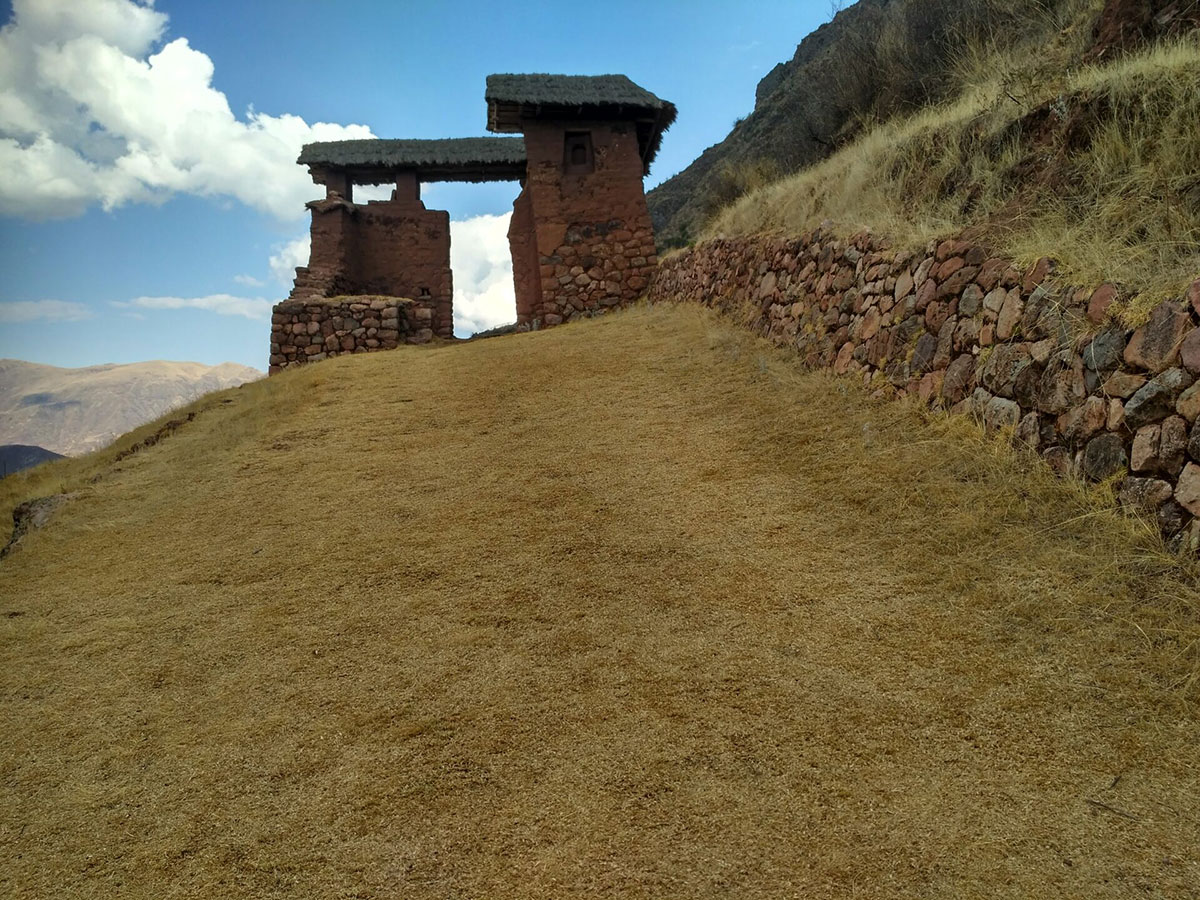
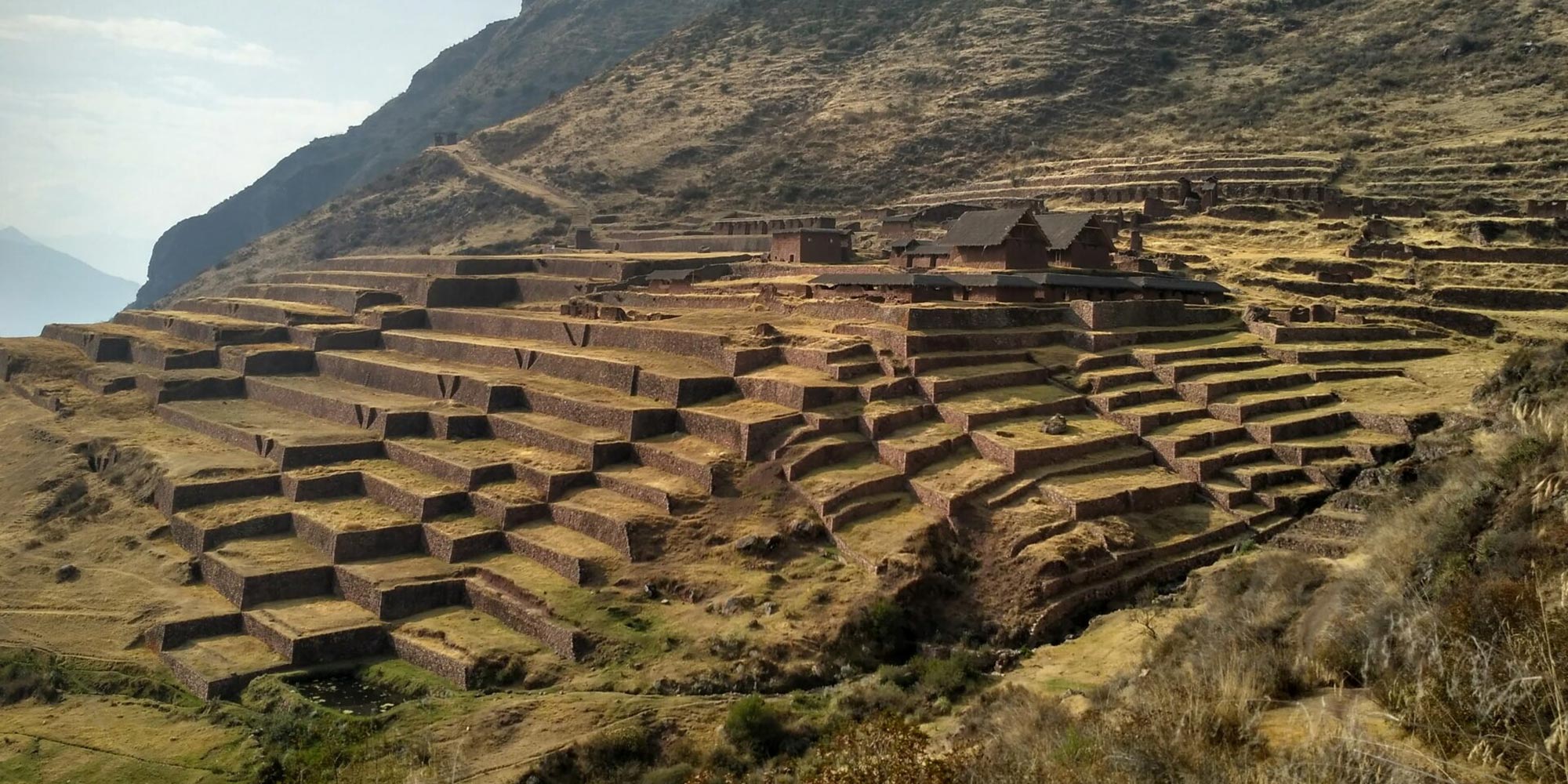
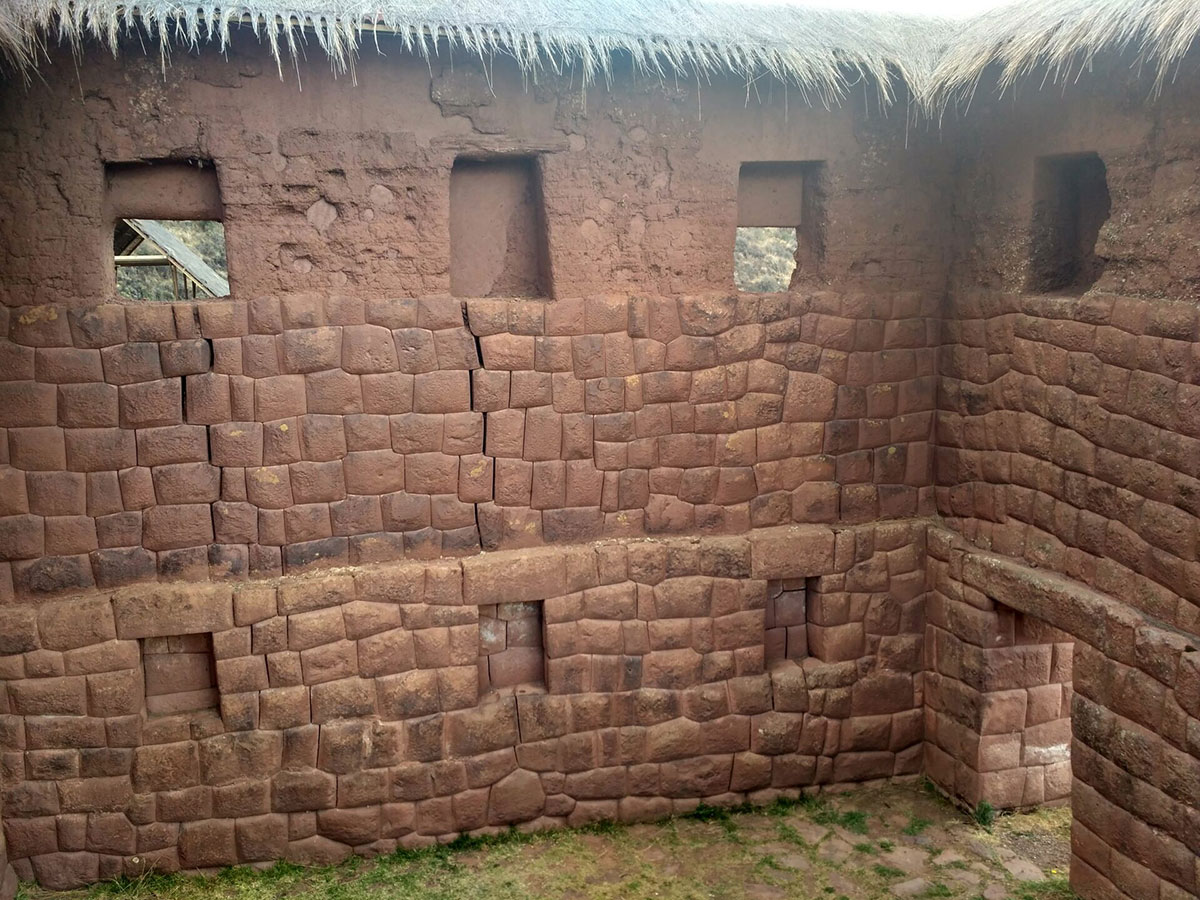
Huchuy Qosqo is an Inca archaeological complex perched precariously on the side of a mountain.
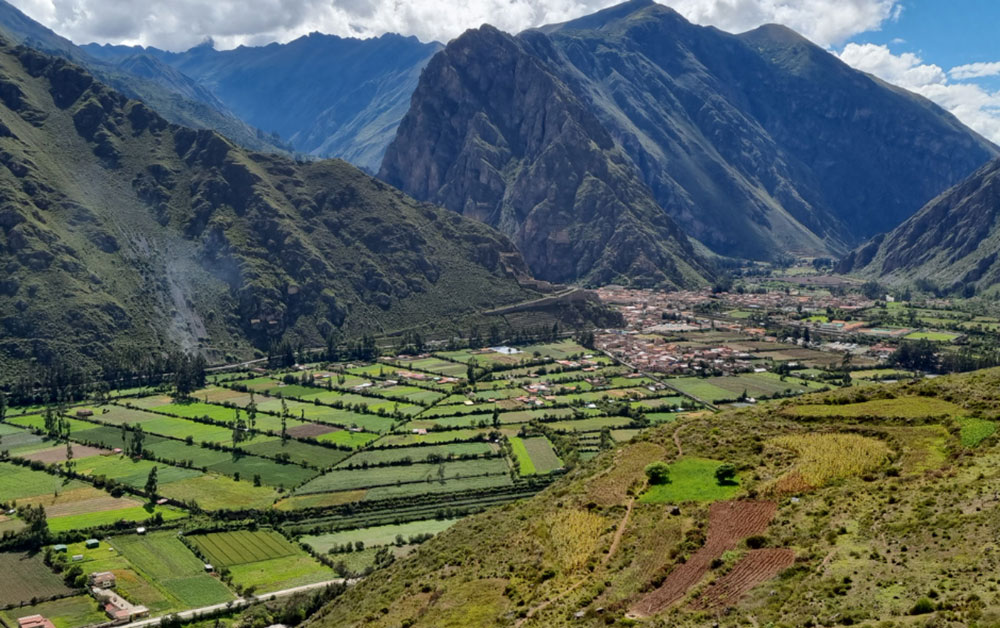
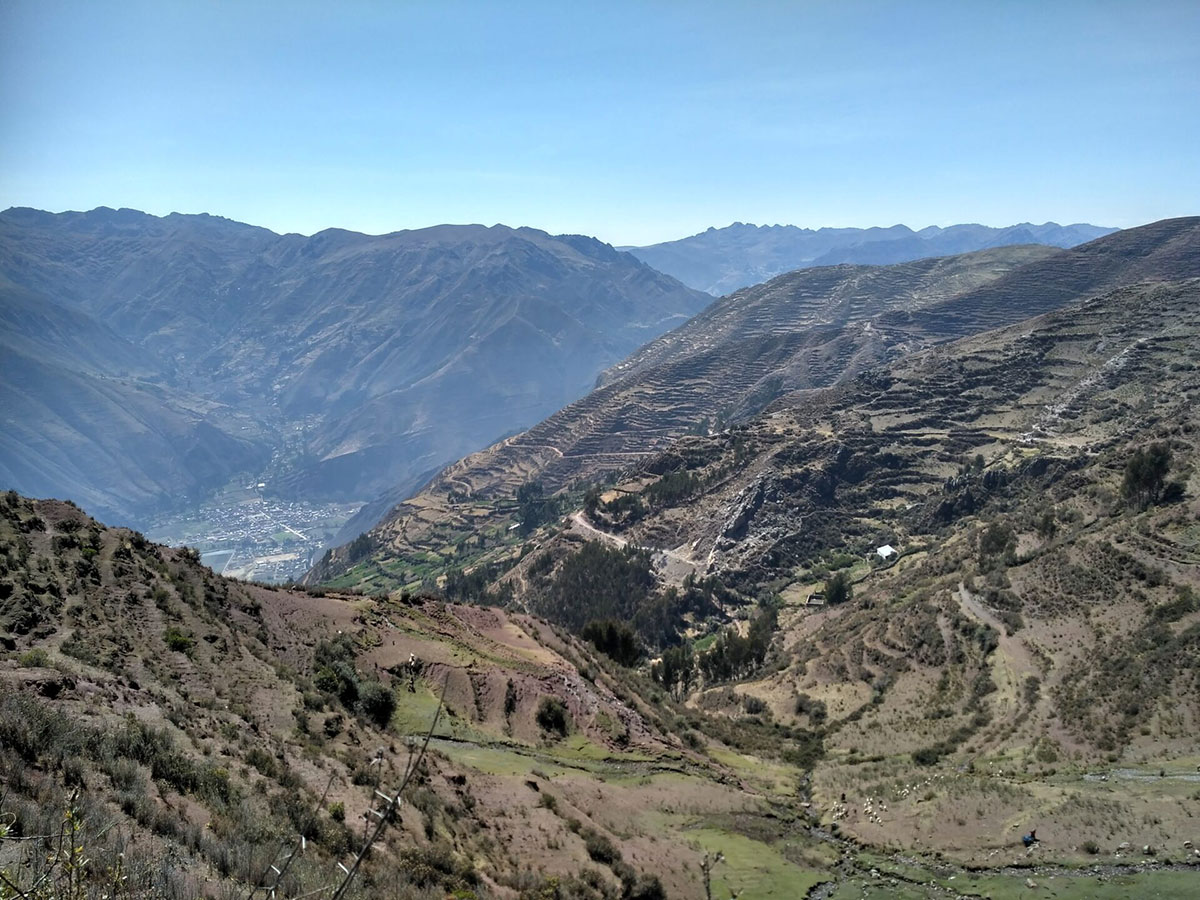
The architecture is quite imposing in sections. A highlight includes a large open ceremonial centre, from which we enjoy an amazing panoramic view of the Sacred Valley, the Vilcanota River, and the snow capped mountain range of the same name.
After our guided tour, we make our way around the ruins and continue our way down the mountain to Lamay at 3,000m/9,843ft, a town dedicated to agriculture and cattle raising.
Later that afternoon our private transport drives us to Ollantaytambo, where we board an afternoon train to Aguas Calientes. The train ride takes you along an absolutely gorgeous route, renowned the world over for its beauty.
Upon our arrival to Aguas Calientes you are transferred to your hotel.
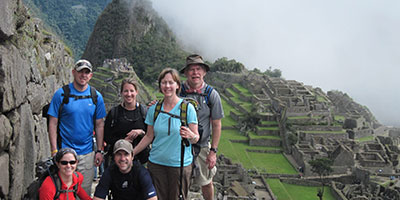
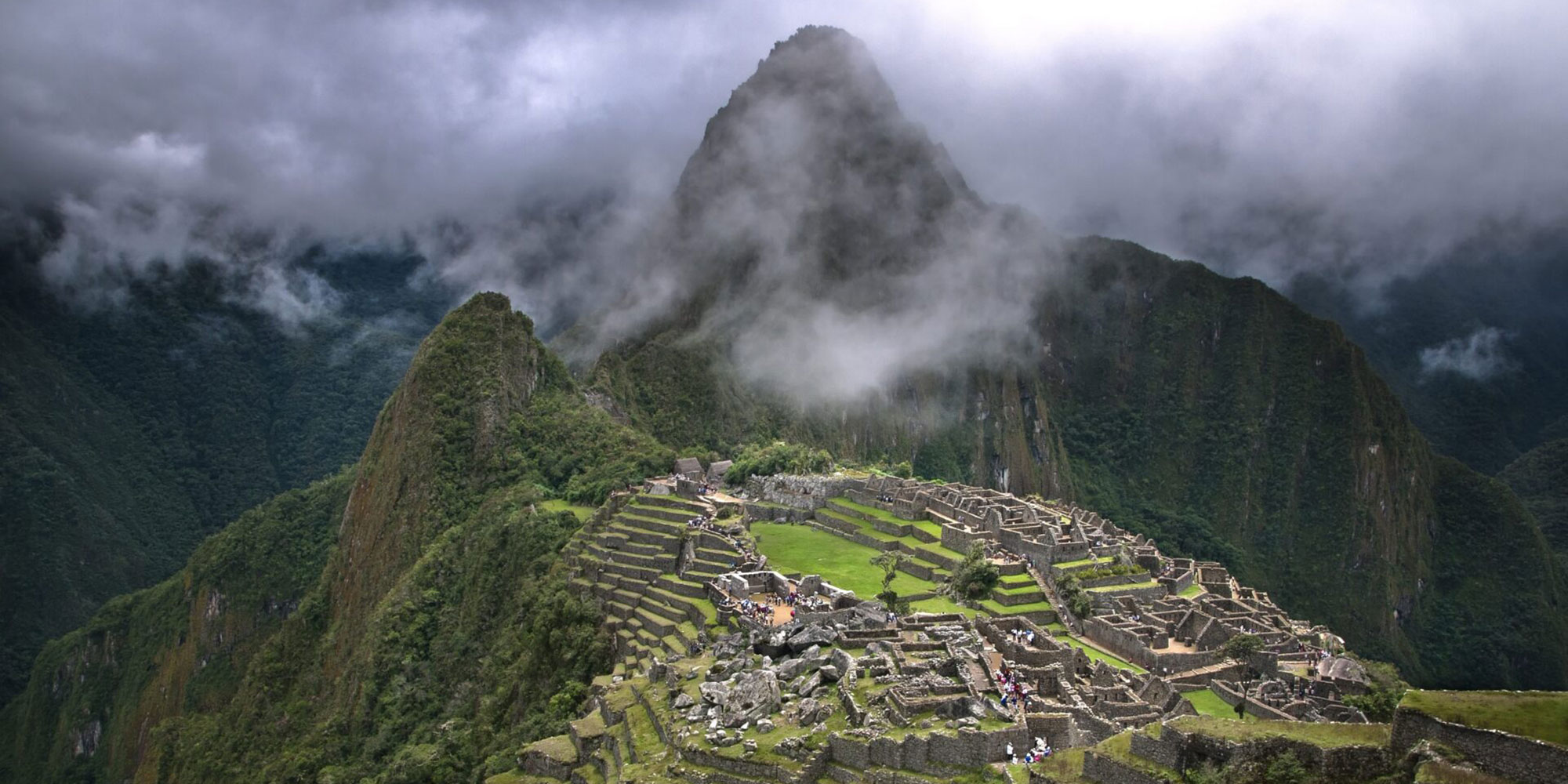
After enjoying an early morning breakfast at your hotel, we take the earliest bus up to Machu Picchu, usually leaving Aguas Calientes at about 05.30 (we can also arrange tours to start later and/or at midday).
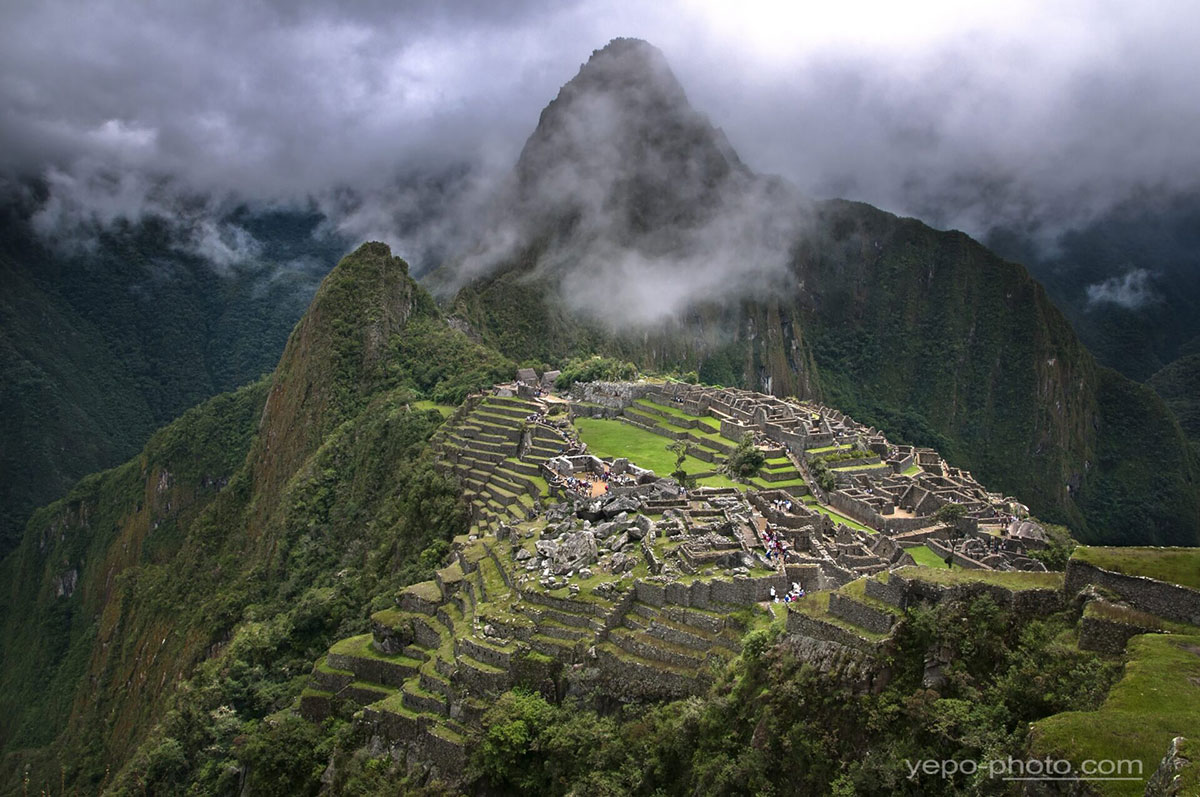
We arrive at the ruins about 30 minutes later, and you can explore independently for a while, or sign-in for entry to Huayna Picchu, before taking part in your two-and-a-half hour guided tour of Machu Picchu.
Your guide can tell you about the rich history and architecture as he shows you around. After the tour, there is plenty of time to explore on your own (or walk up Huayna Picchu if you’ve signed in), before descending back down the mountain to Aguas Calientes to catch the afternoon train to Poroy. Arrive Poroy at approximately 20.00, met on arrival, and transfer back to Cusco.
If you wish to climb Huayna Picchu or Machu Picchu mountain, permits have to be pre/booked and come at an additional cost.
Machu Picchu mountain has to be climbed before 11am, and there are two departure times for Huayna Picchu:
Group 1 (G1): 0700 – 0800
Group 2 (G2): 1000 – 1100
The price is USD25 including the entrance fee to Machu Picchu.
For a short description of the walks, please see below.
A steep one-hour climb (360m above the main Machu Picchu ruins), much of which is up Inca stairs. The climb involves scrambling and requires a good head for heights as there are some drops and a set of steep stairs – with no railing.
The views from above are wonderful and certainly reward those who tackle it. It’s worth visiting the Temple of the Moon on the west side of Huayna Picchu mountain, 400m below the summit. There is some high quality Inca stone work inside a cave, once a sacred place. Climbing Huayna Picchu is popular and permits usually sell out, which means there will be 200 climbers for each time slot given.
Do not attempt this climb if you are concerned about suffering from vertigo.
Just south of the site, and overlooking it, is a 650m climb up a well made Inca pathway (approx 1.5 hrs to top, 1 hr down) to the top of Machu Picchu Mountain.
There are some Inca constructions on the top that were probably for religious ceremonies, given the prominent position of the mountain. The hike takes you through lush forest, keeping a look out for interesting birds, flowers and snakes sunbathing on the path.
The views over the site a great and you can view the iconic Huayna Picchu as the backdrop to Machu Picchu, as well as the mountains beyond. It is attracting more and more people as an alternative to Huayna Picchu but is still a lot quieter.
A very simple and straight forward, yet very enjoyable walk is the walk along the river in Aguas Calientes. Keep your eyes open, as otters and capybara have been spotted here before! Your hotel receptionist can point you in the right direction and once you are the river, you just walk along from there.
And last but not least – don’t forget you can soak your aching muscles at the Aguas Calientes hot springs in town!
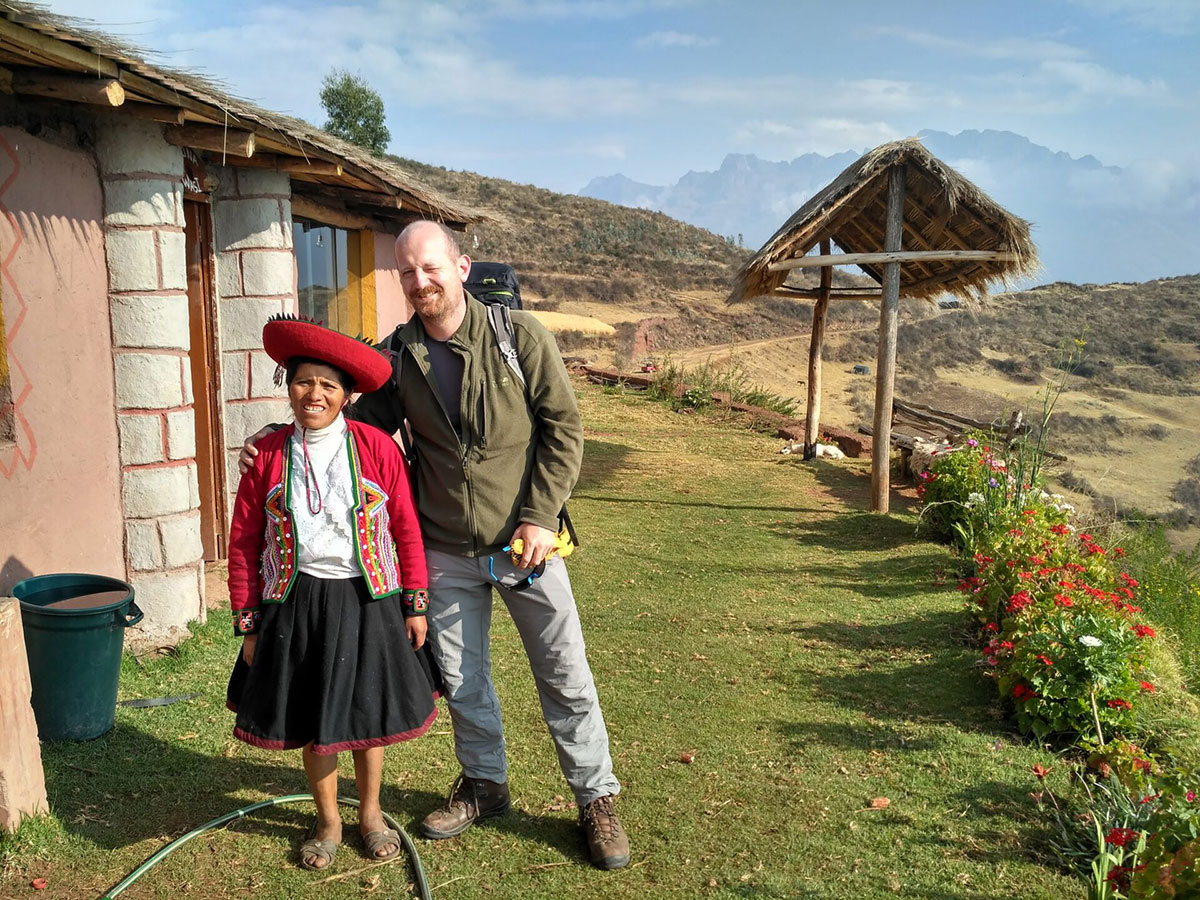
Homestay accommodation is basic but clean, warm and with flush toilets.
The bed is usually a solid clay structure with mattress and blankets on top to keep you warm. There is no electricity. There are showers – currently cold water only.
Hotels are 2-3* with private bathrooms, located in the centre of Cusco and/or Aguas Calientes. Upgrades 4-5* available at extra cost.
Most days you will wake early, either at your hotel or the homestay, and set off walking for a few hours. We can tailor the trek to your exact requirements.
This trek is ideal for acclimatising for a longer, higher trek, or tailored to suit the needs of a family.
All days are slightly different, as day 1 we will trek for 4-6 hours in total, see some ruins and experience a homestay.
The second day we have a tour of the Huchuy Qosqo ruins, head down the hills to catch transport and train to Aguas Calientes, where we relax at night time.
The third day we are up early to tour the ruins, with free time afterwards, ending with an afternoon train to Cusco.
Vegetarians and many other dietary requirements are catered for without problems. Please let us know in advance of any requirements you have.
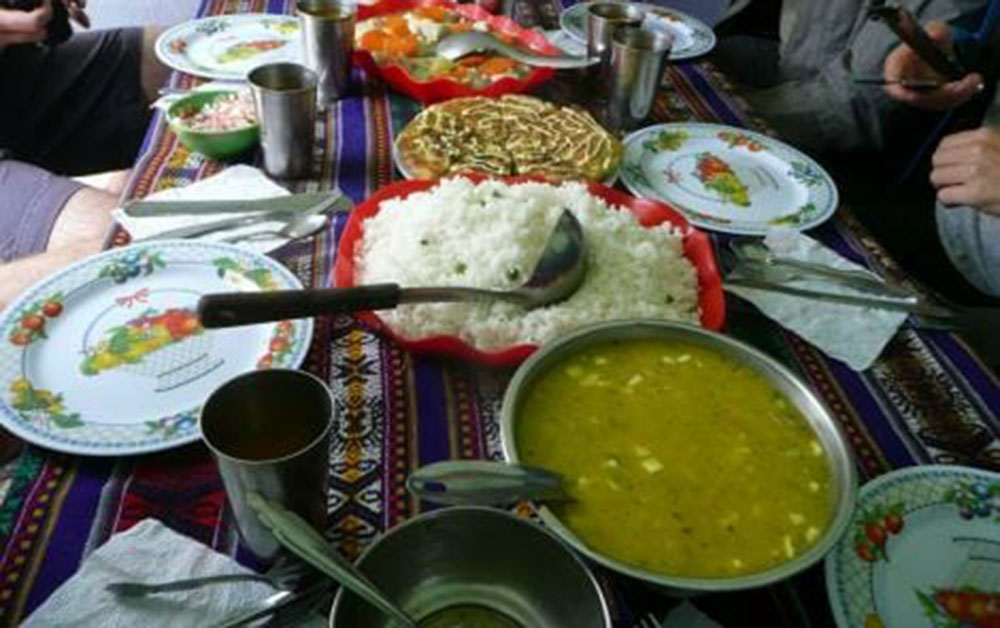
You wake early, usually around 07.00. Breakfast at the homestay is served in the kitchen and will include many local dishes – corn/maize pancakes, fruit, eggs and coffee. Hotels will offer a continental or American breakfast.
Lunch will either be a sandwich, snacks and fruit or a full meal with soups, potatoes and local produce. The exact arrangements depend on the route – some lunches are ‘al fresco’ and others are taken in local villages were a local will cook for you.
At the homestay, a local will cook a traditional dish for you – this can include soup, quinoa, meats/fish and a pudding/fruit.
All guides are certified, bilingual, English-speaking guides who have worked with us for many years.
Cooks, mule drivers and additional staff are all from the local, nearby communities and we have worked with them for a long time.
Your homestay is with a local family. They will show you their lifestyle, high in the Andes.
A fantastic and flawlessly organised holiday exploring the unforgettable highlights of Peru.
A rewarding trekking experience in Peru’s Andes, featuring excellent food, welcoming accommodation, and breathtaking mountain views.
This alternative Inca Trail trek gives you the chance to experience life in the Andes by staying at a homestay en route.
We have 3-5 day versions of the Huchuy Qosqo hike, depending on how long you would like to walk for.
Our hike leads to Huchuy Qosqo, an ancient Inca archaeological site perched on a cliff over the Sacred Valley of the Incas.
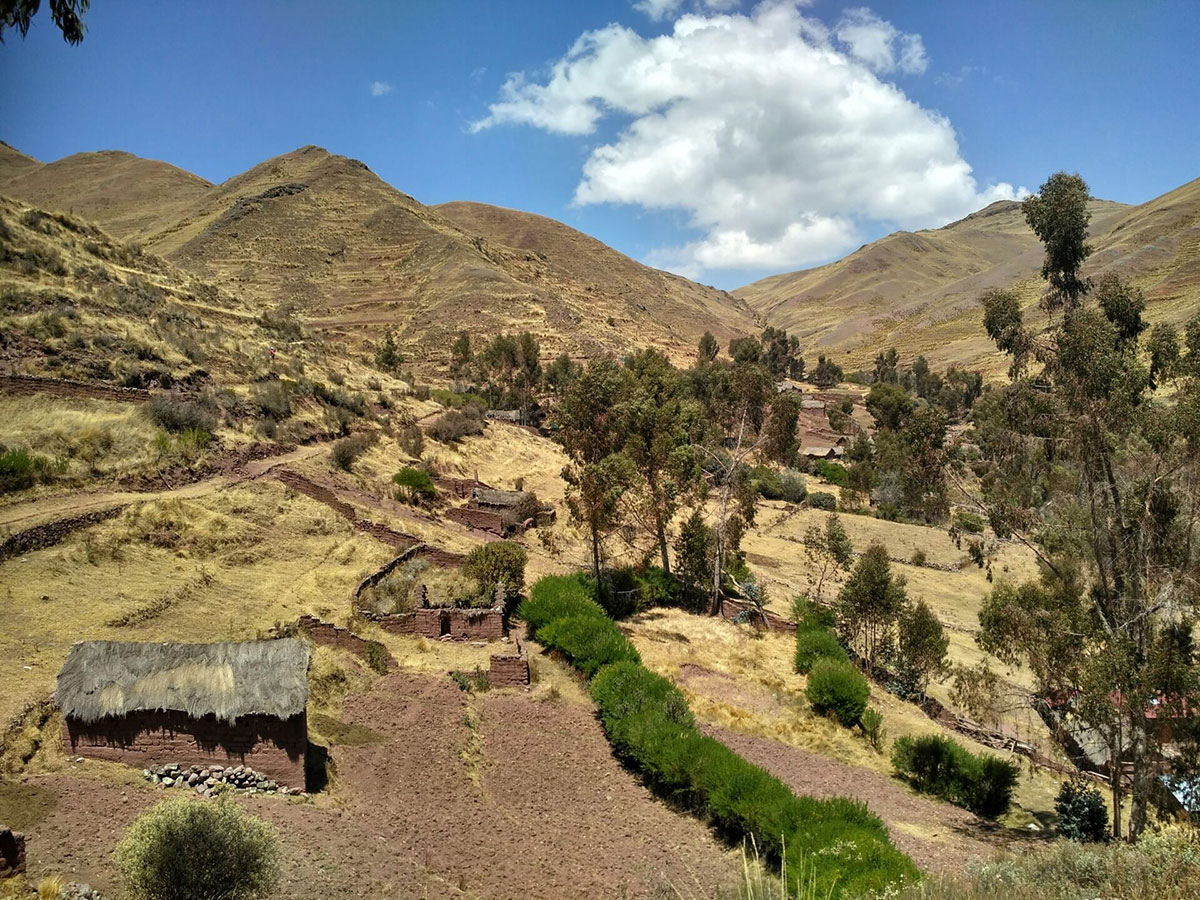
An Andean welcome awaits you at the Qosqo ruins, as you enjoy a hearty evening meal cooked by your local host, whose home is your shelter for the night.
As you walk, there is a large array of local flora and fauna to see.
After the hike, travel by train to Aguas Calientes, the town at the foot of Machu Picchu.
We use the Vistadome train, which has panoramic windows in the roof so you can make the most of the great views as you travel alongside the river Urubamba.
After a night in a hotel, you rise early for a guided tour of the magnificent ruins of Machu Picchu, a fitting end to your endeavours.
There is plenty of time to explore on your own, before returning to Cusco by train the same evening.
Peru is made up of 3 distinct geographical areas: the coast, the mountains and the jungle.
The costa or coastal region is a narrow ribbon of desert 2,250 km long, crossed by fertile river valleys flowing from the Andes. It takes up 11% of the country and holds more than 40% of the population.
The cold Humboldt current gives rise to a blanket of mist – the garua – which hangs above coastal cities like the capital Lima from May to November.
Heading east, you’re soon climbing above the garua and into the Andes. The sierra, or mountainous region, covers some 25% of Peru’s territory and contains 50% of the population. The sierra inhabitants are mainly Indigenous or Mestizo, and many still speak Quechua or Aymara.
The sierra contains dozens of 6,000-metre snow peaks and volcanoes, including Huascaran (6,768m) the highest mountain in the tropics. The deep valley basins contain most of the towns and arable land; the terracing and canal systems of the Incas and pre-Incas are often still used today.
The eastern Andes are heavily forested up to 3,350m and sweep down into the Amazon Basin.
Peru’s selva or jungle makes up almost two thirds of the country’s area, but holds only about 6% of the population: the only towns with significant populations are Iquitos and Pucallpa.
Peru is the perfect holiday destination for adventure travellers that want an amazing variety of activity, geography and cultural travel experiences.
The breadth of travel experiences in Peru is breathtaking – from trekking in the Andes to Machu Picchu to the tropical jungle of the Amazon, and plenty in between.
The people of Peru make it a special destination too, with its colourful and traditional street life and friendly locals.
Good kit is vital for every trip.
Book with Andean Trails and get 15% off Páramo’s fantastic ethical and high performance outdoor gear.
When planning for the varied climatic conditions you will encounter across Peru, layering is the most practical and versatile clothing system.
The sun is very strong throughout the country, so good sun cream, a hat and sunglasses are vital.
It can also get very cold at night time especially in the mountains. Jumpers, fleeces and warms hats – which you can buy there – are also essential.
Give plenty of thought to kit selection, and try to keep weight down.
Below is a more detailed guide.
You can also read about the weather of Peru in our blog.
You can also read about the weather of Peru in our blog.
Peru is located in the southern tropics (latitudes 0º to 18º), but climate varies significantly according to season, altitude and region.
From May to October, Lima is often overcast, but with minimal precipitation. There are sunny spells, and it’s a fresh to pleasant 13-20ºC.
At the same time, inland areas and the north coast mid to high 20’s ºC.
November to April is generally warm and sunny and Lima enjoys warm temperature of 19-25ºC, with the coast averaging 22-30ºC.
Climate depends largely on altitude. As a rule of thumb, below 2,000m climate is mild and above 2,000m warm clothing is required for evenings, nights and early mornings.
The Andean sun is very strong.
Cusco (3,300m): Average max/min temps: 22ºC /2ºC. Average 3 or 4 wet days per month.
Arequipa (2,380m): Average max/min temps: 26ºC /9ºC. Sunny more than 340 days/year with minimal precipitation.
On highland treks: Conditions are generally dry. However, at this time of year, expect a range of conditions within a single day: cold/freezing nights at camps above 4,000m, where pre-dawn temperatures can be -5ºC; warm, spring-like mornings and afternoons; and cold evenings.
Note that mountain weather can be fickle and localised, and that precipitation is not unknown in the dry season. Expect temperatures to swing between sun and shade, sheltered and exposed ground and with altitude gain and loss. A quick-setting sun means temperatures drop fast.
In the cloud forest, e.g. around Machu Picchu, daytime conditions are generally warm or hot, and evenings cool.
Cusco: Average max/min temps: 23ºC /6ºC. Average 13 wet days per month.
Arequipa: Average max/min temps: 25ºC /14ºC.
On highland treks: Wetter conditions, with cooler days and milder nights than dry season. Jan-Mar usually the wettest months.
Year-round, weather conditions are hot and humid and there is always the risk of rain.
There is a ‘dry season’ in Tambopata and Manu between May and October. The average daytime high temperature is between 25°C and 34°C and the average nighttime low is between 16°C and 22°C. Heavy downpours typically occur every few days.
Around 80% of annual average rainfall – approx 2,000 mm in Manu and Tambopata and 1,400 mm in Iquitos – occurs in the wet season Nov-April.
On rare occasions, between May and September, cold fronts from Argentina – ‘friajes’ – can sweep into southwest Amazonia and push temperatures down to 9°C. (Friajes usually last between 1 and 3 days).
A fantastic and flawlessly organised holiday exploring the unforgettable highlights of Peru.
A rewarding trekking experience in Peru’s Andes, featuring excellent food, welcoming accommodation, and breathtaking mountain views.