

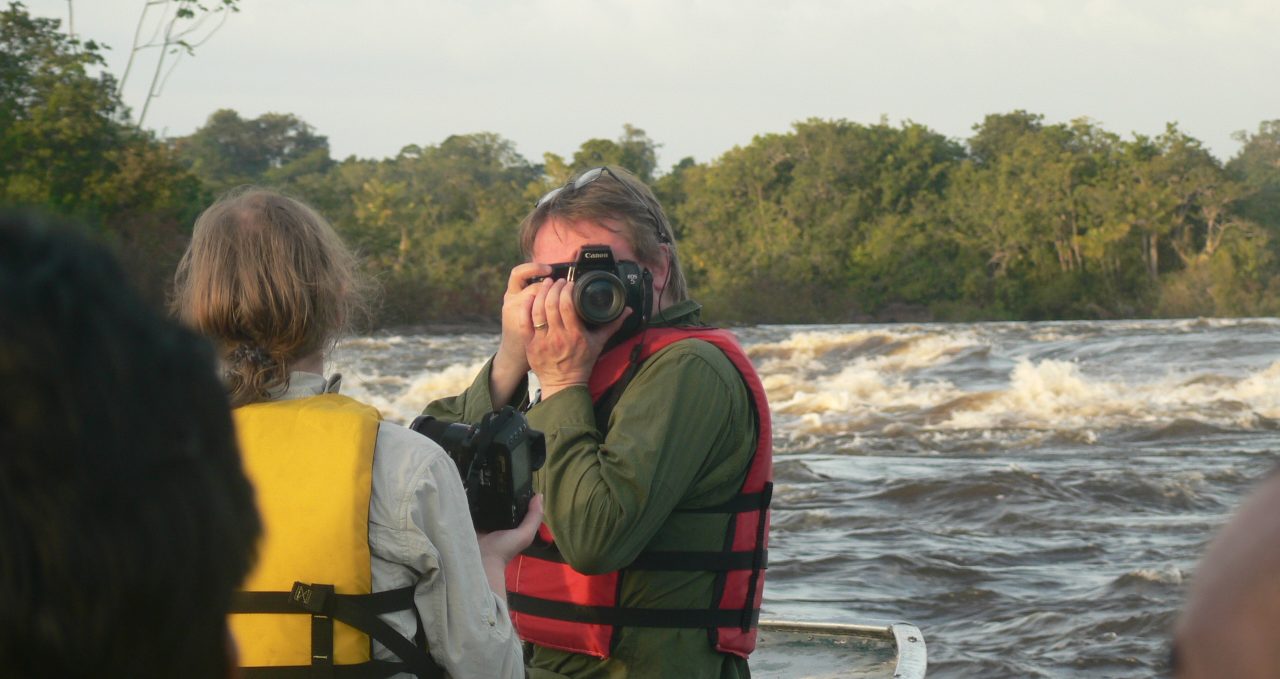

Visit the Three Guianas: Suriname, French Guiana & Guyana
Three Guianas: Tour Guyana, French Guiana & Suriname
Join us as we explore the Three Guianas: Guyana, Suriname and French Guiana.
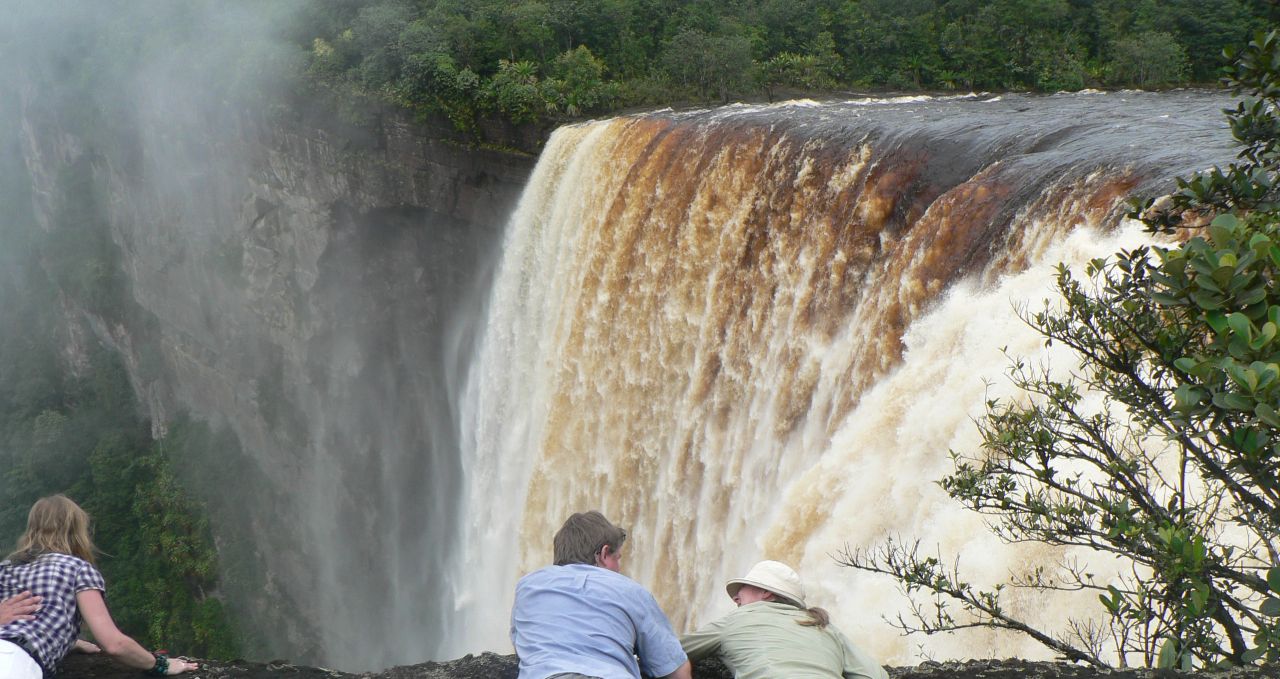
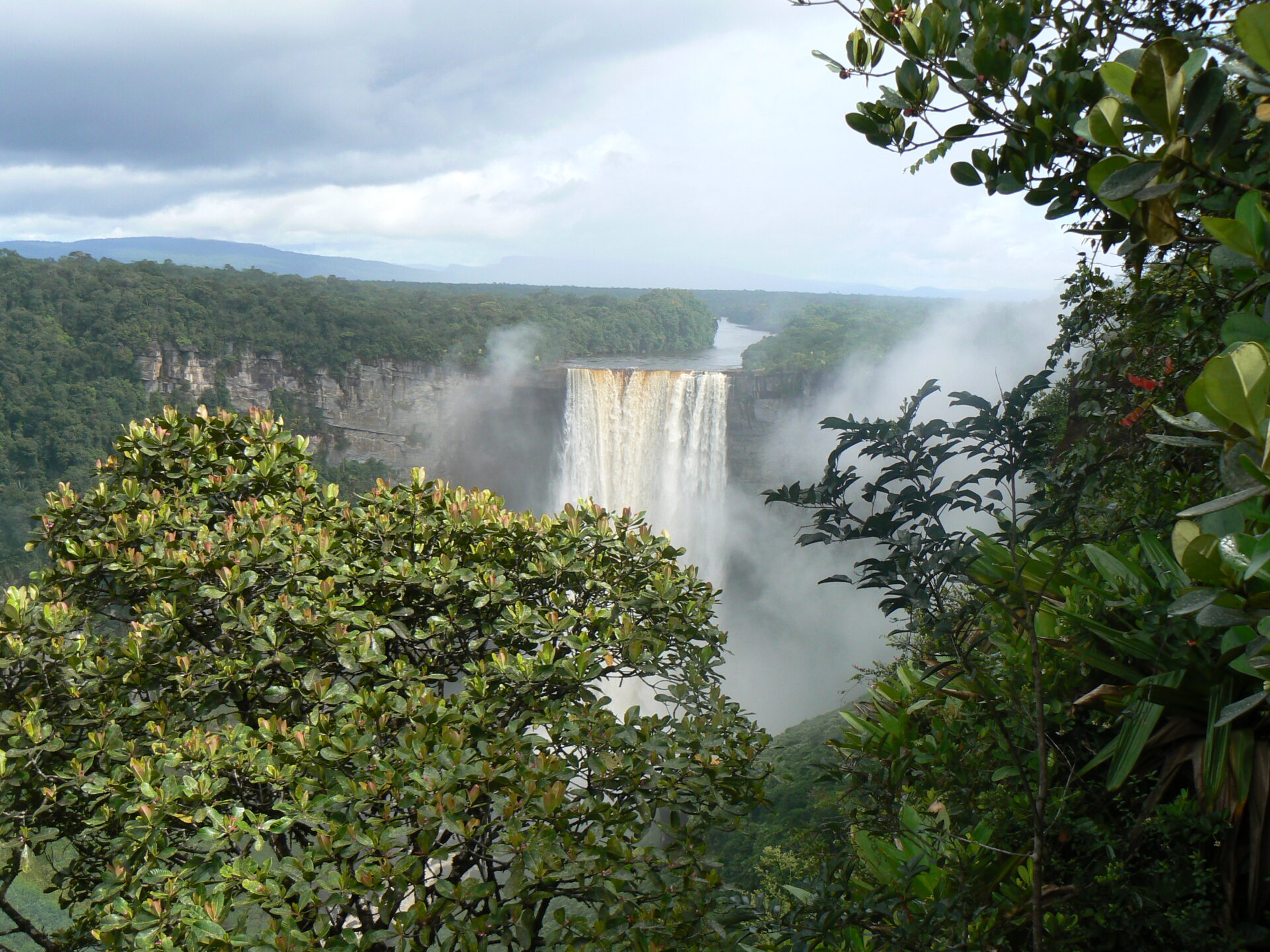
In Guyana, gaze at the mighty Kaieteur Falls, the world’s highest single-drop waterfall, and discover one of the greatest untouched rainforests left. This region is home to endangered species such as jaguar, giant anteater, giant river otter, tapir and so much more.
Immerse yourself in the local cultures by visiting Amerindian and Maroon communities. Marvel at the Space Centre in French Guiana, revisit the tale of Papillon at Devil’s Island and stroll Paramaribo, the UNESCO World Heritage site.
The Three Guianas are indeed an untouched and unique part of South America.
The Guyana Shield
This Three Guianas tour takes you around The Guiana Shield.
The Guiana Shield is a 1.7 billion-year-old Precambrian geological formation in northeast South America and is one of the regions of highest biodiversity in the world.
The shield has 1,400 vertebrate species and 1,680 bird species and is overlain by the largest expanse of undisturbed tropical rainforest in the world.
More on Three Guianas Tour: Guyana, Suriname and French Guiana
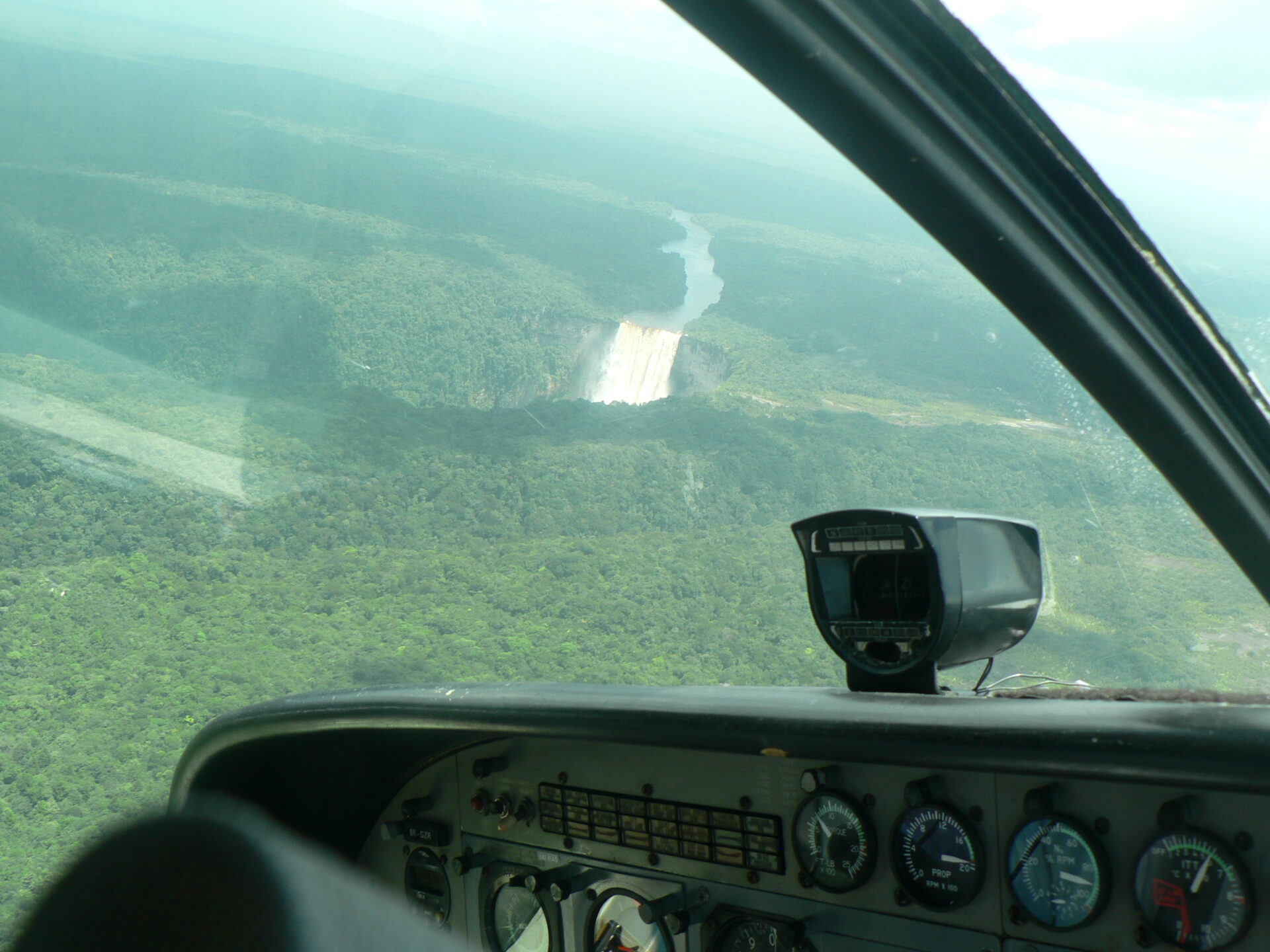
Arrive into Georgetown, Guyana. Your adventure begins as you fly deep into the jungle to witness the mighty Kaieteur Falls.
Our next flight soars over hundreds of miles of tropical rainforest to Iwokrama River Lodge, where we trek a mountain trail with stunning views over the forest canopy and excellent bird-watching opportunities.
At Karanambu Lodge you’ll have more opportunities for wildlife spotting as you walk through the forest and glide over the water in a canoe, by day and night.
Back in Georgetown you’ll explore the market with Chef Delvin. He will take his purchases home to prepare a feast for our lunch while we tour multi-cultural Georgetown. We’ll cap the day with a sunset sail on the Demerara River.
In Paramaribo, we’ll visit the most significant historic sites in this UNESCO World Heritage Site and take a Commenwijne Tour.
We then leave Paramaribo, travelling by road and river towards the serene and secluded Danpaati River Lodge.
On a forest walk, we’ll explore a fascinating Maroon village and uncover some of the secrets of the rainforest.
We continue to French Guiana by road and ferry, stopping at the Transportation Centre in St Laurent du Maroni, where convicts were processed before being sent to a penal colony.
Next, we revisit the tale of Papillon with a trip to the Salvation Islands, often known as Devil’s Island. Then, we’ll marvel at the immense Guiana Space Centre.
The Three Guianas tour takes you to some of South America’s most remote and fascinating corners. Don’t forget to check our Guyana-only trips, too.
Trip Highlights
Print Share Download as PDF-
A day dedicated to the mighty Kaieteur Falls.
-
Chance to see some of the best wildlife in the rainforest.
-
Visit traditional Amerindian and Maroon villages.
-
Canopy walkways offering some of the best birdwatching in South America.
-
Guided tour of multi-cultural Georgetown, Guyana and UNESCO World Heritage site, Paramaribo in Suriname.
-
Take a tour of the fascinating Center Spatial Guyanais (Guiana Space Center) in French Guiana .
-
Enjoy a variety of trail walks, mountain hikes and river boat trips.
"After the excitement of seeing a giant anteater with baby, I thought the trip couldn't get any better until we saw a jaguar close up on the riverbank!"
K. Dougal, Guyana
Gallery
Videos
Full Itinerary
Day 1: Arrive Georgetown, Guyana
Optional pick-up from Cheddi Jagan International Airport and transfer to Cara Lodge in Georgetown.
Cara Lodge, a magnificent wooden colonial home transformed into a charming hotel, offers guests a touch of bygone elegance.
Built in the 1840s, this historic gem boasts a romantic past, once home to the city’s first Lord Mayor. Cara Lodge has also welcomed guests such as King Edward VIII in 1923, President Jimmy Carter, HRH King Charles III, and Mick Jagger.
*For travellers arriving from the UK on the direct Thursday flight from London, we can arrange a pre-tour stay at Cara Lodge before joining the main group.
Overnight Cara Lodge
Check-in 1400, checkout 12midday.
Day 2: Kaieteur Falls (B)
Pick up from your hotel for transfer to Eugene F. Correia International Airport where you board a scheduled flight over hundreds of miles of unbroken tropical rainforest to land at Kaieteur Falls, the world’s highest free-falling waterfall.
Kaieteur Falls
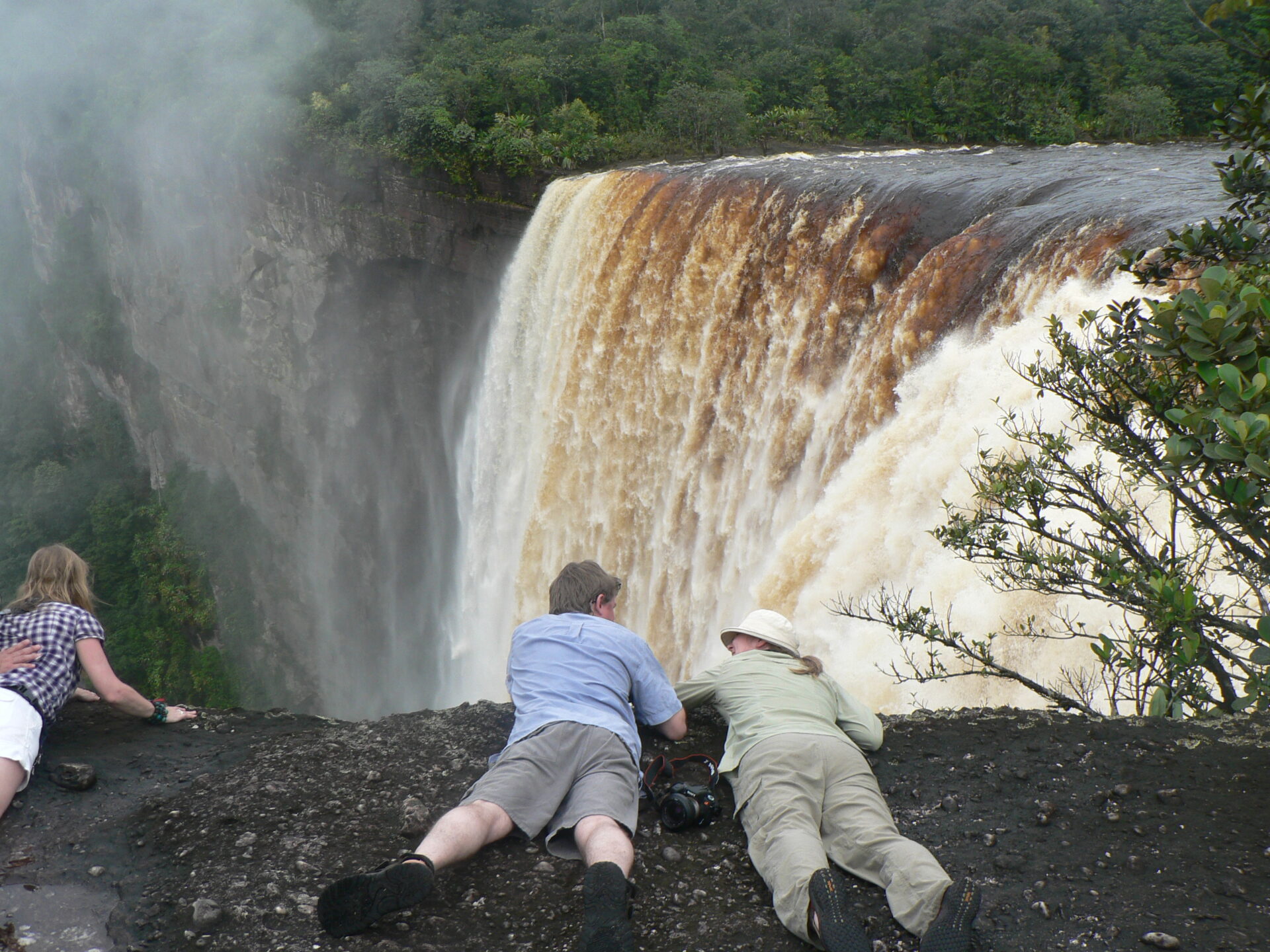
Kaieteur Falls, first seen by a European on April 29, 1870, is located in the heart of Guyana on the Potaro River, a tributary of the Essequibo. The water of Kaieteur flows over a sandstone conglomerate tableland into a deep gorge—a drop of 741 feet, or five times the height of Niagara Falls.
There are no other falls in the world to match the magnitude of the sheer drop existing at Kaieteur. Amerindian legend of the Patamona tribe has it that Kai, one of the tribe’s chiefs, sacrificed himself by canoeing over the falls. It was believed this would encourage the Great Spirit Makonaima to save the tribe from being destroyed by the fierce Caribishi.
Kaieteur supports a unique micro environment with Tank Bromeliads, the largest in the world, in which the tiny Golden frog spends its entire life and the rarely seen Guiana Cock- of-the-rock nesting close by. The lucky visitor may also see the famous Kaieteur Swifts or Makonaima Birds, which nest under the vast shelf of rock carved over millions of years by the black water of the Potaro River. After the visit, re-board the plane for the return flight to Georgetown.
Notes on Kaieteur Falls flight upgrade options
Flights to Kaieteur Falls are operated on chartered aircraft, and all flights have a minimum passenger restriction. Therefore, any booking to Kaieteur and Orinduik Falls is contingent on a minimum of 12 passengers being available to travel.
In most cases we are able to fill flights, especially if scheduled for a weekend. However, in the rare case that we cannot meet the required numbers, we reschedule the trip to another day during your stay, if this is possible.
We retain the right to reschedule a flight as a first option. If we cannot reschedule the flight, we guarantee a flight with a minimum of 2 passengers to Kaieteur Falls only. If a flight is cancelled due to circumstances beyond our control, such as weather, we endeavour to reschedule the flight during your itinerary. If this is not possible, then a full flight refund is made.
Pickup and transfer from Eugene F. Correia International Airport to Georgetown.
Overnight at Cara Lodge.
Optional services (please ask for more details):
Birding in Georgetown Botanical Gardens
Evening Seawall, bars and street food experience
Dinner at Aagman Indian
Day 3: Iwokrama River Lodge, Turtle Mountain hike, Iwokrama Canopy Walkway (B,L,D)
Pickup and transfer to Eugene F. Correia International Airport.
You board a scheduled flight for the journey over hundreds of miles of tropical rainforest to land at Fair View Airstrip. (Check-in 07.00, departure 08.30).
On arrival, you are met at Fair View Airstrip and transferred to Iwokrama River Lodge.
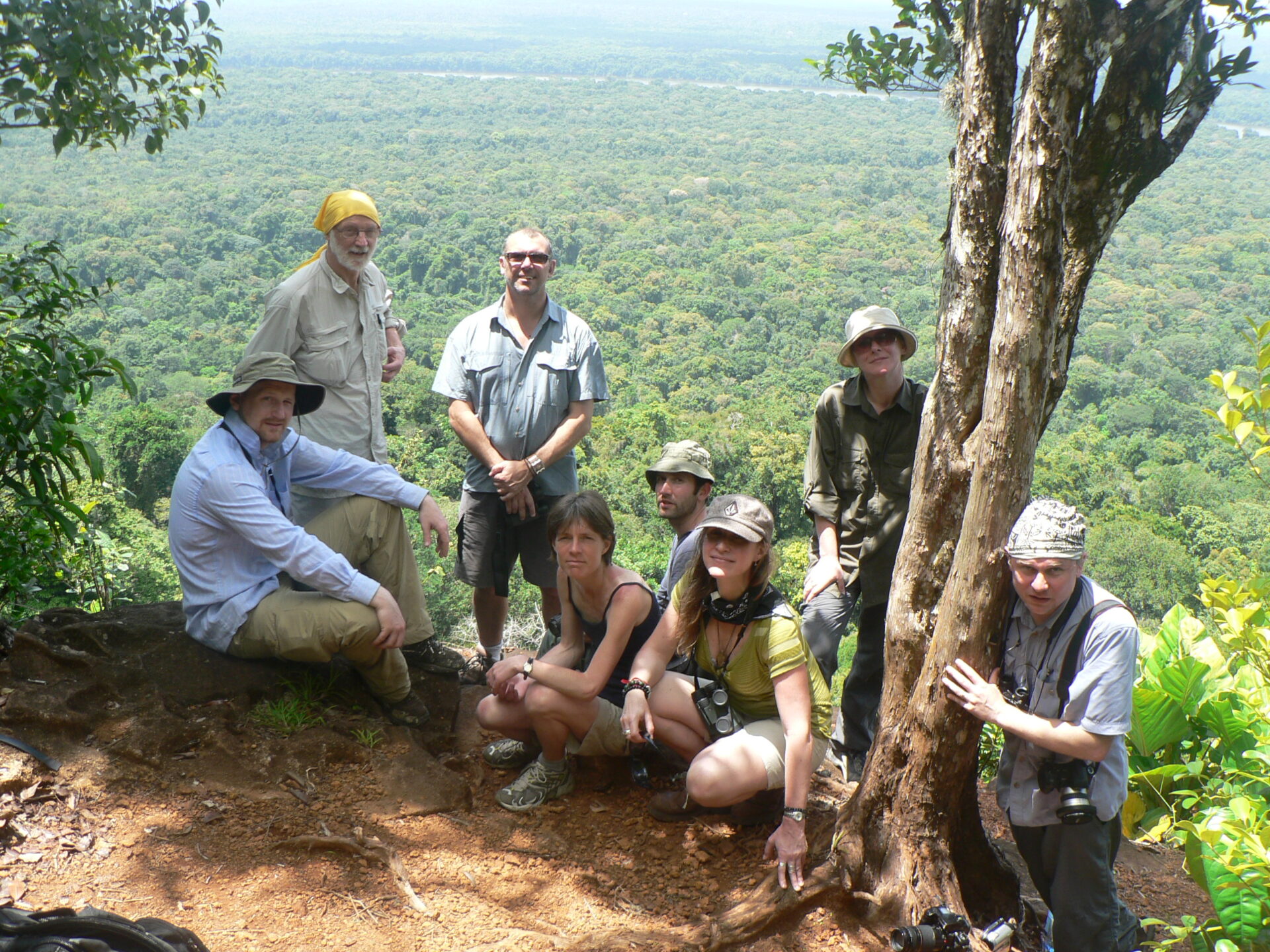
After your orientation, depart the lodge by boat, bird-watching along the way, for the hike to Turtle Mountain. A well maintained trail winds through the forest before an exhilarating 1 and 3/4 hour climb up the mountain to the summit at 935ft/360m.
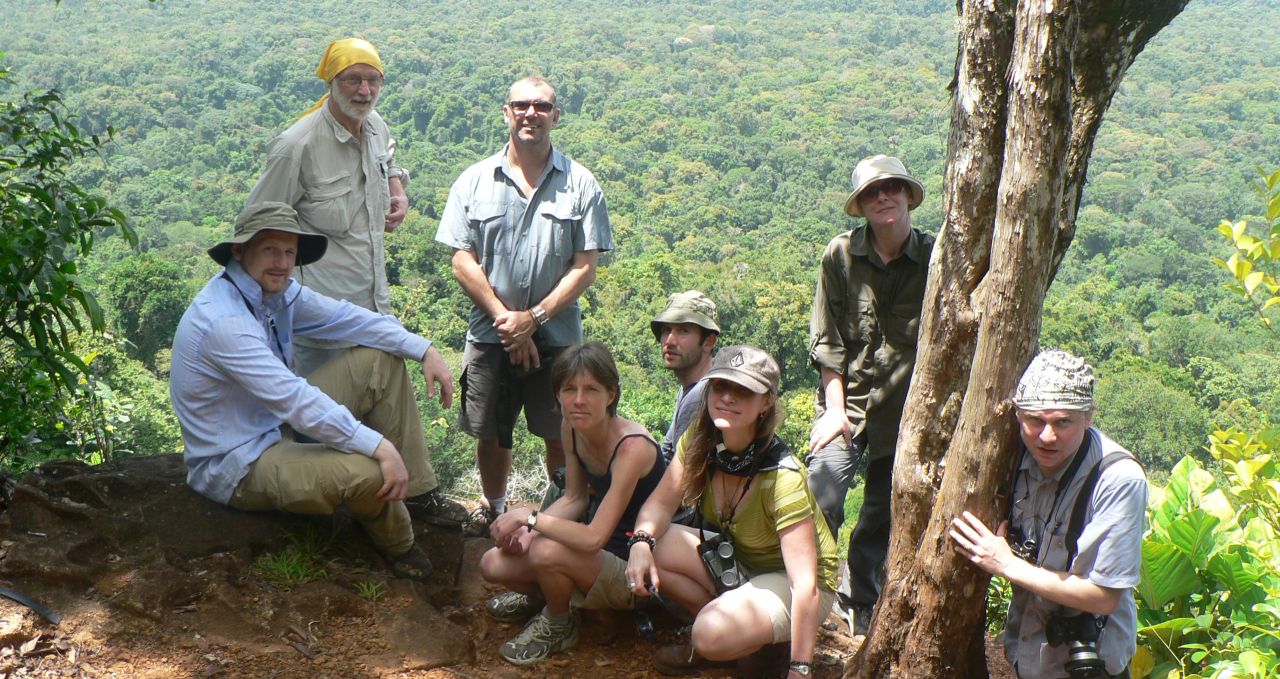
The effort is more than worth it for the breath-taking views over the forest canopy when you get there and chances of Green Aracari, White Bellbird or a fly-by of one of five types of eagles. This trail is also an excellent location for seeing Black Spider and Red Howler Monkey.
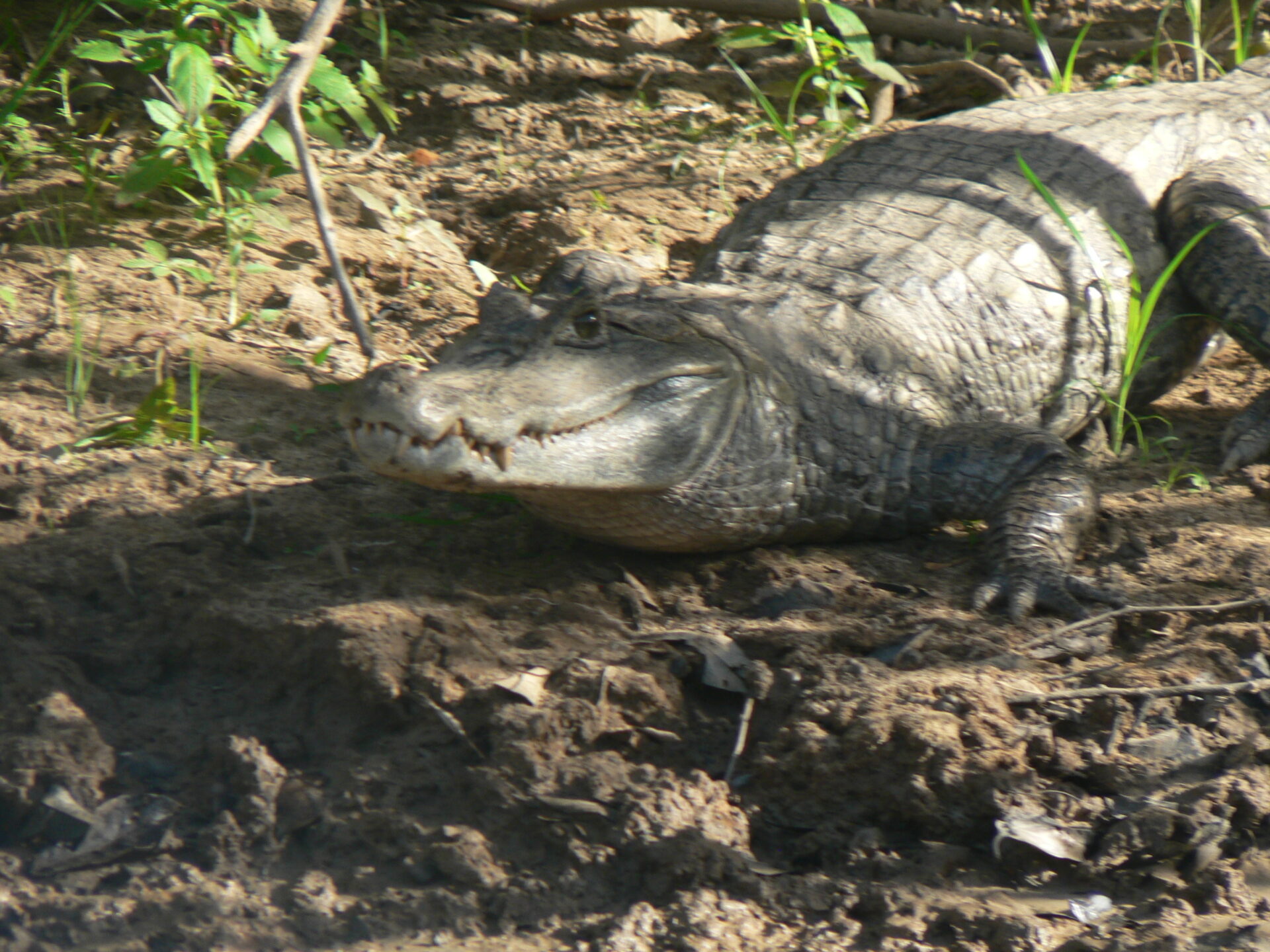
If you think this hike may be too strenuous, you can opt for a boat trip to Stanley Lake to search for Giant River Otters and Black Caiman.
We return to the lodge for lunch and then take a vehicle along the trail that is one of the best places to see the elusive Jaguar. No guarantees, but many have been lucky! This road is the only north – south access in Guyana, linking the country to Brazil but there isn’t much traffic and wildlife is often seen along the way. The journey finishes at the Atta Rainforest Lodge, where we find the Iwokrama Canopy Walkway.
The Iwokrama Canopy Walkway is located near the southern boundary of the Iwokrama Reserve. The walkway has four suspension bridges and three platforms, the highest of which is some 30 metres above the ground. (Important note: currently, 2 bridges & 1 platform is down for maintenance, Nov 2025)
Another area where you will spend some time is the clearing around the lodge which is one of the best places to see another of Guyana’s iconic birds, the Crimson Fruitcrow. The clearing is also a good spot for Black Curassow since there is a large, growing family group which has become accustomed to people and regularly crosses the clearing.
Atta Rainforest Lodge lies 500 metres from the base of the Canopy Walkway, offering comfortable accommodation with private bathrooms, tasty home-cooked food, and traditional Amerindian hospitality. The main building is open-sided with views across the gardens and the forest on all sides. It houses the bar, dining area, and kitchen. The gardens have a superb collection of Heliconia flowers that attract over ten different humming birds.
Overnight at Atta Rainforest Lodge.
Day 4: Atta Rainforest Lodge, wildlife and bird-watching (B,L,D)
Before dawn, you return to the canopy, where bird watching is a treat. You can sometimes see Red Howler and Black Spider Monkeys from this tree-top vantage point.
In addition to the Iwokrama Canopy Walkway, you can enjoy wildlife and bird-watching walks on the trails around the area. For those interested in botany, many of the trails have the key tree species marked.
The surrounding forest is home to numerous bird species, stunning insects, noisy amphibians, and playful primates: deer, tapir and agouti are also regular visitors to the lodge. Serious birders will want to scour the undergrowth for the rarely spotted Rufous-winged Ground-cuckoo.
As night descends on the canopy walkway, you may spot the White-winged Potoo. Night walks are possible and something interesting always seems to pop up, including one of the six different cats to be found along the road near the lodge.
Overnight at Atta Rainforest Lodge.
Day 5: Atta Rainforest Lodge to Karanambu Lodge (B,L,D)
Start the day with the dawn chorus from the canopy walkway. Return to the lodge for breakfast before setting off through the Iwokrama rainforest to Ginep Landing.
From Ginep Landing, we embark on a boat journey along the Rupununi River to reach Karanambu Lodge. Depending on water levels, this trip is an excellent chance to spot Giant Otters, as several family groups inhabit this section of the river.
Karanambu is a 110-square-mile area in the North Rupununi that used to be a cattle ranch. It was once owned by Diane McTurk, who was famous around the world for her work with giant otters. The area is known for its wide-open savannahs, wetlands, and incredible mix of plants, animals, and cultures. Within Karanambu, you’ll find grasslands, marshy ponds, riverbank forests, and a 30-mile stretch of the Rupununi River. For its size, it’s amazingly rich in wildlife—with over 600 kinds of birds, more than 200 types of mammals, and around 700 species of fish that move through during the rainy season.
This region is also deeply historical—it’s been home to the Makushi people and other Indigenous groups for more than 7,000 years. Over the years, many explorers and writers have come here, including Robert and Richard Schomburgk, Charles Waterton, Evelyn Waugh, and Gerald Durrell. Even a young David Attenborough visited and wrote about it in his early book Zoo Quest to Guiana.
Thanks to its mix of rivers and open plains, Karanambu offers lots of things to do outdoors. There are two organized guided trips every day—one at sunrise and another late in the afternoon into evening—when the weather is cooler and animals are most active. You can explore by boat, by 4×4 vehicle, or on foot through forest trails and around ponds.
In the late afternoon, visitors usually go by boat to look for wild Giant River Otters. As evening sets in, the tour continues to ponds where you can see the huge Victoria amazonica waterlily bloom. On the way back, you’ll use spotlights to look for Black Caimans, night birds, and other nocturnal creatures.
Cabins are traditionally made clay brick, each with en suite and veranda with hammocks.
Overnight at Karanambu Lodge
Day 6: Karanambu Lodge (B,L,D)
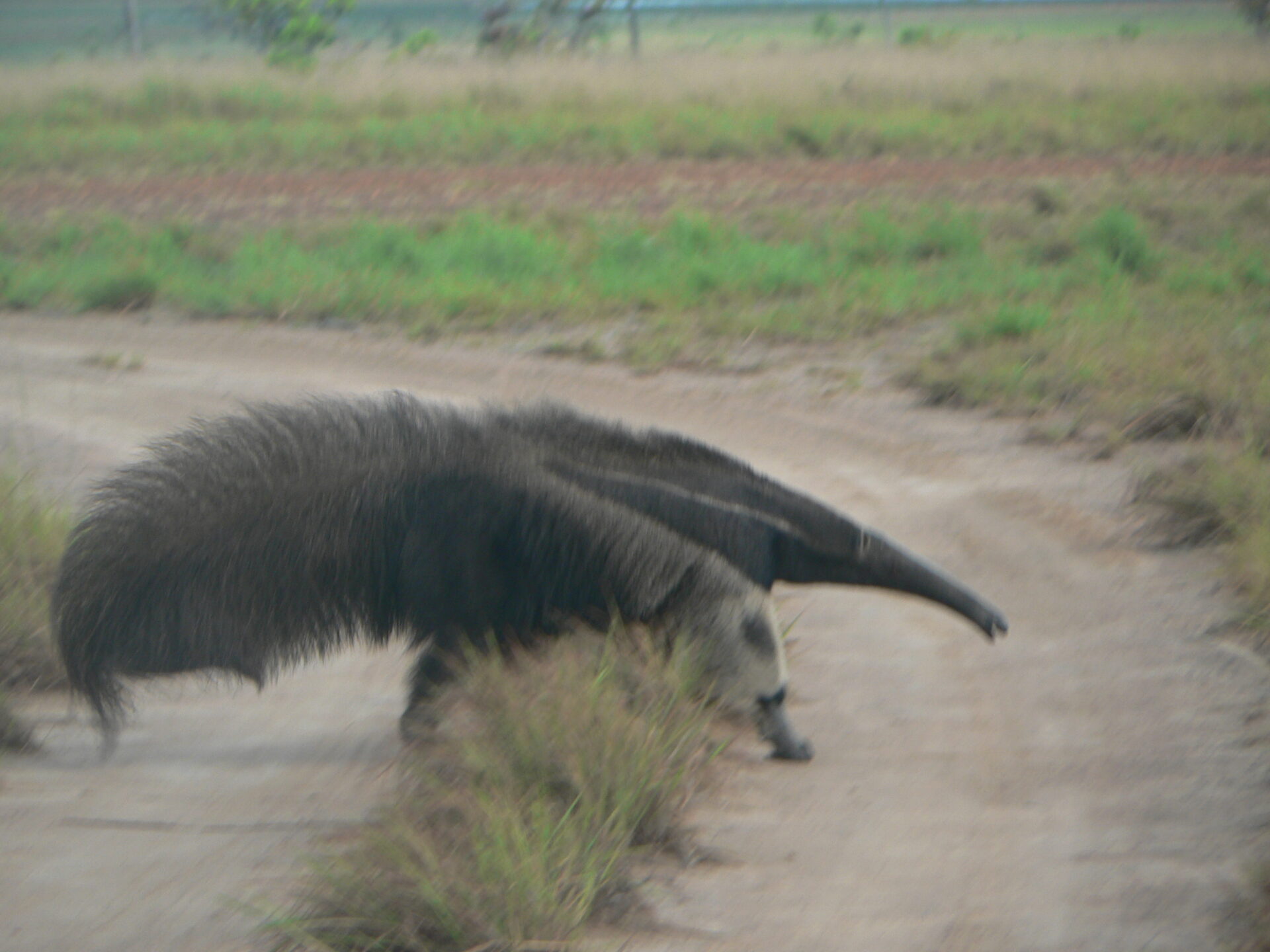
This morning, you’ll head out early to explore the rolling grasslands, where giant anteaters live. If you’re lucky, you might spot one of these impressive six-foot-long creatures digging into a termite mound for its breakfast. Giant anteaters usually live alone, except when a mother is raising her young, when males compete, or during mating season. Mother anteaters often carry their babies on their backs until they’re old enough to walk on their own.
In the evening, you can choose between a river trip or a birdwatching walk. Bird lovers can explore the patches of woodland or the forest along the riverbanks, where we’ll look for many bird species—including the Agami Heron, which is a highlight of the area. If you prefer, you can take an evening stroll along the airstrip to spot up to seven kinds of nightjars, as well as Double-striped Thick-knees out in the grasslands.
Overnight at Karanambu Lodge
Day 7: Karanambu Lodge to Georgetown (B, L)
There is time to travel out to search the savannah again for giant anteaters, if you didn’t spot one yesterday. Or head back to the Rupununi River by boat to look for wild Giant River Otters, Black Caiman and Arapaima along quiet stretches of river.
Return to the lodge for breakfast before heading across the savannah to Lethem and your flight back to Georgetown.
Overnight at Cara Lodge
Optional services (please ask for more details)
Demerara Historical River Tour
Dinner with the Singing Chef
Day 8: Georgetown and Paramaribo (B,L)
This morning, you’ll have an early start and enjoy breakfast at one of the local food stands with our host, guide, and chef, Delven Adams. Chef Delven will take us on a tour of Bourda Market, the biggest of Georgetown’s four markets. We’ll begin at the Guyana Shop, which sells locally made and packaged products, then continue into the bustling market itself, where we’ll meet some of the vendors Chef Delven buys from every day.
We’ll explore different sections of the market, including the fish market, meat stalls, and haberdashery area, where you can find everything from thread to rolls of fabric. There are plenty of dry goods too, like rice and the famous Demerara sugar. A visit to the bush medicine stalls is always fascinating—you’ll learn about traditional herbal remedies used by locals. Outside, you’ll get the chance to see, touch, and taste a wide variety of tropical fruits and vegetables that grow only in this part of the world.
As you shop, Chef Delven will buy ingredients—taking your suggestions for what you’d like to try later—before heading home to start preparing lunch. Meanwhile, we’ll continue on a city tour of Georgetown with an experienced local guide, who will share the city’s history, stories, and local culture.
During the city tour, you’ll visit important sites like the National Museum, which displays local wildlife in beautifully preserved old glass cases, and the Walter Roth Museum of Anthropology, home to artefacts and exhibits about Guyana’s Indigenous peoples and their way of life.
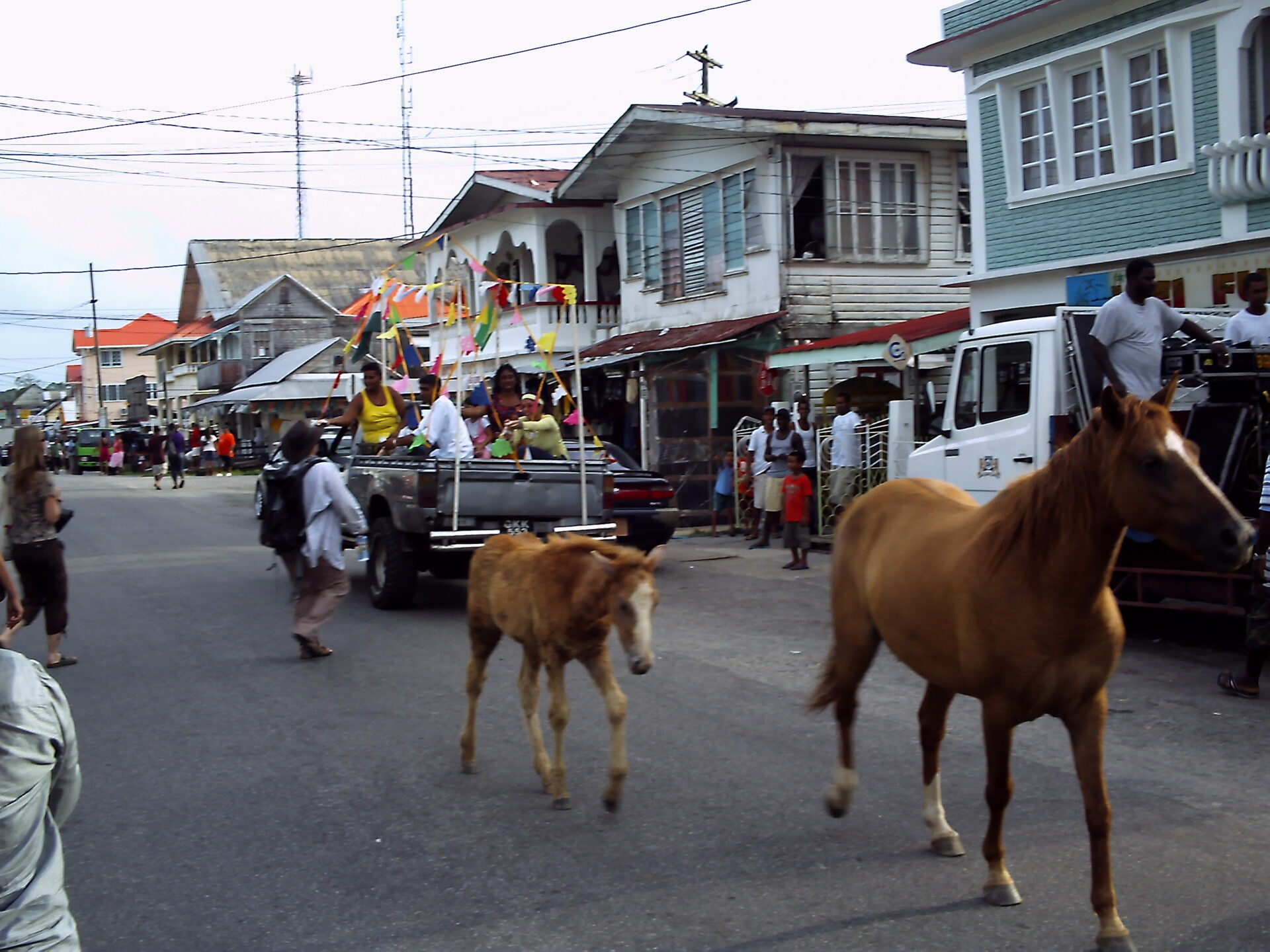
On this combination driving and walking tour, you’ll also see Georgetown’s elegant historic buildings, such as the Public Library, City Hall, Victoria Law Courts, St. Andrew’s Kirk, Stabroek Market (once described as a “bizarre bazaar”), and St. George’s Cathedral, one of the world’s tallest wooden buildings.
You’ll then visit the Botanical Gardens, which feature an impressive variety of tropical plants, and make a stop at a nearby pond—either in the gardens or at the National Park—to feed the endangered West Indian Manatees.
After your city tour, you’ll head to Backyard Café for lunch. As the name suggests, this cosy spot is literally in Chef Delven’s backyard—a hidden gem he’s turned into a private, open-air restaurant. If you’d like, you can join Chef Delven in the kitchen as he prepares a delicious meal using the fresh ingredients we bought in the morning. Or you can simply relax under the shaded arbor, sip on a homemade juice or a cold beer, and enjoy the aromas drifting from the kitchen. Once lunch is ready, you’ll enjoy a multi-course meal— take your time, because you’ll want to taste everything!
After lunch, you’ll be transferred to the airport for your flight to Suriname (note: the flight cost, approximately USD 325, is not included and may change).
Upon arrival in Paramaribo, you’ll check in at Eco Torarica Hotel, a former townhouse that’s been beautifully converted into one of the city’s most charming eco-friendly hotels. Located just a five-minute walk from the historic centre, it offers rooms with views of either the Suriname River or the hotel’s lush garden. It’s the perfect place to unwind and enjoy the relaxing, tropical atmosphere of Suriname.
Overnight in a standard room at Eco Torarica. (Check in time 1500hrs, Check out time 1200hrs)
Day 9: Paramaribo City and Commewijne tours (B,L)
Paramaribo, the capital of Suriname, has been recognized as a UNESCO World Heritage Site since 2002 for its remarkable collection of historic buildings.
We’ll begin our tour in the heart of the city with a visit to Fort Zeelandia, one of Paramaribo’s oldest and most important landmarks. Here, your guide will give you an in-depth tour of the fort and share stories about its fascinating past.
Next, you’ll continue on foot to explore Independence Square, surrounded by beautiful colonial-era buildings, including the Presidential Palace and the peaceful Palm Gardens. You’ll also stroll down Lim A Po Street, known as one of the prettiest streets in Paramaribo.
After our walk, you’ll take a scenic drive through the city to see more of its historic wooden architecture, stopping for photos at the Synagogue and Mosque, which stand side by side—a powerful symbol of Suriname’s harmony and cultural diversity. The next highlight is the St. Peter and Paul Cathedral, the tallest wooden building in the Western Hemisphere.
Please note: covered clothing is required when entering the cathedral
The city tour ends at the lively Waterkant, a riverside promenade along the Suriname River, where locals gather to relax, enjoy snacks, and take in the view.
Stop for lunch at a local restaurant, where you can taste traditional Surinamese flavours.
After lunch, you cross the Suriname River via the bridge to visit the Commewijne District, located just opposite Paramaribo. This area is known for its former colonial plantations, many of which have now become residential or natural areas. One of the most notable is Plantation Peperpot, located on the right bank of the river. Here, you’ll explore the old plantation grounds and visit the former workers’ living quarters, known as a Kampong. You’ll also spend some time in the Peperpot Nature Park, a lovely area known for its rich birdlife and small rainforest animals, including monkeys.
Your final stop will be Fort Nieuw Amsterdam, an open-air museum located at the strategic meeting point of the Commewijne and Suriname Rivers, near the Atlantic coast. Built by the British in the 18th century to protect the surrounding plantations, the fort is shaped like a five-sided polygon with bastions at each corner. You’ll see restored buildings such as the gunpowder house from 1740 and a coach house featuring 19th-century carriages. Don’t miss the pond where the magnificent Victoria amazonica, the world’s largest water lily, can often be seen floating on the surface.
Overnight in a standard room at Eco Torarica Hotel.
Optional services:
Sunset Dolphin Tour
Day 10: Paramaribo to Danpatti River Lodge (B,L,D)
This morning, you embark on your nature and cultural experience as you set off from Paramaribo.
After covering approximately 190 km, we reach the port of Atjoni, where we board a motorised canoe. The skilled crew will navigate the Upper Suriname River, famous for its rapids, to the Danpaati River Lodge.
Danpaati River Lodge
Danpaati River Lodge is a remote and peaceful oasis in the heart of nature, welcoming adventurous visitors who are looking for an escape from modern stresses. The lodge has a welcoming and airy lounge looking out on to the river, a pool surrounded by a yoga deck, and easy access to one of the few safe swimming spots on the Suriname River.
Accommodation is in generous A-frame-style cabins with carefully selected amenities, including fresh coffee service in the mornings and great views across the river and into the surrounding rainforest.
The day ends with an exciting cruise on the river to search for caiman lying on the banks.
Overnight at Danpaati River Lodge in a standard room.
Day 11: Visit to Maroon village and Saamaka Museum, forest walk /canoe river trip (B,L,D)
Today, you will visit Pikin Slee, one of the 12 villages that are affiliated with Danpaati. During our guided tour, you will be introduced to the rich traditions brought from Africa by their ancestors.
After the tour, you visit the Maroon Museum Saamaka, which is dedicated to the cultural heritage of the Saramak Maroon population. In the museum, you learn about the Maroon’s history and their ancient traditions and crafts.
Return to the lodge for lunch.
Rainforest visit
In the afternoon, you will walk in the woods to discover some of the rainforest’s secrets. Afterwards, you could opt for a massage combining traditional and Western techniques. Other available activities include exploring the surrounding area by fishing or taking a dugout canoe around the island.
After dinner, enjoy a traditional and cultural dance performance. The locals will perform traditional dances such as the Seketi, Awasa and Bandamba. Your guide will explain the cultural significance of each dance.
Overnight at Danpaati River Lodge in a standard room.
Day 12: Danpaati River Lodge to Paramaribo (B,L)
This morning there is still a little time to soak in the beautiful surroundings and take some final photos before setting off by dugout canoe from Danpaati to Atjoni, and from there back to Paramaribo by vehicle.
Overnight in a standard room at Eco Torarica Hotel.
Optional services:
Dinner at Mirosso
Day 13: Paramaribo to Kourou (B,L)
You’ll collect your packed breakfasts before setting off early so we can take our time to enjoy the journey. The first part of the trip takes you east along Suriname’s coastal road to the Albina border station.
Border formalities here are usually quick, and before long, you be crossing the Maroni River by ferry into French Guiana—known locally as Guyane. On arrival in St. Laurent du Maroni, our French guide will meet us and assist with customs and immigration procedures.
Since French Guiana is officially part of France, you’ll actually be entering the European Union. You’ll notice the European influence right away—cars like Mercedes, Volkswagens, and Peugeots on the road, well-maintained highways, cafés serving espresso, and the Euro as the local currency.
Once in St. Laurent, you’ll take a short city tour, including a visit to the Camp de la Transportation, a remarkably well-preserved historical site. This former compound once served as a holding and sorting centre for enslaved people, indentured laborers, and later for French prisoners and political exiles before they were sent to different penal colonies across French Guiana.
You’ll then continue our journey, enjoying a packed lunches along the way, as you travel to the Centre Spatiale Guyanais (Guiana Space Centre) for a guided tour. The tour typically includes a coach ride through the massive complex, with stops at assembly buildings, launch pads, and control centres. Although the official tour is conducted in French, your guide will provide English translations where possible.
Please note that visits to both the Space Centre and Devil’s Island are subject to unexpected closures due to technical reasons or rocket launch preparations. While launch dates are announced in advance, they can change at short notice because of weather or other conditions—sometimes by hours, days, or even weeks. On launch days, and occasionally for a few days before or after, both the Space Centre and Devil’s Island remain closed for safety reasons.
We appreciate your understanding in case of any itinerary changes, and we’ll do our best to reschedule visits or offer alternative experiences. The good news? You just might be lucky enough to witness a rocket launch in person—an unforgettable sight!
Hotel Atlantis
Hotel Atlantis is a modern business hotel on the edge of Bois Devil Lake. It offers air-conditioned rooms, telephones, Wi-Fi, satellite television and refrigerators. The generous lobby has a patio overlooking the pool, lake and tennis courts. The modern restaurant offers French and Creole cuisine and an excellent wine selection.
Overnight in a standard room at Hotel Atlantis.
(Check-in time 14.00, Check-out time 11.30)
Day 14: Devil's Island, Kourou and Cayenne (B,L)
After an early breakfast, you’ll transfer to the dock in Kourou to begin your journey to the Îles du Salut, often referred to collectively as “Devil’s Island.” In reality, this name describes a group of three small islands—Île Royale, Île Saint-Joseph, and Île du Diable—located about seven miles off the coast of Kourou.
You’ll set sail aboard a catamaran, heading first to Île Royale, the largest and most accessible of the three. These islands have a long and fascinating history, dating back to 1762, when they were used as a base for explorers, later as a transit point for enslaved people, and eventually as a notorious French penal colony that held political prisoners and convicts.
The southernmost island, Île Saint-Joseph, earned the nickname “the silent island” because prisoners there were forbidden to speak to anyone—not even guards or other inmates. The famous convict Henri Charrière, known as Papillon, claimed to have spent two years there in solitary confinement. The island’s harsh conditions also gave it another grim nickname: “the man-eater.”
Île Royale holds the oldest and largest collection of buildings from the penal era, including an old church, administrative offices, and officers’ quarters. Today, it also has a restaurant and small hotel for visitors. Although Île du Diable—the actual “Devil’s Island”—is visible from Île Royale, it’s off-limits to tourists because of its steep, rocky shores and strong currents. This is where the most famous prisoner, Captain Alfred Dreyfus, was exiled. Papillon also claimed to have made his daring escape from there on a homemade coconut raft.
Our boat will dock at Île Royale, where you’ll have time to explore the island at your own pace. You can wander through the old prison cells, dormitories, and hospital ruins, and visit the small cemetery for children behind the former hospital. When you’ve finished exploring, you can relax in the shade near the dock—there are benches under large trees where you can catch a cool ocean breeze. Keep an eye on the rocks by the shoreline; sea turtles are often seen foraging there.
Return to Kourou by catamaran and transfer to your Cayenne hotel.
Hotel Central is situated in the heart of Cayenne close to Palmistes Square, and just a short walk from the shopping streets and the business district.
Overnight at Central Hotel in a standard room
Day 15: Departure (B)
Today is the last day of your Three Guianas tour.
If your flight is later in the day, you might enjoy a tour of Cayenne city. We’d be happy to organise a city tour or airport transfer- ask us for more details.
Optional services:
Cayenne City Tour
Pick up and transfer to Cheddi Jagan International Airport for your departing flight
Prices From $9,690 / £7,878 per person
What's Included?
Double or twin accommodation, meals as listed, all road and river transfers as listed, internal flights in Guyana, activities as described, local guides, Kaieteur National Park fee, Iwokrama Forest User Fee, Iwokrama Canopy Walkway fee
What's Not Included?
Airport transfers, alcoholic drinks except where mentioned, meals not listed, airport departure tax, international flights ( GUMAIR flight Suriname to Guyana not included, approx. USD 385), visas, personal items, tips
Accommodation
While no one comes to this region looking for a luxury travel experience, in the main cities and towns your accommodation will be in comfortable, well-appointed hotels such as the Eco Torarica in Paramaribo, the Atlantis in Kourou, the Central Hotel in Cayenne, and Cara Lodge in Georgetown, which offer a range of modern facilities with a local flavour.
Sleeping within the rainforest and savannah is a fantastic experience, and comes as second nature after a day or two.
Rainforest and savannah lodges
Guyana and Suriname have only a handful of lodges in their rainforests and savannahs, and most of these are small and remote establishments with fewer than a dozen beds.
Rooms are comfortable and spacious and you will be provided with a mosquito net, but please note that in remote locations insects can enter the rooms at night. Your guide will give any advice or help if you are concerned
Karanambu a is a historic eco-lodge on the Rupununi River, renowned for its wildlife conservation work—especially with giant river otters—and its authentic immersion in the savannah and wetland ecosystems.
Atta Rainforest Lodge has a strong science and nature focus and provides amply comfortable hospitality as well as a chance to learn about the vivid surrounding ecosystems.
Running water and at least a few hours of electricity are available at each lodge, and amenities are always clean and comfortable.
Tour Staff
A variety of expert local guides may accompany you on this tour, all of whom have many years’ experience and plenty of enthusiasm to make sure your trip is a great one.
Meals
Almost all dietary requirements can be catered for – please enquire in advance as we have to organise supplies.
On tour the food is of a very good standard using locally grown and produced ingredients including beef, chicken, fish and plenty of vegetables and fruit.
The culinary traditions of Guyana, Suriname, and French Guiana are rich and diverse, reflecting the unique cultural and historical backgrounds of each country and giving a distinctive flavour to their cuisines.
Guyanese cuisine is influenced by Indian, African, Chinese, Creole, English, Portuguese and Amerindian traditions. Try dishes such as Pepper Pot, meat cooked in casareep (bitter casava) juice with peppers and herbs. Garlic pork, a specialty at Christmas. Curry and Roti is popular everywhere. Seafood is plentiful and varied, as is the wide variety of tropical fruit and vegetables. Try casava and yams.
Suriname, like Guyana is muti-cultural and this is very much reflected in their cuisine. Indonesian warung-style restaurants are popular with foods like nasi goreng and bami, you’ll also find African-inspired dishes and Indian Roti shops.
French Guiana is a mix of European, Caribbean and Asian Cuisine, you can visit the Hmong Market on Sundays for a delicious bowl of Asian noodles.
Rum is the most popular drink and Guyana blends some of the world’s best. There are many inexpensive rums that are an excellent rum with mixers and tropical fruit juices. Beer lovers are also well catered to with good local beers widely available.
The water from the tap is brownish in colour, which is from the tannin in the water, and not polluted. However, it is recommended that bottled water, which is readily available, is used for drinking. Remember to drink plenty of it to prevent dehydration as it does get humid in this region.
Activity Level
You need to be have a reasonable level of walking fitness to hike the mountain walks, although the walks are not mandatory.
Most days you will walk for a couple of hours, spotting wildlife. The humidity can make a short walk feel a lot harder than it is, so take on board lots of water.
The trip is open to anyone who wants to experience the rainforest and who wants it to be active and interesting without it being demanding or without time to relax.
In the rainforest, we wake early, around 06.00-08.00 as most animals are active before the heat of the day kicks in. We breakfast, either on the go or back at the hotel, and enjoy a trip during the morning.
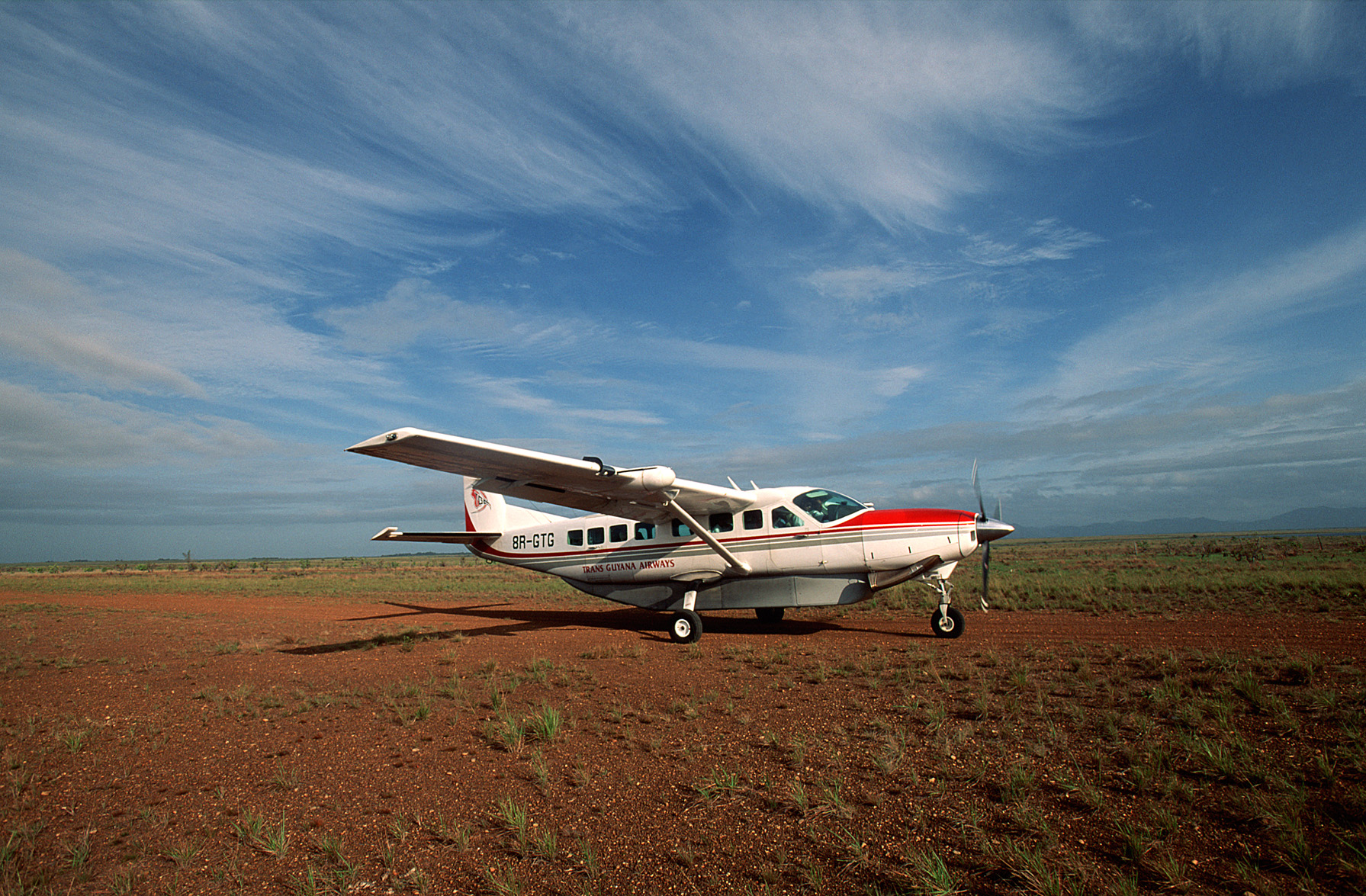
Transport could be by dugout canoe, 4×4, light Cessna plane or on foot. Guyana, Suriname and French Guiana are fantastic places to travel around as adventure awaits around every corner.
After lunch, we take part in another activity, or move to new lodgings, settle in, and then head out at dusk to see the wildlife once again.
Night walks are possible in some areas – or you may choose to relax – then it is dinner and time to recount the day’s highlights.
Practical Information
Introduction to Guyana
Guyana is the only English-speaking country on the South American continent and has a Caribbean feel.
It is a destination for the nature lover looking for an off-the-beaten-path destination with many attractions. Guyana offers pristine rainforest, abundant wildlife, jaguars and the mighty Kaieteur Falls.
Start your adventure in the melting pot that is the country’s capital – Georgetown. Here Hindu, Muslim and Christian cultures blend in harmony.
Head off to visit the breathtaking Kaieteur Falls – the world’s highest single-drop waterfall.
Then the interior beckons. Jungle and Savannah await. With luck you might spot the Cock o’ the rock or a harpy eagle.
Bigger mammals such as the ant eater might surprise you or if incredibly lucky the mighty jaguar. Travel by road or river and stay in rustic but comfortable lodges – all with an authentic Guyanese welcome.
Guyana will be an unforgettable adventure.
Geography of Guyana
Guyana has five natural habitats to discover, the most famous of which is is its dense rain forest.
This ‘jungle’ is also known as the Forested Highland Region and is in the south of the country, and is very sparsely populated.
The majority (around 90%) of Guyana’s population lives in a marshy plain on the Atlantic coast, known as the low coastal plain.
Most of the country’s mineral deposits (bauxite, gold, diamonds) are found a little further inshore in that is called the white sand belt.
The south west of the country gives way to a desert savannah which then becomes an interior savannah.
From here, the grasslands and mountains of the interior highlands start to rise towards the borders with Brazil and Venezuela.
This is the largest of Guyana’s geographical areas and consists a series of plateaus, flat-topped mountains, and savannahs.
The Pakaraima Mountains dominate the western part of the interior highlands and include Mount Roraima, Guyana’s highest peak at 2,772m (9,094 ft) on the Venezuelan border.
The largest expanse of grassland, the Rupununi Savannah, covers about 15,000 square kilometres in southern Guyana.
Guyana has three large rivers, the Essequibo at 1,010km(628 miles), the Courantyne River (which forms a natural border with Suriname) at 724kms (450 miles), and the Berbice – 595kms (370 miles).
Weather in Guyana
Guyana is a hot and humid country. February and March are prime times to visit, along with Aug-Jan. Read our guide to Guyana’s weather for more.
The mean shade temperature is 27°C, while maximum is 31°C and the minimum is 24°C. The heat is greatly tempered by cooling breezes from the sea.
There are two wet seasons in the north of the country, from May to June, and from December to January.
The south and the Rupununi region receive one wet season from May to July.
All wet seasons may extend into months either side.
Rainfall averages 2,300 mm a year in Georgetown.
Kit list
Good kit is vital for every trip.
Book with Andean Trails and get 15% off Páramo’s fantastic ethical and high performance outdoor gear.
Overview
Guyana is a hot and humid country.
Take sunscreen, sun glasses and a hat to Guyana.
It can rain at any time, so always have a poncho/waterproof jacket handy.
Give plenty of thought to kit selection, and try to keep weight down.
Passenger/s traveling on internal flights in Guyana are allowed a free baggage allowance of 20lbs/9.1KG exceeding this weight passenger/s will incur a cost of GY$150.00 (price subject to change) equivalent to US$ 0.77cents per pound. Please note that additional baggage allowance is subject to availability and cannot be confirmed until day/time of check-in by the airline. We can book excess weight on your behalf but it is subject to being within the payload of the aircraft and at the discretion of the airline. We understand you may want more than 20lbs/9.1KG of baggage and wish to have guaranteed excess baggage/weight and so an alternative is to pre-book an extra seat on the flight which will afford you 175lbs/79.4KG for you to use individually or for your group.
Below is a more detailed guide.
Detailed kit list
- Good binoculars.
- Camera and film / memory cards (take at least twice the amount you think you will need!).
- Tight-weave, light weight long trousers.
- Quick dry socks.
- Rain suit or long poncho (100% waterproof – test before you leave home).
- Long-sleeved tight-weave shirts.
- T-shirts.
- A warm jumper – it can feel cold on some boat journeys.
- Water bottle (2 litres approx.) & purification tablets.
- Sun cream (high factor, min. 30+) and lip salve.
- A broad-brimmed hat that will not come off on windy boat-rides.
- Shorts.
- Sunglasses with UV filter.
- A pair of trainers.
- Ankle high hiking boots.
- Insect repellent.
- The original and a photocopy of your passport.
- Yellow fever inoculation certificate.
- A large, bright head torch, spare batteries and bulb.
- Cash (small denomination bills, USD or GBP sterling) for souvenirs at the lodge, alcoholic beverages, etc.
- Daypack (at least 30 litres). Comfortable and with waterproof lining or cover.
- Personal first-aid kit to include: painkillers, plasters (band-aids), moleskin, antibiotic cream, general antibiotics (ask your GP), after-bite (tiger balm), anti-diarrhoea tablets, throat lozenges, re-hydration salts & personal medication.
- Towel & wash-kit.
- Wet Wipes/antiseptic hand-wash cream.
- Head-lamp (plus spare bulb and batteries).
- Penknife.
- Travel alarm clock.
- Plastic bags – ‘Zip-loc’ & tough bin liners.
- Book, e-book, mp3 player/ipod or other to help pass the time.
- Extra snacks i.e. cereal bars or favourite chocolate bars.
Miscellaneous others
- Money belt.
- Passport.
- U.S. dollars / GBP sterling cash, mixed-denomination notes, undamaged and unmarked.
- ATM cash/credit card.
- Any inoculation certificates.
- Personal & medical insurance certificates.
- Presents e.g. Postcards from home.
- Comfortable clothes for travel, smart clothes for Georgetown
ATOL holiday protection
Andean Trails has 25 years of experience of putting together the best South America holidays.
We pay a fee to the CAA for every licensable passenger we book since we hold an Air Travel Organiser’s Licence granted by the Civil Aviation Authority. In the unlikely event of our insolvency, the CAA will ensure that you are not stranded abroad and will arrange to refund any money you have paid to us for an advance booking.
We also offer ATOL (Civil Aviation Authority) protected holidays to give our customers peace of mind when booking and travelling.
When you buy an ATOL protected air holiday package from Andean Trails Ltd you will receive a Confirmation Invoice from us confirming your arrangements and your protection under our Air Travel Organiser’s Licence number 6275.
You can read more about ATOL, who is covered and what protections you have if not ATOL-covered, on our ATOL page.
What is ATOL?
The CAA’s ATOL scheme offers protection to your money and your holiday if you book with us. Not everybody is covered (see ‘Who is covered?’ for more), as you must purchase an ‘air package holiday’ with Andean Trails to be protected.
And ‘air package holiday’ is defined as including a flight and some ground services (hotel, transfer, trek etc). This is also known as an ‘ATOL-protected holiday’.
Who is covered?
To be covered by ATOL, you must book a flight and some ground services with us and be from the UK. If you are from the UK and only book ground services and no flights, you are not covered by ATOL (see below for more on how non-ATOL clients are covered).
If you are outside the UK and buy flights with us, you will be ATOL protected IF any of the flights booked with Andean Trails touches/stops in the UK at any point during your holiday package booked with us.
If you buy your flights elsewhere, please check with that agent if you are ATOL protected. Be careful with online flight purchases and make sure you know what protection you have, if any, before paying for flights.
Not all holiday or travel services offered and sold by us will be protected by the ATOL scheme. Please ask us to confirm what protection may apply to your booking.
For land only holidays not involving any air travel, in accordance with “The Package Travel, Package Holidays and Package Tours Regulations 1992”, all UK passengers booking with Andean Trails Ltd. are fully protected for the initial deposit and subsequently the balance of all money paid to us, arising from cancellation or curtailment of travel arrangements due to the insolvency of Andean Trails.
I’m not ATOL covered, what protection do I have?
If you are not ATOL covered, any payments you make to us go to a Trust account.
We can only access this money once your tour has been completed, meaning that if anything happens to Andean Trails Limited while you are on holiday, then your money is secure and you can either complete the trip or be able to make it home.
If you pay for your holiday with a credit card, some offer payment protection – please check with your cardholder.
You also should have cancellation protection written into your insurance (which we recommend you have at the time of booking) in case you need to cancel.
Atta rainforest lodge, Guyana
Get up into the trees like monkeys at Atta Lodge, for some up close and personal wildlife viewing.
The major attraction here is a 154m/505ft long canopy walkway, with four platforms some up to 30m into the canopy.
An array of birds and animals you struggle to see from the forest floor soon zoom into view.
Among these are endangered and protected species such as the jaguar, the bullet wood tree, greenheart and the waramadan (endemic in Guyana only to the Iwokrama Forest).
The lodge provides comfortable accommodation with 8 private rooms, three home-cooked meals per day, and ample opportunities to explore the surrounding rainforest by foot, canoe, or 4X4.
Caiman House, Guyana
You’ll need to keep quiet in your kayak as you help researchers from Caiman House search and tag black caiman at night time.
By staying here, you’ll get an inside look at the work of those trying to protect this endangered species.
You can help to collect the data of any captured caiman – some reaching up to 12 feet in length! – before they are released back into the wild.
Caiman House is once-in-a-lifetime and thrilling part to any tour of Guyana, especially for wildlife enthusiasts who can also look out for snakes, frogs, bird spiders and more
Georgetown, Guyana
The Atlantic gateway to Guyana, Georgetown is a fascinating mix of people, history fusions.
The ex-British colony contains influences from Amerindians, Asia, Brazil and more, making it a lively and welcoming destination.
The Natural History Museum is well worth a visit, as well as the world’s largest wooden cathedral and the thrumming market.
English is widely spoken and friendly local people are normally up for a chat about the unique atmosphere of Georgetown.
Iwokrama Field Station , Guyana
Deep into Guyana’s enormous rainforest lies Iwokrama, a one million acre wilderness full of wildlife.
Birds, trees frogs and the elusive puma live in the forests, whose verdant canopy you can enjoy from the Turtle Mountain vantage point.
The area is protected and known as Iwokrama International Centre for Rainforest Conservation, with the full involvement of the local people.
You can see their history in the Amerindian petroglyphs close to some rivers, a fascinating insight into how animals and humans have coexisted for centuries in this pristine rainforest.
Kaieteur Falls, Guyana
Flying over the jungle canopy, the views confirm that there are no other falls in the world with the magnitude of the sheer drop existing at Kaieteur.
Being so remote, you can walk right up to the flowing water, which gushes 822 feet into a deep and forested gorge.
Look for Golden frogs, unique to a tiny area, living in bromeliads growing in the warm, humid air.
Most likely your group will be the only souls in this remote location, adding to its incredible appeal.
Karanambu Ranch, Guyana
Famous for rescuing orphaned giant river otters, Karanambu also represents the spirit of travel of old.
An outpost, miles from civilisation, there’s a warm welcome and great wildlife.
See the giant Victoria Regis water lily bloom at dusk, or cruise the river looking for giant otters and caiman.
If you wake early enough, you may be able to find a giant anteater snaffling around for a treat.
Sadly, Diane McTurk is no longer with us, but the ranch continues to write its own chapters in the history of conservation.
Roraima Mountains, Guyana
Rumoured to have inspired parts of Conan Doyle’s Lost World book, ‘Tepuys’, or table top mountains, after visiting, it’s easy to see why.
From the sabanna that links Guyana’s western front with Venuzuela, the Tepuys rise dramatically.
They provide unique eco-zones for many species and the lunar-like surface is home to species found nowhere else on earth.
Waterfalls, rapids and rainforest criss-cross the various faces and sections of the Tepuys, making Mount Roraima one of the most acclaimed sights in South America.
Available Dates
19th Sep 2026 - From $9690 / £7877.97
2026 price, per person, shared room basis.Single supplement applies
Private tour available (min. two people): please enquire
14th Nov 2026 - From $9690 / £7877.97
2026 price, per person, shared room basis.Single supplement applies
Private tour available (min. two people): please enquire

Dates & Prices
Select an available date to view pricing and information for that particular trip.
Guide price in USD per person, shared room basis
Single supplement from USD1,473
Private tour available (min. two people): please enquire
Can’t find what you’re looking for? Get in Touch
+44 (0)131 378 5593
+44 (0)131 554 6025
Suggested Trips
Chalalan, Bolivia Amazon Eco-lodge
https://www.andeantrails.co.uk/tour/chalalan-amazon-ecolodge/ a Tailor Made Tour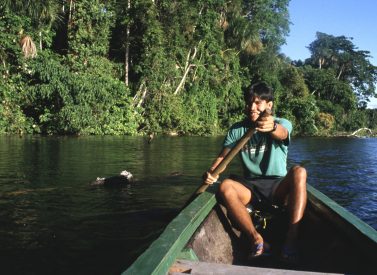

Prices From $1,217 / £989 per person
Duration: 5
Capacity: 30 people
More on Chalalan Eco-lodge. You stay at Chalalan eco-lodge, a community tourism project designed to benefit the whole community. The lodge has created a sustainable economic activity while preserving the resources of Madidi National park, whose varied eco-systems we explore. Our native guide leads us on trails around lakes and to…Tambopata Research Centre
https://www.andeantrails.co.uk/tour/tambopata-research-centre/ a Group Tour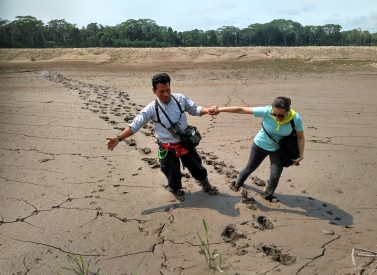

Prices From $1,545 / £1,256 per person
Duration: 4
Capacity: 32 people
More on Tambopata Research Centre You visit the Tambopata Research Centre, also known as TRC. Here, you can see the work being undertaken by researchers there, as well a visit a huge macaw lick, oxbow lakes and enjoy jungle walks. There are a wide variety of activities you can choose…