From: £2,212
From: $2,945
We organise a pick-up at Lima Airport.
You will be met and taken to a hotel in Lima.
We leave Lima early by public bus for a fascinating journey of contrasts that will end amid the towering high Andes at the small highland city of Huaraz. We head north through the coastal desert as far as Pativilca, then turn inland and begin our climb northeastward into the Andes.
We follow the Fortaleza valley, the fertile cultivated river banks contrasting dramatically with the barren mountain sides. Cacti gradually give way to denser vegetation and then puna grassland as we ascend to the highest point on our journey, Conococha (4,050m/13,287ft).
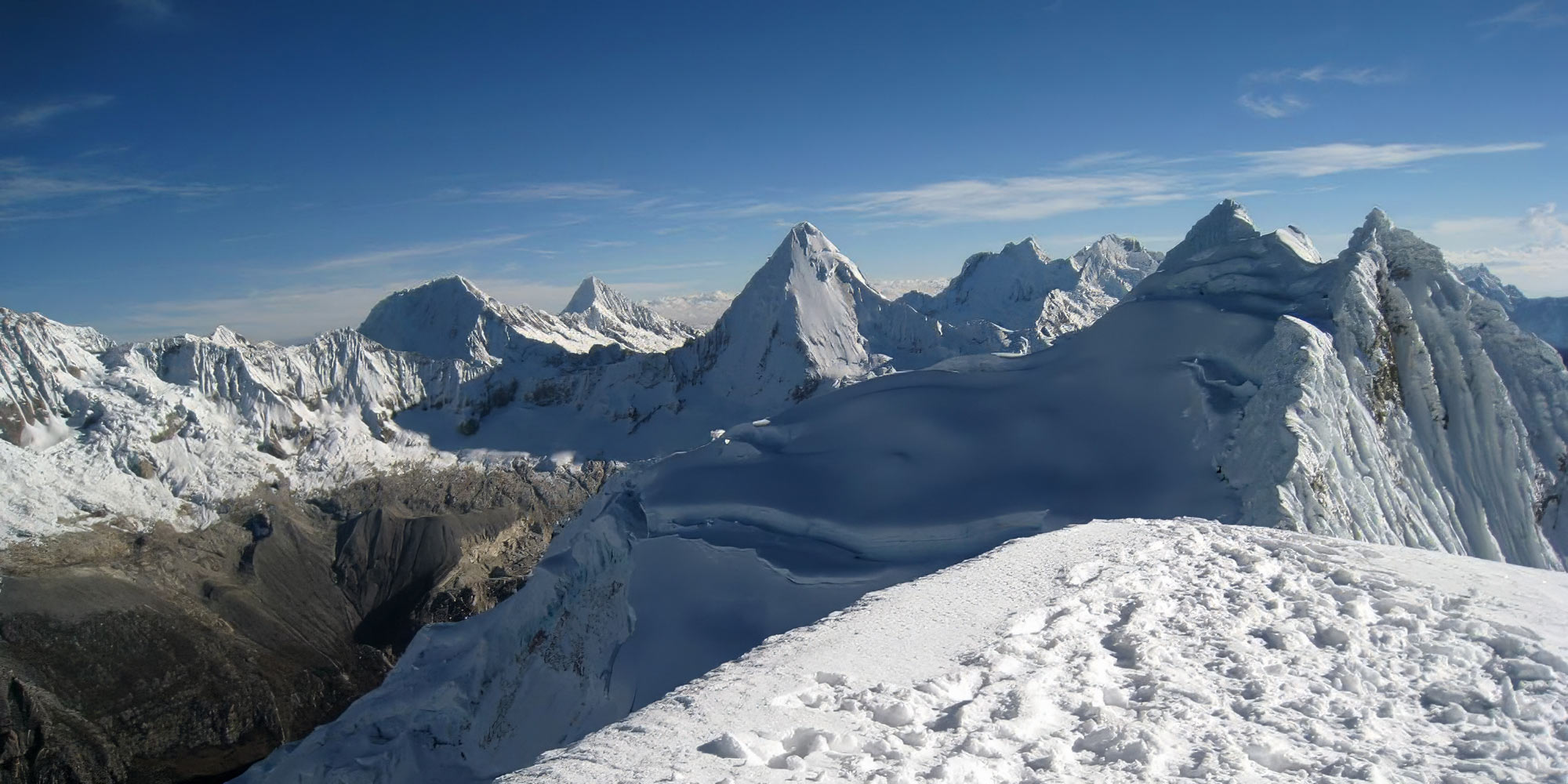
We turn north into the Callejón de Huaylas and enter a different world, the huge snow peaks of the Cordillera Blanca dominating the landscape.
We arrive in Huaraz (3,090m/10,138ft) late afternoon and check into our hotel.
Trek briefing this morning to go over the itinerary.
Later there is time for a walk to see nearby ruins and wander around Huaraz, depending on how you are adapting to the high altitude.
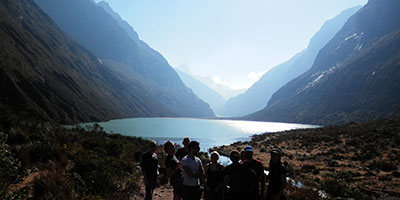
Today we start our acclimatisation by heading up to 4,500m/14,764ft and to the beautiful Laguna Churup. We listen to our bodies and see how well we are acclimatising, taking it very slowly in the thin mountain air.
Mount Churup’s reflection in the clear waters of Laguna Churup is the reward for today’s efforts, and well worth it as the peak provides a stunning backdrop to the laguna.
We return to Huaraz and our hotel, maintaining the mountaineering rule of acclimatisation – walk high, sleep low.
Today we drive to the start of the trek. The views are fabulous as we travel along the agricultural valley of Callejón de Huaylas.
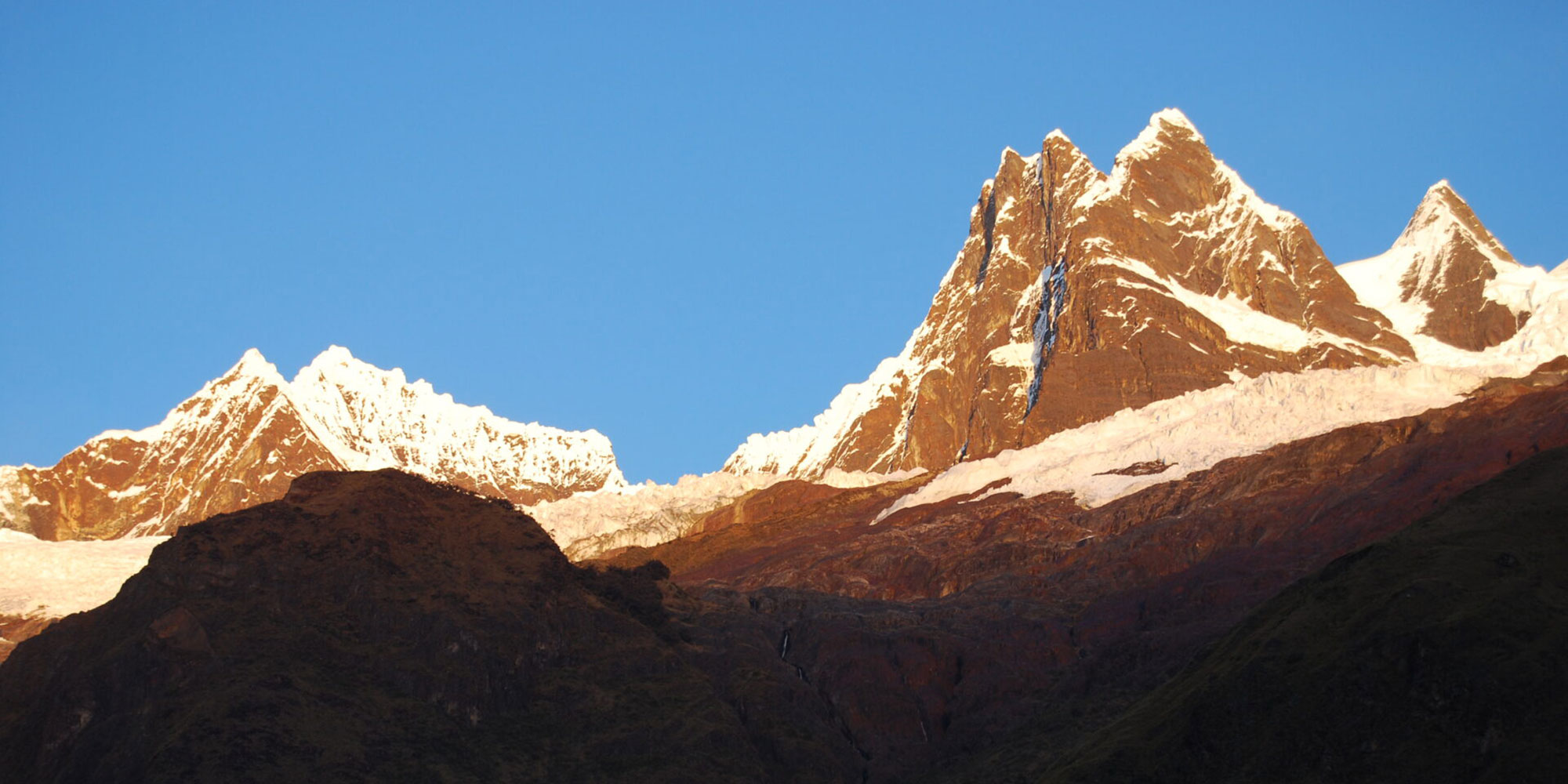
We’ll see some of the Cordillera Blanca’s highest, most impressive peaks: Copa (6,188m/20,303ft), Hualcán (6,122m/20,086ft), Huascarán (6,768m/22,206ft), the three jagged peaks of Huandoy (the highest is 6,359m/20,864ft) and Santa Cruz (6,259m/20,536ft).
After 3 or 4 hours we arrive at Hualcayán (3,000m/9,843ft) where our team load up the donkeys with all the kit and food for the trek.
We start walking – the path leading upwards, zig-zagging steeply and offering superb views back over the Callejón. As we climb we can look down into the deep gorge of Quebrada de Los Cedros which falls away to the west. Gnarled, red-barked quenual forests line the valley sides, and deep blue lakes lie below.
We set up camp for the first night at Huishca (4,000m/13,100ft), amid amazing mountain scenery.
Today we continue upwards towards our first pass.
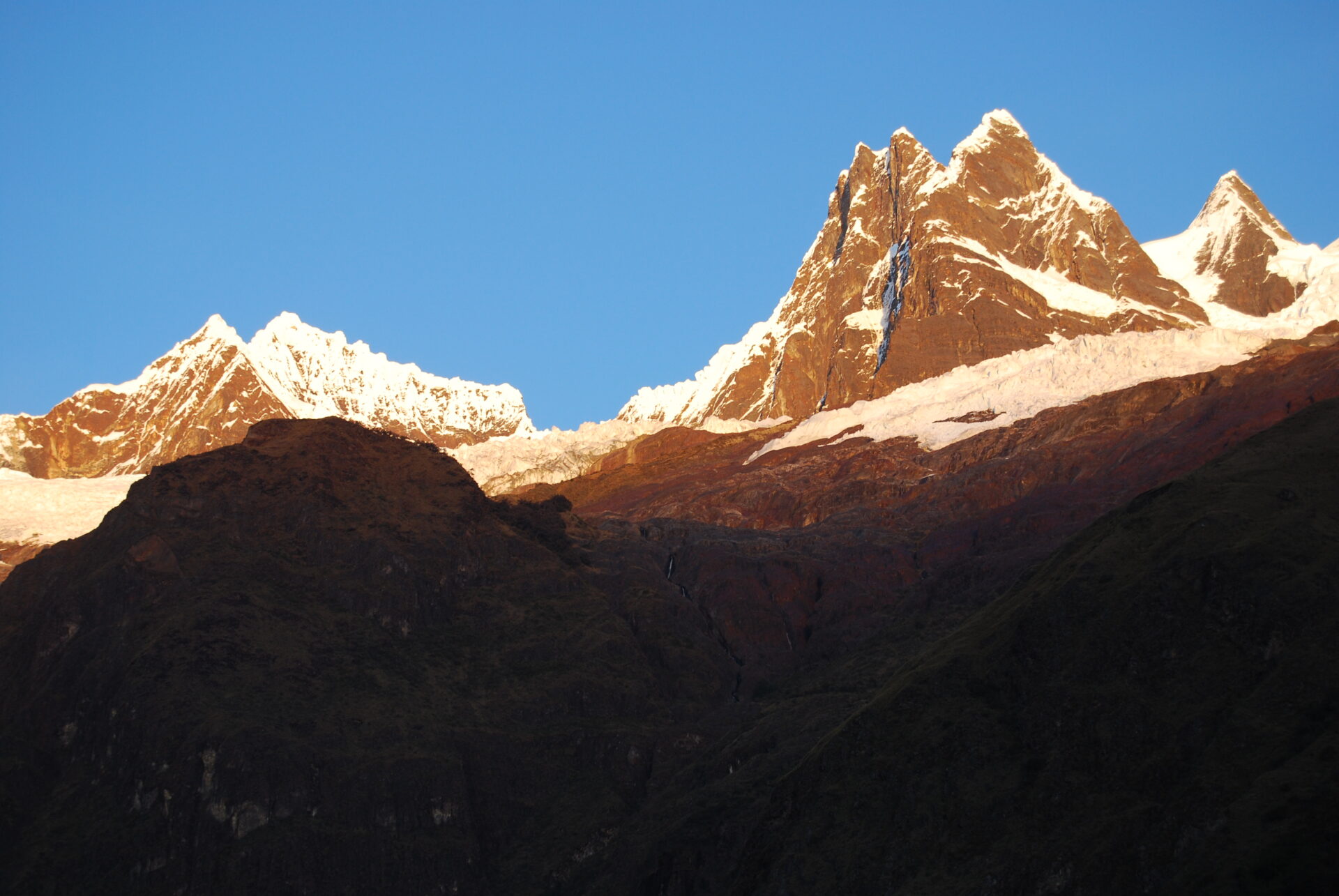
We pass Laguna Cullicocha, dammed for hydro-electric power, and continue beneath the three sharp and spectacular peaks of Santa Cruz. Long-eared, rabbit-like viscachas leap around amongst the boulders as we disturb them from their sunbathing.
Our first pass, Paso de Los Cedros, is high at 4,850m/15,910ft, in fact the highest on the trek.
We then make a welcome descent to our second camp at Osoruri, 4,500m/15,100ft.
Today we start to climb again, but only a short distance, to the second pass, the Osoruri Pass at 4,750m/15,580ft, followed by a long descent into the Quebrada de Los Cedros valley below.
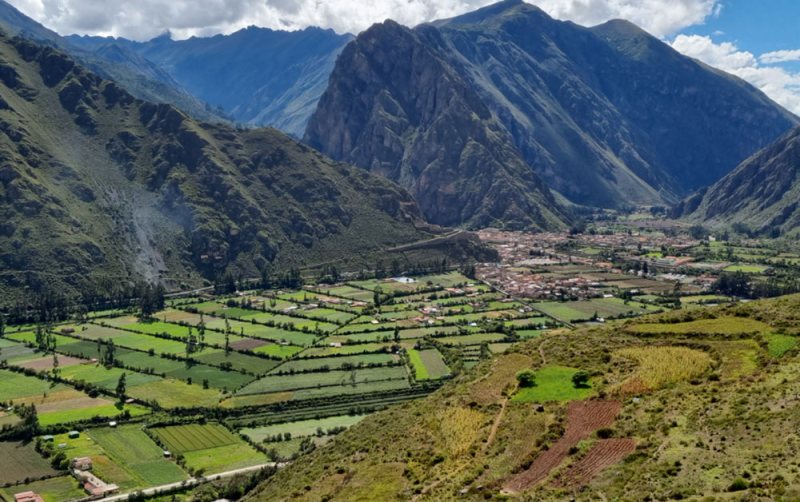
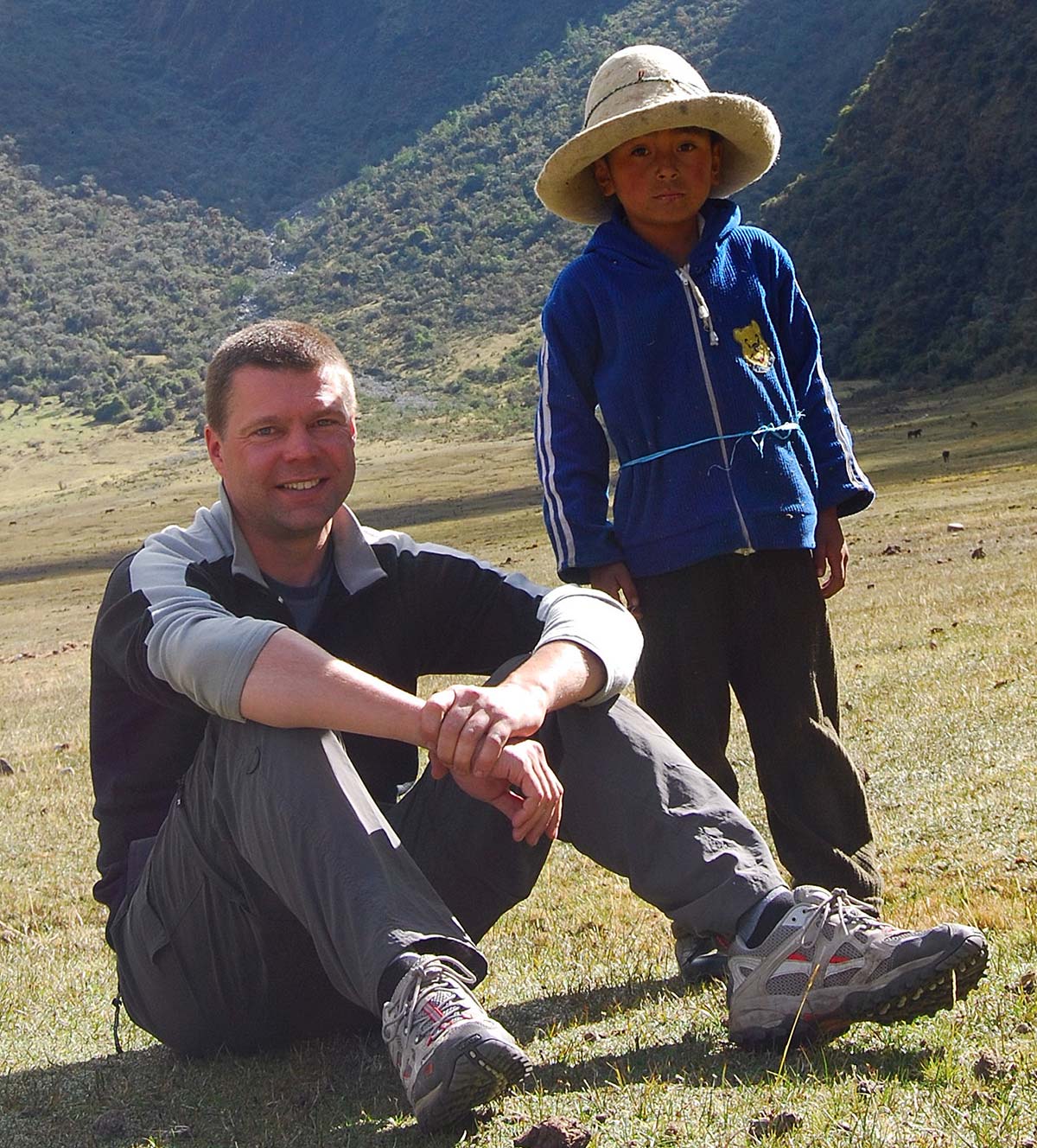
We pass through small traditional farming communities, usually just a few adobe houses scattered across the valley floor. The people have potato fields often perched high on the valley sides, some bean plots, and usually small flocks of sheep and goats.
Young children often look after the animals, shepherding them from one grazing area to another, turning to stare and giggle at passing strangers.
We enjoy a gentle walk up the valley and gain some insight into life in these remote Andean valleys. The path follows the river banks, with beautiful waterfalls cascading down from the peaks all around. Milluacocha lies to the west and there is a superb panorama of snow-capped mountains ahead.
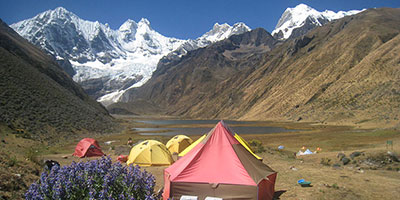
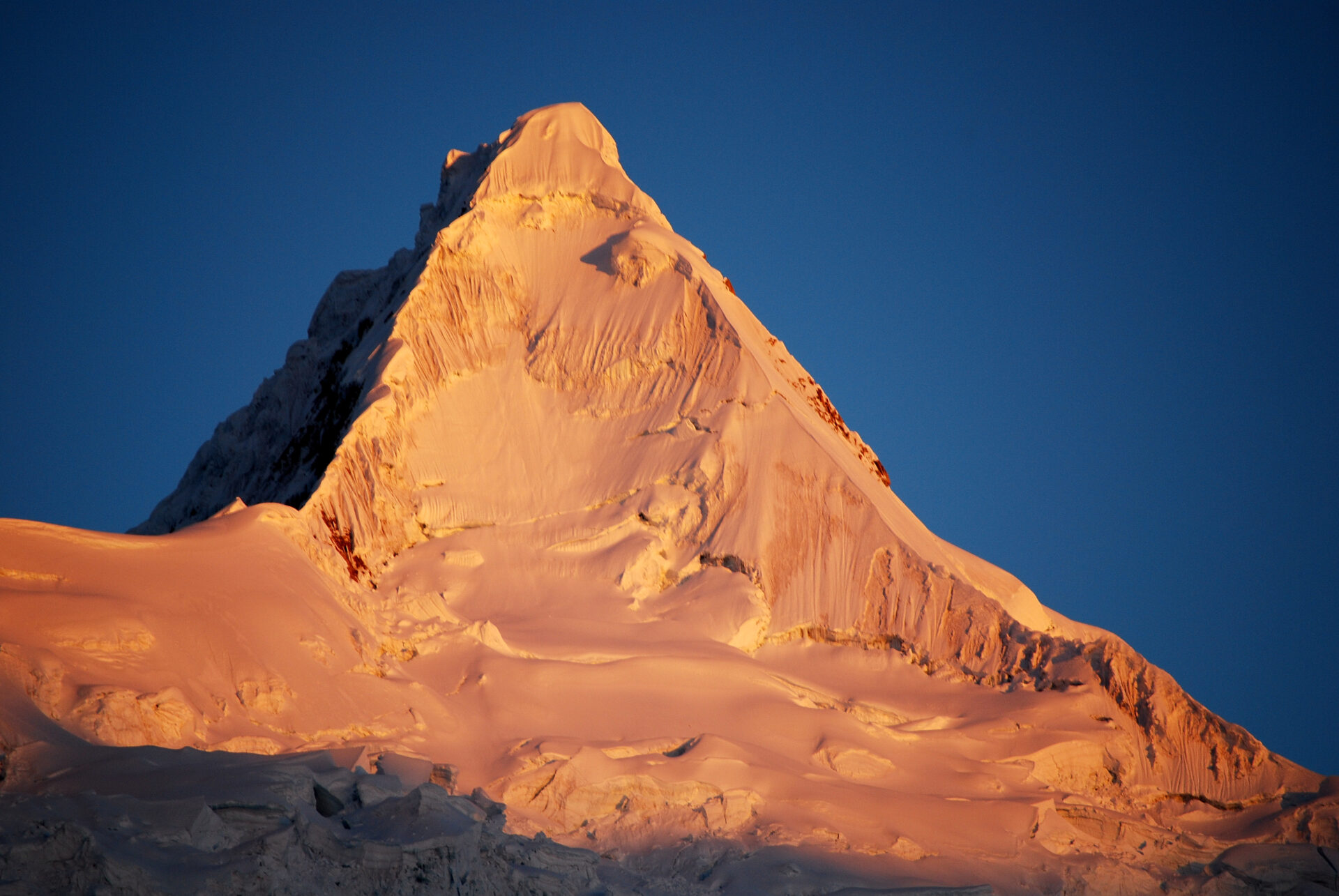
Tonight we camp at Jancarurish camp (4,200m/13,780ft) at the base of Alpamayo (5,947m/19,512ft).
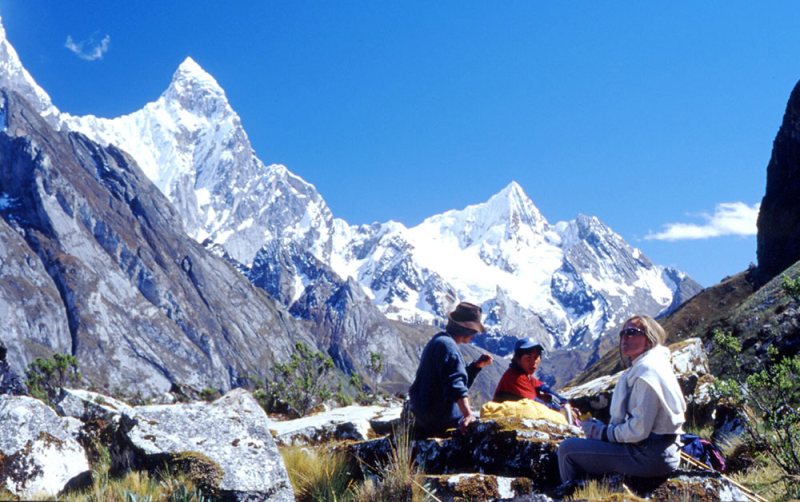
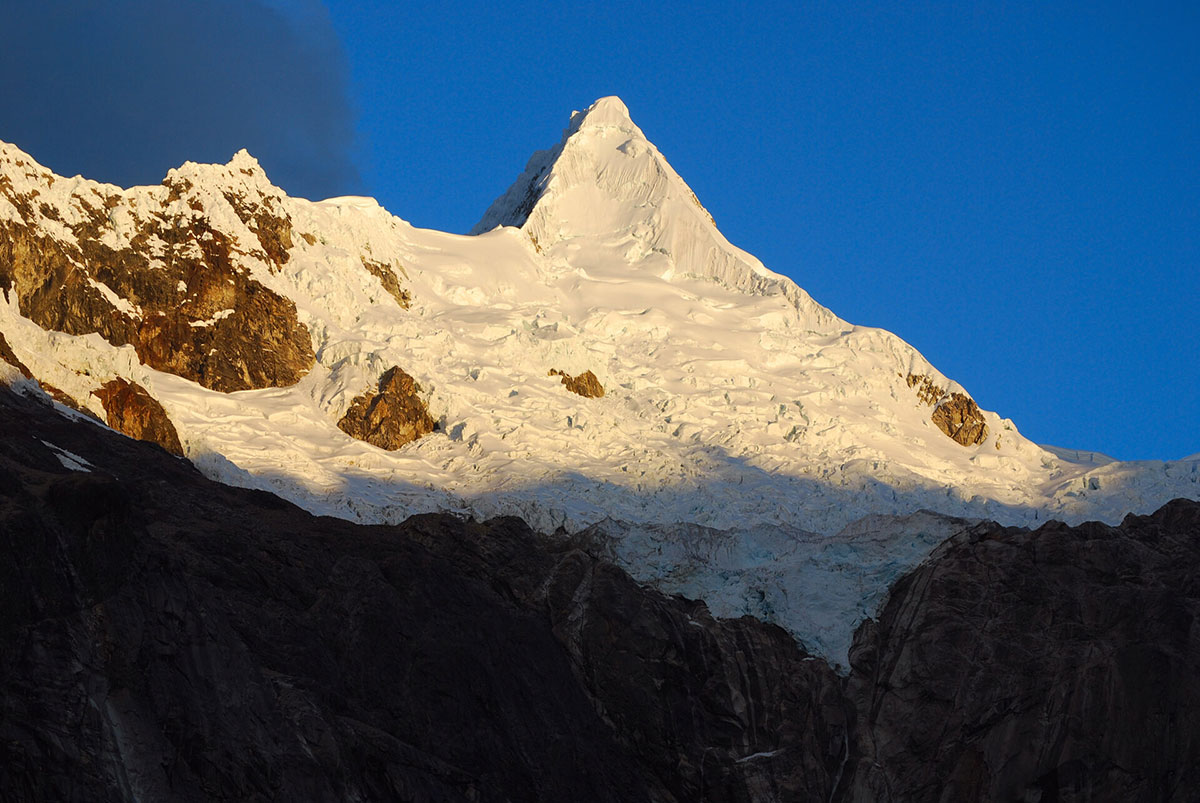
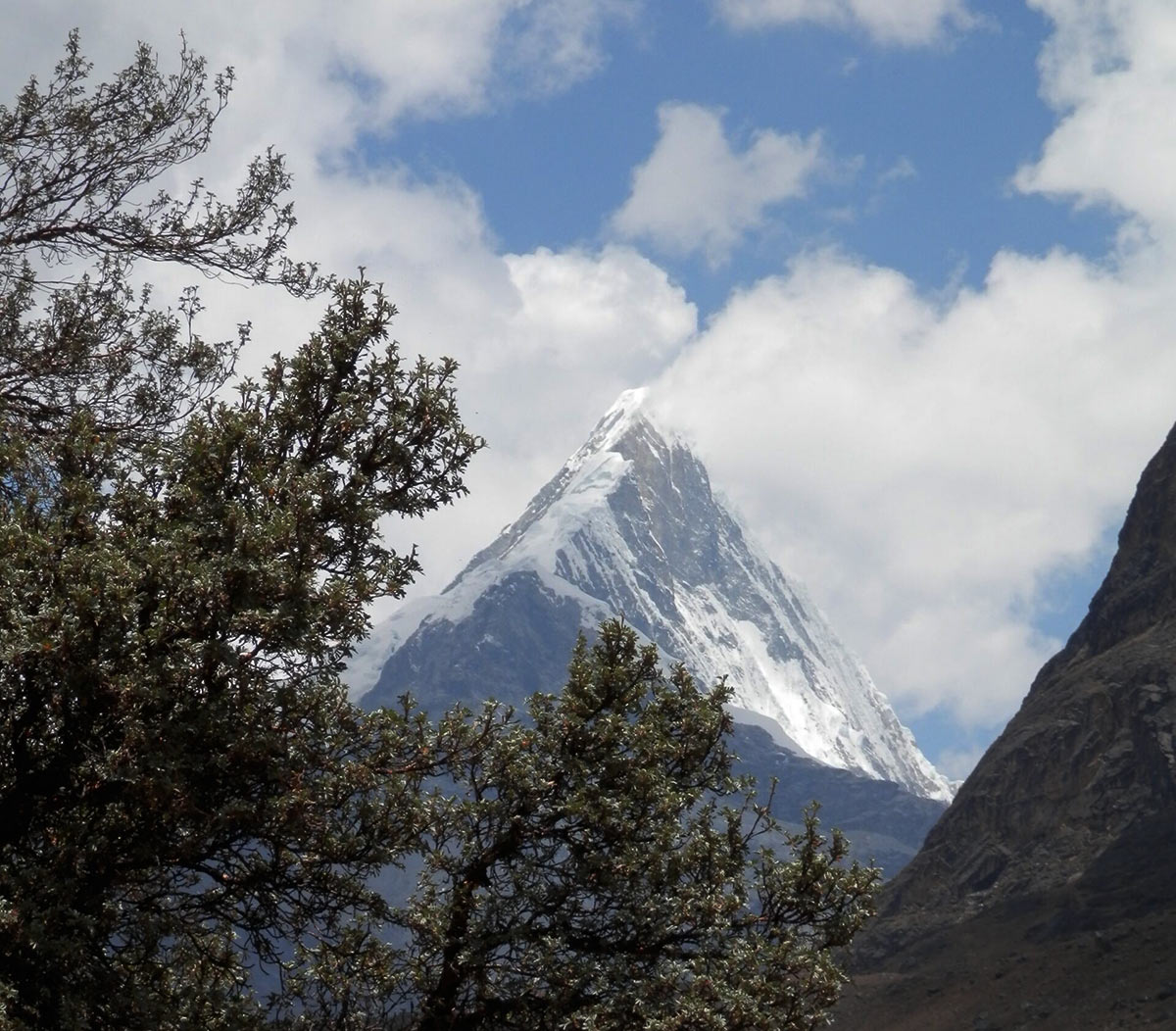
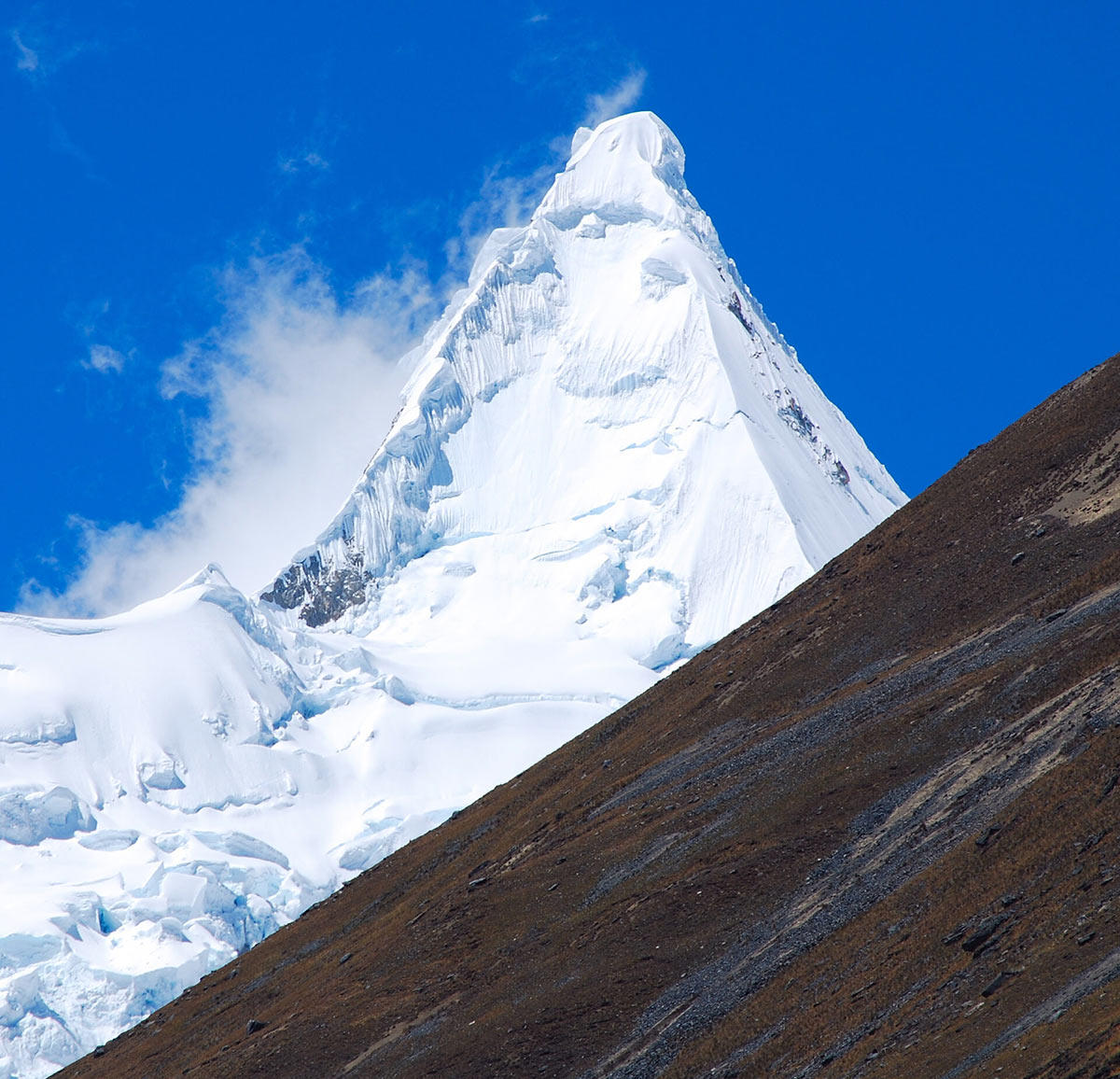
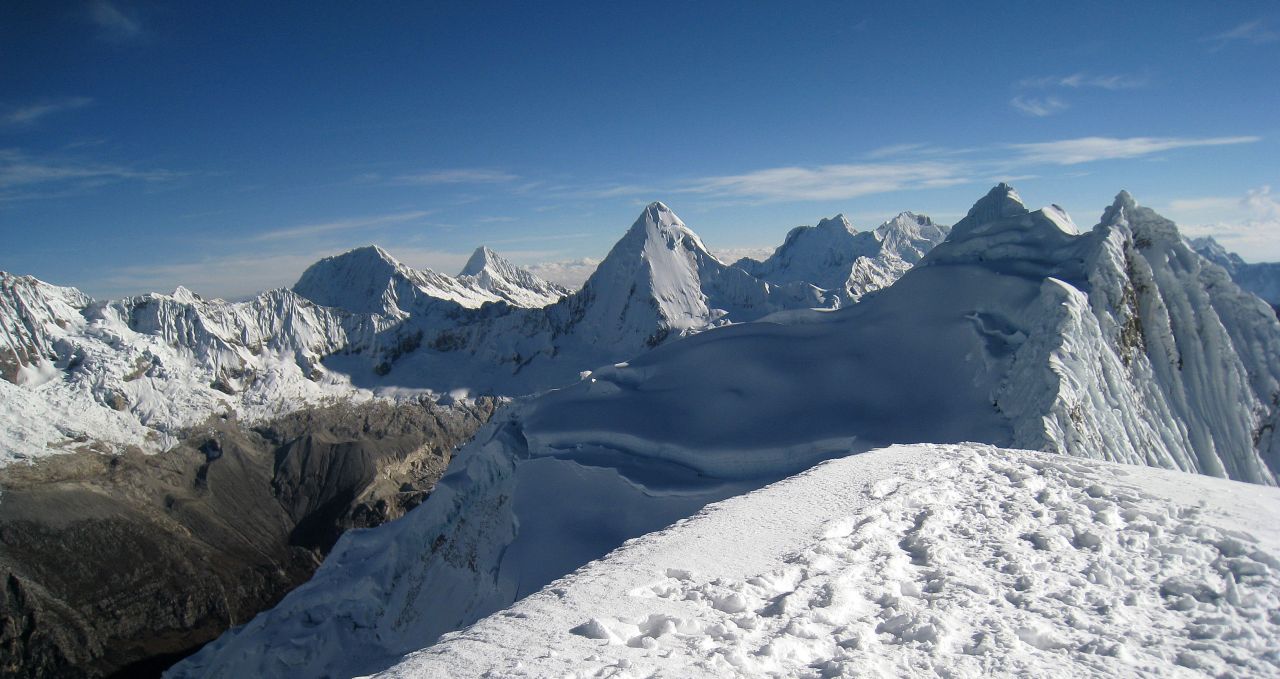
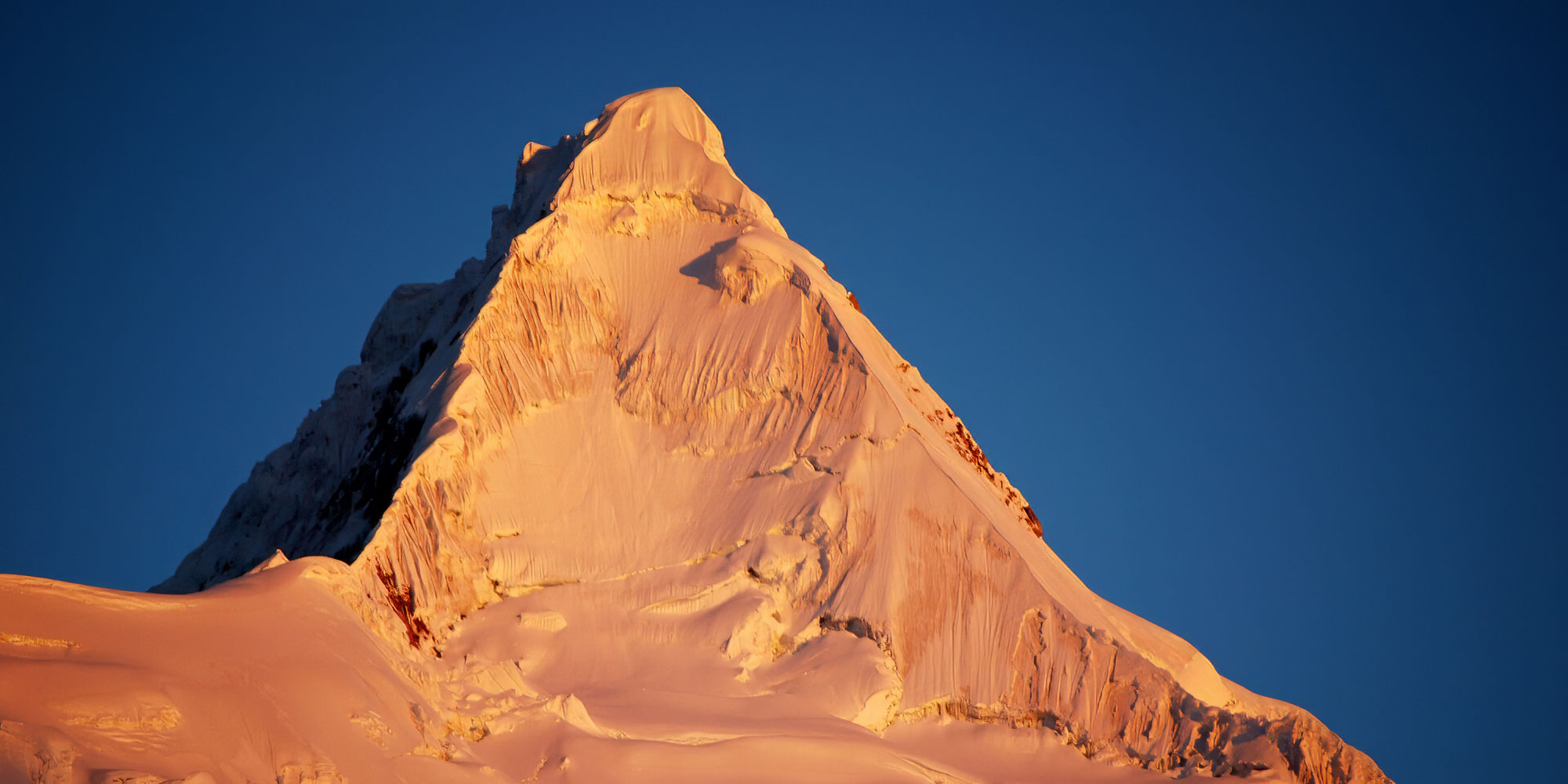
Alpamayo is a beautiful and distinct peak with two sharp summits separated by a corniced razor ridge. Though smaller than some neighbouring mountains, it stands out for its form and beauty.
Today is an opportunity to read, laze in the sunshine or take a wander up the valley to spot flowers and birds.
Rest day.
Back on the trail today we start with a tough climb up to Jancarurish Pass (4,830m/15,847ft).
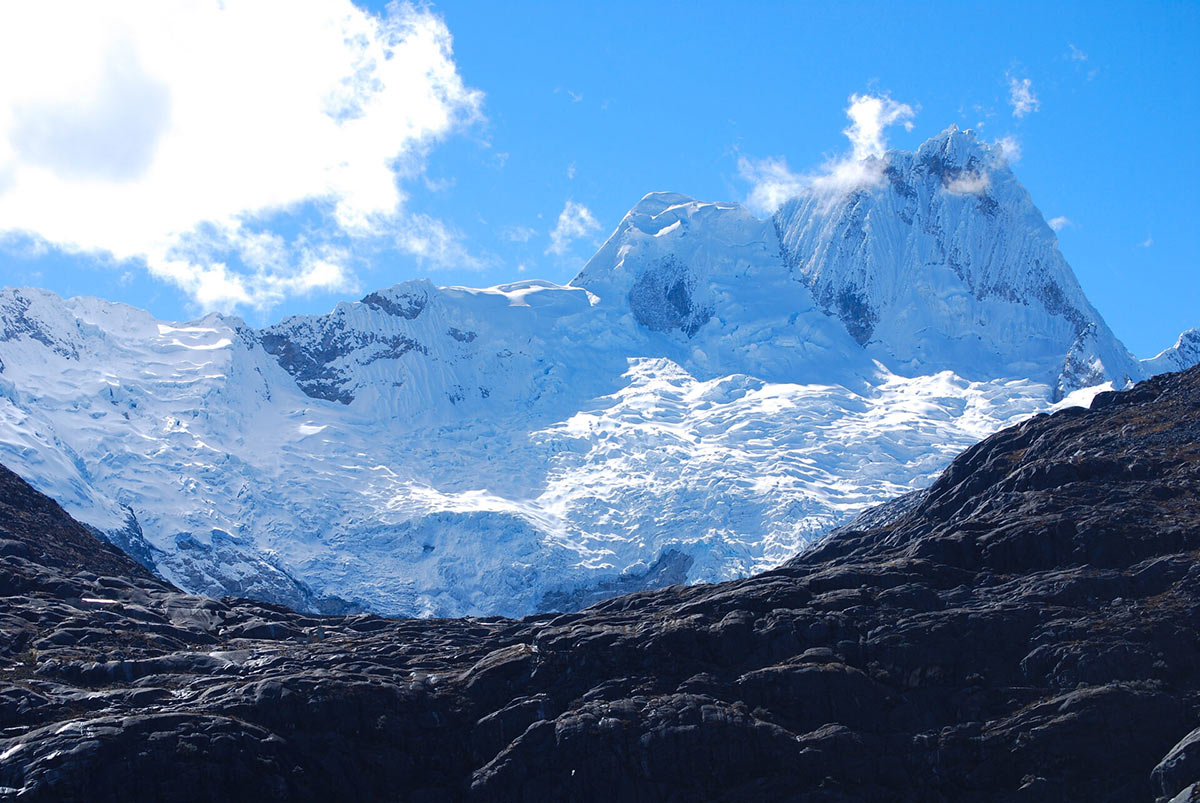
As we climb, take a moment to look back at the views over rocky moraines and stunning blue and green glacial lakes to the outstanding peaks and glaciers of Alpamayo, Jancarurish (5,578m/18,301ft), Quitaraju (6,036m/19,804ft), Pumapampa (5,785m/18,980ft) and Santa Cruz.
At the top of the pass we change direction and head northeast, with the giant peak of Pucajirca (6,050m/19,850ft) now visible in the distance.
After the pass the path wanders gradually downwards through rolling mountain landscapes, much like the Scottish Highlands. There are views eastwards to the farming valleys of the Callejón de Conchucos, and beyond them the lowlands of the Amazon Basin.
We have one more small climb today, about 400m/1,312ft, taking us into Quebrada Tayapampa and the community of Huillca (4,000m/13,124ft), where we camp.
Today we set off on a steady climb through the puna grasslands to reach the next pass at 4,600m/15,100ft.
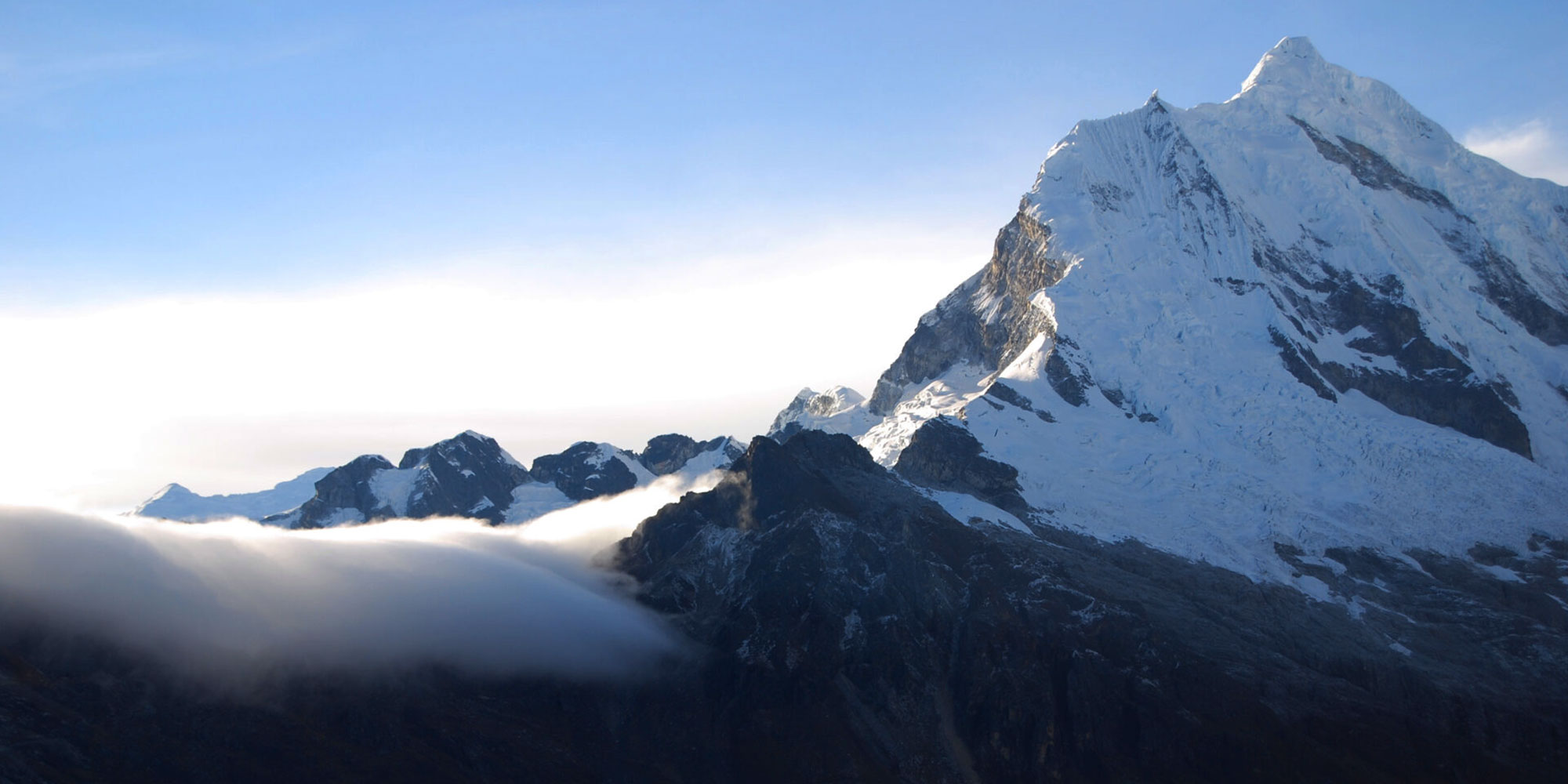
The peak of Pucajirca looms above the pass. The view ahead is beautiful, with the small lake Laguna Sactaycocha and a patch of quenual woodland. This ancient Andean forest is habitat for the Andean spectacled bear and several kinds of Andean deer.
The trail then continues downwards through the forest to the flat valley of Jancapampa (3,500m/11,483ft).
Large peaks tower over us, including Taulliraju (5,830m/19,128ft) and Rinrijirca (5,810m/19,060ft).
We camp nearby with glaciers, waterfalls, giant peaks and farming hamlets spread across the slopes below. It is a stunning spot.
Today we have a gentle ascent to reach the next pass, Tupatupa.
From here there are views northwards across a panorama of snow-topped Cordillera Blanca peaks.
We then descend to our camp near the village of Quisuar.
The pass today is called Alto de Pucaraju.
We climb over the pass and descend into the fertile Huaripampa valley, where we camp.
Our last pass today.
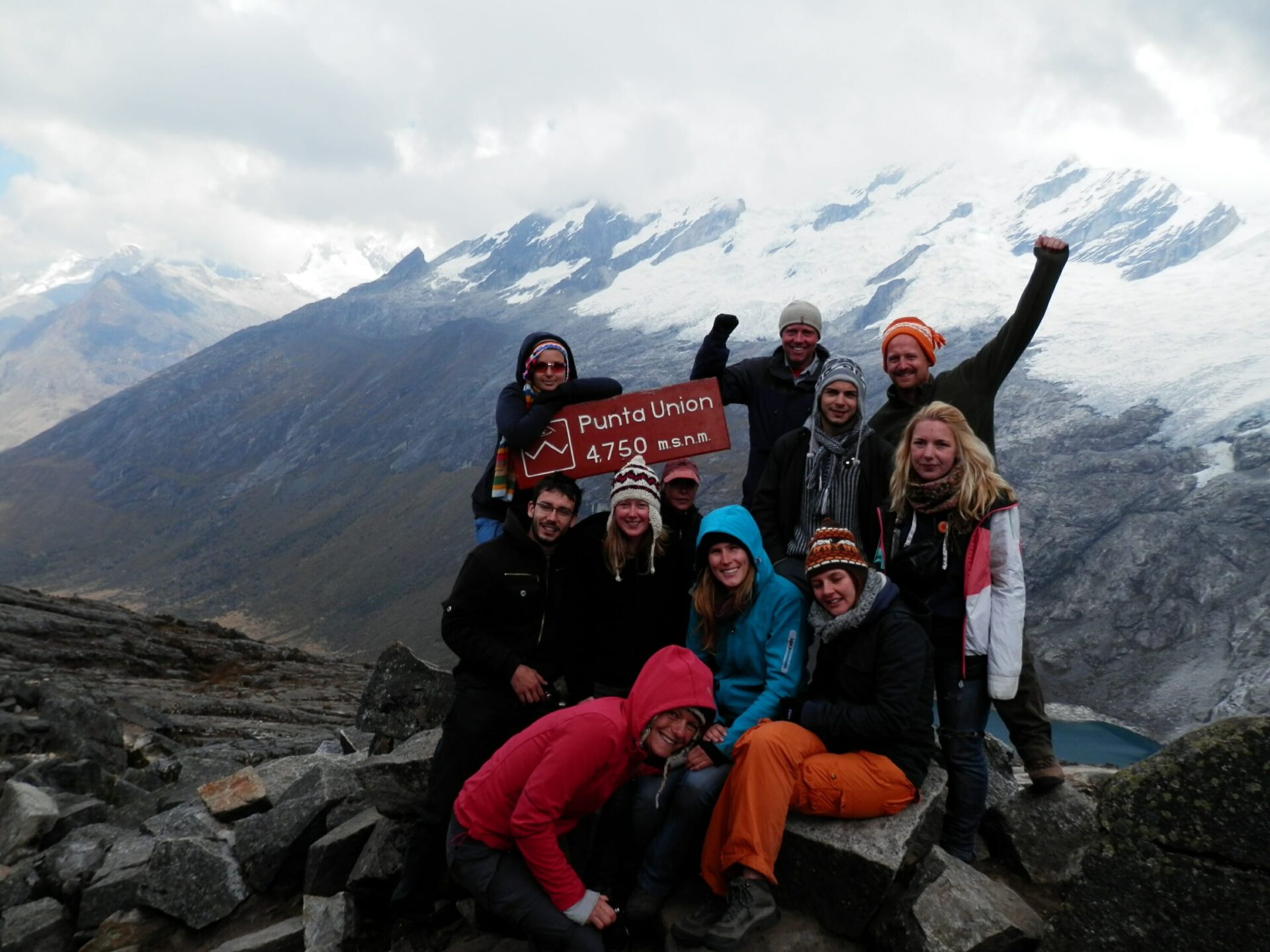
We set off up and over the Punta Union pass at 4,750m/15,584ft.
Our final night is spent camping at Taullipampa.
This is the final night of the trek, so we may celebrate with a glass of wine or beer.
Today we continue the descent of the Santa Cruz valley to the town of Cashapampa.
Our vehicle will be waiting to take you back to Huaraz for a hot shower, a good meal and a well-deserved night in a hotel bed.
The tour ends today with a bus journey back to Lima.
We use clean, central 2-3* hotels in towns, all with private bathrooms.
Camping we use top quality two-man tents on all treks.
We have classified this as a moderate to strenuous trek, and you need to be in good physical shape for it.
You have two acclimatisation hikes, then walk 4-7 hours a day for 10 consecutive days (with one rest day), over rugged mountain trails at elevation.
There is a high altitude pass to cross at 4,850m/15,910ft and we walk and sleep at high altitude for long periods of this tour.
Pre-trip preparation should include challenging cardiovascular exercise (including regular hikes on varied terrain) and a healthy, balanced diet.
Well-worn hiking boots are highly recommended.
All guests are encouraged to hike at their own pace, taking breaks whenever needed, to ensure a successful and enjoyable trek for all.
Most people go to bed fairly early after a long day trekking, to recover energy for the morning.
Vegetarians and many other dietary requirements are catered for without problems. Please let us know in advance of any requirements you have.
You wake early, usually around 07.00. Breakfast is served in a dining tent, and consists of hot drinks, porridge, toast, jams and bread, and your guide will explain the day’s trekking plans.
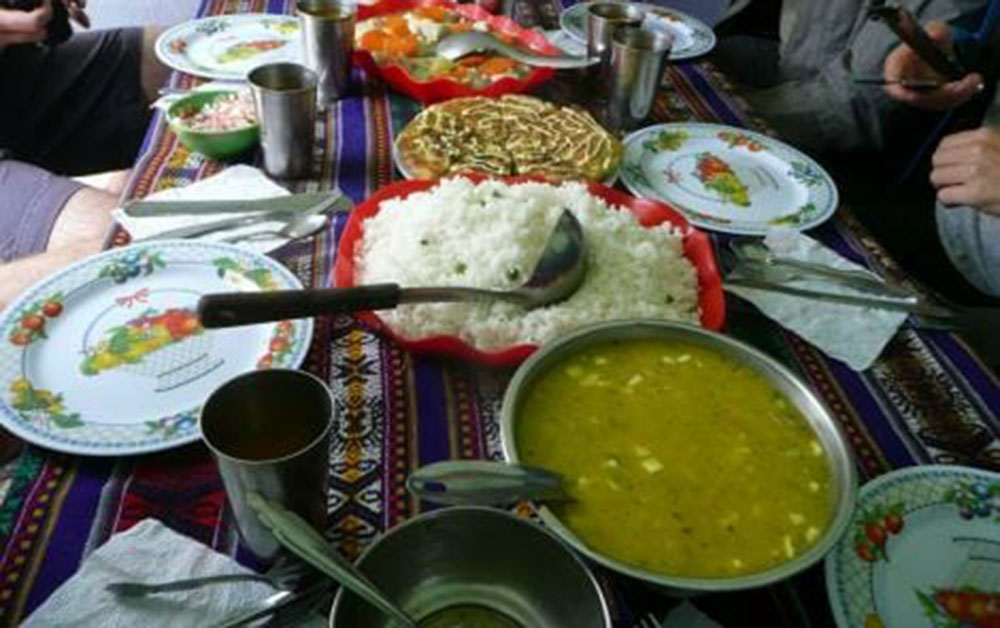
Lunch is usually around 13.00 and can feature soups, meats, salads and fish, with vegetarian options and hot drinks too.
The campsites are comfortable and around 17.00 hot drinks, popcorn and other snacks are served to help you recover energy.
Dinner is served around 19.30, and will feature pasta, mashed potatoes, meat, fish or vegetarian options, followed by hot drinks and a pudding.
Huaraz has a wide variety of Peruvian and international restaurants to suit most tastes and budgets.
You will be met in Lima by one of our representatives, and they will escort you to your hotel. Here, you will find any vouchers you may need for buses etc.
The same in Huaraz – you are met on arrival and our reps will have any vouchers you may need, and can answer any questions you may have about the trek.
On the trek, all equipment is transported for us and meals are prepared by our local cook.
All guides are certified, bilingual, English-speaking guides who have worked with us for many years.
Cooks, mule drivers and additional staff are all from the local, nearby communities and we have worked with them for a long time.
A flawlessly organized trekking journey from Patagonia’s wild beauty to Peru’s iconic Inca Trail made for an unforgettable adventure.
A spectacular journey through Peru and Ecuador, blending ancient wonders, rare wildlife, and unforgettable Galapagos encounters.
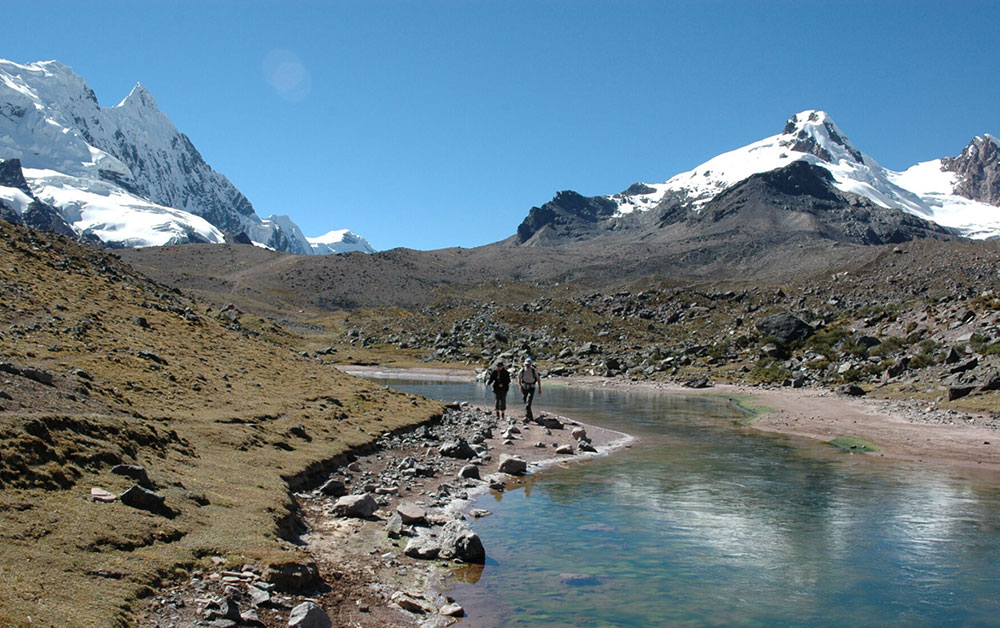
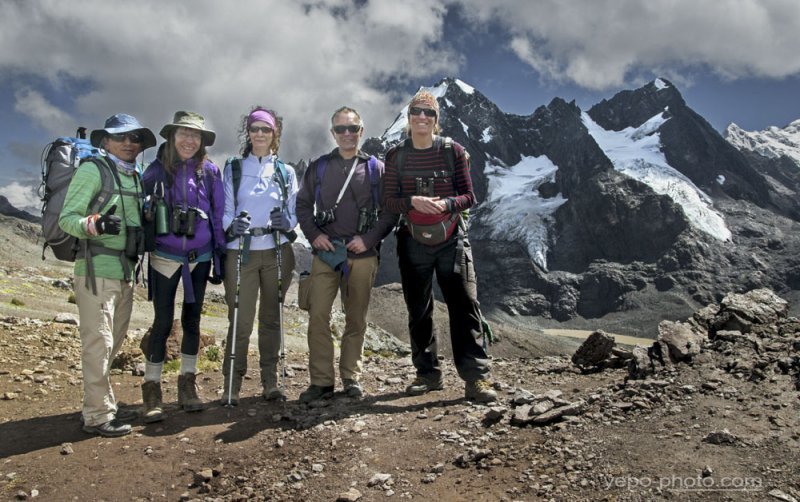
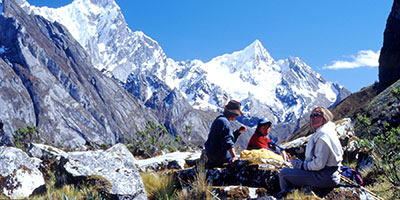
This tough hike takes you through the heart of the stunning Cordillera Blanca mountain range.
Alpamayo is one of the most attractive peaks in the whole Andean chain, its striking triangular, snow-clad summit piercing the sky.
This Alpamayo treks also provides endless panoramic views of more snow-capped mountains from wonderful high passes.
You also gain an insight into the traditional highland way of life as you pass through small, isolated farming communities in remote and beautiful valleys.
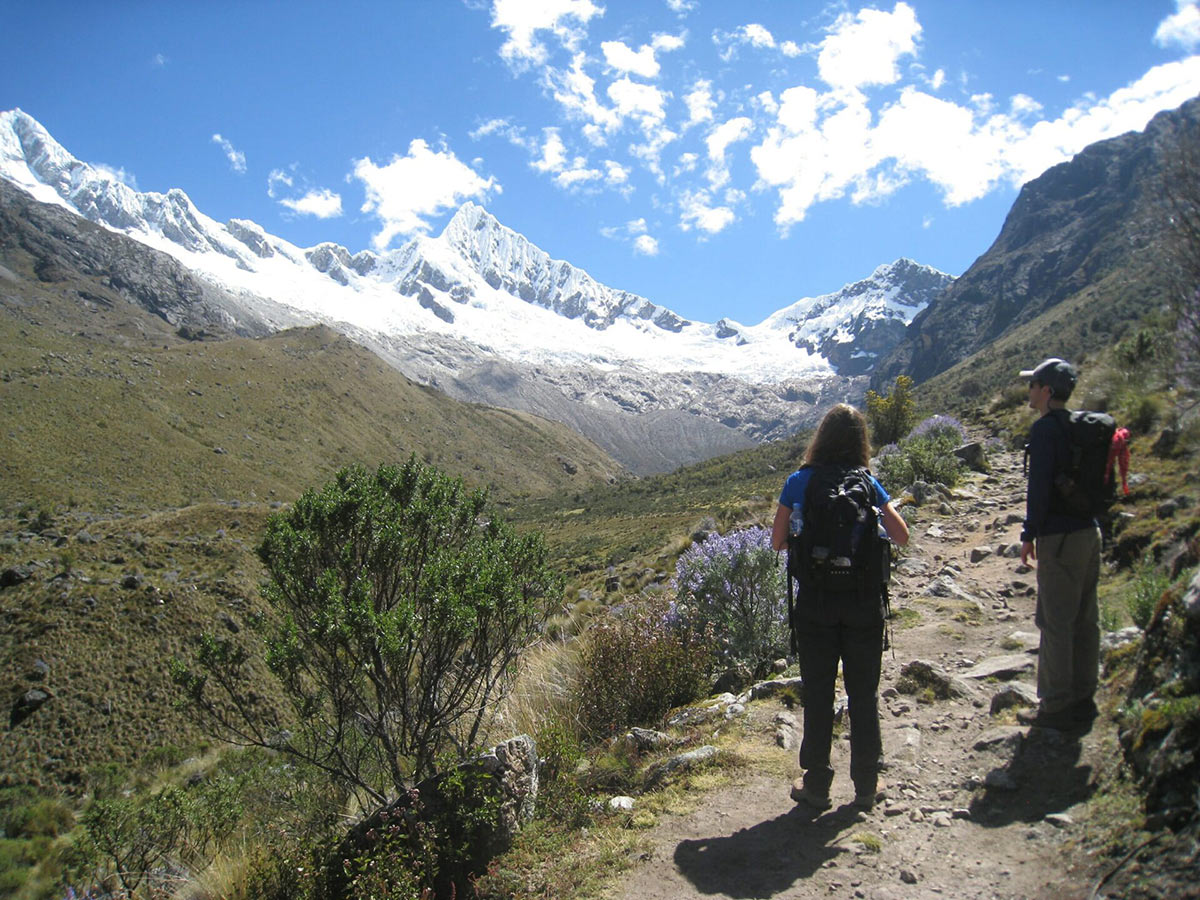
We follow the valley of Los Cedros, which also lends its name to the hike, starting from the small town of Hualcayan.
Each of the 10 days of the walk is characterised by a unique and spectacular sight, be it a dazzling Andean lake, he view of Alpamayo or a rural farm set deep in the valley below gigantic glaciated peaks.
We trek past small communities where we can see the locals out ploughing or planting in the potato fields, herding small flocks of sheep or picking beans.
The trek includes some side trips and a rest day option, so everyone has a chance to enjoy the walking and some additional time to recover and just savour being in such a beautiful place.
Alpamayo is one of many stunning treks in the Andes of Peru.
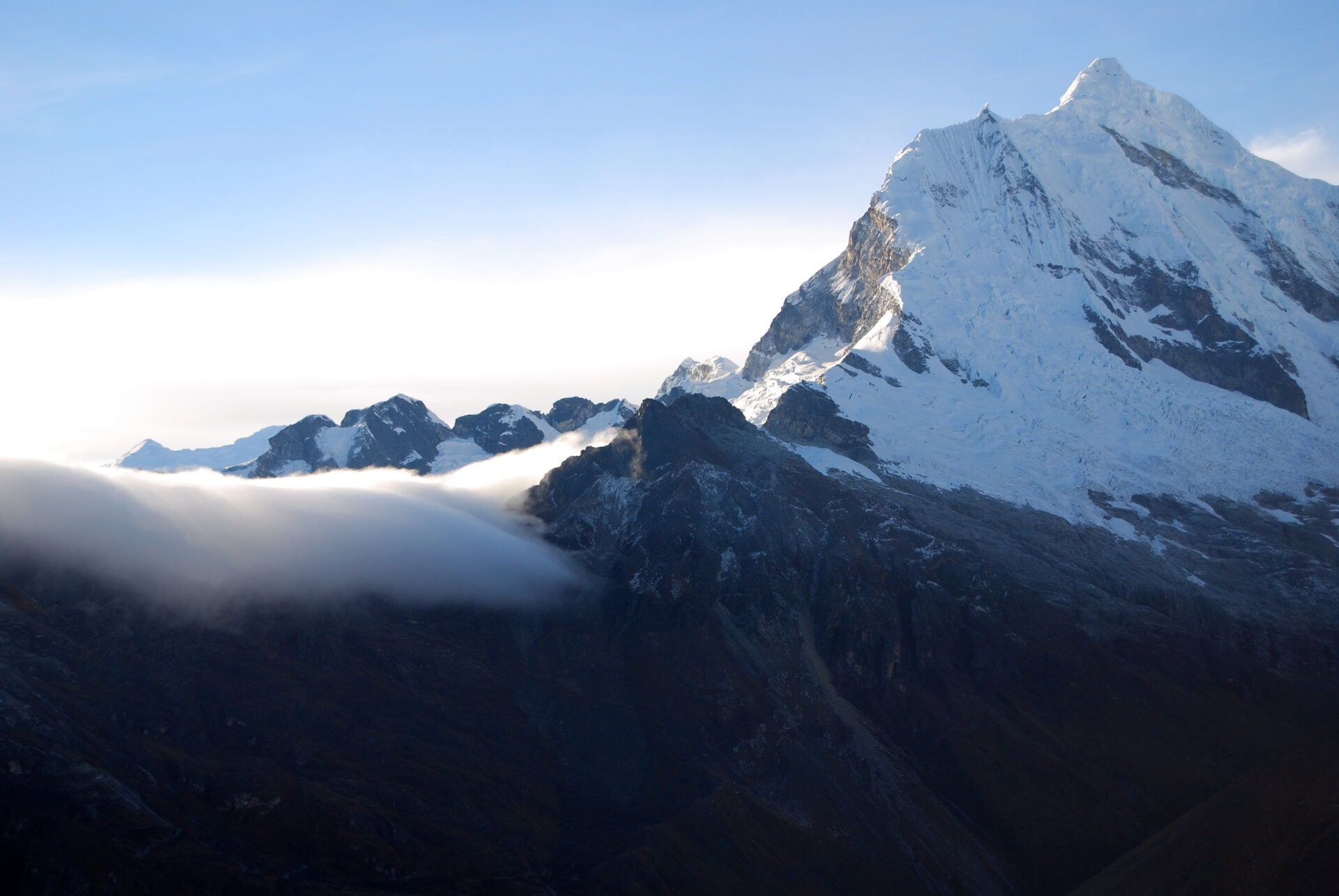
Being at altitude, especially in the tropics, is usually a pleasure as it isn’t so hot, there are few insects and the air is clear.
However, when gaining altitude, air pressure drops and the amount of oxygen reaching the lungs is reduced. Although we build plenty of acclimatisation time into our itineraries, certain ill-effects are possible. Nevertheless, all of these can be minimised or prevented if care is taken.
On reaching heights above 2,500m (approx. 8,200 ft), especially when ascent has been straight from sea level, heart pounding, mild headache and shortness of breath are normal, especially on exertion.
Acute mountain sickness (AMS) is a syndrome known locally as soroche, whose symptoms can include of bad headache, dizziness and nausea).
To avoid AMS, you should:
Peru is the perfect holiday destination for adventure travellers that want an amazing variety of activity, geography and cultural travel experiences.
The breadth of travel experiences in Peru is breathtaking – from trekking in the Andes to Machu Picchu to the tropical jungle of the Amazon, and plenty in between.
The people of Peru make it a special destination too, with its colourful and traditional street life and friendly locals.
Good kit is vital for every trip.
Book with Andean Trails and get 15% off Páramo’s fantastic ethical and high performance outdoor gear.
Good kit is vital for every trip.
Book with Andean Trails and get 15% off Páramo’s fantastic ethical and high performance outdoor gear.
When planning for the varied climatic conditions encountered, layering is the most practical and versatile clothing system. It’s worth remembering that our clothing keeps us warm by retaining and isolating the heat we ourselves create.
To best maintain body heat, several layers of lightweight, warm and quick-drying clothing are far more efficient than one or two thick layers. Layers should have the following qualities:
First (base) layer: This layer wicks the sweat away from our skin, thus helping keep the body dry and warm. To this end, synthetic fabrics such as polypropylene should be used.
Mid layers: These isolating layers should also be synthetic (e.g. the known polar linings such as polartec or windblock, which are light and insulate twice as well as wool). Very important layers for retaining body heat.
Outer layer / shell: Finally, the vital layer which protects us from climatic adversities. A breathable, wind-proof and waterproof anorak, such as Goretex.
Give plenty of thought to kit selection, and try to keep weight down.
We also carry an extensive first aid kit & oxygen on all trips, but these are generally for emergencies only.
Below is a more detailed kit list.
A flawlessly organized trekking journey from Patagonia’s wild beauty to Peru’s iconic Inca Trail made for an unforgettable adventure.
A spectacular journey through Peru and Ecuador, blending ancient wonders, rare wildlife, and unforgettable Galapagos encounters.