From: £1,038
From: $1,382
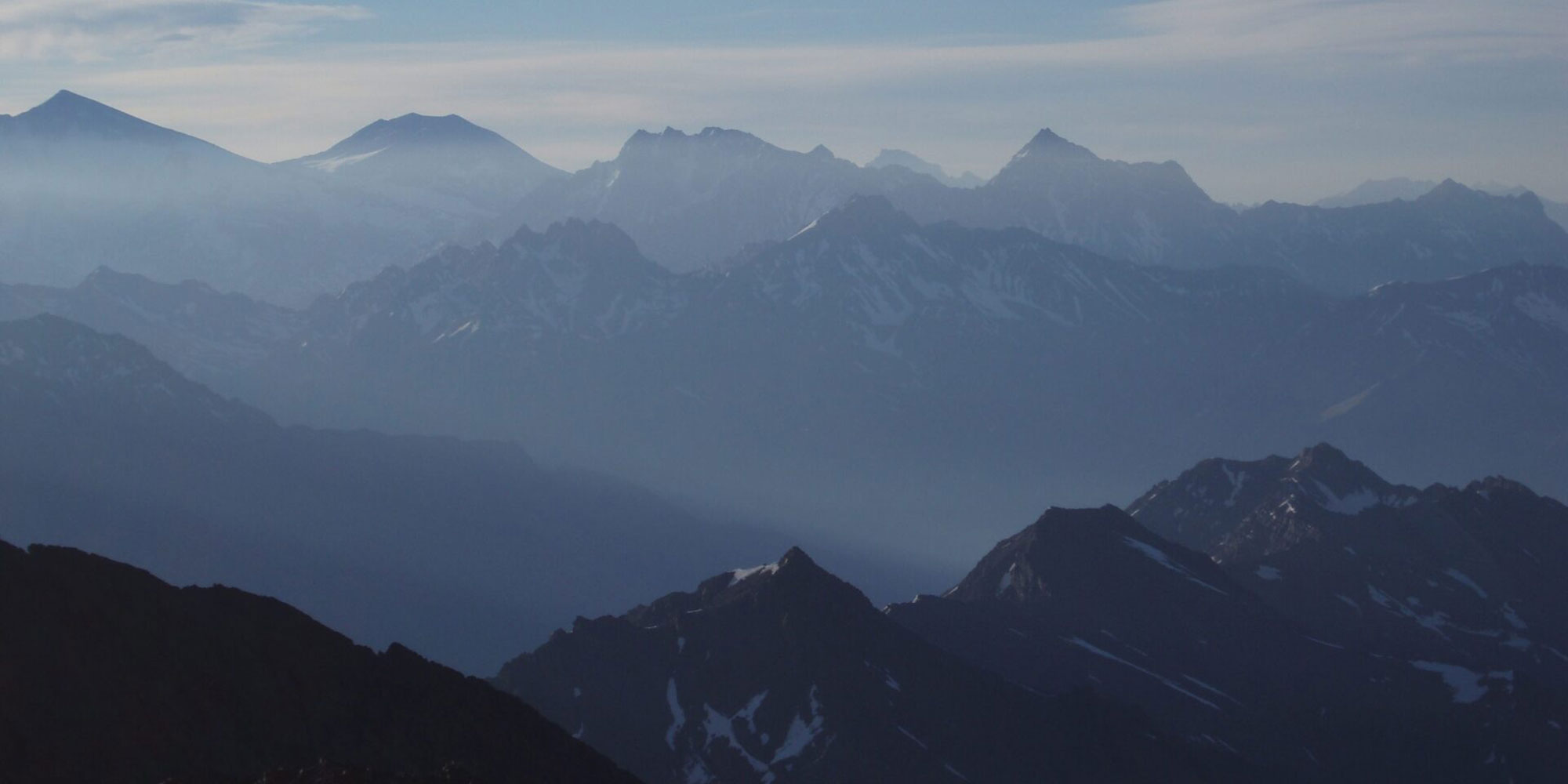
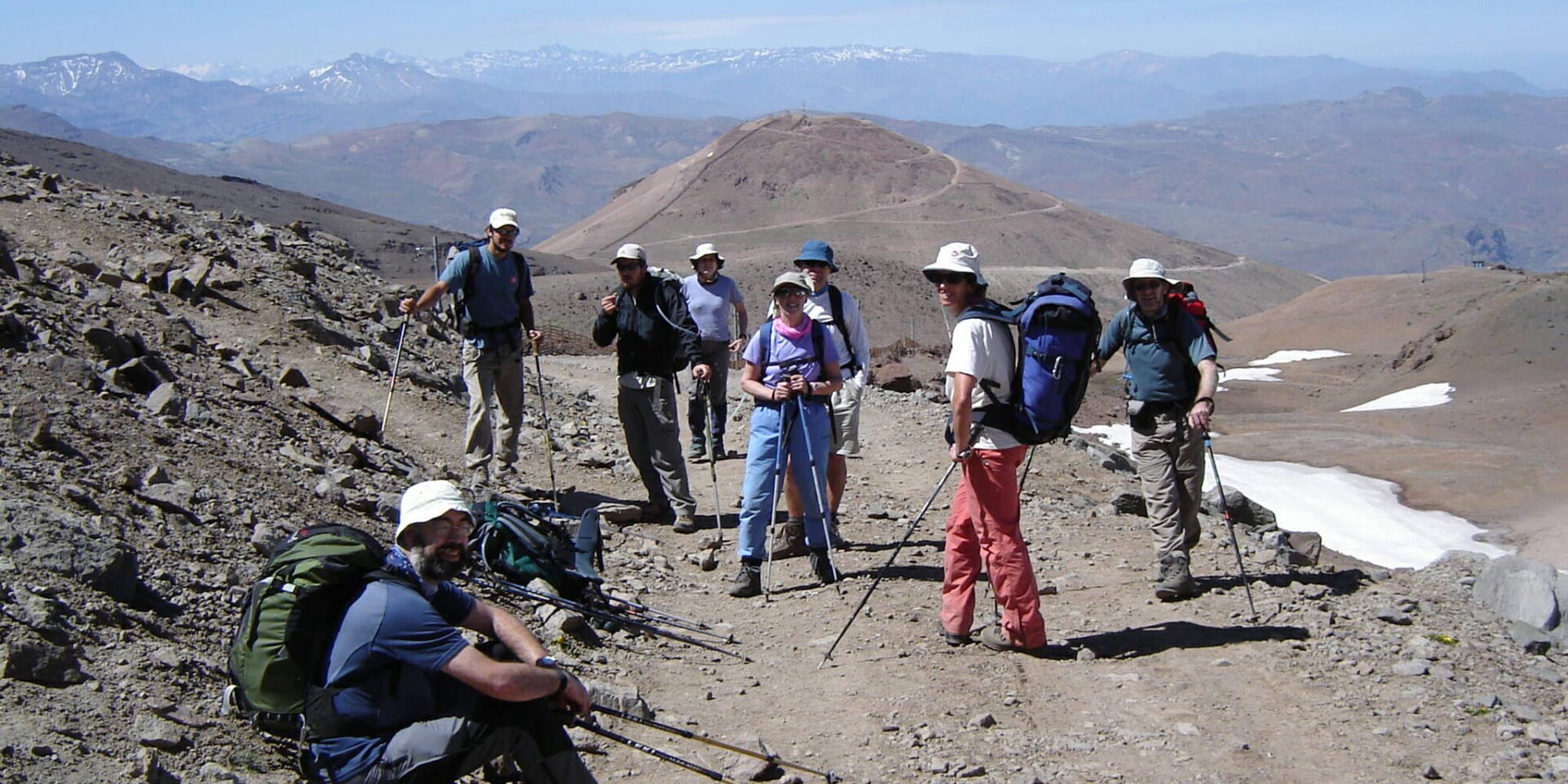
We get up early to start our adventure and are driven towards the Andes mountain range, heading up a scenic winding road to ski centre La Parva with its incredible panoramic views of snow-peaked mountains.
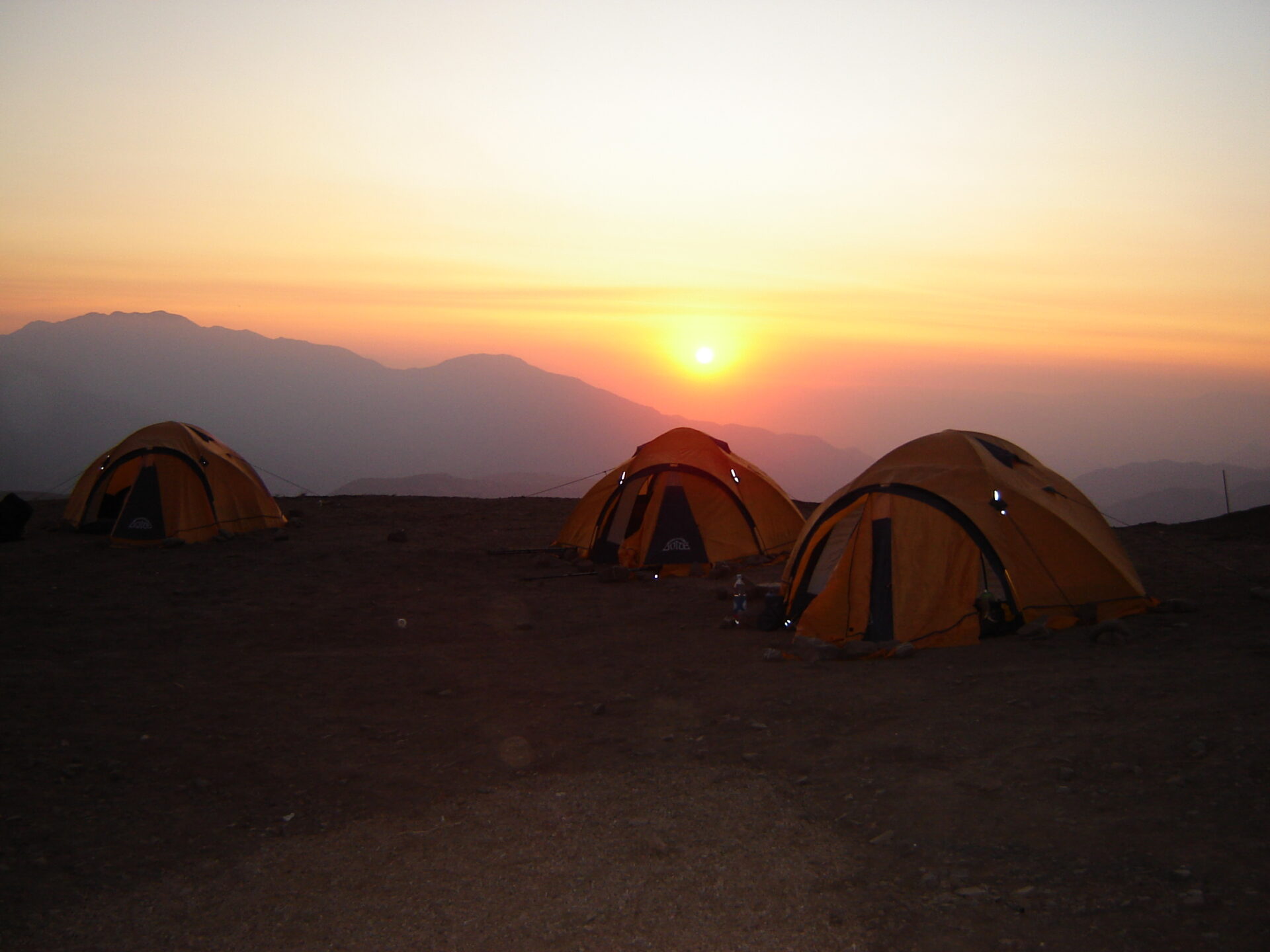
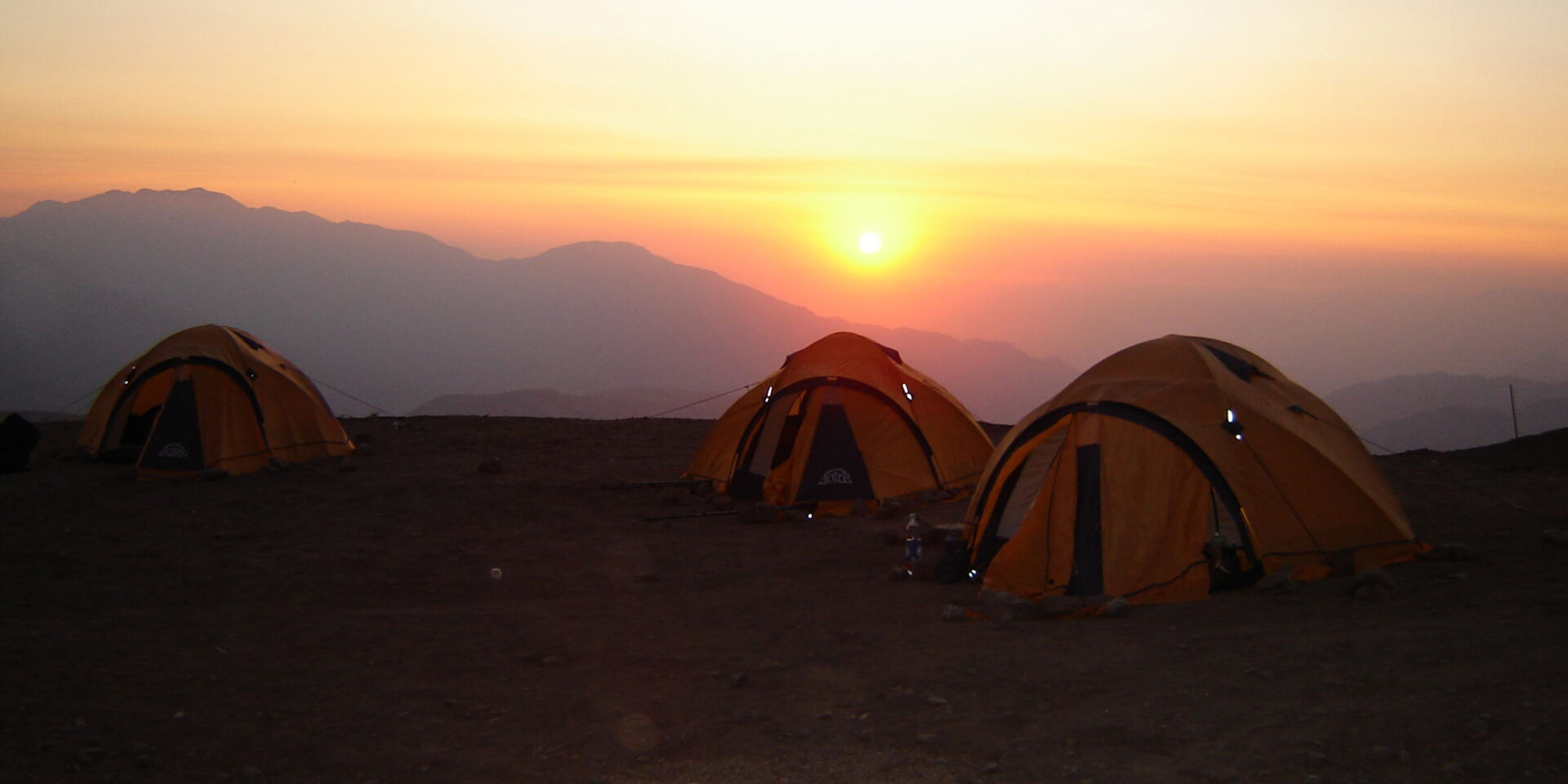
Here in La Parva we set up camp and trek around the surrounding area to start our acclimatisation.
During dinner we discuss details for the upcoming days.
We camp overnight at La Parva.
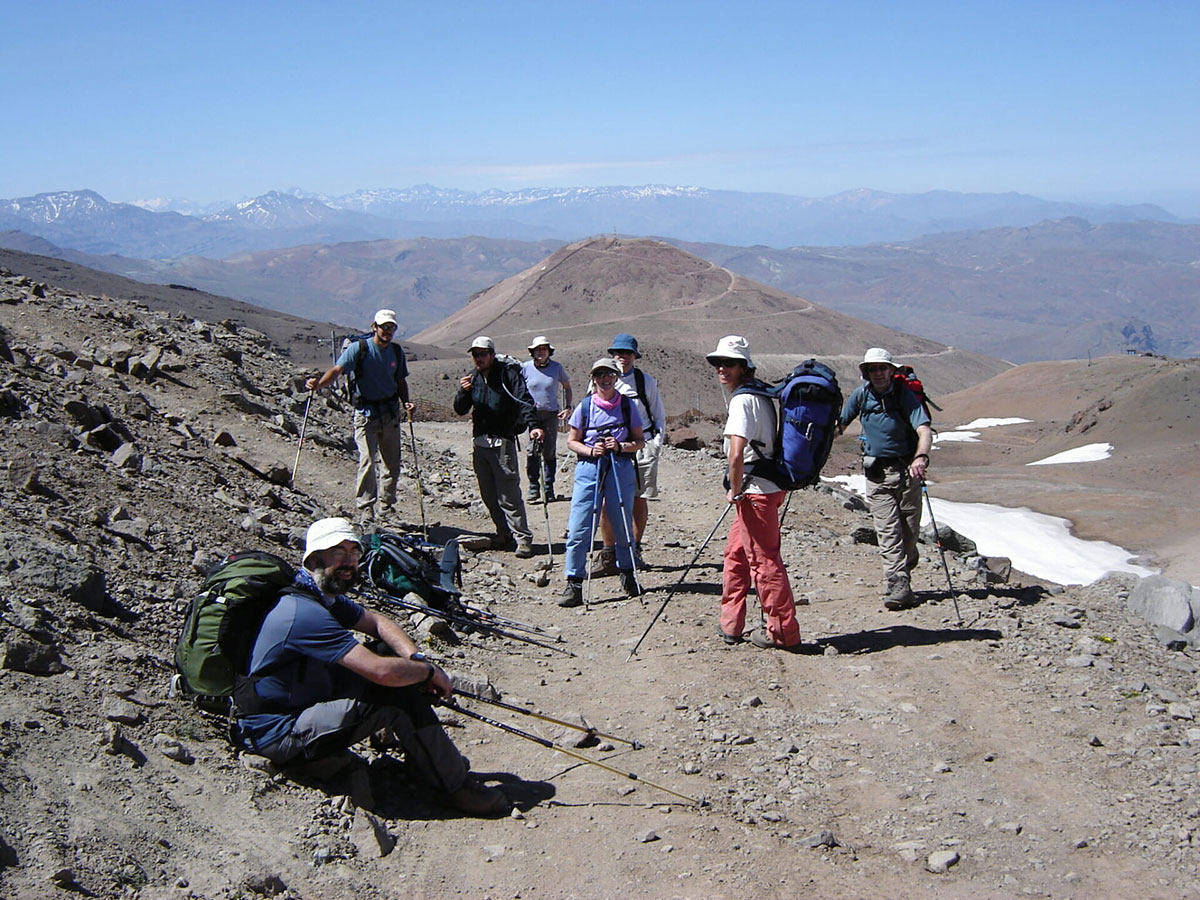
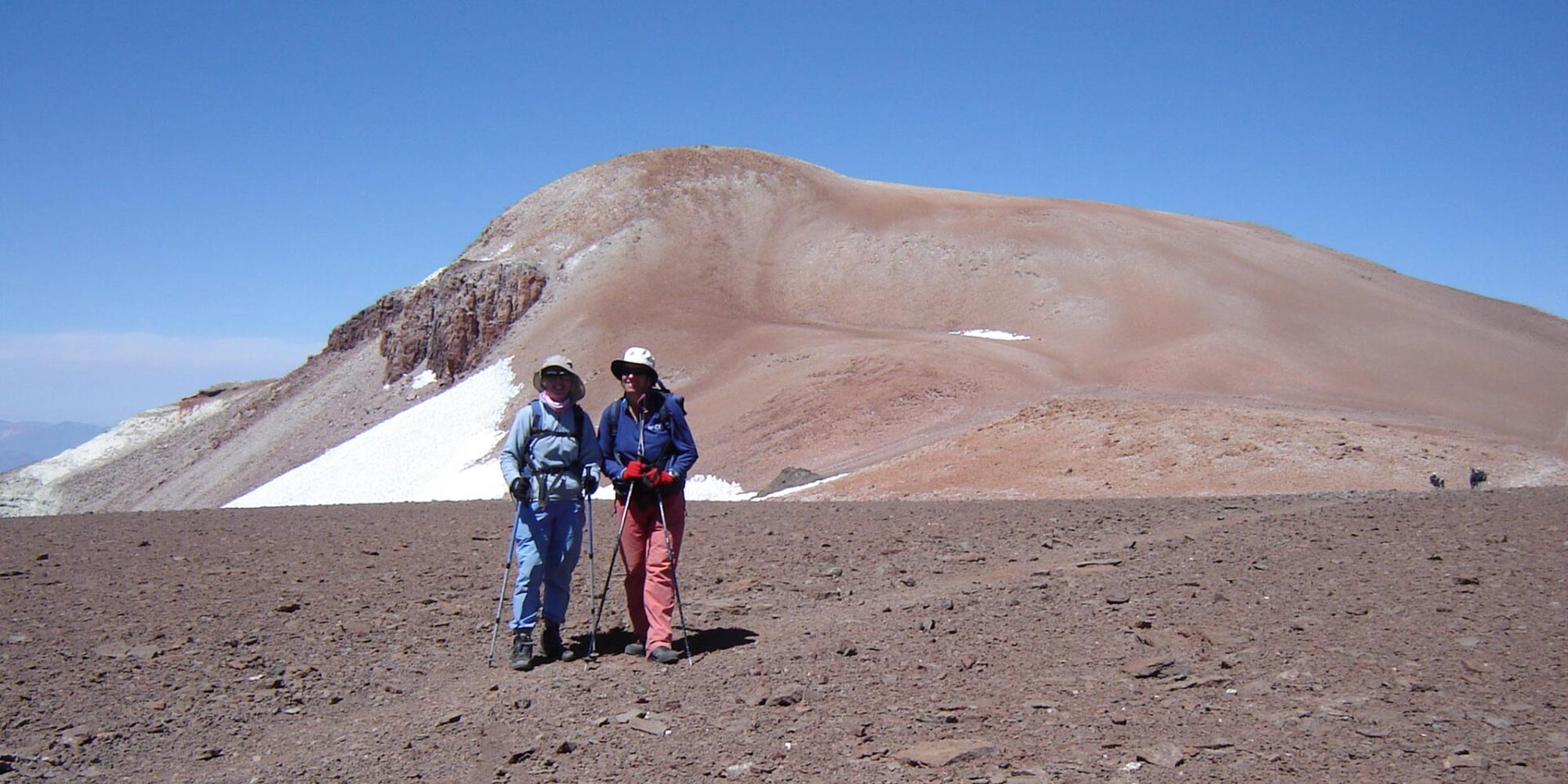
After breakfast we start walking towards Piedra Numerada along a trekking trail bordering La Parva mountain range. We cross small valleys formed by the last glacial age and hopefully see Andean condors flying overhead and other Andes mountain fauna including foxes, rodents and birds.
The vegetation is mainly composed of small flowers and bushes. We reach Piedra Numerada, a huge mountain boulder in a small valley.
Here we set up camp, explore the surroundings, and enjoy dinner.
In the morning we begin our hike towards the next camp located at the foot of Iver glacier, covering one of the slopes of El Plomo.
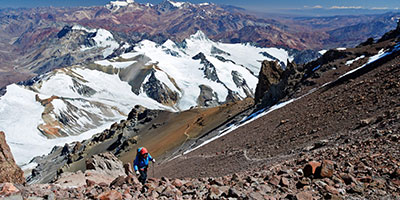
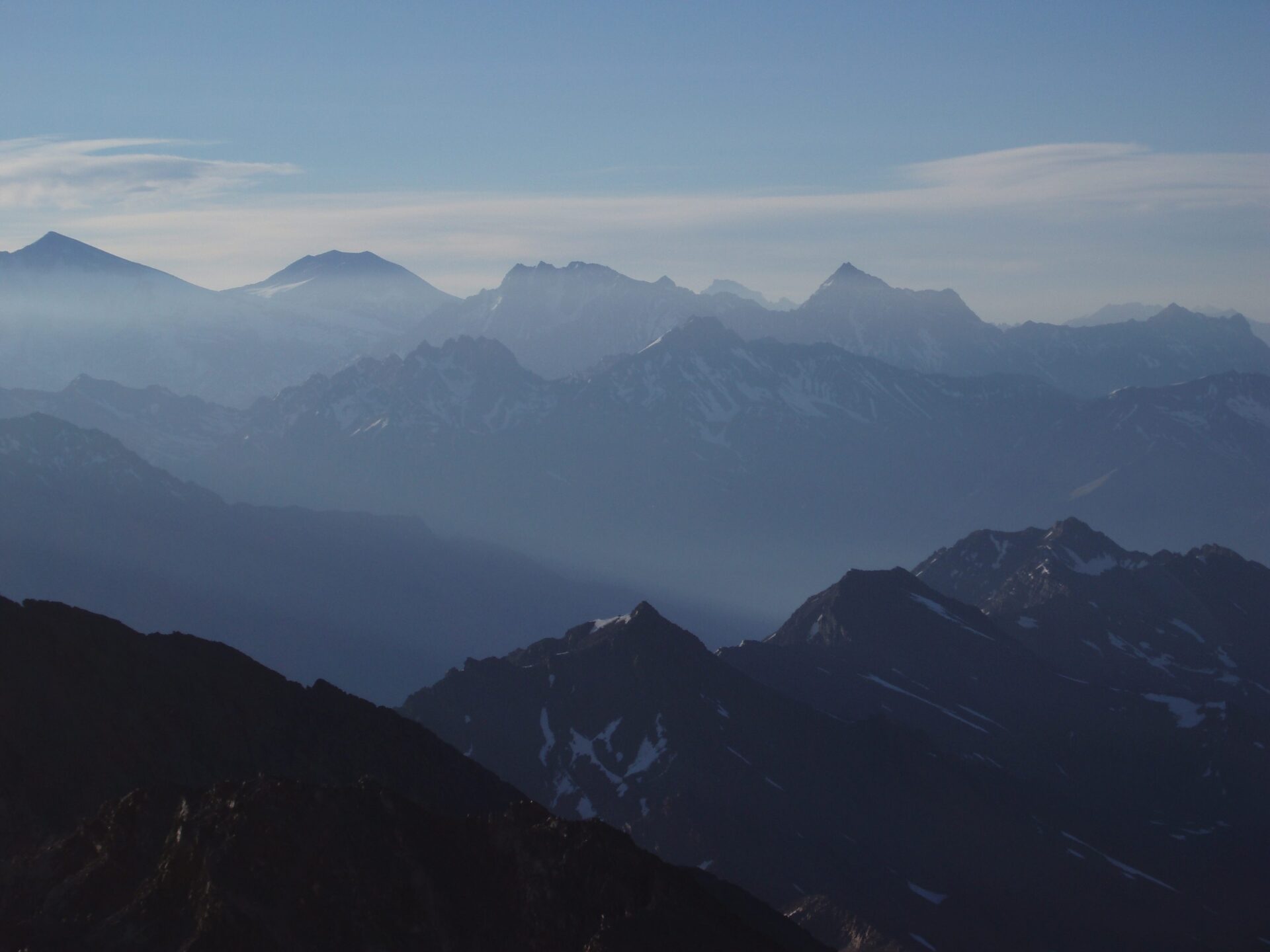
Trekking will be at moderate pace due to the high altitude. As we advance, the mountain valley gradually gets narrower and incredible views of the Andean mountain ridges come into full view.
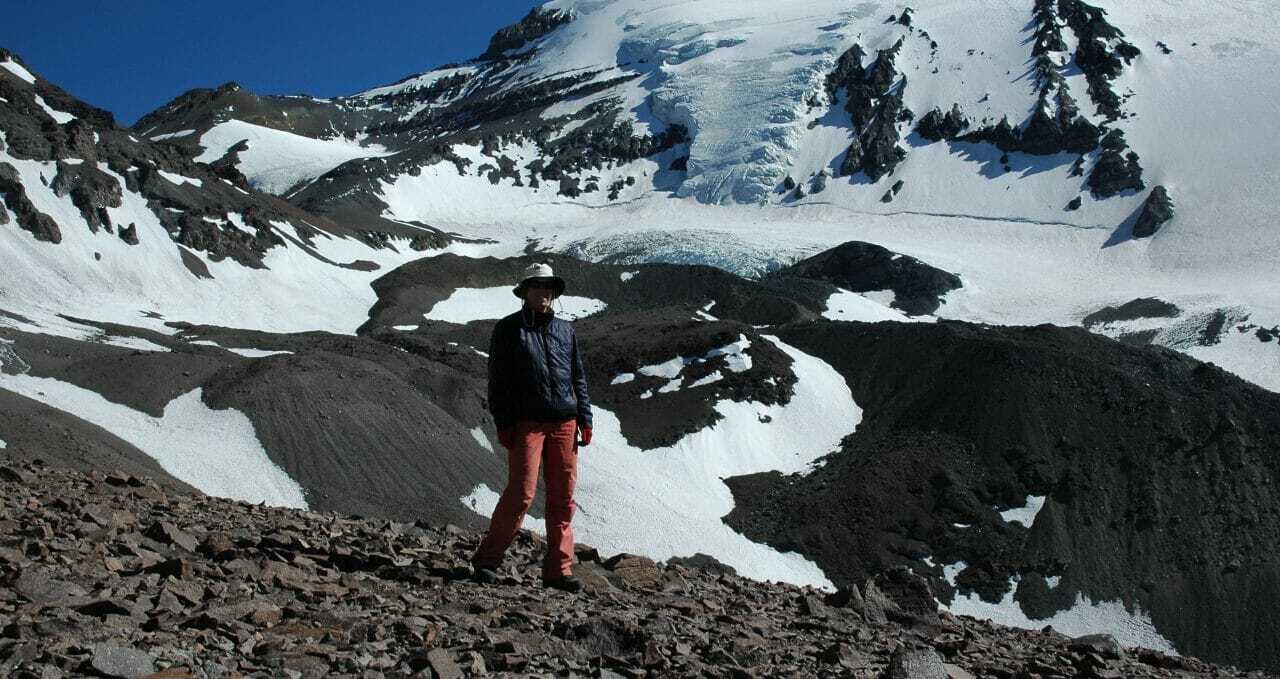
After three to four hours walking we reach La Hoya del Plomo and marvel at its hanging glaciers. We set up camp and enjoy free time exploring before the evening meal where we discuss the final details of tomorrow’s summit attack.
Overnight camp at La Hoya del Plomo.
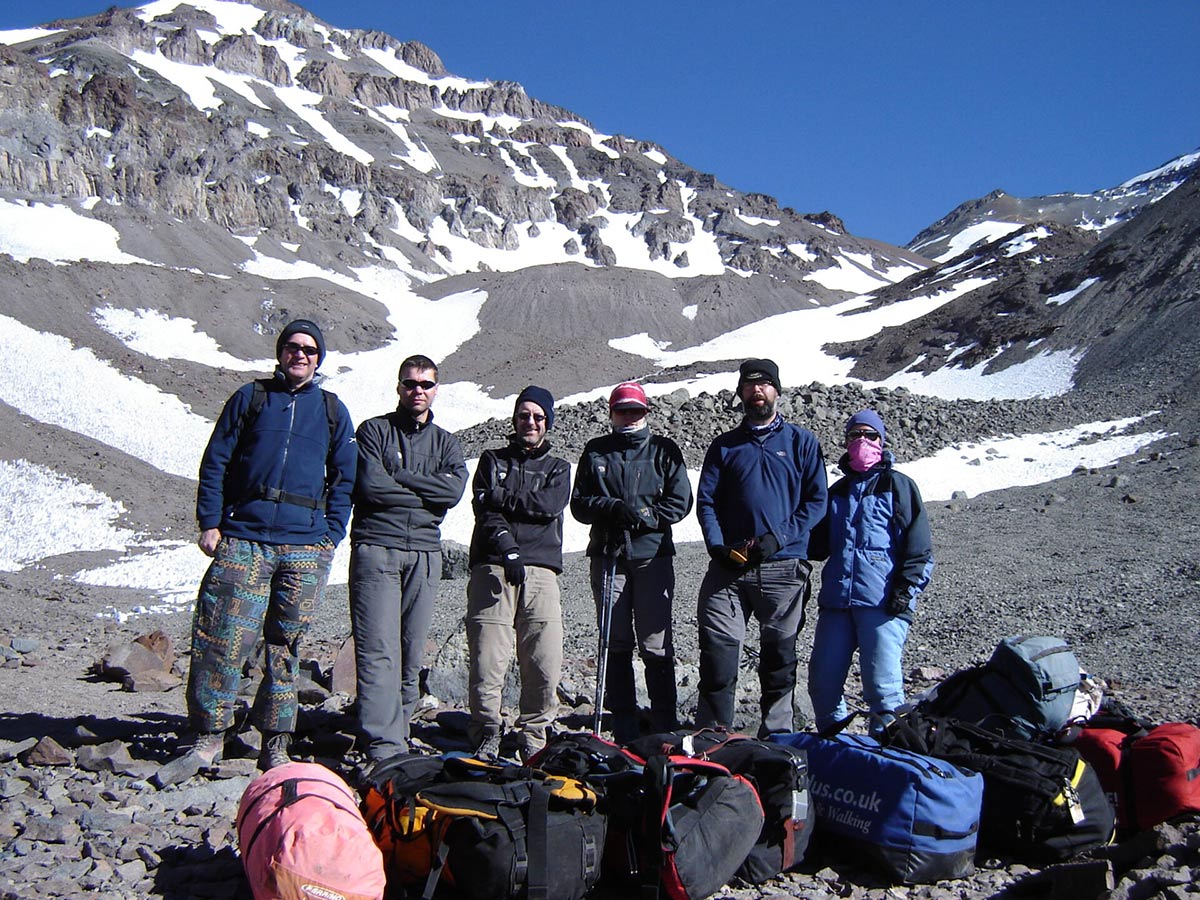
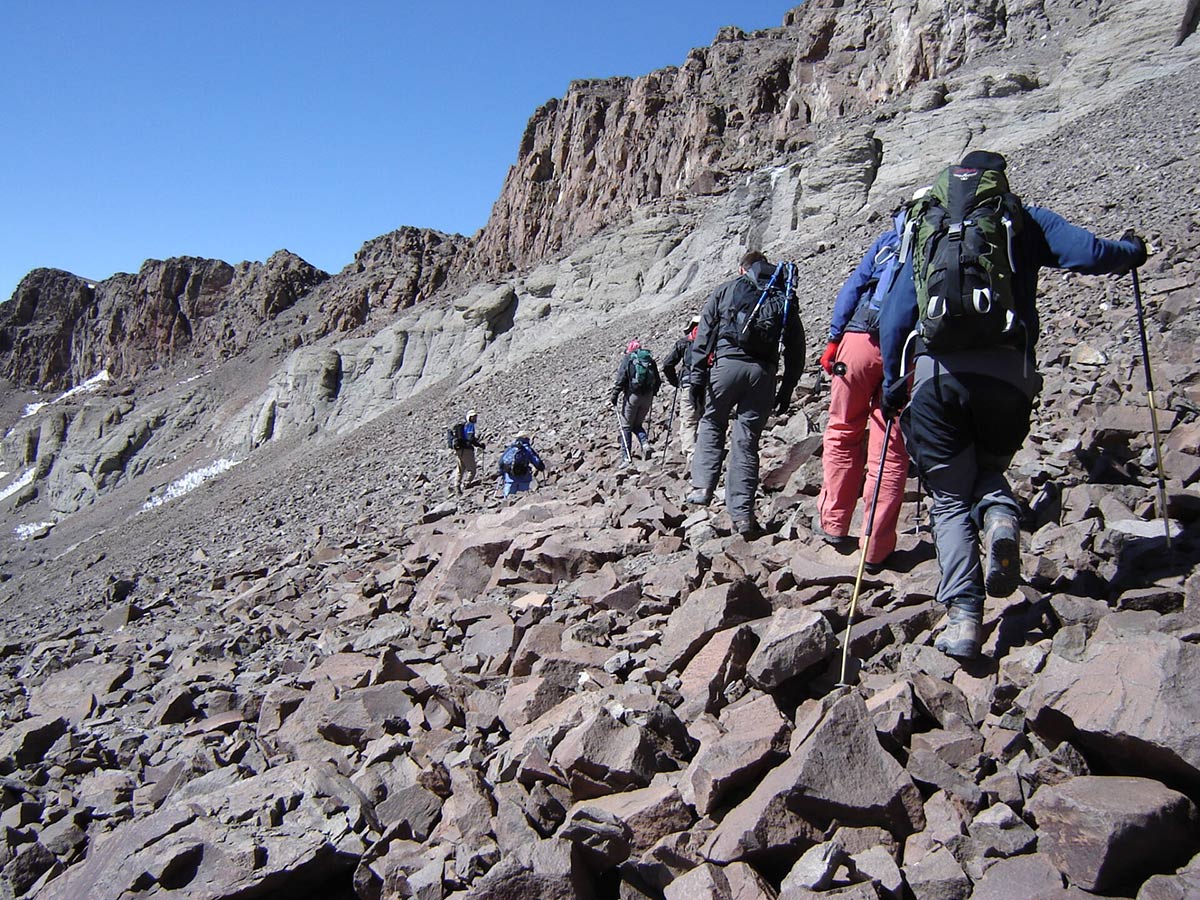
Today we get up very early and begin our trek around 5am, retracing yesterday’s steps until we reach the path leading up to the summit. We first head to Los Espejos, where the trail turns towards Iver glacier, and then we continue up to the Agostini Refugio. At this point we take a break and mentally prepare ourselves for the tough moraine in front of us.
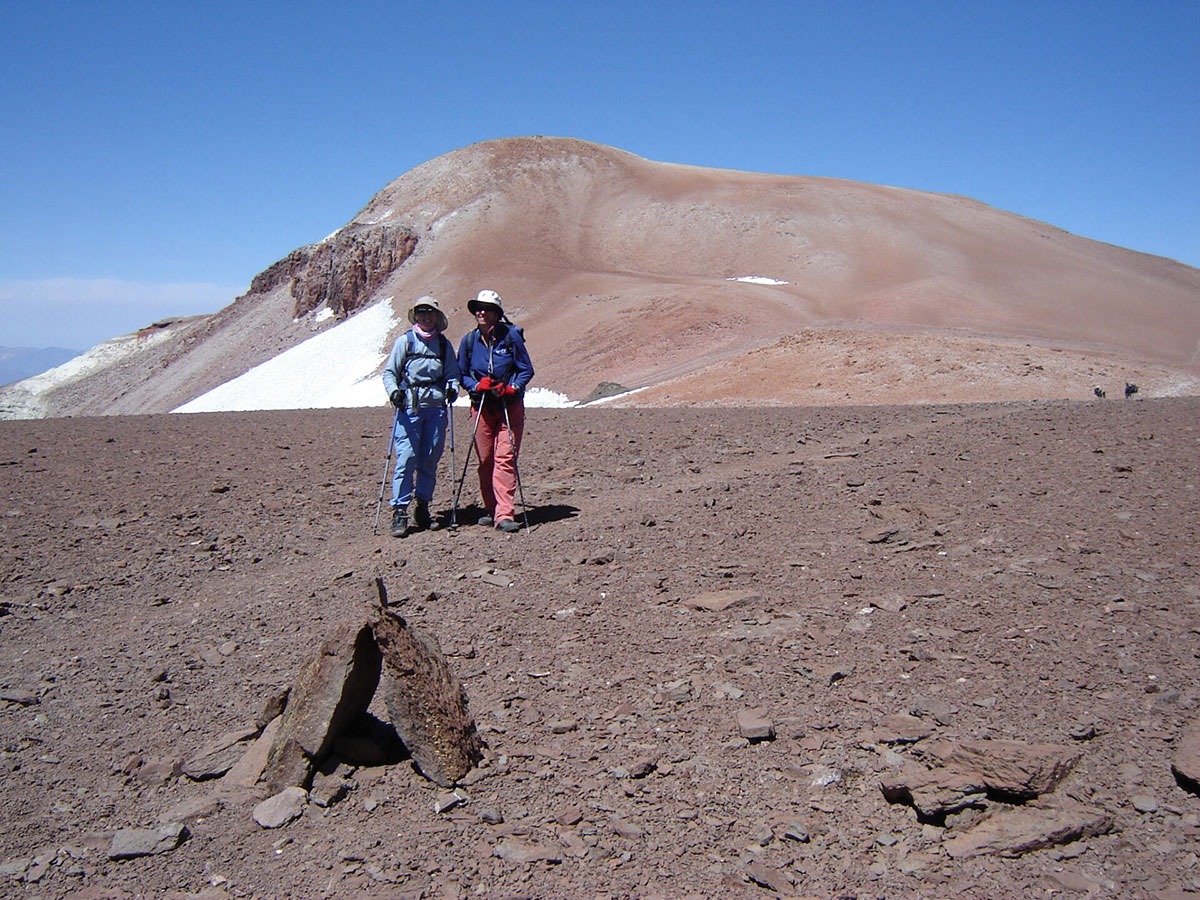
After conquering the moraine (small towers of rock indicate the finish) we continue walking until we reach La Pirca del Inca at 5,050m/16,568ft.
This rock wall is famous due to its proximity to the discovery of an Inca child mummy in 1954 – known as the Boy of El Plomo, this the first frozen high-altitude Inca mummy to be found.
Here we put on crampons and start walking carefully across the glacier for about twenty minutes to reach the other side. Then it’s just one hour more until we’re at the top of the summit.
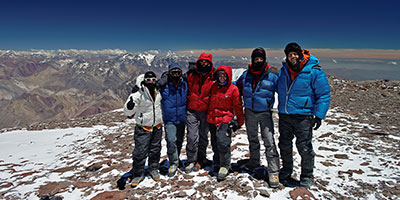
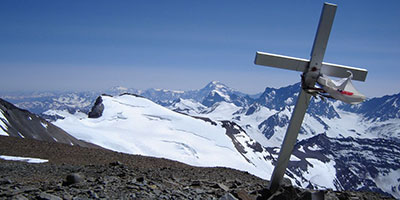
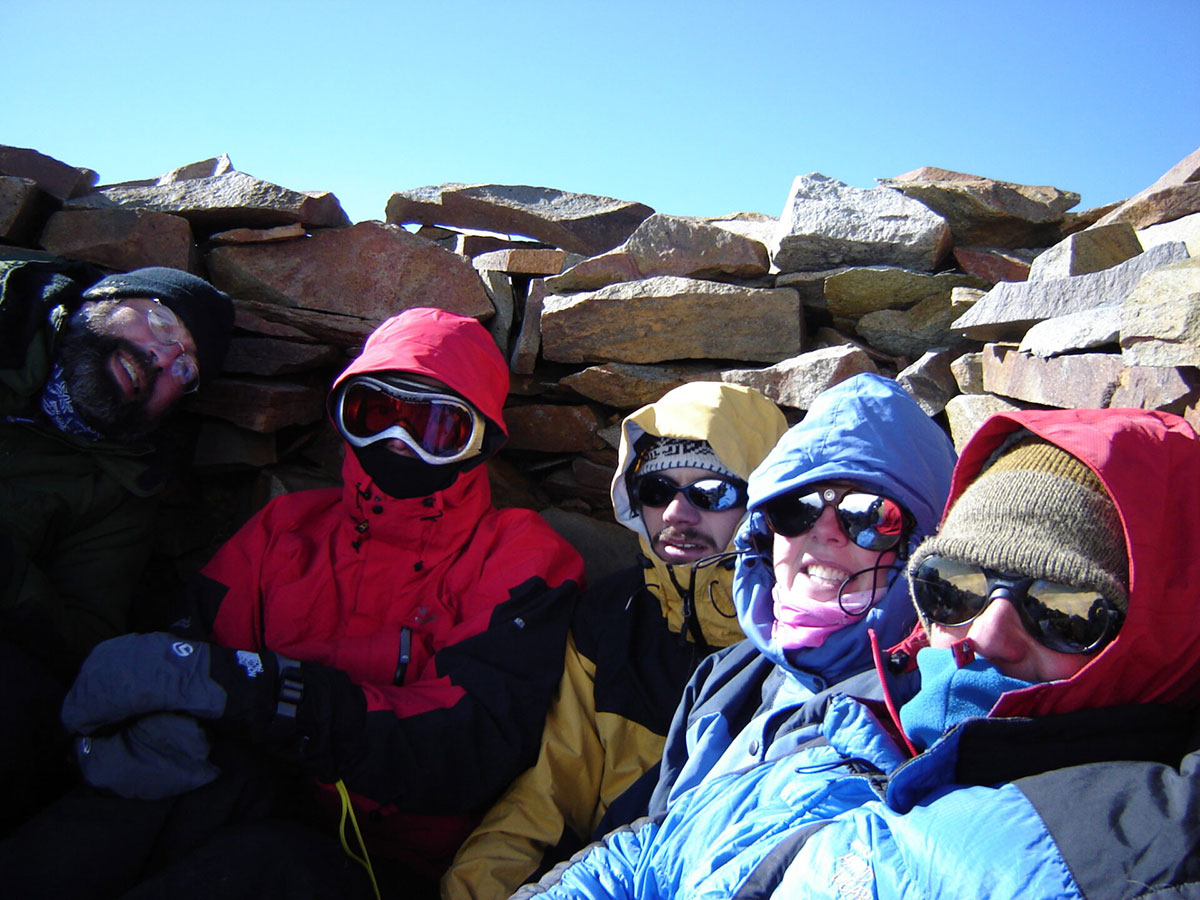
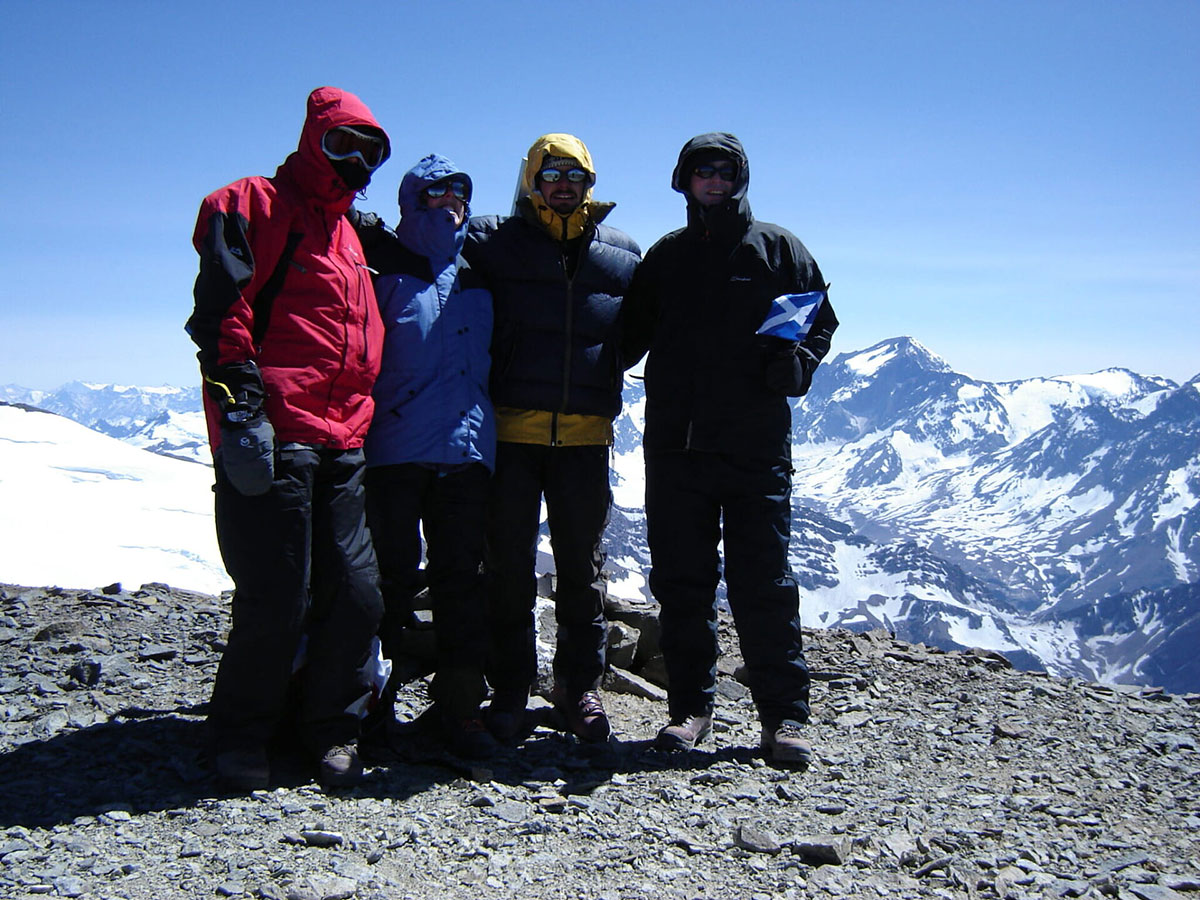
The view from the top is unbeatable, with Andean peaks as far as the eye can see. We can even see famous mountain Aconcagua at its 6,962m/22,841ft.
After a well-deserved break and a lot of photo snapping we head back to base camp at La Hoya for dinner and well-deserved sleep.
We descend to Valley Nevado ski centre on our final day in the mountains, where our transportation awaits us.
Driving down the winding mountain road en route back to Santiago we enjoy our final views of the snowy peaks and mountain ridges.
Camping with dining tent and toilet tent.
We have classified this as a moderate to strenuous trek, and you need to be in good physical shape for it.
You hike 4-7 hours a day on 4 consecutive days, over rugged mountain trails at elevation, aiming for the summit at 5,424m/17,795ft.
Pre-trip preparation should include challenging cardiovascular exercise (including regular hikes on varied terrain) and a healthy, balanced diet.
Well-worn hiking boots and additional acclimatisation nights in Santiago (3-4) before the trek are both highly recommended.
All guests are encouraged to hike at their own pace, taking breaks whenever needed, to ensure a successful and enjoyable trek for all.
Most people go to bed fairly early after a long day trekking, to recover energy for the morning.
Vegetarians and many other dietary requirements are catered for without problems. Please let us know in advance of any requirements you have.
You wake early, usually around 07.00. Breakfast is served in a dining tent, and consists of hot drinks, porridge, toast, jams and bread, and your guide will explain the day’s trekking plans.
Lunch is usually around 13.00 and can feature soups, meats, salads and fish, with vegetarian options and hot drinks too.
The campsites are comfortable and around 17.00 hot drinks, popcorn and other snacks are served to help you recover energy.
Dinner is served around 19.30, and will feature pasta, mashed potatoes, meat, fish or vegetarian options, followed by hot drinks and a pudding.
All guides are certified, bilingual, English-speaking guides who have worked with us for many years.
Cooks, mule drivers and additional staff are all from the local area and we have worked with them for a long time.
A fantastic Chilean trekking adventure, perfectly organised and enriched by culture, scenery, and expert support throughout.
A superbly organized Beagle Channel and Cape Horn cruise combining comfort, adventure, and breathtaking southern landscapes.
This is a remote and beautiful high altitude hiking tour which gives great views over Santiago’s valleys.
El Plomo makes a great acclimatisation peak for mountaineers who want to later try to scale the nearby Aconcagua.
This mountain, once revered by the Incas, and is popular with trekkers due to its proximity to Santiago and its history.
There are enigmatic Inca ruins to visit at 5,200m/17,060ft en route to the 5,424m/17,795ft summit.
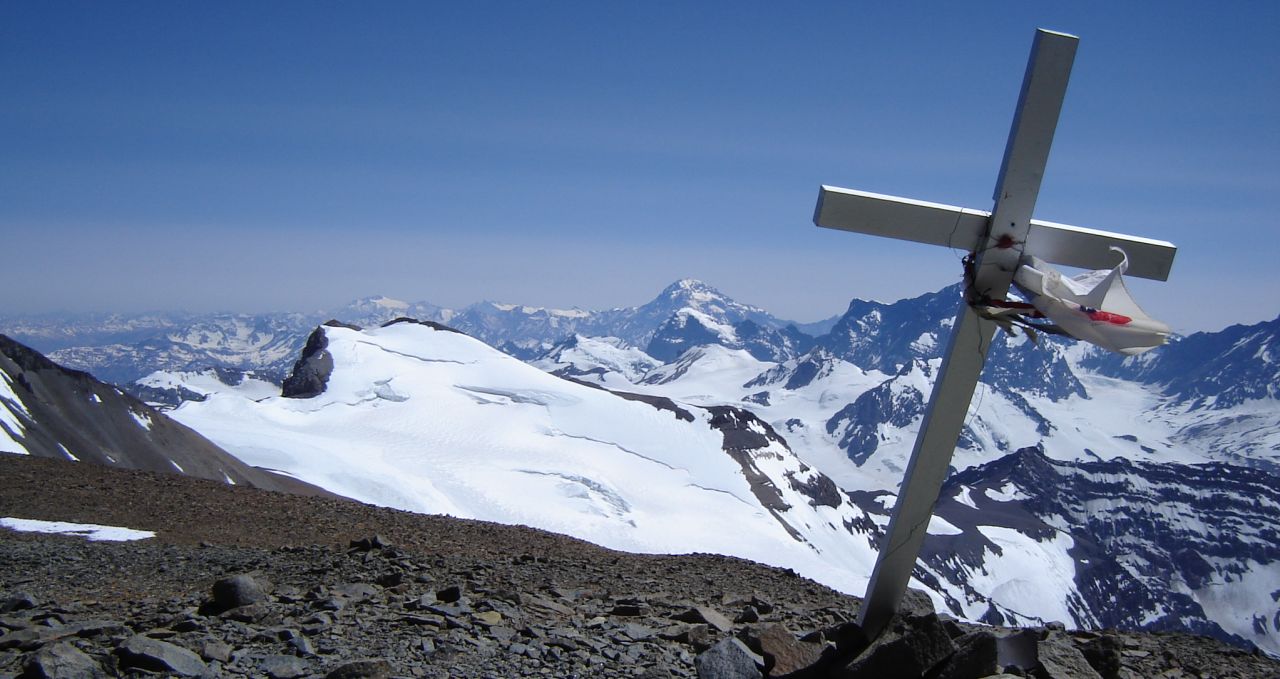
This trek starts from Santiago, capital of Chile and snow-capped Cerro El Plomo is seen clearly from Chile’s capital city.
In 1954, the mummy of an Inca child was found near the summit surrounded by gold artefacts.
Being at altitude, especially in the tropics, is usually a pleasure as it isn’t so hot, there are few insects and the air is clear.
However, when gaining altitude, air pressure drops and the amount of oxygen reaching the lungs is reduced. Although we build plenty of acclimatisation time into our itineraries, certain ill-effects are possible. Nevertheless, all of these can be minimised or prevented if care is taken.
On reaching heights above 2,500m (approx. 8,200 ft), especially when ascent has been straight from sea level, heart pounding, mild headache and shortness of breath are normal, especially on exertion.
Acute mountain sickness (AMS) is a syndrome known locally as soroche, whose symptoms can include of bad headache, dizziness and nausea).
To avoid AMS, you should:
Chile is the land of contrasts, from verdant vineyards to driest desert, deep fjords and towering glaciated volcanoes.
A narrow but incredibly long, snake-like country, Chile’s unusual geography features more than 5,000km of South Pacific Ocean coast. The country is almost 4,400km long but barely more than 160km at its widest.
It is best divided into general regions, all of which offer spectacular landscapes and identities of their own.
This variety means Chile is the land where almost every activity is possible. Hiking, biking, rafting and kayaking.
Or climbing, cruising, fishing, horse riding, wine tasting.
Or simply eating great food, relaxing and exploring.
Trekking heaven. Paine National Park lies in Patagonia and features some of the best trekking in South America. With no altitude worries here, hikers enjoy an unrivalled mix of access to wild flora and fauna that exists in this massif. It is at once windswept, and then balmy. Paine National Park is a must see for walkers visiting South America.
Northern Patagonia is the least densely populated part of the country – spectacular virgin scenery make this a hidden gem and superb area for trekking, boating and horse riding.
And that’s before you think about possibly cruising through fjords, or kayaking them, flying to Antartica or staying at a working hacienda.
Iconic, Easter Island is an archaeological treasure. Here you will find the famous Moai stone statues, as well as caves and rocks decorated with etched petroglyphs and painted pictographs.
Northern Chile features the Atacama, the driest desert with the clearest skies in the world, is alive with active volcanoes replete with spitting geysers mixed with archaeological wonders and fantastic rock formations.
Central Chile is the heart of Chile and includes the capital Santiago. With its Mediterranean climate of hot dry summers and mild wet winters, this central valley produces some of South America’s finest wines, Colchagua Valley to name but one.
Here, the Andean mountain chain soars more than 6,000m above sea level. Chile’s traditional symbols such as huaso (cowboy) and cueca (national dance) originate here, an area which is rich in agriculture and produces most of Chile’s export fruit.
In winter, skiers are attracted to this tasting the promise of some fabulous snow on the huge peaks which overlook Santiago.
Lush and verdant, The Lake District area is the place to climb snow-capped volcanoes by day while relaxing next to stunning glacial lakes by evening. You can walk, bike, raft, cruise and drive your way around this beautiful region.
Central, southern and Patagonia Andes all present different challenges to mountaineers and trekkers. Options are varied in the central Andes with many of the Patagonian peaks remaining unexplored and unsummitted.
Good kit is vital for every trip.
Book with Andean Trails and get 15% off Páramo’s fantastic ethical and high performance outdoor gear.
When planning for the climatic conditions encountered on high Andean peaks, layering is the most practical and versatile clothing system. It’s worth remembering that our clothing keeps us warm by retaining and isolating the heat we ourselves create.
To best maintain body heat, several layers of lightweight, warm and quick-drying clothing are far more efficient than one or two thick layers. Layers should have the following qualities:
First (base) layer: This layer wicks the sweat away from our skin, thus helping keep the body dry and warm. To this end, synthetic fabrics such as polypropylene should be used.
Mid layers: These isolating layers should also be synthetic (e.g. the known polar linings such as polartec or windblock, which are light and insulate twice as well as wool). Very important layers for retaining body heat.
Outer layer / shell: Finally, the vital layer which protects us from climatic adversities. A breathable, wind-proof and waterproof anorak, such as Goretex.
Note that it’s our extremities that stand to suffer the most, and on Aconcagua the poorly-equipped mountaineer is at risk of becoming frostbitten. Hence, much thought should be given to deciding how best to protect hands, feet and head.
Give plenty of thought to kit selection, and try to keep weight down.
Below is a more detailed guide.
For the extreme cold, we recommend a 3-layer scheme:
Chile’s climate varies greatly, owing to its sheer length, variation of terrain and varying altitudes and latitudes.
In the south of Chile, here temperatures drop a little compared to the rest of Chile.
It can be better to go in the Austral summer (Oct-March). Daylight hours are much longer at this time, with Nov-Feb being popular times to visit. October and March can be very colourful and vivid with less visitors, but weather can be more blustery.
In Patagonia, the weather is, putting it mildly, variable, and variable on a daily basis. It is usually cool and windy all year round but seldom does the temperature fall below freezing point. Some days start with snow and end in balmy sunshine. It is always interesting, and can range from 10°C-20°C in the summer, although the wind can make it feel chilly.
The vast unbroken stretch of ocean to the west and south of the South American continent leaves the Patagonian Andes very exposed to the saturated winds that circle the Antarctic landmass. Also the South Patagonia Ice field influence makes the weather hard to predict. In spring or early summer fine weather may deteriorate almost without warning, bringing rains and eventually snow. Even in summer (Dec-Mar) you should come prepared to find cold, strong winds (up to 130 km/hr) and rainfalls. The summer’s average temperature is 11ºC/52ºF (24ºC max, 2ºC min).
Winter visits to these southern areas are possible, but many hotels close and not all trips are possible. Daylight hours can be very short, but the lack of visitors can greatly improve chances of seeing wildlife in parks such as Paine.
The Lake District’s temperate climate can be said to resemble that of the UK, with rain possible but also enjoying long spells of fine, fresh weather in the summer (Oct-March).
Although sub-tropical and essentially a year-round destination, Dec-Feb are the most popular times to visit Easter Island as it is summer there and temperatures average 24°C. There can be colder days and it can be humid too.
The winter months (Jun-Oct) on Easter Island are not overly cold, but they can be cool. The average low temperature is 16°C but there is usually a wind at this time of year that makes the temperature feel cooler than it really is.
The wind rarely stops blowing at this time of year.
The north of the country lies in the tropical zone, but in the main is desert. It is dry and sunny all year round, but does get cold at night time in the high altitude areas.
In winter (June-Aug) the average daytime temperature is 22°C (72°F) and by night 4°C (39°F), descending to -2°C (28°F) in extreme cases.
During summer (Jan-Mar) the temperature fluctuates between 27°C (81°F) and a minimum of 16°C (61°F) at night, reaching maximums of 32°C (90°F), with occasional showers.
The wine growers love the central valley, which has a suitable Mediterranean climate of hot dry summers (Nov-March).
Then, temperatures range from 17°C in the evening and can go up to 30°C inland. It is cooler during the day on the coast.
During winter (May-Sept), which is essentially mild and wet, temperatures inland can vary from 5°C to 18°C during the day, and a bit warmer on the coast.
Autumn (Mar-April) and Spring (Oct-Nov) are lovely times to visit, although hotels in Santiago can book out in March, October and November, as it is conference season.
A fantastic Chilean trekking adventure, perfectly organised and enriched by culture, scenery, and expert support throughout.
A superbly organized Beagle Channel and Cape Horn cruise combining comfort, adventure, and breathtaking southern landscapes.