Since 1998, we've crafted journeys using knowledge gained on our own explorations of South America's spectacular wilderness, fascinating cultures and diverse wildlife.
Bring a sense of adventure and an open mind. We'll take care of the logistics and support you round the clock.
We only work with small, locally owned operators and guides. Your money stays where you travel, and a share of every trip supports local communities and the wild places they protect.
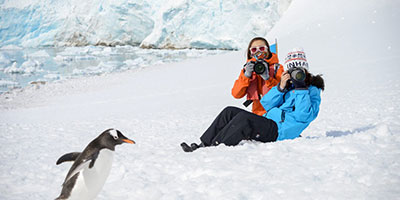
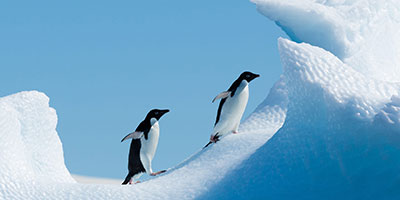
The Antarctic Peninsula is the Andes carrying on underwater and coming back up at the bottom of the world. Its mountain spine rises straight out of the sea, with snow-covered peaks more than 2,000 metres high above glaciers that crack and calve into the channels below. You sail past table-like icebergs the size of city blocks and push through ice in the Lemaire Channel, where the cliffs close in on either side. Ashore at Neko Harbour or Cuverville Island, gentoo penguins come and go along their well-worn paths through the snow. On other landings you’ll find Adélies and chinstraps, and from February humpback whales feed in the bays. Getting there means two days across the Drake Passage from Ushuaia, or a flight from Punta Arenas if you’d rather skip the swell. Either way, we’ll help you choose the ship and route that suit you, as the season only runs from November to March.
From: $11495 per person
Duration
From: $5210 per person
Duration
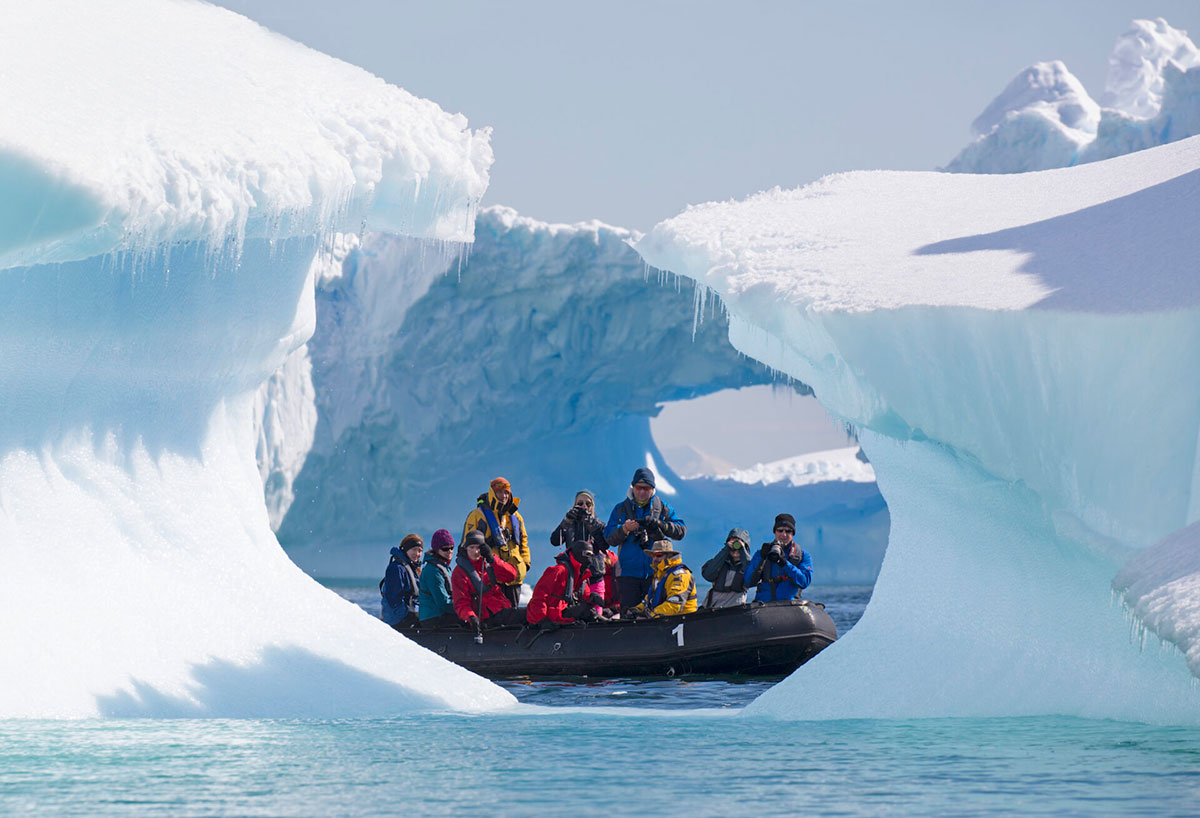
This frozen, desert continent is replete with gleaming ice formations and glaciers and is home to the greatest concentration of wildlife on earth. Down here, at the bottom of the world, you’ll share this pristine environment with penguins, seals, whales and a multitude of birds who seek the clean air and waters of the south pole.
From the moment you arrive, immerse yourself in the sounds of whale song and glaciers cracking while staring into the deep blues and inky depths of the seas. There are a variety of activities to enjoy on land, from camping to snowshoeing, sea kayaking and skiing. And for the hardy, there is even mountaineering. This is an area perfect for photography and to connect with the natural world in its most innocent and simple form.
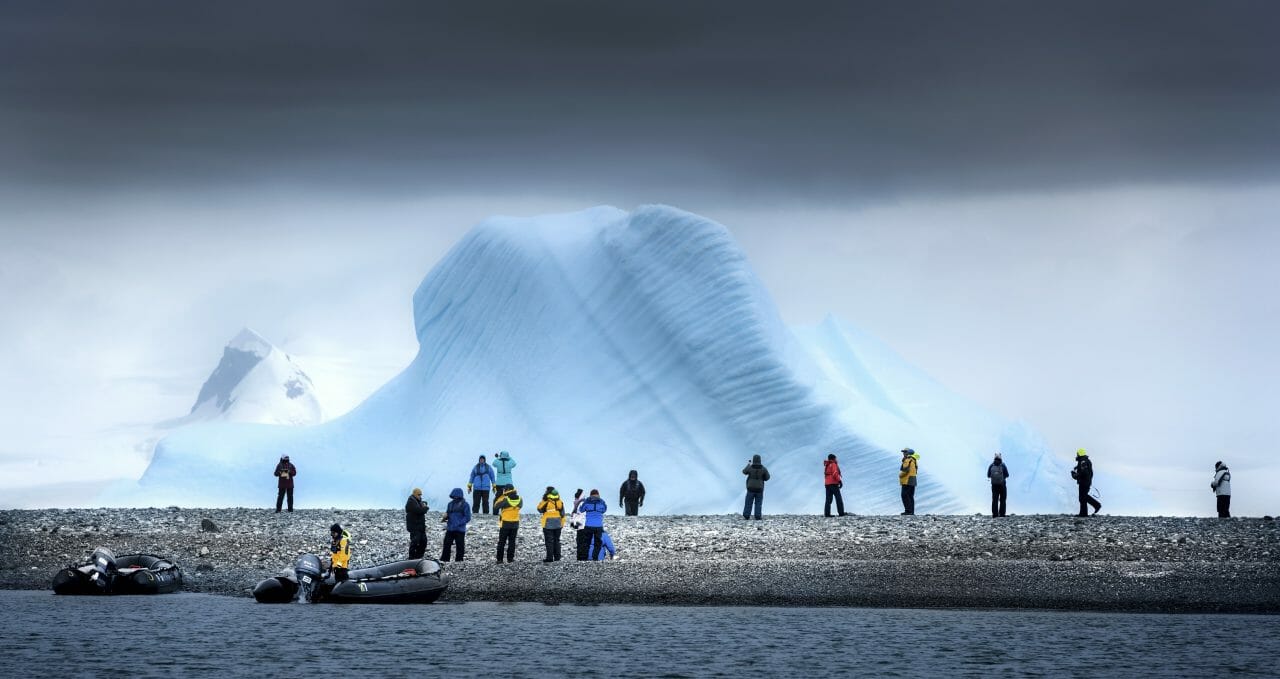
All our Antarctica tours are led by experts in their fields. They give in-depth explanations about the wildlife you see, as you pass towering cliffs, beaches and floating ice sculptures. The topography is also immense. Antarctica is 14 million square kilometres in size, with much of it covered in permanent ice. Some parts are, actually, up to 2km thick.
During the Austral summer (Nov-Mar), the ice melts enough to allow boats to access the Peninsula. Every cruise is different with sea and ice conditions providing unique backdrops, adding to the adventure. There are daily lectures from experts during all Antarctica tours, deepening your understanding and enjoyment of this once-in-a-lifetime holiday.
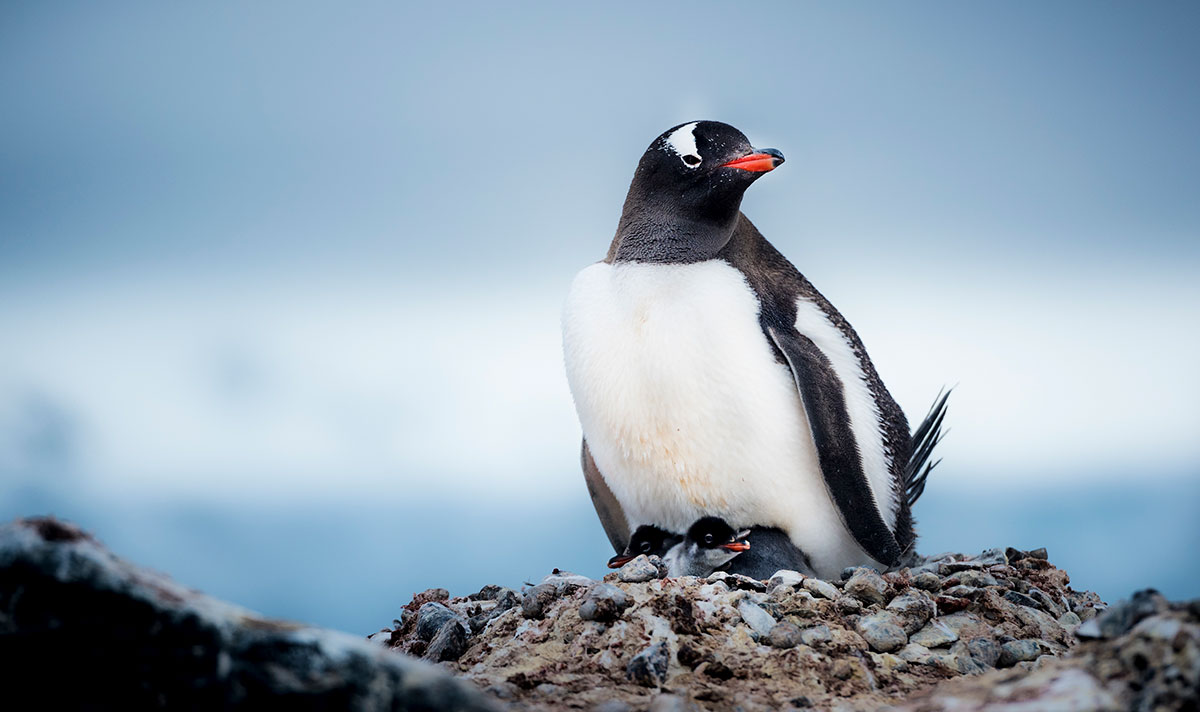
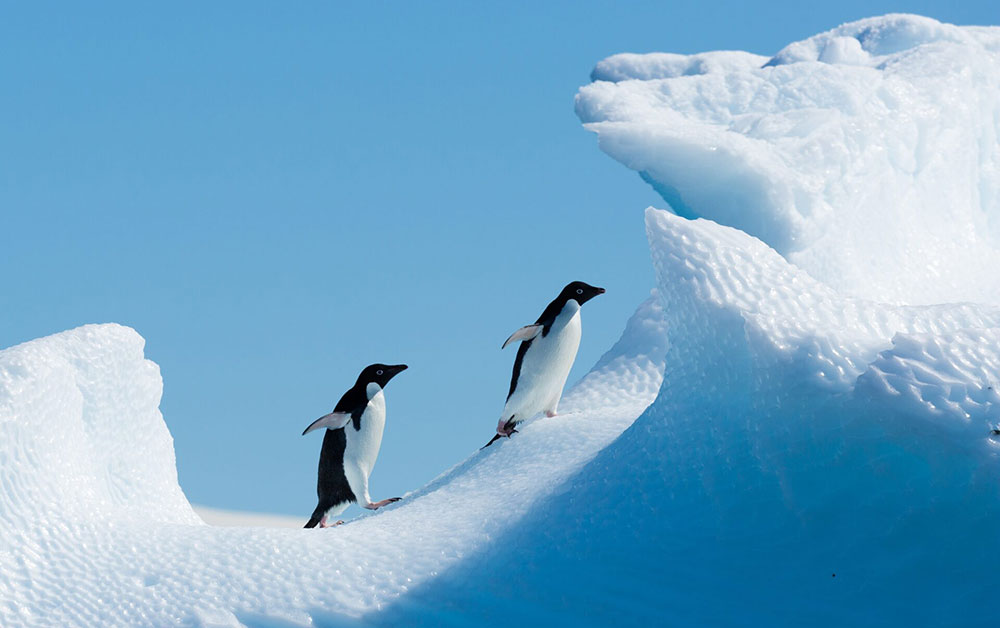
Antarctic fur seals, humpback whales and wandering albatrosses are but a few of the animals you can encounter. A plethora of penguins from king, rockhopper and chinstrap penguins (there are seven species in total) await your arrival.
Many sea birds make Antarctica their home and you can spot skuas, petrels and terns. From the seal family, there are leopard seals, elephant and crabeater seals. The lucky may spot killer whales (orcas) and blue whales too.
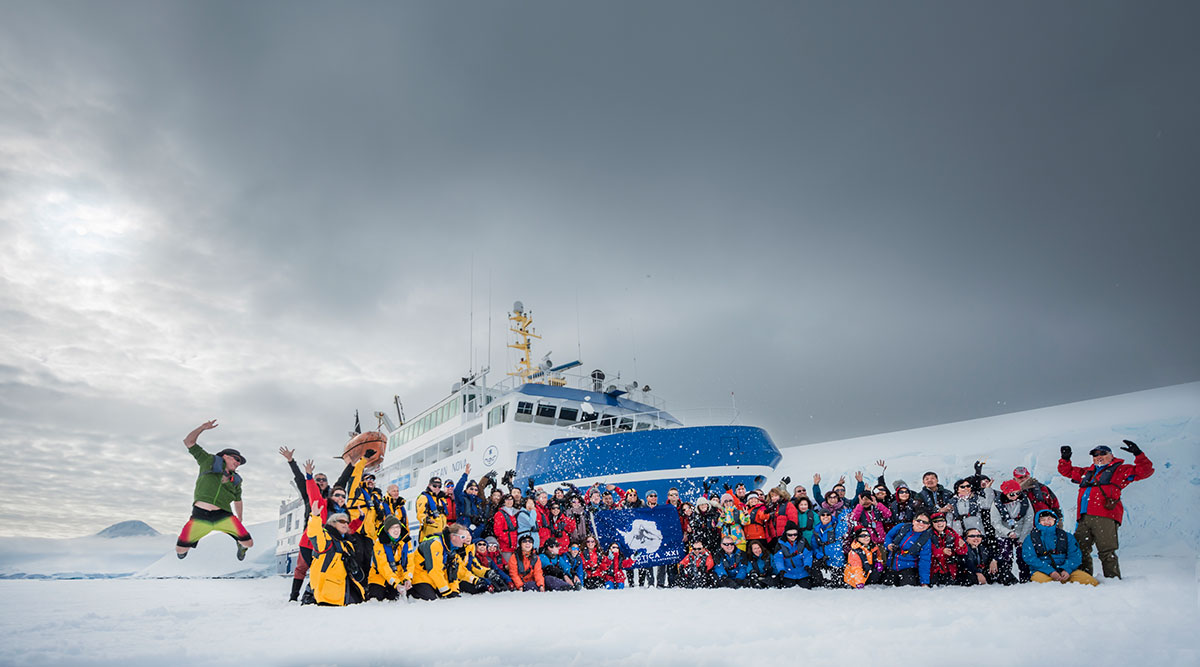
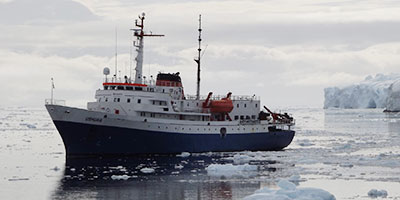
The first polar explorers – the iconic names of Shackleton, Scott and more – arrived to the 7th continent in the 19th century. You follow the tracks of these pioneers on modern cruise ships which feature creature comforts in the cabins plus observations decks, loungers and more.
Most Antarctica tours involve sailing over the infamous Drake Passage. Measuring around 1,000km / 600 miles in length, the Drake Passage stretches between Cape Horn and the South Shetland Islands.
For those who may wish to avoid potential seasickness during the crossing, there is an option to fly/cruise directly to Antarctica. Alternatively, there are longer cruises that sail east and take in famous landmarks such as the Falkland Islands and South Georgia before heading south.
Read our blog about Antarctica costs, planning, and more.
Contact us for more.
A five-week odyssey from Argentina’s vibrant culture to Antarctica’s icy wilderness delivered the ultimate adventure experience.
A superbly run Antarctic voyage delivered calm ice, dramatic seas, surprise landings, and unforgettable moments at the edge of the world.
From money advice to visas, from inoculations to which plugs to take, below you’ll find a wide range of travel tips, advice and information that will help you get ready to explore Antartica.
Can’t find what you’re looking for?
Get in touch and we’ll be happy to help.
Festival: Carnaval
Fancy dress parades to music.
Location: Nation wide
Festival: Festival de la Venidimia / Grape Harvest
Dancers, performers, Harvest Queen and fireworks
Location: Mendoza
Festival: Tango festival
A celebration of the Tango. Music and dance.
Location: Buenos Aires
Festival: Casabindo Festival
Location: Buenos Aires
Festival: El Dia de Tradicion / Tradition Day
Celebration of Gaucho history and culture
Location: San Antonio de Areco
Availability, speed and cost of internet connection varies per boat.
Cruise ships use satellites to connect. Speed and quality is dependent on weather conditions and your itinerary for the day. At best, expect slow, dial-up type speeds.
You may get enough connection to send a few emails / messages / texts, but uploading heavy pictures, files and web browsing will probably prove difficult.
Similarly, mobile phones will not be in range of satellites.
At present, it’s best to consider yourself out-of-range when on a cruise.
Most cruises leave from Ushuaia in Argentina.
To call Argentina from abroad, or using your mobile phone in Argentina, follow these steps.
Example number: Buenos Aires (0)11 1234-5678, you would dial:
Argentina mobiles start with the number 15. If using your mobile phone to call an Argentine mobile, follow these steps.
Example number: Buenos Aires mobile 15-8765-4321, you would dial:
If taking a mobile phone with you, check roaming rates with your operator before leaving – they can be very high.
A good way to avoid expensive charges is to bring own unlocked tri- or quad-band phone to Argentina and then buy an inexpensive SIM chip with a local number. These are available in many kiosks and locutorios and offer ability to make cheap calls as well as affordable data for the internet.
Correo Argentino is the national, state-run postal service.
In order to get the most out of any tour we classify as ‘easy‘, you should be in good physical condition.
It is not easy to grade the fitness level required for any tour, since it is a subjective matter.
However, for tours as easy, expect to be active during the day, carrying only your day-pack.
Hikes/tours may involve some ascents, descents, stairs etc. Biking, rafting or kayaking at this level will be 2-4 hours maximum, with pauses.
Andean Trails can book all your international and domestic flights for this trip and for UK passengers; we have full ATOL bonding and can book flights with most airlines.
International flight prices are variable and usually can only be guaranteed at the time of booking. If you would like to upgrade to business or first class, or even arrive at an earlier date/depart at a later date we can also arrange this for you.
Typically, you fly to a country’s capital city and then overnight there or make a connecting flight (if available) to your next destination.
Please contact us for flight advice especially if you do make a connection on the same day. It is important to purchase a through ticket and not separate tickets for connections, so that you are covered for any delays. Passengers with separate tickets that are delayed run the risk of having to buy an entirely new ticket to continue their journeys.
Please note all airline schedules are subject to change and are out of our control.
Almost all flight tickets are now e-tickets. Any that are not will be handed to you on arrival in South America – this is most common for flights on smaller planes in Amazon areas such as Guyana/Bolivia.
The final travel instructions we send you some 2-3 weeks before departure will list the latest flight times, flight numbers etc as well as list your e-ticket numbers and booking reference code (6 characters i.e. GB75RK). This is what you will need to check in with.
Depending on the airline, we can reserve some seats for you at the time of booking your international flights with us.
If we cannot reserve seats at the time of booking, you have to wait for online check in to open (usually 24-72 hours before departure).
To check in online you will need to go to the website of the airline you are travelling with, and have your e-ticket number/booking reference to hand. Click check in online, enter your details, and choose your seat.
Some flights will allocate seats at the check in desk at the airport and some may not allocate seats at all.
The United States (USA) has an Electronic System for Travel Authorization (ESTA) which all travellers to and via the USA must complete BEFORE travel to/via its airports and shores.
More information can be found on their ESTA website.
Passengers who have not completed the form will be denied boarding.
Before you begin this application, make sure that you have a valid passport and credit card available.
This application will only accept the following credit cards: MasterCard, VISA, American Express, and Discover (JCB, Diners Club).
Read our blogs about Buenos Aires’ restaurants and the best food experiences, plus where to eat in Patagonia.
| Main dishes | |
|---|---|
| Asado | Roast cooked on open fire |
| Parrillada | Mixed grill of roast meat, offal, chorizo (spicy sausage) & morcilla (black pudding) |
| Churrasco | Thick grilled steak |
| Bife de chorizo | Rump steak (not to be confused with the chorizo sausage) |
| Bife de lomo | Fillet steak |
| Choripán | Chorizo (spicy sausage) in a bread roll |
| Puchero | Stew |
| Carbonada | Onions, tomatoes and minced beef |
| Bife a caballo | Steak topped with fried egg |
| Arroz con pollo | Rice, chicken, egg, vegetables and sauce |
| Puchero de gallina | Chicken, sausage, maize, potatoes and squash cooked together |
| Empanadas | Pasties with fillings such as beef, chicken, cheese or tuna |
| Milanesa de pollo | Chicken escalope (good value) |
| Milanesa | Veal escalope (good value) |
| Ñoquis | Gnocchi potato dumplings |
| Locro | Thick stew of maize, white beans, beef, sausage, pumpkin and herbs |
| Desserts | |
| Almendrado | Ice cream rolled in crushed almonds |
| Dulce de zapallo | Pumpkin in syrup (usually eaten with cheese) |
| Dulce de leche | Very popular soft, pale fudge |
| Dulce de batata / membrillo | Sweet potato or quince preserve, served with cheese |
| Postre Balcarce | Cream and meringue cake |
| Alfajores | Maize-flour biscuit sandwich filled with dulce de leche or jam |
| Media lunas | Croissants served at breakfast, either dry (de grasa) or rich and fluffy (de mantequilla) |
| Drinks | |
| Vino | From cheap and cheerful upwards, Argentine wines are consistently good |
| Cerveza | Mainly lager-style beer, often served with a small snack such as peanuts |
Argentina’s neighbours are Bolivia, Brazil, and Paraguay to the north, Uruguay to the north east and Chile to the west. In the east Argentina has a long South Atlantic Ocean coastline.
The central region of Argentina is the rich plain known as La Pampa.
There is jungle in the extreme northeast while the southern half of Argentina is dominated by the flat to rolling plateau of Patagonia.
The western border with Chile is along the rugged Andes mountains, including Aconcagua, the highest mountain outside the Himalayas. Close to Aconcagua lies Mendoza, an area famed for its fine wine production.
The western Cuyo regions at the base of the Andes are mostly rocky desert.
Most Antarctic cruises embark and disembark in Ushuaia, at the tip of South America, allowing access to the South Pole, South Georgia and also the Falkland Islands.
Argentina is a land of contrast.
Nothing states this better than the fact it features the highest point in the South America, Aconcagua, and the lowest, Salinas Chicas, 40m below sea level.
Its vastness – it is the eighth largest country in the world – and diversity are just part of the appeal. A fantastic culture of fine wine and dining sits alongside its adventurous and beautiful landscapes.
The local’s cheery disposition and fantastic word plays add to the enjoyment of being in this fascinating country.
The name Argentina derives from argentinos, the Ancient Greek diminutive (tinos) form for silver (argentos), which is what early Spanish explorers sought when they first reached the region in the sixteenth century.
There are distinct regions of Argentina, from the Andean culture of the North West to the rancho lifestyle of the plains of Patagonia to the eternally seductive Buenos Aires.
Learning a few words of Spanish can really ingratiate you with the locals you’ll encounter, adding to the enjoyment of your holiday. Below are some basics to get you started.
| Greetings | |
|---|---|
| Good morning | Buenos días |
| How are you? | ¿Cómo estás? |
| Good afternoon | Buenas tardes |
| Good bye | Adiós |
| Most frequently asked questions (theirs) | |
| Where are you (plural) from? | ¿De dónde eres (son)? |
| What time is it? | ¿Qué hora es? |
| Where have you come from? | ¿De dónde vienes? |
| Give me (frequent, unwelcome question) | Dáme / regálame |
| Most frequent questions (yours) | |
| How much is it? | ¿Cuánto vale? |
| What is this place called? | ¿Cómo se llama este lugar? |
| What’s your name? | ¿Cómo te llamas? |
| Do you have a map? | ¿Tienes un mapa? |
| In the street / places | |
| Where can I find a currency exchange? | ¿Dónde encuentro una casa de cambio? |
| Where is there a cash machine? | ¿Dónde hay un cajero automático? |
| Where is the underground/subway station? | ¿Dónde está la estación de metro/subte (Buenos Aires)? |
| Where can I find a taxi? | ¿Dónde puedo encontrar un taxi? |
| Where can I find a supermarket? | ¿Dónde puedo encontrar un supermercado? |
| Where is the hospital? | ¿Dónde está el hospital? |
| Where can I find a restaurant? | ¿Dónde puedo encontrar un restaurante? |
| In the hotel | |
| What floor am I on? | ¿En qué piso estoy? |
| Where are the elevators/lifts? | ¿Dónde están los ascensores? |
| How do I access the Internet? | ¿Cómo puedo acceder a Internet? |
| How do I call for room service? | ¿Cómo llamo para el servicio de habitación? |
| How do I call down to the front desk? | ¿Cómo llamo a la recepción? |
| In the restaurant | |
| A table for two/four please | Una mesa para dos/cuatro, por favor |
| I would like to drink… | Me gustaría tomar… |
| May I see a menu? | ¿Puedo ver la carta / menú? |
| I would like to order… | Me gustaría pedir… |
| Can you bring me the check/bill please? | ¿Me trae la cuenta, por favor? |
| Emergency | |
| I need help. | Necesito ayuda. |
| I have lost my passport. | He perdido mi pasaporte. |
| Someone stole my money. | Alguien robó mi dinero. |
| I have been robbed. | Me han robado. |
| I need to call the police. | Necesito llamar a la policía. |
| I need to call the (country) Embassy. | Necesito llamar a la embajada de (country). |
| Help! | ¡Socorro! |
In general, boats run a ‘tab’ system, which you can settle in either cash (US dollar or Euro) or by credit card at the end of the cruise.
Cards cannot be accepted for tips, which must all be in cash.
Every boat has a different policy and way of operating its tab system, please ask for more details.
Almost all Antarctic cruises start in Ushuaia, Argentina, with a few from Chile.
Argentina’s monetary unit is the “Argentina Peso”.
Argentina has had several years of economic instability and with a previous government there were tight exchange controls.
These have now been relaxed so payments with debit and credit cards are widely accepted.
However, there may be controls on ATM withdrawals (possibly a max of AR 1000 / GB 50 per day and you may well be charged substantially for each withdrawal). ATMs can also be unreliable and we have had several reports of “empty” cash machines. We suggest that you have enough cash to cover your needs, especially in more remote areas.
ATM debit/credit cards are now widely used in major restaurants, hotels and shops (with fees).
Take US dollars with you (preferably new notes or at least unmarked and undamaged notes) in smaller denominations of 10s, 20s and maybe some 50s. Do not take USD 100 bills as they are unlikely to be accepted.
On arrival to Argentina , at the airport/border, exchange US dollars so that you have some local peso. Some businesses, particularly in tourist spots may accept payment in US dollars – ask first.
Click here for the current exchange rate.
Peso banknotes: 2, 5, 10, 20, 50, 100, 200, 500 pesos.
Peso coins: 5, 10, 25, 50 centavos, 1 peso, 2 pesos.
Argentina has a world famous culinary and wine reputation.
There are more and more top-end restaurants almost everywhere, and you can easily spend USD 100pp and more on meals.
Prices vary greatly, below is a rough guide to what you can expect to pay in Argentina.
Beer/soft drink: USD 4
Menu del dia: USD 10-15
Coffee: USD 2
Bottle of wine: From USD 15 upwards
Beer/soft drink: USD 5-7
Main dish: USD 20 upwards
Coffee: USD 3
Bottle of wine: From USD 20 upwards
220 volts (110v in some hotels), 50 Hz, in both Chile and Argentina, and aboard most boats.
Most cameras, phones and computers are dual or multi voltage and probably won’t need a convertor – please check before leaving.
Some items you may bring, such as hairdryers, may need a convertor. They may short if you use them without the correct convertor.
Most boats take the two pin, round-pronged Type C plug show below. Onward travel to Chile or Argentina requires more plug types.
Argentina uses Type i (I) plugs, although some Type C plugs can be found in older buildings and bathrooms.
Chile uses Type C as above and Type L plugs.
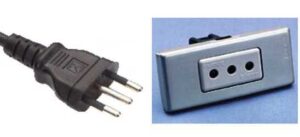
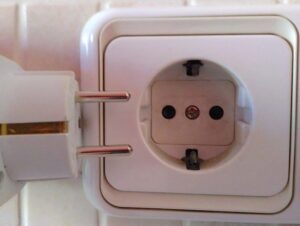
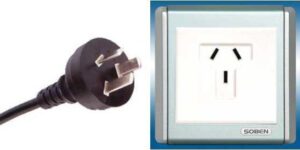
Most of Argentina is a relatively safe country to travel around. However, we still recommend that in large towns and cities you take certain precautions (see below). Argentina is, overall, among the safest countries in South America.
However, in Buenos Aires, muggings and opportunistic crime – although not common – do occur.
In Buenos Aires and other big cities, ‘distraction muggings’ sometimes happen in quiet streets, in the daytime as well as at night. We suggest that you take the following precautions:
We strongly suggest that everyone planning to travel to Argentina visits their local doctor/travel clinic prior to departure for the latest vaccination information.
Anti-malarial protection (chloroquine) is recommended only in risk areas. Malaria risk in Argentina is low, and confined to northern rural areas along the borders with Bolivia (lowlands of Jujuy and Salta provinces) and Paraguay (lowlands of Corrientes and Misiones provinces). It is exclusively in the benign vivax form, and no risk exists in Buenos Aires or Patagonia In the UK, contact the Malaria Reference Laborator. North Americans should contact the Centers for Disease Control.
UK and USA citizens do not require a visa to enter Argentina as a tourist.
Please ensure your passport has at least six months remaining validity.
On presentation of a valid UK or USA passport you will be granted a 90-day stay in the country.
All non-UK nationals should check with their nearest Argentine consulates for the latest visa and fee information.
All requirements are subject to change and should be confirmed before departure.
Antarctica is going to be cold, whenever you go – the question is more what you want to see.
The season runs Nov-March and is the only travel window as the ice has broken up enough to let ships pass.
November is very cold and the best time to see pristine ice and snow and huge icebergs.
December-January are the most popular times to visit. There are up to 20 hours’ sunshine every day, and the relative warmth (temperatures hover around freezing) make for perfect conditions for seal pups and penguin chicks.
As you move from January towards February the chicks here fledge and many more whales start to arrive. February is warm and means you may be able to cross the Antarctic Circle.
March sees the continent head back towards sub-zero temperatures as the long nights draw in. Water is clear and good for diving/seeing whales.
Then the ice freezes over once more and Antarctica is impossible to visit April-Oct.