From: £922
From: $1,227
On your arrival at Tarapoto airport you’ll be met and taken into the heart of Tarapoto to your hotel. (1 night hotel, with dinner).
Tarapoto is a busy jungle city, with a central plaza, perfect for sipping a cool beer and watching life go by, in moto-taxis.
A refreshing dip in the pool is a great way to wind down after Lima’s busy streets.
After a good breakfast we head off by private bus on the 330 km journey towards Gocta.
After 2 hours we reach Moyobamba, where we stop for a visit to a beautiful orchid farm at Wakanki. We continue our drive through the stunning forests of Alto Mayo beginning our ascent all the way to Abra Patricia, where we may be able to visit the biological station of Lechucita Bigotona. Box lunch and walk the trails of high forest.
We then continue our journey to Gocta, arriving at 17:00. A refreshing dip in the pool or cold drink overlooking the stunning mountain views precedes a delicious dinner. Situated at an altitude of 1,800m/5,905ft, the lodge enjoys a year round spring climate.
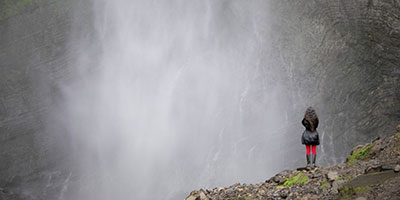
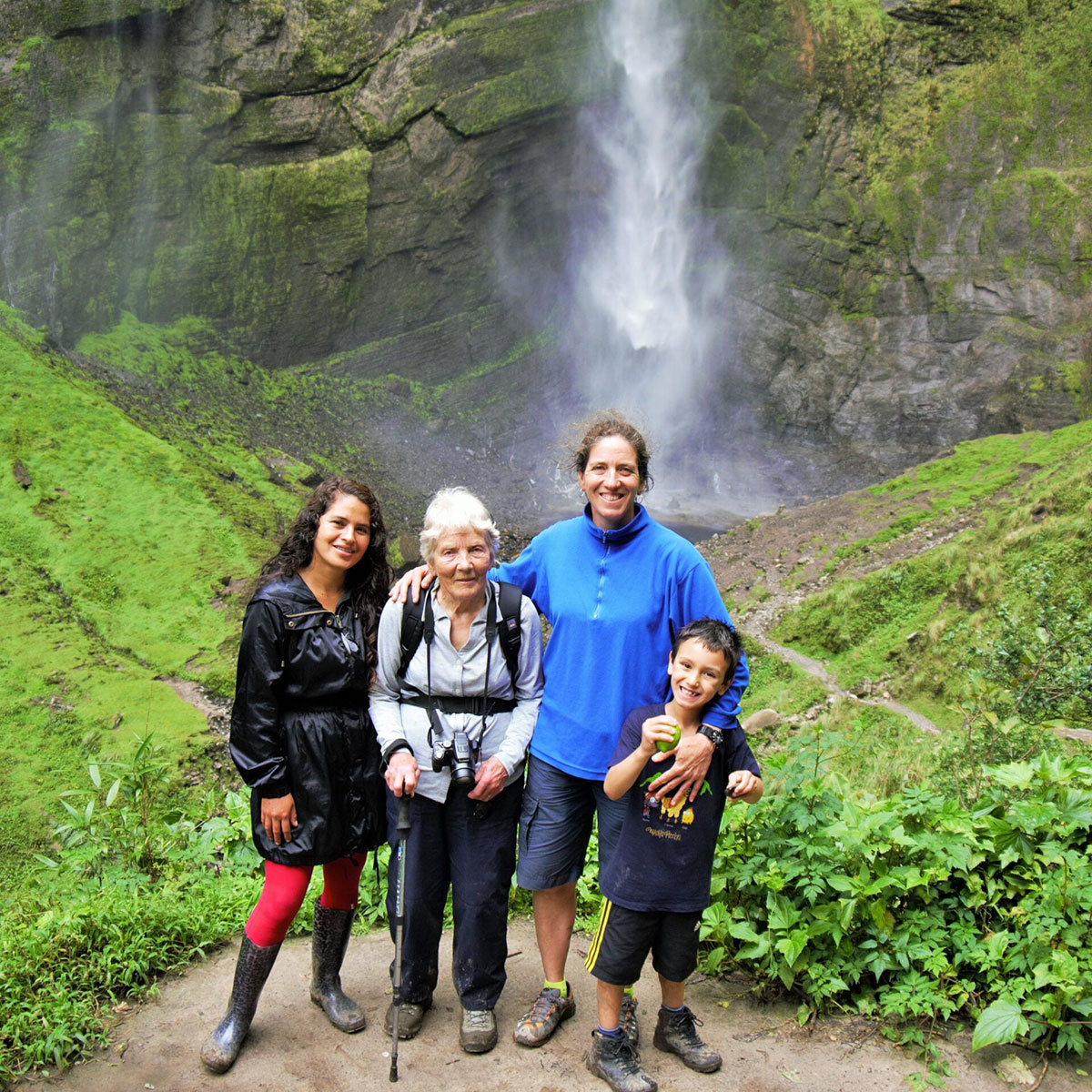
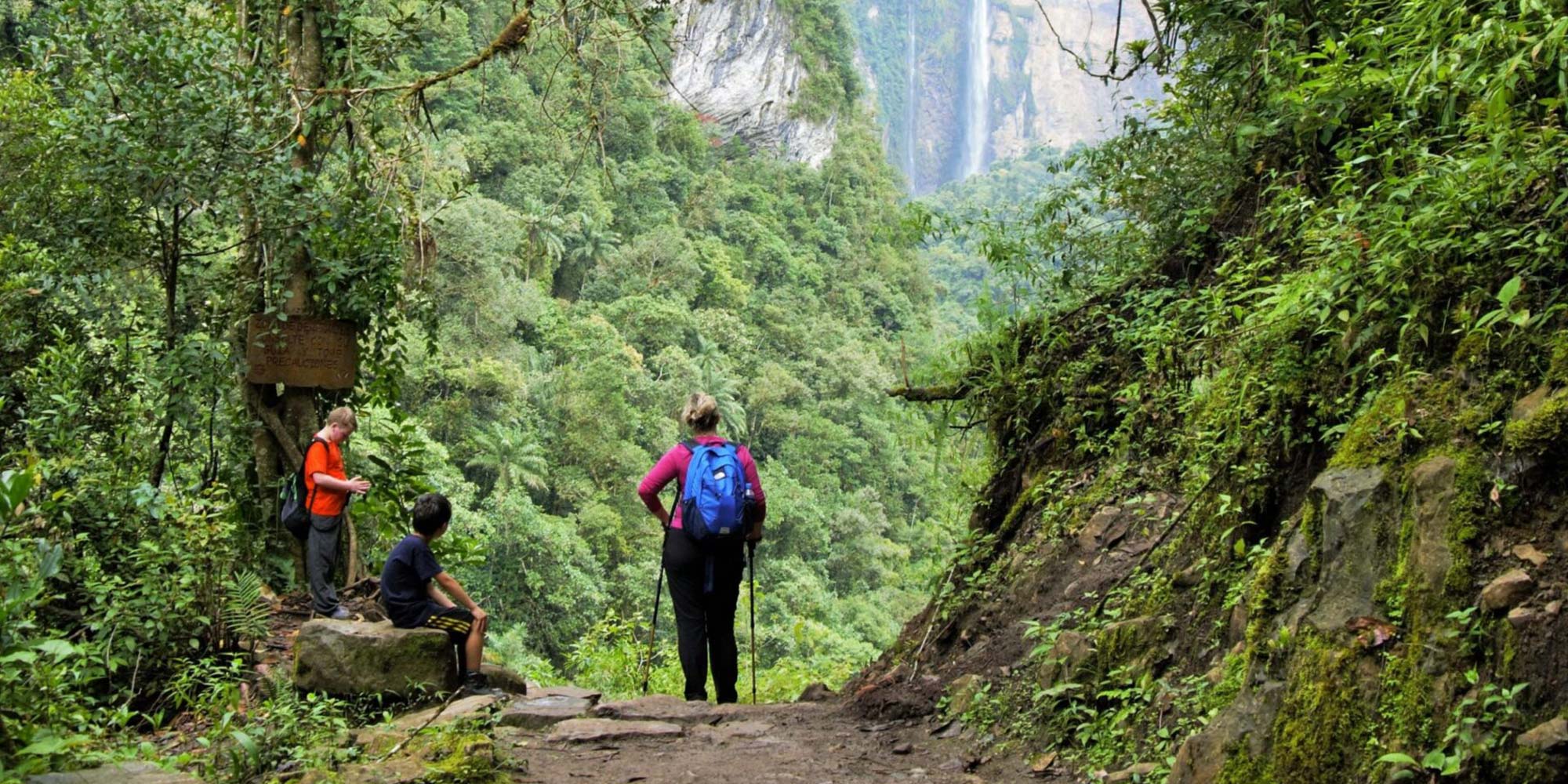
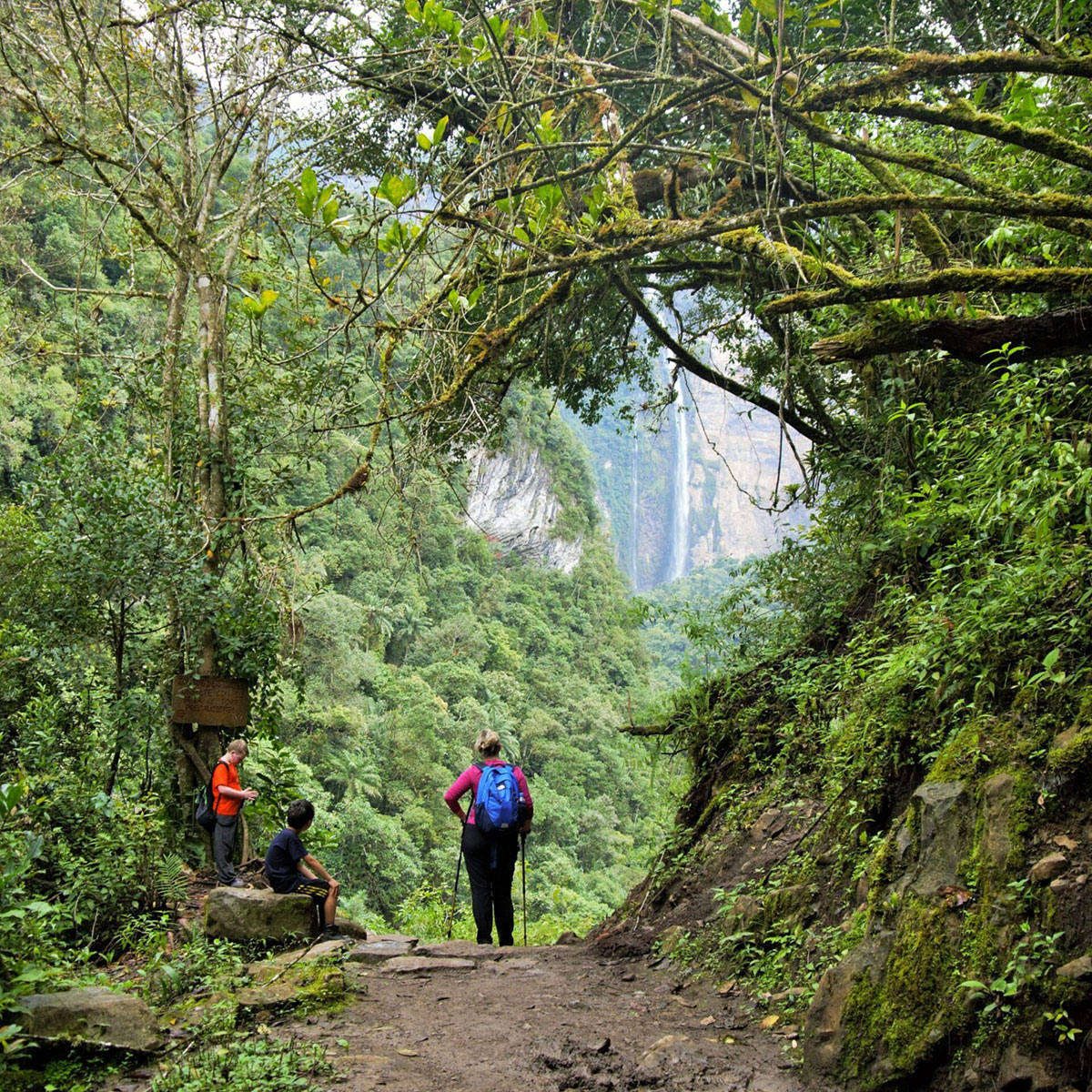
After breakfast we get ready for our 6km trek to the amazing Gocta Falls, back drop to the village of Cocachimba and our lodge. It takes a couple of hours of walk, through local famlands and then verdant forest with plenty of interesting flowers and birds en-route.
A local guide from the village will explain community life in this remote part of northern Peru.
Cocachimba, the nearest village to the falls has organised a rota system for local guides and horse-men to accompany visitors. They have set up a vistor centre and sell maps, books and some locally produced crafts.
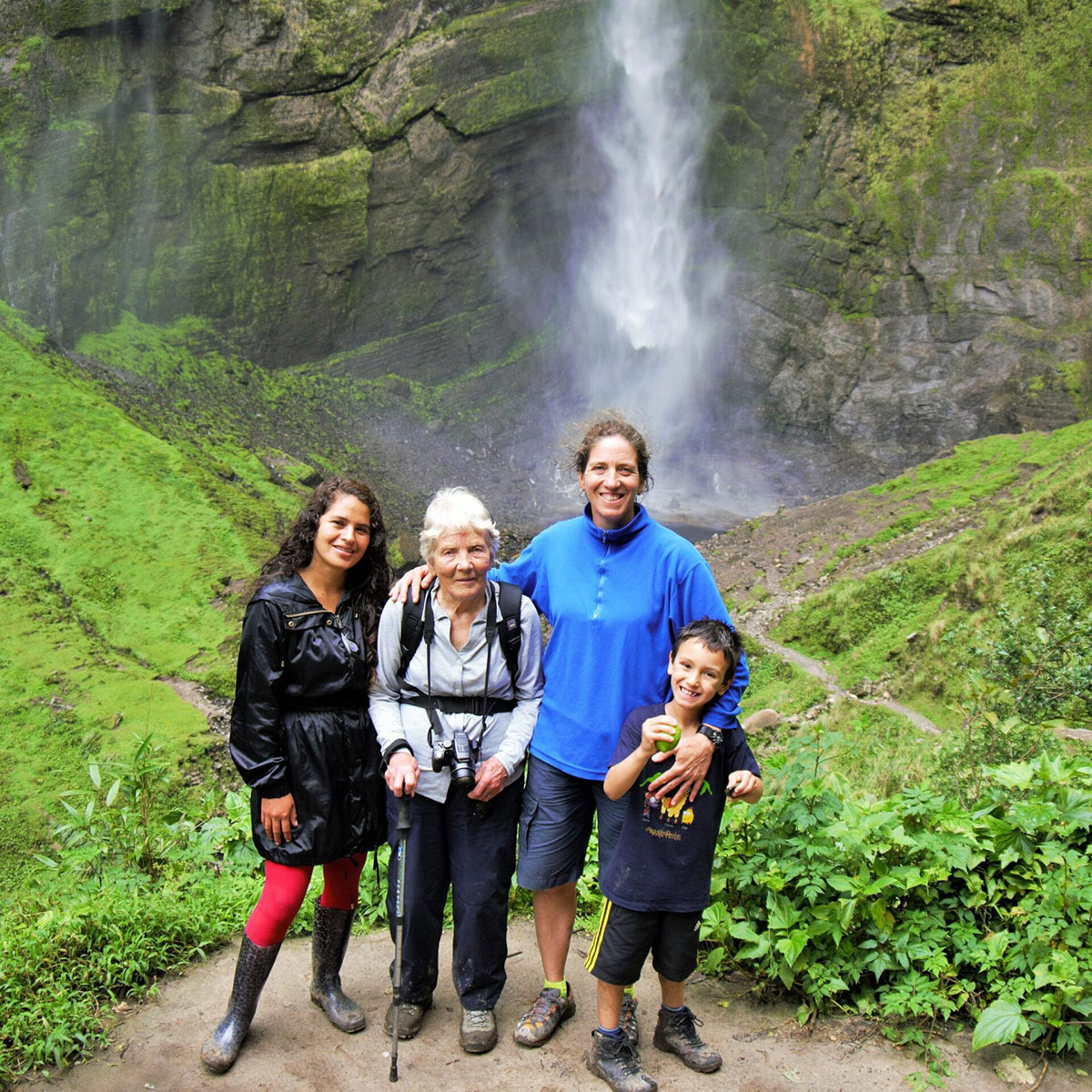
A refreshing dip in the pool beneath the falls and welcome snack await, then we set off back to the Lodge, arriving mid afternoon for some well deserved rest and relaxation.
After breakast this morning we set off on a 3 hour drive to the mountain top citadel of Kuelap, visiting picturesque Andean villages along the route.
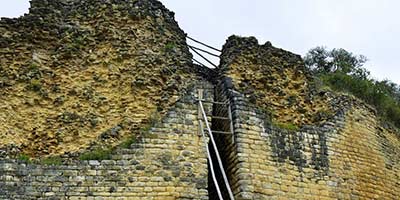
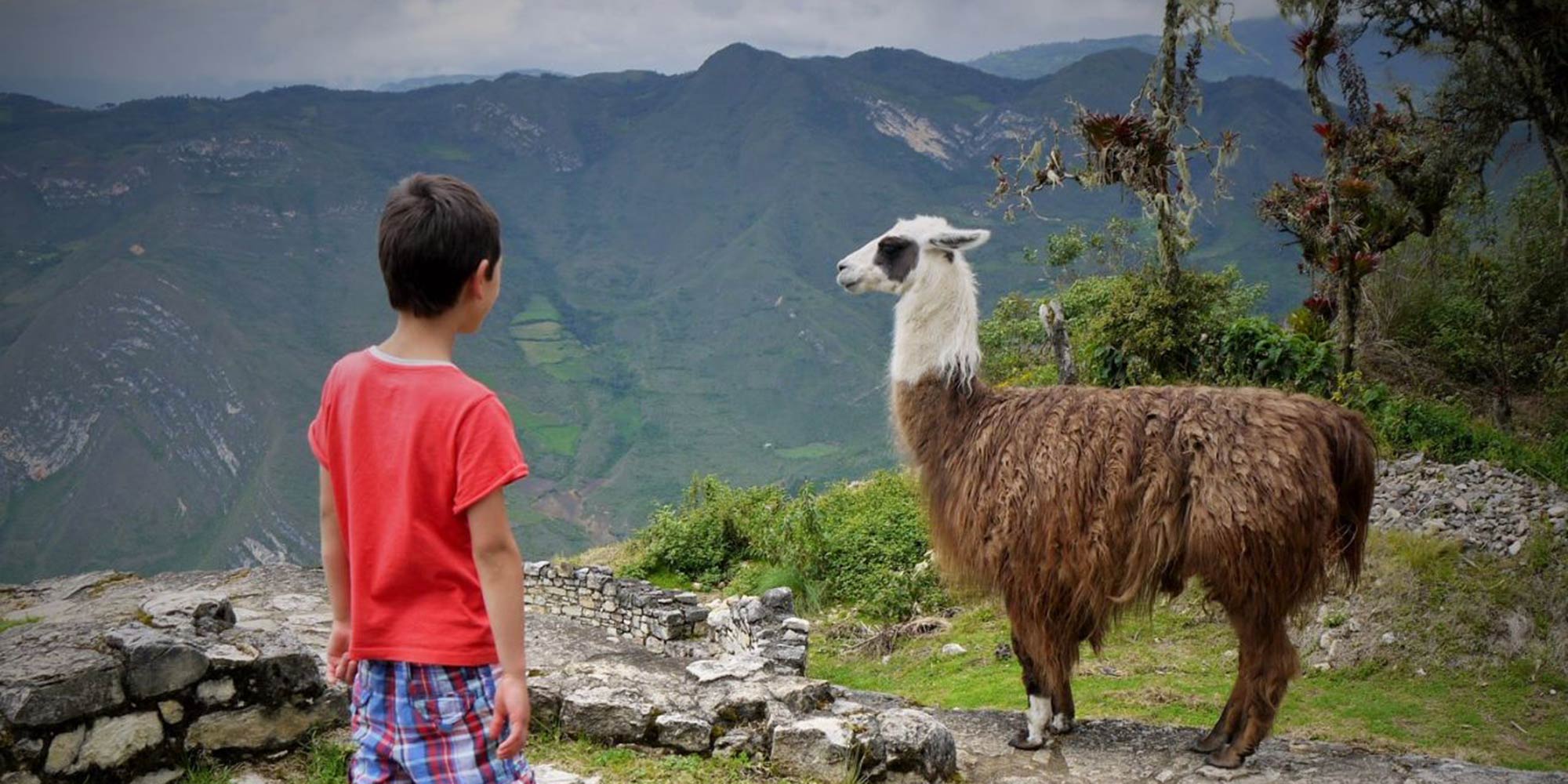
We enjoy a guided tour of Kuelap (Spanish-speaking guide only) , South America’s largest ancient stone construction.
We explore the many ceremonial constructions, aqueducts and retaining walls, then have lunch in nearby village before making a visit to the local town of Chachapoyas.
Today we set off after breakfast for a visit to the Sarcophagi of Karajía and Chachapoyas town.
For the Chachapoyas culture of Ancient Peru, the cult of the dead was of very important.
The 500-year-old Sarcophagi of Karajía are tombs in the shape of human figures. They are 2.5m tall and are located on vertical rock faces at an altitude of 2,400 meters. These sarcophagi were placed in spots that are difficult to reach to ensure that they are not visited and the bodies can rest in peace for all time.
They were discovered in 1985 by the Peruvian archaeologist Federico Kauffmann Doig in the Karajía ravine.
After breakfast we set off on our return journey to Tarapoto, heading towards the jungle lodge on the banks of the River Huallaga.
We make a short stop to see the Spatula Tail hummingbird and the Colibri Observation Centre. We continue our journey to Moyobamba, stopping for lunch before continuing to our jungle lodge.
This morning you can head out for an early morning hike to spot some of the Amazon wildlife.
We then head off to visit some local waterfalls, with a walk through this verdant forest.
After lunch back at the lodge we transfer to Tarapoto airport for our flight to Lima.
Lodge based accommodation, en-suite rooms with swimming pool at Gocta Lodge.
A high level of fitness is not required for this tour, but the more active you are, the most you will enjoy the trip.
You can choose your own level of adventure. There is no altitude to worry about. Being able to walk 2-3 hours at a time on uneven terrain is an advantage.
It does go to remote locations but some drives are long.
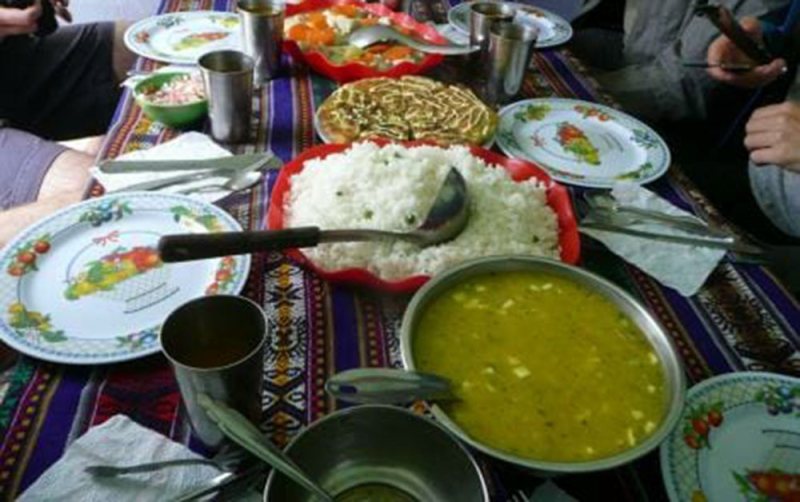
Meals are served at Gocta Lodge and almost all dietary requirements can be catered for – please ask in advance.
The chefs there serve a mix of Peruvian food and local produce, and can also produce international cuisine if required.
They use lots of fresh, local ingredients. Lots of fresh fruit and vegetables grow in this very fertile area, from tropical plants to crops.
Local guides will show you around the area that they know so well.
An exceptional Amazon experience in Peru’s Manu, guided by experts and filled with unforgettable wildlife encounters.
A luxurious Galapagos cruise aboard the Galaxy combined wildlife wonders, impeccable service, and unforgettable comfort.
Suitable for families looking for an adventure, we stay at Gocta Lodge in an area teeming with wildlife.
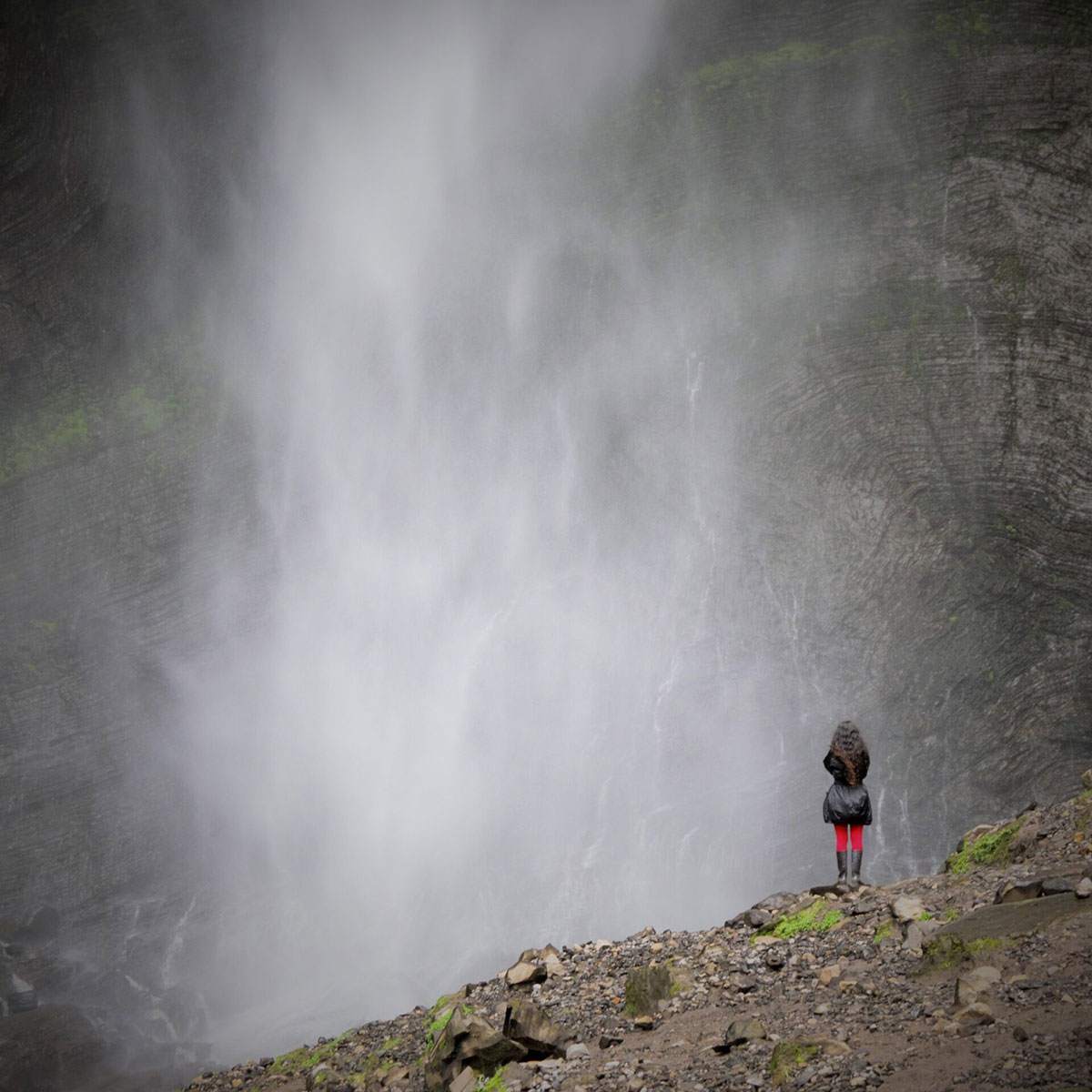
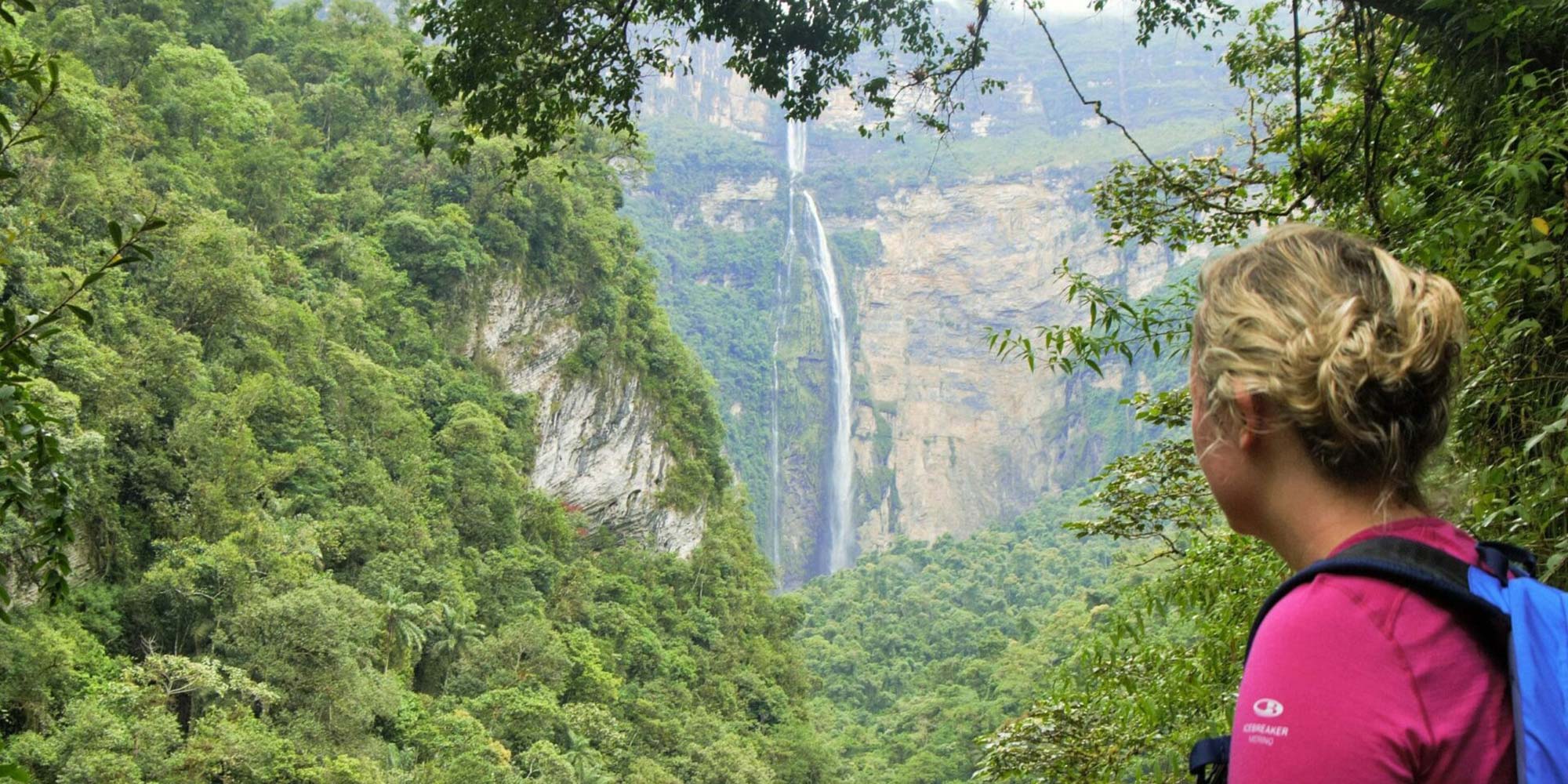
The star of the show is the recently discovered Gocta waterfall, along with the pre-Inca ruins of Kuelap, which we can visit.
Guides from local communities will show you the highlights of this remote, less visited, yet, stunning part of Peru.
We drive north through verdant coffee producing regions and on into seja de selva, meaning eyebrow of the jungle, an area of stunning virgin cloud forest.
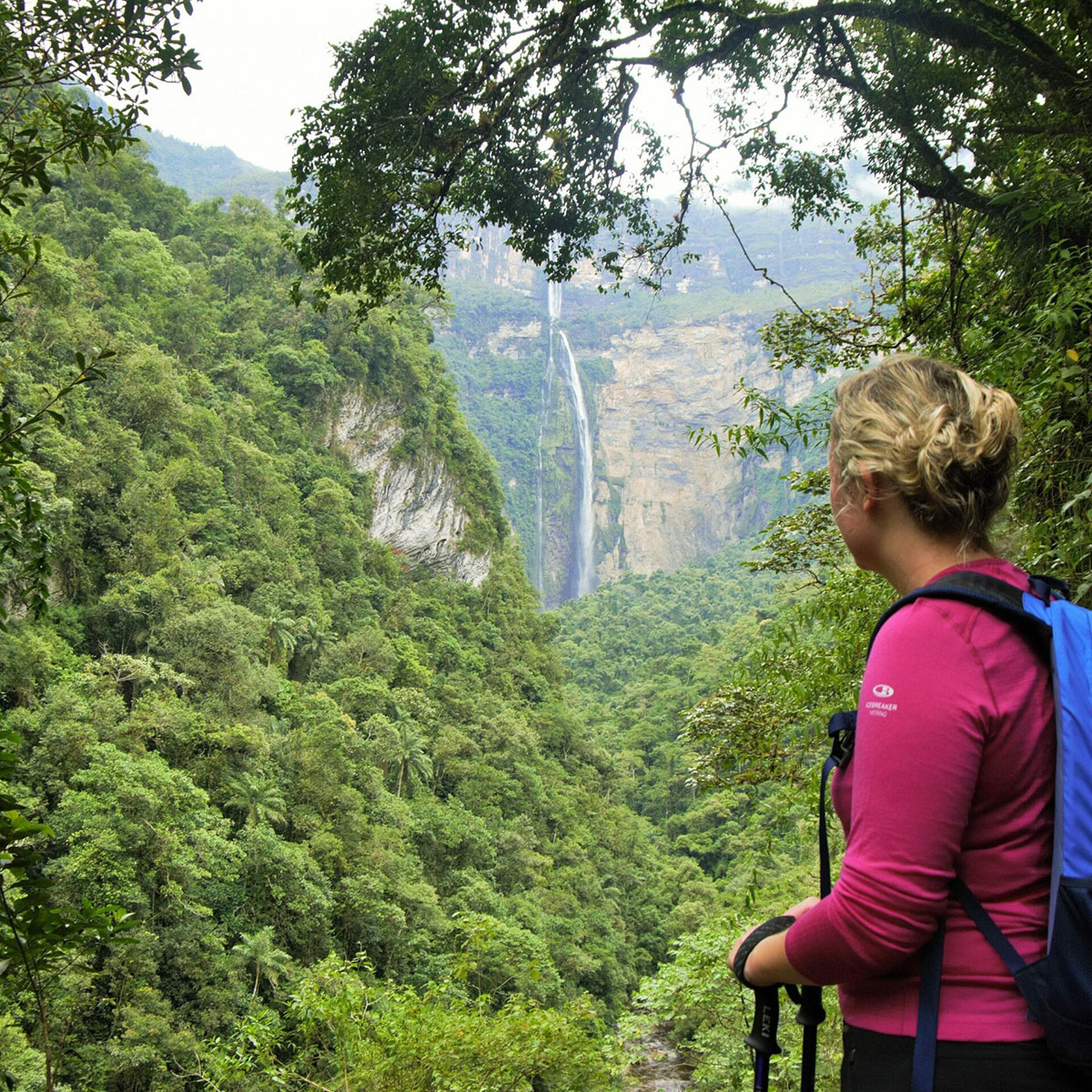
Gocta Lodge is our base and from where we have fabulous views of the Gocta falls.
A full day trek takes us from the lodge to the long drop waterfall , one of the highest waterfalls in the world.
Local guides accompany each visit giving detailed explanations of the history, geography and culture.
The world-famous citadel of Kuelap is a highlight, not much can match the sheer scale of mystery shrouding this ancient summit city in the clouds.
Each day we venture out to explore some of the pre Inca – Chachapoya sites, mummy museums and local markets. Read more about Chachapoya culture in our blog.
Travelling to Gocta feels like travelling as it used to be – adventurous, away from the crowds and to beautiful, unspoilt areas. Guides from the local community will help you get the best from each visit.
Peru is made up of 3 distinct geographical areas: the coast, the mountains and the jungle.
The costa or coastal region is a narrow ribbon of desert 2,250 km long, crossed by fertile river valleys flowing from the Andes. It takes up 11% of the country and holds more than 40% of the population.
The cold Humboldt current gives rise to a blanket of mist – the garua – which hangs above coastal cities like the capital Lima from May to November.
Heading east, you’re soon climbing above the garua and into the Andes. The sierra, or mountainous region, covers some 25% of Peru’s territory and contains 50% of the population. The sierra inhabitants are mainly Indigenous or Mestizo, and many still speak Quechua or Aymara.
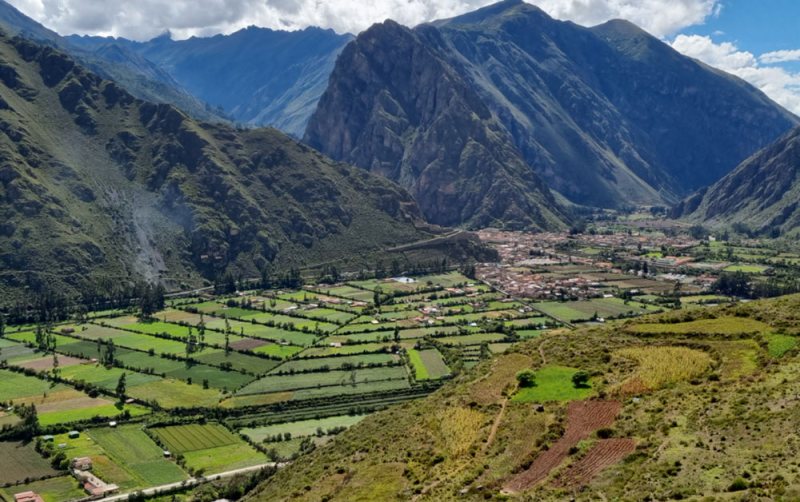
The sierra contains dozens of 6,000-metre snow peaks and volcanoes, including Huascaran (6,768m) the highest mountain in the tropics. The deep valley basins contain most of the towns and arable land; the terracing and canal systems of the Incas and pre-Incas are often still used today.
The eastern Andes are heavily forested up to 3,350m and sweep down into the Amazon Basin.
Peru’s selva or jungle makes up almost two thirds of the country’s area, but holds only about 6% of the population: the only towns with significant populations are Iquitos and Pucallpa.
Peru is the perfect holiday destination for adventure travellers that want an amazing variety of activity, geography and cultural travel experiences.
The breadth of travel experiences in Peru is breathtaking – from trekking in the Andes to Machu Picchu to the tropical jungle of the Amazon, and plenty in between.
The people of Peru make it a special destination too, with its colourful and traditional street life and friendly locals.
Good kit is vital for every trip.
Book with Andean Trails and get 15% off Páramo’s fantastic ethical and high performance outdoor gear.
When planning for the varied climatic conditions you will encounter across Peru, layering is the most practical and versatile clothing system.
The sun is very strong throughout the country, so good sun cream, a hat and sunglasses are vital.
It can also get very cold at night time especially in the mountains. Jumpers, fleeces and warms hats – which you can buy there – are also essential.
Give plenty of thought to kit selection, and try to keep weight down.
Below is a more detailed guide.
You can also read about the weather of Peru in our blog.
You can also read about the weather of Peru in our blog.
Peru is located in the southern tropics (latitudes 0º to 18º), but climate varies significantly according to season, altitude and region.
From May to October, Lima is often overcast, but with minimal precipitation. There are sunny spells, and it’s a fresh to pleasant 13-20ºC.
At the same time, inland areas and the north coast mid to high 20’s ºC.
November to April is generally warm and sunny and Lima enjoys warm temperature of 19-25ºC, with the coast averaging 22-30ºC.
Climate depends largely on altitude. As a rule of thumb, below 2,000m climate is mild and above 2,000m warm clothing is required for evenings, nights and early mornings.
The Andean sun is very strong.
Cusco (3,300m): Average max/min temps: 22ºC /2ºC. Average 3 or 4 wet days per month.
Arequipa (2,380m): Average max/min temps: 26ºC /9ºC. Sunny more than 340 days/year with minimal precipitation.
On highland treks: Conditions are generally dry. However, at this time of year, expect a range of conditions within a single day: cold/freezing nights at camps above 4,000m, where pre-dawn temperatures can be -5ºC; warm, spring-like mornings and afternoons; and cold evenings.
Note that mountain weather can be fickle and localised, and that precipitation is not unknown in the dry season. Expect temperatures to swing between sun and shade, sheltered and exposed ground and with altitude gain and loss. A quick-setting sun means temperatures drop fast.
In the cloud forest, e.g. around Machu Picchu, daytime conditions are generally warm or hot, and evenings cool.
Cusco: Average max/min temps: 23ºC /6ºC. Average 13 wet days per month.
Arequipa: Average max/min temps: 25ºC /14ºC.
On highland treks: Wetter conditions, with cooler days and milder nights than dry season. Jan-Mar usually the wettest months.
Year-round, weather conditions are hot and humid and there is always the risk of rain.
There is a ‘dry season’ in Tambopata and Manu between May and October. The average daytime high temperature is between 25°C and 34°C and the average nighttime low is between 16°C and 22°C. Heavy downpours typically occur every few days.
Around 80% of annual average rainfall – approx 2,000 mm in Manu and Tambopata and 1,400 mm in Iquitos – occurs in the wet season Nov-April.
On rare occasions, between May and September, cold fronts from Argentina – ‘friajes’ – can sweep into southwest Amazonia and push temperatures down to 9°C. (Friajes usually last between 1 and 3 days).
An exceptional Amazon experience in Peru’s Manu, guided by experts and filled with unforgettable wildlife encounters.
A luxurious Galapagos cruise aboard the Galaxy combined wildlife wonders, impeccable service, and unforgettable comfort.