From: £2,459
From: $3,274
You are met at Jaen airport and drive (4 hours) to Chachapoyas to your hotel.
The beautiful journey takes us through the city of Jaen where we stop for lunch and then we descend to the Marañon River a major Amazon tributary and finally ascends to Chachapoyas via the fabulous Utcubamba Canyon.
Chachapoyas sits at 2,335m/7,661f. Relax at your hotel.
Leaving early from the hotel we drive 1.5 hours to the village of Cocachimba where we start out trek to the waterfall of Gocta.
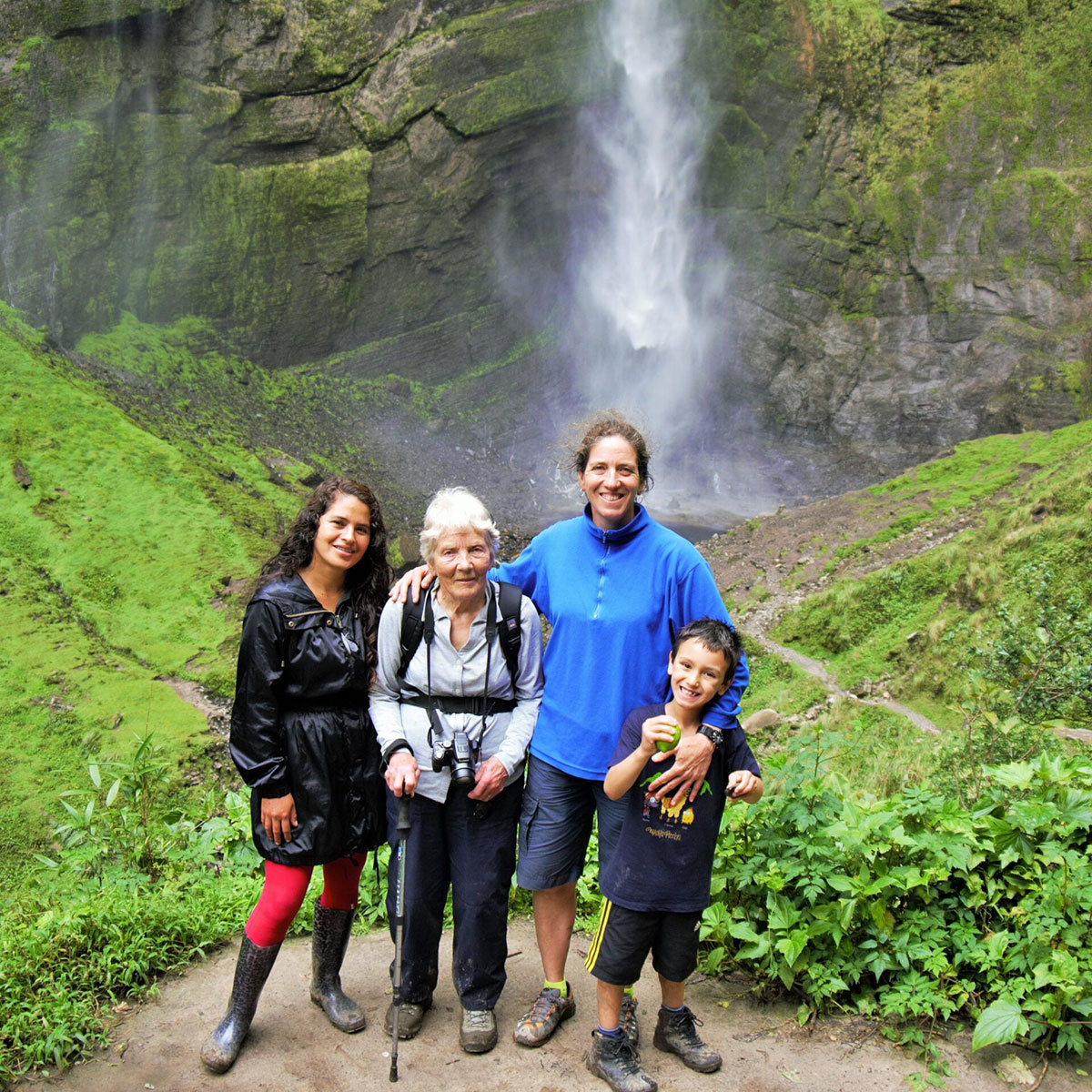
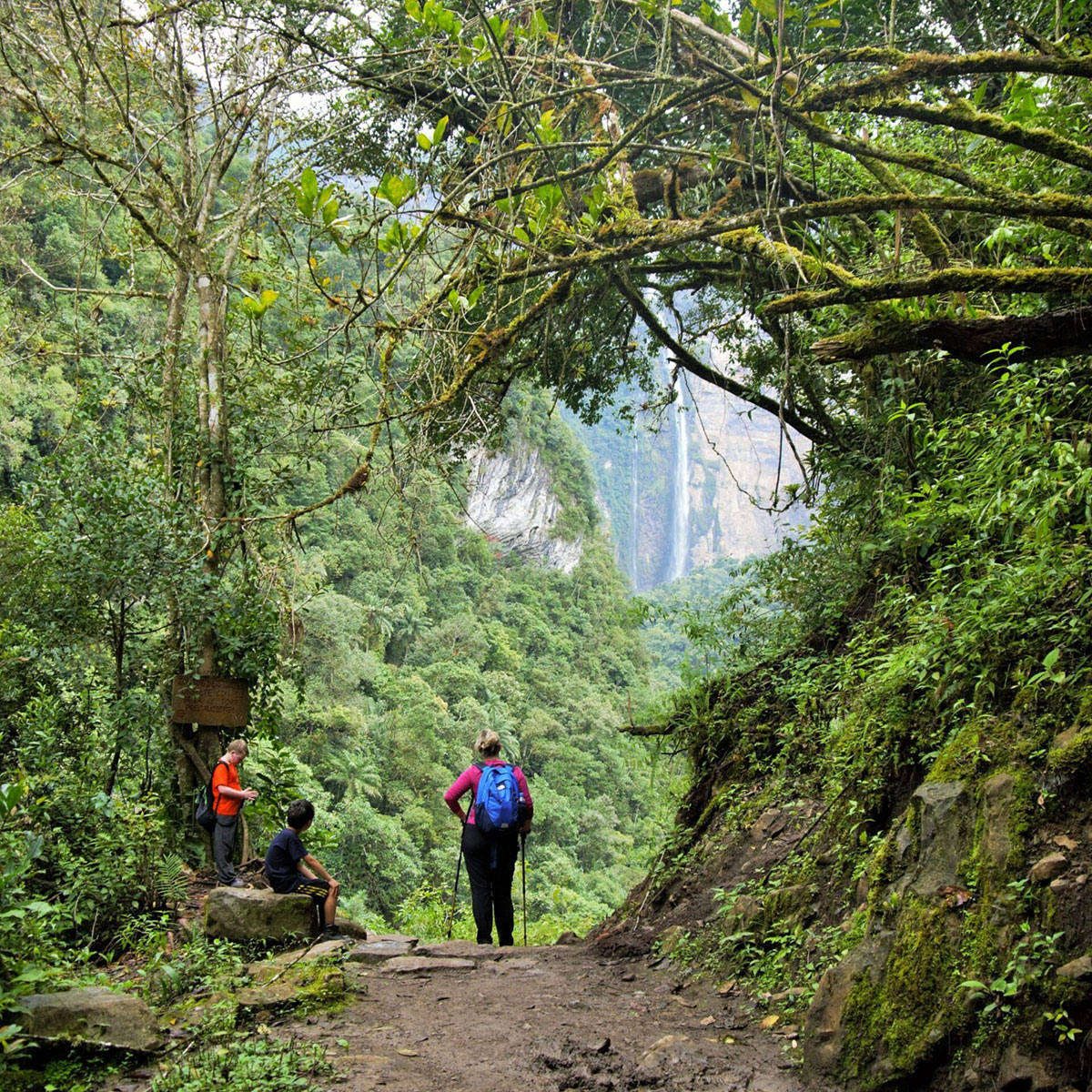
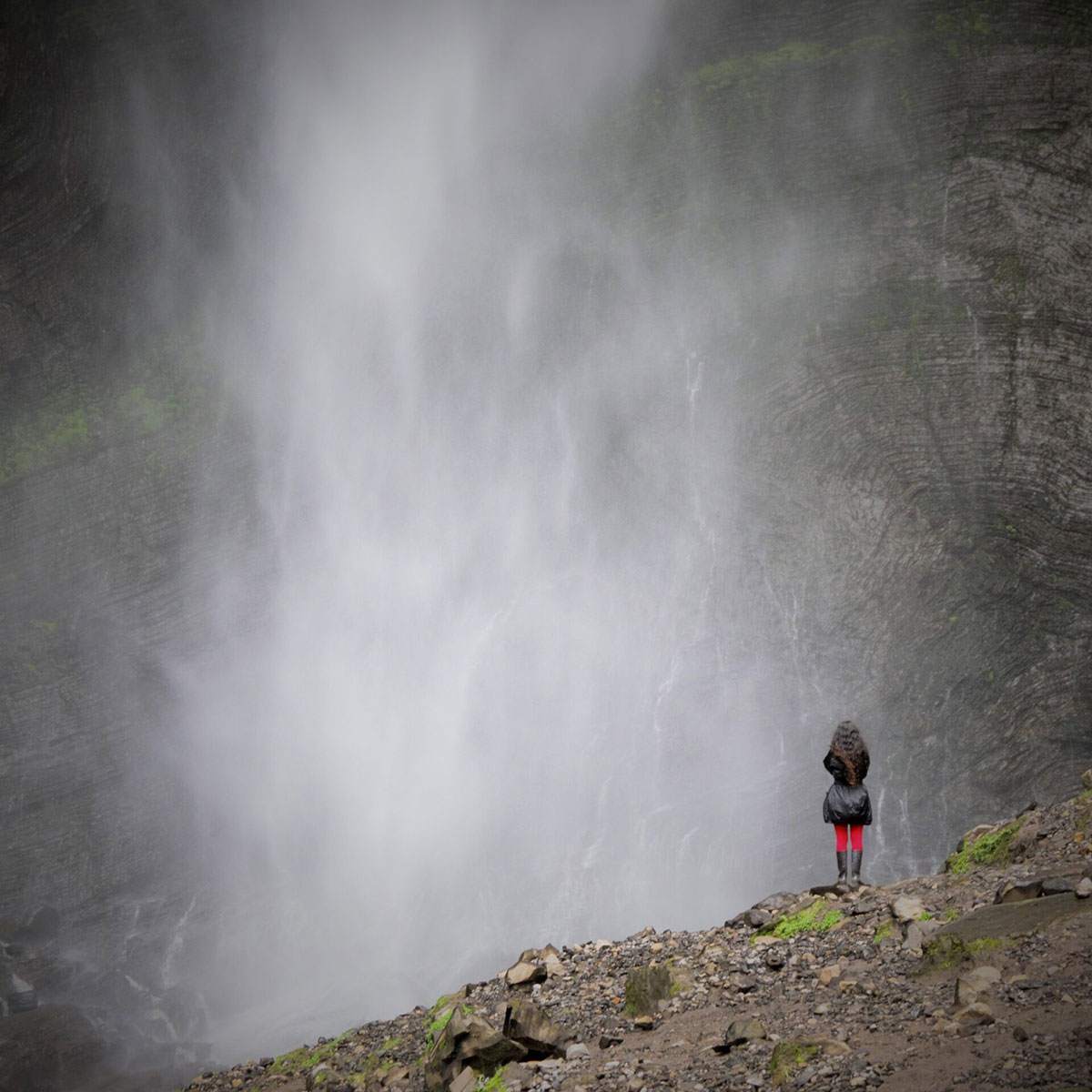
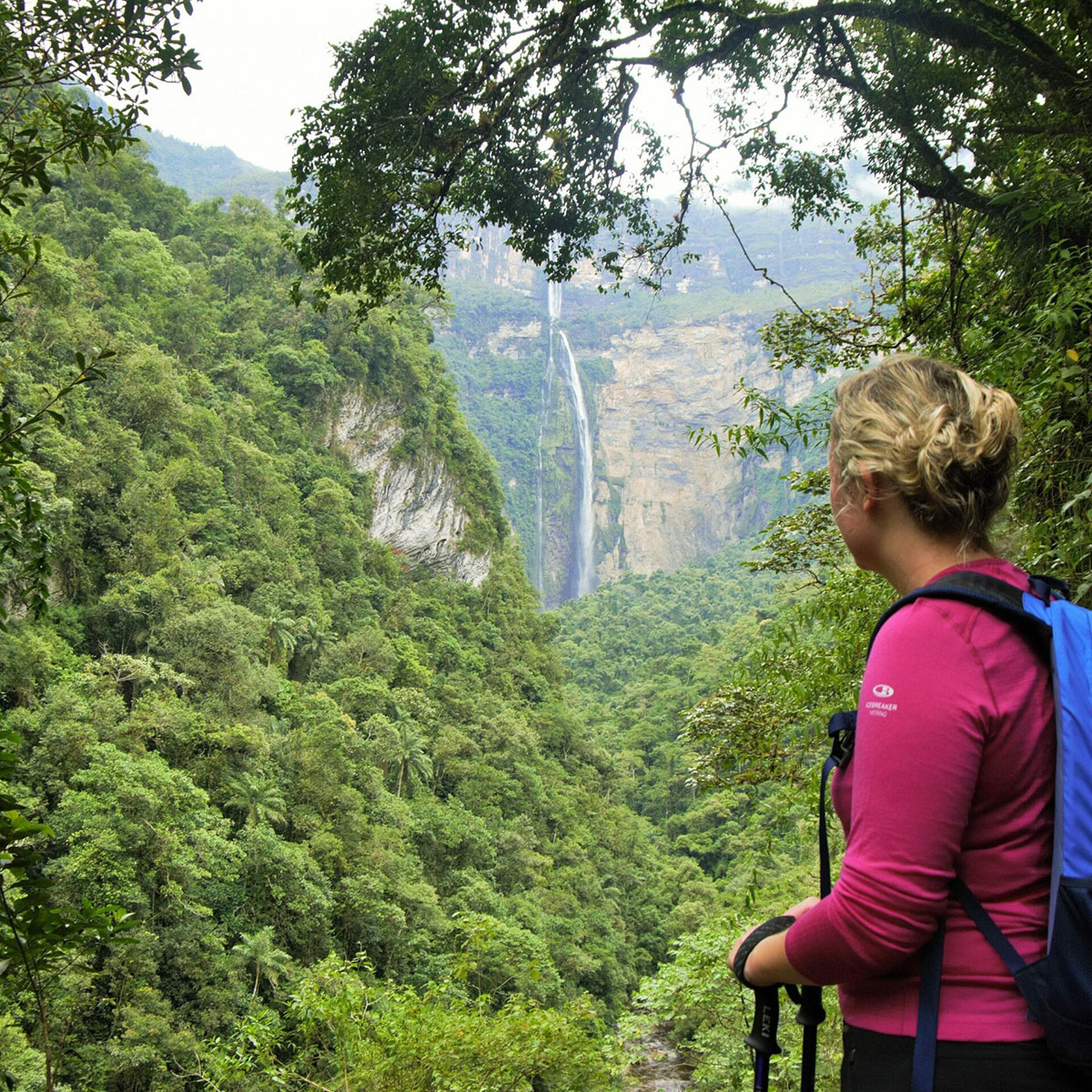
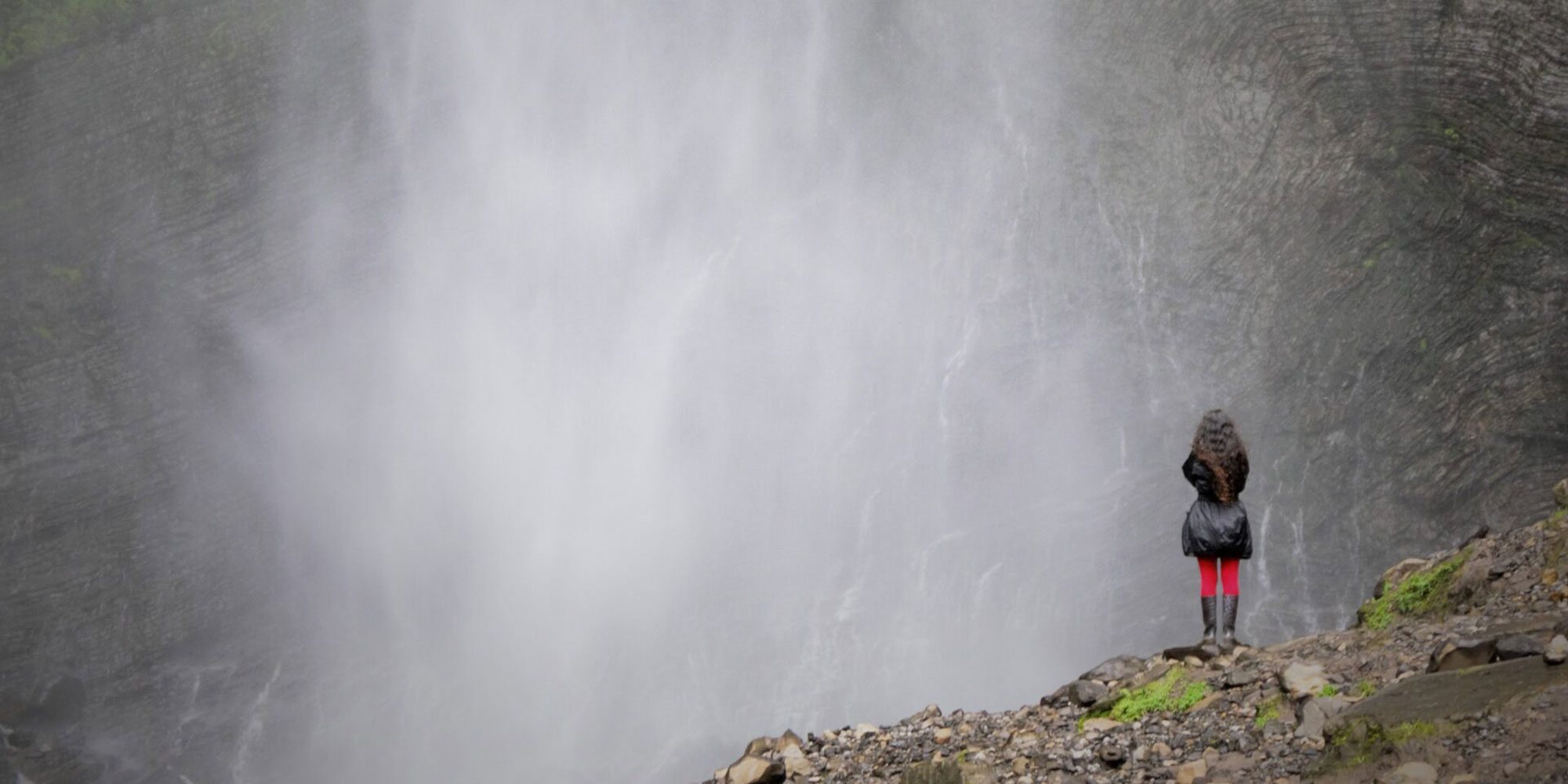
The waterfall, though known about for many years, was only recently measured in 2006 and found to be the third highest in the world. Our trek goes along the side of a valley through sugar cane fields and into forest that is home to the yellow-tailed woolly monkey, mountain sloth and the magnificent cock-of-the-rock.
With glimpses of the waterfall along the way we arrive at the base of the highest fall after three hours. Those brave enough may want a dip a in the pool at the base.
Return to Chachapoyas for the night.
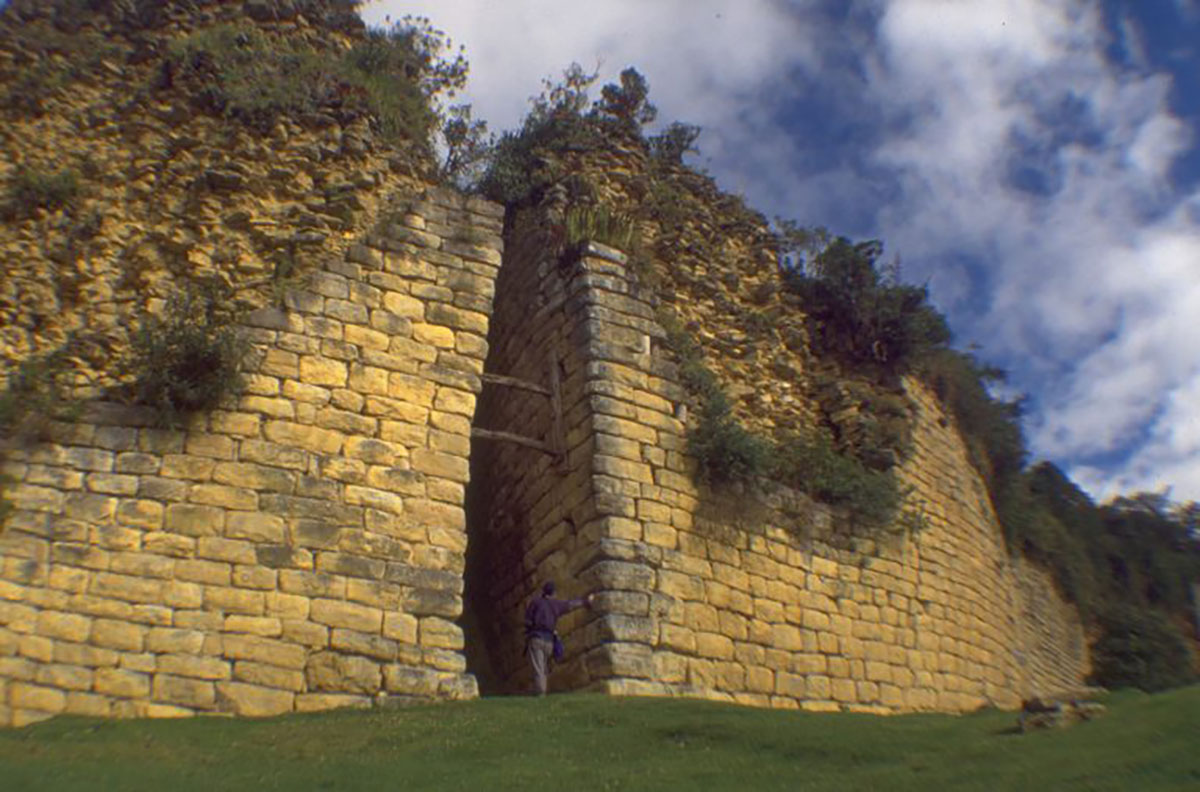
To get the best opportunity for photography we leave the lodge early and drive for two hours to Kuelap. The towering walls and hundreds of roundhouses capped by the cloud forest at 3,000m/9,900ft above sea level always amaze first time visitors.
We’ll explore the many ceremonial constructions, and brilliant layout as a group with plenty of opportunities to wander on you own.
We then drive to Lleymebamba for the night.
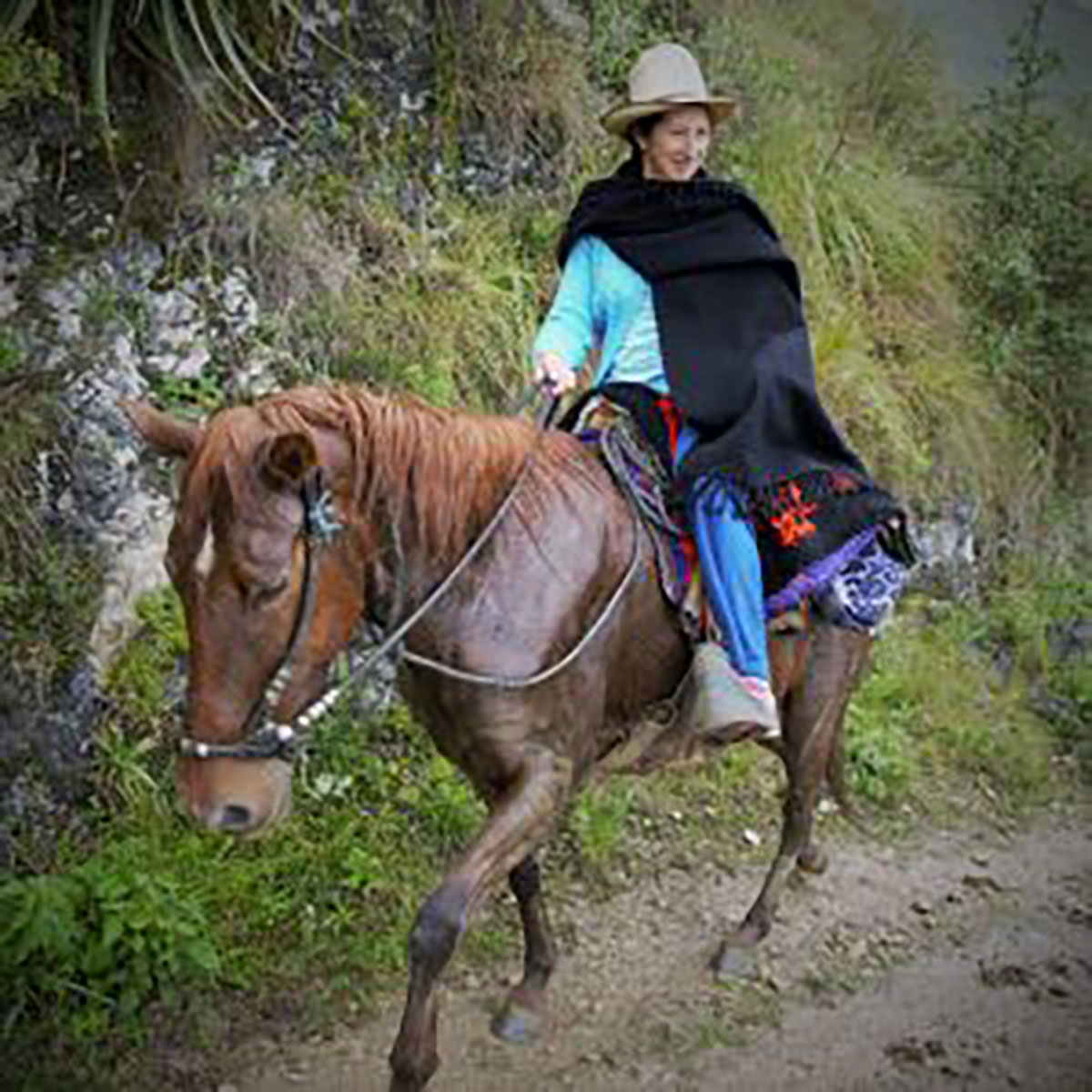
Driving further south up the Utucbamba valley we arrive at the village of Leymebamba. This is where are horses and support crew come from and we will leave our bags with them to load up while we visit the Mummy Museum of Leymebamba. This museum houses and displays 219 mummies and thousands of other artifacts found at a nearby tomb site in 1997 at Lake of the Condors.
After the visit we will drive further south into a forested gorge, with chances of seeing condor and golden-headed quetzals on the way. We will lunch en route and carry on by foot to Tajopampa where we camp for the night at 3,100m/10,171ft.
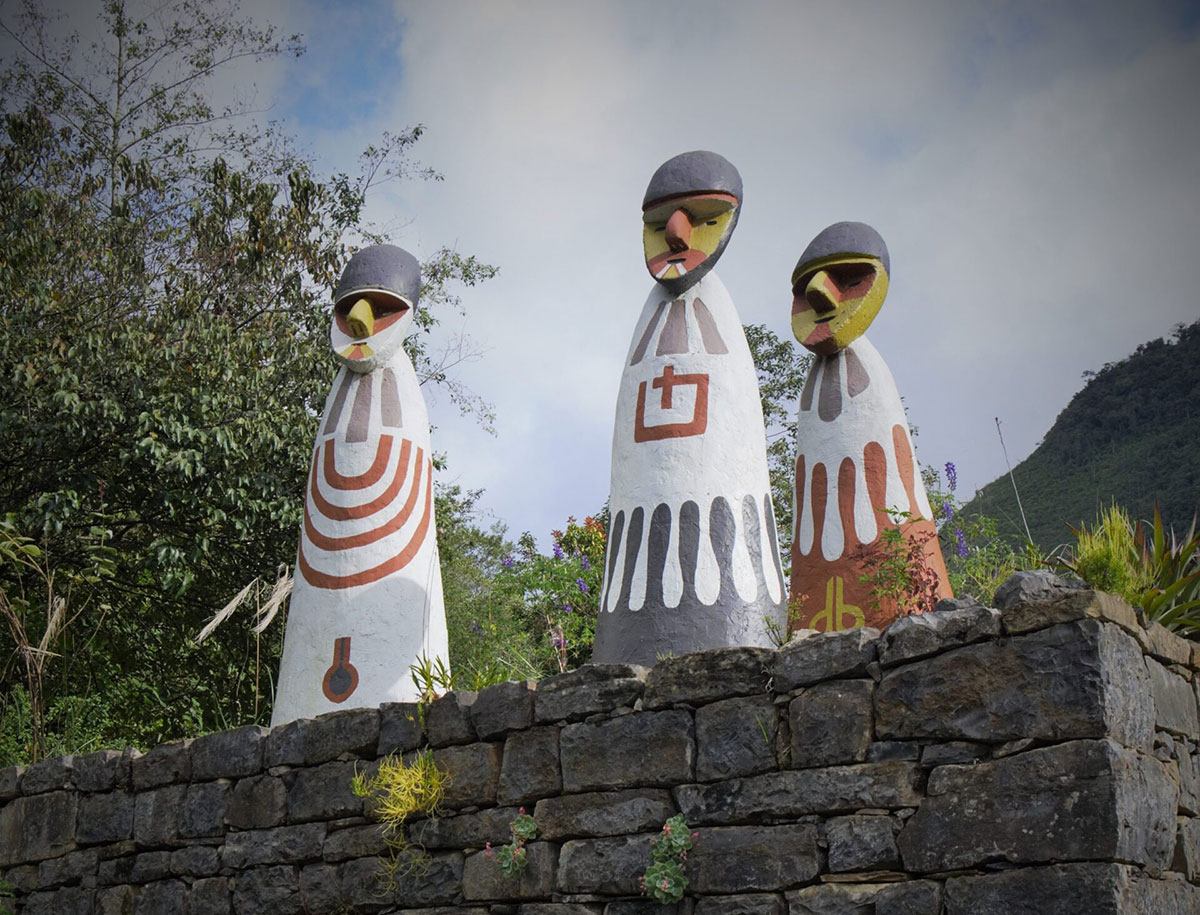
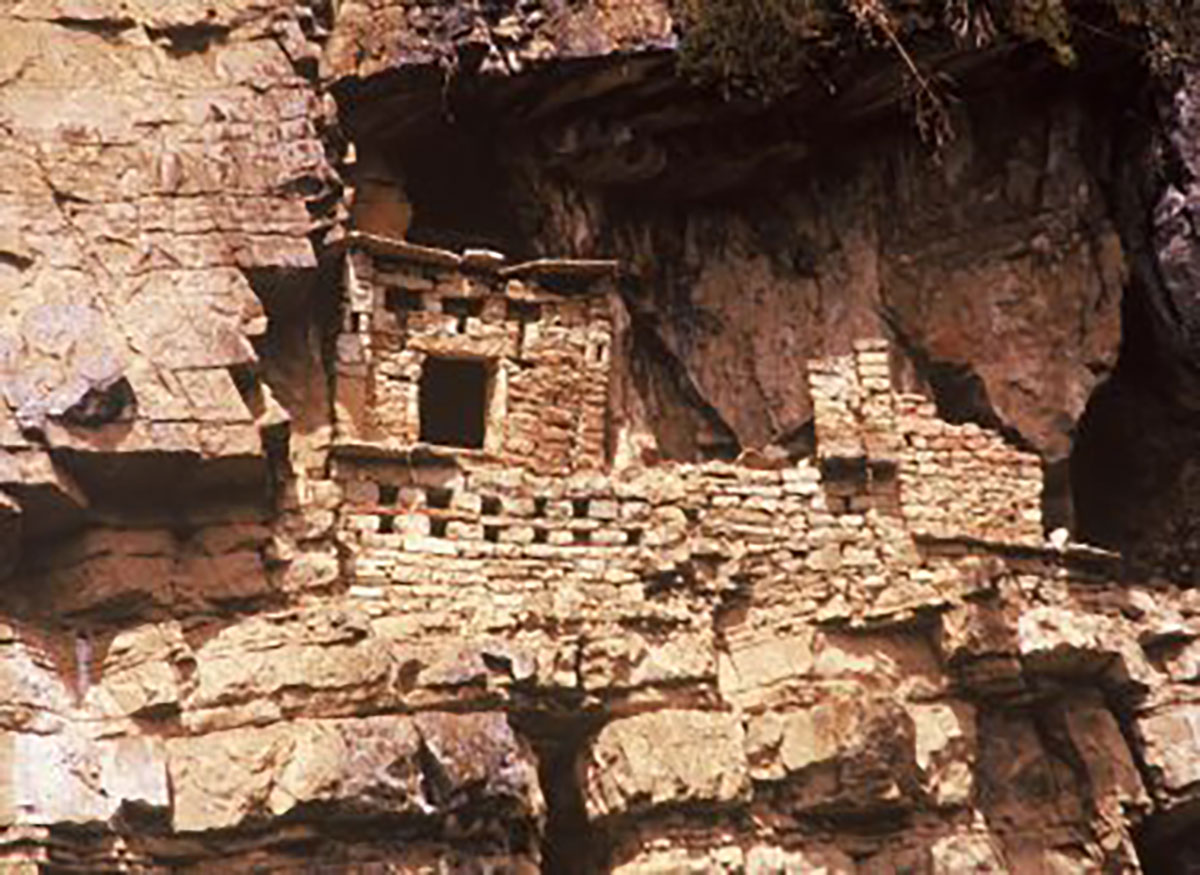
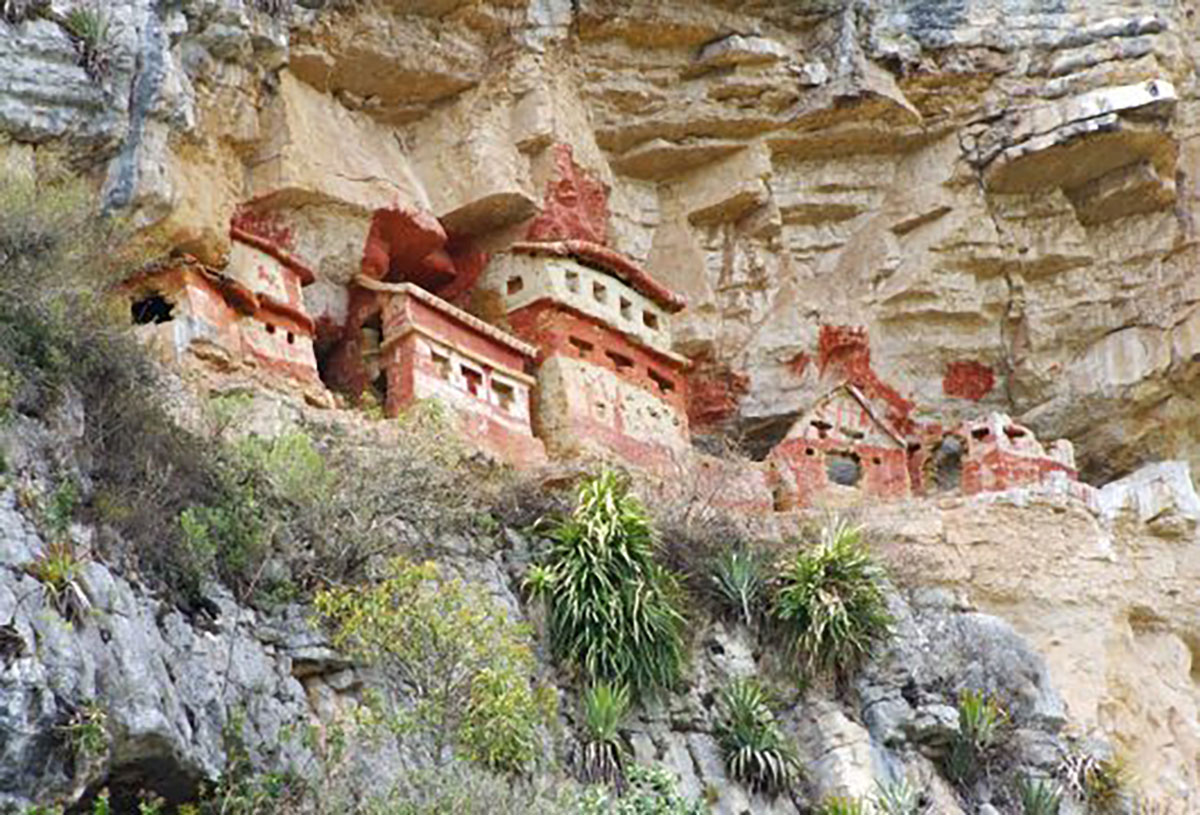
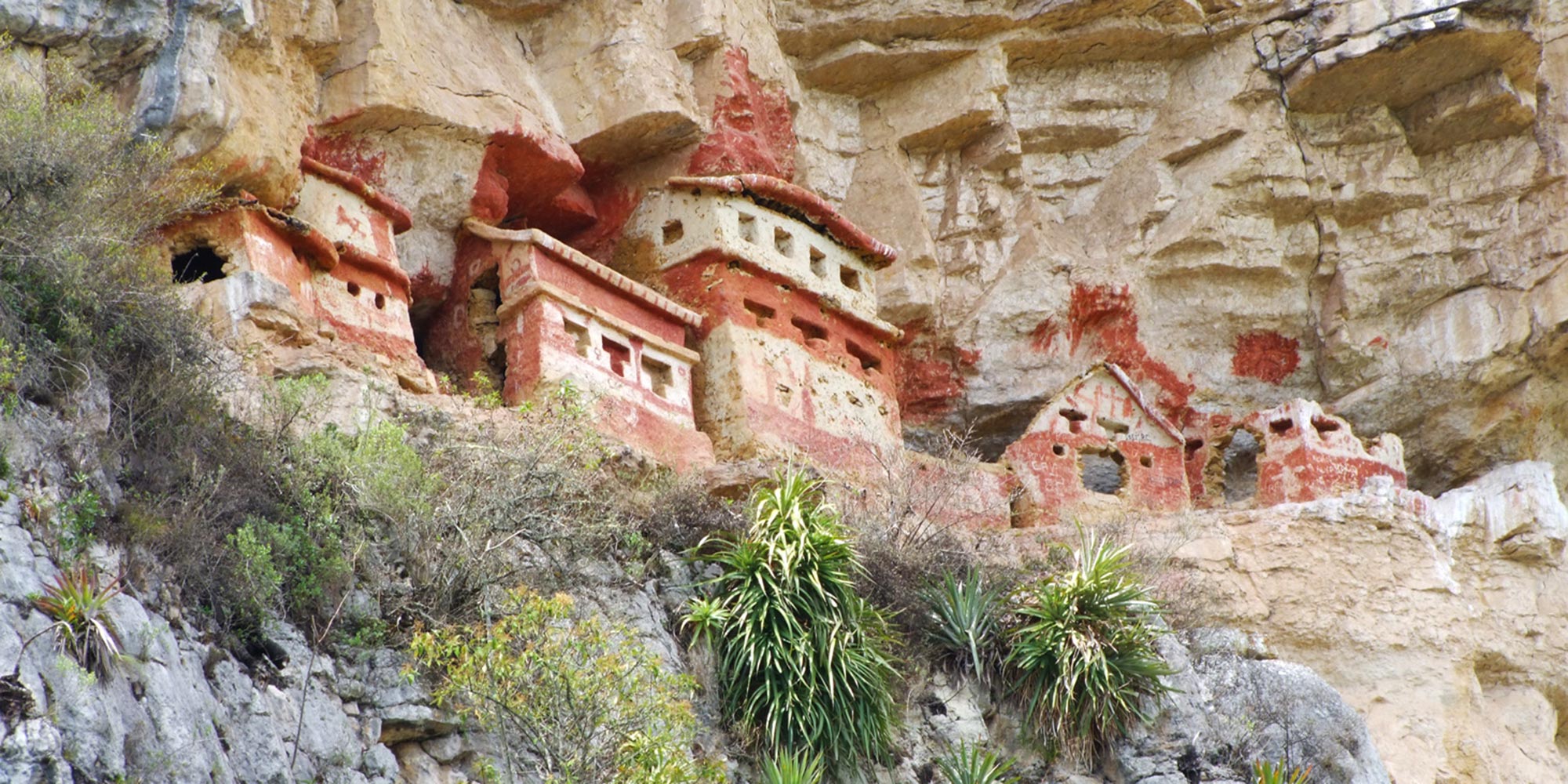
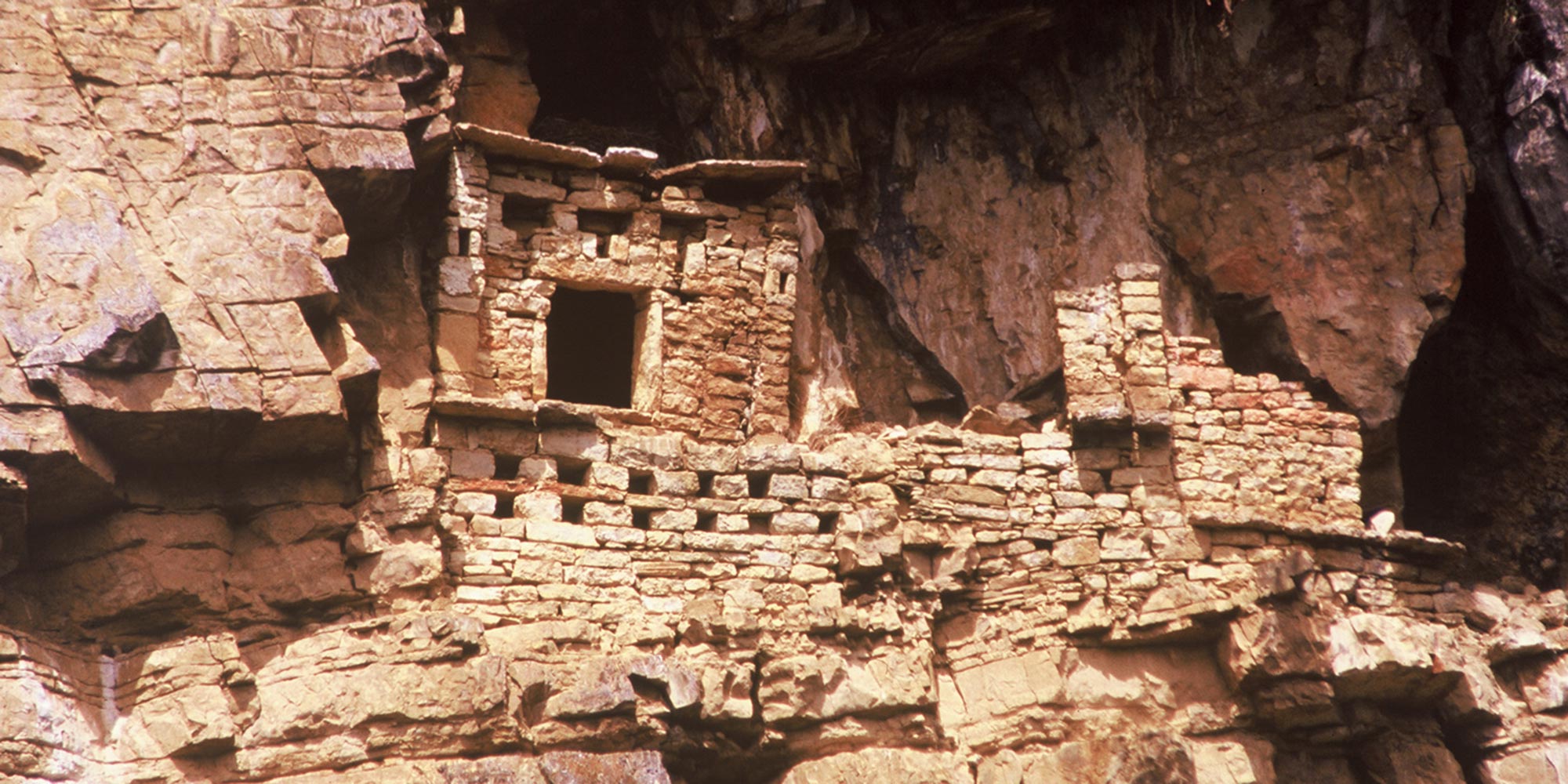
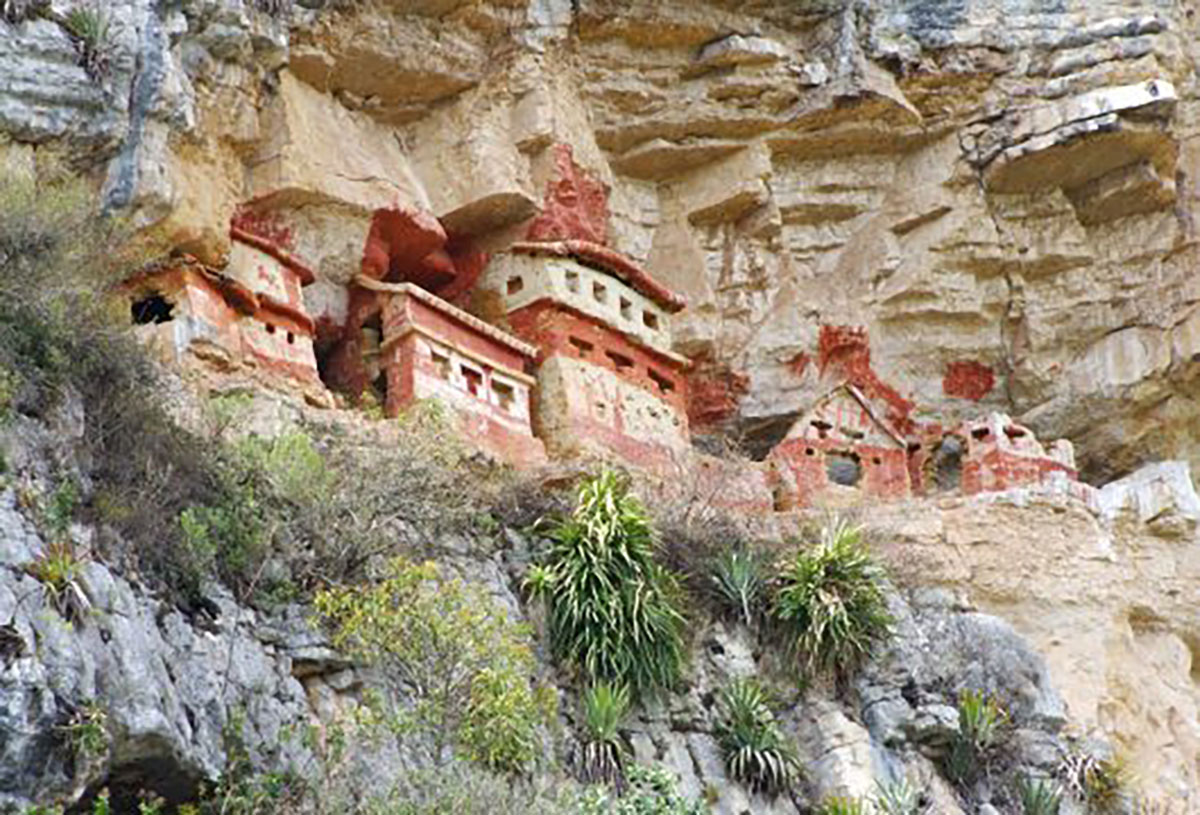
Towering over our campsite is the cliff of La Petaca. There are scores of cliff tombs jutting out from tiny ledges and under large overhangs. Also a prominent pictograph of Chachapoya warrior standing beside his victim. We get a good look at the site after breakfast and carry on up to another site called Diablo Huasi. This is another cliff tomb site and we get excellent views of the tombs.
A steep climb leads us to the Chachapoya site of Boveda, where we eat lunch. After lunch we pass by many old earthen terraces and reach an altitude of 3,640m/11,942ft. A grassy slope leads down to the San Miguel river and a climb gets us to our high campsite of Mal Paso at 3,660m/12,008ft.
The camp is 20 minutes below a pass and can be quite cold at night.
Gaining the pass (3,730m/12,238ft) we enjoy a gentle descent skirting a hillside covered in ancient earth terraces, which are part of the complex of Papamarca “Potato Town”.
We will go and get a closer look of this very large complex that occupies land on both sides of the Timbambo river. A steep climb takes us up to a rocky ridge (3,750m/12,303ft) overlooking the main valley and we get to appreciate the size of Papamarca. From there we make a gentle ascent to the top of El Plomo Pass (3,790m/12,435ft) and short distance below is where we stop for lunch.
In the afternoon we have a leisurely 1½hour walk to our campsite at Cabildo Pata. This campsite is named after the Chachapoya site close by situated on the same grassy moraine overlooking the village of Atuen and the Laguna Sierpe.
We start by hiking down to Atuen, where we can see the remains of two Inka baths. Heading further south and up the Inka trail we pass by the Laguna Sierpe and see from a distance a pictograph.
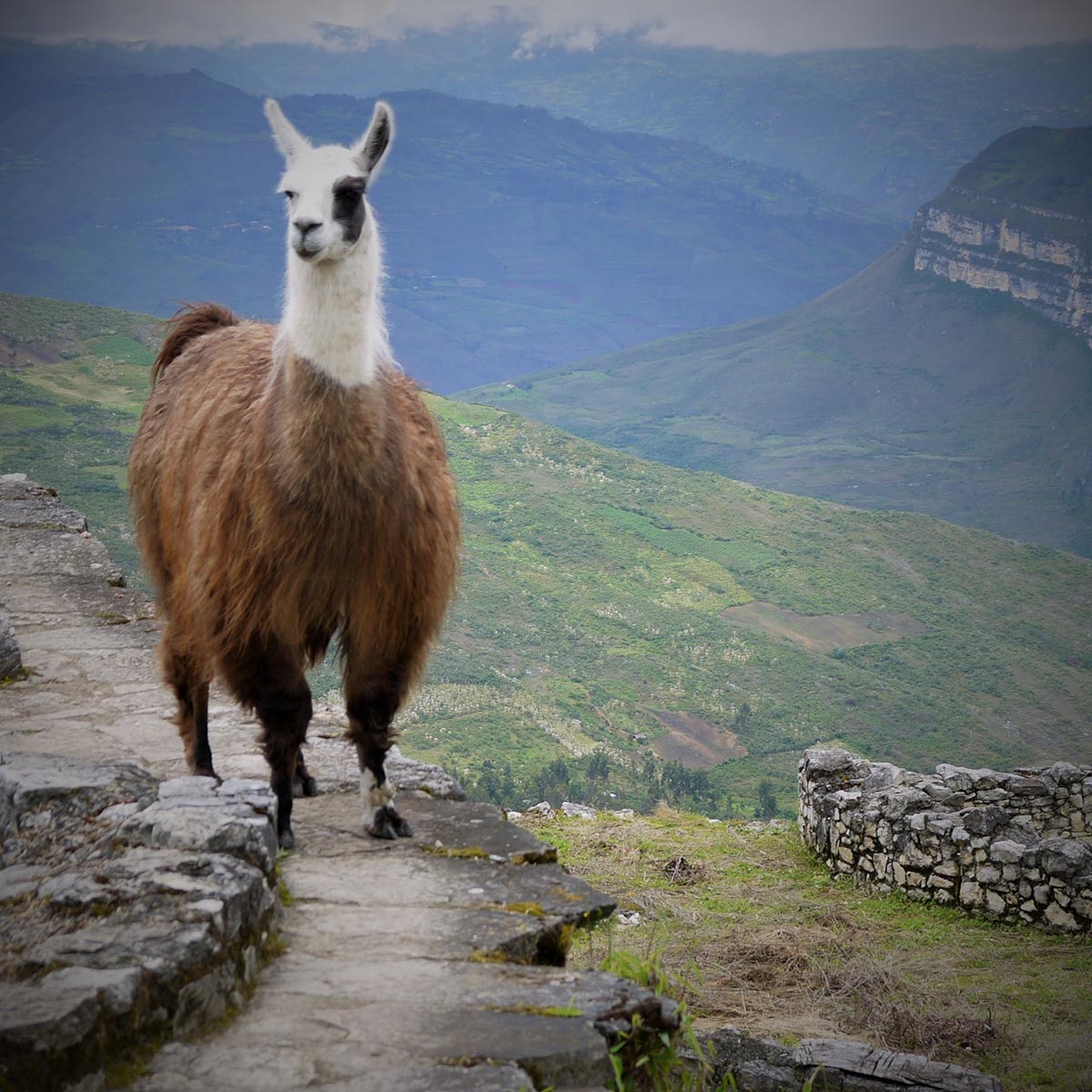
We have lunch just above a section called Los Balcones and carry on along the obvious Inka trail to the Ulila Pass (4,100m/13,451ft). The descent into the Quinuas Valley is along the trail which in places is paved, sometimes rocky and other parts muddy. Our camp is at the start of a large pampa at 3,470m/11,385ft.
We head down the Quinuas Valley where a herd of alpacas live. The valley is U shaped with dramatic cliffs and mountains either side. Crossing over the Quinuas Stream we then head up towards the pass that leads over to the Huaybamba valley.
We eat lunch somewhere close to the pass and then start to the decent to our campsite. On the way down we see the small Lake Totora (Reed Lake) and a waterfall and beyond we see the lowest roundhouses of Vira Vira.
Our camp is in a paddock at 3,340m/10,958ft and the Lake Huayabamba is 10 minutes beyond.
Today we explore the ruins of Vira Vira and with luck we may spot giant King condors as we absorb the magic of this forgotten settlement. The area was lifted from obscurity and introduced to explorers by Keith Muscutt, author of Chachapoyas: Warriors of the Clouds.
There is a fine map of Vira Vira that we take along that helps bring the site alive as we work our way to the summit platform. We make a circuit out of the ruin arriving at the lake.
In the afternoon rest or go fishing with the support staff.
We spend a second night at our Huayabamba camp.
We climb over the pass (3,740m/12,270ft) by which we arrived and descend via the beautiful mountain lake of Las Quinuas where we eat lunch.
A little further down from the lake we rejoin the Inca road at Quinuas village. The trail is wide as it skirts its way along the side of the valley.
We pass by The Five Sisters, a buttress formation, and a little beyond we enter another valley and see our destination of Uchucmarca.
Dropping down to the stream we cross via a bridge and then a steep climb to get to the village itself.
Camp is on a football pitch in the village at 3,050m/10,007ft.
Today a long drive through magnificent and varied scenery. We climb up to 3,900m/12,795ft then descend to the Marañon River, crossing it at Balsas at 850m.
The road climbs out on the western bank of the canyon to a height of 3,200m/10,499ft and we eat lunch with a super view of the canyon.
Beyond is the market town of Celendin. The drive from Celendin to Cajamarca takes three hours, passing over high rolling hills.
Our hotel is the Laguna Seca where every room has geothermic heated water ideal.
We do a half day city tour of Cajamarca with plenty of time to enjoy the city on your own afterwards or the hotel.
In the evening we have a farewell dinner at a local restaurant.
Transfer to the airport, end of services.
Hotels and camping.
We stay in a combination of high-end hotels, rustic lodges and tents depending on the trip and your preferences. Your accommodations are a reflection of the area and cultures we explore.
We have known and worked with the people and families who run the lodgings for several years now and their places are always clean, comfortable and very welcoming.
We’re big on interaction and so are our lodging partners, so don’t be surprised if you’re asked to stir a pot, or try a local
We have classified this as a moderate trek, and you need to be in good physical shape for it.
You hike 4-7 hours a day on 6 consecutive days, over rugged mountain trails at elevation, and we are often between 3,500-4,200m/11,483ft-13,780ft.
Pre-trip preparation should include challenging cardiovascular exercise (including regular hikes on varied terrain) and a healthy, balanced diet.
Well-worn hiking boots highly recommended.
All guests are encouraged to hike at their own pace, taking breaks whenever needed, to ensure a successful and enjoyable trek for all.
Most people go to bed fairly early after a long day trekking, to recover energy for the morning.
Almost all dietary requirements can be catered for – please ask us for more information.
Breakfasts at hotels will feature teas, coffees and juices to drink, plus cereals, fruit, eggs, toast and jams etc.
While out on trips, we either supply a packed lunch of sandwiches, snacks, soup, fruit etc, or we eat at a local restaurant. These are often buffet style with soups, rice, pasta, potatoes and then puddings/fruit.
Evenings are free for you to choose to eat in a local restaurant.
You wake early, usually around 07.00. Breakfast is served in a dining tent, and consists of hot drinks, porridge, toast, jams and bread, and your guide will explain the day’s trekking plans.
Lunch is usually around 13.00 and can feature soups, meats, salads and fish, with vegetarian options and hot drinks too.
The campsites are comfortable and around 17.00 hot drinks, popcorn and other snacks are served to help you recover energy.
Dinner is served around 19.30, and will feature pasta, mashed potatoes, meat, fish or vegetarian options, followed by hot drinks and a pudding.
All guides are certified, bilingual, English-speaking guides who have worked with us for many years.
Cooks, mule drivers and additional staff are all from the local, nearby communities and we have worked with them for a long time.
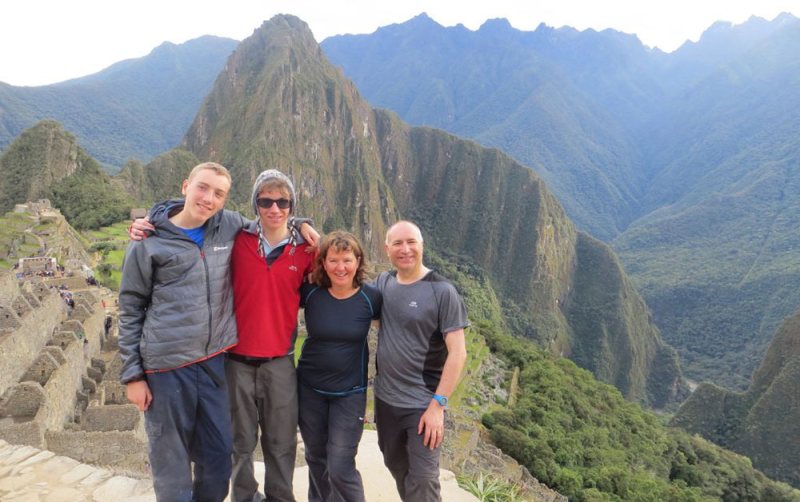
Trekking the Inca Trail and exploring Machu Picchu’s magic made this Peruvian journey an unforgettable dream come true.
A luxurious and beautifully arranged Peruvian journey blended elegant hotels with rich cultural experiences.
Head far from the crowds to some of north Peru’s hidden archaeological and cultural gems.
The holiday highlights for those seeking a little more from their travels come thick and fast, as we start with cultural visits before embarking on a true wilderness hike.
We visit sites of the Sican, Lambayeque and Moche cultures, the latter of which has been described as the Andean Greeks due to the level of art achieved in their metalwork and ceramics.
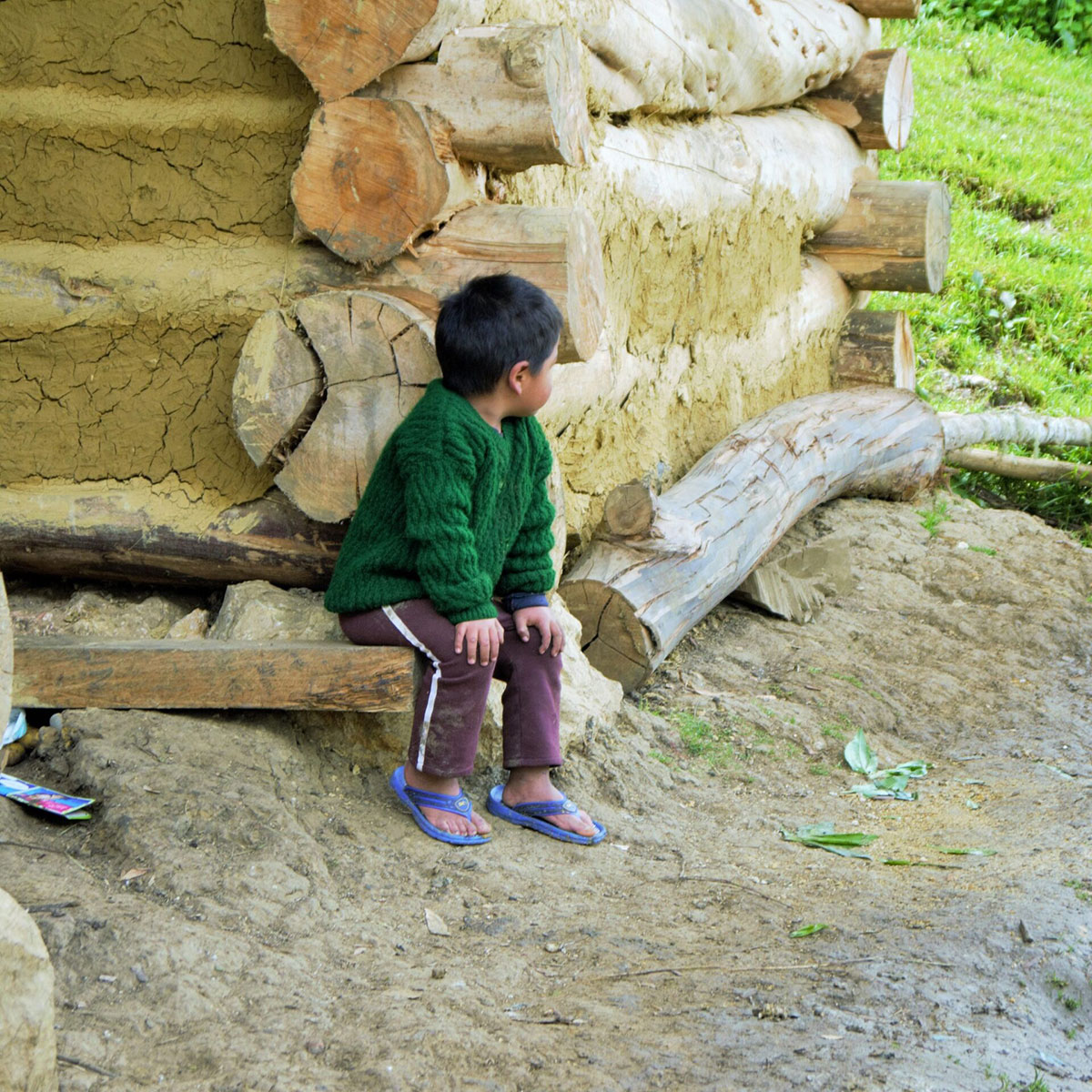
We head to the Chachapoyas region of the Andes, a rugged terrain of deep canyons and the richest archaeological area in the world.
After a couple of days acclimatisation we start a trek in to the mountains, seeing various archeological sites on route to the magical site of Vira Vira – a Chachapoya site overlooking a round lake.
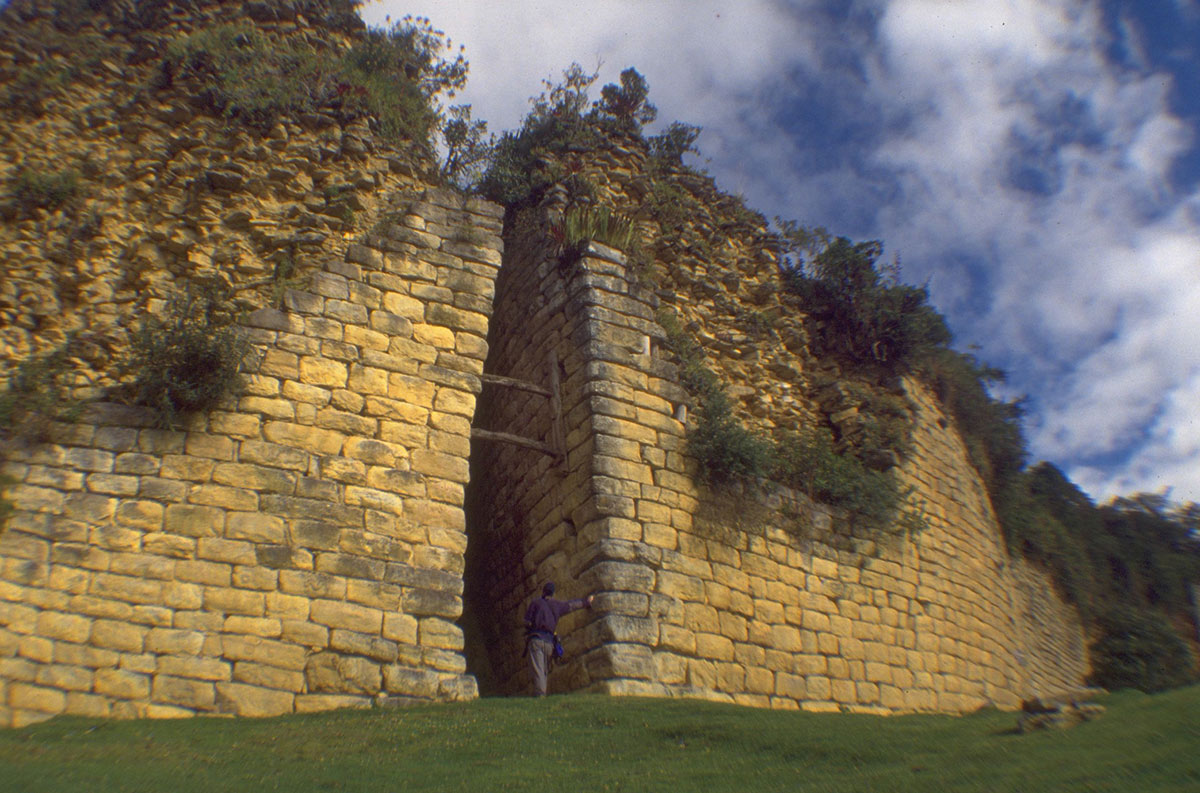
Vira Vira is a highlight on the trek. No other site – not even the world-famous nearby citadel of Kuelap – can match the sheer scale of mystery shrouding this summit city in the clouds.
En route, there are many highlights. You stay at the delightful town of Chachapoyas, gaze at Gocta Waterfall – the third highest in the world and only discovered in 2006 – explore Kuelap, see cliff-top mummies and pre-Inca ruins.
Vira Vira itself is quite the metropolis with more than 200 Chachapoya roundhouses enclosed by a defensive wall.
Peru is made up of 3 distinct geographical areas: the coast, the mountains and the jungle.
The costa or coastal region is a narrow ribbon of desert 2,250 km long, crossed by fertile river valleys flowing from the Andes. It takes up 11% of the country and holds more than 40% of the population.
The cold Humboldt current gives rise to a blanket of mist – the garua – which hangs above coastal cities like the capital Lima from May to November.
Heading east, you’re soon climbing above the garua and into the Andes. The sierra, or mountainous region, covers some 25% of Peru’s territory and contains 50% of the population. The sierra inhabitants are mainly Indigenous or Mestizo, and many still speak Quechua or Aymara.
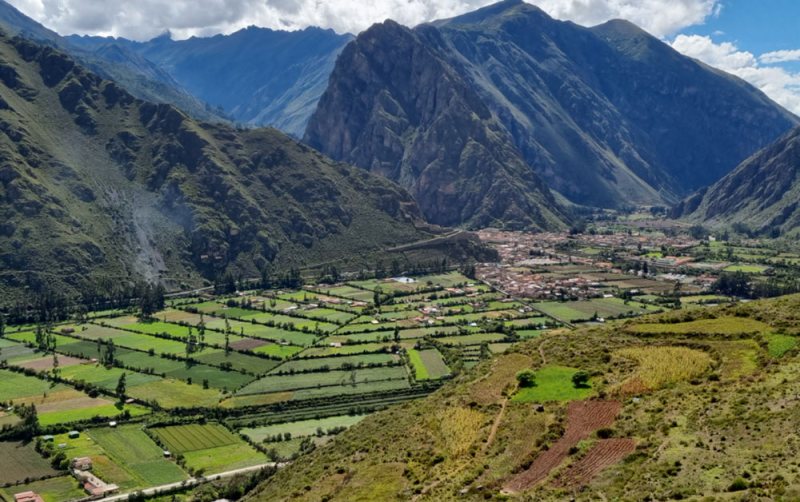
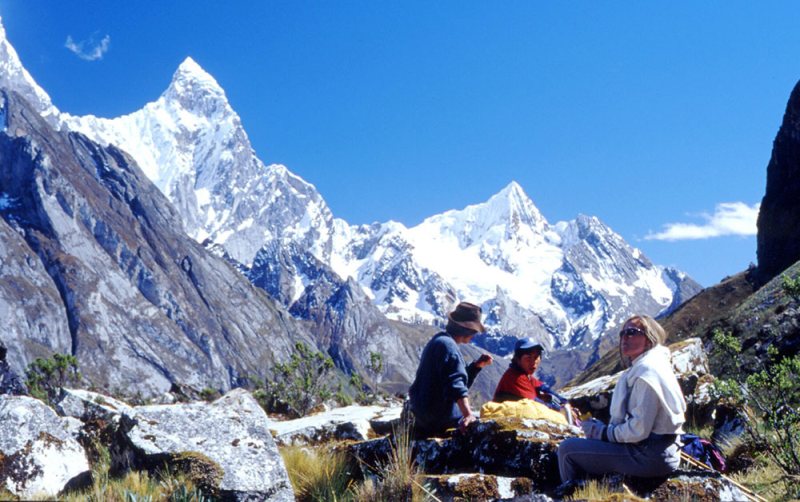
The sierra contains dozens of 6,000-metre snow peaks and volcanoes, including Huascaran (6,768m) the highest mountain in the tropics. The deep valley basins contain most of the towns and arable land; the terracing and canal systems of the Incas and pre-Incas are often still used today.
The eastern Andes are heavily forested up to 3,350m and sweep down into the Amazon Basin.
Peru’s selva or jungle makes up almost two thirds of the country’s area, but holds only about 6% of the population: the only towns with significant populations are Iquitos and Pucallpa.
Peru is the perfect holiday destination for adventure travellers that want an amazing variety of activity, geography and cultural travel experiences.
The breadth of travel experiences in Peru is breathtaking – from trekking in the Andes to Machu Picchu to the tropical jungle of the Amazon, and plenty in between.
The people of Peru make it a special destination too, with its colourful and traditional street life and friendly locals.
Good kit is vital for every trip.
Book with Andean Trails and get 15% off Páramo’s fantastic ethical and high performance outdoor gear.
Good kit is vital for every trip.
Book with Andean Trails and get 15% off Páramo’s fantastic ethical and high performance outdoor gear.
When planning for the varied climatic conditions encountered, layering is the most practical and versatile clothing system. It’s worth remembering that our clothing keeps us warm by retaining and isolating the heat we ourselves create.
To best maintain body heat, several layers of lightweight, warm and quick-drying clothing are far more efficient than one or two thick layers. Layers should have the following qualities:
First (base) layer: This layer wicks the sweat away from our skin, thus helping keep the body dry and warm. To this end, synthetic fabrics such as polypropylene should be used.
Mid layers: These isolating layers should also be synthetic (e.g. the known polar linings such as polartec or windblock, which are light and insulate twice as well as wool). Very important layers for retaining body heat.
Outer layer / shell: Finally, the vital layer which protects us from climatic adversities. A breathable, wind-proof and waterproof anorak, such as Goretex.
Give plenty of thought to kit selection, and try to keep weight down.
We also carry an extensive first aid kit & oxygen on all trips, but these are generally for emergencies only.
Below is a more detailed kit list.
You can also read about the weather of Peru in our blog.
You can also read about the weather of Peru in our blog.
Peru is located in the southern tropics (latitudes 0º to 18º), but climate varies significantly according to season, altitude and region.
From May to October, Lima is often overcast, but with minimal precipitation. There are sunny spells, and it’s a fresh to pleasant 13-20ºC.
At the same time, inland areas and the north coast mid to high 20’s ºC.
November to April is generally warm and sunny and Lima enjoys warm temperature of 19-25ºC, with the coast averaging 22-30ºC.
Climate depends largely on altitude. As a rule of thumb, below 2,000m climate is mild and above 2,000m warm clothing is required for evenings, nights and early mornings.
The Andean sun is very strong.
Cusco (3,300m): Average max/min temps: 22ºC /2ºC. Average 3 or 4 wet days per month.
Arequipa (2,380m): Average max/min temps: 26ºC /9ºC. Sunny more than 340 days/year with minimal precipitation.
On highland treks: Conditions are generally dry. However, at this time of year, expect a range of conditions within a single day: cold/freezing nights at camps above 4,000m, where pre-dawn temperatures can be -5ºC; warm, spring-like mornings and afternoons; and cold evenings.
Note that mountain weather can be fickle and localised, and that precipitation is not unknown in the dry season. Expect temperatures to swing between sun and shade, sheltered and exposed ground and with altitude gain and loss. A quick-setting sun means temperatures drop fast.
In the cloud forest, e.g. around Machu Picchu, daytime conditions are generally warm or hot, and evenings cool.
Cusco: Average max/min temps: 23ºC /6ºC. Average 13 wet days per month.
Arequipa: Average max/min temps: 25ºC /14ºC.
On highland treks: Wetter conditions, with cooler days and milder nights than dry season. Jan-Mar usually the wettest months.
Year-round, weather conditions are hot and humid and there is always the risk of rain.
There is a ‘dry season’ in Tambopata and Manu between May and October. The average daytime high temperature is between 25°C and 34°C and the average nighttime low is between 16°C and 22°C. Heavy downpours typically occur every few days.
Around 80% of annual average rainfall – approx 2,000 mm in Manu and Tambopata and 1,400 mm in Iquitos – occurs in the wet season Nov-April.
On rare occasions, between May and September, cold fronts from Argentina – ‘friajes’ – can sweep into southwest Amazonia and push temperatures down to 9°C. (Friajes usually last between 1 and 3 days).
Trekking the Inca Trail and exploring Machu Picchu’s magic made this Peruvian journey an unforgettable dream come true.
A luxurious and beautifully arranged Peruvian journey blended elegant hotels with rich cultural experiences.