From: £2,997
From: $3,990
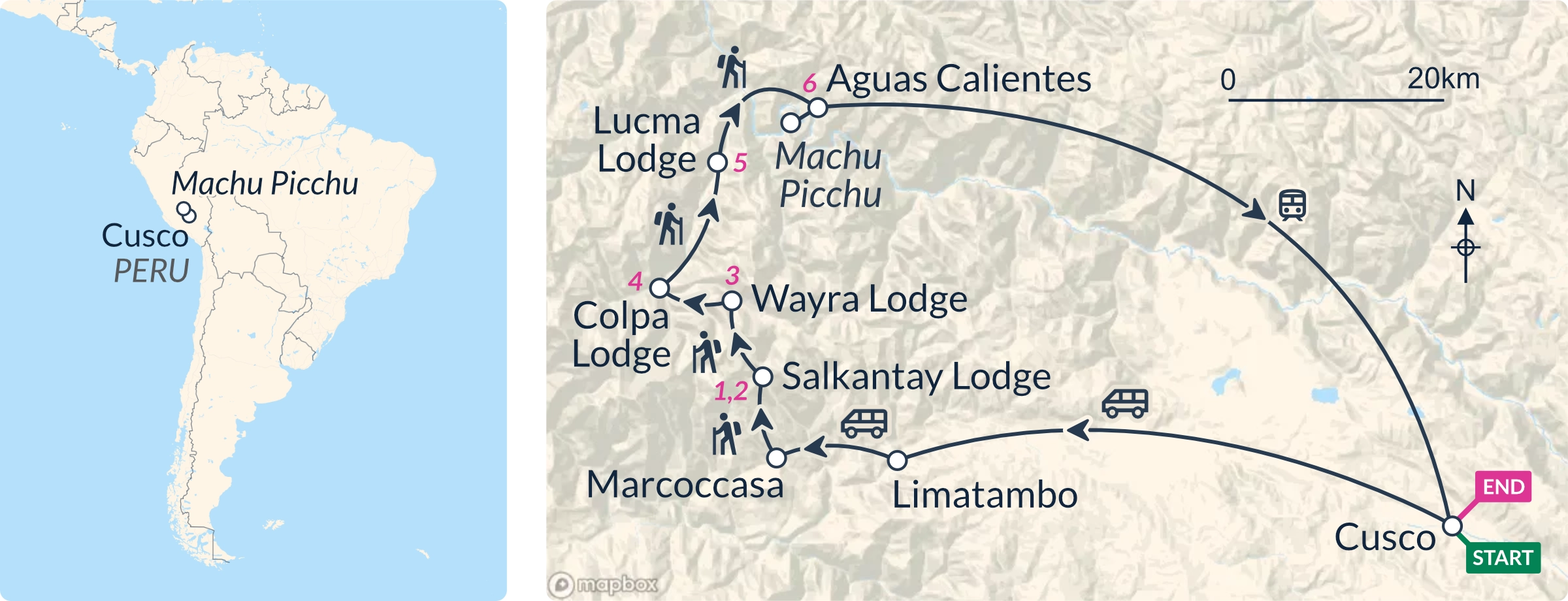
After an early breakfast, guests will be picked up starting at 7am at their hotel in Cusco for drive towards Soraypampa.
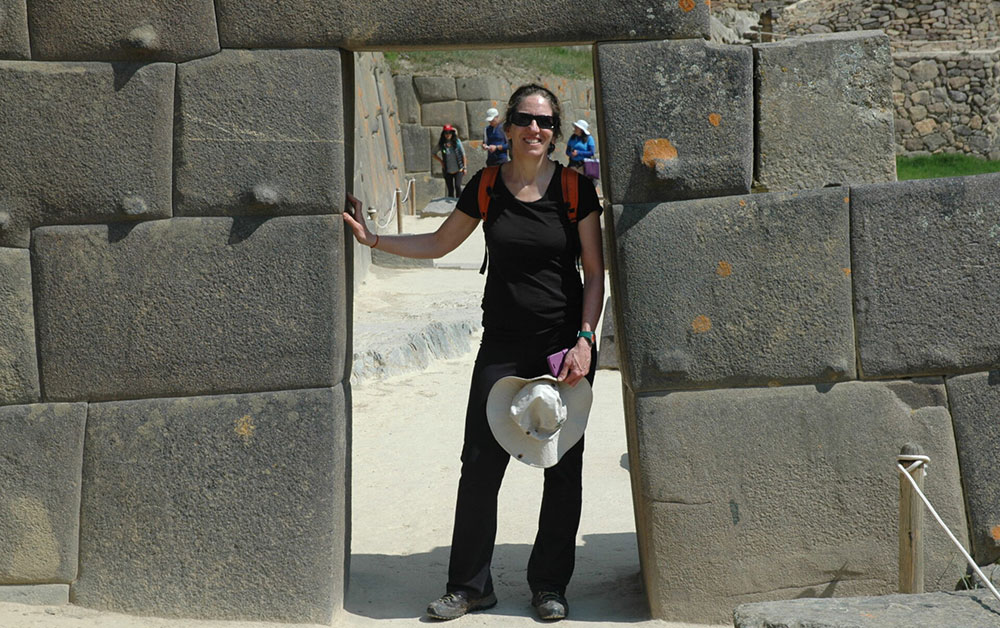
En route there will be a short break to visit the Inca ruins of Tarawasi near the town of Limatambo (approx 1.5 hours from Cusco).
After leaving Limatambo, we pass through the mountain village of Mollepata where we stop for a short coffee break before ascending a winding mountain road to Marcoccasa (30 minutes from Mollepata by vehicle).
Here we begin our trek to Soraympapa, on an old route called the ‘Camino Real’ (Royal Path). This is a good opportunity for guests to acclimatise and enjoy a beautiful 6-hour trek on their first day (hiking level: moderate). Guests who do not wish to trek may be transported to the lodge by vehicle.
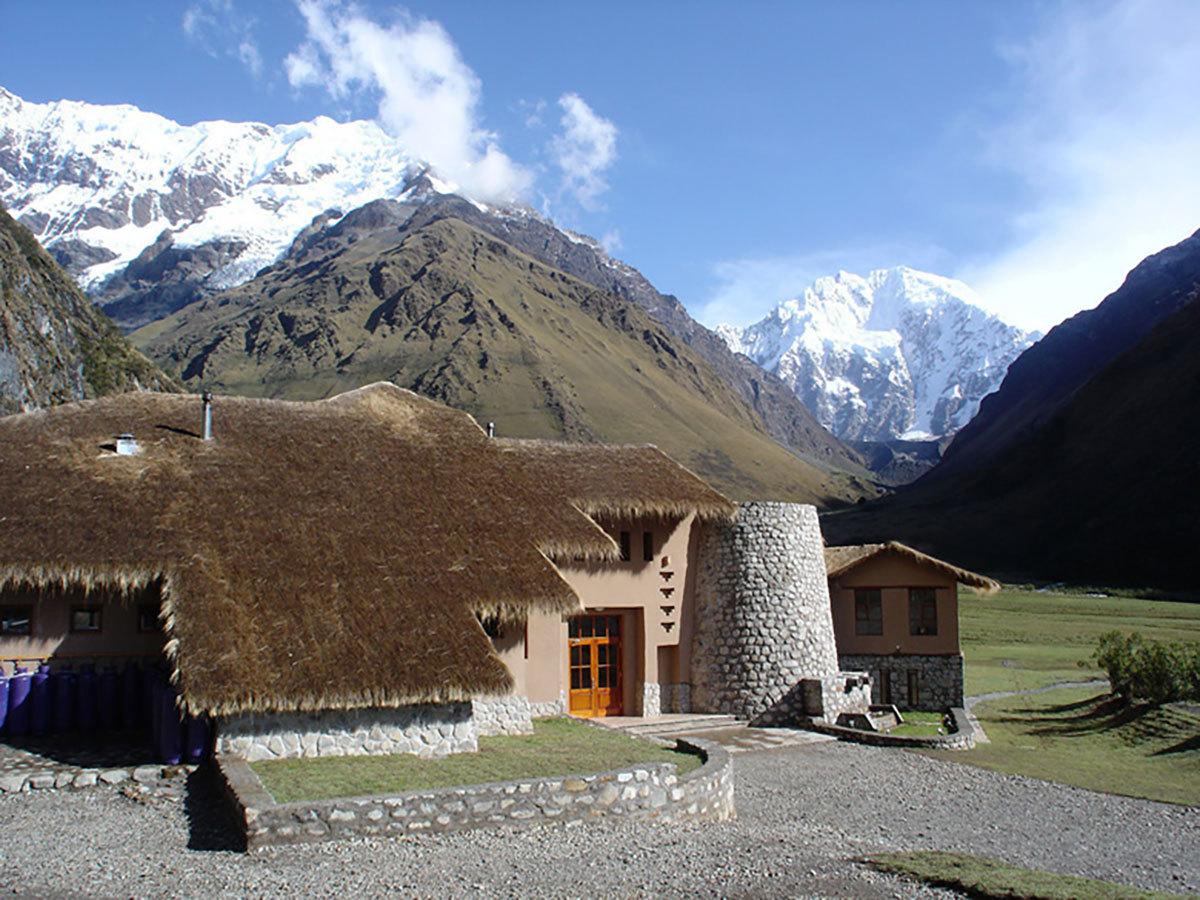
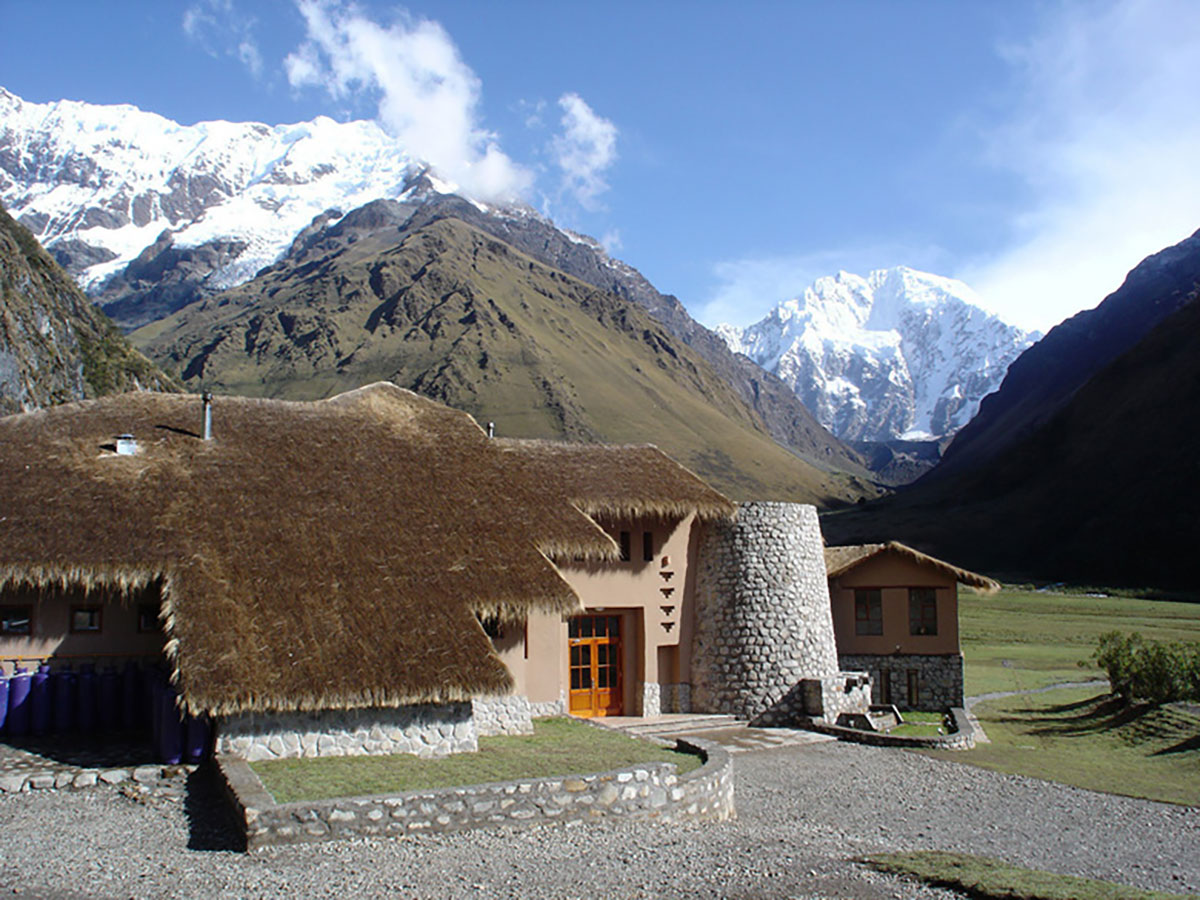
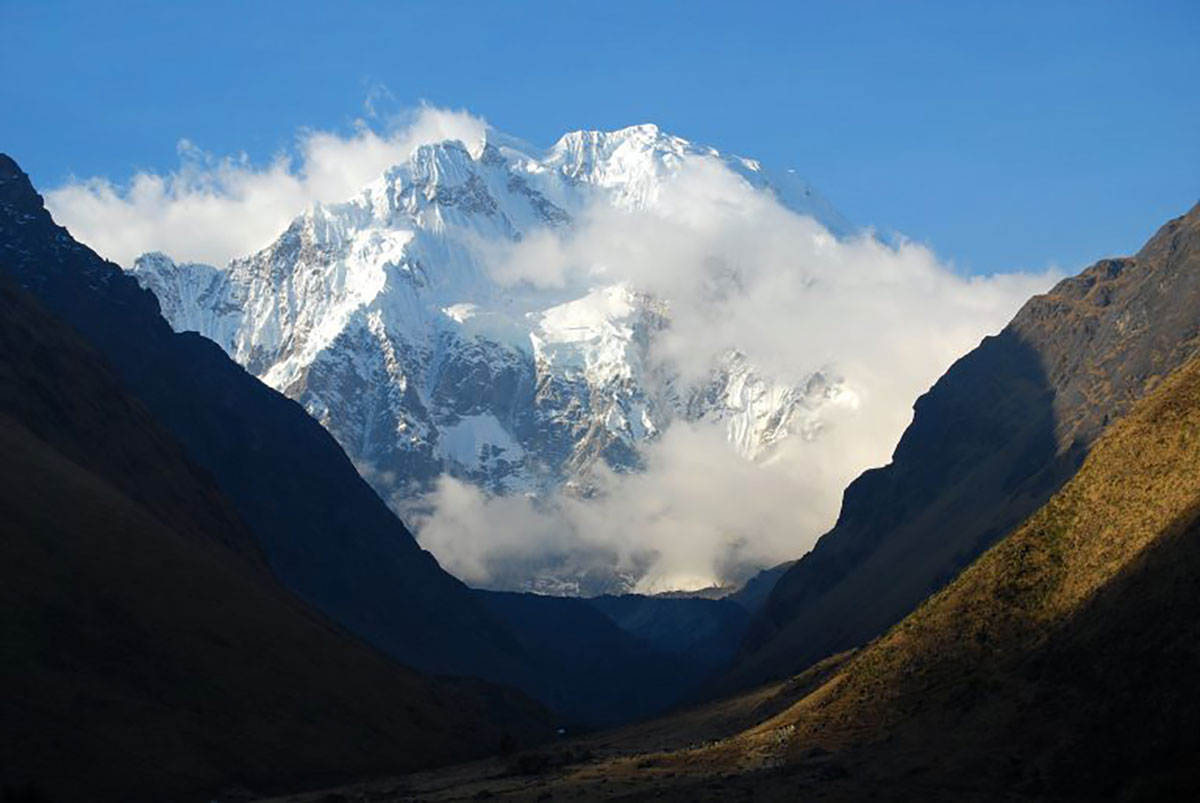
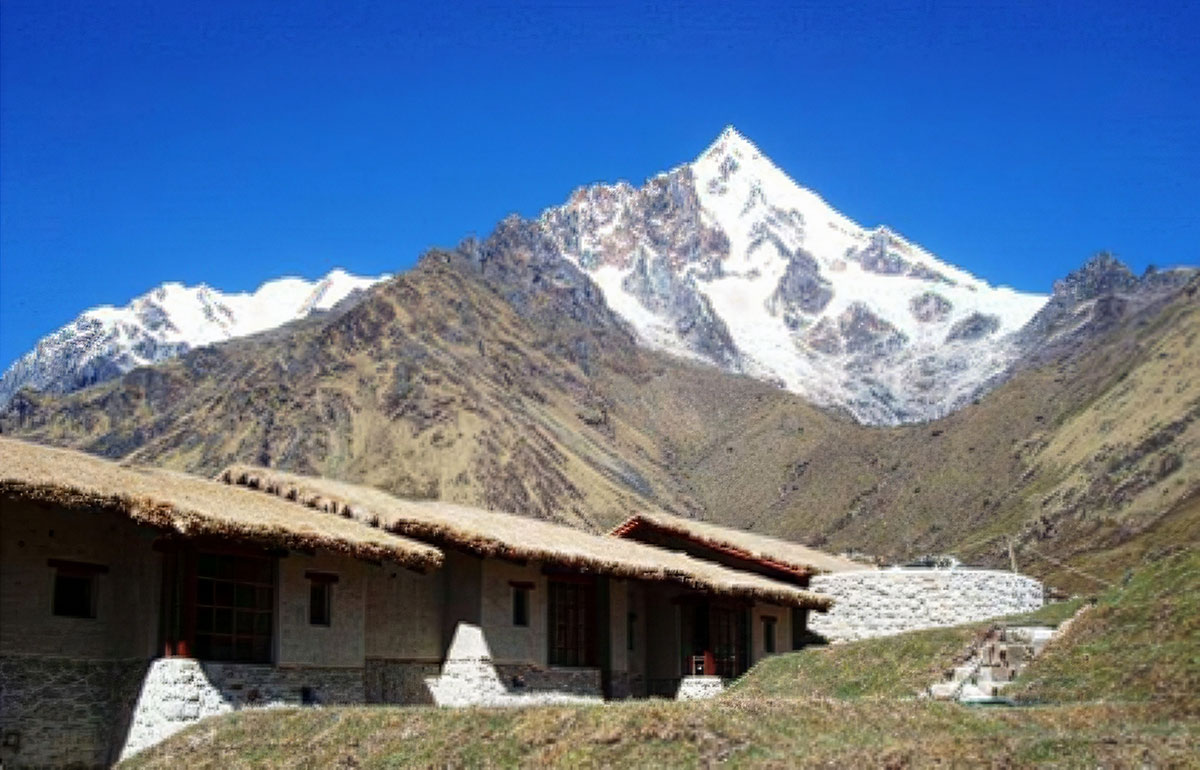
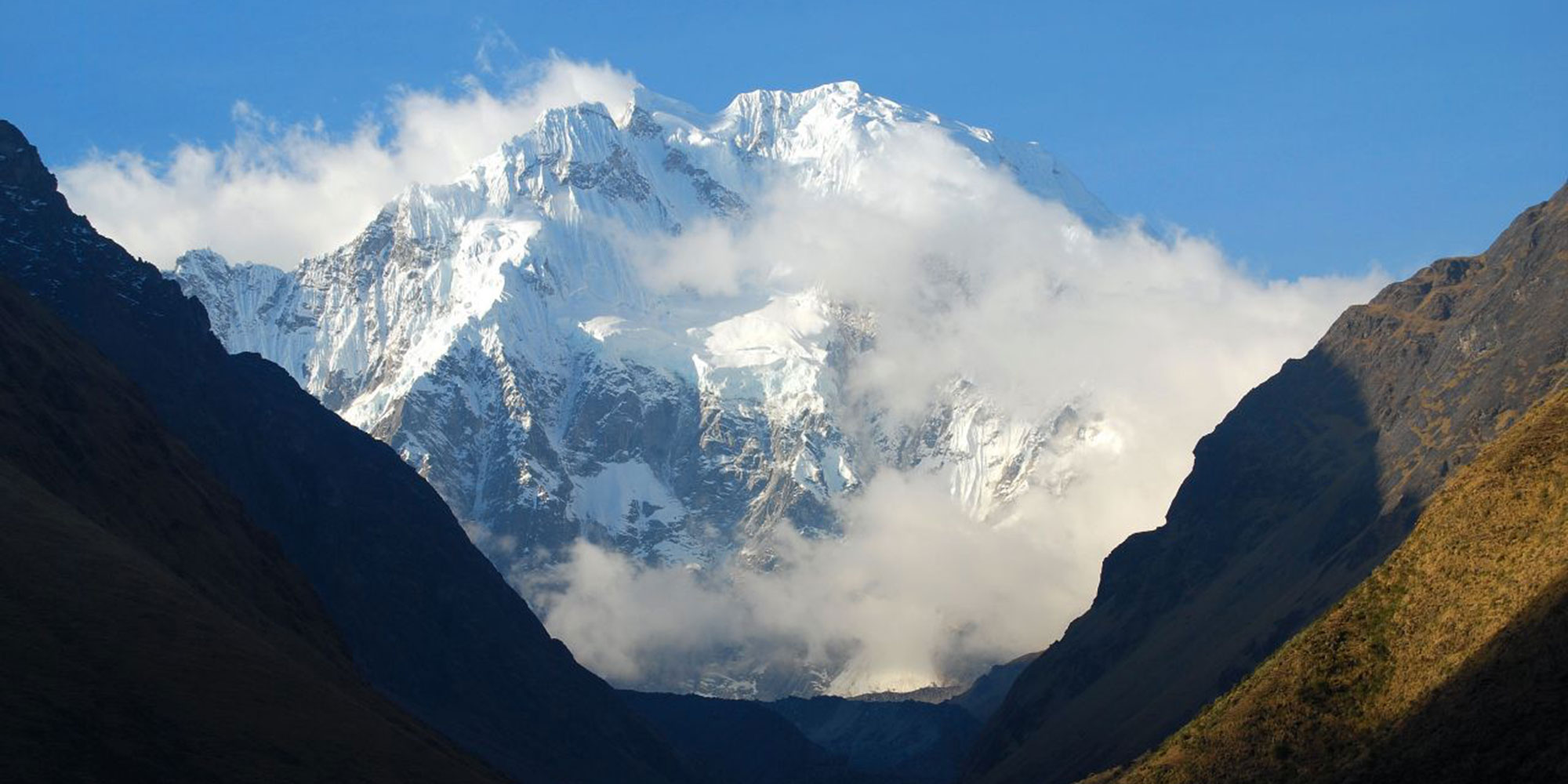
The Salkantay Lodge takes its name from the majestic peak at the head of the valley – the ‘Salkantay’, the second most sacred peak in Inca mythology and, at 6,270m/20,570ft, the highest in the region.
After a warm welcome from the friendly staff, you will be shown to your room and have time to wash up.
The first afternoon is spent at leisure to adjust to the altitude. An evening briefing by the fireplace is followed by aperitifs and dinner.
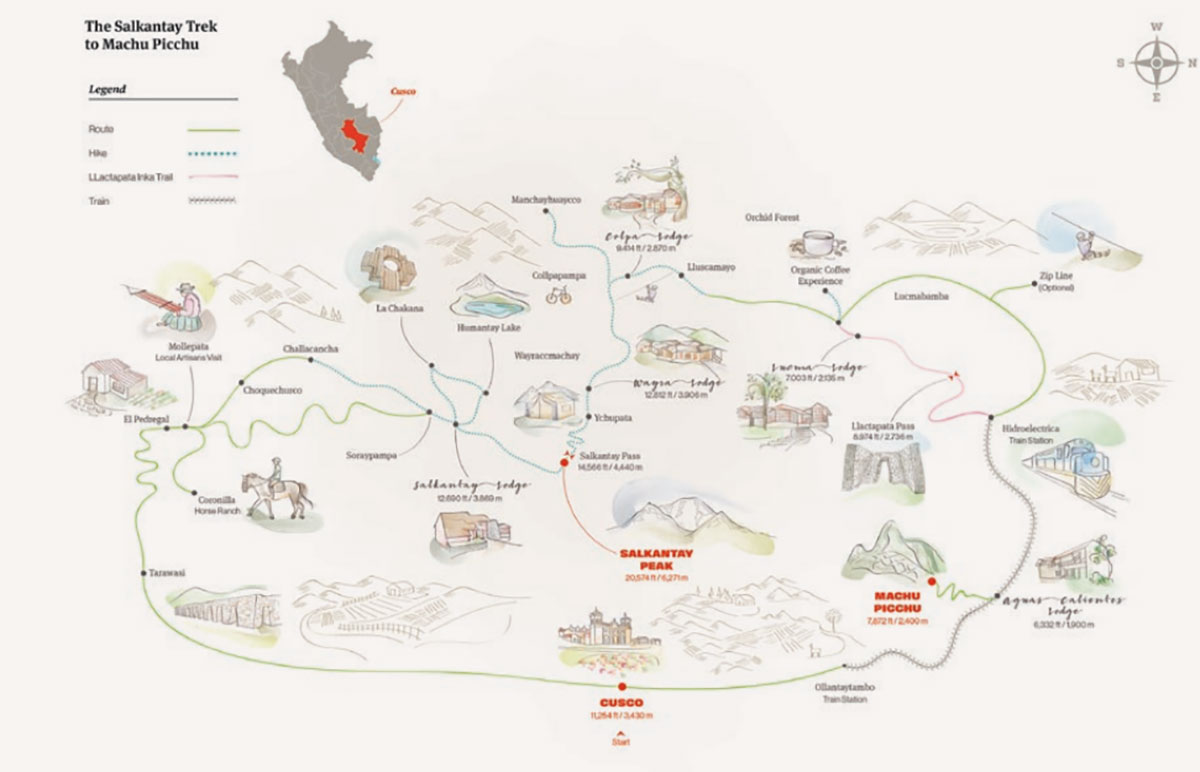
Overnight: Salkantay Lodge (3,869 m/12,690 ft)
Trekking: Approximately 6 hours (including picnic lunch en route)
Hiking: Moderate
Today is spent at leisure for rest or activities, depending upon your level of acclimatisation.
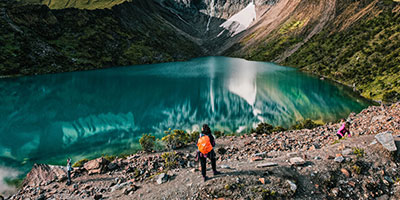
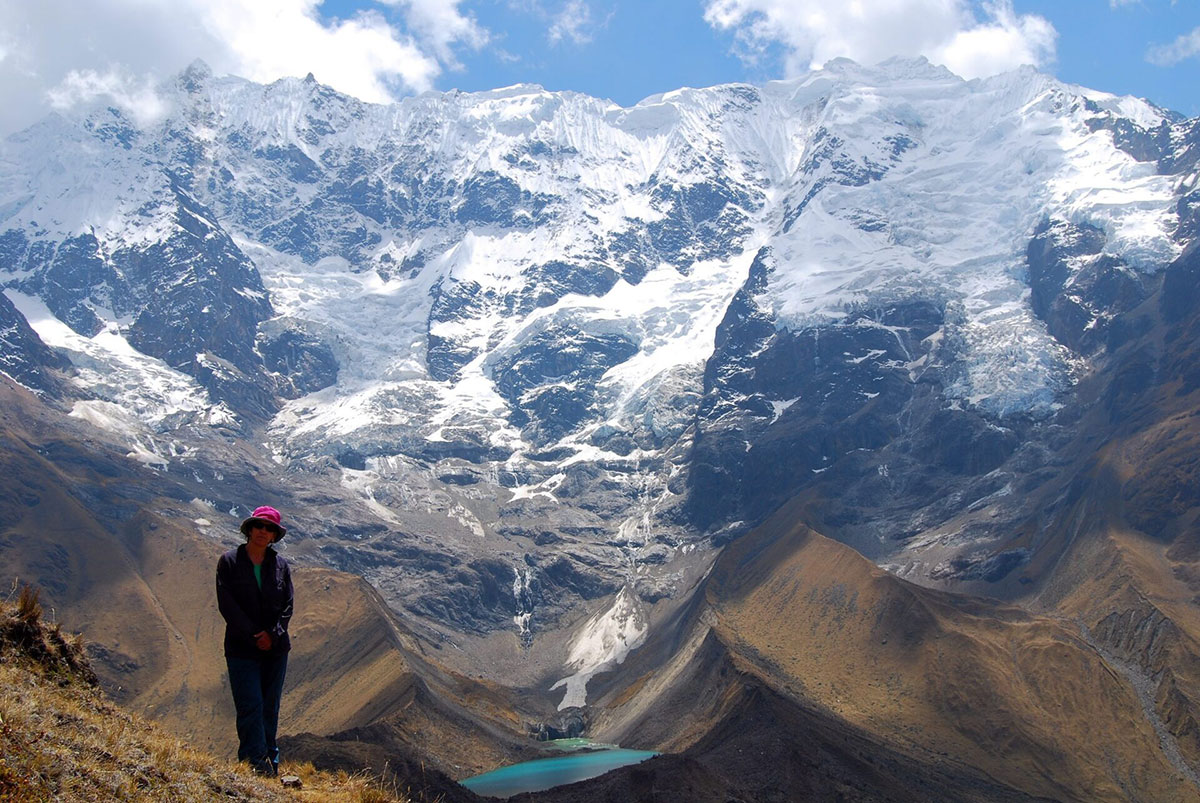
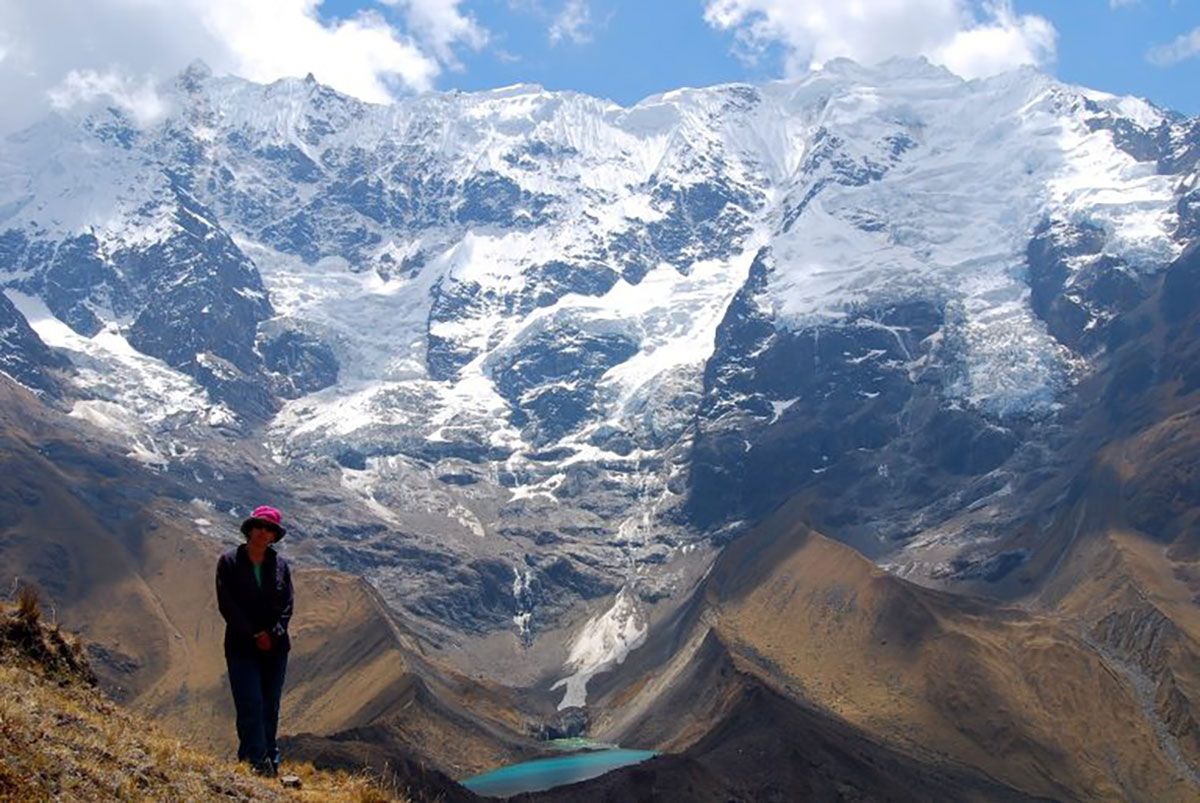
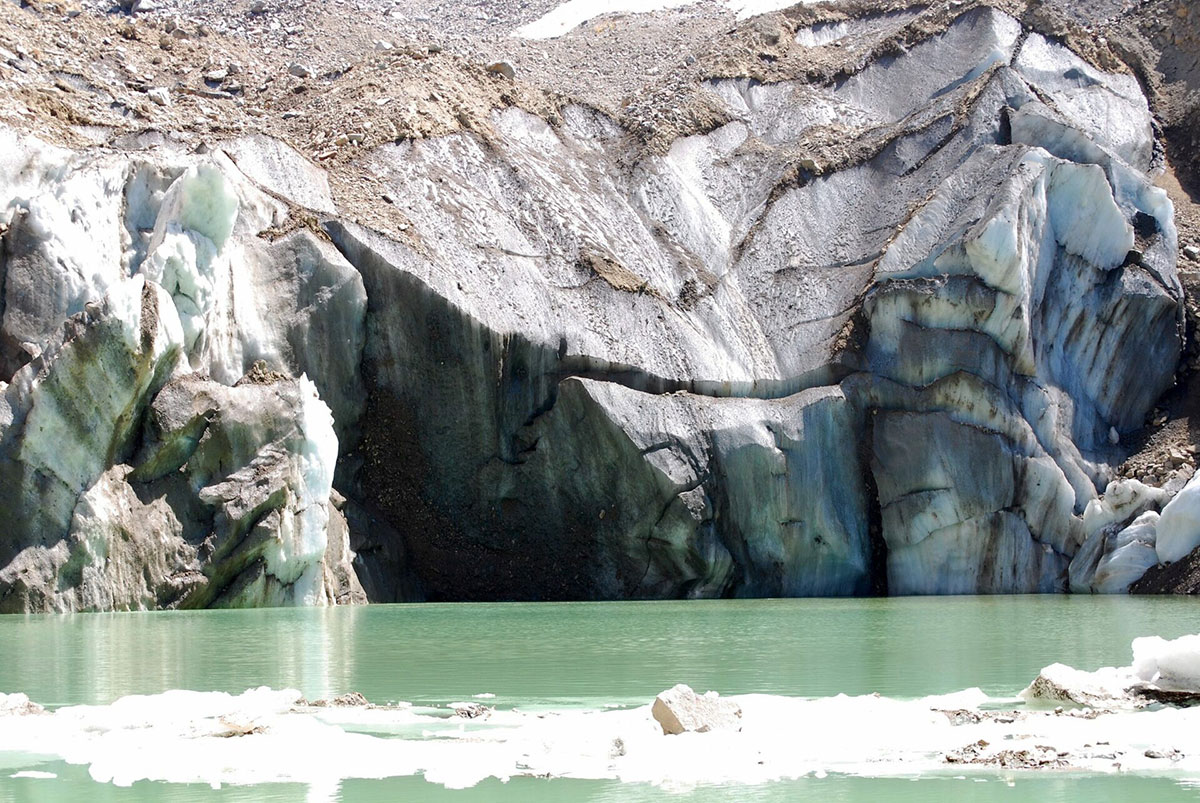
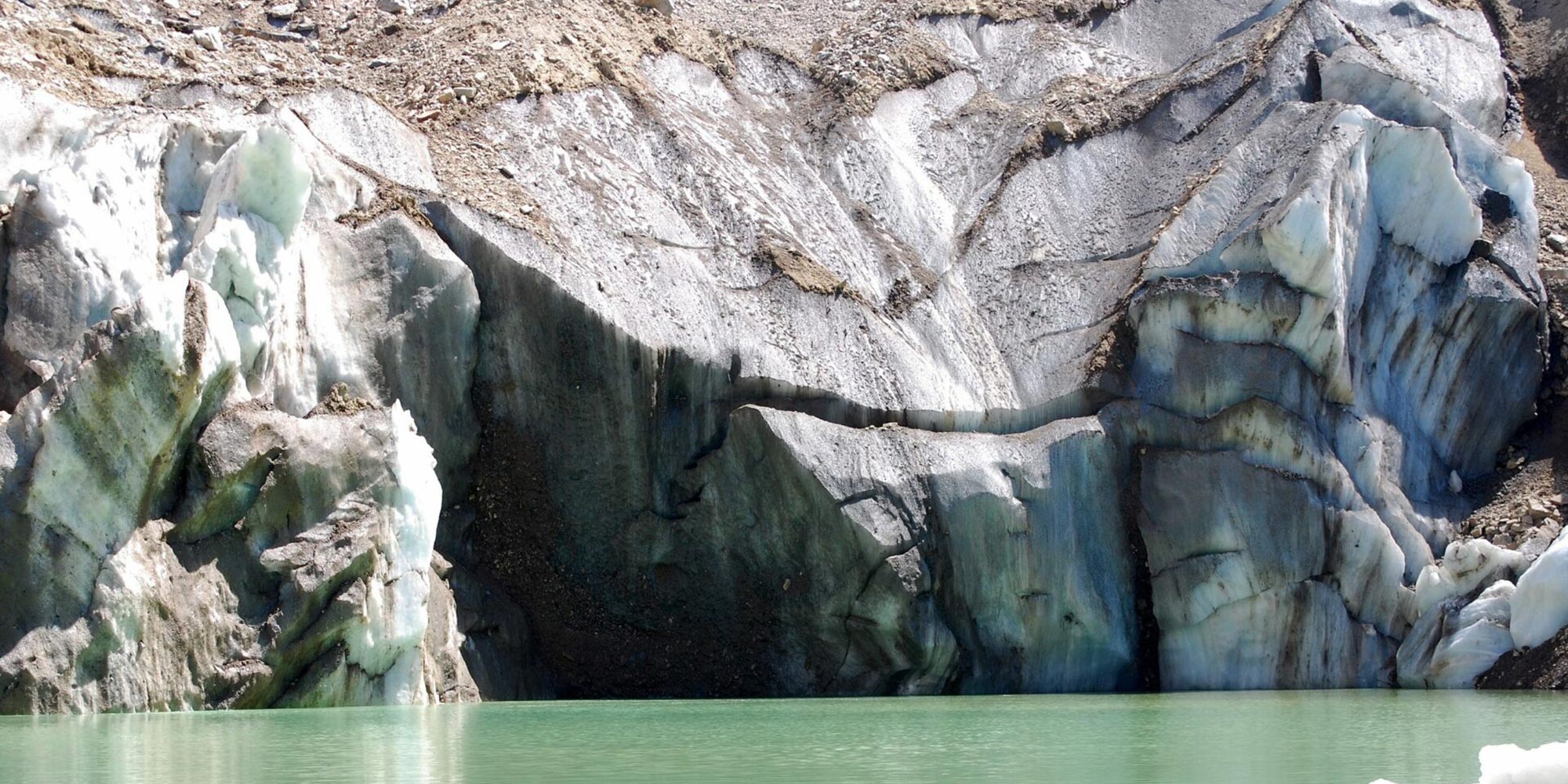
The most popular activity at Soraypampa is a half-day hike (3-4 hours, hiking level moderate to challenging) to a glacial lake where the more adventurous might take a very short swim!
This activity is excellent for acclimatisation and a first immersion into high-mountain trekking.
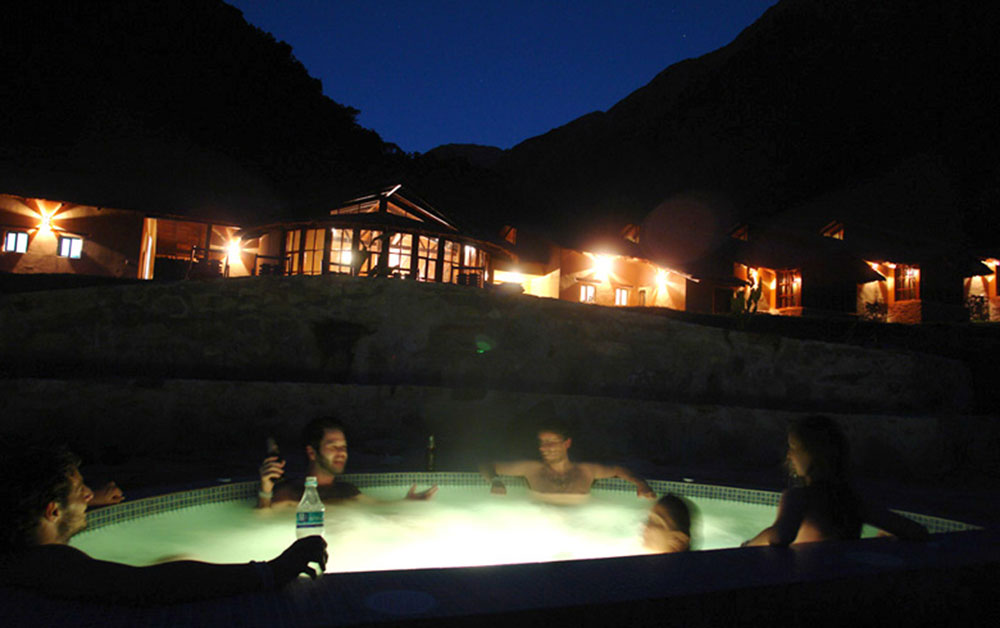
In the afternoon, guests may choose to trade the glacial swim for a relaxing soak in our outdoor jacuzzi.
In the evening, the guide will brief the trekking party on gear and the itinerary for the following day.
Overnight: Salkantay Lodge (3,869 m/12,690 ft)
Trekking time: 3-4 hours
Hiking: Moderate to challenging
Optional activities: Horseback riding (at additional cost)
This is the big day – the start of the four day trek to Machu Picchu.
After an early start you hike up the Rio Blanco valley, circling the Humantay Peak across from Salkantay Peak.
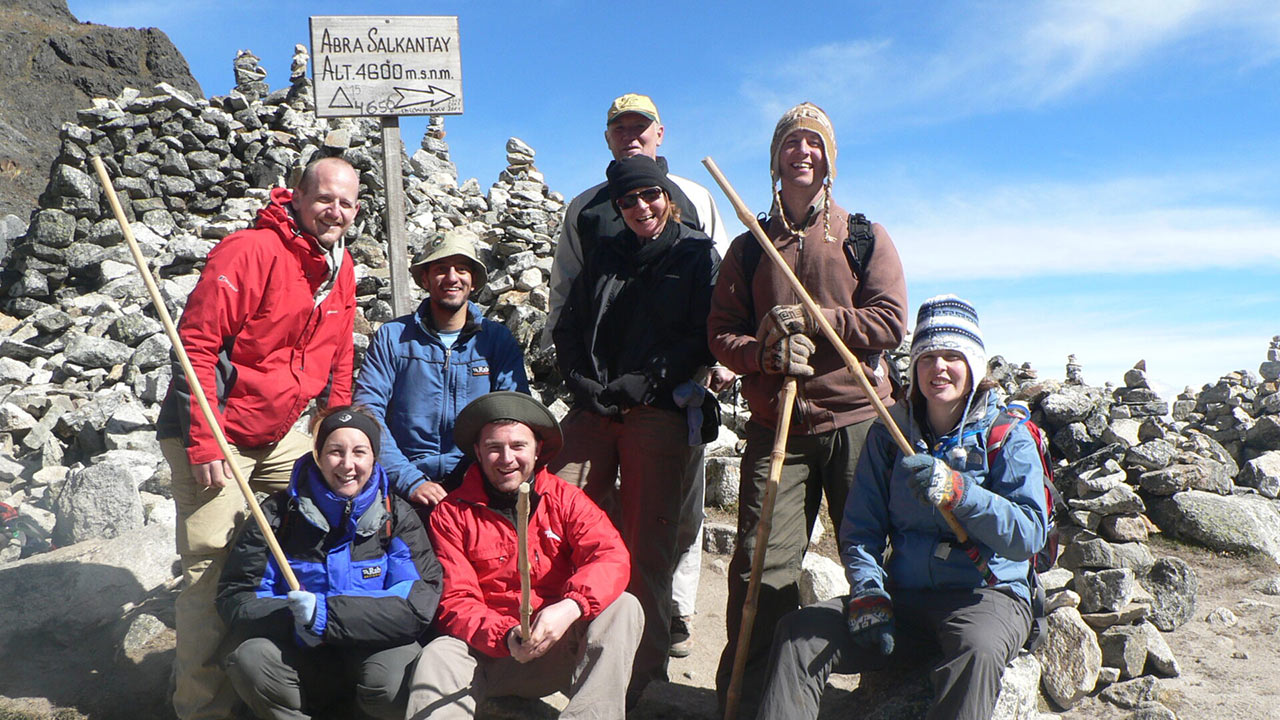
The highest point on the trek is a pass at 4,572m/15,000ft approx.
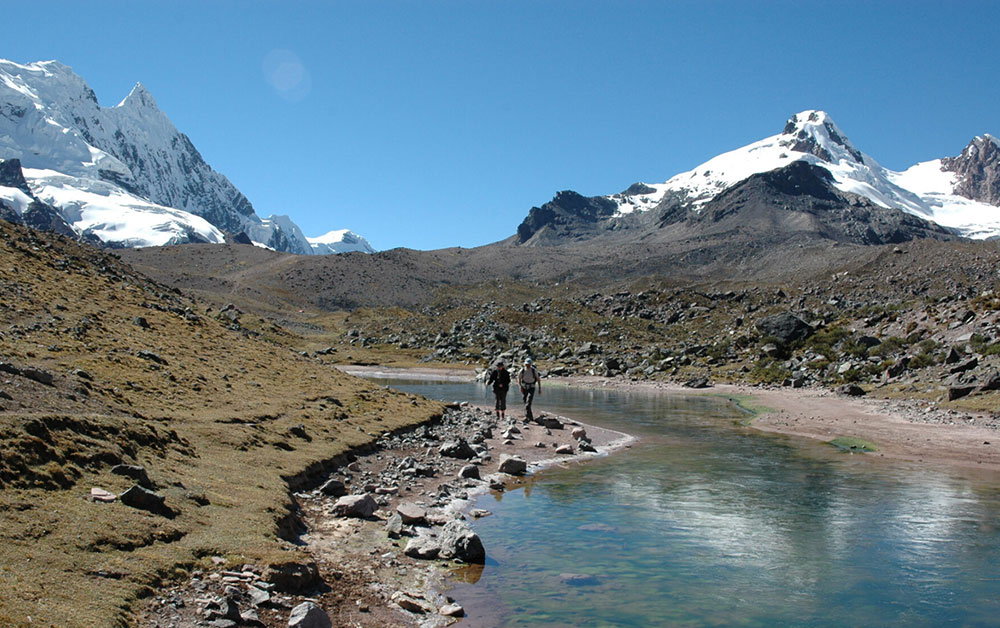
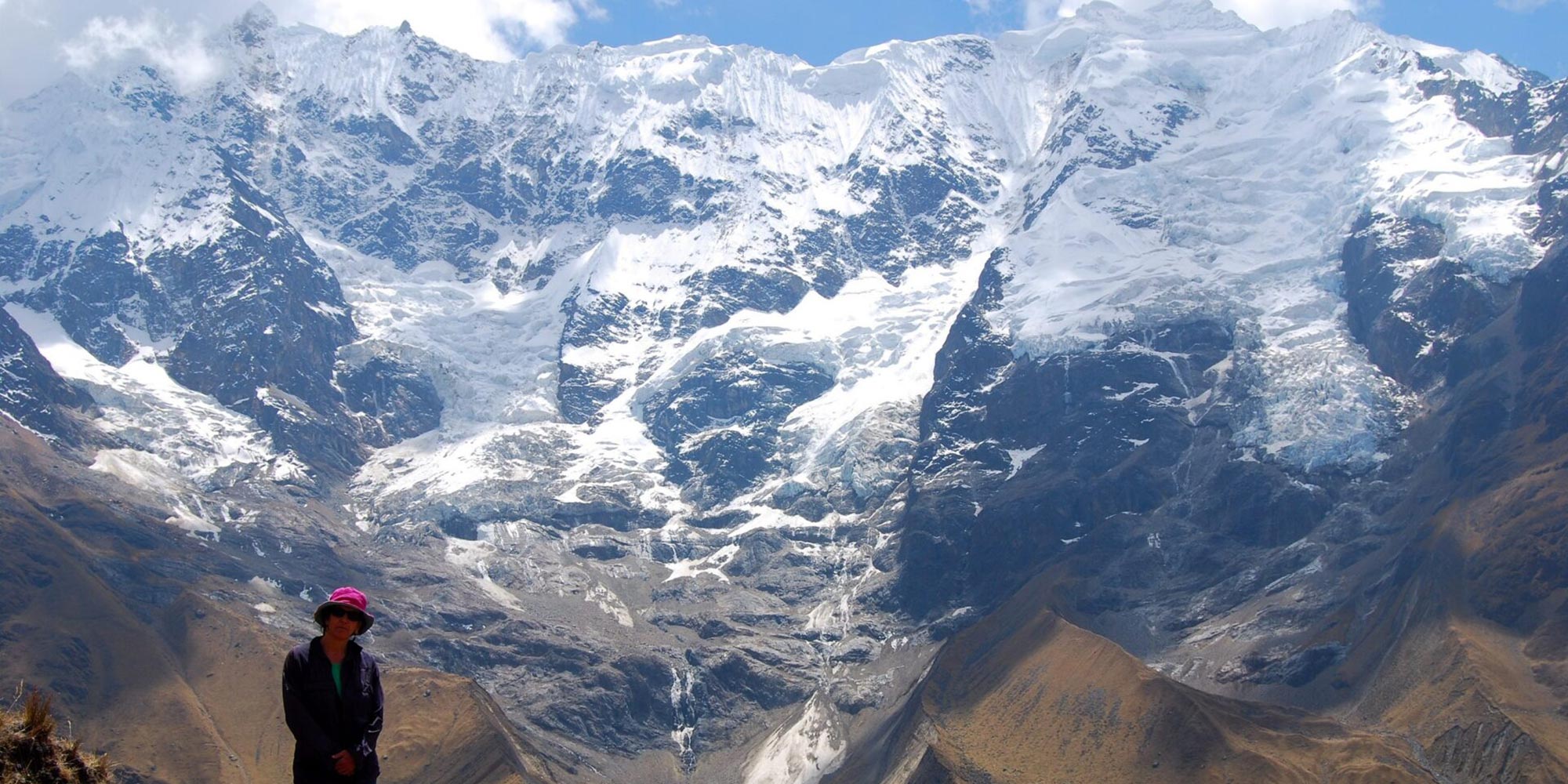
At the pass we stop to take in views of snow-capped peaks of the Vilcabamba Range in every direction, the south face of Salkantay towering above us, keeping our eyes out for Andean condors often visible in this area.
From the pass we continue our descent towards the Wayra Lodge (‘Wayra’ meaning wind or the place where the wind lives), our destination for the evening.
Overnight: Wayra Lodge (3,906 m/12,812 ft)
Trekking time: 6–8 hours (including lunch)
Hiking: Challenging, crossing a 4,572m/15,00 ft mountain pass
Today we enjoy a leisurely breakfast at Wayra Lodge. We then begin our trek by hiking downhill above the Salkantay River, through increasingly verdant scenery.
The Colpa Lodge is located in an open promontory at the confluence of three rivers.
The outdoor hot tub in this lodge has prominent views of lush green mountains and a small far-away local town.
Overnight: Colpa Lodge (2,870 m/9,414 ft)
Trekking time: 3–4 hours
Hiking: Easy to Moderate
Optional Activity: Afternoon bike from Manchaywaycco to Collpapampa (3 hours) – additional cost.
We depart early today and head down to Santa Teresa River Valley, through more populated rural areas.
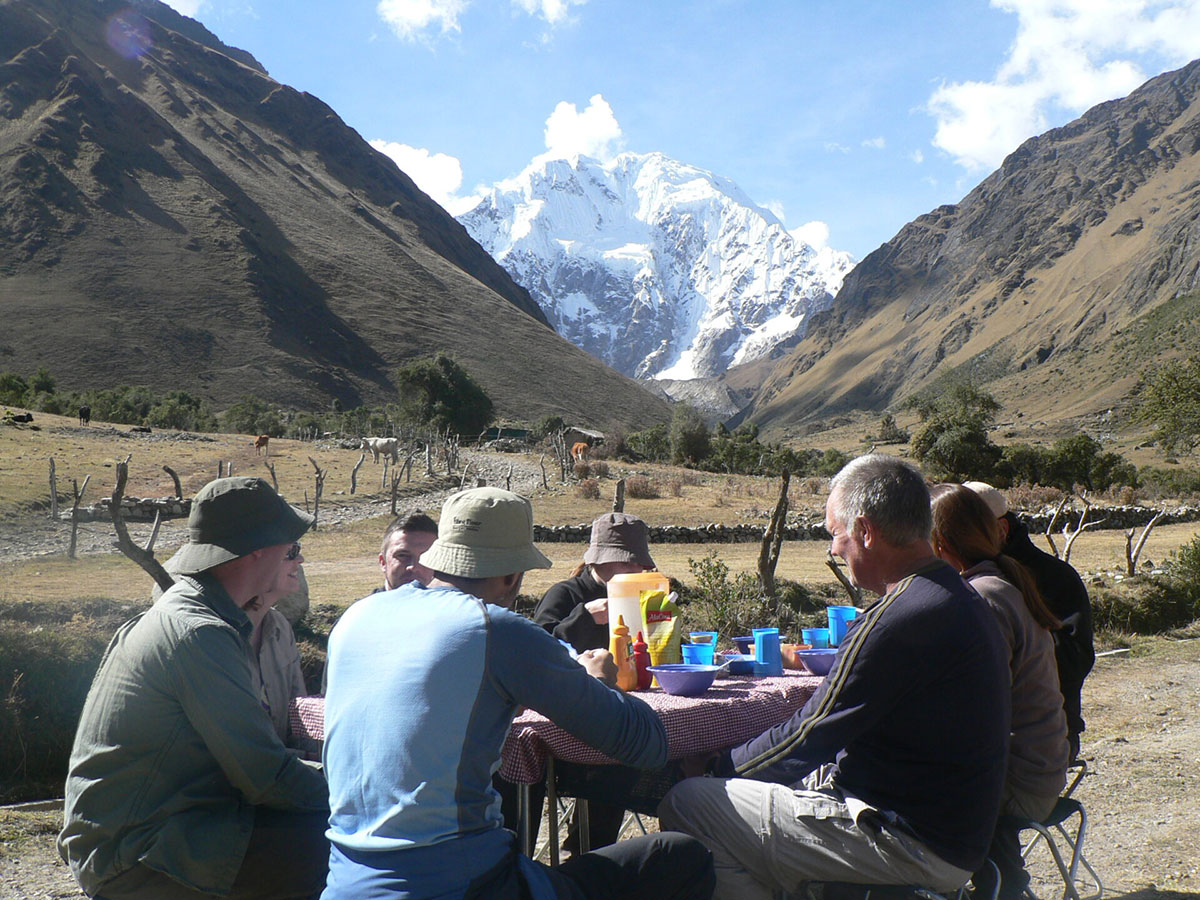
We pass through banana, granadilla, avocado orchards and coffee plantations (said to be one of the best organic coffees in the world). We stop along the river for a picnic lunch.
After another hour of trekking, a private vehicle arrives to take us to the beginning of the ‘Llactapata Inca Trail’ (30 minute drive).
From the head of the trail it is a short climb (30 minutes) to the Lucma Lodge, set in an avocado orchard. We arrive in time to allow for exploration of the small village of Lucmabamba and possibly meeting with members of the local community.
Overnight: Lucma Lodge (2,135 m/7,003 ft)
Trekking time: 5–6 hours (including lunch)
Hiking: Moderate to Challenging (because of distance, not terrain)
Zip Line in Santa Teresa: This is a full-day activity which replaces the trek. Operated by Cola de Mono. It has an additional cost.
Biking, option A): Yanama pass – Hornopampa – Lluskamayo (5 hours), easy to moderate, additional cost.
Biking, option B): Descent from Hornopampa to Lluskamayo (3.5 hours), easy, additional cost.
After an early start and a hearty breakfast, we tackle the last day of our trek.
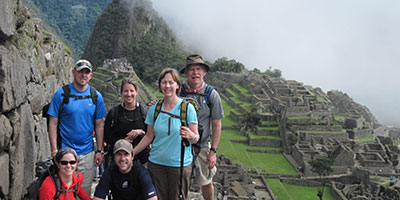
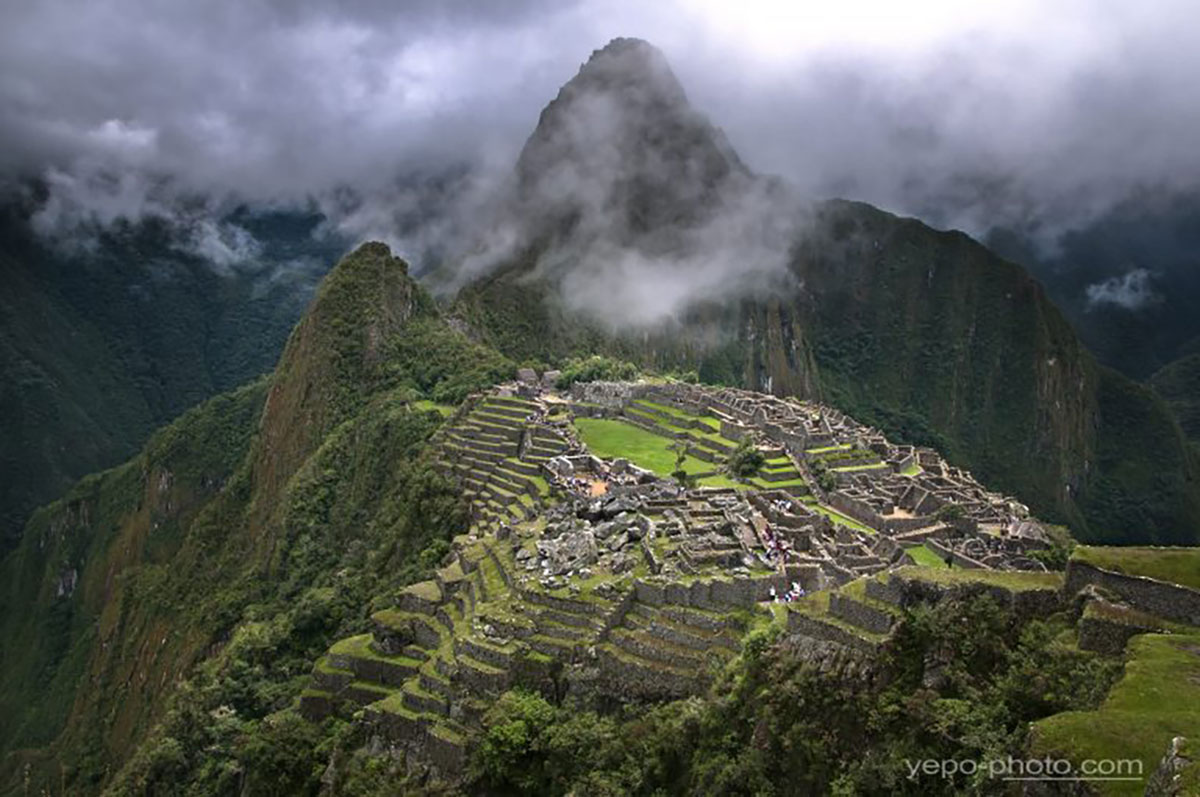
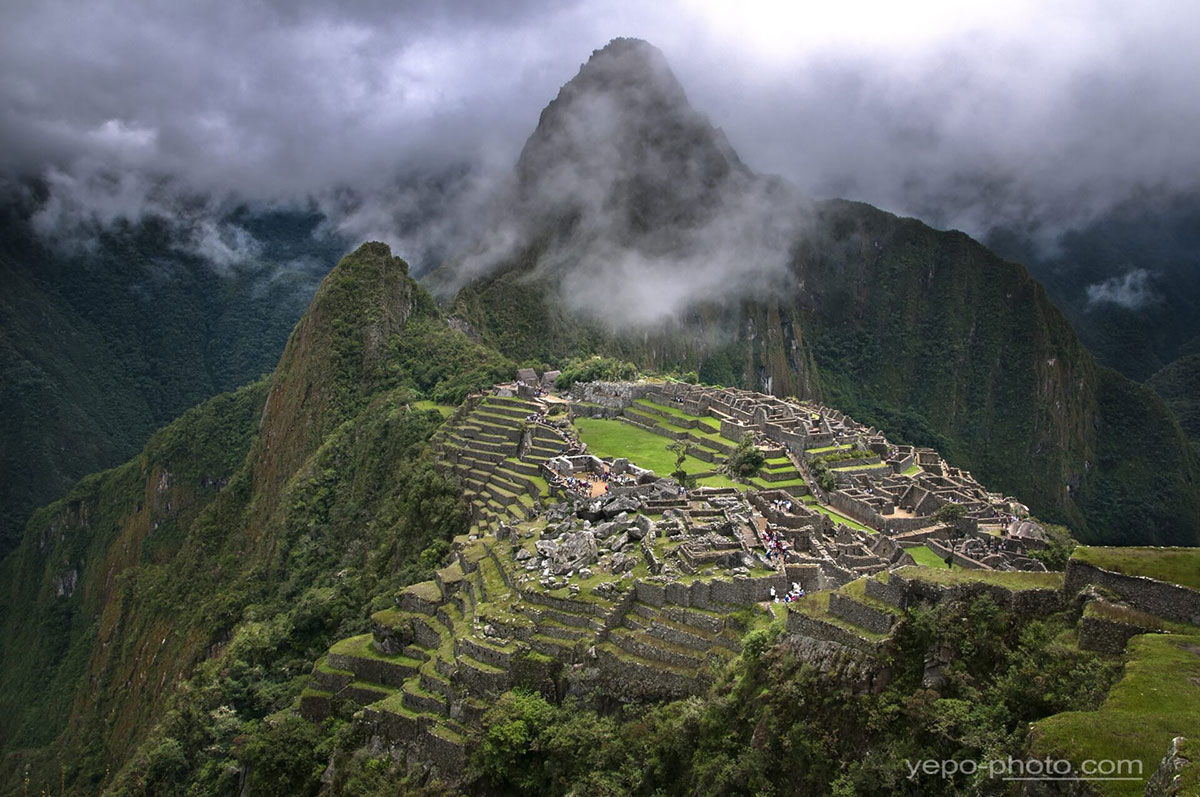
We head uphill for 2 to 3 hours towards Llactapata Pass (2,736m/8,976ft), where we come upon a distant but quite special view of Machu Picchu from the southwest, a view few tourists ever glimpse. An added value are the Llactapata ruins, which have recently been restored.
Lunch is provided at the observatory, in view of Machu Picchu.
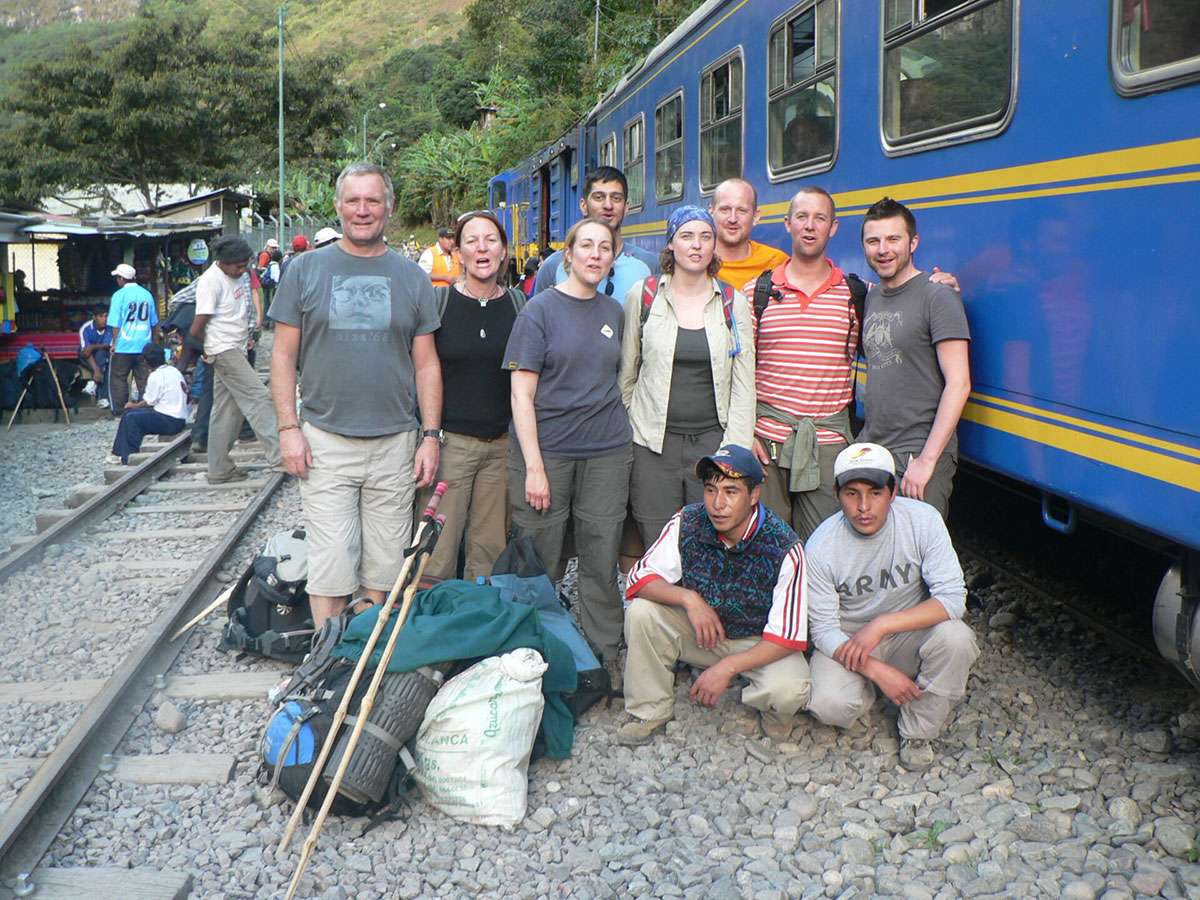
We then begin our final descent to the Aobamba River through lush bamboo forests and more orchards and coffee plantations (2 to 3 hour descent). Aguas Calientes and Machu Picchu are a short (30 minutes) scenic train ride away.
We then arrive in Aguas Calientes to check in to our hotel for the night.
Overnight: Aguas Calientes (1,900 m/6,232 ft)
Trekking time: 4–6 hours
Hiking: Moderate to challenging
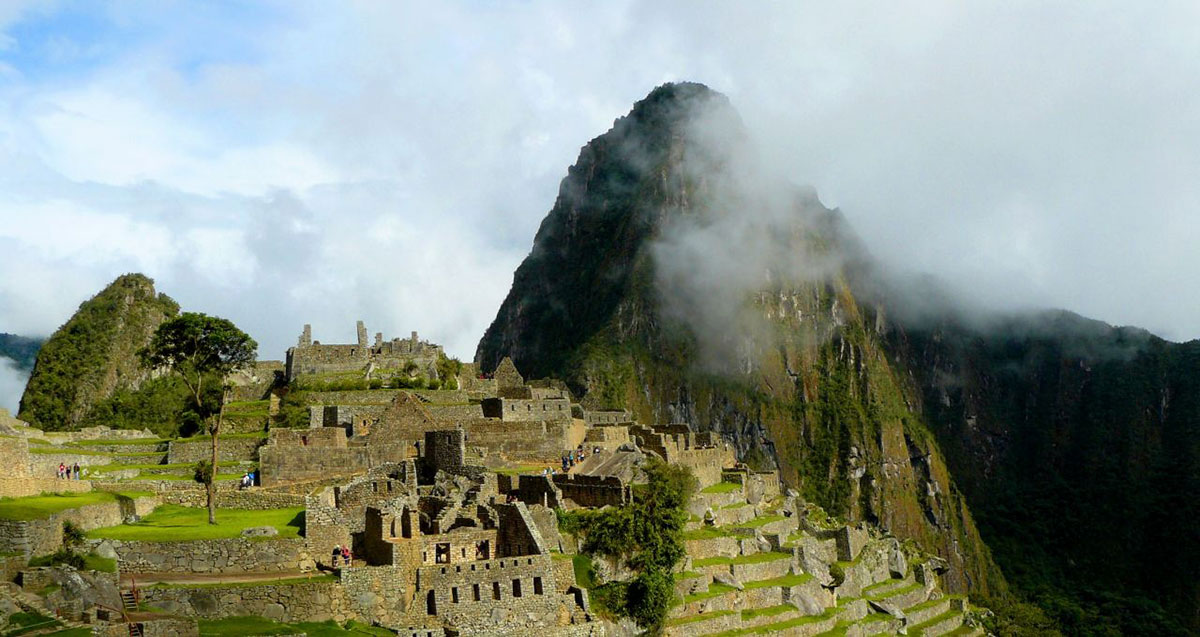
We wake up early to have breakfast at the hotel and then make our way to the bus station for the ride up to Machu Picchu (30 minutes). A complete guided tour of Machu Picchu will be provided (2 hours). Guests will have about 4 additional hours to explore the site on their own – there is a lot to see and do.
Note: Climb Huayna Picchu or Machu Picchu Mountain. Permits have to be purchased in advance, contact us for more.
Afterwards, we return by bus to Aguas Calientes for lunch and go to the train station for the afternoon departure.
The train takes us to Ollantaytambo (1.5 hours), where a private vehicle awaits to take us to Cusco (1.5 hours). Upon arrival in Cusco (approx. 7 to 8pm) you will be dropped off at your hotel.
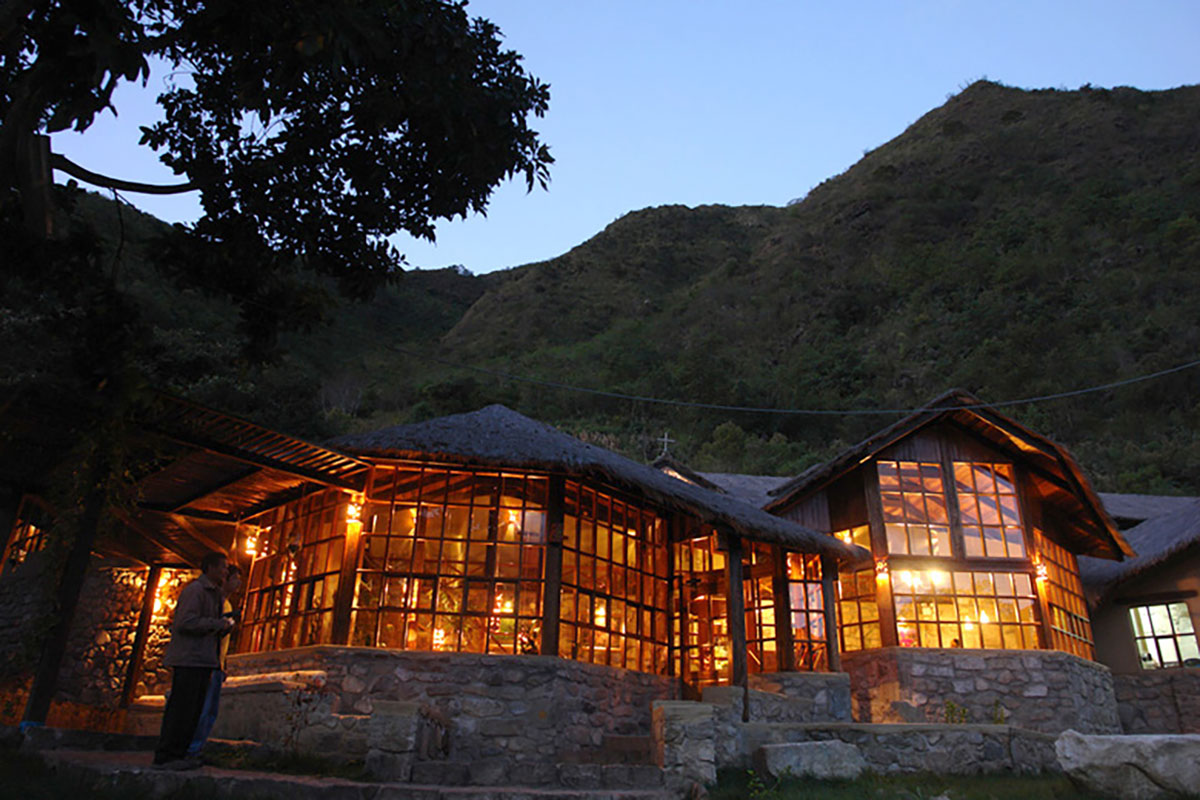
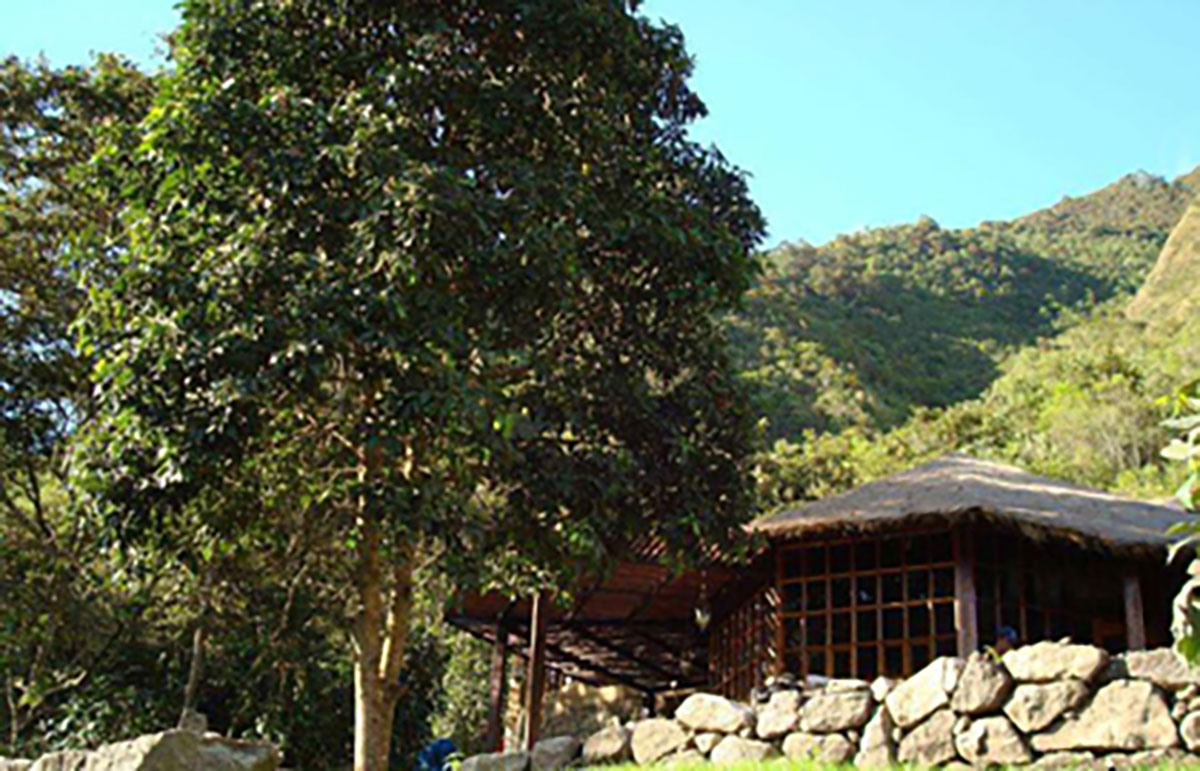
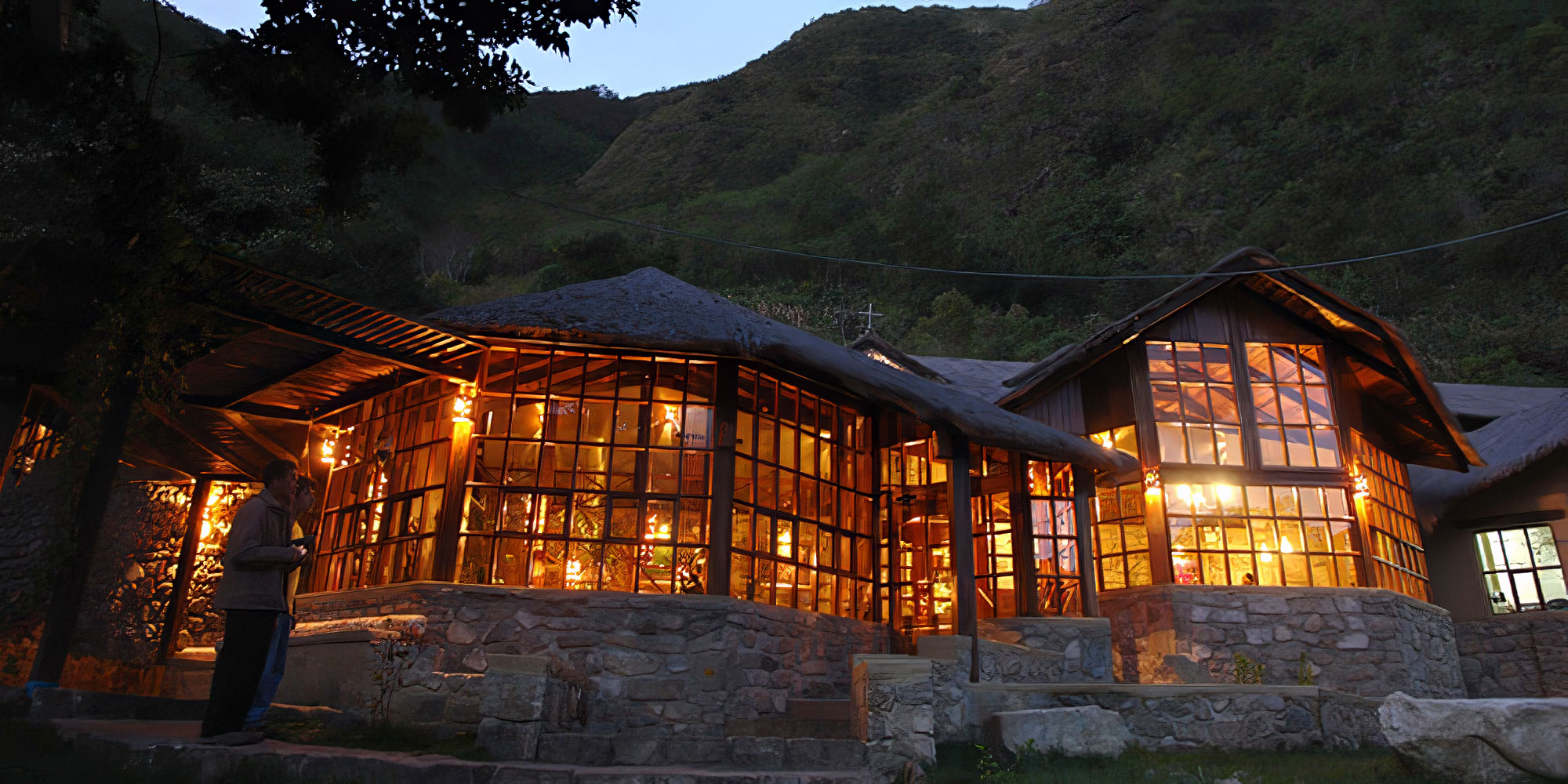
The four beautifully-appointed mountain lodges are one of a kind. They have been designed with traditional Inca building techniques and blend perfectly with the surrounding environment.
At the end of each day, in the intimate 6-room lodges, you enjoy hot showers, fine gourmet meals, select wines, goose-down bedding, massages, outdoor jacuzzis and highly personalised service from local staff.
All guest rooms are warmly presented with down comforters and amenities. The eco-minded architecture effortlessly mixes traditional heritage with contemporary design.
The Salkantay Lodge has 12 private double, twin or triple rooms with private bathroom facilities, while the other lodges (Wayra, Colpa, Lucma) have 6 private double, twin or triple rooms, all with private facilities. Salkantay, Wayra, and Colpa lodges have an outdoor jacuzzi. Every lodge guarantees an ample supply of hot water for showers; there are no bathtubs in any of the lodges. Saunas are also available at all lodges at no additional cost.
Room heating ensures the temperature remains a com-fortable 68° F (20° C).
There are professional massage services at all lodges. The cost for a 50-minute massage service is US $60 (subject to change)
There is satellite-based communications at all four lodges along the Salkantay Trail to Machu Picchu. Due to the satellite-based nature of the system, signal reception may not be guaranteed in cases of continuous or extreme bad weather conditions.
Each lodge has a stationary rural satellite phone which our guests can use. There is ‘rural’ wi-fi internet service at all four lodges free of charge.
We have classified this as a moderate trek, and you need to be in good physical shape for it.
You hike 4-8 hours a day on 6 consecutive days, over rugged mountain trails at elevation.
There is a high altitude pass to cross at 4,572m/15,000ft before dropping into lower elevations en route to Machu Picchu.
Pre-trip preparation should include challenging cardiovascular exercise (including regular hikes on varied terrain) and a healthy, balanced diet.
Well-worn hiking boots and additional acclimatisation nights in Cusco before the trek are both highly recommended.
All guests are encouraged to hike at their own pace, taking breaks whenever needed, to ensure a successful and enjoyable trek for all.
Almost all dietary requirements can be catered to – please contact us for more.
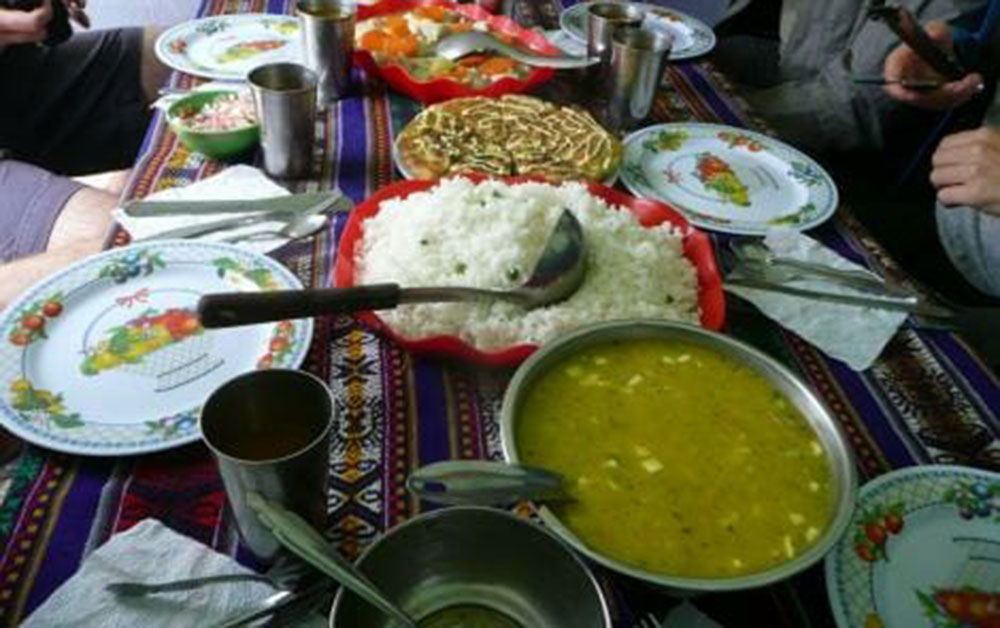
Inventive menus which provide a refreshing take on the region’s most iconic dishes.
All offerings are locally sourced – from organic coffee blends to healthy snacks.
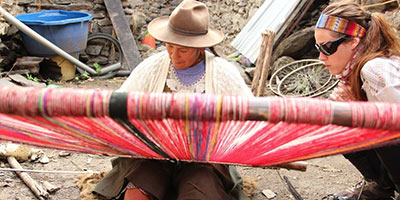
At the lodges, local villagers simultaneously share their customs and learn how to be industry professionals, from guides to chefs to mule drivers to lodge staff.
The local teams, comprised of this rich blend of traditions and cultures, are trained to provide outstanding service and will go above and beyond to give each guest an unforgettable experience.
Local expert trekking guides are bilingual, English-speaking and of the highest quality.
An inspiring Peruvian adventure blending trekking, wildlife encounters, and rich cultural discoveries from Colca Canyon to Machu Picchu.
Beautifully guided treks through Peru’s Cordillera Blanca with breathtaking turquoise lakes, delicious mountain meals, and an outstanding guide who made every hike memorable.
Stay in luxury lodges on your trip to Machu Picchu.
This Salkantay trek is a once-in-a-lifetime and stylish alternative journey to the famous Inca ruins at Machu Picchu.
You walk from one cosy mountain lodge to another through the Cordillera Vilcabamba, a spectacular mountain range.

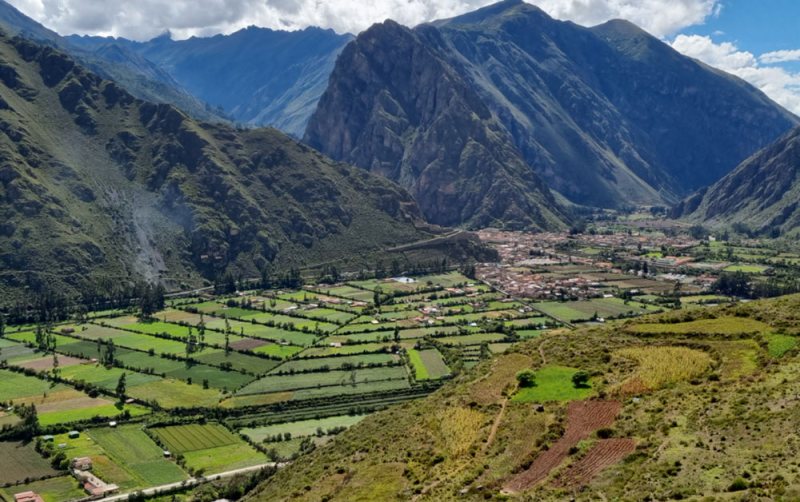
The enchanting valley of Soraypampa is the starting point of the trek, by many accounts more scenic and exclusive than the famous ‘Inca Trail’.
Hike through changing altitudes and varied terrain while you marvel at the beauty of the Salkantay Peak, Salkantay Glacier and Humantay Glacier Lake.
After a day’s walking, indulge in the comfort of enchanting mountain lodges with their innovative local cuisine and the warmth of the local people.
All the lodges offer private rooms with en-suite bathrooms, hot showers, bar/lounge and cozy reading rooms – some even have a jacuzzi!

From: $1237 per person
Duration
4 days
From: $3150 per person
Duration
7 days
Peru is made up of 3 distinct geographical areas: the coast, the mountains and the jungle.
The costa or coastal region is a narrow ribbon of desert 2,250 km long, crossed by fertile river valleys flowing from the Andes. It takes up 11% of the country and holds more than 40% of the population.
The cold Humboldt current gives rise to a blanket of mist – the garua – which hangs above coastal cities like the capital Lima from May to November.
Heading east, you’re soon climbing above the garua and into the Andes. The sierra, or mountainous region, covers some 25% of Peru’s territory and contains 50% of the population. The sierra inhabitants are mainly Indigenous or Mestizo, and many still speak Quechua or Aymara.
The sierra contains dozens of 6,000-metre snow peaks and volcanoes, including Huascaran (6,768m) the highest mountain in the tropics. The deep valley basins contain most of the towns and arable land; the terracing and canal systems of the Incas and pre-Incas are often still used today.
The eastern Andes are heavily forested up to 3,350m and sweep down into the Amazon Basin.
Peru’s selva or jungle makes up almost two thirds of the country’s area, but holds only about 6% of the population: the only towns with significant populations are Iquitos and Pucallpa.
Peru is the perfect holiday destination for adventure travellers that want an amazing variety of activity, geography and cultural travel experiences.
The breadth of travel experiences in Peru is breathtaking – from trekking in the Andes to Machu Picchu to the tropical jungle of the Amazon, and plenty in between.
The people of Peru make it a special destination too, with its colourful and traditional street life and friendly locals.
Good kit is vital for every trip.
Book with Andean Trails and get 15% off Páramo’s fantastic ethical and high performance outdoor gear.
When planning for the climatic conditions encountered in the High Andes, layering is the most practical and versatile clothing system. It’s worth remembering that our clothing keeps us warm by retaining and isolating the heat we ourselves create.
To best maintain body heat, several layers of lightweight, warm and quick-drying clothing are far more efficient than one or two thick layers. Layers should have the following qualities:
First (base) layer: This layer wicks the sweat away from our skin, thus helping keep the body dry and warm. To this end, synthetic fabrics such as polypropylene should be used.
Mid layers: These isloating layers should also be synthetic (e.g. the known polar linings such as polartec or windblock, which are light and insulate twice as well as wool). Very important layers for retaining body heat.
Outer layer / shell: Finally, the vital layer which protects us from climatic adversities. A breathable, wind-proof and waterproof anorak, such as Goretex.
Give plenty of thought to kit selection, and try to keep weight down. Below is a more detailed guide.
You can also read about the weather of Peru in our blog.
Climate depends largely on altitude. As a rule of thumb, below 2,000m climate is mild and above 2,000m warm clothing is required for evenings, nights and early mornings.
The Andean sun is very strong.
Cusco (3,300m): Average max/min temps: 22ºC /2ºC. Average 3 or 4 wet days per month.
Arequipa (2,380m): Average max/min temps: 26ºC /9ºC. Sunny more than 340 days/year with minimal precipitation.
On highland treks: Conditions are generally dry. However, at this time of year, expect a range of conditions within a single day: cold/freezing nights at camps above 4,000m, where pre-dawn temperatures can be -5ºC; warm, spring-like mornings and afternoons; and cold evenings.
Note that mountain weather can be fickle and localised, and that precipitation is not unknown in the dry season. Expect temperatures to swing between sun and shade, sheltered and exposed ground and with altitude gain and loss. A quick-setting sun means temperatures drop fast.
In the cloud forest, e.g. around Machu Picchu, daytime conditions are generally warm or hot, and evenings cool.
Cusco: Average max/min temps: 23ºC /6ºC. Average 13 wet days per month.
Arequipa: Average max/min temps: 25ºC /14ºC.
On highland treks: Wetter conditions, with cooler days and milder nights than dry season. Jan-Mar usually the wettest months.
An inspiring Peruvian adventure blending trekking, wildlife encounters, and rich cultural discoveries from Colca Canyon to Machu Picchu.
Beautifully guided treks through Peru’s Cordillera Blanca with breathtaking turquoise lakes, delicious mountain meals, and an outstanding guide who made every hike memorable.