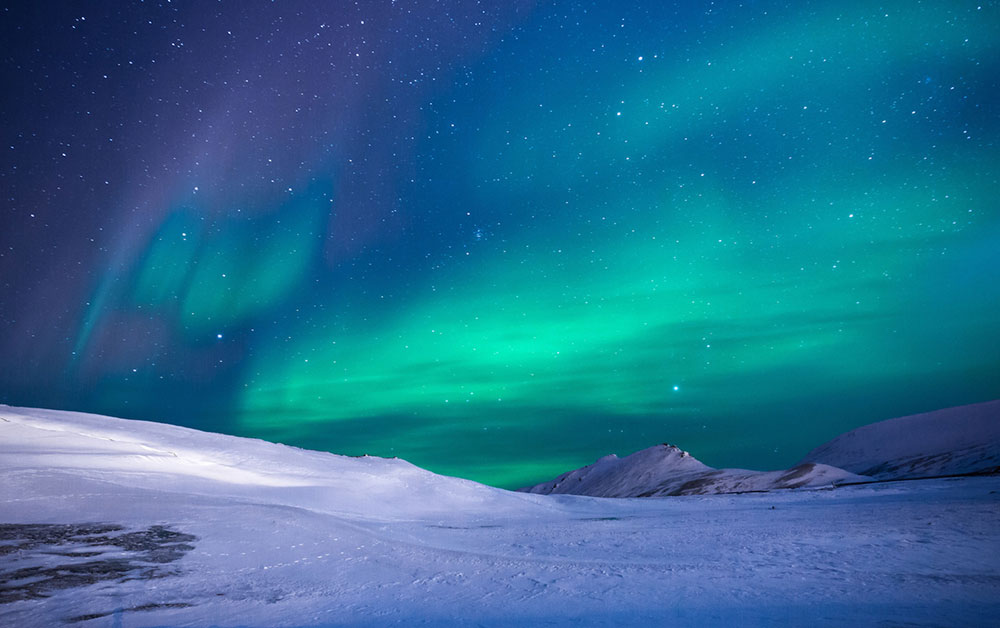
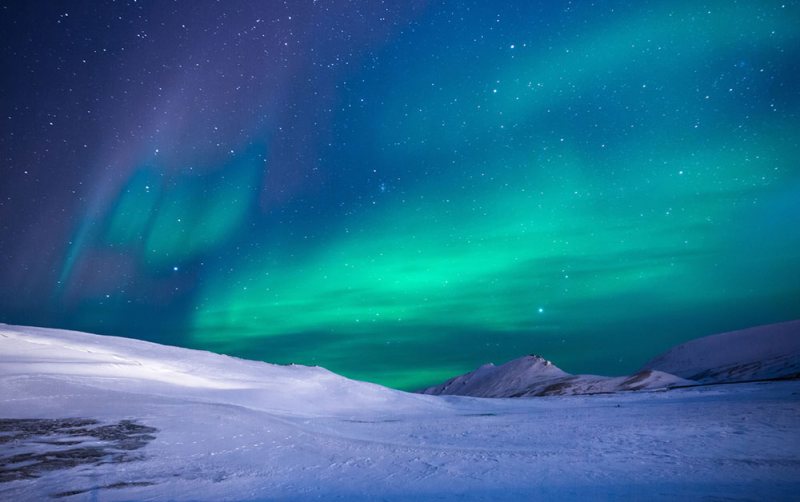
Seeing the night sky dancing during an aurora is on rightly many people’s bucket lists.
Watching solar activity painting the Earth’s atmosphere shades of purple, green, red and white is an unforgettable experience. Aurora hunters often head to northern countries to glimpse this natural phenomenon, to destinations like Iceland or Canada.
But the north’s Aurora Borealis has an equally spectacular but much lesser-known sibling: the Aurora Australis, or Southern Lights.
Skygazers and space tourists take note: Patagonia could be the new destination for Aurora hunters. Here’s why.
What Are the Southern Lights (Aurora Australis)?
The Aurora Australis, or Southern Lights, are essentially the same as the Aurora Borealis, or Northern Lights, just in a different hemisphere.
During an aurora, a natural electrical phenomenon makes streams and luminous blobs of colour, like lights, appear in night skies. This event occurs predominantly around the northern and southern magnetic pole.
The Southern Lights appear over the southern magnetic pole and spread outwards, often as far north as Argentina, Chile, and Patagonia.
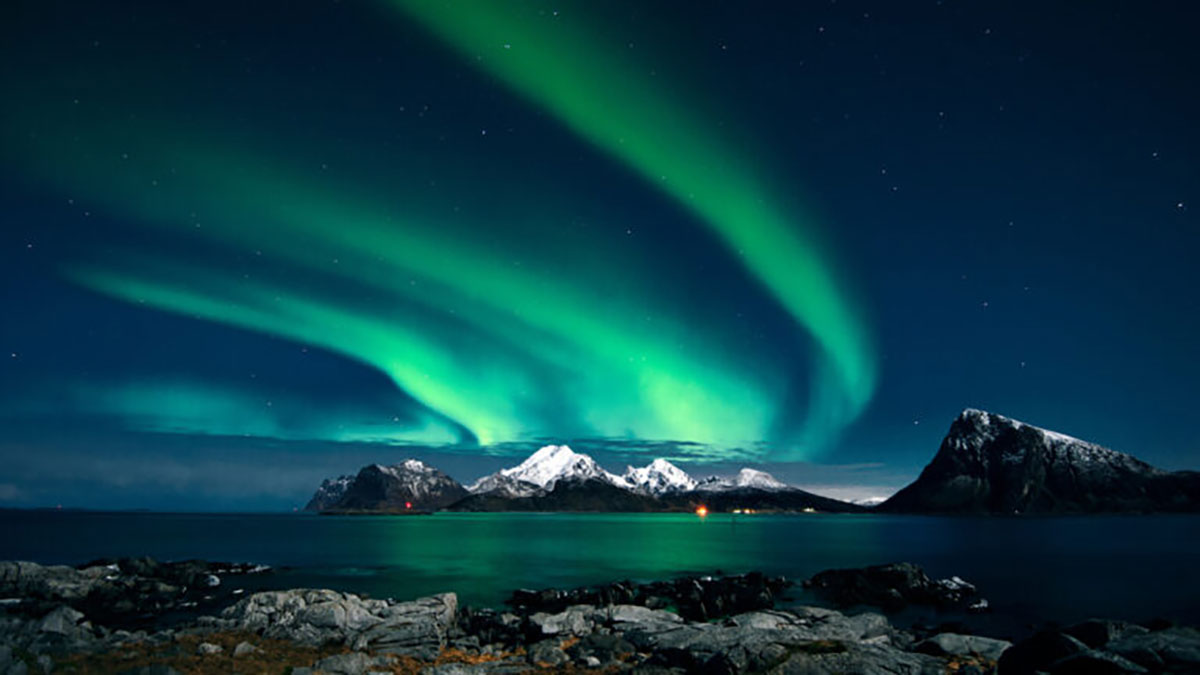
How Do the Southern Lights Form?
The Earth’s magnetic field is strongest at its magnetic poles, the north and south poles. This magnetic force attracts charged particles that have travelled 93 million miles (150 million km) from the Sun to our planet.
These atoms, released during solar flares, penetrate the Earth’s magnetic shield. They then interact and collide with particles in the Earth’s upper atmosphere, some 60-240 miles up (100-400km). During these impacts, the nitrogen and oxygen atoms in the upper layers release the luminous emissions we can see from the surface of the Earth.
Aurora hunters can identify the types of molecules hurtling through the atmosphere by the colour of the light burst, called a photon. Oxygen usually creates white, red, or green colours, while nitrogen is typically responsible for the splashes of purple or blue.
Auroras happen daily; we associate them with winter because we can see them better in winter’s long and dark skies. Summer’s long, bright days near the poles obscure the auroras.
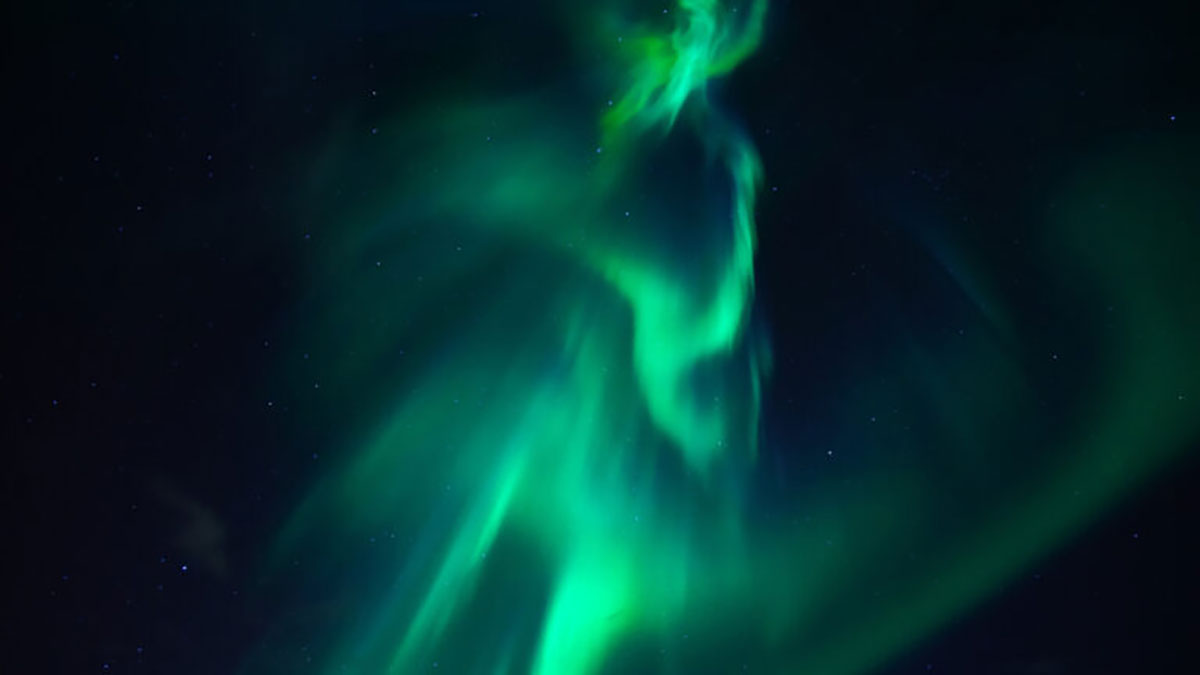
What Colours and Shapes Can You See in the Southern Lights?
People lucky enough to see an aurora may see these rainbow colours:
- Pink
- White
- Orange
- Blue
- Violet
- Red
- Green
- Yellow
Furthermore, there are six principal categories of auroral shapes for spotters to identify. These shapes, which continually shift and transform during an aurora display, are:
- Bands
- Coronas
- Patches
- Rays
- Curtains
- Veils
Auroras are one of nature’s most beguiling shows. So why are the Southern Lights relatively unknown?
When Is the Best Time to See the Southern Lights?
The best time to see the Southern Lights, with the longest and darkest night skies, is during the Austral winter. May to September are the prime months, but they may be seen in the southern hemisphere from March to November.
Where Can You See the Southern Lights?
The Southern Lights may be less well-known than the Northern Lights for a straightforward reason: geography.
Many countries boast viewing points for the Aurora Borealis, from Russia to Canada to Norway. Conversely, the Southern Lights’ main stage is over that most inhospitable of continents: Antarctica.
Antarctica’s vast frozen land mass is a long way from its neighbours; South America, Australia, New Zealand, and various southern ocean islands. However, lucky aurora hunters do have chances to catch the extraordinary Southern Lights at multiple locations.
Of course, gazers need clear skies to see the spectacle. Here are some of the best places to see the Aurora Australis.
Can You See the Southern Lights in Argentina?
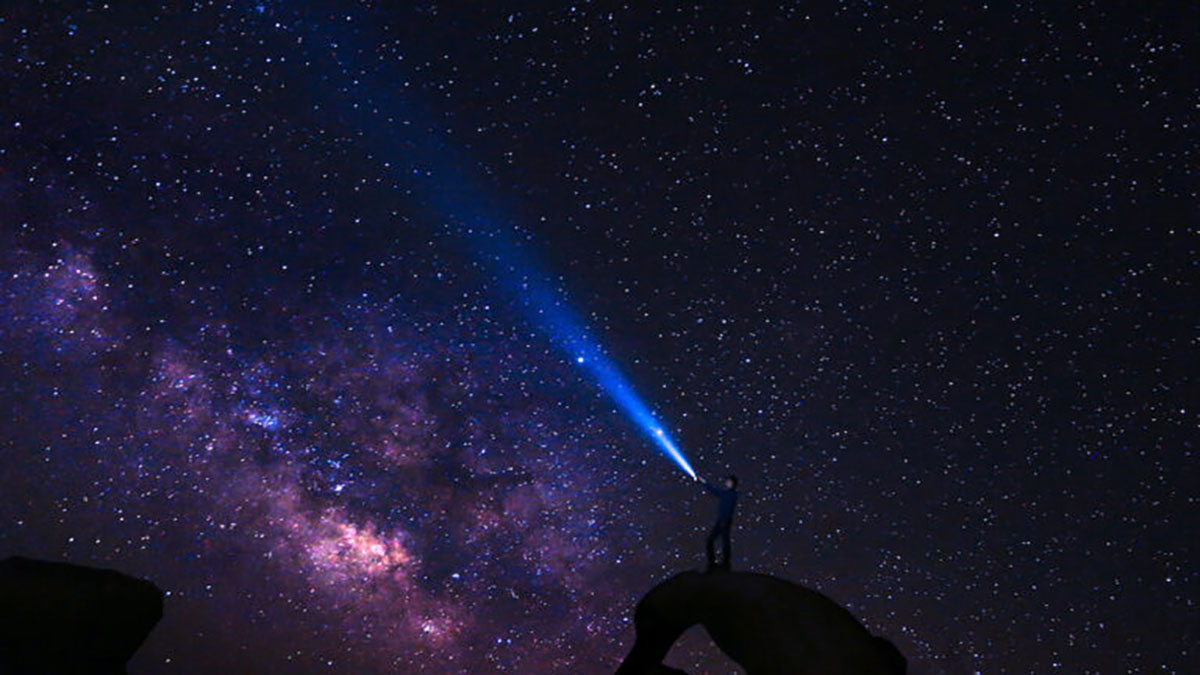
With good weather and the right solar conditions, Patagonia’s skies play host to the Southern Lights. May to July are best, which is winter, with short days and cold temperatures.
Top places to see the phenomenon in Argentina include:
- Ski resorts in the Lake District, such as Bariloche or Ushuaia
- Tierra del Fuego, including staying in Ushuaia
- El Calafate and El Chalten
You’ll need to plan. Many tourist services close down in winter. Be aware that Ushuaia experiences as many as 17 hours of darkness in the depths of winter.
Can You See the Southern Lights in Chile?
Yes, you can see the Southern Lights in Chile. The country runs parallel to Argentina, with the Patagonia region spanning both nations.
The best places to try to see the Aurora Australis in Chile include:
- Ski resorts in the Lake District like Pucón
- Southerly towns like Puerto Williams or Punta Arenas
- Torres del Paine National Park
Lucky guests at the Paine eco-camp caught sight of the Aurora Australis in May 2021 as they drove into the park.
Where Else Can I See the Aurora Australis?
Assuming we discount winter camping in Antarctica, there are some more places you may be able to encounter the Southern Lights.
The Falkland Islands are an excellent spot to see the aurora. The season runs from April to August.
South America’s final aurora base is South Georgia Island & South Sandwich Islands.
Australia has rural Victoria, Mount Wellington, Bruny Island, and Bathurst Harbour in Tasmania. New Zealand promotes Lake Tekapo, Otago Peninsula, and Stewart Island.
How Can I Track the Aurora Australis?
Long-term predictions are almost impossible. Short-term forecasts are more accurate. These sites give solar activity insights:
Southern Lights vs the Northern Lights: FAQs Answered
These natural fireworks displays have similar scientific names. Apart from names, they have plenty more in common.
Aurora Australis, the Southern Lights
Range: Southern hemisphere
Season: April to October
Best time: A few hours after dusk
Locations: Ushuaia, Patagonia, Falkland Islands, New Zealand, Tasmania
Aurora Borealis, the Northern Lights
Range: Northern hemisphere
Season: November to March
Best time: A few hours before dawn
Locations: Canada, Alaska, Greenland, Iceland, Finland, Northern Scandinavia, Northern Russia
A Travel Rarity: Aurora Australis, the Southern Lights
The Aurora Australis is one of South America’s best-kept secrets. If you’re committed, Argentina, Chile, and the Falkland Islands are the best places to try to see it.
Been inspired? Contact us for more.