From: £1,527
From: $2,033
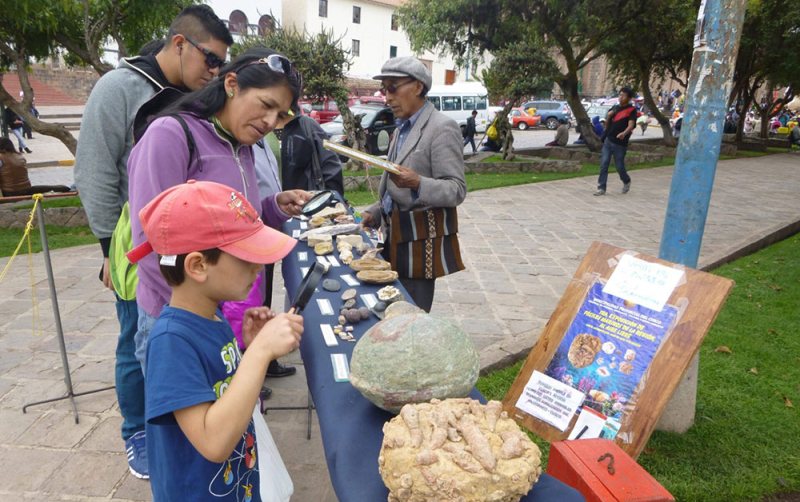
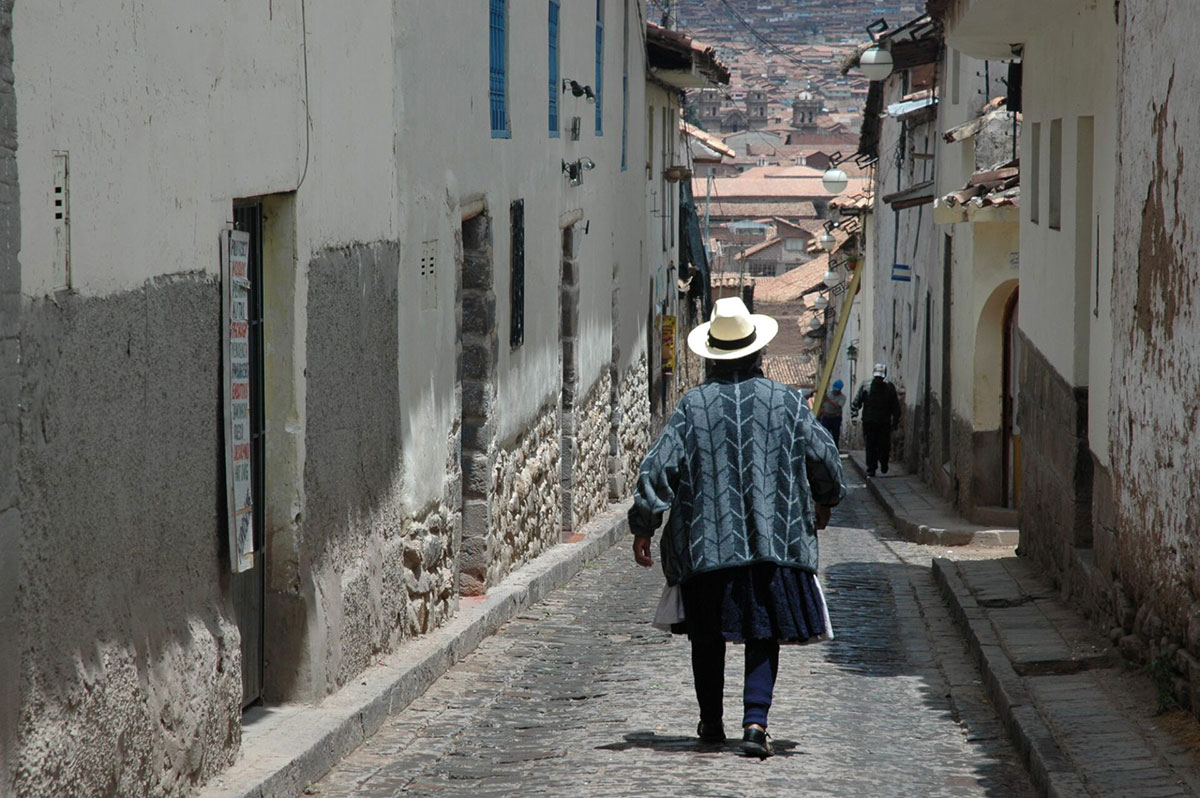
We meet you in Cusco and transfer you to your hotel in town. Once we’ve settled in we explore Cusco on foot with our guide. This is a great way to help us get our bearings and discover the beauty of Cusco, with its lively squares and ancient Incan Walls.
The historic centre of Cusco was declared a World Heritage Site in 1983 and you will find yourself surrounded by Inca and colonial architecture.
We make sure to visit the famous central market San Pedro, which was designed by Gustave Eiffel. Here we can see the variety of Peruvian fruit (from sierra, selva, and costa), crafts, flowers, and more.
It is a great place to buy souvenirs and try delicious fresh juices.
Today we venture out of Cusco and drive to the archeological site of Tambomachay, an ancient Inca water temple (3,700m/12,139ft).
After our visit we make our way on foot from Cusco, on a route that takes us through rural fields and past further monuments that bear witness to the Incan Empire, such a Quenco and Puka Pukara.
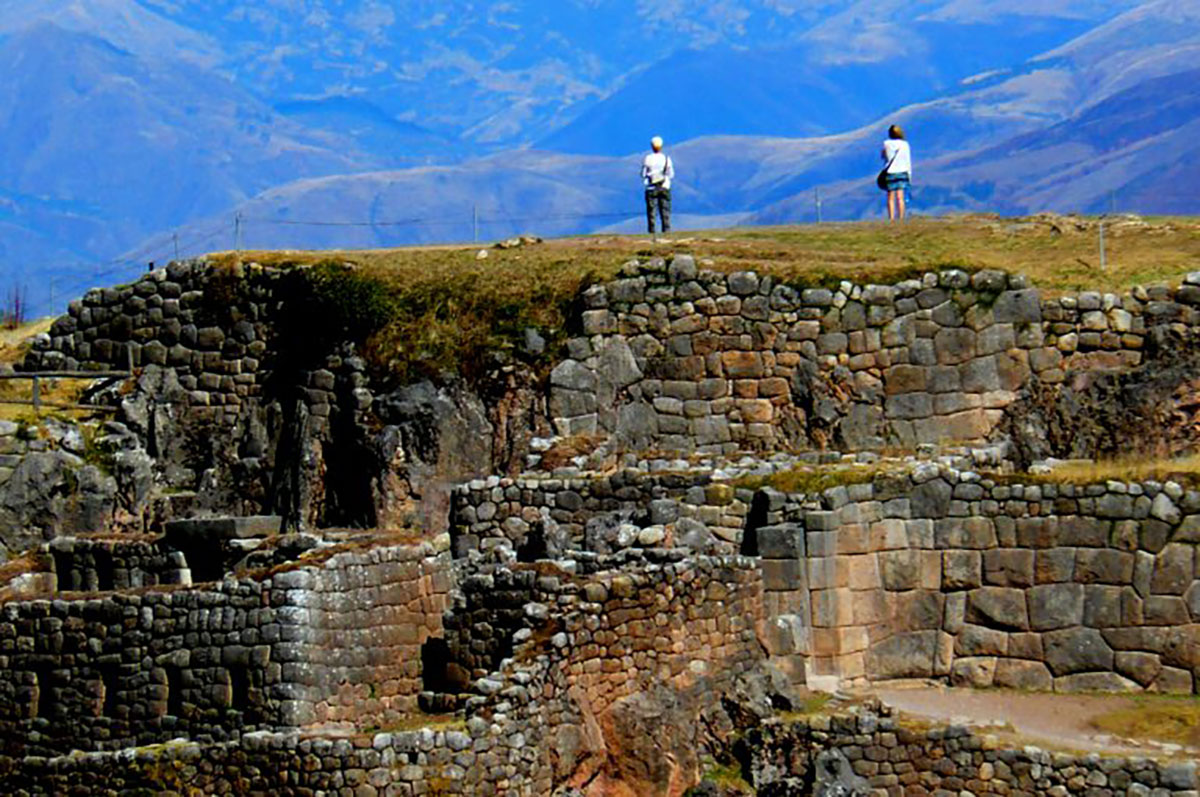
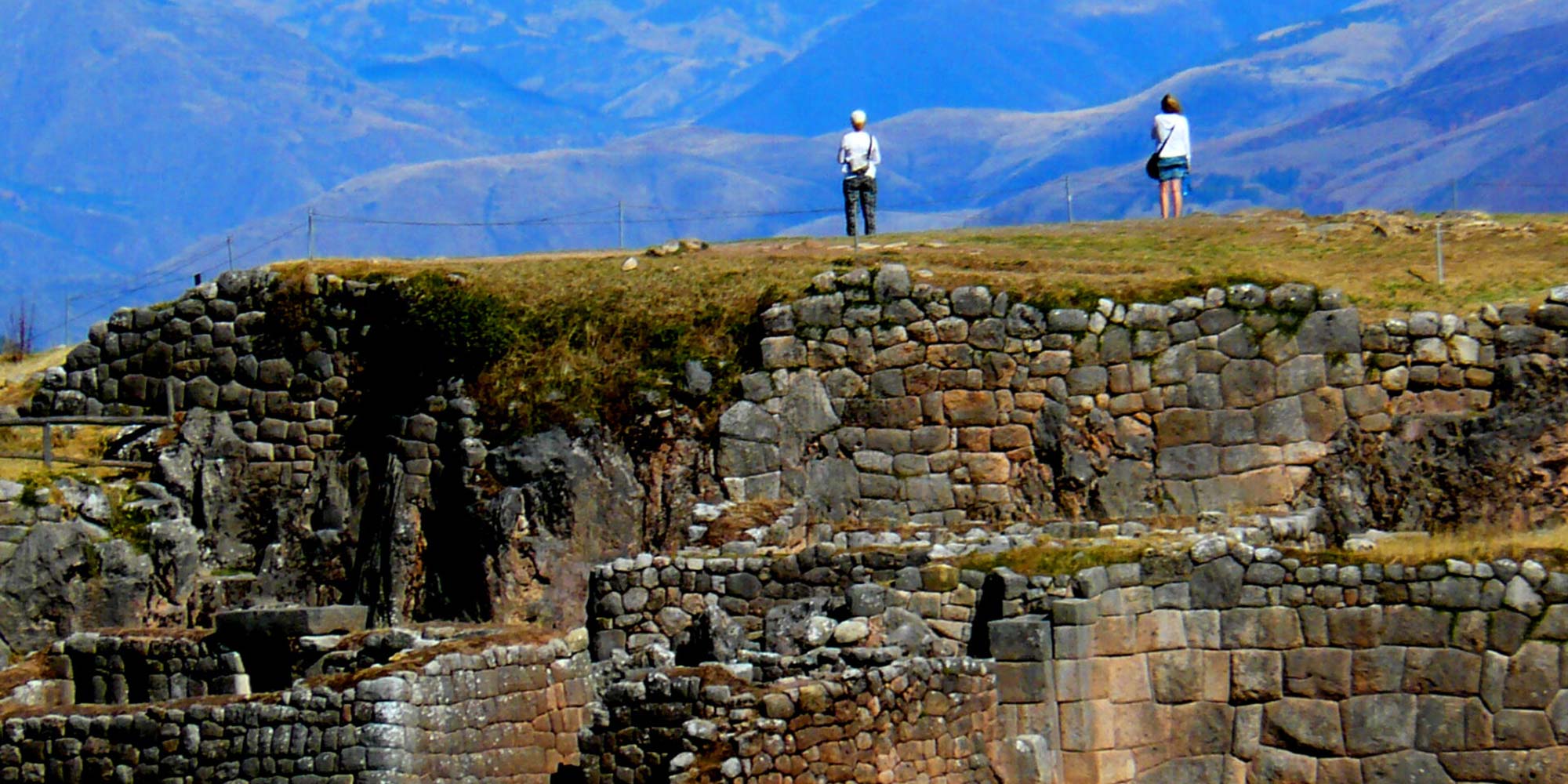
When we reach the outskirts of Cusco we arrive at the impressive Sacsayhuaman ruins. Once battles were fought on this ground, today we can wander amongst the remnants of an enormous amphitheatre.
We arrive back in Cusco, and finish our tour with a visit to its historic Cathedral situated at the magnificent Plaza de Armas.
It’s time to leave the city behind and make for more rural grounds.
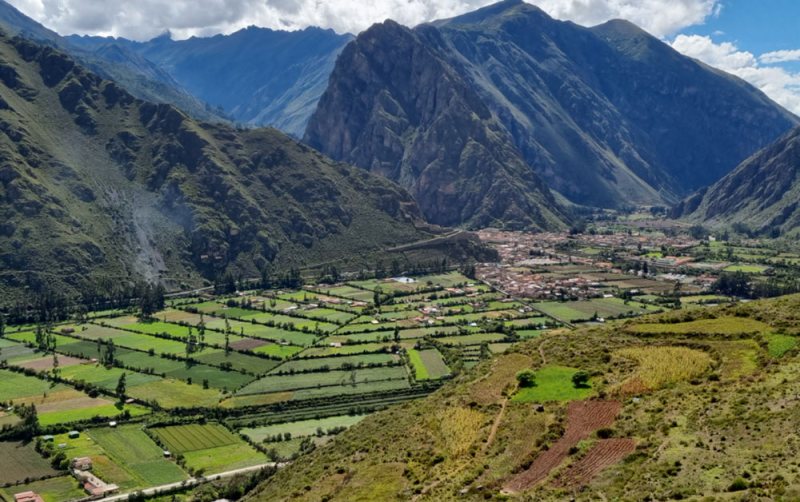
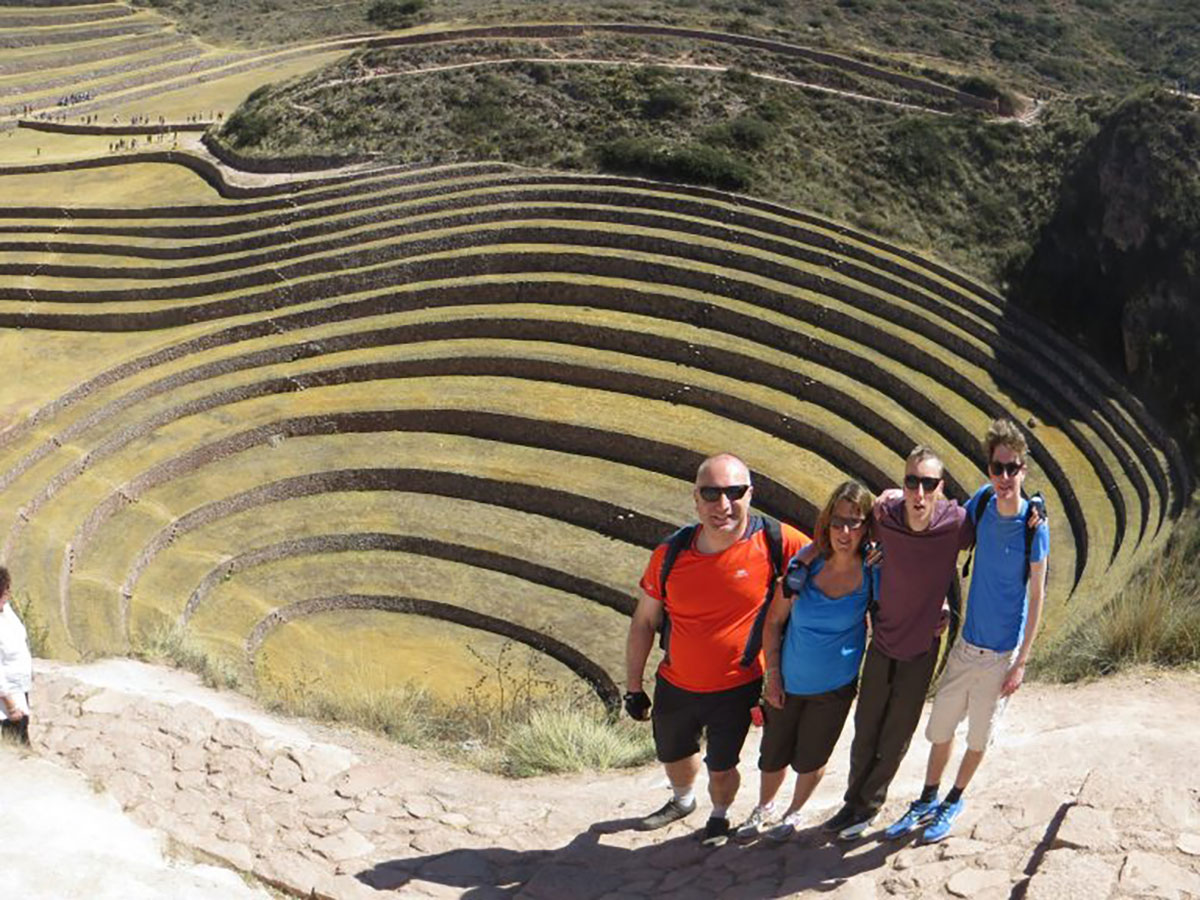
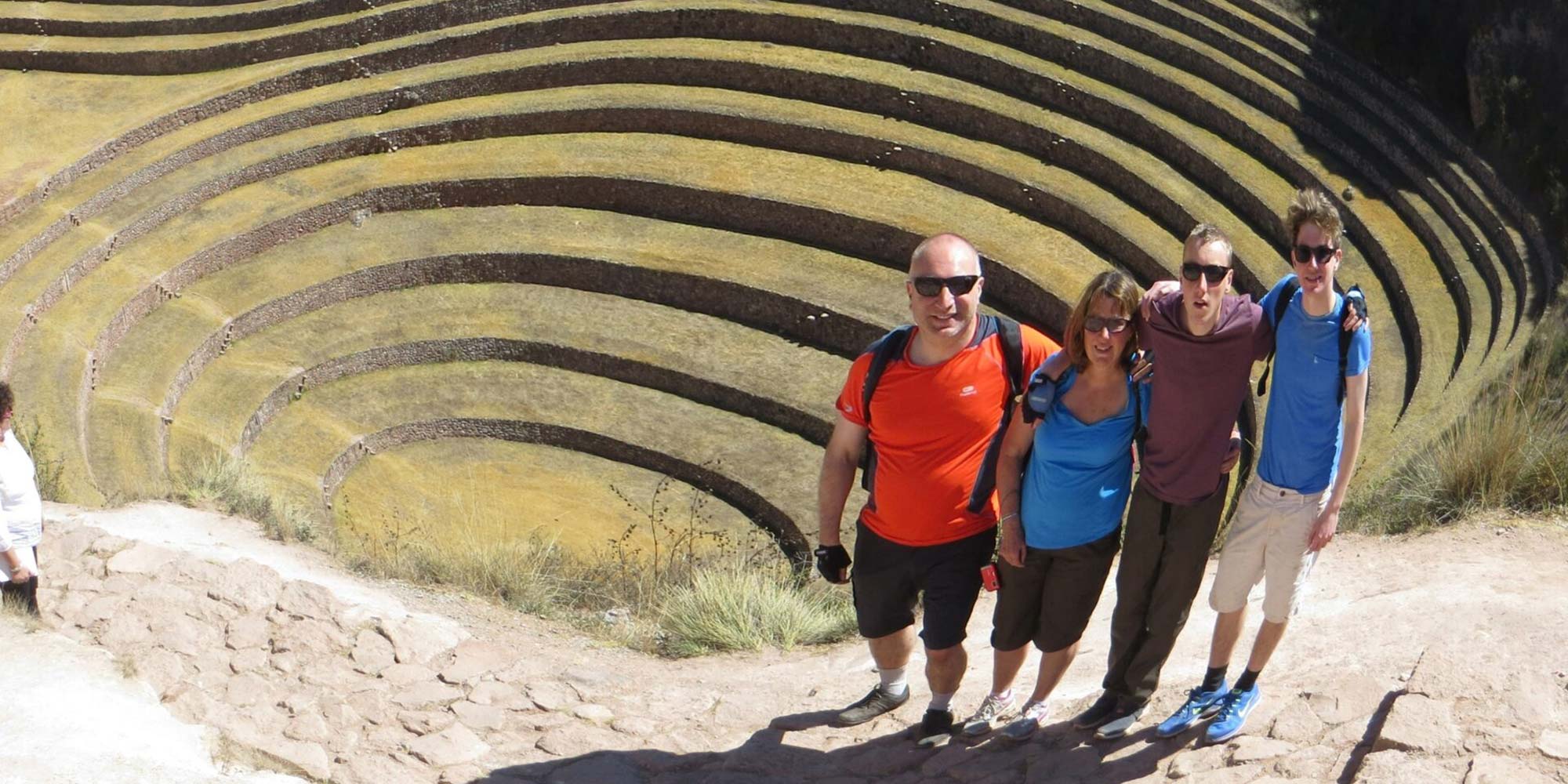
The Sacred Valley awaits and already on our drive we get to enjoy beautiful scenery all round. We reach the Inca site of Moray, which to this day has people guessing its meaning and significance as an experimental agricultural centre of the Inca Empire.
We start our hike here along a pleasant downhill trail. Hiking past local communities and farmland we catch glimpses of the mountains around us – a fabulous view of the Vilcanota mountains to accompany our hike. There are always people working the fields and the communities still very much live the same life of centuries past.
We make our way to the Maras salt mines, where locals extract salt in the ancient way – by hand. The terraces of salt before us, make for great exploration and stunning photos.
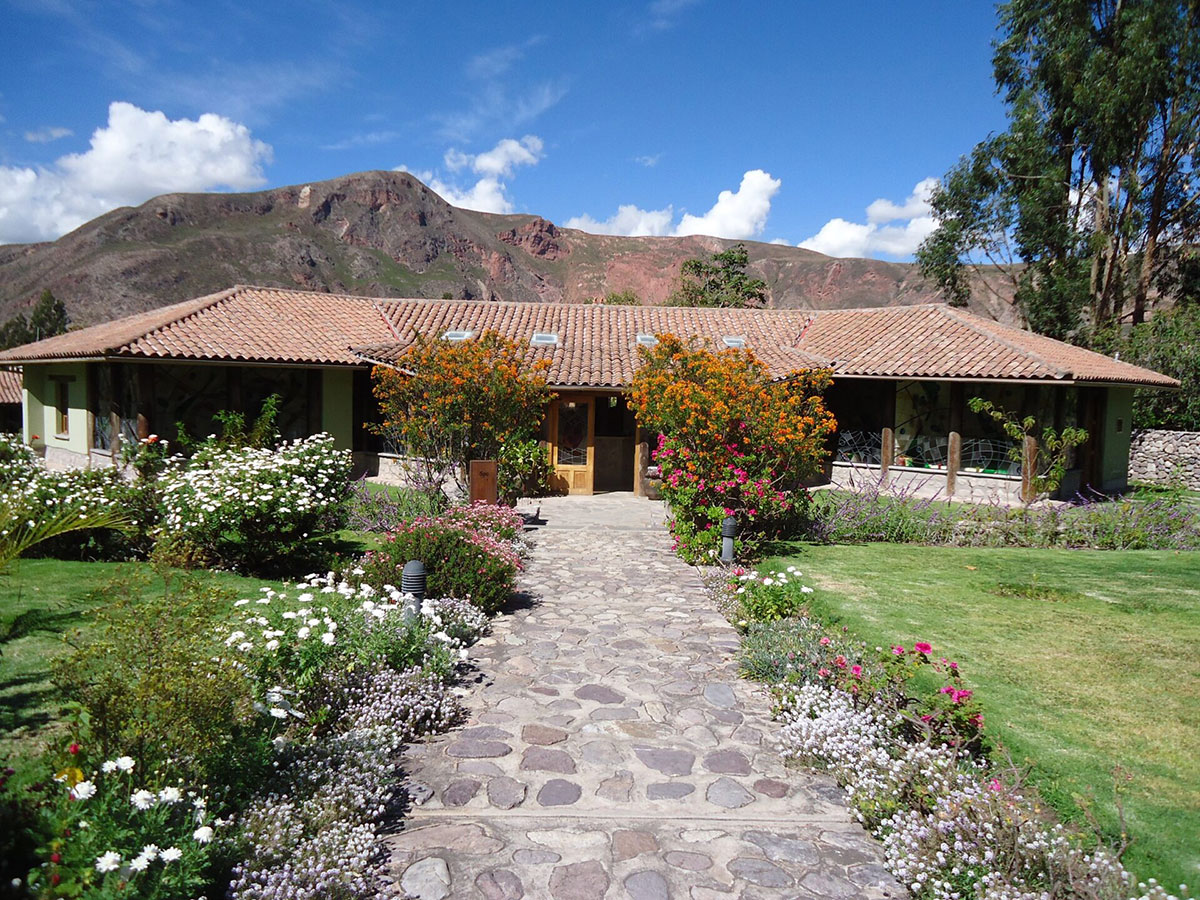
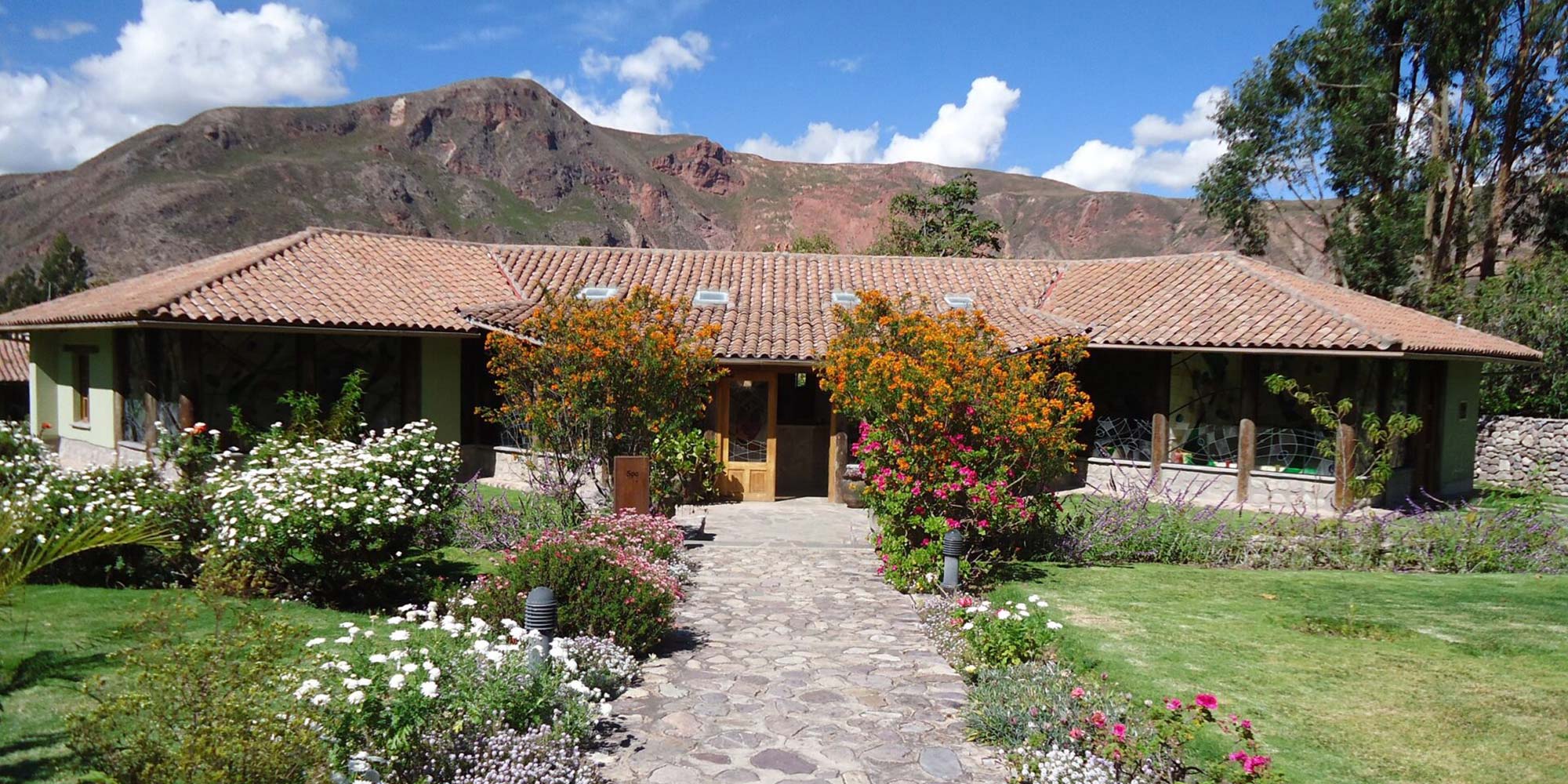
We overnight at a small hostal/hotel with private rooms and bathrooms in the Sacred Valley.
We are off to the market today (please check the best market days with us)!
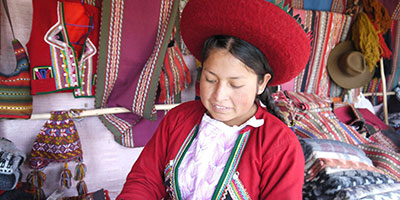
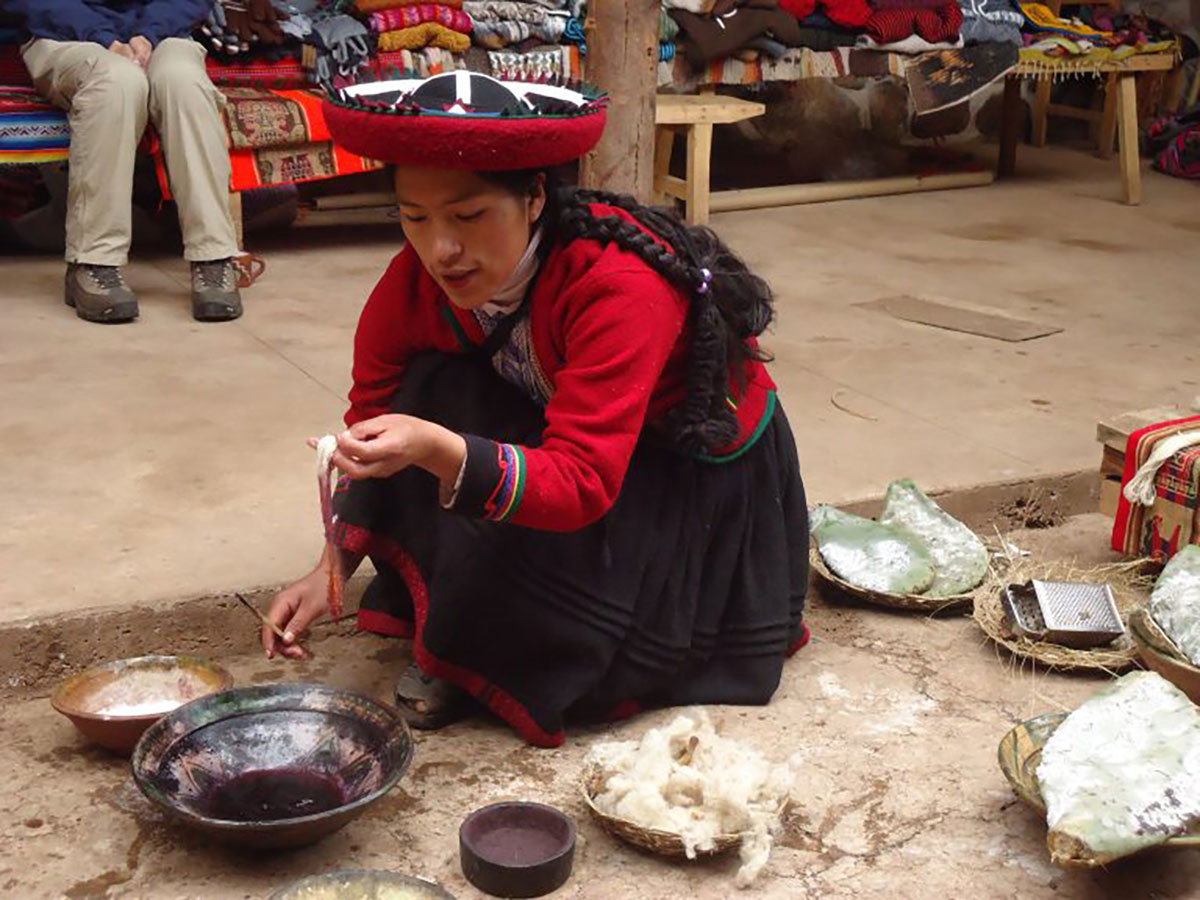
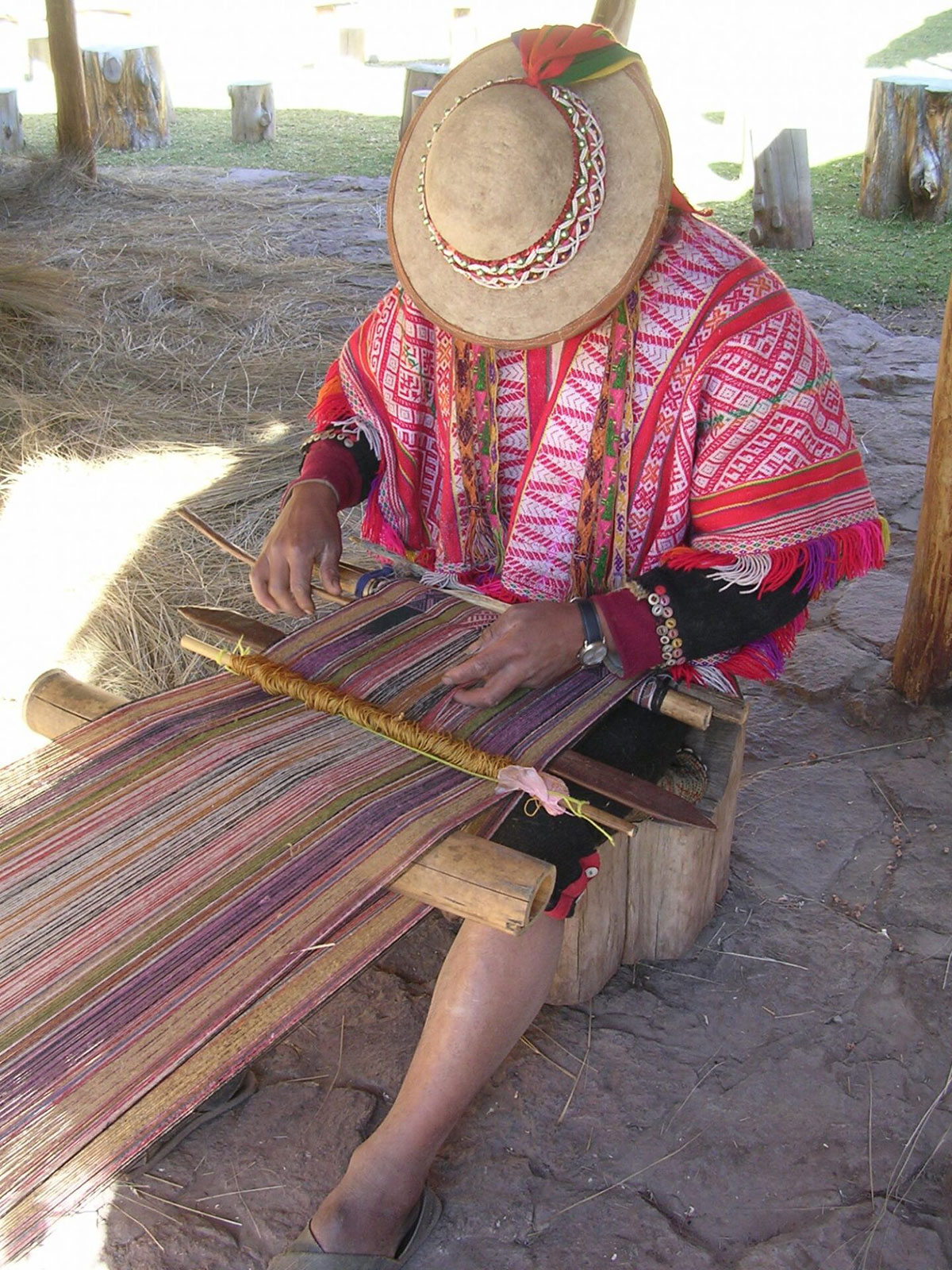
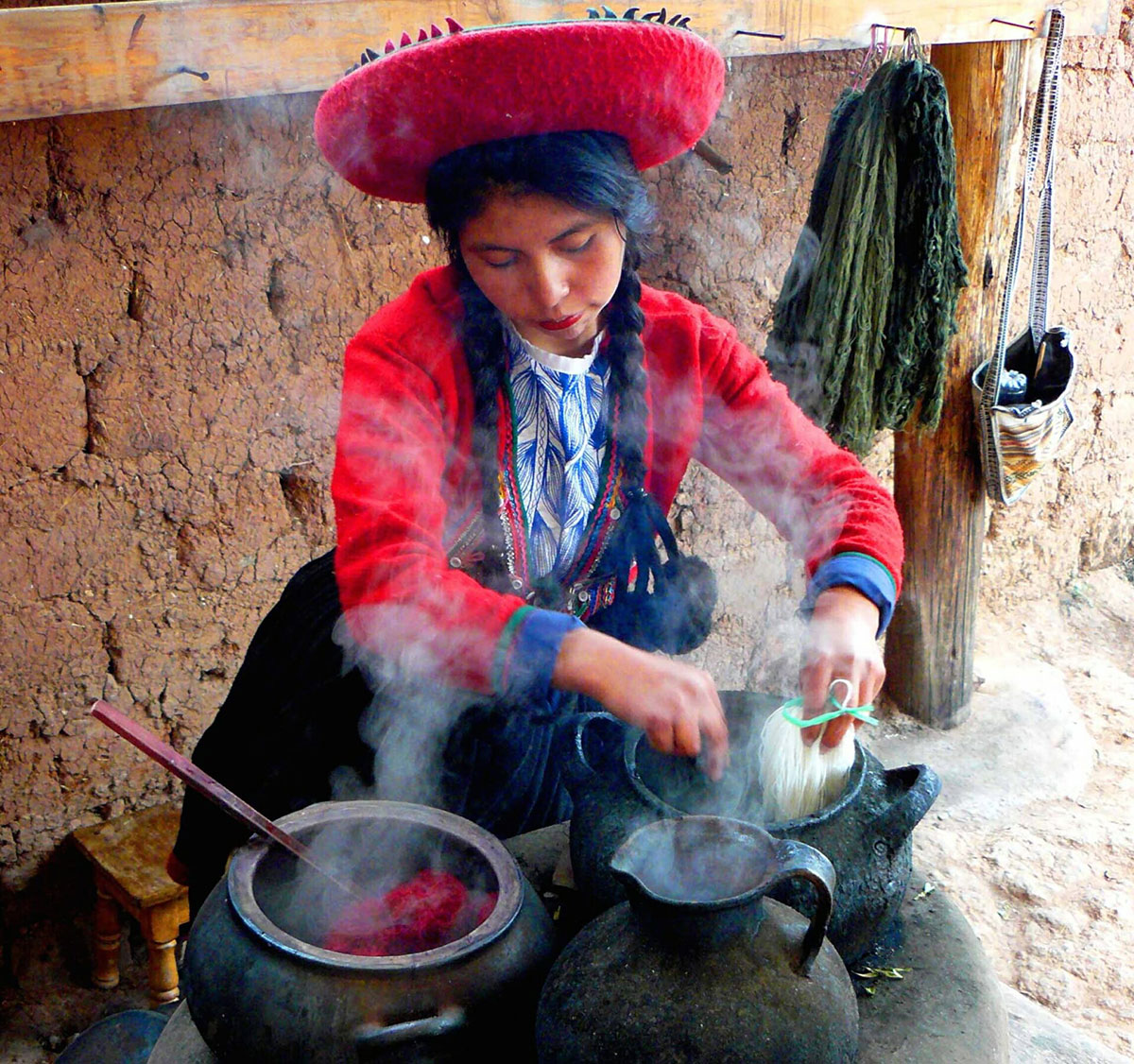
Chinchero is a great town to experience a local market and it’s weaving in particular that is showcased here – with some marvellous products by the local ladies. At the market – and in town – there are usually great displays of traditional, colourful costume.
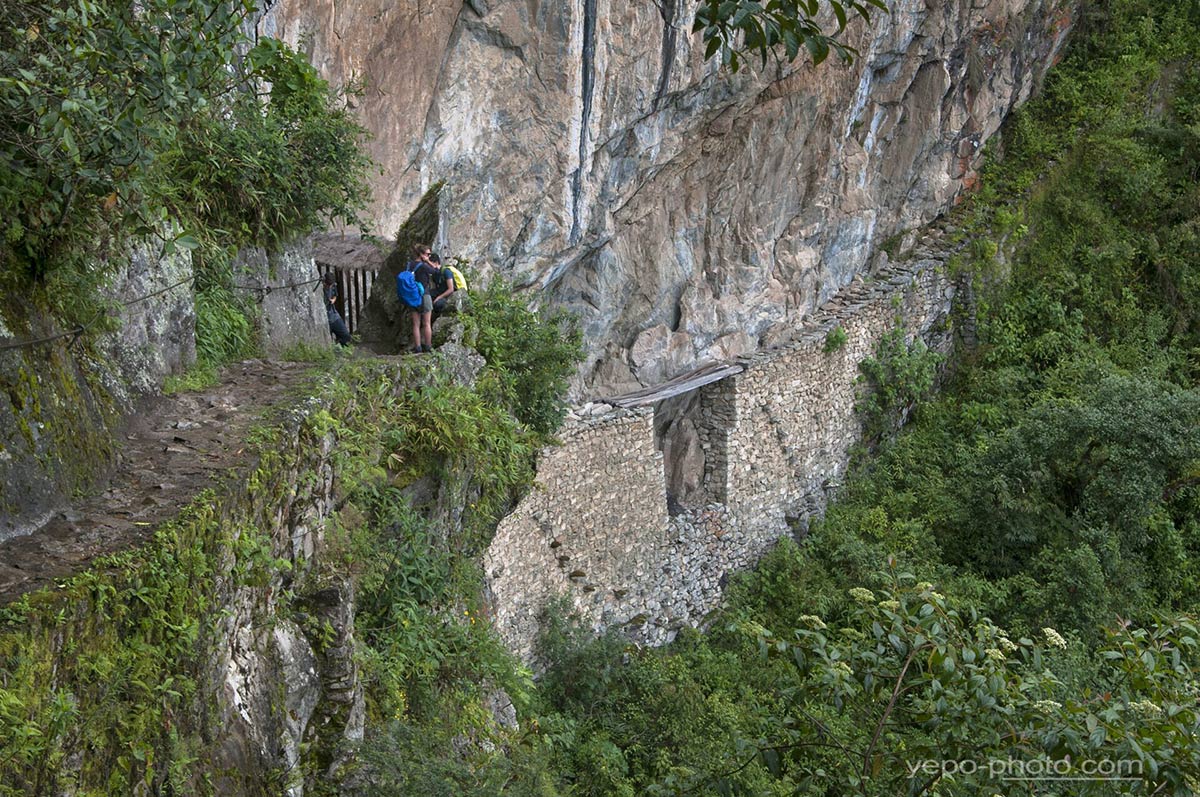
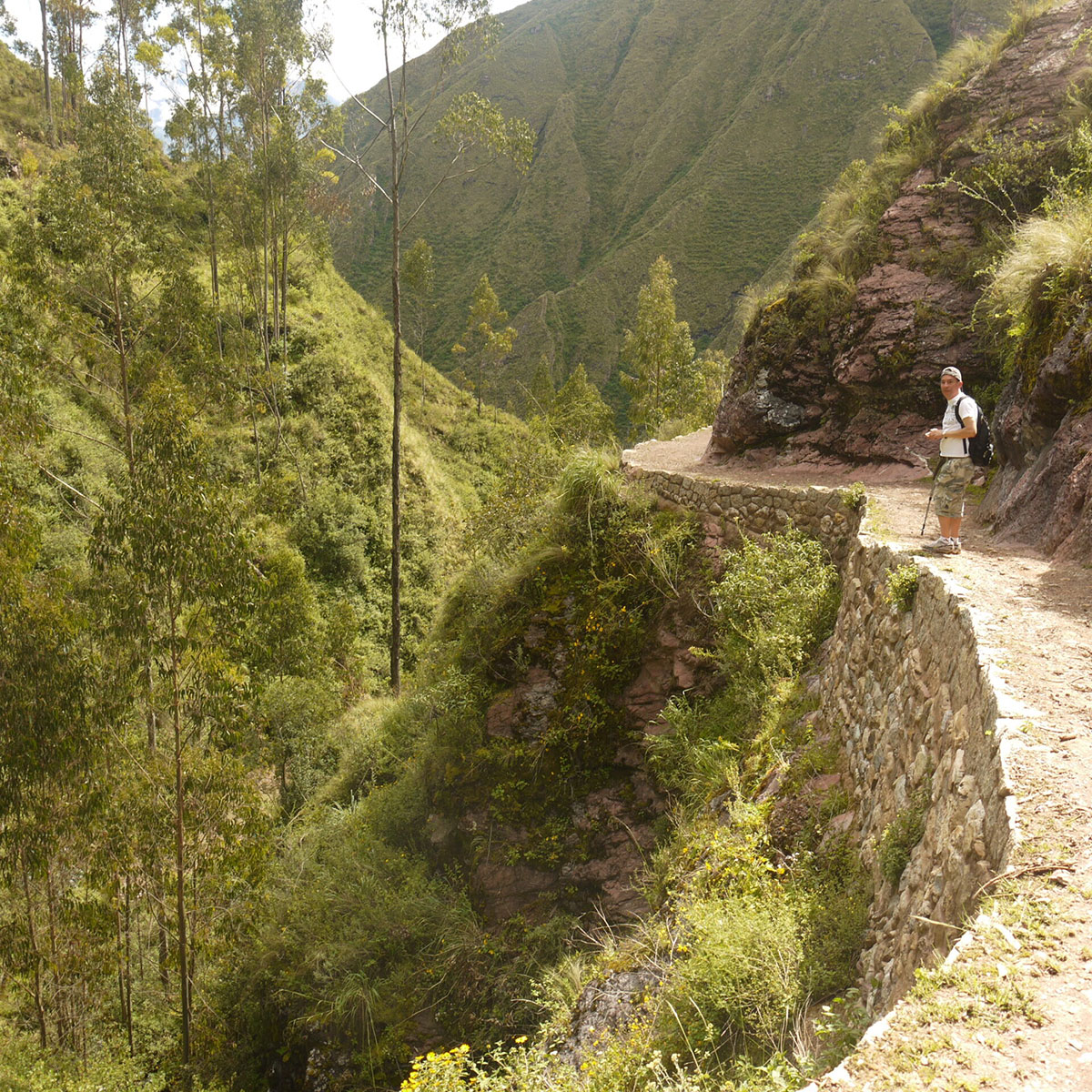
We can’t leave Chinchero without paying its ruins a visit, a great Inca site which is suspected to have been the country retreat of the great Inca Tupac Yupanqui. Our walk leads us from the ruins onto an old Inca path, which winds through the countryside and is very well preserved in parts. Not many trek here and it’s mostly downhill.
We’ll get picked up at the end of our hike and get a lift to Pisac where yet another ancient citadel awaits. There really is no shortage of history here!
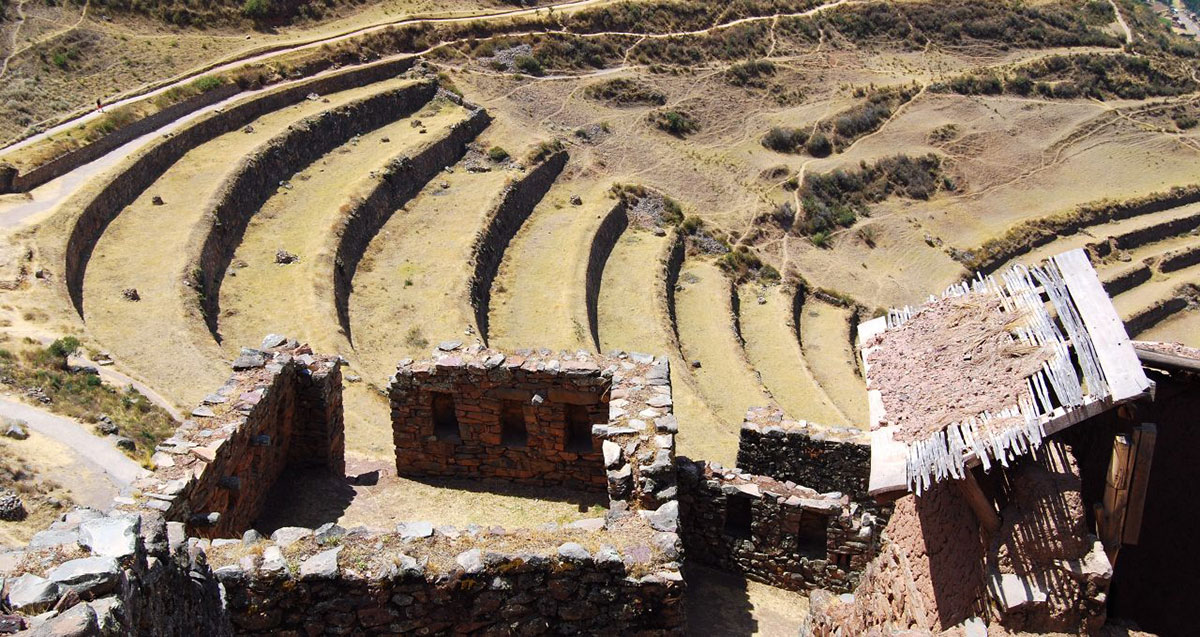
We take a tour of the Pisac ruins, and retire to our hotel afterwards.
Our hike today begins near Willoq, from where we walk to the small archaeological complex at Pumamarca. The origin and purpose of this site remains a mystery, but is thought that it was a control point for water distribution to the Sacred valley below, and also for storage of provisions.
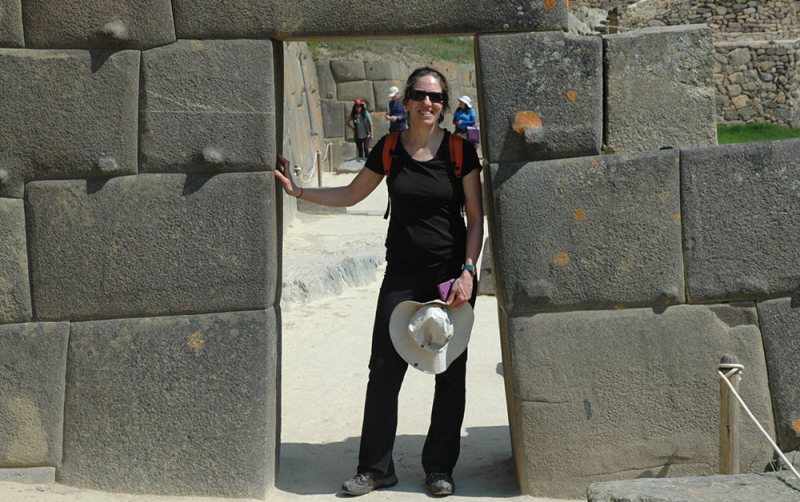
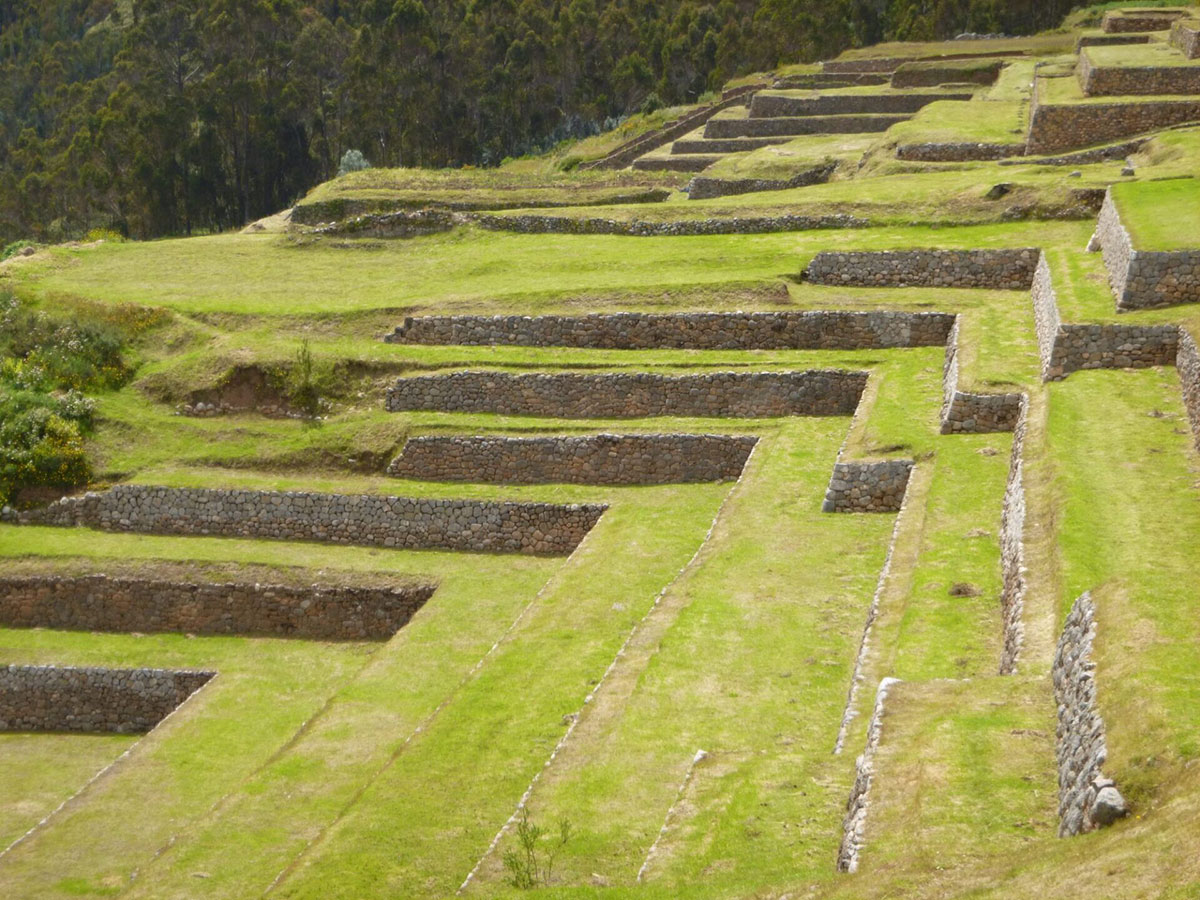
Continuing along some beautifully made Inca trails we observe agricultural terraces and have superb views over the valley below. After walking for approximately 2 to 3 hours we reach the town of Ollantaytambo, where you have the option to visit the impressive ruins and Inca town.
We have a good look around and then will take the train to Machu Picchu Village, or Aguas Calientes as it is still commonly known.
While a lot less scenic than other villages around, Aguas Calientes does sit in a great location, surrounded by hills. There is plenty going on, and a wide range of restaurants and bars to choose from.
We suspect you might want to visit the hot springs too, to soak your tired muscles!
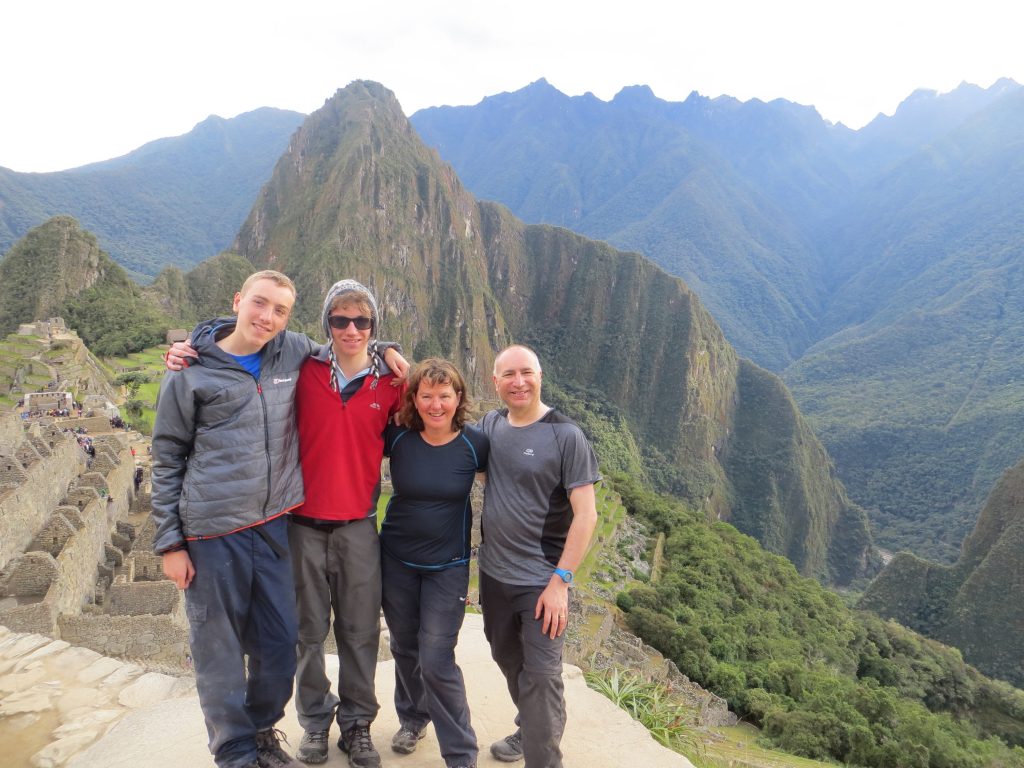
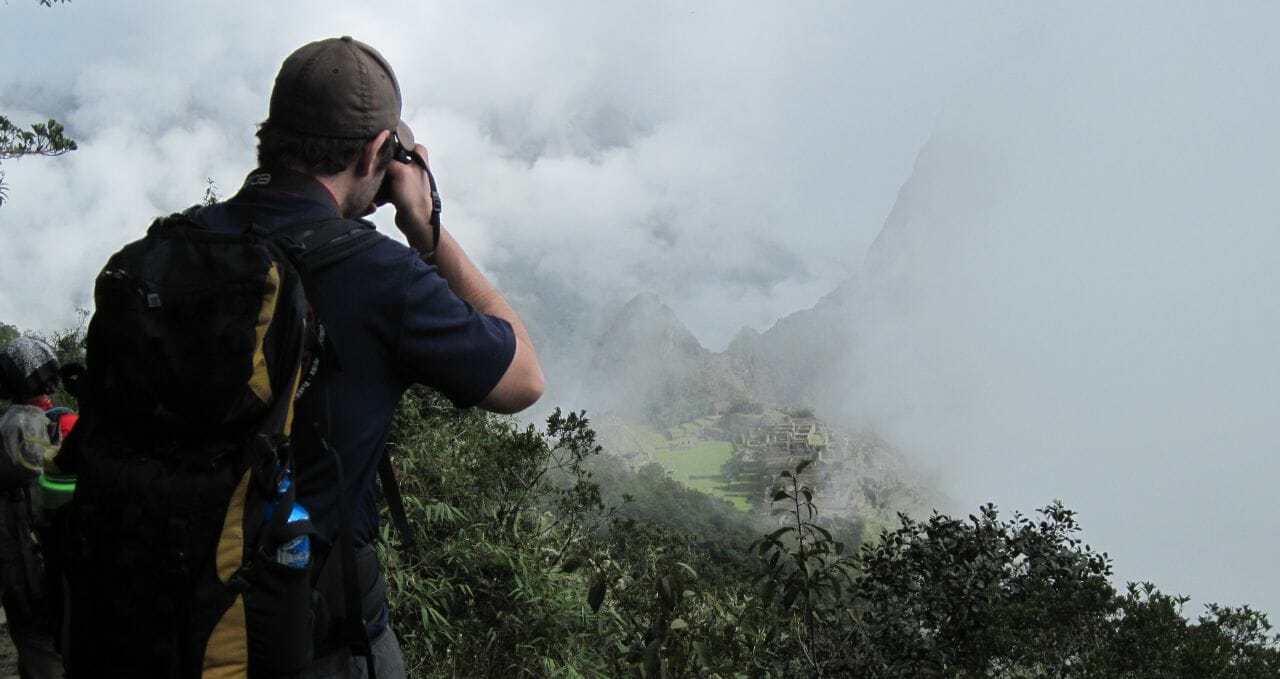
Today is the day for exploring Machu Picchu. An incredible site, re-discovered in 1911 by Hiram Bingham and one of the New Seven Wonders of the World. We shall take a guided tour but leave plenty of time to explore the site on our own too.
For those who want to walk a bit more, you could take the hour long trail up to the Sun Gate, or include a hike up Huayna Picchu or Machu Picchu Mountain (permit required, please ask us for details).
In the afternoon we catch the bus down to Aguas Calientes, from where a train (and bus) returns us to Cusco.
Tours ends with a transfer out.
For those with more time we can offer you extensions to the Amazon rainforest, Lake Titicaca, Colca Canyon and Arequipa or even to the little visited northern Peru.
Hotels are 2-3* with private bathrooms – upgrades available at extra cost.
The majority of the trip is open to people of good mobility and health. We build in acclimatisation, and the first tours are not physically strenuous.
We grade this as an easy to moderate trek because of the high altitude and consecutive trekking days.
Trekkers ideally need to be used to walking while carrying a day pack and ideally accustomed to walking several days in a row.
However, it is also open to first time trekkers who are in good physical shape, and there is the possibility for people to take rest days while others walk.
Almost all dietary requirements can be catered for – please ask us for more information.
Breakfasts at hotels will feature teas, coffees and juices to drink, plus cereals, fruit, eggs, toast and jams etc.
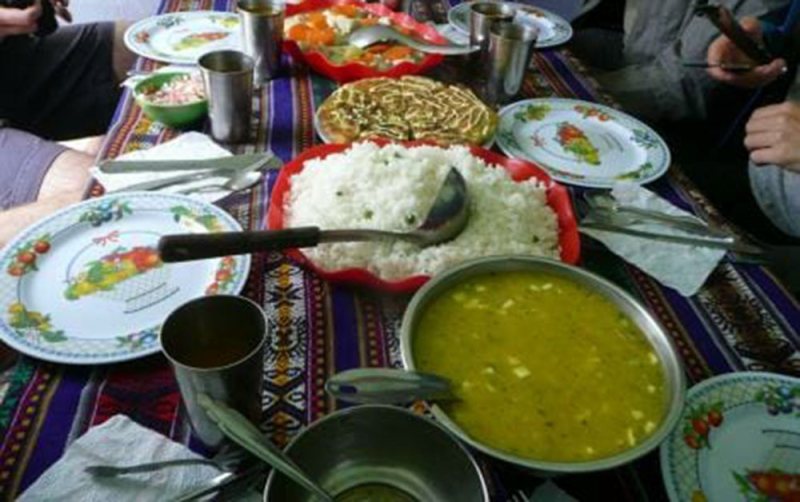
While out on tours, we either supply a packed lunch of sandwiches, snacks, soup, fruit etc, or we eat at a local restaurant. These are often buffet style with soups, rice, pasta, potatoes and then puddings/fruit.
Evenings are often free for you to choose to eat in a local restaurant. Bigger towns have international and local Peruvian options.
In Cusco you will meet our local man on the ground, and he’ll answer any questions with a pre-trek briefing.
Our local, bilingual Peruvian guide with many years’ experience will be your trekking guide. You may also meet local guides with specialist knowledge at certain points (e.g. Machu Picchu).
An extraordinary Inca Trail trek in Peru, marked by outstanding guides, incredible food, and unforgettable memories.
A seamless journey from the jungles of Manu to the heights of the Inca Trail, with fantastic guides and a perfect stay at Cusco’s charming Amaru Hotel.
Includes hikes along the Sacred Valley and Machu Picchu.
We start by taking our carefully chosen day hikes along trails in and around Cusco, visiting Inca ruins and enjoying lovely Andean views.
As we acclimatise to the high altitude, we head off further into the Inca’s ancient world.
Every day you set off on a hike with no camping as we return each night to comfortable local hotels.
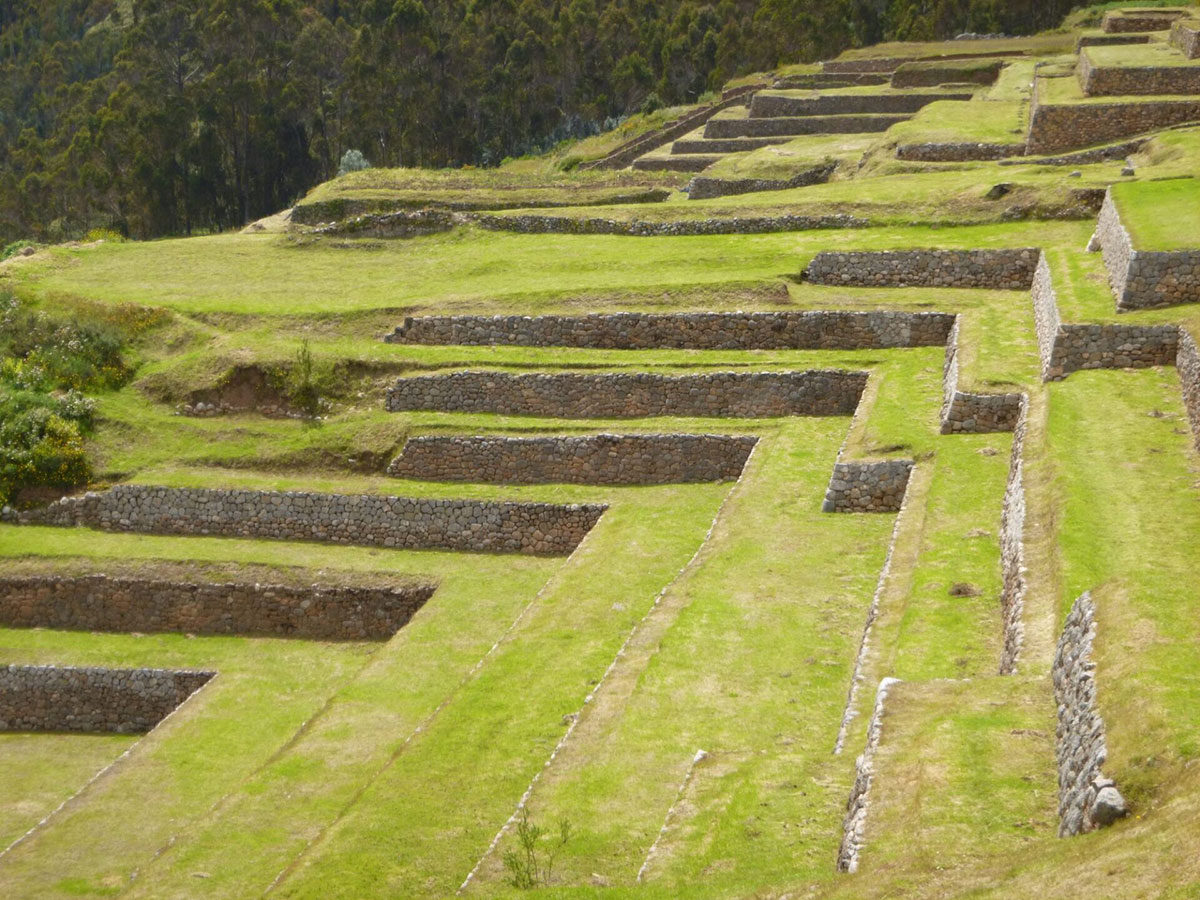
We’ll be hiking little known Inca Trails, seeing Inca sites and learning about Peruvian culture, both past and present.
The trails take you off the beaten track, away from the tourist trail giving you the chance to experience the Peru that lies beyond the crowds.
We finish this wonderful walking week with a tour of Machu Picchu, the ultimate Inca citadel found to date.
From: $3990 per person
Duration
7 days

From: $1237 per person
Duration
4 days
Peru is made up of 3 distinct geographical areas: the coast, the mountains and the jungle.
The costa or coastal region is a narrow ribbon of desert 2,250 km long, crossed by fertile river valleys flowing from the Andes. It takes up 11% of the country and holds more than 40% of the population.
The cold Humboldt current gives rise to a blanket of mist – the garua – which hangs above coastal cities like the capital Lima from May to November.
Heading east, you’re soon climbing above the garua and into the Andes. The sierra, or mountainous region, covers some 25% of Peru’s territory and contains 50% of the population. The sierra inhabitants are mainly Indigenous or Mestizo, and many still speak Quechua or Aymara.
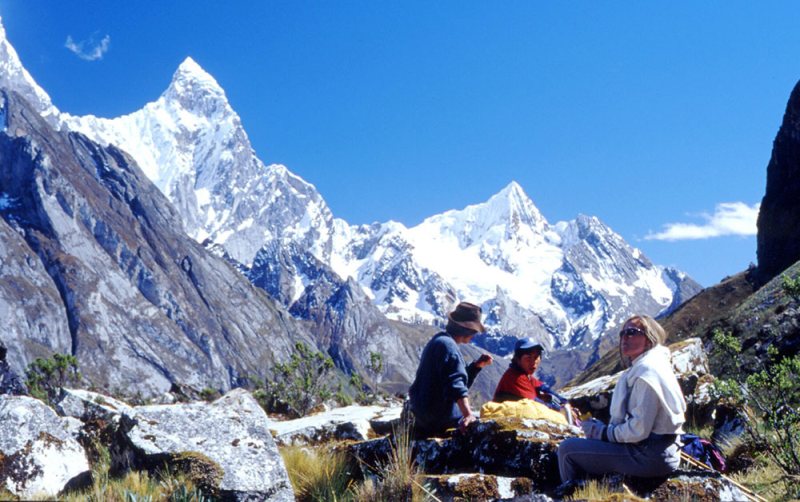
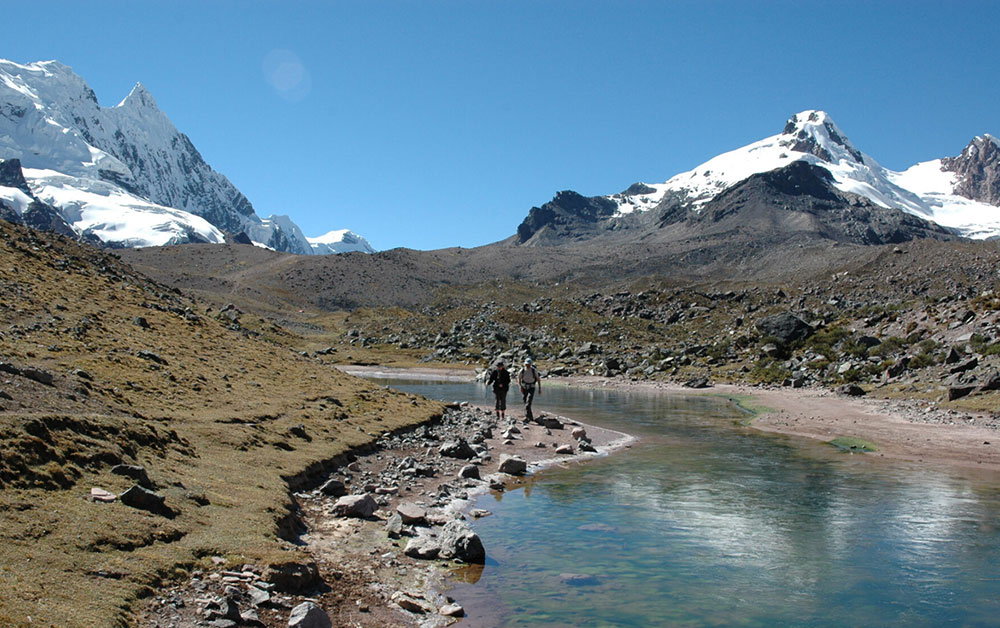
The sierra contains dozens of 6,000-metre snow peaks and volcanoes, including Huascaran (6,768m) the highest mountain in the tropics. The deep valley basins contain most of the towns and arable land; the terracing and canal systems of the Incas and pre-Incas are often still used today.
The eastern Andes are heavily forested up to 3,350m and sweep down into the Amazon Basin.
Peru’s selva or jungle makes up almost two thirds of the country’s area, but holds only about 6% of the population: the only towns with significant populations are Iquitos and Pucallpa.
Peru is the perfect holiday destination for adventure travellers that want an amazing variety of activity, geography and cultural travel experiences.
The breadth of travel experiences in Peru is breathtaking – from trekking in the Andes to Machu Picchu to the tropical jungle of the Amazon, and plenty in between.
The people of Peru make it a special destination too, with its colourful and traditional street life and friendly locals.
Good kit is vital for every trip.
Book with Andean Trails and get 15% off Páramo’s fantastic ethical and high performance outdoor gear.
When planning for the climatic conditions encountered in the High Andes, layering is the most practical and versatile clothing system. It’s worth remembering that our clothing keeps us warm by retaining and isolating the heat we ourselves create.
To best maintain body heat, several layers of lightweight, warm and quick-drying clothing are far more efficient than one or two thick layers. Layers should have the following qualities:
First (base) layer: This layer wicks the sweat away from our skin, thus helping keep the body dry and warm. To this end, synthetic fabrics such as polypropylene should be used.
Mid layers: These isloating layers should also be synthetic (e.g. the known polar linings such as polartec or windblock, which are light and insulate twice as well as wool). Very important layers for retaining body heat.
Outer layer / shell: Finally, the vital layer which protects us from climatic adversities. A breathable, wind-proof and waterproof anorak, such as Goretex.
Give plenty of thought to kit selection, and try to keep weight down. Below is a more detailed guide.
You can also read about the weather of Peru in our blog.
You can also read about the weather of Peru in our blog.
Peru is located in the southern tropics (latitudes 0º to 18º), but climate varies significantly according to season, altitude and region.
From May to October, Lima is often overcast, but with minimal precipitation. There are sunny spells, and it’s a fresh to pleasant 13-20ºC.
At the same time, inland areas and the north coast mid to high 20’s ºC.
November to April is generally warm and sunny and Lima enjoys warm temperature of 19-25ºC, with the coast averaging 22-30ºC.
Climate depends largely on altitude. As a rule of thumb, below 2,000m climate is mild and above 2,000m warm clothing is required for evenings, nights and early mornings.
The Andean sun is very strong.
Cusco (3,300m): Average max/min temps: 22ºC /2ºC. Average 3 or 4 wet days per month.
Arequipa (2,380m): Average max/min temps: 26ºC /9ºC. Sunny more than 340 days/year with minimal precipitation.
On highland treks: Conditions are generally dry. However, at this time of year, expect a range of conditions within a single day: cold/freezing nights at camps above 4,000m, where pre-dawn temperatures can be -5ºC; warm, spring-like mornings and afternoons; and cold evenings.
Note that mountain weather can be fickle and localised, and that precipitation is not unknown in the dry season. Expect temperatures to swing between sun and shade, sheltered and exposed ground and with altitude gain and loss. A quick-setting sun means temperatures drop fast.
In the cloud forest, e.g. around Machu Picchu, daytime conditions are generally warm or hot, and evenings cool.
Cusco: Average max/min temps: 23ºC /6ºC. Average 13 wet days per month.
Arequipa: Average max/min temps: 25ºC /14ºC.
On highland treks: Wetter conditions, with cooler days and milder nights than dry season. Jan-Mar usually the wettest months.
Year-round, weather conditions are hot and humid and there is always the risk of rain.
There is a ‘dry season’ in Tambopata and Manu between May and October. The average daytime high temperature is between 25°C and 34°C and the average nighttime low is between 16°C and 22°C. Heavy downpours typically occur every few days.
Around 80% of annual average rainfall – approx 2,000 mm in Manu and Tambopata and 1,400 mm in Iquitos – occurs in the wet season Nov-April.
On rare occasions, between May and September, cold fronts from Argentina – ‘friajes’ – can sweep into southwest Amazonia and push temperatures down to 9°C. (Friajes usually last between 1 and 3 days).
An extraordinary Inca Trail trek in Peru, marked by outstanding guides, incredible food, and unforgettable memories.
A seamless journey from the jungles of Manu to the heights of the Inca Trail, with fantastic guides and a perfect stay at Cusco’s charming Amaru Hotel.