The Galapagos Islands are a year round holiday destination – our guide will help you pick the best time to visit and weather for your holiday.
Each season brings new natural marvels to the fore, and whenever you go, there will always be an abundance of animals and something happening – on land or sea!
Galapagos seasons
There are two marked seasons in the Galapagos. It’s worth remembering that they are tropical islands and always fairly warm and whenever you go to Galapagos, there is always a lot happening.
See our month by month weather and climate guide further below.
Jan-June – warm season
- Warmer, wetter season
- Sunshine and chance of showers
- Warm days (22-32°C/72-89°F)
- Calm seas (around 20°C/70°F)
- February and March the warmest
- Great for snorkelling
Jul-Dec – cooler season
- Dryer, cooler season
- Morning mist (garua) burns off during the day
- Fresher days (but still warm) at (15-22°C/60-72°F)
- Cooler, sometimes choppier seas (15-22°C/60-72°F)
- Fantastic marine life
- Great snorkelling, wetsuit needed
More about Galapagos weather and climate
The warm season (Jan-Jun)
The warmer months begin with the arrival of the warm Panama current, which brings with it calm, warm waters (around 20°C/70°F) and sunny days (22-32°C/72-89°F). February and March are the hottest and sunniest months with blue skies and sunshine.
The islands receive slightly more rainfall during these months, occasional heavy bursts in the afternoon, although most of the lower elevations stay quite dry.
Great for snorkelling and you can spend a lot of time in the water without wetsuits, with great, clear waters.
Late March and April there is an explosion of blossom and many birds are mating, plus turtles nest on beaches.
The dry ‘garua’ season (Jun-Dec)
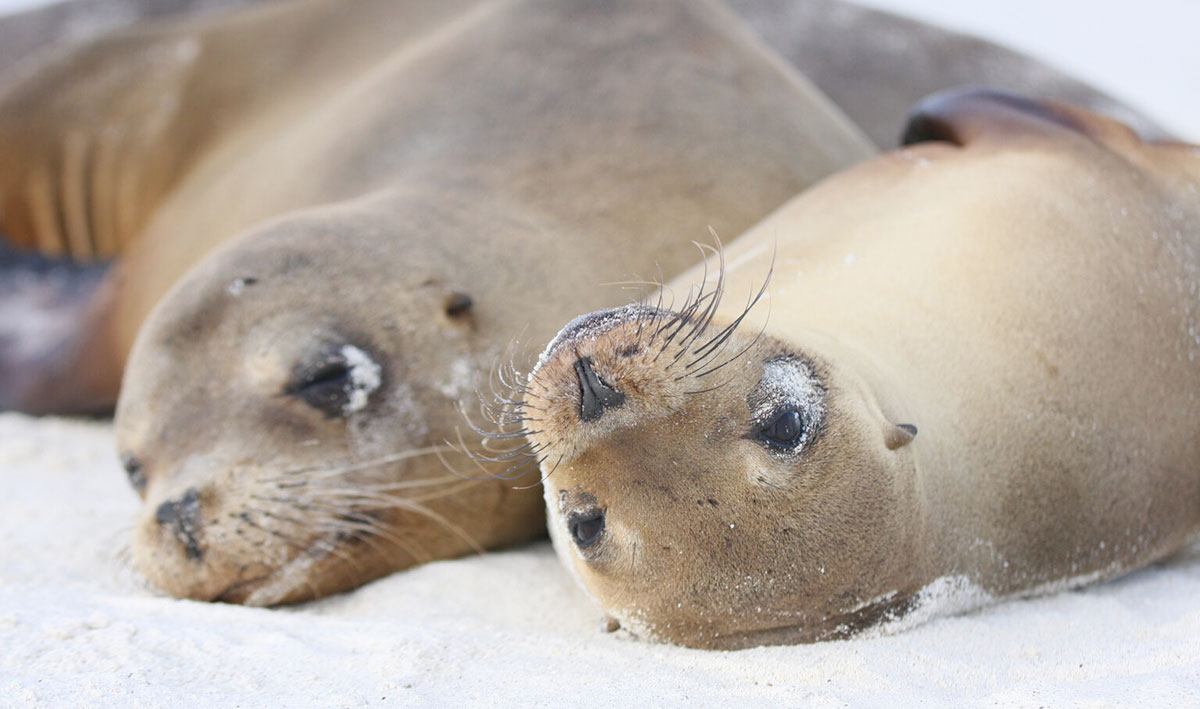
From May/June to December are the cooler drier months, all of which is relative as the islands are on the equator and are almost always pretty warm. It’s a great time for marine life as the plankton rich waters attract a multitude of marine life – and sea birds looking for a fish for supper.
The change in season is caused by the presence of the Humboldt Current. August and September are the coolest months when you may need a jacket in the evenings and the sea can be choppy, with temperatures dropping to around 15-22°C/60-72°F on average.
There can be mist on the islands in the mornings (garua) which usually burns off by midday leaving overcast skies or a sunny afternoon, and little rain in the lowlands, but considerable garua and rain in the highlands.
Sea temperatures may drop to 15-22°C/60-72°F during this time and snorkellers will want a wetsuit for prolonged periods in the sea. Almost all boats and trips provide these or have them available for rent and are recommended so as to get the most from your trip.
Seas and currents
The climate in the islands is strongly influenced by the presence of oceanic currents: the relatively cold Humboldt Current and the warm tropical current from the Gulf of Panama. These currents converge north of the islands, but the meeting point moves south from January to April and the warmer current flows round the islands.
Highlights month by month
January
The first month of the year is a busy month for the wildlife, and is the start of the rainy season. Generally sunny days with a chance of tropical afternoon showers as both the air (29°C/84°F) and sea temperature begin to rise (23°C/74°F), and an ideal time for snorkelling.
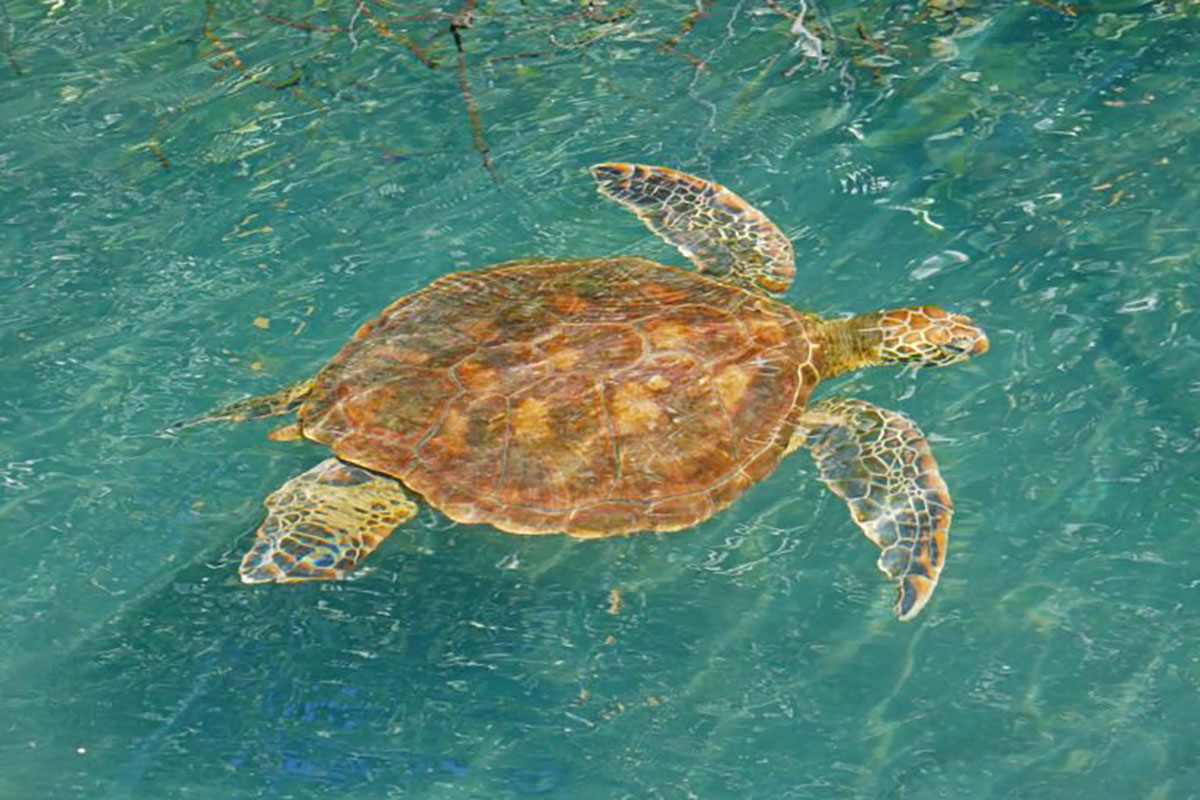
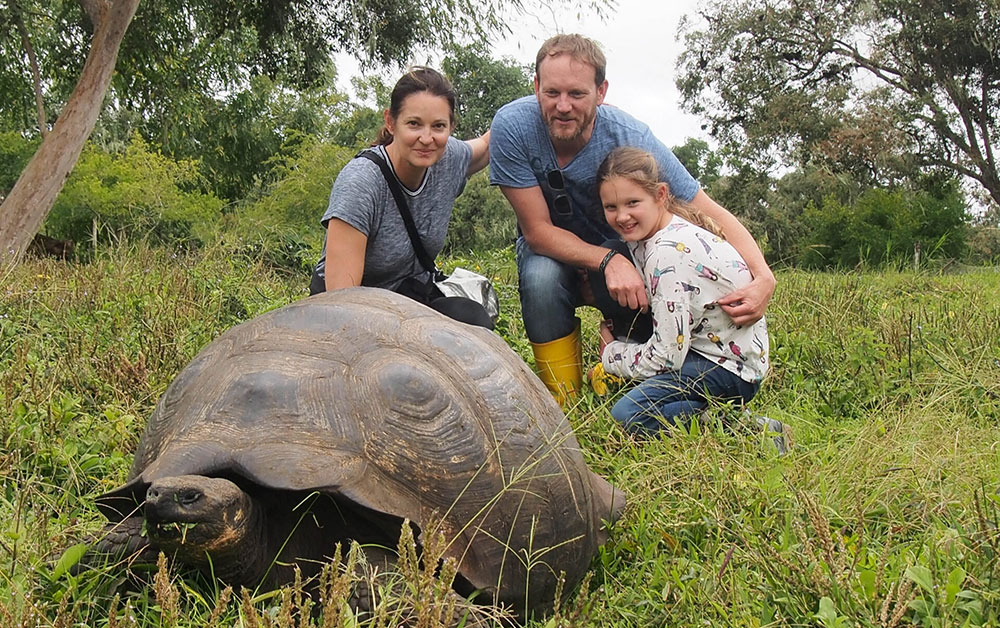
Sea turtles begin to beach to lay eggs, while on land the Giant Tortoise eggs are hatching. Many land birds start to nest and adult male marine iguanas on Española Island become brightly coloured to attract mates (green, red and black).
February
Follows January’s temperature lead, albeit slightly warmer – so warm in fact that the penguins migrate from Bartolome to the cooler waters of Isabela and Fernandina.
Lots of nesting: Great flamingoes on Floreana, Nazca boobies on Hood, marine iguanas on Santa Cruz and the Galapagos dove too. The Giant tortoise eggs are still hatching and the warm temperatures will last until April.
March
March is the rainiest month of the year in the Galapagos, with an average of two inches of rain, but it falls sporadically and not everywhere every day. It can be hot and humid. Snorkelling takes the edge off the heat and is excellent, with warm waters making it all the way to the western islands – a prime time to snorkel. You may see penguins next to tropical fish!
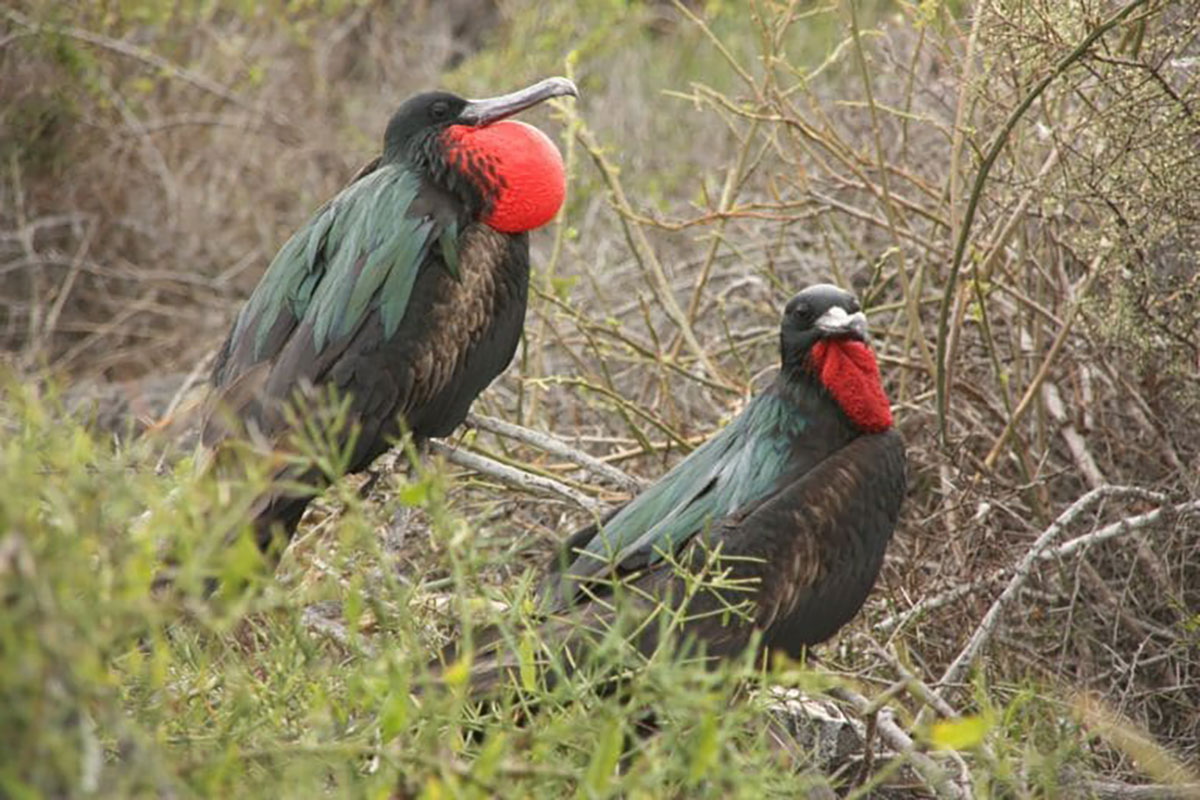
The summer equinox signals the arrival of the waved albatross to Española and the frigate birds can be seen inflating their red throat pouches on San Cristóbal and Genovesa Islands as their mating season begins.
Some shores, especially those facing the north side, can receive deep surge (ola de fondo) coming from the northern currents. Wet landings at places like Puerto Egas, Gardner Bay and Bartolome can sometimes be a challenge.
April
Along with May, one of the best times for Galapagos – good snorkelling visibility, weather, air and sea temperatures and lots of wildlife activity. Tropical afternoon rains can occur but the temperatures are starting to cool (relatively) and the downpours are much less.
The impressive mass arrival of waved albatrosses – plus their courtship – starts on Española and lasts through to mid-December. Coupled with the mating dance of the blue-footed boobies on North Seymour, and the frigatebirds showing their red pouches on Genovesa and San Cristobal, it’s lively!
The eggs laid in January by the green turtles start to hatch, as do the land iguana eggs on Isabela.
May
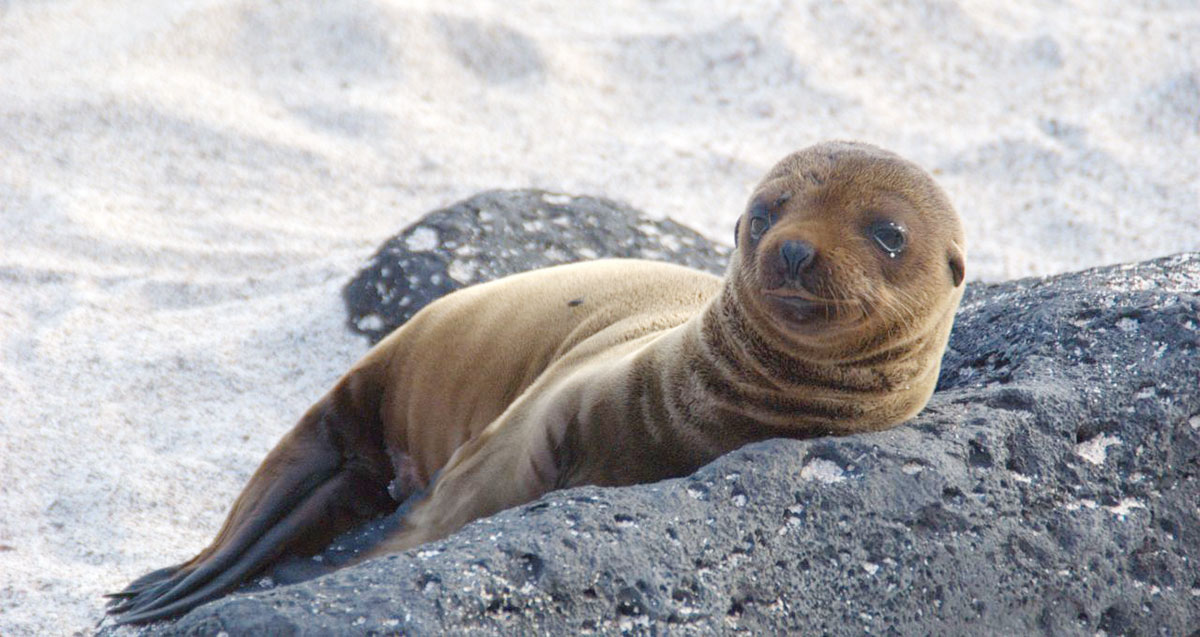
There’s less than an inch of rain in May, a great month to visit the Galapagos, with pleasant air and sea temperatures. Galapagos sea lion pupping begins, as does the mating season – they mate from May-December and the pups are born a year later.
On North Seymour the blue-footed boobies perform their mating dance, while sea turtles are still hatching on Gardner Bay, Punta Cormorant, and Puerto Egas. There is more hatching action for marine iguanas on Santa Cruz and egg laying by waved albatross on Española. The Palo Santo trees begin to shed their foliage while the band-rumped storm petrels begin nesting.
June
Big animal time! The garua season starts and air temperatures head to a comfortable 20-24°C/70-75°F. Whale sharks can sometimes be seen in the north western islands and some groups of Humpback whales migrating along the coast of Ecuador make it to Galapagos (June-Sept). Sea lions continue to pup.
On land the Giant tortoises on Santa Cruz come down to the lowlands to look for nesting sites. There is hardly any rain but plenty of bird action as many migratory birds rest here. The currents start to move, creating plankton rich seas teeming with wildlife. There are also many red pouches displayed by male Magnificent Frigatebirds on North Seymour.
July
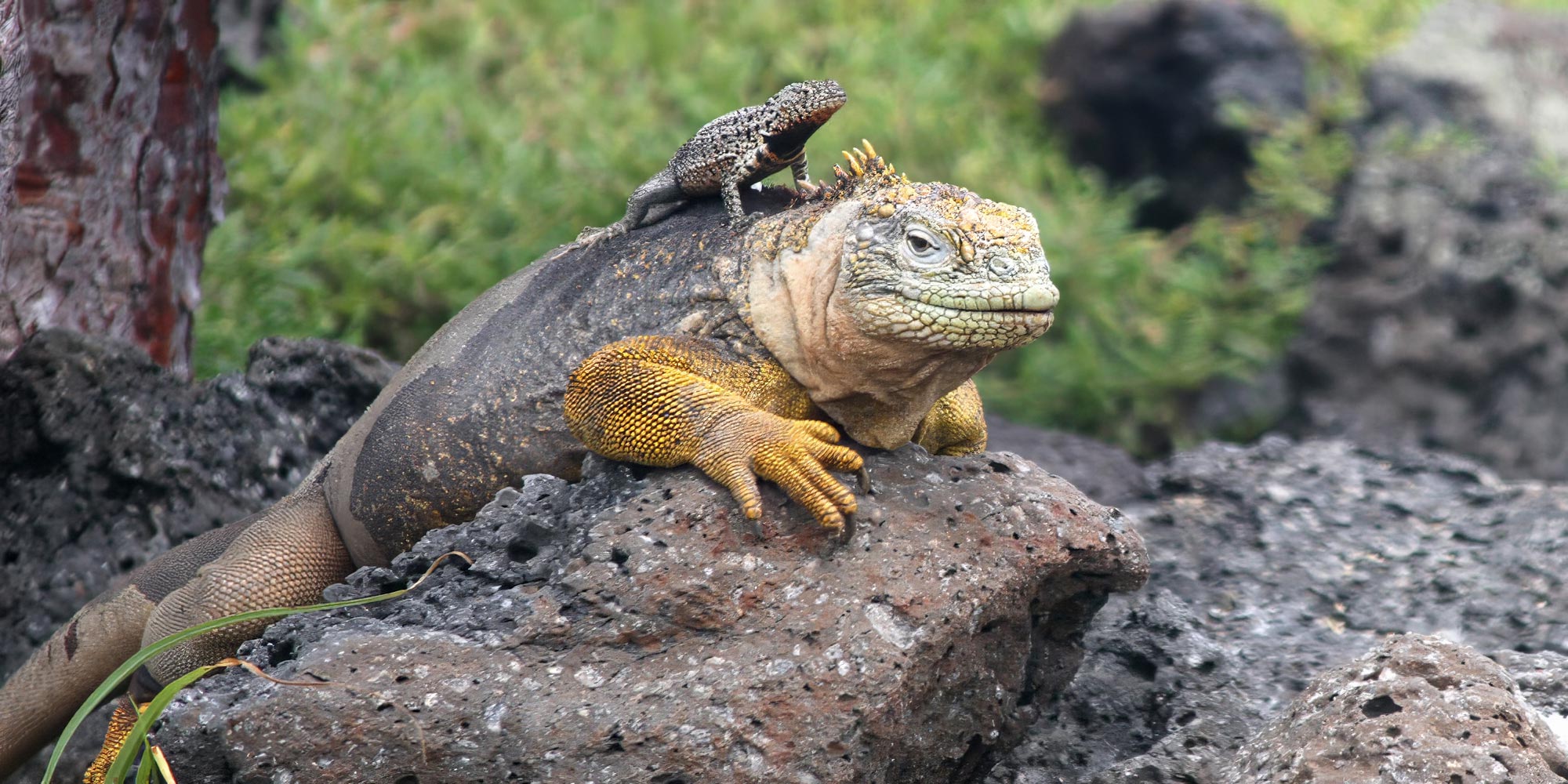
Temperatures continue to cool but rain is rare in July as both the air and water dip to the low 20s celsius/70s Fahrenheit. It’s a time of big and small – whales and dolphins off the west coast of Isabela, whale sharks near Darwin and Wolf islands – while blue-footed booby chicks are at their cutest and most photogenic.
Greater Flamingoes also pose for the camera as they dance to attract mates, and the first frigatebird chicks start to hatch. Lava lizards initiate their mating rituals which continue until November.
August
One of the most popular months to visit Galapagos, and also the coolest month to travel as sea and air temperatures dip to around 19°C/68°F. Much is happening: sea lions are pupping, flamingoes continue to dance, Galapagos hawks court and many migrant shore birds arrive while the Giant tortoises make a slow return to their Santa Cruz highland home.
In the seas there are whale sharks to the north (Wolf and Darwin), migratory humpback whales and the chance to see the newborn sea lion pups in the waters.
September
Seas can be rough and temperatures are still relatively cool, but this churning and fervent time of year is matched by the wildlife. Often incorrectly labelled low season, September is the peak of garua season but also the month when birds and land animals are most active.
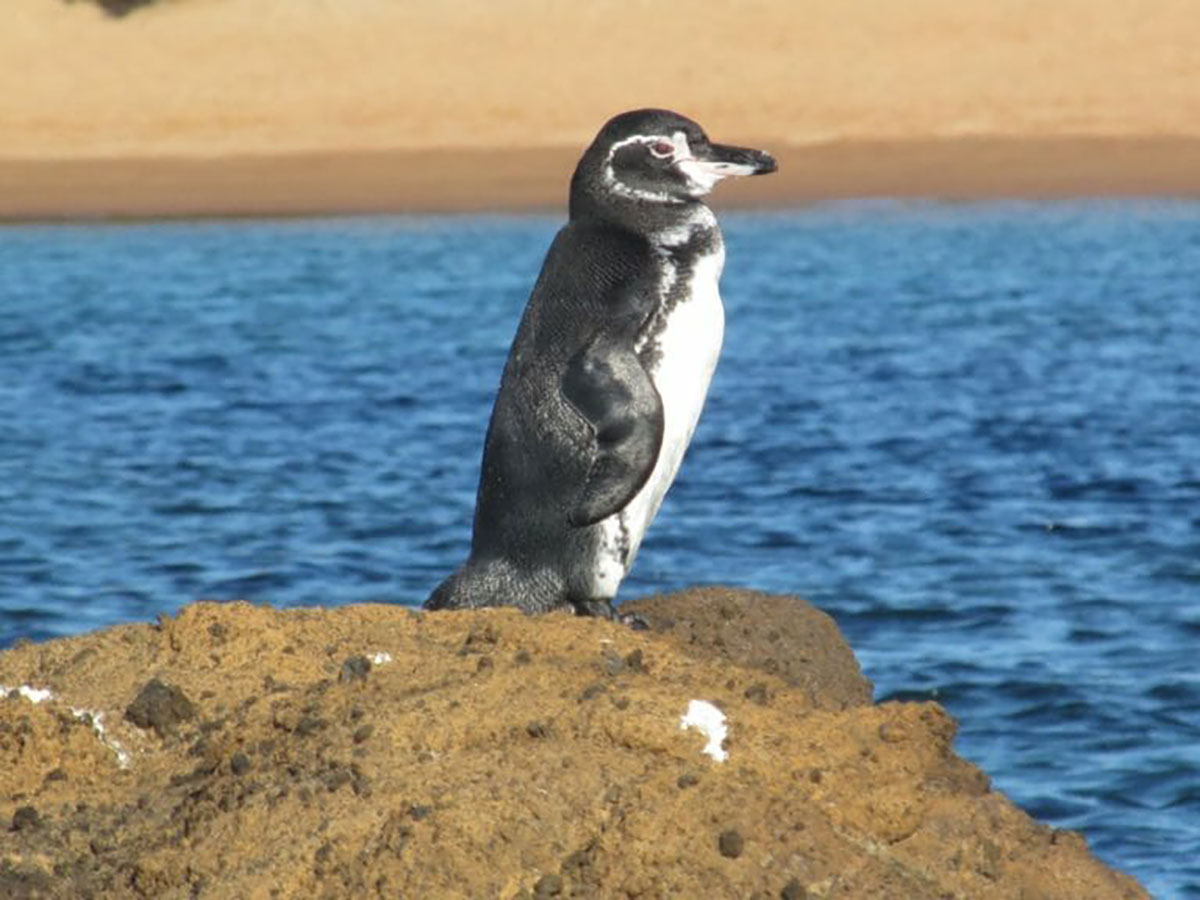
Male sea lions battle to win territory and females, while the sea birds remain active at their nesting sites. Galapagos penguins begin to court on Bartolome and the whale sharks linger in the north west; humpback whales can still be spotted.
Some boats go in for maintenance in September or offer cheaper rates, making it a great time to find a bargain and see the Galapagos at their boisterous best.
October
Like September, another broiling time to visit as the colder sea current begins to give way to the warmer waters. This creates an occasional low hanging mist on some coasts which often burns back to reveal blue-footed booby chicks, nesting lava herons and the mating Galapagos fur seals.
A popular time for divers with the mighty whale sharks in the north west and lots of hammerhead sharks.
November
A top month for visiting Galapagos in terms of weather, animal activity and visitor numbers (relatively few). Air and water temperatures continue on an upward climb to around 23°C/74°F. Seas are calm with good visibility for snorkelling – sea lion mothers are relaxed and allow inquisitive older pups to bound into the water and play with tourists.
Mating Galapagos green turtles can be seen in the waters (Nov-Jan). On land, brown noddies begin to breed and band-rumped storm petrels begin their second nesting period.
December
The end of the year is another great month to visit Galapagos and the islands are very full at Christmas and New Year, so forward planning is always advised. Rain is still rare but a lush greenness rises in the foliage; temperatures rise with an average high around 27°C/80°F and a low at about 20°C/70°F. Sea temperatures warm to a comfortable 20-22°C/mid-70s Fahrenheit.
Giant tortoise eggs start to hatch (until April), while waved albatross chicks fledge and the waved albatrosses leave the Galapagos, not to return until March. Green sea turtles are mating, the garua season comes to an end and the Galapagos explode with life.