From: £2,719
From: $3,620
Join tour in Lima.
We leave Lima early by public bus for a fascinating journey of contrasts that will end amid the towering high Andes at the small highland city of Huaraz. We head north through the coastal desert as far as Pativilca, then turn inland and begin our climb northeastward into the Andes.
We follow the Fortaleza valley, the fertile cultivated river banks contrasting dramatically with the barren mountain sides. Cacti gradually give way to denser vegetation and then puna grassland as we ascend to the highest point on our journey, Conococha (4,050m/13,287ft).
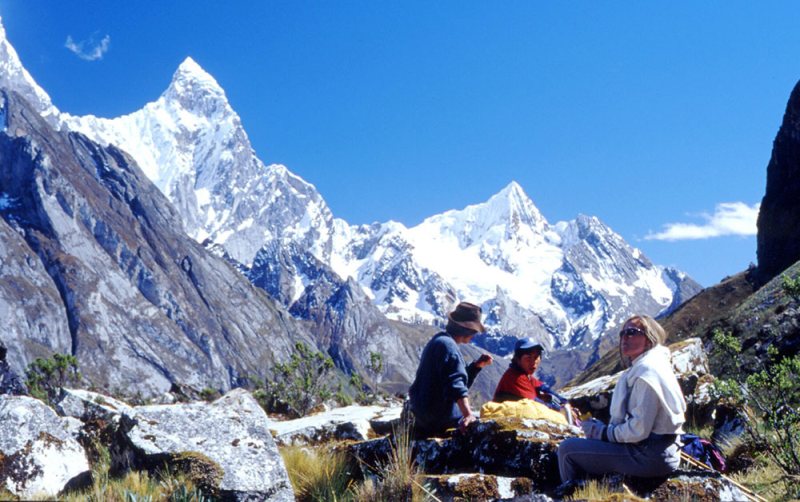
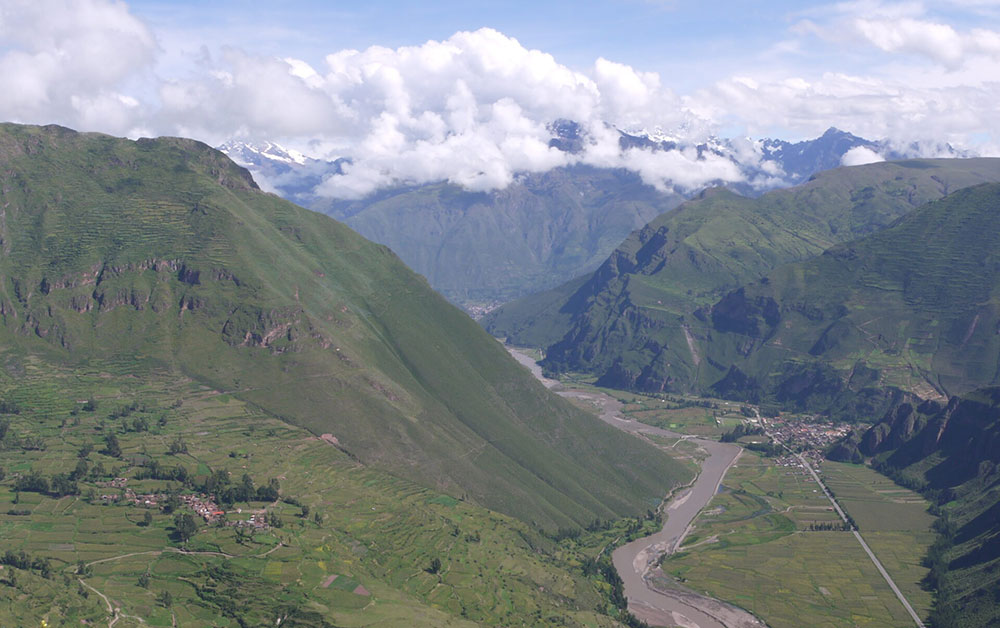
We turn north into the Callejon de Huaylas and enter a different world, the huge snowpeaks of the Cordillera Blanca dominating the landscape.
We arrive in Huaraz (3,090m/10,138ft) late afternoon and check into our hotel.
A bustling town of 80,000 inhabitants, Huaraz lies amid the scenic splendour of the Callejon de Huaylas and is the ideal base from which to explore the region. Callejon de Huaylas is the name given to the Santa valley, which separates the Cordillera Blanca from the Cordillera Negra, and rates as one of the finest areas of South America for its superb mountain panoramas.
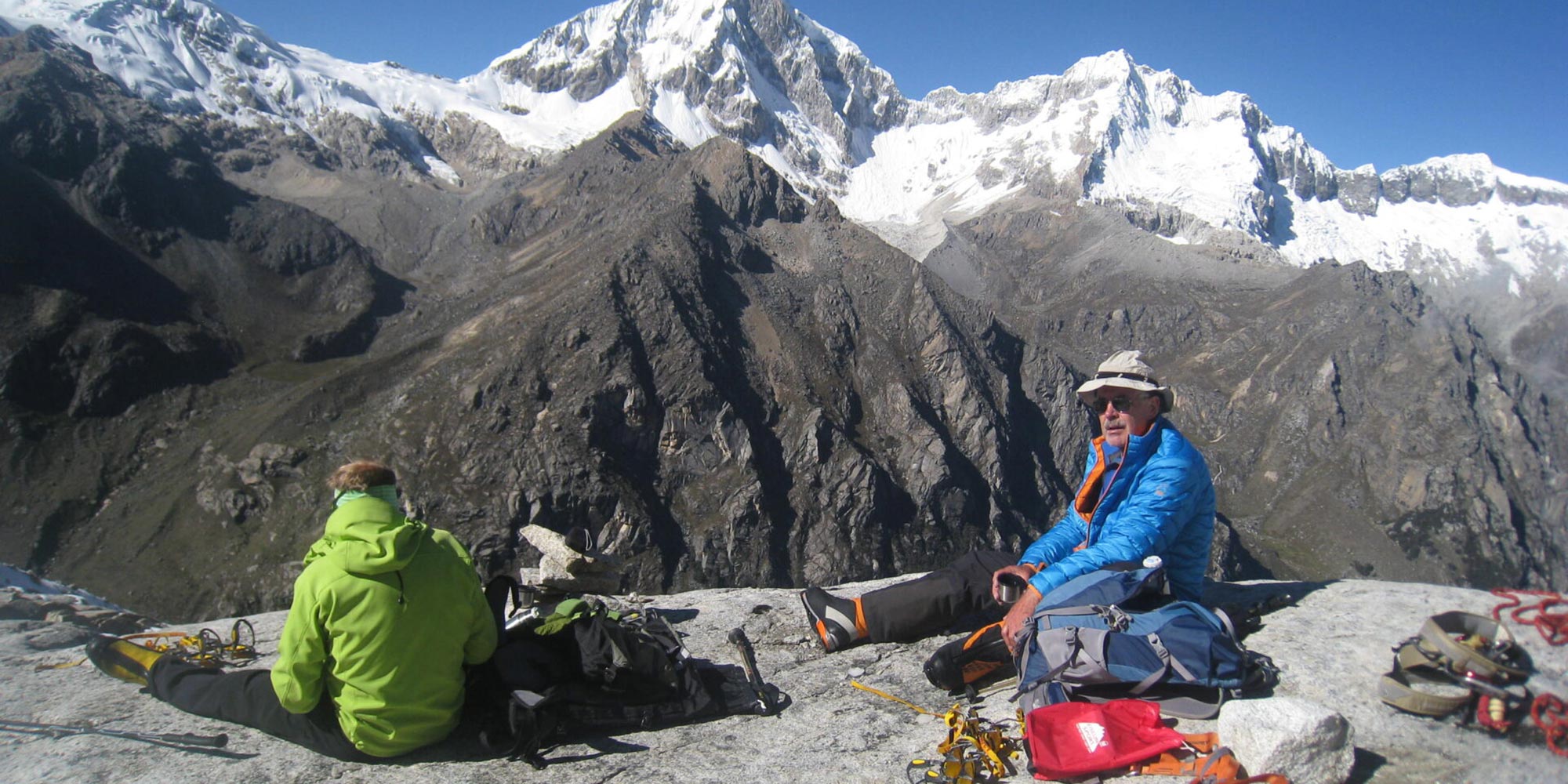
The Callejon is bordered to the east by the Cordillera Blanca, the mountain range with the greatest number of peaks over 6,000 metres outside the Himalayas.
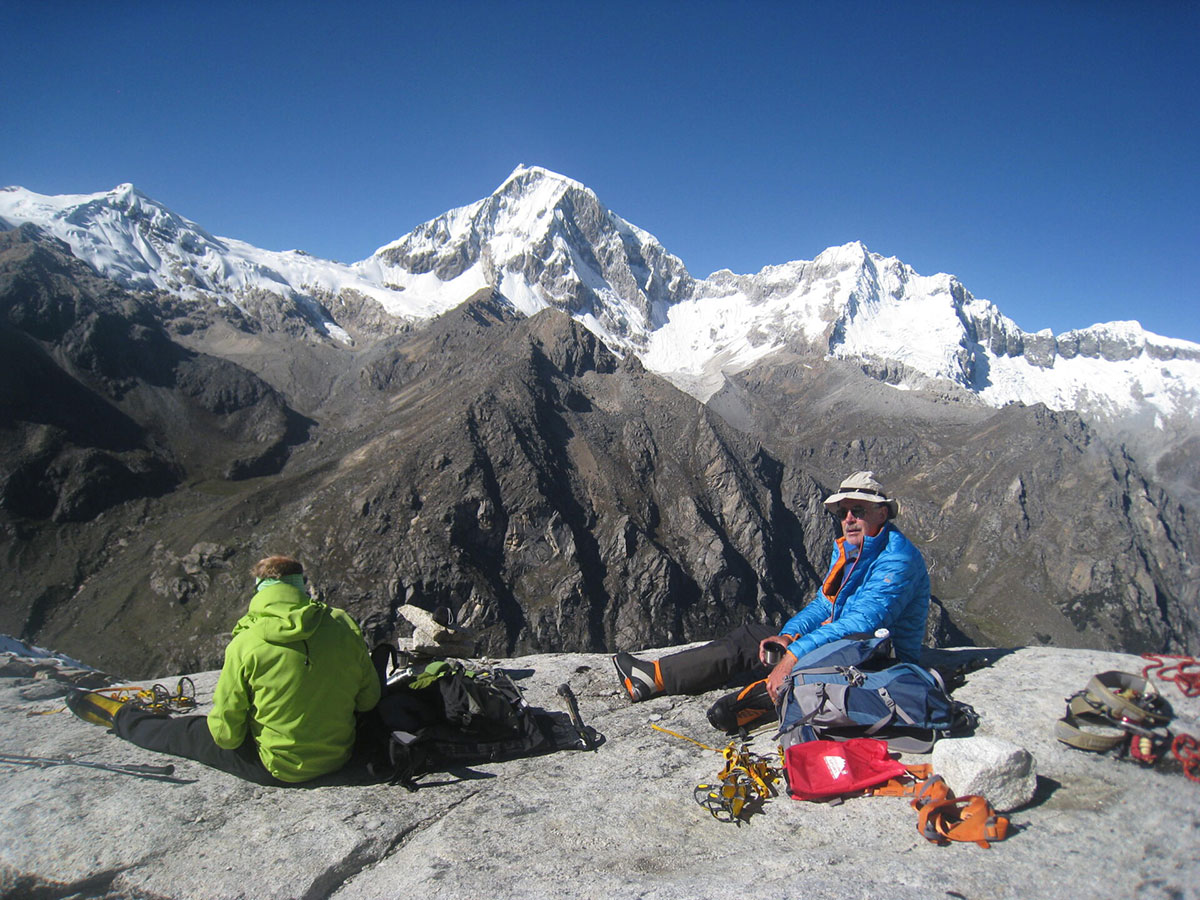
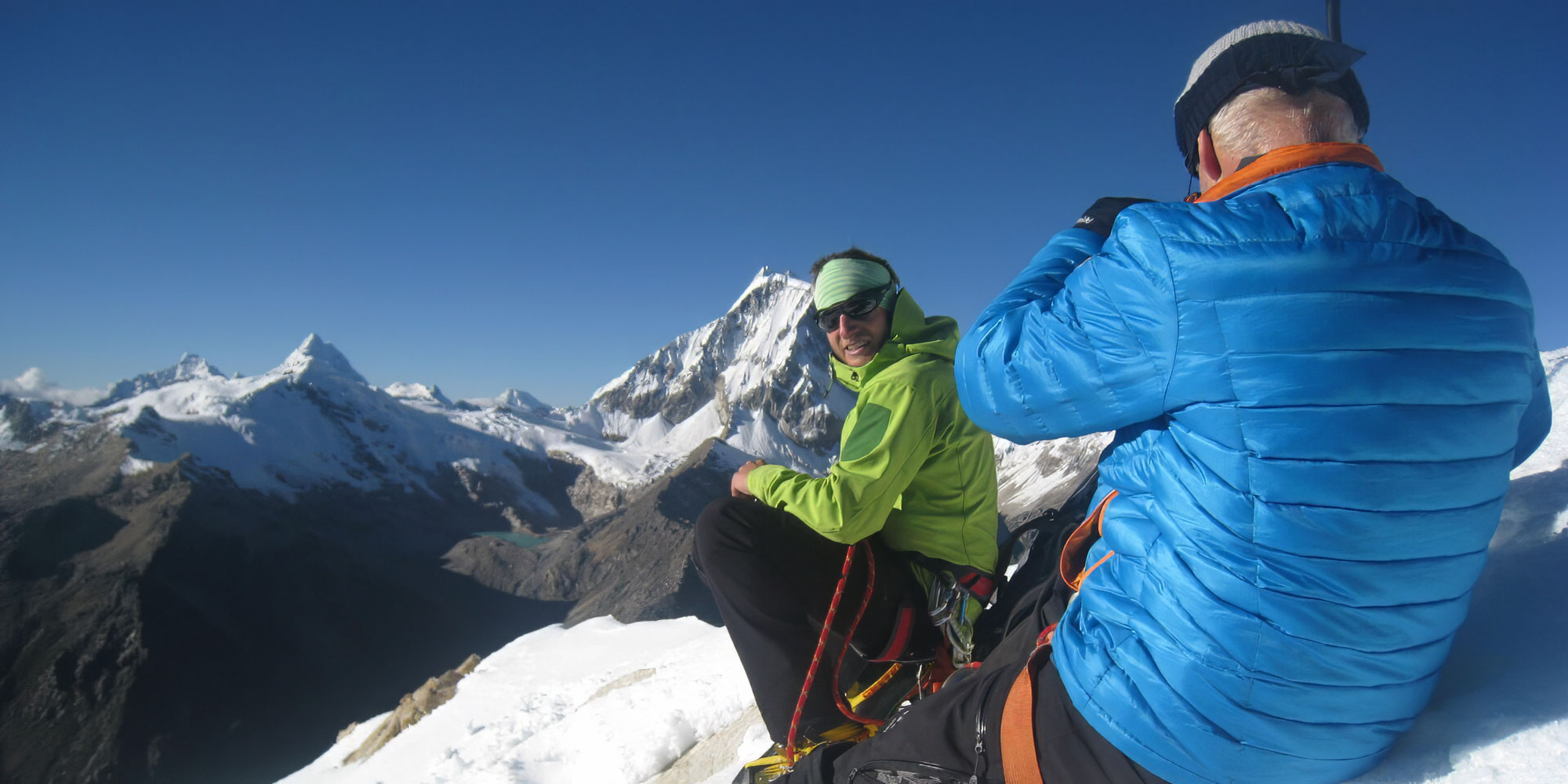
From Huaraz itself one is awestruck by the breathtaking vista of Mounts Vallunaraju (5,686m/18,655ft), Tocllaraju (6,034m/19,797ft) and Ranrapalca (6,162m/20,217ft) towering over the city and, to the north, the gigantic forms of Huascarán (6,768m/22,205ft) and Huandoy (6,395m/20,981ft).
Today we have our trek briefing and take a local walk to see some pre-Inca ruins.
Today we start out acclimatisation by heading up to 4,500m/14,764ft and to the beautiful Laguna Churup. We listen to our bodies and see how well we are acclimatising, taking it very slowly in the thin mountain air.
Mount Churup’s reflection in the clear waters of Laguna Churup is the reward for today’s efforts, and well worth it as the peak provides a stunning backdrop to the laguna.
We return to Huaraz and our hotel, maintaining the mountaineering rule of acclimatisation – walk high, sleep low.
Pack your bags!
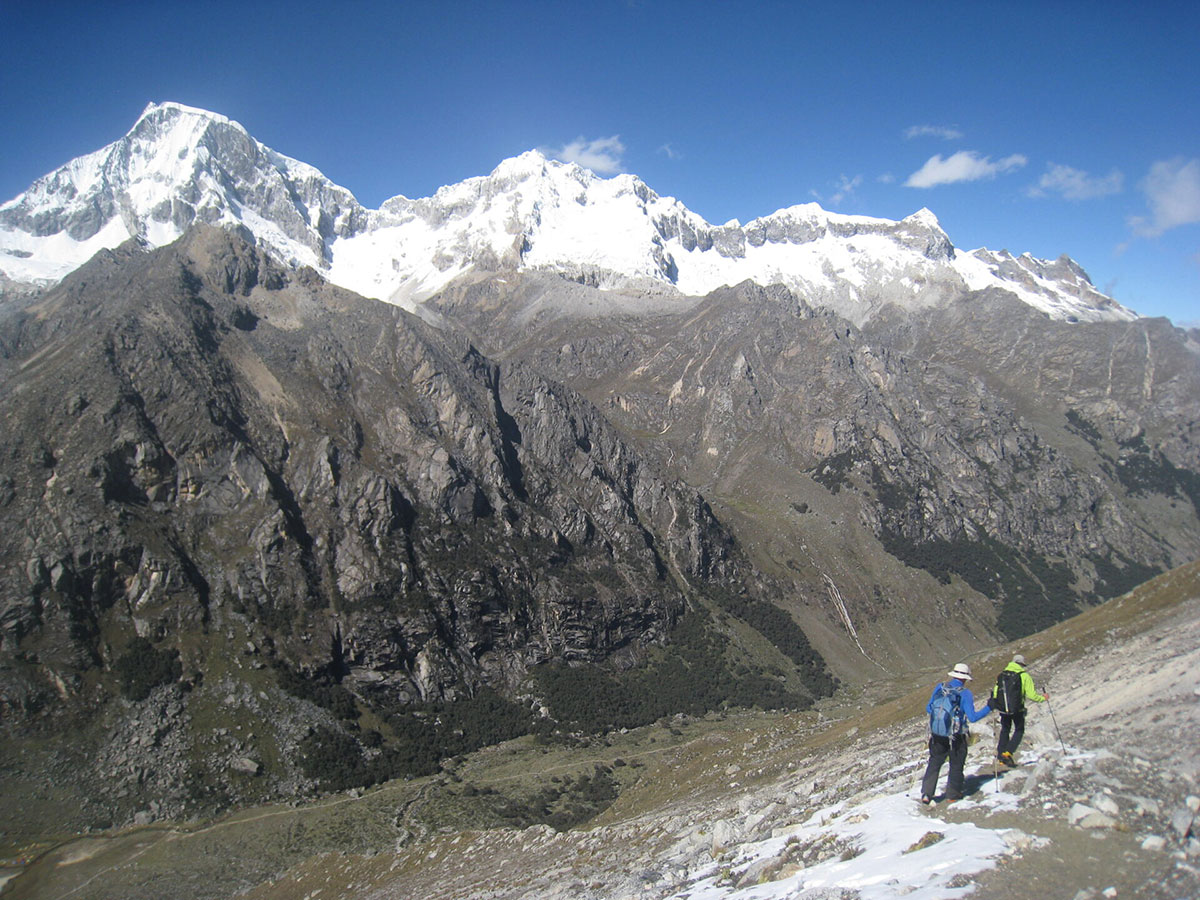
Drive up to the small mountain village of Pashpa where the donkeys get loaded and your group begins the 13km/8-mile hike to the head of the Ishinca Valley.
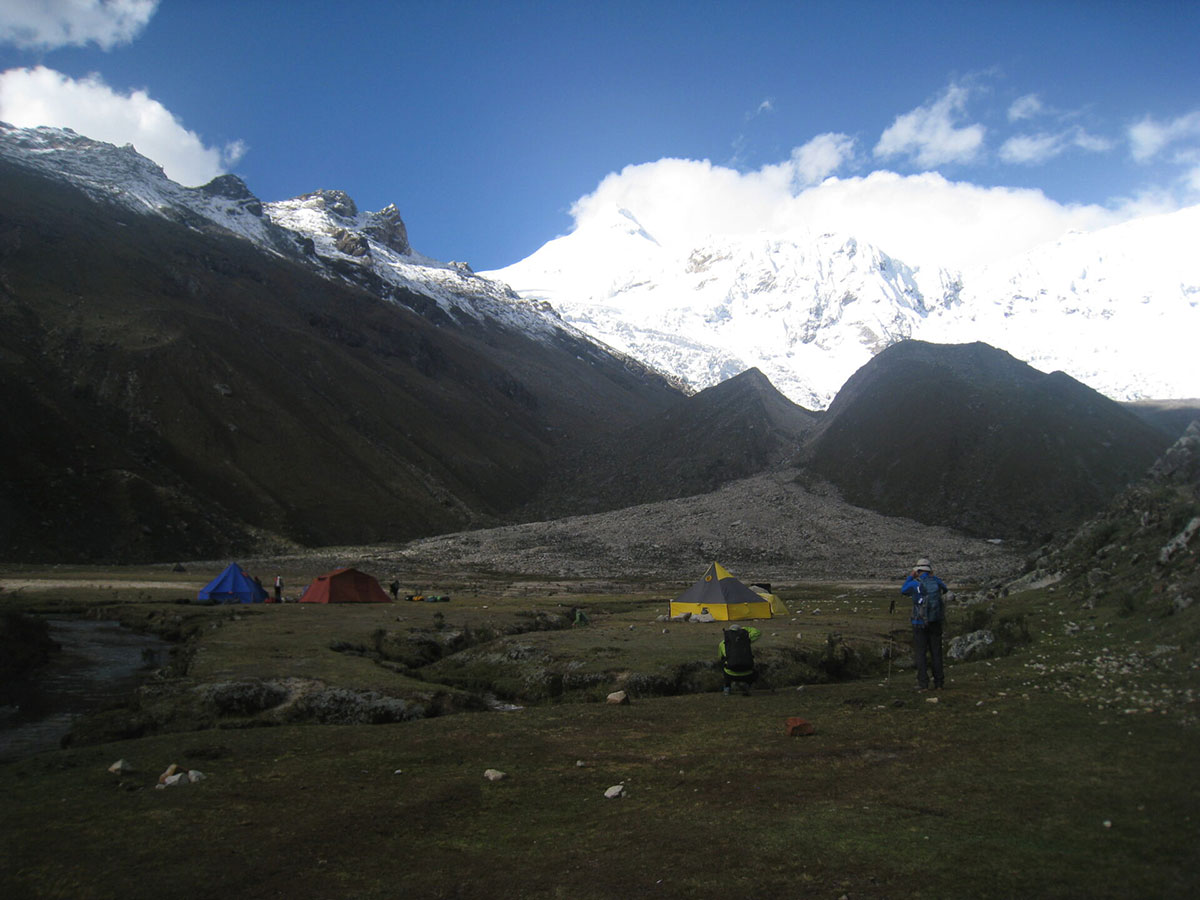
Establish base camp at 4,100m/13,451ft.
Urus summit day!
Your first alpine start has you leaving camp by 04.00.
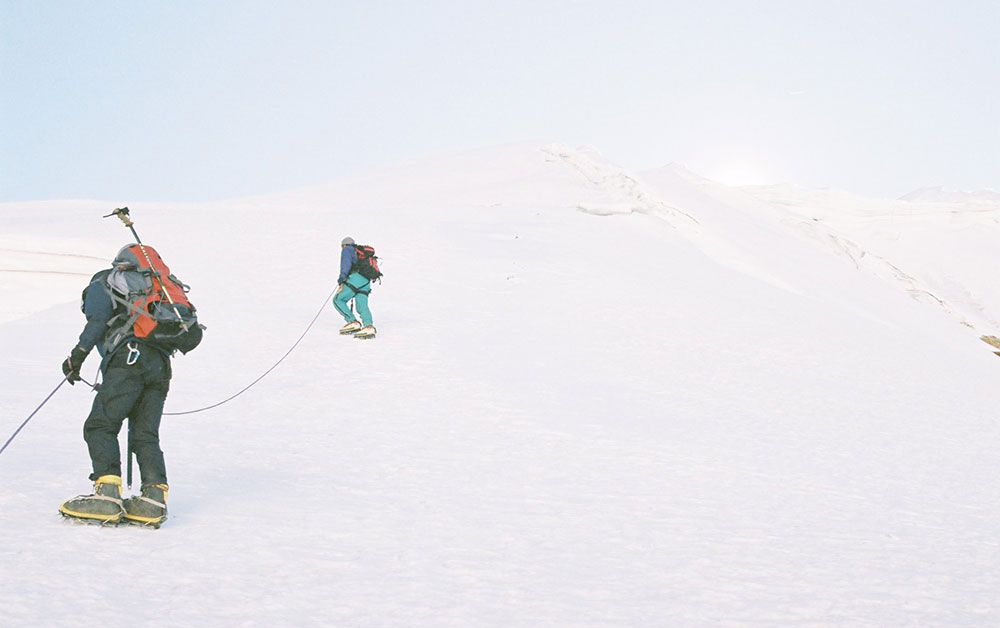
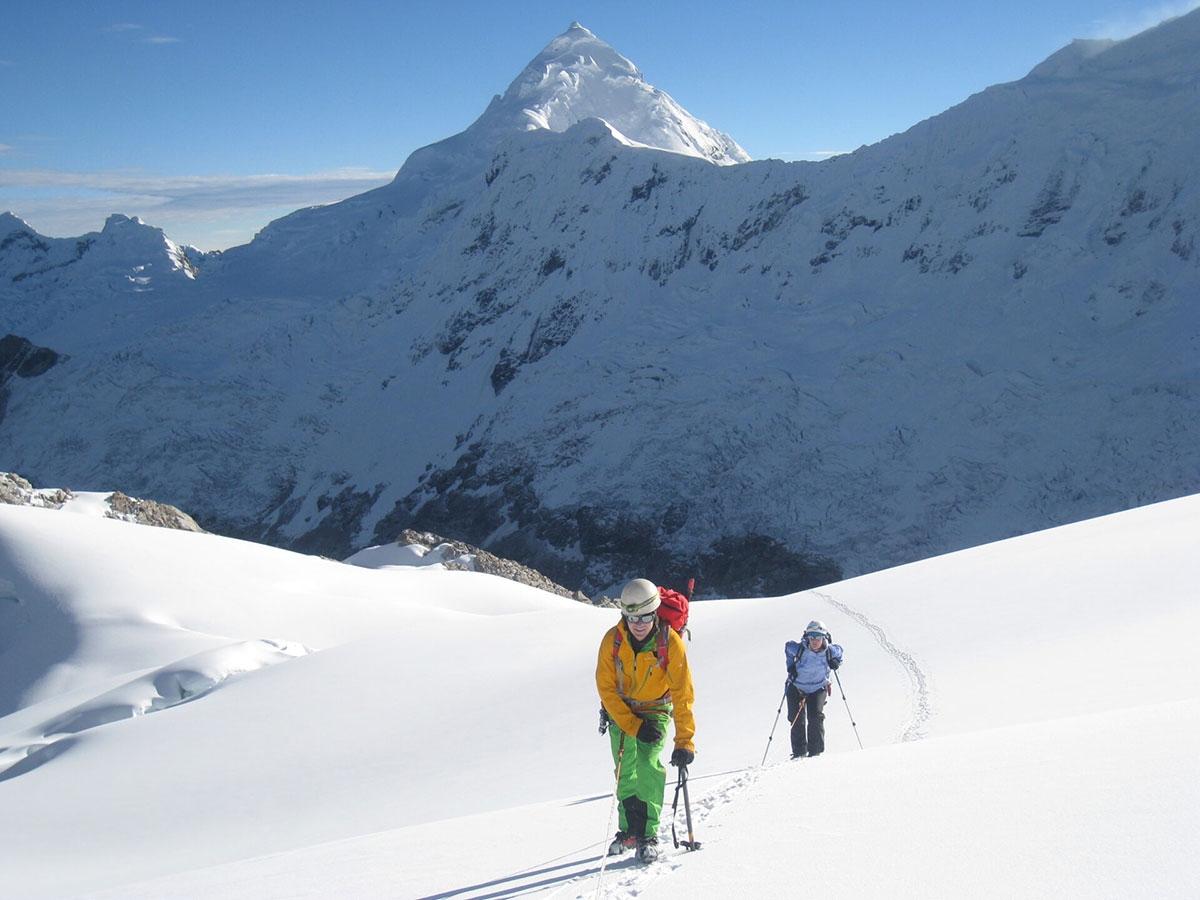
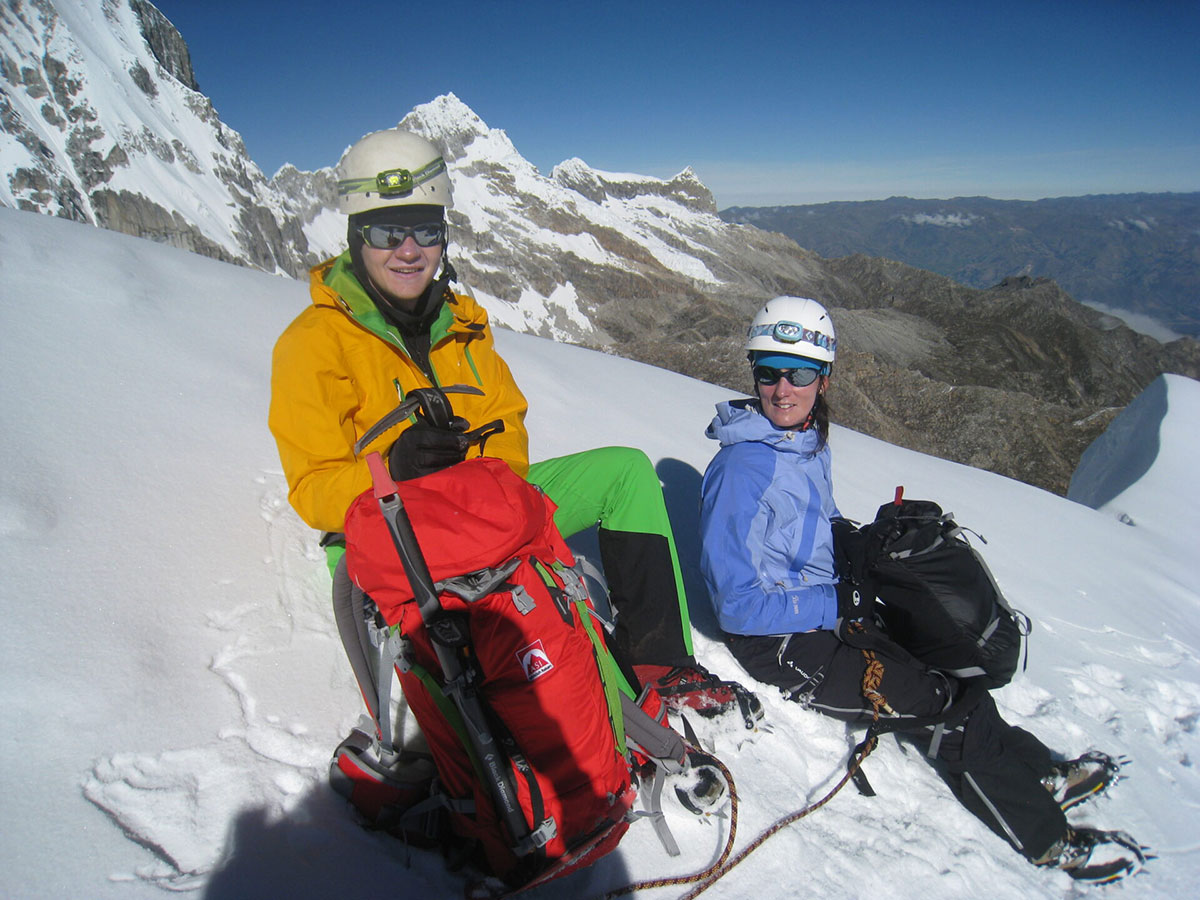
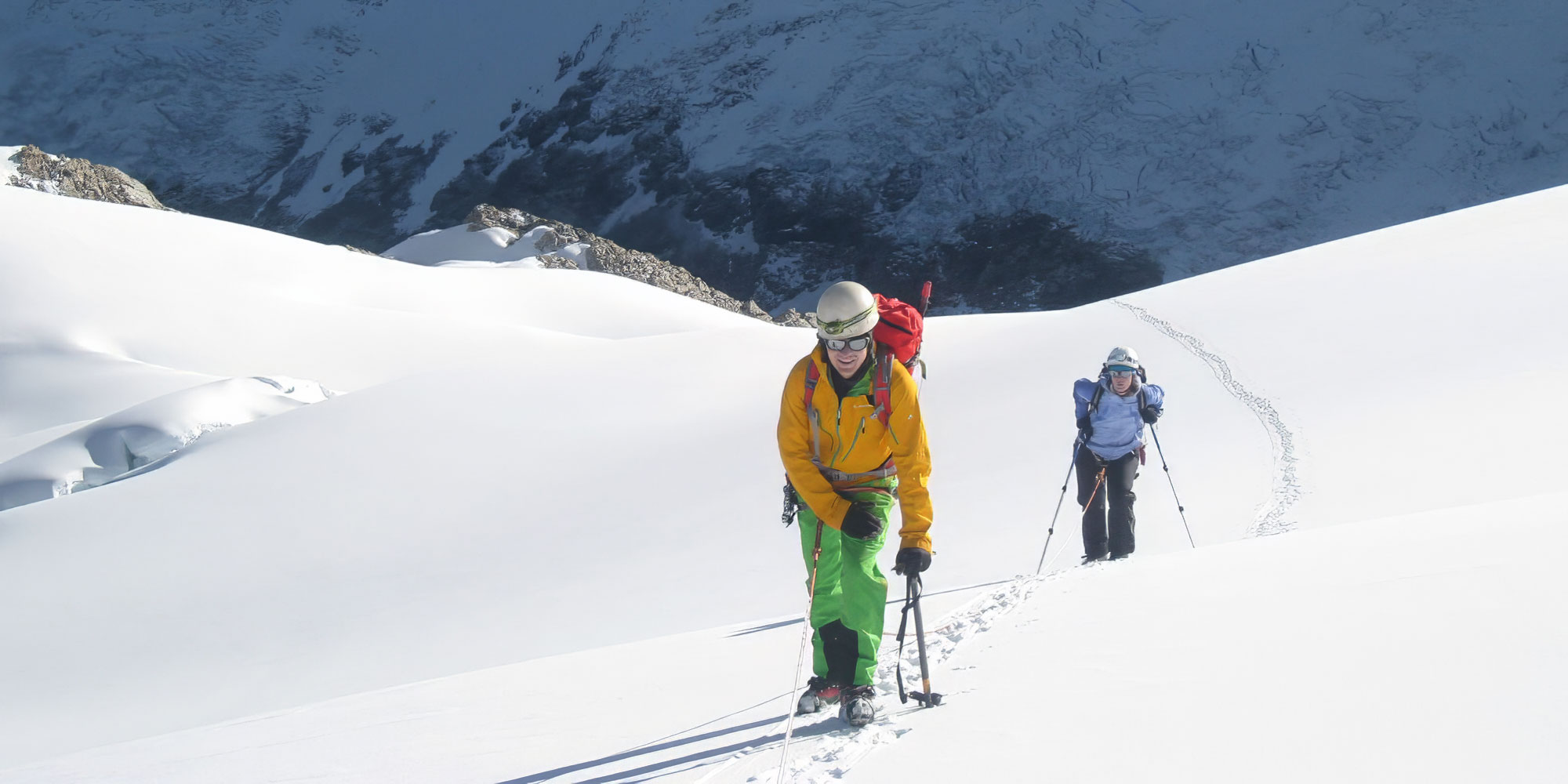
Work your way up the steep moraine to the toe of the glacier where you’ll put on crampons, harnesses, and rope up.
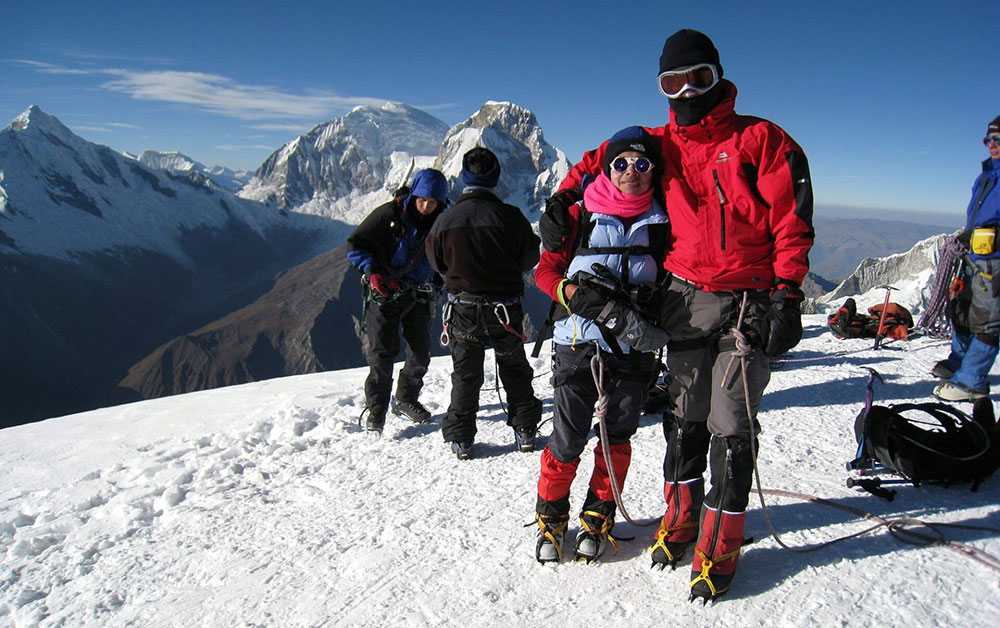
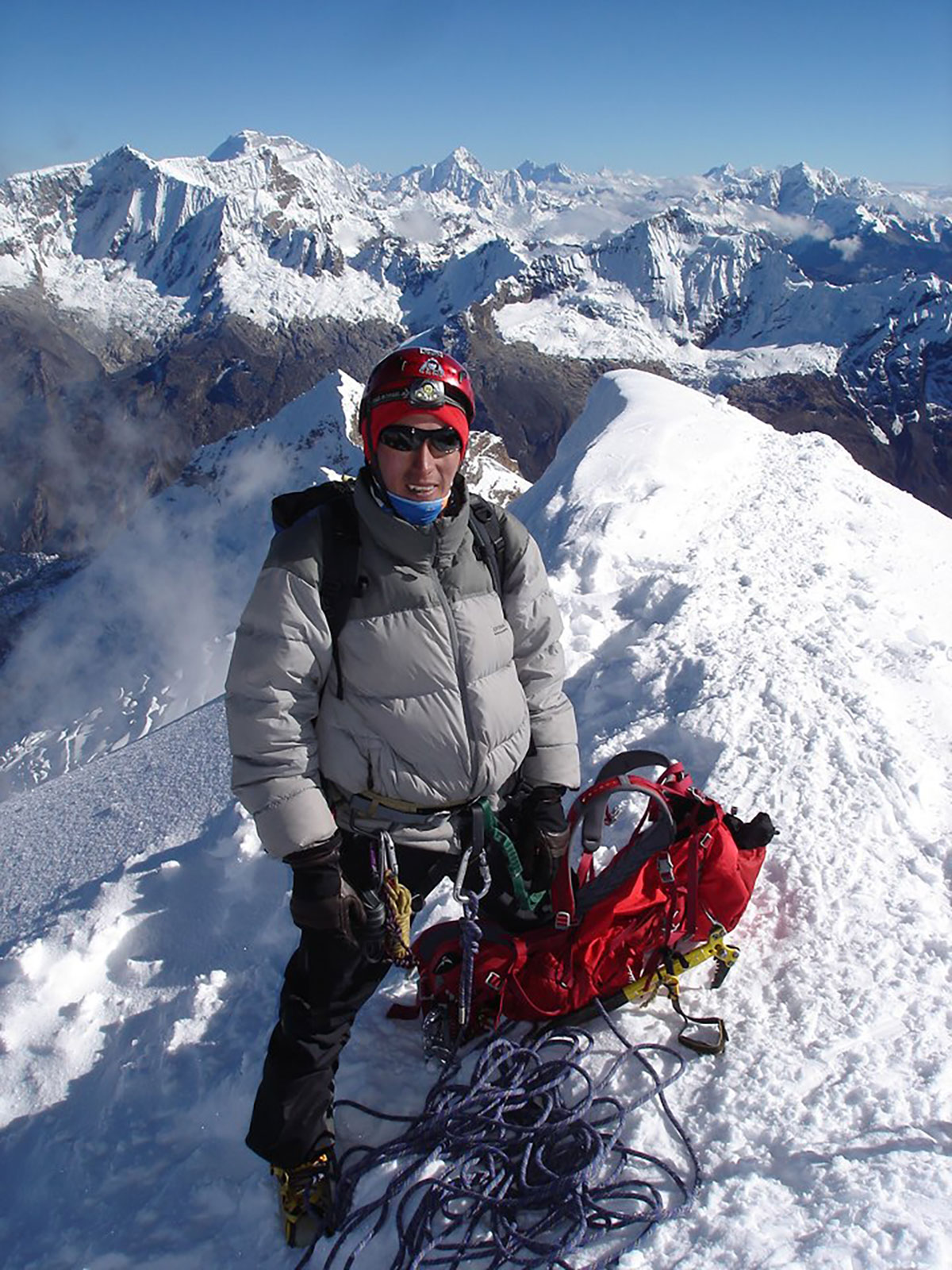
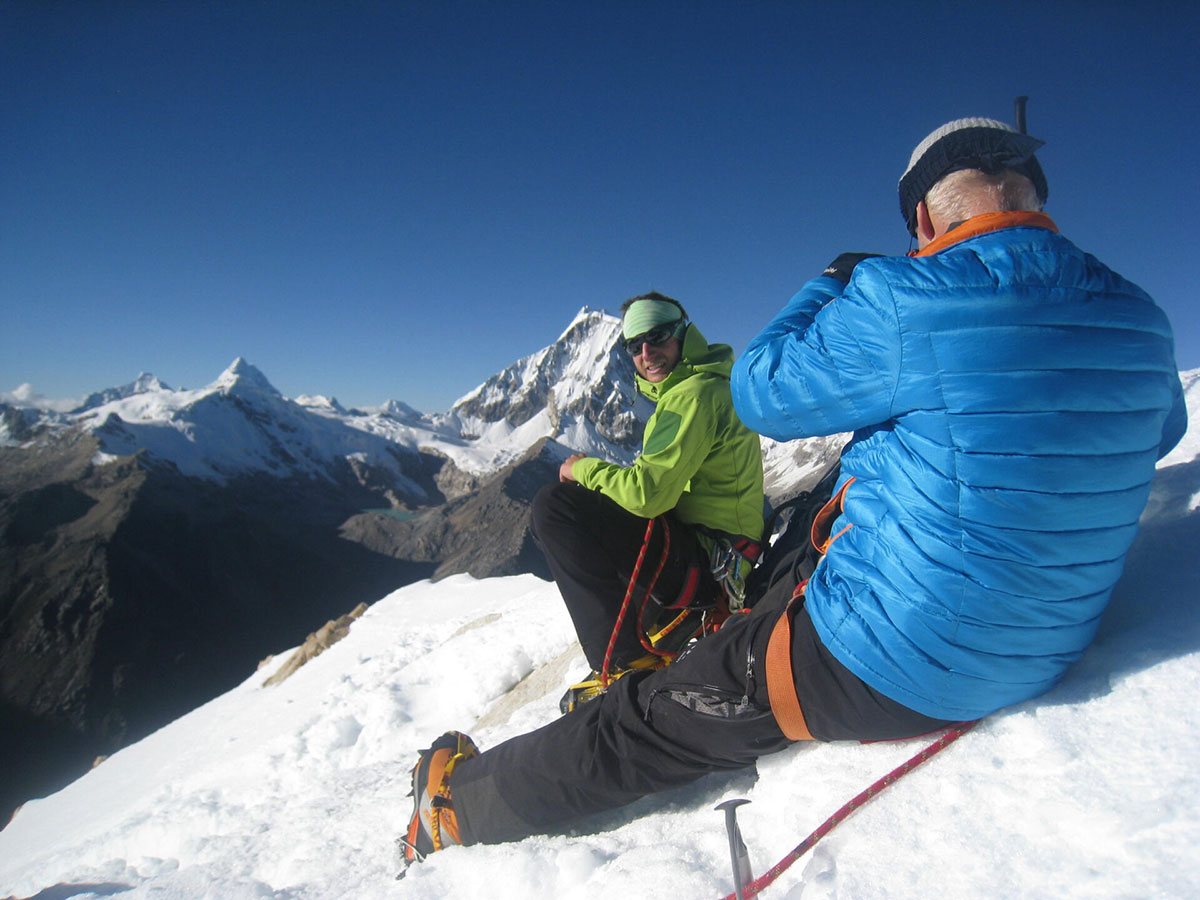
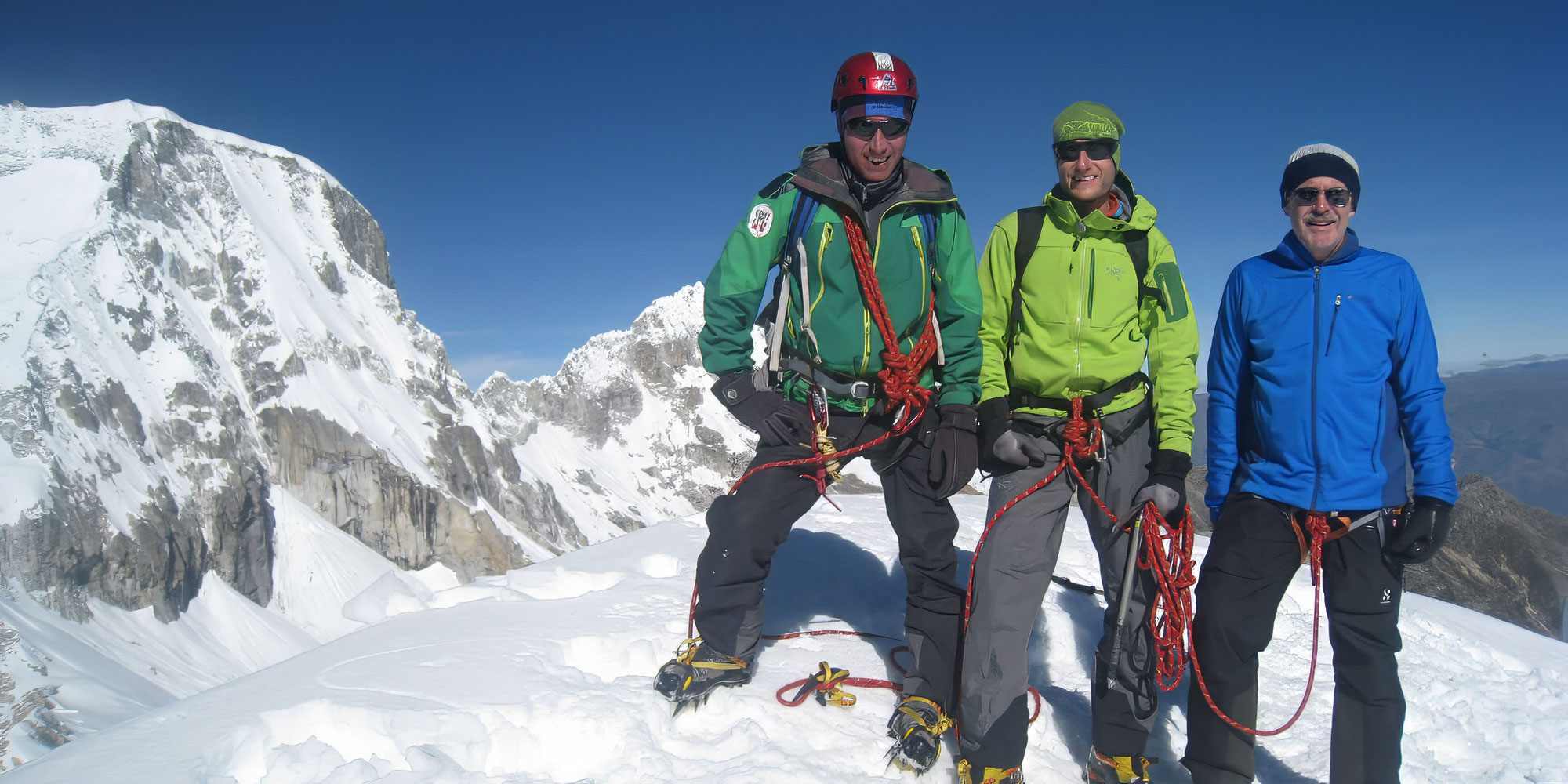
Weave your way to the summit, usually arriving around 11.00.
Celebrate! Return down to base camp for a well-earned dinner and sleep.
Rest day. Camp and rest, or practie techniques.
Ishinca summit day!
Another Alpine start, so at 03.00 we are waking and then leaving by 04.00.
Ishinca’s summit push is about 4 hours longer then Urus.
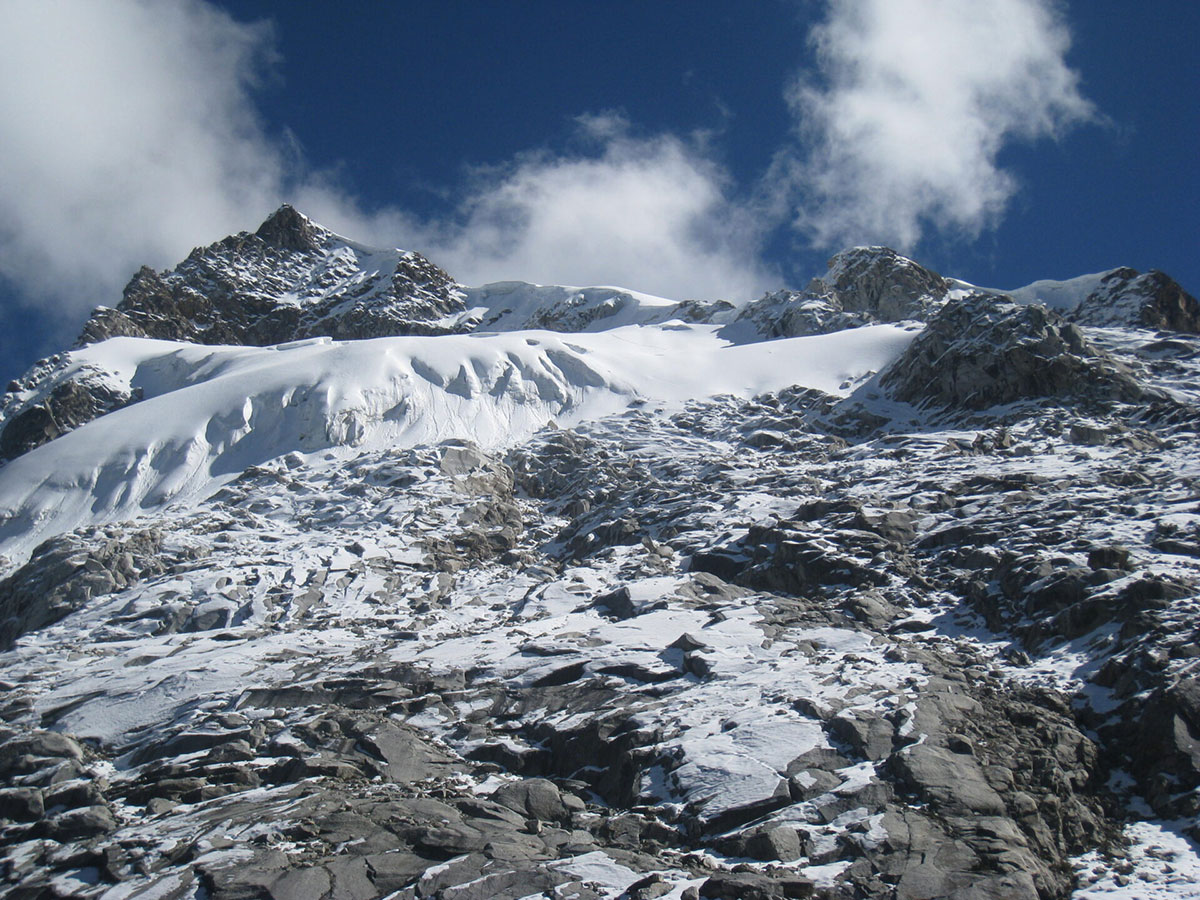
You’ll pick your way through the delicate Andean tundra and gain the glacier around sunrise.
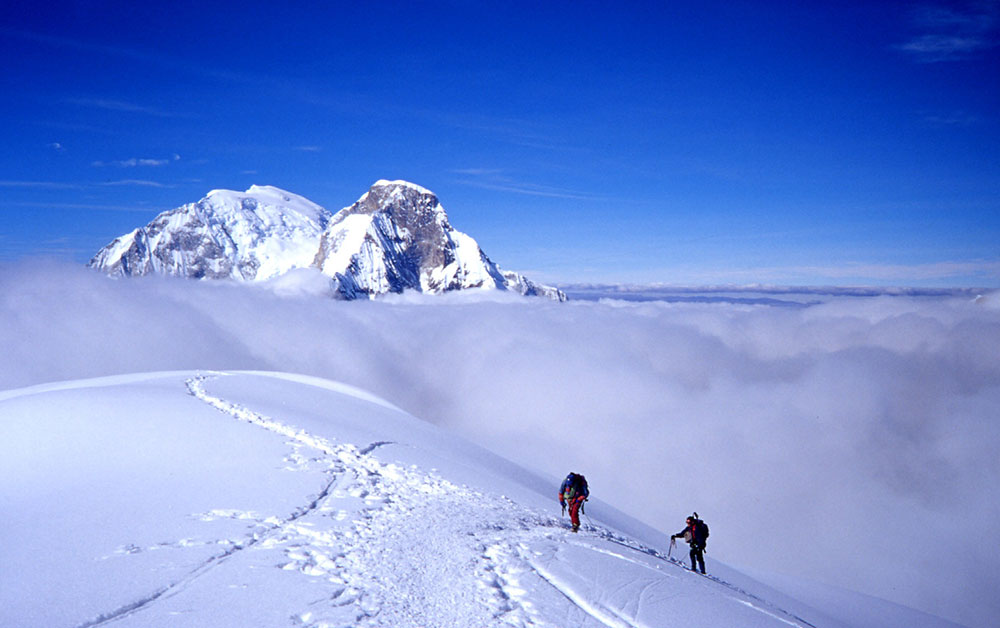
Once on the glacier, wind your way through some impressive crevasses and up to the high saddle, then follow a summit ridge to the very top.
Estimated summit time is 13.00 and return to base camp by 18.00.
Taking your essentials, you’ll leave for the high glacier camp of your final mountain, Tocllaraju.
It usually takes six hours to reach the camp at 5,000m/16,404ft.
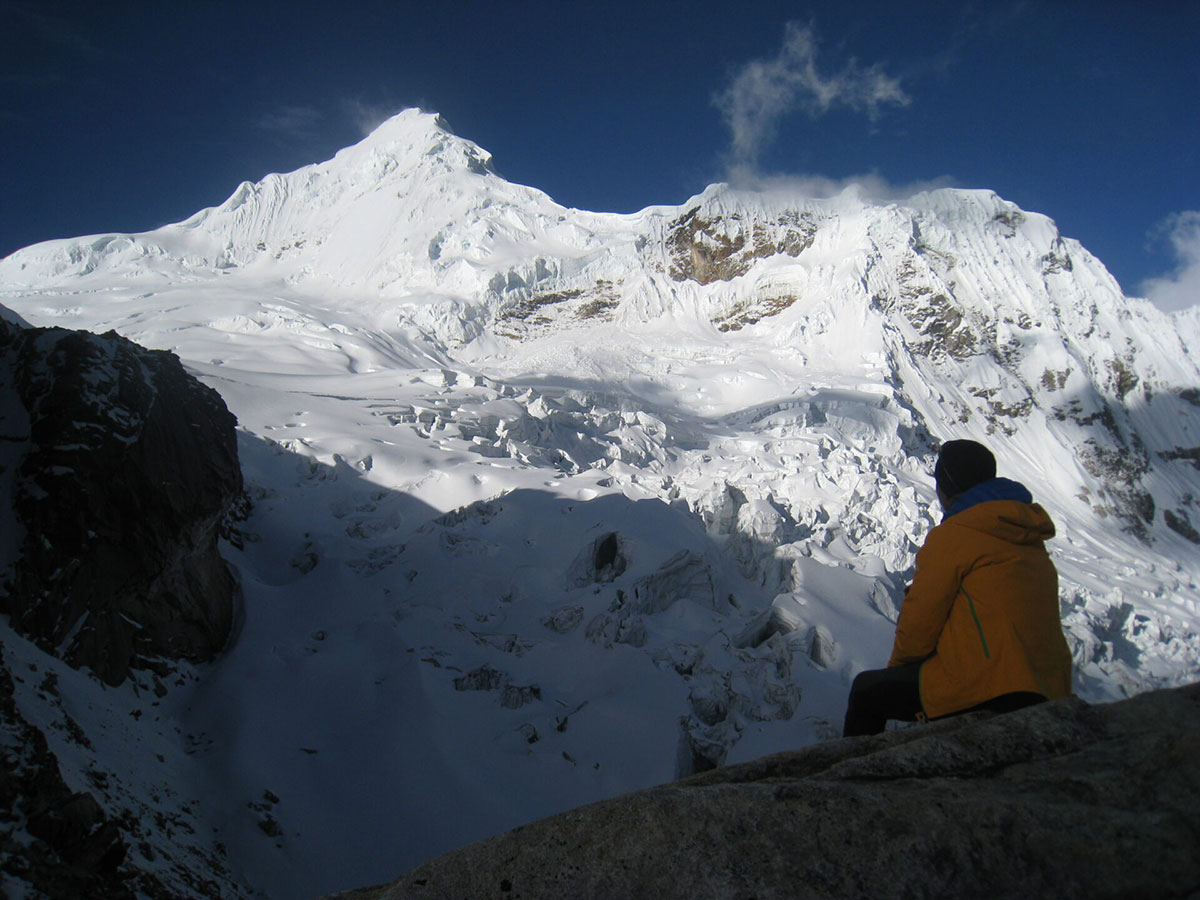
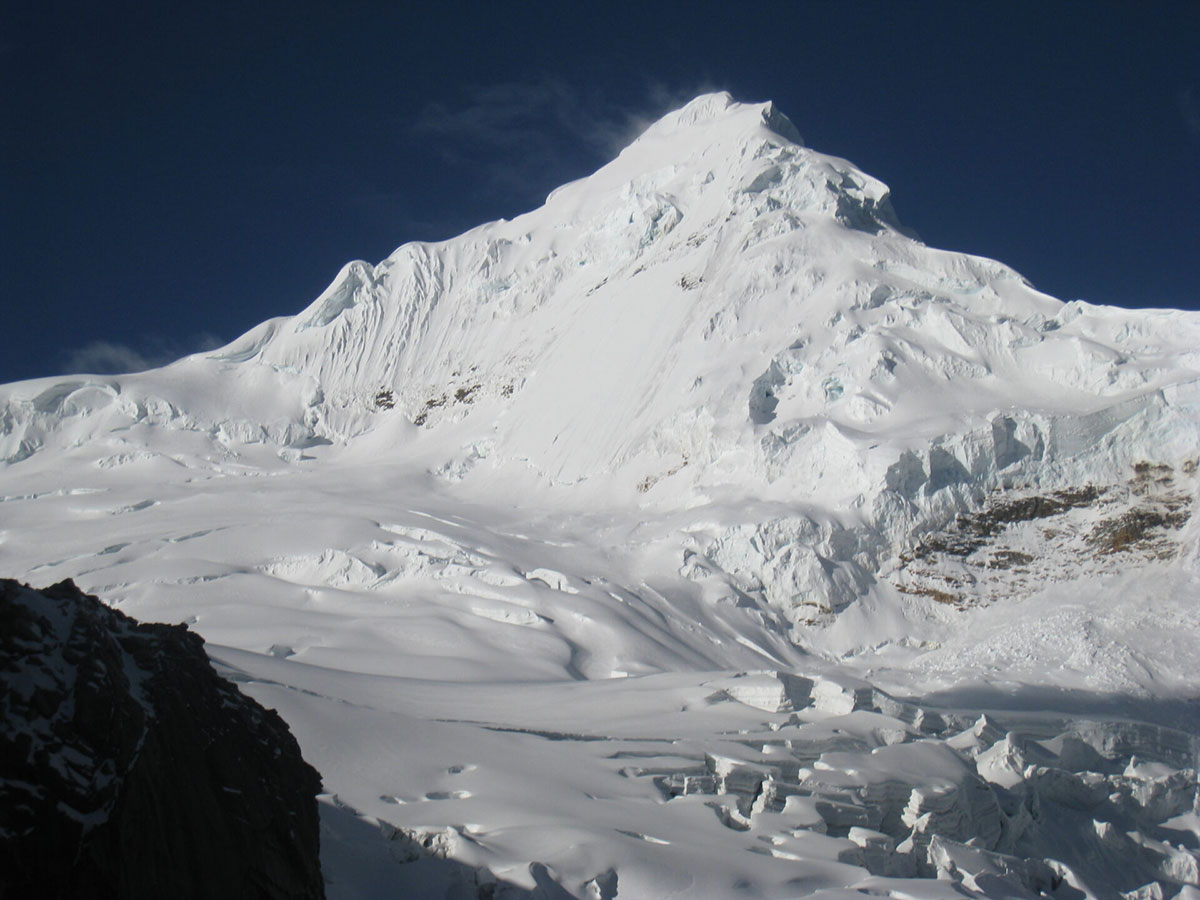
Enjoy an unforgettable dinner while mesmerised by Tocllaraju’s impressive west face.
Get to sleep early for the next day’s climb.
An early start today… wake at midnight and after a light breakfast depart for the summit by around 02.00.
You’ll work your way across the saddle and begin the classic assent up Toclla’s north ridge.
Things get steeper as you climb, with two sections of 60-80 degree snow and/or ice.
Return to high camp typically around 14.00 and after a rest and some warm food, continue back down to base camp for dinner and sleep.
Sleep in at last and wake to a delicious breakfast before packing up camp and loading the donkeys for the return to Huaraz.
Once there, you’ll check into your hotel for quite possibly the best shower of your life. Dinner that night is a celebration banquet, a traditional Pachamanca, held in an even more traditional Peruvian hut.
Free morning before we take you to the station for your bus back to Lima, or stay on for more treks and climbs!
In Huaraz we use 2-3* hotels with ensuite bathrooms.
Camping – we use top quality, high mountain, two-man tents. There is a dining tent at basecamp, plus toilet tent.
This is a strenuous trip and to get the most out of this expedition you should be in very good physical condition.
We spend a long time sleeping at high altitude camps and walking for many consecutive days.
Urus is rated – for a climb – as easy, non-technical.
Ishinca is rated as easy/moderate, non-technical.
Tocllaraju is rated as strenuous, partly technical.
We suggest you talk to your doctor if you are in any doubt as to your physical capability.
Any previous wild camping and winter experience are a plus, but experience in crampon and ice axe use is not essential as your guide will be teaching you the skills you need.
We use donkeys, llamas, or porters to transport all gear and food. We do recommend that you have a daypack to carry your personal items like cameras, water bottles, warm layers, etc… For climbing trips, you will be carrying a backpack with your sleeping bag, clothing, and personal items, typically weighing about 10 kilograms (25 pounds).
Your return backpack should be lighter as there will be less food to carry. Expect to get involved in all aspects of camping.
Summit days involve very early starts (01.00-03.00) and long ascents, so please be prepared for this. It is to maximise summiting chances.
Vegetarians and many other dietary requirements are catered for without problems. Please let us know in advance of any requirements you have.
You wake early, usually around 07.00. Breakfast is served in a dining tent, and consists of hot drinks, porridge, toast, jams and bread, and your guide will explain the day’s trekking plans.
Lunch is usually around 13.00 and can feature soups, meats, salads and fish, with vegetarian options and hot drinks too.
The campsites are comfortable and around 17.00 hot drinks, popcorn and other snacks are served to help you recover energy.
Dinner is served around 19.30, and will feature pasta, mashed potatoes, meat, fish or vegetarian options, followed by hot drinks and a pudding.
Huaraz has a wide selection of Peruvian and international cuisine to suit almost all tastes and budgets.
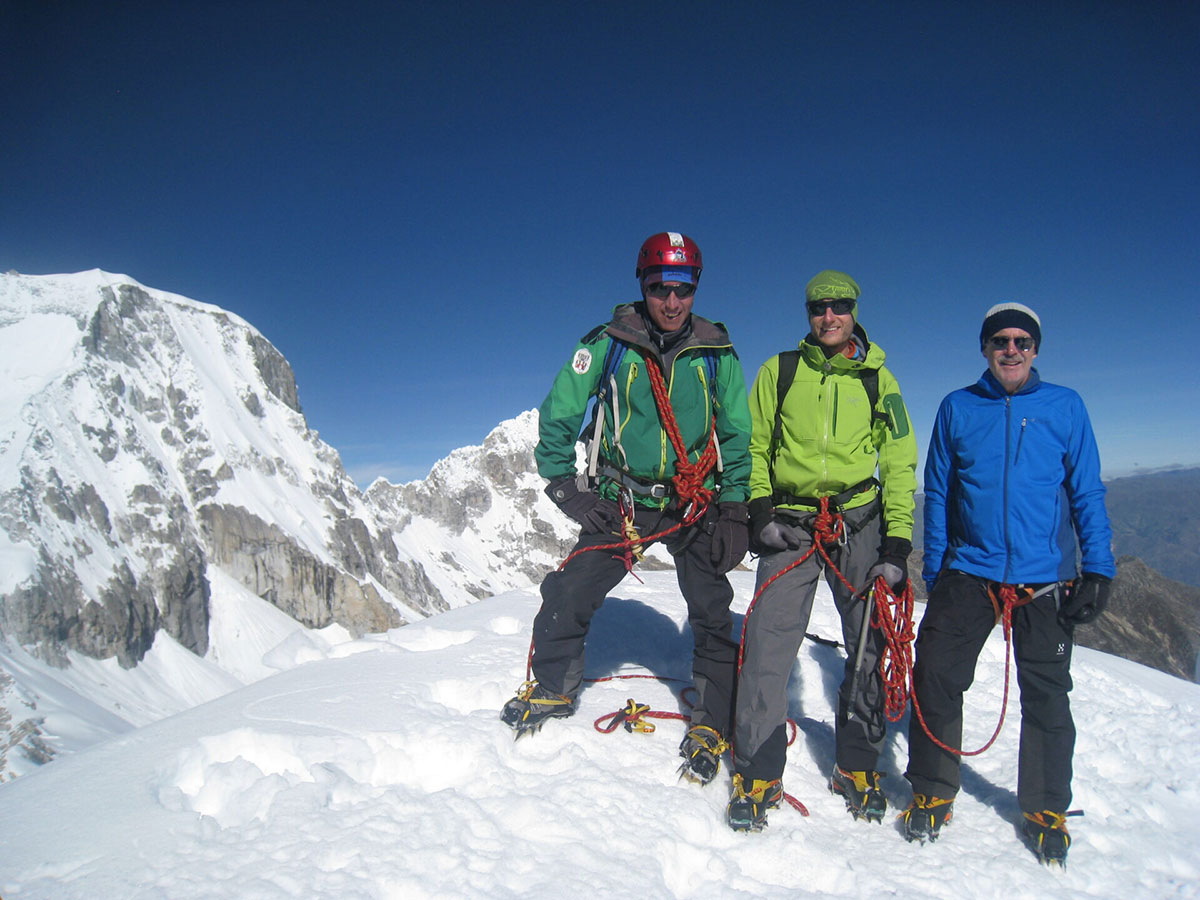
Our guides are experienced mountaineers and we typically employ one mountain guide to every three clients.
They will not just show you the way but will teach and empower you to succeed in the mountain environment.
All are UAIGM-qualified and selected for the attention to detail and, above all, safety and assessment of mountains, conditions and your capabilities.
Guide’s decisions are always final as they do so based on many years of experience of climbing among Peru’s peaks.
Cooks, mule drivers and additional staff are all from the local, nearby communities and we have worked with them for a long time.
An exhilarating Peruvian journey combined expertly guided mountain biking and a flawlessly organized Inca Trail trek.
A superbly supported four-day trek made this traveler’s month-long journey truly unforgettable.
We offer a variety of private and group itineraries for this multi-summit climbing expedition, from 12-14 days, please ask for specifics.
The base camp for all three routes lies at the head of the Ishinca valley, a 4-5 hour mellow hike from the trail head in the small village of Pashpa.
Your first climb is Urus Este, ascending the east ridge to its 5,420m/17,782ft summit. Urus is a fantastic peak for acclimatisation as well as for refreshing and/or learning the skills you need for glacier travel.
On Urus, you focus on getting comfortable with the gear and movement in the alpine environment, asking questions, and having fun.
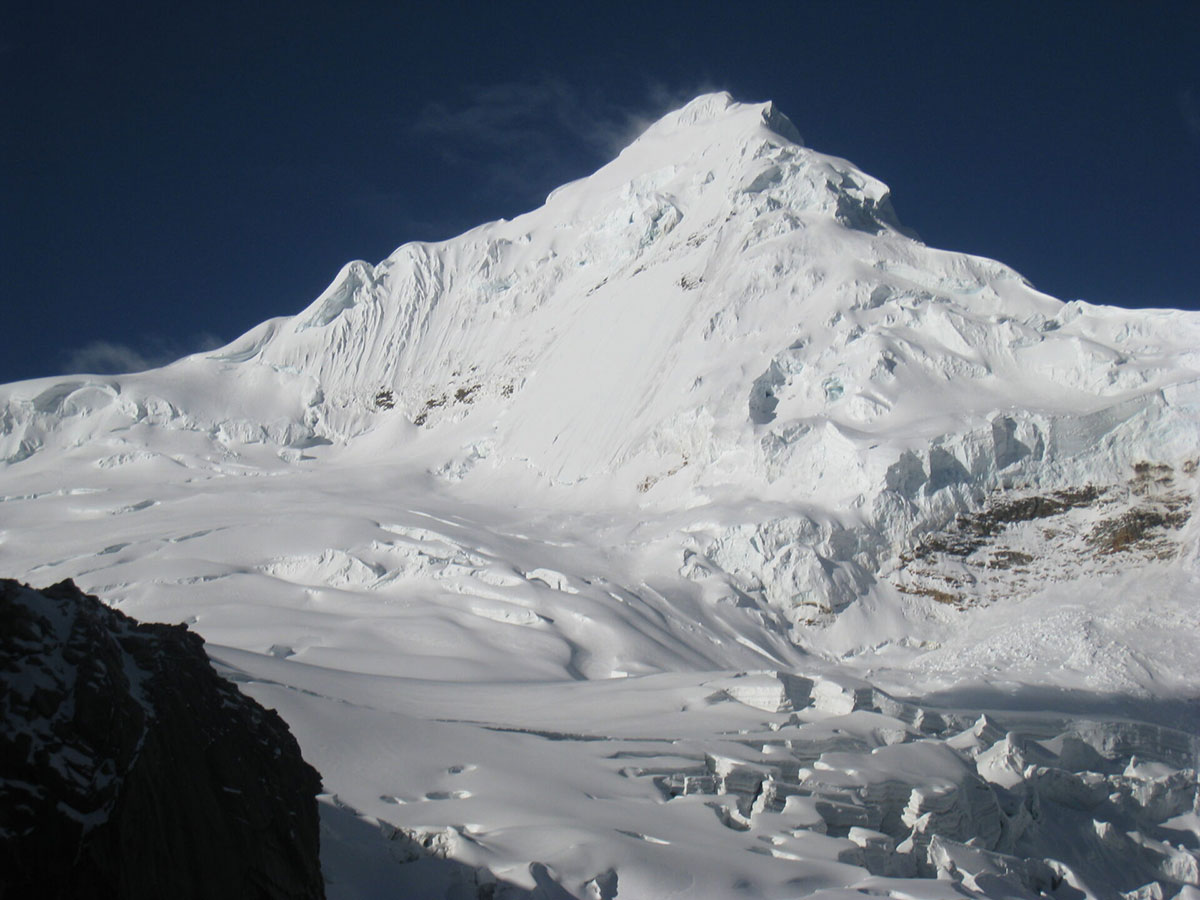
Ishinca follows, offering a higher summit (5,530m/18143ft) and a slightly steeper climb.
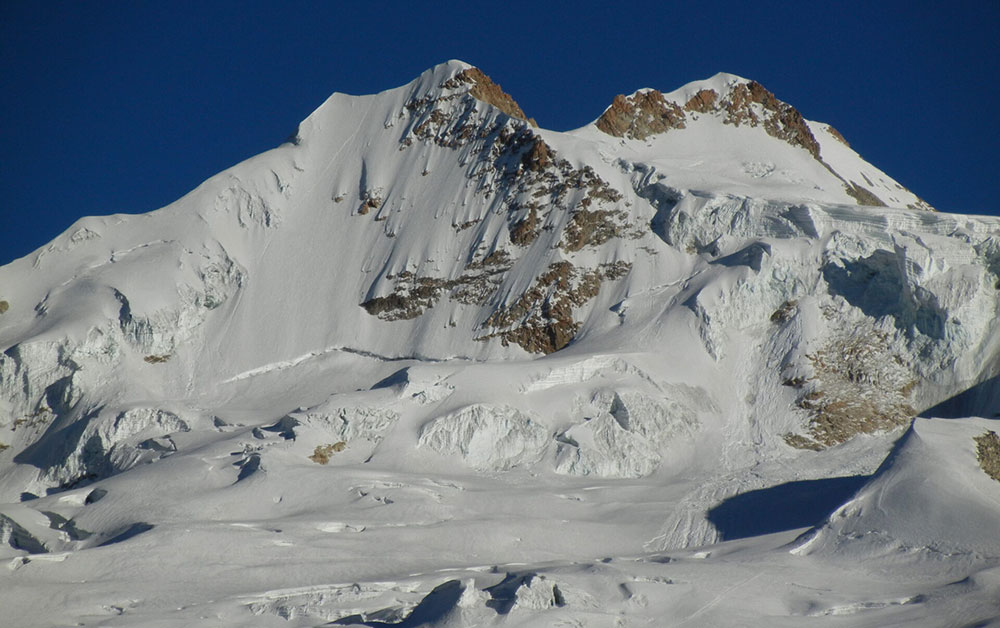
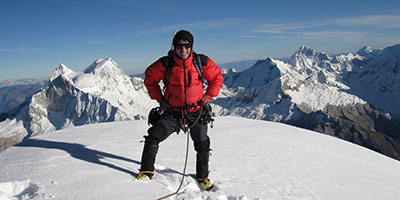
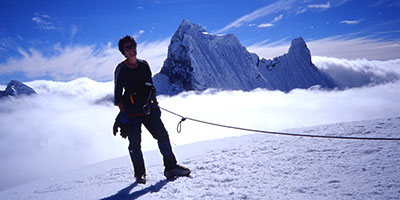
These two are great predecessors to Tocllaraju (6,034m/19,797ft), the grand finale.
The northwest ridge of Tocllaraju offers a pleasant combination of rolling, non-technical terrain and sections of steep climbing where the skills you have practiced will be called upon.
It is a beautiful and dramatic peak.
Rest days are planned into the itinerary at basecamp, which can also be filled with rock climbing and skills.
Peru is made up of 3 distinct geographical areas: the coast, the mountains and the jungle.
The costa or coastal region is a narrow ribbon of desert 2,250 km long, crossed by fertile river valleys flowing from the Andes. It takes up 11% of the country and holds more than 40% of the population.
The cold Humboldt current gives rise to a blanket of mist – the garua – which hangs above coastal cities like the capital Lima from May to November.
Heading east, you’re soon climbing above the garua and into the Andes. The sierra, or mountainous region, covers some 25% of Peru’s territory and contains 50% of the population. The sierra inhabitants are mainly Indigenous or Mestizo, and many still speak Quechua or Aymara.
The sierra contains dozens of 6,000-metre snow peaks and volcanoes, including Huascaran (6,768m) the highest mountain in the tropics. The deep valley basins contain most of the towns and arable land; the terracing and canal systems of the Incas and pre-Incas are often still used today.
The eastern Andes are heavily forested up to 3,350m and sweep down into the Amazon Basin.
Peru’s selva or jungle makes up almost two thirds of the country’s area, but holds only about 6% of the population: the only towns with significant populations are Iquitos and Pucallpa.
Peru is the perfect holiday destination for adventure travellers that want an amazing variety of activity, geography and cultural travel experiences.
The breadth of travel experiences in Peru is breathtaking – from trekking in the Andes to Machu Picchu to the tropical jungle of the Amazon, and plenty in between.
The people of Peru make it a special destination too, with its colourful and traditional street life and friendly locals.
Good kit is vital for every trip.
Book with Andean Trails and get 15% off Páramo’s fantastic ethical and high performance outdoor gear.
When planning for the extreme climatic conditions encountered on high peaks in the Andes, layering is the most practical and versatile clothing system. It’s worth remembering that our clothing keeps us warm by retaining and isolating the heat we ourselves create.
To best maintain body heat, several layers of lightweight, warm and quick-drying clothing are far more efficient than one or two thick layers.
Layers should have the following qualities:
First (base) layer: This layer wicks the sweat away from our skin, thus helping keep the body dry and warm. To this end, synthetic fabrics such as polypropylene should be used.
Mid layers: These isolating layers should also be synthetic (e.g. the known polar linings such as polartec or windblock, which are light and insulate twice as well as wool). Very important layers for retaining body heat.
Outer layer / shell: Finally, the vital layer which protects us from climatic adversities. A breathable, wind-proof and waterproof anorak, such as Goretex.
Note that it’s our extremities that stand to suffer the most, and on high Andean peaks the poorly-equipped mountaineer is at risk of becoming frostbitten. Hence, much thought should be given to deciding how best to protect hands, feet and head.
Give plenty of thought to kit selection, and try to keep weight down.
Below is a more detailed guide.
For the extreme cold, we recommend a 3-layer scheme:
All other non-personal trekking and camping equipment is provided, e.g. tents, cutlery etc.
You can also read about the weather of Peru in our blog.
You can also read about the weather of Peru in our blog.
Peru is located in the southern tropics (latitudes 0º to 18º), but climate varies significantly according to season, altitude and region.
From May to October, Lima is often overcast, but with minimal precipitation. There are sunny spells, and it’s a fresh to pleasant 13-20ºC.
At the same time, inland areas and the north coast mid to high 20’s ºC.
November to April is generally warm and sunny and Lima enjoys warm temperature of 19-25ºC, with the coast averaging 22-30ºC.
Climate depends largely on altitude. As a rule of thumb, below 2,000m climate is mild and above 2,000m warm clothing is required for evenings, nights and early mornings.
The Andean sun is very strong.
Cusco (3,300m): Average max/min temps: 22ºC /2ºC. Average 3 or 4 wet days per month.
Arequipa (2,380m): Average max/min temps: 26ºC /9ºC. Sunny more than 340 days/year with minimal precipitation.
On highland treks: Conditions are generally dry. However, at this time of year, expect a range of conditions within a single day: cold/freezing nights at camps above 4,000m, where pre-dawn temperatures can be -5ºC; warm, spring-like mornings and afternoons; and cold evenings.
Note that mountain weather can be fickle and localised, and that precipitation is not unknown in the dry season. Expect temperatures to swing between sun and shade, sheltered and exposed ground and with altitude gain and loss. A quick-setting sun means temperatures drop fast.
In the cloud forest, e.g. around Machu Picchu, daytime conditions are generally warm or hot, and evenings cool.
Cusco: Average max/min temps: 23ºC /6ºC. Average 13 wet days per month.
Arequipa: Average max/min temps: 25ºC /14ºC.
On highland treks: Wetter conditions, with cooler days and milder nights than dry season. Jan-Mar usually the wettest months.
Year-round, weather conditions are hot and humid and there is always the risk of rain.
There is a ‘dry season’ in Tambopata and Manu between May and October. The average daytime high temperature is between 25°C and 34°C and the average nighttime low is between 16°C and 22°C. Heavy downpours typically occur every few days.
Around 80% of annual average rainfall – approx 2,000 mm in Manu and Tambopata and 1,400 mm in Iquitos – occurs in the wet season Nov-April.
On rare occasions, between May and September, cold fronts from Argentina – ‘friajes’ – can sweep into southwest Amazonia and push temperatures down to 9°C. (Friajes usually last between 1 and 3 days).
An exhilarating Peruvian journey combined expertly guided mountain biking and a flawlessly organized Inca Trail trek.
A superbly supported four-day trek made this traveler’s month-long journey truly unforgettable.