From: £2,633
From: $3,505
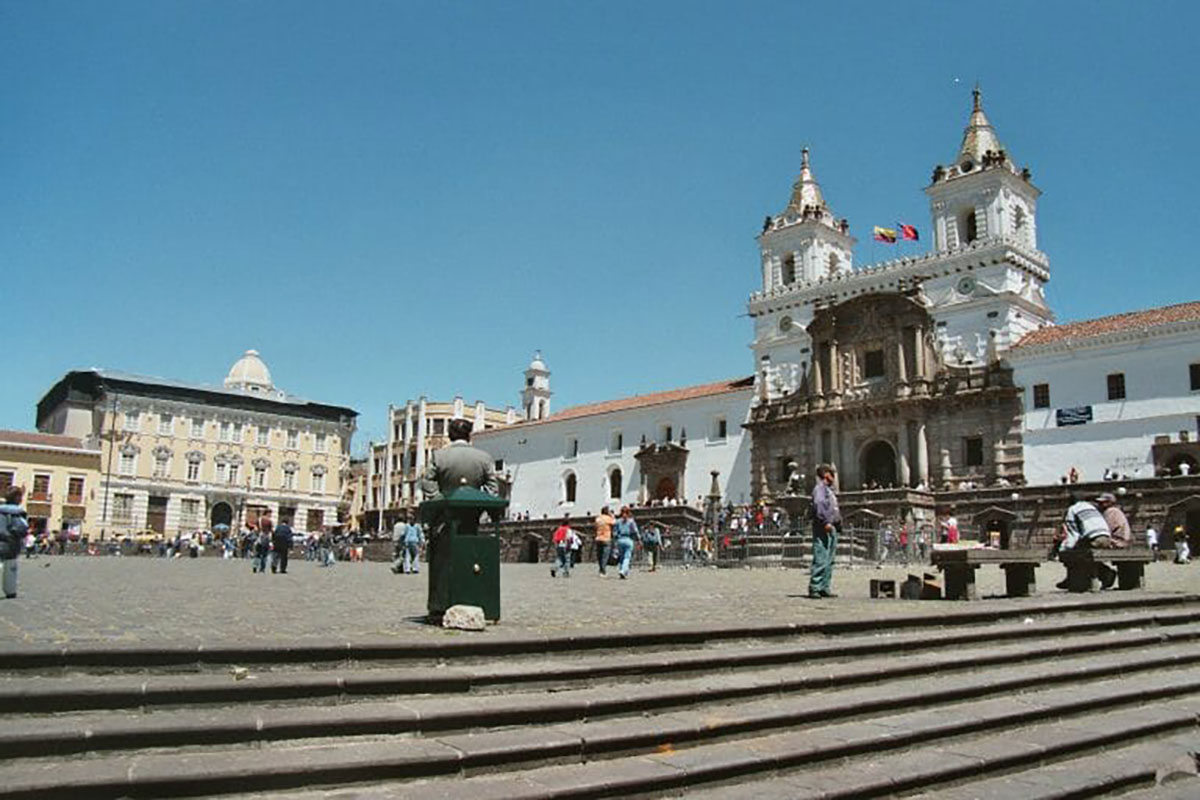
You arrive into Quito, and are met on arrival and taken to your comfortable hotel in the centre of Ecuador’s capital city.
Quito was declared a World Heritage Site in 1978 by UNESCO, and you can spend your free time exploring or just taking it easy as you get used to the altitude.
A free day to settle into bustling Quito and acclimatise a little.
You can choose to explore this vibrant city with its Unesco World Heritage Old Town and nearby Equator line by yourself, or we can arrange a city tour for you, taking in the sites, museums, markets and churches.
We head off early, around 08.00, and drive the 30km in a southern direction to Pasachoa, an extinct volcano not far from Quito.
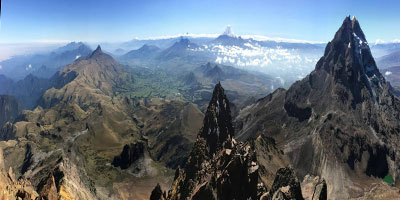
The easy hike up to the summit of this ancient and much eroded volcano takes around four hours. At the top you will be rewarded with spectacular views of the high Andean peaks around and of the steep plunging drop off into the heart of the collapsed crater, which is filled with ancient Andean vegetation.
This is an excellent peak for seeing birds, particularly the Andean condor, and the peak is a beautiful spot for a hour picnic lunch, before returning to the car park and driving back to Quito.
Rucu Pichincha stands right above the city of Quito. It has a long history of eruptions. From the edge of the paramo, where we start walking, it takes around four hours to reach the summit. The final section is a rocky scramble.
After reaching the top, we return the same way to our hotel in Quito.
This is the start of the higher peaks. We wave goodbye to Quito and head south to the Avenue of the Volcanoes.
After breakfast this morning, we drive on to the Pan American highway and head for Illiniza. We drive through scenic and verdant agricultural areas, with vistas of Ecuador’s volcanoes.
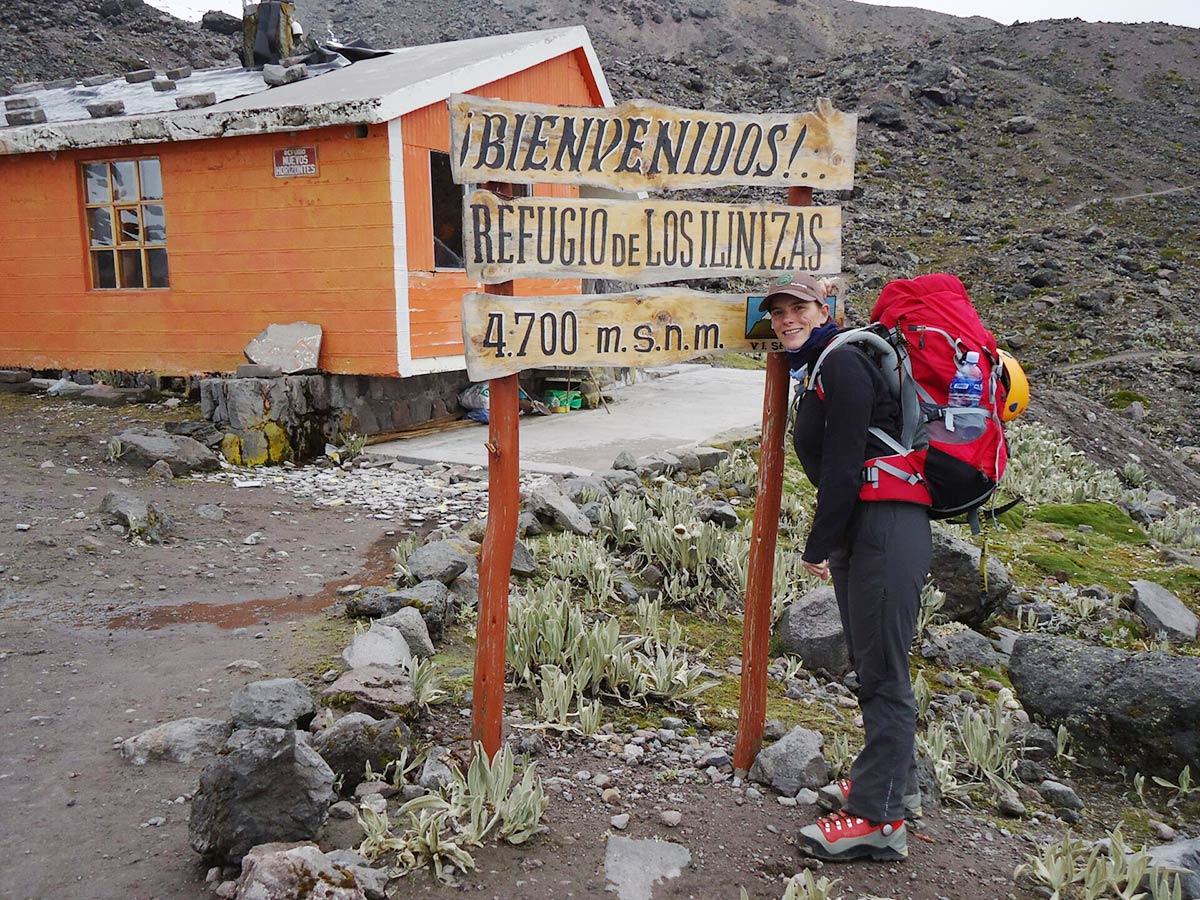
We get to the car park at the base of Illiniza and hike four hours or so through a remote paramo in an area called la Virgén to the basic mountain refugio, which sits at around 4,600m/15,092ft.
Here we relax, and stay the night.
It’s an early start today, around 05.00, but we have a good breakfast before we set off for the summit.
This peak is normally a fairly straightforward climb, if you are acclimatised. We head off up the ridge aiming for the summit.
There is one tricky part where we may rope up. We reach the summit some three hours after leaving the refugio.
Having reached the top, we return the same way to meet the vehicle and head to our hotel in/near Cotopaxi National Park, about an hour’s drive
We drive up the flanks of Cotopaxi to the car park at 4,550m/14,927ft, and from here hike 45 mins to the Jose Rivas Refuge on the north west of Cotopaxi, at some 4,800m/15,748ft.
After a refreshing brew, we begin a five hour glacier school to help prepare you for the high altitude climbs ahead. Over the next two days, we look at some of the following:
We return to our hotel and relax, leaving the glacier around 17.00.
We relax in the morning, recovering our energy, and in the afternoon head back up to the refuge.
It’s early to bed tonight – around 18.30 – as we are getting up and heading for the summit around midnight.
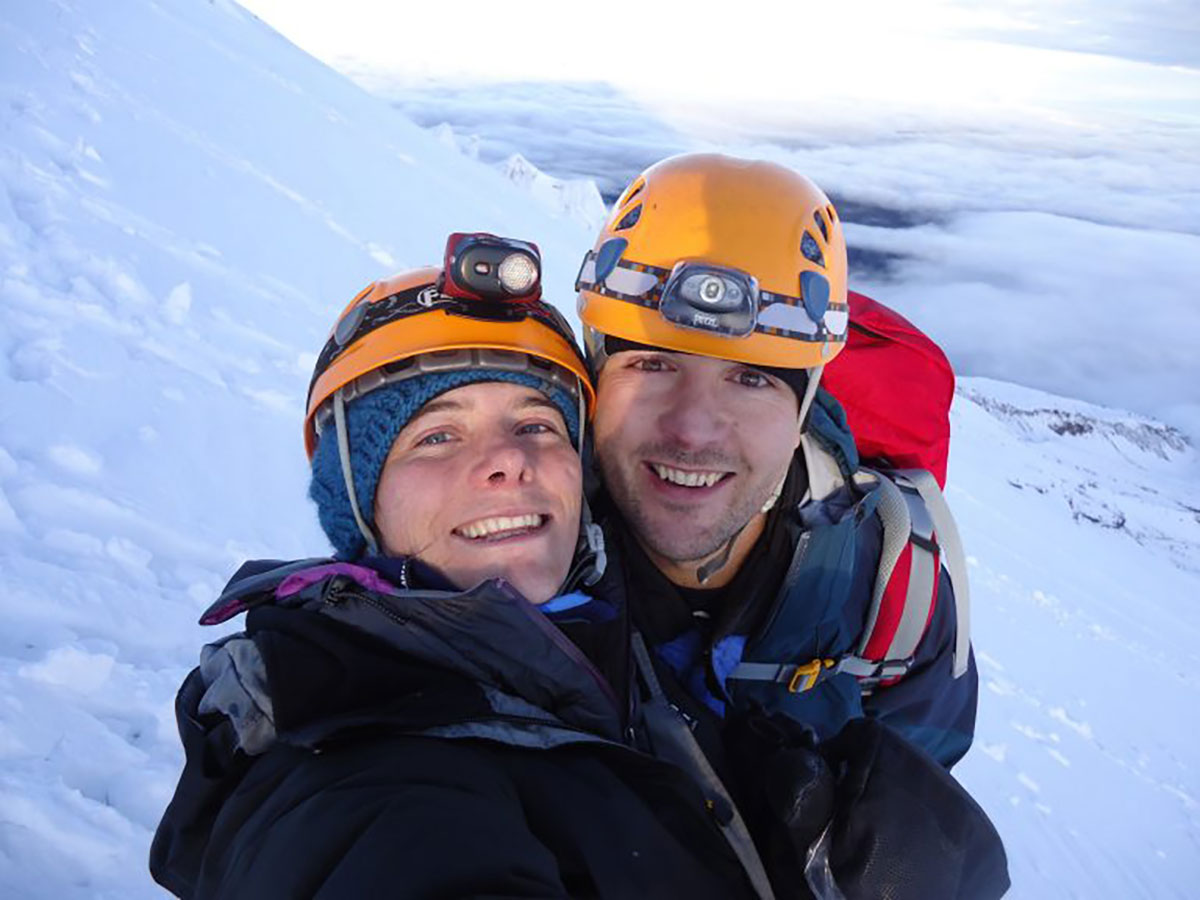
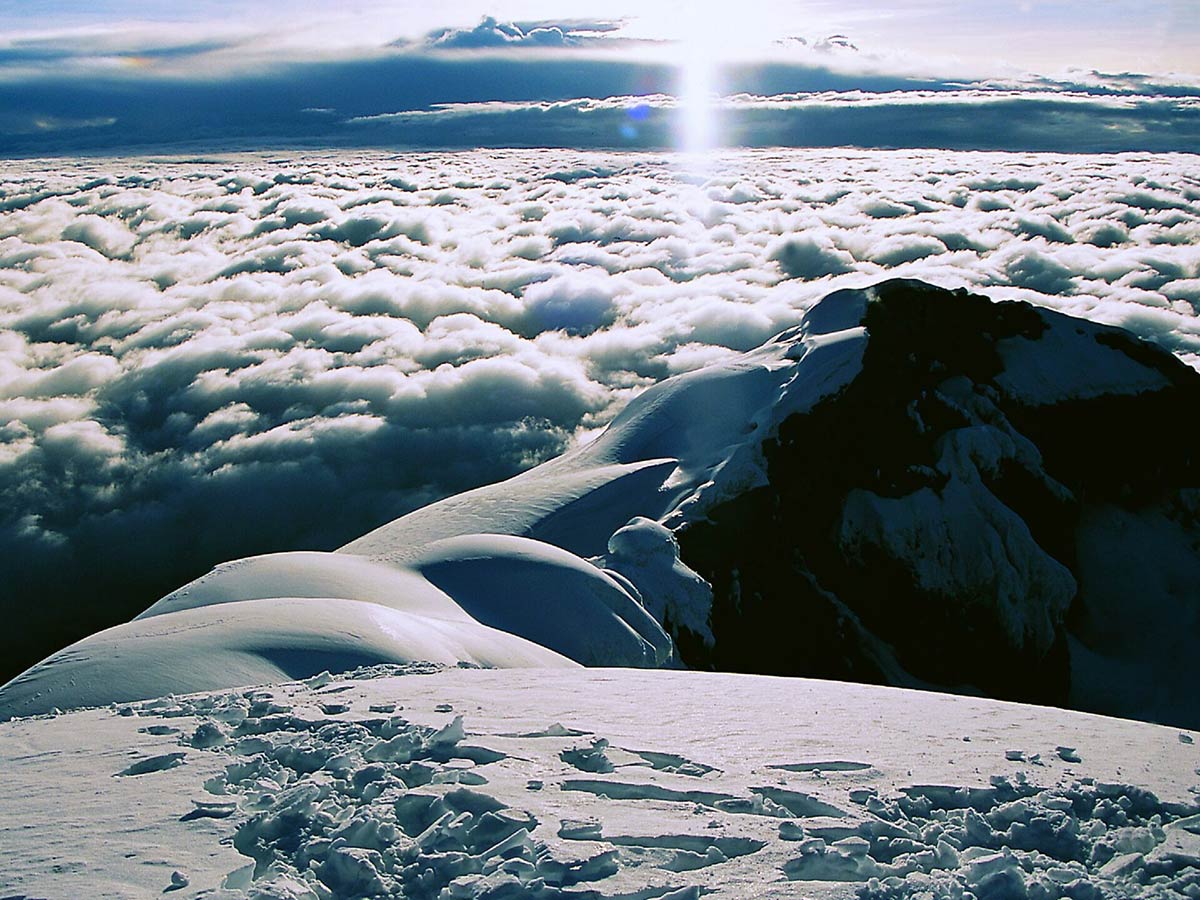
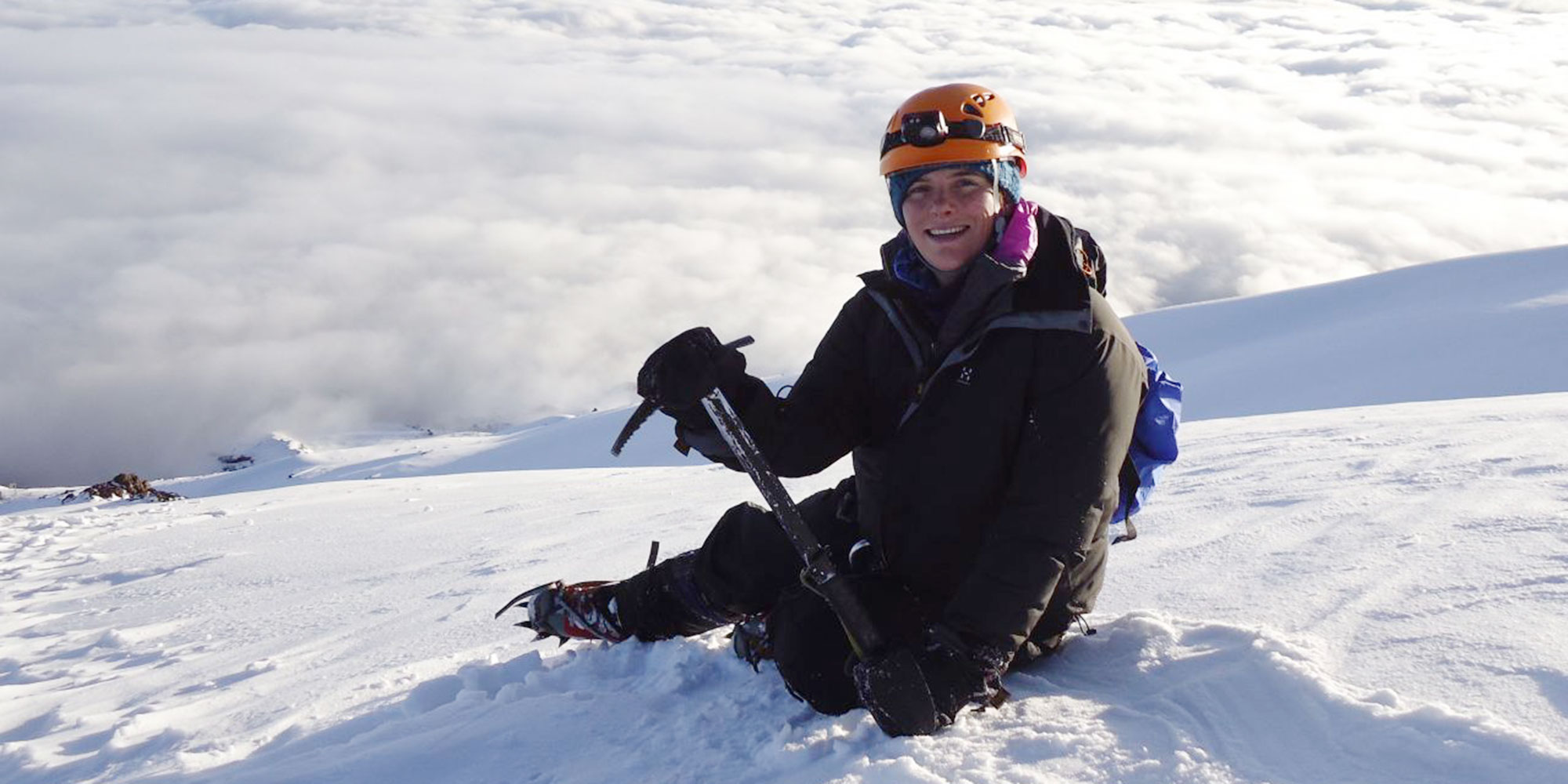
We start climbing at midnight. After a small breakfast we climb through the magnificent glaciers to the summit of Cotopaxi (5,897m/19,347ft).
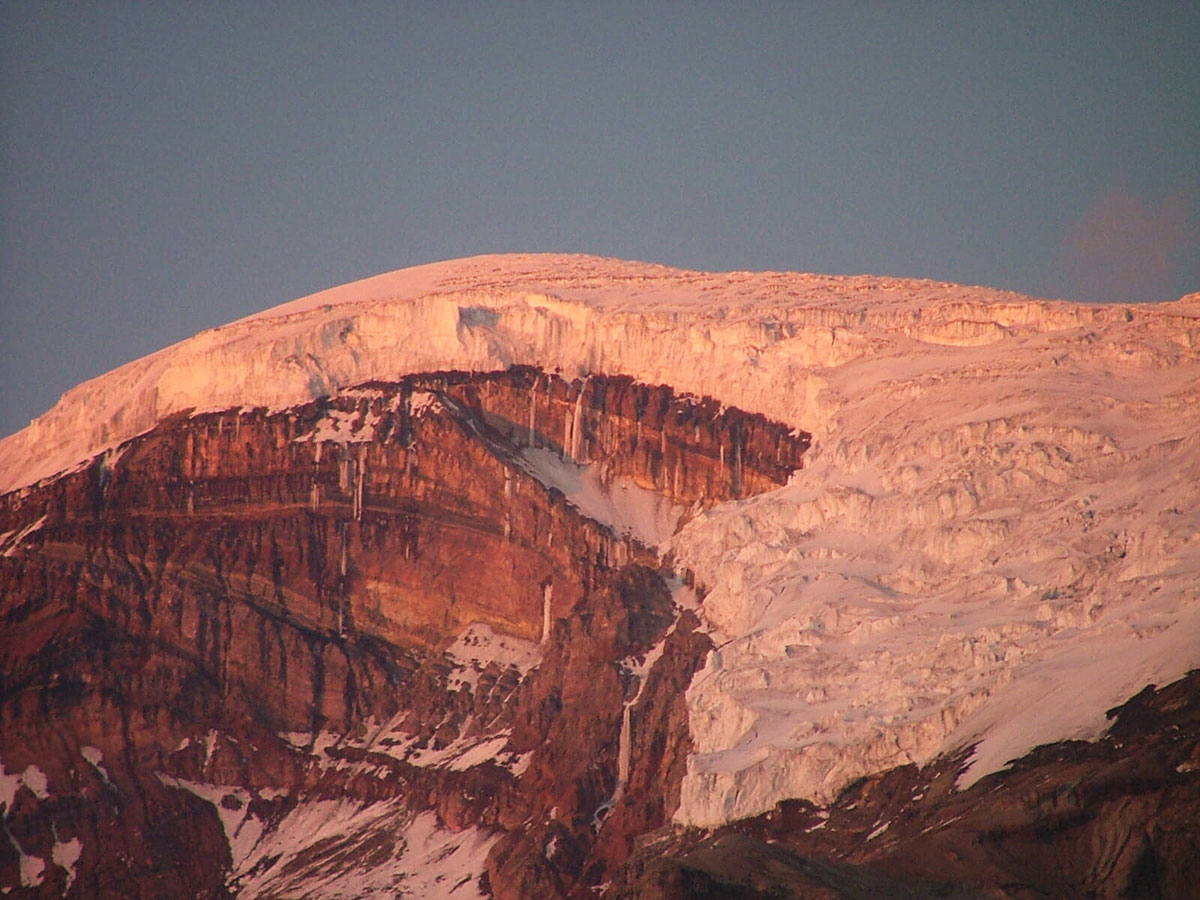
We will pass a group of uniform slopes and ice ramps of 30 and 35 degrees before reaching a glacier platform. From here, we enjoy one of the most spectacularly colourful displays in the Andes; the morning sunrise welcomes us with an incredible display.
We pass under a rock 400 feet wide called Yanasacha, on a path the Indians called ‘The route of the Moon’. Here we start climbing up the glacier slopes of some 35 and 45 degrees. At the top of these, we climb 15 more minutes climb to emerge onto Ecuador’s second highest summit – Cotopaxi, at 5,897m/19,347ft.
This should take us about 6-7 hours, and then, with the summit reached, we return to the hut, descend and then drive to our hotel.
We take it very easy today, and just take the short drive to our next hotel, getting ready for the big challenge ahead.
We leave around 10.00, and drive south of Cotopaxi, passing the agricultural towns of Latacunga and Ambato. It takes about five hours, but is a scenic drive that offers photographic opportunities.
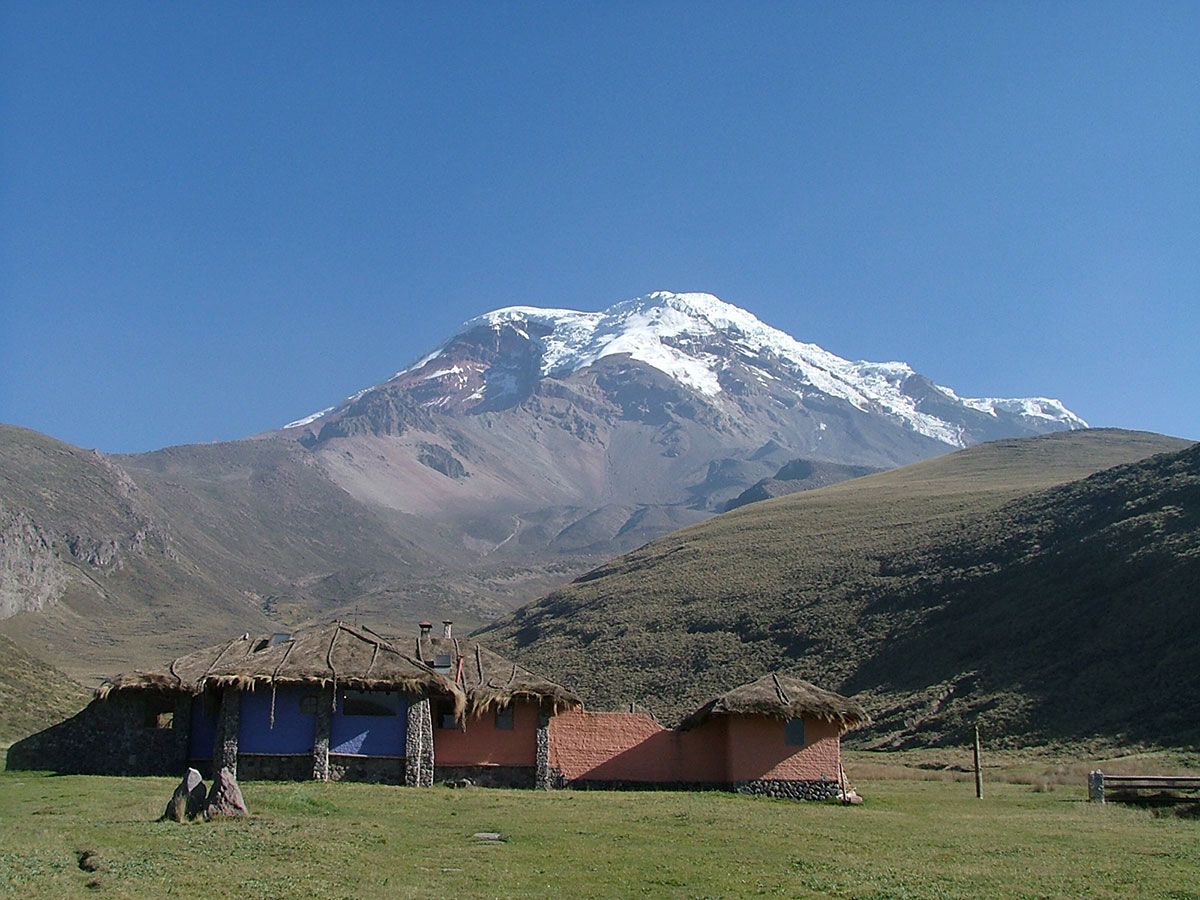
Our destination is the lower refuge of Chimborazo (4,800m/15,748ft), where we eat dinner and head to bed early, as another midnight summit start beckons.
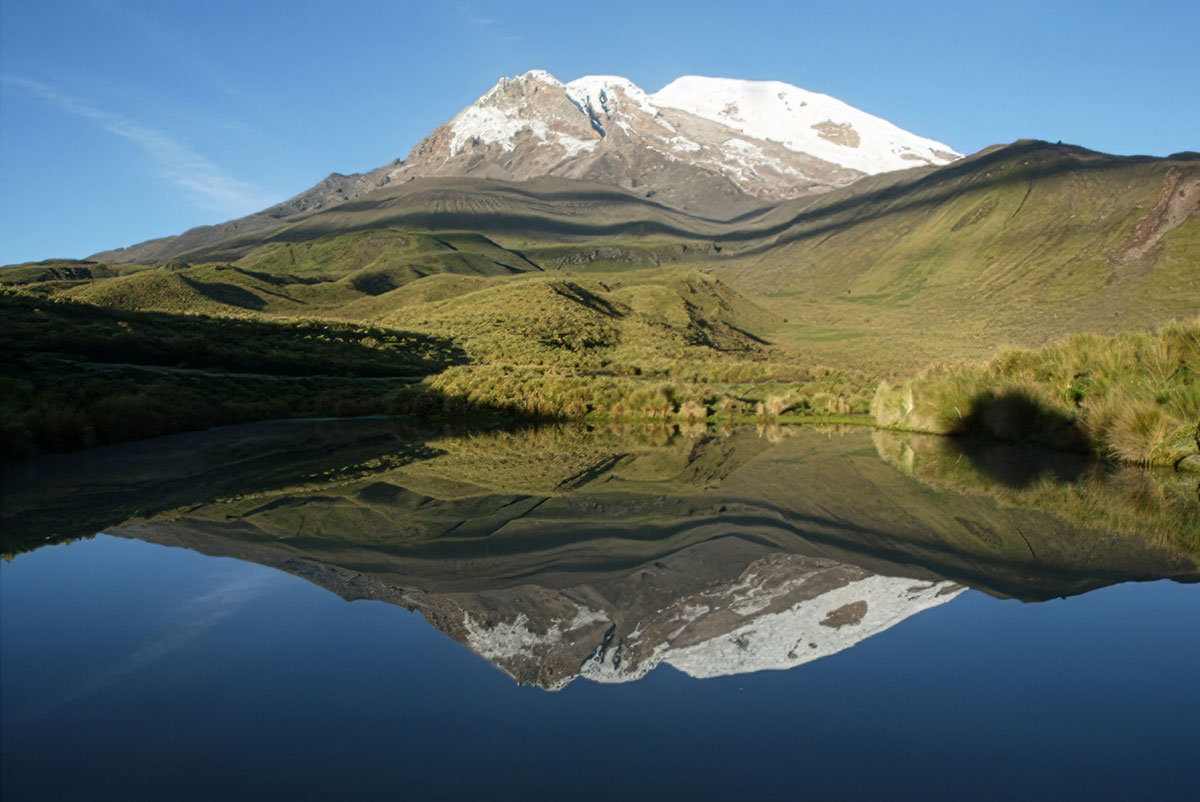
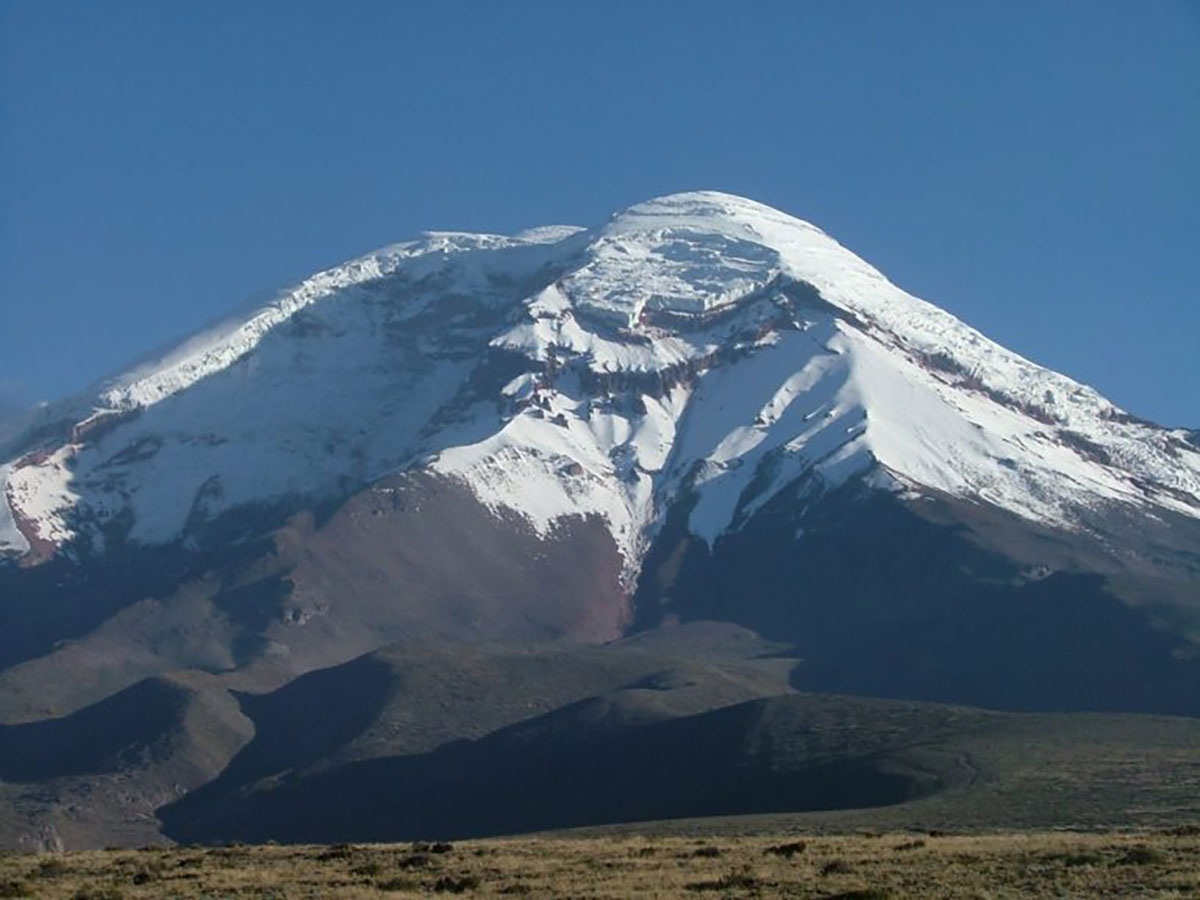
Chimborazo, with 5 summits, is Ecuador’s highest mountain and one massive volcano at 6,310m/20,702ft.
We rise at midnight for breakfast and an equipment check, then leave the hut at 01.00.
We move immediately to the huge glacier on Chimborazo’s southwest face. Here, we first traverse moderately angled ice slopes, climb through a series of icefalls and then up some steep ice ramps. The terrain is a mix of moderate ground, and then some steep pitches which we belay up.
As a team, we rope together in order to cross crevasses and finally make it to the summit.
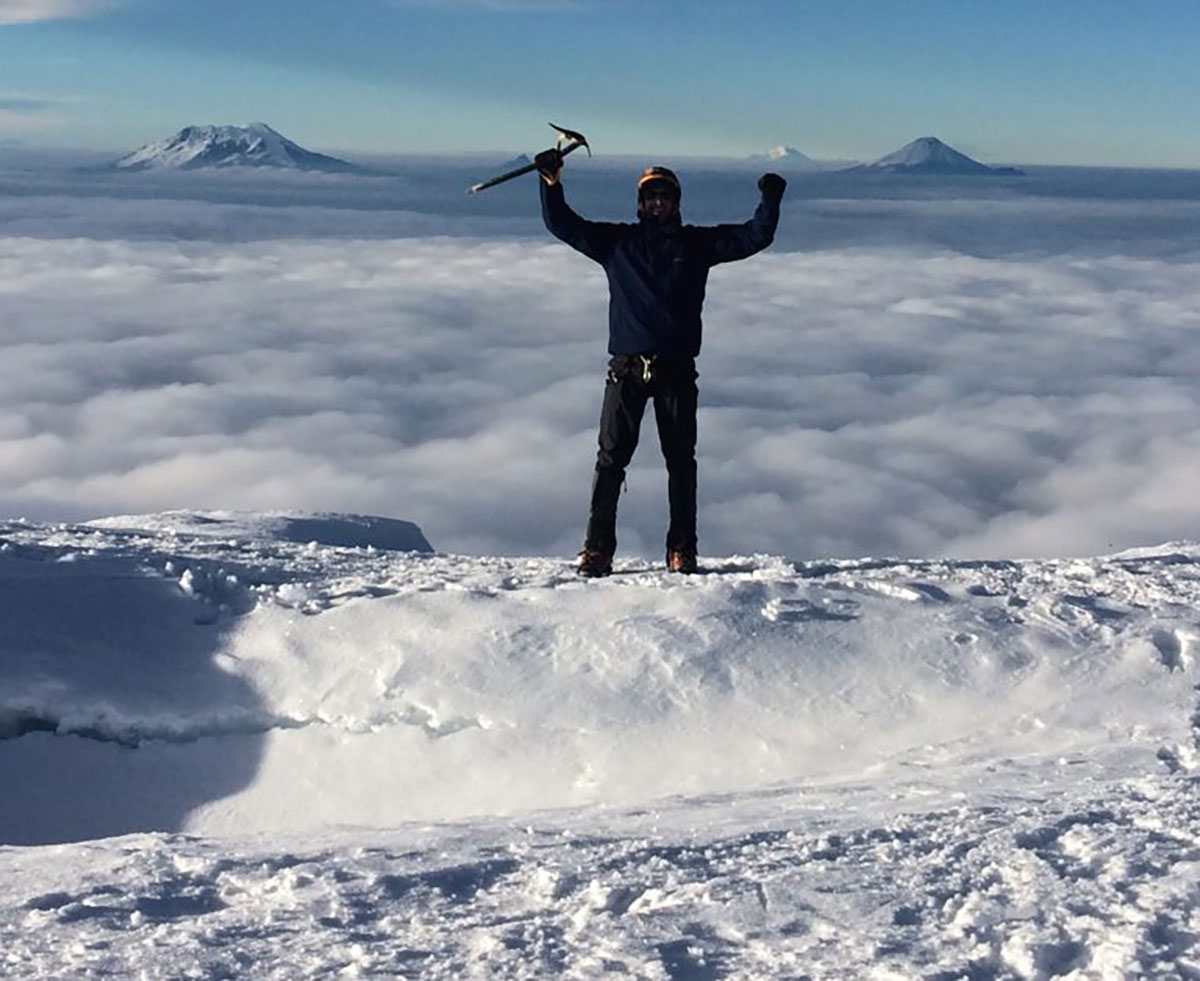
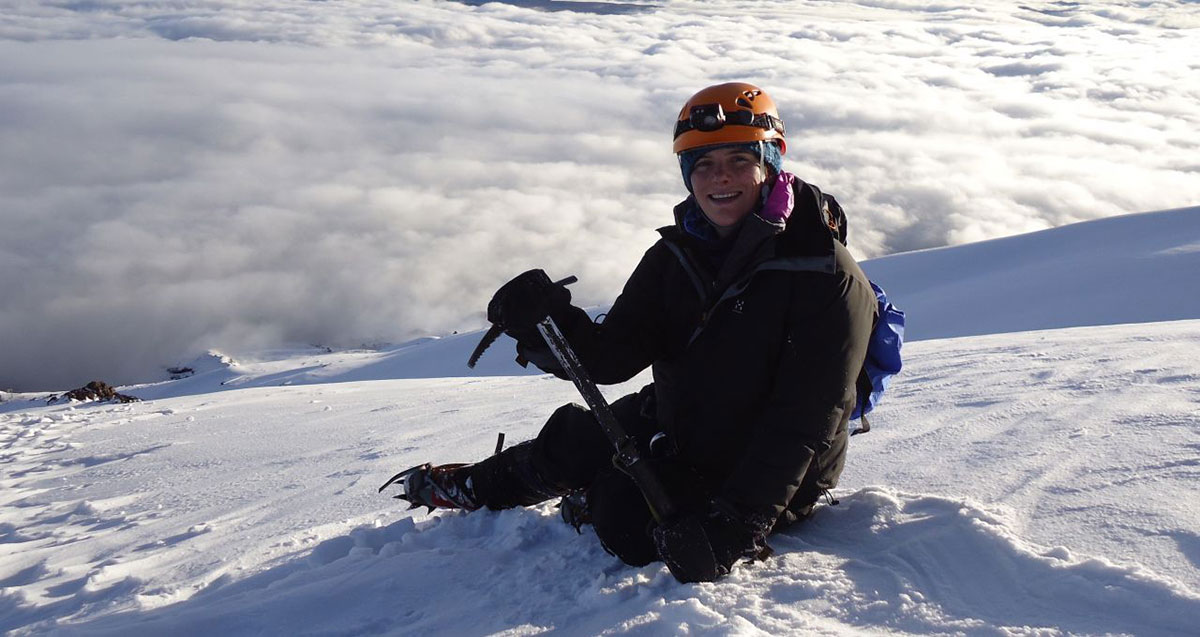
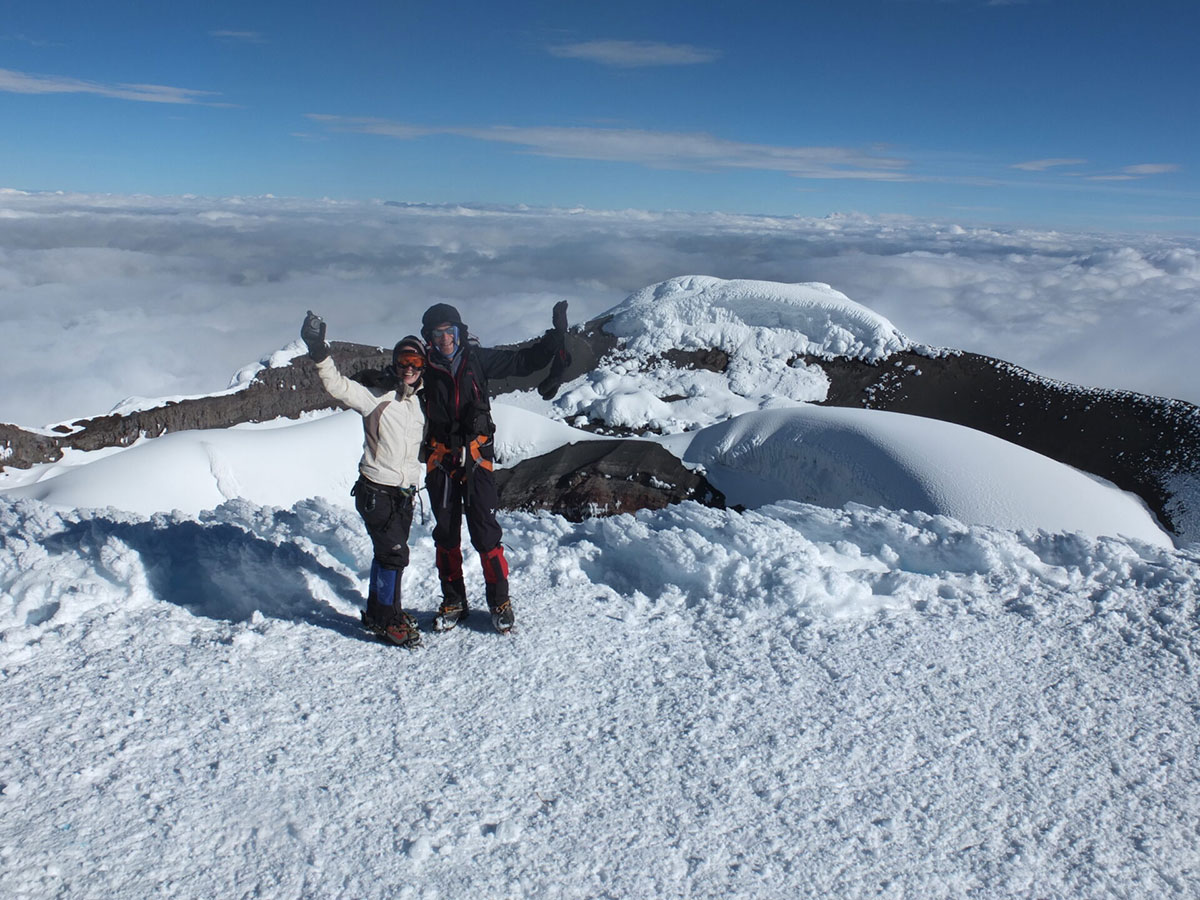
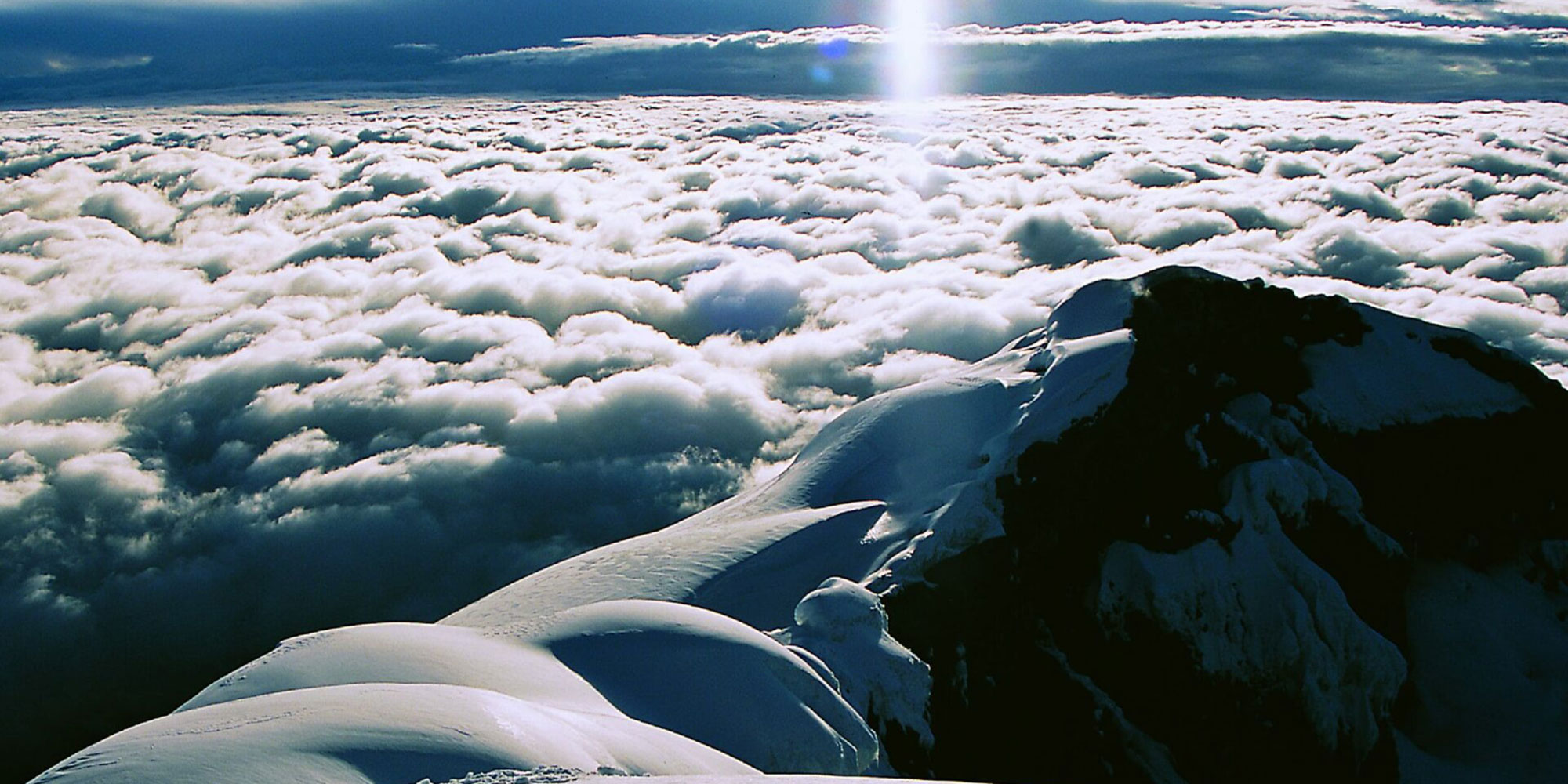
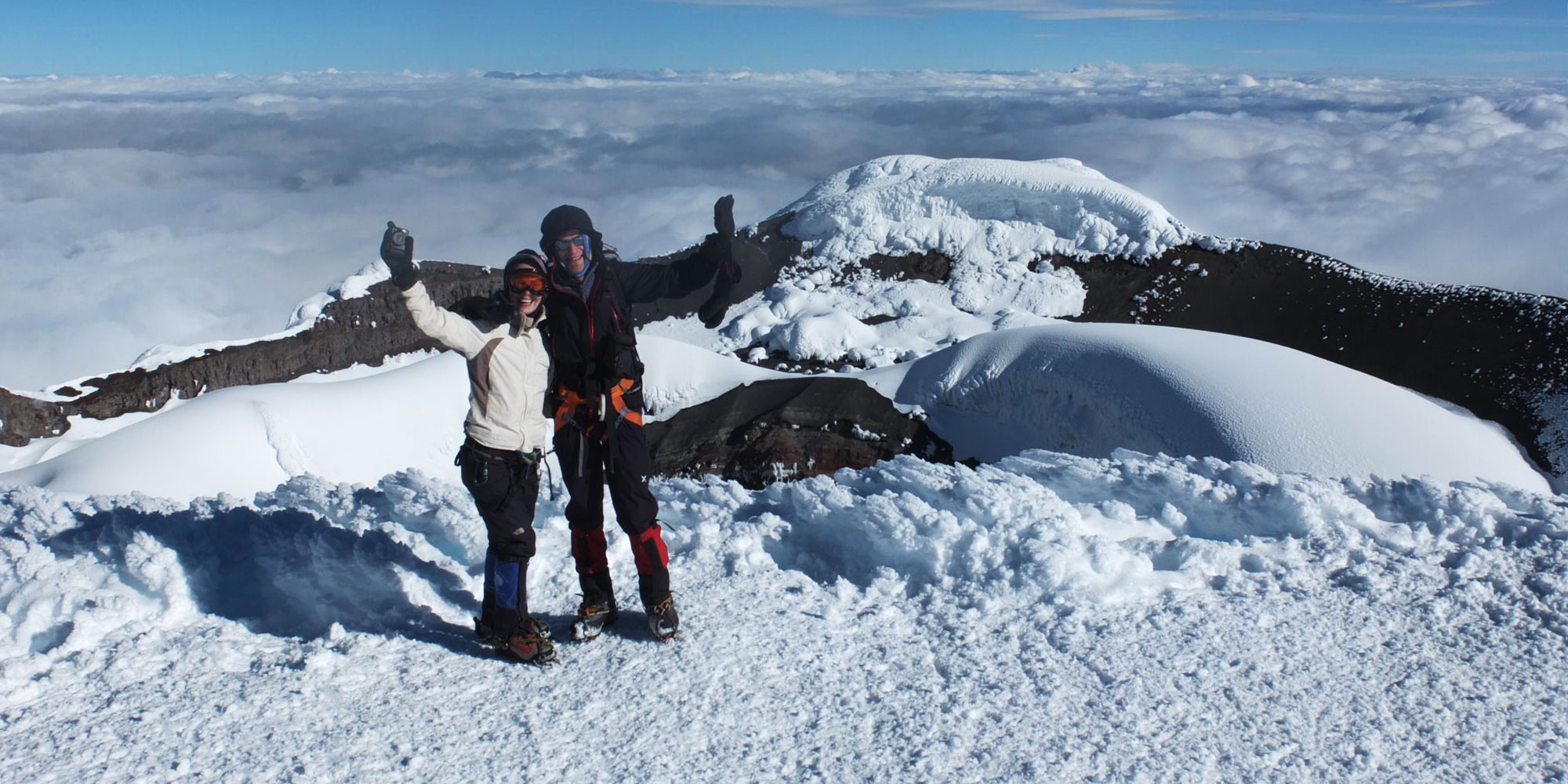
This is the highest point of the Ecuador Andes peak and from here we have a magnificent view of the volcanoes that form the Eastern and Western Cordilleras of Ecuador. It’s a great sight, the volcanoes seemingly emerging from the clouds below our feet.
Our approximate climbing time is 8 to 9 hours, but we take our time to take some pictures and rest at the top of the mountain, before the 3-4 ours return to the refuge.
Here, a quick rest, and we are in the car and driving back to Quito, arriving around 20.00-21.00, in time for some food and then a well-earned rest at our hotel.
Buffer day for second summit attempt if required.
Triumphant, most likely tired too, we transfer you to the airport for your flight out, or we can help extend your trip with Amazon or Galapagos options.
Mid range hotel in Quito, basic refuges on mountains.
If we need to camp, we use two-man high mountain tents.
The trip is open to anyone with a positive attitude who wants to walk in a stunning and remote part of Ecuador’s Andes, and to really challenge themselves.
This is a strenuous trip and there is a big demand on the body. Those with no previous trekking experience can try the trip, although experience of hiking and camping is beneficial.
You need to have a very good level of fitness for the trip – contact us for more information.
When at refuges, your breakfasts will be a mix of hot drinks, cereals, fruits and toast with jams.
Lunch, while out walking, will be either sandwiches or meat and cheese with crackers, with fruits etc available on trips from basecamps.
Meals at refuges are large and feature bread, vegetables, meats and hot drinks, rice and pasta dishes. Almost all dietary requirements can be catered for – please ask.
Summit attempts usually start in the dark, between 00.00 and 02.00, aiming to return from the summit by late morning.
We have worked for many years with our fully qualified mountain guides (ASEGUIM).
They live for climbing in the area and know the mountains extremely well. They speak English and will show you all the techniques you need in order to make safe and successful summit attempts.
We use the same local drivers and support staff we have used for many years – the cooks, porters etc all have many years experience in the mountains.
An extraordinary Peru and Ecuador adventure uniting Machu Picchu, the Amazon, and the Galapagos in a flawlessly organized journey.
A joyful Galapagos family adventure filled with wildlife encounters, island fun, and unforgettable underwater moments.
We include the highest of Ecuador’s magnificent volcanoes, Chimborazo – on our guided climbing tour.
With our professional guides, you’ll acquire the skills and acclimatisation to take on Ecuador’s abundant and challenging volcanoes.
Learn ice-climbing skills and set yourself a tough challenge and climb Cotopaxi (5,897m/19,347ft) and Chimborazo (6,310m/20,702ft).
We start lower, and each of the first three volcanoes we climb are to acclimatise you perfectly for the two main mountains – Cotopaxi and Chimborazo.
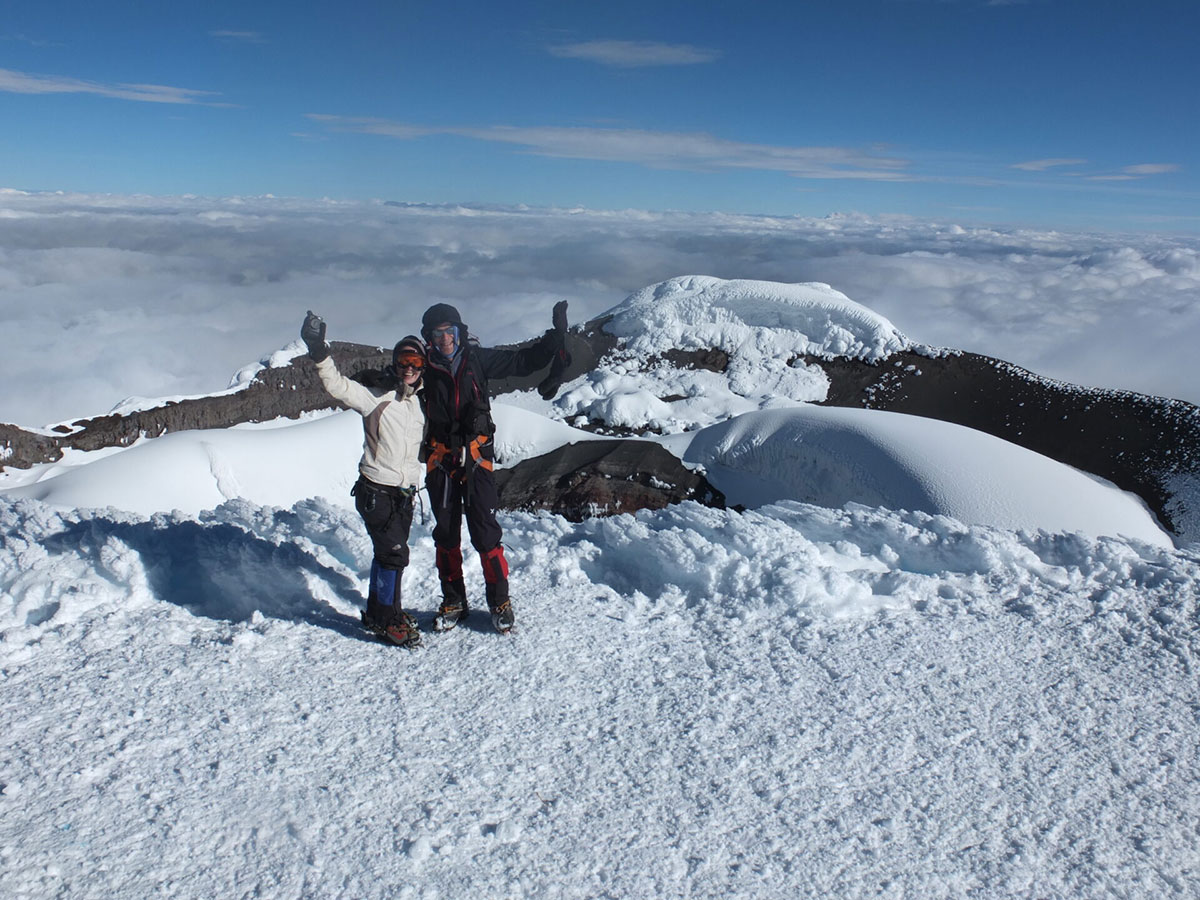
Climbs are fully supported and led by qualified English-speaking guides, and are open to all levels of climbers.
We provide the technical kit you need while you learn the ice skills required during the glacier schools we run.
As well as pushing yourself to new heights, the acclimatisation walks bring you close to the diverse highland landscapes of Ecuador.
You see indigenous communities as you hike through areas replete with fascinating flora and fauna.
And once you reach the summit of Chimborazo you can look back at a climbing adventure holiday of a lifetime.
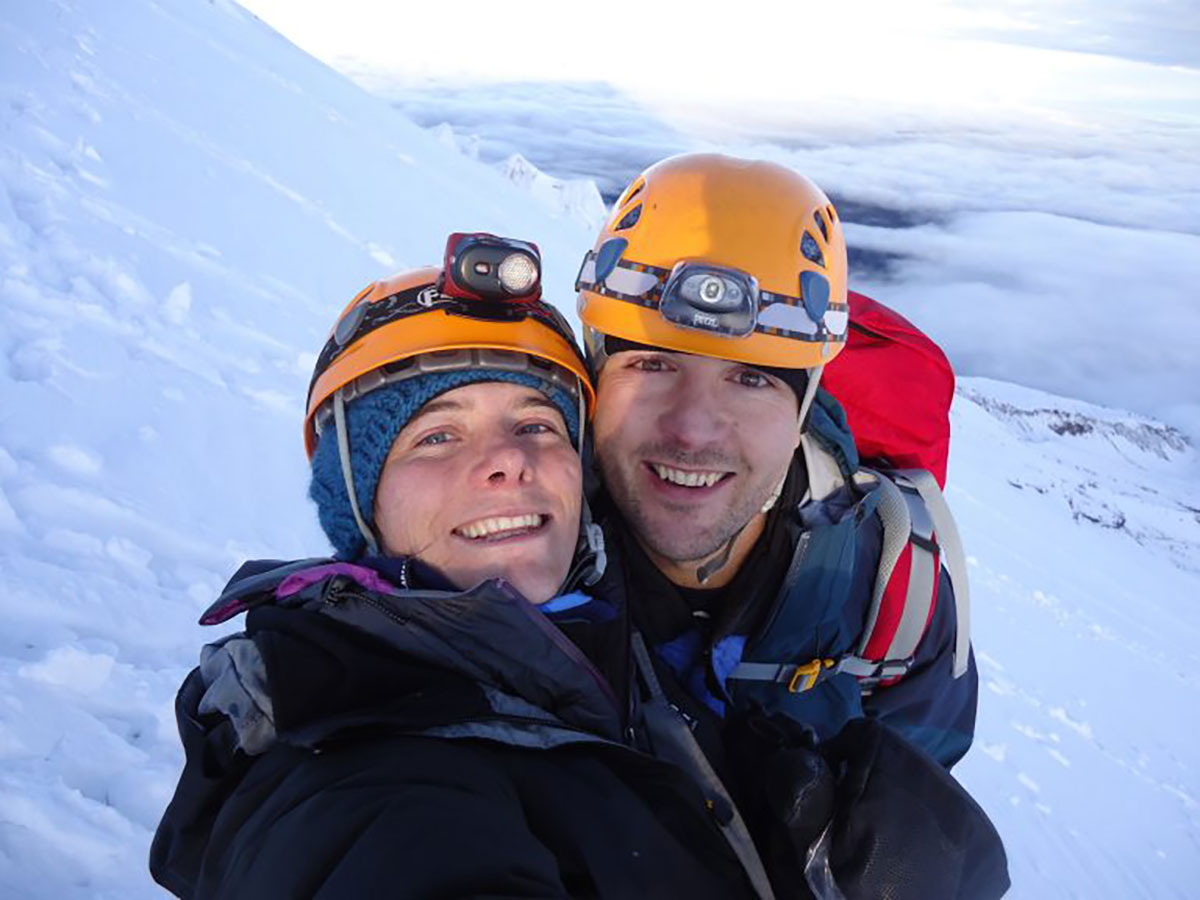
From: $2970 per person
Duration
15 days
From: $1386 per person
Duration
4 days
Being at altitude, especially in the tropics, is usually a pleasure as it isn’t so hot, there are few insects and the air is clear.
However, when gaining altitude, air pressure drops and the amount of oxygen reaching the lungs is reduced. Although we build plenty of acclimatisation time into our itineraries, certain ill-effects are possible. Nevertheless, all of these can be minimised or prevented if care is taken.
On reaching heights above 2,500m (approx. 8,200 ft), especially when ascent has been straight from sea level, heart pounding, mild headache and shortness of breath are normal, especially on exertion.
Acute mountain sickness (AMS) is a syndrome known locally as soroche, whose symptoms can include of bad headache, dizziness and nausea).
To avoid AMS, you should:
These peaks are non-technical and are suitable for acclimatising prior to tackling one of Ecuador’s big volcanoes. We recommend several days in Quito and at least two peaks before doing our mountaineering course or attempting peaks over 5,000m / 16,404ft.
Guagua Pichincha: 4,794m / 15,728ft. An active volcano on the outskirts of Quito that last erupted in October 1999. This is a readily accessible and scenic acclimatisation climb that offers fabulous views from the crater’s rim.
Rumiñahui: 4,634m / 15,203ft. Named after Atahualpa’s general who led the fight against the Spanish conquistadors after Atahualpa was murdered. Legend has it that Rumiñahui hid a large cache of the Inca ruler’s gold in an undisclosed and still unknown location. This climb is a good acclimatisation warm-up in Cotopaxi National Park and offers magnificent views of Cotopaxi.
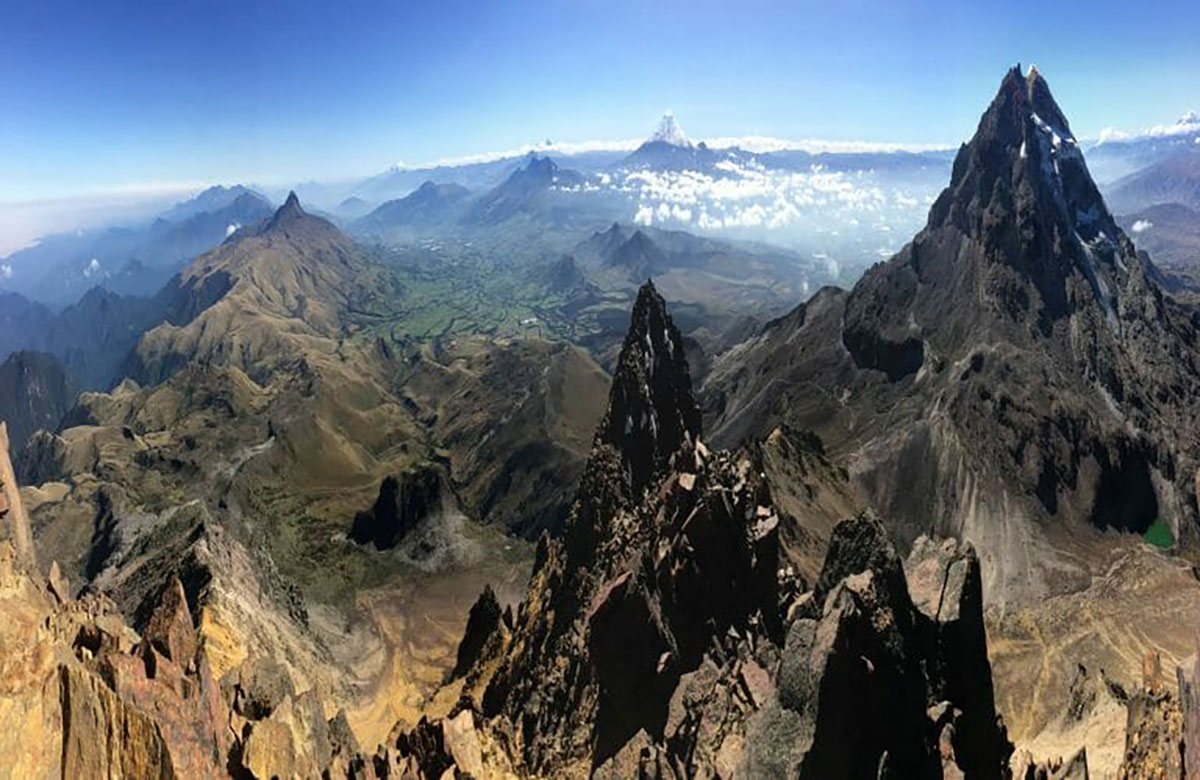
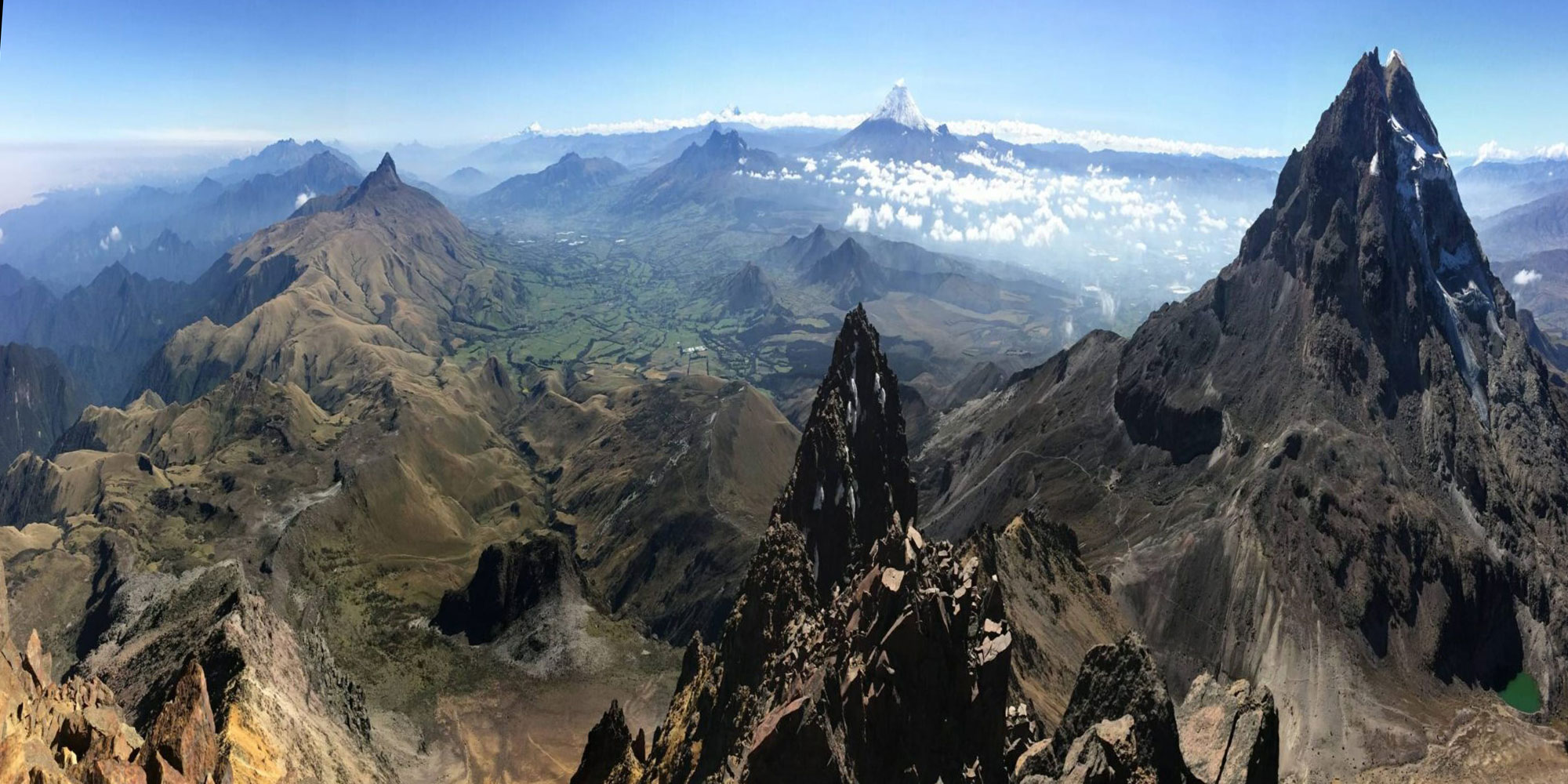
Imbabura: 4,630m / 15,190ft. The peak overlooking Otavalo. It is a long walk up, with a short scramble near the summit. The summit ridge offers great views of Imbabura’s impressive open crater and Lago San Pablo.
Ilinizas Norte: 5,126m / 16,818ft. An excellent acclimatisation peak with a bit of a scramble to reach the summit and magnificent views. Although it looks like a large pile of rock rubble, the rock is pretty good by Ecuadorian standards.
Pasachoa: 4,199m / 13,776ft. An ancient, severely eroded volcano inactive since the last ice age. It is 30km south of Quito. There is a short scramble from the top of the grassy ridge to the summit.
Carihuayrazo: 5,100m / 16,732ft. An ideal acclimatisation peak in conjunction with the Abraspungo trek. It is also a good place to practise basic glacier skills, use of crampons and ice-axe self-arrest. Loose rock and scree to cross above the glacier and then a scramble to reach the summit.
Cubilche: 3,800m / 12,467ft. Around 14km from Otavalo, a dormant volcano with five small craters on the top. An ideal acclimatisation peak.
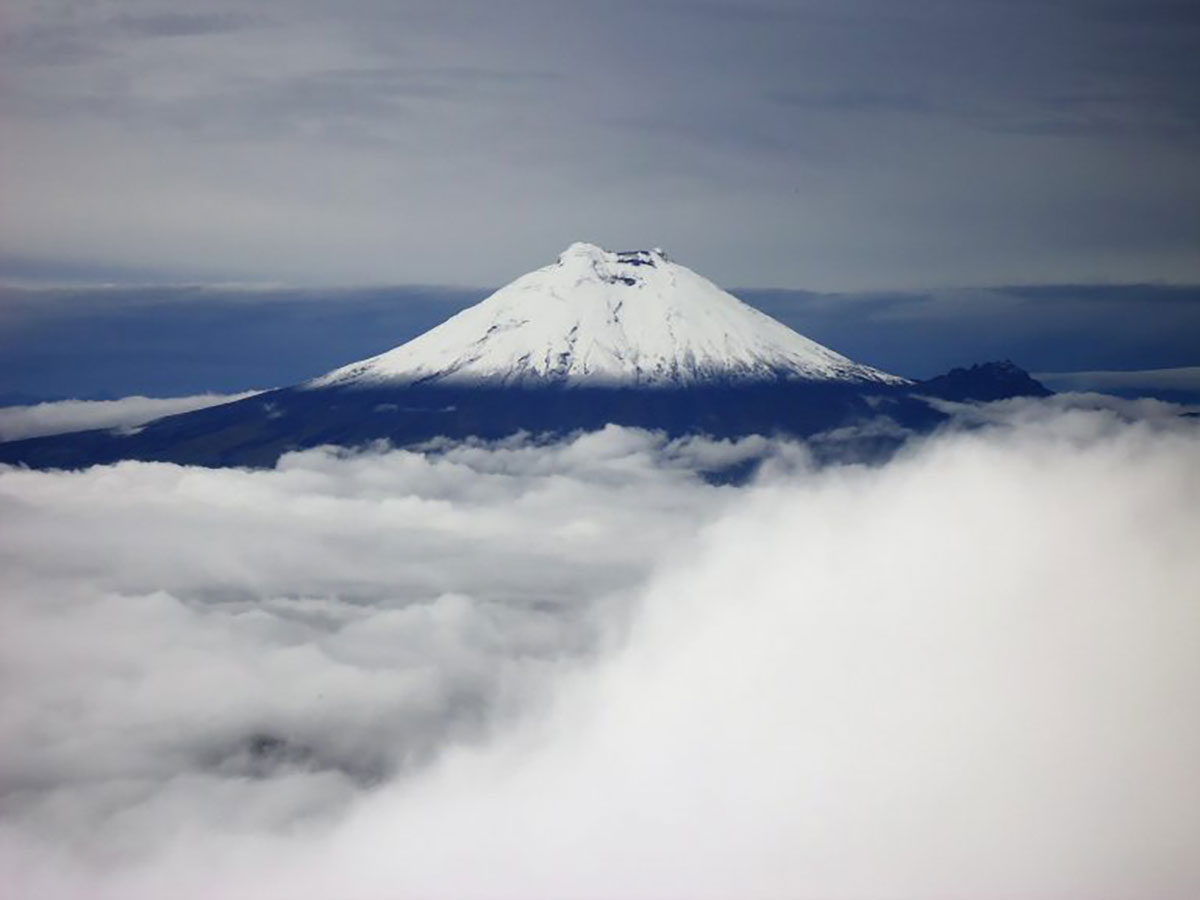
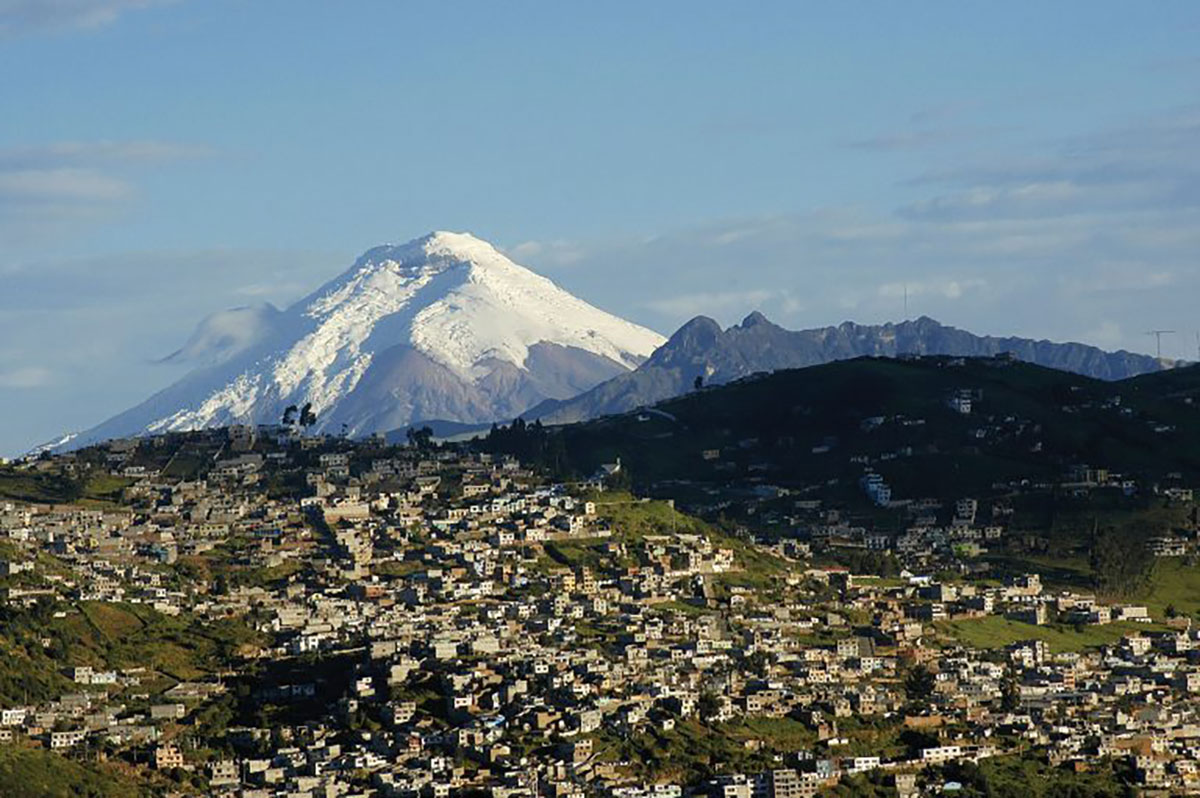
Cotopaxi: 5,897m / 19,347ft. Ecuador’s second-highest peak and one of the highest active volcanoes in the world. It is a nearly perfect snow-capped volcanic cone situated 55 kilometres south of Quito in Cotopaxi National Park. We drive to just below the refuge (4,800m / 15,748ft) and from there it is a 6–8 hour climb to the summit, mostly on steep snow and ice slopes. First climbed in November 1872 by Angel Maria Escobar (Colombia) and Wilhelm Reiss (Germany). Currently active.
Cayambe: 5,790m / 18,996ft. The highest and coldest point on the equator. It is the only place on earth where the latitude is zero degrees and so is the temperature. Long thought extinct, Cayambe is now deemed to be active and is closely monitored.
Chimborazo: 6,310m / 20,702ft. Ecuador’s highest peak and one of the most impressive in all the Andes. Measured from the centre of the earth, it is the highest mountain in the world. Chimborazo is the southern-most peak in the Cordillera Occidental chain. First climbed in 1880 by Jean Antoine and Louis Carrel (Italy) and Edward Whymper (UK). Best time for climbing is during late January and early February.
Antisana: 5,758m / 18,891ft. Big, high and covered in crevasses. Wild and remote, offering some of the most interesting climbing in Ecuador. Climbing Antisana is serious and as technically difficult as Cayambe. This peak has seen relatively few ascents.
Ilinizas Sur: 5,263m / 17,267ft. A technical climb requiring crampons, ice axe, knowledge of self-arrest, glacier travel and crevasse rescue skills. The route is suffering from glacial retreat.
Landscapes vary from the drier south to the more humid north.
The Highlands, or sierra, encompass two Andean Cordilleras (the Central and Western), which run north to south through the country. Ecuador’s largest volcano is Chimborazo (6,310m) whose summit, because of its proximity to the equator, is the closest point on earth to the sun. Several of Ecuador’s volcanoes are still active, and it’s a great area for trekking.
Descending the steep, east-facing slopes of the eastern Cordillera, one passes through a transition zone comprising dense cloud forest and humid high jungle, before entering the Amazon lowlands.
This mainly primary rainforest covers a third of the country, accounts for 5% of the population and stretches across Ecuador, from its Colombian to its Peruvian borders.
The Galapagos Islands are simply unique. Lying 600 miles off the mainland, the archipelago comprises the summits of gigantic equatorial volcanoes.
The flora and fauna of the Galapagos, long separated from their continental cousins, have evolved differently. Charles Darwin used his observations there to develop his theory of Evolution.
Ecuador is the second smallest South American country, and one of the most varied.
It comprises three main geographical areas: the coast, highlands and Amazon plus is home to the Galapagos Islands.
Because of its relatively compact size, it makes a great holiday destination as you can move from highlight to highlight fairly easily and rapidly.
An extraordinary Peru and Ecuador adventure uniting Machu Picchu, the Amazon, and the Galapagos in a flawlessly organized journey.
A joyful Galapagos family adventure filled with wildlife encounters, island fun, and unforgettable underwater moments.