From: £3,380
From: $4,500
Today you make your way (we can organise bus) from El Calafate to El Chalten, by bus (3 hours).
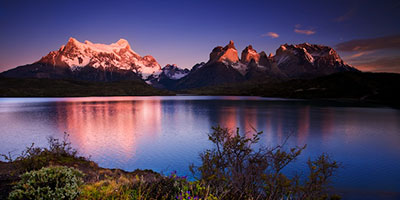
El Chalten is small town of approx. 300 population, located at the foot of the granite peaks of Fitz Roy and Cerro Torre.
You meet with the rest of your group and guide and receive a trek briefing about the Southern Patagonian Ice Field, and what lies ahead.
The guide will give detailed instructions on how to use camping and technical gear (provided) and check your kit. Spend the evening in a lodge / hotel.
After breakfast, our vehicle takes you to the bridge over the Eléctrico River, 15km northwest of El Chaltén, and the start point of our trek. Set off in the direction of the base of the Marconi Glacier.
We walk the first two hours on a well-marked path, through a forest of Lengas and Ñires, the southern beech trees alongside the Eléctrico River.
As the vegetation thins, we happen upon the Piedra Del Fraile campsite (Refugio Los Troncos – property of Estancia Ricanor), our last encounter with civilisation until we return to El Chaltén.
From here, we continue to trek towards the Fitz Roy massif, entering a great glacier valley surrounded by Treinta Aniversario, Marconi South and the North peaks. We follow the southern shore of Lake Eléctrico, crossing moraines and rocky formations left by the glaciers less than 70 years ago.
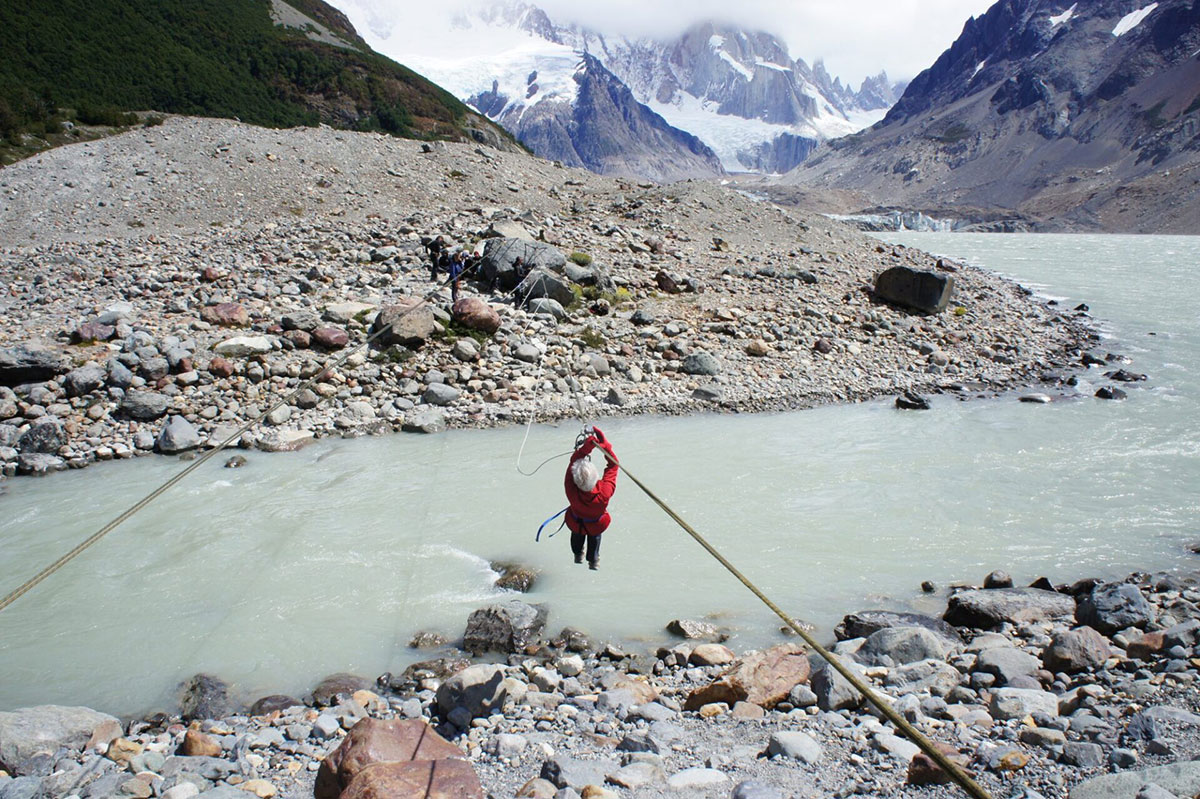
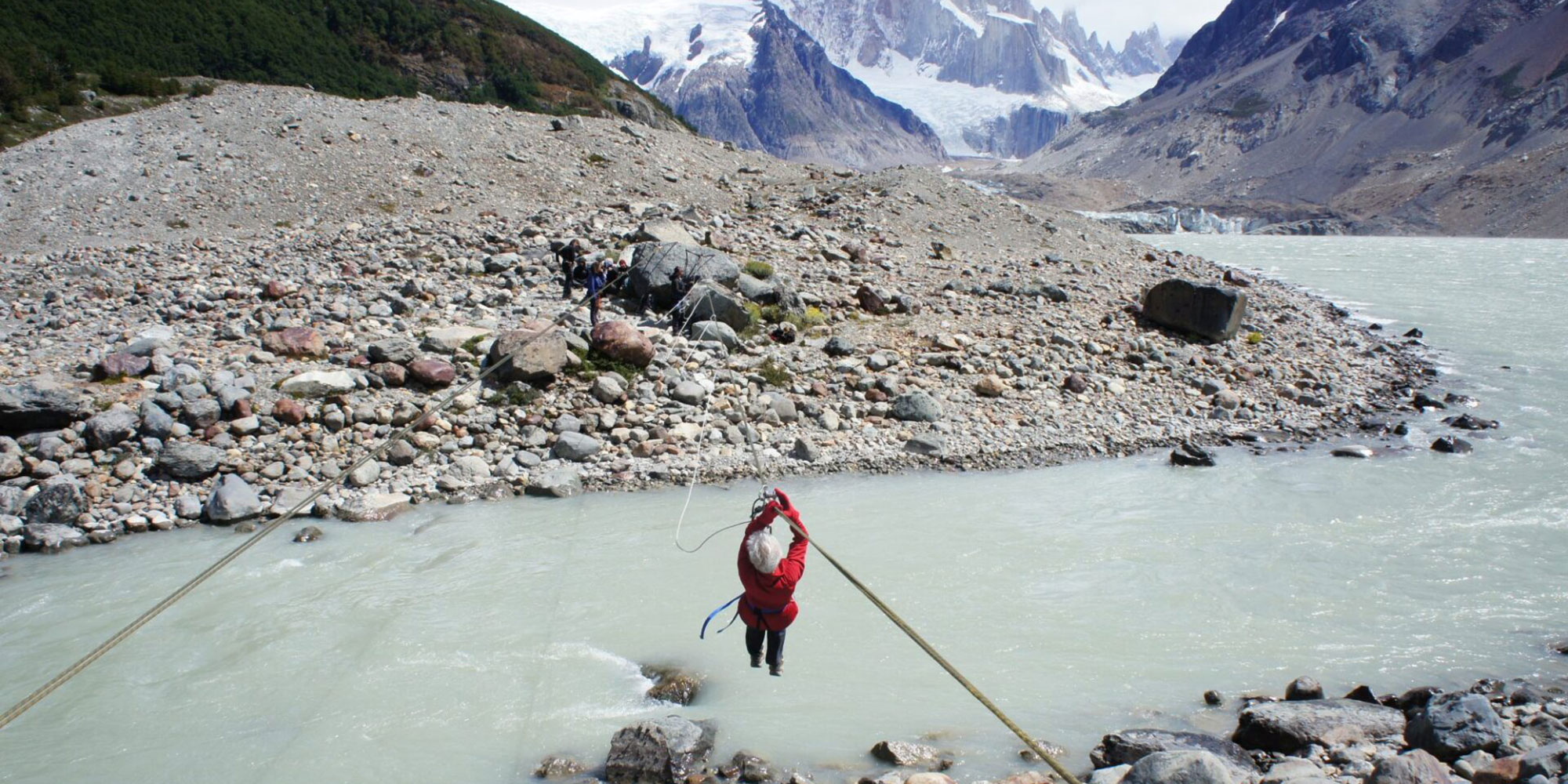
We cross the Pollone River and get views of the north-west face of Fitz Roy. Another hour of trekking brings, we cross the Upper Rio Electrico zipline and look for our camp, which is on the way to the Marconi Pass.
Distance: 19km
Altitude gained: +550m
Trekking time: 9 hours
Today we get start what will be the daily camp routine – expedition: breakfast, pack up camp and backpacks, then trek.
Within 30 minutes of leaving camp we can see the face of the Marconi Glacier. A gigantic scree moraine is our first obstacle; the terrain here is unstable and moves constantly, preventing the formation of a clear path. It’s a scramble for 20 minutes until we reach the glacier for what is probably the toughest part of the trek.
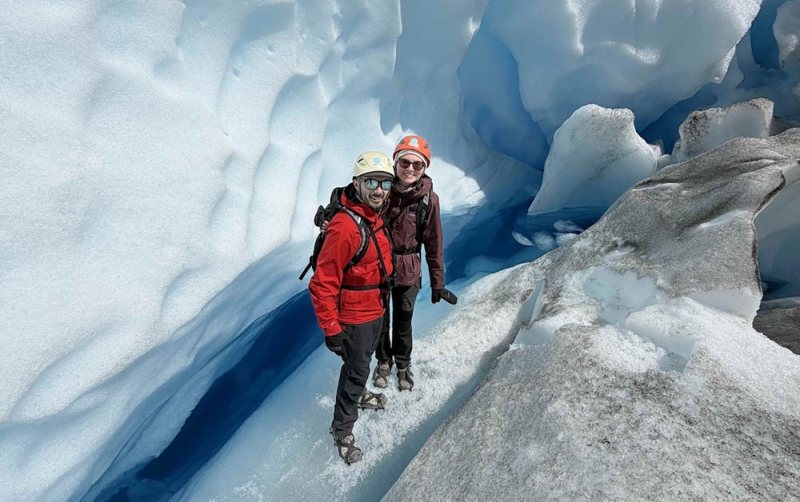
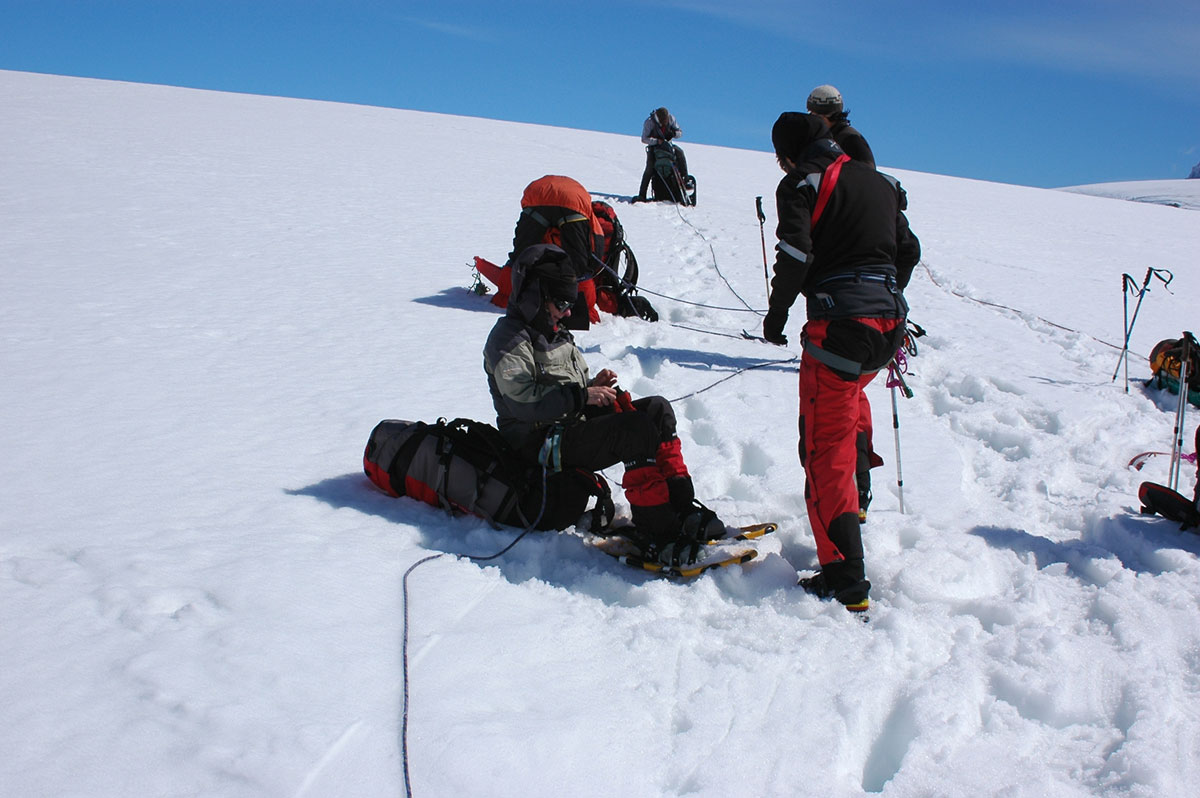
We climb 800m/2,400ft on ice and snow, using crampons and avoiding crevasses, with the expert assistance of the guide and his team (we may rope up if necessary). It may be windy and stormy, or completely clear, but our goal is our second campsite, on the edge of the Southern Patagonian Ice Field itself.
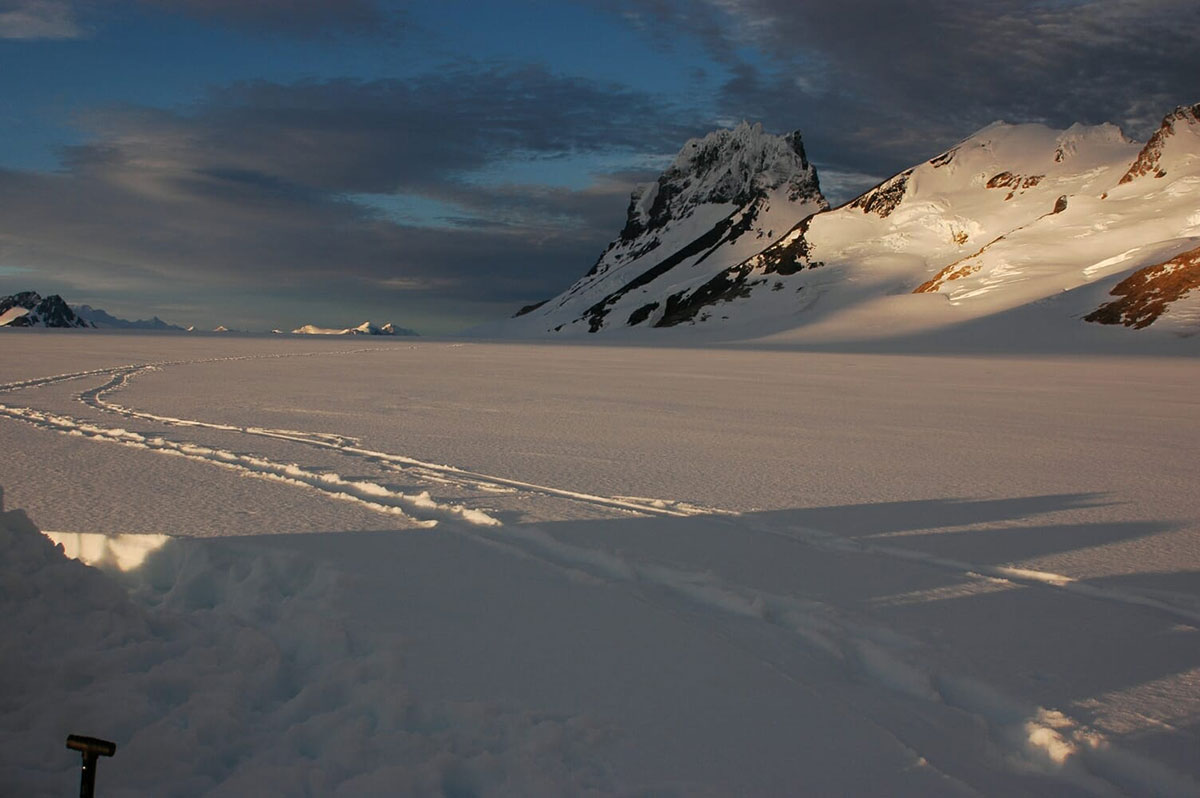
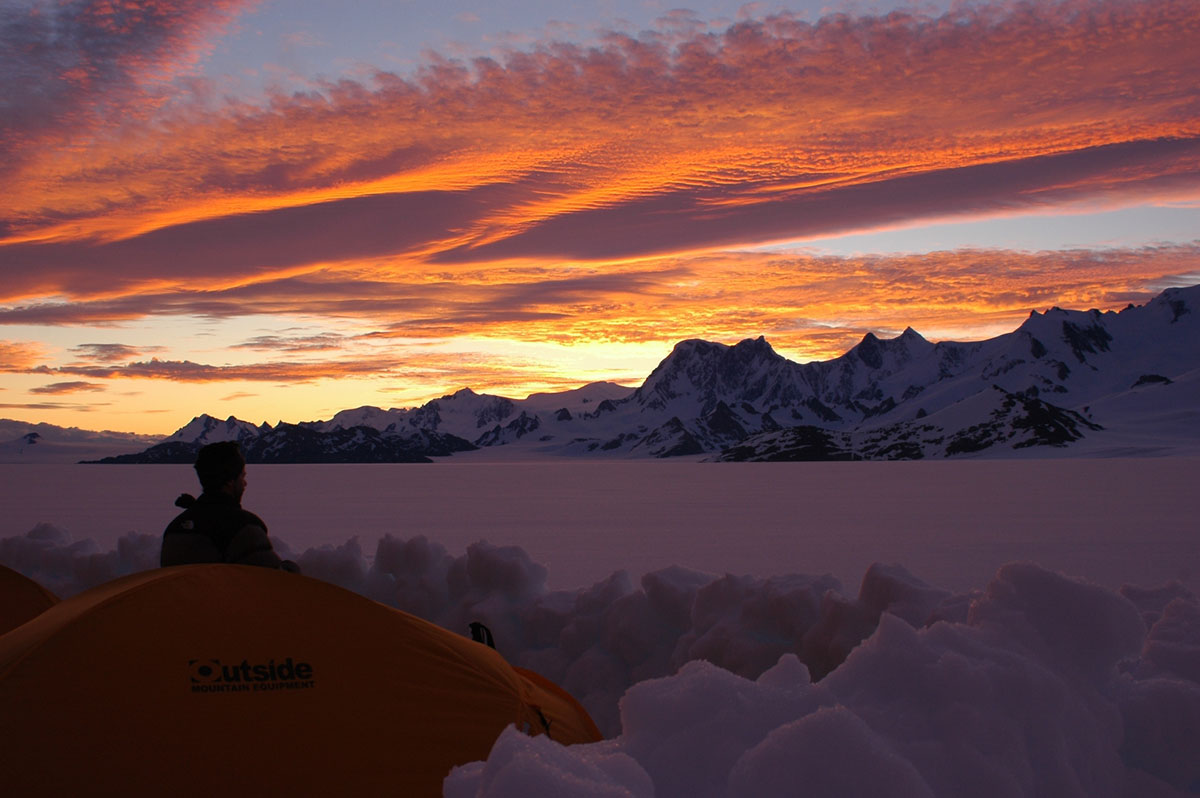
After a long trek, our second campsite is in the shadow of Marconi South Mt and only an hour away from the Southern Patagonian Ice Field itself.
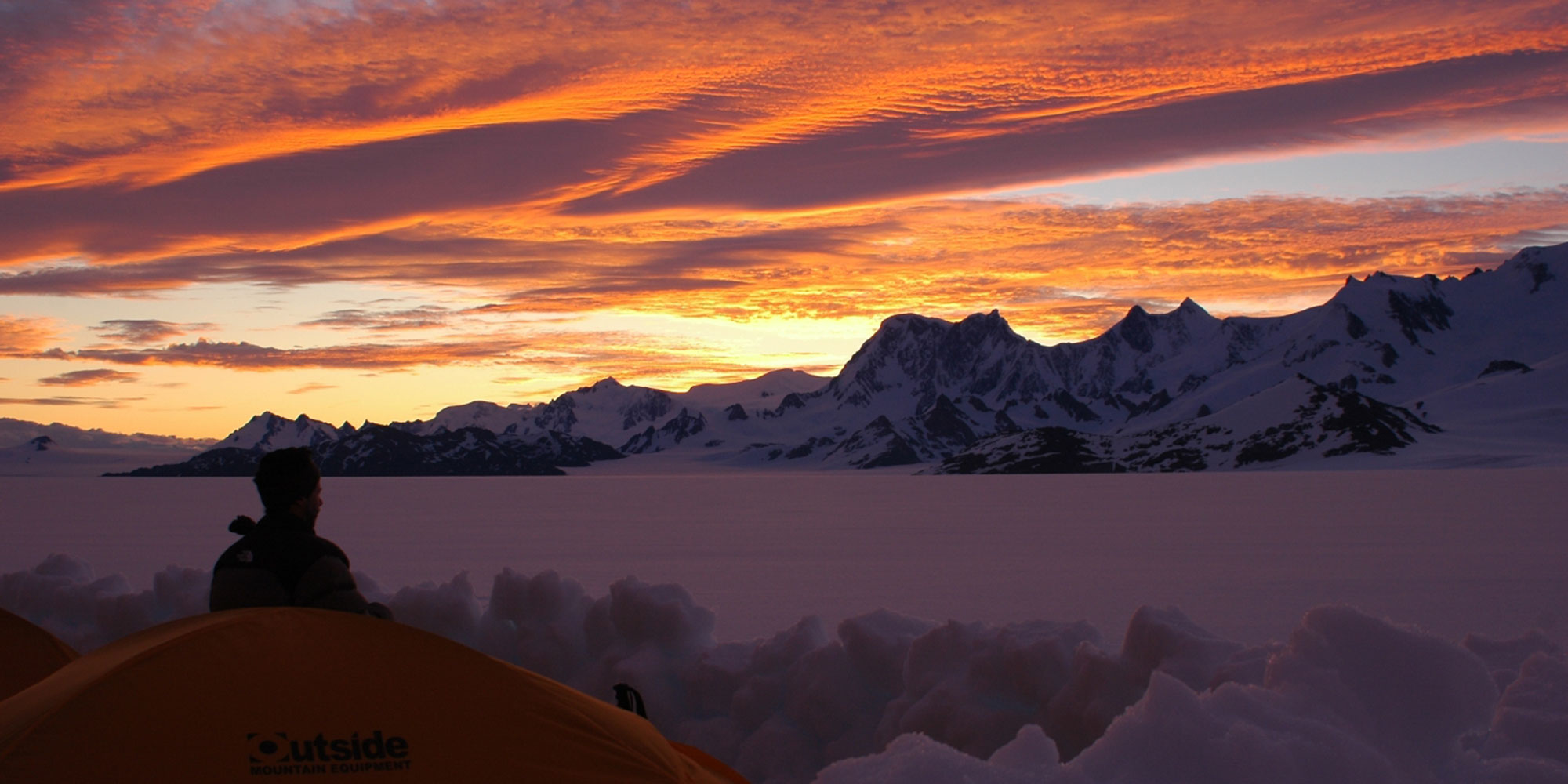
With luck, the campsite offers fantastic sunsets and sunrises over the Fitz Roy Range, Cerro Pier Giorgio, and Gorra Blanca. We are at the Chilean hut, at the base of the Gorra Blanca peak.
Note: The Ice Cap is always changing shape. Routes, stops and walks may vary from those detailed. Your guide keeps you informed at every stage of the hike. Flexibility is the key to enjoying the Ice Field trek.
Distance: 10km
Altitude gained: +500m
Trekking time: 6/7 hours
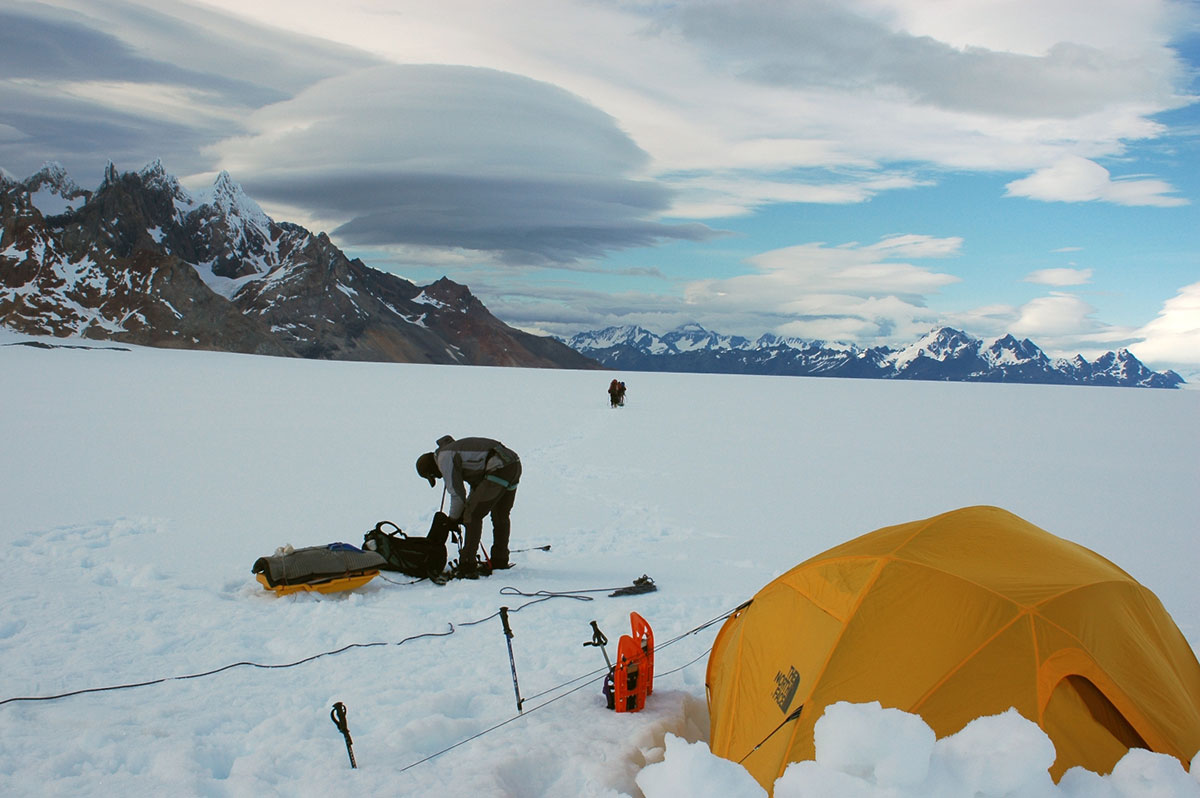
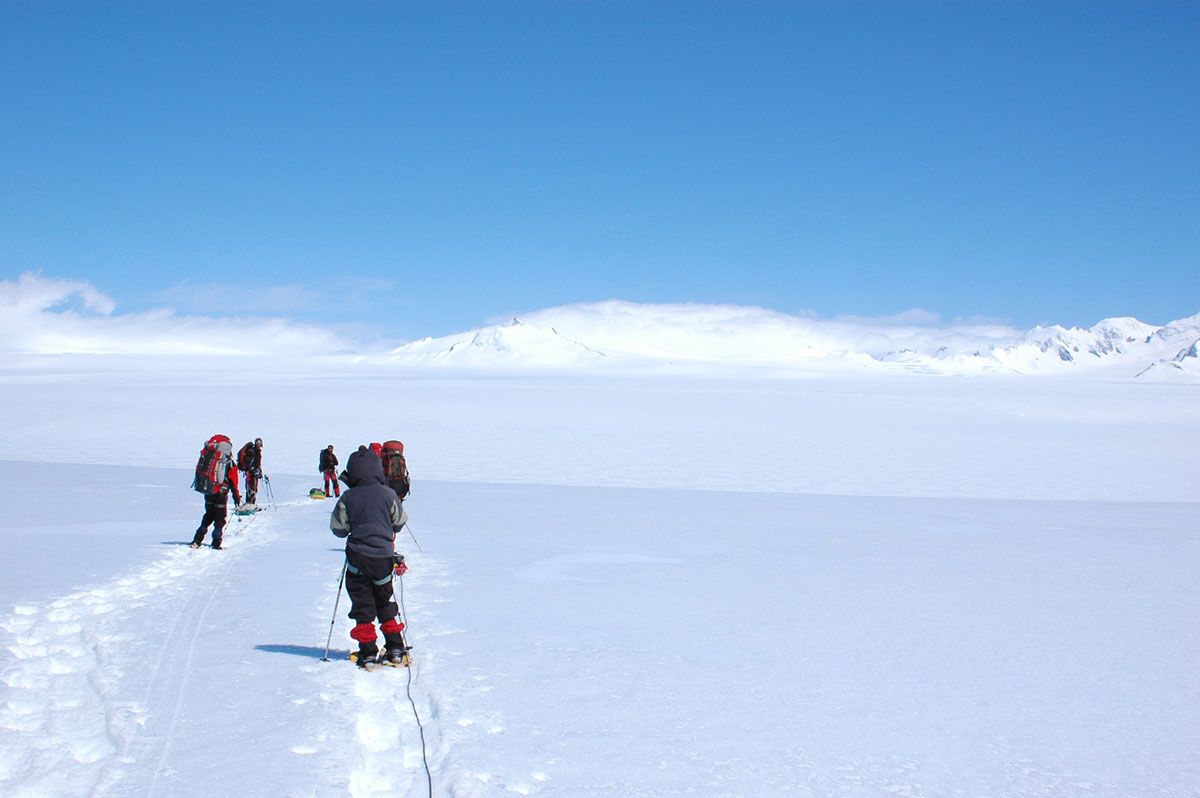
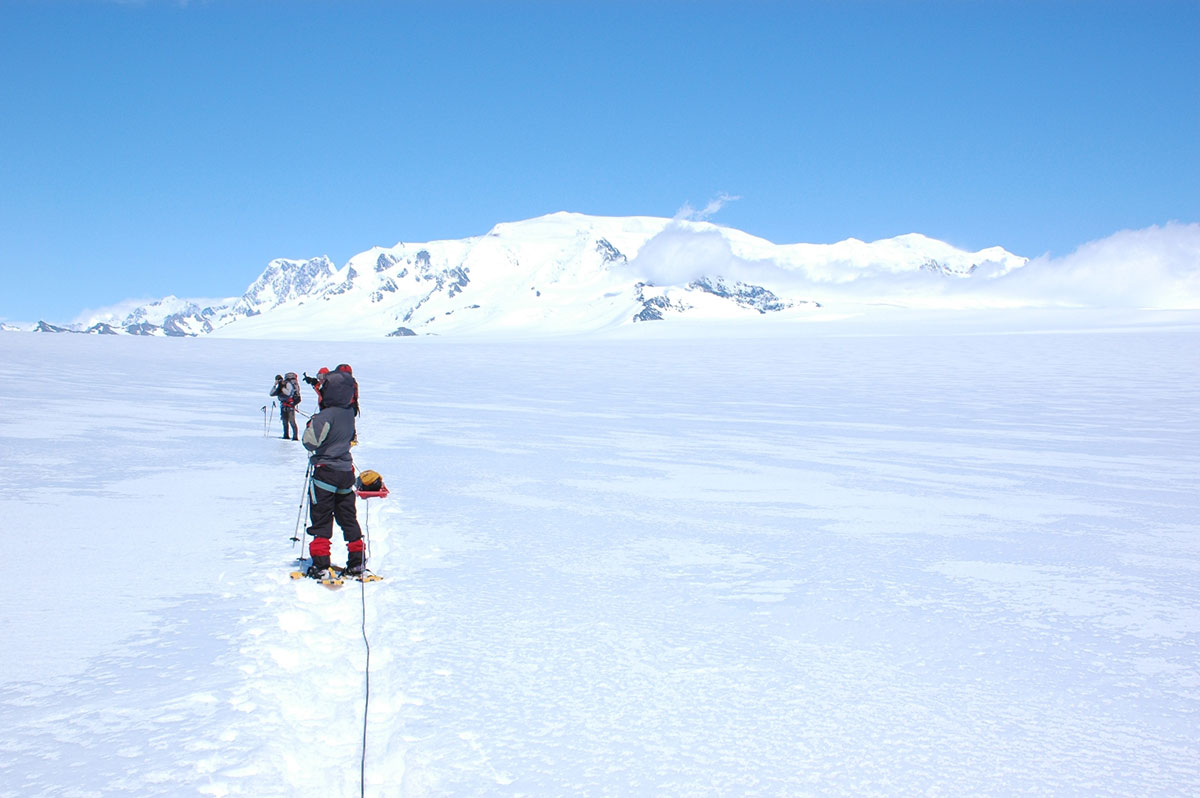
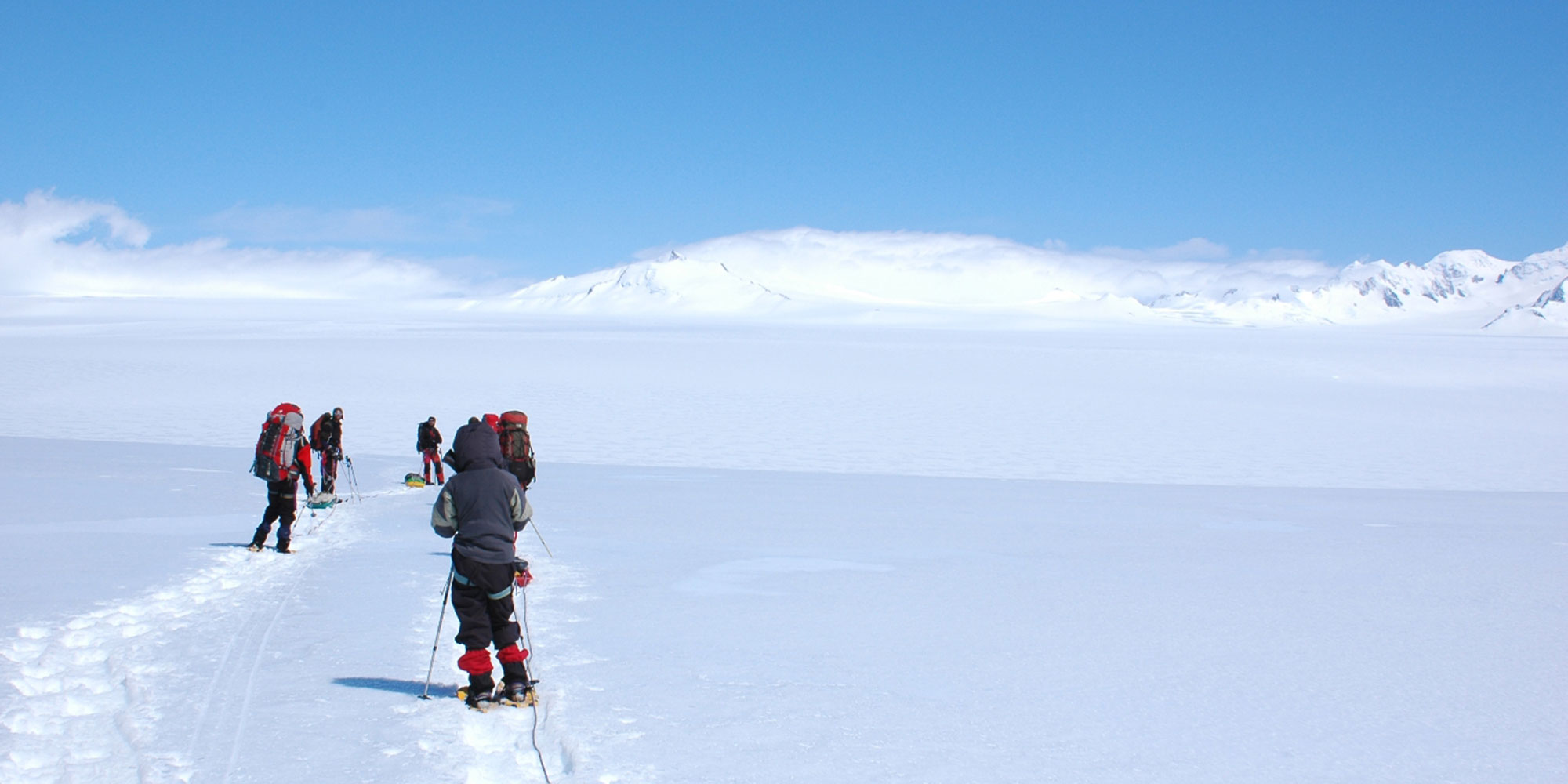
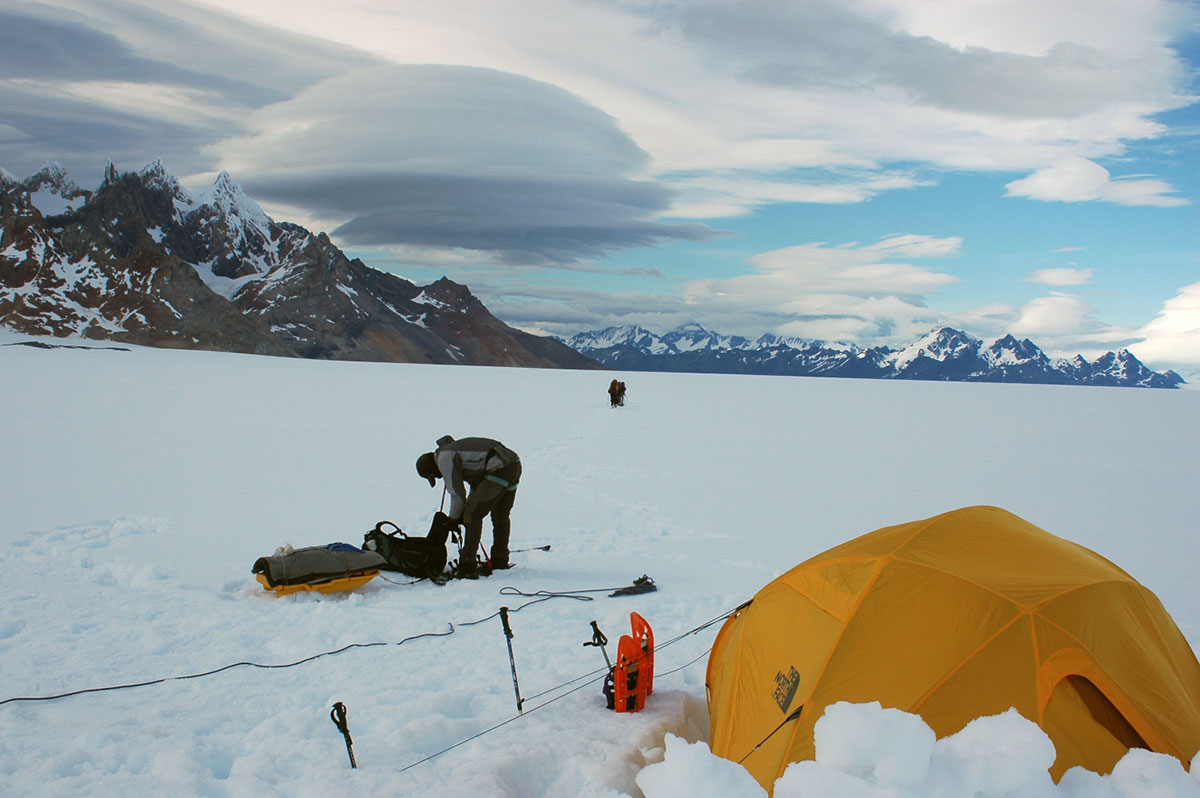
In the morning, we cross the Marconi Pass. The guide and team of assistants use sledges to carry most of the general equipment (tents, food, gas…) and we don our snowshoes.
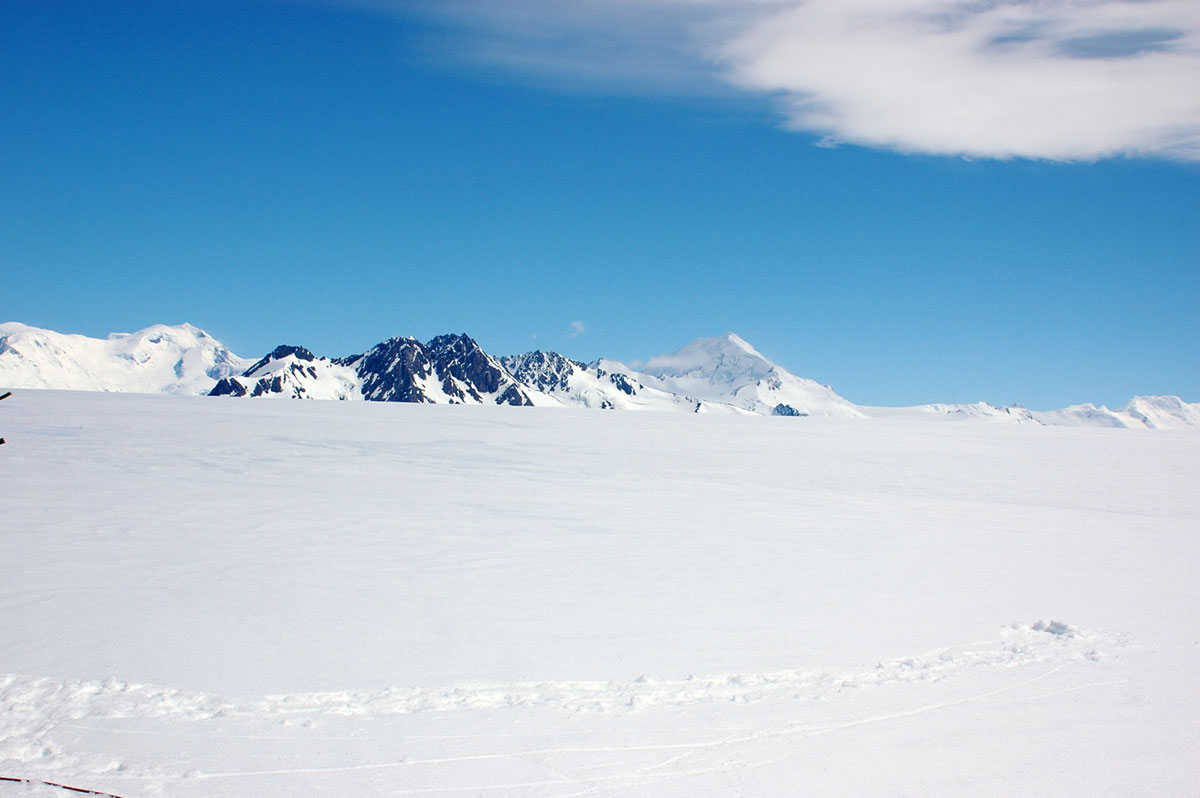
The Patagonian Ice Field opens itself up, giving fantastic views (weather permitting) of Lautaro Volcano (still active), the Mariano Moreno Range (much larger than the Fitz Roy Range), the De Los Cuatro Glaciares Pass and Chico Glacier to the south.
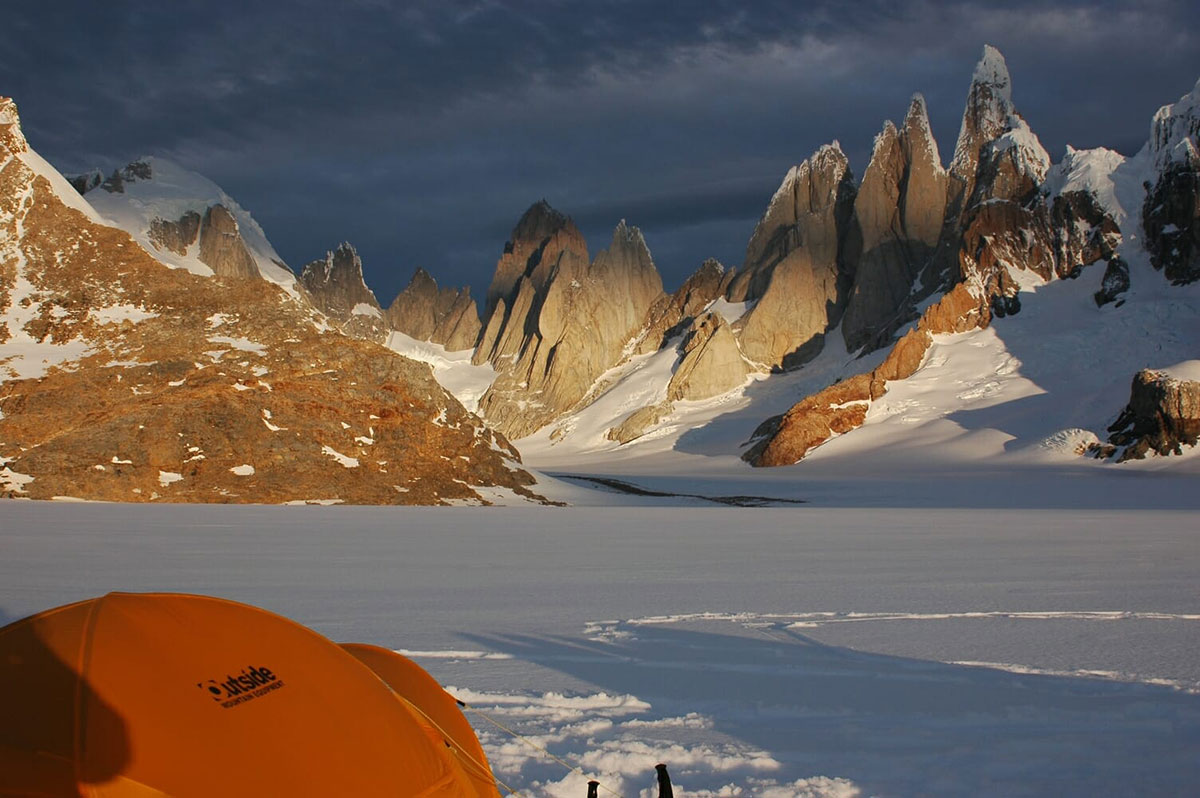
Today is comparatively short, less demanding than the previous day, so after 6 hours or so we get to our snow-camp in an area called the Circo de los Altares (or the Cirque of Alters).
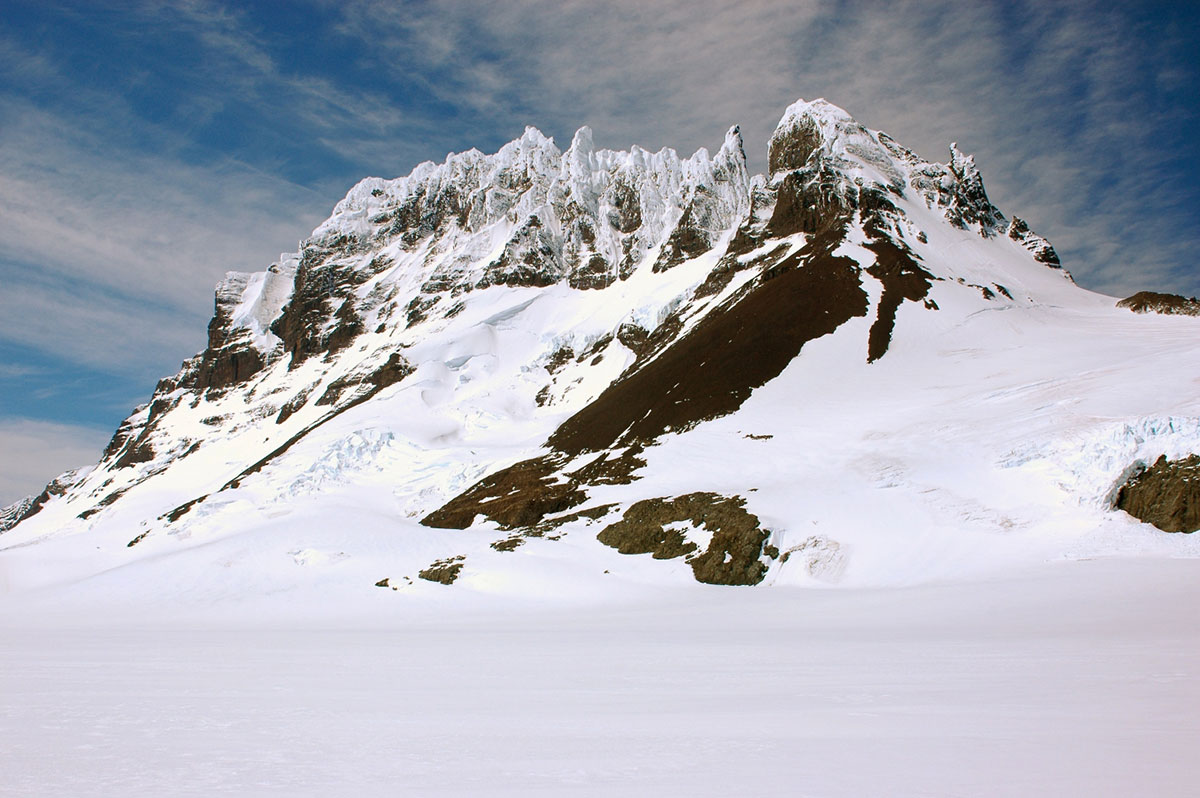
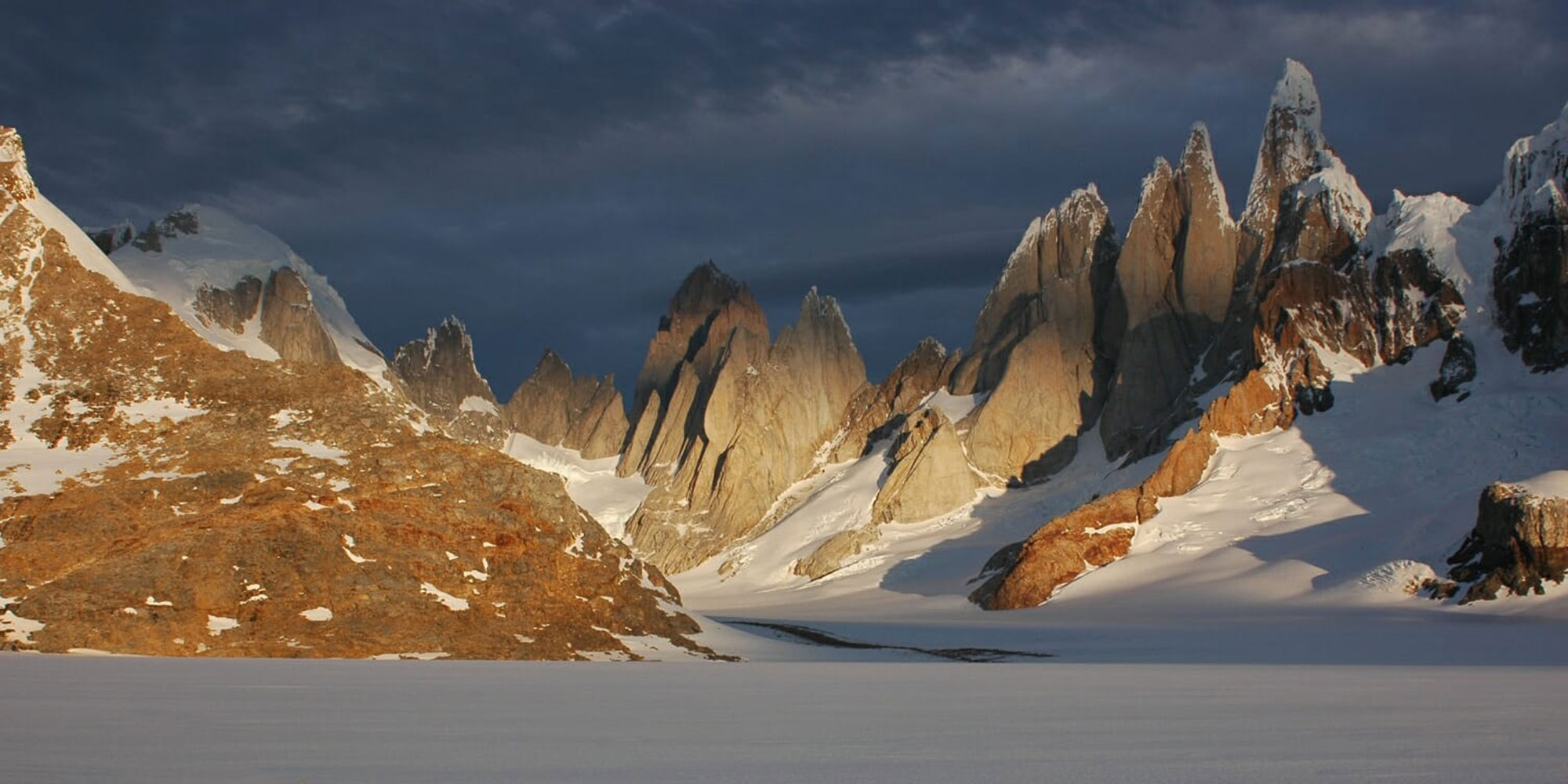
This is at the foot of Cerro Torre’s west face, one of the most spectacular places on earth.
Distance: 11km
Altitude lost: -250m
Trekking time: 6 hours
We continue our trek at first in a southerly direction avoiding crevasses in search of a large moraine-field. There is a lot of up and down today—crevasses, lagoons, morraines—and the wind from the Ice Cap can be very strong.
We lose 150m of altitude today, but be prepared for a lot of moving up and down slopes.
We pass a series of lagoons and eventually reach the Paso del Viento refuge, leaving the Ice Cap behind us. Glacial power—and erosion—will be self-evident as we pass through this amazing landscape.
Our camp is at Ferrer Lake, just below the Paso del Viento (Windy Pass).
Distance: 16km
Altitude loss: -150m
Trekking time: 8 hours
Today we climb gaining height until reaching the Huemul Pass, at 1,500m/4,921ft, and the last significant pass on the trek.
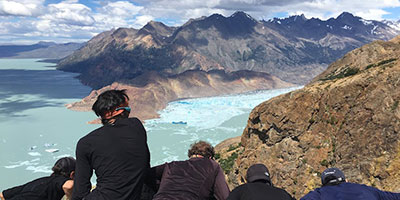
There are amazing views of the Viedma Glacier as we cross the Huemul Pass. Much of the day is spent shadowing the glacier, an immense river of ice within the mountains.
We descend into vegetated areas once more, aiming for our campsite at the aptly named Bay of Icebergs, a memorable spot.
Distance: 18km
Altitude gain/loss: +150m/-800m
Trekking time: 9 hours.
Today we head back to town on an easy trail.
we have the challenge of one zipline over the Lower Túnel river, but other than that can relax as we wander across the Patagonian steppe.
Distance: 15km
Altitude gain/loss: +200m/-200m
Trekking time: 6 hours.
These days are optional reserve days for bad weather – sometimes plans change and we have to spend more time at certain stops.
If the weather is good and there are no issues then the group stays up on the ice, exploring Paso Marconi, Circo de Las Altares, Paso del Viento or Gorra Blanca or similar or does some trekking nearby.
Tour ends with breakfast in El Chalten.
We can arrange for transfers to El Calafate and beyond, as well as more hikes in the El Chalten area, Torres del Paine and more.
Guide price, per person, shared tent basis, based on four people
9-day trip, one reserve day
Please ask for confirmed departure dates for different length trips
Camping or basic hut, hostel in town.
Hostels sleep 4-6 people in bunk beds, shared rooms with a shared bathroom. Breakfast extra. Upgrades to hotel rooms are available at extra cost.
On the trek, we use strong, two man mountain tents, which you help to carry. There is no dining tent on this trek, so any meals are served al fresco or in your tent.
We have classified this as a tough trek, due to its expedition-type nature.
Experience in the use of crampons and snow-shoes is not a requirement, but is useful. Extreme weather conditions can make the going tough and previous experience of trekking and camping in winter conditions would be beneficial.
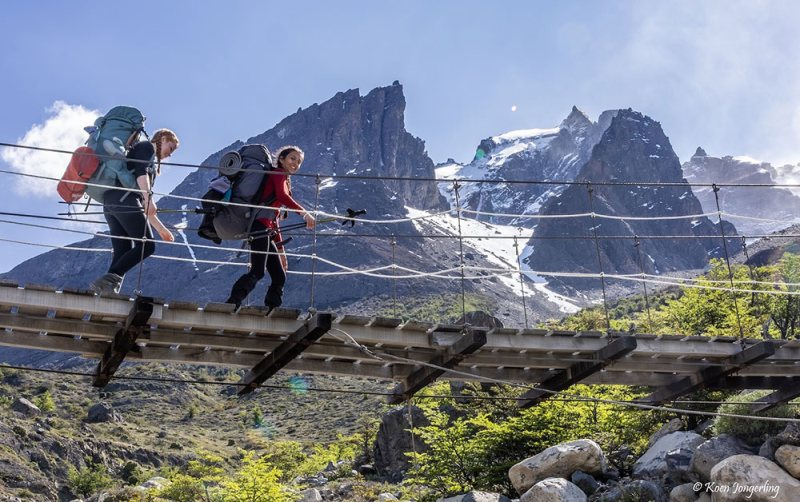
This is an expedition and everyone helps to carry communal kit and food. You will carry a heavy backpack they may be 20-25kg at the start (it get lighter as the trips continues as the food being carried gets eaten).
A very good level of fitness is necessary, as well as a flexible attitude. The itinerary may change day to day, as well as camp sites and hiking plans.
Almost all dietary requirements can be catered for – please enquire.
Breakfast in hostels in Chalten will be buffet style, with hot drinks, toast, jams, etc.(cost extra)
For the expedition, food will be prepared by your guides, often in difficult conditions. The group carries all of the food for the entire route, and so while nutritious, it can be basic. Be prepared – this is an expedition.
Please bring some snacks of your own, as those available in Chalten are expensive and not always the best quality.
Meals will be plentiful and will feature porridge, cereals and hot drinks in your tent for breakfast (there is no dining tent).
Lunch will often be crackers, cheese, meats etc. Evening meals can feature instant mash, rice, pasta etc.
We work with local, expert fully-qualified Argentinian guides, some with +20 years’ experience of hiking and trekking this route and in this region.
If the group is large enough, a porter may be hired to bring extra food and equipment.
A seamless, tailor-made Patagonia cycling adventure through Argentina and Chile’s breathtaking southern landscapes.
An inspiring multi-country trekking journey through Bolivia, Chile, and Argentina, filled with culture, scenery, and unforgettable memories.
Also known as the Patagonian Ice Cap, our hike is one of Patagonia’s most beautiful, remote and demanding of challenges.
With effort comes great reward. We walk into Argentina’s Los Glaciares National Park, and spend our days amid towering granite spires and massive glaciers that very few see.
We hike up and onto the ice field for several days, away from civilisation and people. This is the third largest single expanse of ice on earth, exceeded only by Antarctica and Greenland.
The trek takes us over three superb mountain passes: The Marconi pass, Paso del Viento and the Huemul pass too.
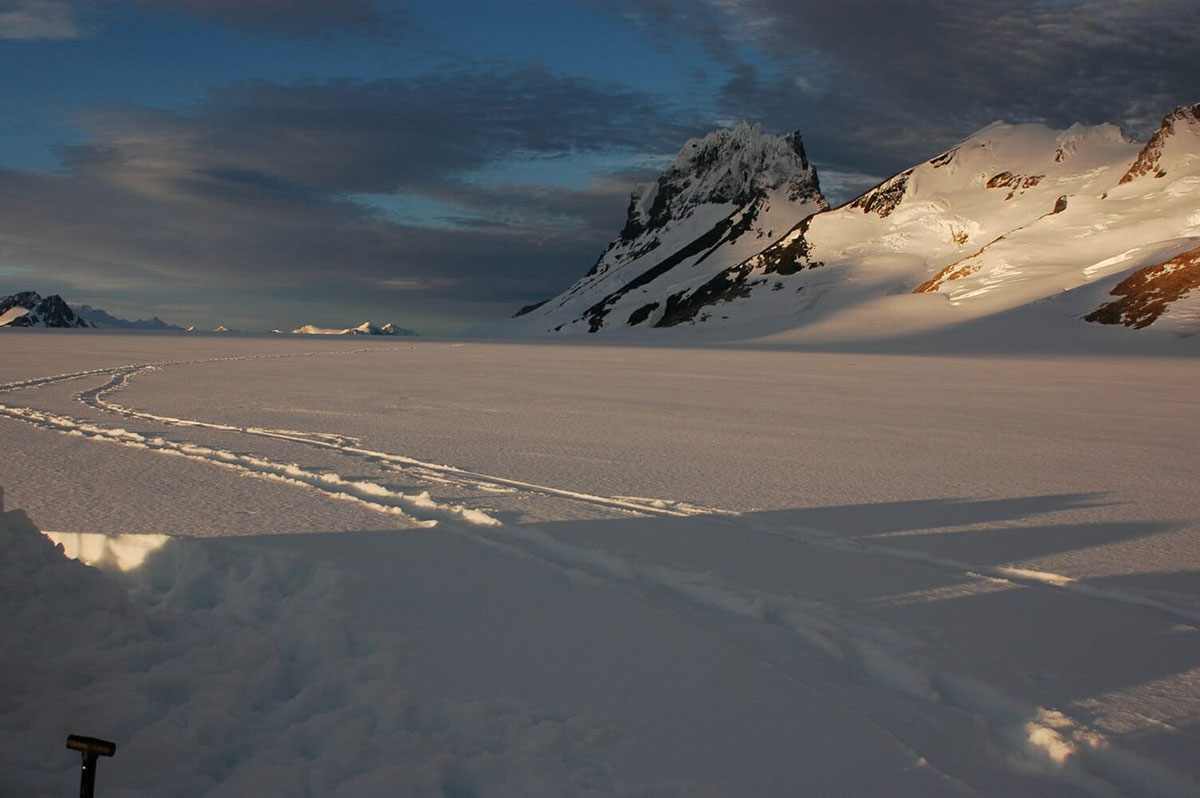
Laded with food, tents and determination, this is as close as you can get to an Arctic/Antarctic expedition, with everyone helping out.
Experience in the use of crampons and snow-shoes is preferred. Previous experience of trekking and camping in winter conditions is beneficial.
The group size is two up to a maximum of twelve people, and everyone helps to carry communal kit and food as well as own personal gear.
This is one of the toughest treks we offer in Patagonia and way off-the-beaten-track.
If you want to visit one of the world’s true natural wilderness areas, where few have trod, then our Ice Field trek is for you.
Read our blog for more about what to expect on this magnificent hike.
From: $3652 per person
Duration
13 days
From: $2040 per person
Duration
4 days
For most people, Patagonia evokes a vast, windblown plateau, jagged mountains and the life of the gauchos.
The steppe that occupies much of southern South America is only one aspect of a magical region, jam-packed with amazing and contrasting landscapes.
Patagonia (latitudes 40°-55°, approximately) embraces a vast portion of southern Chile and Argentina, from the Rio Colorado in the north, to Tierra del Fuego in the south.
For convenience, we have divided the region into three zones: the Lakes District of northern Patagonian, central Patagonia and southern Patagonia.
Good kit is vital for every trip.
Book with Andean Trails and get 15% off Páramo’s fantastic ethical and high performance outdoor gear.
When planning for the extreme climatic conditions encountered on the ice cap, layering is the most practical and versatile clothing system. It’s worth remembering that our clothing keeps us warm by retaining and isolating the heat we ourselves create.
To best maintain body heat, several layers of lightweight, warm and quick-drying clothing are far more efficient than one or two thick layers.
Layers should have the following qualities:
First (base) layer: This layer wicks the sweat away from our skin, thus helping keep the body dry and warm. To this end, synthetic fabrics such as polypropylene should be used.
Mid layers: These isolating layers should also be synthetic (e.g. the known polar linings such as polartec or windblock, which are light and insulate twice as well as wool). Very important layers for retaining body heat.
Outer layer / shell: Finally, the vital layer which protects us from climatic adversities. A breathable, wind-proof and waterproof anorak, such as Goretex.
Note that it’s our extremities that stand to suffer the most, and on the ice cap, the poorly-equipped mountaineer is at risk of becoming frostbitten. Hence, much thought should be given to deciding how best to protect hands, feet and head.
Give plenty of thought to kit selection, and try to keep weight down. You carry everything, including a share of the group food, tents, etc, and you will carry your pack everyday which will be around 18-25kg.
Crampons, harness and snowshoes are provided, as is all non-personal trekking and camping equipment. Plastic boots can be hired in El Chalten.
All other non-personal trekking and camping equipment is provided, e.g. tents, cutlery etc.
Patagonia, the very southern tip of South America, has a four-seasons-in-one day climate.
Summer (Nov-March) see temperatures reach up to 20°C, when glorious light pours over the region for up to 18 hours. This is the best time to visit, nevertheless, spring and summer is also when the central and southern Patagonian regions sometimes get buffeted by strong, westerly winds.
Summer days in national parks can also bring sunny, windless conditions, and you may well find yourself hiking in shorts and t-shirt. Afternoons can be warm with lots of sunshine. (Note: Patagonian UV rays are very strong).
It is usually cool and windy all year round but seldom does the temperature fall below freezing point. Some days start with snow and end in balmy sunshine. It is always interesting, and can range from 10°C-20°C in the summer, although the wind can make it feel chilly.
Even in summer (Dec-Mar) you should come prepared to find cold, strong winds (up to 130 km/hr) and rainfalls. The summer’s average temperature is 11ºC/52ºF (24ºC max, 2ºC min). It has been known to snow in camps in summer!
In general, the further south you go, the cooler it gets and the further west you go – towards the Andes and Pacific coast – the wetter and less predictable the weather is. The further east – towards and across the Patagonian plateau – the drier and more stable.
Winter (May-Sept) visits to these southern areas are possible, but many hotels close and not all trips are possible. Daylight hours can be very short and temperatures typically range from -2°C in the winter.
The lack of visitors can greatly improve chances of seeing wildlife in parks such as Paine. Winds tend to die down.
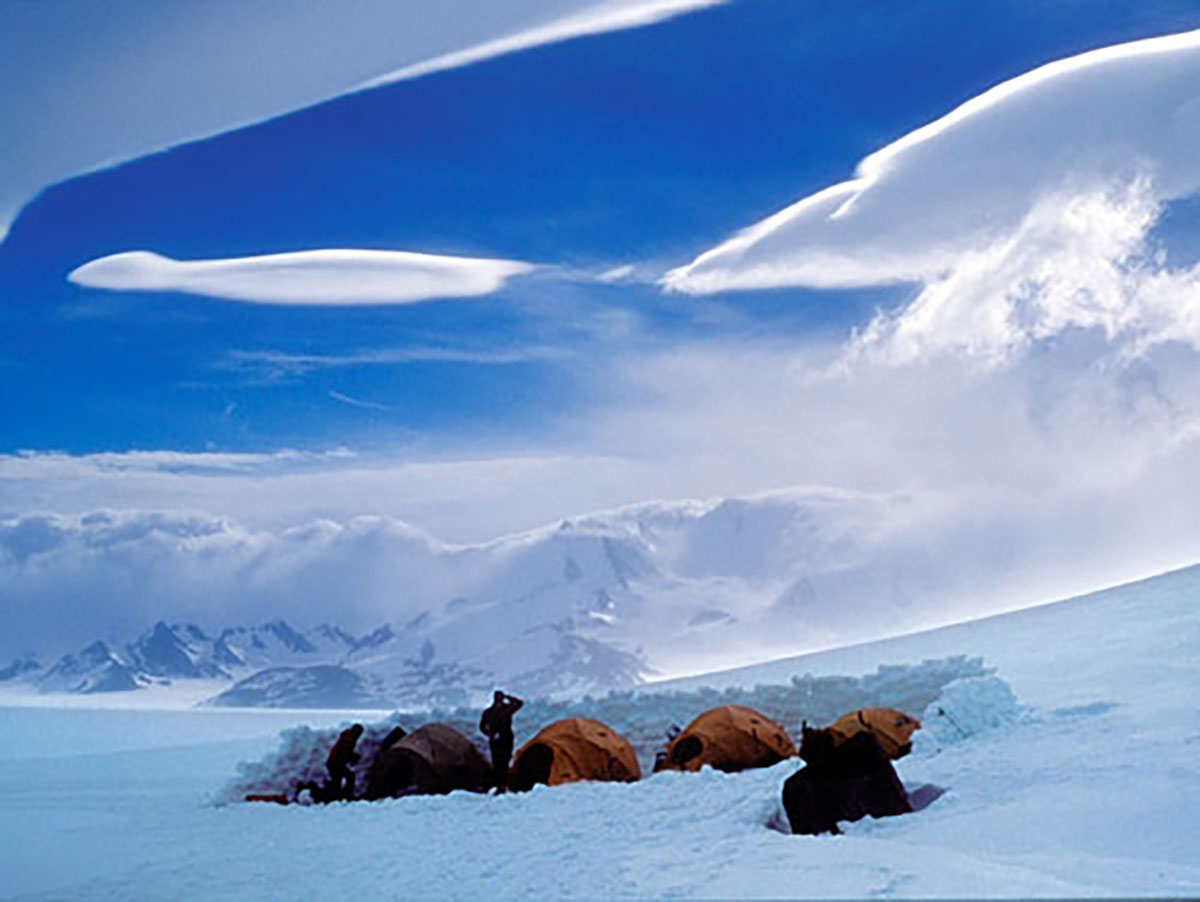
On the South Patagonian Ice Field (average height, 1,500 metres), the appearance of lenticular clouds – signifying changing conditions – can translate into extreme winds (up to 150 kmh) and heavy snowfall. Here, summer pre-dawn temperatures commonly reach -20°C, with wind chill lowering temperatures even more. However, on sunny, windless summer days, you might get away with wearing just a couple of thin layers.
In Peninsula Valdes, it does not rain much in the region on an annual basis, summers are usually mild, and the temperature sometimes gets very hot (touching 30ºC) and then eases off in the evening. The area does get very windy at times, especially on the peninsula, and warm and water/windproof clothing is recommended.
If you head to Ushuaia, due to its extreme southern location, temperatures may remain chilly during summer (Oct-March) the use of plenty of warm layers of clothing. Winter and Antarctic visits will require extreme clothing.
A seamless, tailor-made Patagonia cycling adventure through Argentina and Chile’s breathtaking southern landscapes.
An inspiring multi-country trekking journey through Bolivia, Chile, and Argentina, filled with culture, scenery, and unforgettable memories.