From: £2,704
From: $3,600
We meet you at El Calafate Airport and from there you are transferred to El Calafate (20 mins).
Meet up with the rest of your group and the guide for a briefing meeting, dinner included. Hotel. (Dinner)
El Calafate is a small town of some four thousand inhabitants. El Calafate was for several decades a tiny staging post for the wagons transporting wool between remote estancias (sheep stations) and the coast. It lies near the shore of the vast, turquoise lake Argentino and is today a gateway to the natural wonders of the Los Glaciares national park.
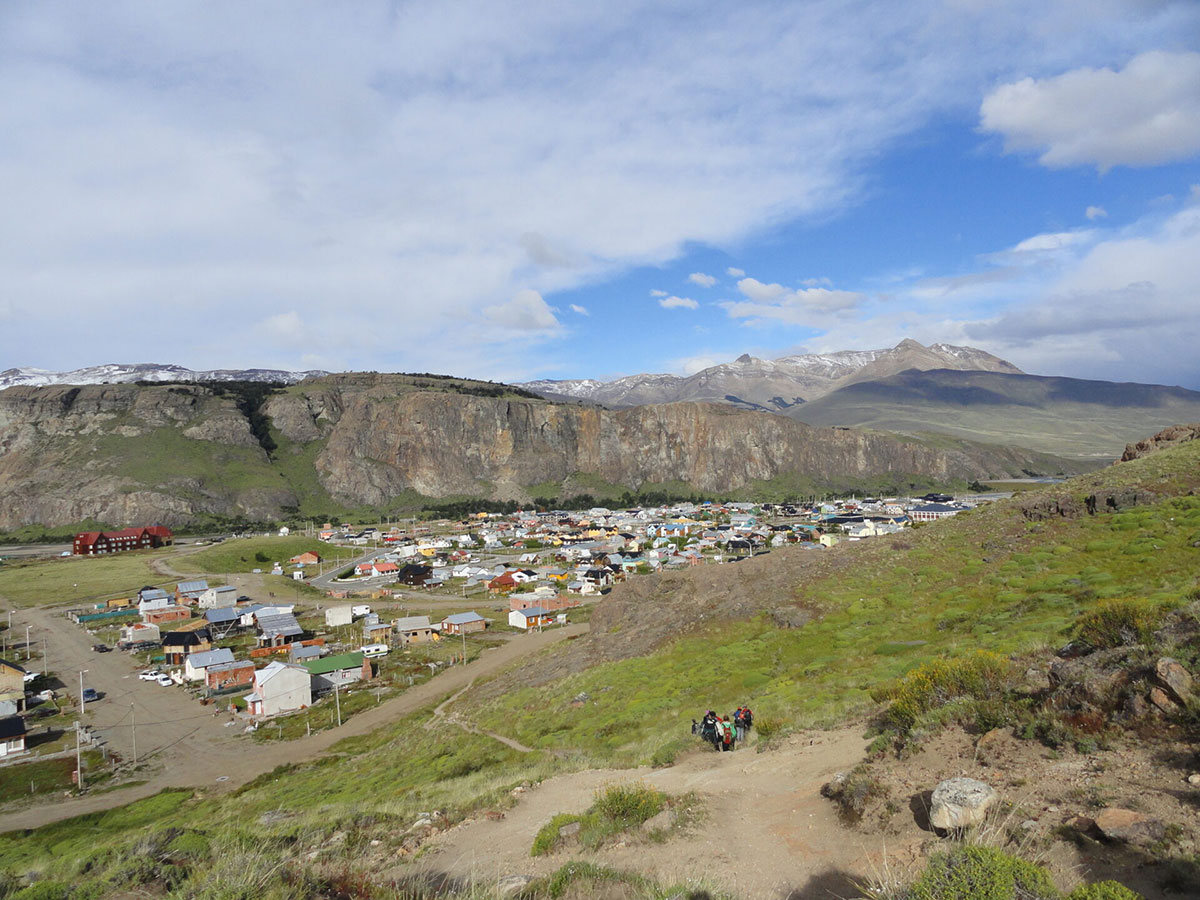
After breakfast we travel by bus to El Chalten, a small remote mountain town close to the Fitzroy peaks. We travel along 190 km of gravel road through the Patagonia steppe with a short stop at La Leona, a picturesque inn.
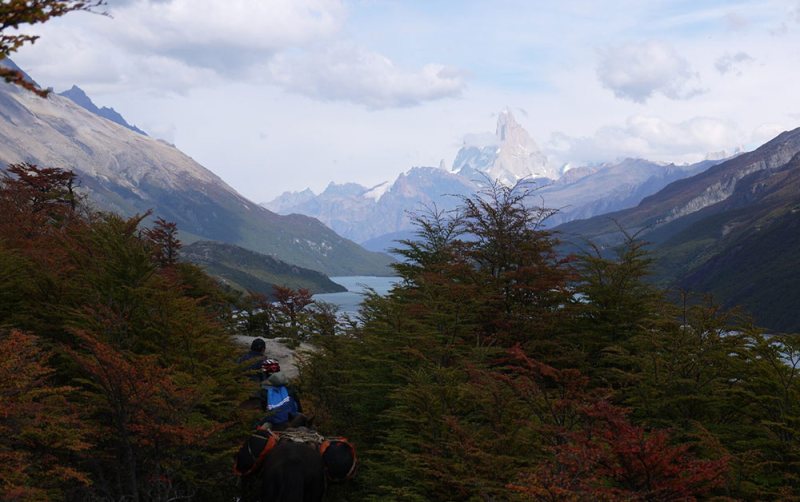
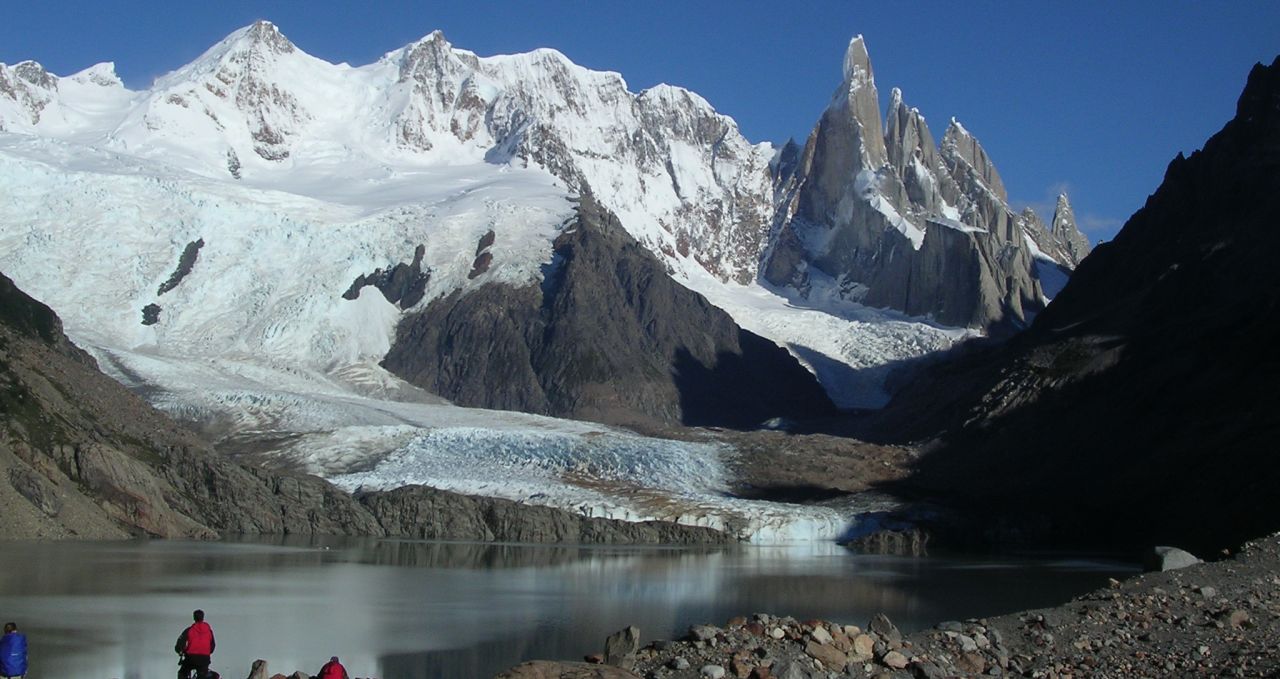
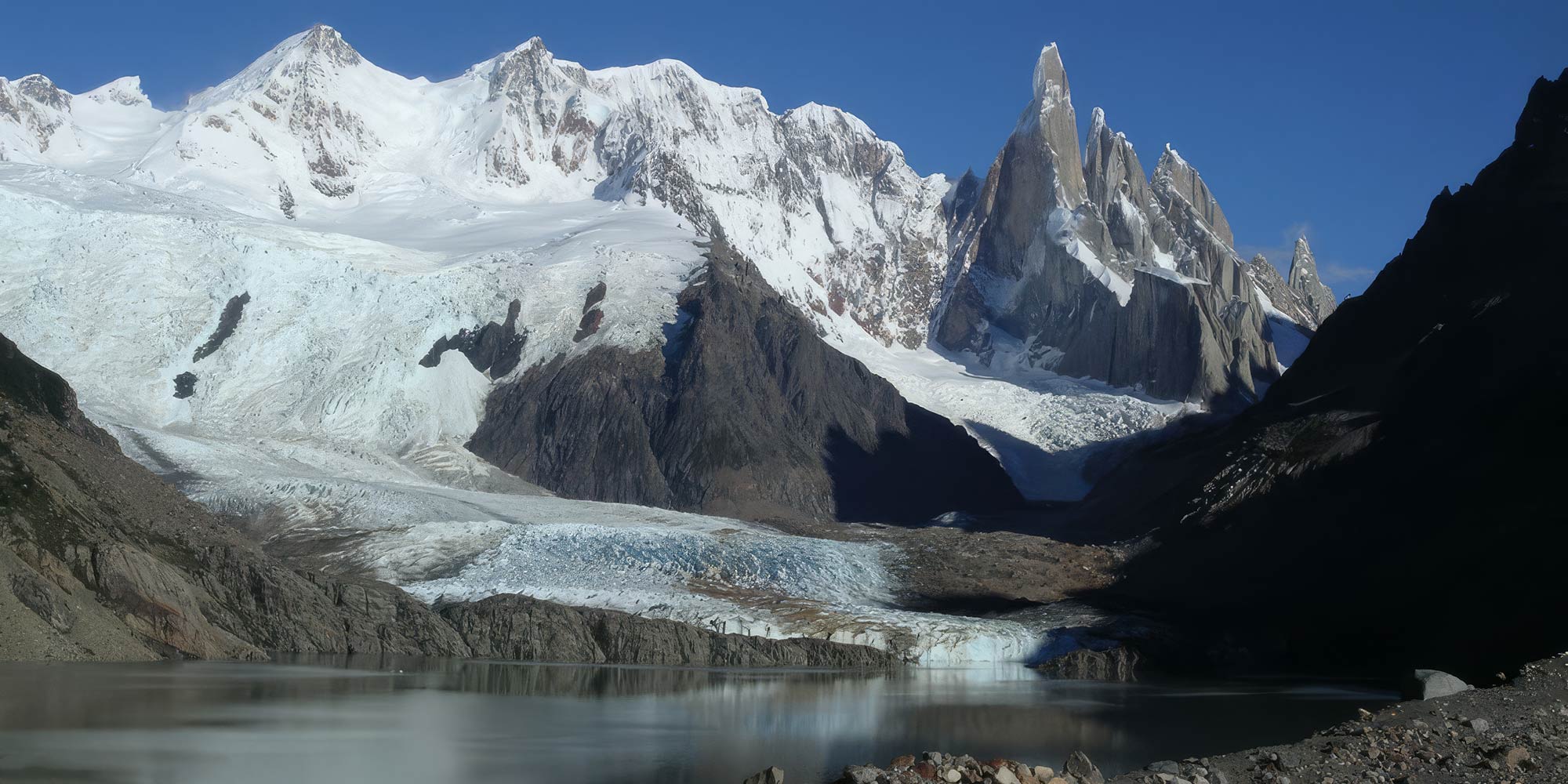
Upon arrival, we go hiking on the Cerro Torre trail. From the first viewpoint of the valley (3 hours), we can see the Cerro Torre range and the entire Torre valley.
For those wanting to walk further, we head to Laguna Torre – about 9 km away from town (6 hours round trip) – along the trail winding through a glacially-formed valley.
The lagoon features the Torre glacier calving in on the far side, and the Cerro Torre range of peaks and spires rising up in the background.
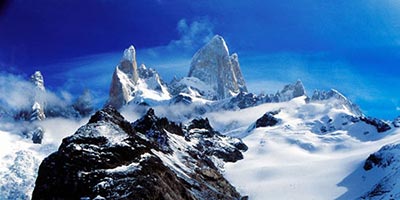
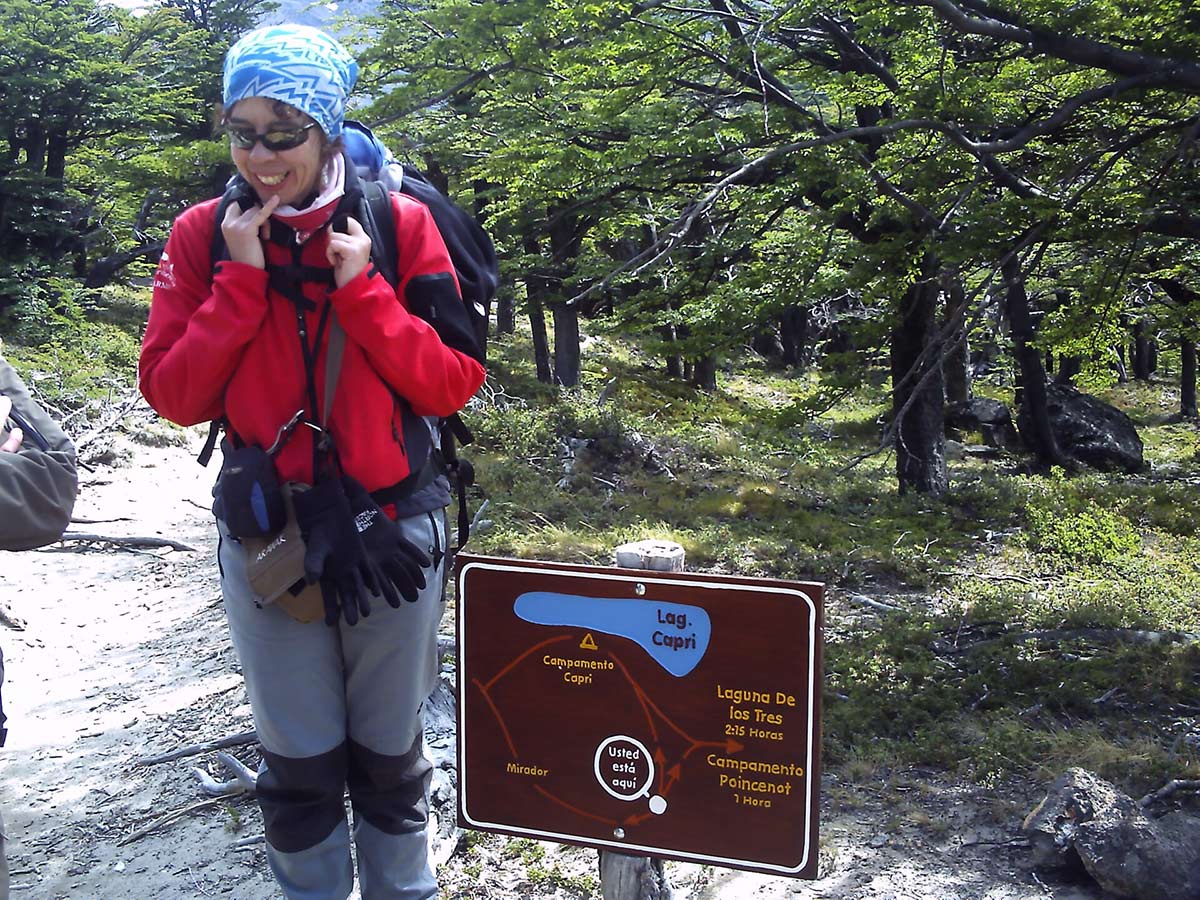
The Fitzroy trail climbs gently along the slopes of Cerro Rosado and along the “Chorrillo del Salto” valley, a beautiful mountain stream with many rapids and waterfalls. Our destination is Laguna Capri (two hours), a beautiful lagoon in the forest with full views on the Fitz Roy spires and glaciers.
For keen hikers, there is the option is to continue to Rio Blanco (a base camp for climbers) and to Laguna de los Tres, the end of trail and one of the highlights of the National Park. The sight of the spires and glaciers of Fitzroy from here are breathtaking.
It is two hours from town to Laguna Capri, one more hour to Rio Blanco and then another hour of steep ascent to Laguna de los Tres.
We then hike back to Chaltén along the same trail.
This hill, at 1,500m/4,921ft high, is immediately south of Cerro Torre valley and, offers some of the best views over the different group of mountains, glaciers and lakes that define the area.
From the lower terraces to the summit, you get spectacular views of Fitroy, Torre and the spectacular glacier valley in between them both. From the summit the bonus is the sight of Paso del Viento (windy pass) and some of the mountains that drive out from the Patagonian Icefield. According to the group’s desires, we can trek the lower reaches or try the summit, a long but gentle climb in scree.
Morning at leisure to rest or to take an additional walk. We recommend a leisurely option to visit Estancia Madsen (home of the first white settler of the valley), Glacier Viedma or Lago del Desierto.
In the afternoon we take a bus back to El Calafate where we transfer to the hotel.
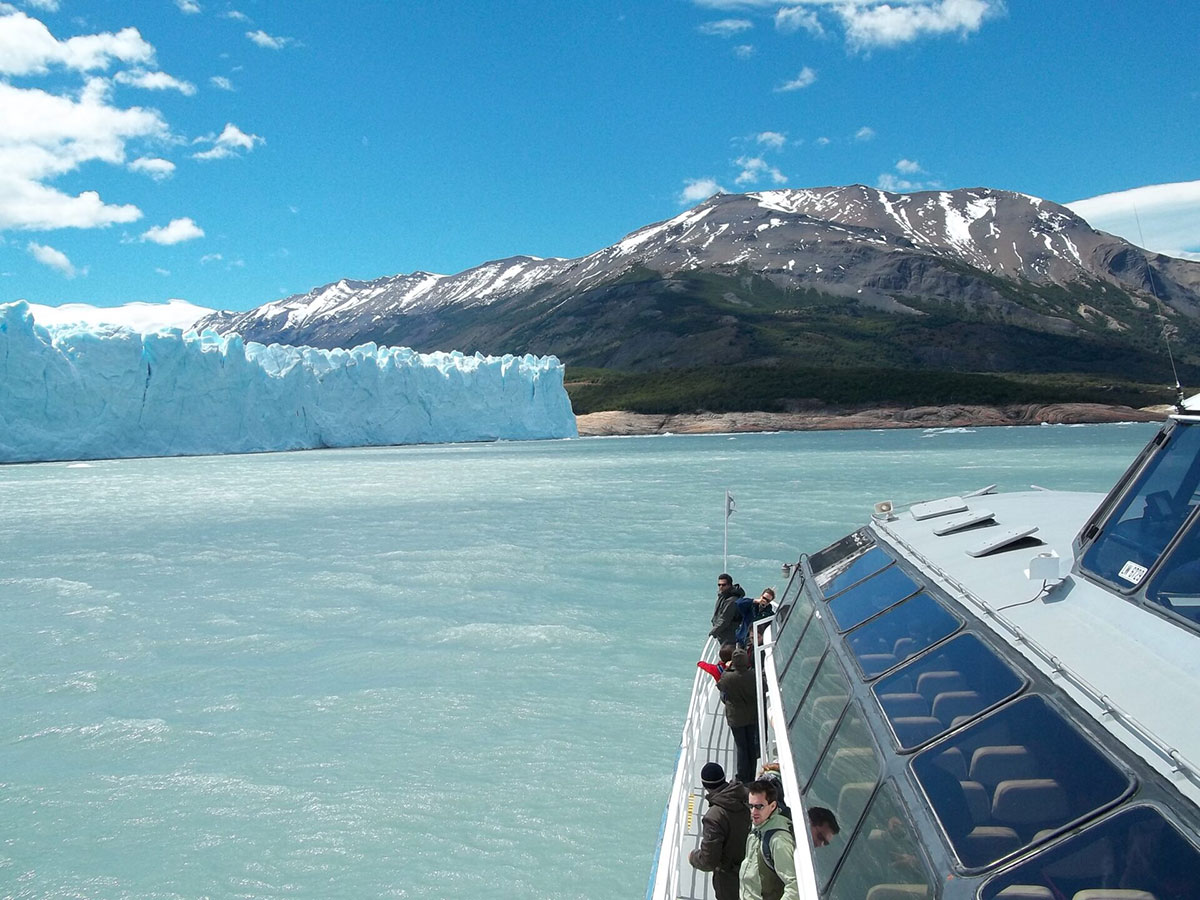
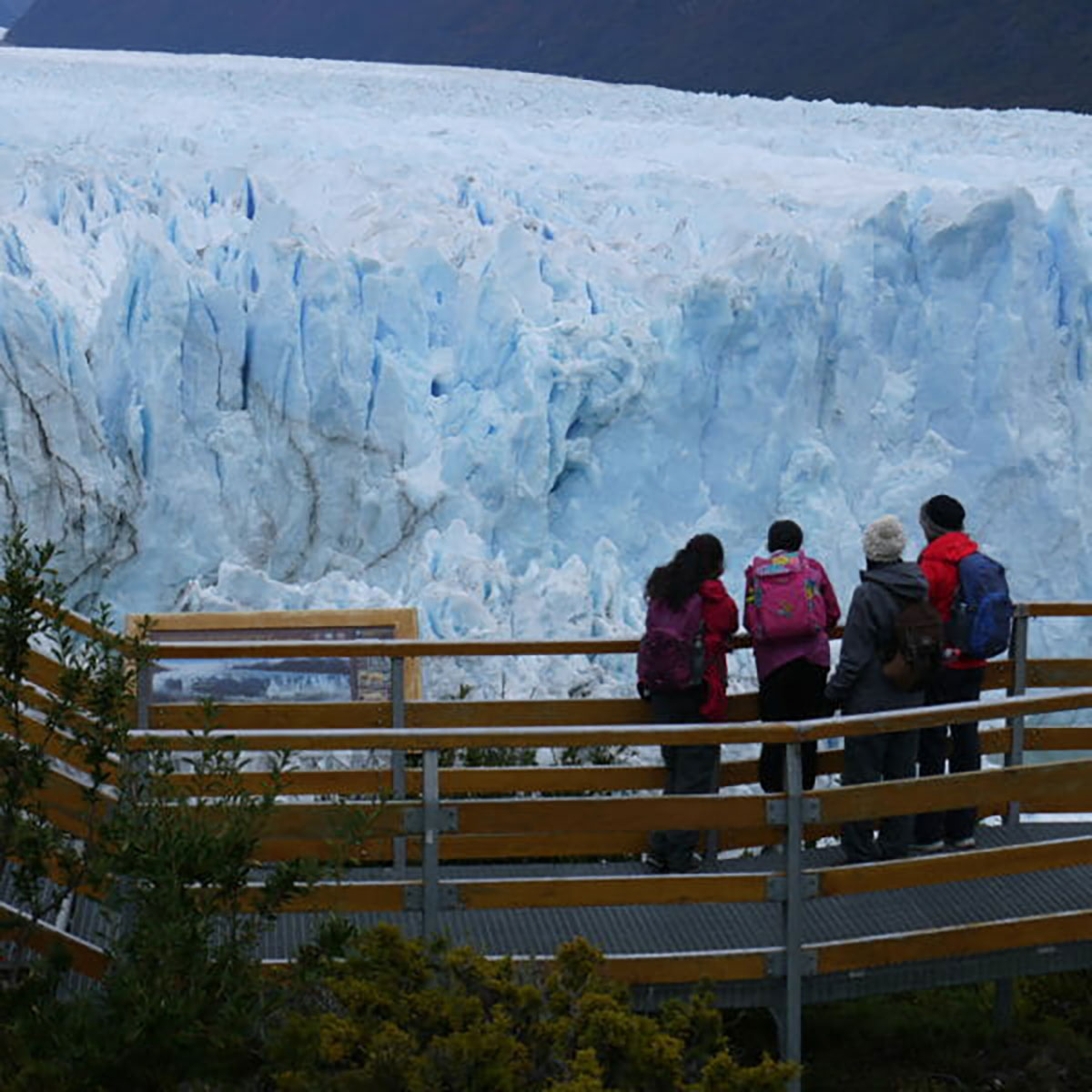
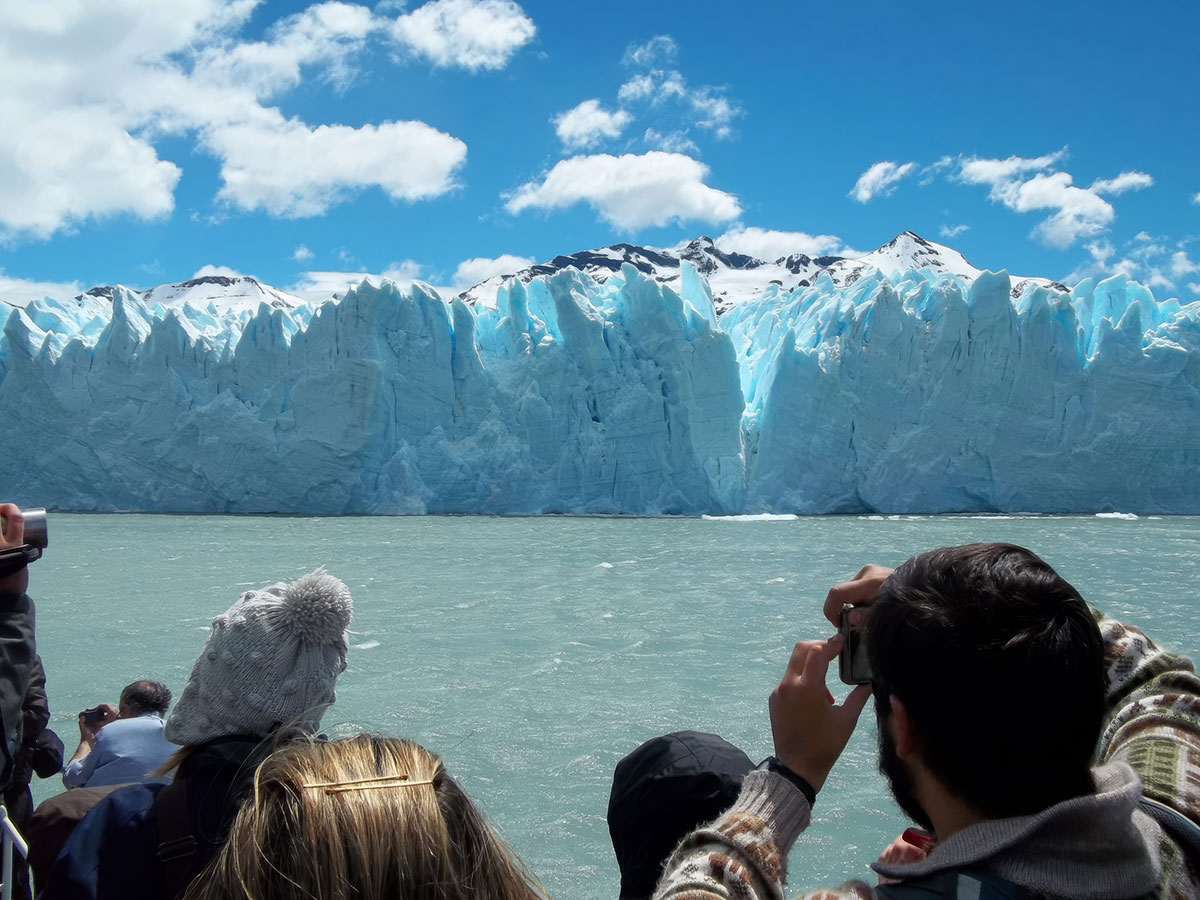
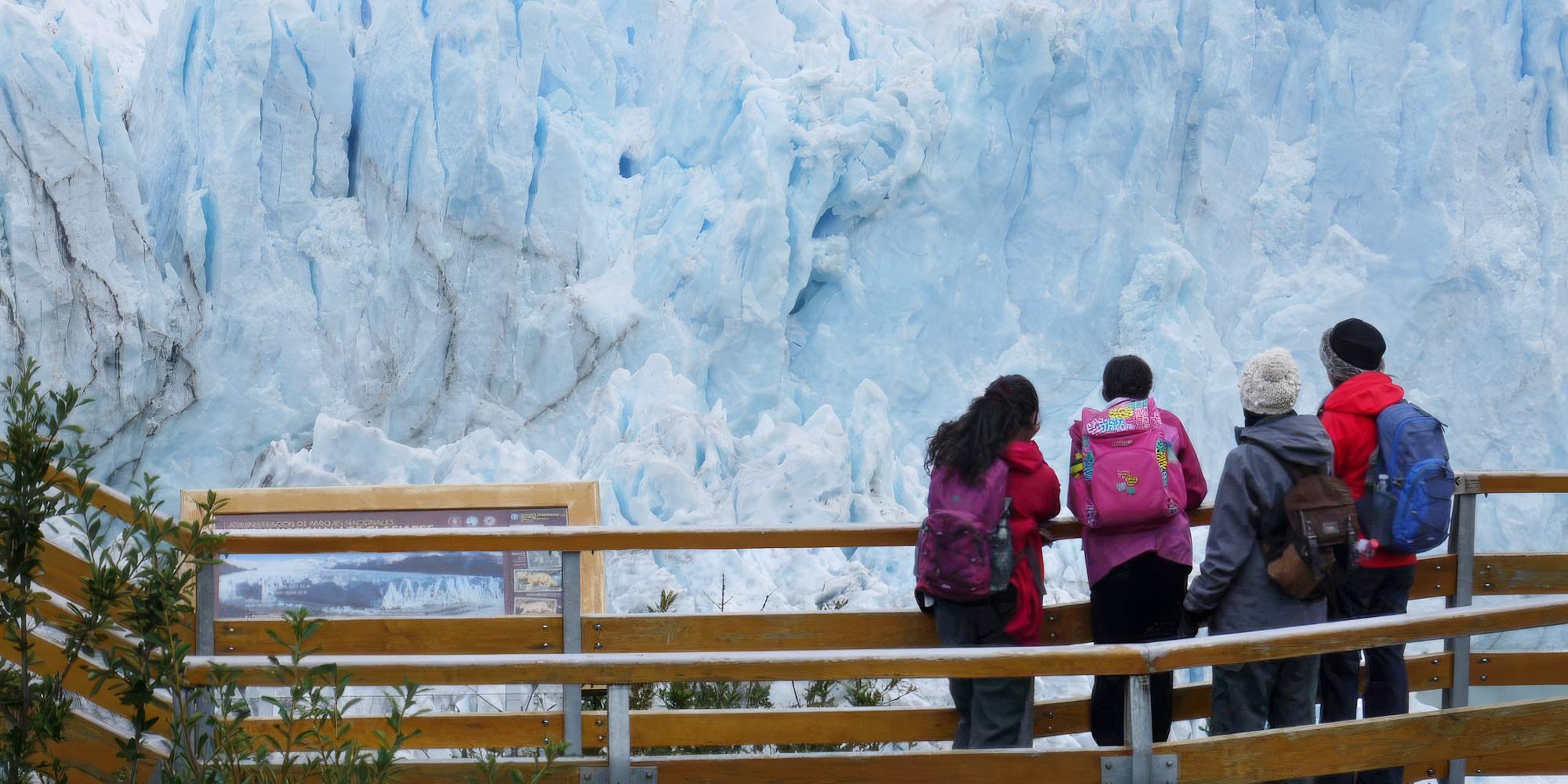
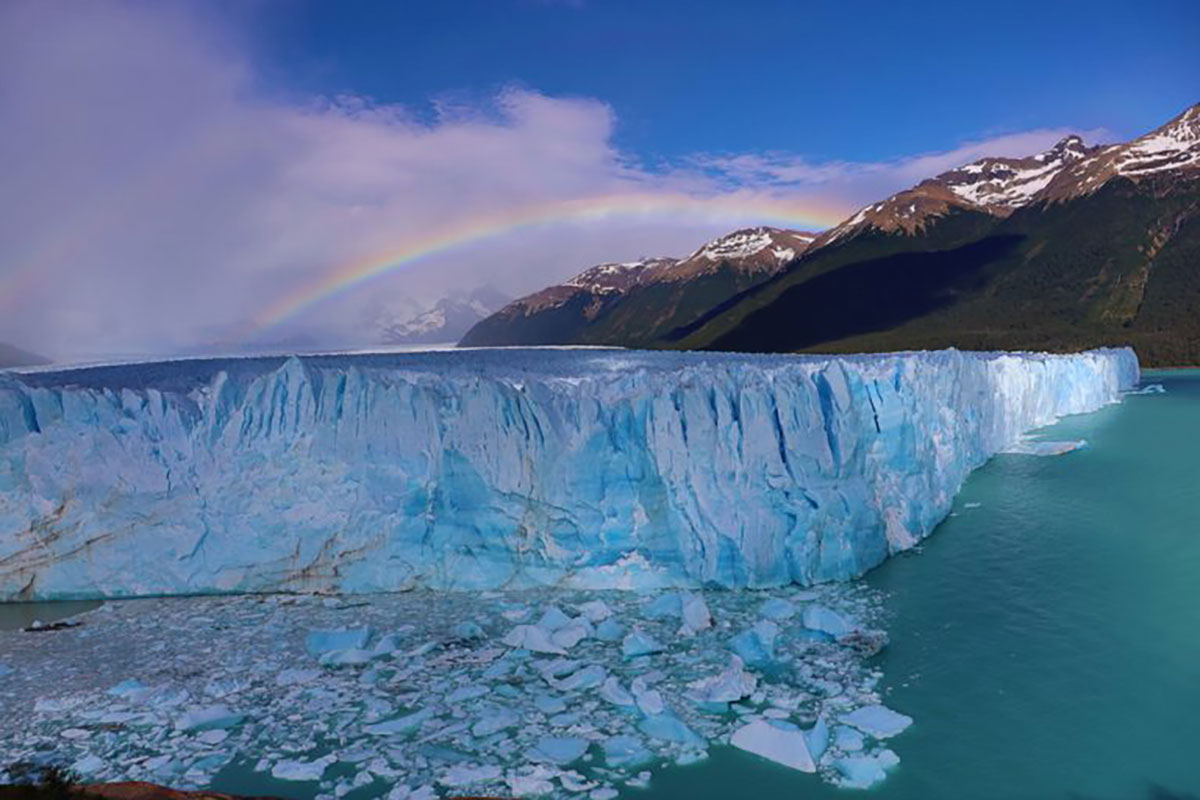
Vast in scale (over four miles wide and 60m high at its face!), this almost surreal spectacle is set amid a labyrinthine system of iceberg-filled waterways, and backed by deciduous beech forests and snow peaks.
Spectacular even by the standards of the Los Glaciares National Park, this glacier also represents an anomaly: The Perito Moreno, unlike the other glaciers of the region, is still growing. Periodically (every so many years) its advancing edge reaches the near shore, cutting off and damming up the Brazo Sur ice-berg channel.
When this occurs, the steadily-building water pressure forces a breach in the ice and eventually a huge volume of water bursts forth and surges through to Lake Argentino. A feature of the glacier is the frequent, ear-splitting calving of ice-bergs.
After breakfast we depart by bus to the Magallanes peninsula, the entrance of The Glaciers national park. Its centrepiece is the Perito Moreno Glacier, which, because of unusually favourable local conditions, is one of the world’s few advancing glaciers.
We go down to the lakeside to board a boat (optional, extra cost) that takes us on a spectacular short cruise along the front of the glacier.
We return to El Calafate.
We depart early in the morning (around 7 am) and drive from El Calafate to Torres del Paine through the spectacular landscape of the Patagonia steppe. Choiques (rhea), condors and flamingos are very common in this area. Almost four hours later, we arrive at the border crossing between Chile and Argentina called Paso Cancha Carrera.
We continue until we reach the Torres del Paine National Park (by 4pm). UNESCO has awarded the park World Heritage status because of its unique wildlife and magnificent scenery.
We visit some of the most spectaculars viewpoints of this National Park.
In the morning we visit Salto Grande, an impressive waterfall just where river Paine enters lake Pehoe.
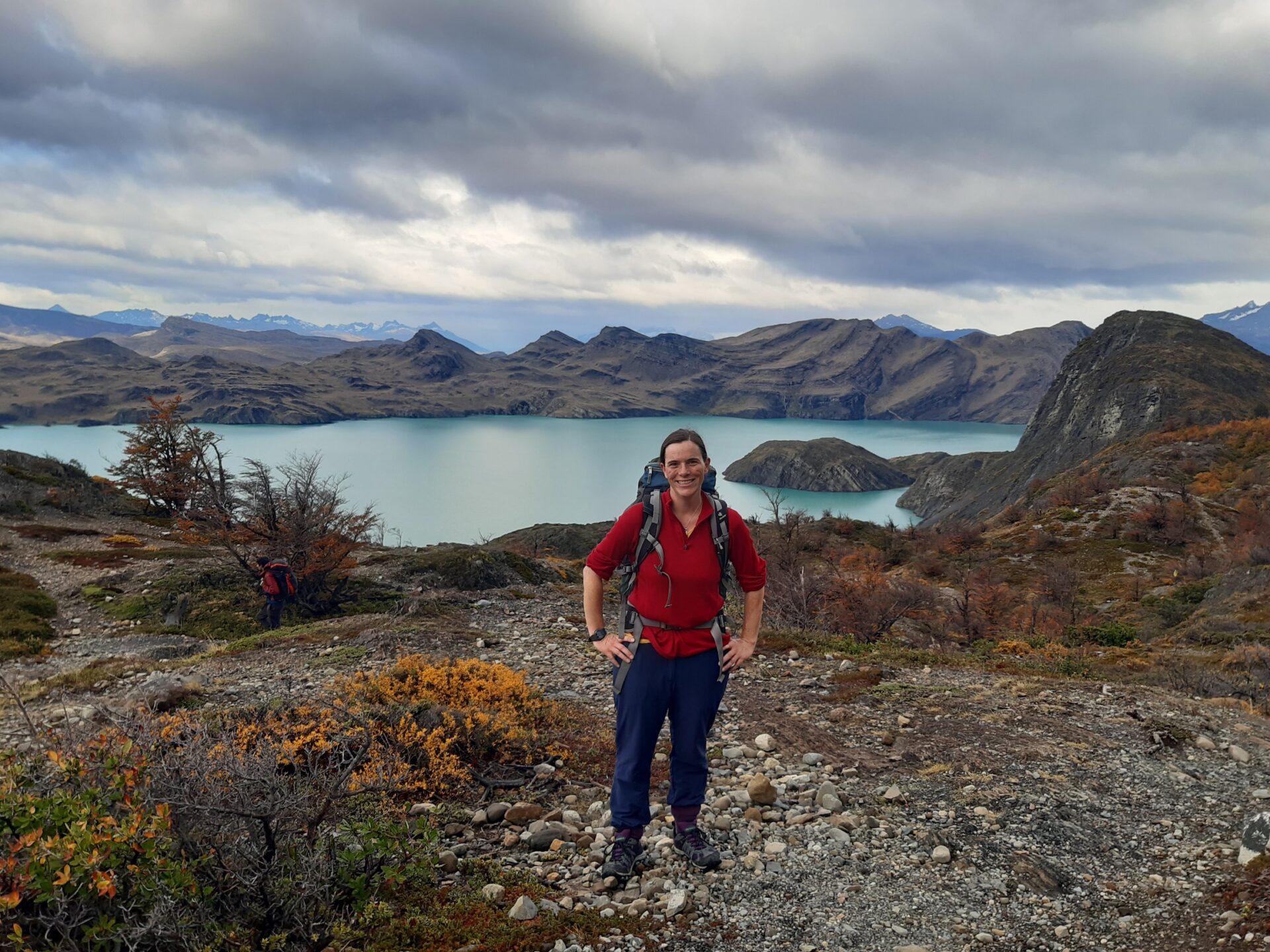
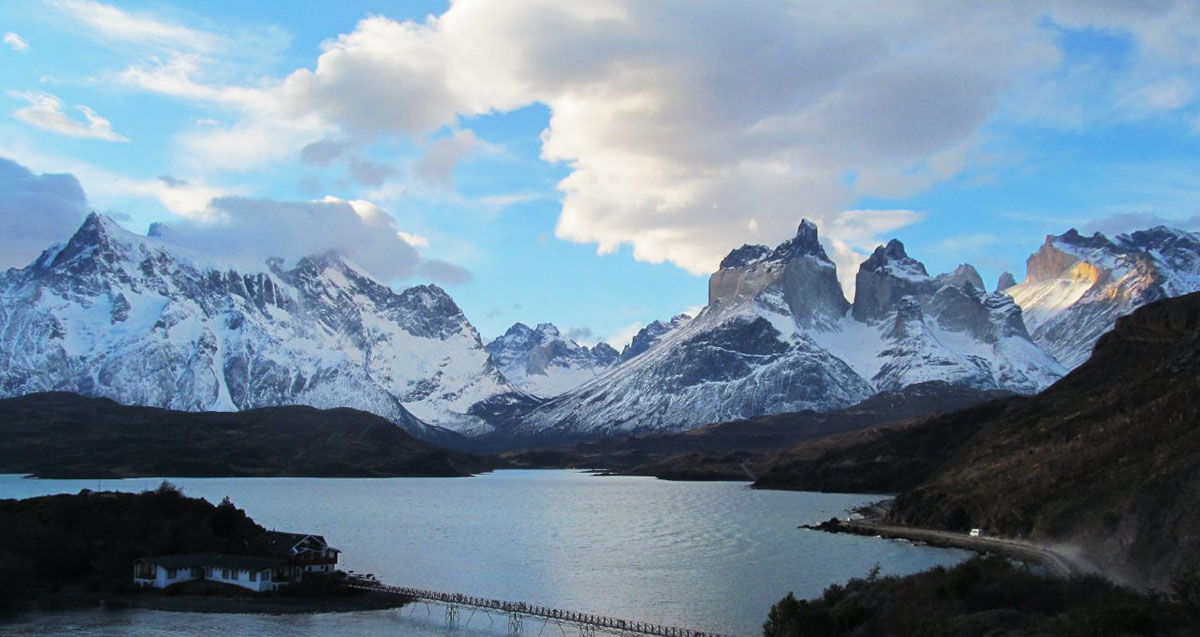
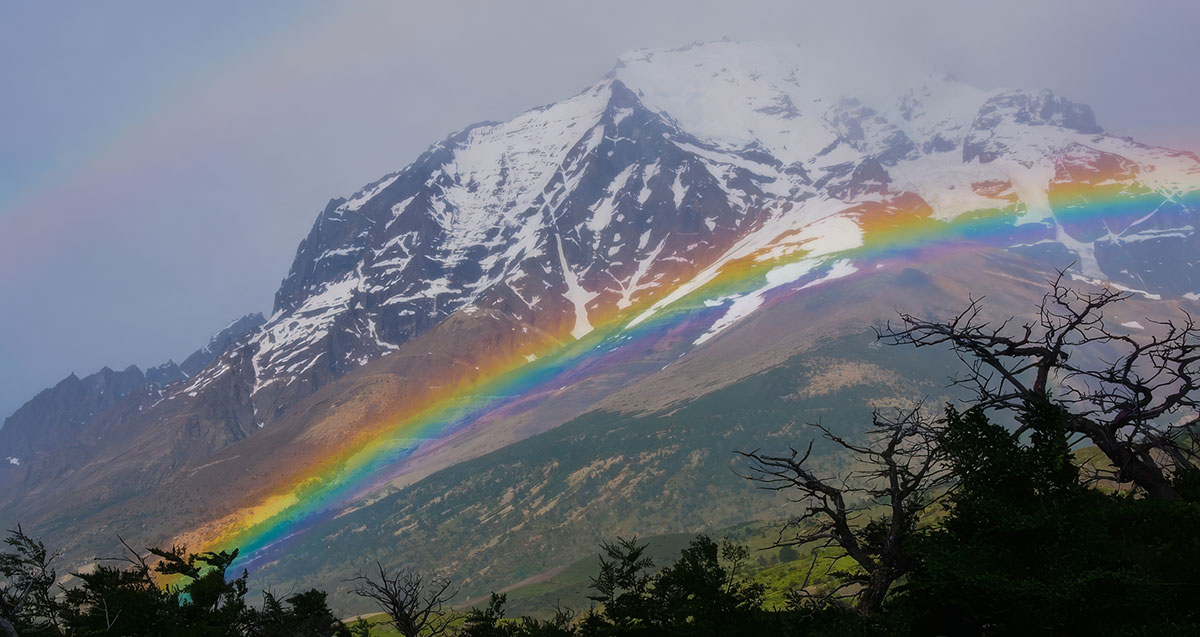
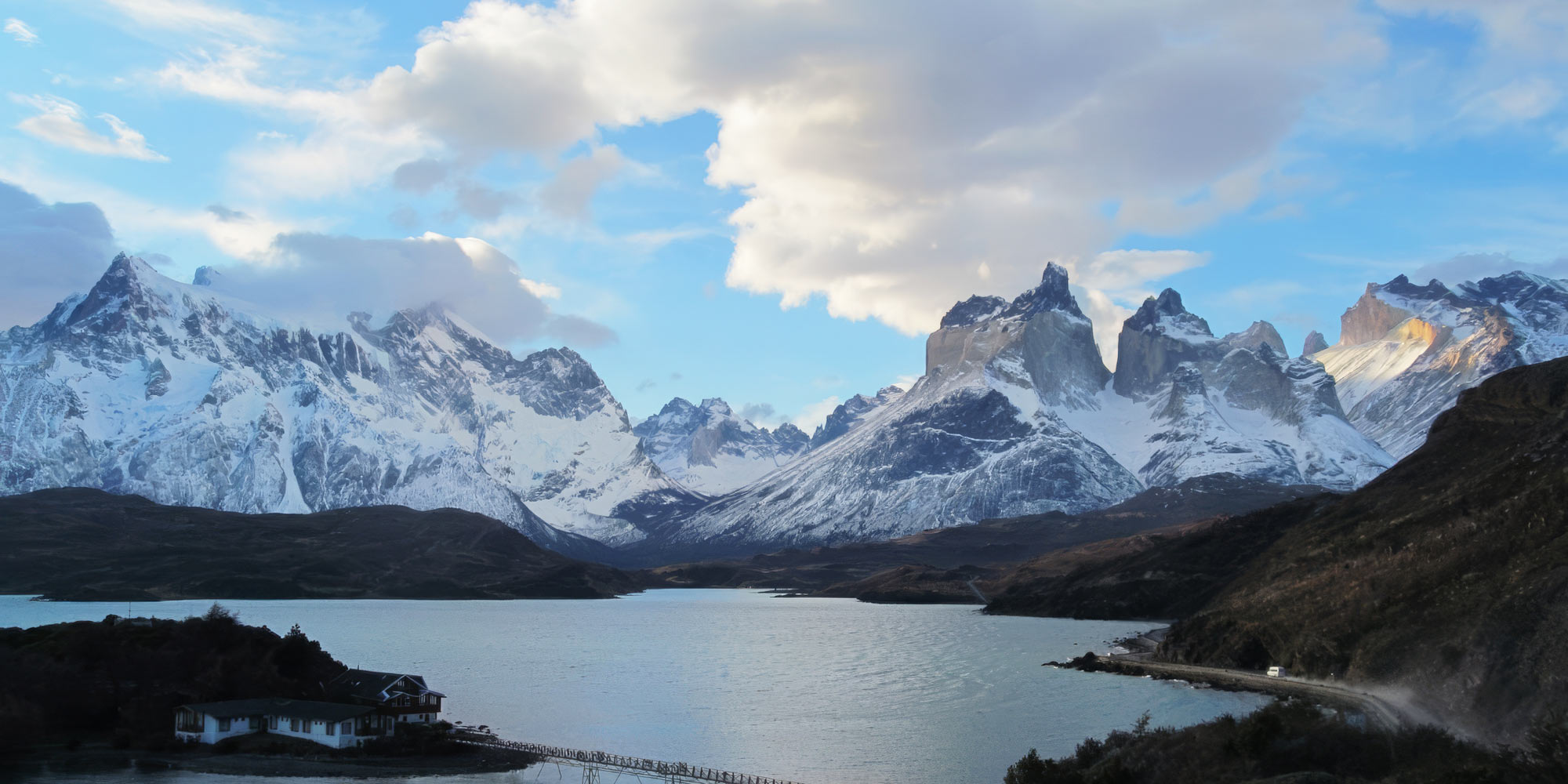
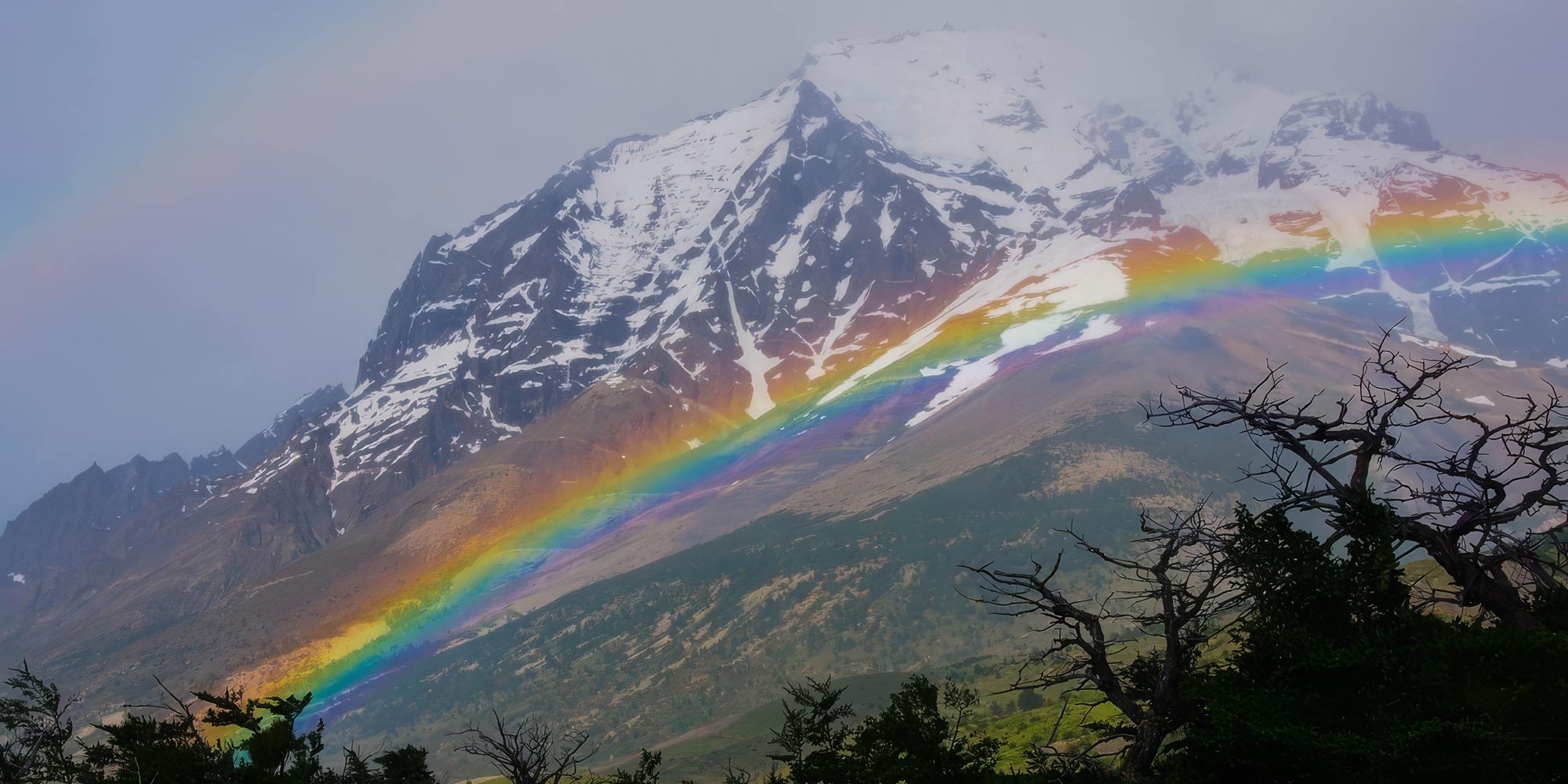
From there a low difficult trail lead us to the shores of lake Nordenskjöld and from here we see the whole Paine massif from south: the French Valley in the centre of the picture, flanked by Paine Grande (3,050m/10,007ft) with its impressive hanging glaciers on one side and the Paine Horns, featuring their unique geological formations, on the other side.
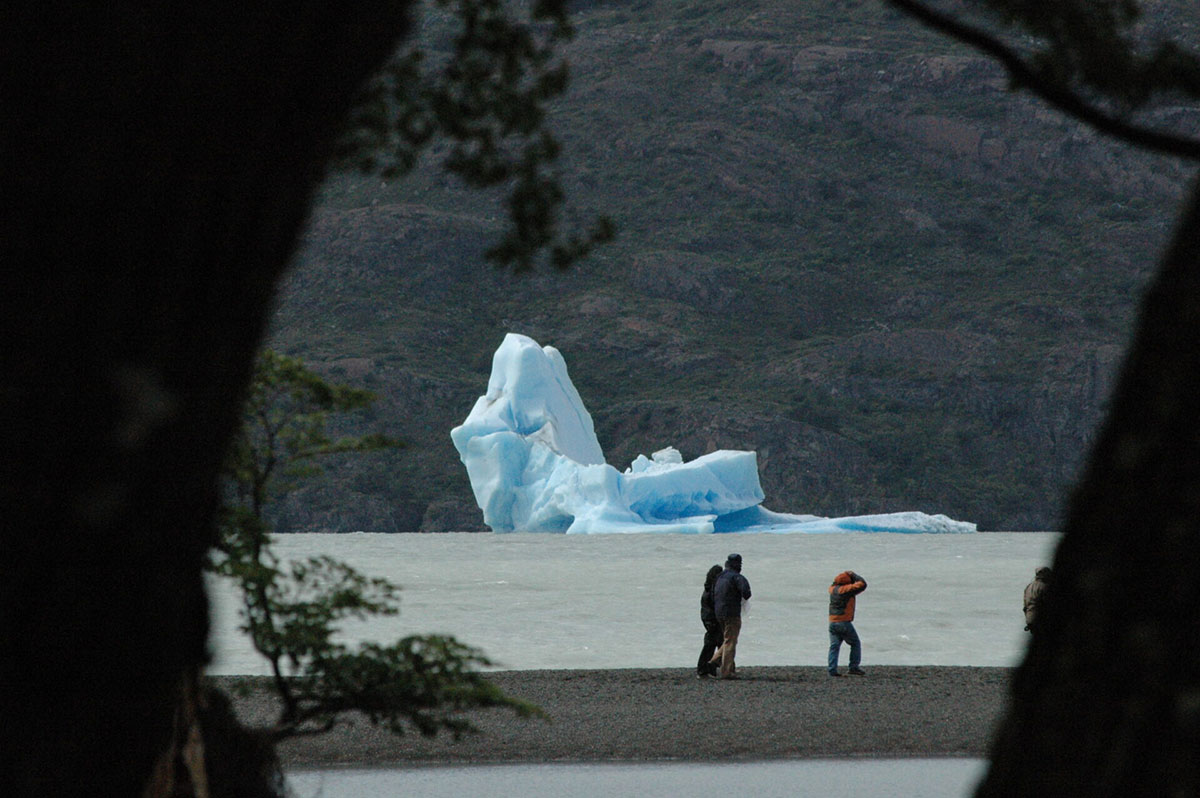
In the afternoon, we visit the west end of the Park, the lake Grey area. An easy and beautiful walk along its south shore, leads us to a rocky promontory from where we see the glacier calving down into the lake.
In the spring and summer the shore is covered by the icebergs pushed by the wind to this side of the lake.
In the late afternoon, we leave the Park and travel to Puerto Natales (two hours), a picturesque fishing town in the shores of the Last Hope Sound.
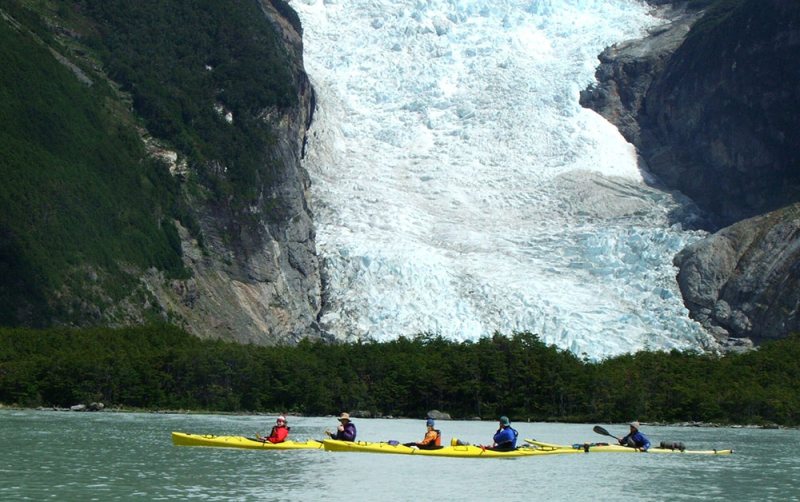
It’s an early breakfast because by 08.00 we’ll already be on our cruise boat sailing up Last Hope Sound. On our way to the glaciers Balmaceda and Serrano, we’ll see ice waterfalls, beautiful landscapes and a wide variety of the animals of the area.
On arrival and by foot, we take a look around this part of the Bernardo O’Higgins National Park – this is one of the most fascinating parts of the Chilean south. This is quite a long day because of the amount of travelling, but we’ll be back in Natales in time to enjoy the city at night.
We start our trip back to El Calafate, arriving mid-afternoon.
You have the rest of the evening free to enjoy the town’s markets and restaurants.
After breakfast we take you to El Calafate airport for your flight onward or home.
We use hotel and lodges typical of the region, often called hosterias or hostals.
These all have private, ensuite bathrooms and can be single, doubles and sometimes triples.
We grade this trek as easy to moderate as there is no high altitude to deal with, and treks can be shortened for anyone who wants.
Those with no previous trekking experience can trek this trek, although experience of hiking is beneficial.
Having said that, you do need to have a good level of fitness for the trip, as the fitter you are, the more you will enjoy it.
The trip is open to anyone with a positive attitude who wants to walk in a stunning and remote part of the Patagonian Andes.
We can cater for almost all dietary requirements – please enquire.
Hotel breakfasts usually consist of hot drinks, teas, coffees, juices, yoghurts, cereals, fruits etc.
After breakfast, packs are prepared and your guide will explain the day’s walk, and you typically walk 2-3 hours in the morning before lunch, with a short or break or two en route.
Lunch, while out walking, will be sandwiches, fruit etc. Please bring some snacks of your own, as those available in the parks are expensive and not always the best quality.
After an hour or so for lunch – depending on weather conditions – you will continue your walk, usually 1-3 hours more, although some days are shorter or longer than others, and then relax before dinner at your hotel. None of the days are planned to be long or exhausting and are very flexibile.
Dinner, when included, is usually at your lodge or a local restaurant where you will find a range of local and international dishes.
All our guides are bilingual, qualified and local and have many years’ experience of working in Patagonia.
If there are two in your group, you will meet up with different guides in the parks and as you move around.
If you are four or more, there is a tour leader that accompanies you for the entire trip.
A superbly organized Beagle Channel and Cape Horn cruise combining comfort, adventure, and breathtaking southern landscapes.
A smooth, expertly organized Patagonian trekking journey through El Calafate and El Chaltén, filled with beauty and care.
Miss nothing as you visit both Argentina’s Fitzroy National Park and Chile’s Torres del Paine National Park as well as the iconic Perito Moreno glacier.
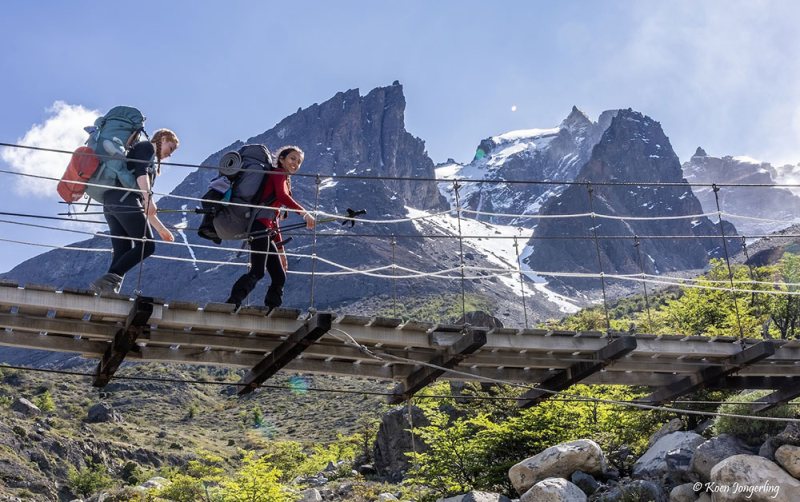
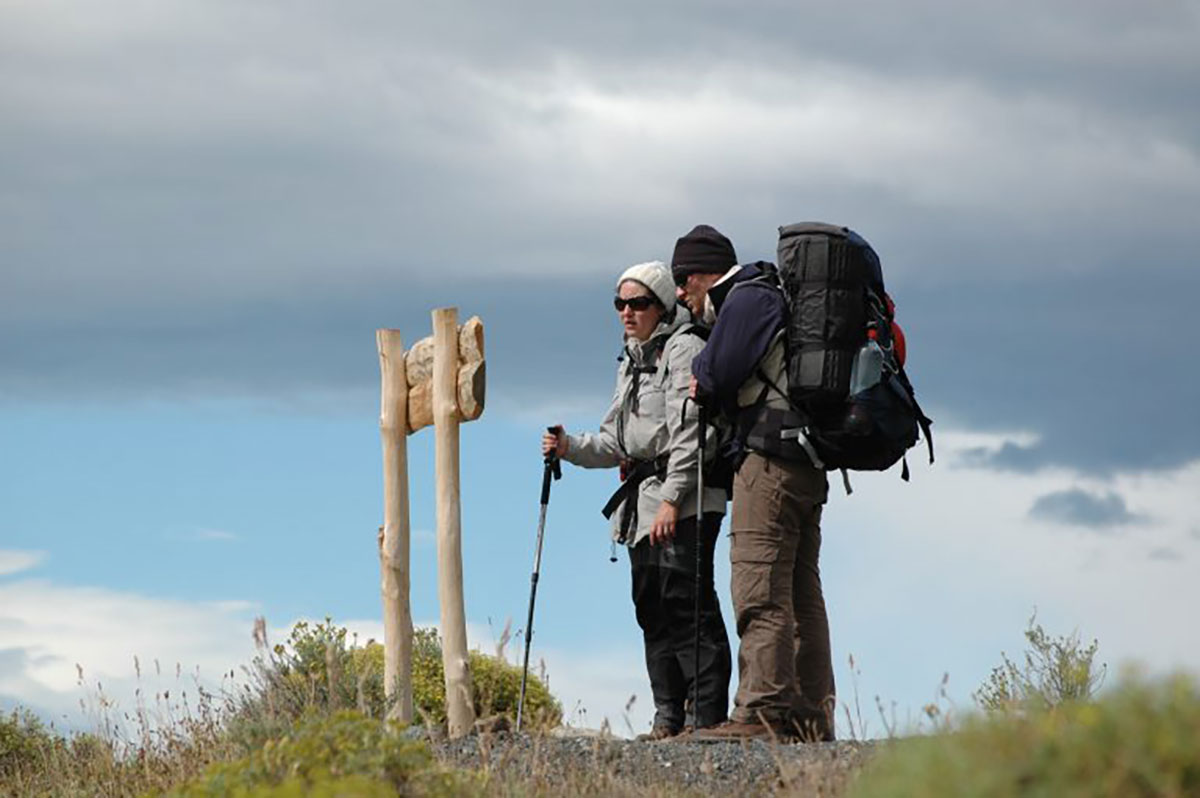
Our guides take you on easy to moderate day walks, all taken at a leisurely pace and with lots of stops, to the highlights of stunning Patagonia.
All treks include a midway turn around point, and comfortable lodges to relax in after a day’s adventure.
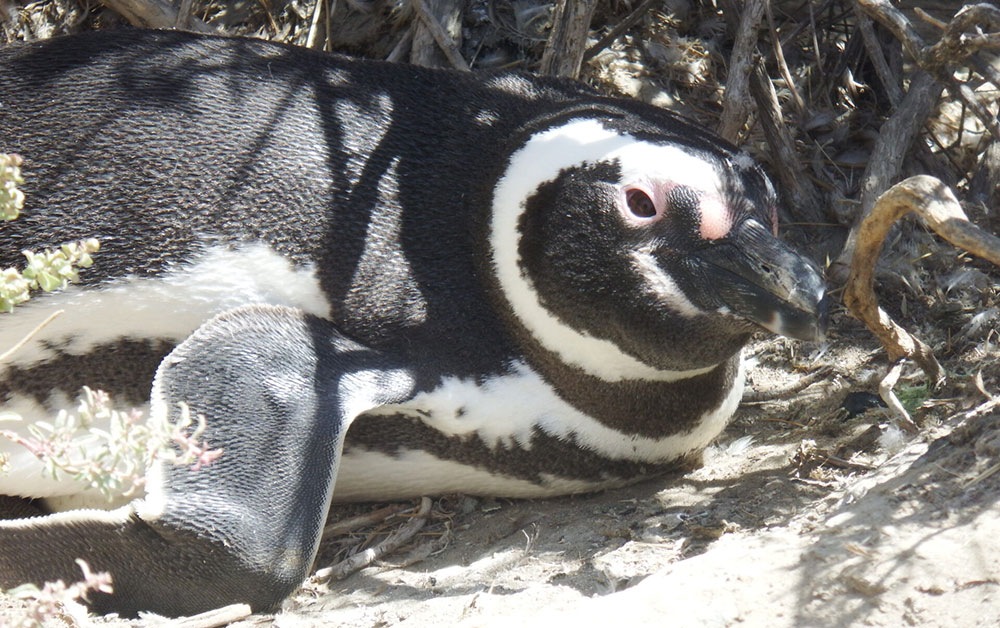
There is a special emphasis placed on the natural history of the region and helping you to discover the best of Patagonia’s beauty.
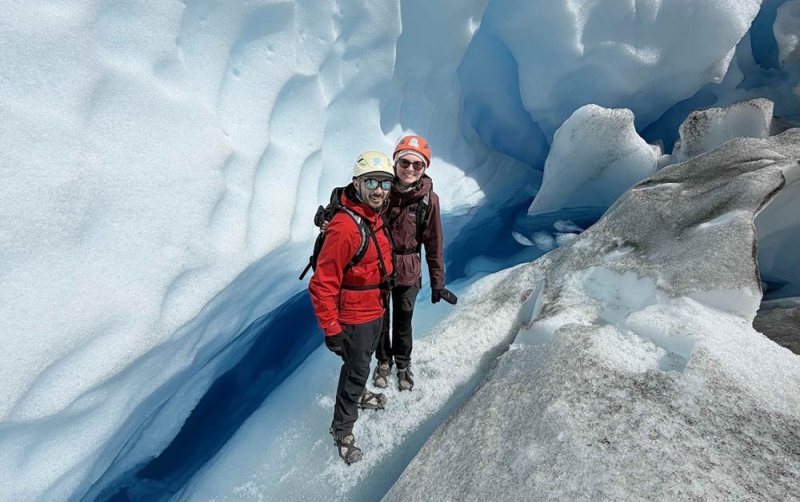
We walk to beautiful lookouts, waterfalls and white-blue glaciers that calve into pristine lakes.
We take you to the heart of the two most important parks of Patagonia – Los Glaciares National Park in Argentina and Torres del Paine National Park in Chile, both awarded World Heritage status by UNESCO.
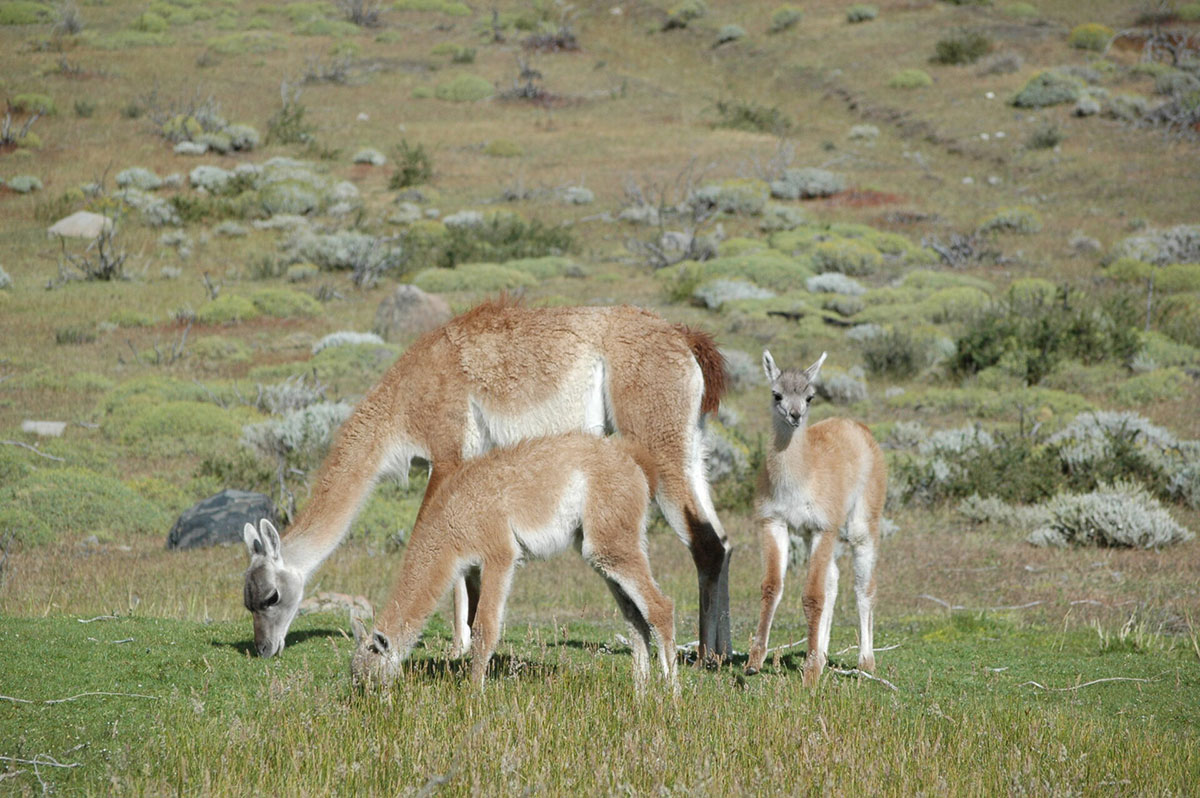
Southern Patagonia (latitudes 49° to 55°), encompassing the southern Andes of Chile and Argentina plus Tierra del Fuego, has an altogether more vertical aspect than the rest of Patagonia.
As the continent tapers towards its southern point, the Andes take on new characteristics and offer some truly impressive panoramas.
Much of southern Patagonia is characterized by virgin landscapes where man’s hand has either not been present or, because of the scale of the landscapes, goes almost unnoticed. To the west of the semi-arid Patagonian plateau, mile-high granite spires – e.g. Cerro Torre and Fitzroy in Argentina and the Torres and Cuernos del Paine in Chile – rise abruptly from the Andean foothills, while vast blue glaciers, fringed by southern beech forest, gouge out thevalleys below.
At the heart of these magnificent landscapes lies the South Patagonian Ice Field, an utterly remote icy wilderness spanning hundreds of kilometers, whose glaciers – including the Perito Moreno and Upsala – are tens of kilometres long by severalkilometers wide.
Also characteristic of the southern Patagonian Andes are its turquoise, iceberg-filled lakes. To the west lies the southern portion of the Chilean Archipelago, comprising snow-capped islands and fjords.
Across the Magellan Straits from mainland Patagonia lies Tierra del Fuego which, like the rest of Patagonia, is divided between Argentina and Chile.
The north and east of Tierra del Fuego is flat, but flanking the Beagle Channel in the south, the tail end of the Andes provide very dramatic mountain scenery.
The Lake District (latitudes 40° to 45°) or the Araucania, is a region of dramatic conical volcanoes, evergreen, high-canopy forests and, of course, lakes.
It straddles the Chile-Argentine border, and also takes in Chiloe island, in the extreme north of the Chilean Archipelago. This region stretches from Temuco in the north to Chiloe in the south.
Central Patagonia (latitudes 45 to 49) is one of South America’s best-kept secrets. The vast wilderness area can be divided in two:
This huge region, embracing the sparsely-inhabited southern Araucaria and Aisén Region, features temperate rainforests, snow-peaks (often extinct volcanoes), lakes and, to the west, the Chilean Archipelago: a labyrinth of fjords and mountain-islands. This, the Chilean portion of central Patagonia, boasts the northernmost of Patagonia’s many giant, sea-level glaciers.
The San Raphael Glacier, probably this region’s most famous landmark, is an immense hanging glacier whose seracs calve into an iceberg-filled lagoon.
Find out more about Patagonia with our blog about its wildlife.
For most people, Patagonia evokes a vast, windblown plateau, jagged mountains and the life of the gauchos.
The steppe that occupies much of southern South America is only one aspect of a magical region, jam-packed with amazing and contrasting landscapes.
Patagonia (latitudes 40°-55°, approximately) embraces a vast portion of southern Chile and Argentina, from the Rio Colorado in the north, to Tierra del Fuego in the south.
For convenience, we have divided the region into three zones: the Lakes District of northern Patagonian, central Patagonia and southern Patagonia.
Good kit is vital for every trip.
Book with Andean Trails and get 15% off Páramo’s fantastic ethical and high performance outdoor gear.
When planning for the varied climatic conditions encountered in Paine, layering is the most practical and versatile clothing system. It’s worth remembering that our clothing keeps us warm by retaining and isolating the heat we ourselves create.
To best maintain body heat, several layers of lightweight, warm and quick-drying clothing are far more efficient than one or two thick layers. Layers should have the following qualities:
First (base) layer: This layer wicks the sweat away from our skin, thus helping keep the body dry and warm. To this end, synthetic fabrics such as polypropylene should be used.
Mid layers: These isolating layers should also be synthetic (e.g. the known polar linings such as polartec or windblock, which are light and insulate twice as well as wool). Very important layers for retaining body heat.
Outer layer / shell: Finally, the vital layer which protects us from climatic adversities. A breathable, wind-proof and waterproof anorak, such as Goretex.
Give plenty of thought to kit selection, and try to keep weight down.
We also carry an extensive first aid kit & oxygen on all trips, but these are generally for emergencies only.
Patagonia weather changes as quickly as the wind sometimes blows.
Summer (Nov-March) see temperatures reach up to 20°C, when glorious light pours over the region for up to 18 hours. This is the best time to visit, nevertheless, spring and summer is also when the central and southern Patagonian regions sometimes get buffeted by strong, westerly winds.
Summer days in national parks can also bring sunny, windless conditions, and you may well find yourself hiking in shorts and t-shirt. Afternoons in Los Glaciares can be warm with lots of sunshine. (Note: Patagonian UV rays are very strong).
But because of the fickle – and localised – nature of the climate here, take nothing for granted. In a single day, all four seasons might be experienced, including a biting, wind-induced cold. It has been known to snow in camps in summer!
The in winter (May-Sept) temperatures typically range from -2°C in the winter, and there is only 6-8 hours of daylight. Winds tend to die down.
In general, the further south you go, the cooler it gets and the further west you go – towards the Andes and Pacific coast – the wetter and less predictable the weather is. The further east – towards and across the Patagonian plateau – the drier and more stable.
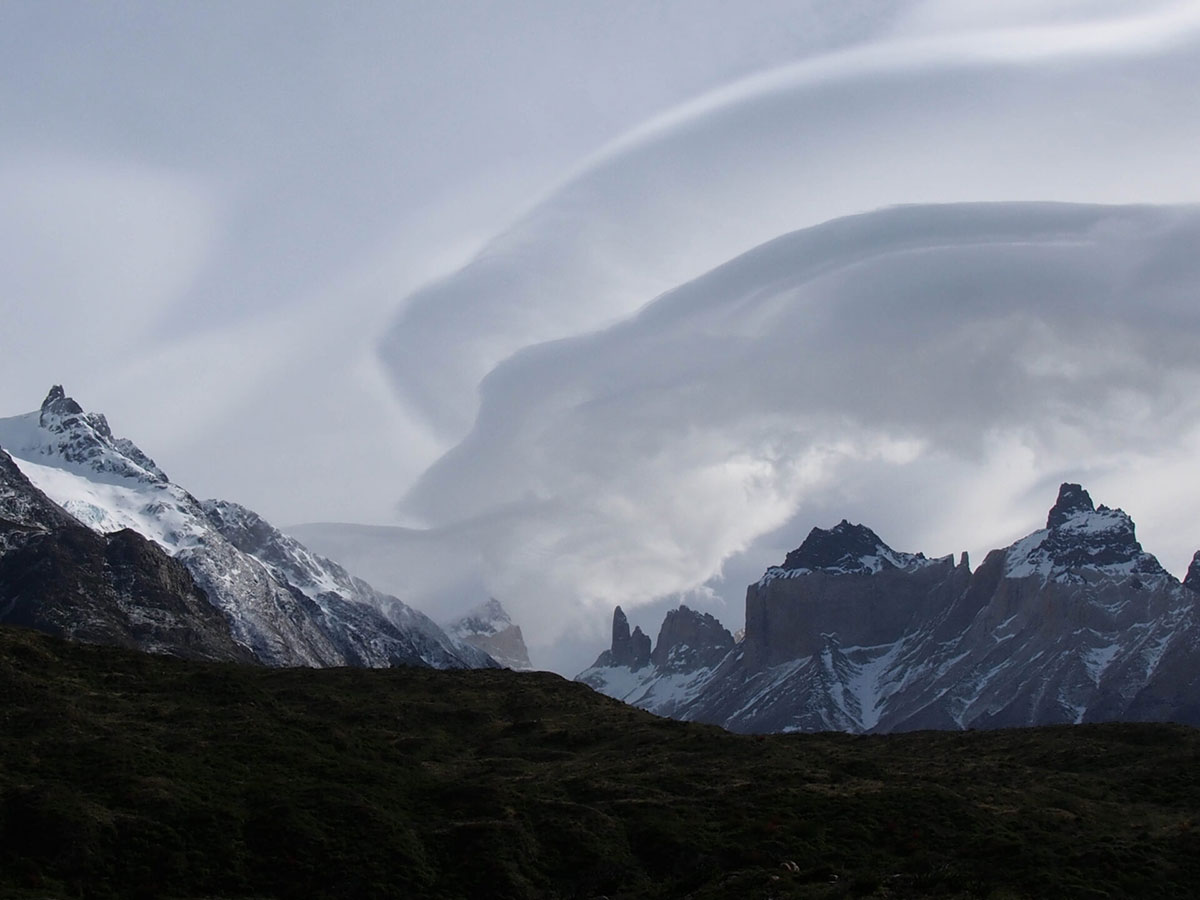
On the South Patagonian Ice Field (average height, 1,500 metres), the appearance of lenticular clouds – signifying changing conditions – can translate into extreme winds (up to 150 kmh) and heavy snowfall. Here, summer pre-dawn temperatures commonly reach -20°C, with wind chill lowering temperatures even more. However, on sunny, windless summer days, you might get away with wearing just a couple of thin layers.
In Peninsula Valdes, the city of Puerto Madryn and the capital Trelew are all located in the province of Chubut, on the shores of three gulfs: San Matias, San Jose, and Nuevo. This area features a peculiar climate because of the effect created by the Atlantic Ocean. Although it does not rain much in the region on an annual basis, summers are usually mild, and the temperature sometimes gets very hot (touching 30ºC) and then eases off in the evening. The area does get very windy at times, especially on the peninsula, and warm and water/windproof clothing is recommended.
If you head to Ushuaia, due to its extreme southern location, temperatures may remain chilly during summer (Oct-March) the use of plenty of warm layers of clothing. Winter and Antarctic visits will require extreme clothing.
A superbly organized Beagle Channel and Cape Horn cruise combining comfort, adventure, and breathtaking southern landscapes.
A smooth, expertly organized Patagonian trekking journey through El Calafate and El Chaltén, filled with beauty and care.