From: £1,041
From: $1,386
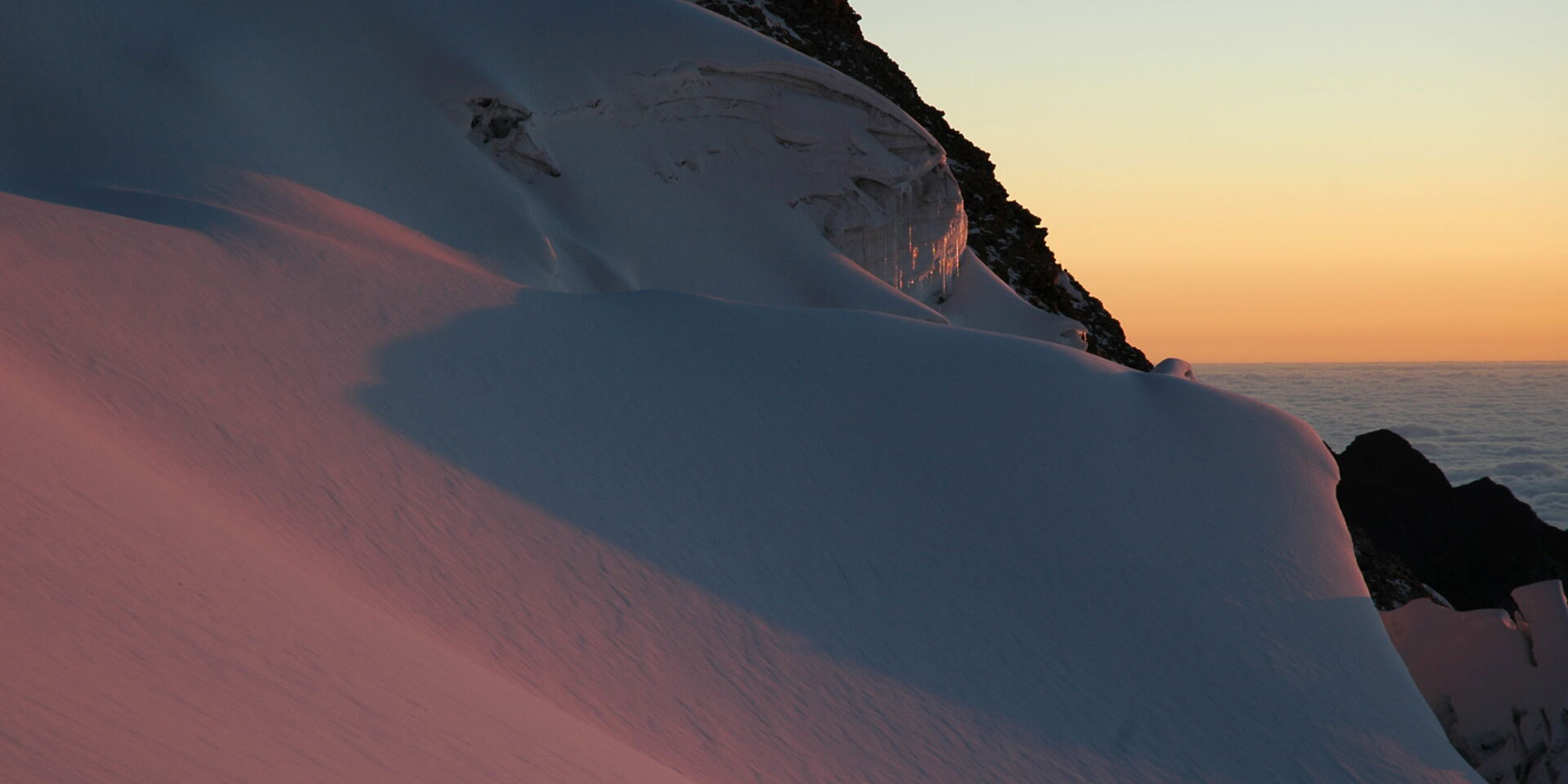
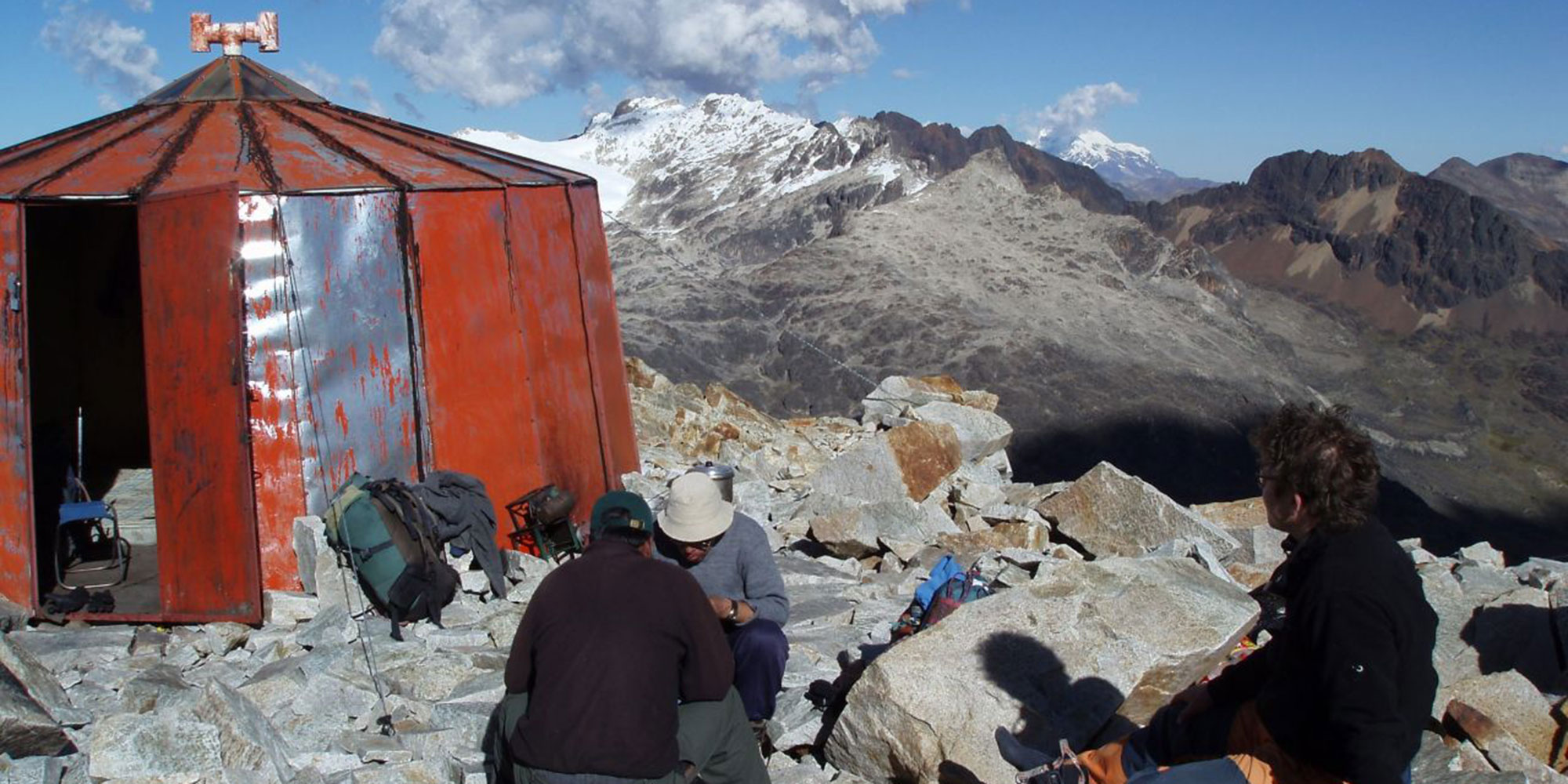
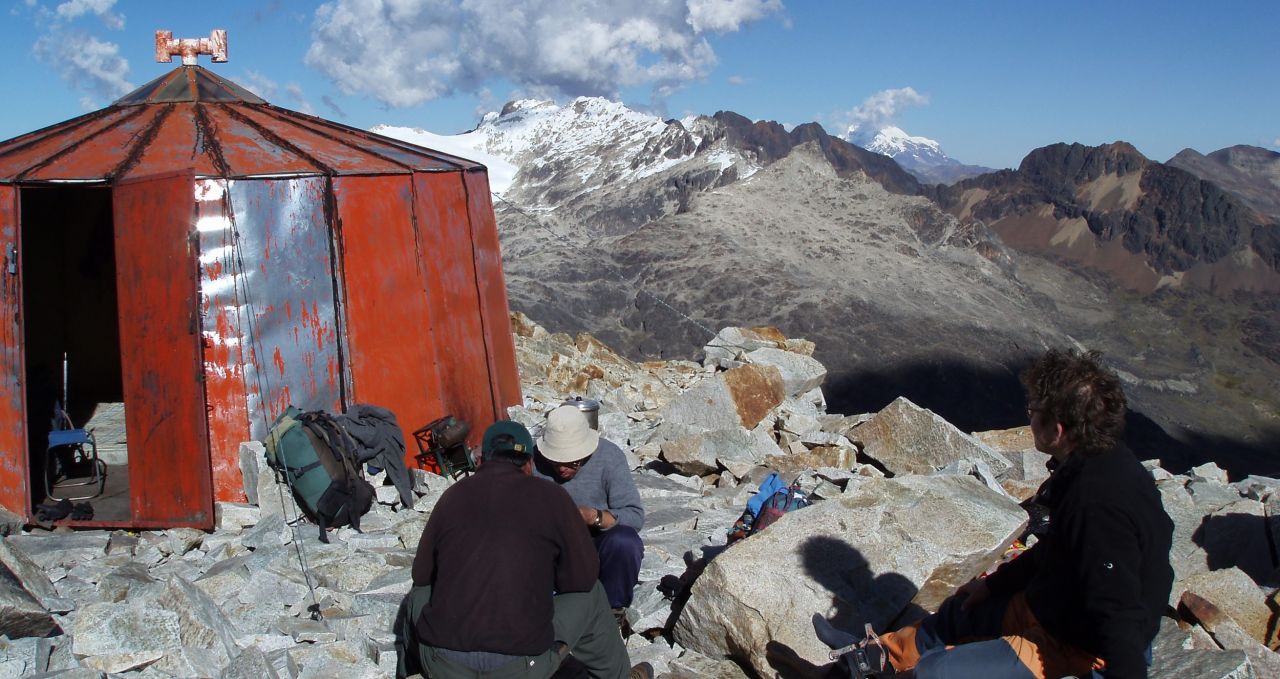
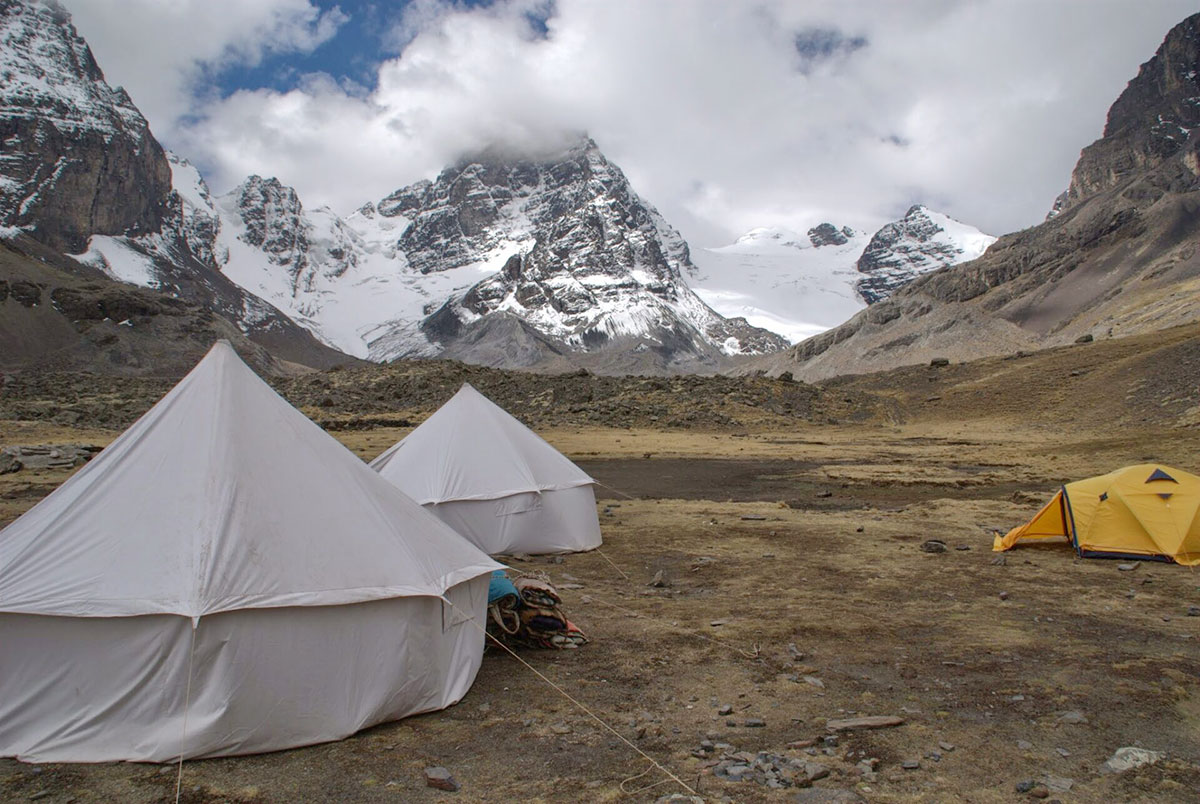
We leave La Paz at 0900 (approx.) and travel by vehicle to the La Rinconada (4,400m/14,436ft) in the Palcoco valley.
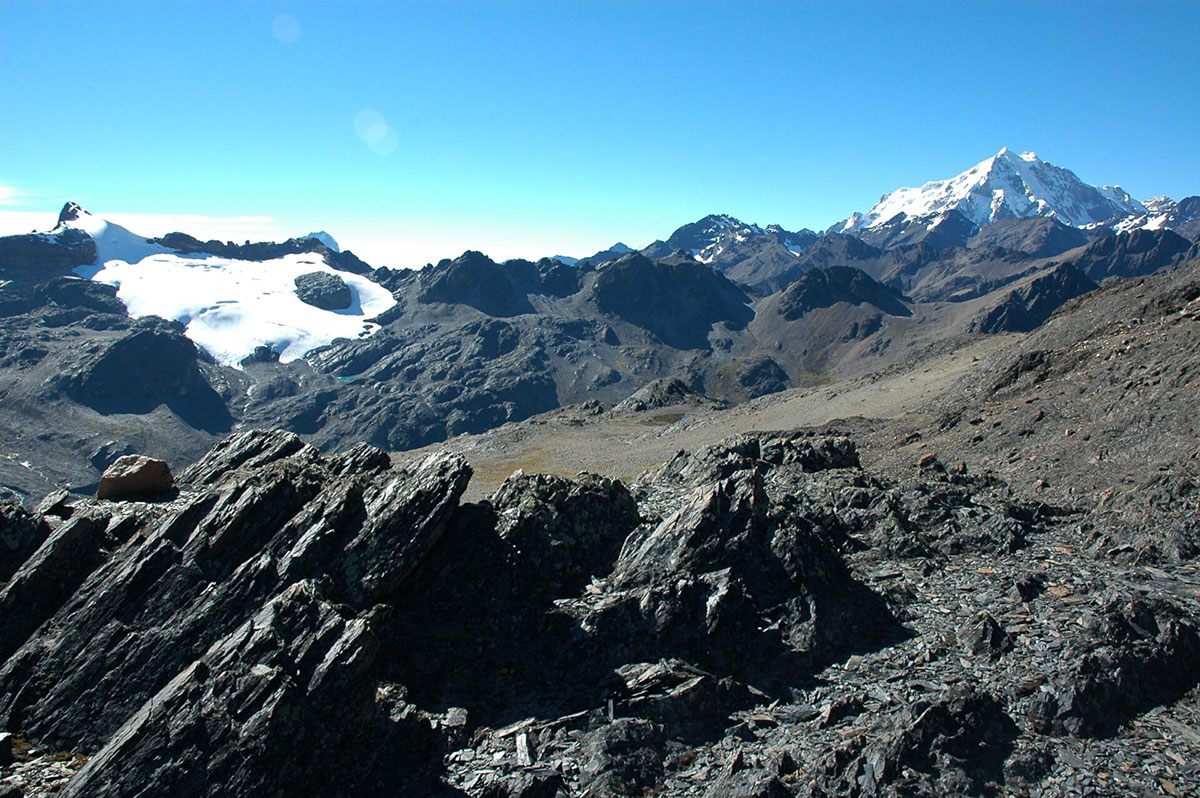
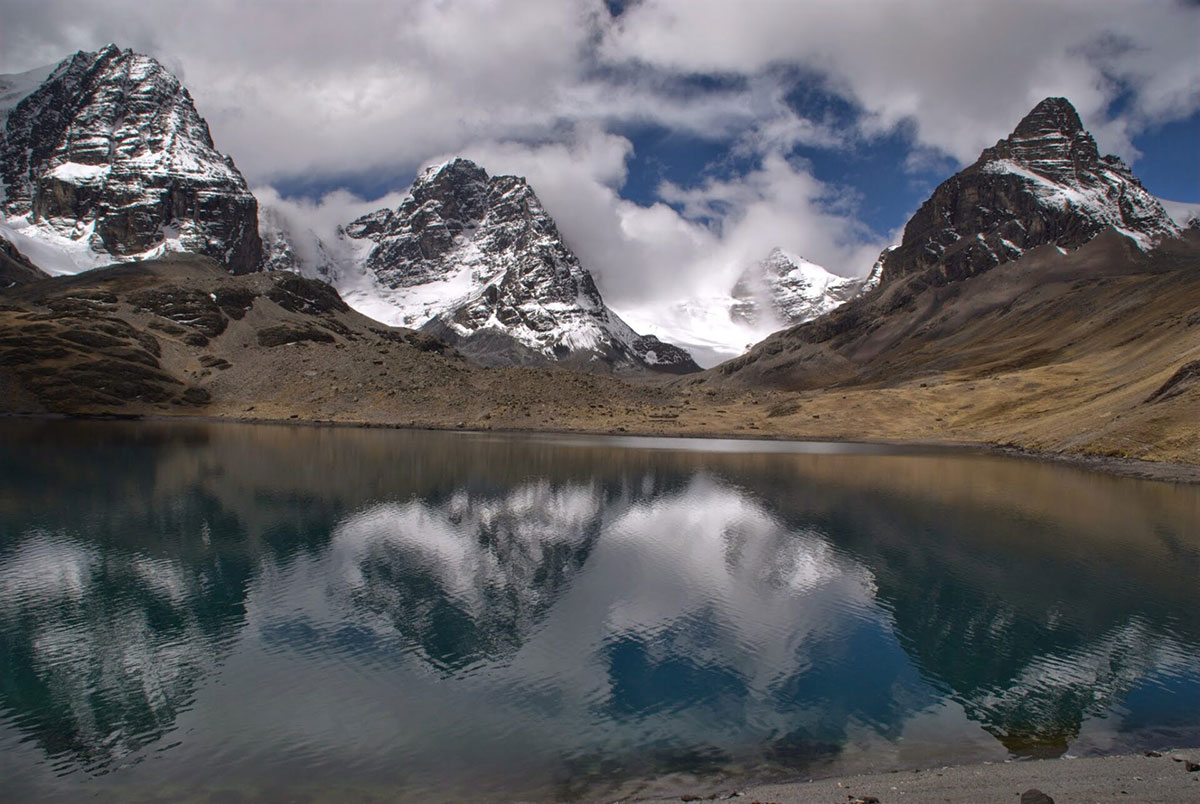
From here, it’s a two-hour walk to base camp in the Condoriri National Park (4,650m/15,256ft).
In the afternoon, we familiarise ourselves with technical equipment and learn the most important knots needed for climbing and mountaineering in the glaciated peaks of the high Andes.
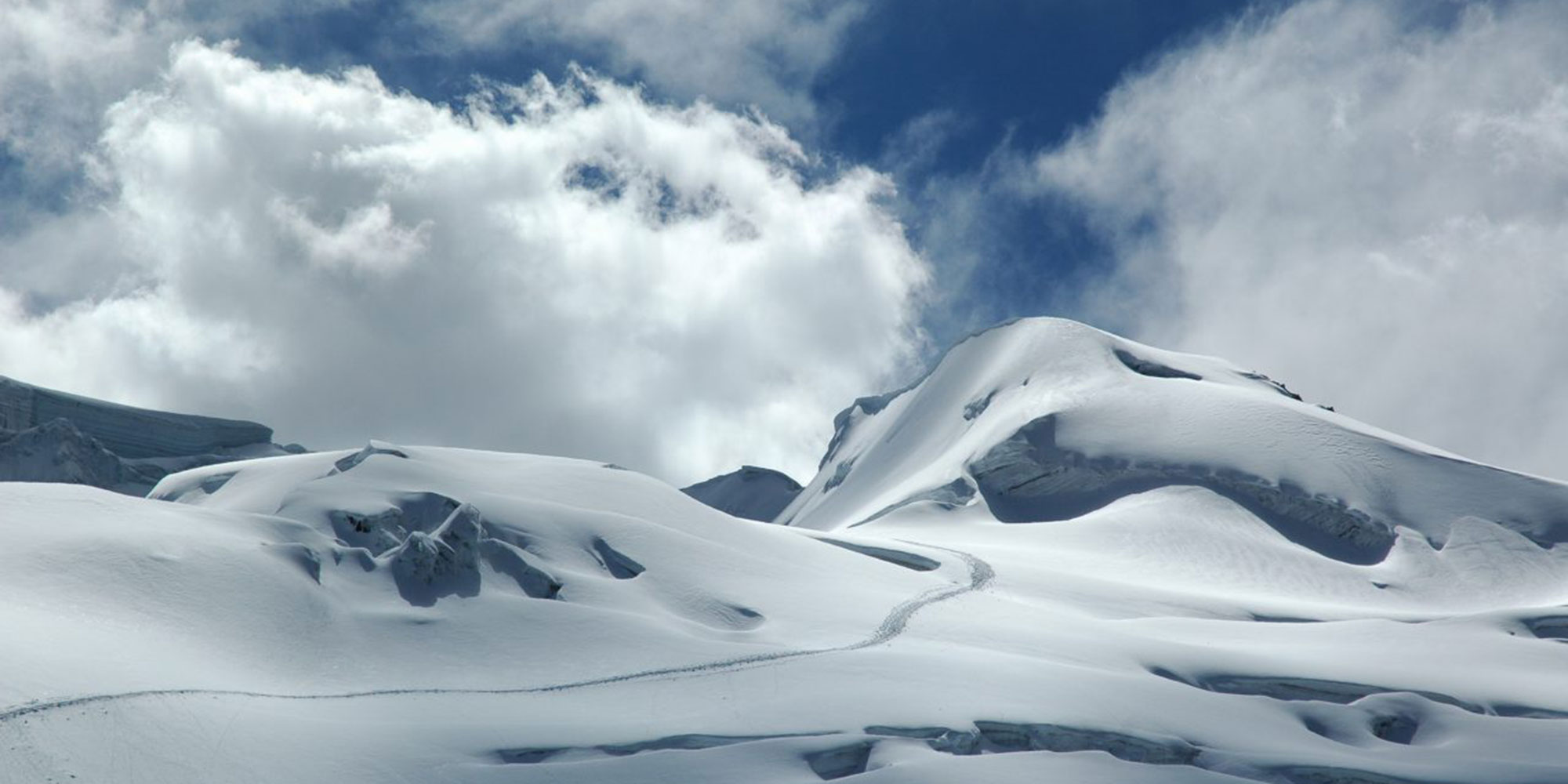
We walk 1 ½ hours to the glacier at 4,850m/15,912ft.
Here, we spend several hours learning and practising basic crampon and ice axe techniques, including the art of self-arrest (if snow conditions permit).
Other areas covered will include crossing technical terrain, rope team travel, snow and ice anchors and belay systems, ice climbing.
Camp.
Today, accompanied by your instructor, you’ll have an opportunity to put your newly learnt mountaineering skills into practice on the mountain.
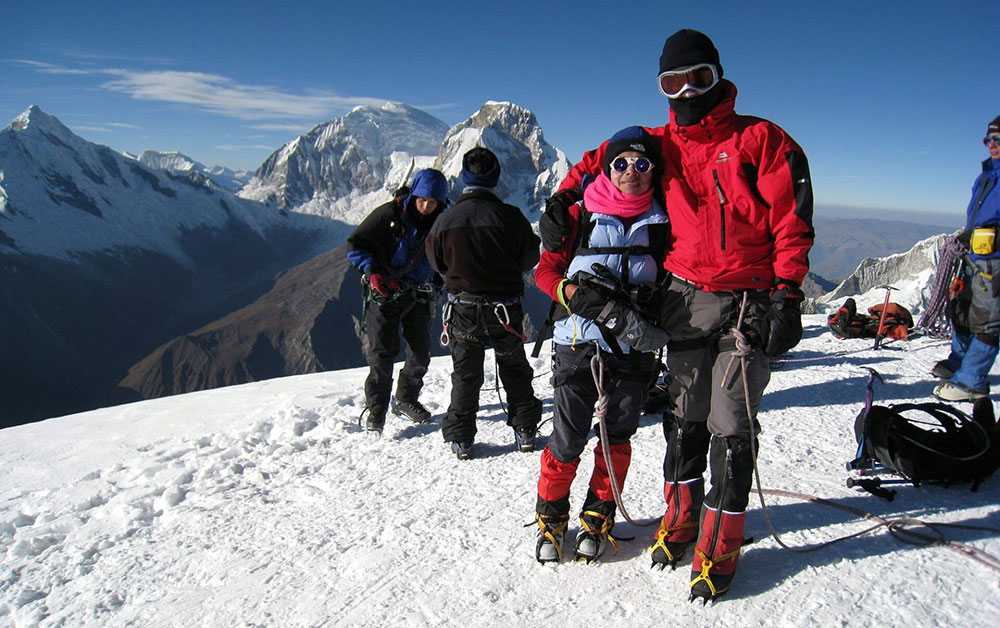
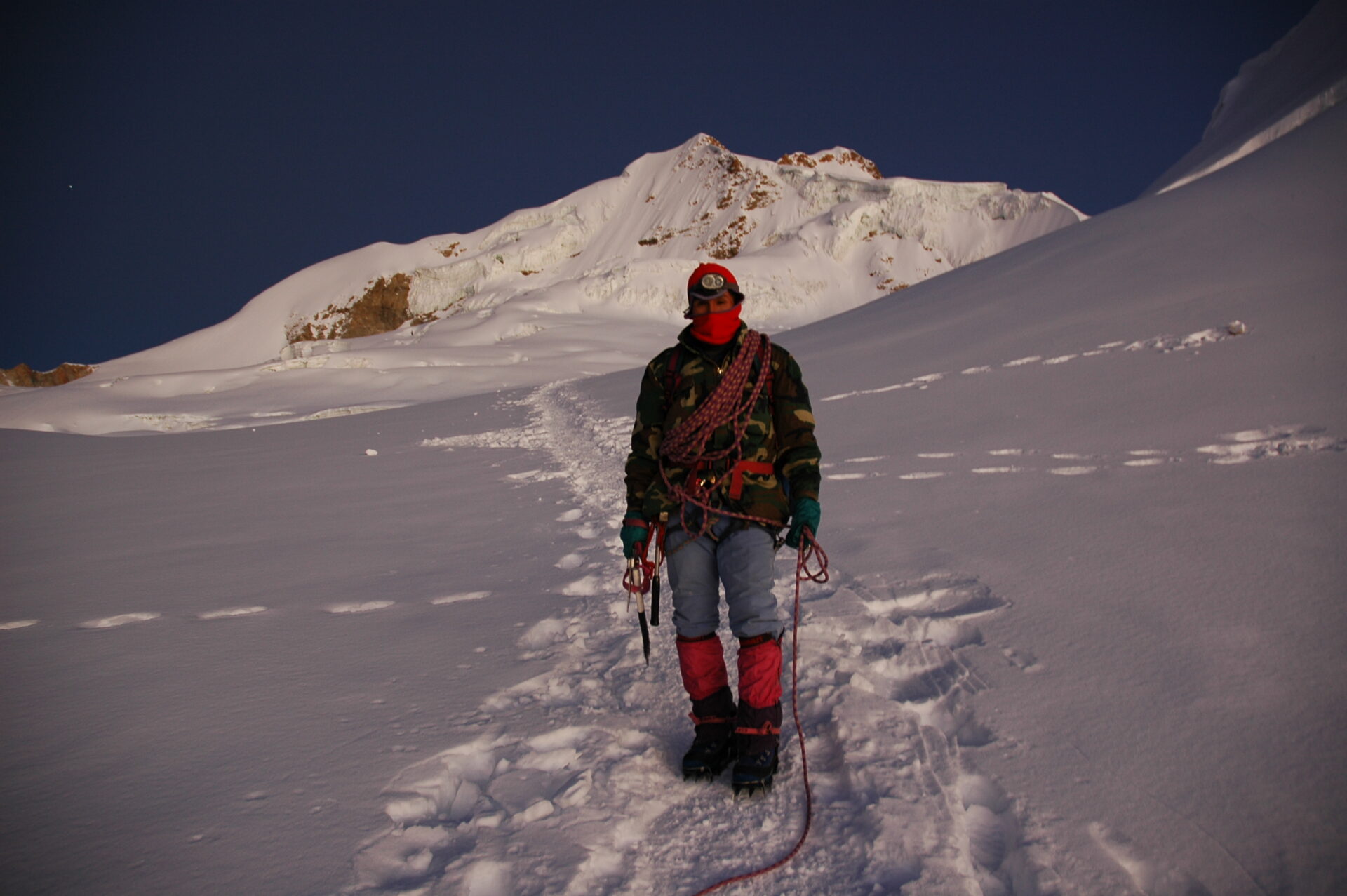
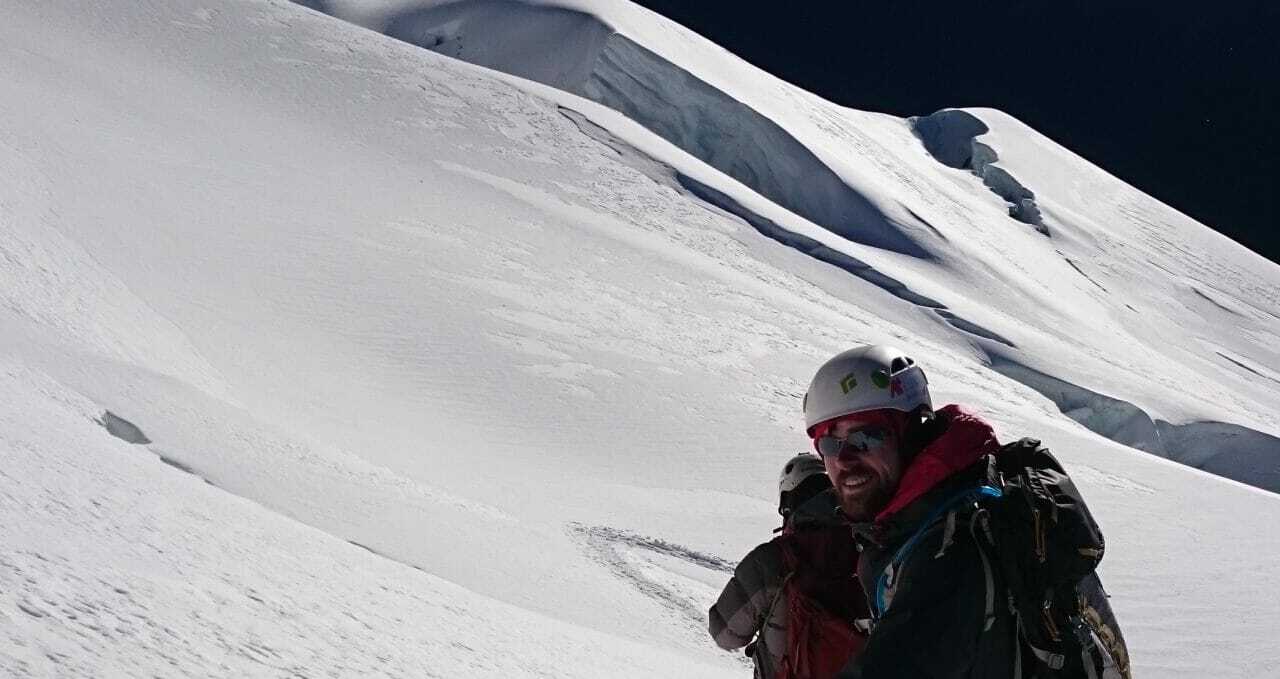
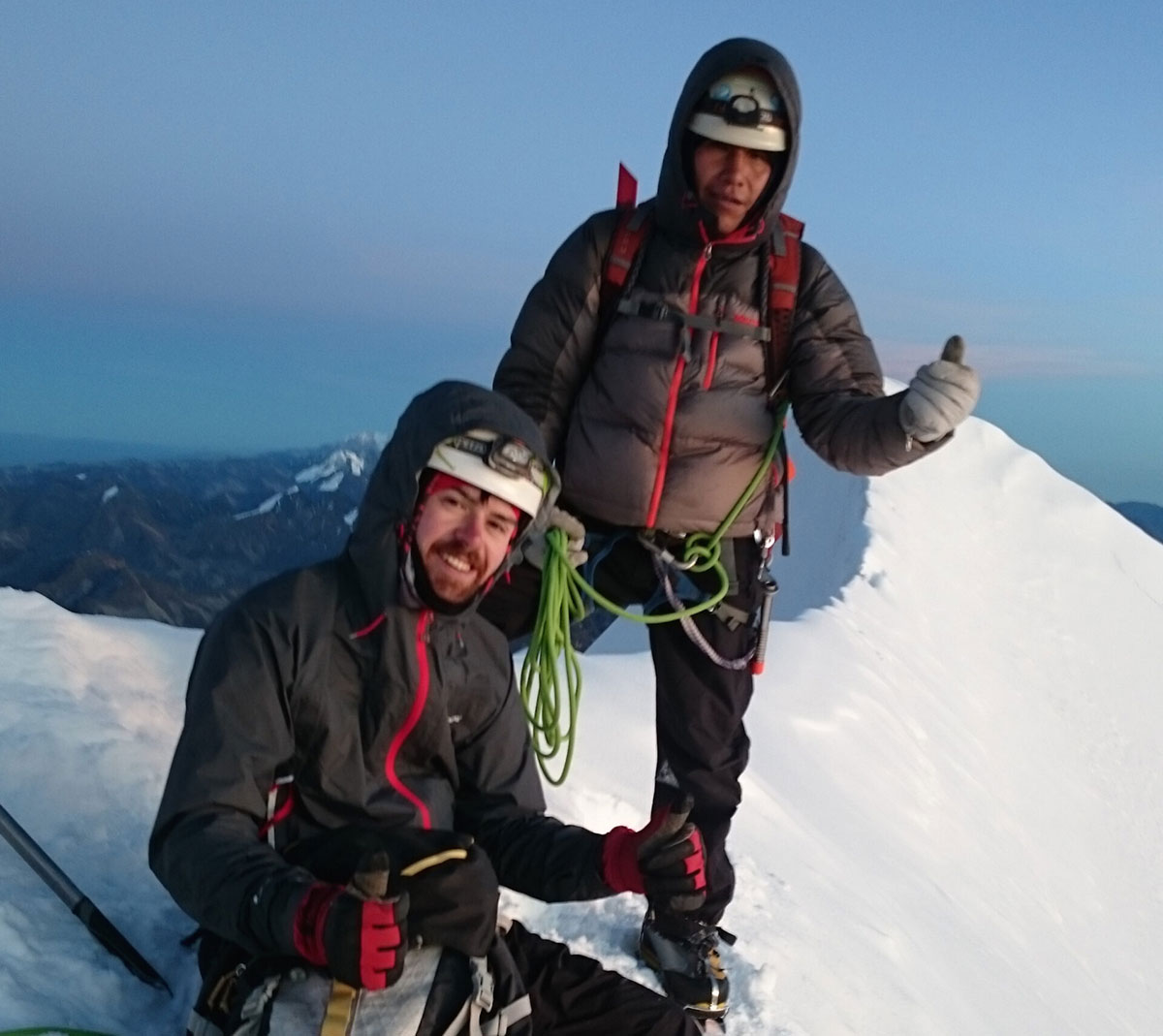
We set off very early from camp, around 4 am, to enjoy the snow at its hardest. We kit up with crampons, ice-axe, harnesses etc and head up on to the ice.
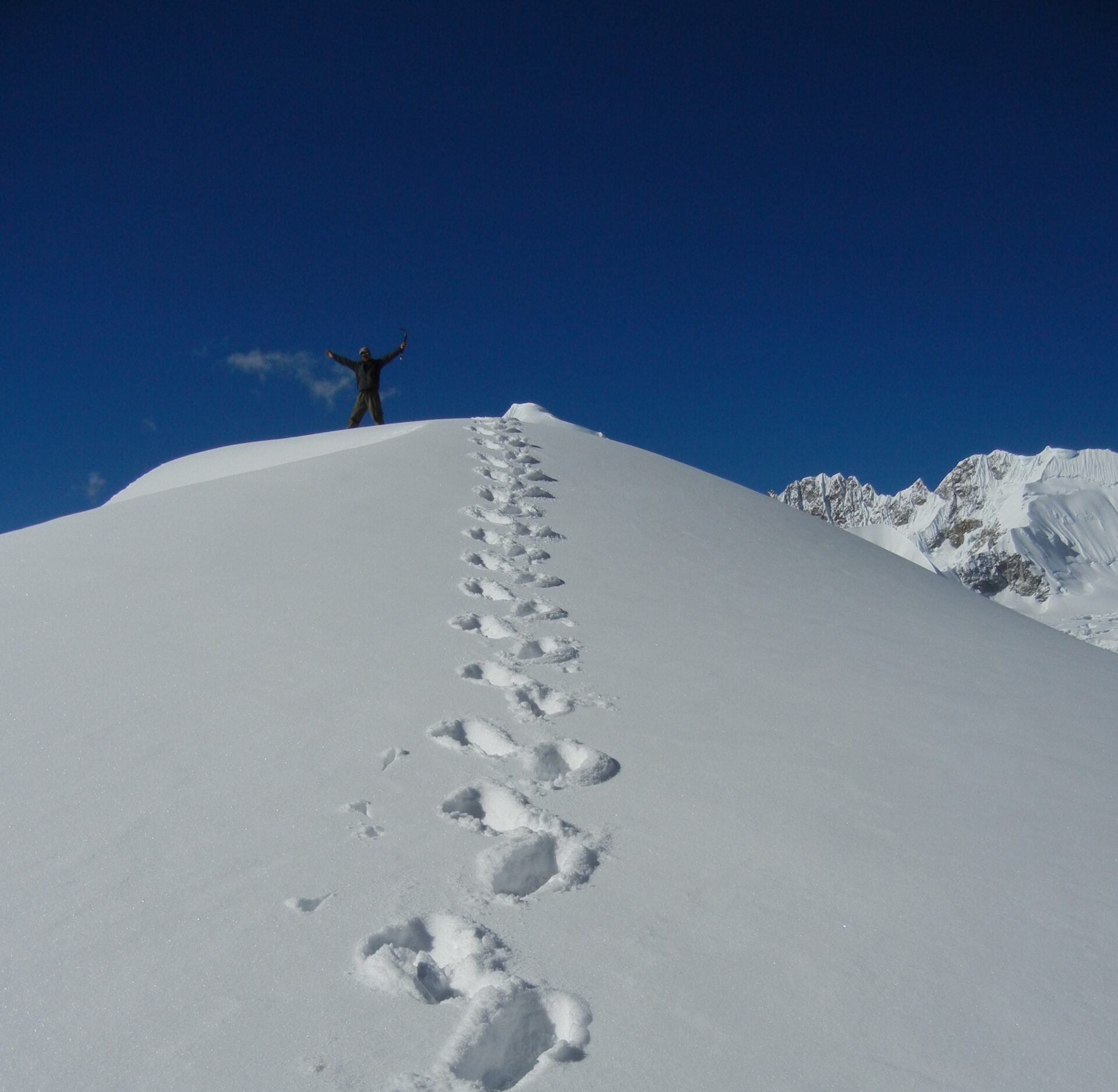
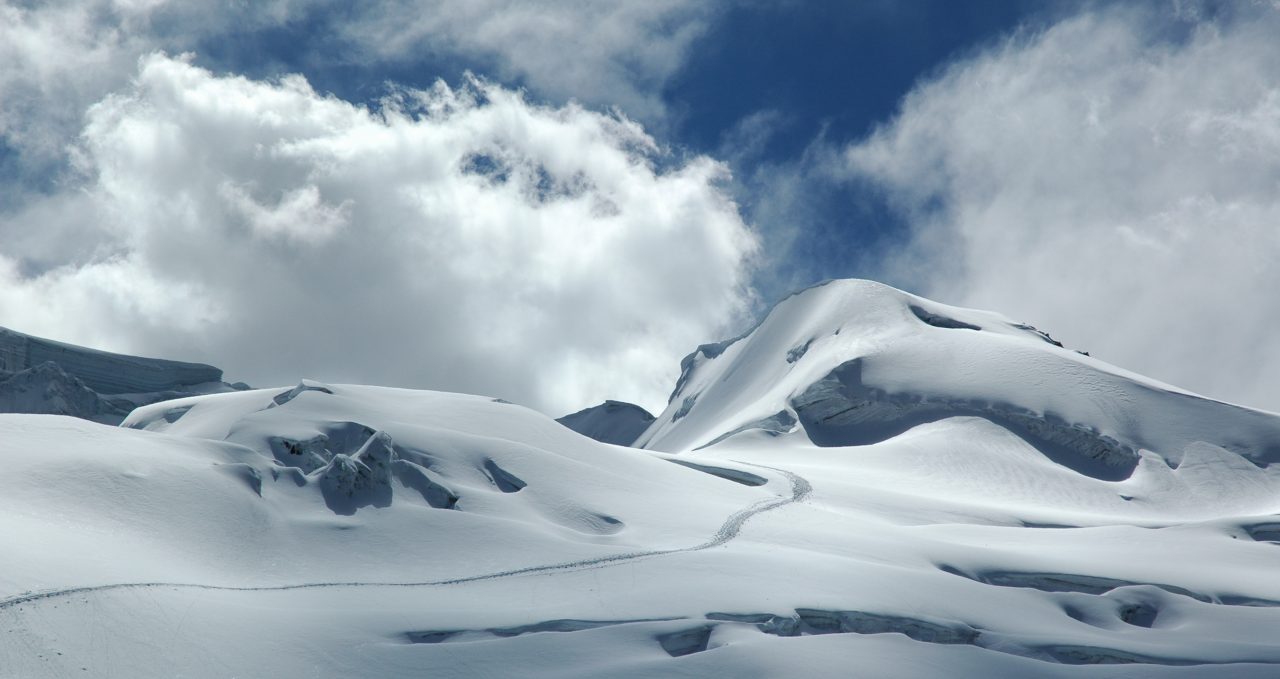
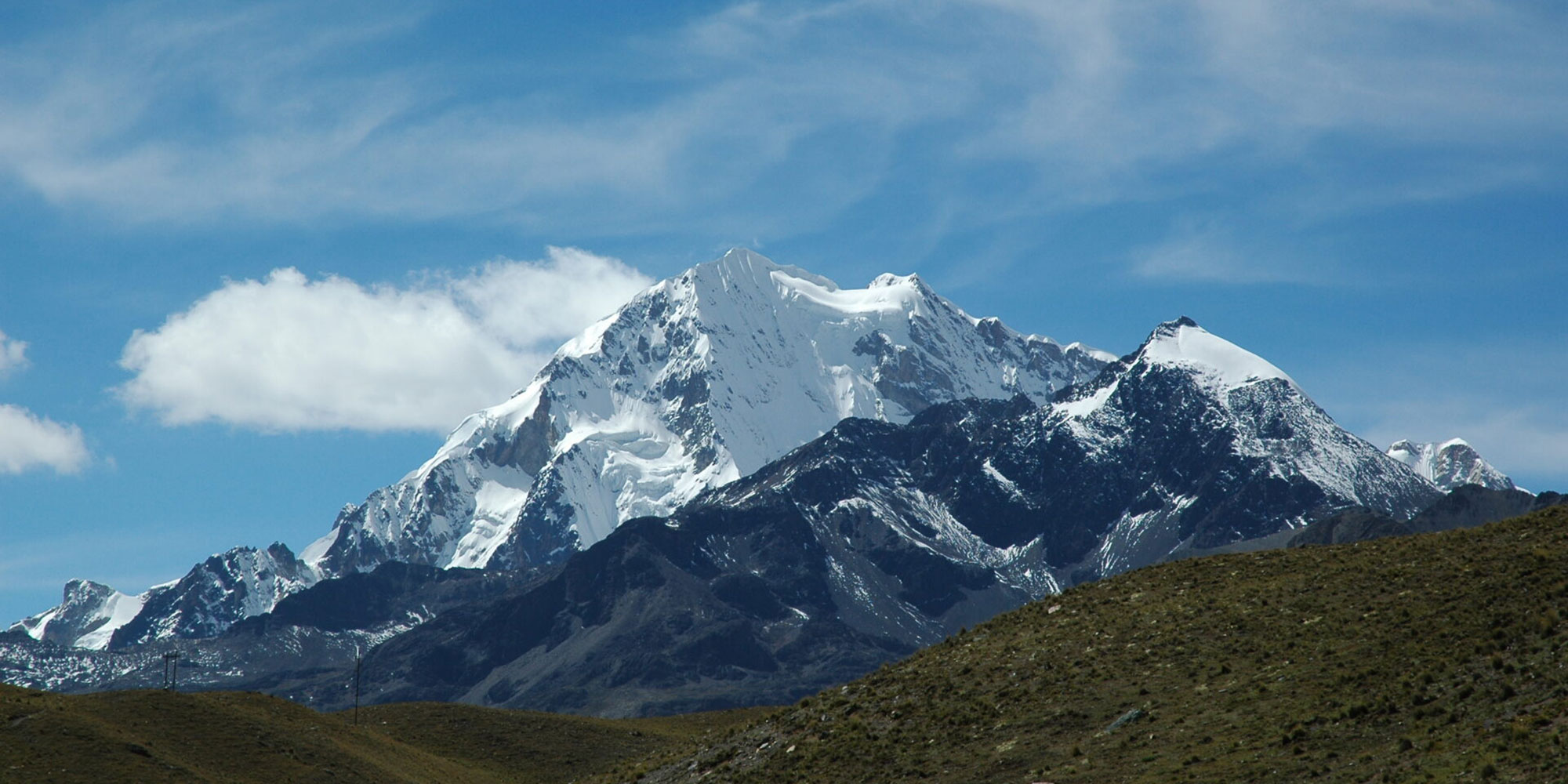
It’s a 3-hour ascent to the summit of Tarija (5,300m/17,388ft); an eight-hour round trip from base camp, with gradients of up to 40°.
There are superb views from the summit of the surounding peaks, including Pequeño Alpamayo (5,450 m/17,881ft).
There may be an option to continue on to Pequeño Alpamayo peak if you are feeling strong and conditions permit.
Pequeño Alpamayo involves climbs at 55° gradients, and is recommended for climbers with reasonable technical ability. The total ascent involves a 10-hour (or more) round trip.
Return to camp.
Return to La Paz, 4 hours walk approx.
Note: Following the course you may wish to stay on and climb one or more of the less-technical peaks in the Cordillera Real.
The choice of accessible peaks includes Huayna Potosi.
Camping – we use top quality, high mountain, two-man tents.
To get the most out of this expedition you should be in very good physical condition. We suggest you talk to your doctor if you are in any doubt as to your physical capability.
We have classified this as a strenuous tour.
Any previous wild camping and winter experience are a plus, but experience in crampon and ice axe use is not essential as your guide will be teaching you the skills you need.
You will carry your own kit as well as some group kit, so expect a backpack to weigh between 15 and 25kg, depending on how much you take in. Your return backpack should be lighter as there will be less food to carry. Expect to get involved in all aspects of camping as every part of the course is part of the mountaineering lesson.
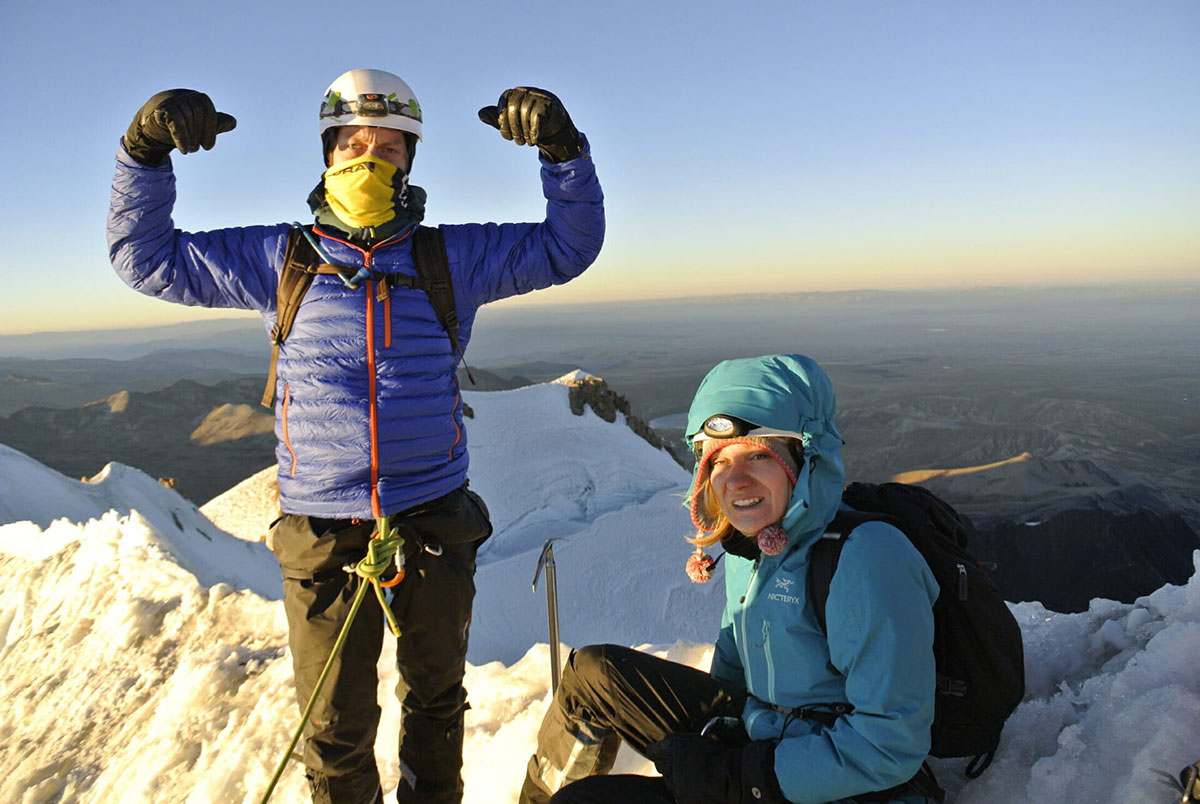
Summit day you wake very early, around 0300, to maximise summit chances.
Vegetarians and many other dietary requirements are catered for without problems. Please let us know in advance of any requirements you have.
You wake early, usually around 07.00. Breakfast is served in a dining tent, and consists of hot drinks, porridge, toast, jams and bread, and your guide will explain the day’s trekking plans.
Lunch is usually around 13.00 and can feature soups, meats, salads and fish, with vegetarian options and hot drinks too.
The campsites are comfortable and around 17.00 hot drinks, popcorn and other snacks are served to help you recover energy.
Dinner is served around 19.30, and will feature pasta, mashed potatoes, meat, fish or vegetarian options, followed by hot drinks and a pudding.
Our guides are experienced mountaineers and we typically employ one mountain guide to every four clients on courses, and one guide to two clients on climbs.
They will not just show you the way but will teach and empower you to succeed in the mountain environment.
All are UAIGM-qualified and selected for the attention to detail and, above all, safety and assessment of mountains, conditions and your capabilities.
Guide’s decisions are always final as they do so based on many years of experience of climbing among Bolivia’s peaks.
Cooks, mule drivers and additional staff are all from the local, nearby communities and we have worked with them for a long time.
A breathtaking Huayna Potosi ascent delivered unforgettable sunrise views, icy landscapes, and exceptional guide support.
Despite snowy detours, Bolivia’s breathtaking landscapes, warm hospitality, and inspiring community-run lodges made this Uyuni and Chalalán adventure far surpass expectations.
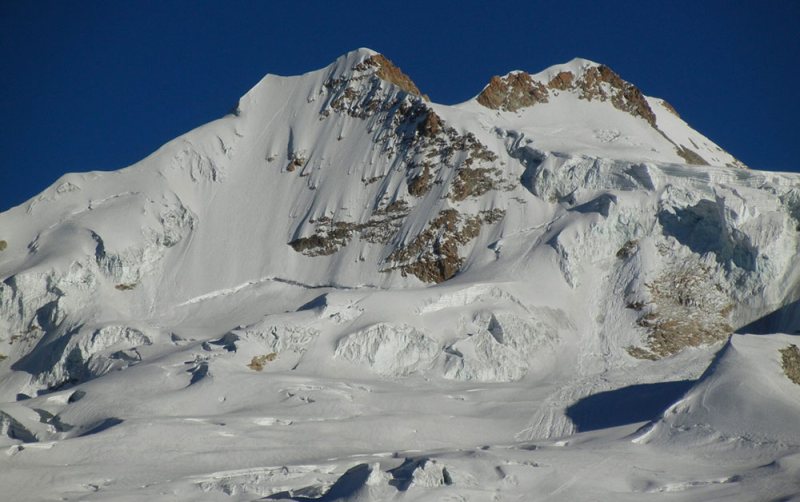
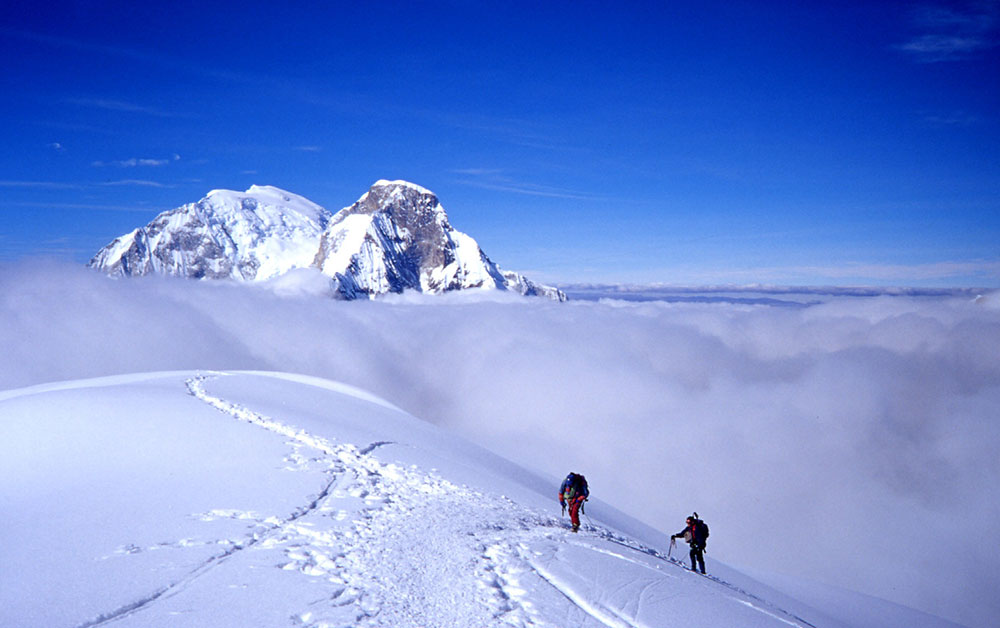
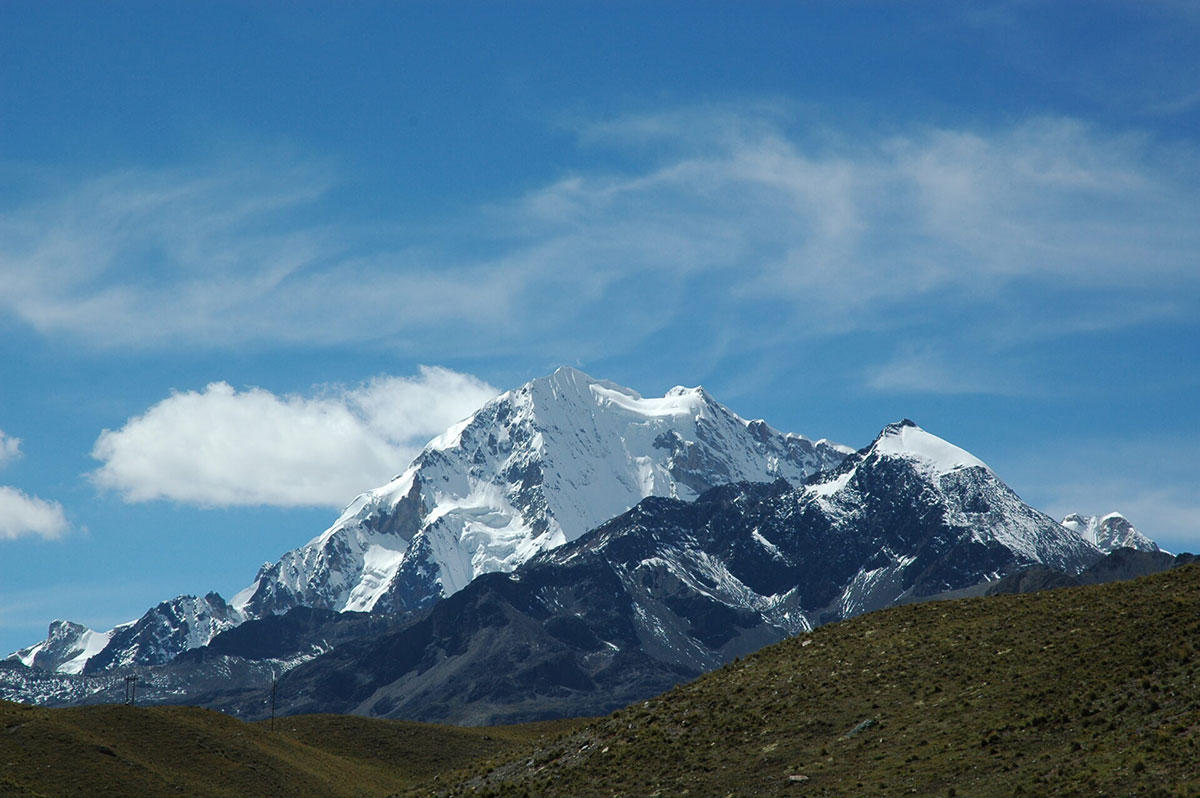
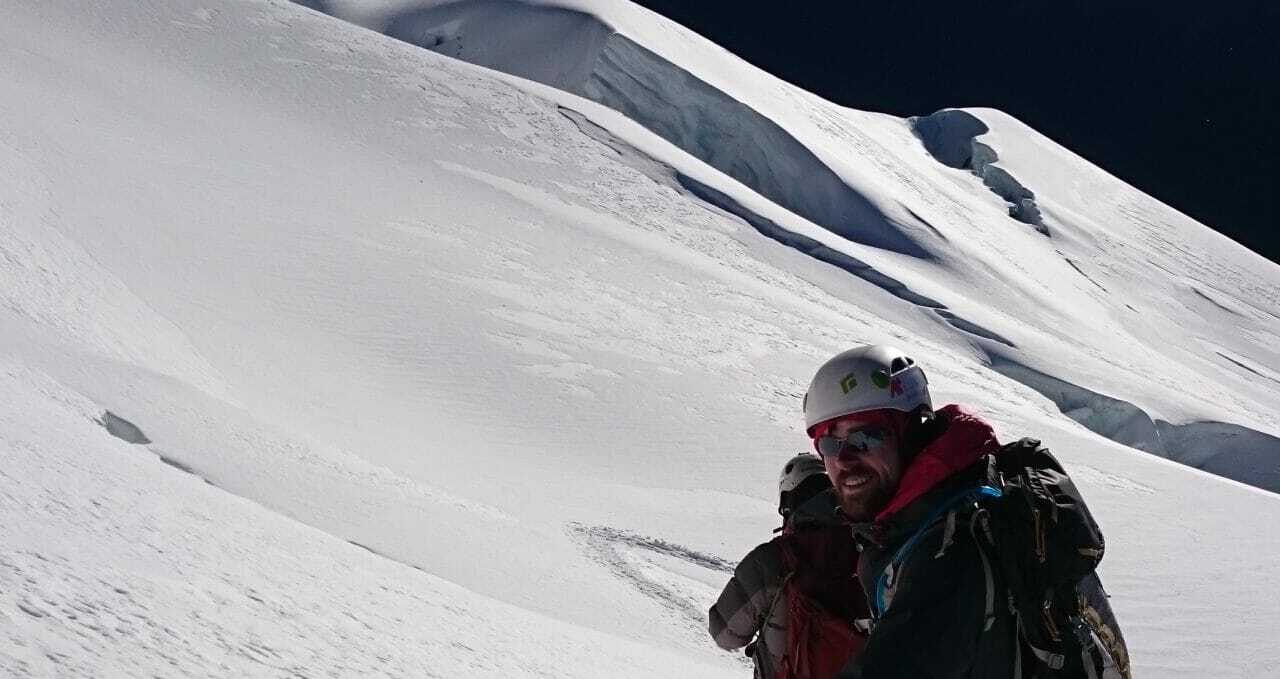
Huayna Potosi in Bolivia’s Cordillera Real mountain range is the setting for our climbing course.
This introduction to climbing teaches a range of fundamental skills useful for accessing ice-covered Bolivian peaks.
Most of the course takes place on a glacier at around 5,000m/16,404ft and is open to complete beginners.
Top level, professional guides show you how to plan and execute a successful climbing expedition.
We begin by taking a look at the hazards that snow covered mountains present.
Next, we teach you the skills and techniques necessary to help you climb and enjoy the mountains.
From: $2199 per person
Duration
6 days
Land-locked Bolivia is a country of dramatic landscapes and fascinating native cultures and traditions.
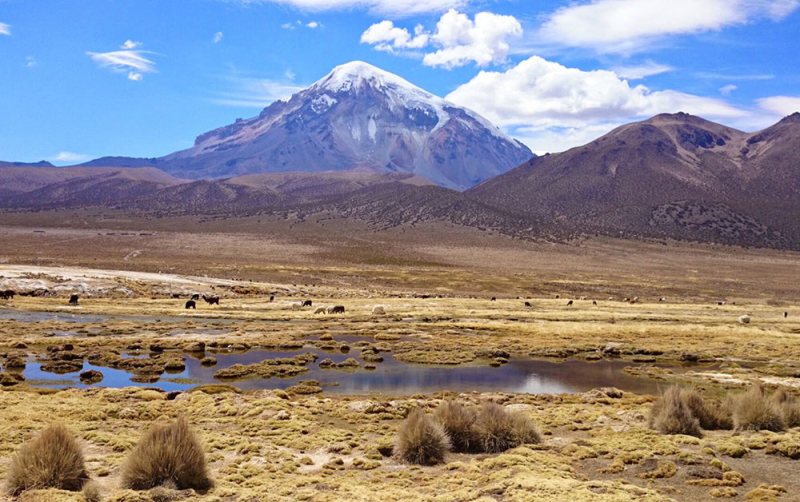
The Altiplano or “High Plain”, averaging 3,800m, is its most populous region. The vast, luminous plateau is flanked to east and west by parallel Andean ranges.
La Paz, the world’s highest capital, lies in a deep canyon at the edge of the Altiplano, and at the foot of Illimani (6,400m). It is a striking city for its dramatic setting and its strong Indian character.
Lake Titicaca is the world’s highest navigable lake. It was sacred to the Incas; according to legend, their founding emperor-gods rose from these waters to give birth to their empire. Just south of the lake stands the sacred pre-Inca site of Tiahuanaco.
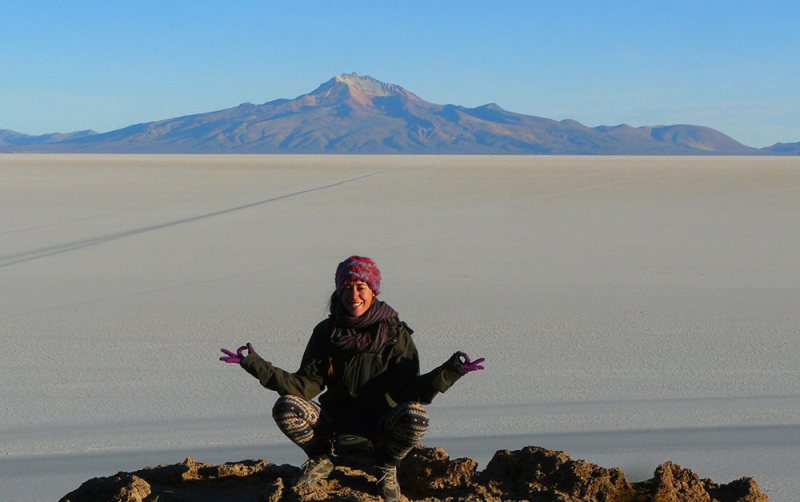
On the south-western Altiplano are the Uyuni Salt Flats, the largest in the world. Here, the shimmering white salt pan and deep blue sky combine to create a truly magical spectacle.
The stunning Cordillera Real is a mountain range dominated by huge snow peaks, including Illimani and Illampu (6,380m). The Real divides the northern Altiplano from the tropical forests to the east. The Cordillera Real’s eastern slopes are characterized by the deep, sub-tropical Yungas gorges.
Further south, the tropical Chapare is the agricultural heart of Bolivia. East of this band of high forests and plantations lies Bolivia’s Oriente, a vast swathe of Amazonian jungle and savanna accounting for 2/3 of the country and featuring some of the last untouched wilderness on earth.
In the north-eastern Department of Beni, some 50% of the country’s mammals and birds reside. Below, and in no special order, we outline some of the top places to go and things to do.
Good kit is vital for every trip.
Book with Andean Trails and get 15% off Páramo’s fantastic ethical and high performance outdoor gear.
When planning for the extreme climatic conditions encountered on high peaks in the Andes, layering is the most practical and versatile clothing system. It’s worth remembering that our clothing keeps us warm by retaining and isolating the heat we ourselves create.
To best maintain body heat, several layers of lightweight, warm and quick-drying clothing are far more efficient than one or two thick layers.
Layers should have the following qualities:
First (base) layer: This layer wicks the sweat away from our skin, thus helping keep the body dry and warm. To this end, synthetic fabrics such as polypropylene should be used.
Mid layers: These isolating layers should also be synthetic (e.g. the known polar linings such as polartec or windblock, which are light and insulate twice as well as wool). Very important layers for retaining body heat.
Outer layer / shell: Finally, the vital layer which protects us from climatic adversities. A breathable, wind-proof and waterproof anorak, such as Goretex.
Note that it’s our extremities that stand to suffer the most, and on high Andean peaks the poorly-equipped mountaineer is at risk of becoming frostbitten. Hence, much thought should be given to deciding how best to protect hands, feet and head.
Give plenty of thought to kit selection, and try to keep weight down.
Below is a more detailed guide.
For the extreme cold, we recommend a 3-layer scheme:
All other non-personal trekking and camping equipment is provided, e.g. tents, cutlery etc.
Bolivia lies within the tropics, between latitudes 10º and 22º south. The climate, as varied as its geography, is affected by latitude and, especially, by altitude.
The best time to travel is the winter (dry season) between May and Oct when, typically, weather systems over the Andes are stable, and overall you can expect bright sunny days and cold clear nights. Most of the rain falls from Dec to March. Climate can be divided into these distinct zones:
There is relatively little precipitation on the Altiplano, especially in the dry season – most rainfall is from Dec to March. However, there is periodical, localised rain on high peaks and valleys all year round.
The further south and west you go on the Altiplano, the drier are the conditions; around Uyuni, semi-arid conditions prevail. The Andean sun’s rays are very strong.
Temperature-wise, the Andes and Altiplano experience significant fluctuations over a single day. At 4,000m, the pre-dawn temperature can drop to -15ºC, while noon temperatures at the same location can reach 20ºC.
Southerly cold winds mean the southern Altiplano is not only drier, but also noticeably colder and windier than the north (pre-dawn temperatures at Uyuni in July regularly drop to -20ºC).
On treks in the Cordillera Real in the dry season, expect a range of conditions within a single day: cold/freezing nights at camps above 4,000m (where pre-dawn temperatures sometimes reach -15ºC); warm, spring-like mornings and afternoons; and cold evenings. Conditions are generally dry, but note that mountain weather is fickle and localised, and precipitation is not unusual in the dry season.
Expect temperatures to swing between sun and shade, sheltered and exposed ground and with altitude gain and loss. A quick-setting sun means temperatures drop fast.
The city of La Paz (3,630m) is relatively sheltered. Average high/low temperatures range from 1-17ºC in June and July (coldest months) to 6-19ºC in Nov and Dec (warmest months). In June and July, it rarely rains more than 1 or 2 days per month, while in January there are on average 15 wet days.
Year-round, weather conditions in the Amazon basin are hot and humid and always with the chance of rain.
There is a ‘cooler’, drier winter season between May and October. During this ‘dry season’, the average daytime high temperature is between 25-31°C and the average nighttime low is between 16-22°C.
In the dry season, heavy downpours typically occur every few days.
Note that around 80% of annual average rainfall – approx 2,000 mm in Bolivia’s northern lowlands – occurs in the wet season, Nov-April.
On rare occasions, between May and September, cold fronts from Argentina – surazos – can sweep into southwest Amazonia and push temperatures down to 9°C. (Surazos usually last between 1 and 3 days).
The Yungas shares the same dry/wet months but varies from quite wet to very wet depending on whether it is the ‘dry’ or rainy season. Average temperature is 24°C.
A breathtaking Huayna Potosi ascent delivered unforgettable sunrise views, icy landscapes, and exceptional guide support.
Despite snowy detours, Bolivia’s breathtaking landscapes, warm hospitality, and inspiring community-run lodges made this Uyuni and Chalalán adventure far surpass expectations.