From: £2,396
From: $3,190
Arrive in Bogota (2,600m/8,530ft)
Transfer in from airport, evening at leisure.
We have an early start this morning (07.00) to make the most of the closed roads.
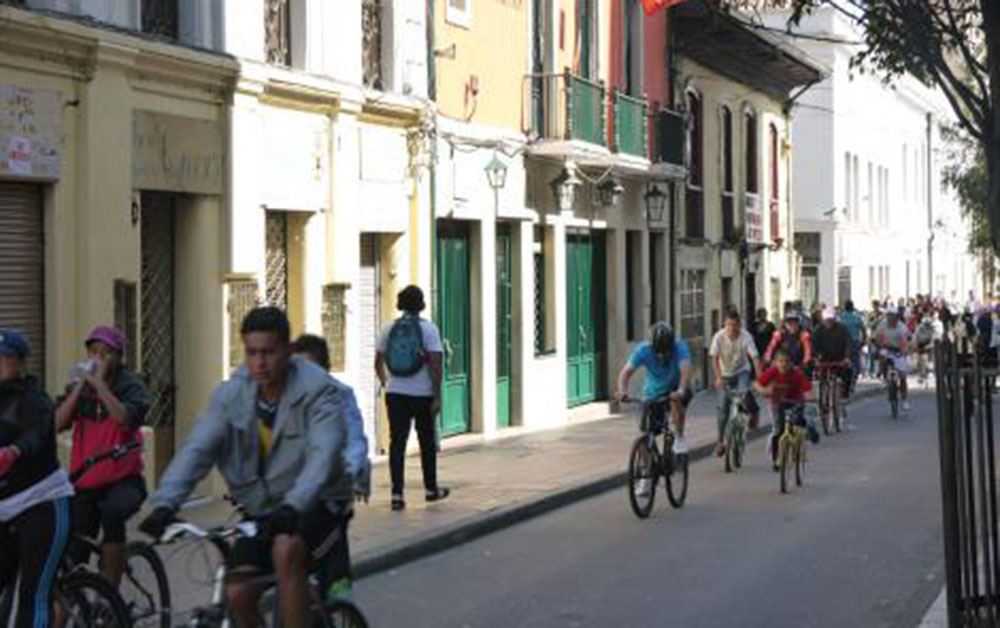
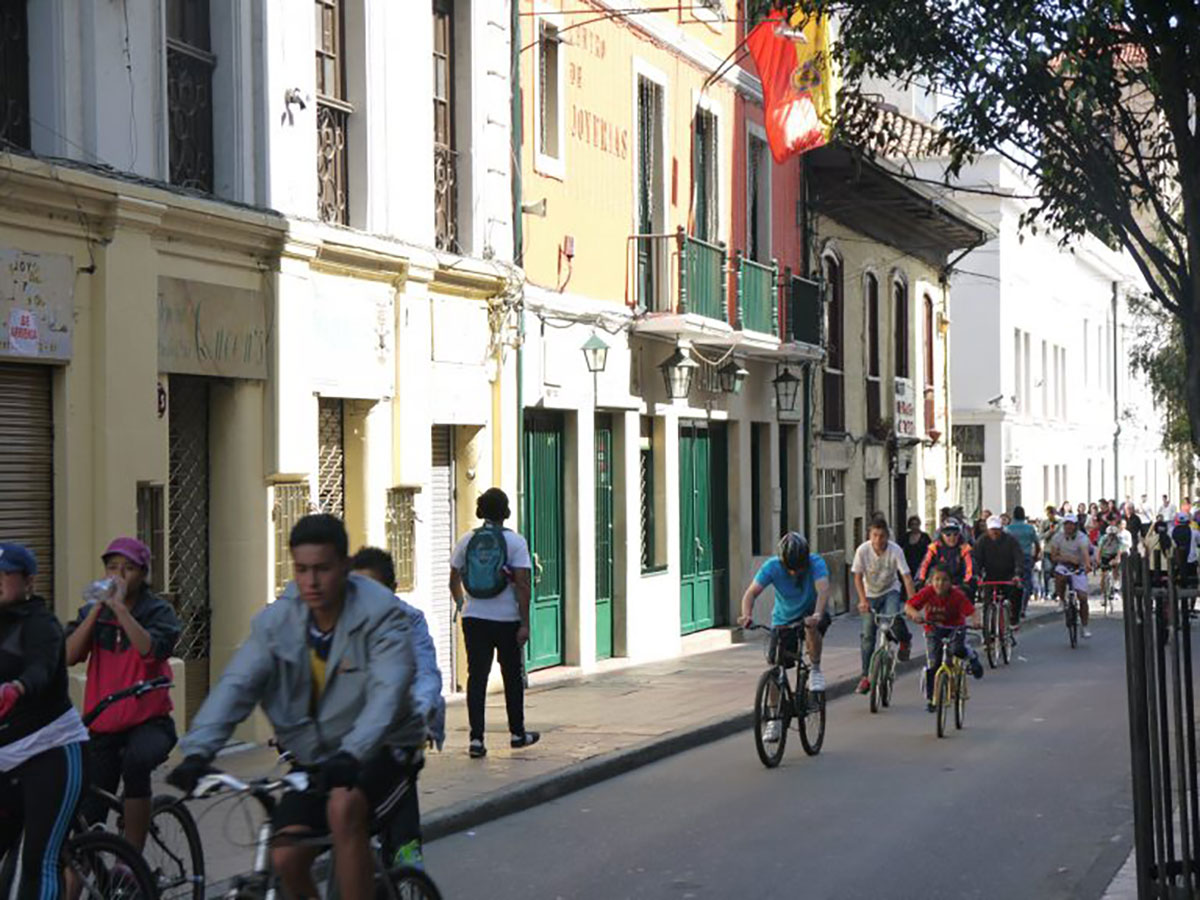
Every Sunday a million locals take to the streets of Bogota enjoying over 120km / 75 miles of traffic free roads, some on bikes, others walking, jogging, on skateboards and often with pets in tow.
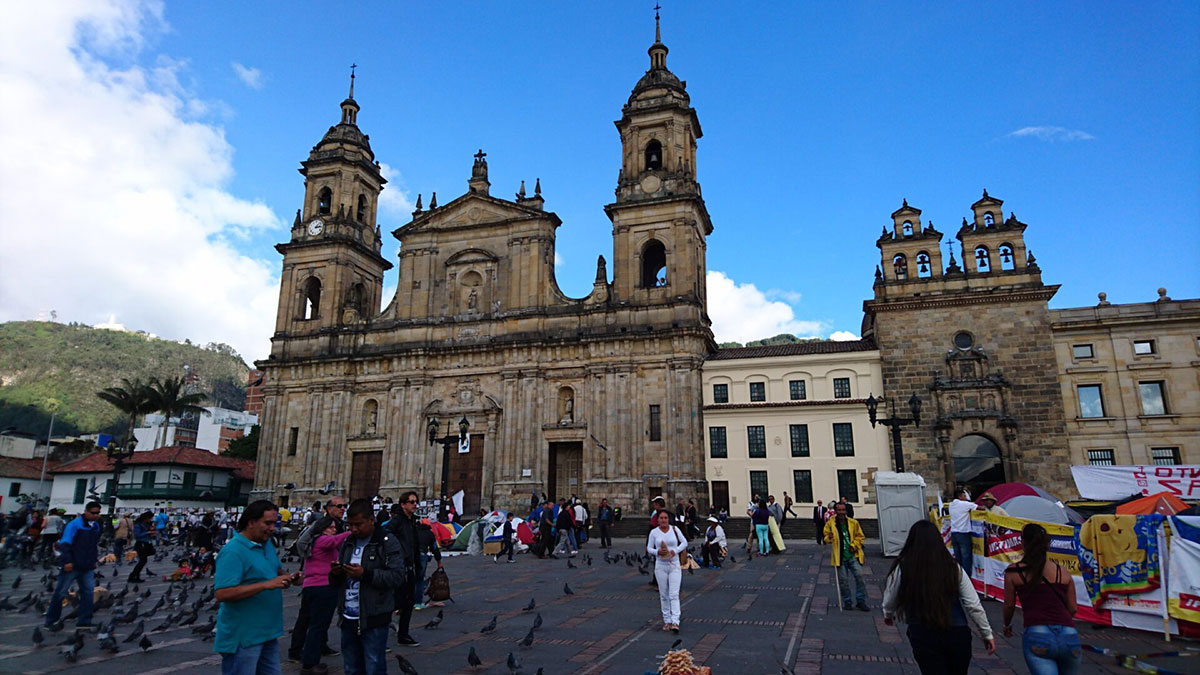
We ride, via the central squares, to Usaquen colonial township in the north of the city. This is 10km cycling each way, all on closed roads. We have an early lunch in Usaquen, in a local restaurant, then cycle back towards the city centre to Cerro Monserrate with panoramic views of the city. Finish in La Candelaria near the main square.
Afternoon visit to the Gold Museum and discover more about Colombia’s pre-Inca cultures.
Evening free.
We transfer to the airport for a morning flight to Pereira, then make a short drive to the pretty colonial coffee town of Salento (2,600m/8,530ft).
It’s great to get away from the big city and into beautiful countryside.
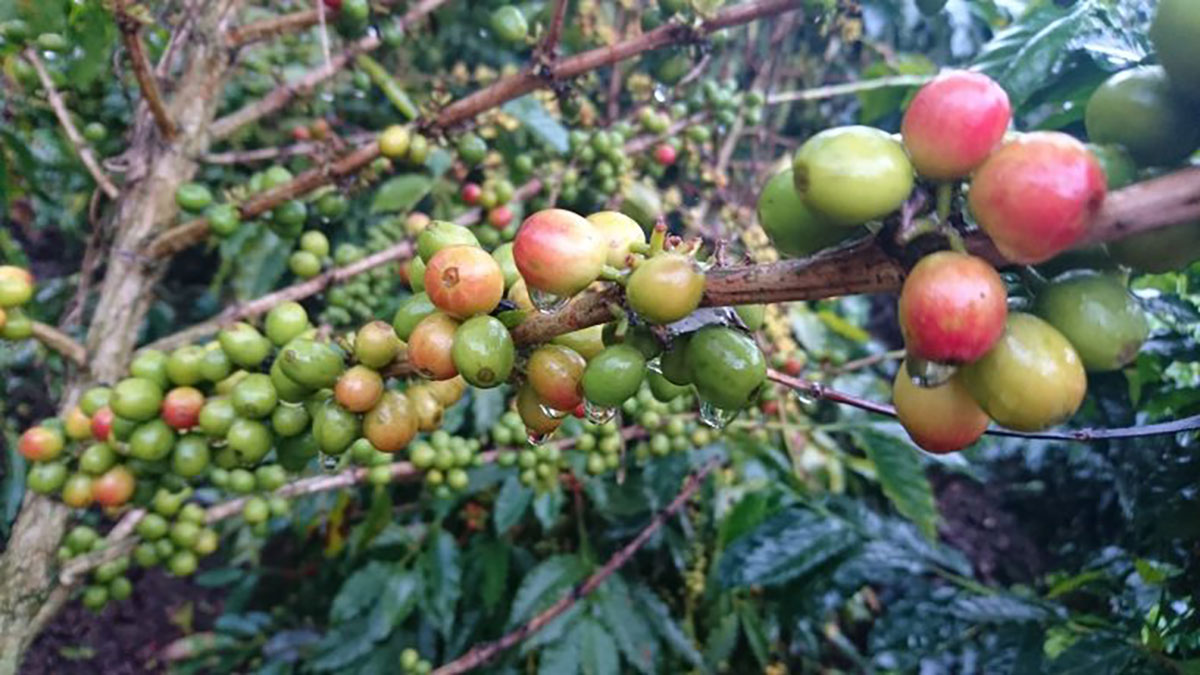
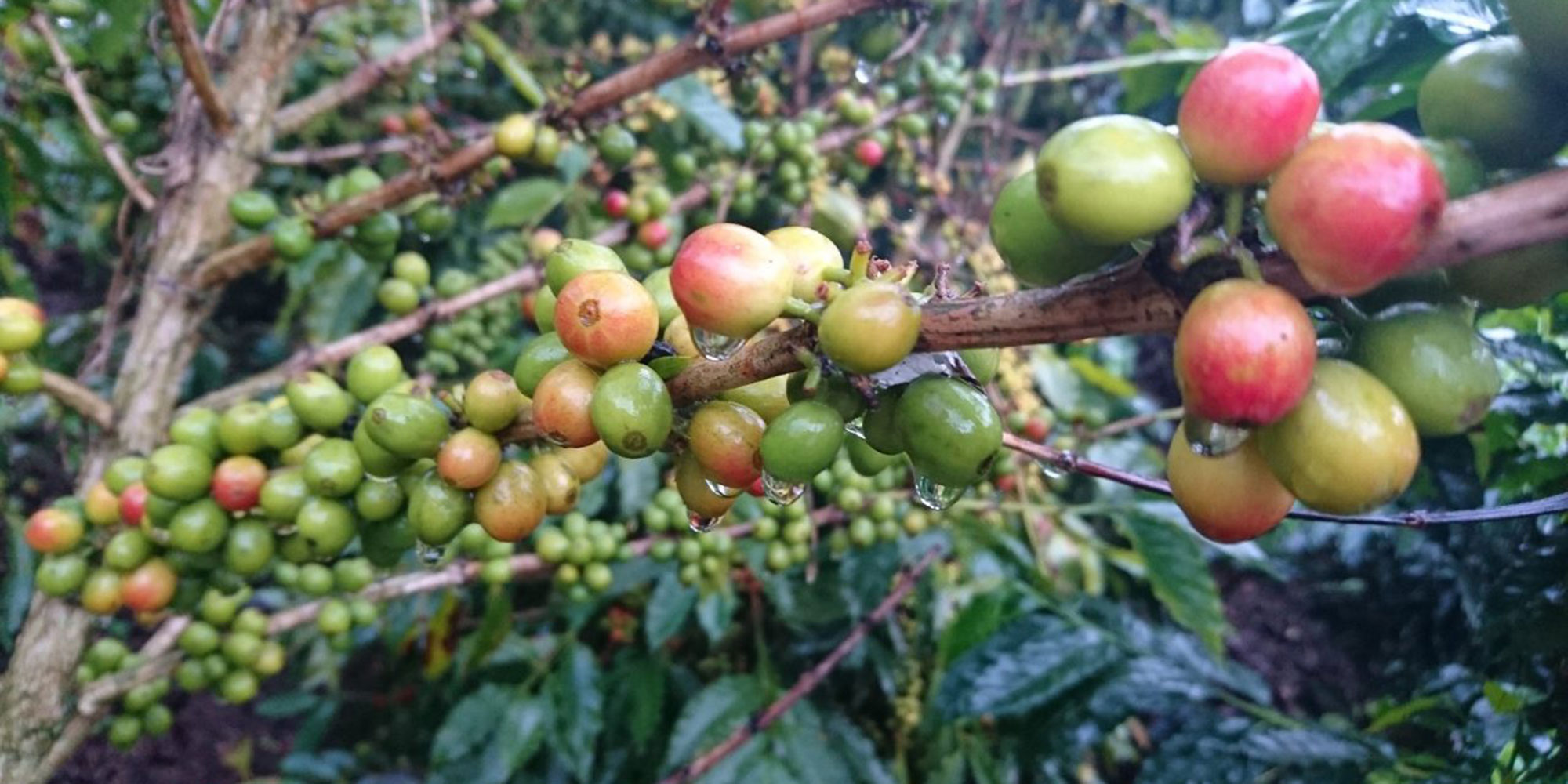
Transfer to local coffee plantation ‘El Ocaso’ for a Coffee tour.
Afternoon and evening at leisure in the town of Salento. Local guide will recommend places to eat and discuss activities that are to take place over the next couple of days.
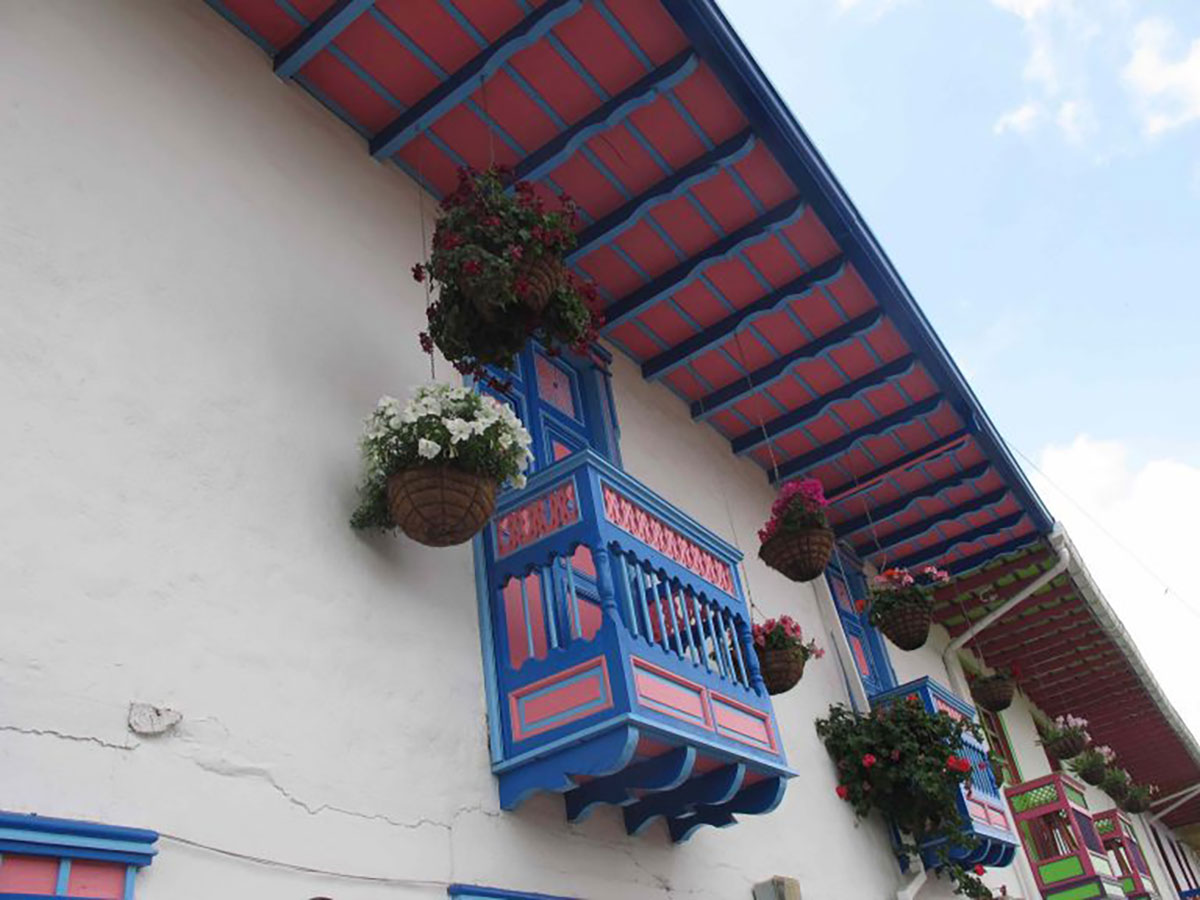
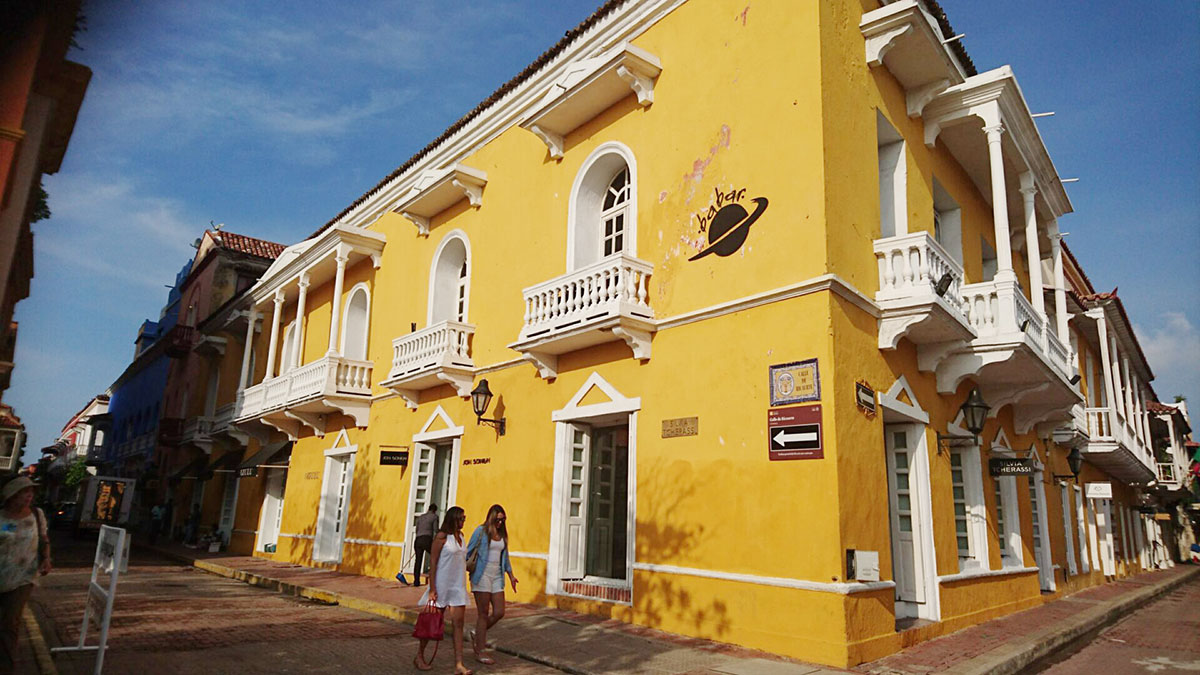
Salento has a number of colourful houses and terraces which are very photogenic, as well as lovely cafes with views and occasional live music.
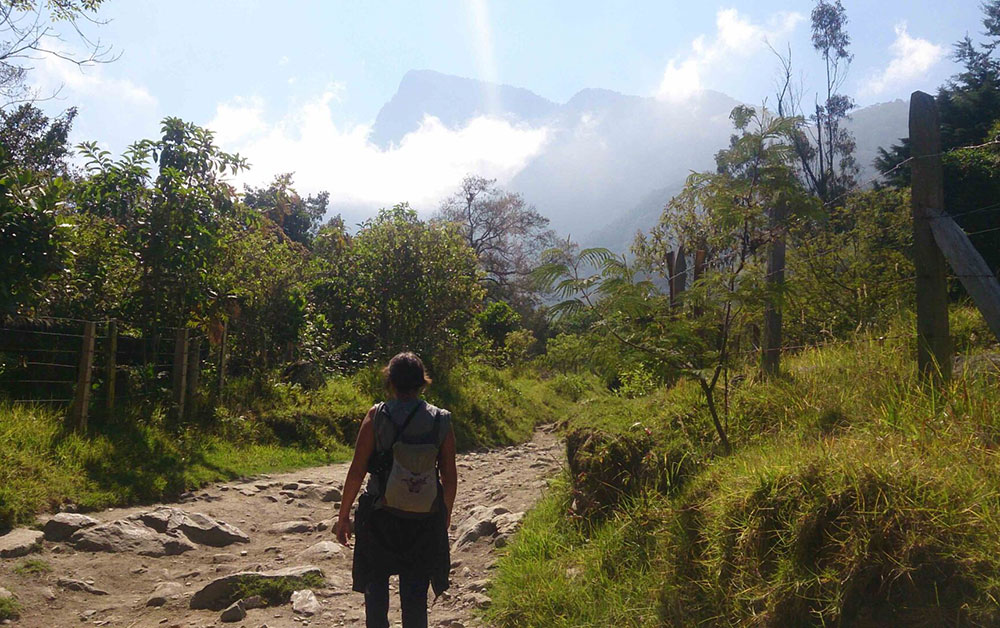
Transfer to the Cocora Valley (2,407m/7,897 ft) and walk through stunning forests of the Wax Palm towards a fabulous viewpoint, La Montaña.
There is an amazing array of birds and orchids in this rich cloud forest.
Ascend to around 2,900m/9,514ft and return via main path back to the Valley floor.
Have lunch here or in Salento depending on your choice. Transfer back to Salento.
Visit to Café Jesus Martín for a Café Latte Experience.
We have the rest of the afternoon and evening free to take a walk to the viewpoint above the town, potter through the local craft shops or enjoy a beer in a local bar or a locally produced Colombian coffee.
Early start for transfer to Pereira airport for flight to Santa Marta via Bogota.
Transfer from Santa Marta airport to beach hotel.
Afternoon and evening at leisure at the beach. Restaurants will be recommended.
Meet with trek guide to go through Ciudad Perdida trek recommendations next day.
Every day is quite strenuous with some considerable, consistent climbing and descending, topped off with a particularly big last day. Whilst below 1,000m expect temperatures to rise to max 35 Deg C, dropping to a balmy 23+ Deg C at night
The highest point of the trek is Ciudad Perdida which stands around 1,200m/3,937ft approx. where temperatures will be around 28 deg C more or less.
The Sierra Nevada de Santa Marta is an UNESCO designated Biosphere Reserve. It comprises 12,000 square miles of forested mountain, rising from the Caribbean coast to 5,700m/18,700ft.
The highest point is Pico Cristóbal Colón, the highest mountain in Colombia, at 5,790m/18,996ft and with permanent snow cover.
The peak is only 42km / 30 miles from the coast, making this one of the highest, most ecologically diverse coastal mountain ranges in the world.
The Tayrona people are thought to have inhabited the northern part of the mountain area from A.D. 200 until A.D. 1600-1650 building over 250 stone towns in a 2,000 square mile area.
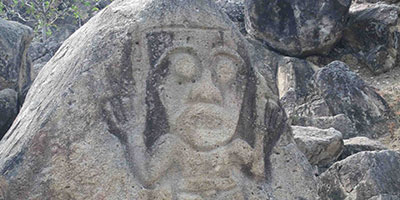
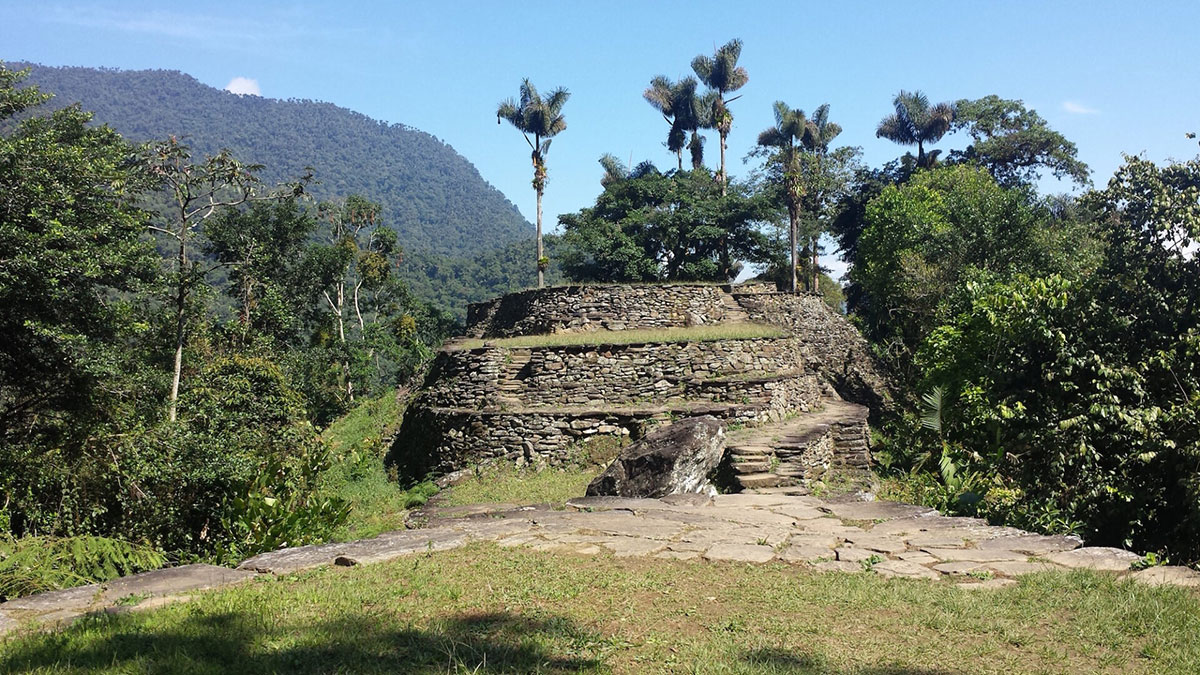
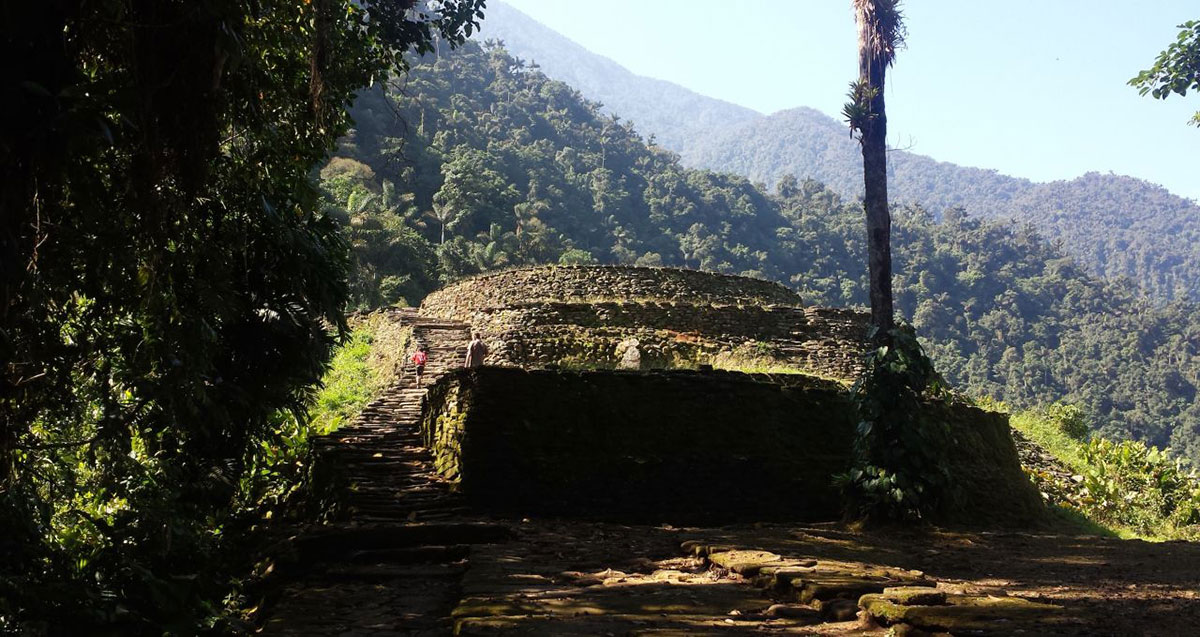
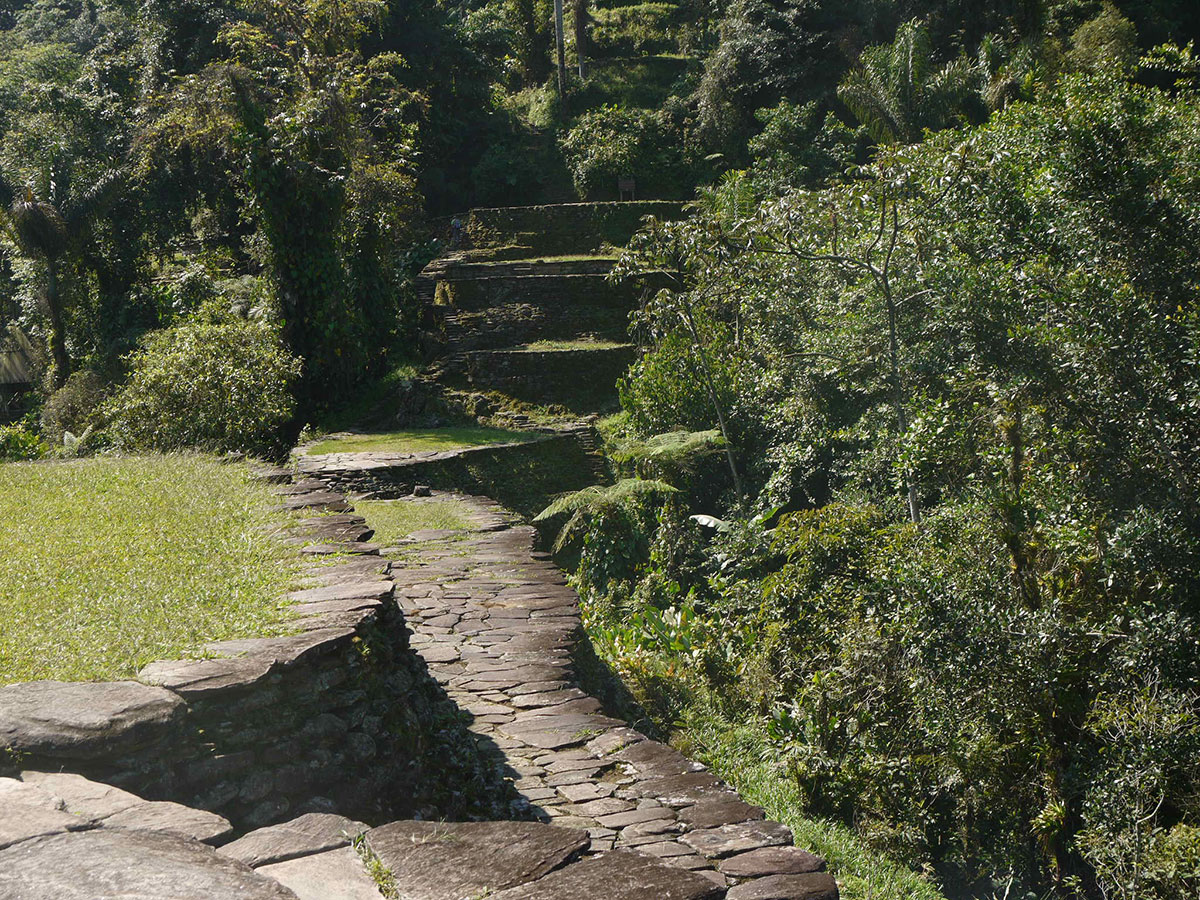
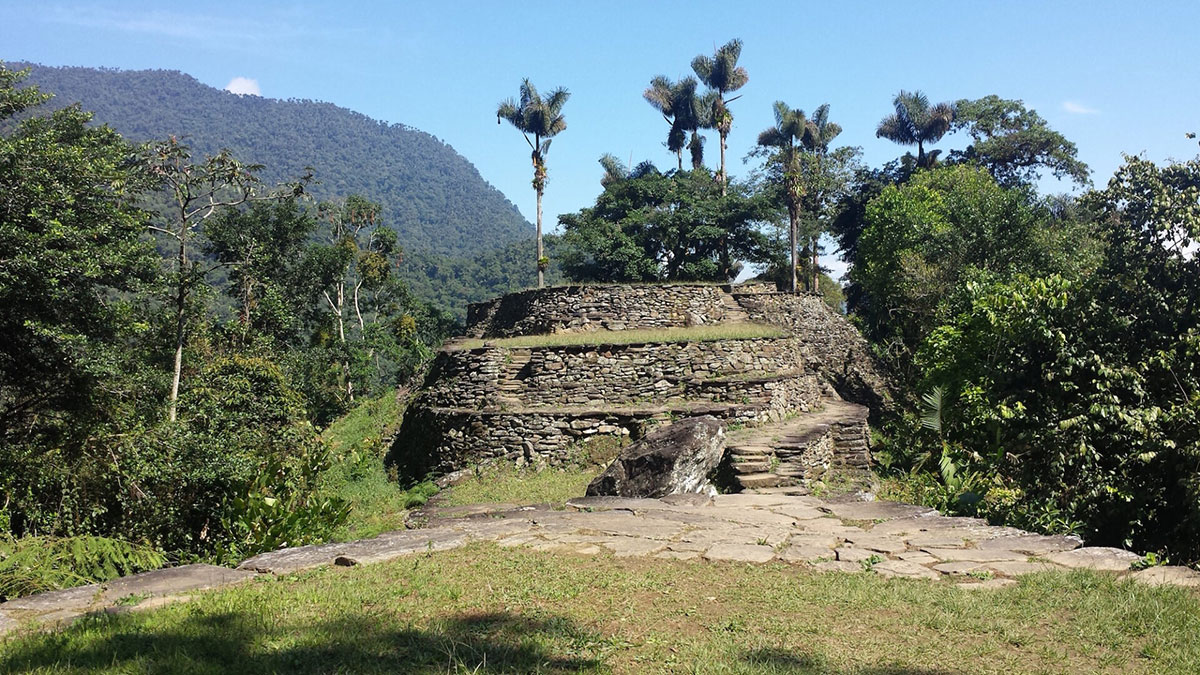
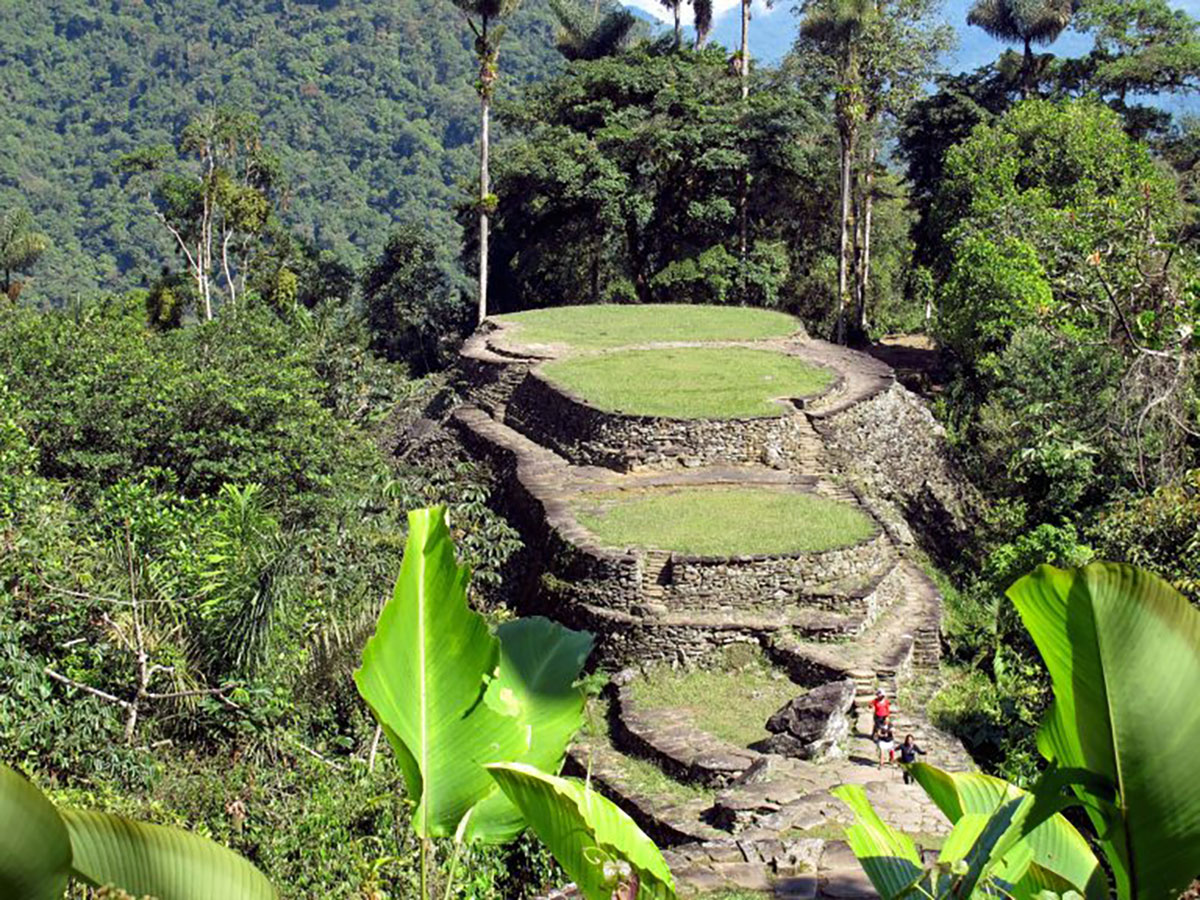
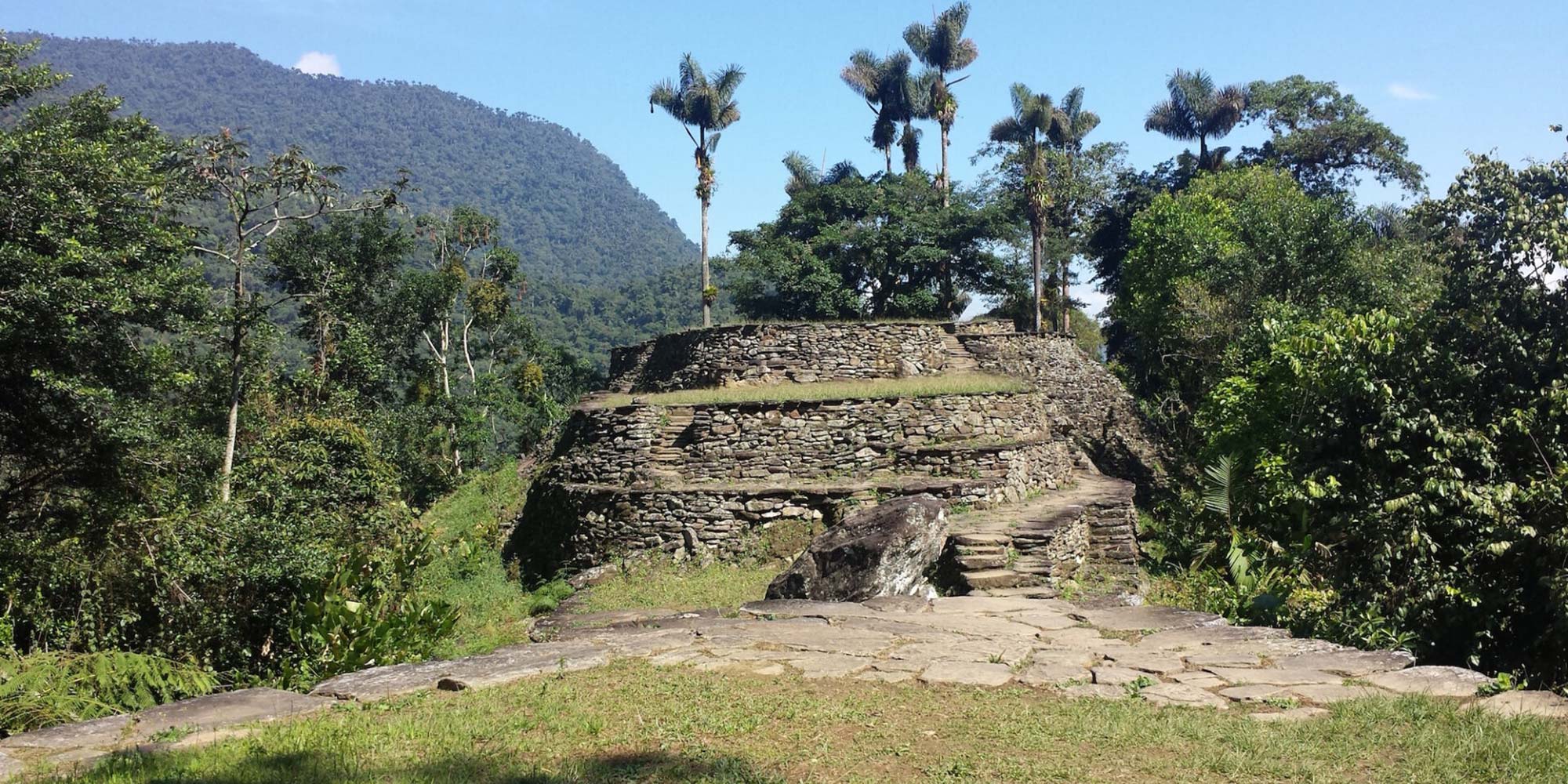
On our trek we walk to Ciudad Perdida, which means “Lost City”. This remote city was discovered, by looters, in 1975. It includes over 200 constructions including houses, terraces, stone paths and staircases, plazas, ceremonial and feasting areas, canals and storehouses. It is thought that this is the largest of the Tayrona sites in the Sierra Nevada and was the centre of power.
It is thought that 1,500 to 2,400 people lived in the city in 11,700 square meters (124,000 square feet) of roofed space in over 180 stone round houses built on stone terraces.
There are four indigenous groups living in the Sierra Nevada, descendents of the Tayrona:
Arhuaco, Kogi, Wiwa and Kankuamo.
The trek passes several Kogi villages containing circular houses made of stone, mud, and palm leaves. The men live in separate huts from the women and children and each village contains a “nuhue” or temple where only men are allowed.
You will probably see the Kogi men and women on the trail, they wear simple white clothing and carry traditional woven bags. The men also carry a “poporo”, a small, hollow gourd filled with a powder made by heating and crushing shells to produce lime. The men chew coca leaves and as they chew the coca leaves, they suck on the lime powder. They then rub the mix onto the gourd with a stick, forming a crust, layer upon layer, the size of this layer reflecting the age of the Kogi man.
We are picked up form the hotel in the morning after breakfast for a two hour drive to the trek starting point, El Mamey.
After lunch we set off. Today’s trek takes us to campsite 1 (450m/1,476 ft approx.)
Distance walked: 7km, 3hrs approx.
Ascent: 450m ascent / 200m descent approx.
Camp in shared huts either in hammocks or bunk beds, mosquito nets provided.
Today we trek to campsite 3, stopping at campsite 2 for lunch.
Campsite 3 is at 1,100 m/ 3,609 ft approx.
Distance walked:16km, 7hrs approx.
Ascent: 900m ascent / 300m descent approx.
Camp in shared huts either in hammocks or bunk beds, mosquito nets provided.
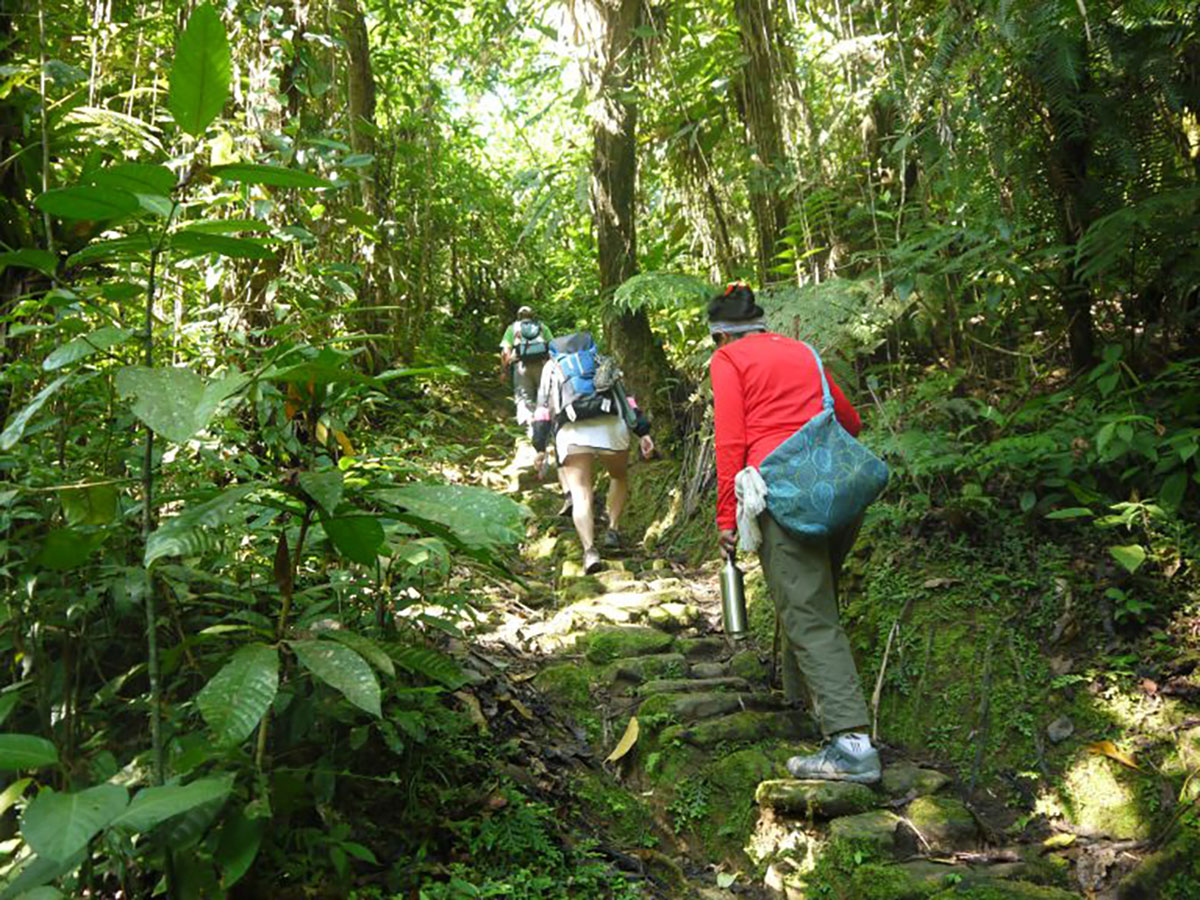
Today we climb 1,200 stone steps to the Lost City, which stands at 1,200m/3,937 ft approx. It’s a short 4km hike to the ruins which takes around 1 ½ hrs approx.
We explore this amazing, remote site and then return to campsite 3 for lunch then trek back to campsite 2 for dinner and our bed for the night at 700m/2,296ft approx.
Distance walked: 6km, 2-3hrs.
Ascent: 500m ascent / 400m descent.
Camp in shared huts either in hammocks or bunk beds, mosquito nets provided.
Today is a long trekking day and we aim to depart before sunrise to avoid the worst heat of the day as we return to El Mamey (150 m / 492 ft approx.)
Distance walked: 17km 8-9hrs approx.
Ascent: 400m ascent / 1000m descent approx.
We have lunch there then drive back to our hotel in Santa Marta old town, for a free evening in this musical town.
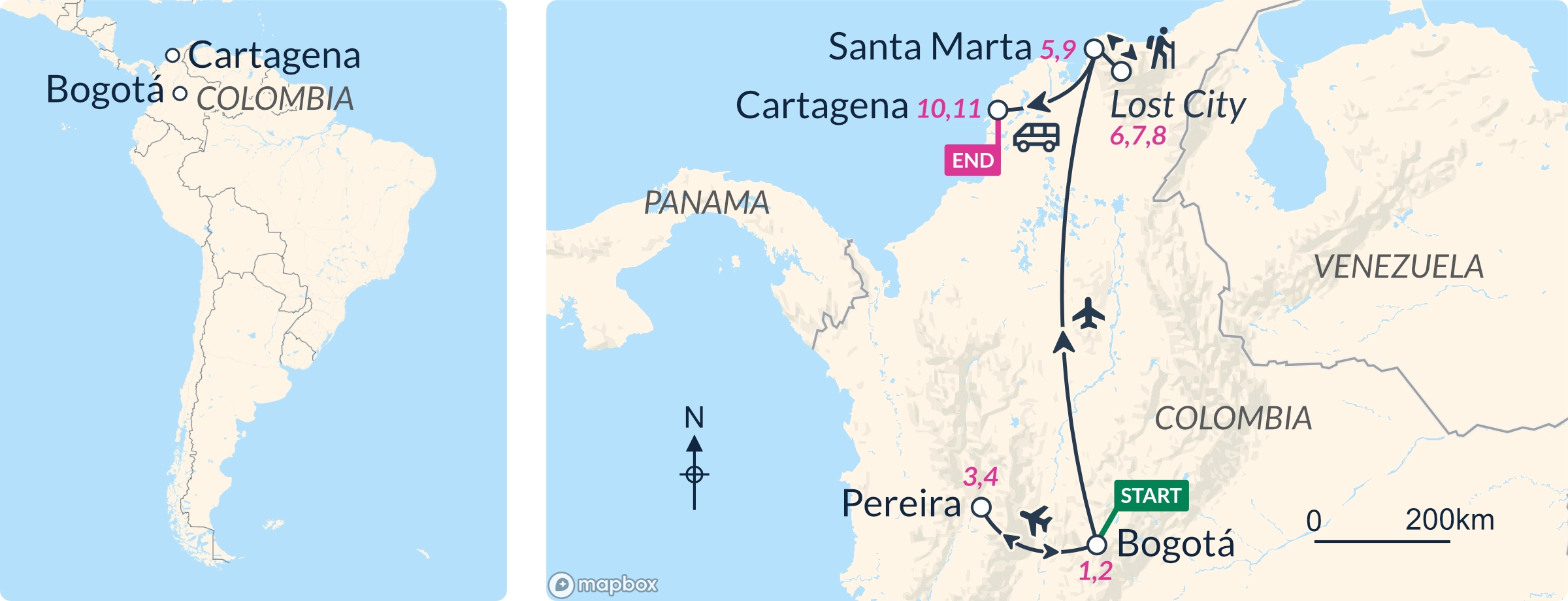
Early start this morning for the scenic 4-hour drive to Cartagena, with a lunch stop en route.
Arrival transfer to your hotel, afternoon at leisure.
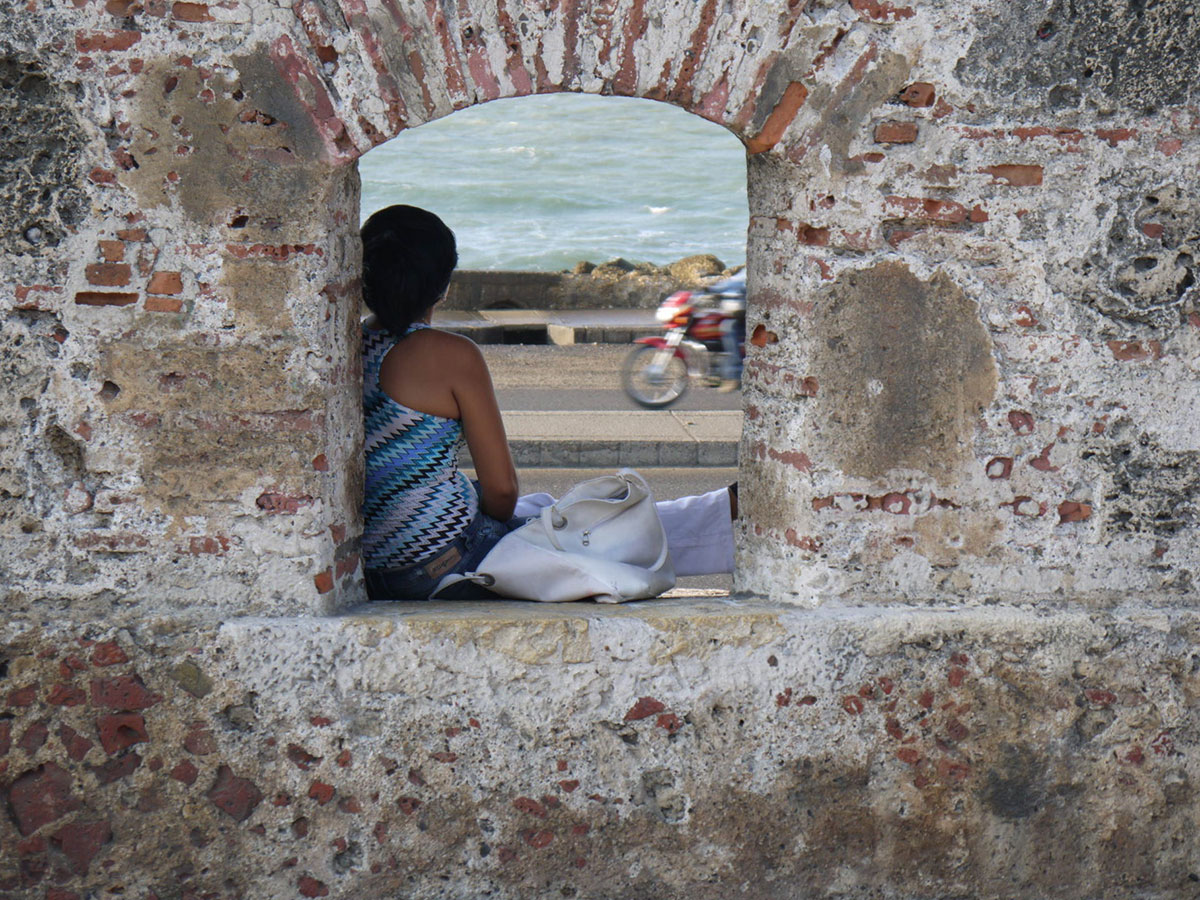
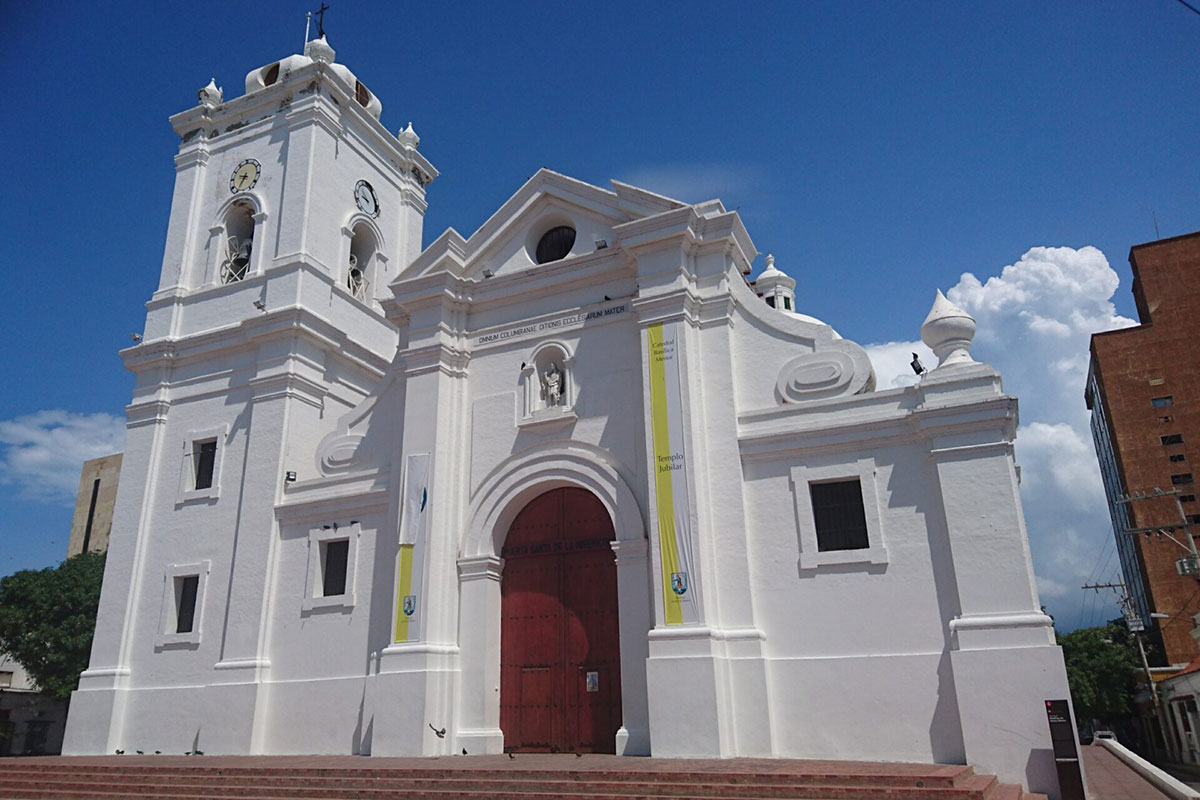
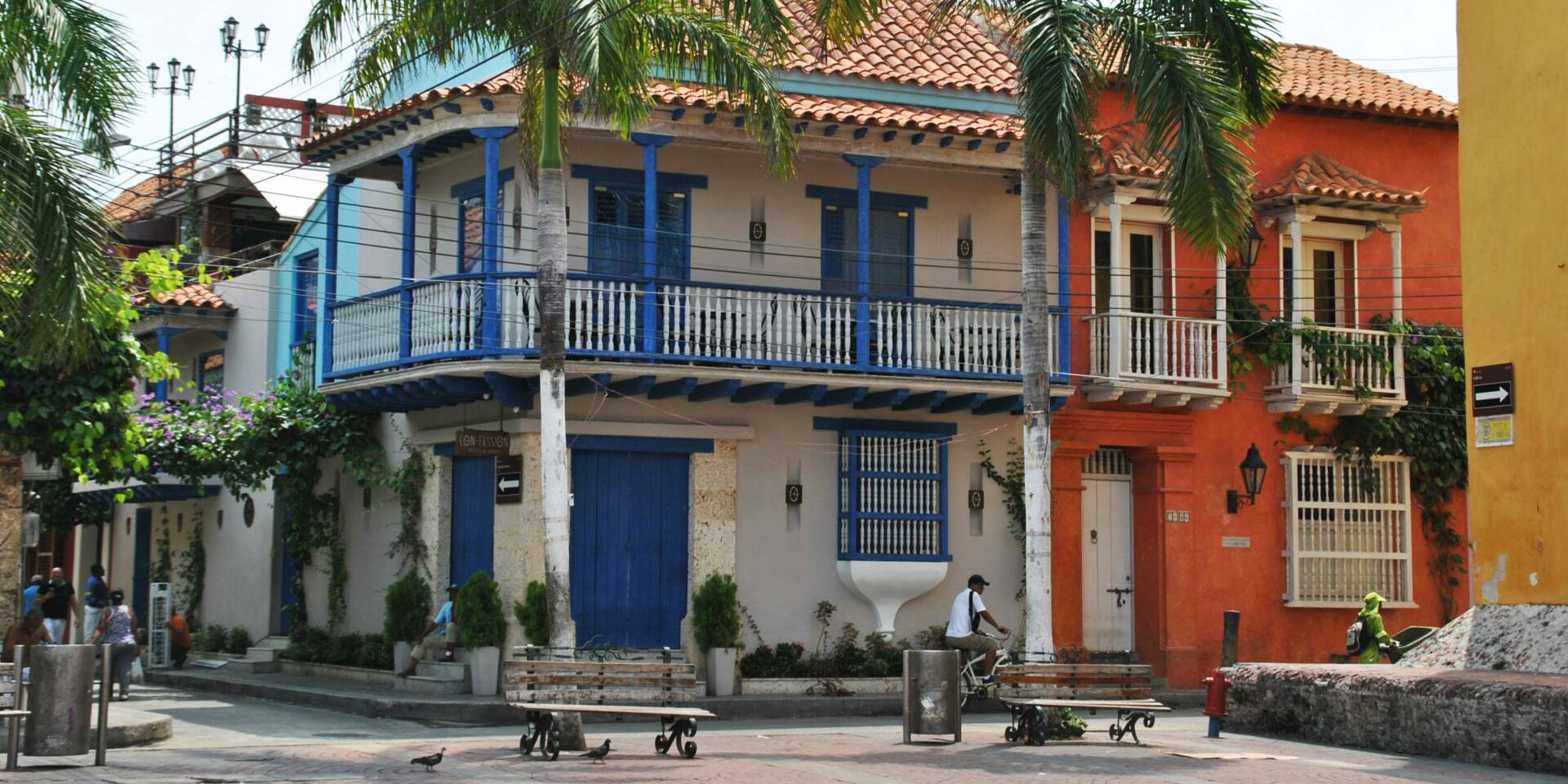
This morning we have a guided walking tour to show us the highlights of the city; including Barrio Manga, the Popa Monastery, Saint Philip Castle, The Vaults and various battalions.
After lunch, afternoon and evening free.
Today we head to the airport for our flight out, ends.
Hotels and guesthouse in towns with private, ensuite bathrooms. Based on 2-3* star hotels, with upgrades available at extra cost.
On the trek we stay in very rustic camp sites and sleep in bunks with shared very basic facilities. Bedding is provided.
The trekking part of this tour is strenuous, due to the heat, humidity and possible mud.
It is open to anyone with no previous trekking experience but you need to work on your fitness before coming on the trek and be able to walk 5-7 hours on consecutive days.
The rest of the trip is open to anyone with a good level of fitness, who has a positive outlook while walking in remote parts of the Andes.
There is some high altitude in Bogota and Cocora.
We can cater for almost all dietary requirements – please enquire for more.
The food in Colombia is excellent and you will have the opportunity to sample a number of local dishes.
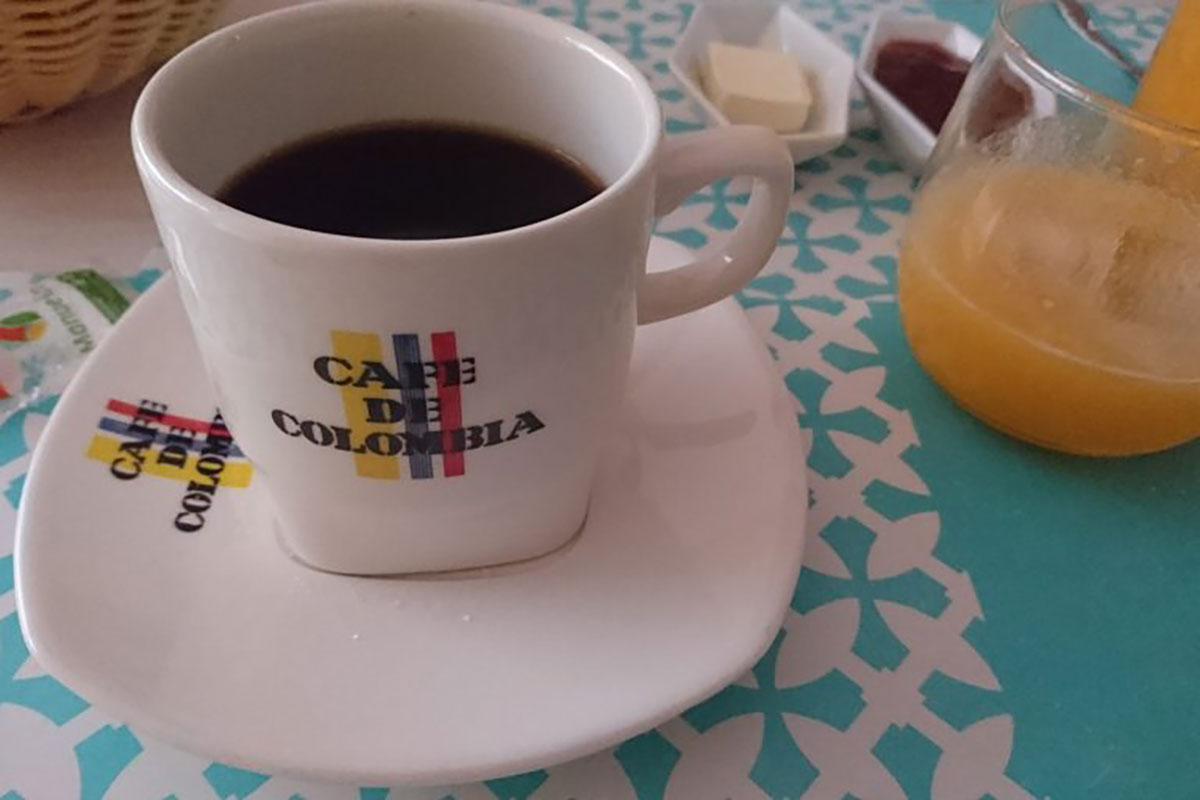
Breakfasts at hotels generally feature hot drinks, teas, coffees, juices, fruits, yoghurts, cereals, eggs etc.
On trek all meals are provided and are cooked at the camps by a resident chef. These will include rice/pasta dishes.
Lunches while trekking will generally be sandwiches, crackers, cheese, ham etc.
Local guides will accompany you on the various tours, on trek you will have a specialised local trekking guide.
An inspiring Colombia adventure blending high-altitude trekking, rich wildlife, and the unforgettable discovery of the Lost City.
An unforgettable, perfectly organised South American adventure. A fabulous trip that exceeded all expectations.
This Colombia sightseeing tour also includes Bogota, the cloud forest and coffee farms, Cartagena and the Caribbean coast.
Tick off the highlights of Colombia and end the trip with the legendary trek to the Lost City.

We start our holiday with a guided bike ride on Bogota’s closed roads (only on Sundays), along with many locals, giving a unique perspective of this city.
Next, visit Bogota’s world renown Gold Museum to see some of the very best of the Colombian gold.
We fly Bogota to Pereira and travel to Salento, a beautiful colonial town in the heart of Colombia’s coffee growing area.
Here, we explore on foot, take a guided tour around a coffee farm and a hike through the Wax palm trees. These trees are native to the Cocora valley, Colombia’s national tree, and the tallest palm species in the world growing as high as 60 metres.

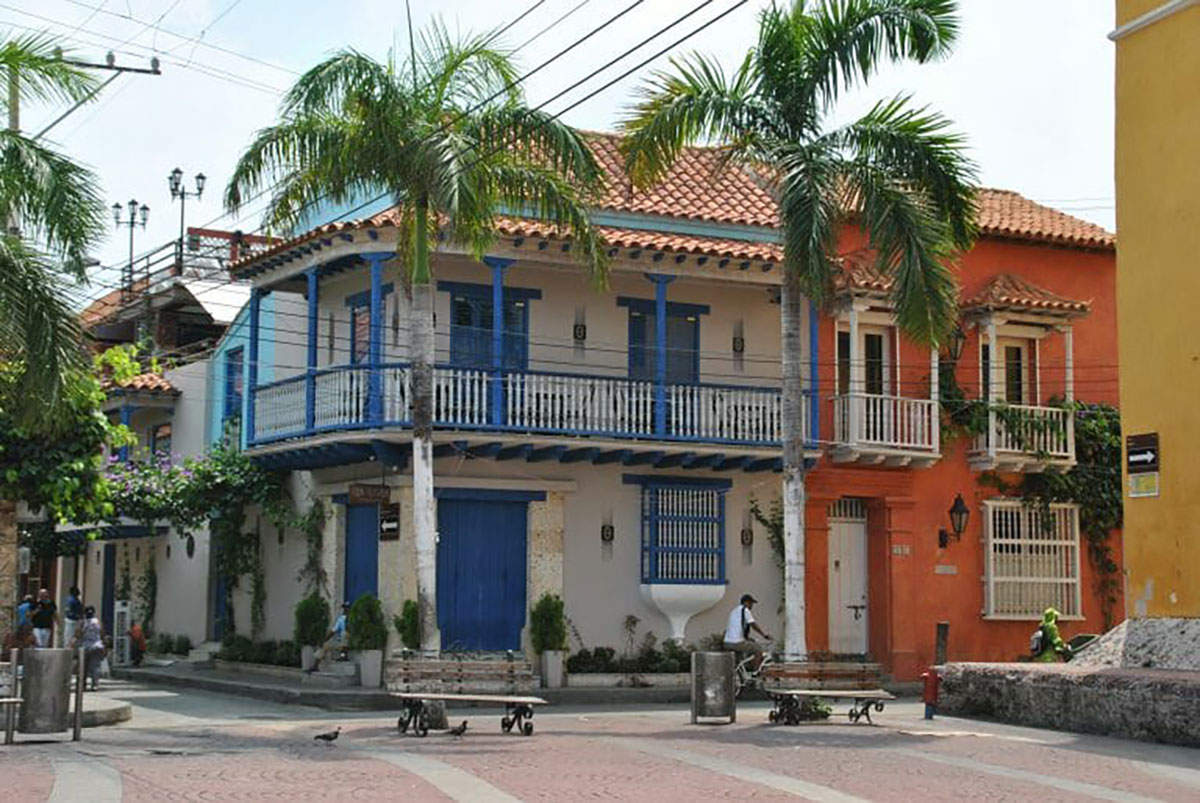
Flying north to the Caribbean coast, explore the colonial cities of Cartagena and Santa Marta, before embarking on our 4-day trek to the Lost City.
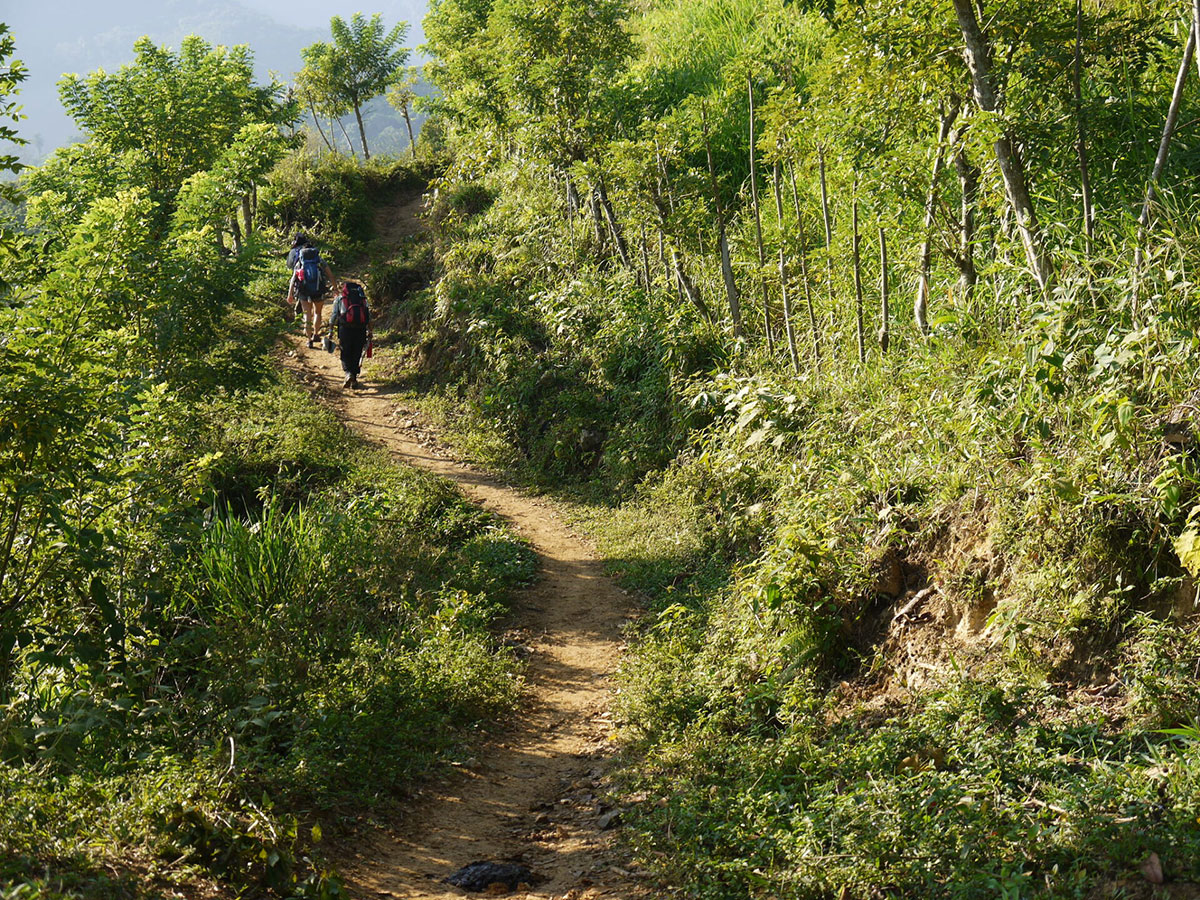
It starts with a hike through the foothills of the Santa Marta national park, steeply rolling terrain with plenty of ups and downs, heat and humidity.
Refreshing swims in the river, stunning views and reaching The Lost City make this a hugely rewarding trek.
After the trek end the tour with a flight back to Bogota, or opt for a few days of well deserved rest and relaxation in Tayrona national park’s pristine beaches on the Caribbean coast.
Don’t forget binoculars, as there is plenty of birdlife here, keep an eye out for the brightly coloured hummingbirds, toucans and parrots.

From: $4855 per person
Duration
15 days
From: $2298 per person
Duration
8 days
From: $2188 per person
Duration
8 days
Colombia is divided into five main geographical regions: Pacific, Llanos, Amazon, Caribbean and Andes.
The Andes dominate and have three main branches, all running roughly from south to north.
The Cordillera Occidental lies furthest to the west, running parallel to the Pacific coast; Furthest east lies The Cordillera Oriental running almost to the whole length of the country and incorporating Bogota; and in between these two, is the Cordillera Central.
Less than 3% of the population live in two lowland areas that comprise more than half of Colombia’s overall size.
The first lies to the east of the Andes called Llanos and is a savannah, and forms a part of the Orinoco river basin.
The second is Colombia’s steamy Amazon rainforest, which lies to the far south east of the country and covers almost one third of the entire country.
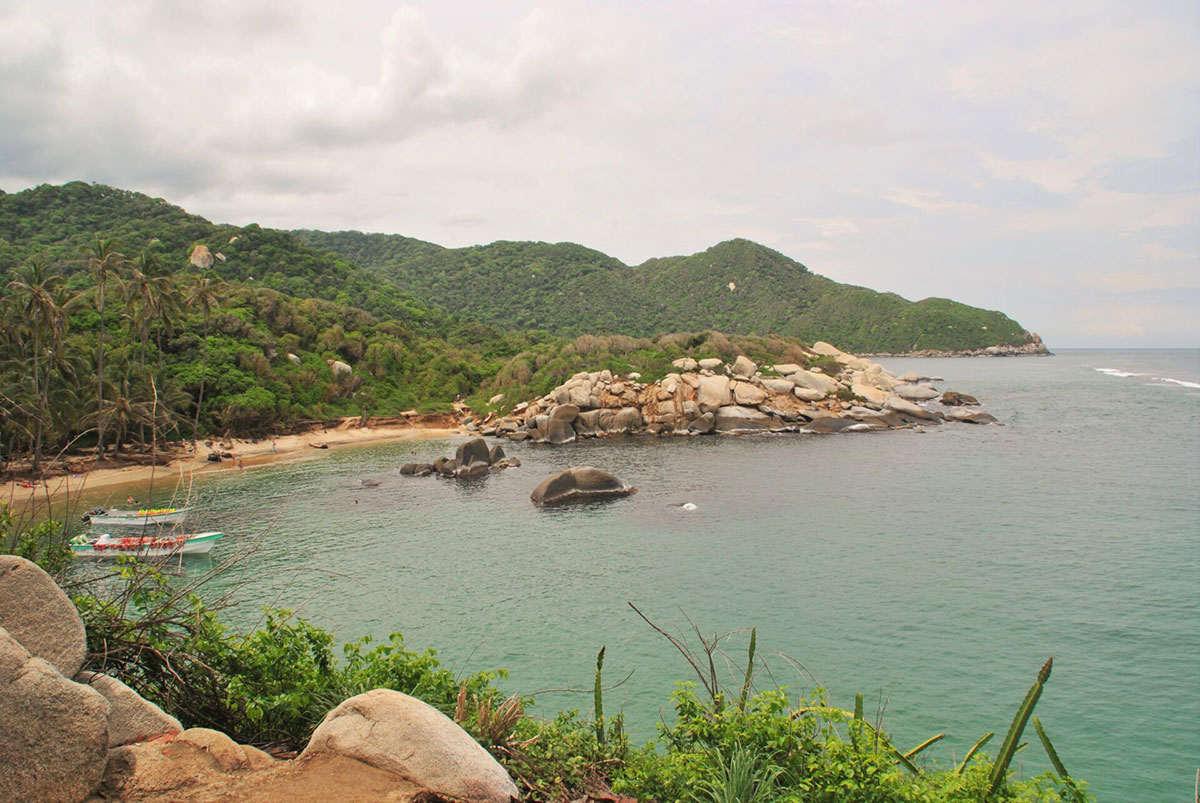
In the north is the hot and humid Caribbean coast, characterised by beautiful beaches and turquoise seas as well as fertile and low-lying plains and La Guarija Desert.
Colombia lays claim to two small islands, close to Nicaragua, called San Andres and Providencia, and islands in the Pacific and these are known as the insular area.
The narrow Pacific coastal lowlands are densely covered with vegetation, with very few people living here.
Colombia is the country that has everything you could need from a South America holiday.
Diverse people and landscapes make this a country rich in wildlife, landscapes and culture.
Hikers can choose to trek to glaciers on snow-capped peaks, or through steamy forest to hidden ruins, or to unique Paramó plains.
Cyclists can pedal over and around the Andean peaks that dominate, and adventure seekers can try anything from paragliding to canyoning.
Beach lovers can enjoy surfing and relaxing with a Colombian twist, or head to islands for a more Caribbean vibe.
Prefer wildlife? Try the pacific coast and its whales and turtles, or perhaps the Amazon and its diverse flora and fauna.
The cities are cosmopolitan and cultured, replete with incredible museums with enormous collections.
Good kit is vital for every trip.
Book with Andean Trails and get 15% off Páramo’s fantastic ethical and high performance outdoor gear.
Bogotá is a city high in the Andes Mountains (2625 metres) and has a spring-like climate, when the weather is generally cool and variable. It can rain, the sun can shine and it can be foggy and chilly.
Bogotános like to say that in Bogotá you can experience the four seasons all in one day.
On the Carribean coast it is usually hot and humid. In general you’ll need cool clothes. The Caribbean coast of Colombia is very hot most of the time and your change in altitude during the trek isn’t a lot. Whilst you’ll be kept a little cooler by the surrounding water and dense vegetation you will be pretty hot and sweating during most if not all of the trek.
Give plenty of thought to kit selection, and try to keep weight down.
Below is a more detailed guide.
Colombia has warm to hot average temperatures all year round.
Cartagena on the Caribbean coast, for example, averages around 325 days of sunshine a year, even during its ‘winter’.
There are, however, two rainy and dry seasons that Colombians call summer and winter.
The severity and length of these seasons also depends on where you are in the country – the coast has slightly more severe and longer dry seasons than the Andean region, for example.
Dec-March and July-early Sept.
On the coast the rainfall stays low during the whole of September.
April to June and October to early December.
Much depends on where you are in the country. Up in the mountains one of the great attractions of Colombia is the fact that within half and hour of travel, either losing or gaining altitude, you can emerge in a totally different climate, substantially hotter and drier, or colder and more humid, depending on where you are.
On mountain treks the temperature will decrease around 6°C for every 1,000 metre (3,300 feet) increase in altitude.
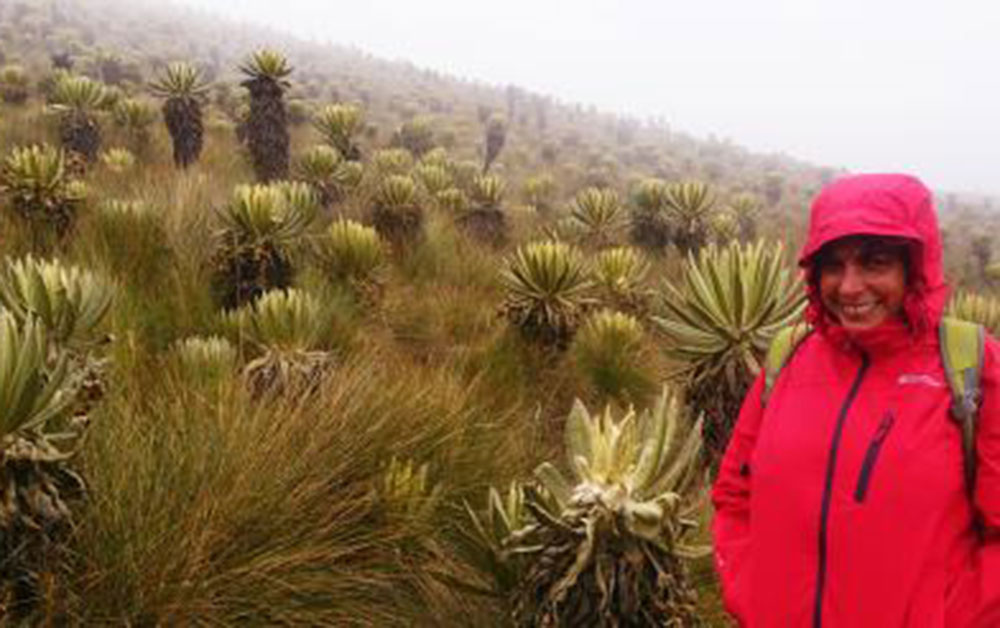
In the Paramo, temperatures average around 5ºC and drop below freezing at nighttime.
Again, variations depend on geography.
An inspiring Colombia adventure blending high-altitude trekking, rich wildlife, and the unforgettable discovery of the Lost City.
An unforgettable, perfectly organised South American adventure. A fabulous trip that exceeded all expectations.