From: £1,626
From: $2,165
On arrival from Lima or Cusco, we will welcome you at the airport and drive you ten minutes to our Puerto Maldonado headquarters. While enjoying your first taste of the forest in our gardens we ask you to pack only the necessary gear for your next few days, and leave the rest at our safe deposit. This helps us keep the boats and cargo light.
Shared transfer Puerto Maldonado Headquarters to Tambopata River Port. Skirting Puerto Maldonado, we drive 20 kilometers to the Tambopata River Port, entering the Native Community of Infierno. The port is a communal business.
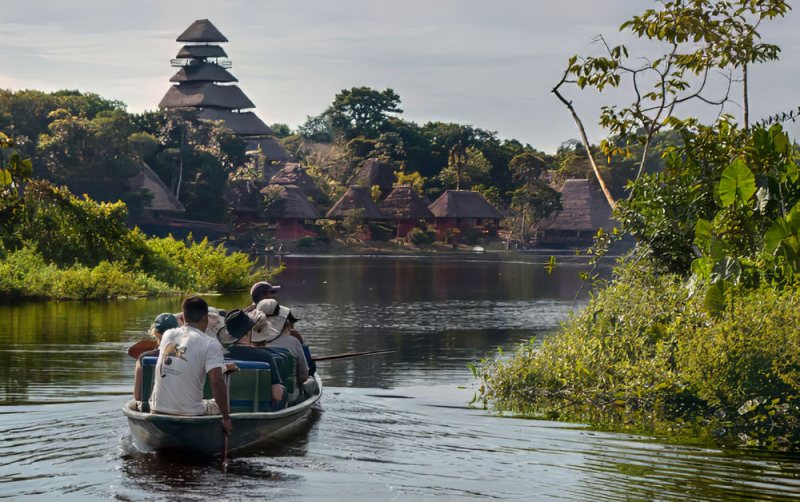
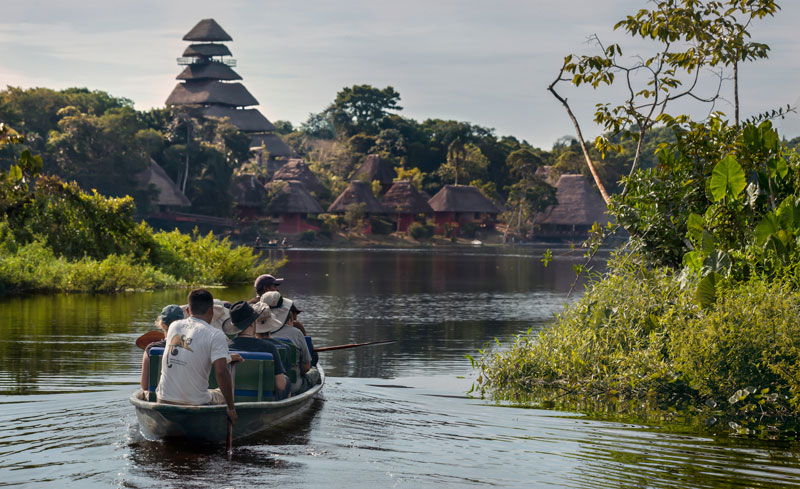
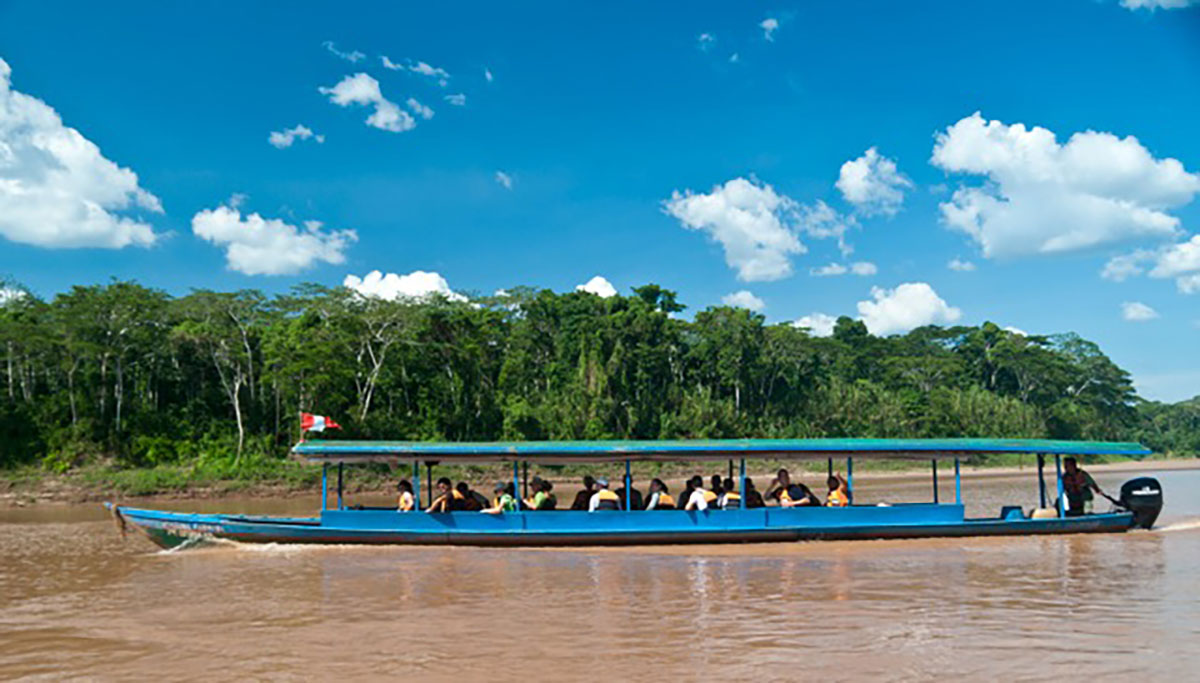
The two and a half hour boat ride from the Tambopata Port to Refugio Amazonas takes us past the Community of Infierno and the Tambopata National Reserve’s checkpoint and into the buffer zone of this 1.3 million hectare conservation unit.
We enjoy a boxed lunch aboard, while we keep a look out for wildlife.
Upon arrival, the lodge manager will welcome you and brief you with important navigation and security tips.
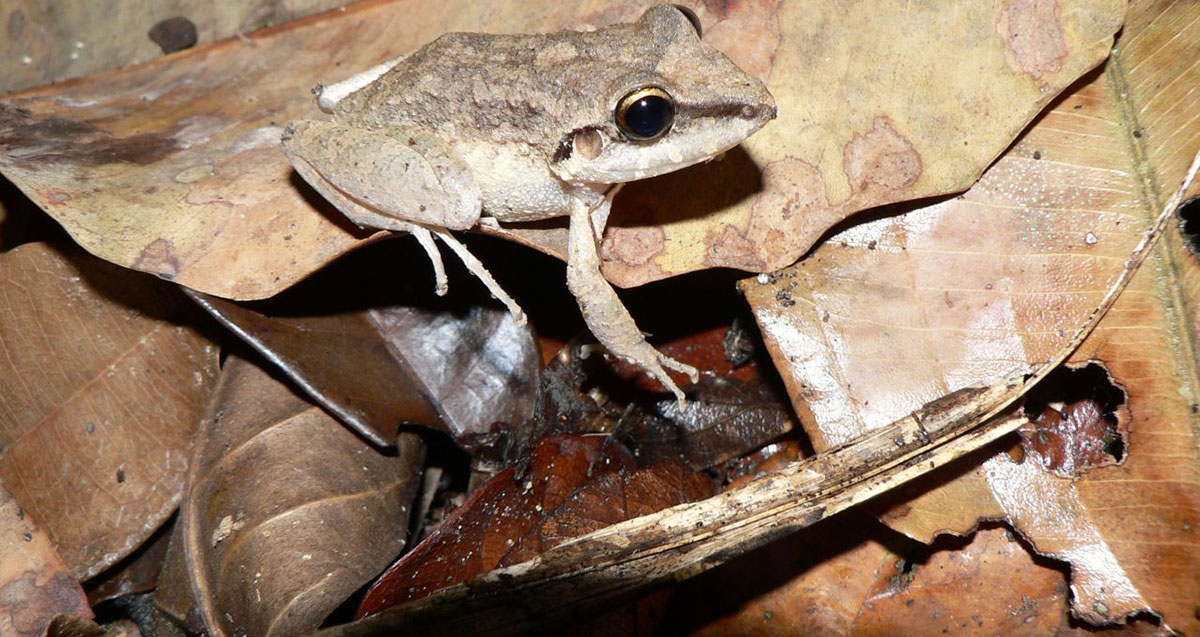
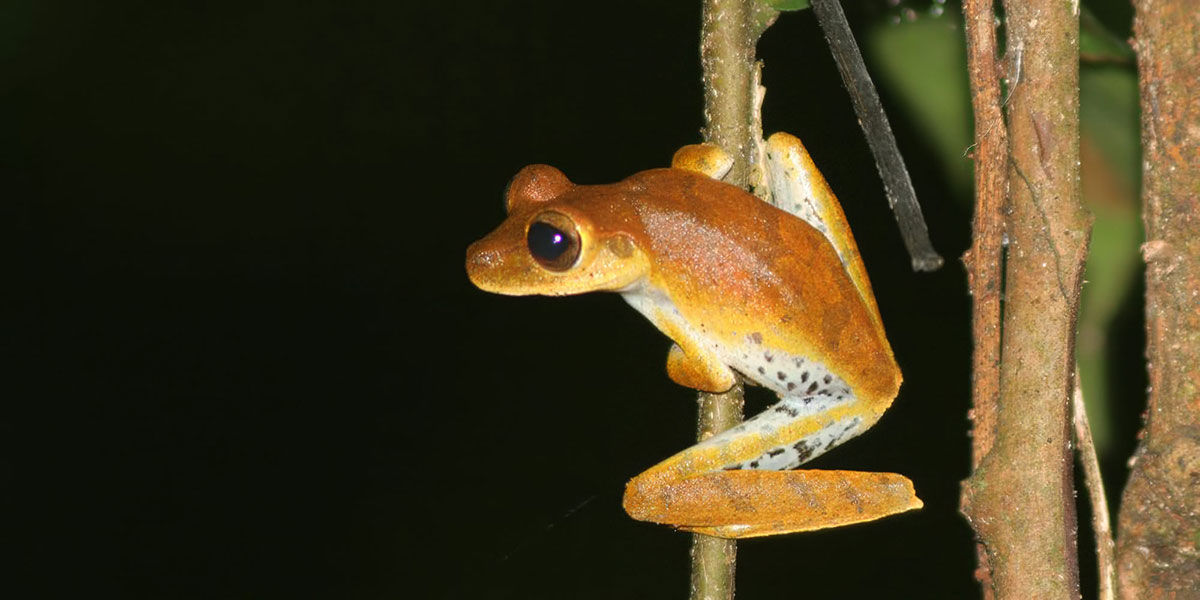
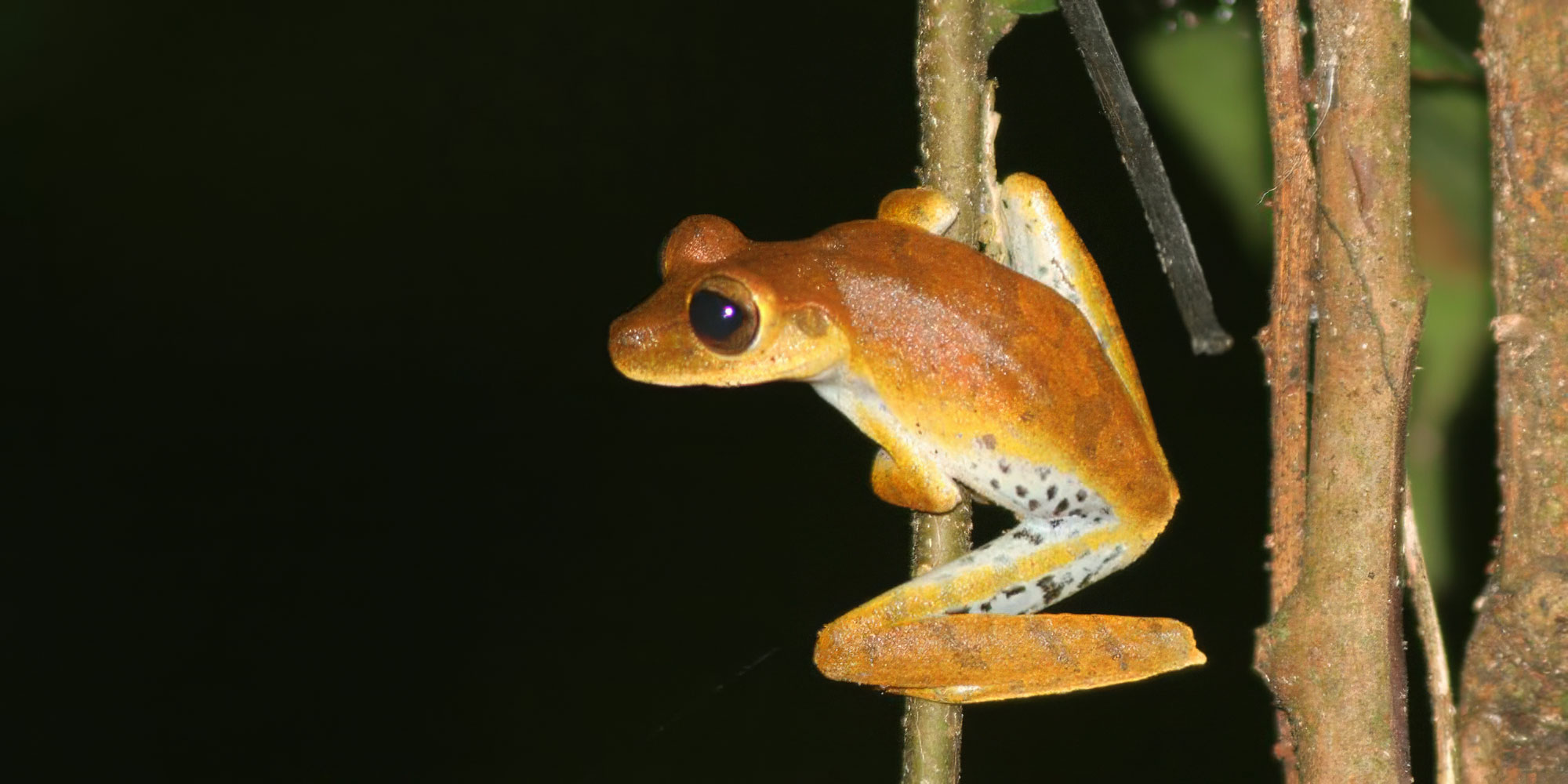
Night walks are great for photographing insects and frogs. We may be able to find praying mantis, cicadas, leaf mimicking grasshoppers as well as huge toads, shiny green tree frogs and bizarre horned frogs.
We return to the lodge for dinner.
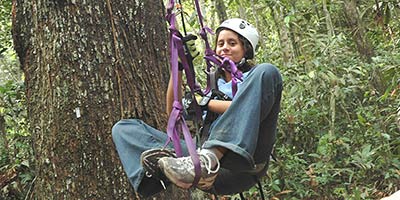
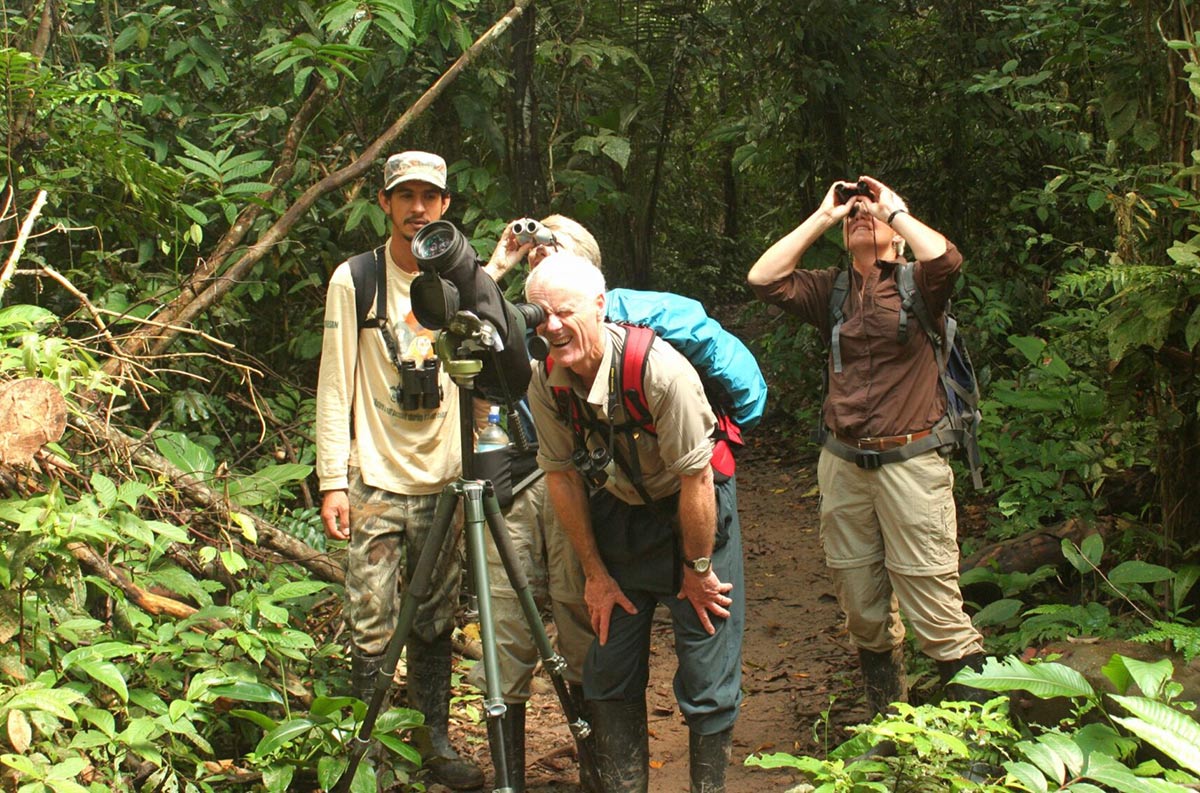
A thirty minute walk takes us to this 30m tall scaffolding tower, which will add a whole new dimension to our Amazon photography experience: the forest canopy.
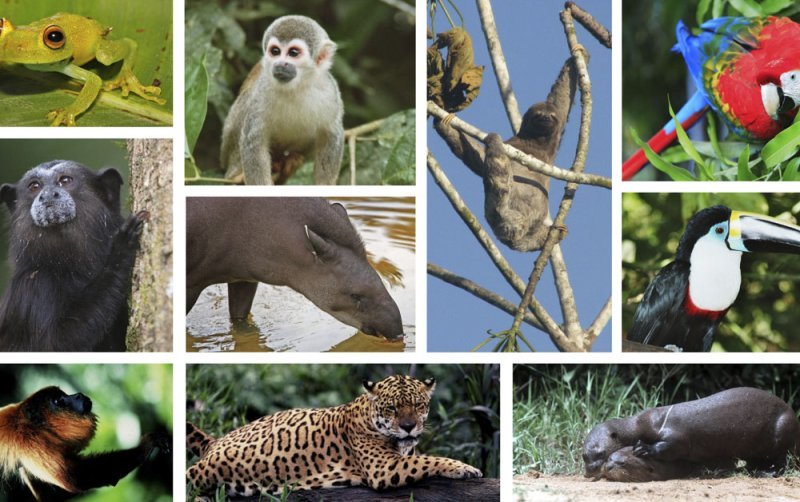
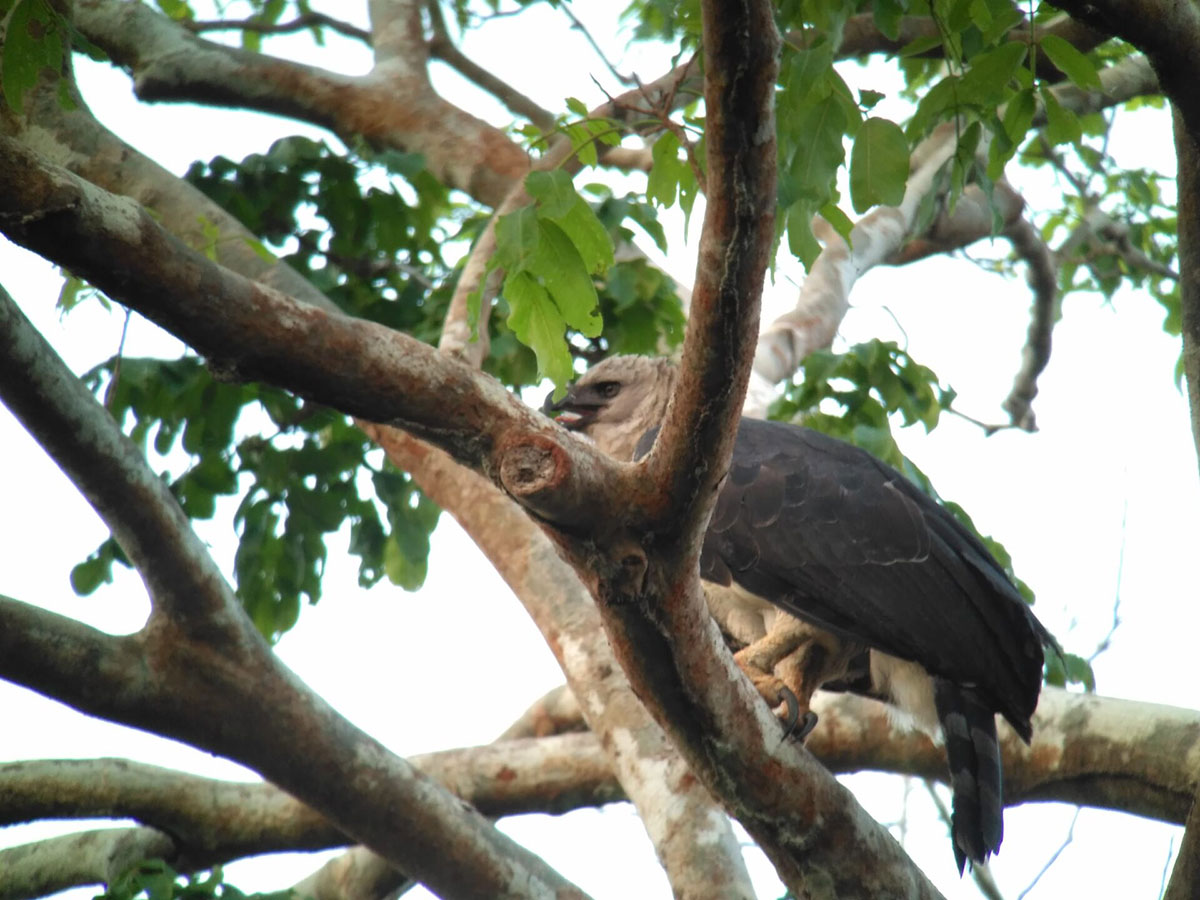
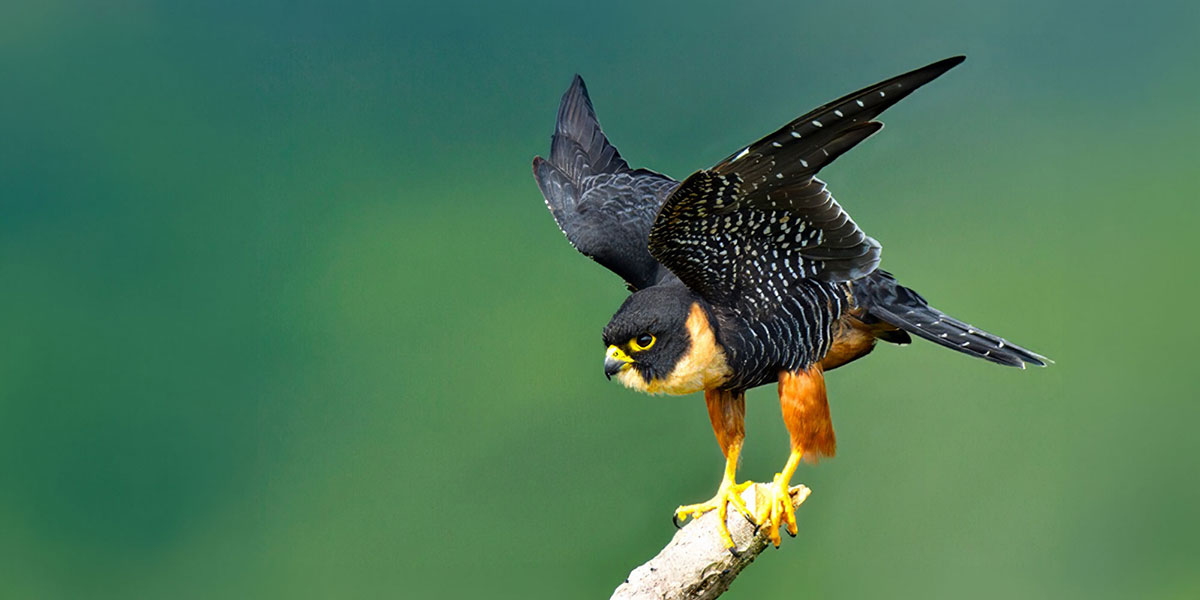
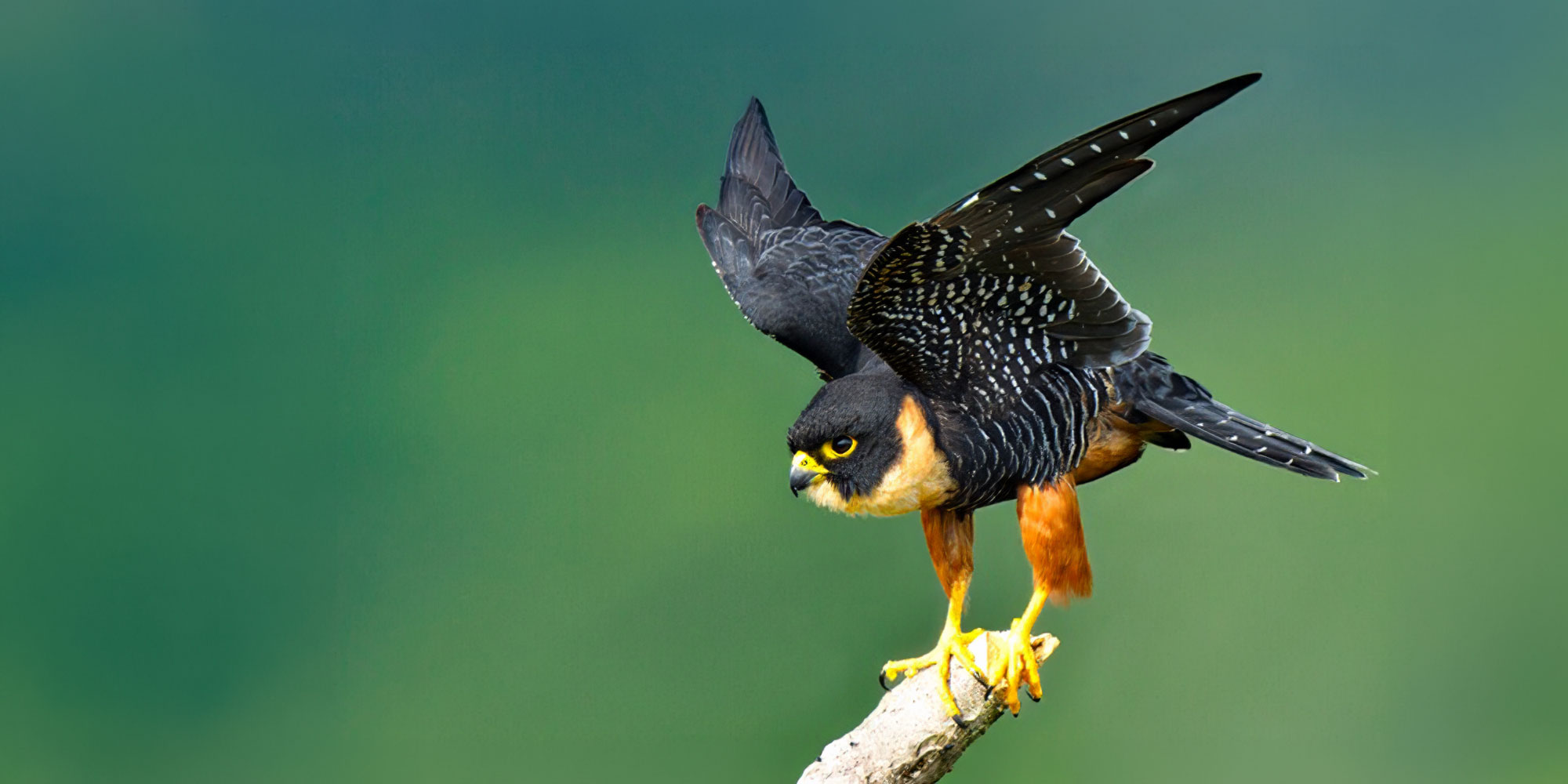
From this vantage point, it is all about landscapes and mainly birds. We wait for a canopy mixed flock to appear. The mixed flock is mostly all about tanagers: Paradise Tanager, Green-and-gold Tanager, Flame-crested Tanager, Turqoise Tanager, Opal- rumped Tanager and others. The tower also offers good opportunity for Cream- colored Woodpecker, Gilded Barbet, Plum-throated Cotinga and Striolated Puffbird. Macaws and toucans are seen flying against the horizon, including the Chestnut-eared, Lettered, Emerald, Curl-crested, and Brown-mandibled Aracaries. We see lonely raptors riding the thermals. This is your best chance for hawk-eagles and even harpy!
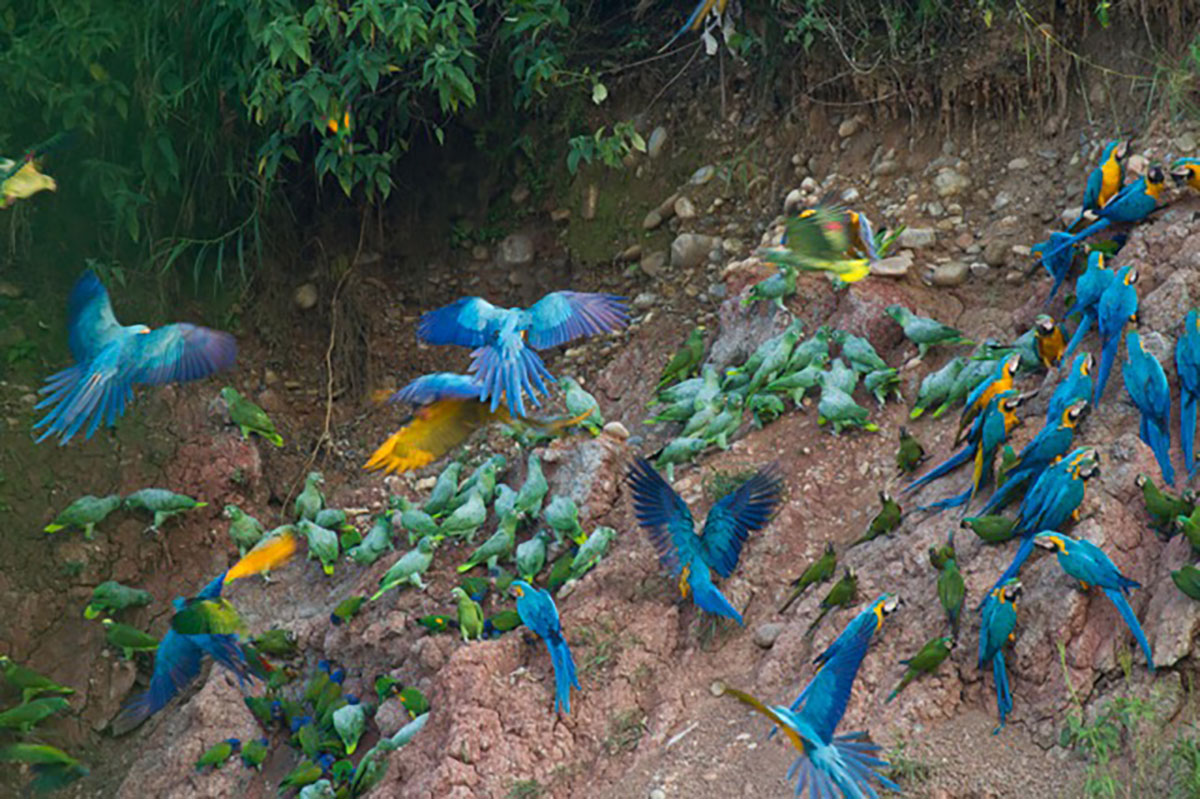
Two hours from Refugio Amazonas, deep in the Tambopata National Reserve we stop at the Chuncho claylick. After a brief walk (5 minutes) we have the chance to see dozens of large macaws feeding on the special sodium rich clays of the riverbank.
The Chuncho clay lick probably attracts more large macaws than any other clay lick in the world and the sight of dozens of macaws taking flight is truly unforgettable. The details of our stopover depend on the weather and the amount of macaw activity, as the birds don’t visit the clay lick when it is raining.
Then we take a private transfer to Tambopata Research Centre.
Four and half hours by boat from Refugio Amazonas, in the pristine heart of the reserve, lies the Tambopata Research Centre.
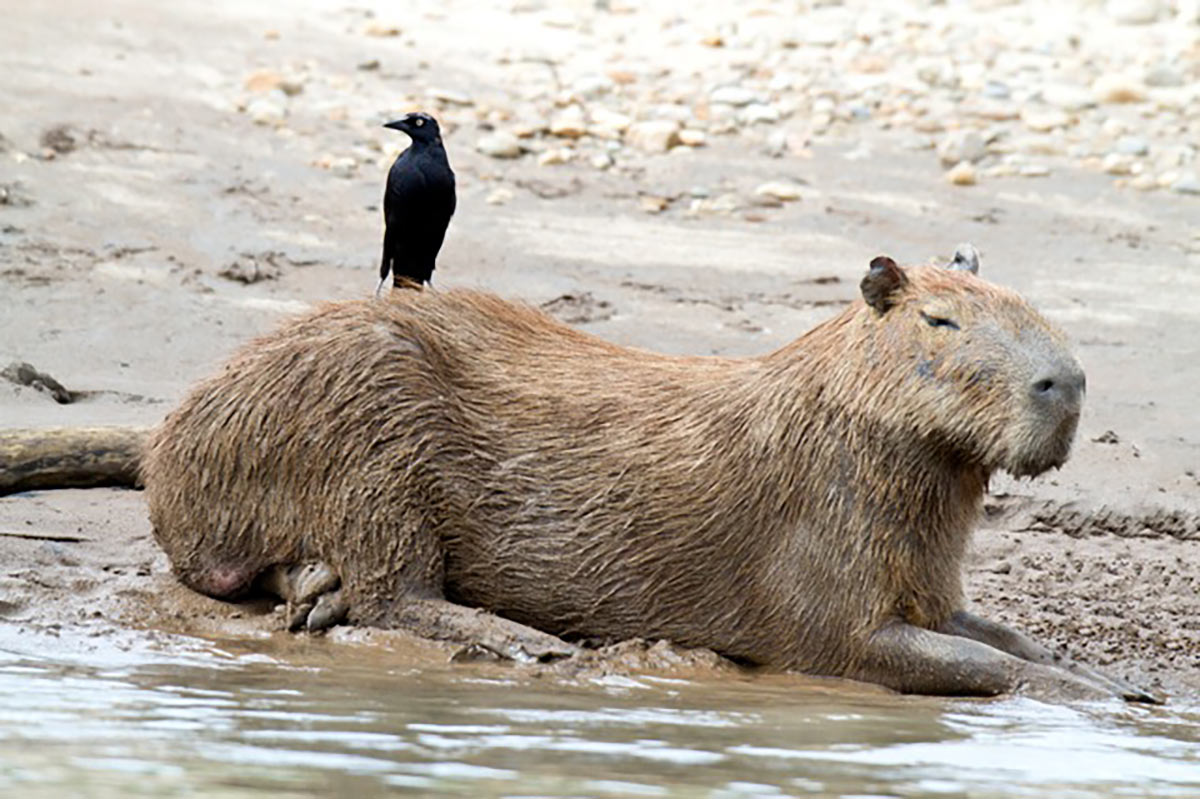
One and half hours into our boat journey, as we cross the confluence with the Malinowski River, we leave the final traces of human habitation behind. Within the 700,000 hectare uninhabited nucleus of the reserve, sightings of capybara, caiman, geese, macaws and other large species will become more frequent.
We arrive, and settle in.
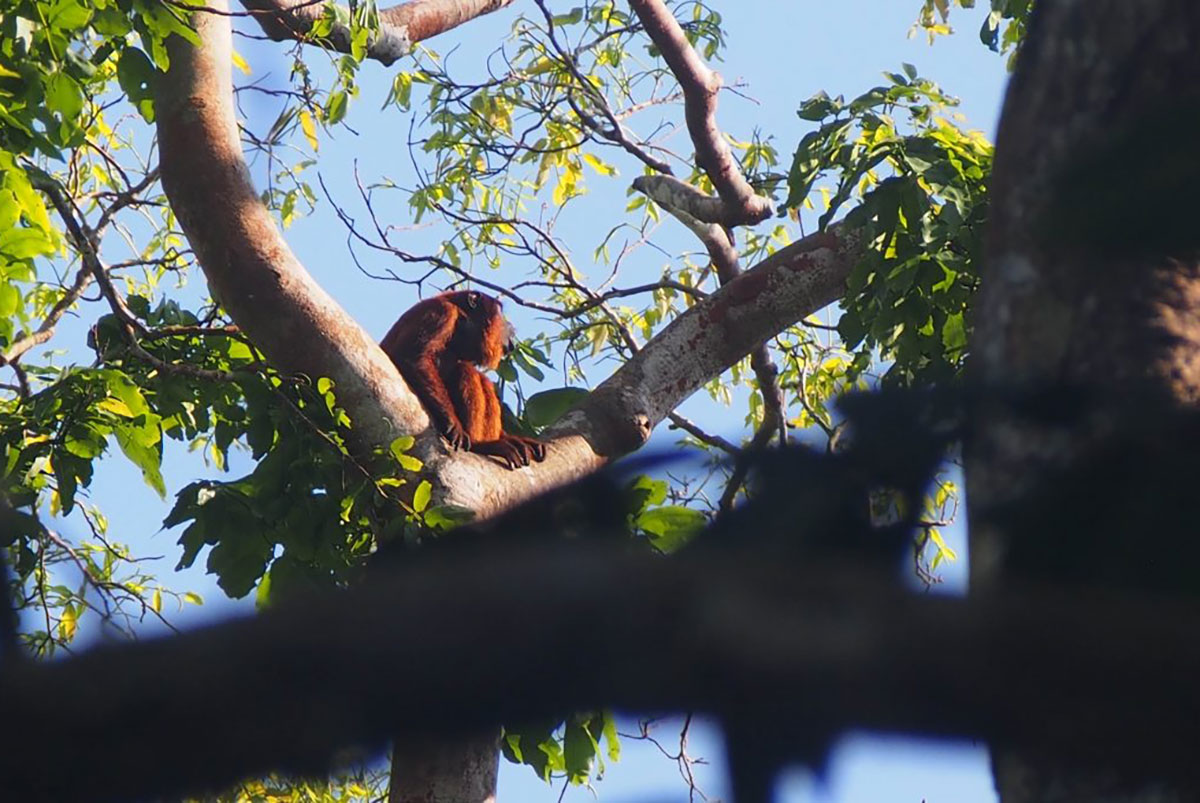
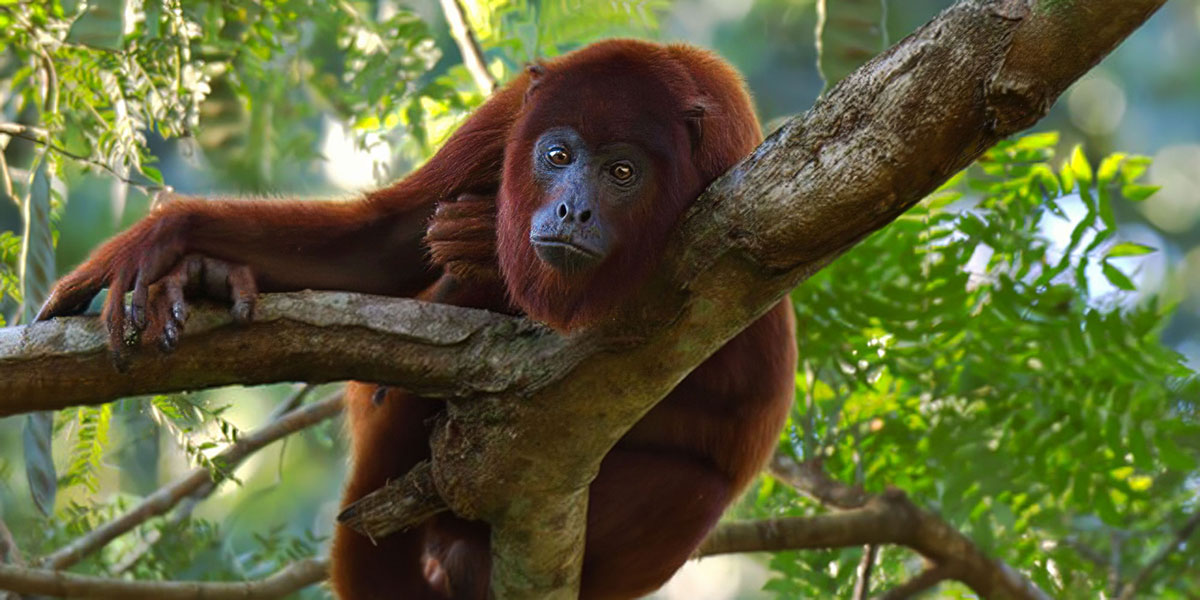
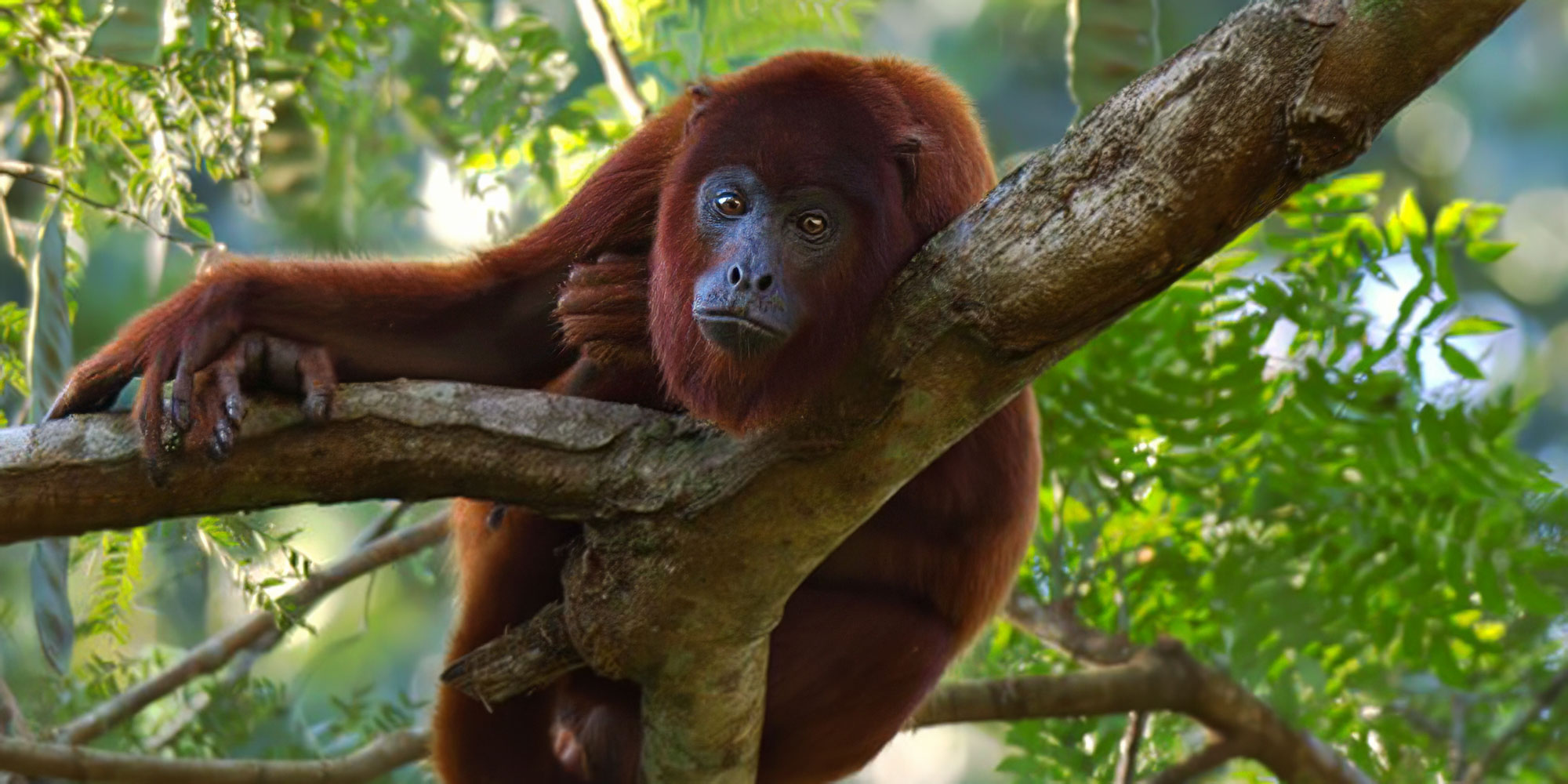
A 3-5km hike leads us to overlooks commanding magnificent views of the Tambopata winding its way into the lowlands. The forest on this trail, regenerating on old bamboo forest, is good for Howler Monkey and Dusky Titi Monkey. The overlooks provide excellent panoramic photo opportunities of the Tambopata winding its way down from the highlands.
On a clear day, it may even be possible to view and photograph the snow-capped Andean peaks in the distance. At each overlook we have good chances of encounters – at eye level some 30-50 yards away – with large turkey-like birds called guans and chachalacas, or toucans, or macaws roosting on the trees.
Return to the lodge for dinner.
We wake early for another magnificent day.
On most clear mornings of the year dozens of large macaws and hundreds of parrots congregate on this large river bank in a raucous and colourful spectacle which inspired a National Geographic cover story.
Discretely located 50m from the cliff, we have a watching place from which we can observe Green-winged, Scarlet and Blue-and-gold Macaws and several species of smaller parrots descend to ingest clay. Outings are at dawn when the lick is most active. If the river is not swollen, thereby reducing the effective beach area, photographers should have plenty of opportunities to shoot the typical clay lick photographs from distances of 50-100m
This 5km trail covers the prototypical rain forest with immense trees criss-crossed by creeks and ponds.
Amongst the figs, ceibas and shihuahuacos we look for Squirrel, Brown Capuchin, and Spider Monkeys as well as peccaries. TRC is located within this habitat. Photo opportunities for all mammals and birds on this trail may be scant as visibility and lighting are poor and animals timid. Our principal focus will be general rain forest shots as well as portraits of the huge trees that are scattered throughout this forest.
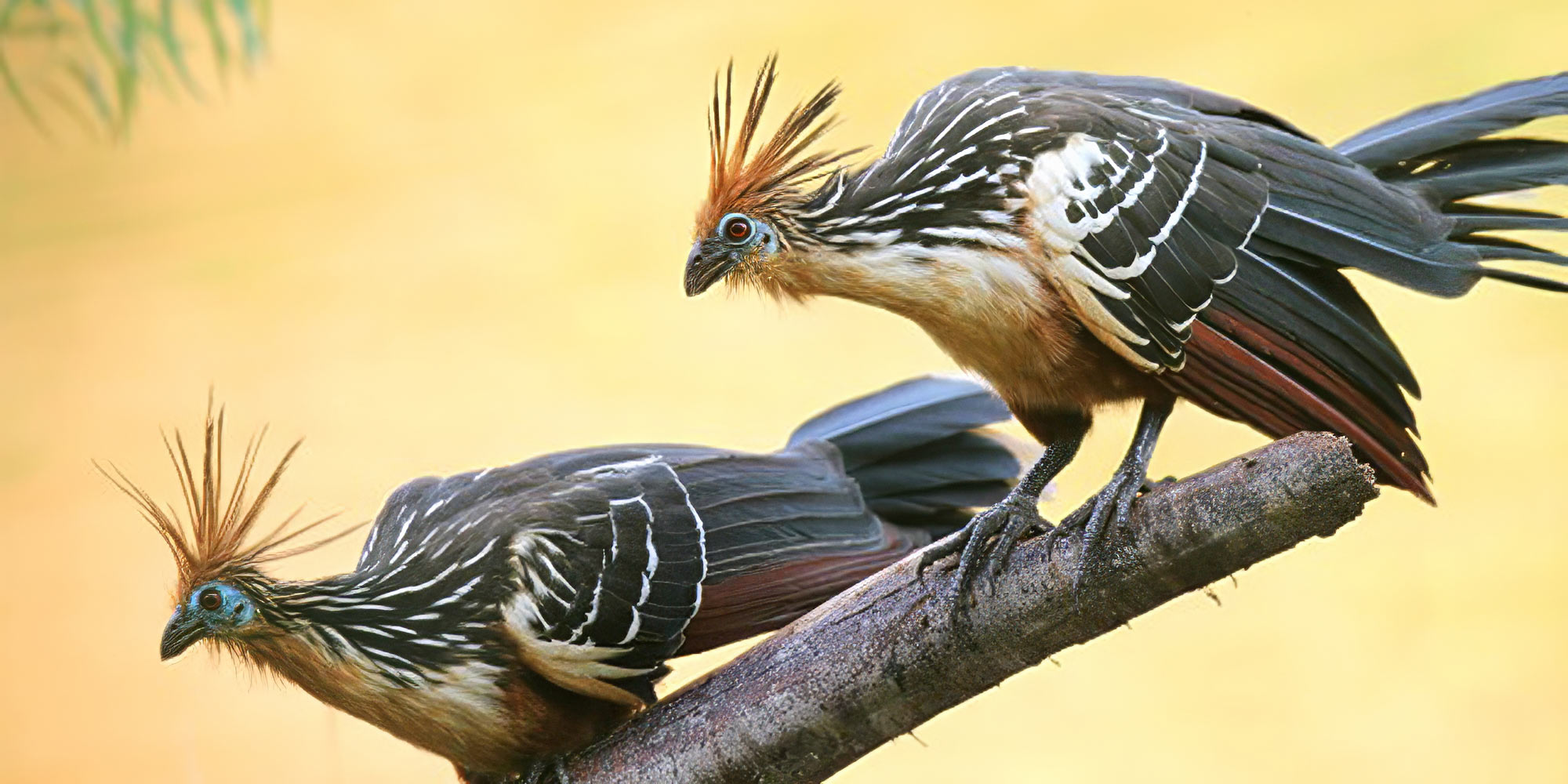
Ten minutes upriver from the lodge is a tiny pond with a platform in the middle. It is a great place for the late afternoon where we while away the remains of the day as we spot waterfowl such as Muscovy duck, sunbittern and hoatzin along with the woodpeckers, oropendolas, flycatchers and parakeets that call this pond their home.
Opportunities to photograph these beautiful birds abound, as the lighting and visibility of the pond is excellent and these birds’ habits are predictable over short periods of time.
Again, we look for praying mantis, cicadas, leaf mimicking grasshoppers as well huge toads, shiny green tree frogs and bizarre horned frogs.
We return to the lodge for dinner.
It’s our last full day in the Amazon, so we make the most of it.
We photograph herps around the TRC clearing: frogs, snakes and lizards. TRC specialists will have spent the past few days screening the vicinity for encounters with the most photogenic herp species and have prepared appropriate scenarios.
The chicos, a flock of semi-wild, hand reared macaws, will provide additional photographic opportunities as they fly about around the lodge.
Growing on the remains of an oxbow lake and providing both arboreal as well as terrestrial mammals with fruits throughout the year, the aguaje palms are one of the most important food sources in the rainforest. Demand for these fruits and great conditions for planting rice, makes the palm swamp also one of the most threatened habitats.
We return to the lodge for dinner.
After an early breakfast we return to Puerto Maldonado on a shared transfer for our flight back to Cusco or Lima.
Please check with us for approp
You stay at two lodges during this trip.
All rooms have an authentic Ese-Eja décor which has been crafted by artists from the local community of Infierno.
All rooms feature private bathrooms with access to hot water showers.
The rooms also feature an open verandha so you can feel part of the rainforest. Don’t fret! The few (if any) animals that may come in can be swiftly removed by the locals.
There are four types of rooms at the Research Centre.
There is electricity three times per day : From 06.00-08.00, 12.00 (midday)-14.00 and then 17.00-22.00 (approx.).
Quaint, comfortable rooms in the middle of the tropical rainforest allow guests to experience this global biodiversity hotspot even during their down time.
Monkeys, many species of birds, frogs, and other rainforest wildlife are often visible from our signature windowless verandahs. Those same verandahs also add comfort with excellent ventilation. These rooms are built with local materials such as tropical hardwoods, palms, bamboo, and adobe.
They are available as singles, doubles or twins and come equipped with mosquito nets for the beds and have spacious private bathrooms with hot water. Numerous kerosene lamps and candles provide soft lighting. Electricity and internet are just a short walk to the common areas of the lodge.
Experience the Peruvian jungle in one of our superior rooms and enjoy:
The comfort rooms have lovely, varnished tropical hardwood floors, are 45 square metres, and have an open verandah that looks out into a roadless, wild tropical rainforest preserve.
Superior rooms are available with two full-sized beds and each is equipped with a mosquito net over large, comfortable beds, two hypoallergenic pillows per person, a hammock, and a reading table.
Stay in one of our comfort rooms and enjoy:
These are the same as the superiors with these additions:
Same as the suites, but with:
You stay here on your first night (you can ask to stay more nights, too).
Here there are three room types:
Quaint, comfortable rooms in the middle of the tropical rainforest allow guests to experience this global biodiversity hotspot even during their down time.
Monkeys, many species of birds, frogs, and other rainforest wildlife are often visible from our signature windowless verandahs. Those same verandahs also add comfort with excellent ventilation. Classic rooms are built with local materials such as tropical hardwoods, palms, bamboo, and adobe.
They are available as doubles or triples and come equipped with mosquito nets for the beds and have spacious private bathrooms with hot water. Numerous kerosene lamps and candles provide soft lighting. Electricity and internet are just a short walk to the common areas of the lodge.
Experience the Peruvian jungle in one of our classic rooms and enjoy:
The superior rooms have lovely, varnished tropical hardwood floors, are 45 square metres, and have an open verandah that looks out into a roadless, wild tropical rainforest preserve.
Superior rooms are available as singles, doubles or twins, and each is equipped with a mosquito net over large, comfortable beds, two hypoallergenic pillows per person, a hammock, and a reading table.
Stay in one of our superior rooms and enjoy:
These are the same as the superiors with these additions:
These trips are designed to be open to people of all ages and abilities.
You need to be able to step into and out of a boat and the fitter you are the more you will enjoy the trip.
Walks are short in length but you may be on your feet for 2-3 hours as you stop to look at wildlife. You need to be able to carry your camera kit during the walks, and be able to sit quietly and patiently for long periods.
There are also rides in boats/canoes that can last up to 1.5 hours, depending on the tour. The trip from Refugio Amazonas up to Tambopata Research Centre can last 3-5 hours.
Massages and reflexology are available, at extra cost, at Refugios Amazonas.
We can cater for almost any dietary requirement – please ask for more information.
At both lodges, dedicated kitchen staff serve up a mix of local dishes and international plates using food from the rainforest wherever possible.
This means a delight for the tastebuds as there are so many tasty treats growing around the lodge.
Breakfasts are usually early and there are fruit juices made from local plants – some of which you may have never heard of – along with teas and locally-grown coffee. There are usually cakes, jams and a choice of eggs, toasts and cereals.
Lunch and dinner are usually three courses – a soup to start followed by a hearty main and then pudding.
Fish, chicken and beef all feature, and there is always a vegetarian option, too (almost all dietary requirements can be catered for). Side dishes include yams and potatoes and rice, plus more rainforest delicacies.
Pudding is often fruit or a cake made in the local style.
Your photography guide will be a Peruvian photographic and wildlife expert, bilingual and English-speaking.
Local native guides may accompany you to spot wildlife (depending on group size) and come from the community and/or the area surrounding the lodge. Some specialist guides do come from other parts of Peru.
The lodge itself is staffed by community members, so you visit really means giving back to the locals.
A flawlessly organized Peruvian Amazon adventure filled with vibrant wildlife, cultural tastes, and smooth travel from start to finish.
A flawlessly organised luxury adventure combining Peru’s iconic trails with an unforgettable Galapagos cruise.
The Peruvian Amazon offers up a myriad of exciting, stimulating and demanding photographic conditions.
Learn how to cope with light, movement and wildlife under expert tuition.
You are tutored and guided by Peruvian guides while staying at two different eco-lodges in the Tambopata region.
The tours are all-inclusive and open to anyone interested in photography – you are taught how to combine science, nature and technology to create art.
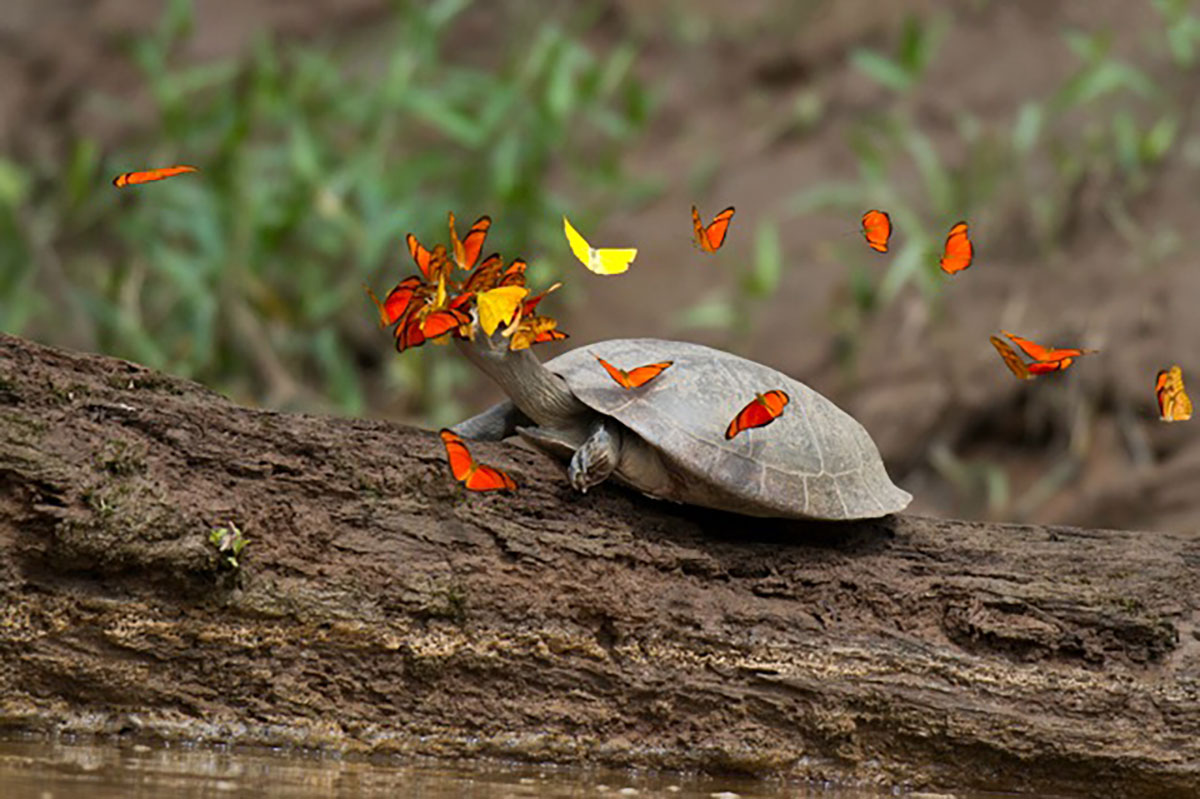
Professional jungle guides travel with you, spotting wildlife and explaining the rainforest and its ecosystem.
Workshops include a mix of in-the-field instruction as well as some formal classroom, teaching and critique sessions and in-depth discussions on the ins and outs of nature photography.
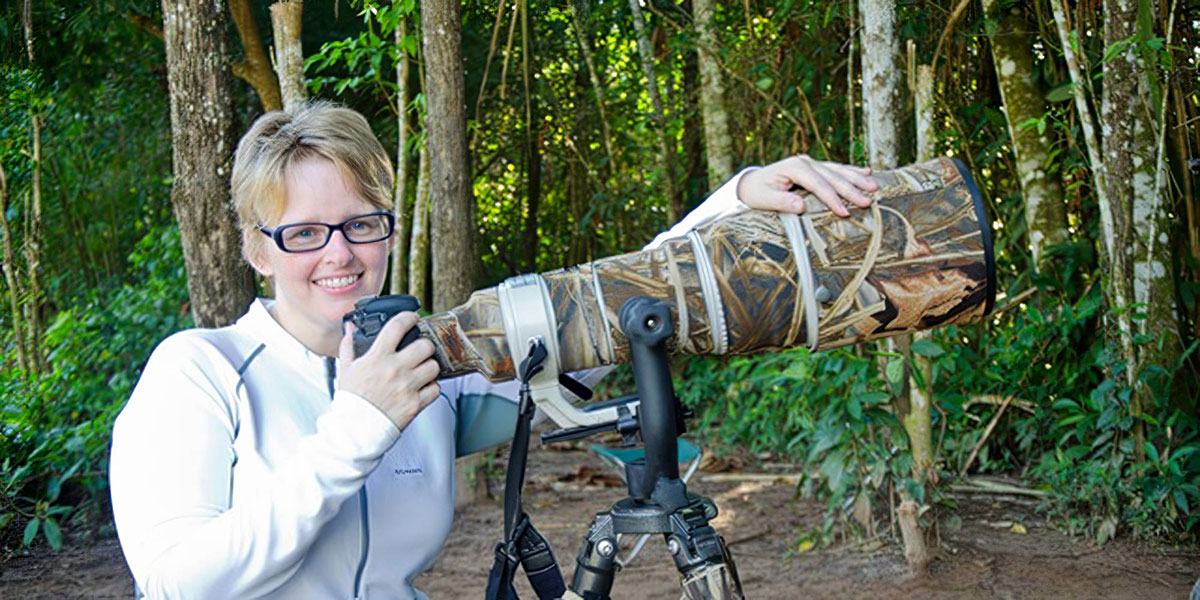
Learn how to take close-ups of insects and butterflies as well as use huge lenses to get pictures of birds in flight, and small subjects up to 100m away.
Experienced photographers and those keen to learn more can combine a superb Amazon wildlife holiday with the chance to take great photos of beautiful wildlife.
Peru is the perfect holiday destination for adventure travellers that want an amazing variety of activity, geography and cultural travel experiences.
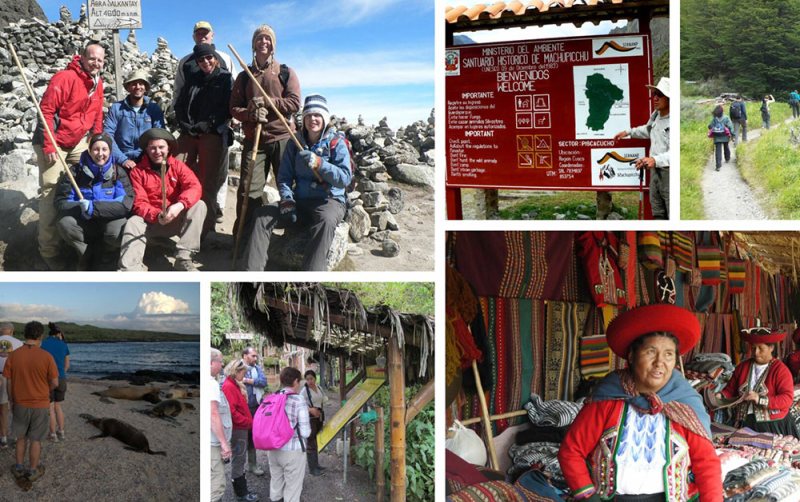
The breadth of travel experiences in Peru is breathtaking – from trekking in the Andes to Machu Picchu to the tropical jungle of the Amazon, and plenty in between.
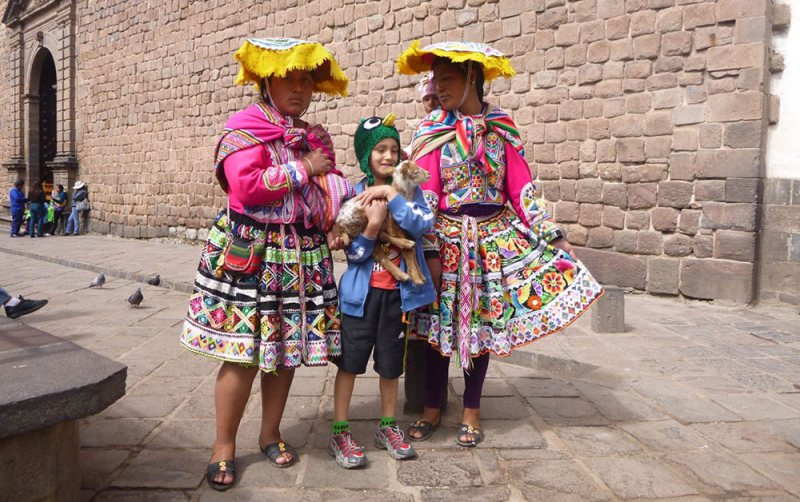
The people of Peru make it a special destination too, with its colourful and traditional street life and friendly locals.
Good kit is vital for every trip.
Book with Andean Trails and get 15% off Páramo’s fantastic ethical and high-performance outdoor gear.
You can also read our blog about a day in the Amazon rainforest of Peru.
Please note: Guests should arrive in clothes which they do not mind getting slightly dirty or wet, and should wear footwear that is suitable to walk on a rainforest trail. Sun cream, insect repellent, hat and waterproof clothing should be carried in hand luggage and kept accessible for the journey to the lodge.
You may want to keep your binoculars and camera handy, too.
All bedding, toilet paper etc. is provided at the lodge (or camp, if camping).
Year-round, weather conditions are hot and humid and there is always the risk of rain
There is a ‘dry season’ in Tambopata and Manu between May and October. The average daytime high temperature is between 25°C and 34°C and the average nighttime low is between 16°C and 22°C. Heavy downpours typically occur every few days.
Around 80% of annual average rainfall – approx 2,000 mm in Manu and Tambopata and 1,400 mm in Iquitos – occurs in the wet season Nov-April.
On rare occasions, between May and September, cold fronts from Argentina – ‘friajes’ – can sweep into southwest Amazonia and push temperatures down to 9° C. (Friajes usually last between 1 and 3 days).
A flawlessly organized Peruvian Amazon adventure filled with vibrant wildlife, cultural tastes, and smooth travel from start to finish.
A flawlessly organised luxury adventure combining Peru’s iconic trails with an unforgettable Galapagos cruise.