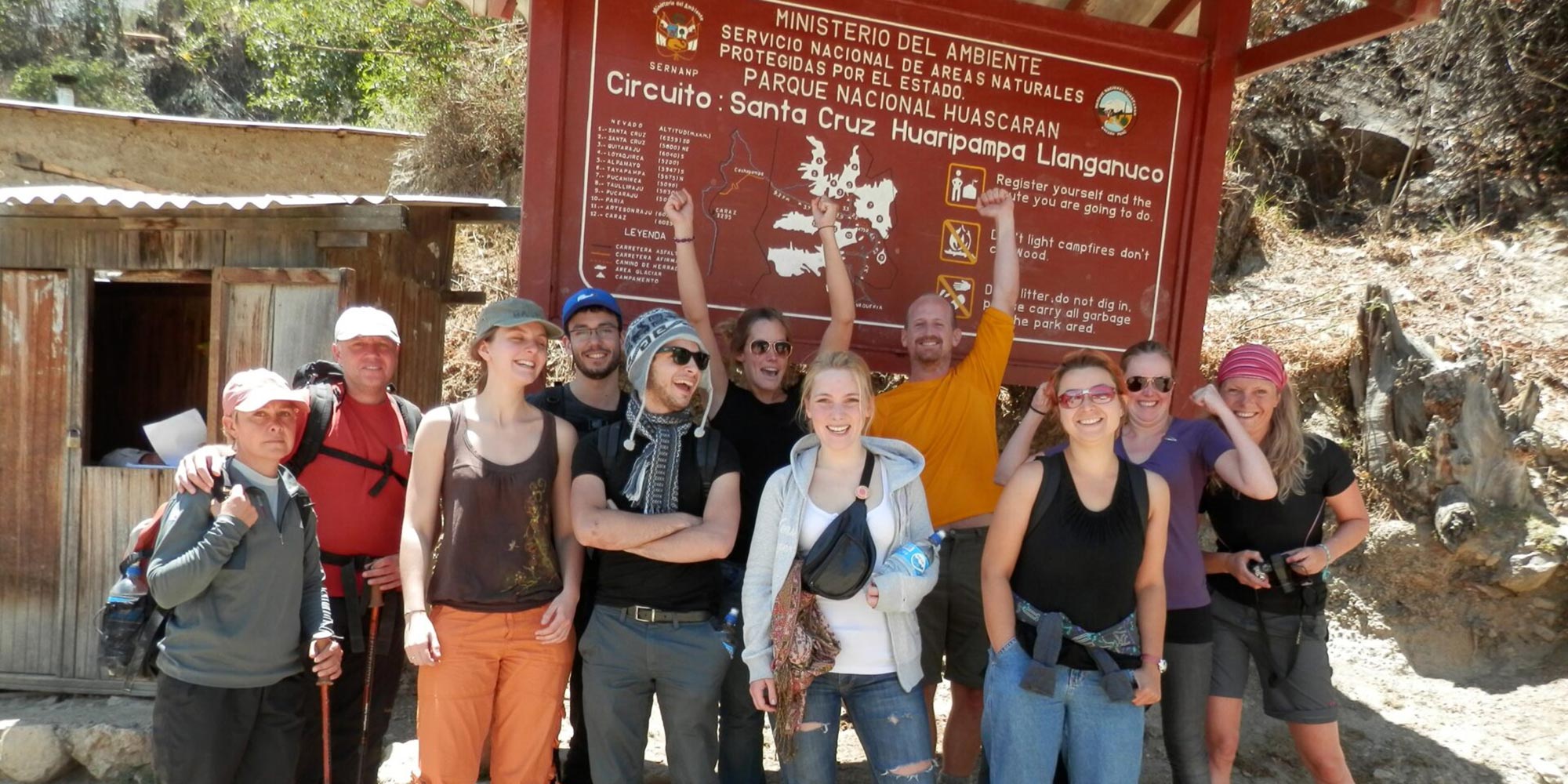
Santa Cruz Trek

Duration:4 days

From: £578

From: $770

Capacity: 16

ATOL 6275 protected
Speak directly to the experts
28 years experience

Cordillera Blanca, home to one of Peru’s best short, high altitude treks – Santa Cruz.

Tour highlights

  • The Santa Cruz trek in the Cordillera Blanca is one Peru’s best treks for scenery.
  • A short walk with maximum high mountain, Andean enjoyment.
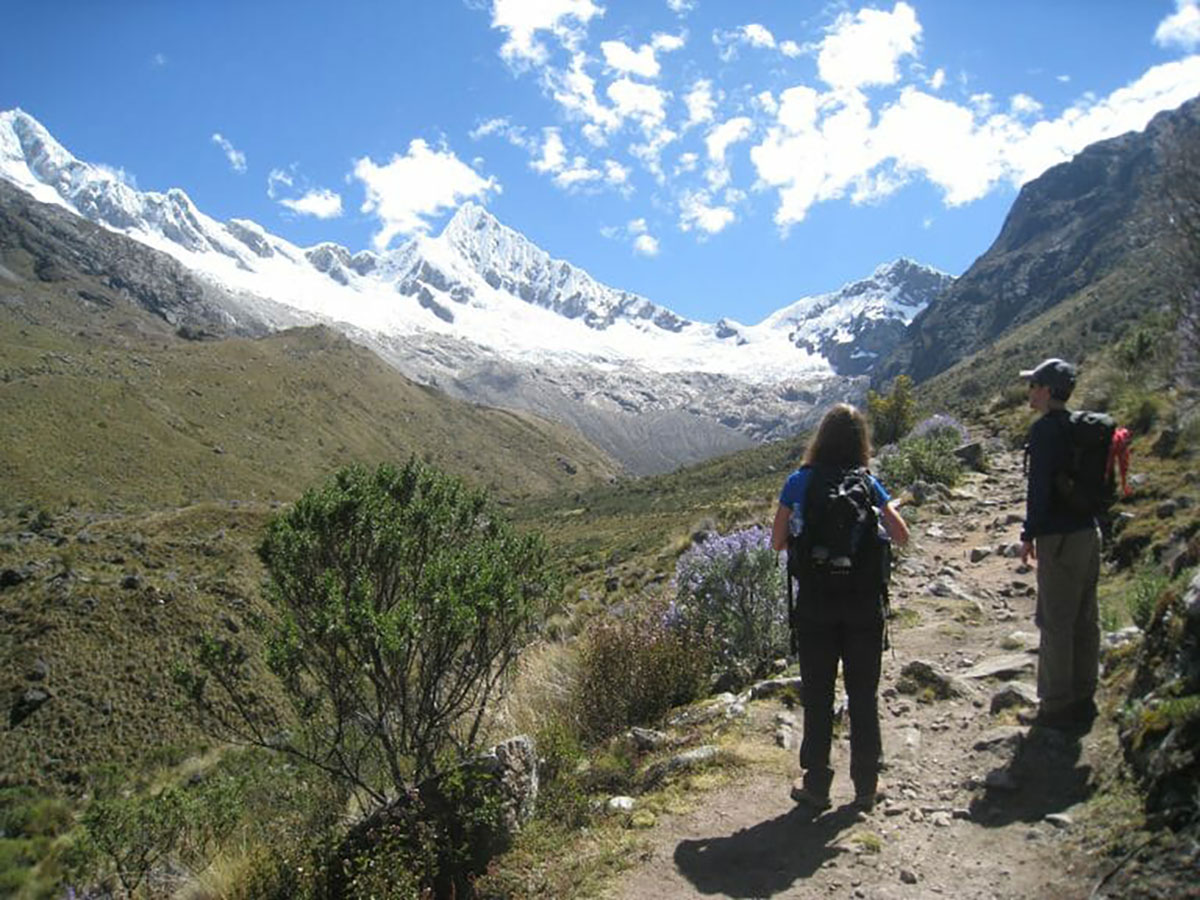
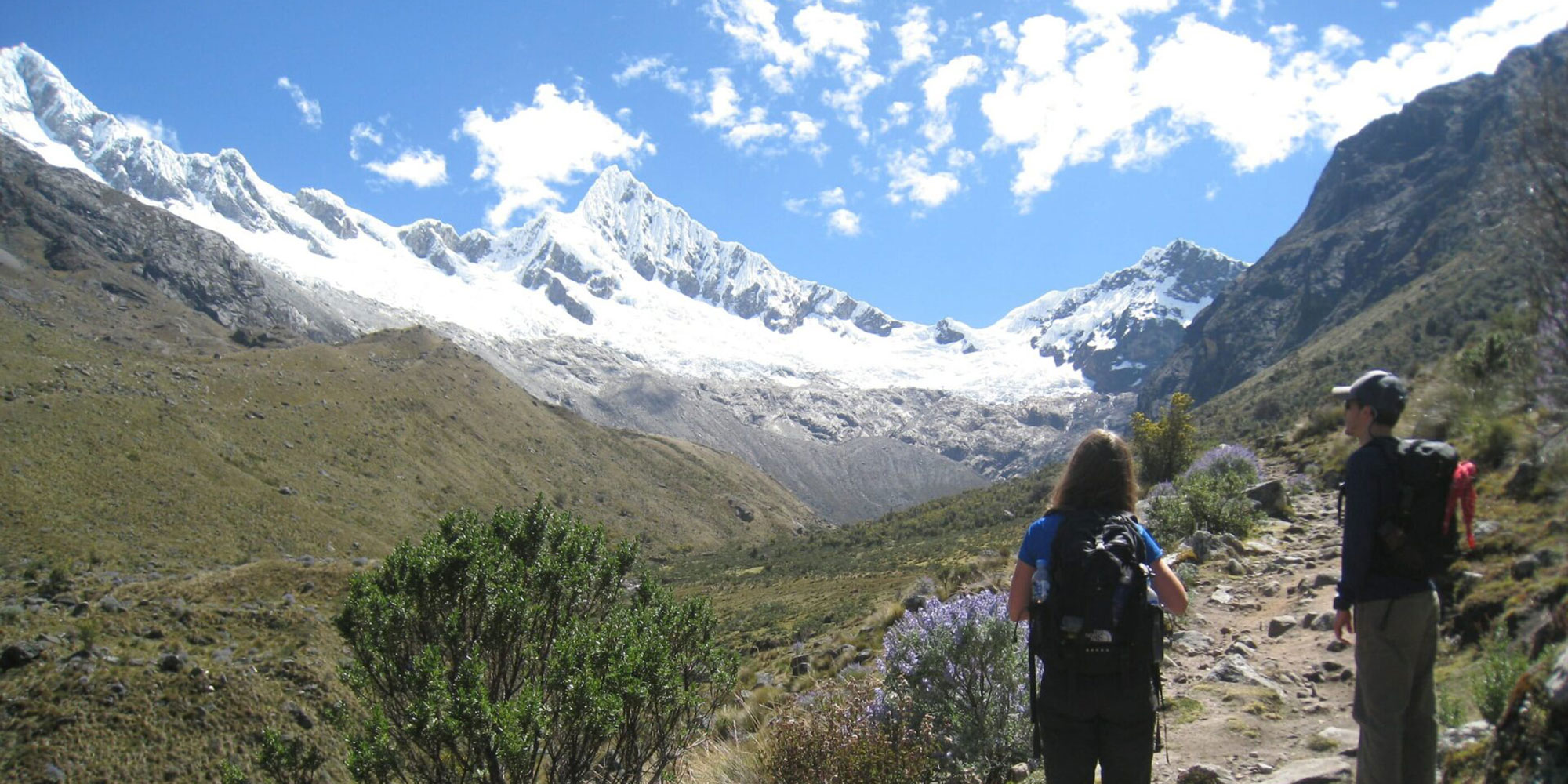
  • Hike with just a day pack, past snow-capped peaks, crystal blue lakes and gorgeous views.
  • Camp under the stars in the heart of the Cordillera Blanca.

Itinerary for Santa Cruz Trek

Overview

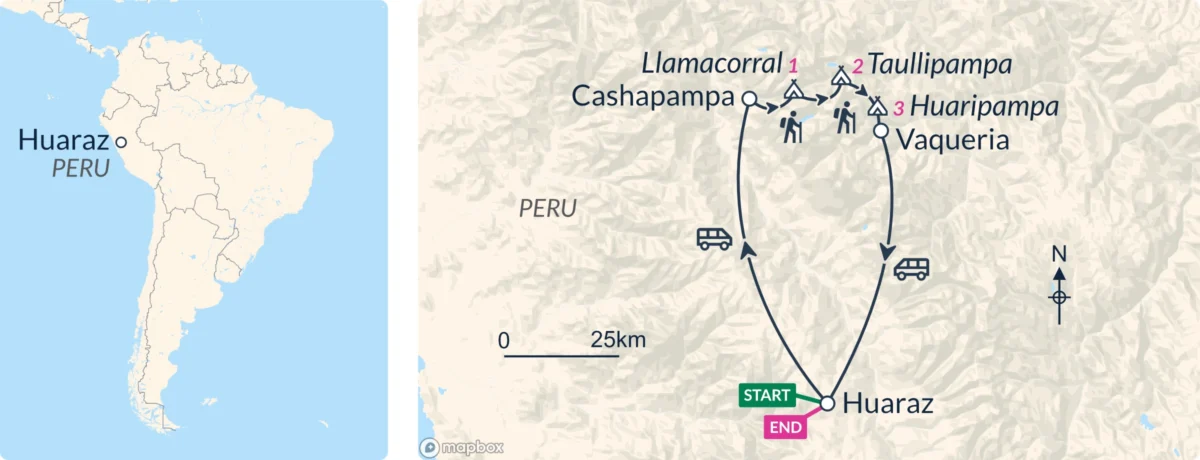
  • Day 1 Transfer Huaraz to Cashapampa (2,900m), gradual ascent to Llamacorral. Camping (L,D)
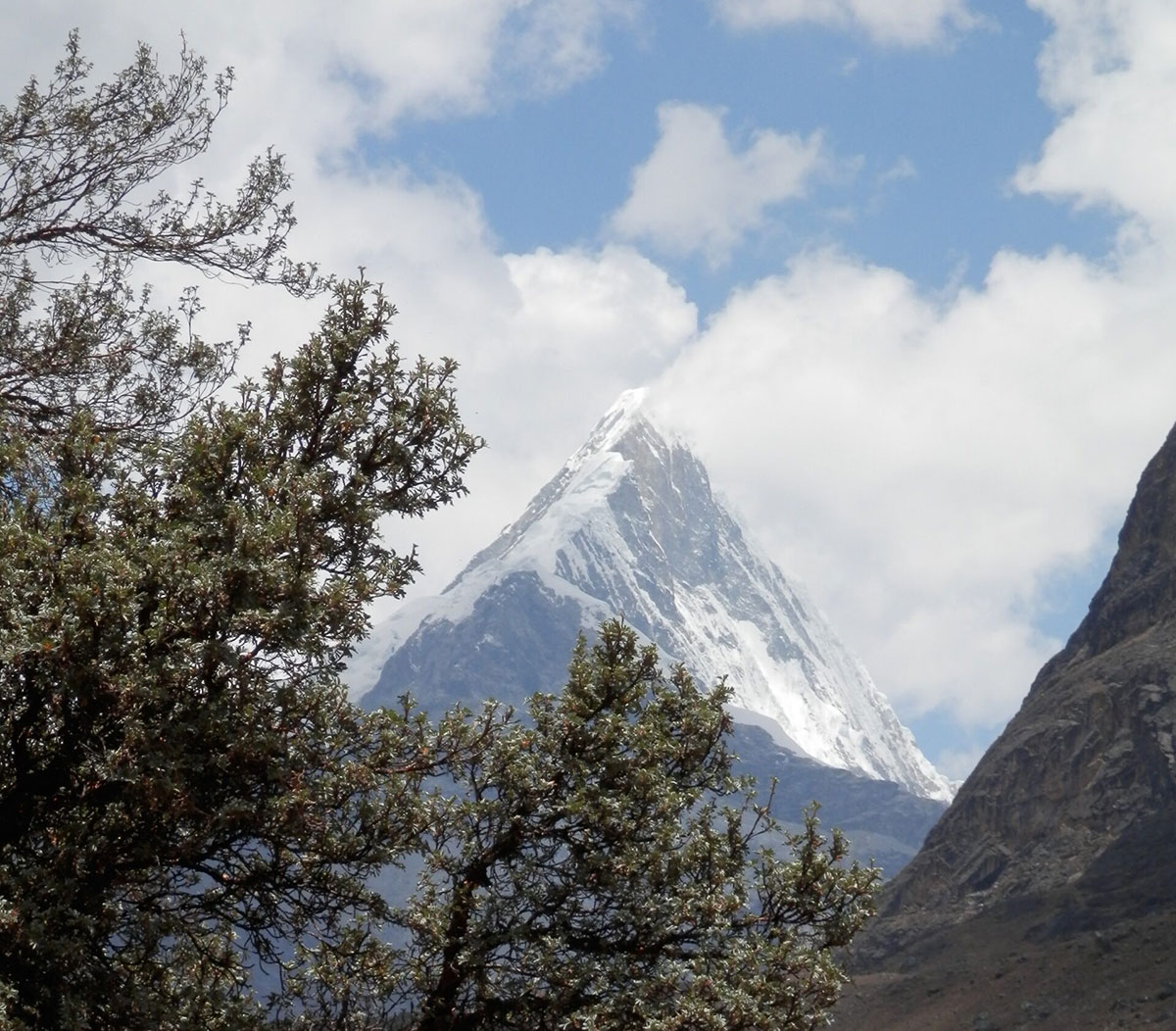
  • Day 2 Ascend towards the first pass, the magnificent peak of Taulliraju (5,830m). Camping (B,L,D)
  • Day 3 Continue ascent to pass at Punta Union (4,750m), descend to Huaripampa valley. Camping (B,L,D)
  • Day 4 Descend towards Vaqueria (3,700m), transfer to Huaraz, ends Camping (B,L)

Transfer Huaraz to Cashapampa (2,900m), gradual ascent to Llamacorral. Camping (L,D)

The drive from Huaraz to the trailhead takes you north through some magical landscapes.

Leaving the Santa valley at the small town of Caraz (2,290m/7,513ft) you continue to Cashapampa (2,900m/9,514ft) starting point for the trek, about 3-4 hours from Huaraz.

You begin with a gradual ascent of the Santa Cruz valley. The first hour or two is fairly steep, but we take it slowly, following a waterfall which flows from the glaciers of the big mountains that await us. There are lovely beech trees to see enroute, with bromeliads and the chance to spot hummingbirds.

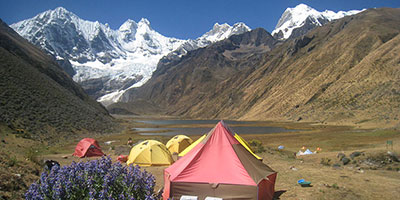
By mid-afternoon the valley levels out and, at Llamacorral, the first camp is set up, with toilets and views of Ririjirca and Taulliraja.

Ascend towards the first pass, the magnificent peak of Taulliraju (5,830m). Camping (B,L,D)

We start early, as with most Andean high altitude treks, and this second day helps us towards our high pass – as well as taking in some of the real highlights of the trek.

We walk past the lakes of Laguna Chica and Laguna Grande, a fairly gentle start to the day. After a half day of walking, there is an option to continue on to the next campsite, or take a trip up to Laguna Arhuaycocha.

Arhuaycocha adds 2-3 hours to the day, but what a side trip. Behind you, never-ending views of Artesonraju, the peak said to have inspired Paramount Pictures’ logo. In front, Laguna Arhuaycocha. At 4,500m/14,764ft, this is good acclimatisation for tomorrow’s pass, and with unparalleled views.

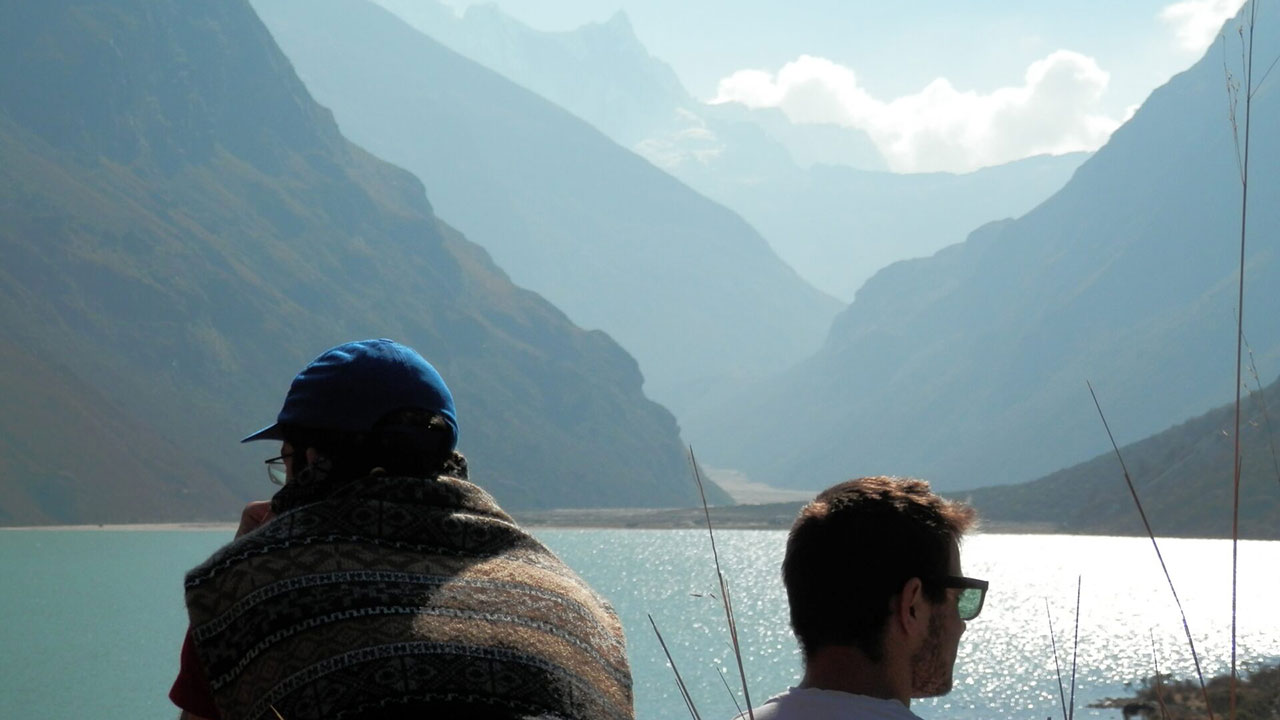
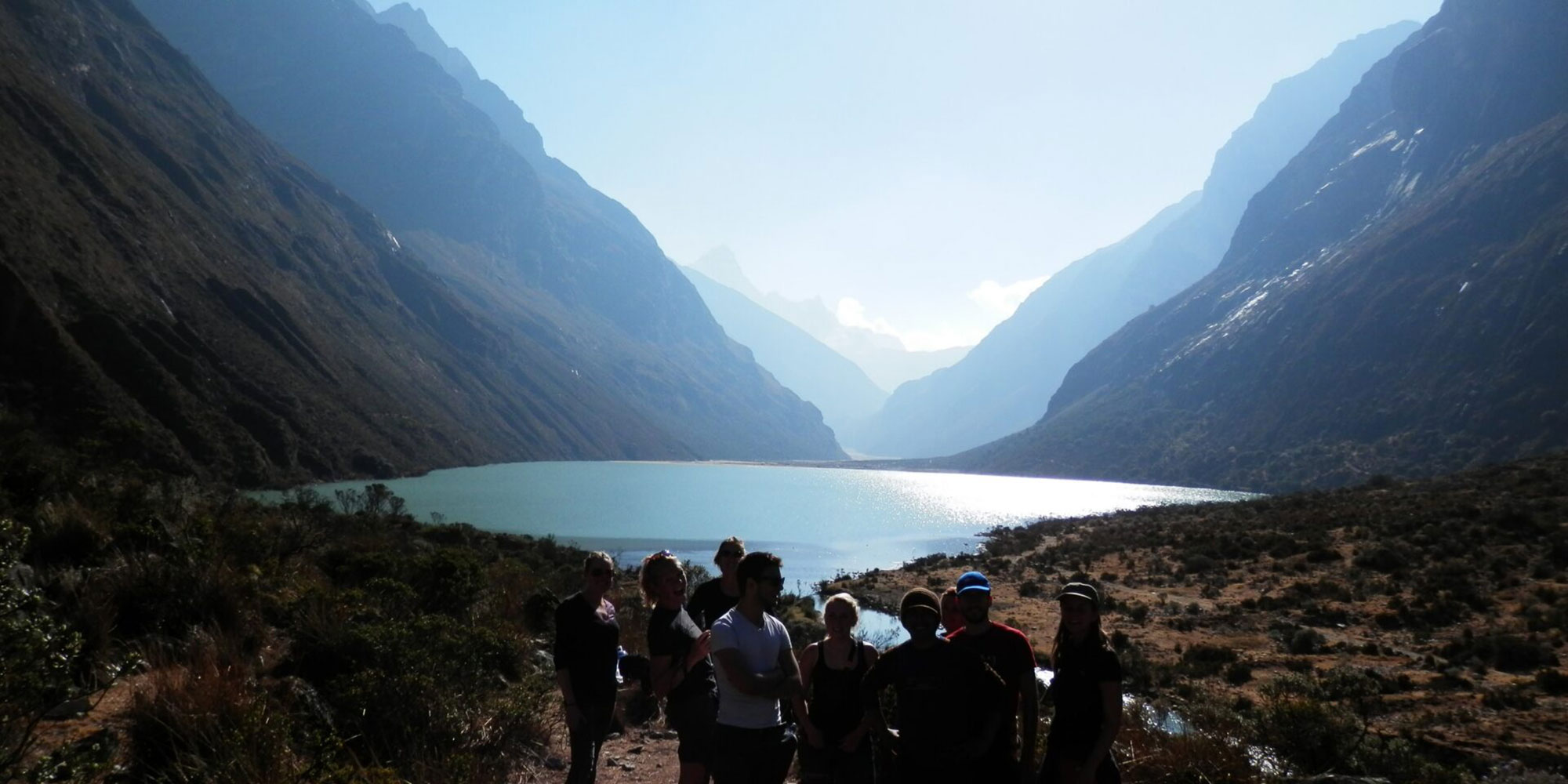
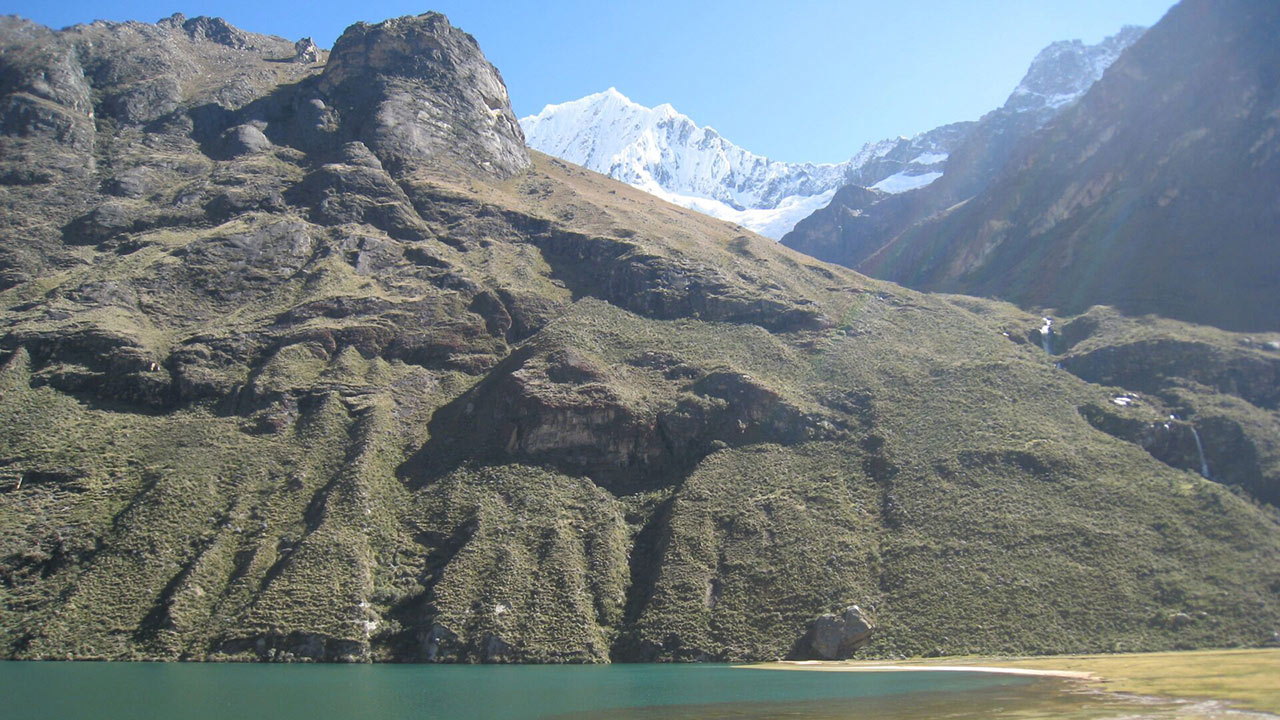
The crystal blue laguna, with icebergs that have calved from the surrounding glaciers, is an Andean treat. Huge mountains thrust around all sides of the laguna, with glaciers shimmering in the sun.

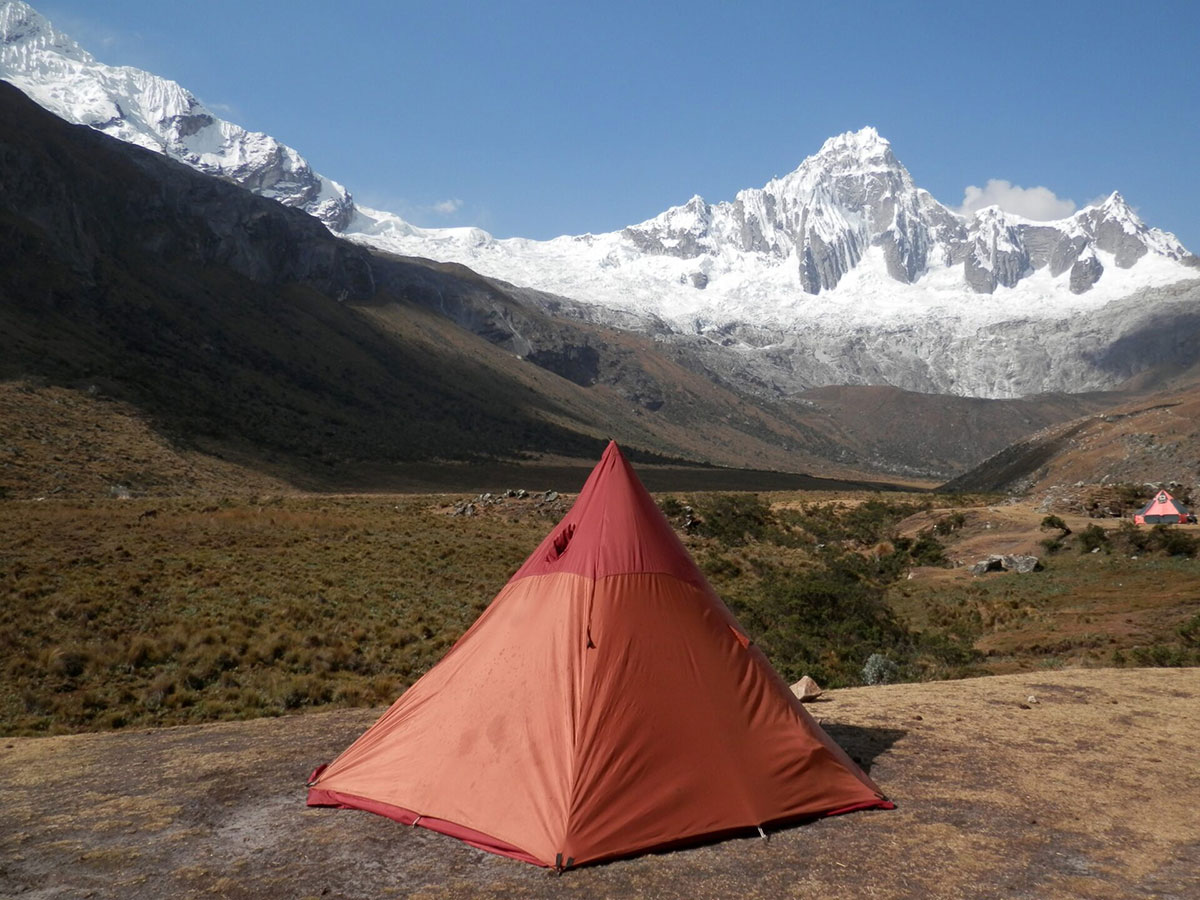
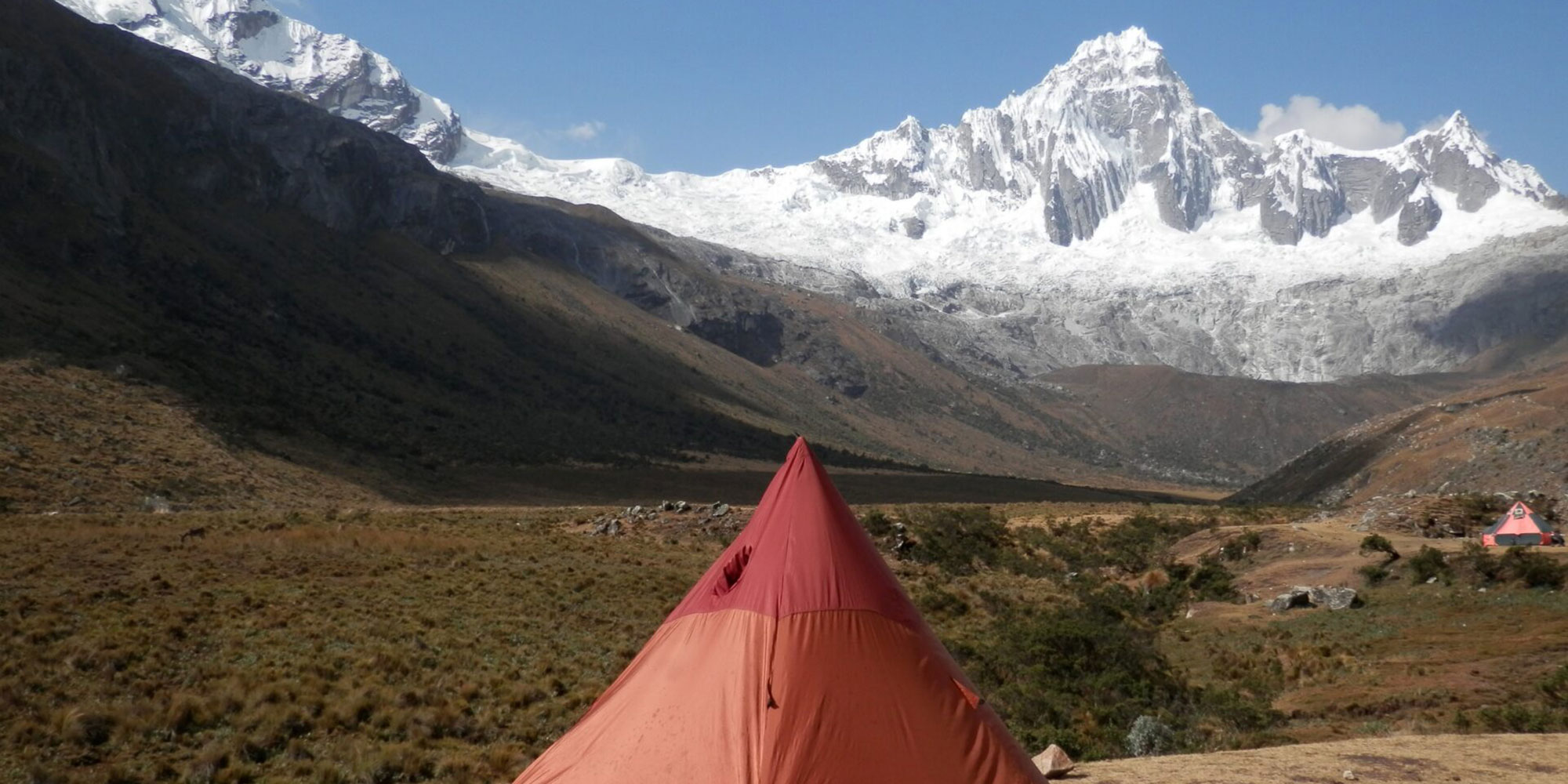
Having had lunch at this breathtaking spot, we retrace out route, and begin the ascent towards the first pass, the magnificent peak of Taulliraju (5,830m/19,127ft) looming large up ahead. A beautiful campsite tonight, whose panoramic only comes into view at the last moment.

Camp at Taullipampa surrounded by these spectacular mountain views.

Continue ascent to pass at Punta Union (4,750m), descend to Huaripampa valley. Camping (B,L,D)

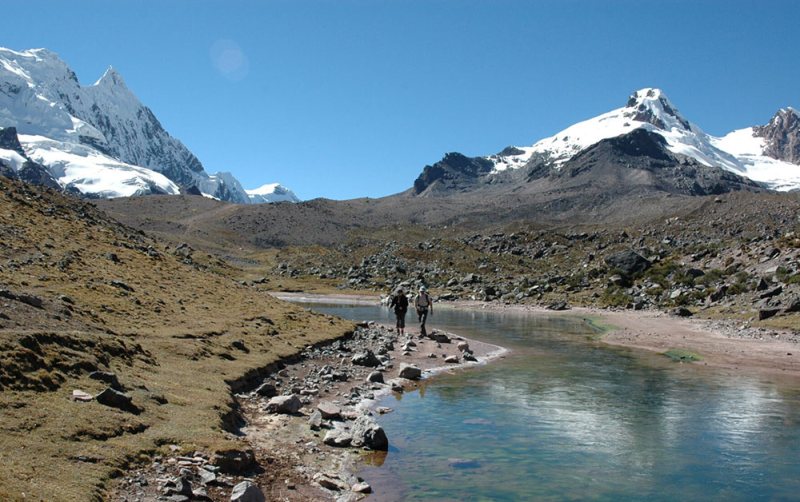
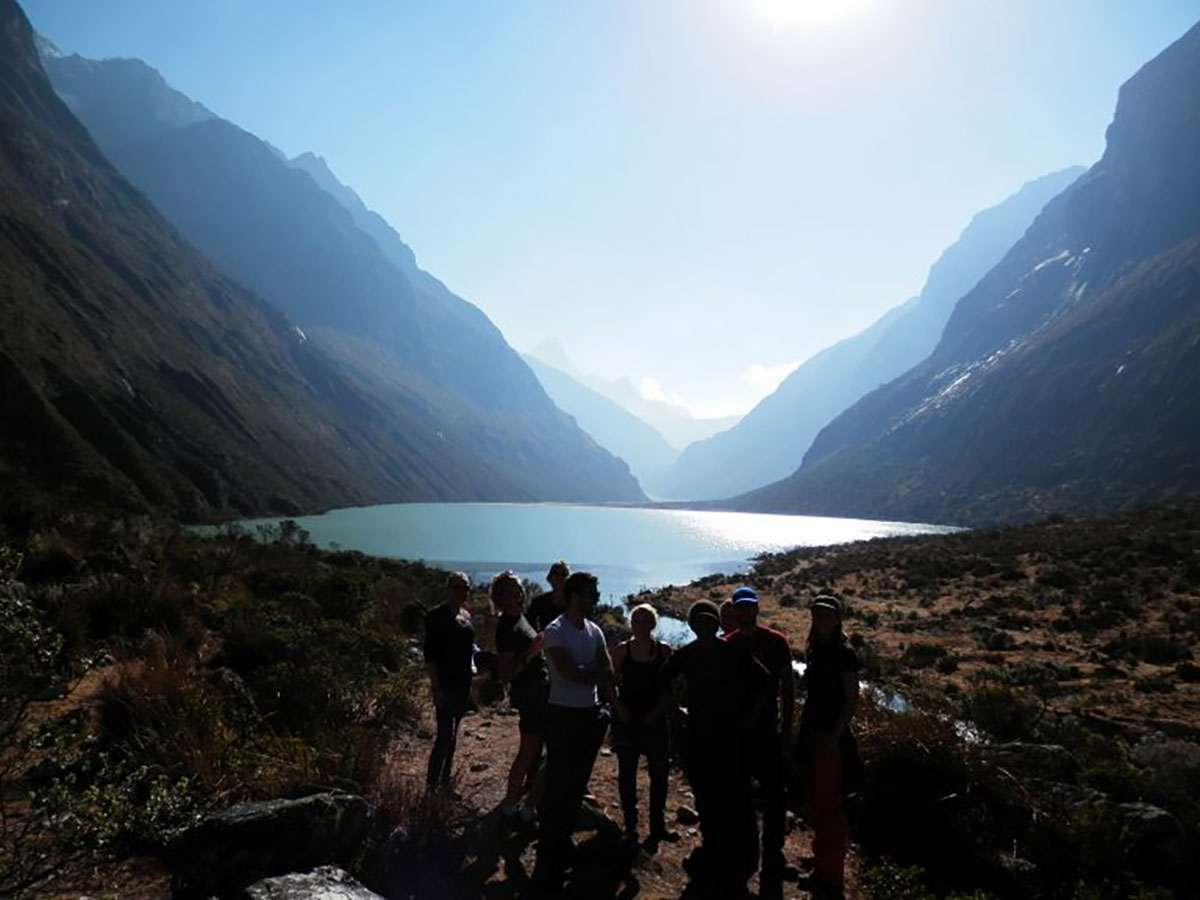
You continue the ascent on day three, with a steep zig-zagging climb across moranic screes, fringing the shores of the turquoise lake of Taullicocha.

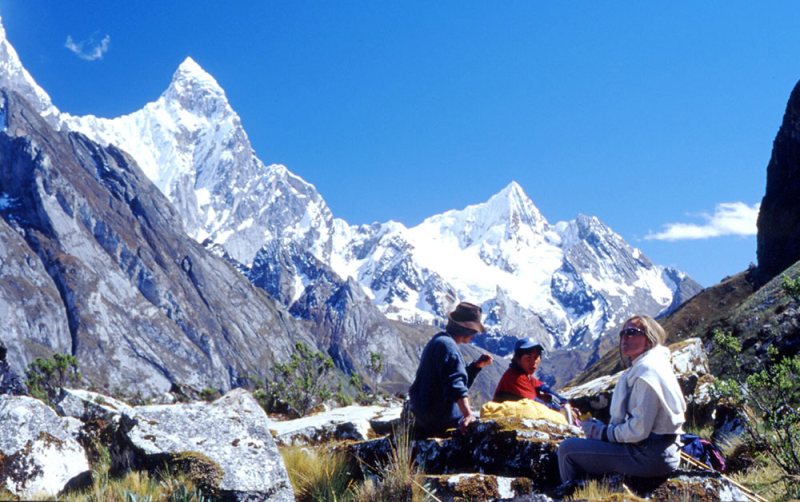
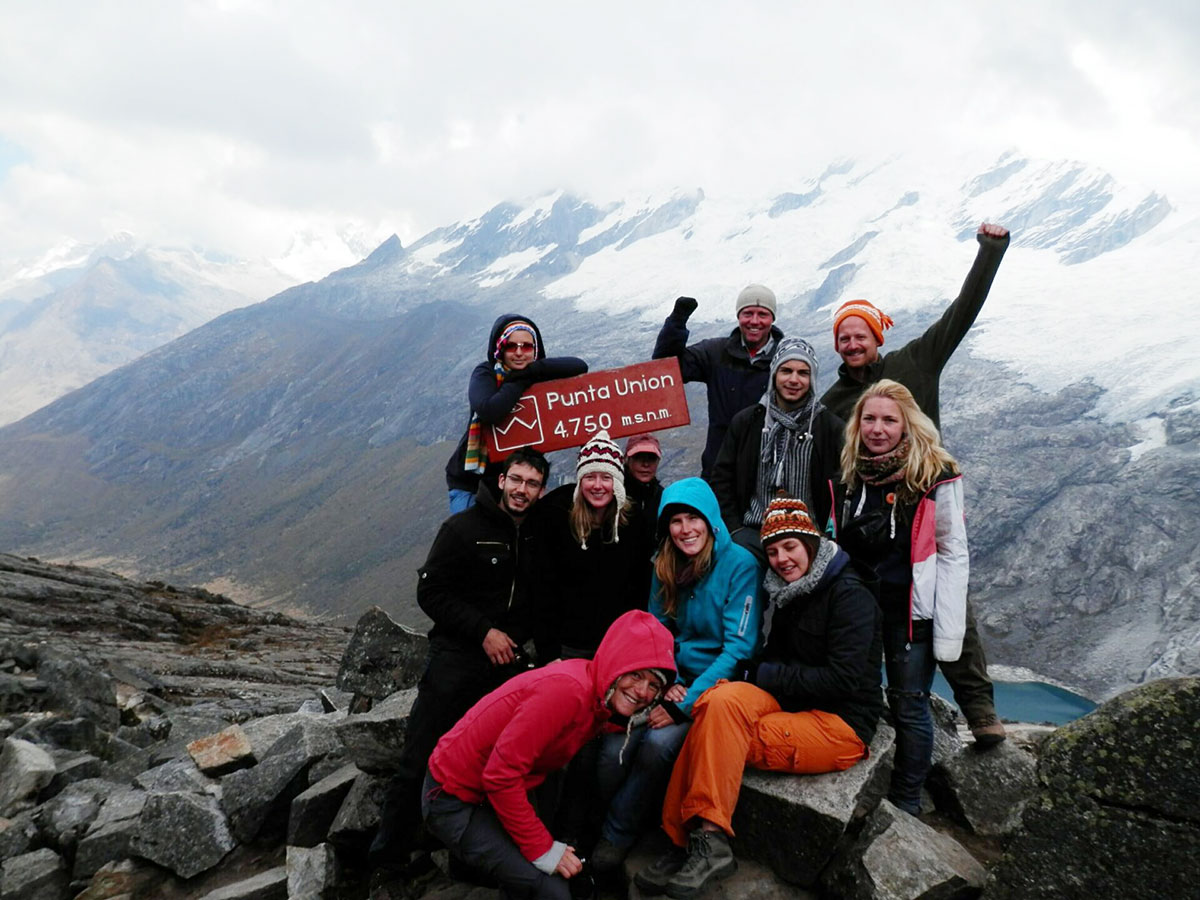
The panorama that unfolds as we approach the pass at Punta Union (4,750m/15,584ft) is magnificent; the nearby peaks of Chacraraju (6,112m/20,052ft), Artesonraju (6,025m/19,767ft) and Piramide (5,885m/19,308ft) as well as Alpamayo (5,947m/19,511ft), Santa Cruz (6,259m/20,535ft) and Huandoy (6,395m/20,981ft) fill the view.

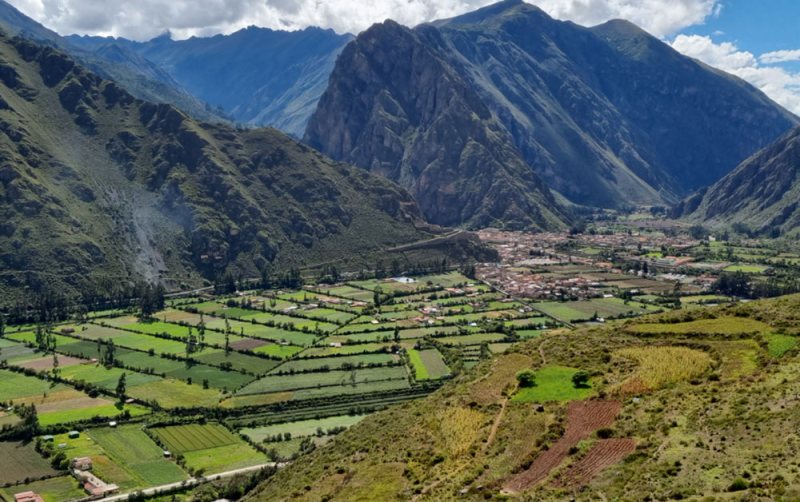
Next, you descend into the Huaripampa valley passing many tarns, to camp at Huaripampa. The scenery here is a bit greener and softer, but equally pleasing on the eye and soul, as the rugged peaks turn to forests and rivers and there is the chance to spot grazing horses and llamas.

Descend towards Vaqueria (3,700m), transfer to Huaraz, ends Camping (B,L)

Today you continue to descend towards Vaqueria (3,700m/12,139ft), with a final hour’s pull at the end of your 2-3 hour walk to reach the town. There are a couple of shops here where you can buy a cold beer or drink while waiting for the lift back to Huaraz, or try some local dishes.

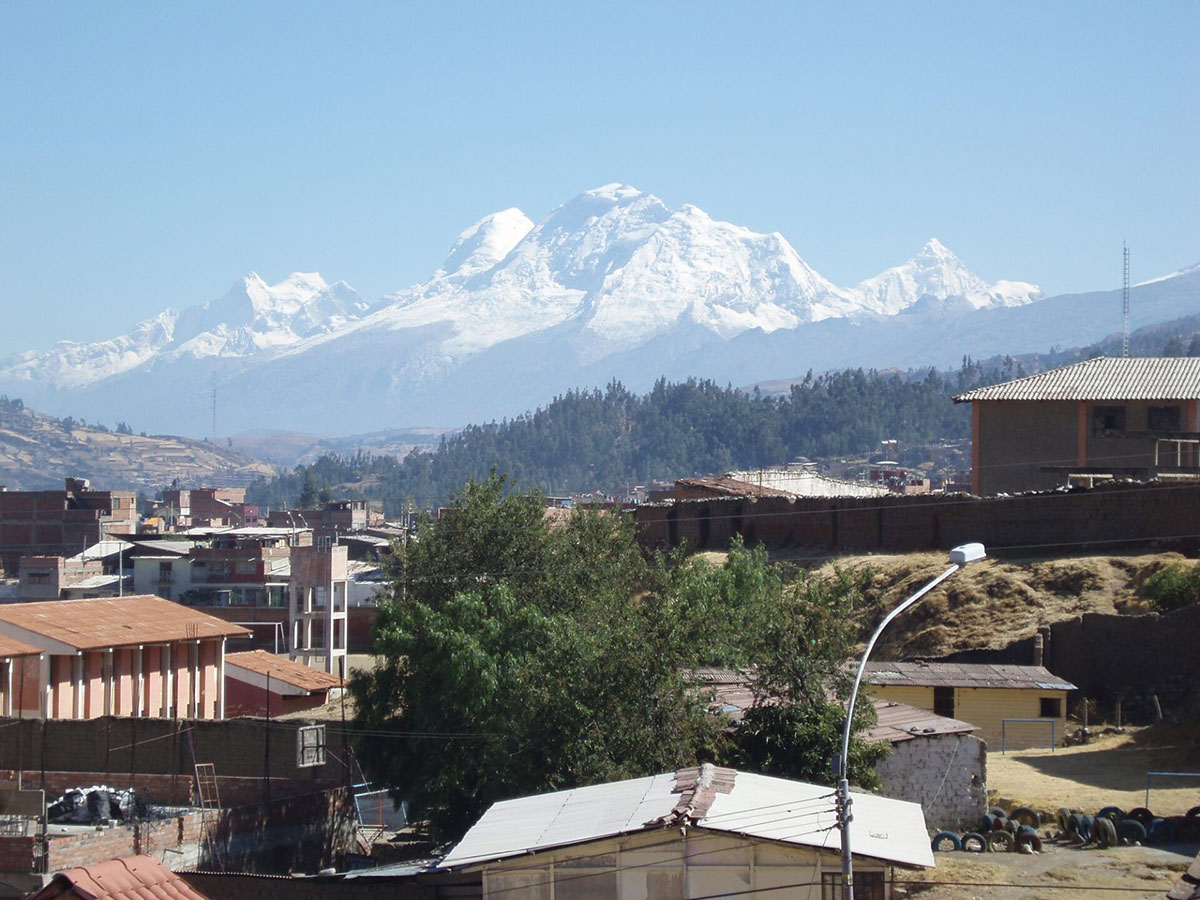
The drive back to Huaraz takes about 3-5 hours, and we make plenty of stops en route. About an hour from Vaqueria is a fantastic view down Quebrada Llanganuco. Take in the view – almost 300 degrees of your 360 are filled with dramatic, white peaks including Huascaran, which at 6,768m/22,205ft is Peru’s highest peak.

The remaining space is filled with the glacial shape of the Quebrada and its lakes. Another place for amazing photos. We get back to Huaraz and drop you off at your hotel.
Santa Cruz is the best multi-day trek in the Cordillera Blanca for those looking for an easier trek. It has some magnificent views like climbing to Punta Union pass at 4,750 metres with Alpamayo's near-perfect pyramid appearing on the far side just as you crest it.
Tom Shearman

Dates & Prices

Available dates & prices

From: $770

(£578)

  • Guide price, per person, shared tent basis
  • Based on four people
  • Shorter/longer treks possible
  • Single supplement supplies
  • Private departures available
  • Season runs April-November

What's included?

  • All meals and water on trek (B = breakfast, L = lunch, D = dinner)
  • All breakfasts elsewhere
  • Domestic transportation
  • Guide
  • Camping equipment (tents, cutlery etc)
  • Transfers from Huaraz to and from trek

What's not included?

  • International flights (we can look for prices for you)
  • Other meals
  • Snacks and drinks
  • Any equipment hire
  • Personal expenses
  • Optional excursions
  • Extra entrance fees
  • Laundry and sleeping bag
  • Acclimatisation walks
  • Huaraz hotels
  • Tips

Accommodation

Camping we use top quality two-man tents on all treks.

We have classified this as a moderate trek, and you need to be in good physical shape for it.

You need at least two acclimatisation hike immediately before starting this trek. This trek involves walking 4-7 hours a day for 4 consecutive days, over rugged mountain trails at elevation.

There is a high altitude pass to cross at 4,750m/15,583ft and we walk and sleep at high altitude for long periods of this tour.

Pre-trip preparation should include challenging cardiovascular exercise (including regular hikes on varied terrain) and a healthy, balanced diet.

Well-worn hiking boots are highly recommended.

All guests are encouraged to hike at their own pace, taking breaks whenever needed, to ensure a successful and enjoyable trek for all.

Most people go to bed fairly early after a long day trekking, to recover energy for the morning.

Vegetarians and many other dietary requirements are catered for without problems. Please let us know in advance of any requirements you have.

You wake early, usually around 07.00. Breakfast is served in a dining tent, and consists of hot drinks, porridge, toast, jams and bread, and your guide will explain the day’s trekking plans.

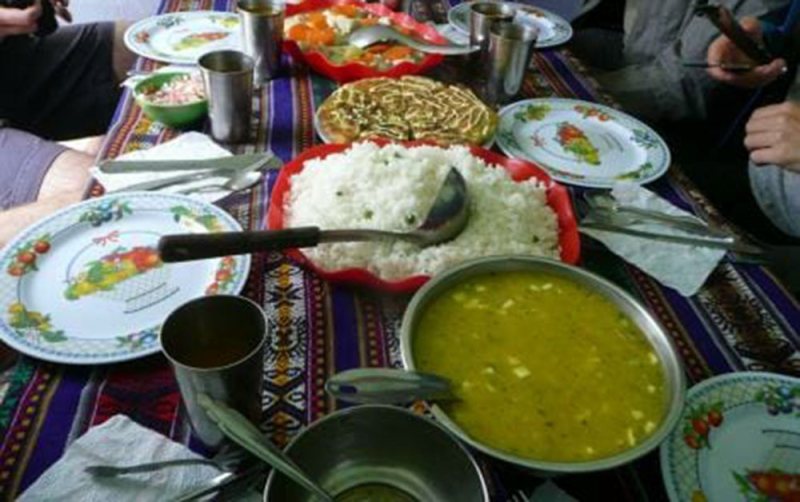
Lunch is usually around 13.00 and can feature soups, meats, salads and fish, with vegetarian options and hot drinks, too. Sometime lunch is a packed lunch of sandwiches and snacks.

The campsites are comfortable and around 17.00 hot drinks, popcorn and other snacks are served to help you recover energy.

Dinner is served around 19.30, and will feature pasta, mashed potatoes, meat, fish or vegetarian options, followed by hot drinks and a pudding.

All guides are certified, bilingual, English-speaking guides who have worked with us for many years.

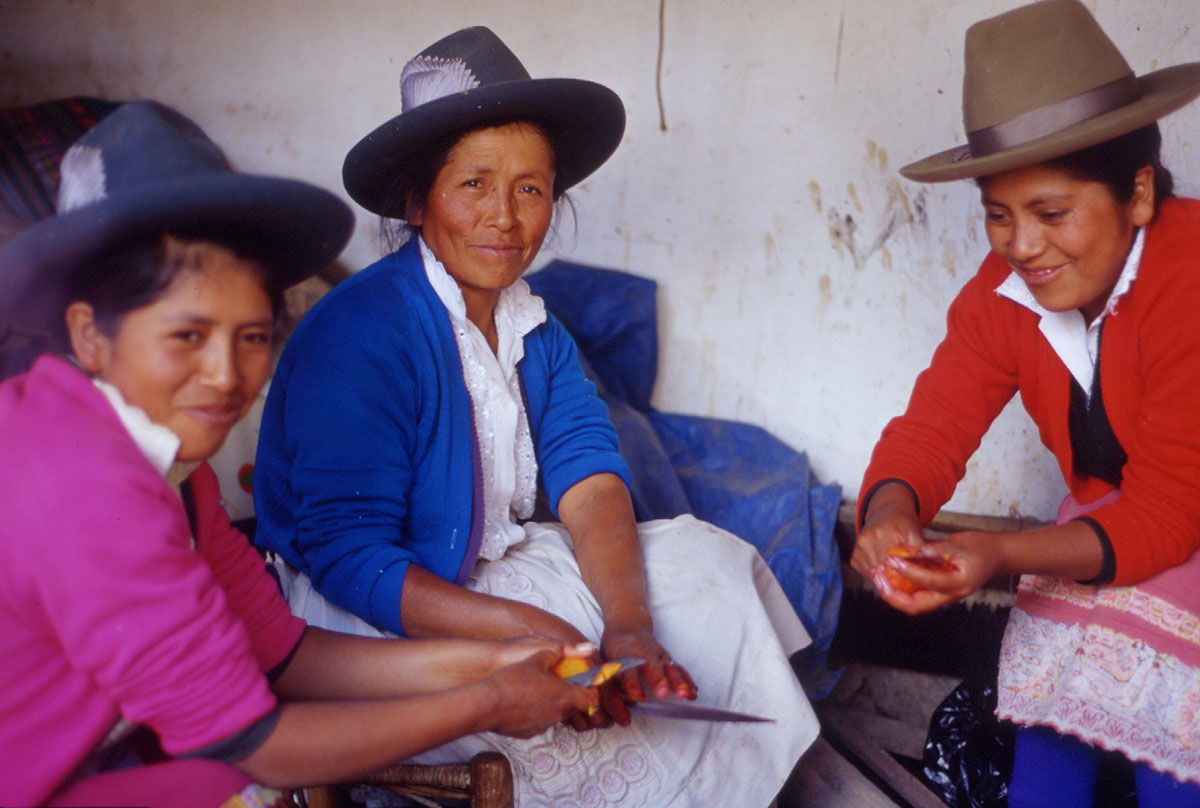
Cooks, mule drivers and additional staff are all from the local, nearby communities and we have worked with them for a long time.

A deliciously immersive Peruvian gastronomic tour filled with local flavours, laughter, and unforgettable culinary discoveries.

M. Hrechkosy, Canada

An exhilarating downhill mountain biking adventure in Peru, flawlessly organised for the ultimate adrenaline-filled experience.

R. Martin. Germany

Tour information: Santa Cruz Trek

Walk into the heart of the Cordillera Blanca and marvel at some of the most stunning high-mountain scenery in the Andes.

Santa Cruz is considered one of ‘the’ treks to do in Huaraz, thanks to its relatively short length coupled with brilliant vistas and surroundings.

The trail snakes through fertile alpine valleys, boasts views of spectacular glaciated peaks and lakes, and crosses from one Cordillera Blanca valley to another.

Santa Cruz Trek Cordillera Blanca Peru
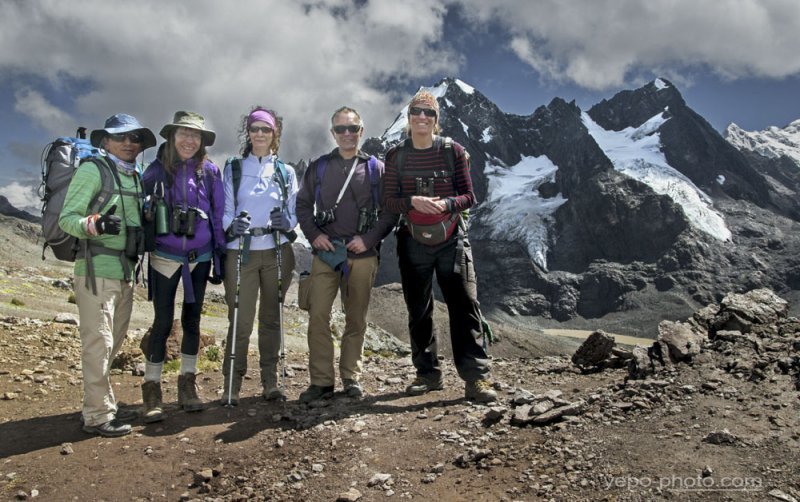
Santa Cruz Full Trek Highlights
Santa Cruz trek: Punta Union pass (4,750m)
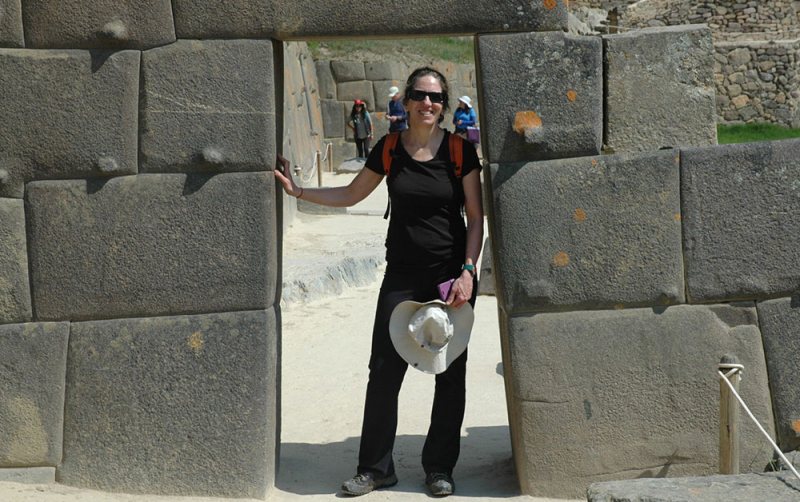
Santa Cruz trek

Get in touch and let's create your adventure

Santa Cruz Trek

  • The Santa Cruz trek in the Cordillera Blanca is one Peru’s best treks for scenery.
  • A short walk with maximum high mountain, Andean enjoyment.
  • Hike with just a day pack, past snow-capped peaks, crystal blue lakes and gorgeous views.
  • Camp under the stars in the heart of the Cordillera Blanca.
Santa Cruz Trek

From the blog

Similar Tours

Cordillera Blanca Trek, Huaraz

From: $2500 per person

Duration

11 days

trekking icon

Cordillera Huayhuash Trek, Circuit Walk

From: $3125 per person

Duration

16 days

trekking icon

Climbing Course In Peru 3 days

From: $818 per person

Duration

3 days

icon mountaineering

Practical Information

Geography of Peru

Peru is made up of 3 distinct geographical areas: the coast, the mountains and the jungle.

The costa or coastal region is a narrow ribbon of desert 2,250 km long, crossed by fertile river valleys flowing from the Andes. It takes up 11% of the country and holds more than 40% of the population.

The cold Humboldt current gives rise to a blanket of mist – the garua – which hangs above coastal cities like the capital Lima from May to November.

Heading east, you’re soon climbing above the garua and into the Andes. The sierra, or mountainous region, covers some 25% of Peru’s territory and contains 50% of the population. The sierra inhabitants are mainly Indigenous or Mestizo, and many still speak Quechua or Aymara.

The sierra contains dozens of 6,000-metre snow peaks and volcanoes, including Huascaran (6,768m) the highest mountain in the tropics. The deep valley basins contain most of the towns and arable land; the terracing and canal systems of the Incas and pre-Incas are often still used today.

The eastern Andes are heavily forested up to 3,350m and sweep down into the Amazon Basin.

Peru’s selva or jungle makes up almost two thirds of the country’s area, but holds only about 6% of the population: the only towns with significant populations are Iquitos and Pucallpa.

Introduction to Peru

Peru is the perfect holiday destination for adventure travellers that want an amazing variety of activity, geography and cultural travel experiences.

The breadth of travel experiences in Peru is breathtaking – from trekking in the Andes to Machu Picchu to the tropical jungle of the Amazon, and plenty in between.

The people of Peru make it a special destination too, with its colourful and traditional street life and friendly locals.

Kit list

Good kit is vital for every trip.

Book with Andean Trails and get 15% off Páramo’s fantastic ethical and high performance outdoor gear.

Good kit is vital for every trip.

Book with Andean Trails and get 15% off Páramo’s fantastic ethical and high performance outdoor gear.

Overview

When planning for the varied climatic conditions encountered, layering is the most practical and versatile clothing system. It’s worth remembering that our clothing keeps us warm by retaining and isolating the heat we ourselves create.

To best maintain body heat, several layers of lightweight, warm and quick-drying clothing are far more efficient than one or two thick layers. Layers should have the following qualities:

  • Breathability (able to wick away the humidity produced by sweat):
  • Isolation (able to keep in the warm air our body produces); and
  • Impermeability (able to impede the passing of wind and water).

First (base) layer: This layer wicks the sweat away from our skin, thus helping keep the body dry and warm. To this end, synthetic fabrics such as polypropylene should be used.

Mid layers: These isolating layers should also be synthetic (e.g. the known polar linings such as polartec or windblock, which are light and insulate twice as well as wool). Very important layers for retaining body heat.

Outer layer / shell: Finally, the vital layer which protects us from climatic adversities. A breathable, wind-proof and waterproof anorak, such as Goretex.

Give plenty of thought to kit selection, and try to keep weight down.

We also carry an extensive first aid kit & oxygen on all trips, but these are generally for emergencies only.

Below is a more detailed kit list.

Detailed kit list

  • 2 pairs synthetic inner socks (e.g. polypropylene, thermastat, coolmax) and 2 pairs thick loop-stitch/wool socks for cold.
  • Trekking boots – should be well broken-in, waterproof and provide good ankle support.
  • Trainers/sandals for city-wear, evenings at lower camps & river crossings.
  • Base layer leggings (1 pair).
  • Thick fleece leggings (or salopettes) (1 pair).
  • Goretex-type over-trousers (or salopettes) (1 pair).
  • Trekking trousers (2 pairs).
  • Shorts – wear sparingly in early stages at altitude, as sun burns.
  • Thermal base layer shirts (2).
  • Microfleece mid-layer shirt (1).
  • Shirt/t-shirt 1 or 2 for lower altitudes. Long-sleeved, collared shirt protects against sun
  • Fleece jacket or similar (1).
  • Warm jacket (down or synthetic). For camp and upper slopes.
  • Waterproof Goretex-type jacket.
  • Broad-brimmed sunhat, essential.
  • Warm hat, fleece or wool. (N.B. Up to 30% of body heat can be lost through the head).
  • Sunglasses with UV filter.
  • Scarf for cold.
  • Bandanna – to protect neck from strong sun.
  • Light inner gloves
  • Warm gloves, e.g. fleece, and outer waterproof gloves or mittens (1 pair)
  • Mittens allow you to keep the fingers together, and better conserve heat (though they also make it difficult to perform certain tasks).
  • Daypack (at least 30 litres). Comfortable and with waterproof lining or cover.
  • Large rucksack or suitcase.
  • Pair of telescopic trekking poles (can be rented).
  • Duffel bag or large rucksack for extra clothing, carried by horse/mule/porter while you are trekking.
  • Sleeping bag (3-4 season, can be rented).
  • Water bottle (2 litres approx.) & purification tablets.
  • Personal first-aid kit to include: painkillers, plasters (band-aids), moleskin, anti-biotic cream, general antibiotics (ask your GP), after-bite (tiger balm), anti-diarrhoea tablets, throat lozenges, re-hydration salts & personal medication.
  • Insect repellent.
  • Towel & wash-kit.
  • Wet Wipes/antiseptic hand-wash cream.
  • Toilet paper (1)
  • Sunscreen (factor 30+) and lip salve.
  • Head-lamp (plus spare bulb and batteries).
  • Penknife.
  • Travel alarm clock.
  • Plastic bags – ‘Zip-loc’ & tough bin liners.
  • Camera and film / memory cards (take at least twice the amount you think you will need!). Print & slide film is available locally. Polarising filter is recommended for SLR cameras.
  • Book, e-book, mp3 player/ipod or other for free time.
  • Binoculars.
  • Spanish/English phrasebook.
  • Extra snacks i.e. cereal bars or favourite chocolate bars.
  • All other non-personal trekking camping gear e.g. tents, cutlery etc is provided.

Miscellaneous others

  • Money belt.
  • Passport.
  • U.S. dollars cash, mixed-denomination notes, undamaged and unmarked.
  • ATM cash/credit card.
  • Any inoculation certificates.
  • Personal & medical insurance certificates.
  • Presents e.g. Postcards from home.
  • Comfortable clothes for travel, smart clothes for night life.
Weather in Peru

You can also read about the weather of Peru in our blog.

You can also read about the weather of Peru in our blog.

Peru is located in the southern tropics (latitudes 0º to 18º), but climate varies significantly according to season, altitude and region.

Lima & the coast

From May to October, Lima is often overcast, but with minimal precipitation. There are sunny spells, and it’s a fresh to pleasant 13-20ºC.

At the same time, inland areas and the north coast mid to high 20’s ºC.

November to April is generally warm and sunny and Lima enjoys warm temperature of 19-25ºC, with the coast averaging 22-30ºC.

The Andes

Climate depends largely on altitude. As a rule of thumb, below 2,000m climate is mild and above 2,000m warm clothing is required for evenings, nights and early mornings.

The Andean sun is very strong.

May to Oct (dry season in The Andes)

Cusco (3,300m): Average max/min temps: 22ºC /2ºC. Average 3 or 4 wet days per month.

Arequipa (2,380m): Average max/min temps: 26ºC /9ºC. Sunny more than 340 days/year with minimal precipitation.

On highland treks: Conditions are generally dry. However, at this time of year, expect a range of conditions within a single day: cold/freezing nights at camps above 4,000m, where pre-dawn temperatures can be -5ºC; warm, spring-like mornings and afternoons; and cold evenings.

Note that mountain weather can be fickle and localised, and that precipitation is not unknown in the dry season. Expect temperatures to swing between sun and shade, sheltered and exposed ground and with altitude gain and loss. A quick-setting sun means temperatures drop fast.

In the cloud forest, e.g. around Machu Picchu, daytime conditions are generally warm or hot, and evenings cool.

Nov to March/April (wet season in The Andes)

Cusco: Average max/min temps: 23ºC /6ºC. Average 13 wet days per month.

Arequipa: Average max/min temps: 25ºC /14ºC.

On highland treks: Wetter conditions, with cooler days and milder nights than dry season. Jan-Mar usually the wettest months.

The Amazon rainforest

Year-round, weather conditions are hot and humid and there is always the risk of rain.

There is a ‘dry season’ in Tambopata and Manu between May and October. The average daytime high temperature is between 25°C and 34°C and the average nighttime low is between 16°C and 22°C. Heavy downpours typically occur every few days.

Around 80% of annual average rainfall – approx 2,000 mm in Manu and Tambopata and 1,400 mm in Iquitos – occurs in the wet season Nov-April.

On rare occasions, between May and September, cold fronts from Argentina – ‘friajes’ – can sweep into southwest Amazonia and push temperatures down to 9°C. (Friajes usually last between 1 and 3 days).

A deliciously immersive Peruvian gastronomic tour filled with local flavours, laughter, and unforgettable culinary discoveries.

M. Hrechkosy, Canada

An exhilarating downhill mountain biking adventure in Peru, flawlessly organised for the ultimate adrenaline-filled experience.

R. Martin. Germany