From: £1,758
From: $2,340
We welcome you at the airport and transfer you to your accommodation in Salta. We have the rest of the day to enjoy the town, which is packed with charm.
The central plaza is surrounded by history and historical buildings and some of the finest churches in the region. The Cathedral’s Virgin Mary statue has an interesting history and is well worth a visit, as is relaxing in one of the cafés in the square.
Salta is also home to fine empanadas and good wines and it’s worth trying both in one of the many cafes, restaurants or bodegas.
Lodging at Hosteria, double or single.
We depart early on our way to Campo Quijano, going through the Quebrada Del Toro, and the finally arriving to the pre Hispanic city of Rosa de Tastil with its legendary ruins.
We are already above 3,000m/9,843ft as we start to acclimatise for the trek ahead.
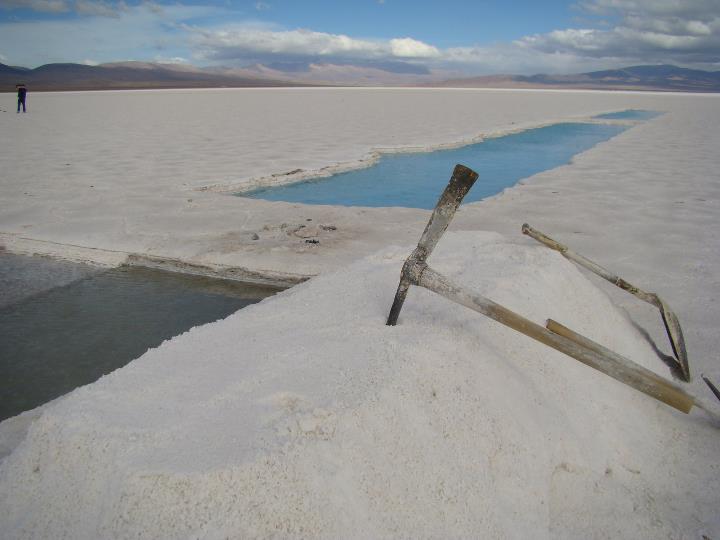
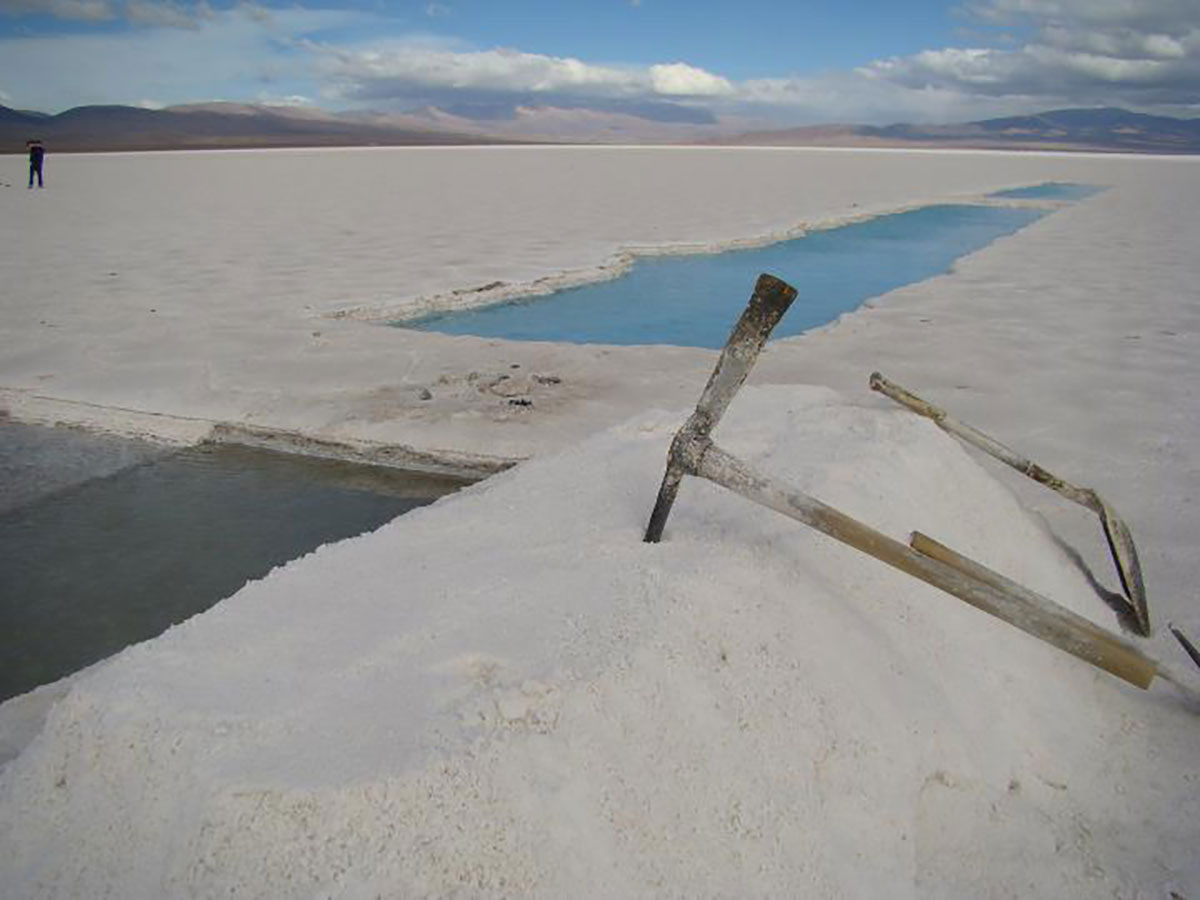
Our trip continues to San Antonio de los Cobres, a typical town located at 4,000m/13,123ft above sea level. From here we go over the Paso de Jama to the high Puna where we stop and have a traditional lunch at a villager’s house. From here we head to the “Salinas Grandes”, or Salt Flats.
We then descend into Lipan and make a stop at the town of Pumamarca and its famous ‘Los Siete Colores’ – the Mountain of Seven Colours. Later we arrive to our lodge at the picturesque town of Tilcara.
Lodging at Hosteria, double or single.
After breakfast, we leave the hostal and head to the bus station to catch a public bus to the north.
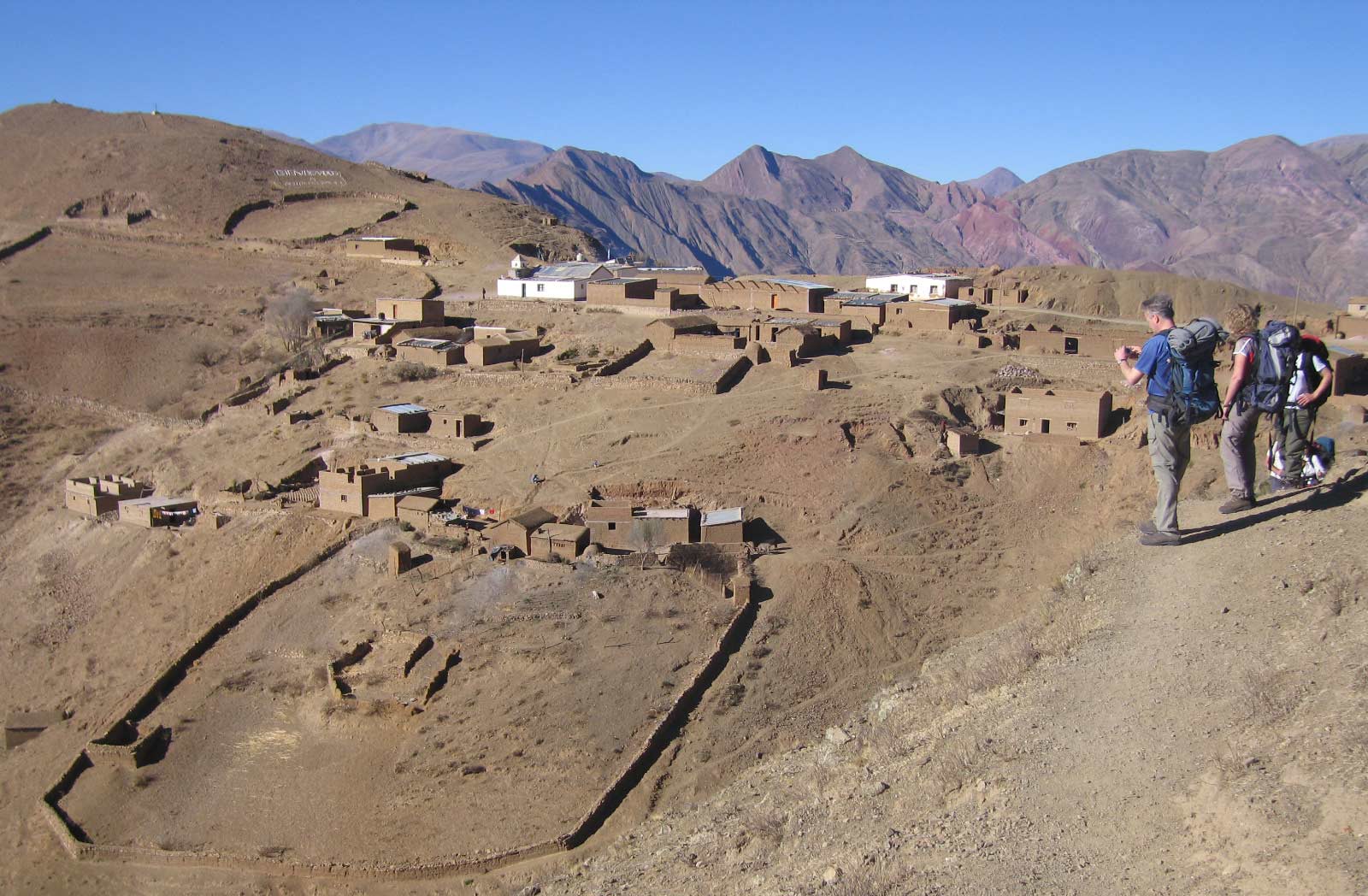
It’s a scenic 3-4 hour journey over a high pass, with a classic Andean zig-zag descent to the small and picturesque town of Iruya. The houses and buildings here are entirely solar powered, a testament to the dry and sunny climate.
There is plenty of time to explore the town, which features steep and beautifully cobbled streets and a striking church, typical of the region.
There are some good look out points at the top of the village and interesting livestock stalls at the foot of it.
We spend the night in this interesting place in simple lodging.
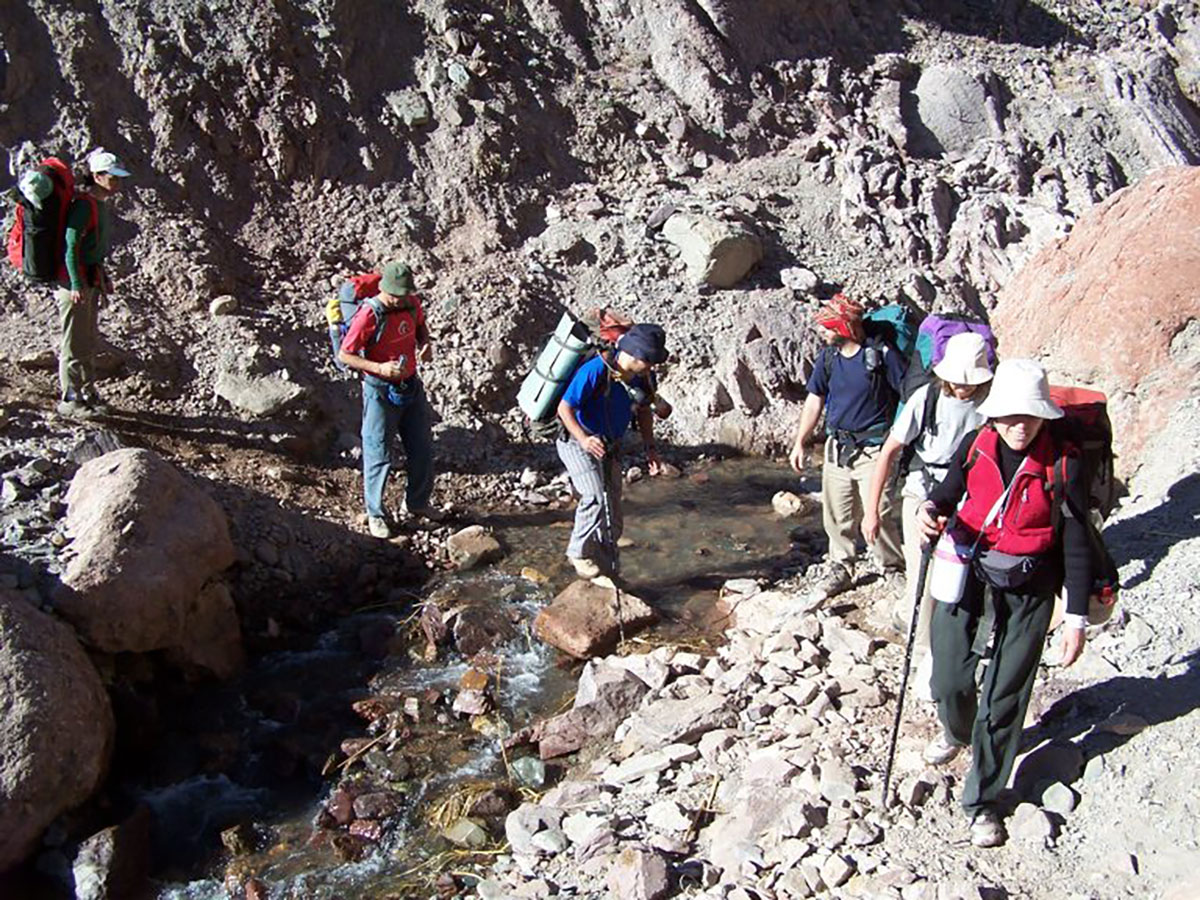
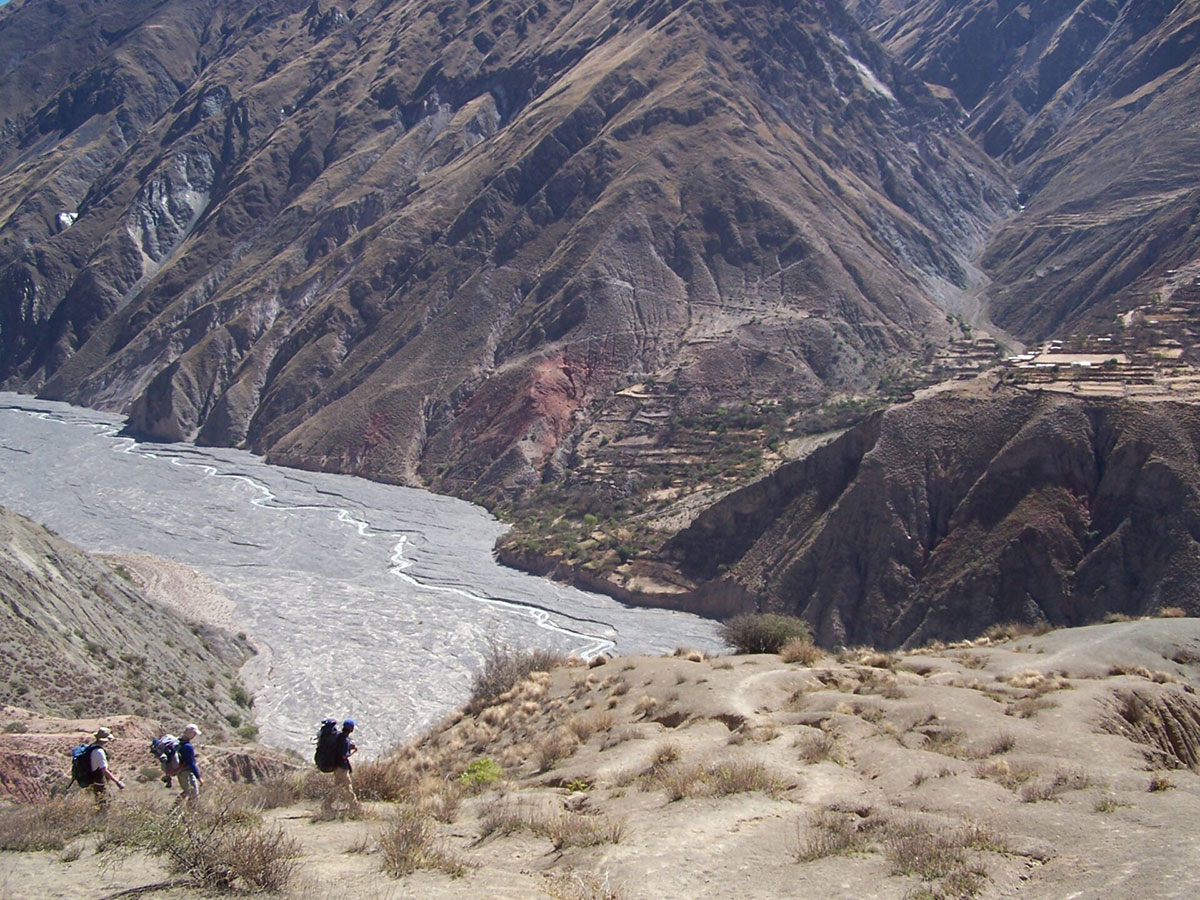
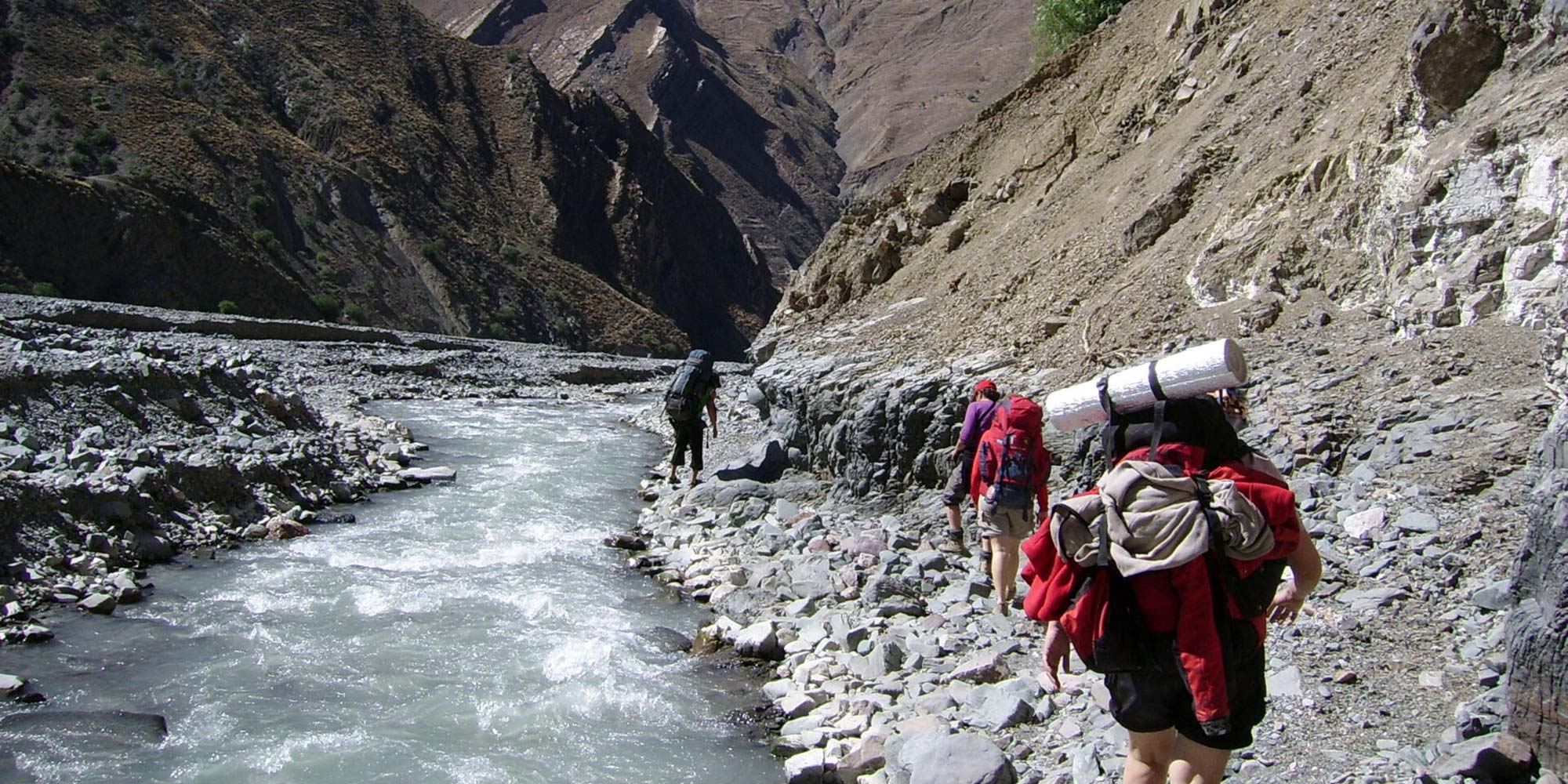
Early in the morning, we head out of the town and descend to the confluence of the Rio San Isidro and Rio Iruya, which continues as Rio Iruya.
These waters are easy to cross in the dry season when we trek, but become enormous raging torrents in the wetter months.
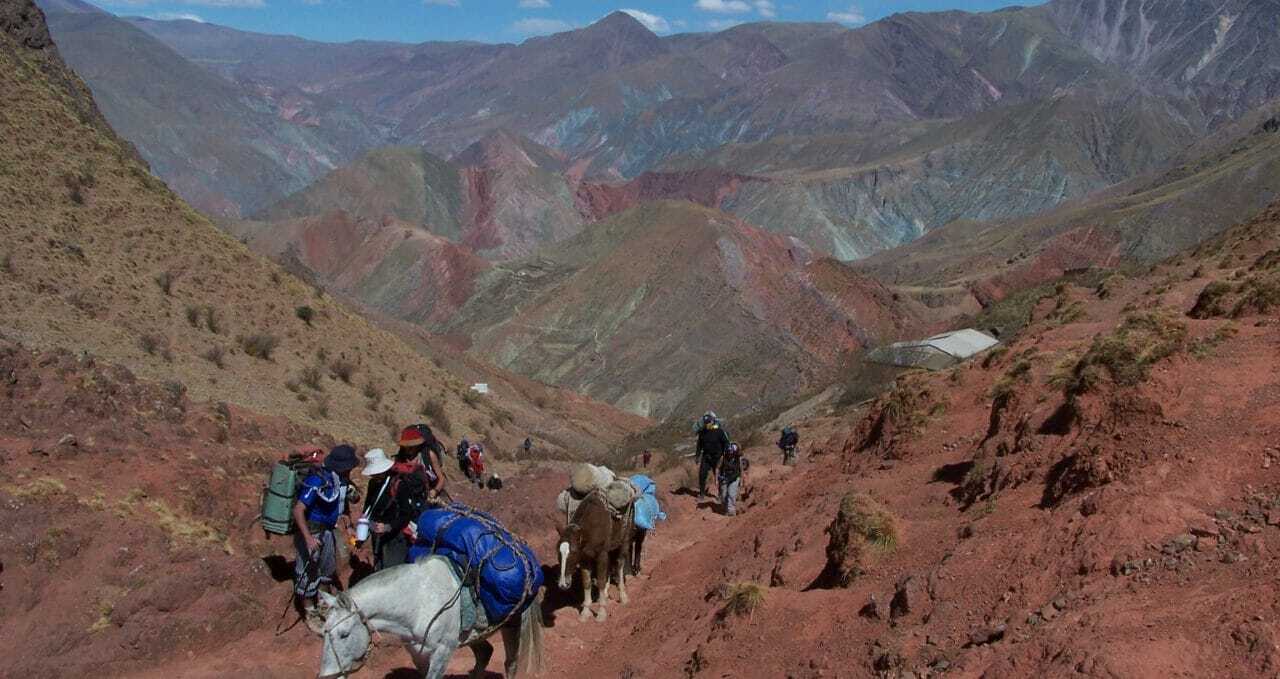
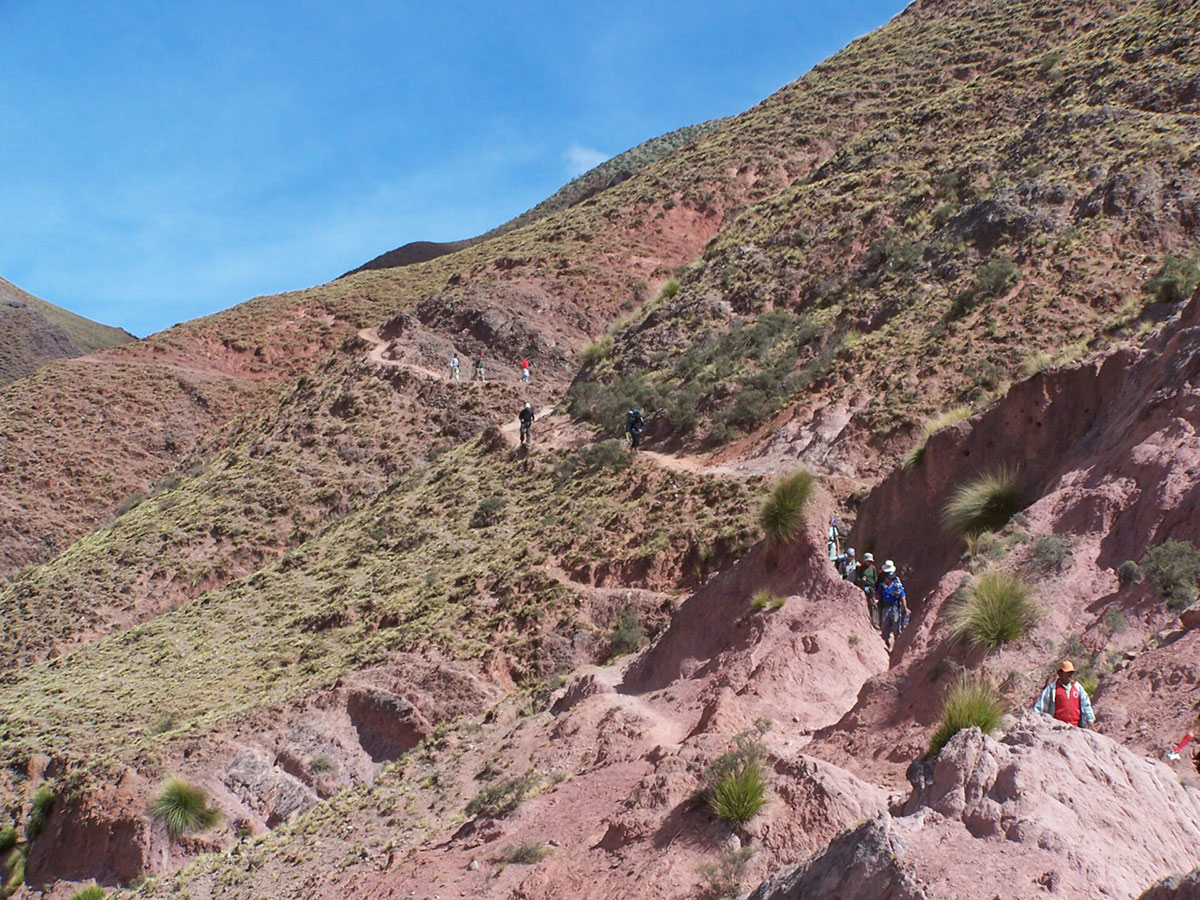
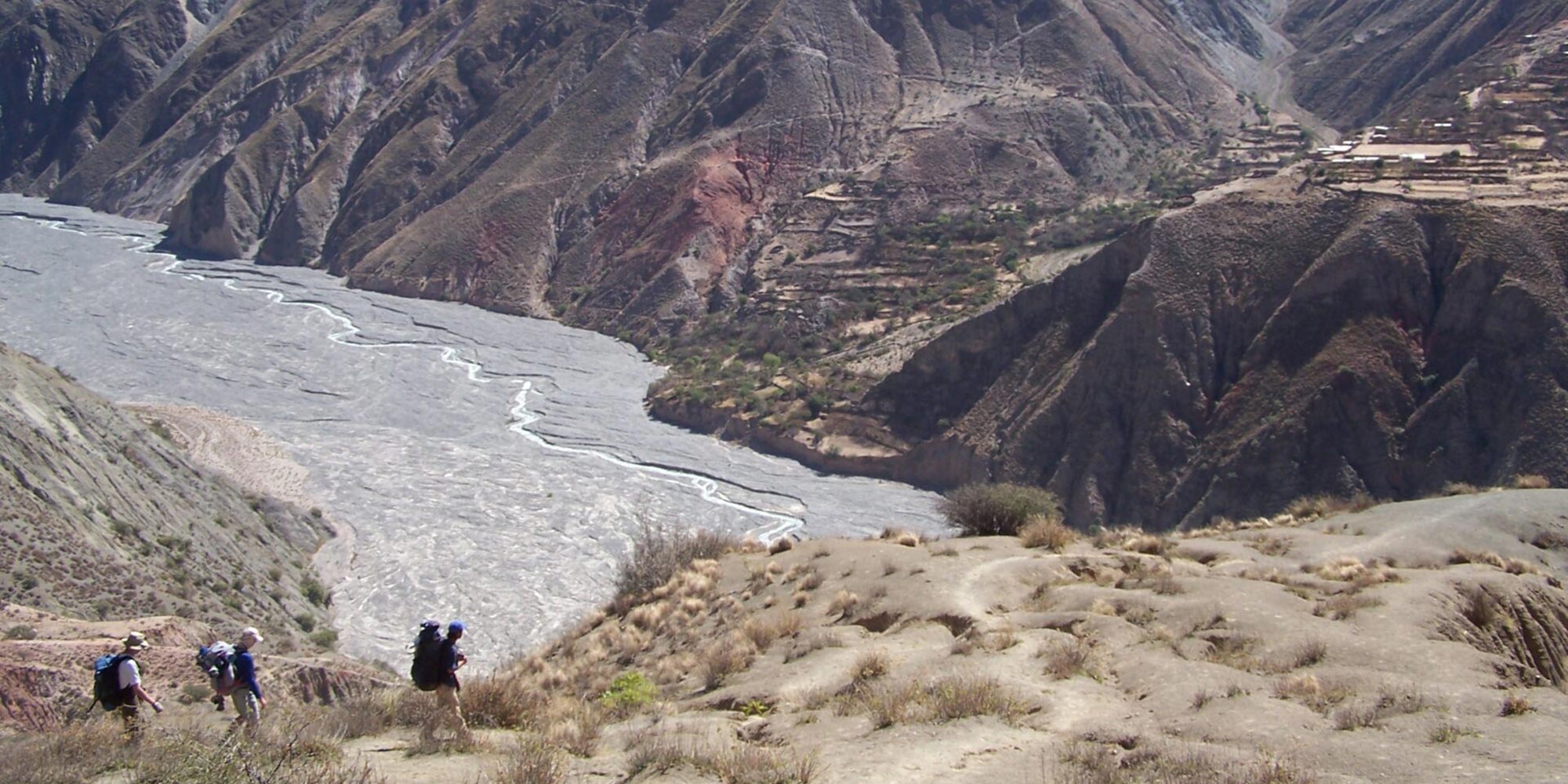
After our river crossing, we being our ascent of the Andes until our first pass is reached, the Abra Del Colorado. With some amazing views, we then descend to the San Juan River where we have lunch.
After our break, another ascent awaits before we head down to Chiyayoc village at 3,100m/10,170ft.
We have time to relaxin our simple lodging after this 8-9 hour trekking day.
Our trek continues through this amazing landscape.
The day starts after breakfast and it’s a descent to take us to the valley of Rio Trancas. By now you will be accustomed to the terrain of ups and downs, and know that once we reach a river bed, our crossing to the other side will be met with an ascent as we criss-cross the deep rivers of the Highland Andes.
At our pass, we have fabulous views of the town of Rodeo Colorado, our destination for the night.
Before we reach the campsite, we head down to Rio Pera and follow this for a short while.
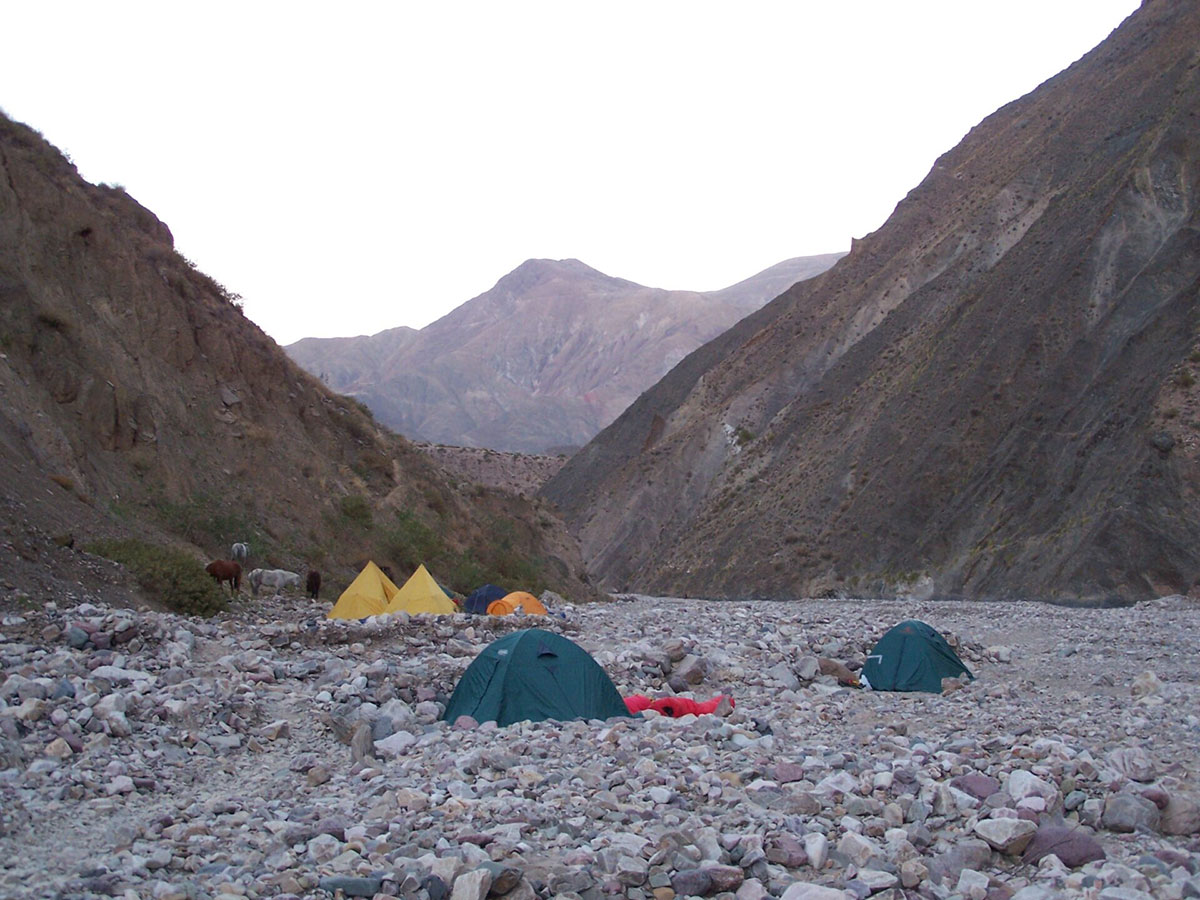
This has been another trekking day of 8-9 hours and we arrive at our camp for the night.
Following two long days of trekking, today we have a shorter day today of 4-5 hours. We descend (most of the way) to the town of Molino.
Behind us, there is always the amazing view of the valley of the Rio Nazareno.
From this valley there is short ascent to our camp, where you can relax, chat with the locals and appreciate the great views.
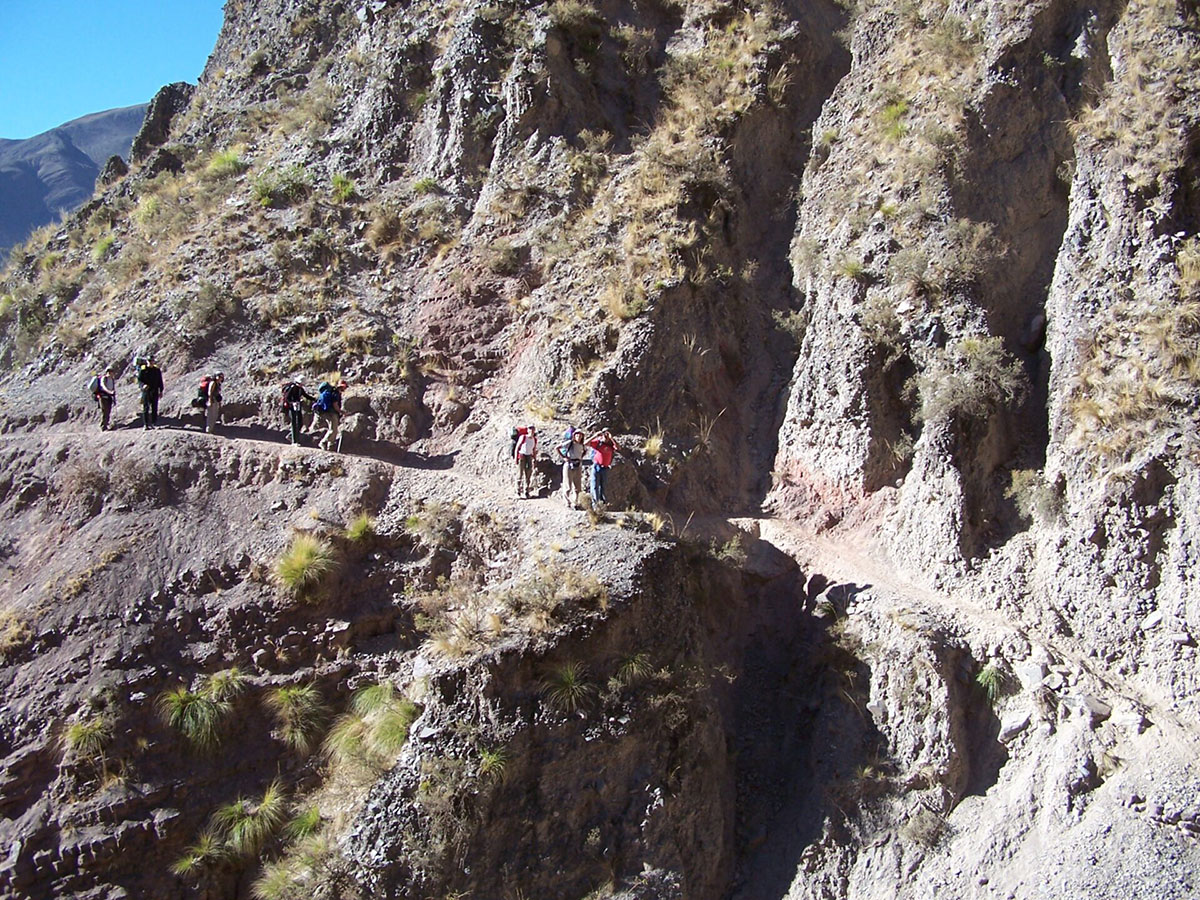
This is the last stage of our trek across the old Inca Paths and stairways.
We spend 5-6 hours walking alongside the river, encountering wildlife and great colours on the way before we reach Nazareno Village and our simple lodge.
In the morning we have breakfast and head off in vehicles to the northern region of Argentina, La Quiaca, situated next to the frontier with Bolivia.
From here we continue our way to Salta, where showers and cold drinks and beers await, and perhaps some more of those empanadas.
Lodging at Hosteria, double or single.
After breakfast we transfer you to the airport/station, or continue your travels.
End of services.
In towns we use hosterias – central, clean and simple accommodation close to the centre and similar to hotels.
While trekking we may camp or use simple lodges provided by the communities we visit.
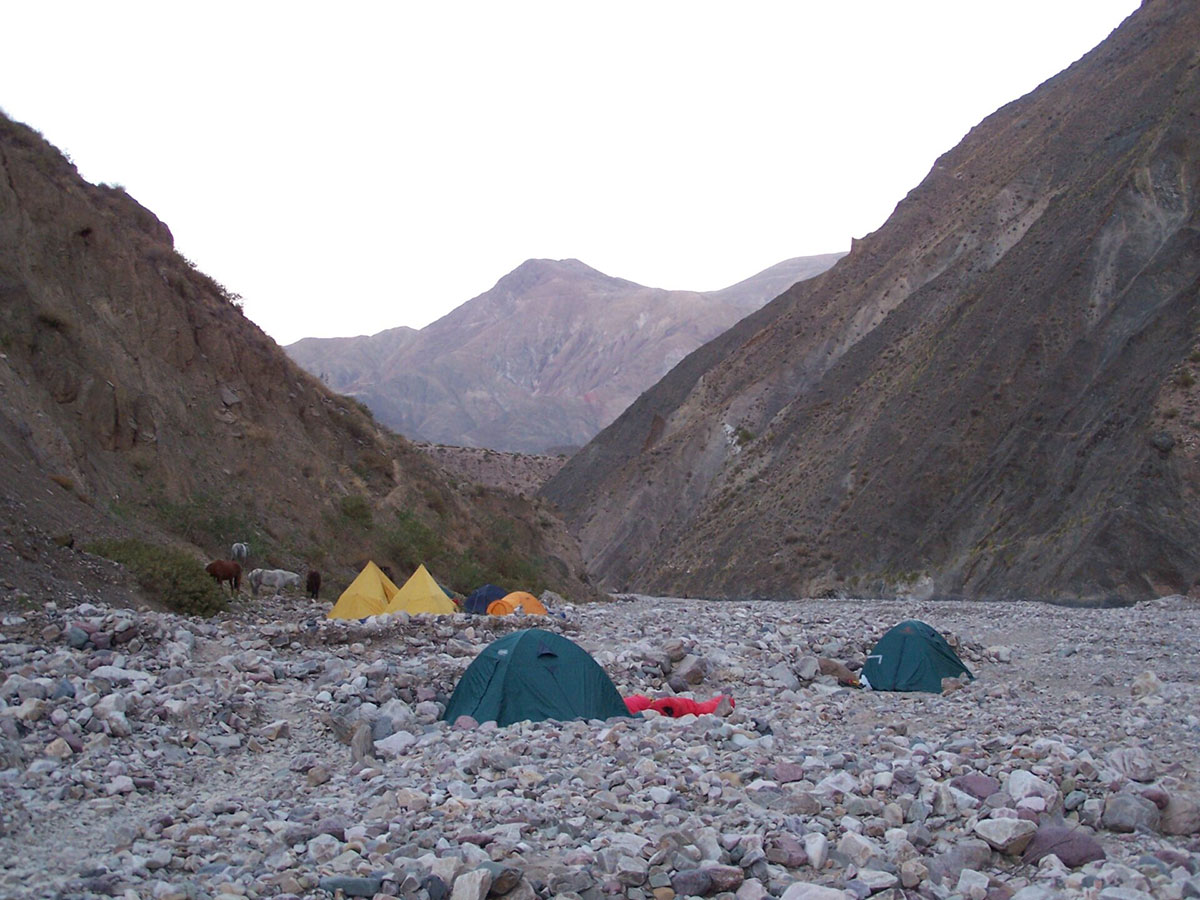
When camping, we provide all communal kit and your tent, and include a dining tent and toilet tent.
The lodges are like mountain huts and have beds.
You need to have a good level of fitness for the trip, as the fitter you are, the more you will enjoy it.
Those with no previous trekking experience can trek this trip, although experience of hiking is beneficial and we would recommend plenty of walking before joining up with the tour.
However, the trip is open to anyone with a positive attitude who wants to walk in a stunning and remote part of northern Argentina.
Almost all dietary requirements can be catered for – please enquire.
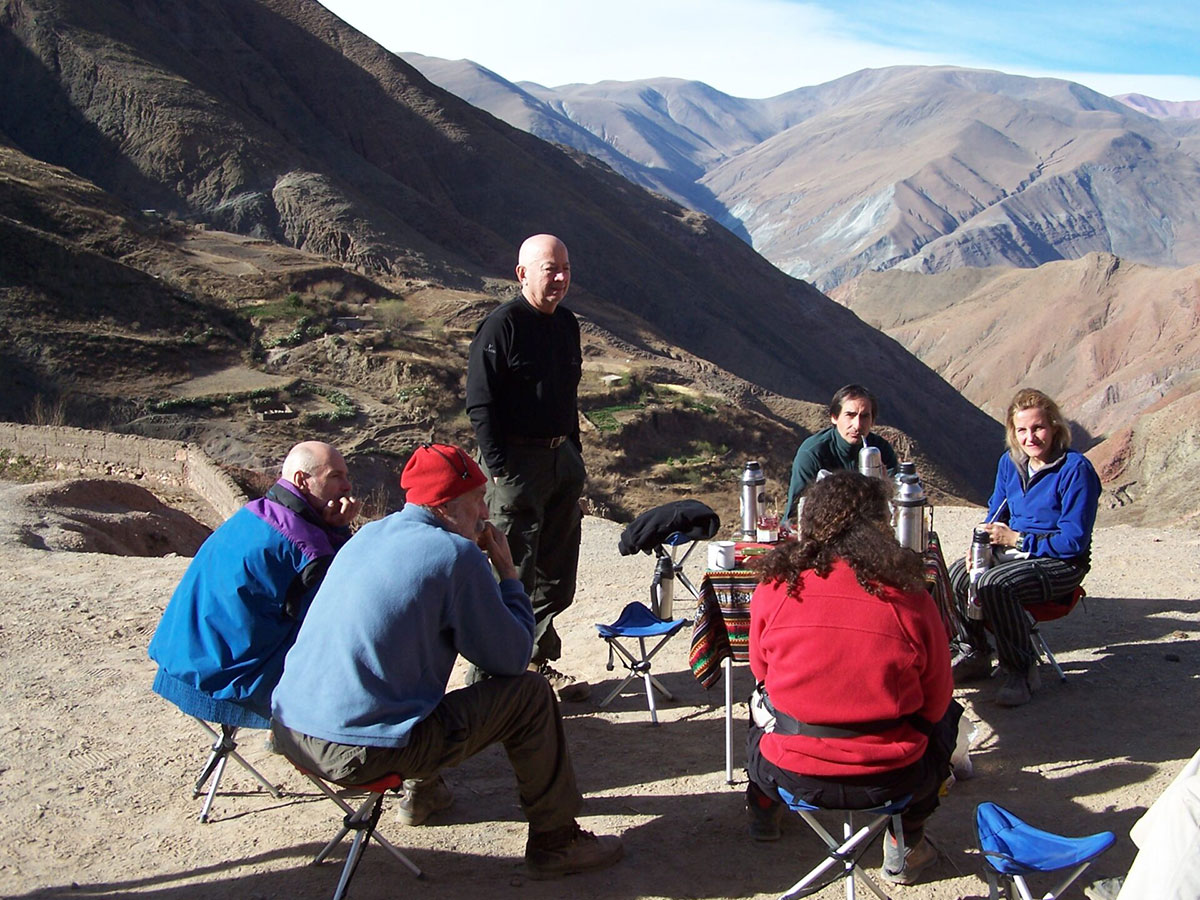
You usually wake early, around 07.00, and have a filling breakfast in your hotel or the dining tent, which is usually coffee, toast, jams and porridge.
After breakfast, packs are prepared and your guide explains the day’s walk, and you typically walk 3-4 hours in the morning before lunch, with a short or break or two en route.
Lunch, while out walking, will be sandwiches, fruit etc. Please bring some snacks of your own, as those available in northern Argentina are expensive and not always the best quality.
After an hour or so for lunch – depending on weather conditions – you will continue your walk, usually 1-3 hours more, although some days are shorter or longer than others, and then relax at camp. Some days are long.
Dinner will often be a soup to start and then a main of pasta with a sauce, or perhaps a main of fish, chicken, meat with potatoes, followed by pudding.
After eating, you can choose to socialise with team members, relax in your tent or take in the views.
It can get cold very soon after sunset, so most people will fall asleep early and then rise early the next day, helping to conserve energy.
Tour guides, drivers and muleteers are locals from Argentina, who live and work in this fantastic area of the country.
Our team tries to provide as much employment to local people as possible.
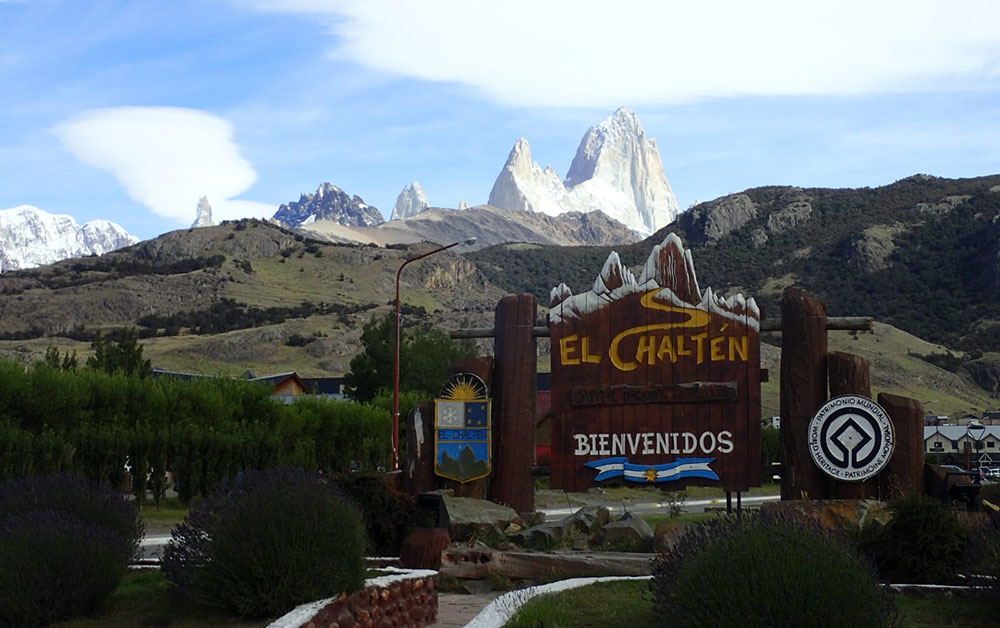
A beautifully organized Patagonian adventure filled with glacier walks, mountain vistas, and smooth, memorable travel experiences.
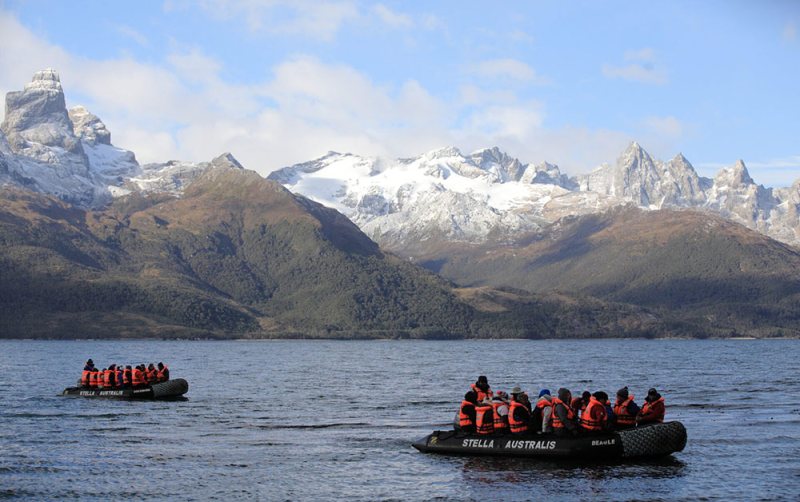
A superbly organized Beagle Channel and Cape Horn cruise combining comfort, adventure, and breathtaking southern landscapes.
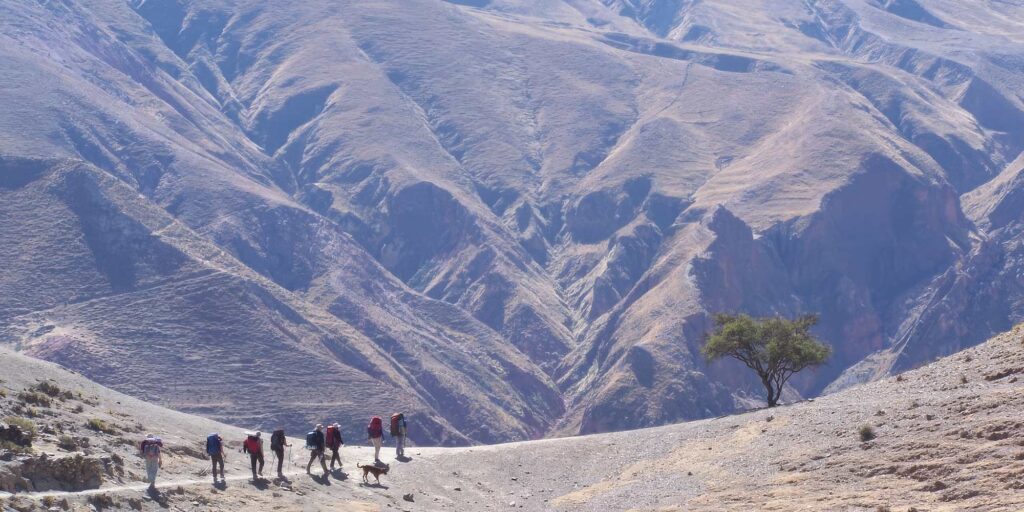
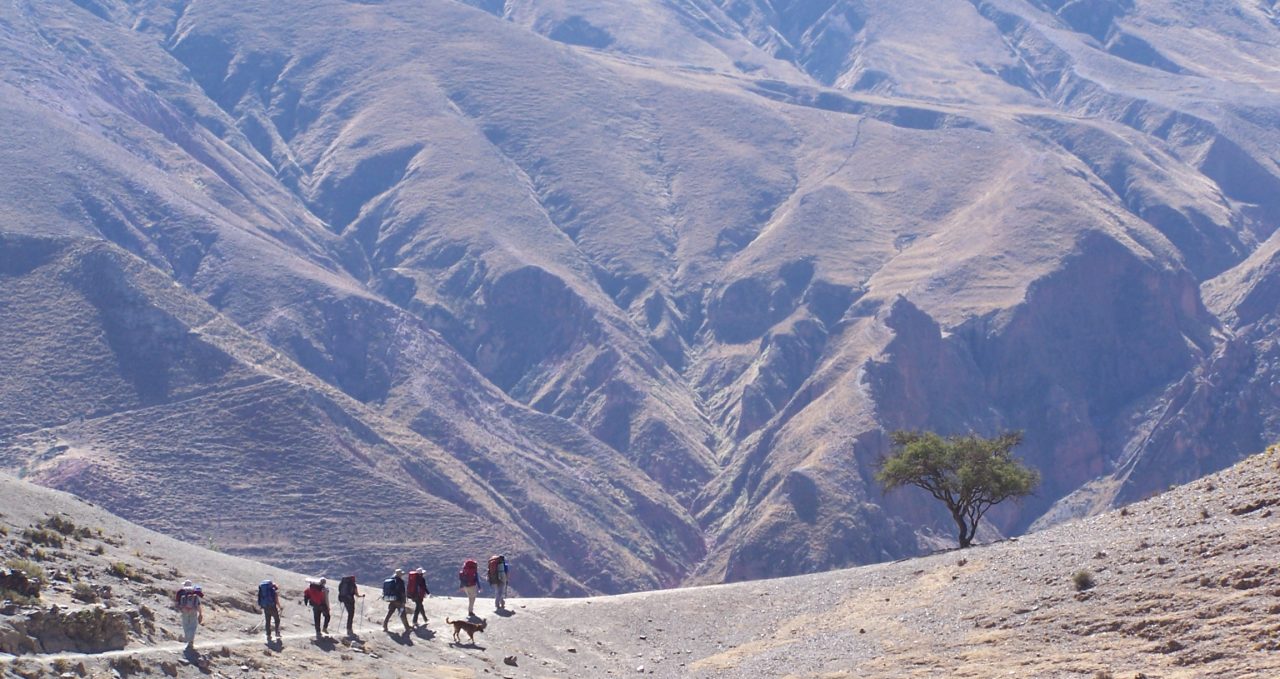
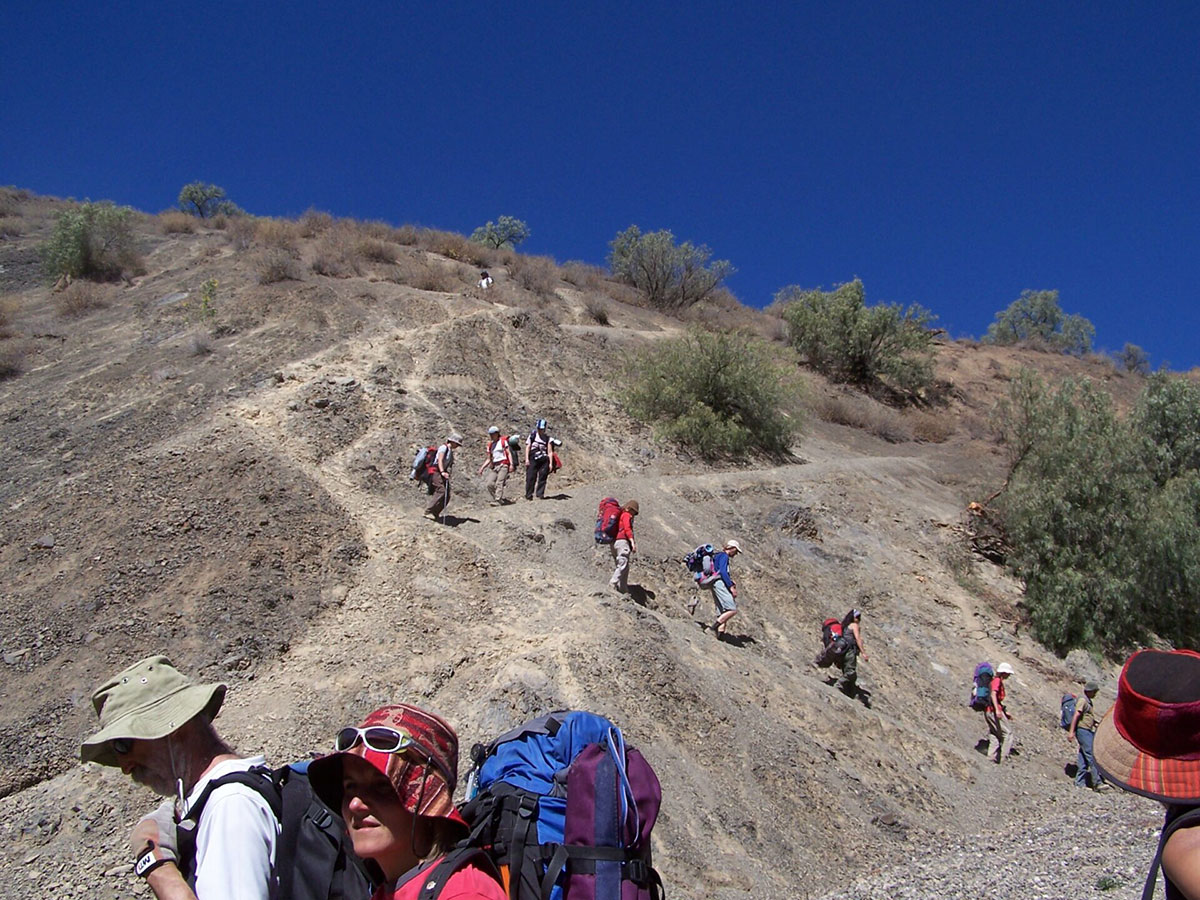
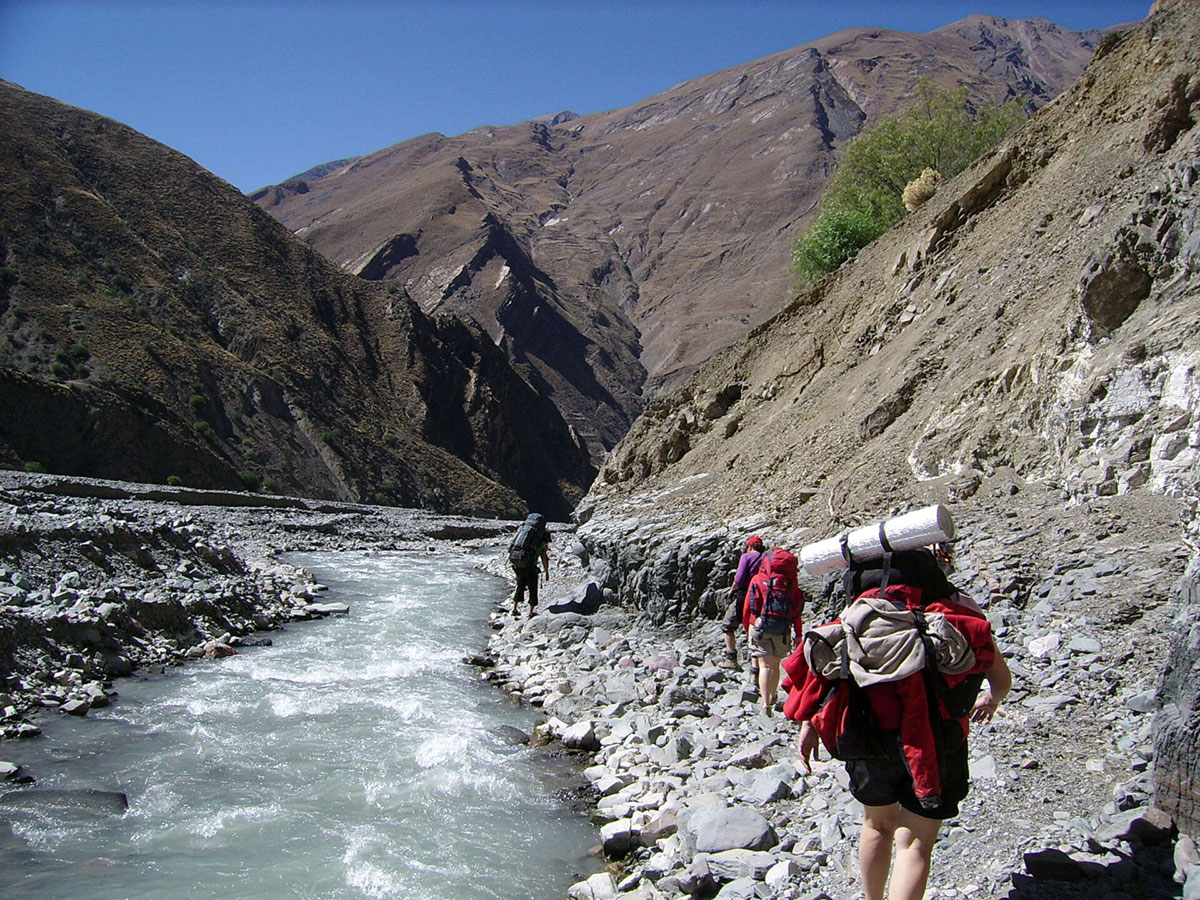
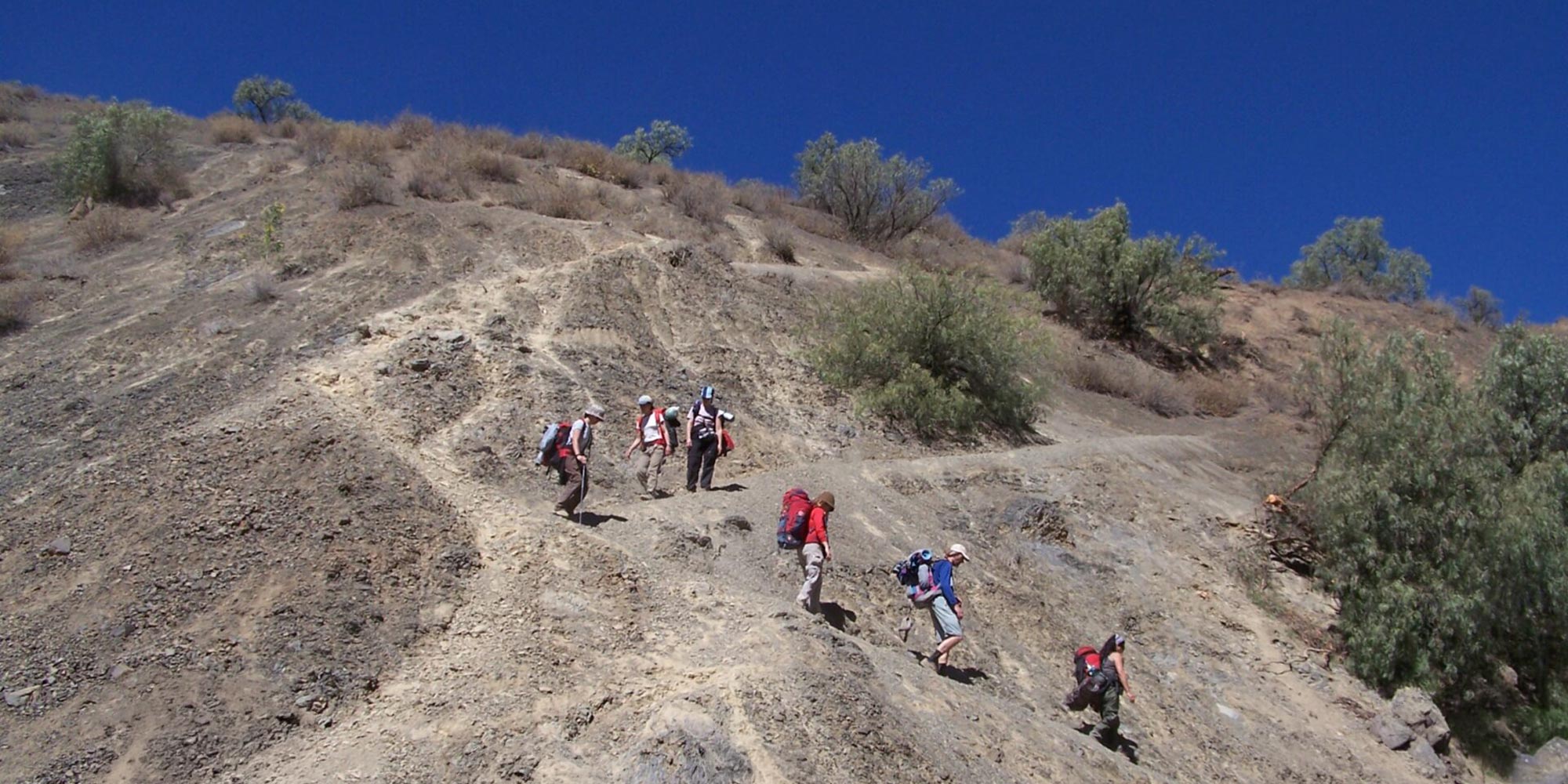
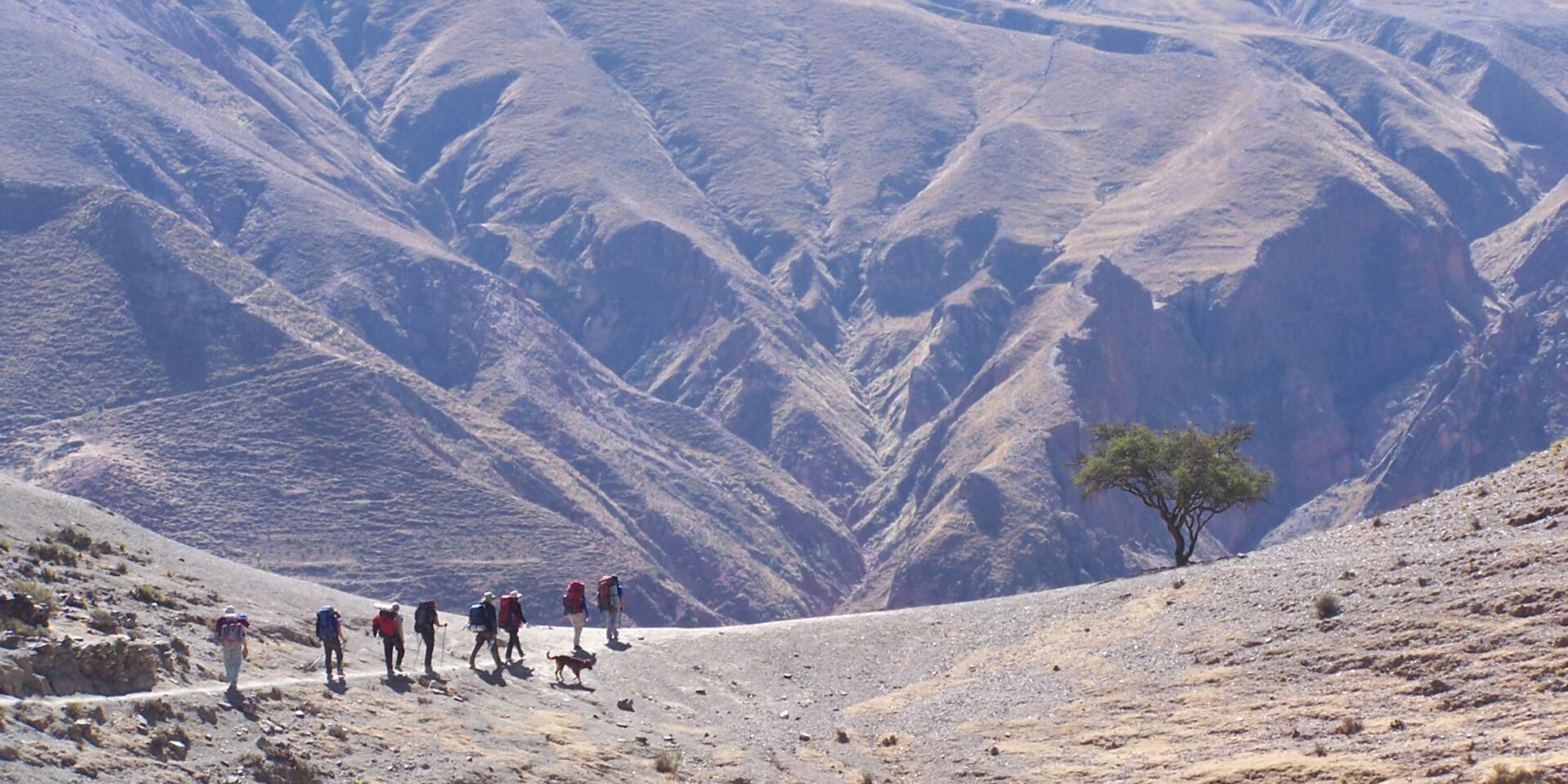
We hike a series of remote valleys and passes linked by ancient trails through original Andean cultures of Kola origin.
This is one of the top trekking tours available from Salta.
Everything bursts with colour in this region from the multi-coloured mountains to the shimmering lakes, with flamingoes and condors flying in the background against a clear blue sky.
Included is a visit to the famous Purmamarca – a Mountain of Seven Colours – plus the Salt Flats on the high plains of Lipan.
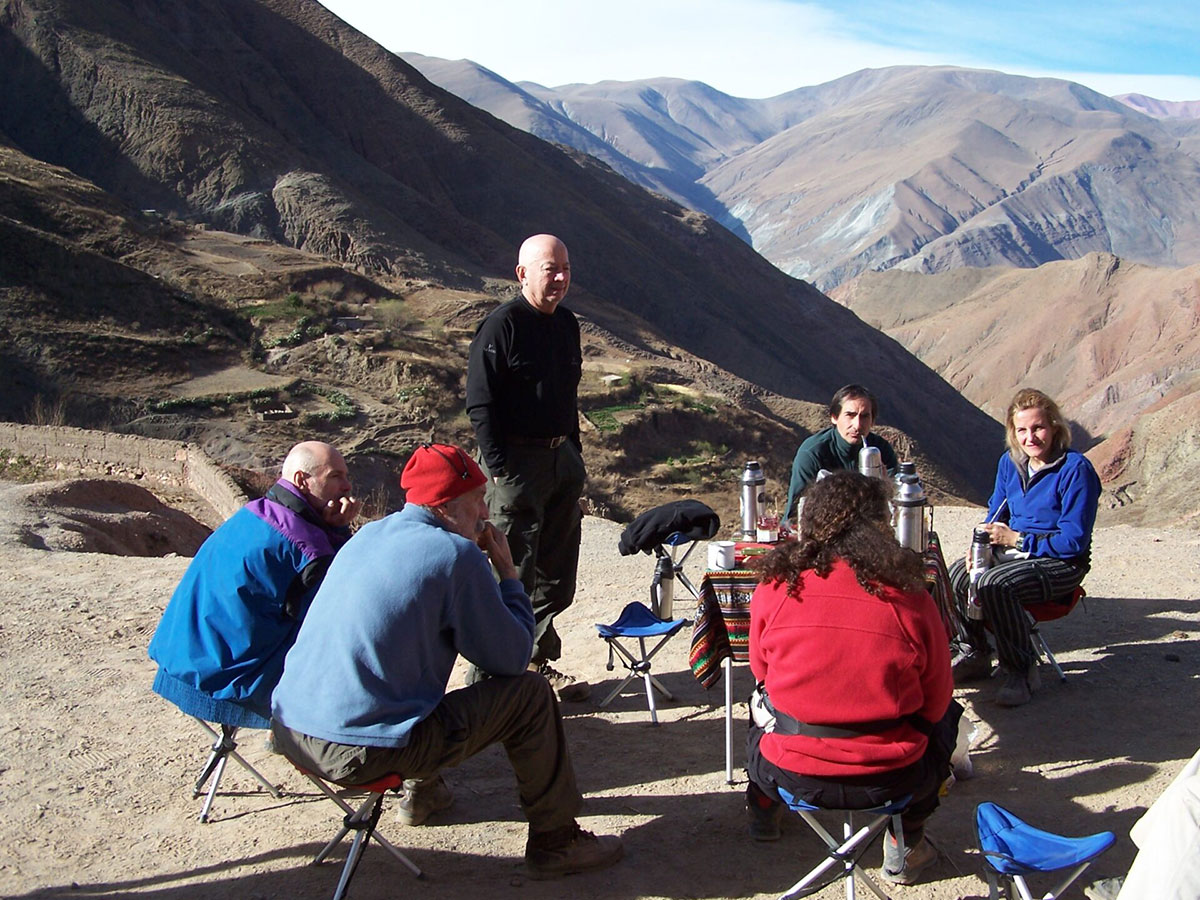
Our La Quiaca hike starts in the province of Salta, a dry and beautiful area full of vineyards and surrounded by vivid mountains.
Among these mountains are Humahuaca, Tilcara, Uquía and Purmamarca, all of which we visit.
Humahuaca is a bustling town packed with artisan shops, a dramatic town square and often live music in the streets, and where we start to acclimatise.
Next to Iruya, a quaint village perched on the edge of the Andes and the trek starting point.
From here, our remote and historical hiking route goes straight into the High Andes and the dramatic scenery that very few have seen.
From: $4719 per person
Duration
15 days
Argentina’s neighbours are Bolivia, Brazil, and Paraguay to the north, Uruguay to the north east and Chile to the west. In the east Argentina has a long South Atlantic Ocean coastline.
The central region of Argentina is the rich plain known as La Pampa.
There is jungle in the extreme northeast while the southern half of Argentina is dominated by the flat to rolling plateau of Patagonia.
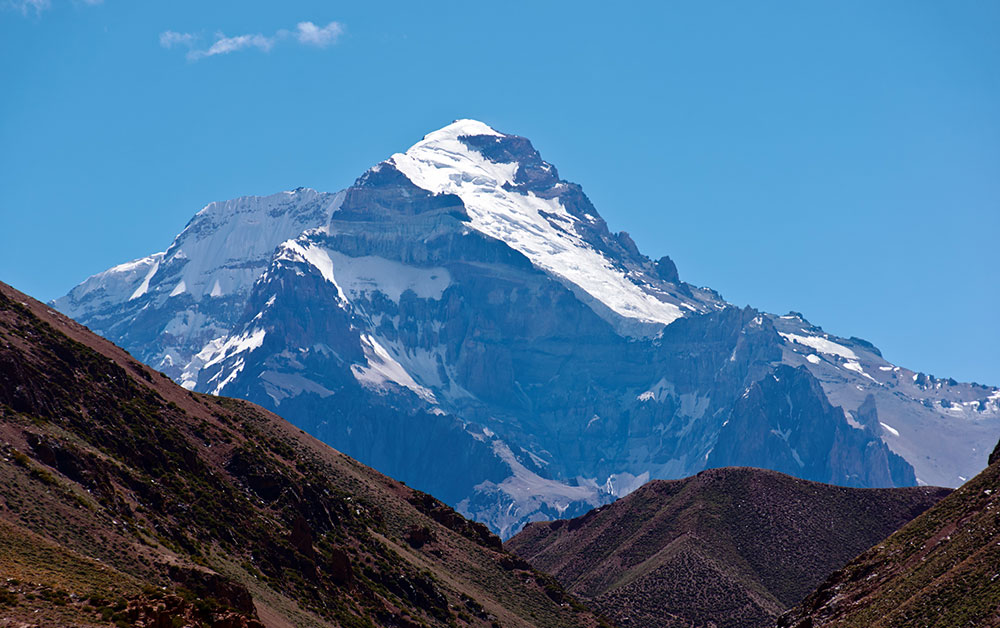
The western border with Chile is along the rugged Andes mountains, including Aconcagua, the highest mountain outside the Himalayas. Close to Aconcagua lies Mendoza, an area famed for its fine wine production.
The western Cuyo regions at the base of the Andes are mostly rocky desert.
Most Antarctic cruises embark and disembark in Ushuaia, at the tip of South America, allowing access to the South Pole, South Georgia and also the Falkland Islands.
Argentina is a land of contrast.
Nothing states this better than the fact it features the highest point in the South America, Aconcagua, and the lowest, Salinas Chicas, 40m below sea level.
Its vastness – it is the eighth largest country in the world – and diversity are just part of the appeal. A fantastic culture of fine wine and dining sits alongside its adventurous and beautiful landscapes.
The local’s cheery disposition and fantastic word plays add to the enjoyment of being in this fascinating country.
The name Argentina derives from argentinos, the Ancient Greek diminutive (tinos) form for silver (argentos), which is what early Spanish explorers sought when they first reached the region in the sixteenth century.
There are distinct regions of Argentina, from the Andean culture of the North West to the rancho lifestyle of the plains of Patagonia to the eternally seductive Buenos Aires.
Good kit is vital for every trip.
Book with Andean Trails and get 15% off Páramo’s fantastic ethical and high performance outdoor gear.
When planning for the varied climatic conditions encountered, layering is the most practical and versatile clothing system. It’s worth remembering that our clothing keeps us warm by retaining and isolating the heat we ourselves create.
To best maintain body heat, several layers of lightweight, warm and quick-drying clothing are far more efficient than one or two thick layers. Layers should have the following qualities:
First (base) layer: This layer wicks the sweat away from our skin, thus helping keep the body dry and warm. To this end, synthetic fabrics such as polypropylene should be used.
Mid layers: These isolating layers should also be synthetic (e.g. the known polar linings such as polartec or windblock, which are light and insulate twice as well as wool). Very important layers for retaining body heat.
Outer layer / shell: Finally, the vital layer which protects us from climatic adversities. A breathable, wind-proof and waterproof anorak, such as Goretex.
Give plenty of thought to kit selection, and try to keep weight down.
We also carry an extensive first aid kit & oxygen on all trips, but these are generally for emergencies only.
Below is a more detailed kit list.
Argentina’s seasons are the reverse to the northern hemisphere, with summer running from October to March, and winter from May to September.
Buenos Aires and the Pampas in the north are temperate; cold in the winter, 5-15°C, and hot and humid in the summer, 17-27°C, the warmest and most humid being December to February. Spring and Autumn are lovely times to visit Buenos Aires.
The best time to visit Iguazu Falls is from January to March – the rainy season, this is when water flow of the waterfall is greatest, but the waterfall is amazing at any time of year. The hottest months in Iguazu Falls are October through April with lows of 20°C and highs of 32°C. Winter sees this fall to highs of 22°C and occasional lows of 12°C, with cooler nights. Being tropical and humid, there is always the chance of rain in Iguazu.
Bariloche is nestled in Argentina’s Lake District and is built next to the cold water Lake Nahuel Huapi. During the summer, daylight extends from 6am to 10pm and temperatures fluctuate from 5-20°C, the warm days making for ideal conditions for exploration. In the winter, snow abounds for skiers and daylight is from 9am to 7pm, city temps varying from just above to just below freezing, with much cooler temperatures in the mountains.
The rain-shadow effect in Bariloche means weather conditions are relatively dry and stable. Summer rainfall in the town of Bariloche is low (average 5 days precipitation a month).
A beautifully organized Patagonian adventure filled with glacier walks, mountain vistas, and smooth, memorable travel experiences.
A superbly organized Beagle Channel and Cape Horn cruise combining comfort, adventure, and breathtaking southern landscapes.