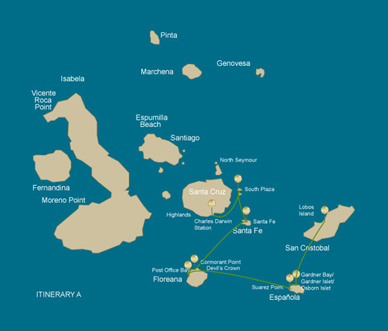
Itinerary A (5 days) Tue-Sat
On arrival at San Cristobal airport, pass through an airport inspection point, pay the park entrance fee of USD 200 (unless prepaid), meet your guide, and collect your luggage.
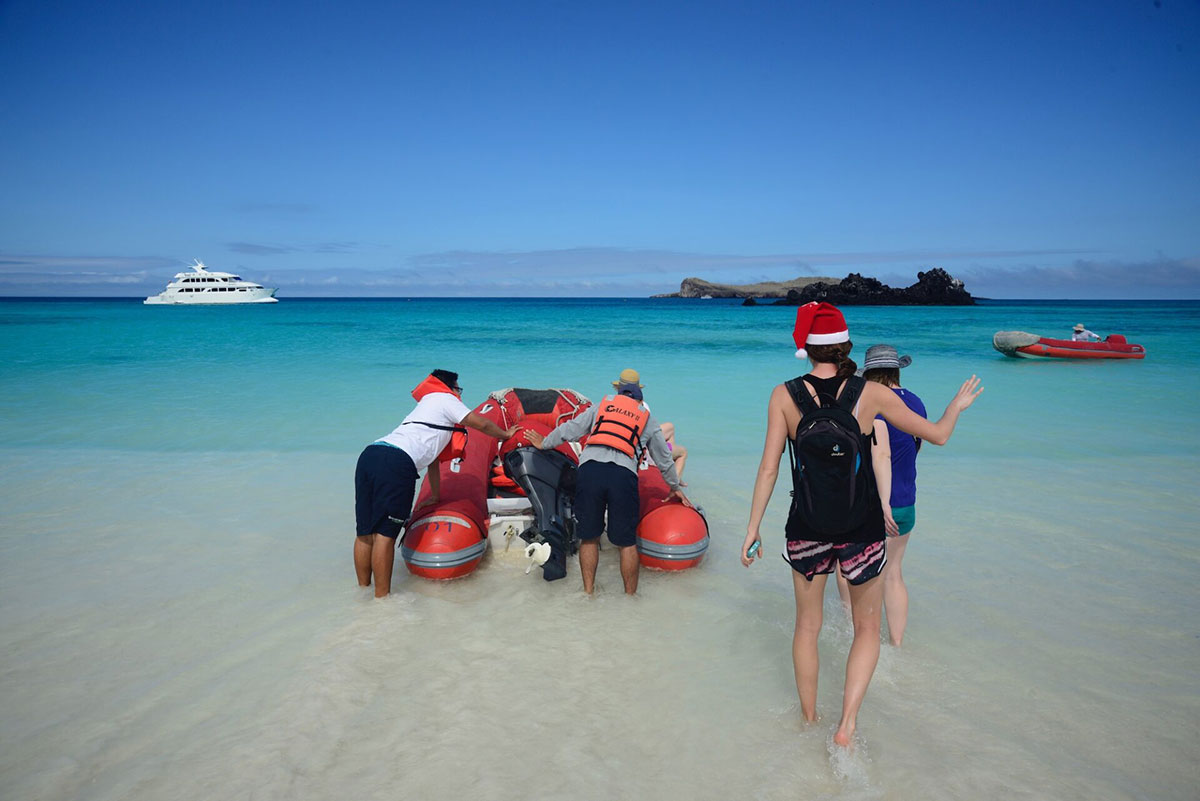
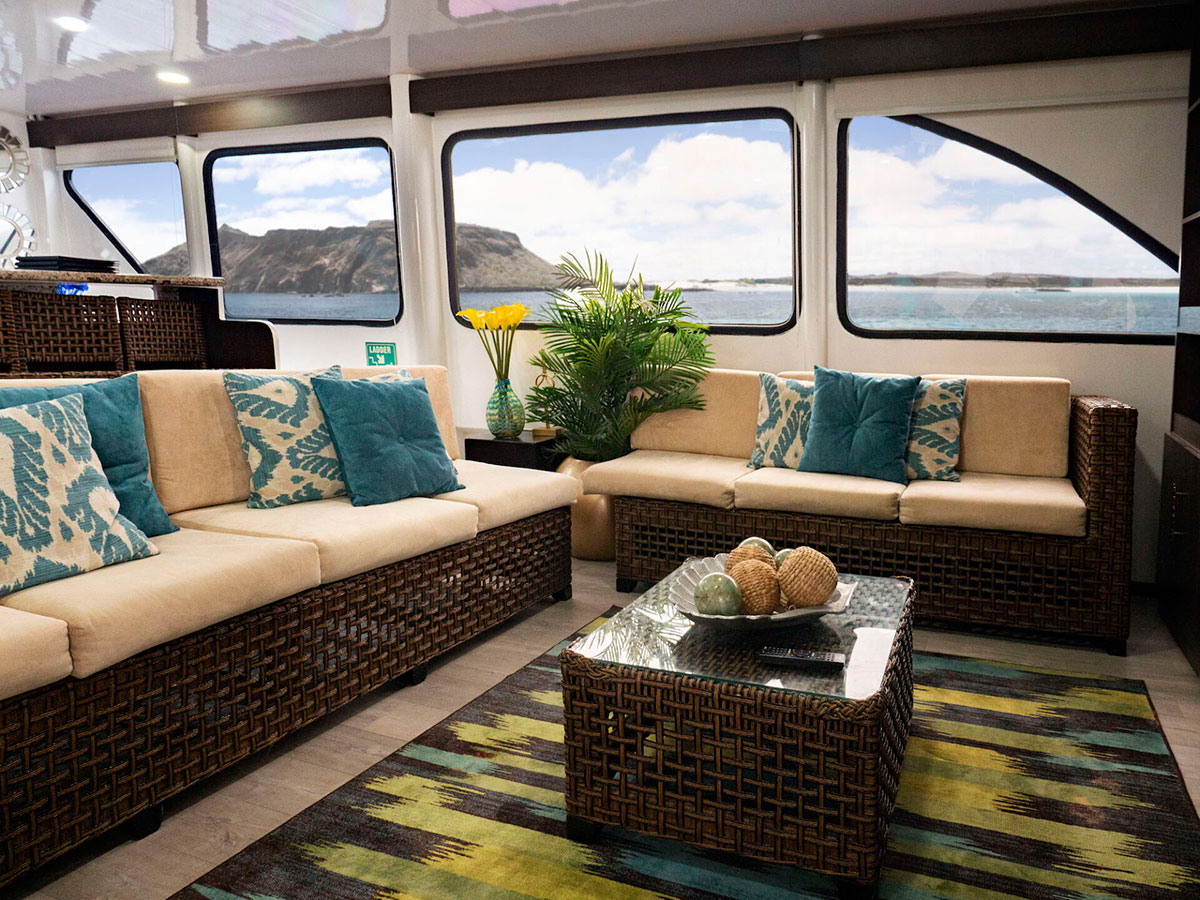
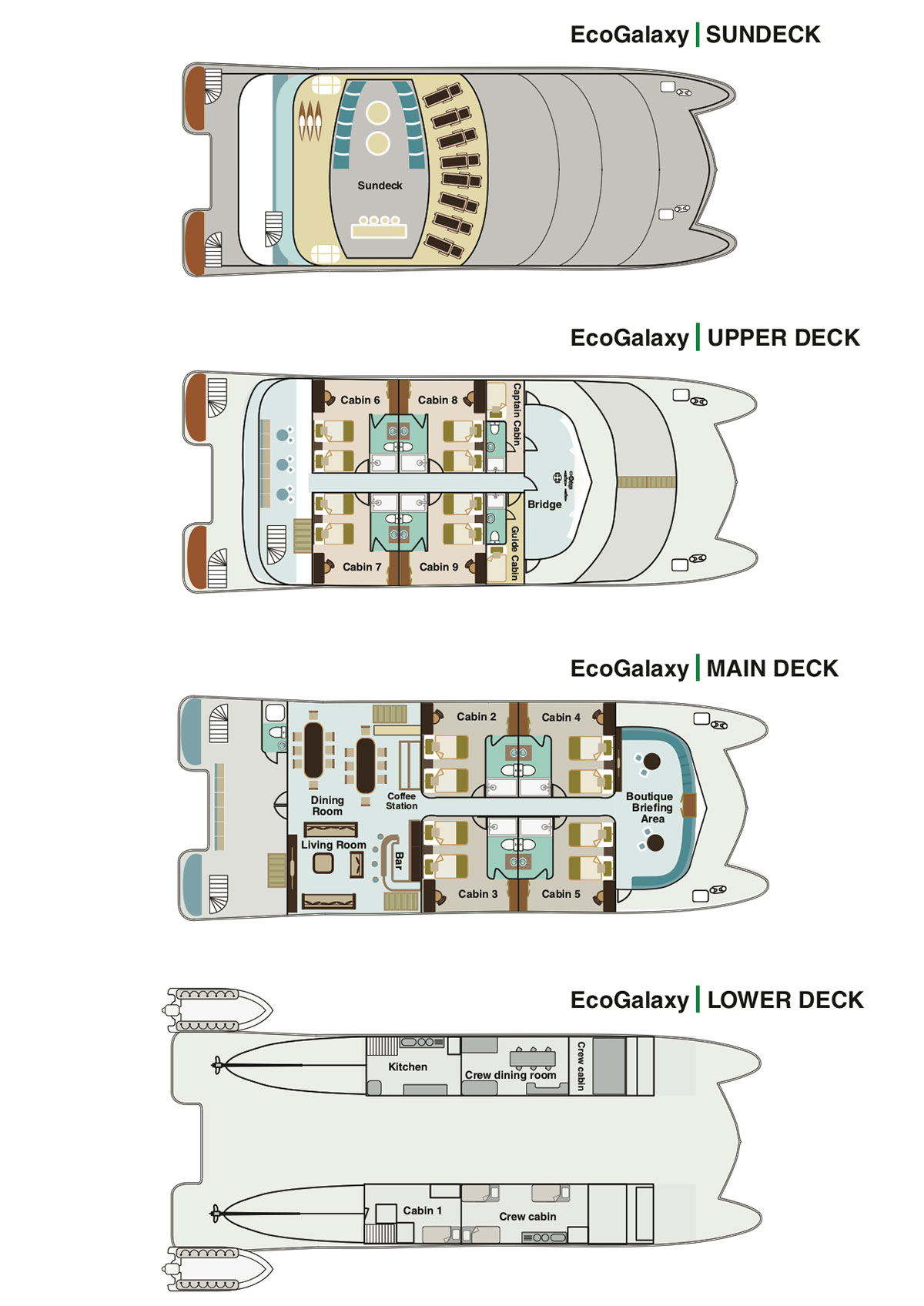
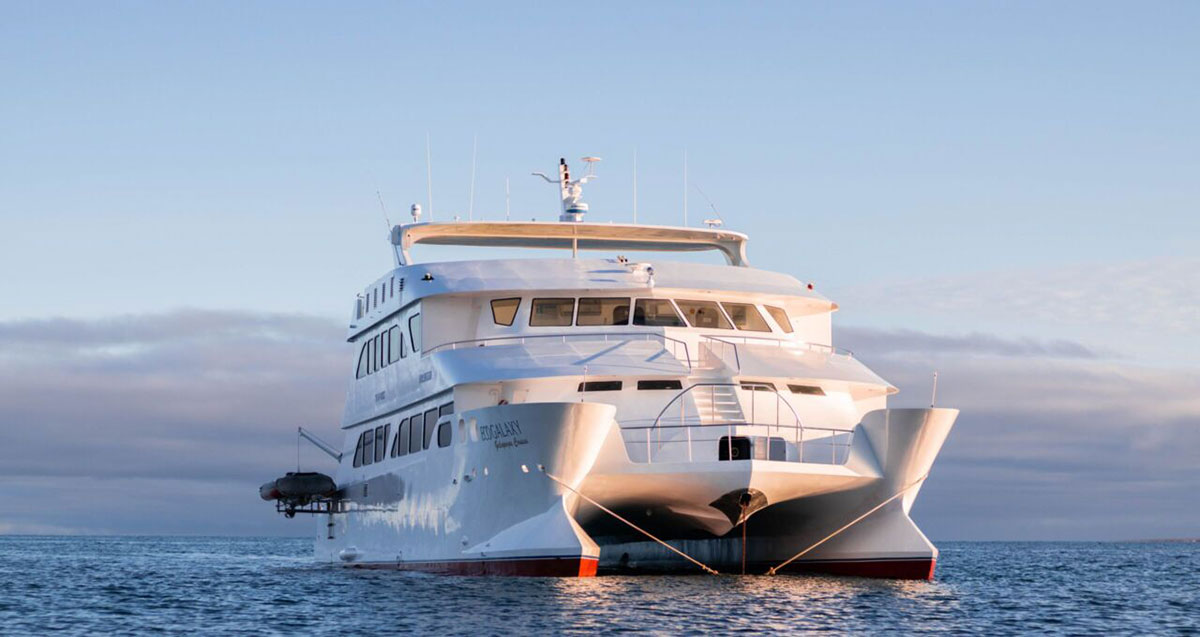
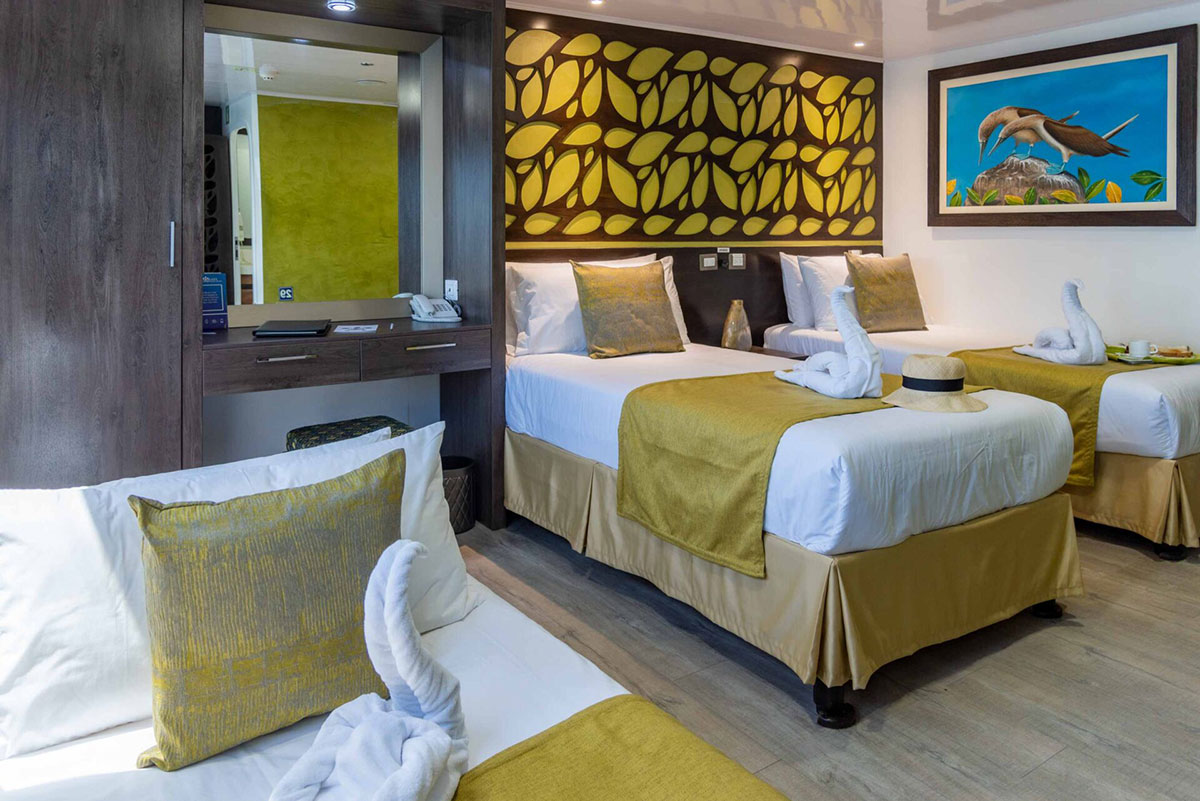
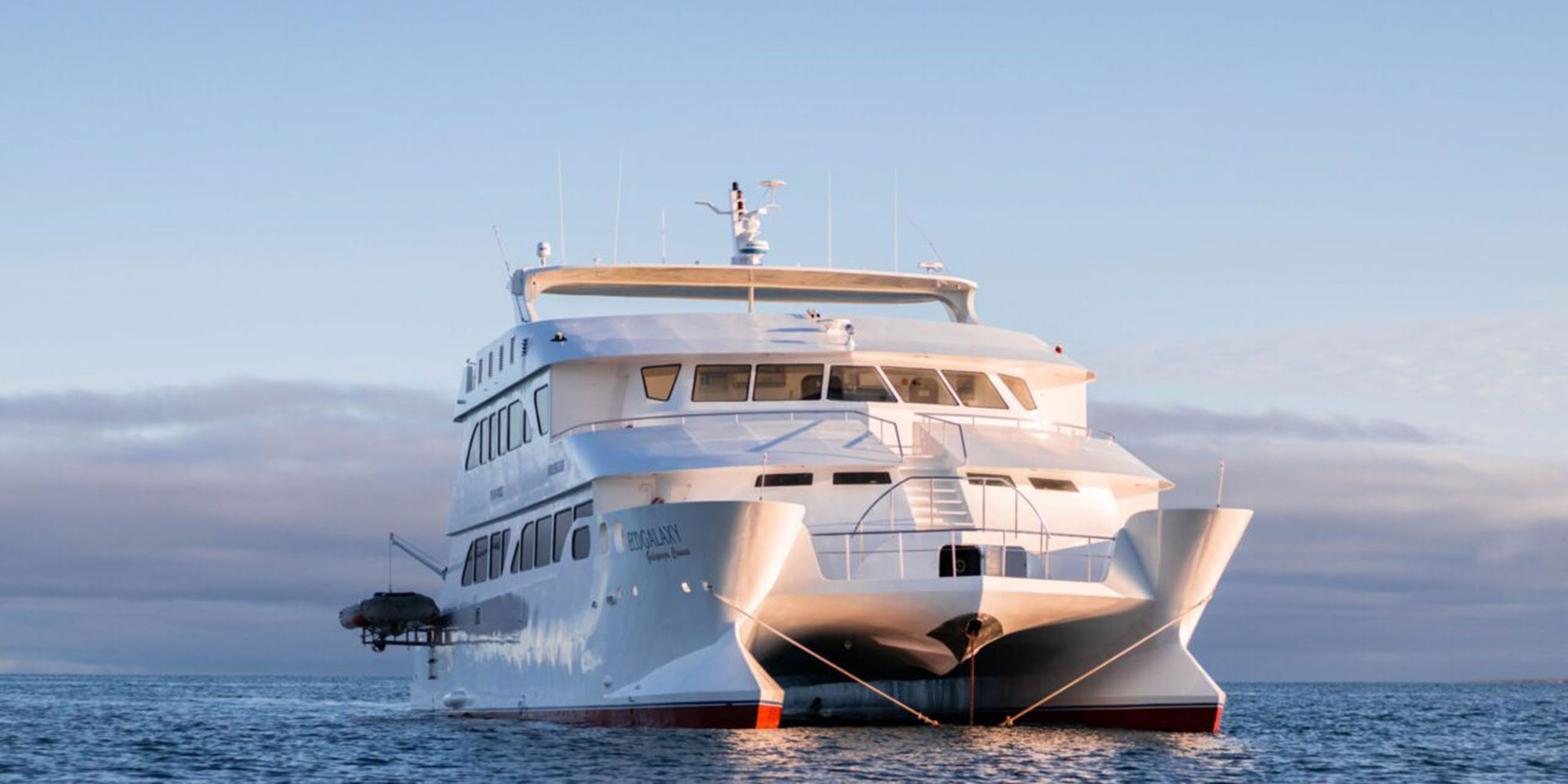
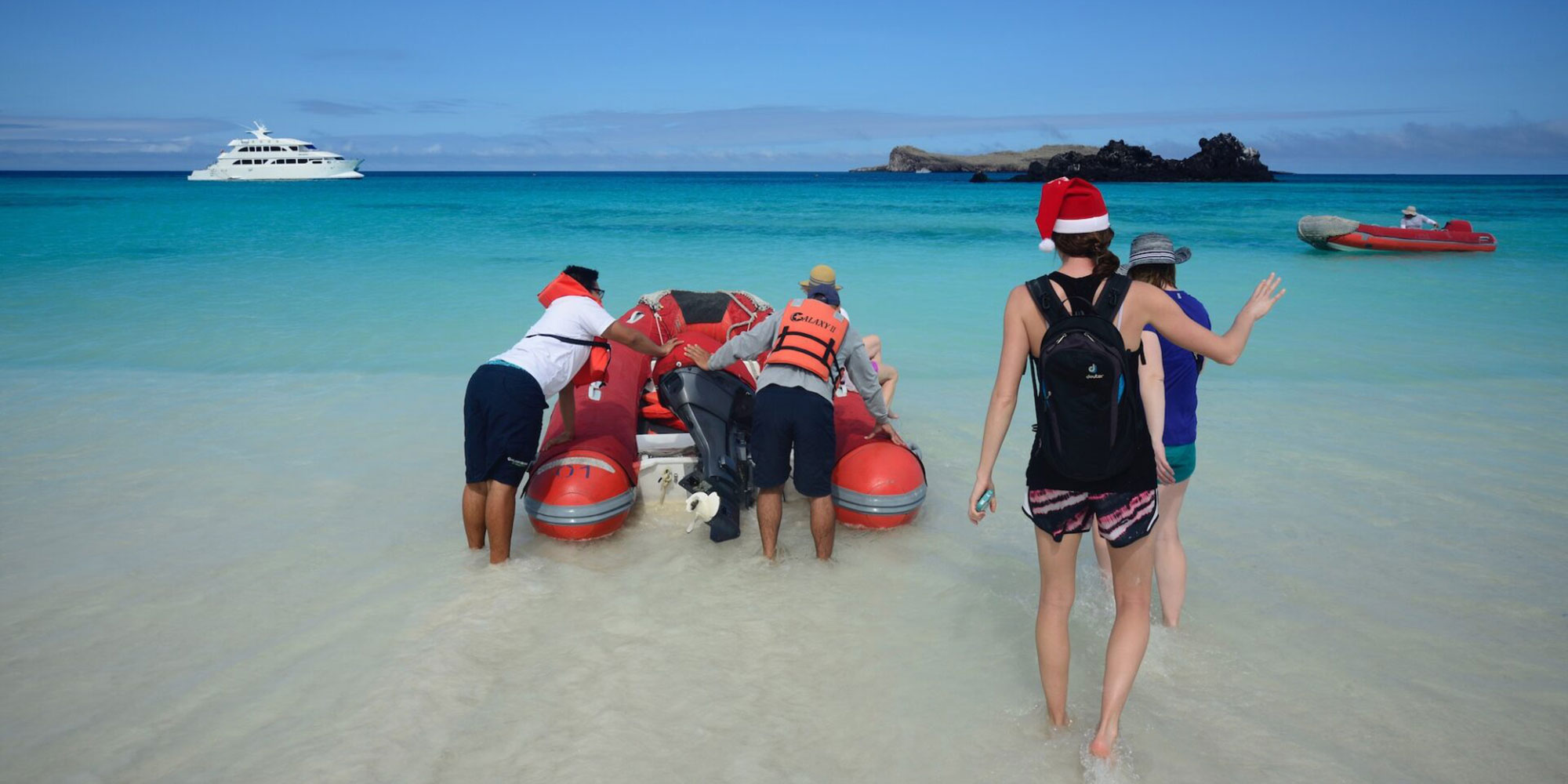
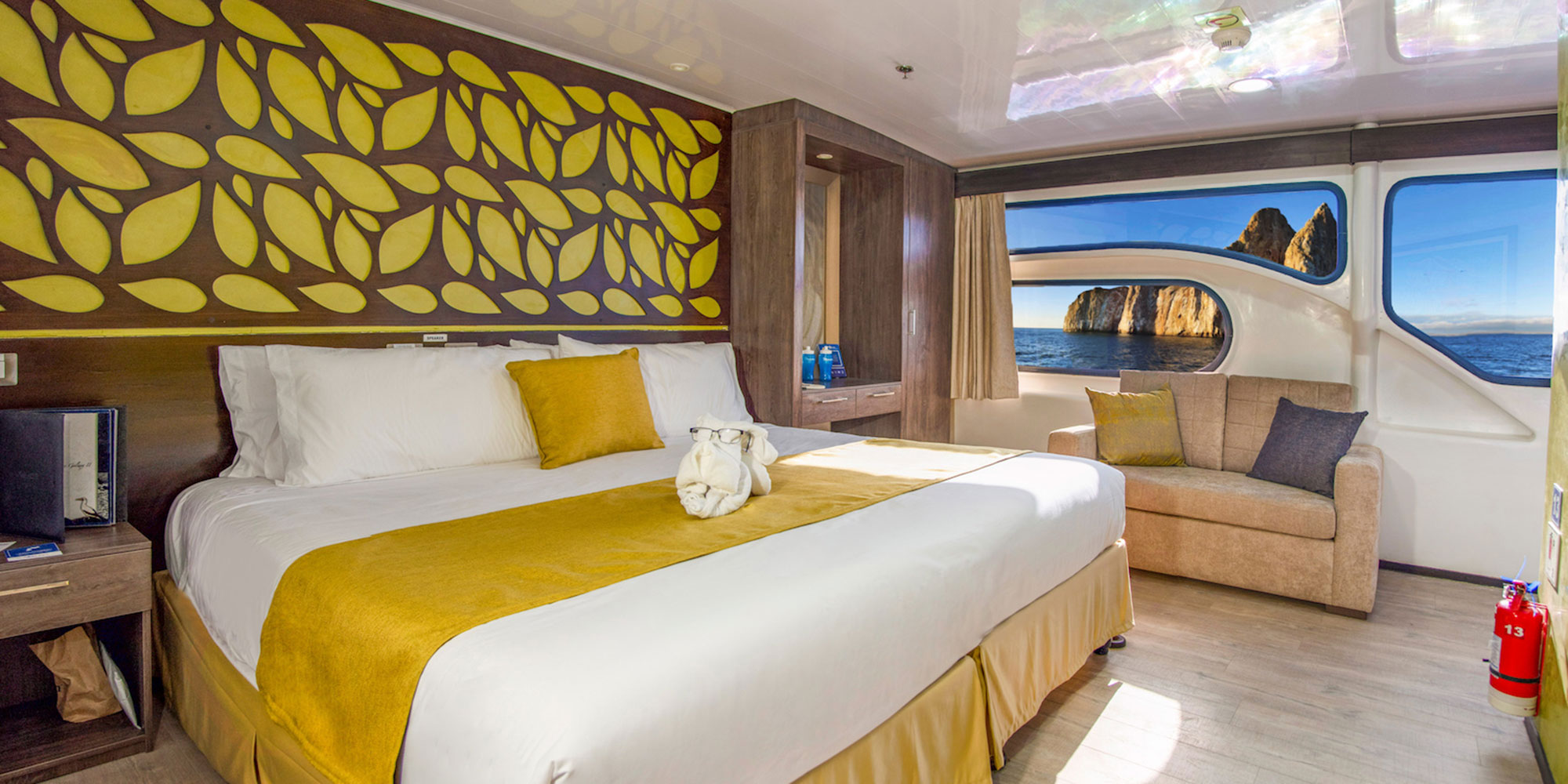
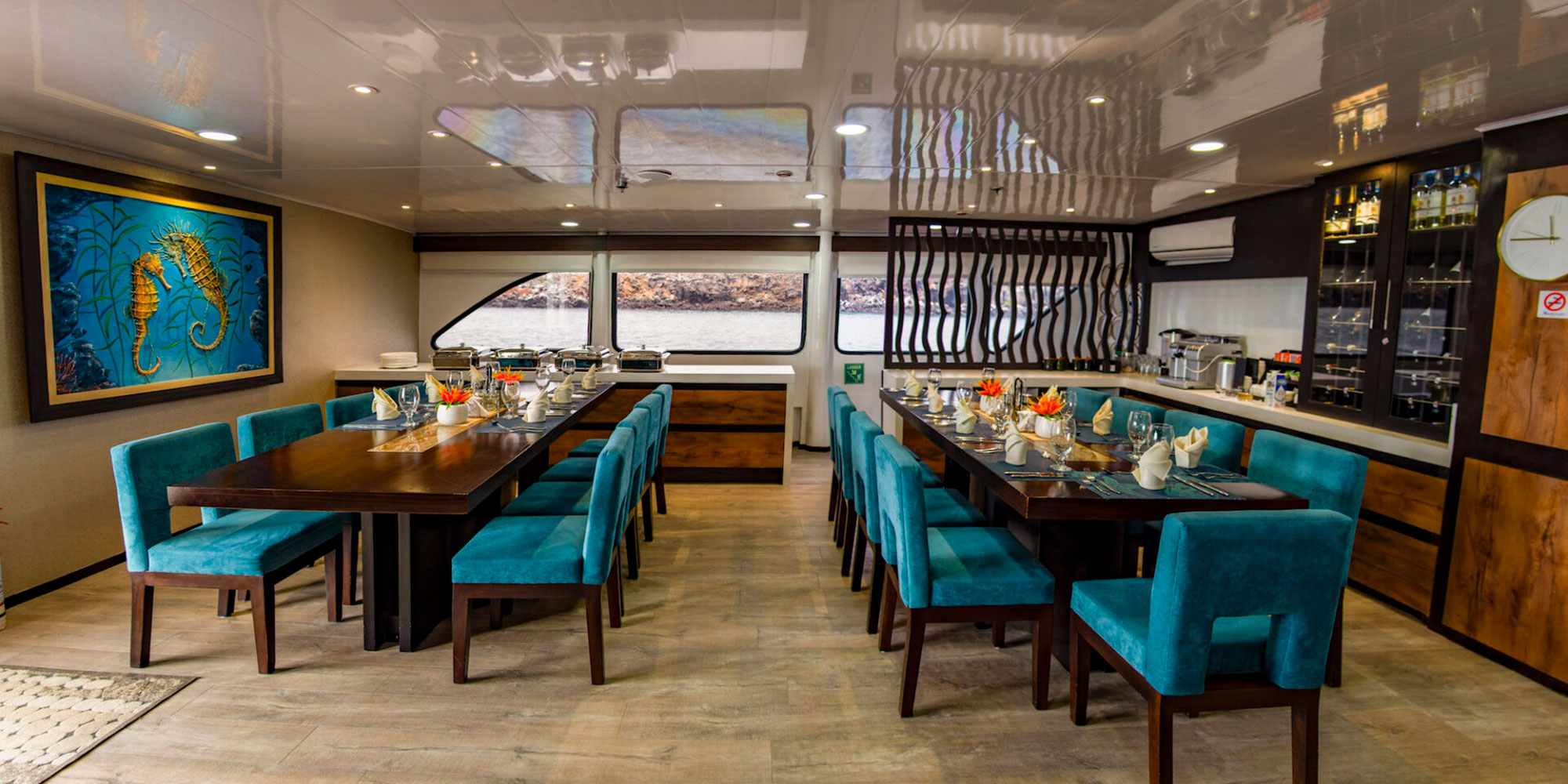
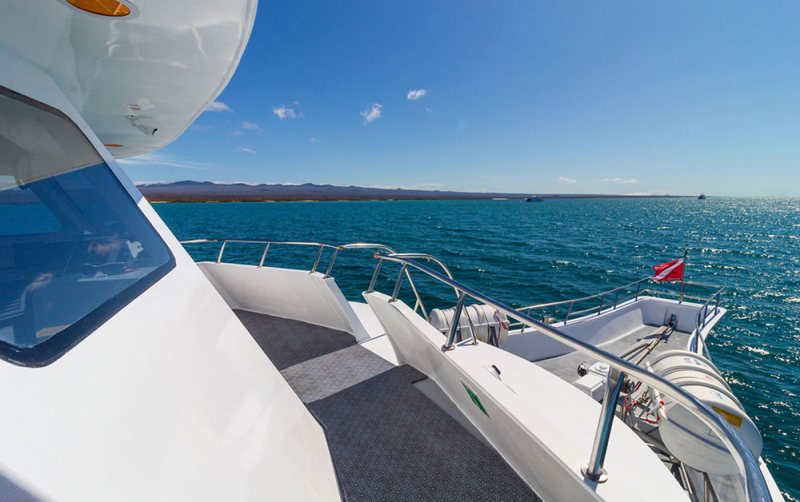
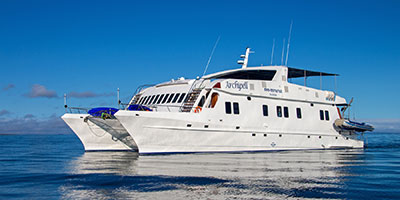
Next, head to the harbour to board the first-class catamaran, EcoGalaxy. After settling in and lunch, you set off on your first Galapagos visit.
Lobos Island is a small islet separated from San Cristobal by a narrow channel. Lobos Island is packed with wildlife, despite its small size. Its name comes from lobos marinos, the Spanish name for sea lions. There are plenty of chances to see and snorkel with these playful creatures.
There are often sea lions waiting to welcome you at the land spot. You’ll take a short walk (600m) around Lobos Island, looking for male frigatebirds inflating their famous red-throat pouches. Blue-footed boobies also nest here and may perform their famous courtship dance.
The usually calm waters here are perfect for a first snorkel. Sea turtles and rays may be resting on the sandy sea bed, while sea lions usually enjoy swimming around their human visitors.
Return to the EcoGalaxy for dinner.
Your first visit today is to Gardner Bay, one of the most beautiful beaches in the Galapagos with fine coral sand and turquoise water. You’ll see sea lions basking on the sand and will have the opportunity to walk along the beach and learn about the biology of sea lions and other endemic species, such as the Española mockingbird, marine iguanas and Galapagos hawks.
There are several great snorkelling spots at Gardner Bay where you can swim with sea lions, reef sharks, rays and many species of fish, including; Angelfish, Parrotfish, Damselfish, Surgeonfish amongst others.
Your afternoon visit is to Suarez Point with its lovely rocky trail and abundance of diverse fauna from sea lions and marine iguanas to large colonies of sea birds, including Nazca and Blue-footed boobies, gulls and tropicbirds.
At the end of the trail is a colony of waved albatross (April to January), the largest bird in the islands and one of the most interesting because of its powerful flight and elaborate courtship. Waved albatross only nest at Española, so this is your chance to see them at close range.
Return to the EcoGalaxy for dinner
The day starts with a visit to fascinating Floreana, famous for the tales of German settlers and the baroness during the late 1920’s and 30’s. Assassinations, disappearances and other unsolved mysteries are the ingredients of this incredible story.
In days gone by Post Office Bay was used by whalers to anchor their ships and go up to the highlands to get fresh water and tortoises. A system of mail was established more than 200 years ago- a barrel near the beach became the way to leave messages to other ships and also to the outside world. This mail system is still in use and even today you can send postcards from the Galapagos to the outside world.
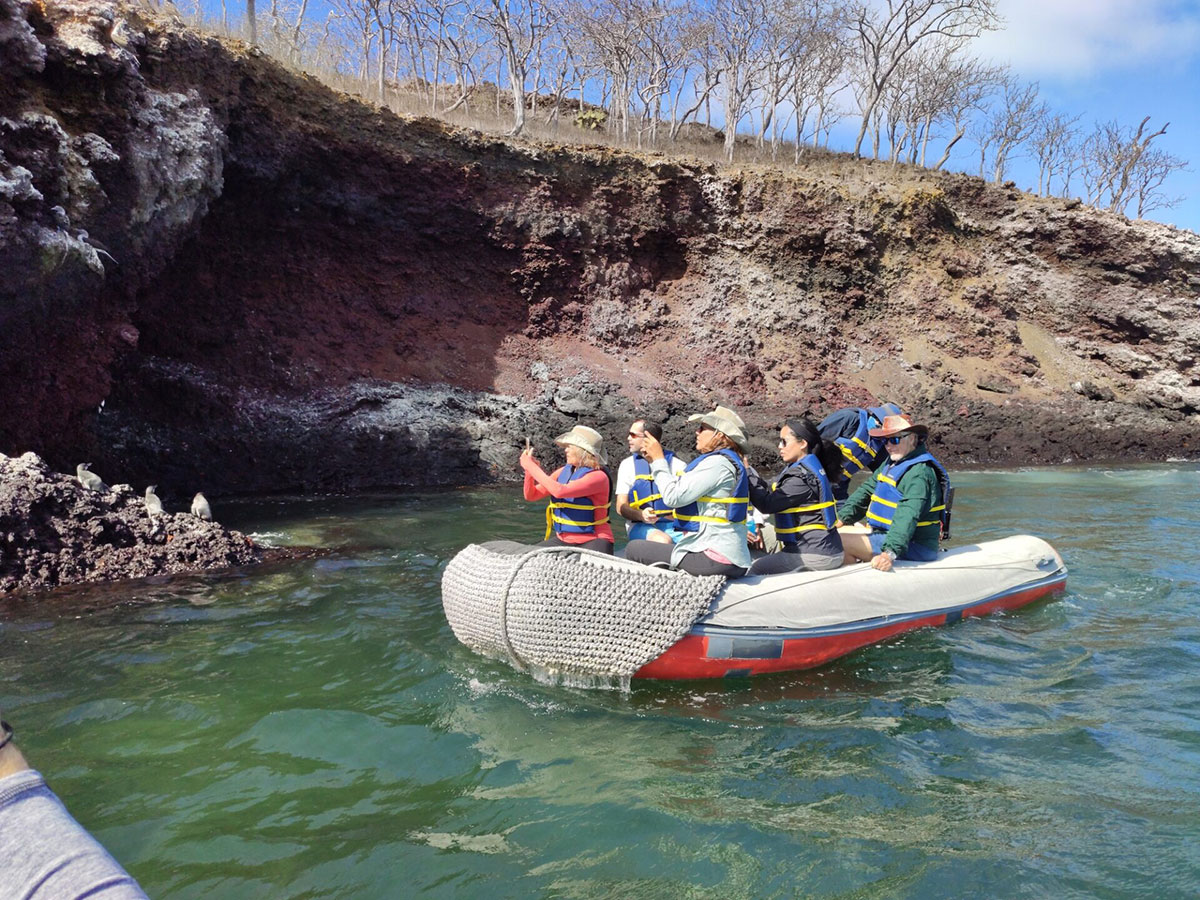
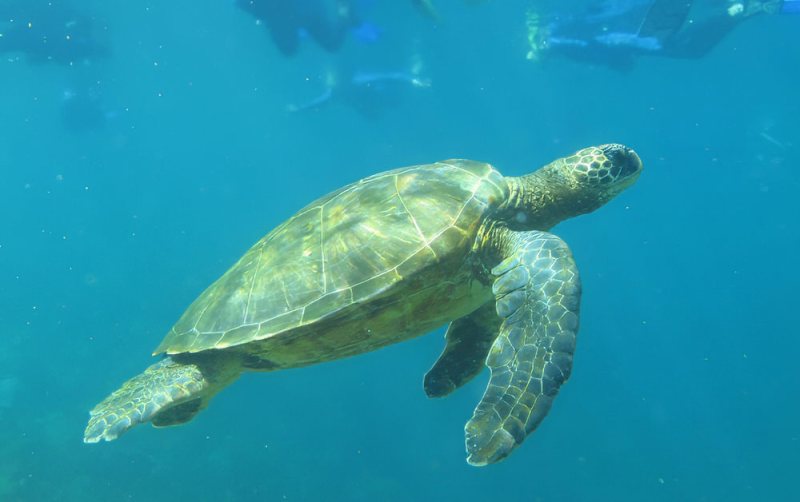
There is a small but pretty beach here and the area is great for going out in a dinghy to look for sea lions, green sea turtles, shorebirds, small sharks and, if you’re lucky, Galapagos penguins. There is also great snorkelling from this beach.
In the afternoon you’ll visit Cormorant Point and Devil’s Crown.
Cormorant Point, in the north of Floreana, is well-known for its large coastal lagoon where you can find American flamingos, white-cheeked pintails, black-necked stilts and other shorebirds. There is a pretty, white-sand beach, which is a nesting ground for green sea turtles and where you can also see rays and reef sharks. In recent years, a small group of blue footed boobies have started to breed right by the trail, which also showcases some endemic plants.
You’ll have the chance to snorkel at Devil’s Crown, a heavily eroded little volcano near Floreana island. It is a great snorkelling site since the current funnels plankton through the Crown, which draws schools of snapper, Creole fish, parrot fish, angelfish, reef sharks, sea turtles, rays and other marine life.
Return to the EcoGalaxy for dinner
Santa Fe is home to one of the Galapagos’ most beautiful bays, with its turquoise waters and white sand beaches, giant prickly-pear cactus and lava rocks. Look closely, and you’ll see sea lions basking.
Today’s trail (800m) will hopefully feature land iguanas, Galapagos hawks, and lava lizards. Keep an eye out for Darwin finches, Galapagos doves, and mockingbirds.
You’ll have the chance for a dip once again, swimming in sheltered waters among sea lions and hopefully spot some reef sharks. It’s not unusual to encounter large schools of fish here, including parrotfish and surgeonfish. Turtles and rays may also glide by. Kayaking is possible if conditions permit.
This afternoon, we visit South Plaza Island. There are two Plazas, north and south, but only the southern island permits visitors. North Plaza is reserved for scientific research.
On the island, look for Galapagos land iguanas that may be feeding on prickly-pear cactus. Sea lions inhabit the shore and tide pools, and large males defend their territory. Today’s trail (1,400m) takes you among a reddish vegetation with scattered cacti, looking like a giant carpet.
We return to the EcoGalaxy for dinner.
Your last visit is to the Charles Darwin Research Station, a non-profit organization which has worked for decades with the Galapagos National Park to preserve the biodiversity of the islands. Find out more about projects aimed at protecting the native species and eradicating invasive ones threatening the Galapagos environment.
One of the most emblematic projects is breeding giant tortoises in captivity. The visit is mostly outdoors in a dry native forest with giant cactus and other native plants. It is a great place to see endemic Darwin finches, as well as flycatchers and mockingbirds.
After the visit, you’ll be transferred to Baltra Airport for your flight to mainland Ecuador.
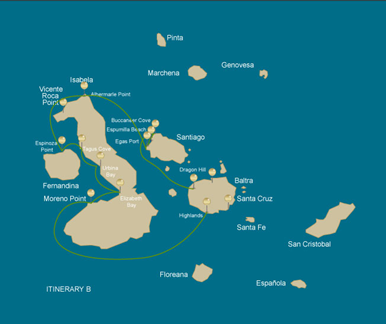
Itinerary B (6 days) Sat-Thu
On arrival at Baltra airport, pass through an airport inspection point, pay the park entrance fee of USD 200 (unless prepaid), meet your guide, and collect your luggage.
Next, you head to the harbour to board the first-class catamaran, EcoGalaxy. After settling in and lunch, you set off on your first visit- to the Highlands of Santa Cruz.
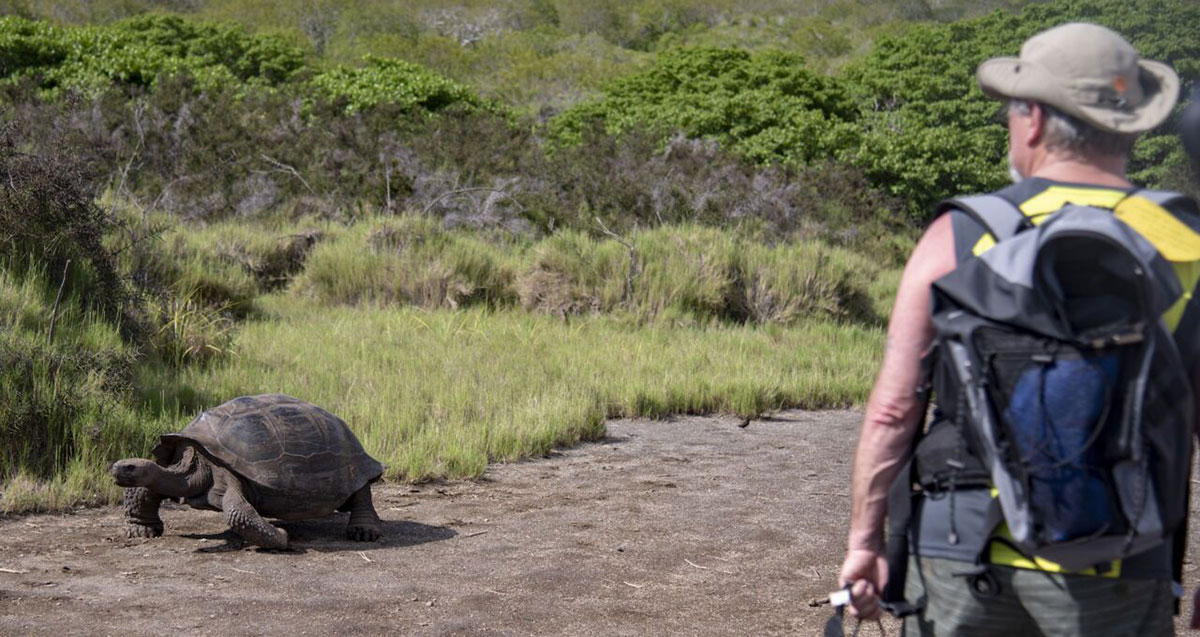
A bus will take you to the highlands, stopping along the way at one of the reserves to visit the highland forests where you can see Galapagos Giant tortoises in their natural environment. This is a great place to see these gentle giants (reaching over 300 kg / 600 pounds!) grazing and resting in freshwater ponds.
This is also home to a great diversity of birds less often seen in the lowlands, including finches, flycatchers and several species of water birds. You will visit a lava tunnel and find out how these amazing formations were created by volcanic eruptions.
We return to the EcoGalaxy for dinner.
Moreno Point is a magical place. At first sight it looks lifeless with its extensive lava field.
You walk a one-mile trail, heading inland where scattered brackish lagoons form sheltered oases of life. There are flamingos, gallinules, ducks and herons. Back on the shore, we look for penguins, flightless cormorants, marine iguanas, blue-footed boobies, sea lions, oystercatchers, and other shore birds.
You have the chance to snorkel at Moreno Point, where sea turtles and fish swim. Check the long seaweed carefully, and you might spot a seahorse.
We return to the EcoGalaxy for lunch.
After lunch, we visit Elizabeth Bay, a beautiful sheltered bay. Extensive mangroves and barren lava fields surround it. We hop into the dinghy to explore because there is no trail here. The boat explores the bay’s channels, pools, and coves, all teeming with life.
There’s a great chance to see penguins, flightless cormorants, blue-footed boobies and pelicans. We may see sea turtles and rays floating in the water around the boat.
We return to the EcoGalaxy for dinner.
The day starts with a visit to Urbina Bay, famous for a dramatic uplifting that occurred in the 1950s. A substantial section of the coast was pushed up to form a new land mass. The uplift exposed many hectares of previously submerged land.
The 1.2km trail takes you past this uplift. Look carefully for small shells and corals and keep your eyes peeled for land iguanas and giant tortoises. Galapagos hawks also nest in the area.
This morning’s snorkel offers the chance to observe sea turtles, cormorants, and penguins.
In the afternoon, you visit Tagus Cove and will follow in Charles Darwin’s footsteps. Today’s one-and-a-half-mile trail leads you through a dry Palo Santo forest full of Darwin finches and mockingbirds. There are also great views of Lake Darwin and Isabela’s northern volcanoes.
You’ll board the dinghies once more to spot penguins, cormorants, and marine iguanas, before taking a dip in the water. Tagus Cove has nutrient-rich waters famous for its sea turtles, penguins, and fishing sea cormorants.
We return to the EcoGalaxy for dinner.
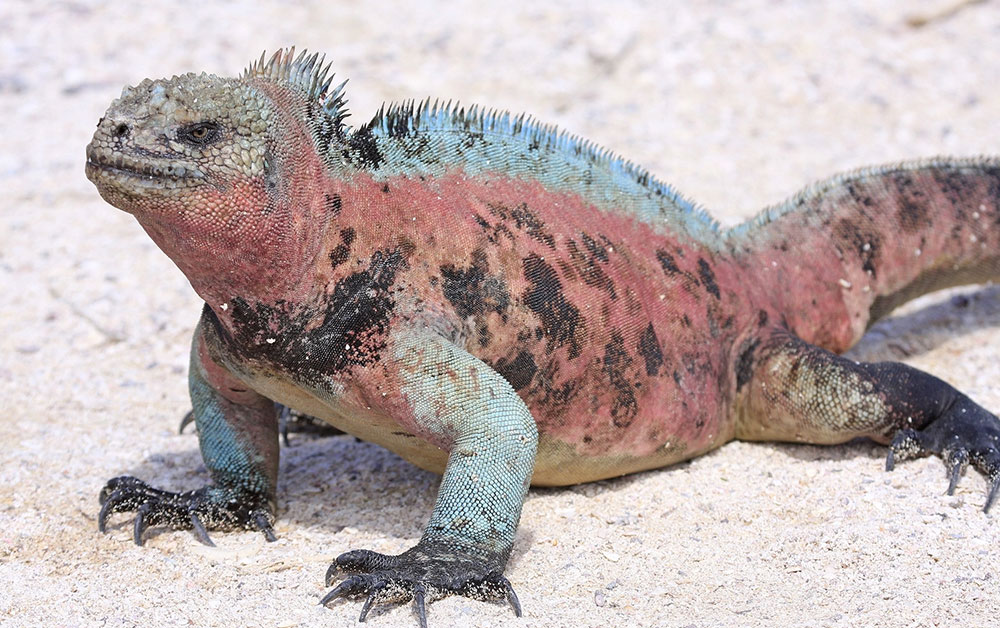
Fernandina is one of the Galapagos National Park’s jewels, with an imposing active volcano and lava fields. As soon as you disembark, you are surrounded by hundreds of marine iguanas; Espinoza Point has the largest colony in the Galapagos.
Sea lions stretch out on the beaches, and their pups play in tidal pools. You can look for flightless cormorants and Galapagos hawks along the one-mile walk. There are herons, pelicans, oystercatchers and many more shore birds.
The plankton-rich waters attract significant numbers of fish and sea turtles. A highlight here, conditions permitting, is watching marine iguanas feed on seaweed underwater.
Albemarle Point is surrounded by tall cliffs, spectacular landscapes and various volcanic features. We take to the dinghies for a shore tour. You’ll get a close view of pelicans, flightless cormorants, Galapagos fur seals, and marine iguanas. With luck, you may see dolphins. Whales may also swim past (June to October).
We return to the EcoGalaxy for dinner.
Egas Port is not a port, despite the name meaning that in Spanish. We land and head off on a 1.4-mile trail, looking for land and marine iguanas, plus the fantastic lava rock formations. Keep an eye out for Galapagos sea lions, herons, and other shorebirds.
The end of the trail is known locally as ‘the grotto’ and is home to Galapagos fur seals.
You’ll be able to enter the water from the beach. This area has a rock floor, making it excellent for fish, turtles, and reef sharks—sea lions also like to dive in and swim with snorkellers.
Your afternoon visit it to Espumilla Beach, on Santiago’s northern coast, a stunning one-km stretch of sand surrounded by mangroves and dry forest. Flamingos and ducks may appear in the salt pan during the rainy season.
Then, at Buccaneer Cove, discover a pirate hideout from the 17th and 18th centuries. Towering cliffs and rock formations create a stunning landscape. There’s no trail here but a dinghy ride gives you a unique chance to observe wildlife.
You’ll be able to snorkel in a sheltered bay and swim among angelfish, parrotfish, and snappers, and spot reef sharks, sea turtles and playful sea lions in their natural habitat.
We return to the EcoGalaxy for dinner.
Your last visit is to one of these two remarkable spots: Black Turtle Cove, which gets its name from the abundance of sea turtles. Landing is not permitted here but you’ll take a dinghy tour to explore the shallow channels, small coves and beautiful mangrove forests; or Daphne Major, where nesting seabirds make their home and fascinating finch evolution research is carried out.
Then, transfer to the airport for your flight back to mainland Ecuador.
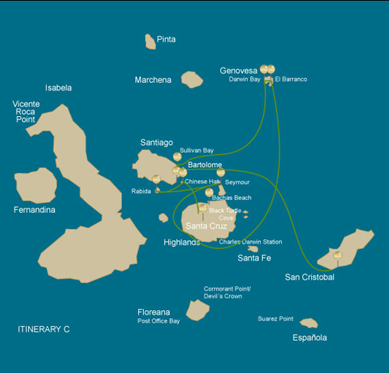
Itinerary C (6 days) Thurs-Tues
On arrival at Baltra airport, pass through the airport inspection point, pay the park entrance fee of USD 200 (unless prepaid), meet your guide, and collect your luggage.
Next, we head to the harbour to board the first-class catamaran, EcoGalaxy. After settling in and having lunch, we set off on our first Galapagos visit.
This is to Bachas Beach, located on the northern coast of Santa Cruz Island. Here, you can enjoy a refreshing snorkel or take a relaxing stroll along the beach. We’ll make a wet landing, stepping from the panga directly into the shallow water before reaching the shore. We recommend going barefoot for the landing and changing into lightweight walking shoes for the rest of the visit.
Behind the beach, a saltwater lagoon provides a habitat for great blue herons and other small bird species. Both beaches are also important nesting sites for green sea turtles.
The highlights are wonderful views, blue-footed boobies, white-cheeked pintails, American flamingos, sandpipers and lava gulls.
Return to the EcoGalaxy for dinner.
Your morning visit is to Chinese Hat, so-called due to its distinctive cone shape. It is a small islet, separated from Santiago by a narrow channel, with turquoise waters, coral-sand beaches, and volcanic rocks. A coastal trail leads you through a sea lion colony. You may spot penguins resting on lava rocks . This site perfectly blends lovely scenery with remarkable wildlife.
You can snorkel in the crystal-clear waters of Chinese Hat – marvel at the vibrant colours of the fish, spot reef sharks and, if you’re lucky, a penguin darting through the water.
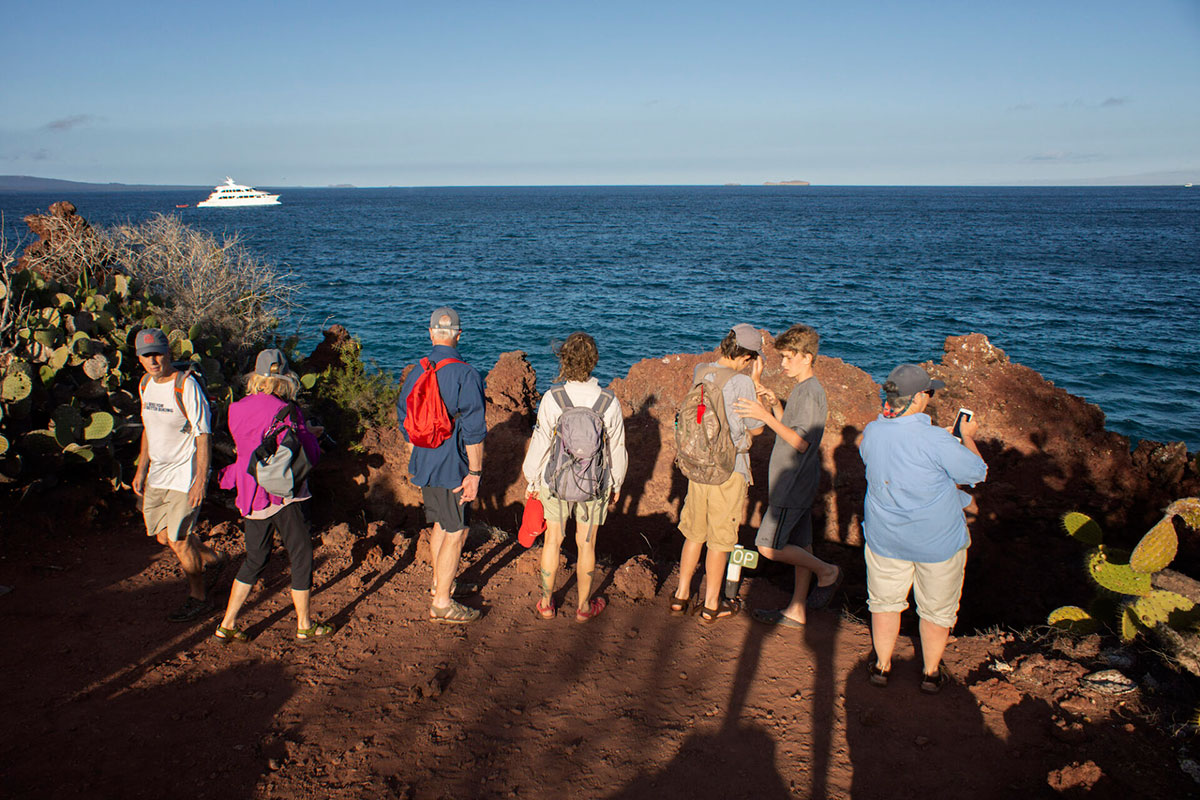
This afternoon, we visit Rabida, a small island famous for its reddish lava rocks (rich in iron). The red beach is home to a small colony of sea lions. There is also a small salt-water lagoon where you can see ducks and stilts, and sometimes flamingos. The trail goes inland offering beautiful views of the beach and lagoon.
Look out for Darwin finches, flycatchers and mockingbirds. In the cliffs along the coast, you can see Nazca and blue-footed boobies, brown noddy, herons, Galapagos sea lions and fur seals.
You can snorkel from the beach and explore a sheltered rocky area, great for spotting fish, sea lions, reef sharks and small invertebrates clinging to the vertical walls.
Return to the EcoGalaxy for dinner.
North Seymour is home to large colonies of frigatebirds, blue-footed boobies nest on the ground and perform their courtship dance, and swallow-tailed gulls sit on cliff edges.
You’ll see land iguanas inland while their marine cousins bask on the rocks by the sea, close to sea lions.
This is a great place to snorkel as it has an abundance of diverse fish, but also sea lions, sharks, eels, turtles, rays and much more.
In the afternoon, you board a bus to the Highlands of Santa Cruz and a reserve there with highland forests where we look for giant Galapagos tortoises in their natural environment. We hope to see these gentle giants grazing and resting in freshwater ponds. Some reach over 300 kg/600 pounds in weight.
We’ll walk around 1-1.5km to spot these lumbering creatures, which usually move so slowly you can get a great picture.
Return to the EcoGalaxy for dinner.
El Barranco is in the south of Darwin Bay on Genovesa Island. The sea cliffs are made of fragile fractured lava so it’s an ideal place for storm petrels to build their colonies. These attracts short-eared owls preying on the nesting birds.
You’ll also come across red footed and Nazca boobies along the trail as you walk. At the base of the cliffs, you’ll see Galapagos fur seals resting in shaded areas.
Snorkelling is possible along the cliffs where there are many fish and you’ll have a good chance of seeing sharks, rays and sea lions.
Genovesa is a popular island with birdwatchers as it is home to large colonies of seabirds. You will be amazed by the noise of hundreds of boobies, gulls and frigatebirds wheeling overhead, perched in bushes or nesting on the sandy terrain.
The trail is a fabulous encounter with wildlife as there are animals everywhere; sea lions and marine iguanas; night herons, lava and swallow tailed gulls, Darwin finches, Galapagos doves, mockingbirds and many more species.
There are several great places to snorkel in Darwin’s Bay– shallow waters near the beach, deep waters along the cliffs across the bay.
Return to the EcoGalaxy for dinner.
You start the day with a trip to Sullivan Bay. The two-kilometre walk today will help you understand the creation of these volcanic islands. You’ll walk across Pahoehoe lava, with delicate textures that can only be seen in a few places around the world. This apparently barren landscape is full of life such as pioneer plants, lava lizards, and small birds.
There is also a lively undersea world which you can see when you jump from the dinghy, or beach, into the sea. Look out for schools of fish, Galapagos penguins, reef sharks, turtles and rays.
After lunch it’s off to Bartolome, one of the Galapagos’ most iconic destinations. It is also one of the few where you may see penguins.
Pinnacle Rock is a dramatic lookout point with beautiful peach-colour beach at its foot. You hike for about a mile today, up to a viewpoint over Pinnacle Rock and the volcanic lunar landscape, with many other Galapagos islands in the background.
Snorkelling here is some of the best in the islands, thanks to the clear, calm waters and Galapagos penguins that dart around plus a range of colourful fish, reef sharks, turtles, and possible rays.
Return to the EcoGalaxy for dinner.
This morning, we land on San Cristobal and head to the Interpretation Centre on the outskirts of Puerto Baquerizo. This centre traces human history in the Galapagos Islands, from the early Spanish explorers to the present times.
Then, transfer to the airport for your flight back to mainland Ecuador or transfer to itinerary A.
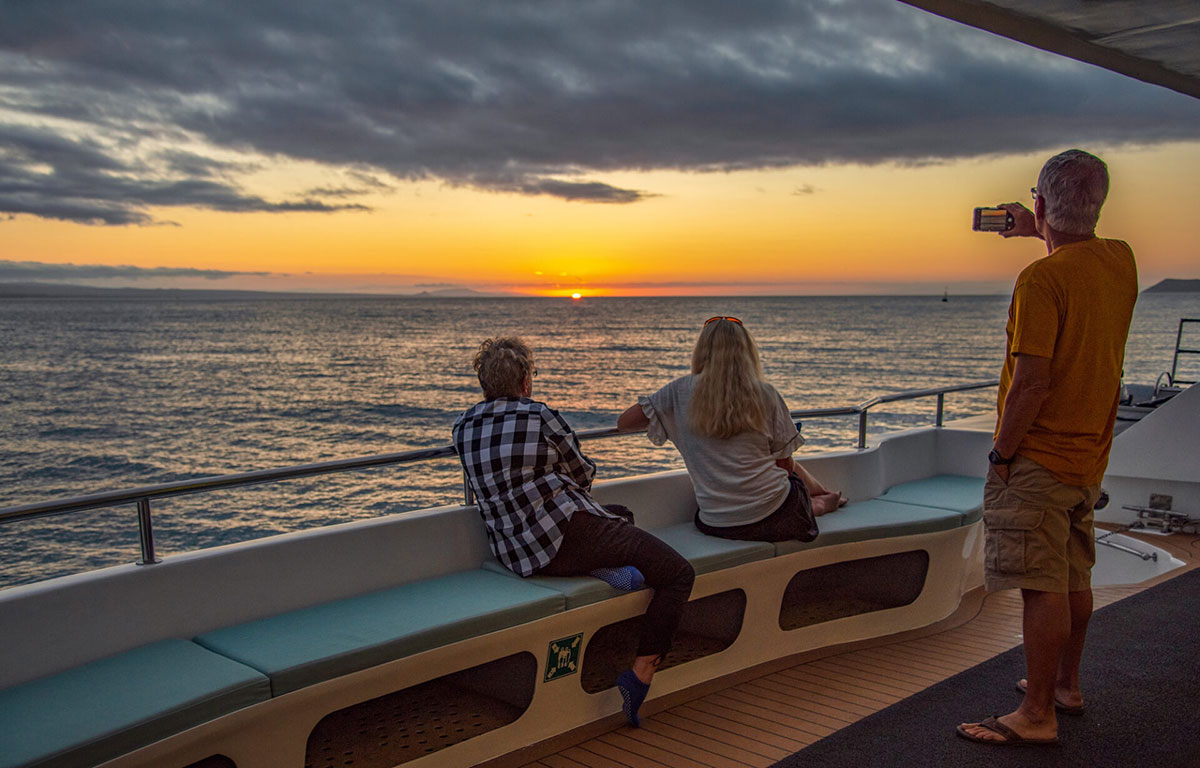
There is no real ‘best’ time to visit Galapagos on holiday as there is always wonderful wildlife and weather to enjoy. Read our blog for more.
Most animals – tortoises, sharks, sea lions and boobies – are found year round and many of the species here are non-migratory.
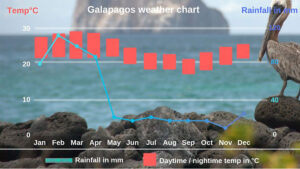
The Galapagos Islands are located right on the equator so air and water temperatures do not vary by much.
Having said that, there are two recognised seasons, and each months brings natural marvels for the visitor to enjoy.
Below is our quick guide to the weather and wildlife you can find on the Galapagos Islands.
Calm, clear warm waters, great for snorkelling, often without a wetsuit.
Great weather, with February and March being the hottest and sunniest months with blue skies and sunshine.
Occasional heavy bursts of rain in the afternoons.
Sea temperatures: 22-25°C / 72-77°F
Land temperatures: 21-32°C / 72-90°F
It’s a great time for marine life in the cooler seas. Snorkellers may want a wetsuit.
August and September the coolest when you may need a jacket in the evenings and the sea can be choppy.
There can be mist on the islands in the mornings (garua) which usually burns off by midday leaving overcast skies or a sunny afternoon.
Sea temperatures: 15-22°C / 60-72°F
Land temperatures: 18-24°C / 65-75°F