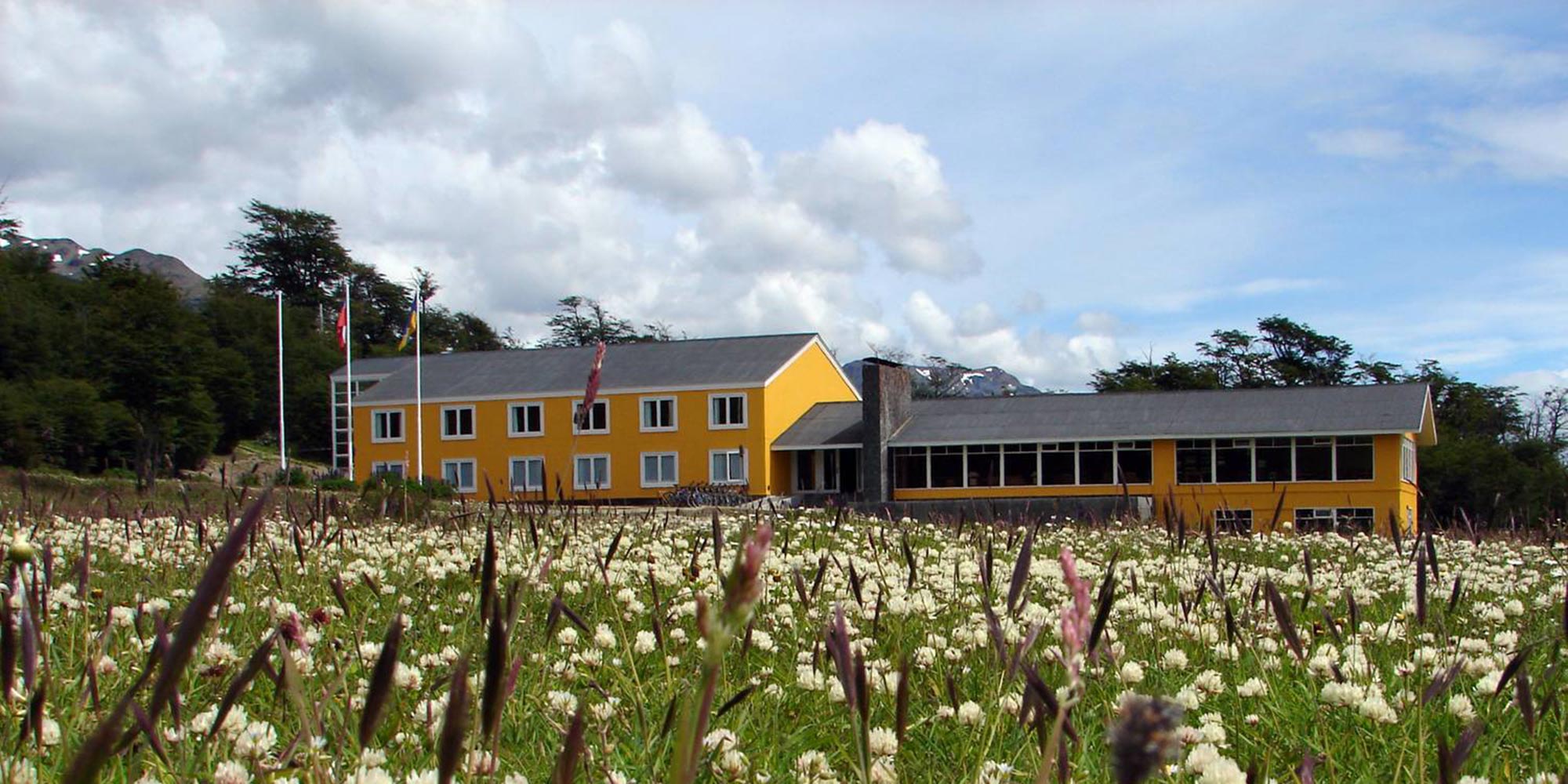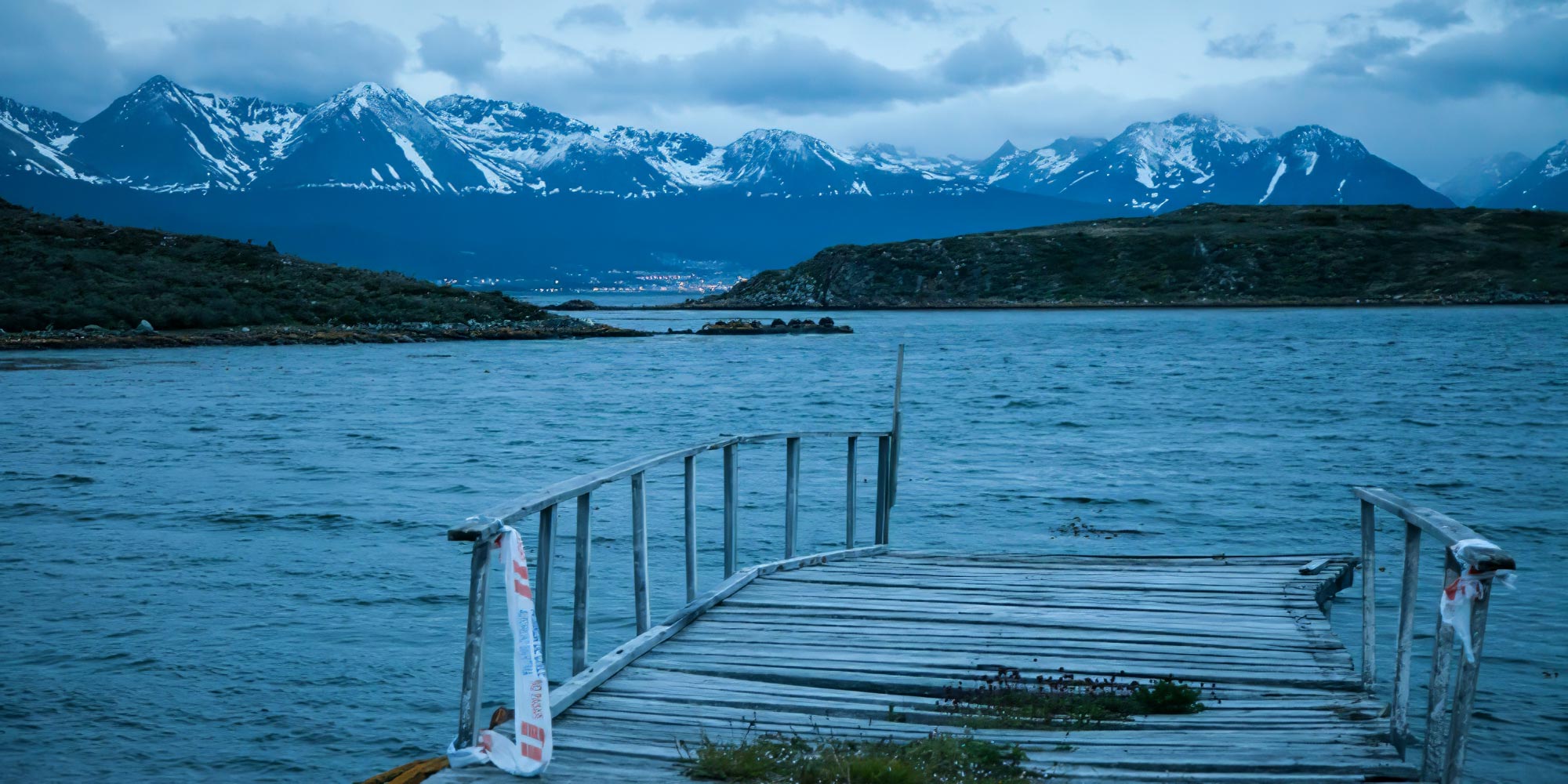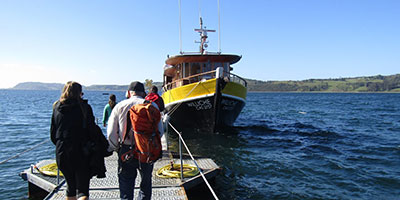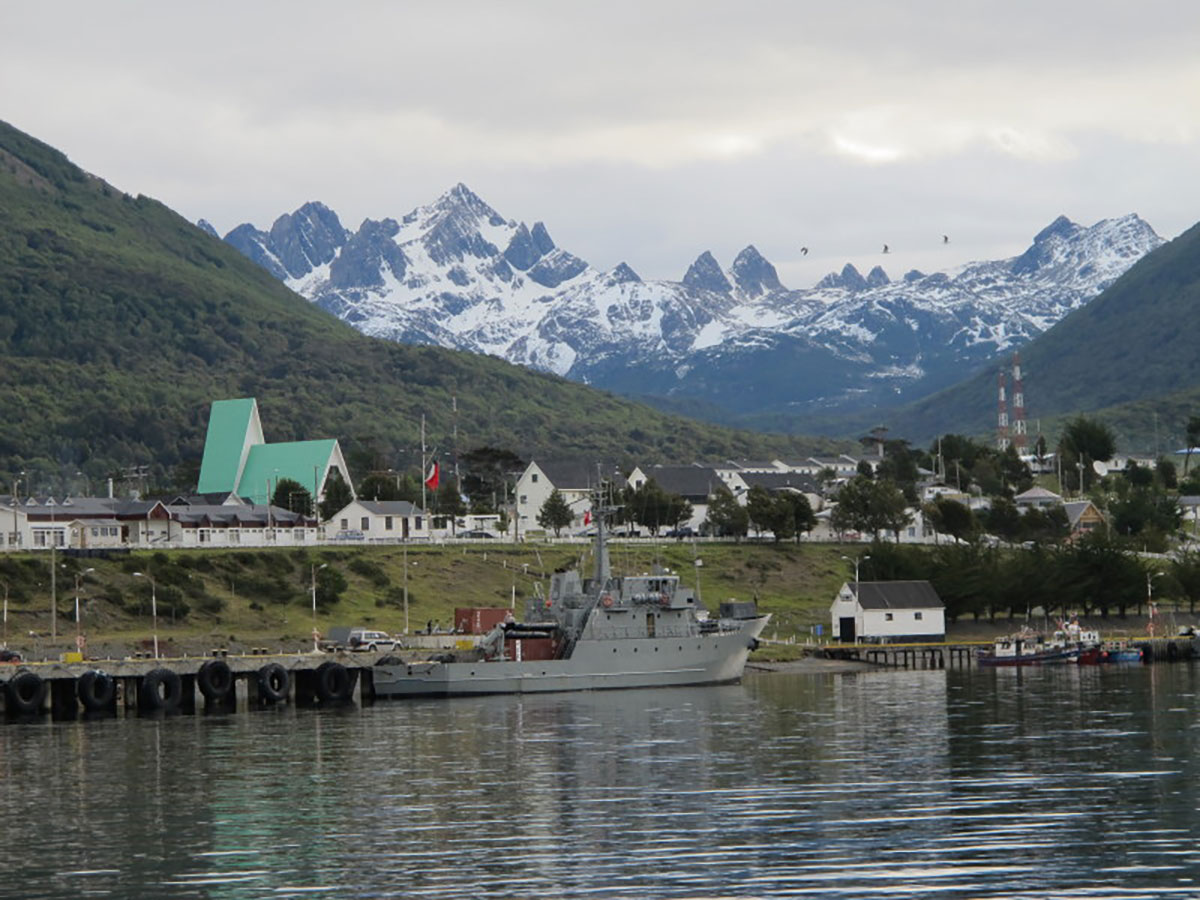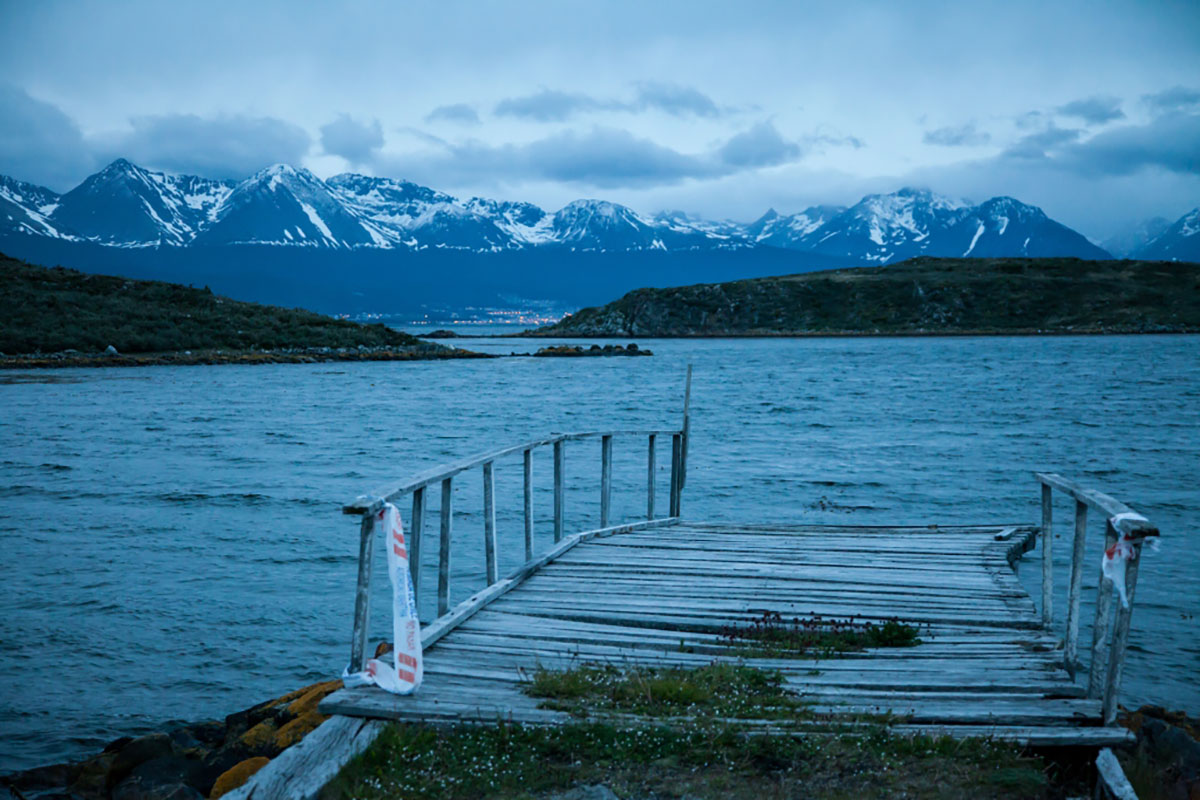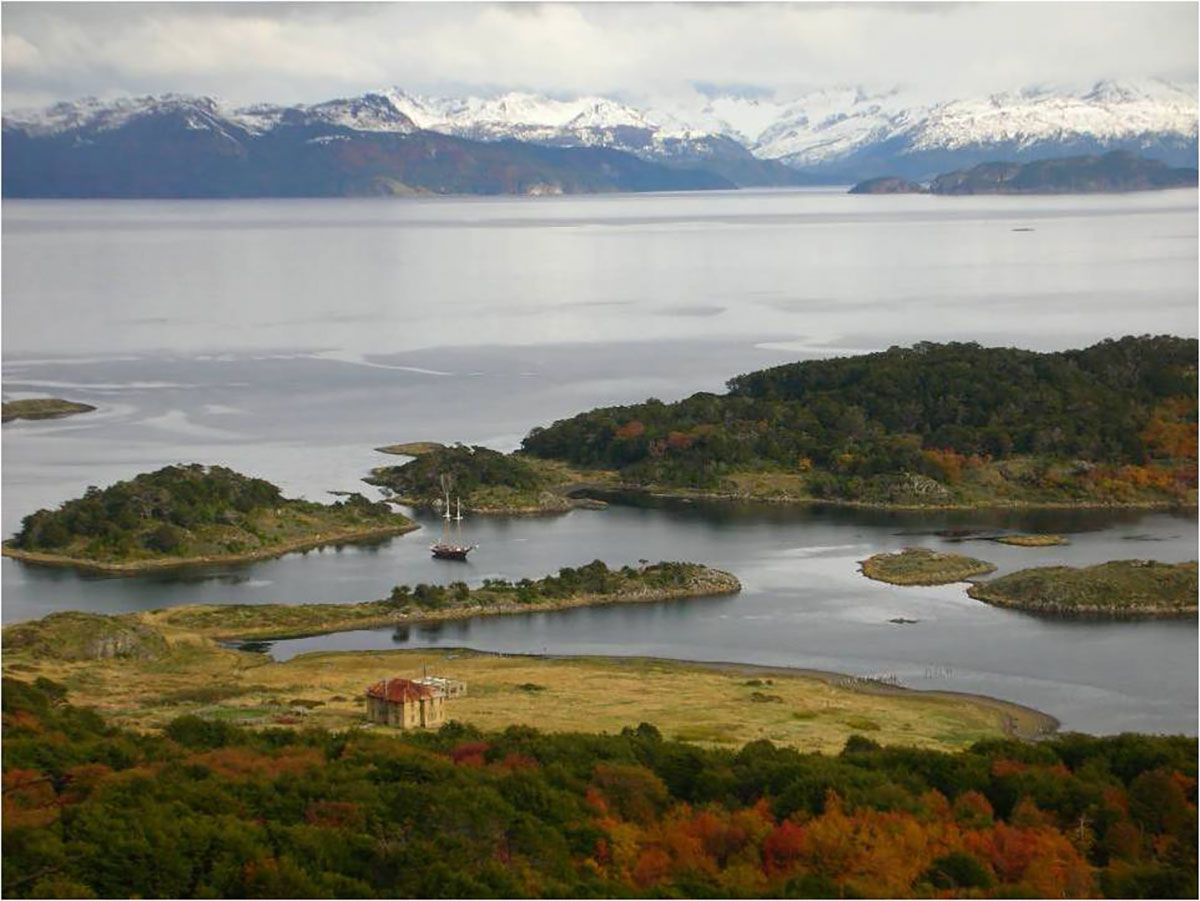
Arrive in Puerto Williams after a flight from Punta Arenas or a boat crossing of the Beagle Channel from Ushuaia to Puerto Navarino and land transfer to Puerto Williams.
Overnight at the lodge and time permitting choice of included excursion.
Breakfast at the Lodge.
Choice of included excursions.
Included excursions:
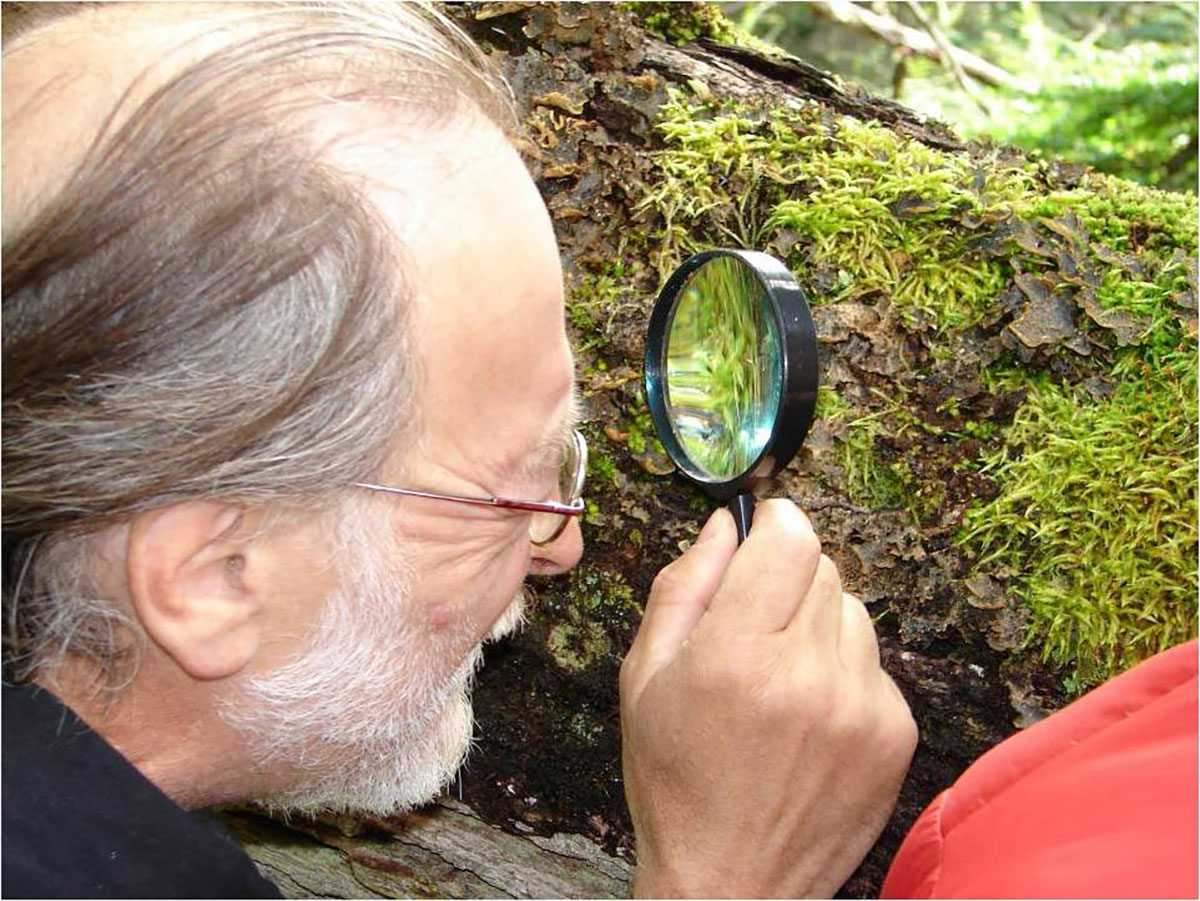
This excursion will lead you to discover the wonders of the Miniature Forests of Cape Horn Archipelago, through a so-called “Tourism with Hand Lens”. This is an educational activity sponsored by Omora Foundation. A bio-cultural conservation initiative started by the local communities living in the last Sub-Antarctic forests, as well as the active commitment of the Yagan community living in Puerto Williams.
Omora Park is located 3 kilometers (2 miles) west of Puerto Williams. Within the park the main habitats of the region are found: coigüe, lenga and ñirre forests, sphagnum peatlands, beaver wetlands and alpine areas. During the excursion you will be assisted by a specialized tour guide.
The trails have signs that describe the biological and cultural features of the island in Spanish, Yagan, English and Latin-scientific languages. The park is an Omora foundation project, a non-governmental organization dedicated to bio-cultural conservation at the southernmost tip of South America, named after the Yagan word for hummingbird.
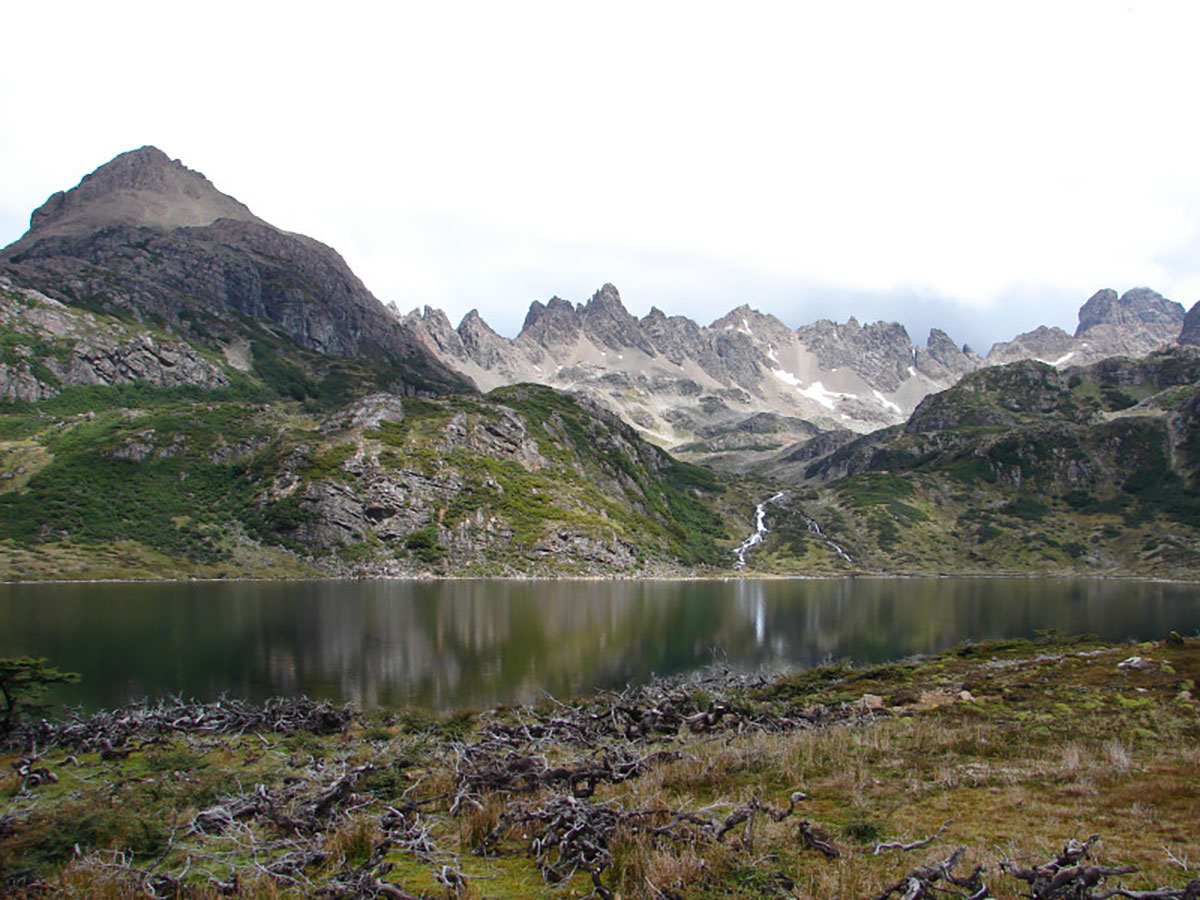
Enjoy a hike along the Los Bronces River. You will walk up through forests of lenga and calafate bushes on Cerro Róbalo finishing at the Los Bronces Waterfall. Snack and time to enjoy the view.
At agreed time, hike down the hill to continue along the coast, enjoying the Beagle Channel landscape back to the lodge.
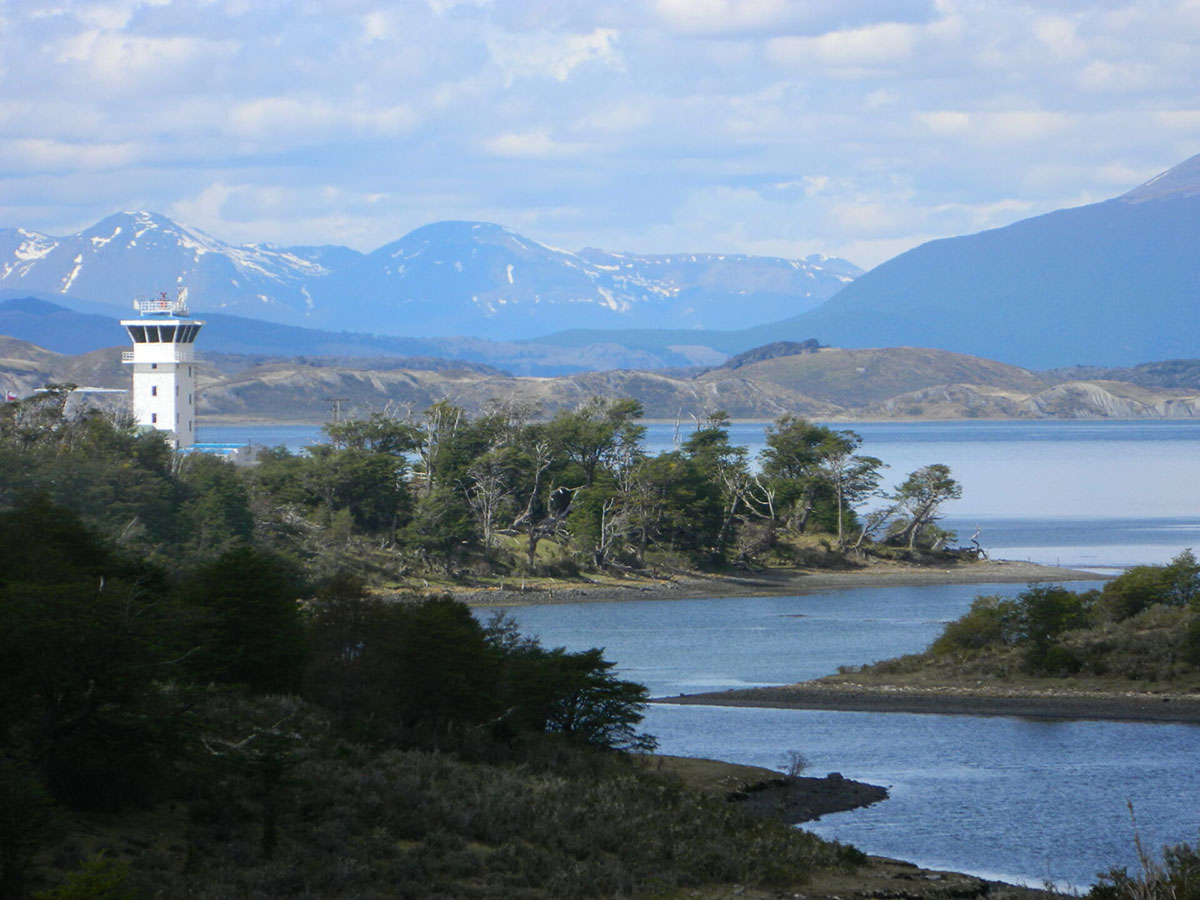
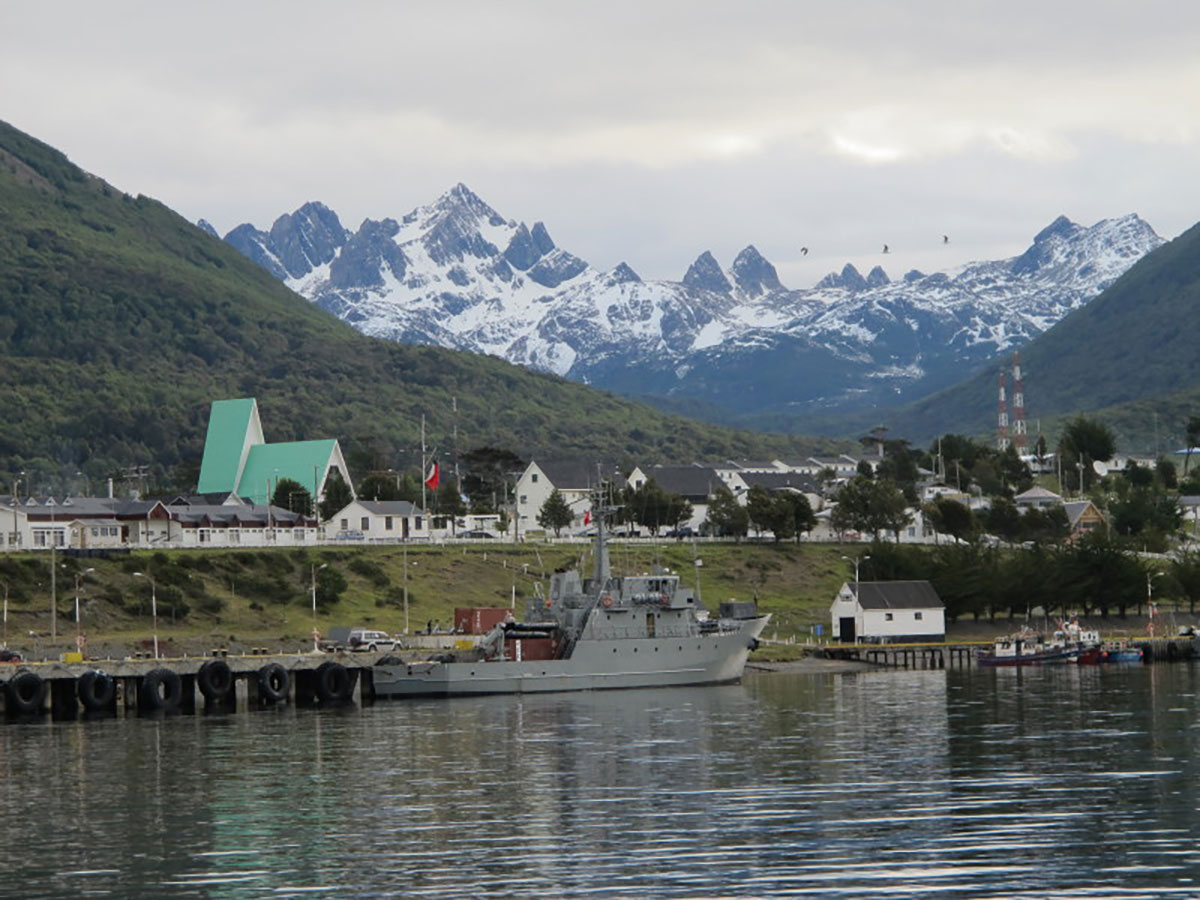
Visit Puerto Williams, the southernmost town in the world, named after Juan Williams, the founder of Fort Bulnes. Puerto Williams is the most populated area of Navarino Island, located at the end of the American continent, opposite the southern coast of Tierra del Fuego and north of Cape Horn.
Puerto Williams currently has a population of 2,500 inhabitants. You will visit the Marina Micalvi pier, mooring site of ocean faring sailboats and the Martín Gusinde Museum detailing the history of the Yagan indigenous peoples. Gusinde was a world famous anthropologist and priest of the Order of the Divine Word that worked with Yagan and Ona communities from 1918 to 1923.
*** The museum is closed on Mondays. Saturdays and Sundays open in the afternoons only.
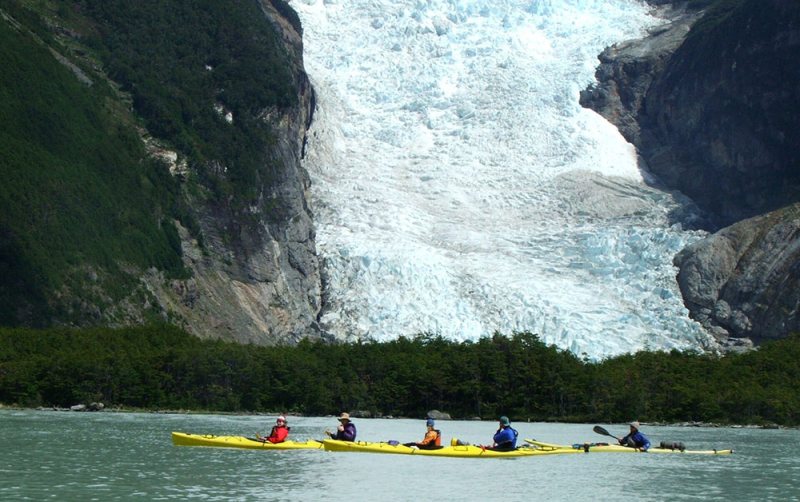
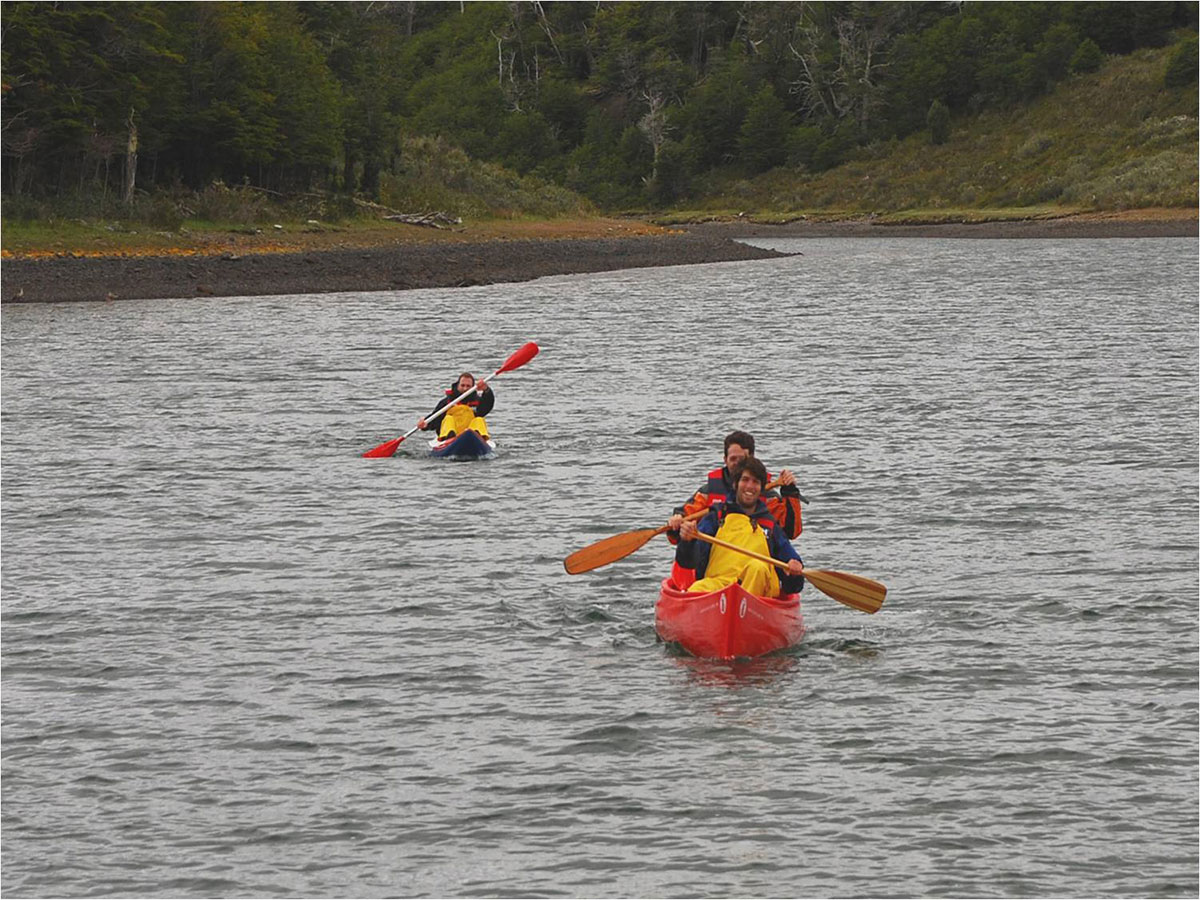
Enjoy a unique kayaking adventure on waters off the Beagle Channel. Paddle along the Lauta and Micalvi Sounds passing by the nesting sites of thousands of seagulls and several species of geese. You will then paddle by the fishing cove and Marina Micalvi pier.
Full equipment included (wet suit, gloves, ankle boots, waterproof protector, life vest), snack and a certified expedition guide.
Brief transfer to the starting point of the hike. This excursion borders the peninsula at the north end of Puerto Williams Bay, offering views of Puerto Williams and the Beagle Channel.
This narrow piece of land at the end of the peninsula is the nesting site for thousands of Dominican and Austral seagulls, Pilpilen, and many geese species.
Note: Nesting and breeding takes place from mid November to early March.
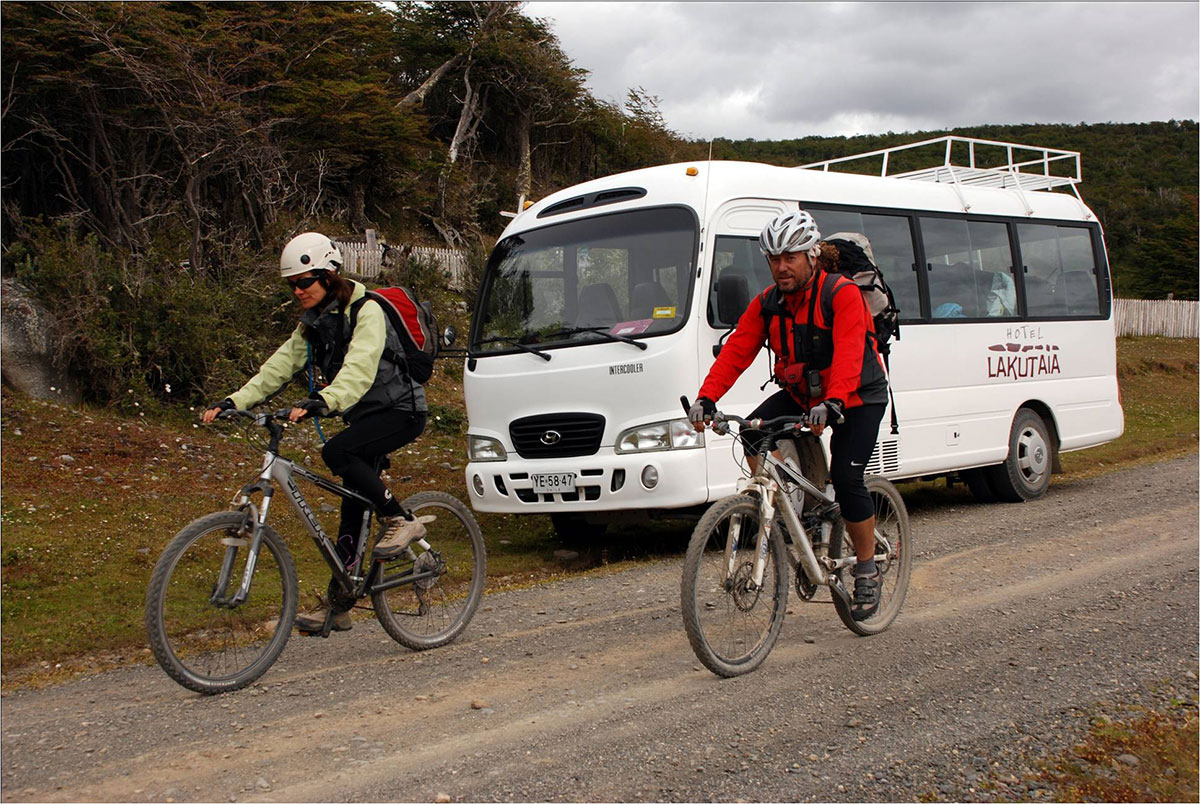
Horse ride for 2 hours or longer though sub-Antarctic woods and bordering the Beagle Channel.
Overnight, lunch and dinner at the lodge.
Breakfast at the Lodge.
At an agreed time, transfers to the airport or the wharf in time to board your flight back to Punta Arenas or your boat to Ushuaia.
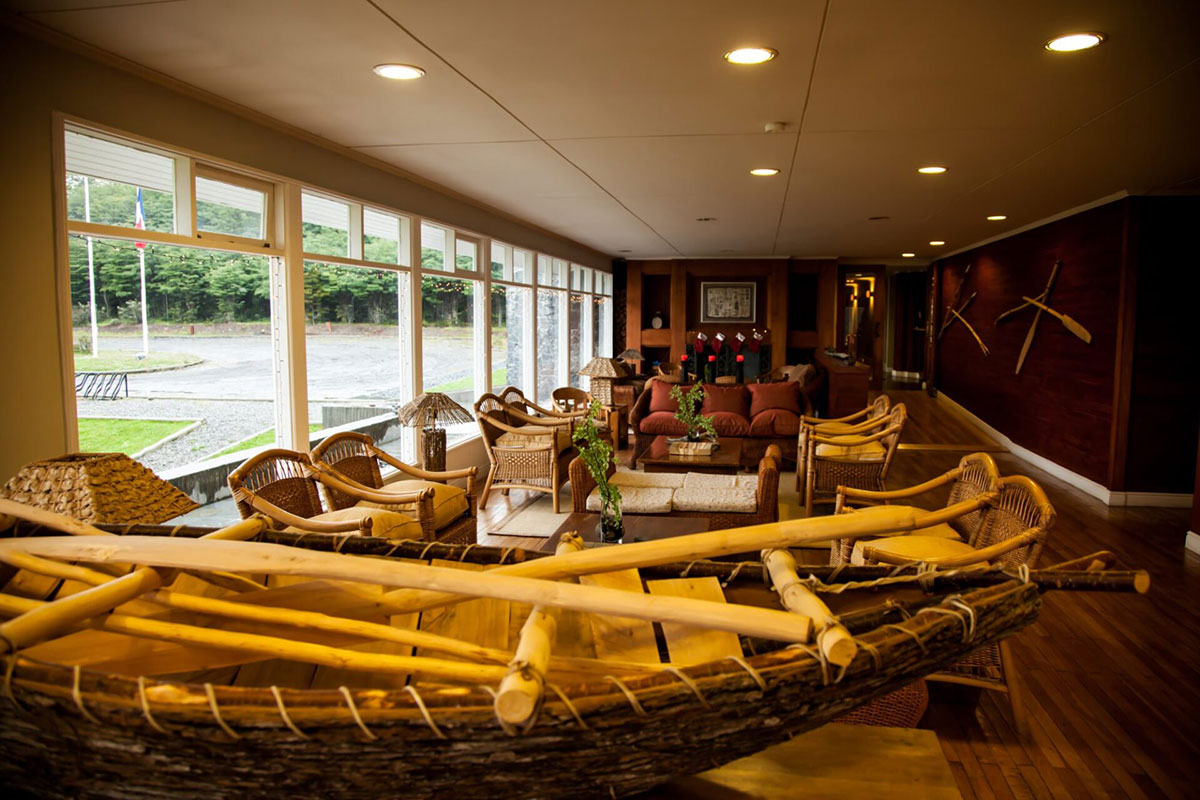
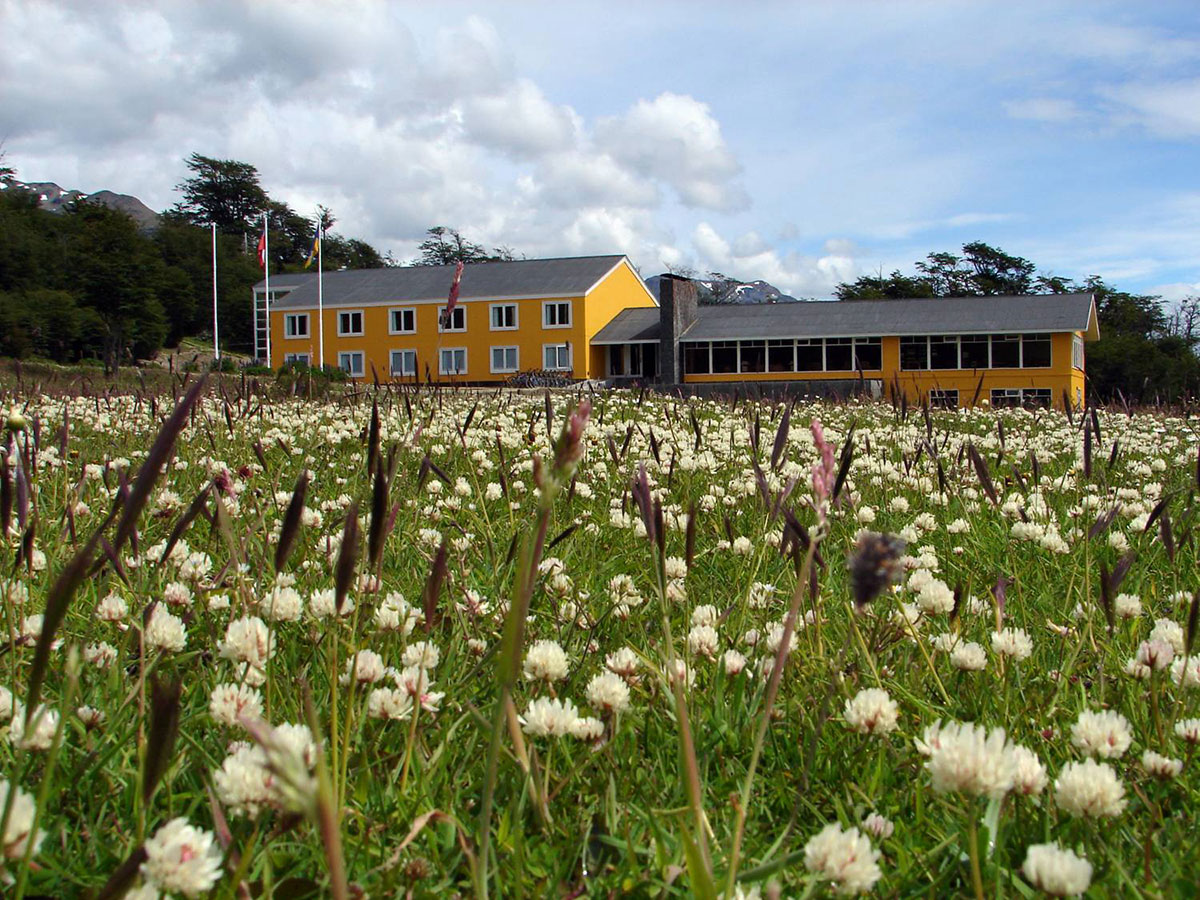
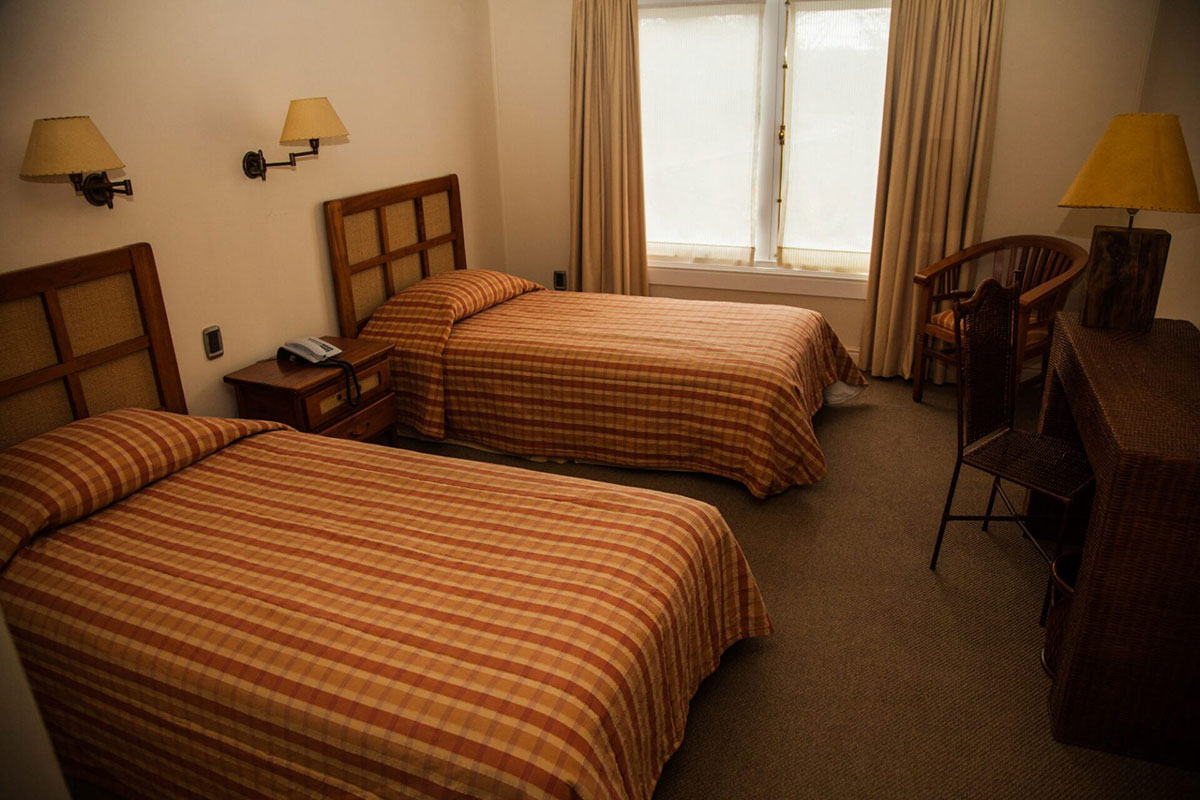
Comfortable 24-bedroom lodge, all rooms with heating and ensuite bathroom.
There are no interconnecting rooms, and one room is adapted for accessibility.
Wifi in common areas only. Internet in this part of the world can be slow and intermittent.
There is a restaurant plus a library/map room.
This trip is open to people of all ages an abilities as itineraries can be tailored to your requirements.
You can be as active or relaxed as you like. There is no high altitude to worry about.
Almost all dietary requirements can be catered for – please get in touch. Note that the Lodge needs at least 15 days’ notice for some dietary requirements.
All meals are served at the lodge’s restaurant. Chefs draw on local ingredients and recipes as well as international flavours to provide tasty food.
Guides are bilingual, English-speaking experts with many years’ experience of trekking in the area.
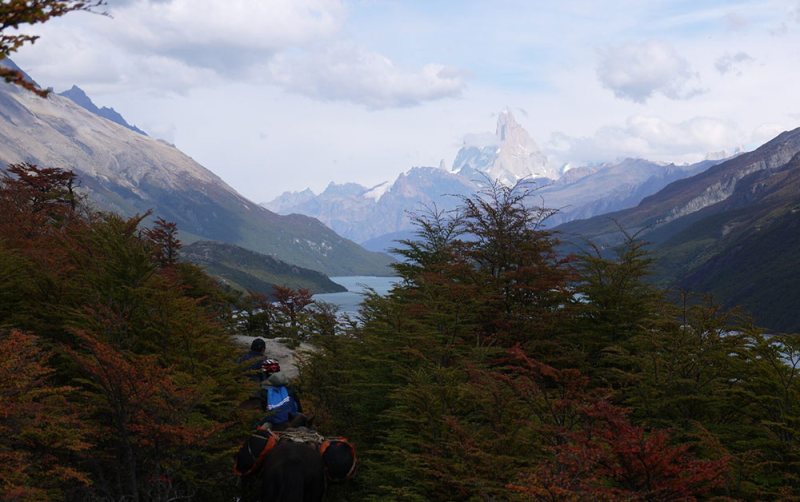
A breathtaking Patagonian adventure highlighted by perfect hiking weather and stunning El Chaltén trails.
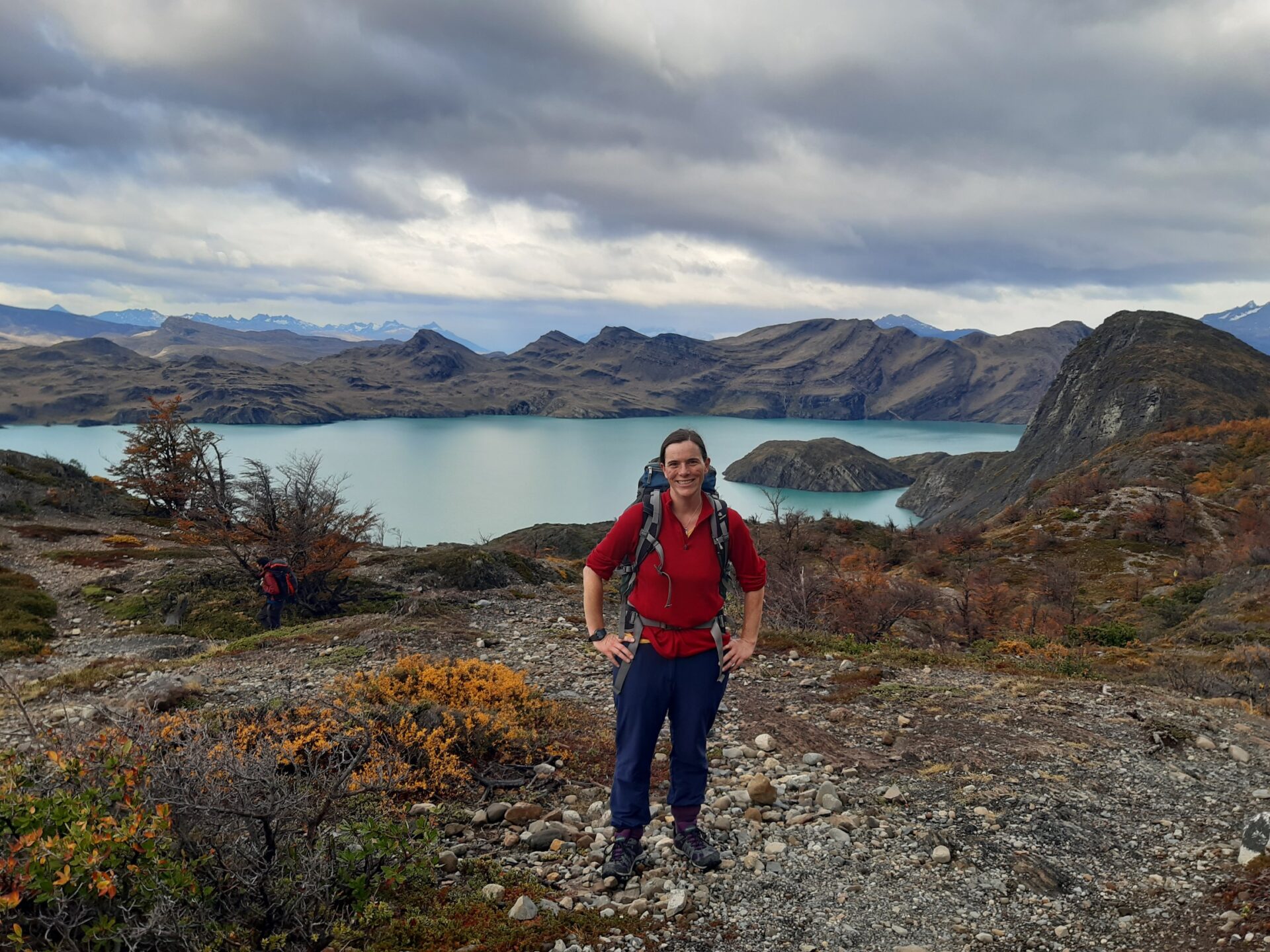
An extraordinary Patagonia trek under clear skies, camping beneath Cerro Torre and exploring the region’s breathtaking ice fields.
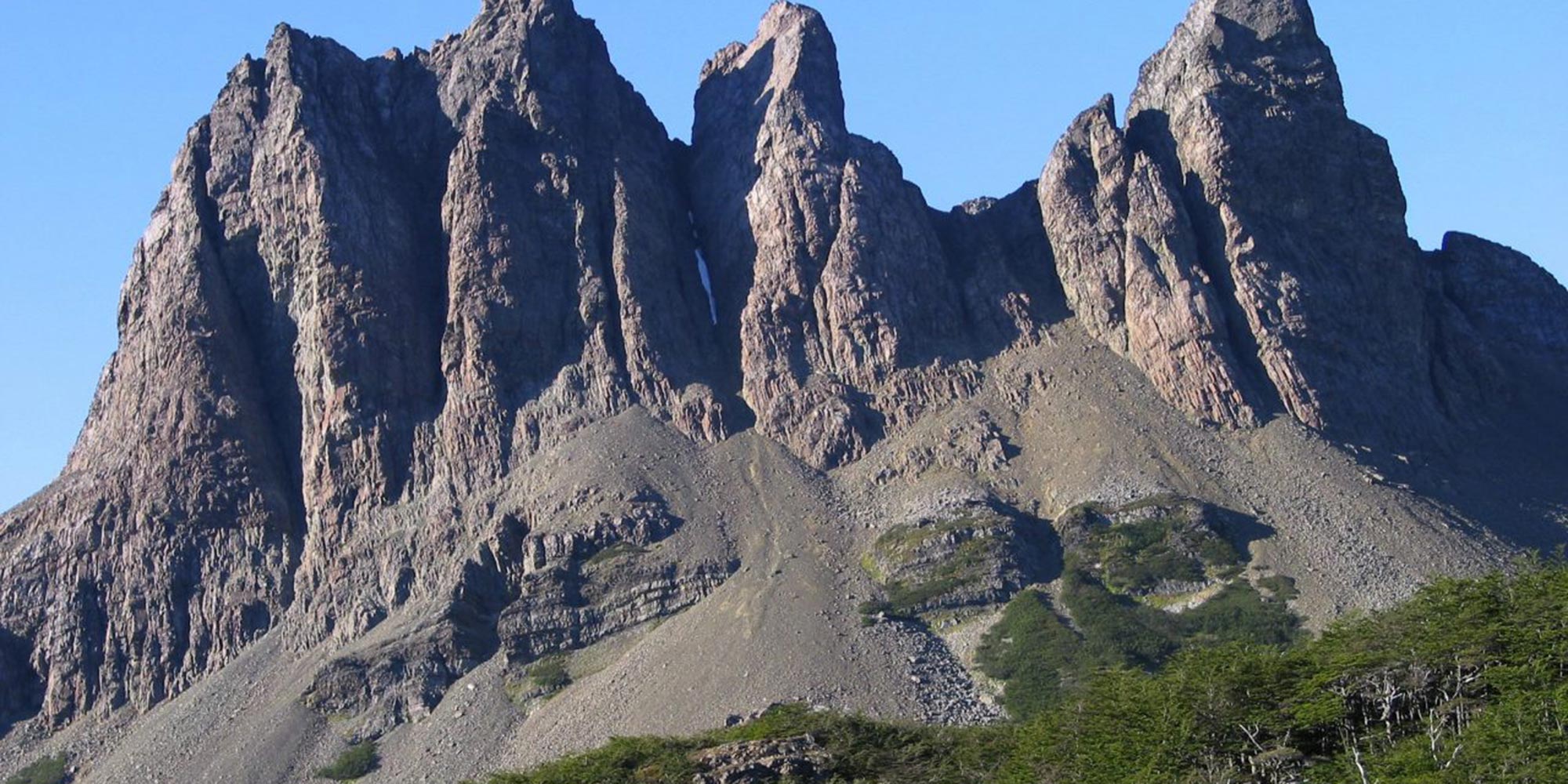
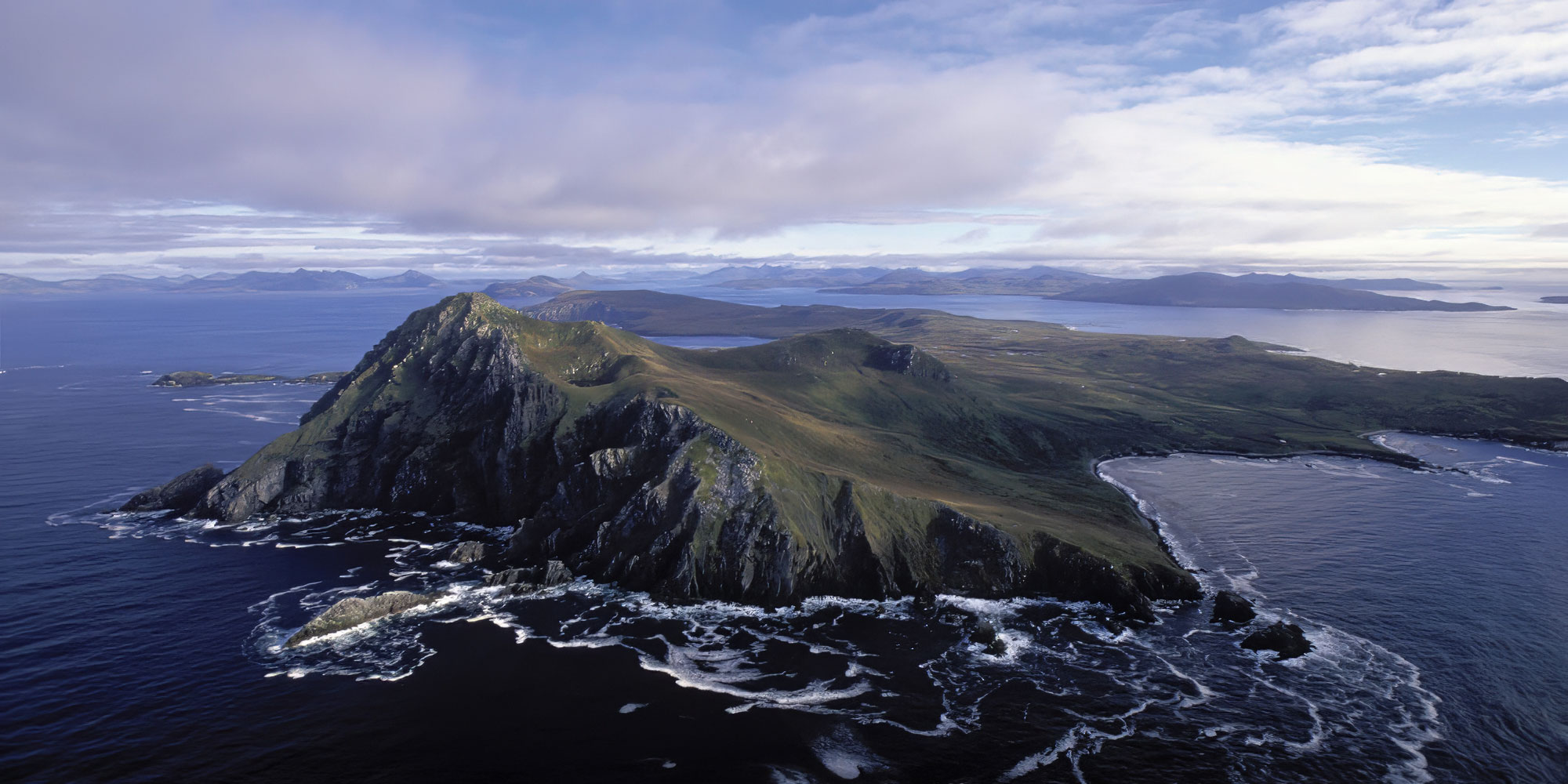
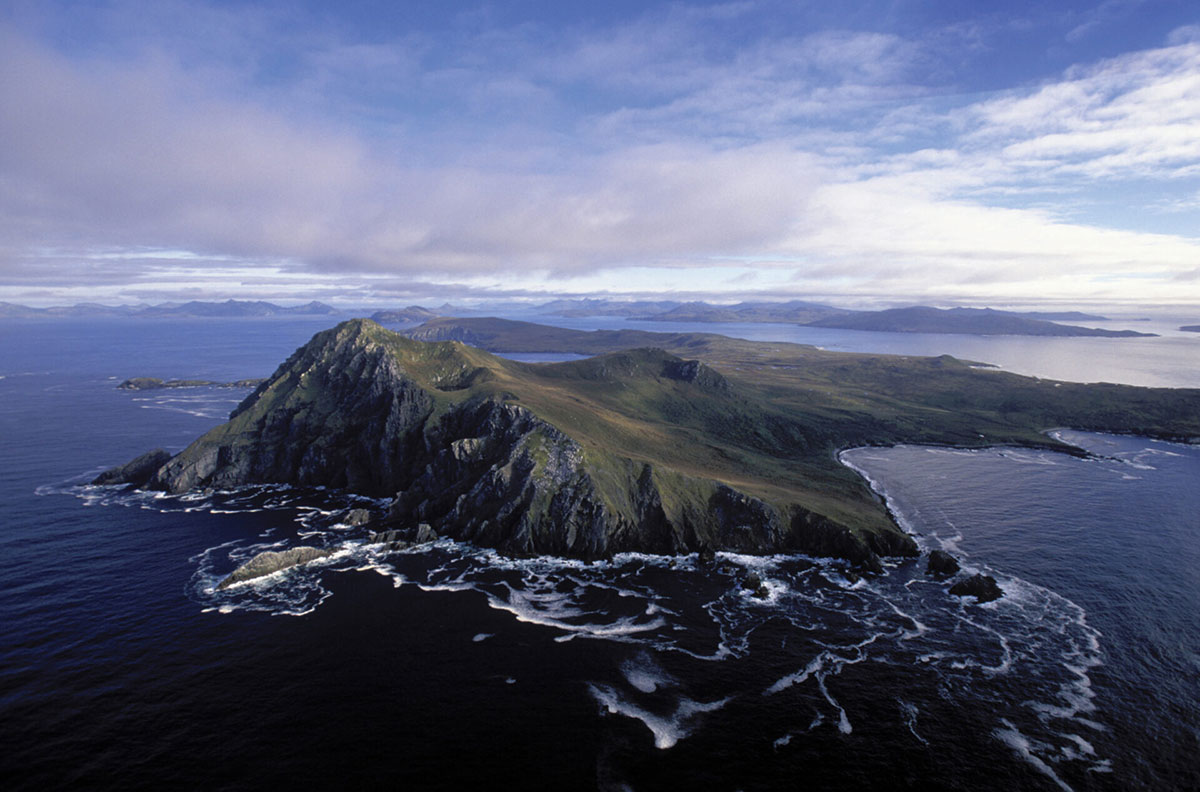
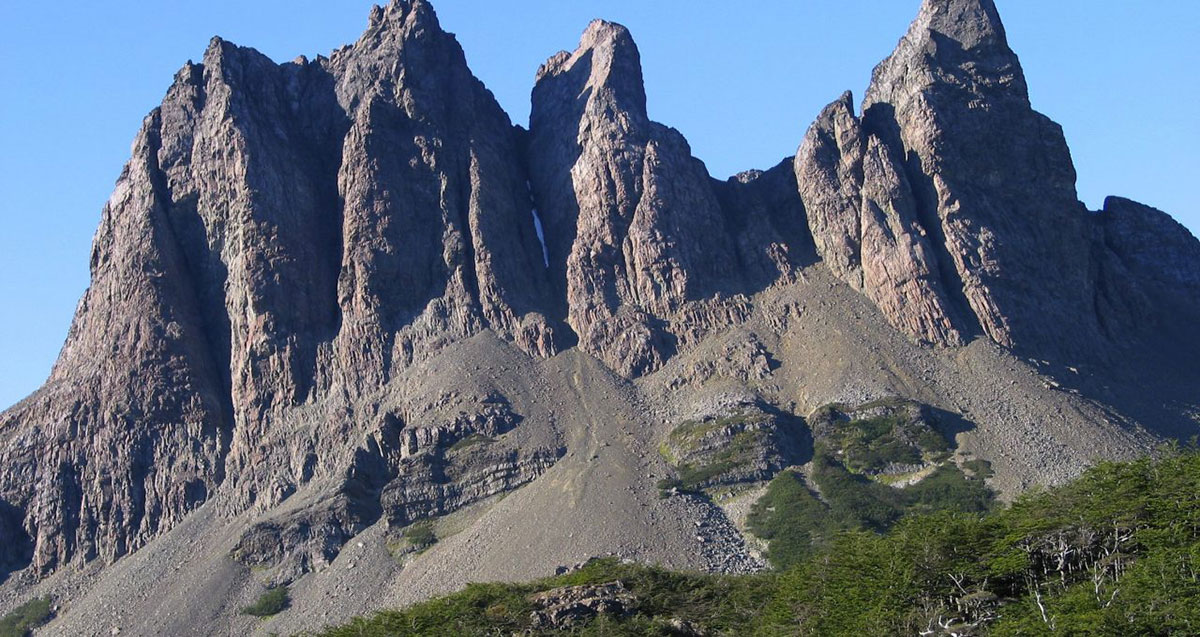
Explore Navarino Island, sandwiched between Tierra del Fuego and the Beagle Channel to the north and Cape Horn to the south.
This adventure takes you to the world’s end.
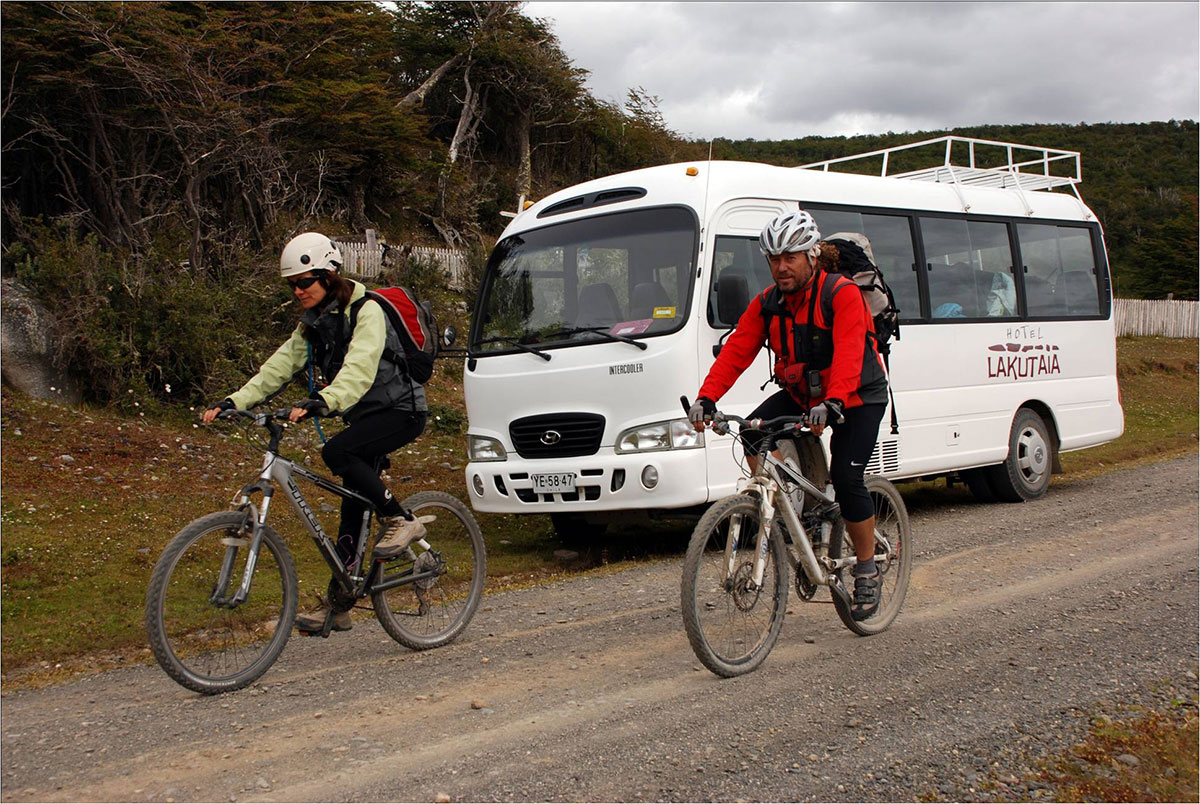
A choice of treks, horse rides and mountain bike are also part of the package.
Fly from Punta Arenas in Chile, or cross the Beagle Channel by boat from Ushuaia, Argentina, to get there.
Transportation to and from Punta Arenas and/or Ushuaia are included in the price.
There are also options for shorter or longer stays or itineraries specially tailored to requested activities.
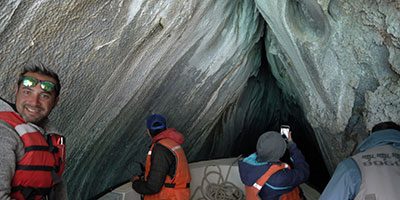
From: $1220 per person
Duration
4 days
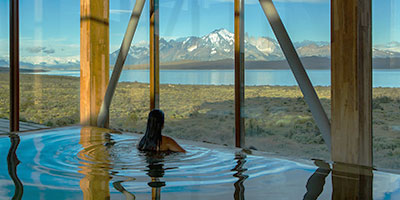
From: $3930 per person
Duration
4 days
Southern Patagonia (latitudes 49° to 55°), encompassing the southern Andes of Chile and Argentina plus Tierra del Fuego, has an altogether more vertical aspect than the rest of Patagonia.
As the continent tapers towards its southern point, the Andes take on new characteristics and offer some truly impressive panoramas.
Much of southern Patagonia is characterized by virgin landscapes where man’s hand has either not been present or, because of the scale of the landscapes, goes almost unnoticed. To the west of the semi-arid Patagonian plateau, mile-high granite spires – e.g. Cerro Torre and Fitzroy in Argentina and the Torres and Cuernos del Paine in Chile – rise abruptly from the Andean foothills, while vast blue glaciers, fringed by southern beech forest, gouge out thevalleys below.
At the heart of these magnificent landscapes lies the South Patagonian Ice Field, an utterly remote icy wilderness spanning hundreds of kilometers, whose glaciers – including the Perito Moreno and Upsala – are tens of kilometres long by severalkilometers wide.
Also characteristic of the southern Patagonian Andes are its turquoise, iceberg-filled lakes. To the west lies the southern portion of the Chilean Archipelago, comprising snow-capped islands and fjords.
Across the Magellan Straits from mainland Patagonia lies Tierra del Fuego which, like the rest of Patagonia, is divided between Argentina and Chile.
The north and east of Tierra del Fuego is flat, but flanking the Beagle Channel in the south, the tail end of the Andes provide very dramatic mountain scenery.
The Lake District (latitudes 40° to 45°) or the Araucania, is a region of dramatic conical volcanoes, evergreen, high-canopy forests and, of course, lakes.
It straddles the Chile-Argentine border, and also takes in Chiloe island, in the extreme north of the Chilean Archipelago. This region stretches from Temuco in the north to Chiloe in the south.
Central Patagonia (latitudes 45 to 49) is one of South America’s best-kept secrets. The vast wilderness area can be divided in two:
This huge region, embracing the sparsely-inhabited southern Araucaria and Aisén Region, features temperate rainforests, snow-peaks (often extinct volcanoes), lakes and, to the west, the Chilean Archipelago: a labyrinth of fjords and mountain-islands. This, the Chilean portion of central Patagonia, boasts the northernmost of Patagonia’s many giant, sea-level glaciers.
The San Raphael Glacier, probably this region’s most famous landmark, is an immense hanging glacier whose seracs calve into an iceberg-filled lagoon.
Find out more about Patagonia with our blog about its wildlife.
For most people, Patagonia evokes a vast, windblown plateau, jagged mountains and the life of the gauchos.
The steppe that occupies much of southern South America is only one aspect of a magical region, jam-packed with amazing and contrasting landscapes.
Patagonia (latitudes 40°-55°, approximately) embraces a vast portion of southern Chile and Argentina, from the Rio Colorado in the north, to Tierra del Fuego in the south.
For convenience, we have divided the region into three zones: the Lakes District of northern Patagonian, central Patagonia and southern Patagonia.
Good kit is vital for every trip.
Book with Andean Trails and get 15% off Páramo’s fantastic ethical and high performance outdoor gear.
When planning for the varied climatic conditions encountered in Paine, layering is the most practical and versatile clothing system. It’s worth remembering that our clothing keeps us warm by retaining and isolating the heat we ourselves create.
To best maintain body heat, several layers of lightweight, warm and quick-drying clothing are far more efficient than one or two thick layers. Layers should have the following qualities:
First (base) layer: This layer wicks the sweat away from our skin, thus helping keep the body dry and warm. To this end, synthetic fabrics such as polypropylene should be used.
Mid layers: These isolating layers should also be synthetic (e.g. the known polar linings such as polartec or windblock, which are light and insulate twice as well as wool). Very important layers for retaining body heat.
Outer layer / shell: Finally, the vital layer which protects us from climatic adversities. A breathable, wind-proof and waterproof anorak, such as Goretex.
Give plenty of thought to kit selection, and try to keep weight down.
We also carry an extensive first aid kit & oxygen on all trips, but these are generally for emergencies only.
Chilean Patagonia, in the south of the country, has a climate with lower temperatures compared to the rest of Chile.
It can be better to go in the Austral summer (Oct-March). Daylight hours are much longer at this time, with Nov-Feb being popular times to visit. October and March can be very colourful and vivid with less visitors, but weather can be more blustery.
In Patagonia, the weather is, putting it mildly, variable, and variable on a daily basis. It is usually cool and windy all year round but seldom does the temperature fall below freezing point. Some days start with snow and end in balmy sunshine. It is always interesting, and can range from 10°C-20°C in the summer, although the wind can make it feel chilly.
The vast unbroken stretch of ocean to the west and south of the South American continent leaves the Patagonian Andes very exposed to the saturated winds that circle the Antarctic landmass. Also the South Patagonia Ice field influence makes the weather hard to predict. In spring or early summer fine weather may deteriorate almost without warning, bringing rains and eventually snow. Even in summer (Dec-Mar) you should come prepared to find cold, strong winds (up to 130 km/hr) and rainfalls. The summer’s average temperature is 11ºC/52ºF (24ºC max, 2ºC min).
Winter visits to these southern areas are possible, but many hotels close and not all trips are possible. Daylight hours can be very short, but the lack of visitors can greatly improve chances of seeing wildlife in parks such as Paine.
The Lake District’s temperate climate can be said to resemble that of the UK, with rain possible but also enjoying long spells of fine, fresh weather in the summer (Oct-March).
A breathtaking Patagonian adventure highlighted by perfect hiking weather and stunning El Chaltén trails.
An extraordinary Patagonia trek under clear skies, camping beneath Cerro Torre and exploring the region’s breathtaking ice fields.