From: £3,125
From: $4,160
Note: This is an example, outline itinerary. There are set group departures where you enjoy trips with a shared guide or you can design a private tour to suit you. Extensions to Isabela or other neighbouring islands also available.
An English-speaking naturalist guide meets you at the VIP lounge at Baltra Airport to escort you on your excursion of the highlands of Santa Cruz Island.
Enjoy a delicious, locally sourced lunch at a farm in the western hills. Take in the area’s natural beauty, pit craters, lava tunnels, and learn more about the Scalesia and Guayabillo forests.
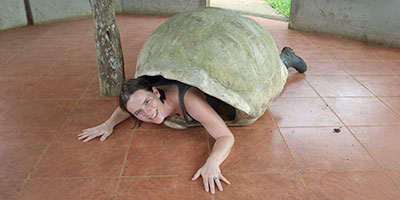
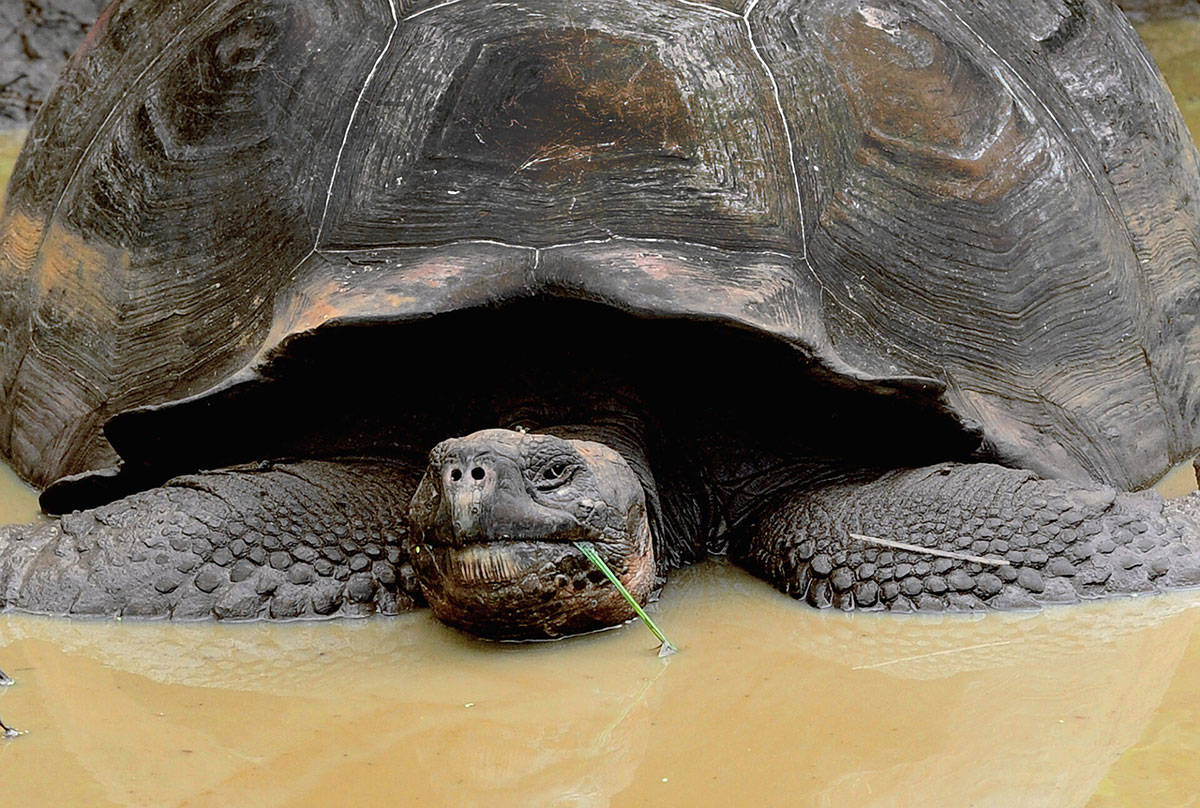
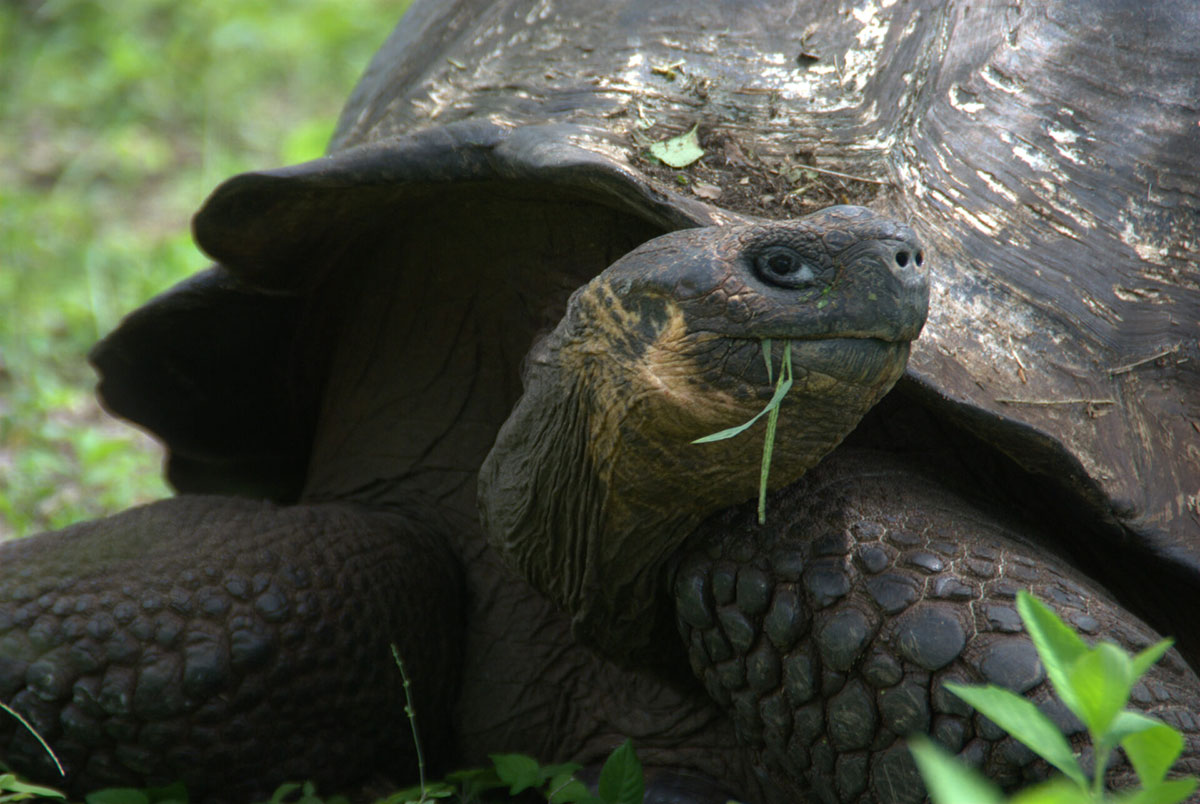
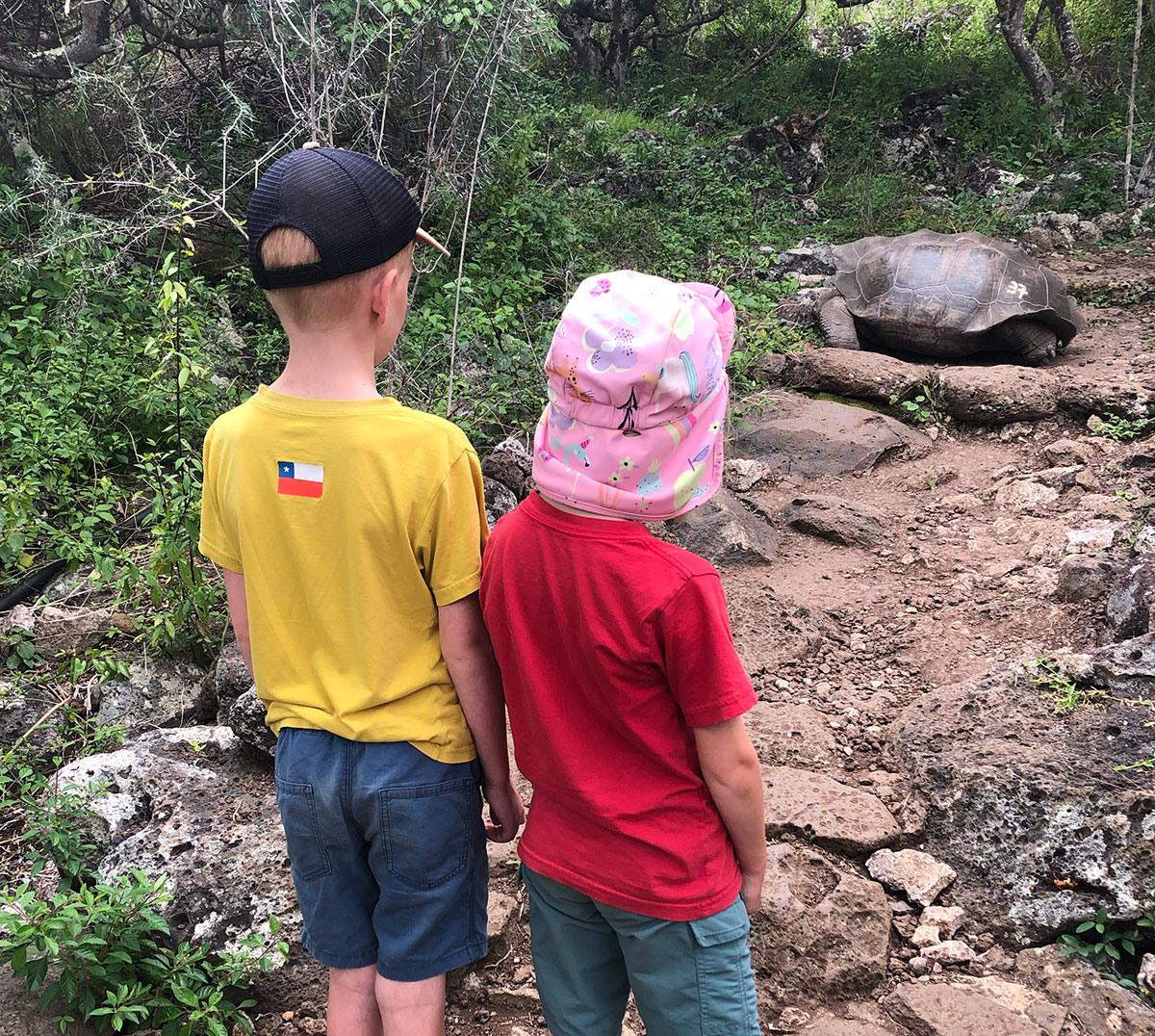
At the Tortoise Reserve, share some time in the giant tortoises’ natural habitat, surrounded by the abundant bird life of the area.
End this day at Galapagos Safari Camp with a sunset cocktail followed by dinner.
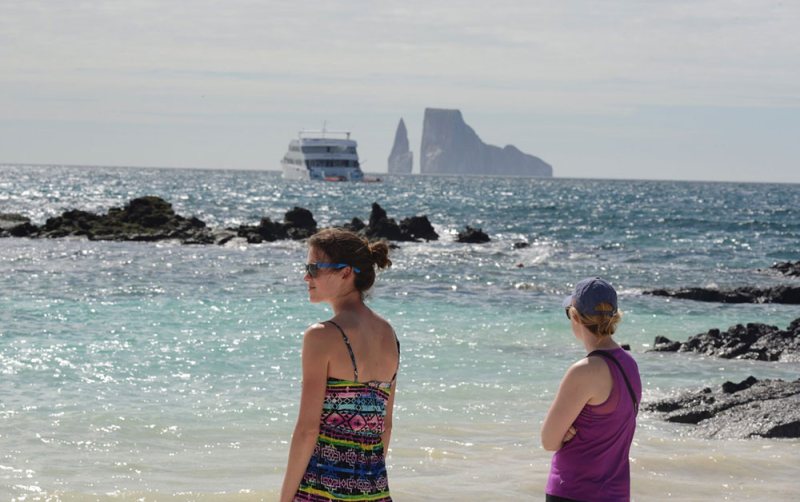
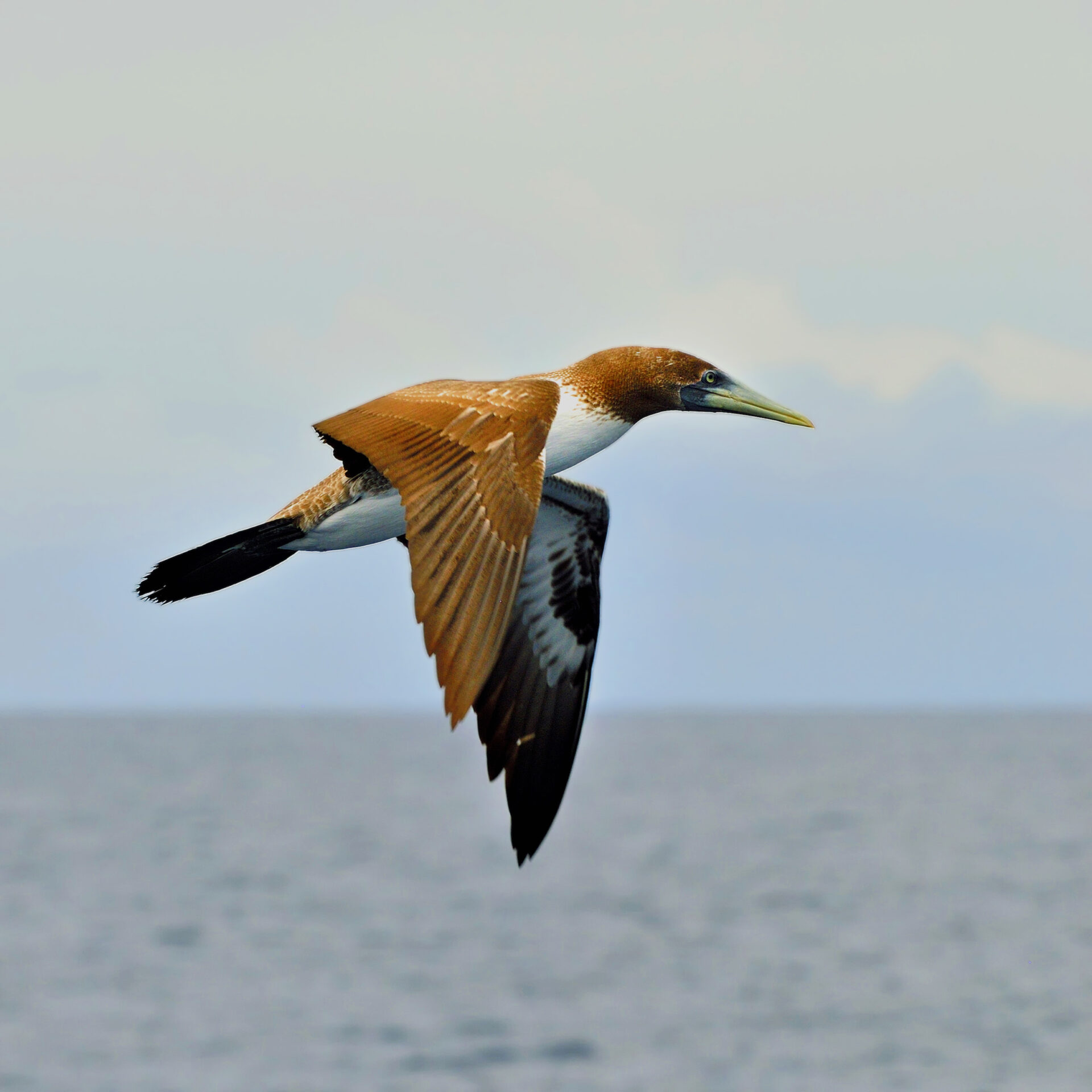
Travel with your group to the Itabaca Channel for the 1-hour boat trip to North Seymour, a low island consisting of submarine lava. The dry landing is rich in wildlife: sea lions, Swallow-tailed Gulls, Lava Gulls, Tropicbirds, Brown Noddy Terns, and Pelicans.
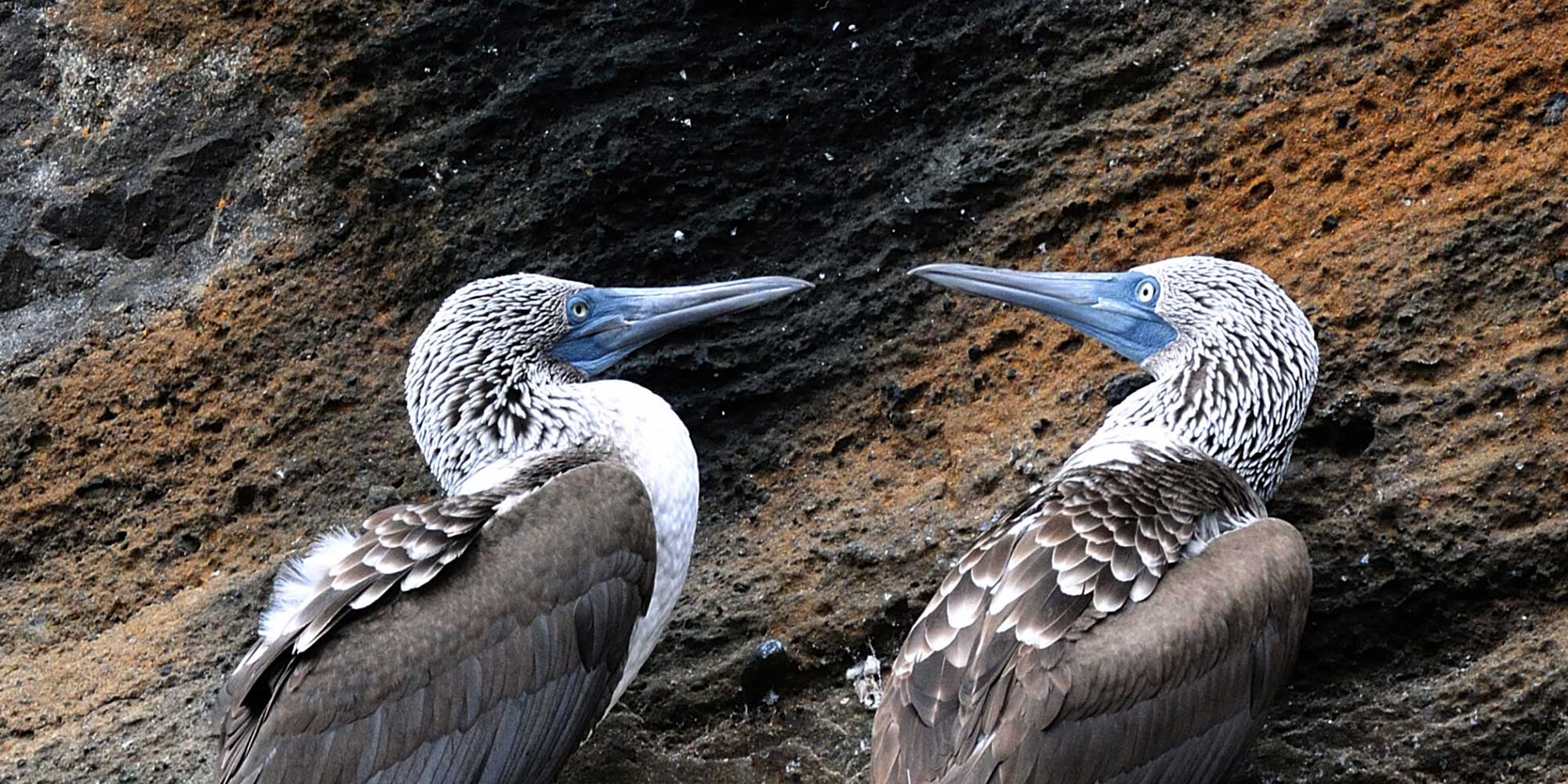
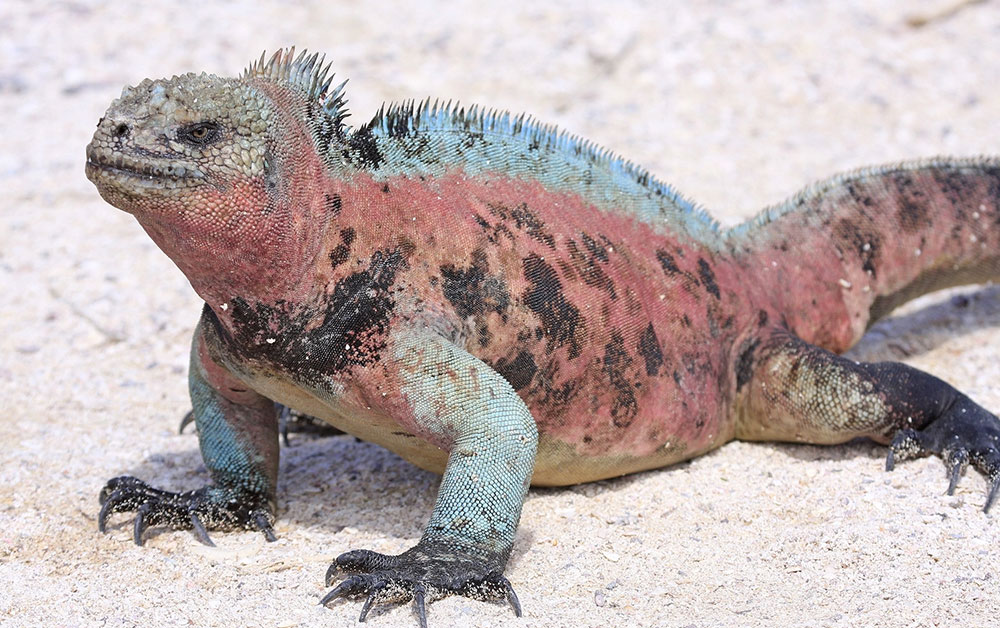
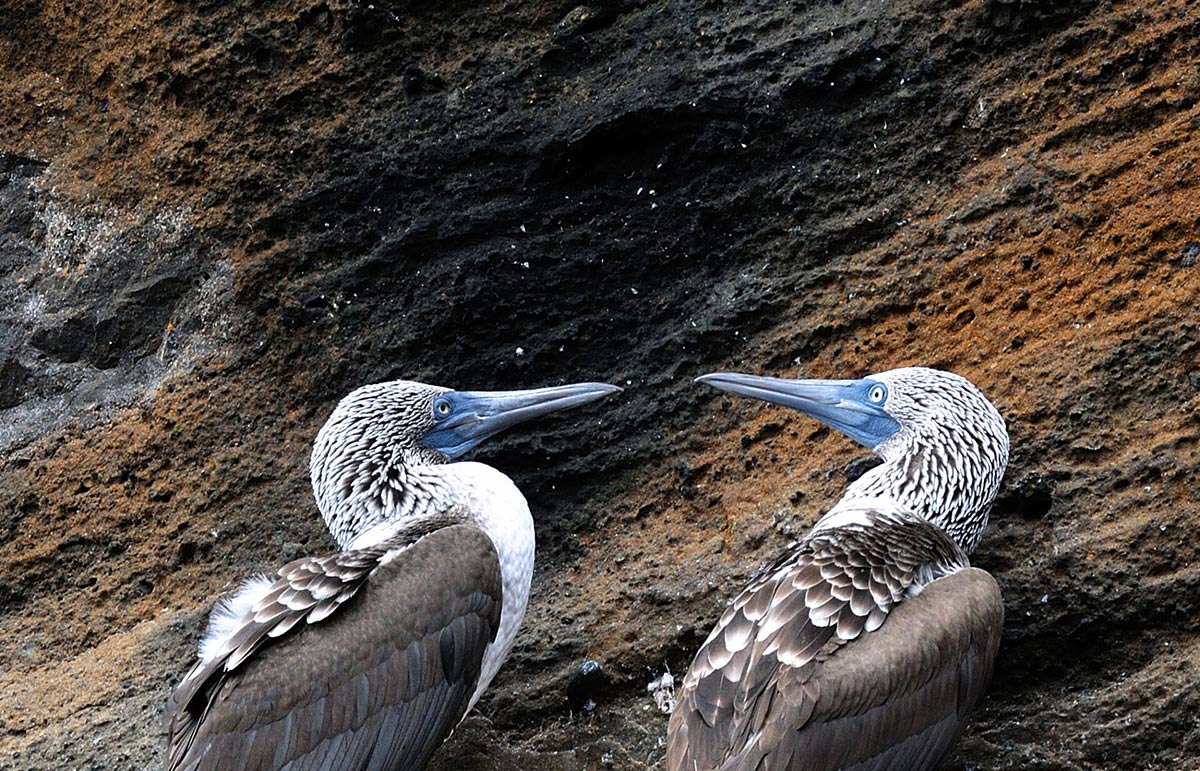
Along the shore, you will traverse a wide expanse of sand, which is a nesting area for marine iguanas. Just off the trail, frigate birds guard their nests in the saltbush clumps, and another trail leads to a flat area—a nesting site for blue-footed boobies.
The lovely Palo Santo forest, which is very arid during the dry season, turns green almost overnight once the rains begin.
Other endemic plants include the Opuntia cactus, Croton, Castela, and Sesuvium.
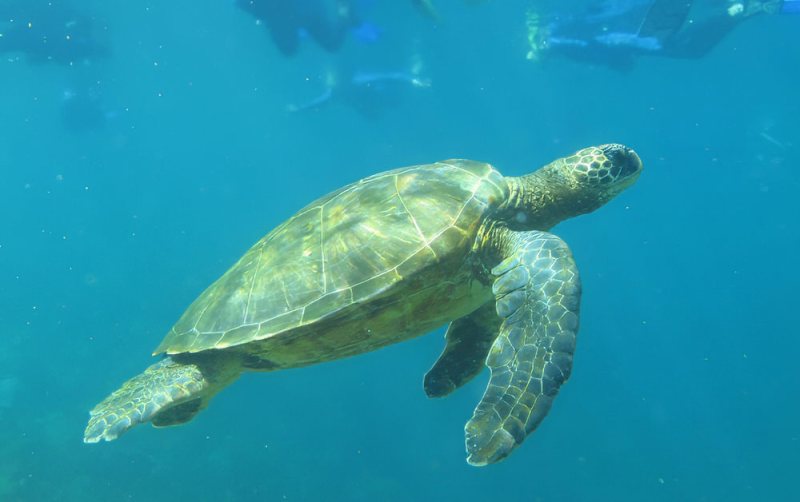
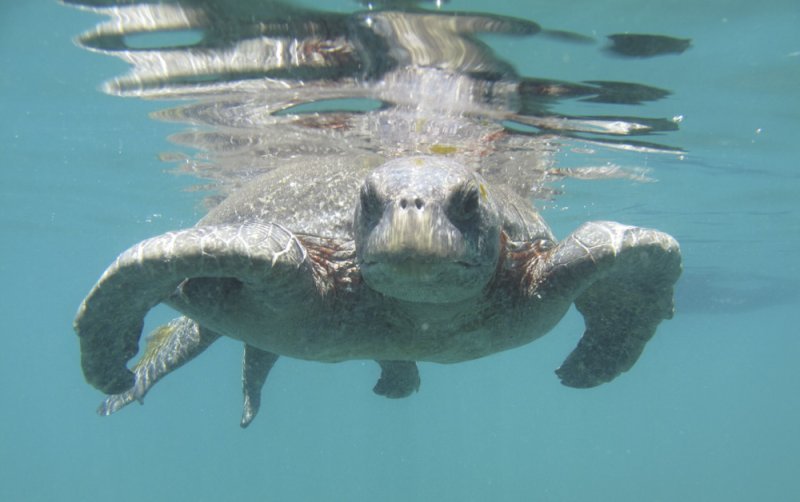
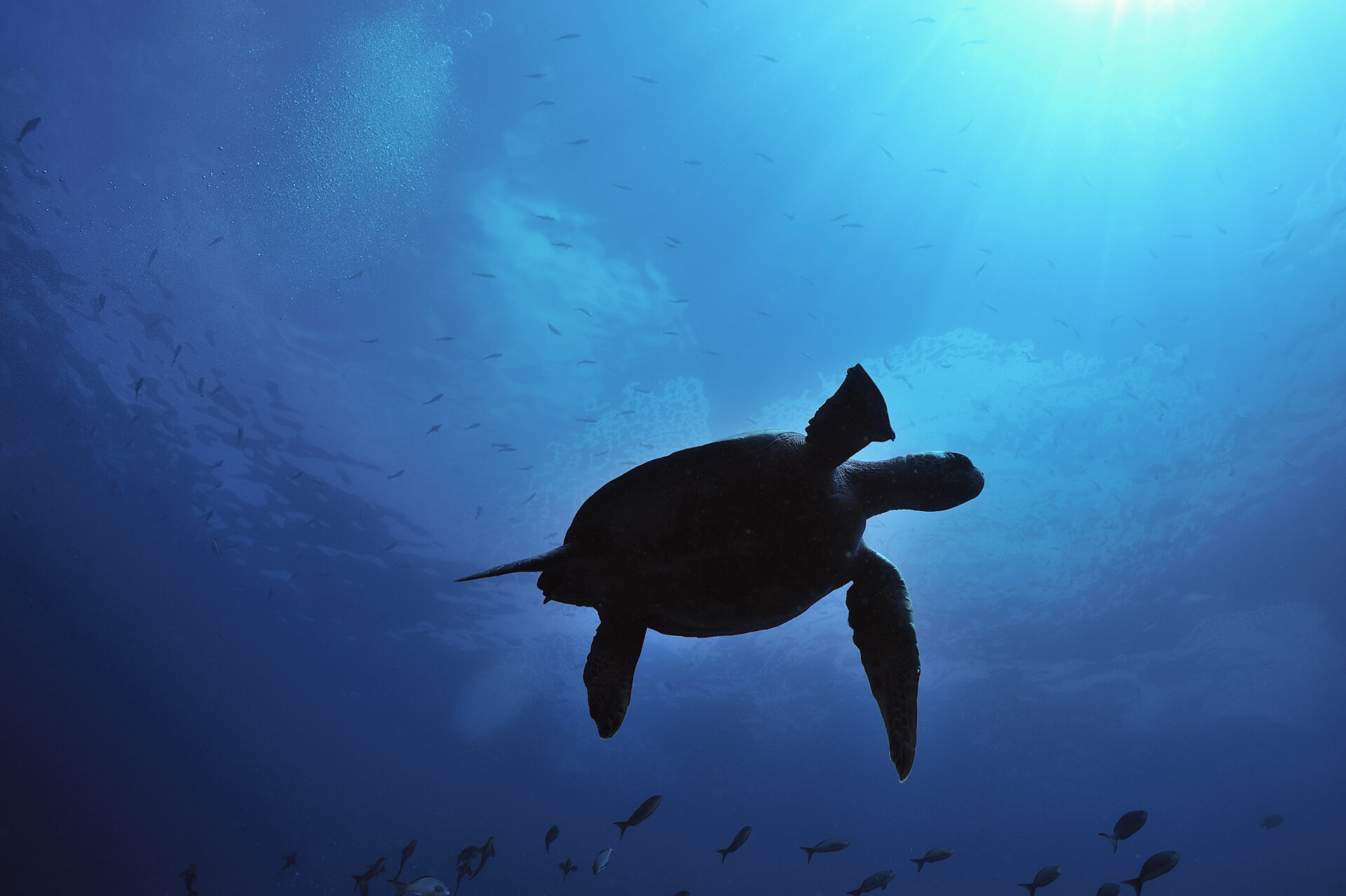
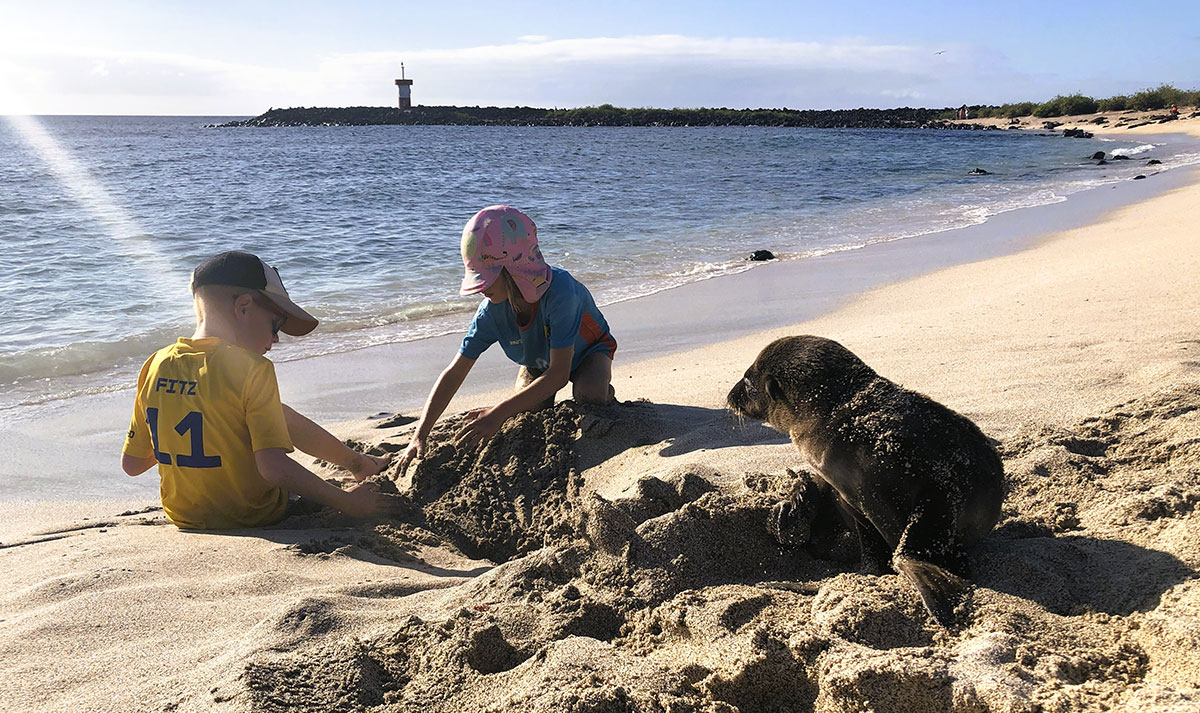
In the afternoon you may visit Las Bachas Beach, ideal for swimming and snorkelling. Its soft, white sand is derived from decomposed coral, a favourite nesting site for sea turtles.
Tour the Charles Darwin Research Station in the morning, followed by lunch in one of Puerto Ayora’s vibrant restaurants.
Spend the rest of the day relaxing at Tortuga Bay with its long white sandy beach.
There is a good trail to get there, with some very impressive cacti along the way.
At the far end of the bay is a large, mangrove lagoon, rich in wildlife and ideal for swimming.
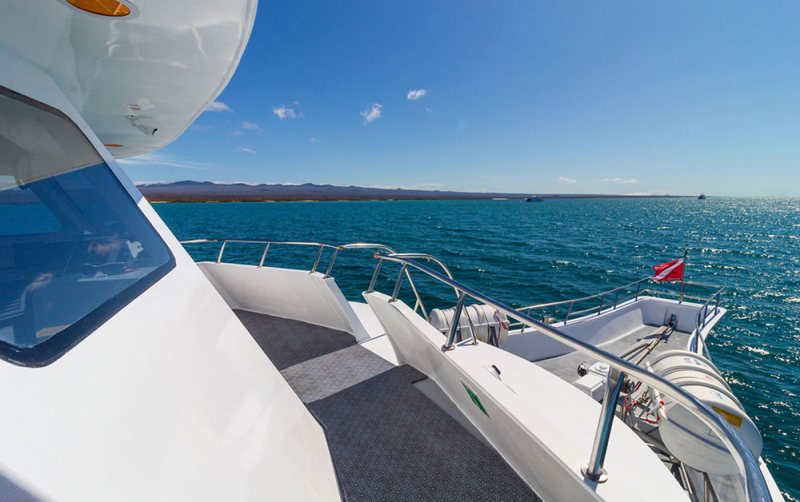
Drive with your group to Puerto Ayora, then hop aboard a speed boat for the two-hour boat trip to Santa Fe.
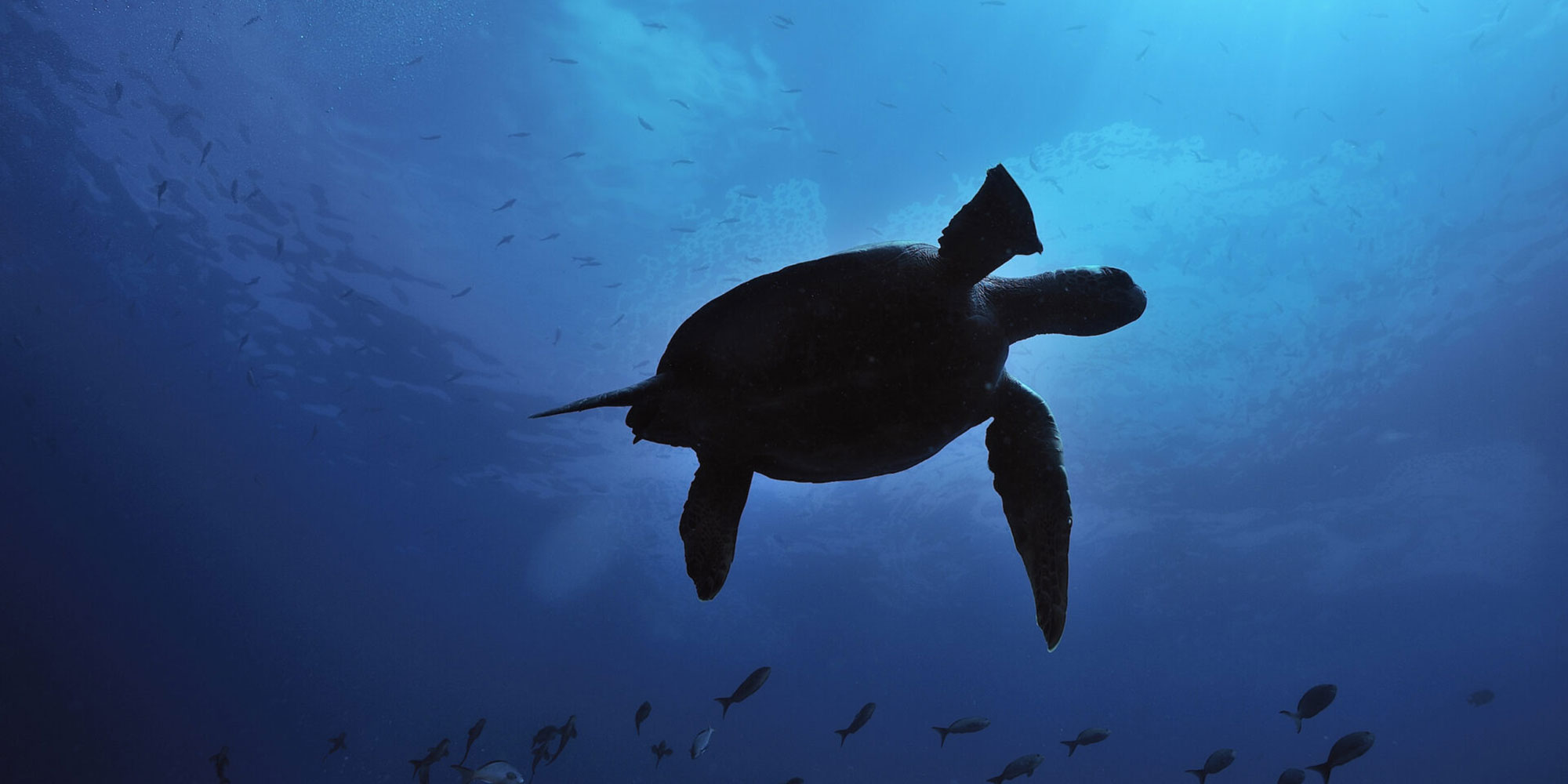
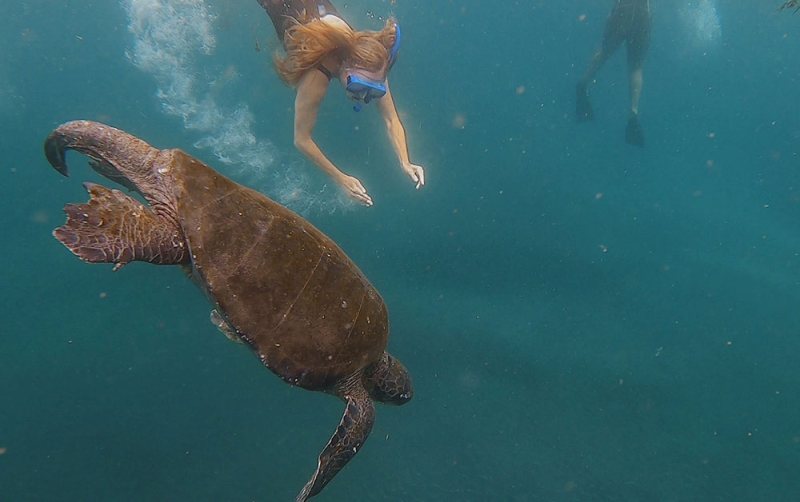
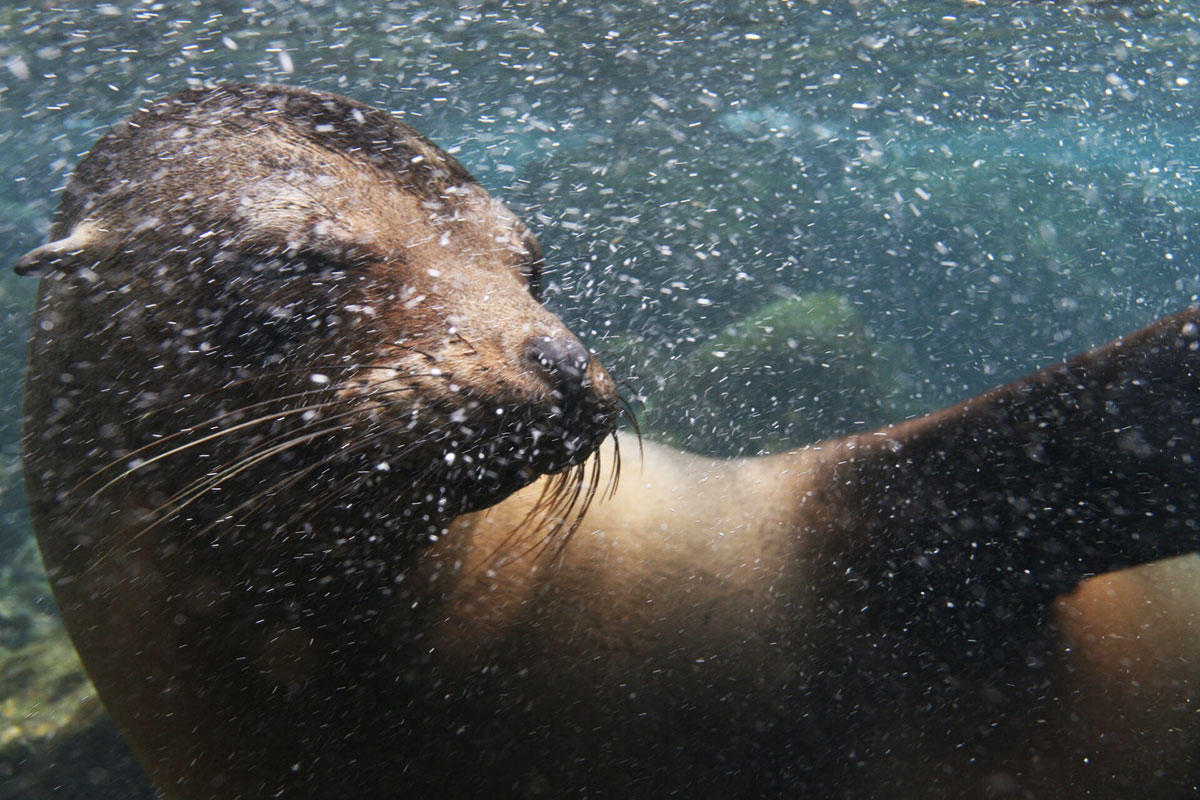
We anchor at a beautiful, sheltered bay and snorkel with sea lions, surgeonfish, damsels, parrotfish, stingrays, and white-tip reef sharks.
This rugged island is composed of uplifted basaltic lava, and much of it is a faulted-plateau covered with Opuntia cacti.
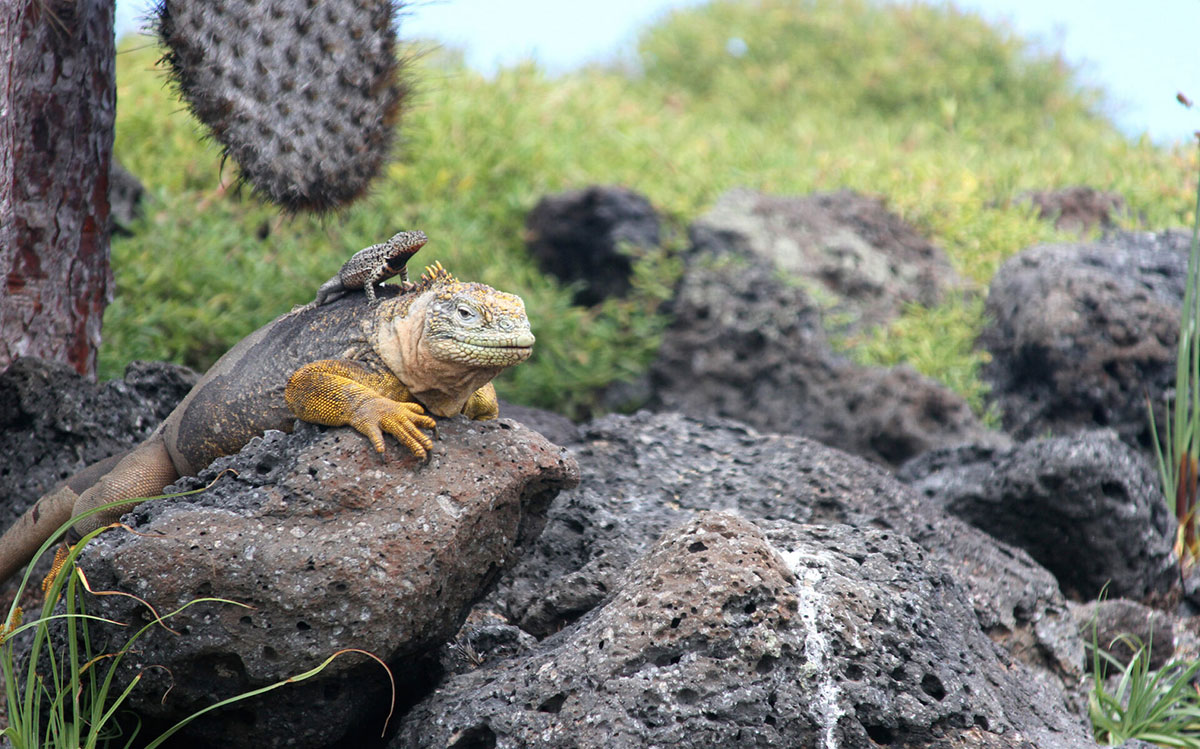
The trail, where Santa Fe land iguanas and Galapagos hawks are seen, takes you around to a beach inhabited by sea lions and blue-footed boobies.
Today you could leave the Safari Camp and fly back to Ecuador, stay longer, join up with a cruise or head to another island.
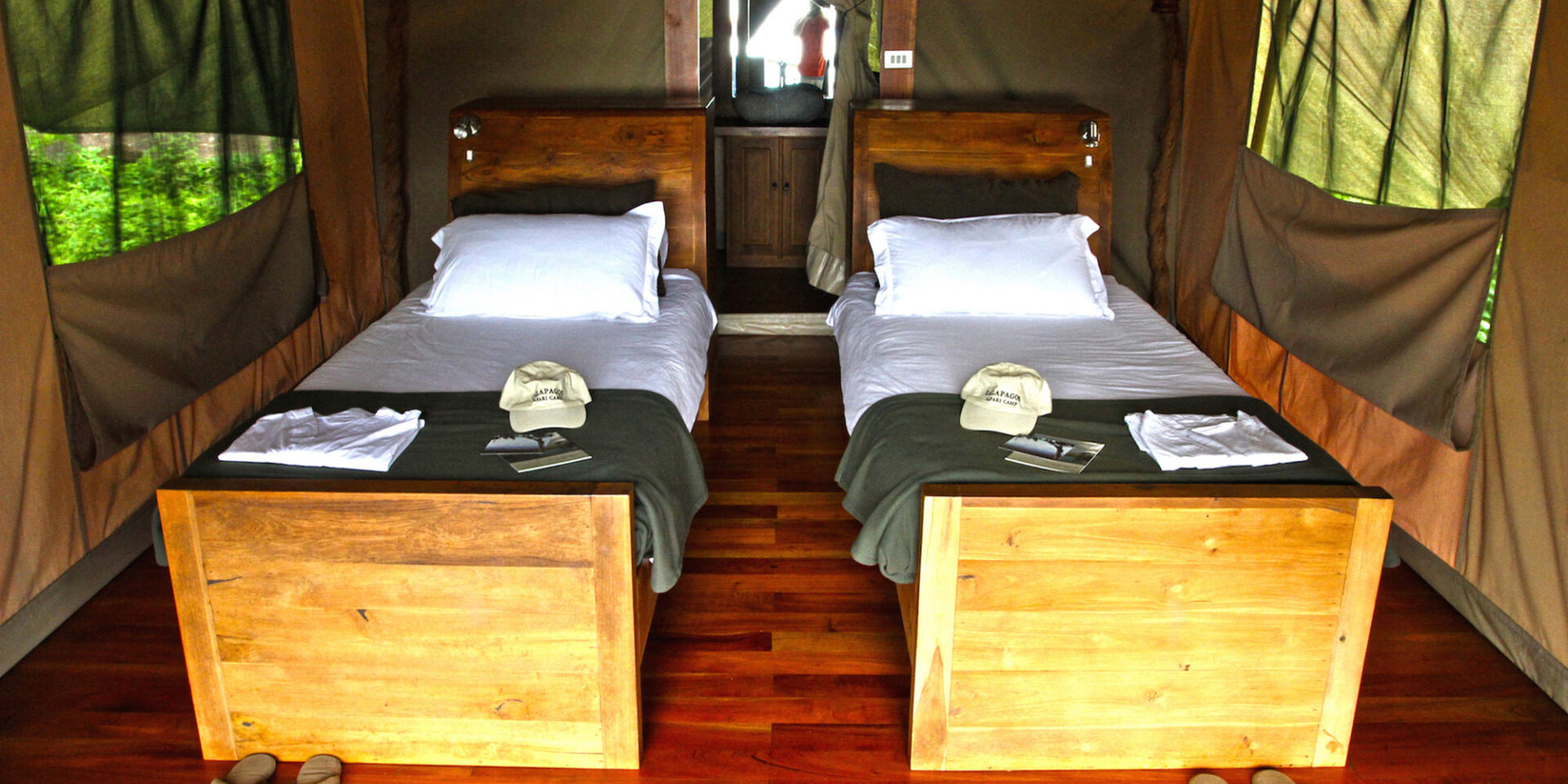
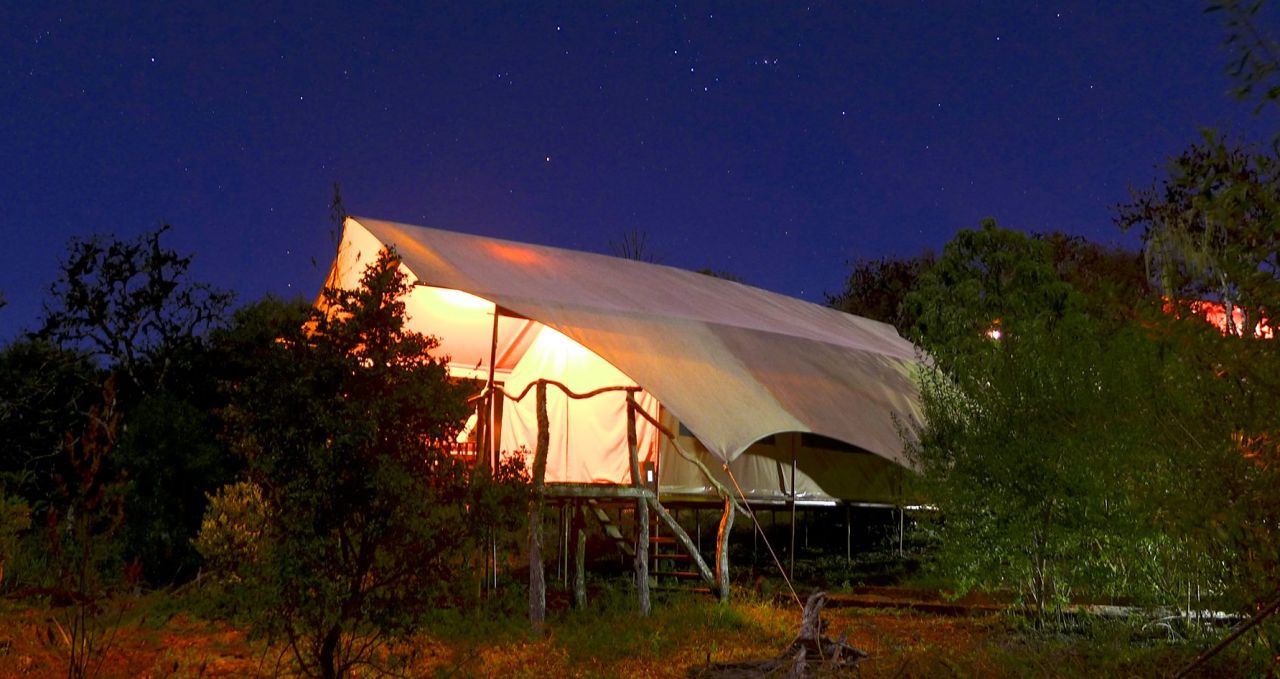
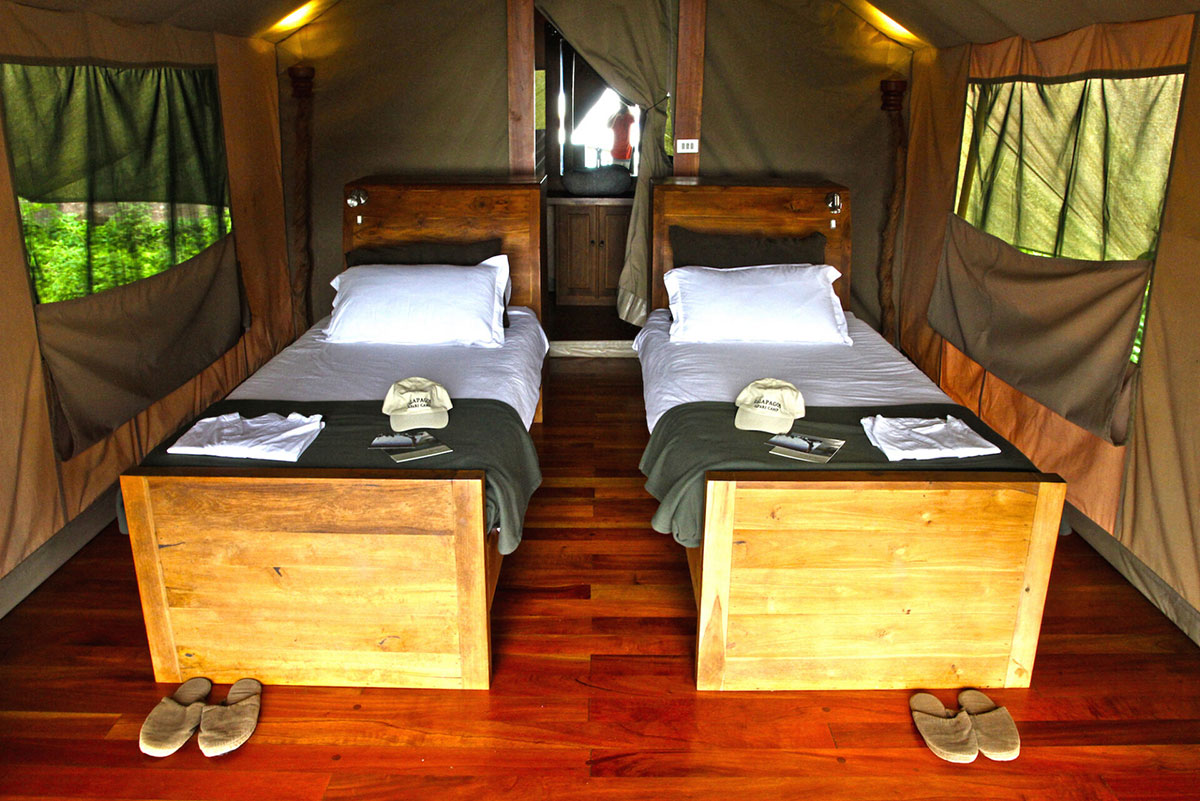
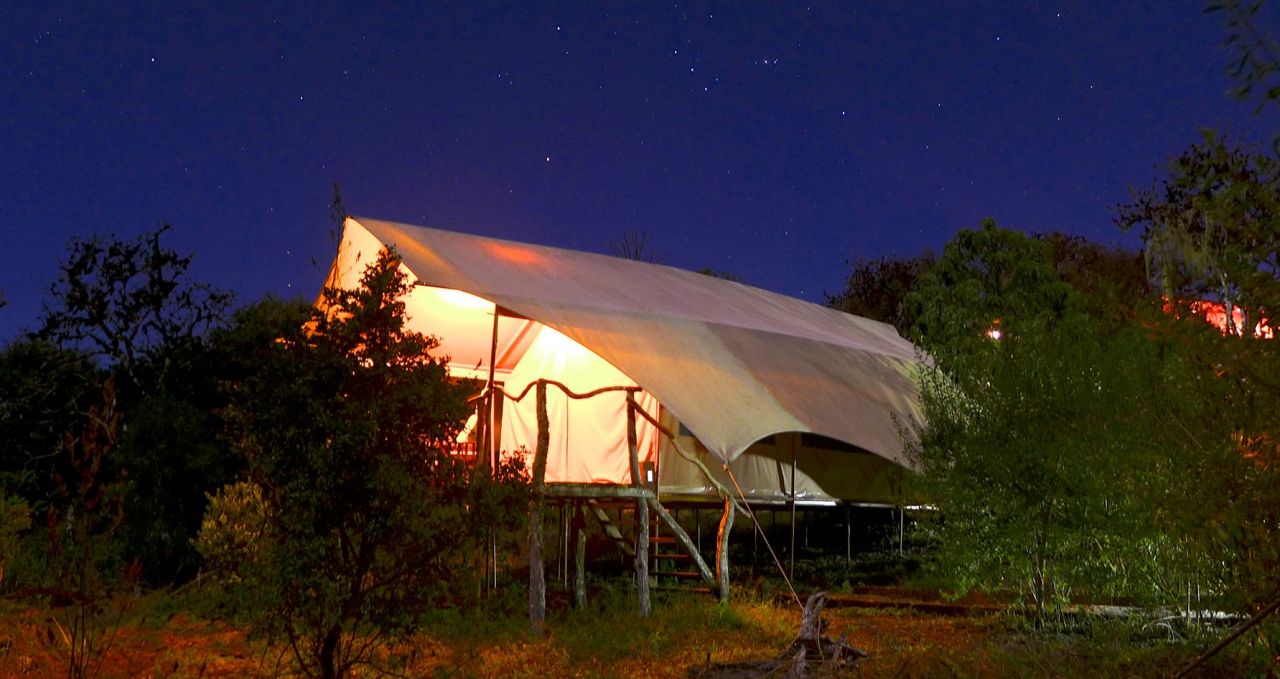
Located below the main lodge, the nine-safari style tents are raised on wooden platforms and supported by three layers: one to protect against the sun, another against the rain and an inner canvas shell.
They have airy and comfortable interiors, custom-made furniture, including cupboards and a writing desks, en-suite bathrooms with good water pressure, hot showers and flush toilets.
The tents also have private balconies with ocean views and furniture.
There is also a three-bedroom suite as an alternative, located next to the main lodge. This is an ideal solution for families with younger children. It houses six guests, features a master bedroom and two twin rooms as well as a playroom.
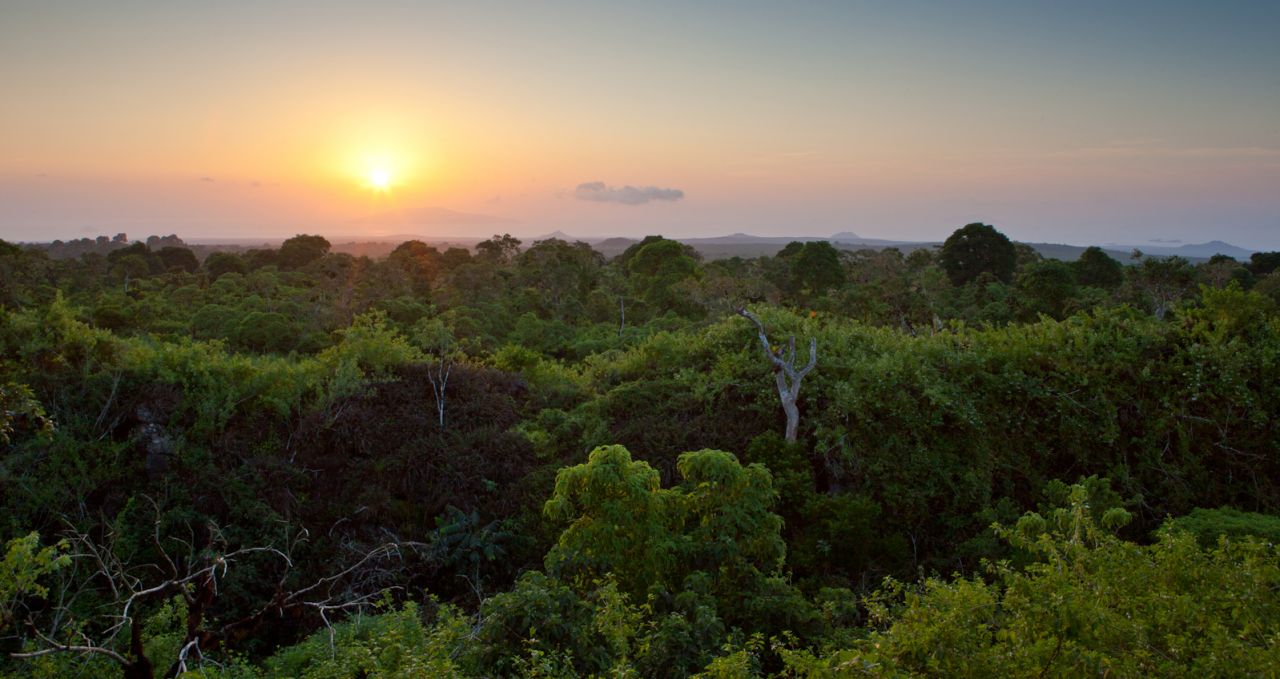
Our open space Main lodge is built on a hill with panoramic views from its expansive veranda. It features a lounge, library, cosy fireplace and a bar. It hosts the dining room, serving local and international farm-to-table dishes inspired by the chef.
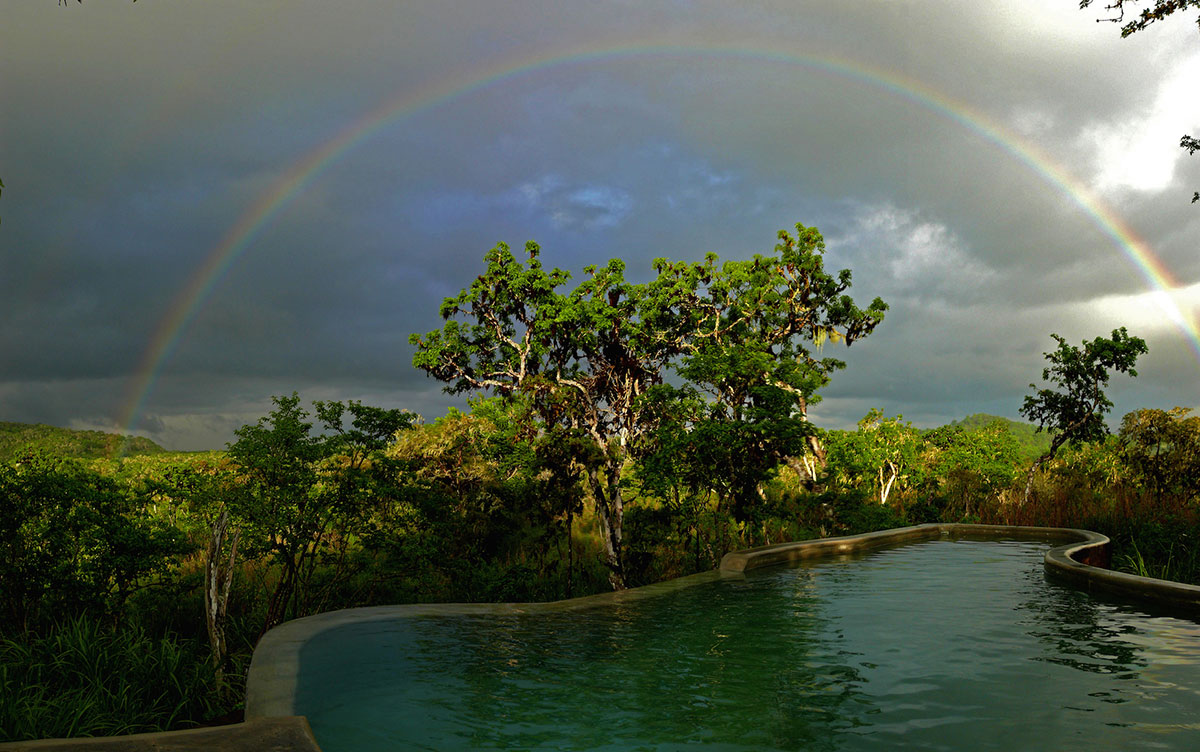
There is also an infinity pool and a viewing terrace.
This is can be as active or relaxing as you like – there are all inclusive packages as well as room only.
On all inclusive packages, there are full-day island yacht and/or land trips, that include lunch.
Or simply relax by the pool or in hammocks.
Snorkelling last 1-2 hours usually, depending on water temperatures.
All activities are within the scope of people that like to be active. No previous experience is necessary for any of the activities, however, as none are designed to be overly strenuous.
We can cater for many special dietary requirements on this tour. Please let us know at the time of booking.
Many of the meals are included in this tour at the hotel.
Delicious, healthy international and Galapagos-inspired dishes are prepared daily by the chef, using the freshest ingredients – including many from the farm.
Eating at the Safari Camp means dining at one of the most exclusive restaurants in the archipelago.
Michael and Stephanie Mesdag stumbled on the property while visiting the islands. They gave up life in Europe to build a dream conceived while up a tree admiring the mesmerising views where the lodge now sits.
Every detail at the camp has a personal touch and every element has a history and the energetic team is the soul of the operation.
Guides are “Galapagueños”, most of the guides and staff members were born and raised in the Galapagos Islands.
They know the area well and are prepared to show you the islands only like a native can do it.
Naturalist, English-speaking guides have studied and been trained at Charles Darwin Scientific Station, and have long years of experience guiding at the Galapagos Islands.
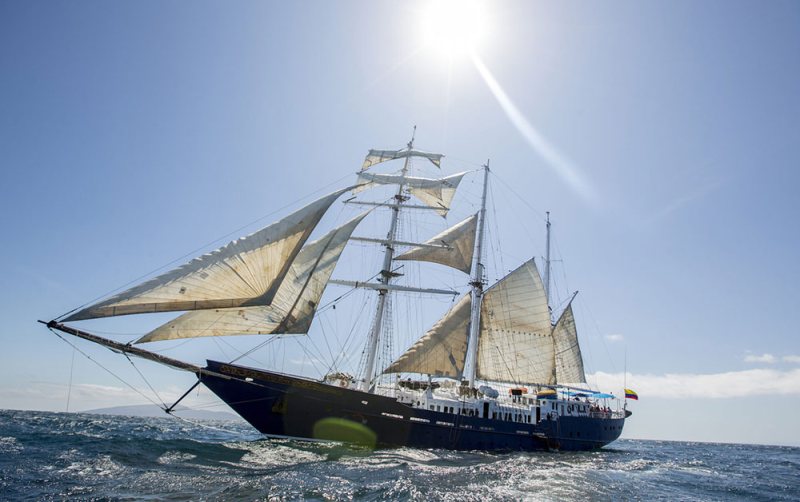
A flawless Galapagos cruise aboard the Flamingo, offering superb service, comfort, and unforgettable island exploration.
A beautifully organized Ecuador and Galapagos journey filled with warm hospitality, stunning wildlife, and unforgettable experiences.
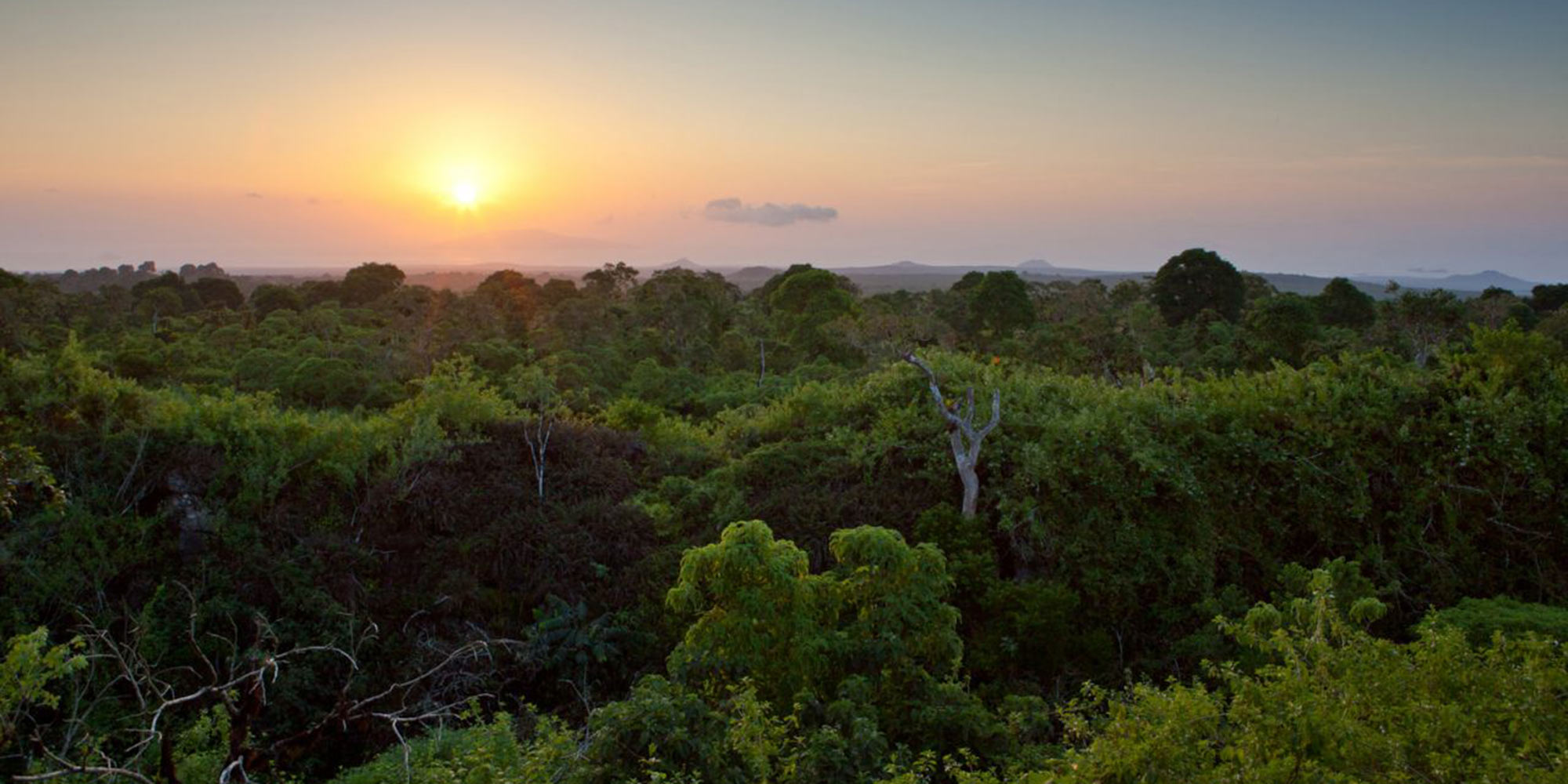
Set in 55 remote hectares and perched in the highland of Santa Cruz, Galapagos Safari Camp was inspired by the African safari experiences.
High level and personalised service is added to the incredible natural environment and astounding views.
It is a place to come to contemplate, re-energise and relax.
Ideal for honeymooners, families and couples, Galapagos Safari Camp is a gorgeous retreat, away from the crowds of Puerto Ayora, with fine food and dining as the norm.

Wake up to birds chirping and the wind rustling the trees above your tent watching a beautiful sunrise – wonderful way to greet each day.
Or sunsets from the infinity pool, chilled drink in hand, a perfect way to end the day.
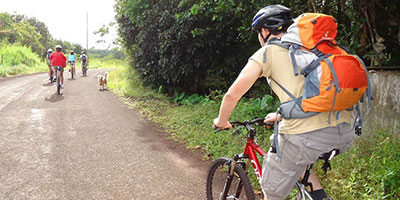
During the day the Galapagos Safari Camp offers tours with its hand-picked and excellent guides. You can bike the highlands, explore lava tubes and visit giant tortoise reserves.
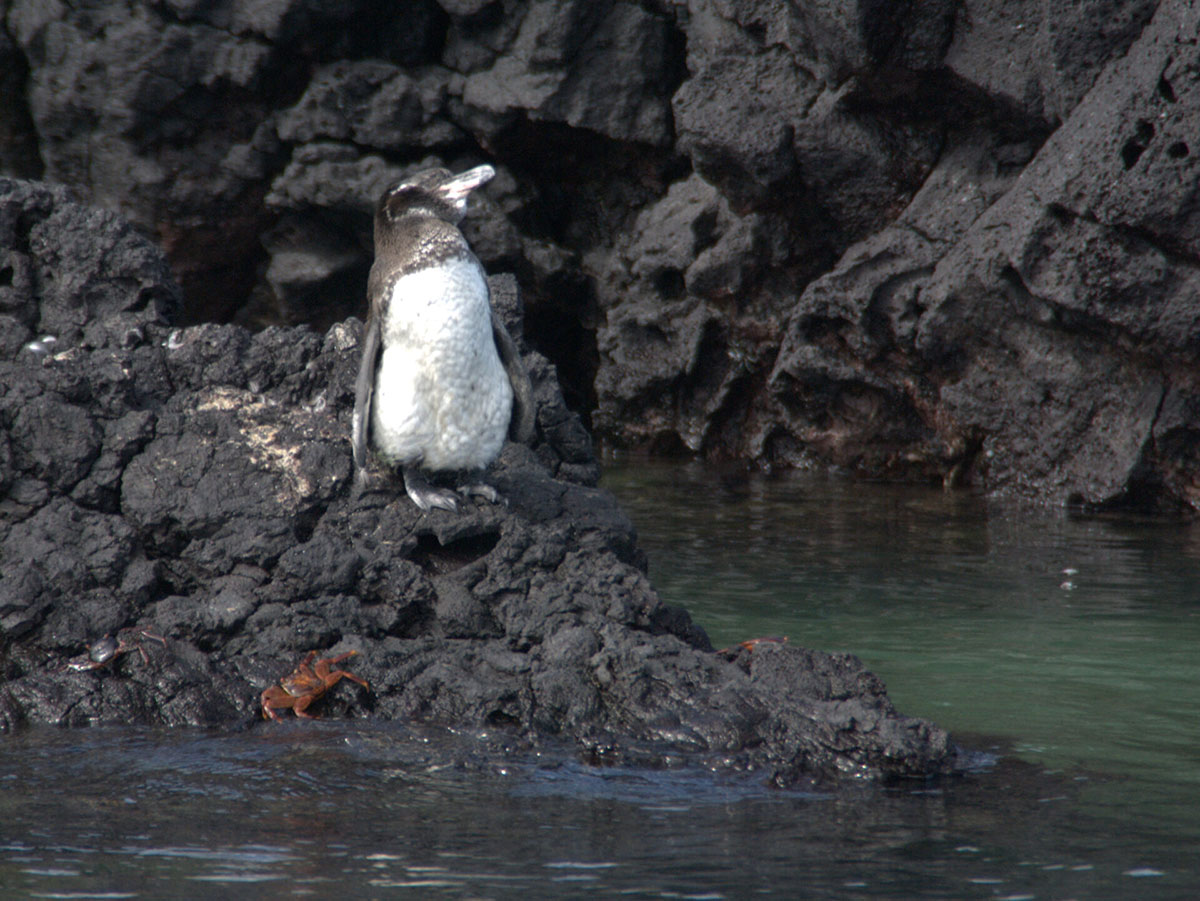
You can hike the forests around the Gemelos craters, visit the Charles Darwin research station in Puerto Ayora or snorkel with with sea lions and penguins.
Read more about the Safari camp in Tom’s blog about his visit there.

From: $3063 per person
Duration
8 days
From: $2515 per person
Duration
8 days
The Galapagos Islands are a suitable destination for most ages and fitness levels. Walks are generally short, although some volcano hikes are more challenging and may involve 2-3 hours of walking. Snorkelling is a real highlight on the Galapagos, so the ability to swim and snorkel is recommended. Snorkelling is suitable for those that have never tried before.
You need to be able to make some wet landings i.e. stepping out of a panga onto a sandy shore, and you may need to ascend or desend small ladders when getting on or off boats at docks or to snorkel.
The fitter you are, the more you will enjoy the Islands, but they really are accessible to all. You can choose to skip any activities you do not wish to partake in.
Read more in our blog about a typical day on Galapagos.
Before you fly from Quito or Guayaquil airport, you need to pay USD 20pp for a transit control card. Some cruises pre-pay this and include it in your trip cost.
On arrival in the Galapagos, you will be asked by a representative of the Galapagos National Park to pay the Park fee in cash (currently US$ 100 per person, USD 50 per person for under 12s).
The dock tax is US$5 on Isabela Island, and the airport tax is US$15 for flights between islands.
All National Park fees subject to change without prior notice.
These magical islands comprise of 50 volcanic islands of varying shapes and sizes, which lie 1,000 kilometres off the coast of Ecuador.
Here, unlike anywhere else on Earth, you can enjoy a thousand close encounters with a weird and wonderful variety of ‘friendly locals’, including giant tortoises, fur seals, sea iguanas, frigate birds and blue-footed boobies.
Read our Galapagos Islands Guide and more about diving.
In 1535, Tomás de Berlanga, Bishop of Panama, floated into this archipelago and named it Galapagos after the giant tortoises he encountered. Pirates used the islands for refuge and to bury their stolen treasure after that.
The islands’ most celebrated visitor was Charles Darwin, who arrived aboard the HMS Beagle in 1835. The rare life forms he encountered helped him formulate his theory of evolution, which he published in The Origin of Species by Means of Natural Selection.
It wasn’t until 1959 when it became part of Ecuador’s national park system that this fragile ecosystem with its rare and endemic species came under protection.
In 1979 the Galapagos archipelago was declared a UNESCO World Heritage Site.
Good kit is vital for every trip.
Book with Andean Trails and get 15% off Páramo’s fantastic ethical and high performance outdoor gear.
Galapagos is warm and humid, and you will need t-shirts (moisture wick-away or breathable t-shirts can be very useful, it can get very hot in the day), shorts, lightweight skirt or trousers and bathing suits.
One or two cotton shirts can be used to protect you from sunburn, especially when snorkelling (not very elegant worn in the water over a swimsuit, but practical – and Galapagos is NOT an elegant place!).
You may want to change into different clothes for the evening, but don’t take anything dressy or smart – there really is a very relaxed atmosphere in island hotels.
Pack something warm and windproof for being the inter-island speedboats – and a waterproof for the Highlands.
Strong sandals, trainers, or light hiking boots are ideal footwear – you may like to have something suitable for easy walks and another for tougher terrain – your guide will advise you daily what the walking will be like.
Do take a hat!
Seasickness tablets if you think you will have problems – i.e. Sturgeon, or Mareol if you buy them in Quito. The sea can be choppy, so it is recommended to take them as a precaution.
The Galapagos Islands are a very fragile environment and the arrival of more and more inhabitants to the islands, as well as tourist have an impact.
Please try to minimise your impact by:
Pleasantly warm during the day, but can be quite chilly during the morning or at night when you might want a jacket or a fleece, plus a waterproof.
You may want to dress up a little more in the evening here, depending on where you are staying, and what sort of restaurant you like.
Conditions here are similar to Galapagos – hot and humid. T-shirts and shorts in the day, and like Quito, something smarter for eating out in restaurants at night.

There is no real ‘best’ time to visit Galapagos on holiday as there is always wonderful wildlife and weather to enjoy. Read our blog for more.
Most animals – tortoises, sharks, sea lions and boobies – are found year round and many of the species here are non-migratory.
The Galapagos Islands are located right on the equator so air and water temperatures do not vary by much.
Having said that, there are two recognised seasons, and each months brings natural marvels for the visitor to enjoy.
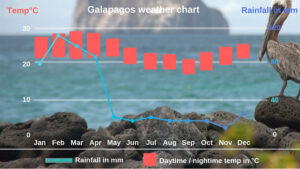
Below is our quick guide to the weather and wildlife you can find on the Galapagos Islands.
Calm, clear warm waters, great for snorkelling, often without a wetsuit.
Great weather, with February and March being the hottest and sunniest months with blue skies and sunshine.
Occasional heavy bursts of rain in the afternoons.
Sea temperatures: 22-25°C / 72-77°F
Land temperatures: 21-32°C / 72-90°F
It’s a great time for marine life in the cooler seas. Snorkellers may want a wetsuit.
August and September the coolest when you may need a jacket in the evenings and the sea can be choppy.
There can be mist on the islands in the mornings (garua) which usually burns off by midday leaving overcast skies or a sunny afternoon.
Sea temperatures: 15-22°C / 60-72°F
Land temperatures: 18-24°C / 65-75°F

A flawless Galapagos cruise aboard the Flamingo, offering superb service, comfort, and unforgettable island exploration.
A beautifully organized Ecuador and Galapagos journey filled with warm hospitality, stunning wildlife, and unforgettable experiences.