From: £2,208
From: $2,940
We meet you at El Calafate Airport and from there you are transferred to El Calafate.
At 19.00, you meet up with the rest of your group and the guide for a briefing meeting.
El Calafate is a small town of some four thousand inhabitants, El Calafate was for several decades a tiny staging post for the wagons transporting wool between remote estancias (sheep stations) and the coast. It lies near the shore of the vast, turquoise lake Argentino and is today a gateway to the natural wonders of the Los Glaciares national park.
Note: Accommodation options – hostel with shared bathroom, or upgrade to double room or single room with private facilities.
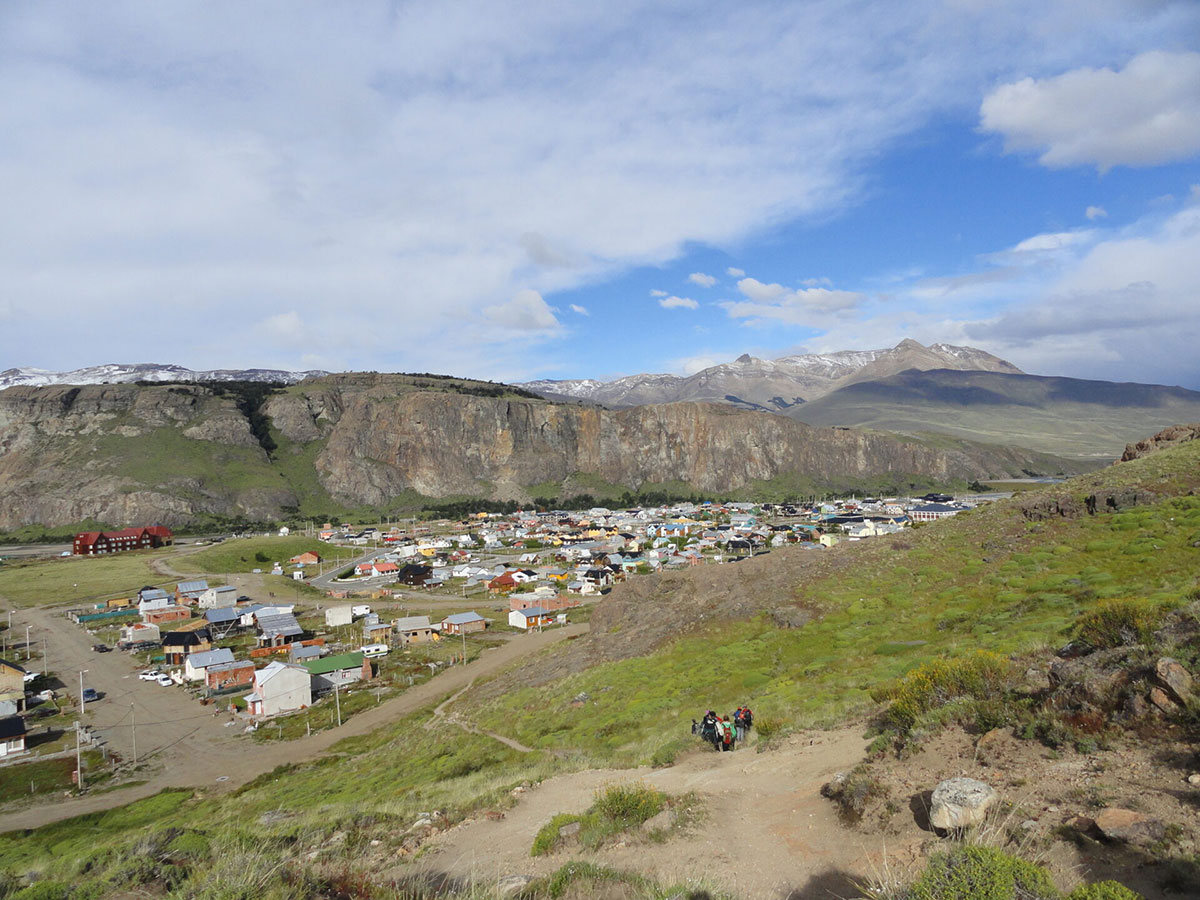
After breakfast we travel by bus to El Chalten, a small remote mountain town close to the Fitzroy peaks.
We travel along 220km/137 miles of gravel road through the Patagonia steppe with a short stop at La Leona (if open), a picturesque inn, where you can enjoy homemade cakes – highly recommended is the lemon meringue pie!
From here, the views of the Viedma lake are superb. When we arrive in El Chalten you have time to wander around and explore the town and nearby walks.
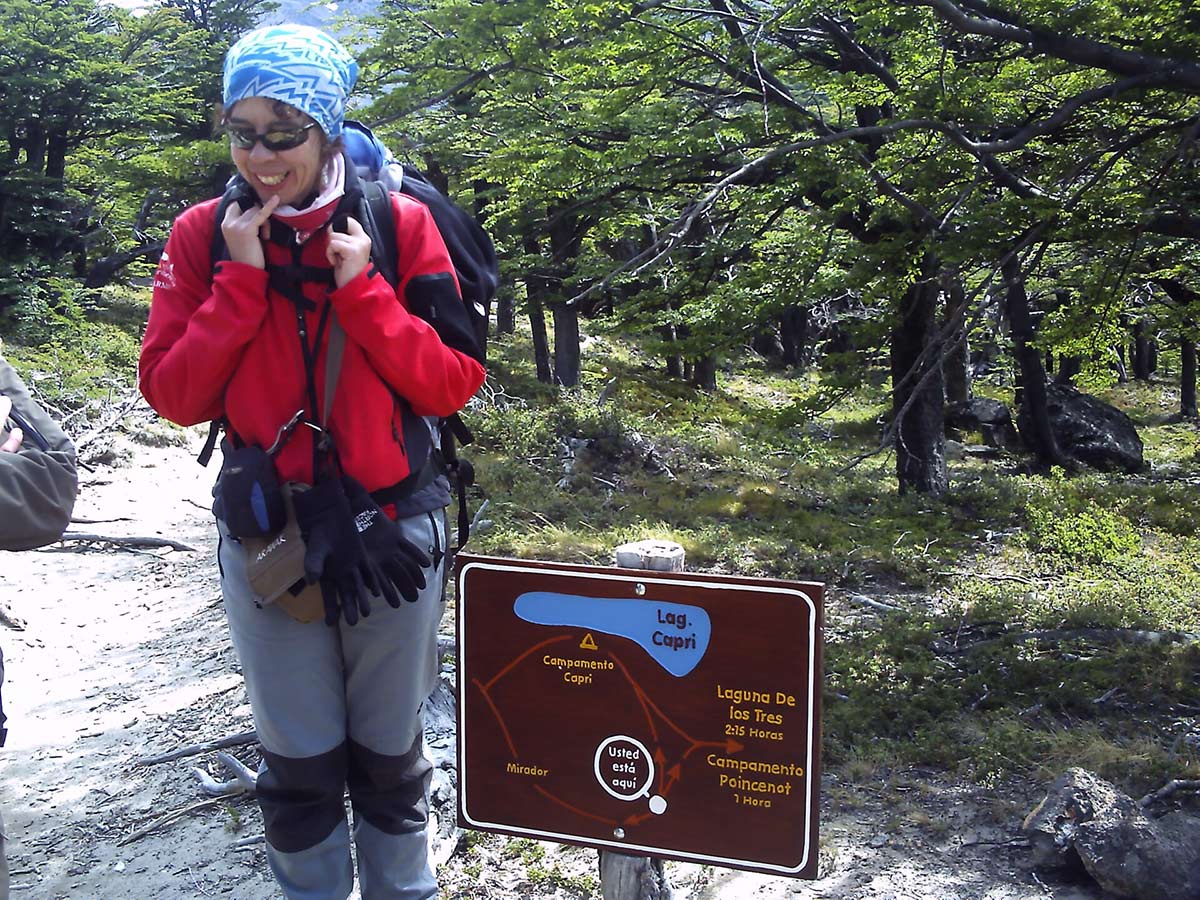
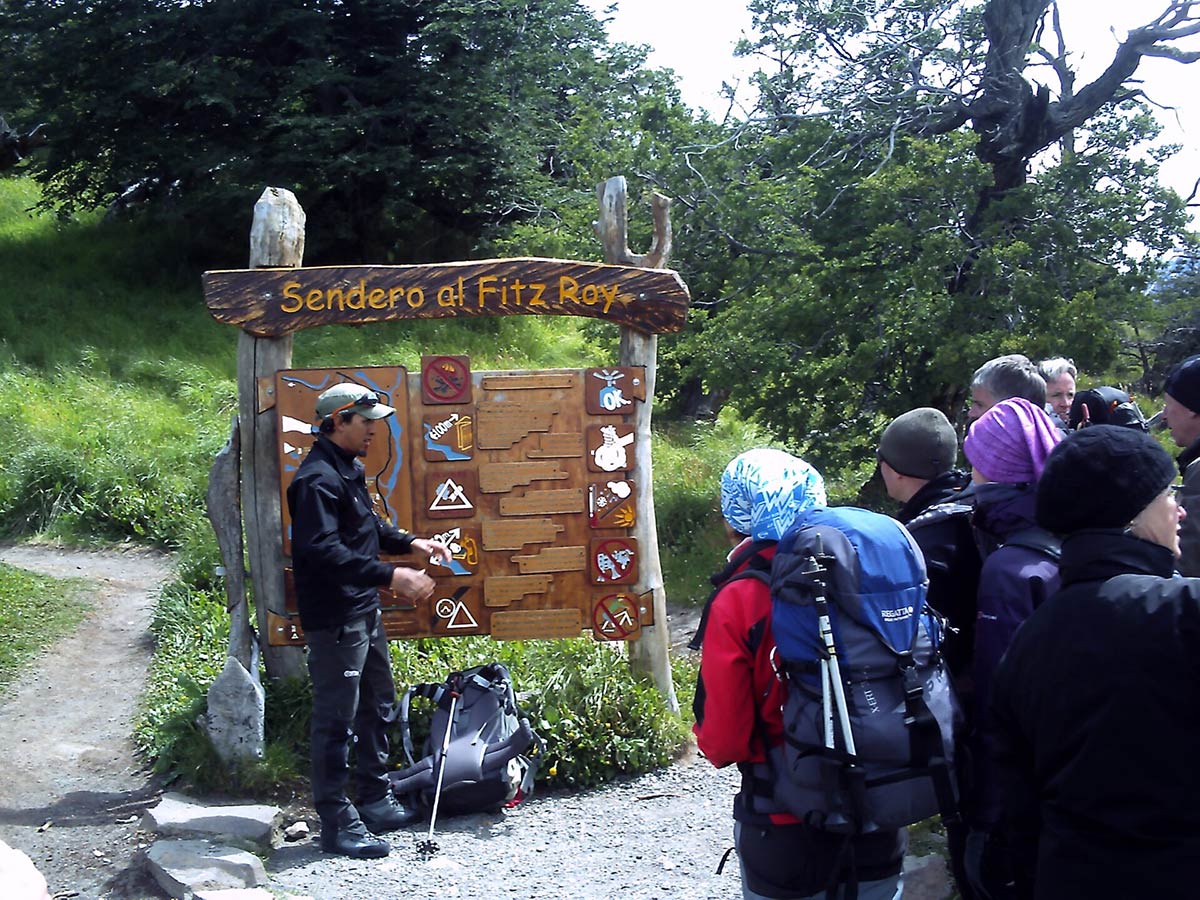
The trail starts in the north corner of the town. A gentle slope leads us to the first viewpoint over the River de las Vueltas valley, and we continue on to Laguna Capri and the first sights of Fitz Roy.
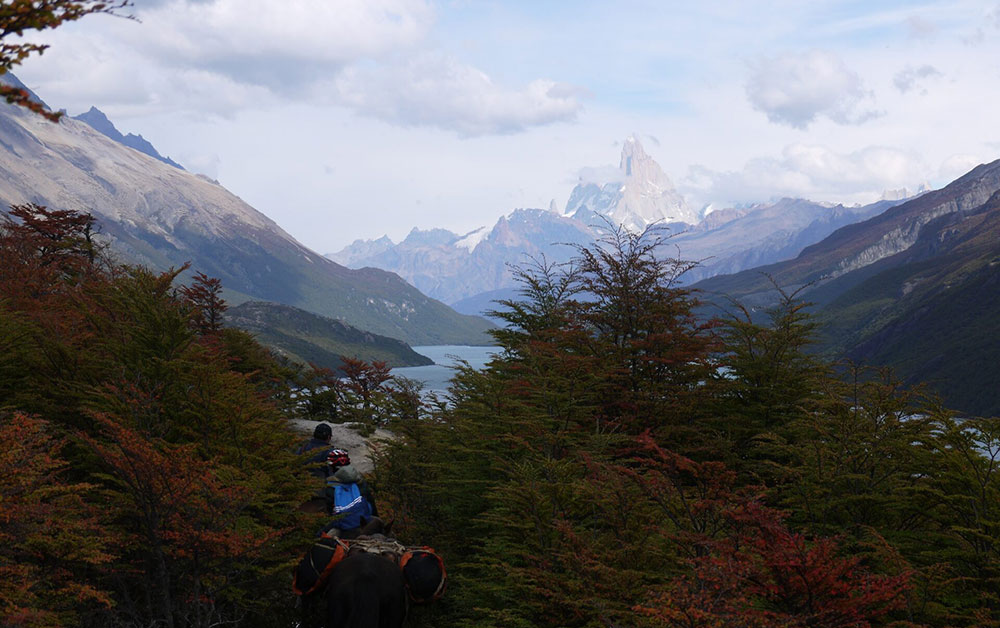
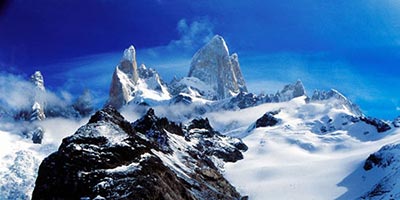
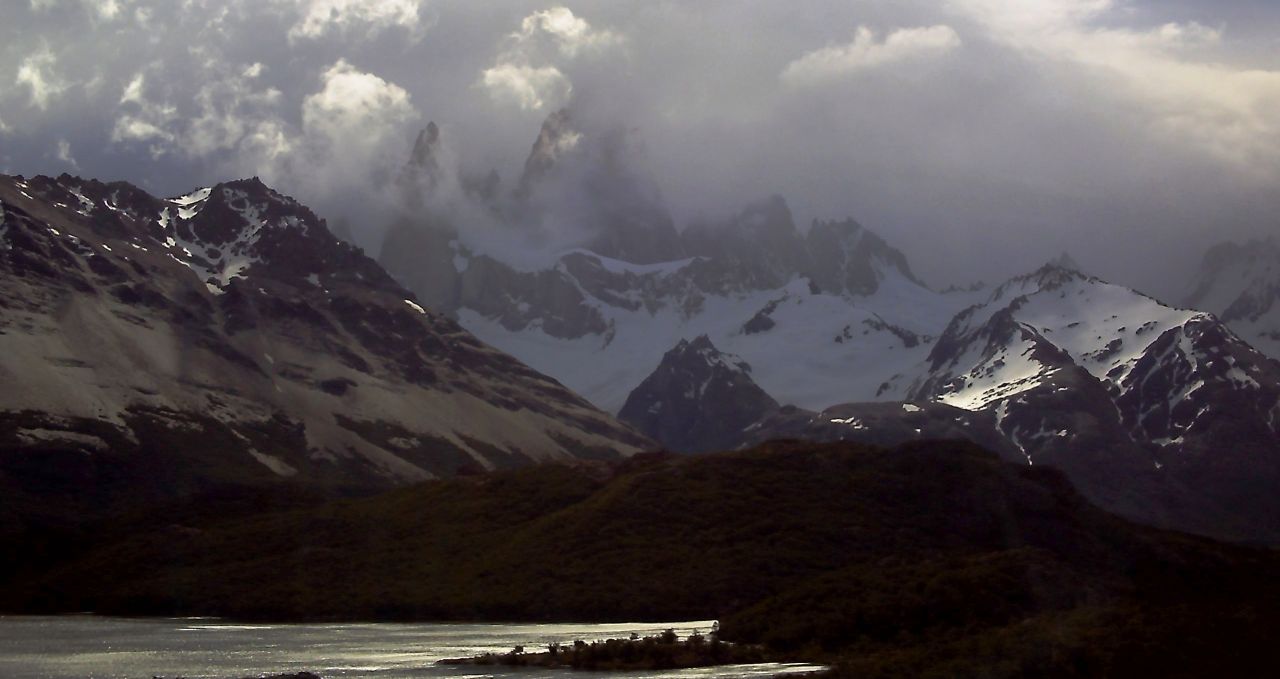
Laguna Capri should be frozen at this time of the year, giving us the chance to get a unique picture of the frozen lagoon with Fitz Roy spires and glaciers in the background. From Capri we already have excellent views over to Fitz Roy.
If conditions are OK, we continue on towards Rio Blanco, Fitz Roy base camp for climbers. Once at the base camp and depending on weather and terrain conditions those who would like to can continue upwards to Laguna de los Tres, spectacular viewpoint for the Fitz Roy massif, spires and glaciers.
During today’s walk we climb 500m/1,640ft to the first viewpoints and 400m/1,312ft more if we climb to Laguna de los Tres.
We carry snowshoes if there is enough snow to warrant their use.
Walking time depends on the conditions of terrain but if you walk the full trek to Laguna de Los Tres then this is a tough full day hiking.
Today’s walk takes us to the Torre valley. This valley starts as a glacier valley in the Laguna Torre reaching town as a fluvial valley. It’s shorter and with considerably less altitude gain than yesterday’s Fitz Roy trail.
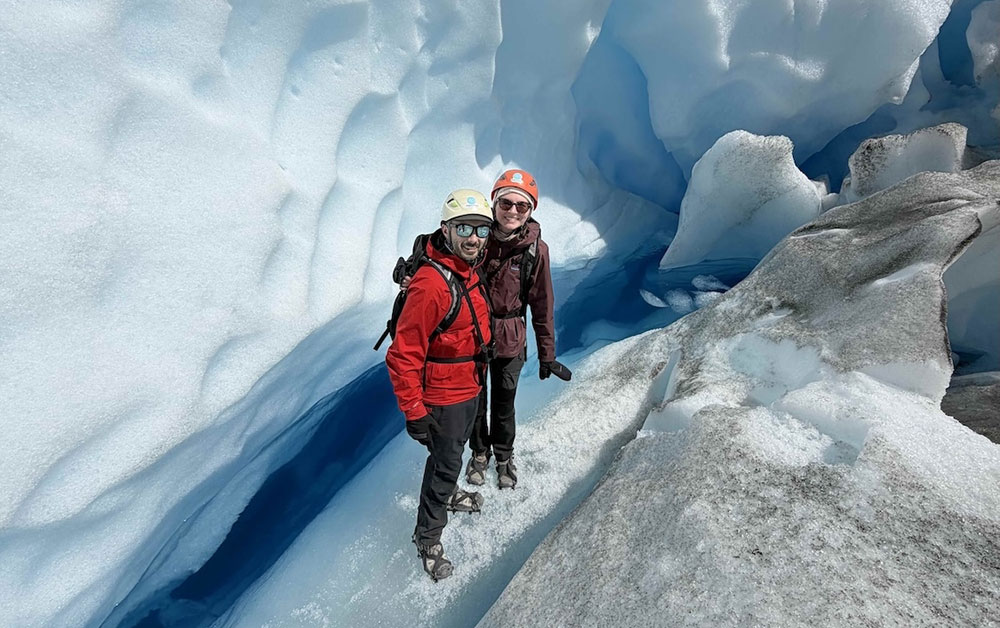
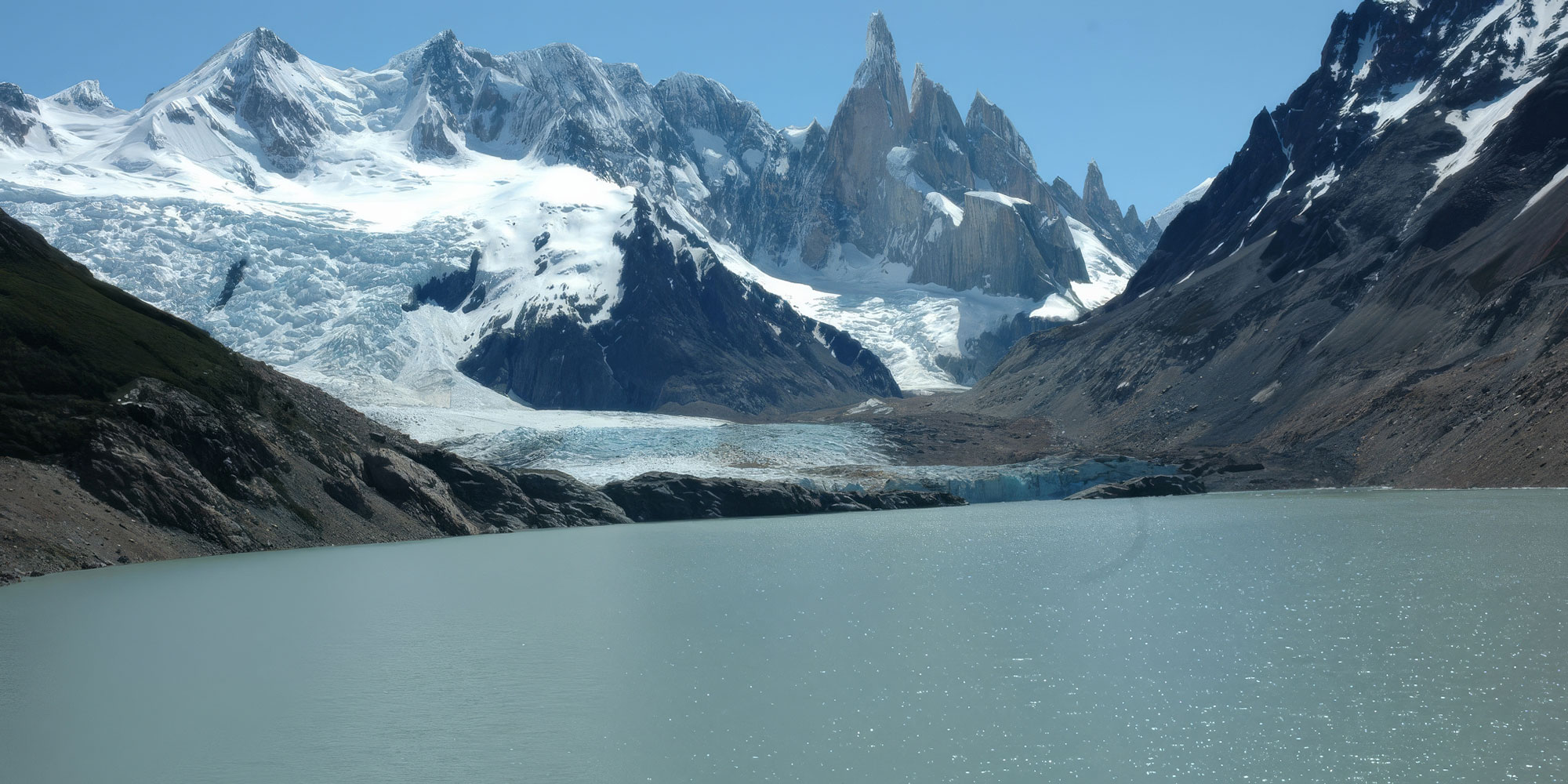
We arrive at the first viewpoint after our first hour of walking, giving lovely views up the valley. Depending on conditions, we continue along the valley floor through scrubland then southern beach forest to reach Lake Torre, natural viewpoint over the group of ice-mushroom-covered spires of the Cerro Torre massif. The lagoon could be frozen, in which case we can cross it and head to the front of Glacier Grande. Its blue colour and dimensions are breathtaking.
Weather, conditions and time permitting we can try some basic ice climbing in the frozen waterfalls which hang on the sides of the lagoon. We hike back to El Chaltén in late afternoon.
Morning at leisure to rest or to take an additional walk.
We recommend a walk to Cerro Pliegue Tumbado with beautiful views over Fitz Roy, Torre and the glacier valley in between. Alternatively take a more leisurely option to visit Estancia Madsen (home of the first white settler of the valley) or the Chorrillo del Salto waterfall, that should be half frozen at this time of the year.
In the afternoon we take our bus back to El Calafate where we transfer to our lodge.
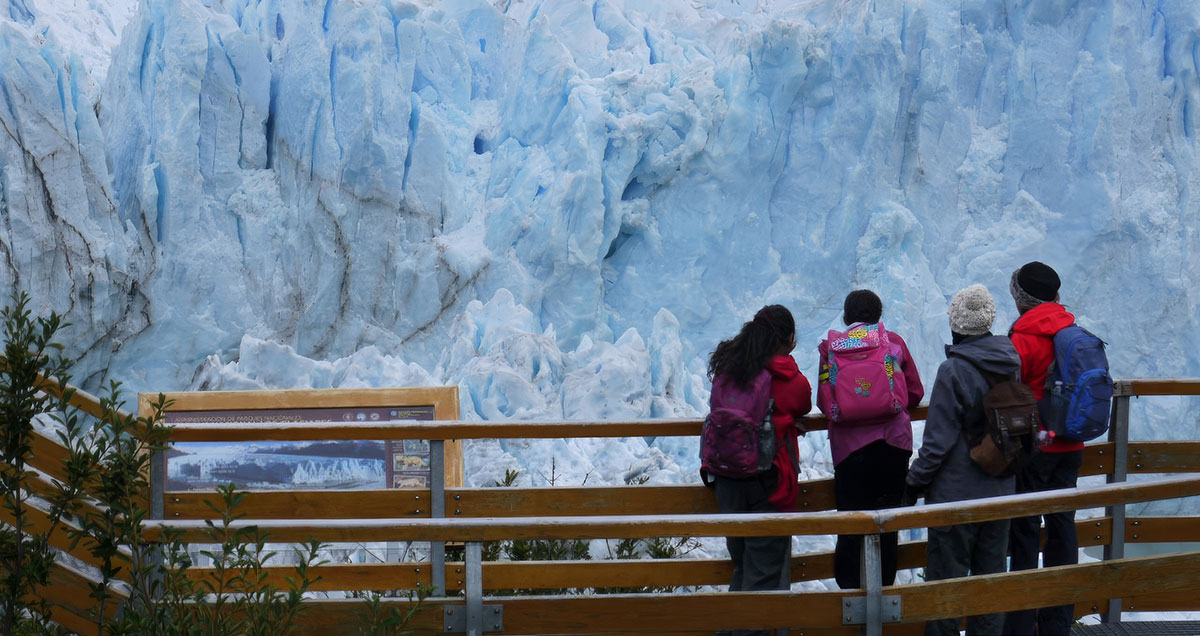
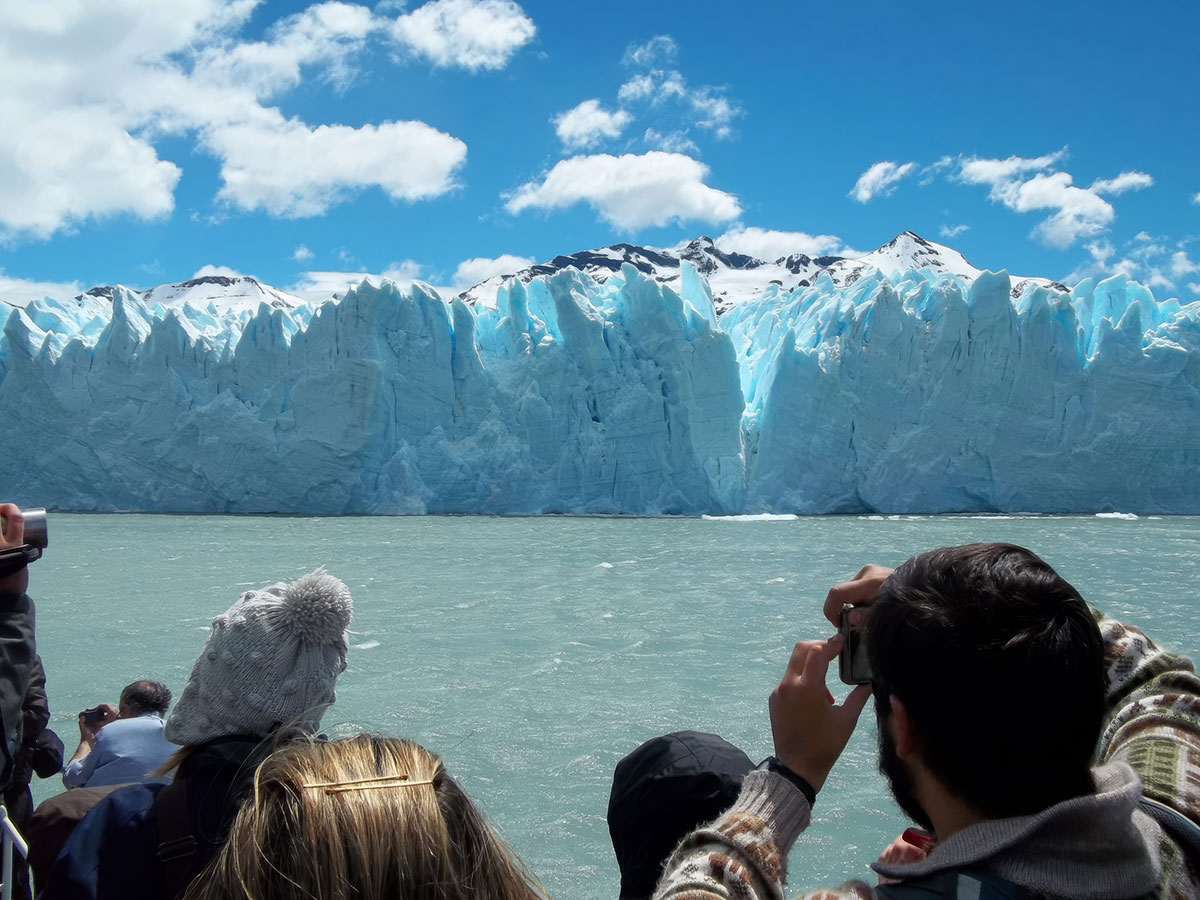
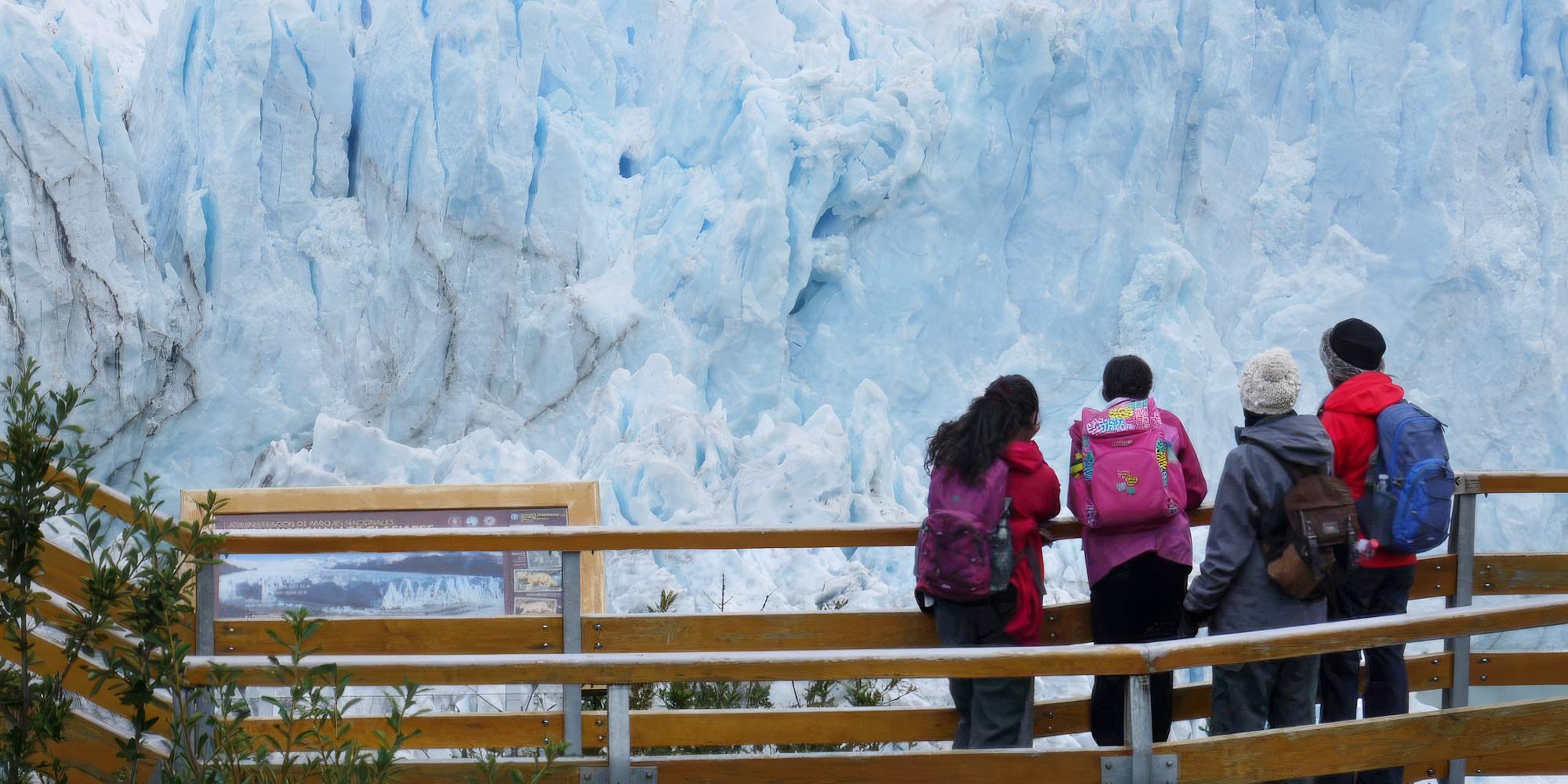
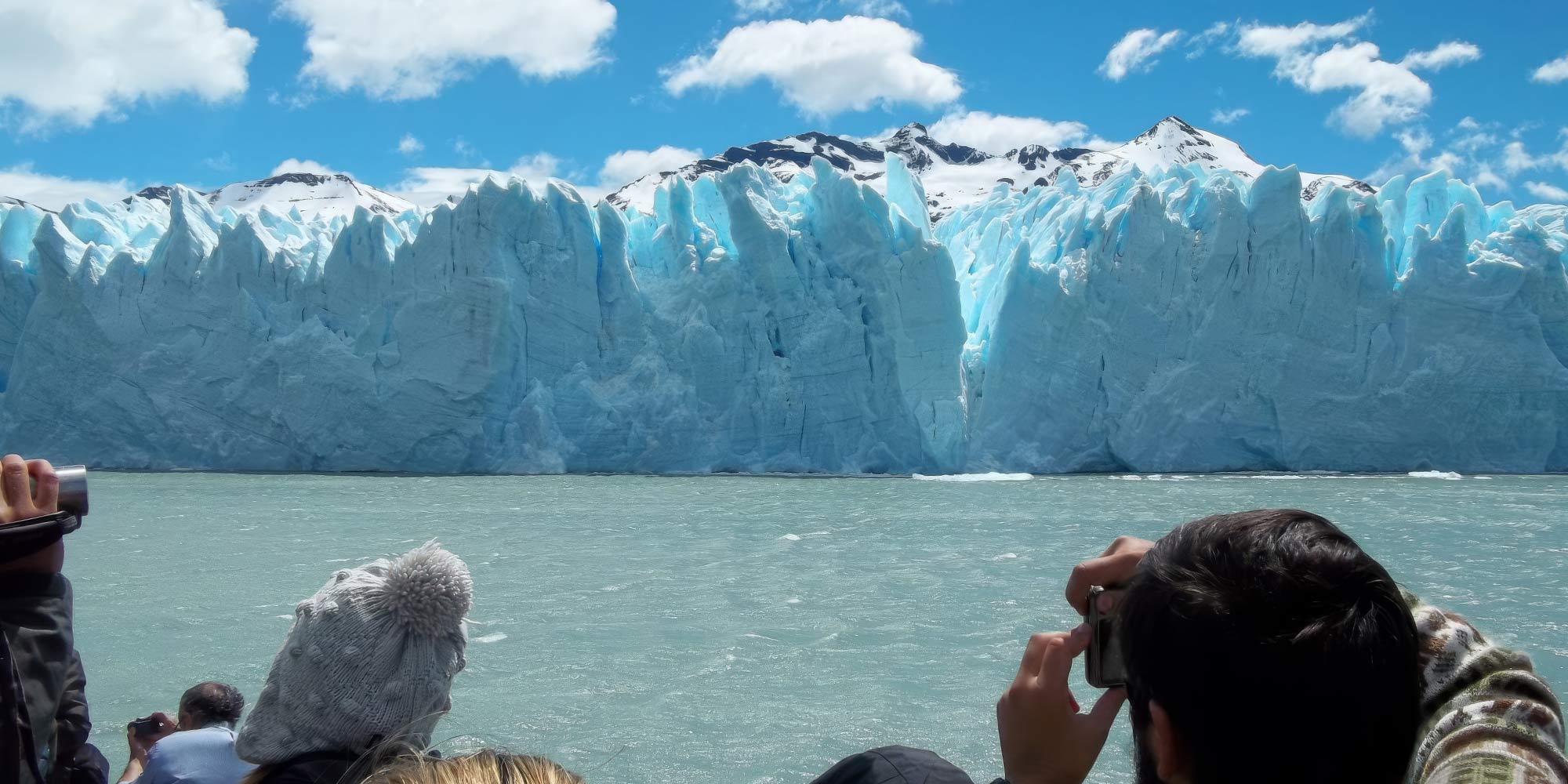
Vast in scale (over four miles wide and 60 metres high at its face!), this almost surreal spectacle is set amid a labyrinthine system of iceberg-filled waterways, and backed by deciduous beech forests and snow peaks.
Spectacular even by the standards of the Los Glaciares National Park, this glacier also represents an anomaly: The Perito Moreno, unlike the other glaciers of the region, is still growing.
Periodically (every so many years) its advancing edge reaches the near shore, cutting off and damming up the Brazo Sur iceberg channel. When this occurs, the steadily-building water pressure forces a breach in the ice and eventually a huge volume of water bursts forth and surges through to Lake Argentino. A feature of the glacier is the frequent, ear-splitting calving of icebergs.
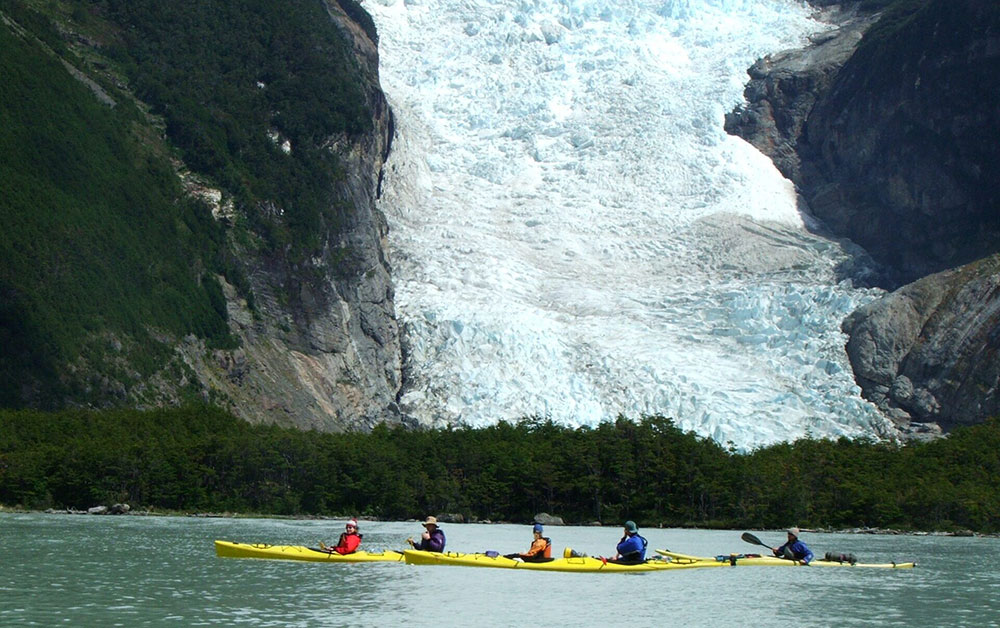
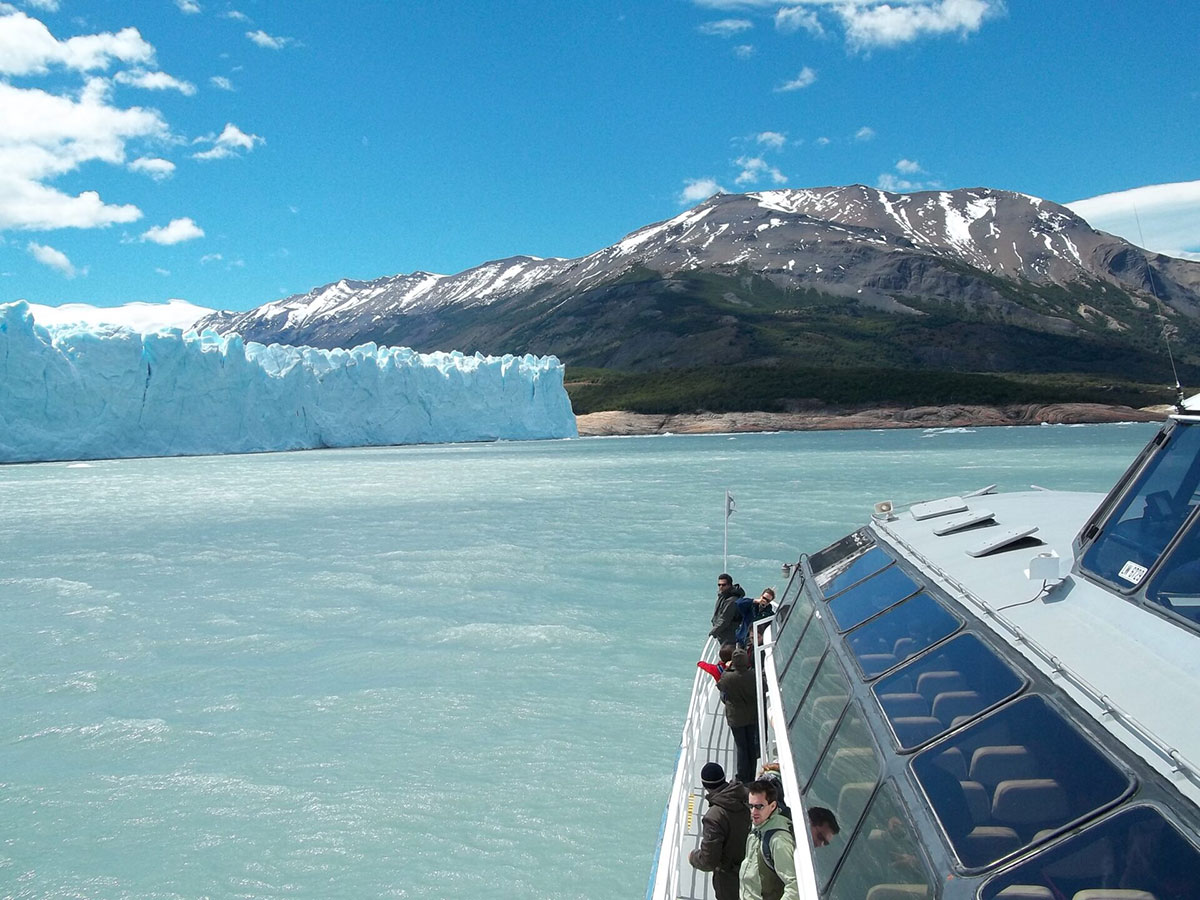
After breakfast we depart by bus to the Magallanes peninsula, the entrance of The Glaciers national park. Its centrepiece is the Perito Moreno Glacier, which, because of unusually favourable local conditions, is one of the world’s few advancing glaciers. We go down to the lakeside to board a boat (optional, extra cost, payable locally) that takes us on a spectacular short cruise along the front of the glacier.
We return to El Calafate.
This is a spare day and you can choose some of the options that El Calafate can offer.
One of the most recommended day tours is to go sailing on the catamarans that make the trip to the glaciers which calve in the west arms of Lake Argentino. Among them are glaciers Upsala, Spegazzini and Onelli, Bolados and Agassiz glaciers in the area of Laguna Onelli.
Various 4-wheel drive excursions and horse riding are available at El Calafate.
Transfer out to airport for end of trip OR fly today from El Calafate airport to Ushuaia airport, in the island of Tierra del Fuego, the legendary Land of Fire.
We fly over the Magellan Strait and the snow covered mountains of the southern end of the Andes range.
Upon arrival, we check in our lodge and we can then visit the different museums of the City of Ushuaia, such as the Navy Museum or the Old Prison.
We drive 17km/10 miles to Tierra Mayor valley. This area of the island hosts most of the winter sports. Today we head up the valley towards Cerro Alvear, combining snowshoeing and Nordic skiing.
After our outdoor activity we have a hot chocolate in a Mountain Refuge and drive back to Ushuaia in the evening.
We provide snowshoes, skis and all the necessary equipment for today.
The Island of Tierra del Fuego is divided north south by the border between Argentina and Chile. In the southwest corner of the Argentinean side is Tierra del Fuego National Park, where the southern beech forest covered mountains meet the sea. In this spectacular location we visit Lapataia bay and take a walk along the shore.
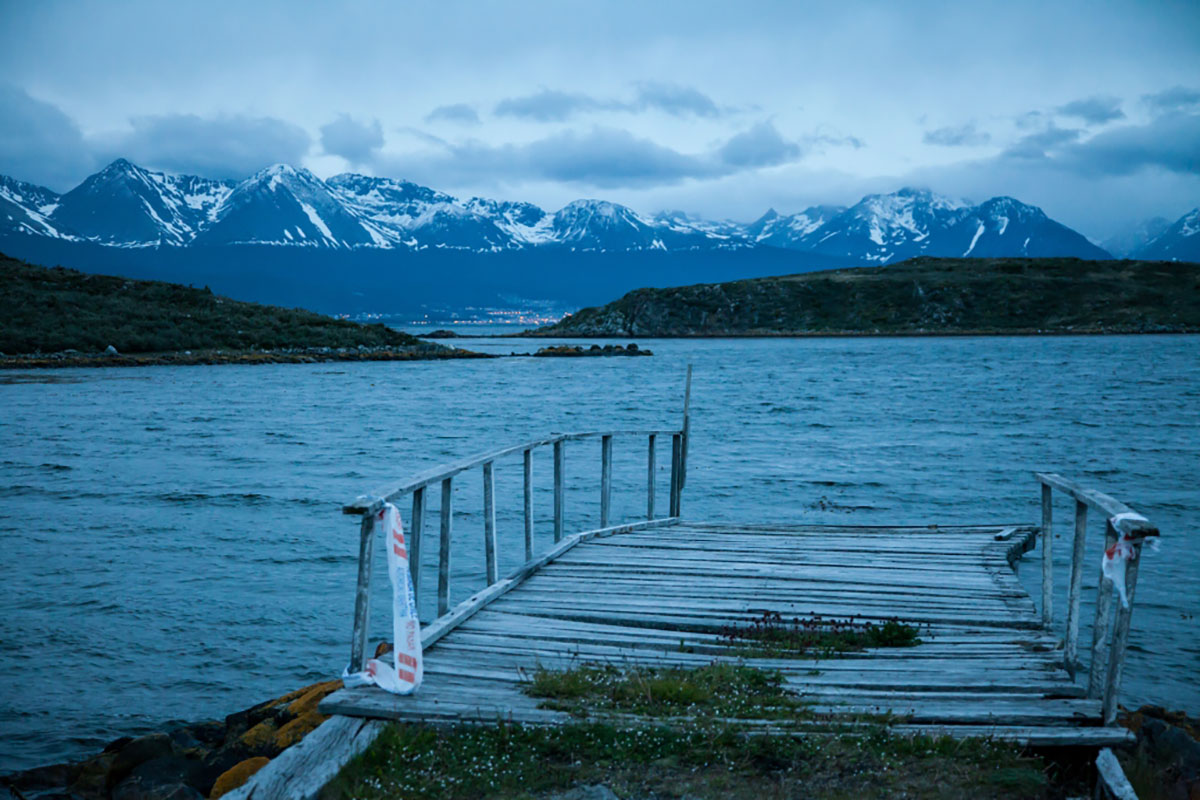
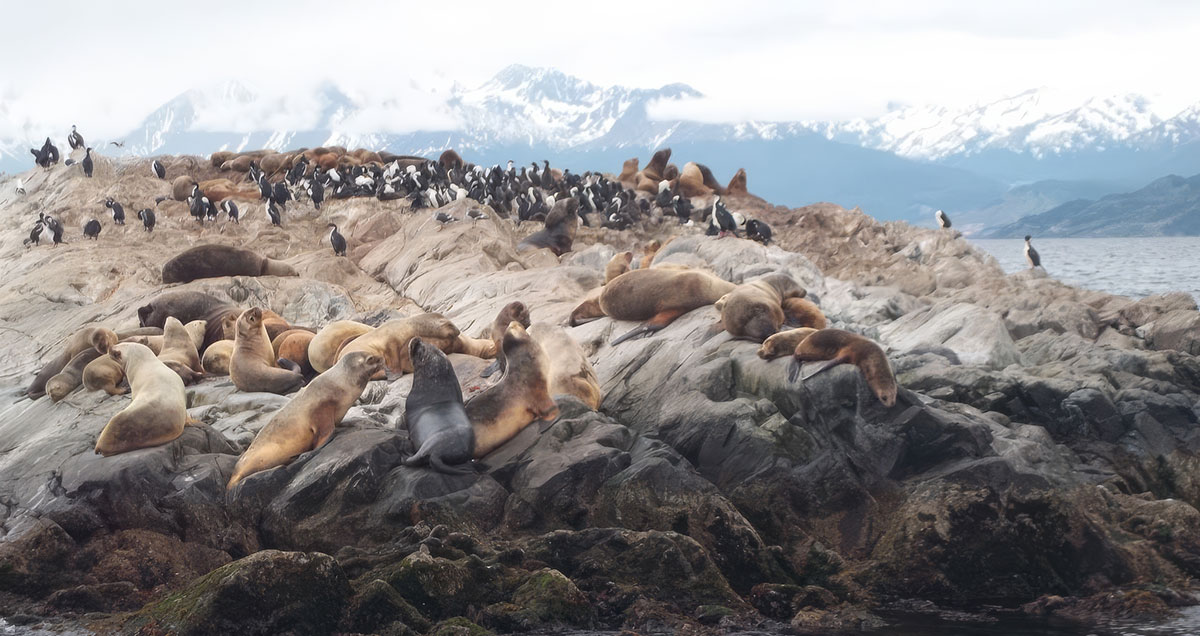
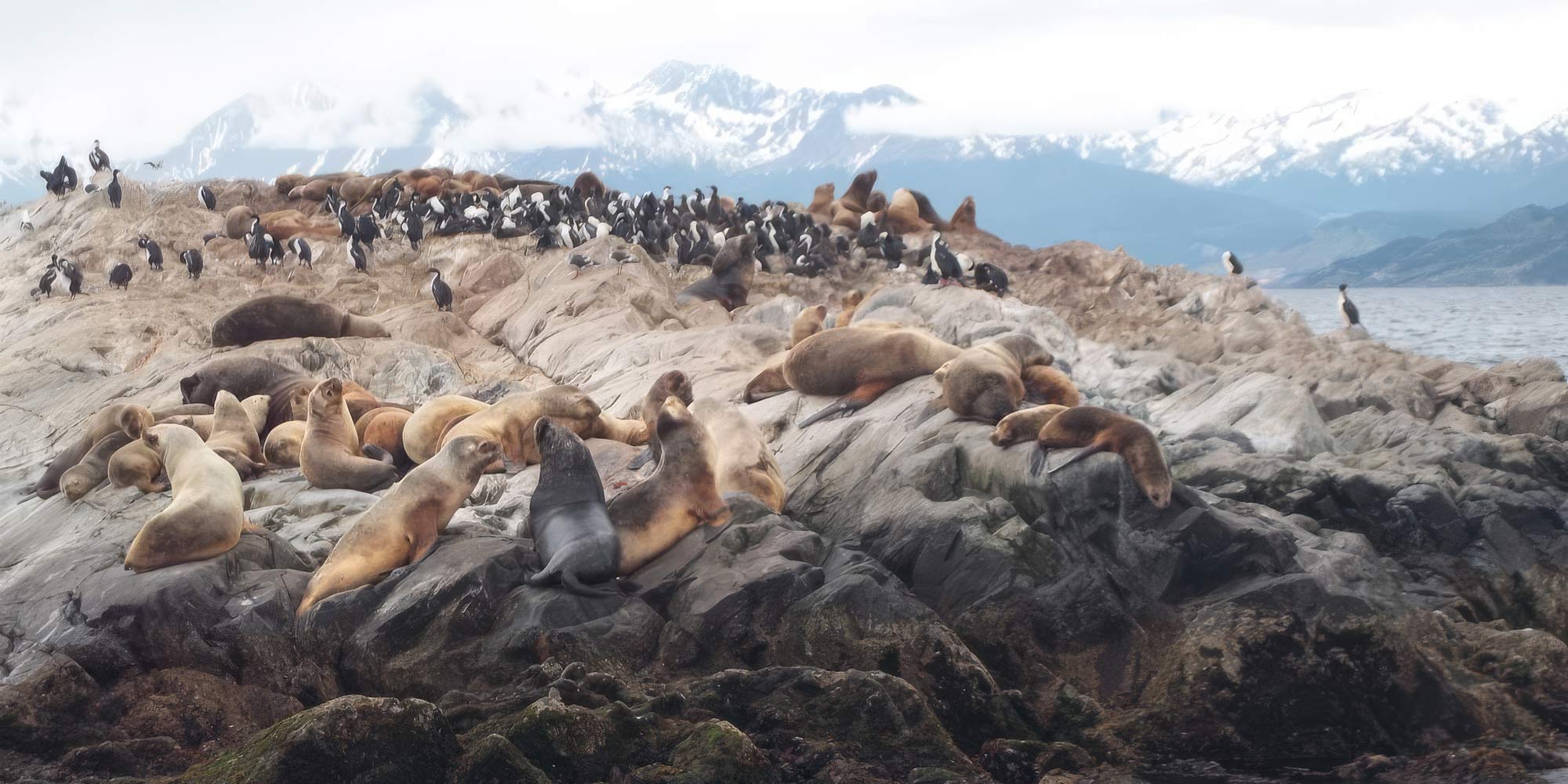
In the afternoon we take a boat out into the Beagle Channel. We have excellent views of Ushuaia and its mountain backdrop, from the sea, as well as the many sea mammals and birds that live in the Channel. We also see the Faro (lighthouse) Les Ecleurs and we learn some of the history of the early explorers and settlers in this inhospitable region.
Visit the town this morning for some last minute sightseeing and shopping. Transfer to the airport to take your flight. (Breakfast)
Note: It is possible to extend your time in Ushuaia to 5 days to allow for more winter walks and Nordic skiing.
The extra day is spent at Lakes Fagnano y Escondido. After breakfast, drive north, crossing the mountains at the Garibaldi Pass. From the Pass, those who want can go on the old route towards Lake Escondido, a 30 minutes hike up to Hosteria Petrel.
Those not wanting to hike can go on the 4 wheel drive vehicle up to the Hosteria, where we meet the hikers!
From Hosteria Petrel we continue driving on an old timber trail around the lake up to a panoramic viewpoint.
Just after noon we drive back across Garibaldi Pass to Tierra Mayor valley, where we get to a winter resort where we have “cordero al asador”, which is lamb roasted Patagonian style, for lunch.
In the afternoon, choose snow cats, dog pulled sleds, Nordic ski, ice skating or just relax and contemplate the snow covered valley from the cozy lodge. We drive back to town in the afternoon.
In towns there are several options with varying prices:
Hostel: Mixed dorms with bunk beds (maximum 8 people), shared bathrooms in towns and same sex share tent at camp sites if travelling solo.
Twin/double: Twin or double bedded room with private bathroom in tourist class hotel in towns.
Single: Single room with private bathroom in tourist class hotel in town and single tent camping.
You need to have a good level of fitness for the trip, as the fitter you are, the more you will enjoy it. There is no high altitude to contend with on this trip.
Those with no previous trekking experience can trek this trek, although experience of hiking is beneficial.
Note that weather can change rapidly in Patagonia in winter, and so be prepared for cold conditions and itinerary flexibility.
Experience in using crampons/snow shoes is not essential. If they are required, your guide will show you how to use them.
Almost all dietary requirements can be catered for – please enquire.
You usually wake early, so as to make the most of the daylight, for a hearty breakfast in our hotel/hostal, with hot drinks, juices, toasts and cereals.
After breakfast, packs are prepared and your guide will explain the day’s activity, and you typically are active for 3-4 hours in the morning before lunch, with a short or break or two en route.
Lunch, while out walking, will be sandwiches, fruit etc. Please bring some snacks of your own, as those available in the park are expensive and not always the best quality.
After an hour or so for lunch – depending on weather conditions – you will continue your activity, usually 2-4 hours more, although some days are shorter or longer than others, and then relax before dinner at the evening’s lodging.
Evening meals are large and feature bread, vegetables, meats and hot drinks, rice and pasta dishes. All dietary requirements can be catered for.
After eating, you can choose to socialise with team members, relax in your room or take in the views.
Please be aware that timings and activities can change, depending on the weather.
On this tour you will have an English-speaking tour leader throughout and local expert trekking guide.
Hotels and hostals are fully staffed with a local cook and support staff.
A self-guided Patagonia journey revealed the breathtaking beauty of Torres del Paine and its unforgettable W Trek.
A flawlessly organized self-guided Patagonia adventure combining freedom, efficiency, and unforgettable trekking experiences.
Journey to Patagonia in winter and will be visiting this beautiful spectacular land in the quietest, least visited season.
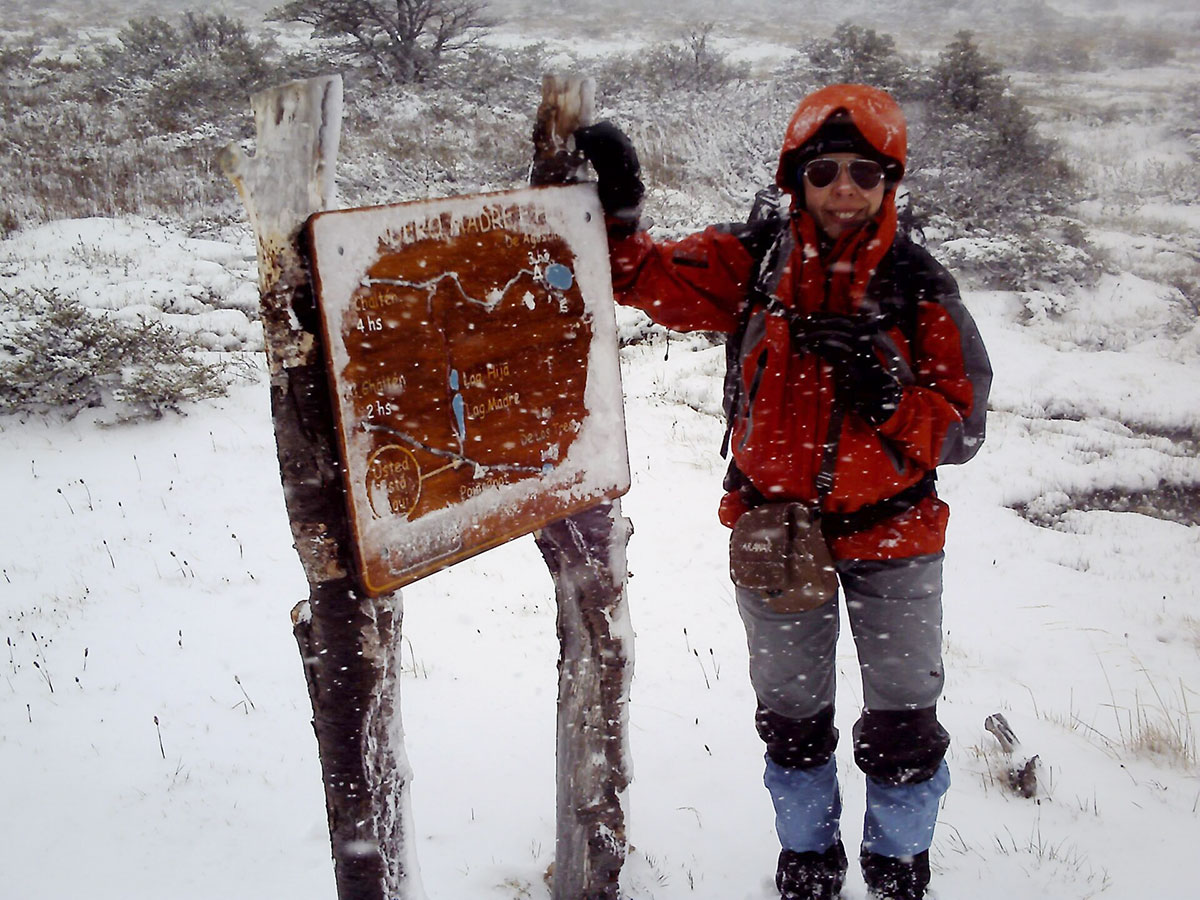
Enjoy clear days, with thick snow, frozen waterfalls and special winter light giving Fitz Roy and Chalten a completely different feel to summer.
Days out are spent exploring the dramatically beautiful sites, while the cold winter evenings are spent with a warm drink, by cosy log fires at the lodges.
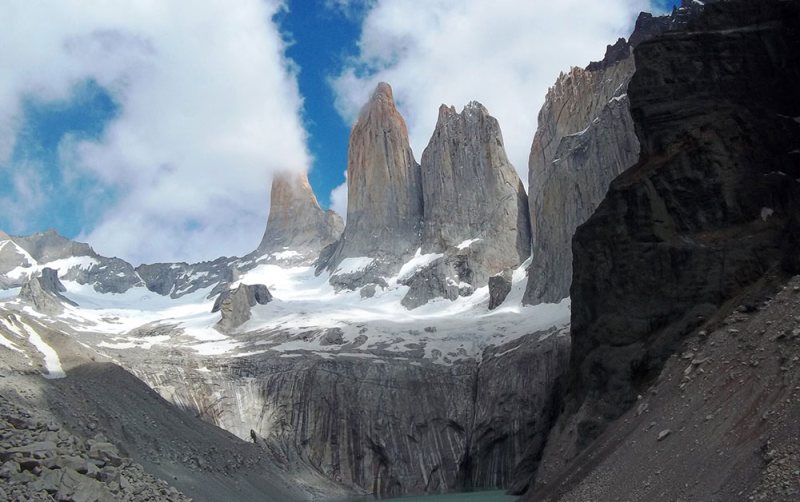
The tour takes you to Los Glaciares National Park where the spectacular granite spires of Fitz Roy & Cerro Torre tower above the horizon.
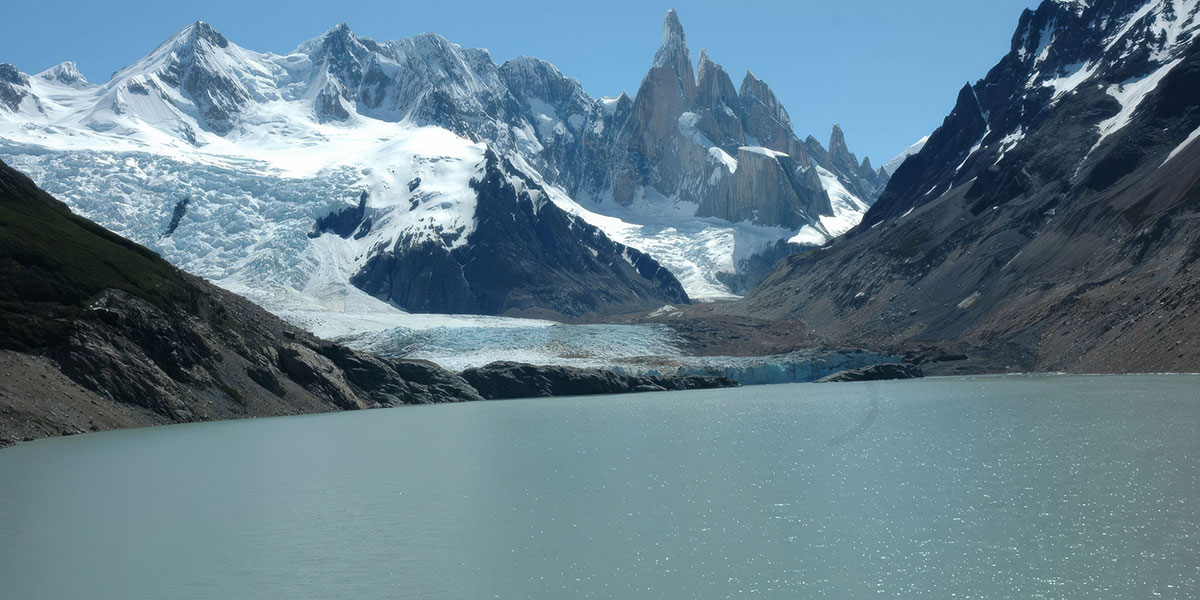
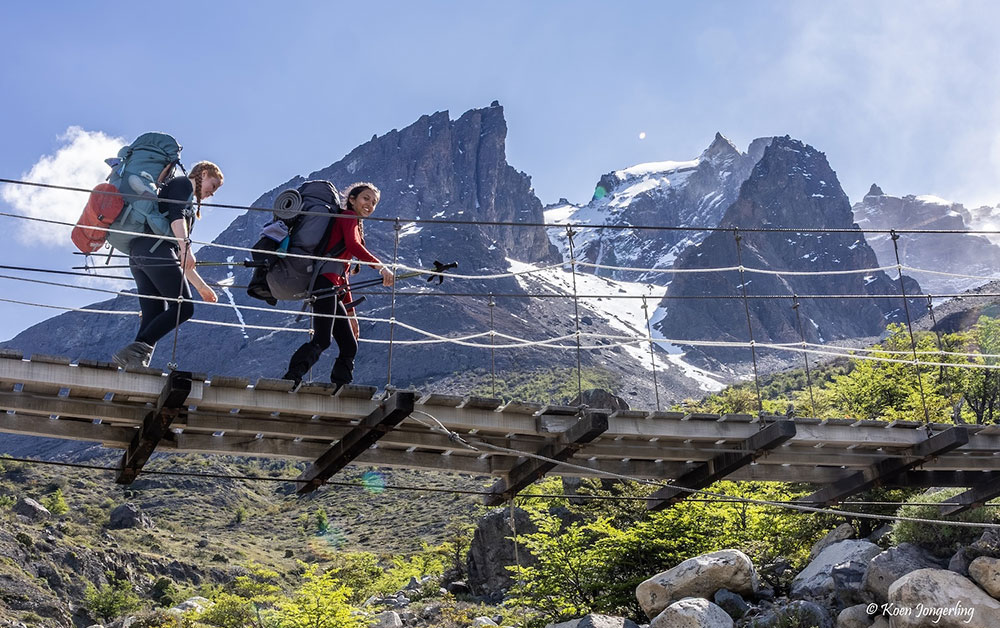
We hike or snowshoe along the trails, depending on snow conditions, to reach the main viewpoints of this stunning area.
After visiting the Perito Moreno glacier, you can choose to head off for another or extend your stay with a trip to the legendary Tierra del Fuego and Ushuaia – city at the End of the World.
It is possible to extend your time in Ushuaia, from 4 to 5 days, to allow for more winter walks and Nordic skiing, or to head across to Paine in Chile.
Most hotels, cafés, restaurants and airports offer free and generally good Wi-Fi. In some towns and cities, main plazas provide free public Wi-Fi.
Internet cafés are slowly disappearing, but most towns and cities still have some in central areas.
Head to the state-owned Correos de Chile for postal services in Chile.
Correo Argentino is the national, state-run postal service in Argentina.
To call Argentina from abroad, or using your mobile phone in Argentina, follow these steps.
Example number: Buenos Aires (0)11 1234-5678
+54 is Argentina’s country code.
11 is Buenos Aires’ city code, without the (0).
Final number: +54 11 1234 5678.
Argentina mobiles start with 15 when dialled locally.
Example number: Buenos Aires mobile 15-8765-4321
+54 is Argentina’s country code.
Remove the 15 from the start of the mobile number.
Add a 9 and the area code without the (0). For Buenos Aires the code is 11.
Final number: +54 9 11 8765 4321.
From an Argentine landline or mobile, simply dial 15-8765-4321.
If taking a mobile phone with you, check roaming rates with your operator before travelling, as they can be very high.
A good way to avoid expensive charges is to bring your own unlocked tri- or quad-band phone and buy an inexpensive SIM card with a local number. These are available in many kiosks and locutorios and allow cheap calls and affordable data.
The international code for Chile is +56.
Regions have dialling codes.
Not all smartphones will work in Chile. Check with your operator before arrival. Roaming charges may be high.
Chile’s landlines have 7 digits, apart from Santiago where they have 8 digits.
To call landline to landline in the same city, add the regional code and then the 7 or 8 digit number. For example, Arica code is 58, so dial 58 1234567.
If calling another region, dial the area code without the 0. For example, Puerto Natales code 61: dial 61 1234567.
If using your own mobile phone to call a landline, dial the country code, the regional or city code without the 0, and then the number. For example: +56 61 1234567.
Mobiles have 8 digits.
If dialling a Chilean mobile from a Chilean landline, add 9 before the number. For example: 9 1234 5678.
If using your own mobile phone to call a Chilean mobile, dial the country code, then 9, then the 8-digit number. For example: +56 9 1234 5678.
If calling an Argentine mobile while in Chile, dial +54 9, then the area code without the 0, then the number, leaving out the 15.
Example: Buenos Aires mobile 15 1234 5678
Dial: +54 9 11 1234 5678.
Andean Trails can book all your international and domestic flights for this trip and for UK passengers; we have full ATOL bonding and can book flights with most airlines.
International flight prices are variable and usually can only be guaranteed at the time of booking. If you would like to upgrade to business or first class, or even arrive at an earlier date/depart at a later date we can also arrange this for you.
Typically, you fly to a country’s capital city and then overnight there or make a connecting flight (if available) to your next destination.
Please contact us for flight advice especially if you do make a connection on the same day. It is important to purchase a through ticket and not separate tickets for connections, so that you are covered for any delays. Passengers with separate tickets that are delayed run the risk of having to buy an entirely new ticket to continue their journeys.
Please note all airline schedules are subject to change and are out of our control.
Almost all flight tickets are now e-tickets. Any that are not will be handed to you on arrival in South America – this is most common for flights on smaller planes in Amazon areas such as Guyana/Bolivia.
The final travel instructions we send you some 2-3 weeks before departure will list the latest flight times, flight numbers etc as well as list your e-ticket numbers and booking reference code (6 characters i.e. GB75RK). This is what you will need to check in with.
Depending on the airline, we can reserve some seats for you at the time of booking your international flights with us.
If we cannot reserve seats at the time of booking, you have to wait for online check in to open (usually 24-72 hours before departure).
To check in online you will need to go to the website of the airline you are travelling with, and have your e-ticket number/booking reference to hand. Click check in online, enter your details, and choose your seat.
Some flights will allocate seats at the check in desk at the airport and some may not allocate seats at all.
The United States (USA) has an Electronic System for Travel Authorization (ESTA) which all travellers to and via the USA must complete BEFORE travel to/via its airports and shores.
More information can be found on their ESTA website.
Passengers who have not completed the form will be denied boarding.
Before you begin this application, make sure that you have a valid passport and credit card available.
This application will only accept the following credit cards: MasterCard, VISA, American Express, and Discover (JCB, Diners Club).
Southern Patagonia (latitudes 49° to 55°), encompassing the southern Andes of Chile and Argentina plus Tierra del Fuego, has an altogether more vertical aspect than the rest of Patagonia.
As the continent tapers towards its southern point, the Andes take on new characteristics and offer some truly impressive panoramas.
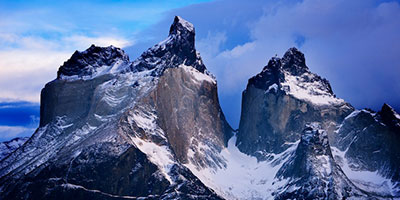
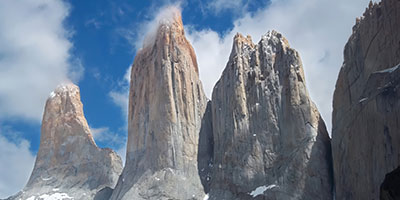
Much of southern Patagonia is characterized by virgin landscapes where man’s hand has either not been present or, because of the scale of the landscapes, goes almost unnoticed. To the west of the semi-arid Patagonian plateau, mile-high granite spires – e.g. Cerro Torre and Fitzroy in Argentina and the Torres and Cuernos del Paine in Chile – rise abruptly from the Andean foothills, while vast blue glaciers, fringed by southern beech forest, gouge out thevalleys below.
At the heart of these magnificent landscapes lies the South Patagonian Ice Field, an utterly remote icy wilderness spanning hundreds of kilometers, whose glaciers – including the Perito Moreno and Upsala – are tens of kilometres long by severalkilometers wide.
Also characteristic of the southern Patagonian Andes are its turquoise, iceberg-filled lakes. To the west lies the southern portion of the Chilean Archipelago, comprising snow-capped islands and fjords.
Across the Magellan Straits from mainland Patagonia lies Tierra del Fuego which, like the rest of Patagonia, is divided between Argentina and Chile.
The north and east of Tierra del Fuego is flat, but flanking the Beagle Channel in the south, the tail end of the Andes provide very dramatic mountain scenery.
The Lake District (latitudes 40° to 45°) or the Araucania, is a region of dramatic conical volcanoes, evergreen, high-canopy forests and, of course, lakes.
It straddles the Chile-Argentine border, and also takes in Chiloe island, in the extreme north of the Chilean Archipelago. This region stretches from Temuco in the north to Chiloe in the south.
Central Patagonia (latitudes 45 to 49) is one of South America’s best-kept secrets. The vast wilderness area can be divided in two:
This huge region, embracing the sparsely-inhabited southern Araucaria and Aisén Region, features temperate rainforests, snow-peaks (often extinct volcanoes), lakes and, to the west, the Chilean Archipelago: a labyrinth of fjords and mountain-islands. This, the Chilean portion of central Patagonia, boasts the northernmost of Patagonia’s many giant, sea-level glaciers.
The San Raphael Glacier, probably this region’s most famous landmark, is an immense hanging glacier whose seracs calve into an iceberg-filled lagoon.
Find out more about Patagonia with our blog about its wildlife.
For most people, Patagonia evokes a vast, windblown plateau, jagged mountains and the life of the gauchos.
The steppe that occupies much of southern South America is only one aspect of a magical region, jam-packed with amazing and contrasting landscapes.
Patagonia (latitudes 40°-55°, approximately) embraces a vast portion of southern Chile and Argentina, from the Rio Colorado in the north, to Tierra del Fuego in the south.
For convenience, we have divided the region into three zones: the Lakes District of northern Patagonian, central Patagonia and southern Patagonia.
Learning a few words of Spanish can really ingratiate you with the locals you’ll encounter, adding to the enjoyment of your holiday. Below are some basics to get you started.
| Greetings | |
|---|---|
| Good morning | Buenos días |
| How are you? | ¿Cómo estás? |
| Good afternoon | Buenas tardes |
| Good bye | Adiós |
| Most frequently asked questions (theirs) | |
| Where are you (plural) from? | ¿De dónde eres (son)? |
| What time is it? | ¿Qué hora es? |
| Where have you come from? | ¿De dónde vienes? |
| Give me (frequent, unwelcome question) | Dáme / regálame |
| Most frequent questions (yours) | |
| How much is it? | ¿Cuánto vale? |
| What is this place called? | ¿Cómo se llama este lugar? |
| What’s your name? | ¿Cómo te llamas? |
| Do you have a map? | ¿Tienes un mapa? |
| In the street / places | |
| Where can I find a currency exchange? | ¿Dónde encuentro una casa de cambio? |
| Where is there a cash machine? | ¿Dónde hay un cajero automático? |
| Where is the underground/subway station? | ¿Dónde está la estación de metro/subte (Buenos Aires)? |
| Where can I find a taxi? | ¿Dónde puedo encontrar un taxi? |
| Where can I find a supermarket? | ¿Dónde puedo encontrar un supermercado? |
| Where is the hospital? | ¿Dónde está el hospital? |
| Where can I find a restaurant? | ¿Dónde puedo encontrar un restaurante? |
| In the hotel | |
| What floor am I on? | ¿En qué piso estoy? |
| Where are the elevators/lifts? | ¿Dónde están los ascensores? |
| How do I access the Internet? | ¿Cómo puedo acceder a Internet? |
| How do I call for room service? | ¿Cómo llamo para el servicio de habitación? |
| How do I call down to the front desk? | ¿Cómo llamo a la recepción? |
| In the restaurant | |
| A table for two/four please | Una mesa para dos/cuatro, por favor |
| I would like to drink… | Me gustaría tomar… |
| May I see a menu? | ¿Puedo ver la carta / menú? |
| I would like to order… | Me gustaría pedir… |
| Can you bring me the check/bill please? | ¿Me trae la cuenta, por favor? |
| Emergency | |
| I need help. | Necesito ayuda. |
| I have lost my passport. | He perdido mi pasaporte. |
| Someone stole my money. | Alguien robó mi dinero. |
| I have been robbed. | Me han robado. |
| I need to call the police. | Necesito llamar a la policía. |
| I need to call the (country) Embassy. | Necesito llamar a la embajada de (country). |
| Help! | ¡Socorro! |
Good kit is vital for every trip.
Book with Andean Trails and get 15% off Páramo’s fantastic ethical and high performance outdoor gear.
When planning for the varied climatic conditions encountered in Paine, layering is the most practical and versatile clothing system. It’s worth remembering that our clothing keeps us warm by retaining and isolating the heat we ourselves create.
To best maintain body heat, several layers of lightweight, warm and quick-drying clothing are far more efficient than one or two thick layers. Layers should have the following qualities:
First (base) layer: This layer wicks the sweat away from our skin, thus helping keep the body dry and warm. To this end, synthetic fabrics such as polypropylene should be used.
Mid layers: These isolating layers should also be synthetic (e.g. the known polar linings such as polartec or windblock, which are light and insulate twice as well as wool). Very important layers for retaining body heat.
Outer layer / shell: Finally, the vital layer which protects us from climatic adversities. A breathable, wind-proof and waterproof anorak, such as Goretex.
Give plenty of thought to kit selection, and try to keep weight down.
We also carry an extensive first aid kit & oxygen on all trips, but these are generally for emergencies only.
Take US dollars with you (preferably new notes or at least unmarked and undamaged notes) in smaller denominations of 10s, 20s and maybe some 50s. Do not take USD 100 bills as they are unlikely to be accepted.
Argentina has had several years of economic instability and with a previous government there were tight exchange controls.
These have now been relaxed so payments with debit and credit cards are widely accepted.
However, there may be controls on ATM withdrawals (possibly a max of AR 1,000 / GB 50 per day and you may well be charged substantially for each withdrawal). ATMs can also be unreliable and we have had several reports of “empty” cash machines. We suggest that you have enough cash to cover your needs, especially in more remote areas.
ATM debit/credit cards are now widely used in major restaurants, hotels and shops (with fees).
On arrival to Argentina, at the airport/border, exchange US dollars so that you have some local peso. Some businesses, particularly in tourist spots may accept payment in US dollars – ask first.
Click here for the current exchange rate.
Peso banknotes: 2, 5, 10, 20, 50, 100, 200, 500 pesos
Peso coins: 5, 10, 25, 50 centavos, 1 peso, 2 pesos
Most businesses (unless a tourist shop/restaurant) will only accept Chilean pesos. Note that the Peso comes in very high denominations (see below), so you’ll need to get used to very big numbers on bills that are not worth very much.
ATM debit/credit cards are widely used in major restaurants, hotels and shops (with fees). There are plenty of ATMs (hole-in-the-wall) cash machines throughout the country, however check with your bank to see if there is a daily maximum you may withdraw.
Click here for the current exchange rate.
Peso banknotes: 1,000, 2,000, 5,000, 10,000, 20,000 pesos
Peso coins: 1, 5, 10, 50, 100, 500 pesos
Don’t forget to read our tipping guides for Argentina and Chile.
Argentina and Chile both have fantastic culinary and wine reputations.
There are more and more top-end restaurants almost everywhere, and you can easily spend USD 100pp and more on meals.
Prices vary greatly, below is a rough guide to what you can expect to pay in Argentina and/or Chile.
Beer/soft drink: USD 4
Menu del dia: USD 10-15
Coffee: USD 2
Bottle of wine: From USD 15 upwards
Beer/soft drink: USD 5-7
Main dish: USD 20 upwards
Coffee: USD 3
Bottle of wine: From USD 20 upwards
Patagonia is a relatively safe region, but we still recommend that in large towns and cities you take certain precautions (see below).
Chile and Argentina are, overall, among the safest countries in South America.
However, in Buenos Aires and Santiago, muggings and opportunistic crime – although not common – do occur.
In Buenos Aires, ‘distraction muggings’ sometimes happen in quiet streets, in the daytime as well as at night.
We suggest that you take the following precautions:
Tipping is entirely voluntary and how much you give depends on how you feel about the service you have received.
This is a rough guideline:
We strongly suggest that everyone planning to travel to Patagonia visits their local doctor/travel clinic prior to departure for the latest vaccination information.
UK and USA citizens do not require a visa to enter Argentina or Chile as a tourist.
Please ensure your passport has at least six months remaining validity.
On presentation of a valid UK or USA passport you will be granted a 90-day stay in either country. Please keep any tourist card you are given safe – you need this to leave the country.
Australians have to pay a reciprocity fee to enter Argentina, and this must be obtained before travelling to Argentine.
Australians entering Chile at Santiago International airport must also pay a reciprocity fee, paying cash on arrival.
All non-UK nationals should check with their nearest Chilean/Argentine consulates for the latest visa and fee information.
All requirements are subject to change and should be confirmed before departure.
Patagonia weather changes as quickly as the wind sometimes blows.
Summer (Nov-March) see temperatures reach up to 20°C, when glorious light pours over the region for up to 18 hours. This is the best time to visit, nevertheless, spring and summer is also when the central and southern Patagonian regions sometimes get buffeted by strong, westerly winds.
Summer days in national parks can also bring sunny, windless conditions, and you may well find yourself hiking in shorts and t-shirt. Afternoons in Los Glaciares can be warm with lots of sunshine. (Note: Patagonian UV rays are very strong).
But because of the fickle – and localised – nature of the climate here, take nothing for granted. In a single day, all four seasons might be experienced, including a biting, wind-induced cold. It has been known to snow in camps in summer!
The in winter (May-Sept) temperatures typically range from -2°C in the winter, and there is only 6-8 hours of daylight. Winds tend to die down.
In general, the further south you go, the cooler it gets and the further west you go – towards the Andes and Pacific coast – the wetter and less predictable the weather is. The further east – towards and across the Patagonian plateau – the drier and more stable.
On the South Patagonian Ice Field (average height, 1,500 metres), the appearance of lenticular clouds – signifying changing conditions – can translate into extreme winds (up to 150 kmh) and heavy snowfall. Here, summer pre-dawn temperatures commonly reach -20°C, with wind chill lowering temperatures even more. However, on sunny, windless summer days, you might get away with wearing just a couple of thin layers.
In Peninsula Valdes, the city of Puerto Madryn and the capital Trelew are all located in the province of Chubut, on the shores of three gulfs: San Matias, San Jose, and Nuevo. This area features a peculiar climate because of the effect created by the Atlantic Ocean. Although it does not rain much in the region on an annual basis, summers are usually mild, and the temperature sometimes gets very hot (touching 30ºC) and then eases off in the evening. The area does get very windy at times, especially on the peninsula, and warm and water/windproof clothing is recommended.
If you head to Ushuaia, due to its extreme southern location, temperatures may remain chilly during summer (Oct-March) the use of plenty of warm layers of clothing. Winter and Antarctic visits will require extreme clothing.
A self-guided Patagonia journey revealed the breathtaking beauty of Torres del Paine and its unforgettable W Trek.
A flawlessly organized self-guided Patagonia adventure combining freedom, efficiency, and unforgettable trekking experiences.