Since 1998, we've crafted journeys using knowledge gained on our own explorations of South America's spectacular wilderness, fascinating cultures and diverse wildlife.

Bring a sense of adventure and an open mind. We'll take care of the logistics and support you round the clock.

We only work with small, locally owned operators and guides. Your money stays where you travel, and a share of every trip supports local communities and the wild places they protect.

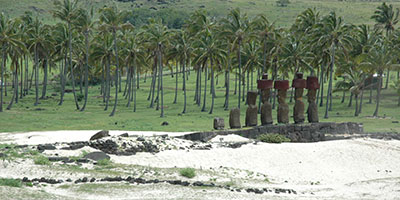
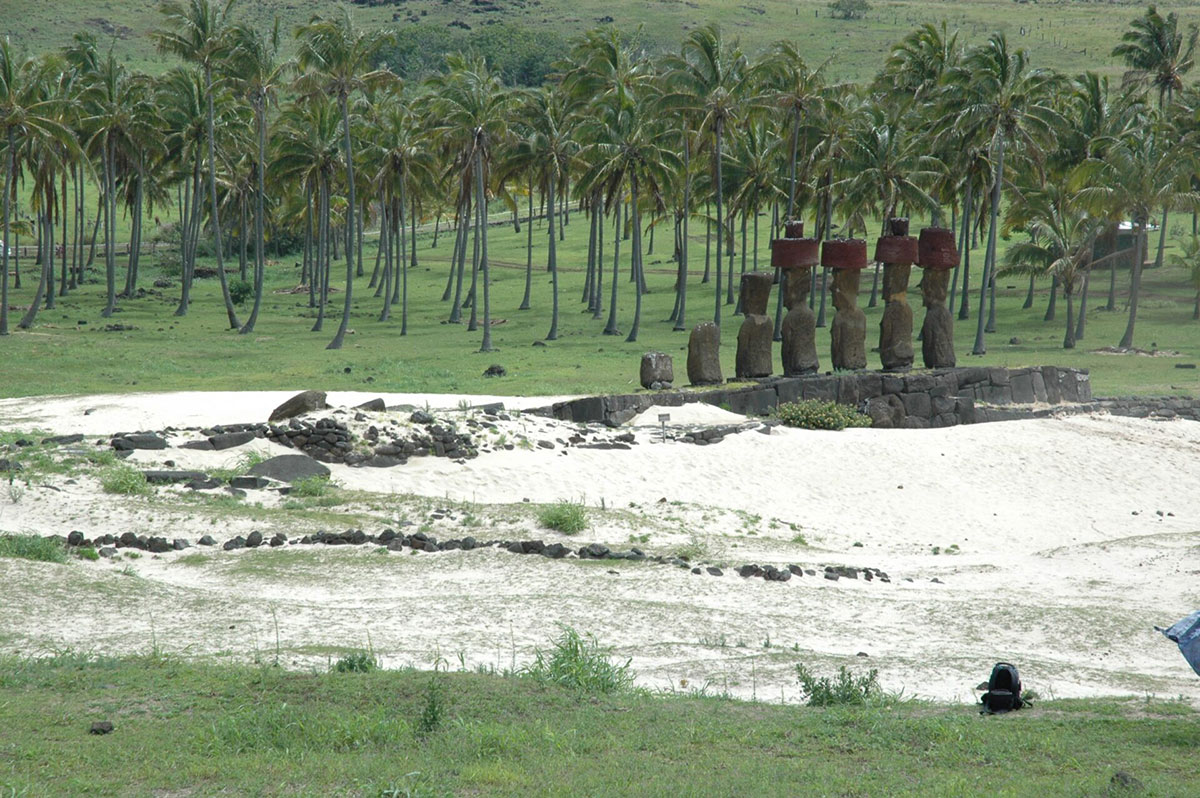
Ahu Nau Nau situated near the only sand beach on the island at Anakena. The Moai statues here are in a beautiful location with palm trees.
Ahu Nau Nau was restored in 1978 by the islander archaeologist Sergio Rapu. All of the Moai here had elaborate topknots (pukao).
An important finding here was that of an almost complete eye made of coral, with a red volcanic scoria disc to represent the iris, inlaid in a circular cavity in the coral. The eye sockets of the Moai quarried at Rano Raraku were not carved until they were upright on the ahus (in order to bring them to life). It is therefore possible to tell which Moai had been erected, and which were still in transit when the society collapsed.
Here is also the ‘Navel of the World’, a ceremonial site which contains an egg shaped stone.

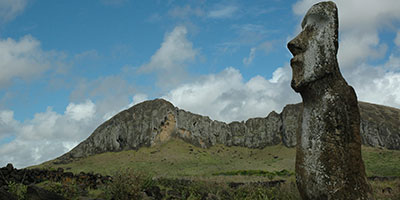
Rano Raraku volcano is of particular note as the birth place for the majority of the Moai statues.
For almost 500 years this was a quarry supplying the stone for the statues. Rano Raraku is a visual record of Moai design and technological innovation.
The edges of the volcano are littered with nearly 400 statues, some still in-situ with others erect on the slopes.
The incomplete statues in the quarry are remarkable for their number, for the inaccessibility of some that were high on the outside crater wall and for the size of the largest;
At 21 metres in height almost twice that of any Moai ever completed, and weighing an estimated 270 tonnes, many times the weight of any transported.
Some of the incomplete Moai seem to have been abandoned after the carvers encountered inclusions of very hard rock in the material.

Poike, one of the three main volcanoes of Easter Island.
Poike forms the eastern headland and there is an abrupt cliff “the Poike ditch” across the island marking the boundary between flows from Terevaka and Poike.
Poike last erupted between 230,000 to 705,000 years ago, and as the oldest of the island’s three volcanoes is the most weathered with relatively stoneless soil.
At 370 metres it is the island’s second highest peak after Terevaka.
For those who are keen, you can also visit the top of Terevaka, the central volcano on the island.
Terevaka is less than 400,000 years old. Its lava field at Roiho has been dated at between 110,000 and 150,000 years old.

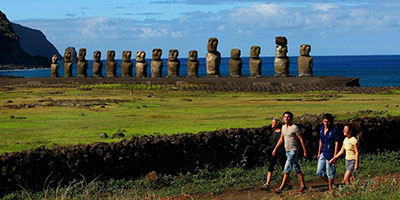
Ahu Tongariki (substantially restored in the 1990s), one of the most impressive locations on the island.
Tongariki contains fifteen of the largest Moai statues including an 86 tonne Moai that is the heaviest ever erected on the island.
The Moais are lined up facing inland from the Pacific towards Rano Raraku.
The statues have quite distinctive faces that require the use of telephoto lenses, but the entire landscape surrounding this location is great for further exploration.

There are several Rapa Nui sites of interest here to photograph including Ahu Vai Uri, and Ahu Akivi.
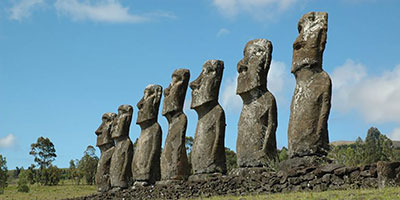
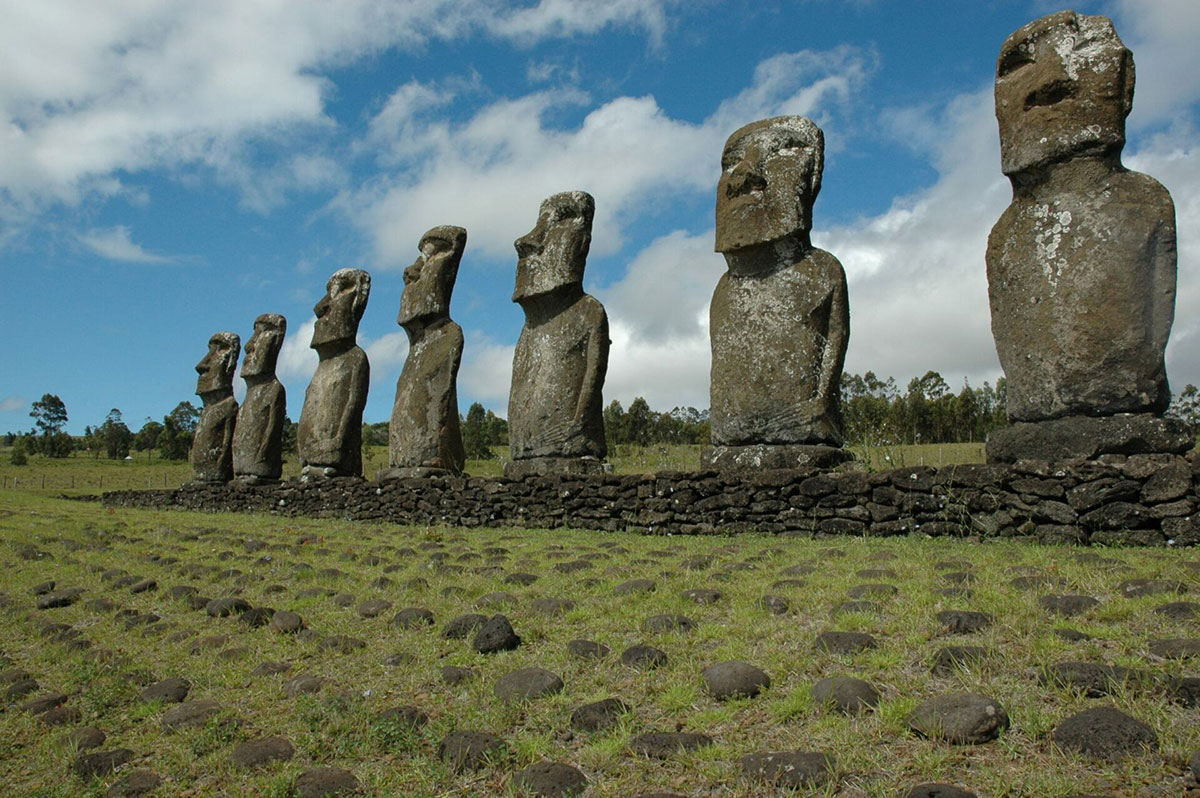
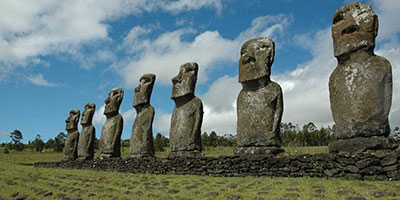
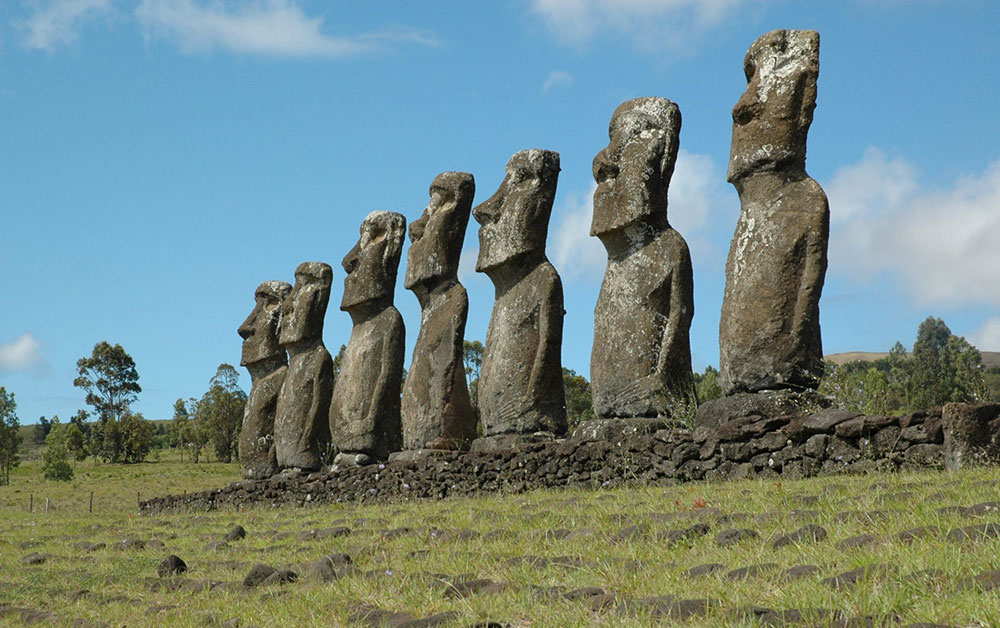
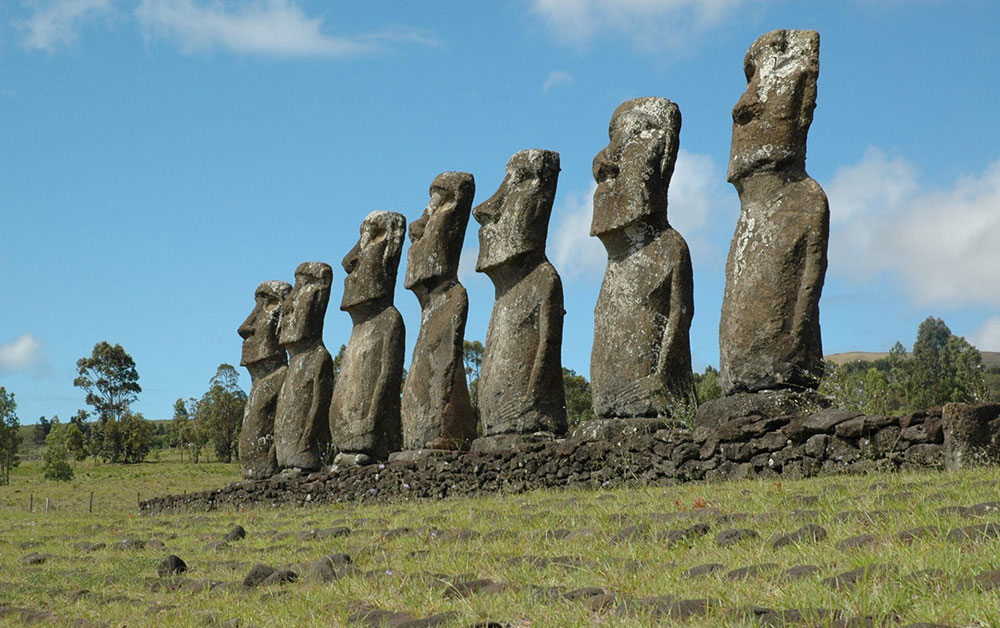
Akivi in particular is of interest because it is the only site on the island where the Moai statues face out towards the sea, as well as being situated inland. They are a dramatic feature of the landscape.
Kao Kao volcano and the ceremonial village of Orongo contain superb views over the three islets Motu Iti, Motu Kao Kao and Motu Nui. There is an abundance of petroglyphs to be found at this ceremonial site.
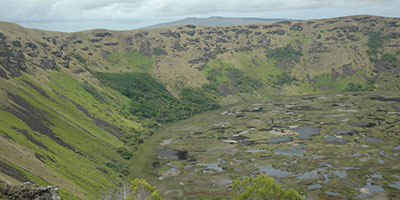
Volcano Kao Kao is a spectacular cauldron that demands the use of ultra wide-angle lenses.
All three islets have sea birds but Motu Nui was also an essential location for the Tangata manu (Bird Man) cult which was the island religion between the Moai era and Christina times.
Motu Nui is the summit of a large volcanic mountain which rises over 2,000m from the sea bed. The ritual was a competition to collect the first egg of the manutara (the Sooty tern). This took place starting from Motu Nui where the Hopu (representatives from each clan) waited for the Sooty terns to lay their first eggs of the season. The Hopu who seized the first egg raced to swim back to the main land, climbed the cliffs to Orongo and presented the egg to their sponsor in front of the judges at Orongo. This gave their sponsor the title of Tangata manu, and great power on the Island for a year. Many Hopu were killed by sharks or by falling. The winning clan gained certain rights including the collecting of eggs and young birds from the islets.

Easter Island is a tiny volcanic triangle, named Rapa Nui and meaning ‘Navel of the World’ by its early Polynesian settlers. It lies 2,300 miles (3700 km) off the coast of Chile and is the most remote inhabited island in the world.
Best known for its archaeological treasures, Easter Island holidays offer the possibility to visit the more than 600 Moai stone statues that are spread throughout the island. Some of them reach up to nine metres high. The island is also home to many caves and rocks decorated with fascinating etched petroglyphs and painted pictographs that give us some indication of the island’s history.
Since Easter Island became known to Europeans in 1722, it has been something of a mystery how the island’s native people first arrived. The full details of its history is a puzzle still being unravelled today.

It is a five-hour flight from Santiago on mainland Chile to Easter Island. We recommend four or five days for your Easter Island holiday. This allows time to visit the top sites as well as relax and enjoy the island’s laid-back feel and warm tropical climate.
We recommend tours with local expert guides who explain the history of the Rapa Nui culture as you visit Easter Island’s top sites such as Ahu Tongariki, Anakena beach and the volcanic crater of Rano Raraku.
If you have more time, you can choose to stay longer in or near to the main town of Hanga Roa. If so, take advantage of the pleasant climate and the chance to explore this fascinating and friendly island on foot, by jeep, on horseback or bike. Or just enjoy swimming in the sea and relaxing on the beautiful beaches.

An Easter Island holiday will include visits to volcanoes, Moai sites, caves, beaches and a number of other culturally significant sites.
The volcanoes that make up the island include Rano Kau, Rano Raku, Terevaka, Poike and Puna Pau.
One unmissable site is Rano Raraku volcano. This is home to the quarry that supplied stone for 500 years, for the building of Moai statues. The slopes of the volcano are littered with 400 statues, some still in-situ with others erect on the slopes.
Another Easter Island site to visit is Rano Kao, a water filled volcanic crater in the south west of the island. The ceremonial village of Orongo is spectacularly located on the crest of the crater. This site was significant for the Tangata manu (Bird Man) cult, the competition to establish the ruling power was held here annually.
Ahu Tongariki (substantially restored in the 1990s), is one of the most impressive Easter Island Moai sites. It consists of fifteen large Moai statues including the heaviest ever erected. The Moais are lined up facing inland from the Pacific towards Rano Raraku.
The other top Moai sites to visit are Ahu Nau Nau, where Moai are set amongst palm trees near to Anakena beach. Distinct features of the Moai here are their elaborate topknots (pukao) and their coral inset eyes. Also, Ahu Akivi is the only inland Moai site on the island, with seven Moai statues facing out towards the sea.

If you can, time your visit to coincide with the local festival of Tapati Rapa Nui, the highlight of the year for many locals on Easter Island. Held in February each year, it is a two-week-long celebration of Rapanui culture, traditional art, craft, dancing and sporting prowess.
An Easter Island holiday to enjoy this beautiful remote tropical location will be a memorable highlight for anyone visiting Chile in South America.
A flawlessly organized South American journey blending Patagonia’s treks with the magic of Easter Island.
Outstanding communication and expert planning made Andean Trails the clear choice for a perfectly organised South American adventure.
From money advice to visas, from inoculations to which plugs to take, below you’ll find a wide range of travel tips, advice and information that will help you get ready to explore Easter Island.
Can’t find what you’re looking for?
Get in touch and we’ll be happy to help.
Festival: Festival de la Canción Viña del Mar
International song festival
Location: Viña del Mar
Festival: Tapati
Culture, dance, music, song, sport
Location: Easter Island
Festival: Carnaval de Invierno
Street parade with floats celebrating mid winter
Location: Punta Arenas
Festival: Fiesta de La Tirana
Religious festival – culture, mass dance parades
Location: La Tirana, Atacama
Festival: Independencia
Independence day – celebration of Chilean culture – various activities
Location: Country wide
The international code for Chile is +56.
Easter Island’s dialling code is 032.
Not all smartphones will work in Easter Island or Chile. It is best to check with your operator before arrival. Roaming charges may be high.
Chile’s landlines have 7 digits, apart from Santiago where they have 8 digits.
To call landline to landline in the same city, simply dial the 7 or 8 digit number, for example: 1234567.
If calling a landline in another region or city, start with a 0 followed by the city area code (32 = Easter Island), for example: 032 1234567.
If using your own mobile phone to call a landline, dial the country code, the regional or city code without the 0, and then the number. For example: +56 32 1234567.
Mobiles have 8 digits.
If dialling a Chilean mobile from a Chilean landline, add 9 before the number, for example: 9 1234 5678.
If using your own mobile phone to call a Chilean mobile, dial the country code, then 9, then the 8 digit number, for example: +56 9 1234 5678.
Most hotels on the island offer Wi-Fi, but connections are often very slow.
Head to the state-owned Correos de Chile for postal services.
Andean Trails can book all your international and domestic flights for this trip and for UK passengers; we have full ATOL bonding and can book flights with most airlines.
International flight prices are variable and usually can only be guaranteed at the time of booking. If you would like to upgrade to business or first class, or even arrive at an earlier date/depart at a later date we can also arrange this for you.
Typically, you fly to a country’s capital city and then overnight there or make a connecting flight (if available) to your next destination.
Please contact us for flight advice especially if you do make a connection on the same day. It is important to purchase a through ticket and not separate tickets for connections, so that you are covered for any delays. Passengers with separate tickets that are delayed run the risk of having to buy an entirely new ticket to continue their journeys.
Please note all airline schedules are subject to change and are out of our control.
Almost all flight tickets are now e-tickets. Any that are not will be handed to you on arrival in South America – this is most common for flights on smaller planes in Amazon areas such as Guyana/Bolivia.
The final travel instructions we send you some 2-3 weeks before departure will list the latest flight times, flight numbers etc as well as list your e-ticket numbers and booking reference code (6 characters i.e. GB75RK). This is what you will need to check in with.
Depending on the airline, we can reserve some seats for you at the time of booking your international flights with us.
If we cannot reserve seats at the time of booking, you have to wait for online check in to open (usually 24-72 hours before departure).
To check in online you will need to go to the website of the airline you are travelling with, and have your e-ticket number/booking reference to hand. Click check in online, enter your details, and choose your seat.
Some flights will allocate seats at the check in desk at the airport and some may not allocate seats at all.
The United States (USA) has an Electronic System for Travel Authorization (ESTA) which all travellers to and via the USA must complete BEFORE travel to/via its airports and shores.
More information can be found on their ESTA website.
Passengers who have not completed the form will be denied boarding.
Before you begin this application, make sure that you have a valid passport and credit card available.
This application will only accept the following credit cards: MasterCard, VISA, American Express, and Discover (JCB, Diners Club).

Learning a few words of Spanish can really ingratiate you with the locals you’ll encounter, adding to the enjoyment of your holiday. Below are some basics to get you started.
| Greetings | |
|---|---|
| Good morning | Buenos días |
| How are you? | ¿Cómo estás? |
| Good afternoon | Buenas tardes |
| Good bye | Adiós |
| Most frequently asked questions (theirs) | |
| Where are you (plural) from? | ¿De dónde eres (son)? |
| What time is it? | ¿Qué hora es? |
| Where have you come from? | ¿De dónde vienes? |
| Give me (frequent, unwelcome question) | Dáme / regálame |
| Most frequent questions (yours) | |
| How much is it? | ¿Cuánto vale? |
| What is this place called? | ¿Cómo se llama este lugar? |
| What’s your name? | ¿Cómo te llamas? |
| Do you have a map? | ¿Tienes un mapa? |
| In the street / places | |
| Where can I find a currency exchange? | ¿Dónde encuentro una casa de cambio? |
| Where is there a cash machine? | ¿Dónde hay un cajero automático? |
| Where is the underground/subway station? | ¿Dónde está la estación de metro/subte (Buenos Aires)? |
| Where can I find a taxi? | ¿Dónde puedo encontrar un taxi? |
| Where can I find a supermarket? | ¿Dónde puedo encontrar un supermercado? |
| Where is the hospital? | ¿Dónde está el hospital? |
| Where can I find a restaurant? | ¿Dónde puedo encontrar un restaurante? |
| In the hotel | |
| What floor am I on? | ¿En qué piso estoy? |
| Where are the elevators/lifts? | ¿Dónde están los ascensores? |
| How do I access the Internet? | ¿Cómo puedo acceder a Internet? |
| How do I call for room service? | ¿Cómo llamo para el servicio de habitación? |
| How do I call down to the front desk? | ¿Cómo llamo a la recepción? |
| In the restaurant | |
| A table for two/four please | Una mesa para dos/cuatro, por favor |
| I would like to drink… | Me gustaría tomar… |
| May I see a menu? | ¿Puedo ver la carta / menú? |
| I would like to order… | Me gustaría pedir… |
| Can you bring me the check/bill please? | ¿Me trae la cuenta, por favor? |
| Emergency | |
| I need help. | Necesito ayuda. |
| I have lost my passport. | He perdido mi pasaporte. |
| Someone stole my money. | Alguien robó mi dinero. |
| I have been robbed. | Me han robado. |
| I need to call the police. | Necesito llamar a la policía. |
| I need to call the (country) Embassy. | Necesito llamar a la embajada de (country). |
| Help! | ¡Socorro! |
Good kit is vital for every trip.
Book with Andean Trails and get 15% off Páramo’s fantastic ethical and high performance outdoor gear.
Easter Island has a subtropical climate that is influenced by the sea and the ocean winds.
Summer (Dec-Feb) can be very warm, but being tropical, there can be downpours at any time of the year.
The ocean wind can make it feel decidedly cool in winter (Jul-Aug). Conversely, the low temperatures then may mask what can still be a very strong sun and heat.
Give plenty of thought to kit selection, and try to keep weight down.
Below is a more detailed guide, take less of the cold weather clothing if travelling in winter.
Easter Island’s monetary unit is the “Chilean Peso”.
Most businesses on Easter Island will accept Chilean pesos and US dollars for payments, and some may take Euros, too.
Note that the Peso comes in very high denominations (see below), so you’ll need to get used to very big numbers on bills that are not worth very much.
ATM debit/credit cards are widely used in major restaurants, hotels, shops and tour agencies throughout the island (with fees). There are only three ATMS (hole-in-the-wall) cash machines on the island, so it’s a good idea to take credit cards and a reserve of cash.
You can exchange foreign currency on Easter Island, and it’s best to take US dollars. These should be new notes, or at least unmarked and undamaged notes, in smaller denominations of 10s, 20s and maybe some 50s. Do not take USD 100 bills as they are unlikely to be accepted.
Click here for the current exchange rate.
Peso banknotes: 1,000, 2,000, 5,000, 10,000, 20,000 pesos
Peso coins: 1, 5, 10, 50, 100, 500 pesos
Easter Island is not cheap for eating out, but it does have quite a good range of places and you should be able to find something for most budgets.
Prices vary greatly, below is a rough guide to what you can expect to pay in Easter Island.
Tipping and bargaining are not traditionally part of the culture on Easter Island.
Beer/soft drink: USD 3
One meal: USD 10-15
Coffee: USD 2
Beer/soft drink: USD 3-5
Main dish: USD 20 upwards
Coffee: USD 2
220 volts (110v in some hotels), 50 Hz.
Most cameras, phones and computers are dual or multi voltage and probably won’t need a convertor – please check before leaving.
Some items you may bring, such as hairdryers, may need a convertor. They may short if you use them without the correct convertor.
Most sockets in Chile take the two pin, round-pronged Type C plug show below, and also the three-pronged Type L plug.


Tipping (and bargaining on prices) is not part of the Polynesian culture on Easter Island, and it not expected.