From: £2,479
From: $3,300
Start your adventure tour in La Paz.
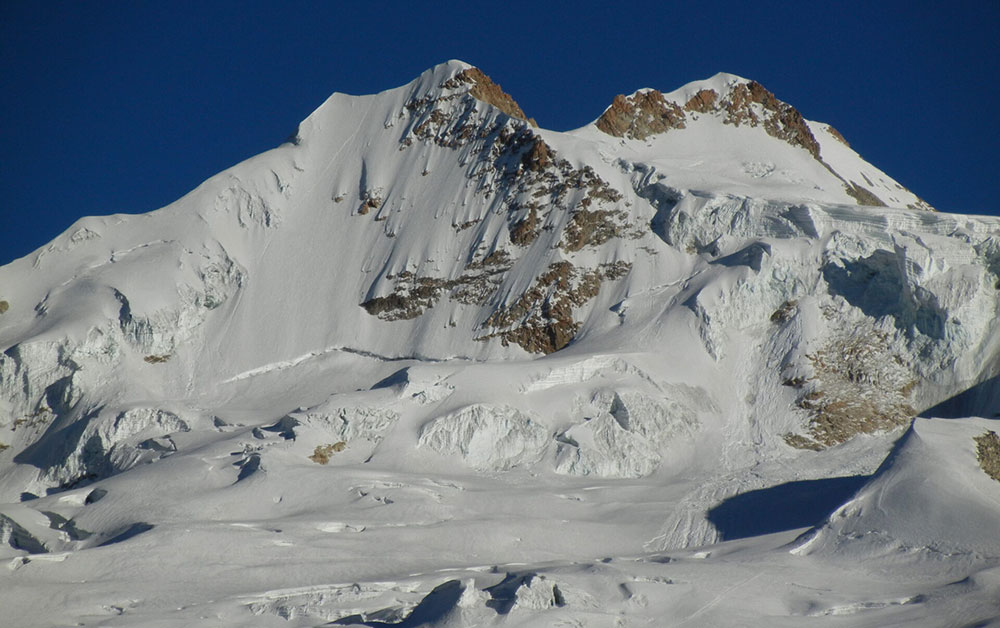
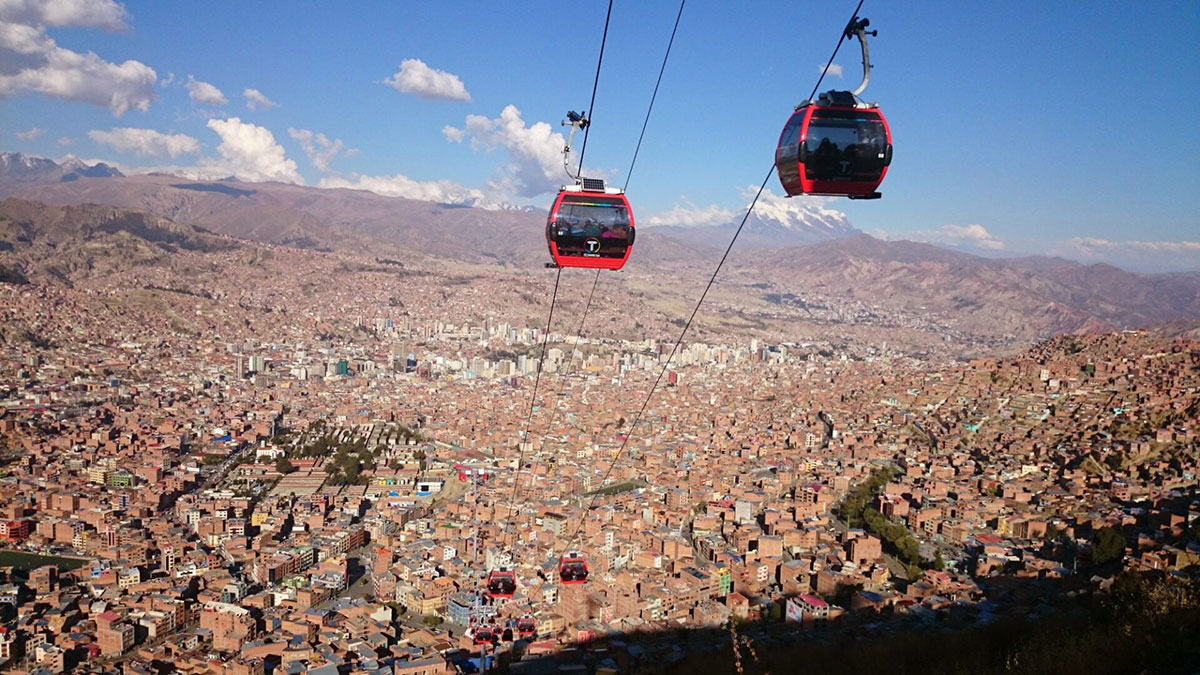
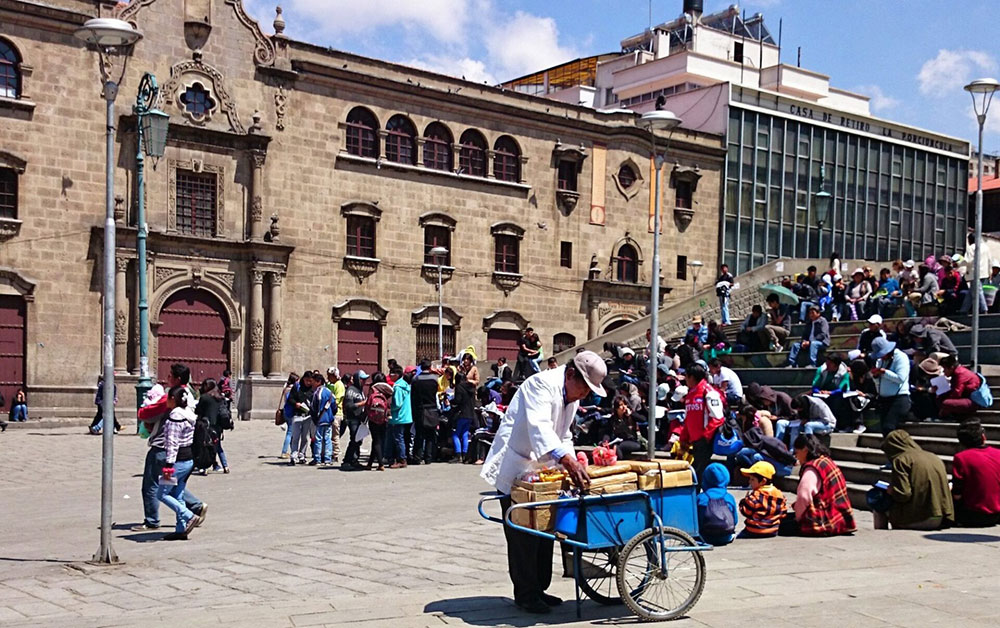
This is one of the world’s most dramatically located cities, situated in a deep canyon at the foot of the giant snow-covered mountain of Illimani (6,440m/21,129ft).
The city has a high proportion of indigenous Indians and is a fascinating place to wander about, with many street markets, museums and plenty of opportunity for shopping.
At 3,600m/11,811ft you’ll notice the altitude in La Paz, so take it easy and drink plenty of water while you acclimatise.
Leaving La Paz early in the morning you travel by bus southwards to the mining town of Oruro where we connect with the train to Uyuni.
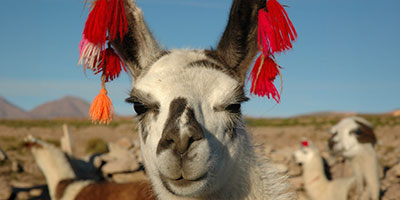
An eight-hour journey takes you across the high altitude plain known as the altiplano, home to Bolivia’s Aymara speaking Indians, who scrape a living from farming small plots or herding their flocks of sheep, alpaca and llamas.
Today you join up with other people to embark on the 3-day jeep expedition through the starkly beautiful landscapes of southern Bolivia. This is Bolivia’s poorest region where the land is inhospitable and sparsely settled, survival for the few inhabitants is a daily battle. The scenery is wild and dramatic with salt lakes, volcanic peaks and windswept high desert landscapes.
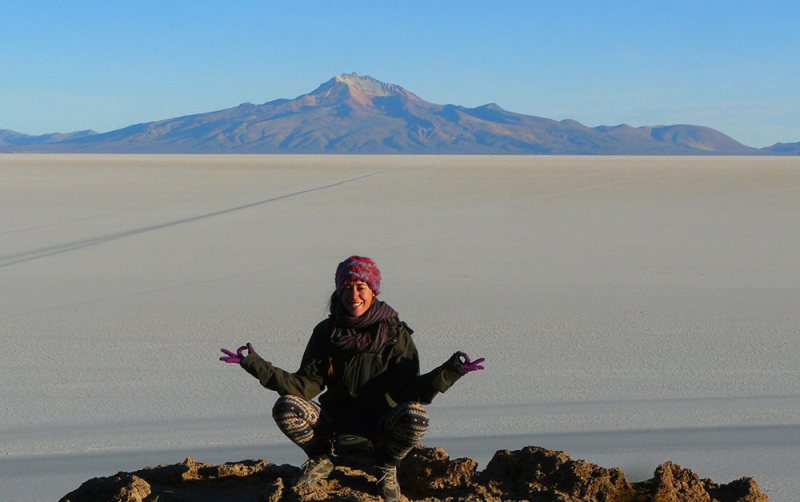
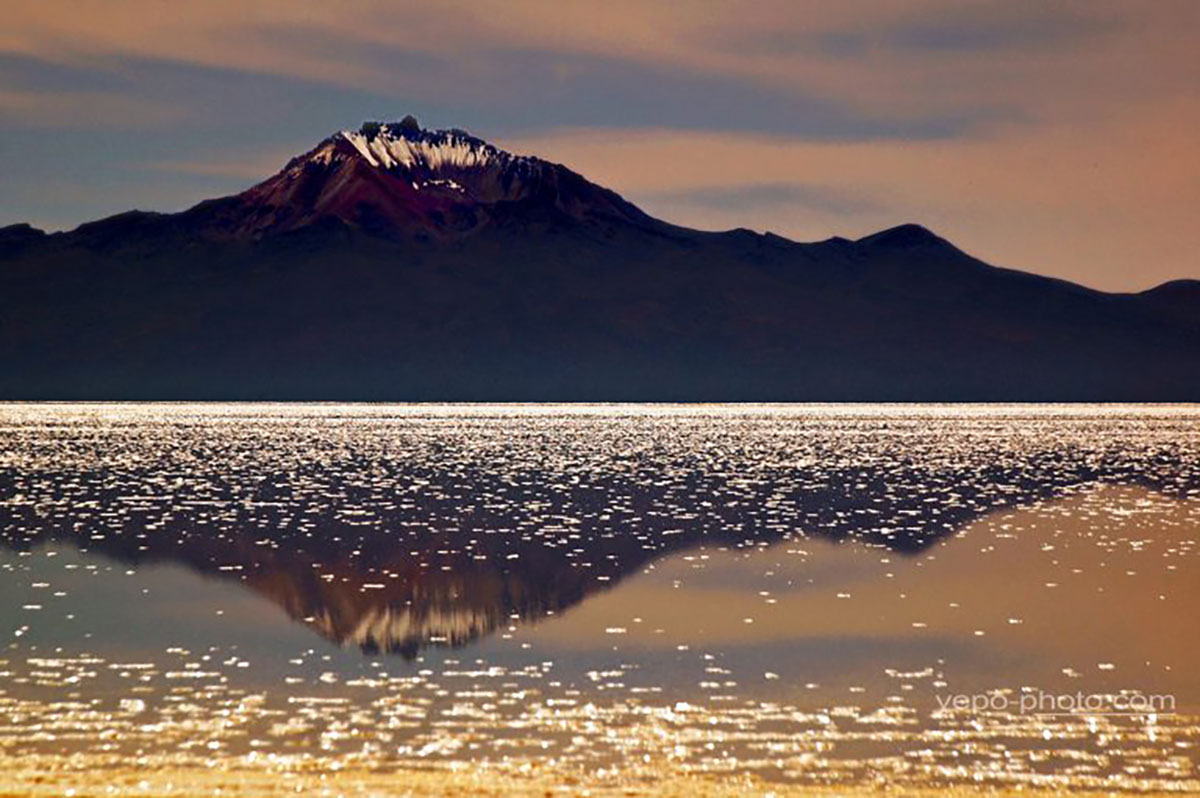
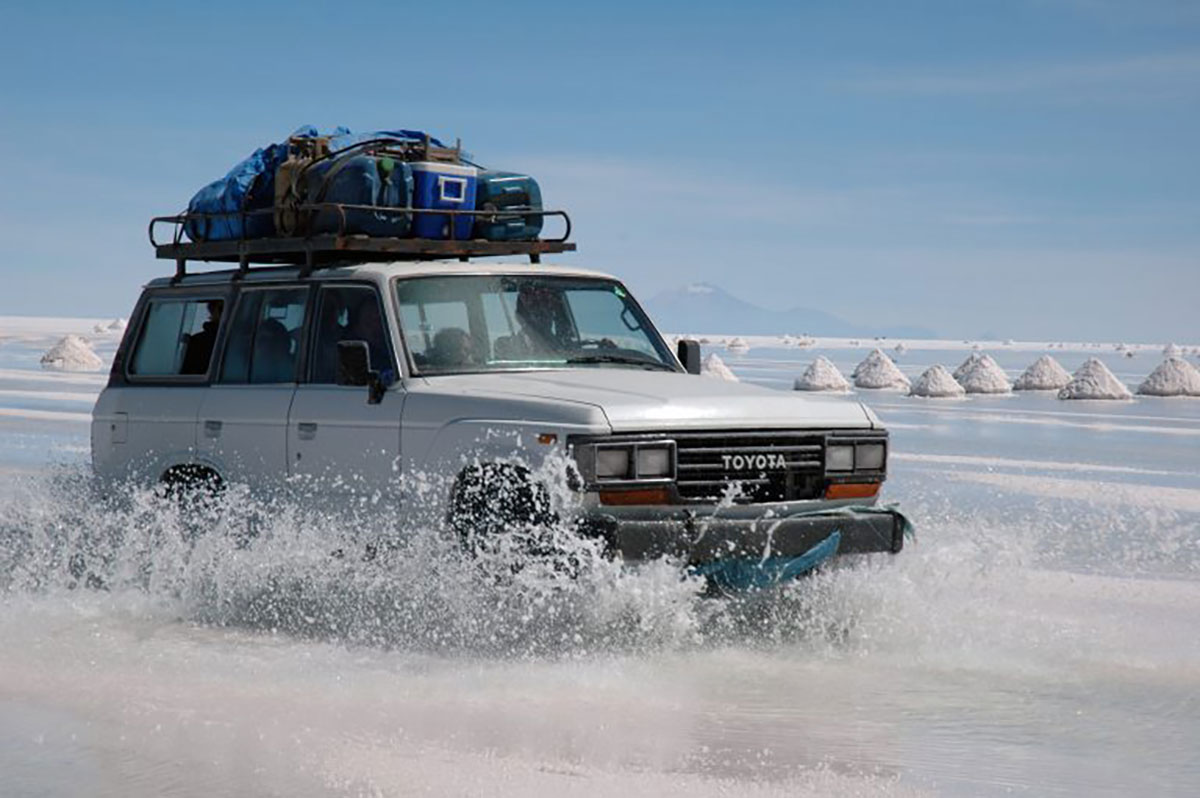
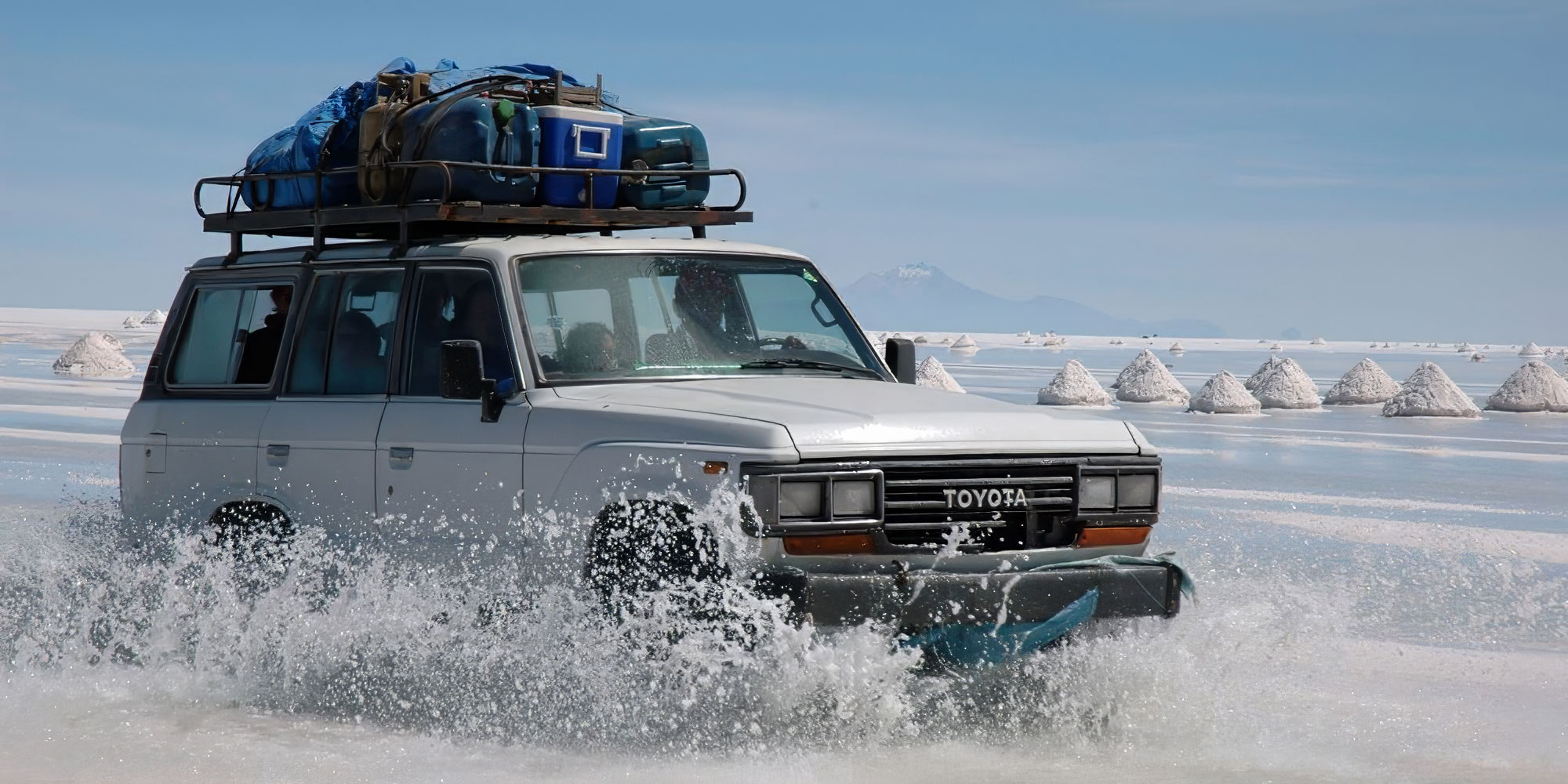
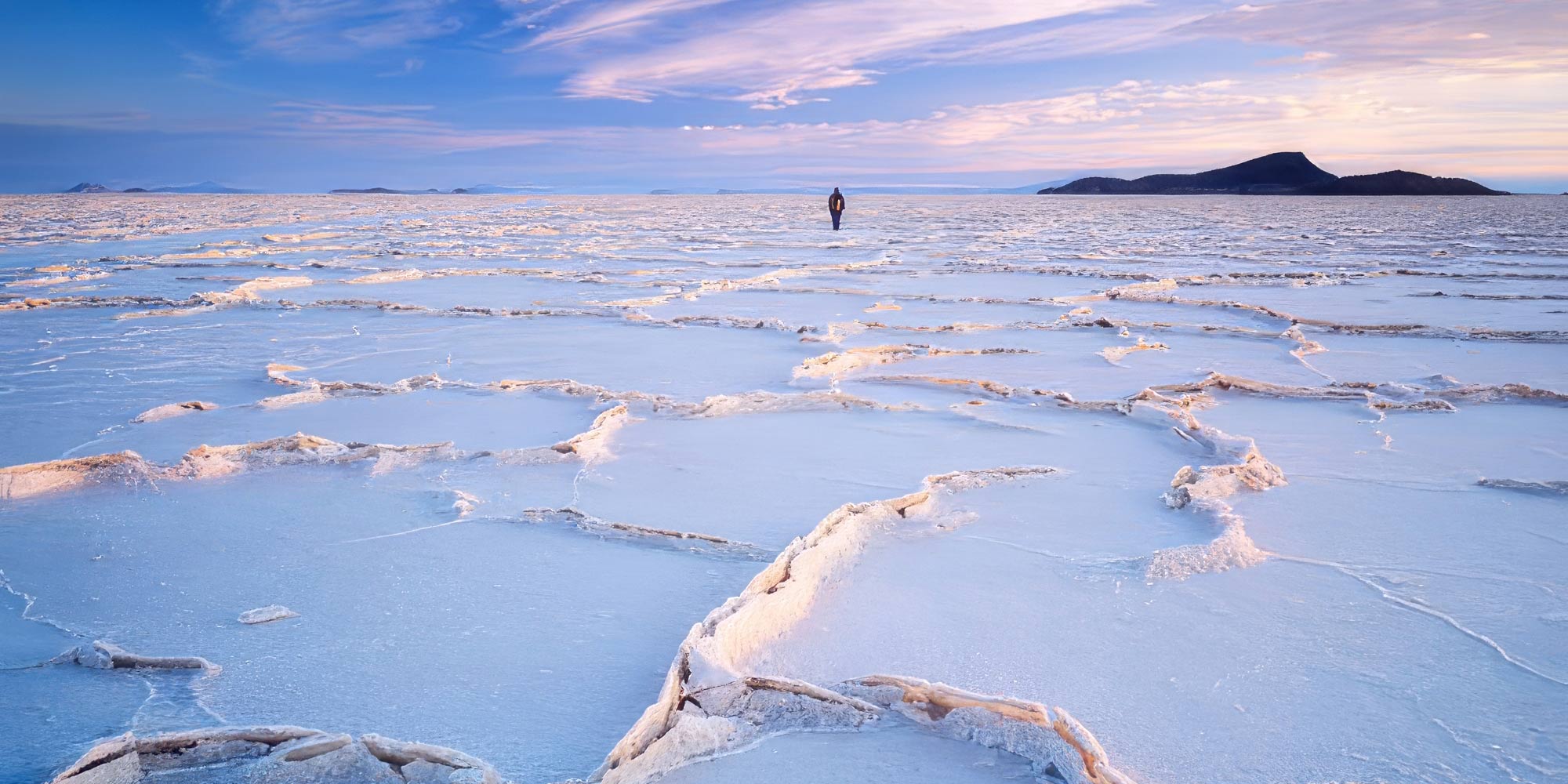
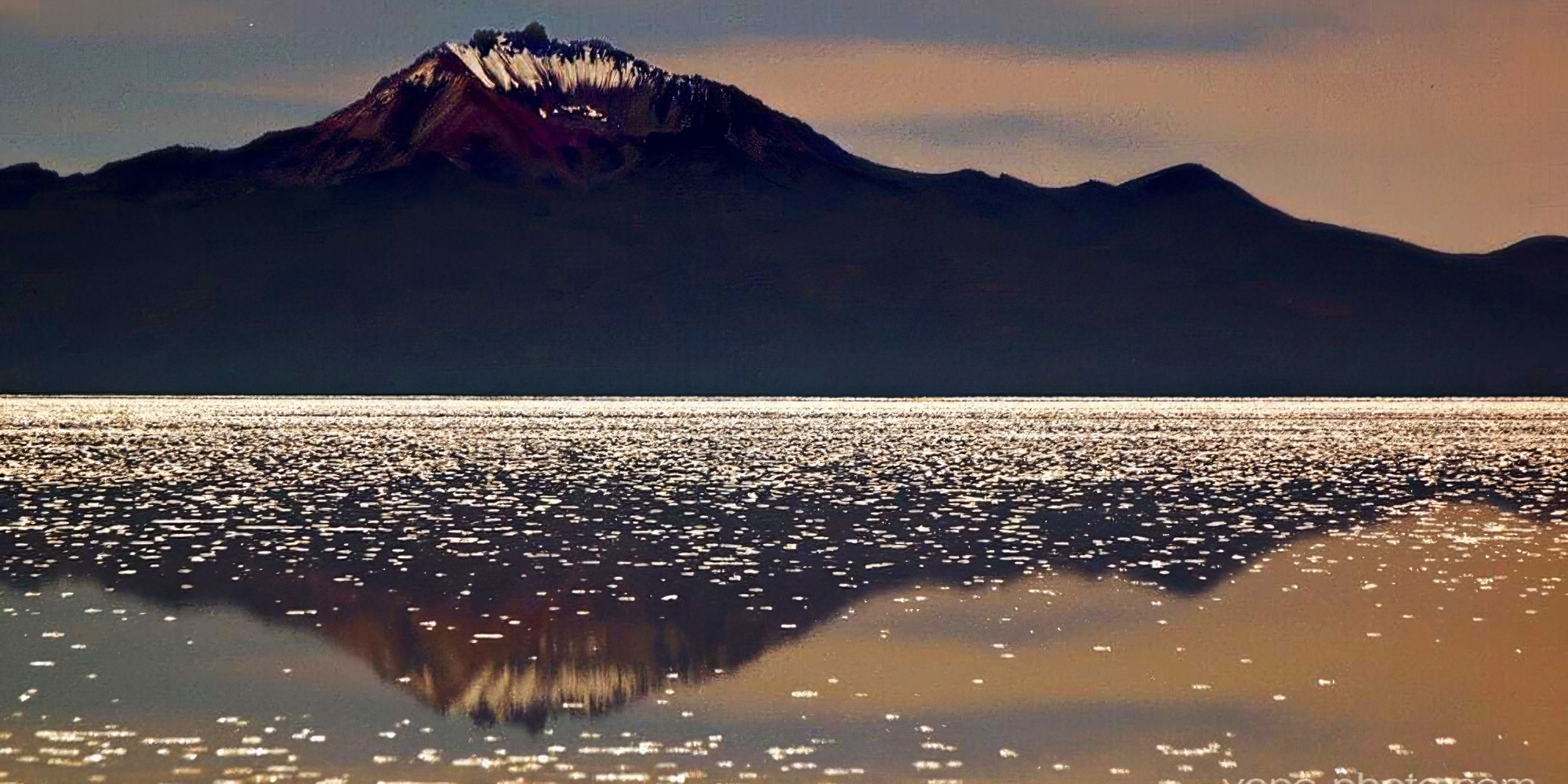
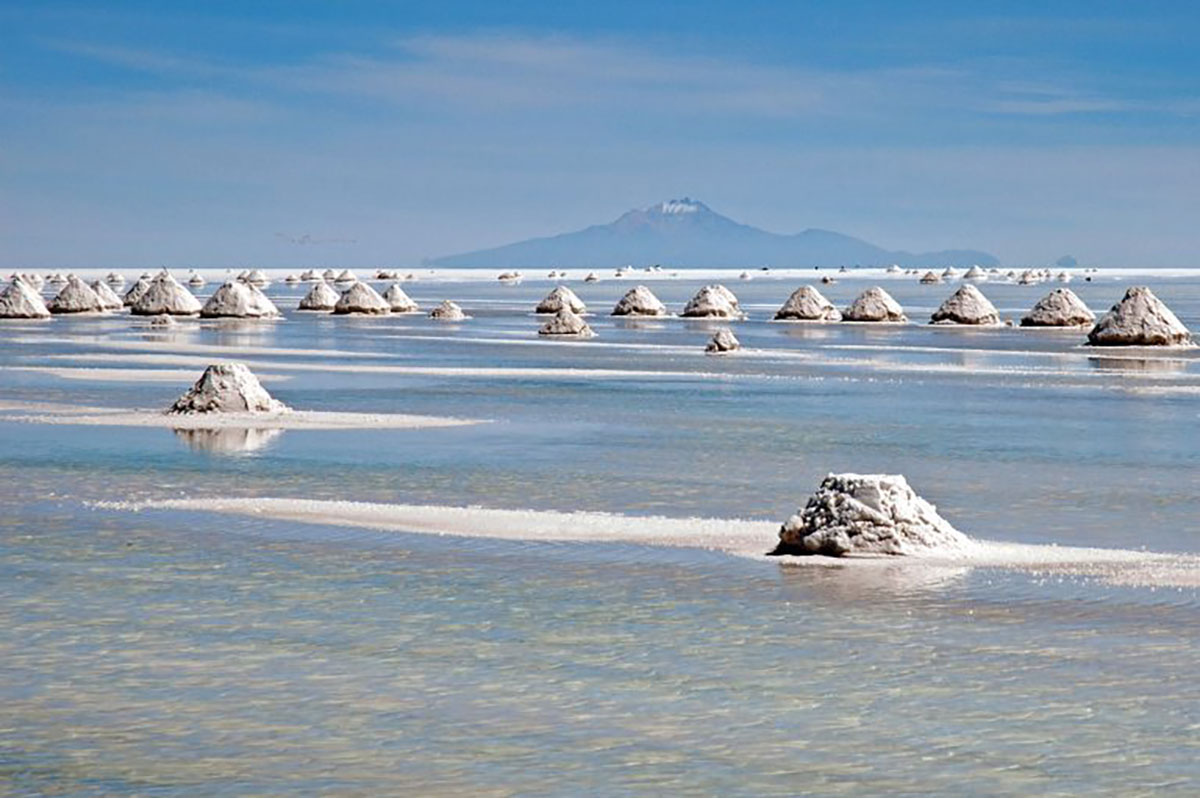
On the first day you cross the world’s largest salt lake, the Salar de Uyuni. The salt lake of Uyuni is immense, covering an area of 11,000km2 at 3,650m/11,975ft.
It stretches in a blinding white haze as far as the eye can see, with shimmering seemingly floating islands and in the far distance, conical volcanoes.
You may stop at Colchani to see salt being processed. The whole town survives on this small industry. Out on the Salar itself you may see local people digging up the salt and packing it into large sacks to take back to be processed. The first night is spent in one of the scattered adobe villages on the altiplano. Accommodation is either camping or in small local houses in bunk beds with basic facilities, such as running water and blankets provided.
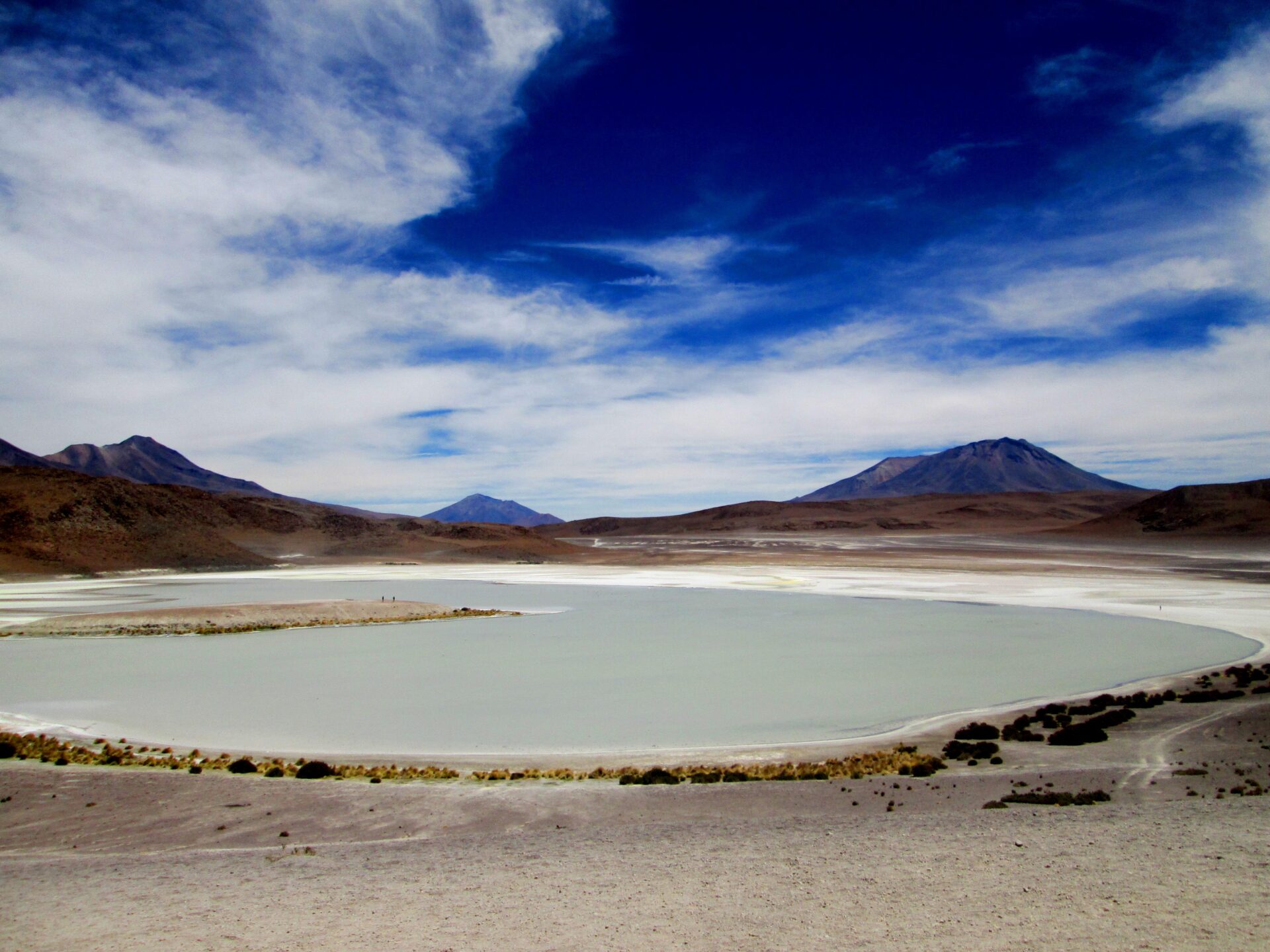
The following day drive on through the beautiful desert landscape, stopping to look at salty lagoons full of flamingoes, past the still active volcano of Ollagua to Laguna Colorada, situated inside the Reserva Eduardo Avaroa. The contrast of the red-coloured laguna filled with feeding birds, the banks of sharp white salts around the water and hazy mountains behind is unique.
The typical, though sparse, vegetation of the reserve is the very slow-growing yareta in distinctive bright green hard clumps, and the red-barked queñua tree. Both of these plants have been endangered because of over use by miners of borax. The plants are burnt to dry out the borax.
The local birdlife is also threatened by people stealing eggs and feathers to sell. If we’re lucky we may catch sight of viscachas, vicuña and ñandu, native fauna of this high altitude desert.
On the third day of the tour you reach Sol de la Mañana, spouting geysers and steaming, bubbling mud pools, continuing to Laguna Verde backed by the volcano of Llicanbur on the Chilean border.
You will be driven back to Uyuni. From there travel back to La Paz by bus and our hotel.
Either relax and enjoy a free day in La Paz, or join our Tiahuanaco tour.
The pre-Inca site of Tiahuanaco is definitely worth a visit. It was the centre of the Tiahuanaco culture, a flourishing altiplano civilisation, who were expert stone masons and farmers. The Tiahuanaco culture was at its most powerful between AD 400-700 and then, for some unknown reason, it lost its power and began to sub-divide into smaller groups of Aymara kingdoms.
The site of Tiahuanaco covers an area of 10km2 and is thought to have housed a population of between thirty and sixty thousand people at its grandest. The original name for the site was Taypikhala, an Aymara word meaning stone in the centre. The city is in the centre of the altiplano, with the mountains of the Cordillera Real to the east dominated by Illimani.
Through the mountains are the paths to the fertile lowlands. To the west lies Lake Titicaca and the pasture lands for llamas and alpaca. The location was undoubtedly considered sacred, being in a central position geographically and with clear views of the rising and setting sun. Such large populations were sustained through innovative agricultural irrigation practice.
Water was channelled from the lake to a system of raised fields. You can still see this raised field system on parts of the altiplano today. The idea is that the earth is dug out to create long ditches on either side of a mound. The salt from the brackish water then leeches out and the water content of the soil remains constant. The soils resist frost and the silt from the ditches is periodically spread on the mounds.
The high quality stone work at Tiahuanaco is its most striking feature. There are all sorts of buildings within the site, but there are three principal temples. The main ceremonial building is a pyramid construction called Akapana, maybe constructed to reflect the shape of the Andes in the distance. This structure was 17m high and over 200m along each side. It was made of earth and clay and faced with large stone slabs, the higher levels also having carved feline and human tenon heads.
Within the pyramid cut from the top layer was a sunken courtyard with what is presumed to be priest’s houses inside. Burial remains have been found in the pyramid. A complex network of drains and fountains ran within the whole pyramid, some say this reflects the water courses on the mountain of Illimani. On the north side of Akapana there is a sunken courtyard, a semi-subterranean temple, and nearby the huge enclosure of the Kalasasaya temple. The sunken courtyard is lined with stones studded with further tenon heads, mostly human.
This courtyard contained a number of stone sculptures within it including one of a figure known now as the Bennett Monolith. The area was probably used for ritualistic meetings. The Bennet Monolith was over 7m tall and an impressive sight. It, together with the Ponce Monolith is typical of Tiahuanaco figure carving. The decoration on the stonework is finely detailed, with similar patterns to those found on textiles from the same time.
The Kalasasaya Temple has at its entrance the great doorway seen from the sunken courtyard, now reconstructed, made from tremendous blocks of stone. This was a large courtyard for mass meetings. In a corner of this temple is the intricately carved monolithic portal known as the Sun Gate. It isn’t known where this gate would originally have stood, possibly at the Puma Punku temple 1km south of its present day location.
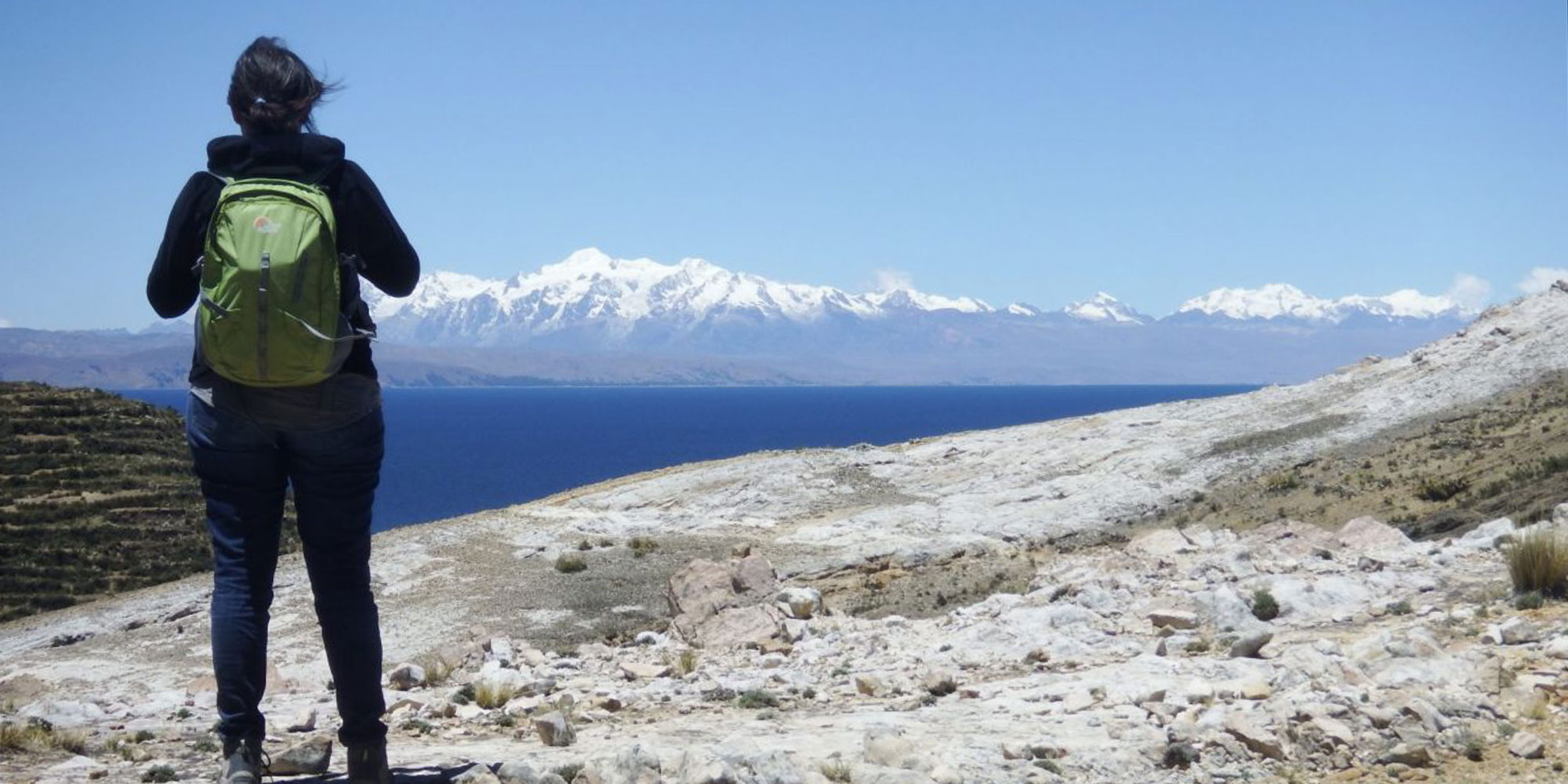
Today travel by bus across the altiplano to Copacabana and Lake Titicaca, the snow-capped peaks of the Cordillera Real a dramatic backdrop to your journey.
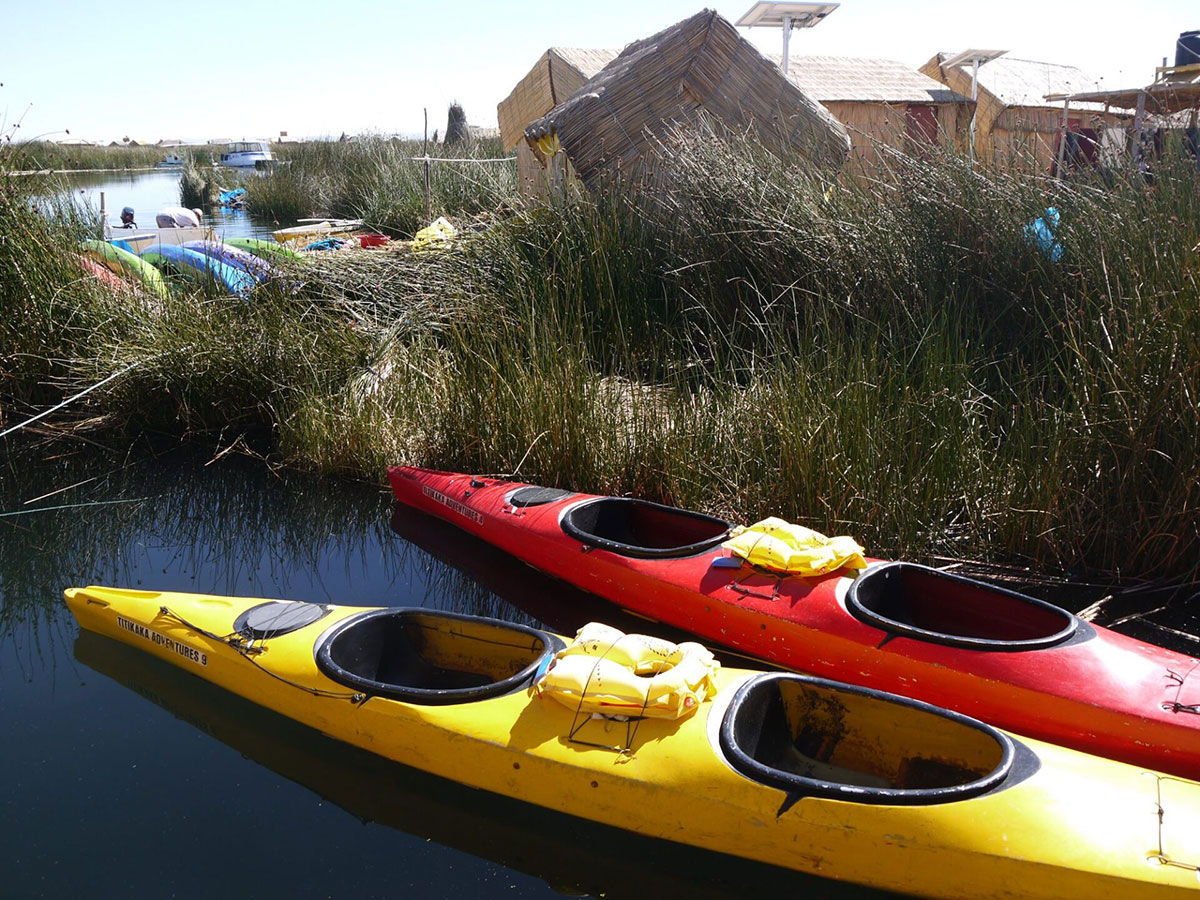
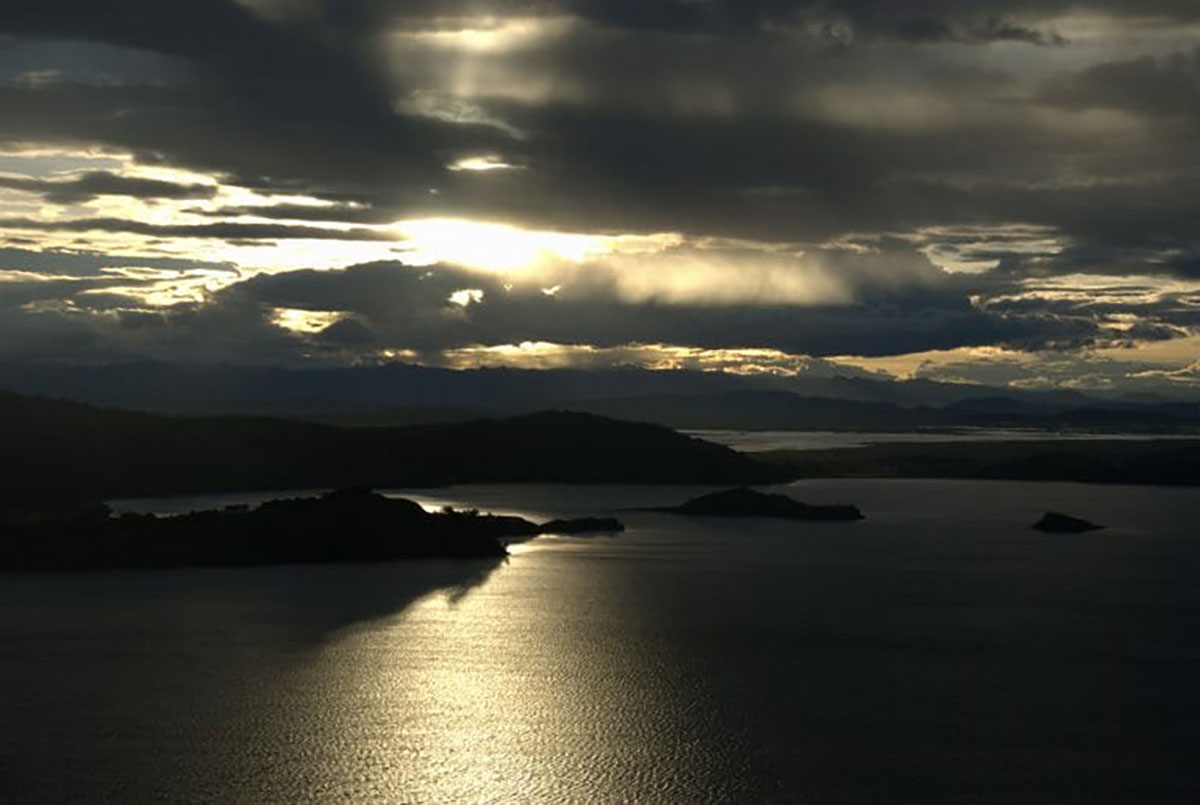
Lake Titicaca is a truly amazing sight, a huge inland sea covering an area of over 8,500 square kilometres, 176km from end to end and on average 50km from one side to the other.
Set at 3,810m/12,500ft in the Peruvian and Bolivian altiplano lake Titicaca is divided by a narrow strait into two bodies of water.
The smaller in the southeast called Lago Huiñaimarca and the larger in the northwest is Lago Chucuito. From the northeast shore of the lake some of the highest peaks of the Andes, the Cordillera Real, rise to over 6,000m/19,685ft.
The lake averages 100m in depth, the bottom tips sharply towards the Bolivian side. More than 25 rivers empty into the Lake but only one small river flows out at the southern end, the Desaguadero.
There are forty-one islands, some of which, like the Island of the Sun, are densely populated. Archaeological remains around the shores attest to the many ancient civilisations that have thrived here. The ancient tribe of the Uros, the influential Tiahuanaco, Pucaras, and Kollas, and their desendents who live their lives around the lake today.
The Aymara Indians still practice their ancient farming methods on the stepped terraces that pre-date the Incas. They grow quinoa and the potato, endemic crops, and graze llamas and alpaca. Lake Titicaca itself is still highly respected and worshipped as the giver of life, the sacred mother, Mama Qota, the provider of fish and birds.
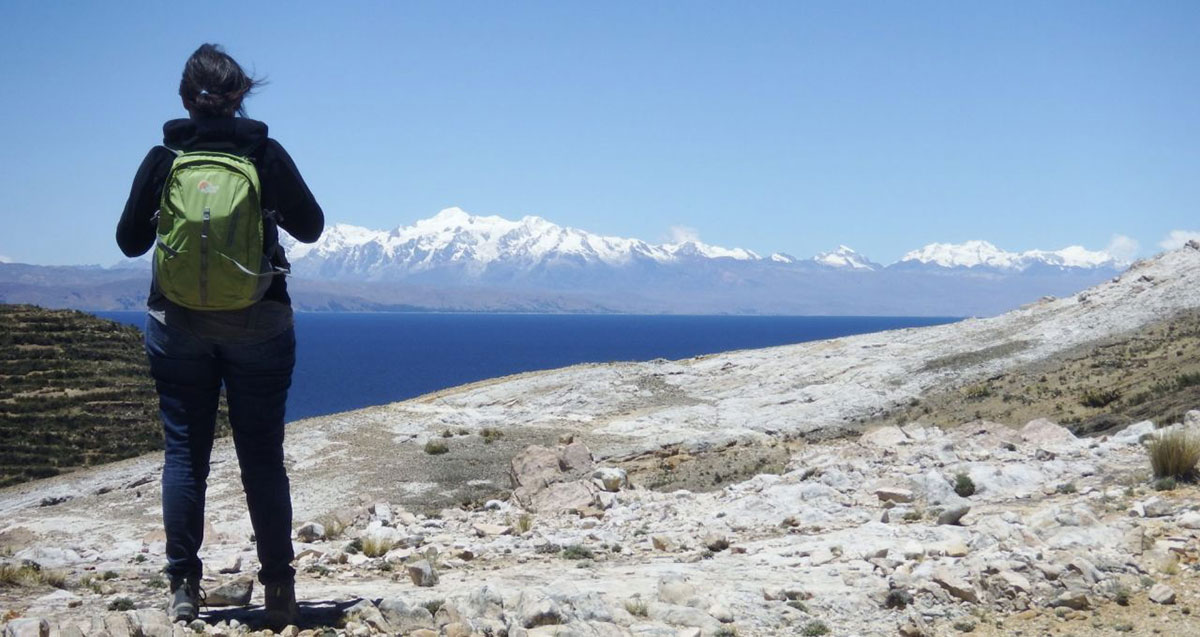
After lunch a small boat takes you to Pilcokaina on the Island of the Sun, legendary birthplace of the first Incas, Manco Capac son of the sun, and Mama Oclla daughter of the moon.
You will explore the island, hiking past the Inca Garden and the Inca Spring, to the village of Challa.
In the afternoon walk to the most impressive ruins on the island, Chincana and the Labyrinth, returning to Challa for the night. (1 night camping or basic accommodation, all meals)
Leaving the Island of the Sun, stop off on the Island of the Moon before returning to Copacabana and on to La Paz for the night.
This four-day trek takes us through the heart of the Cordillera Real.
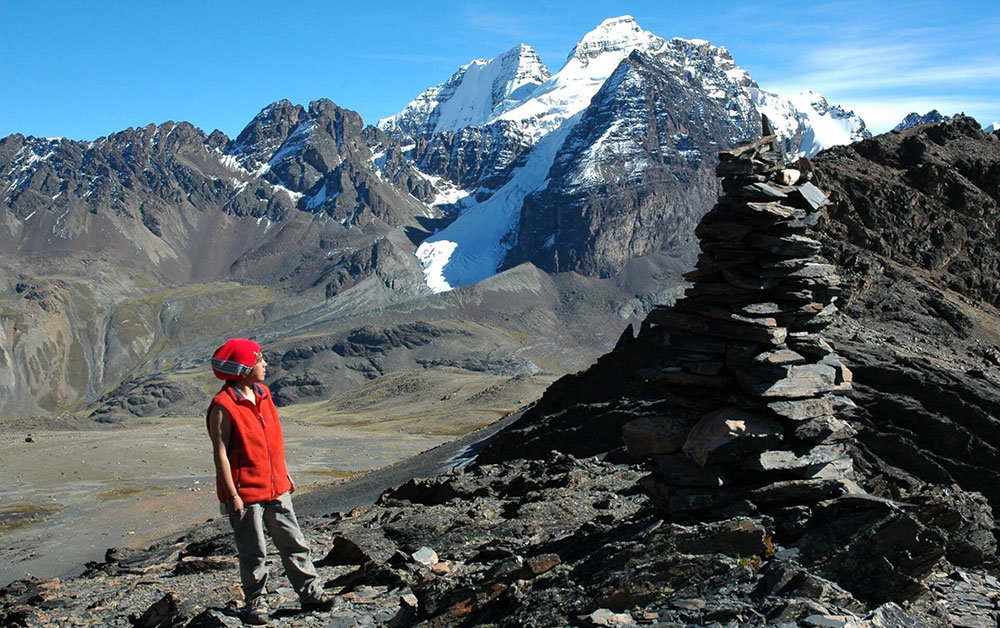
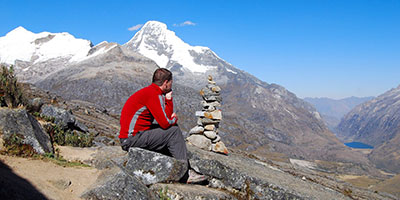
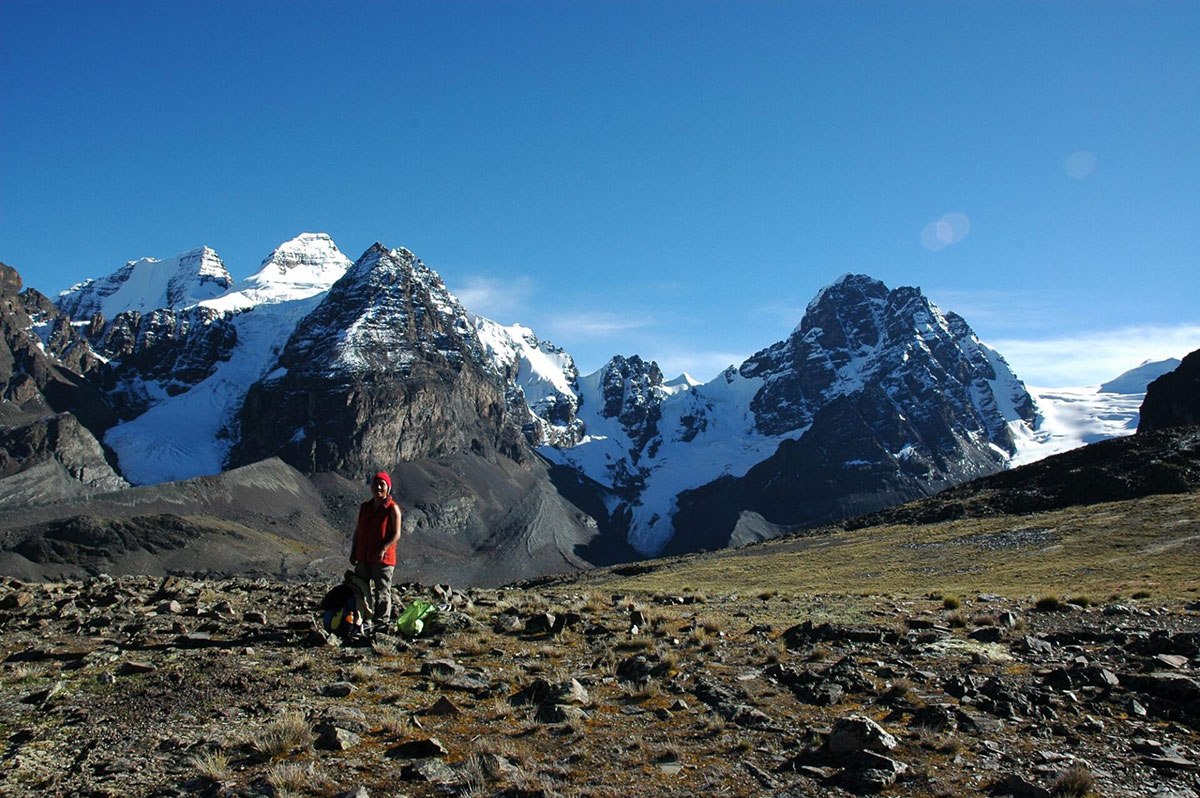
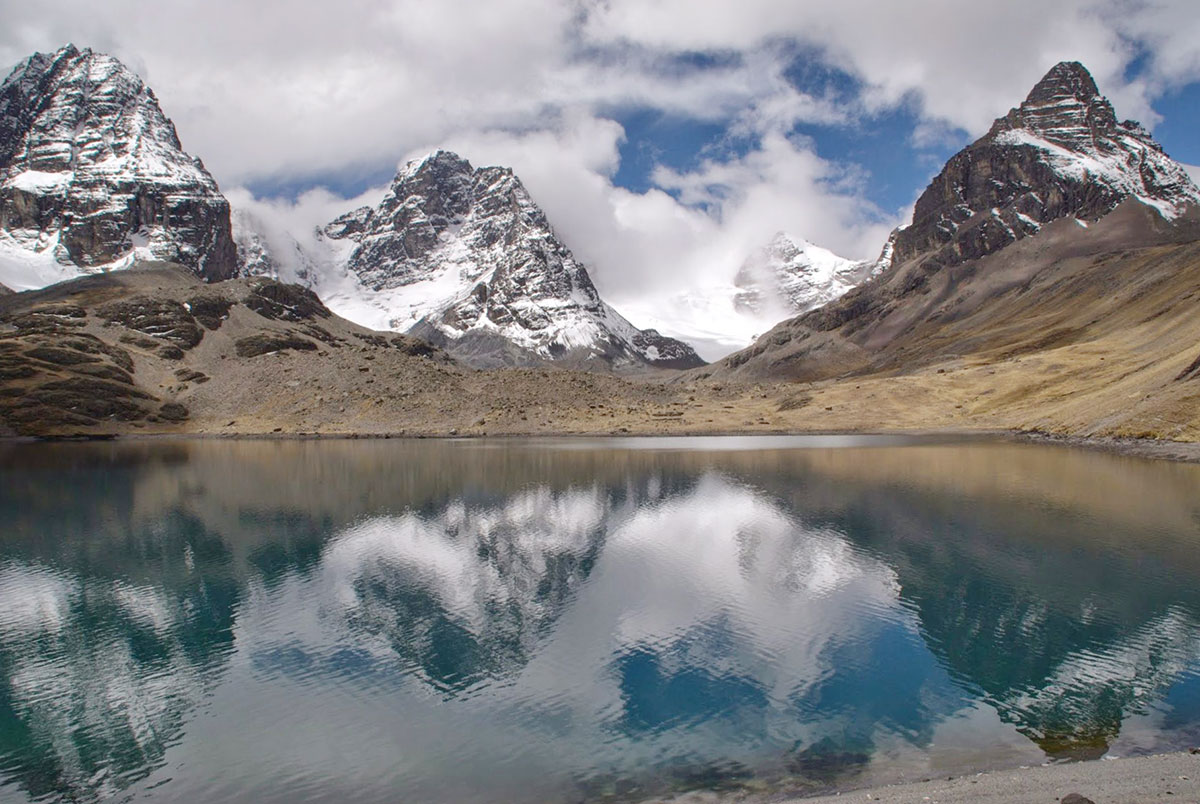
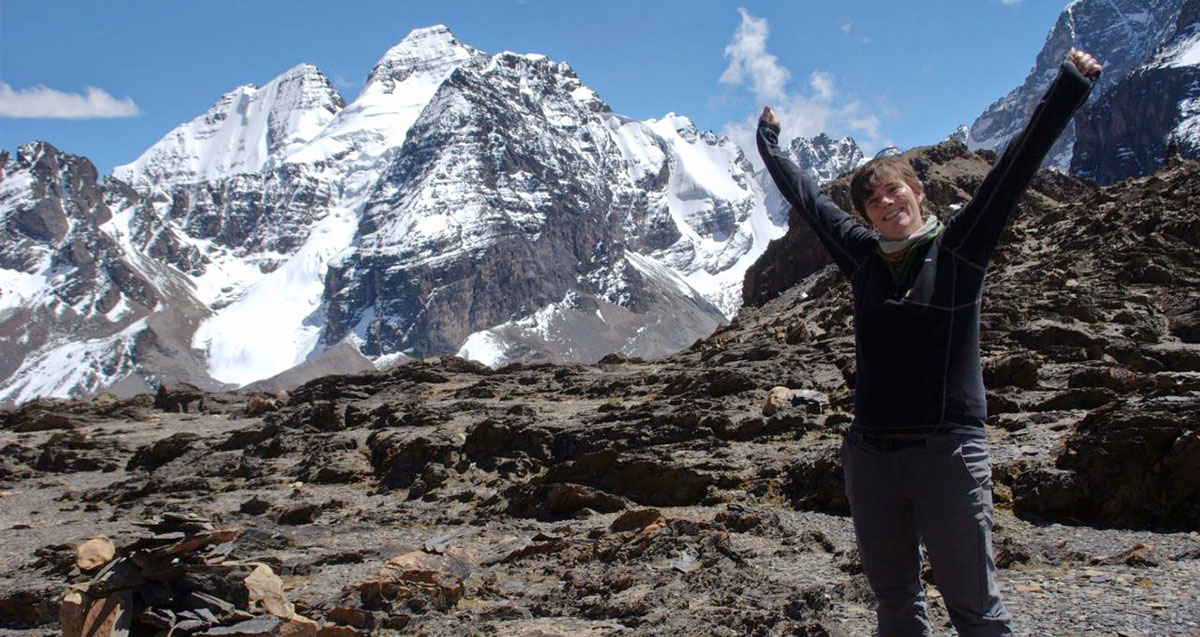
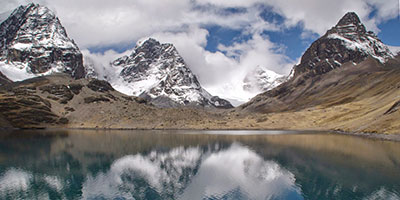
We walk beneath the 13 dramatic peaks of the Condoriri massif, peaks between 5,100-5,648m/16,732-18,530ft, the highest of which is Cabeza del Condor. As its name suggests this peak has a condor like form and is a prominent feature on the Cordillera Real skyline.
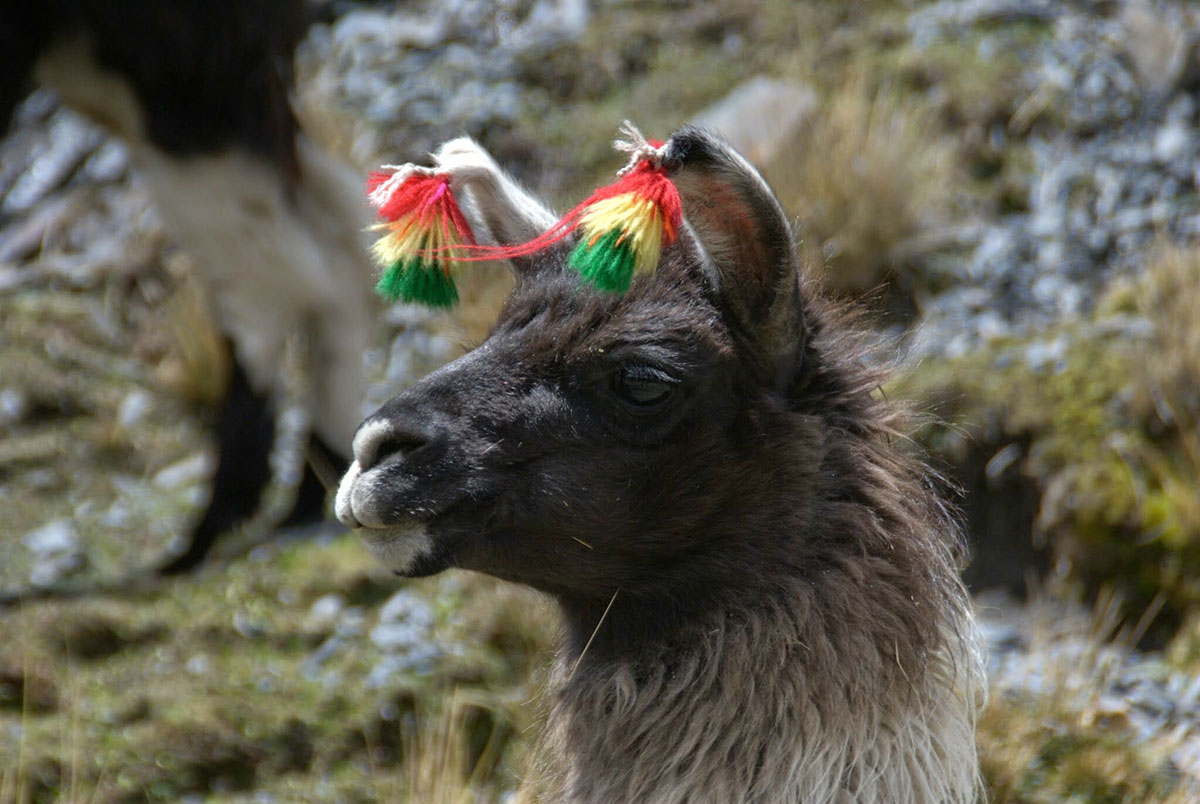
The highlights of the trek are the remote Aymara speaking highland communities, herds of grazing llamas, awe-inspiring mountain scenery, mountain lakes often with flamingos feeding and stunning Andean views. There is also a possibility of seeing soaring Andean condors and the rabbit like viscachas.
We use donkeys or llamas to carry all our camping equipment.
We set off from La Paz early in the morning heading toward Lake Titicaca. After around 1.5 hours, we turn off the main route and head into the heart of the Cordillera Real, following a dirt road for another hour.
We arrive at Rinconada (4,400 meters), the starting point of our trek. As we progress, the terrain becomes slightly steeper but remains manageable, with amazing views of the surrounding peaks.
After about three hours walk, we reach Jurikhota Pass (4,850 meters) and our first panoramic views of the Cordillera Real. From the pass, we descend into the valley to Jurikhota Lagoon (4,680 meters) where we set up camp for the night.
Distance walked: 9.2 km/5.7 miles
After breakfast, we begin hiking along the edge of the lagoon until we reach the Glacier Lagoon (4,800 meters).
The path is rocky and occasionally goes above the snow line. The trail becomes more challenging, typical of high-altitude terrain, but the views are exceptional. We arrive at Austria Pass (5,140 meters) and sweeping views of the Cordillera Real.
From here, the final push takes us to the summit of Pico Austria (5,350 meters), a challenging but non-technical climb. From the summit, we have a 360-degree view of the Andes.
We descend toward Chiarkhota Lagoon (4,650 meters) where we set up camp. (4,650 meters).
Distance walked: 6.2 km/3.8 miles
Today we continue towards the Jistana Pass (4,900 meters) then descend into the area near the historic Racachas mine.
From there, we continue trekking toward Huayna Potosí. Along the way, we encounter small streams and the occasional sighting of wildlife, such as llamas or alpacas grazing nearby. We might even see a condor soar above.
By late afternoon, we reach the campsite at the foot of Huayna Potosí’s west face.
Distance walked: 15.8 km/9.8 miles
After breakfast, we set off early for the final leg of our trek.
The ascent to the Huallatani Pass (4,850 meters) is challenging. The trail meanders through high-altitude terrain. As we get closer to the pass, stunning views of the Huayna Potosí massif come into full view.
From here, we begin our descent along a trail that passes through valleys dotted with native flora. We reach the pick-up point by mid-afternoon, where our vehicle back to La Paz is waiting for us.
Distance walked: 8.9 km/5.5 miles
Tour ends La Paz. Fly home or extend your trip in Bolivia / South America.
We use 2-3* hotels in towns and cities, with hot showers and private bathrooms.
Salar de Uyuni – we use basic accommodation (upgrades to salt hotel available at extra cost) which may include shared rooms and bathrooms.
Lake Titicaca – we use basic hotels with private bathrooms.
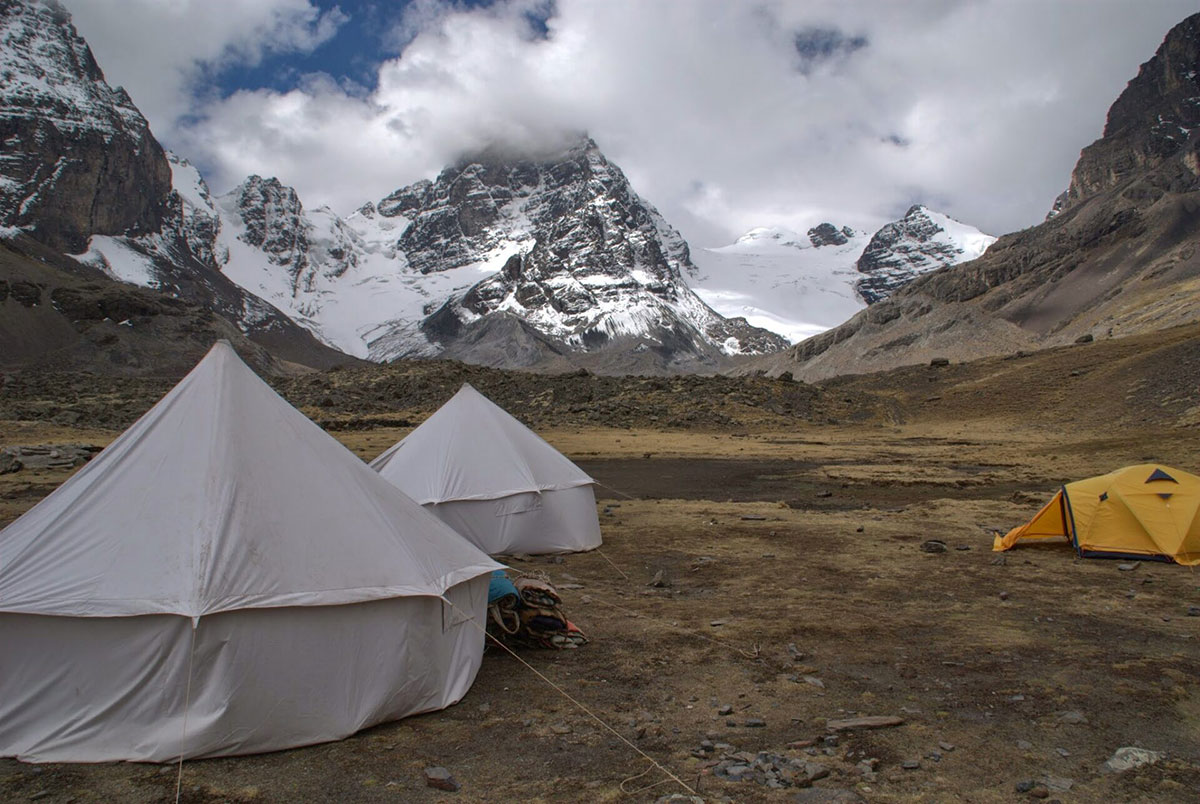
When camping on the trek we use two-man, mountain tents, and a dining tent. Toilets are either latrine or toilet tent.
In order to get the most out of the tour you should be in good physical condition.
We spend a lot of time moving around at high altitude plus include a high altitude trek.
It is not easy to grade the fitness level required for the trip, since it is a subjective matter.
However, we have classified it as a moderate to difficult trek.
We trek approximately five to eight hours per day with some long ascents and descents at high altitudes, and on consecutive days.
No previous experience is necessary, but a good positive attitude and any previous experience of high altitude trekking in remote areas is a plus.
Vegetarians and many other dietary requirements are catered for without problems. Please let us know in advance of any requirements you have.
Meals are provided at hotels – breakfasts usually involve hot drinks, coffee, juice, toast, eggs and fruits. Lunch will either be sandwiches and snacks (if on the road) or a soup with a main meal of rice/pasta.
Dinner usually consists of a soup to start and then a main of rice, pasta, mashed potato etc. Note that Uyuni remains a very remote area and sometimes choice is limited.
Here, fish, fruit and rice play a larger role in people’s diets, so you can expect to be served trout from the lake.
Copacabana town has more international type options.
There are a wide variety of eateries in towns and cities, from chicken and chips or burgers to more traditional fare. Quinoa, rice, potatoes and meats all feature heavily, as do soups.
You wake early, usually around 07.00. Breakfast is served in a dining tent, and consists of hot drinks, porridge, toast, jams and bread, and your guide will explain the day’s trekking plans.
Lunch is usually around 13.00 and can feature soups, meats, salads and fish, with vegetarian options and hot drinks too.
The campsites are comfortable and around 17.00 hot drinks, popcorn and other snacks are served to help you recover energy.
Dinner is served around 19.30, and will feature pasta, mashed potatoes, meat, fish or vegetarian options, followed by hot drinks and a pudding.
You will meet bilingual, English-speaking guides as you move around from site to site (tour leader available at extra cost).
They are qualified Bolivian guides and will bring provide you with all the local timings and information.
Our guides are experienced mountaineers and we typically employ one mountain guide to every four clients on courses, and one guide to two clients on climbs.
They will not just show you the way but will teach and empower you to succeed in the mountain environment.
All are qualified and selected for the attention to detail and, above all, safety and assessment of mountains, conditions and your capabilities.
Guide’s decisions are always final as they do so based on many years of experience of trekking among Bolivia’s peaks.
Cooks, mule drivers and additional staff are all from the local, nearby communities and we have worked with them for a long time.
A perfectly planned family adventure combined Galapagos wildlife encounters with Bolivia’s awe-inspiring Uyuni Salt Flats.
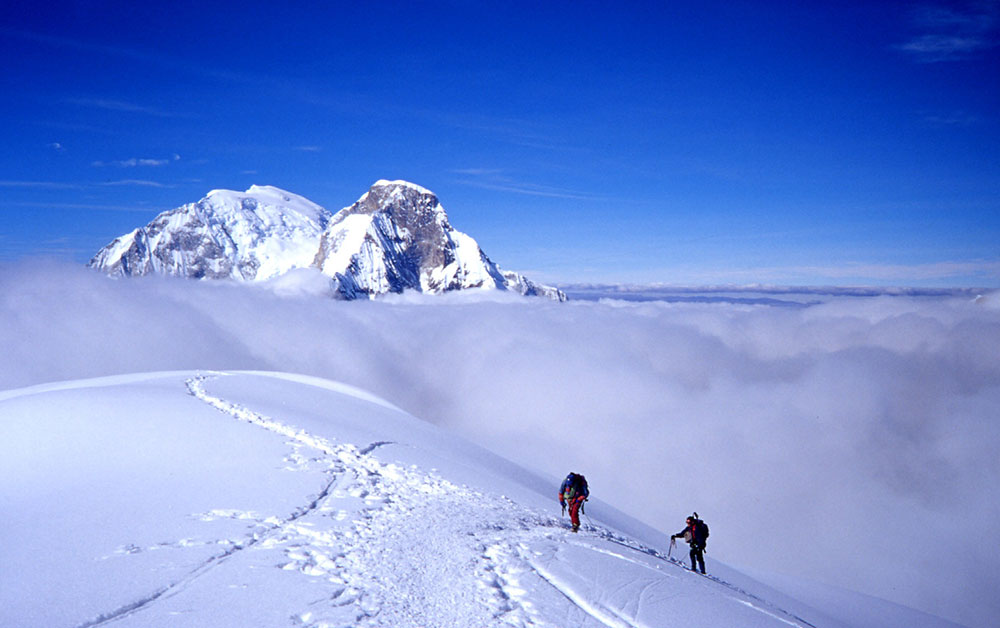
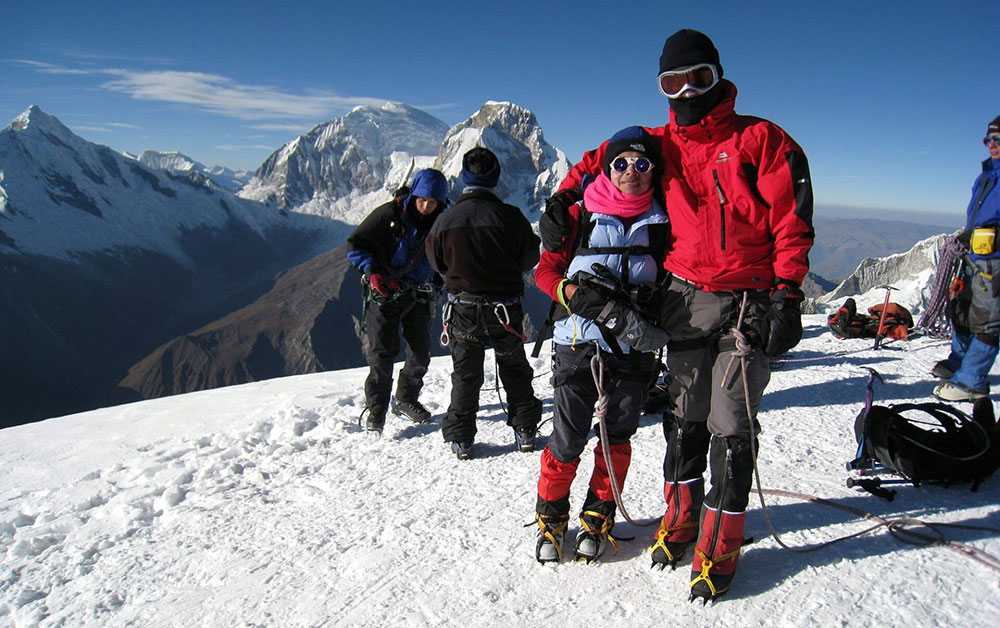
A spectacular Bolivian adventure combining the Condoriri trek and Huayna Potosi climb delivered breathtaking scenery and exceptional support.
This Bolivia trekking highlights tour takes in the best places to visit in this beautiful Andean country.
Visit all the travel highlights, including La Paz, the Salar de Uyuni salt flats and Lake Titicaca.
Now, well acclimatised to Bolivia’s high altitude, top it all of with and a fantastic hike in the Cordillera Real.
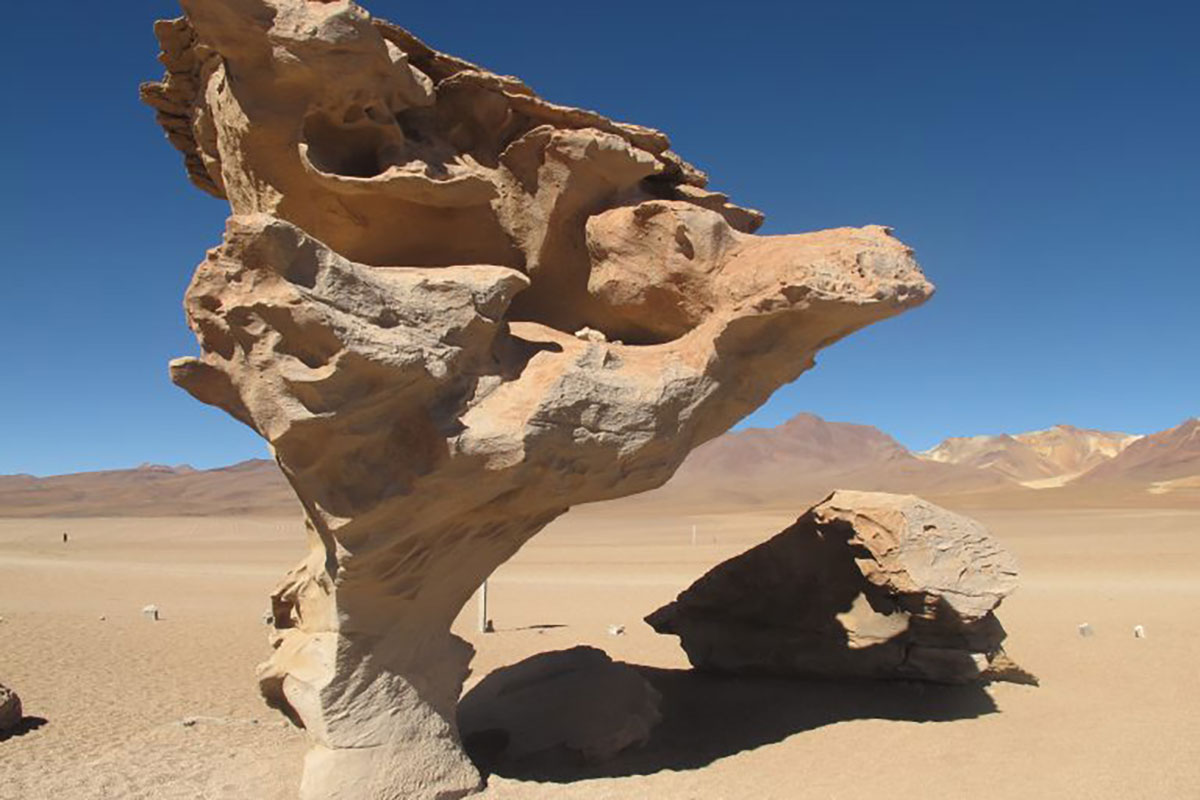
From La Paz we travel by bus and train across the altiplano to Uyuni, gateway to the Salar de Uyuni.
The next four days are spent on a four-wheel-drive expedition through this southern altiplano desert. We’ll visit vividly coloured lagoons, conical volcanoes, geysers and mudpools, hot springs and a unique flora and fauna.
Next, to Lake Titicaca and the lakeshore town of Copacabana and to the Island of the Sun, an island rich in history and tradition.
We explore the Island of the Moon, Inca ruins and experience the ancient culture of the locals.
Our tour culminates in a four day trek through the heart of the Condoriri National Park in the Cordillera Real.
The trek has three high mountain passes, remote highland communities, herds of grazing llamas, awe-inspiring mountain scenery and soaring condors.
From: $1585 per person
Duration
5 days
Land-locked Bolivia is a country of dramatic landscapes and fascinating native cultures and traditions.
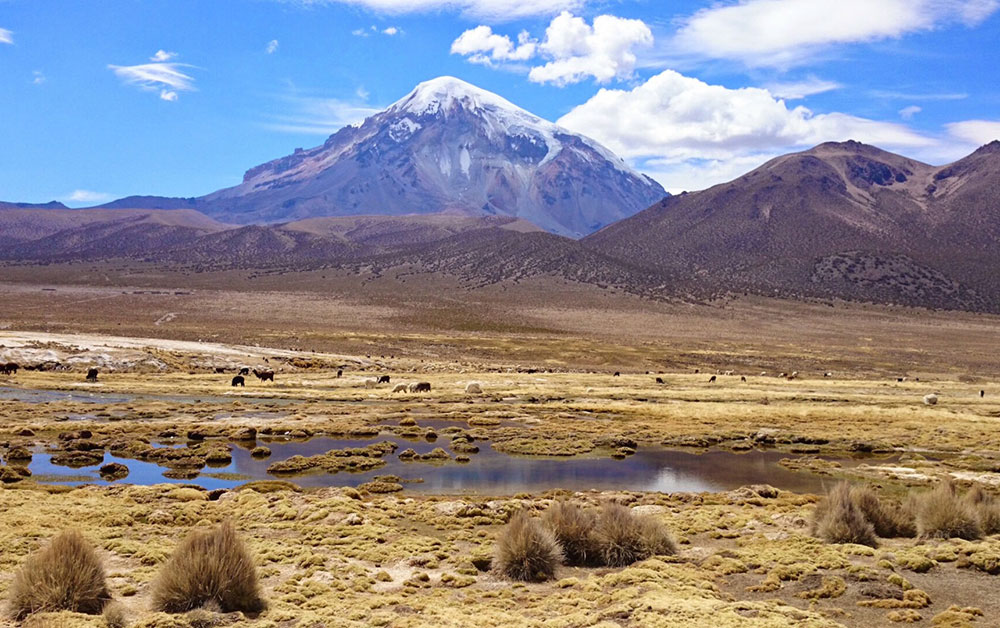
The Altiplano or “High Plain”, averaging 3,800m, is its most populous region. The vast, luminous plateau is flanked to east and west by parallel Andean ranges.
La Paz, the world’s highest capital, lies in a deep canyon at the edge of the Altiplano, and at the foot of Illimani (6,400m). It is a striking city for its dramatic setting and its strong Indian character.
Lake Titicaca is the world’s highest navigable lake. It was sacred to the Incas; according to legend, their founding emperor-gods rose from these waters to give birth to their empire. Just south of the lake stands the sacred pre-Inca site of Tiahuanaco.
Don’t forget to read our blog about Bolivian food.
| Starters & Snacks | |
|---|---|
| Salteña | Hot beef or chicken pasty containing egg, black olive and gravy. Available muy picante, medio picante or poco picante (very, quite or not very hot). |
| Empanada | Cheese pasty. |
| Chairo a la Paz | Soup with meat, vegetables, chuño and aji. Often served with llajua or halpahuayca hot sauces. |
| Locro | Tropical soup with rice, beef jerky or chicken, banana, potato and egg. |
| Anticucho | Beef heart kebab served with boiled potato. |
| Palta Reina | Avocado filled with chicken salad. |
| Tamal or Humita | Ground maize steamed in banana or maize leaves, filled with meat or cheese; sometimes served sweet with sugar. |
| Main Dishes | |
| Thimpu | Lamb soup or stew. |
| Plato Paceño | Fried cheese, potato, broad beans, corn and hot llajua sauce. |
| Sajta de Pollo | Spicy chicken with onion, potato and chuño. |
| Silpancho | Fried breaded meat served with rice, egg and banana. |
| Chicharrón | Deep-fried pork. |
| Churrasco and Lomo | Fillet or rump steak. |
| Parrillada | Mixed grill. |
| Pollo con Papas | Chicken and chips. |
| Pejerrey | White fish from Lake Titicaca. |
| Trucha | Trout. |
| Desserts | |
| Keke or Torta | Cake. |
| Drinks | |
| Singani | Grape brandy. Bolivia’s national drink. |
| Chuflay | Singani and 7 Up. |
| Chicha | Fermented maize beer, mainly drunk in rural valley regions around Cochabamba. |
| Cerveza | Beer, mainly lager. Regional brands include Paceña. |
| Vino | Wine. Excellent Bolivian wines come from Tarija. Served by the bottle (botella) or sometimes by the glass (copa). |
| Vino Tinto | Red wine. |
| Vino Blanco | White wine. |
| Agua Mineral | Mineral water. Specify con gas (carbonated) or sin gas (still). |
| Api | Thick hot drink made from red maize, cinnamon, cloves and lemon. |
| Mate | Herbal tea, including mate de coca, manzanilla (camomile), yerba luisa (lemongrass), yerba buena (mint) and inojo (dill). |
| Jugos | Fresh fruit juices such as carambola (star fruit) and tamarindo (tamarind). |
Learning a few words of Spanish can really ingratiate you with the locals you’ll encounter, adding to the enjoyment of your holiday. Below are some basics to get you started.
| Greetings | |
|---|---|
| Good morning | Buenos días |
| How are you? | ¿Cómo estás? |
| Good afternoon | Buenas tardes |
| Good bye | Adiós |
| Most frequently asked questions (theirs) | |
| Where are you (plural) from? | ¿De dónde eres (son)? |
| What time is it? | ¿Qué hora es? |
| Where have you come from? | ¿De dónde vienes? |
| Give me (frequent, unwelcome question) | Dáme / regálame |
| Most frequent questions (yours) | |
| How much is it? | ¿Cuánto vale? |
| What is this place called? | ¿Cómo se llama este lugar? |
| What’s your name? | ¿Cómo te llamas? |
| Do you have a map? | ¿Tienes un mapa? |
| In the street / places | |
| Where can I find a currency exchange? | ¿Dónde encuentro una casa de cambio? |
| Where is there a cash machine? | ¿Dónde hay un cajero automático? |
| Where is the underground/subway station? | ¿Dónde está la estación de metro/subte (Buenos Aires)? |
| Where can I find a taxi? | ¿Dónde puedo encontrar un taxi? |
| Where can I find a supermarket? | ¿Dónde puedo encontrar un supermercado? |
| Where is the hospital? | ¿Dónde está el hospital? |
| Where can I find a restaurant? | ¿Dónde puedo encontrar un restaurante? |
| In the hotel | |
| What floor am I on? | ¿En qué piso estoy? |
| Where are the elevators/lifts? | ¿Dónde están los ascensores? |
| How do I access the Internet? | ¿Cómo puedo acceder a Internet? |
| How do I call for room service? | ¿Cómo llamo para el servicio de habitación? |
| How do I call down to the front desk? | ¿Cómo llamo a la recepción? |
| In the restaurant | |
| A table for two/four please | Una mesa para dos/cuatro, por favor |
| I would like to drink… | Me gustaría tomar… |
| May I see a menu? | ¿Puedo ver la carta / menú? |
| I would like to order… | Me gustaría pedir… |
| Can you bring me the check/bill please? | ¿Me trae la cuenta, por favor? |
| Emergency | |
| I need help. | Necesito ayuda. |
| I have lost my passport. | He perdido mi pasaporte. |
| Someone stole my money. | Alguien robó mi dinero. |
| I have been robbed. | Me han robado. |
| I need to call the police. | Necesito llamar a la policía. |
| I need to call the (country) Embassy. | Necesito llamar a la embajada de (country). |
| Help! | ¡Socorro! |
Bolivia is generally safe, but crime is not unknown and travellers should take the precautions they would anywhere else, especially:
A perfectly planned family adventure combined Galapagos wildlife encounters with Bolivia’s awe-inspiring Uyuni Salt Flats.
A spectacular Bolivian adventure combining the Condoriri trek and Huayna Potosi climb delivered breathtaking scenery and exceptional support.