Today, we will meet you at Quito Airport and transfer you to the hotel.
You’ll have time to acclimatize and, if you’d like, visit the old town, to soak up the rich culture and colonial architecture, as well as trying some of the local cuisine. Let us know if you’d like a guide (extra cost).
There will be a briefing the evening. This is a chance to meet your guide and the rest of the group, and to receive key information for the days ahead.
Overnight: Swissotel or similar
After breakfast, a representative will meet you in the hotel lobby and help with your transfer to the airport for your flight to Baltra Island, one of the main gateways to the Galapagos.
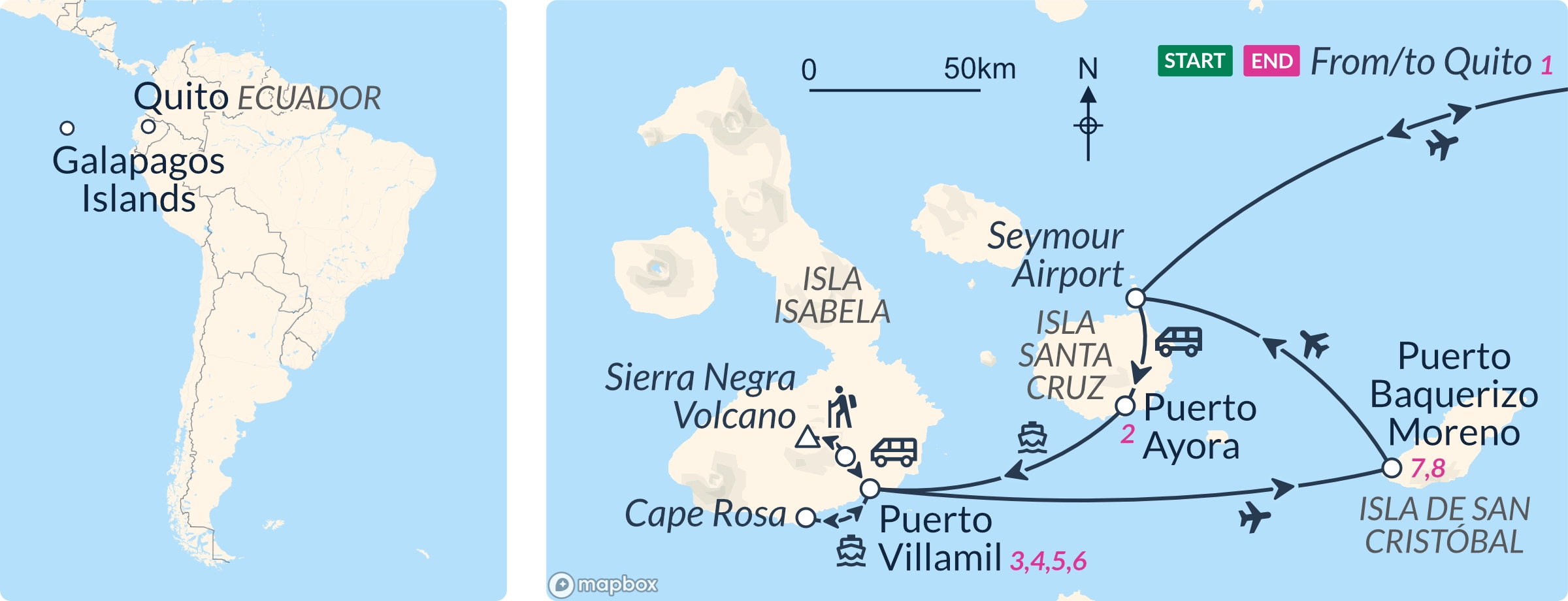
After landing, you will pass through the Galapagos migration counters, where a Naturalist Guide from the Galapagos National Park will meet you, help with luggage, and guide you to our next transport—a mix of road and ferry—to Santa Cruz Island.
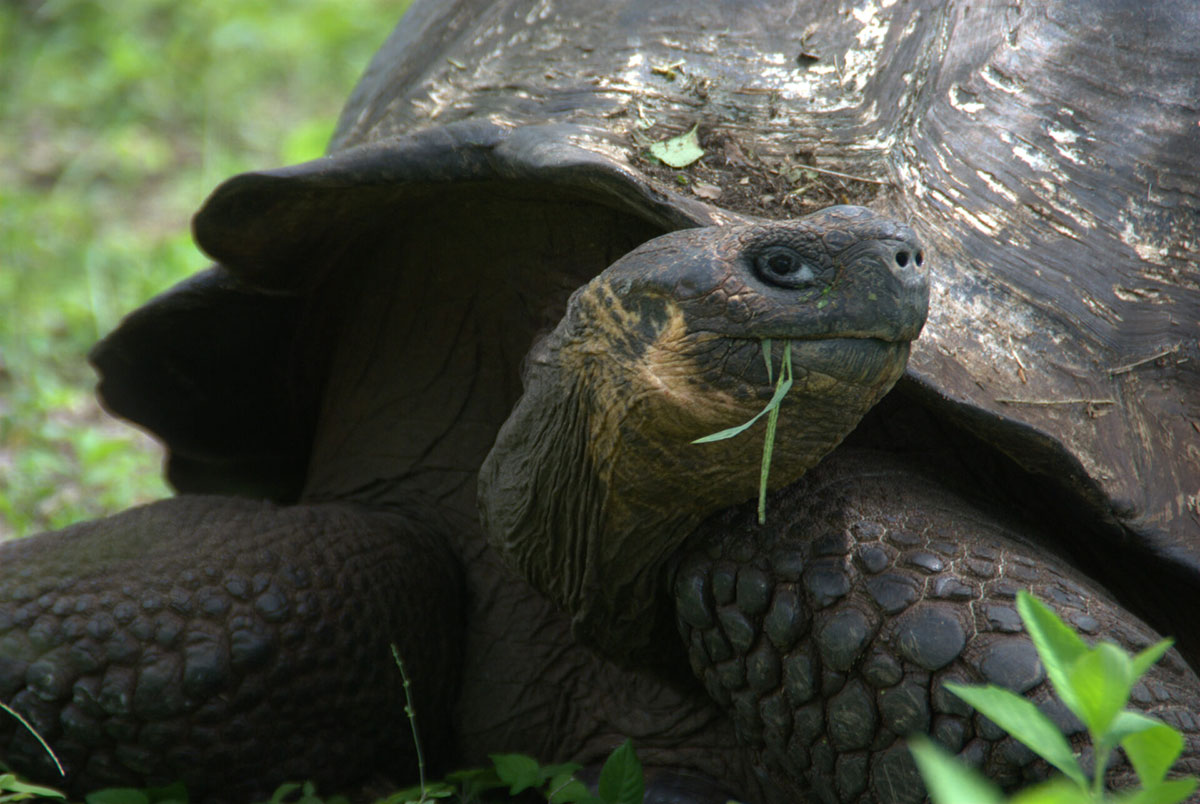
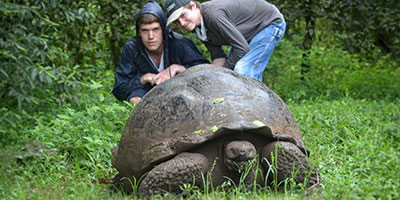
Your first stop is the highlands of Santa Cruz, which offer a cooler climate than the coast. You will visit El Chato Reserve, home to giant tortoises in the wild. After lunch, you will have the chance to watch these tortoises as they move, feed, or rest in the mud pools. Your guide will explain their behaviour, diet, and the adaptations that help them survive here.
The highlands are also a good place to see local birdlife, including Galapagos flycatchers, Darwin’s finches, and vermilion flycatchers. You will also walk through one of the island’s lava tunnels, formed by ancient volcanic activity.
Later, you will visit a small craft brewery in the highlands. You can try beers made with local ingredients and learn about the brewing process and the sustainable practices they use. The brewery also offers alcohol-free options.
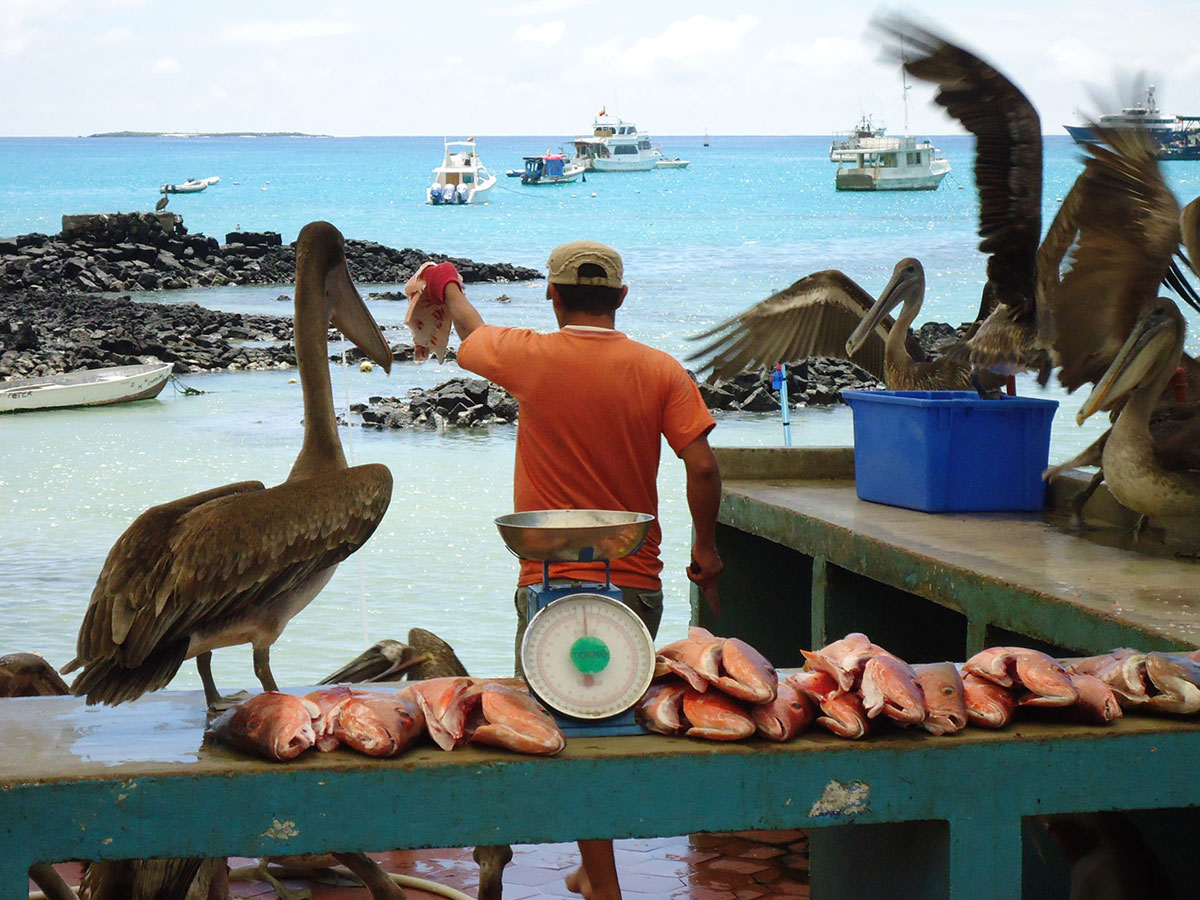
Once we reach Puerto Ayora, you will have free time to relax and look around the town. You may want to explore the cafés, shops, and waterfront restaurants. After dark, consider a walk to the docks, where you can often see blacktip sharks, rays, and other marine life drawn to the harbour lights.
Overnight: Hotel La Isla or similar
Santa Cruz Highlands notes: If it’s been raining, the farm can be muddy. The lava tunnel is damp, dark and rocky. There are lights in the tunnel, but if you have a headlamp, bring it. Closed toed shoes recommended and keep a rain jacket handy just in case.
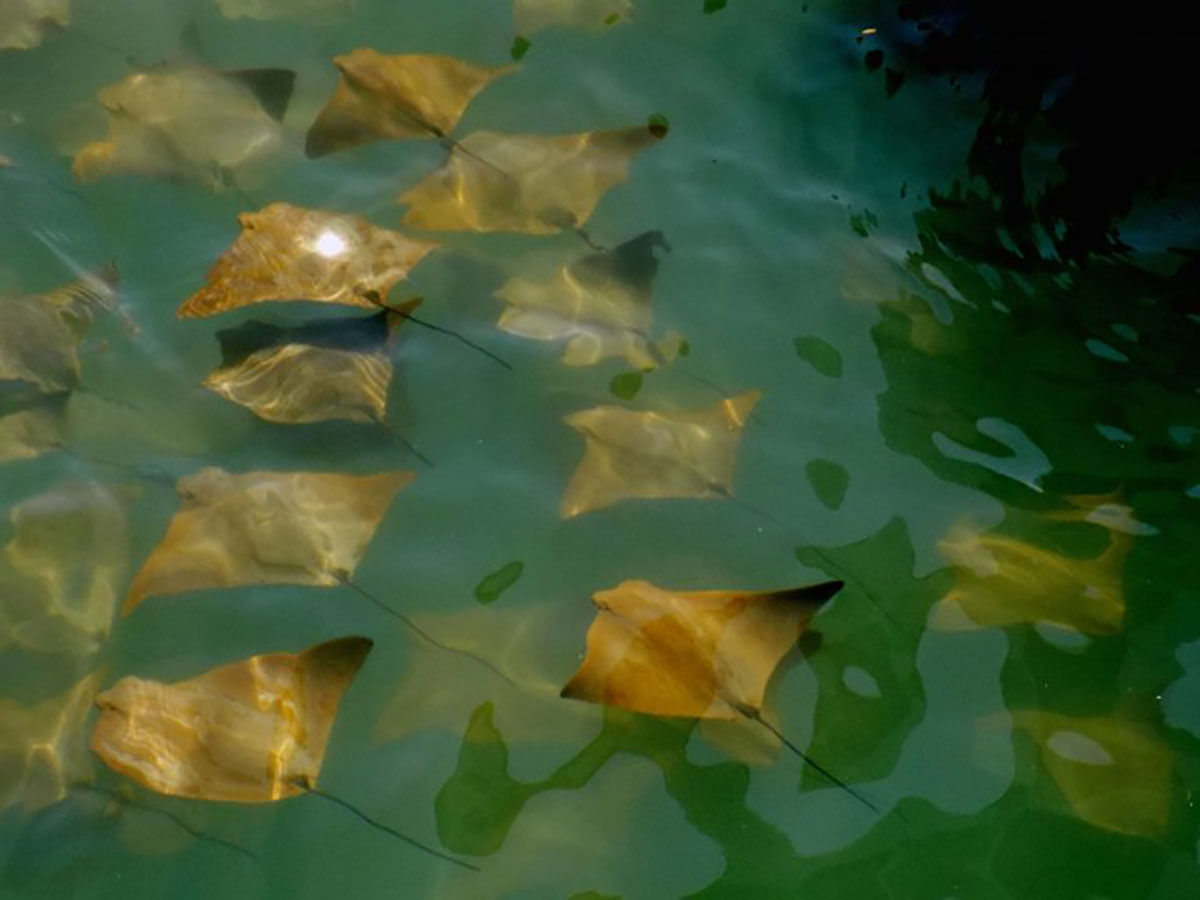
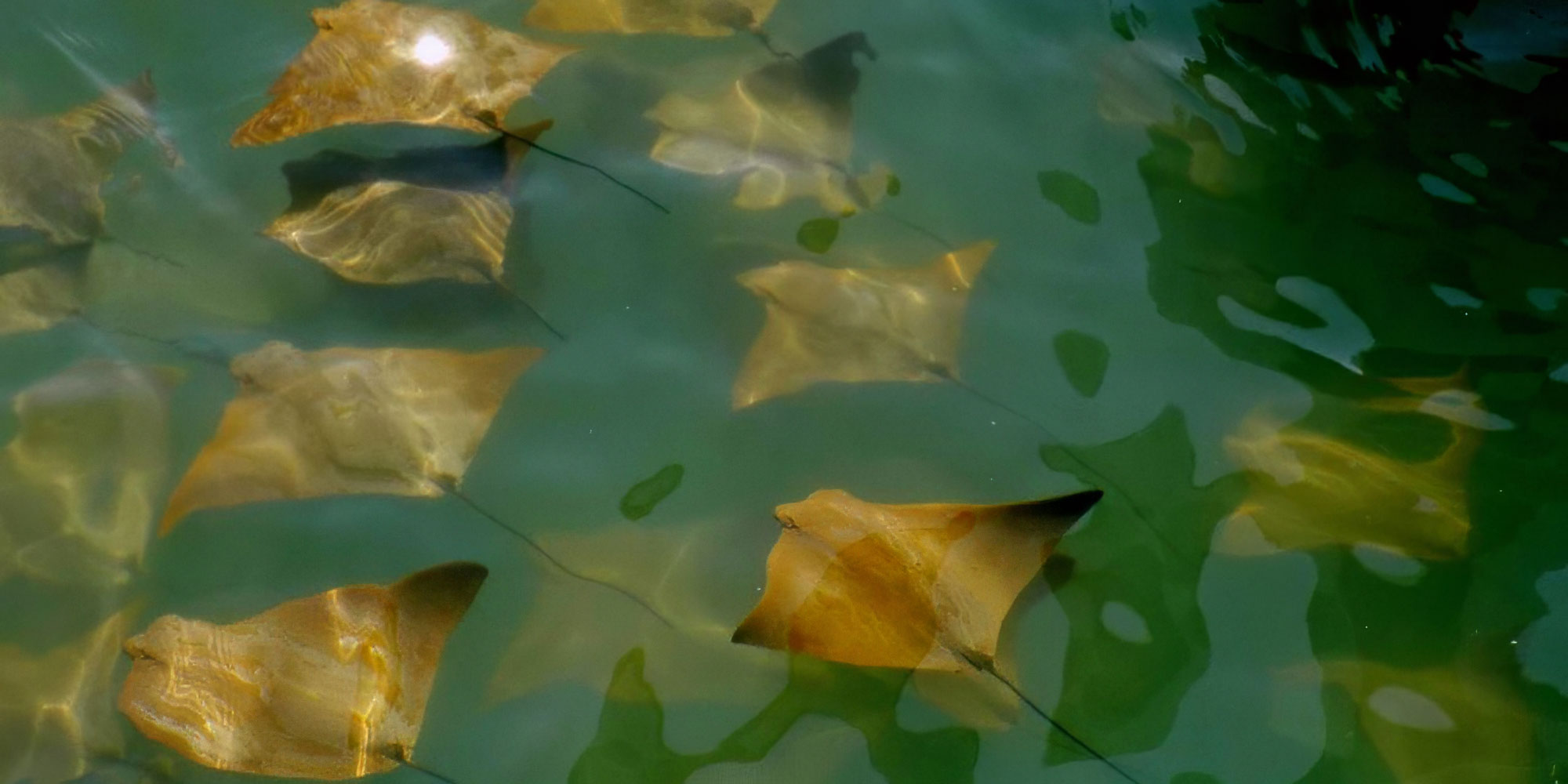
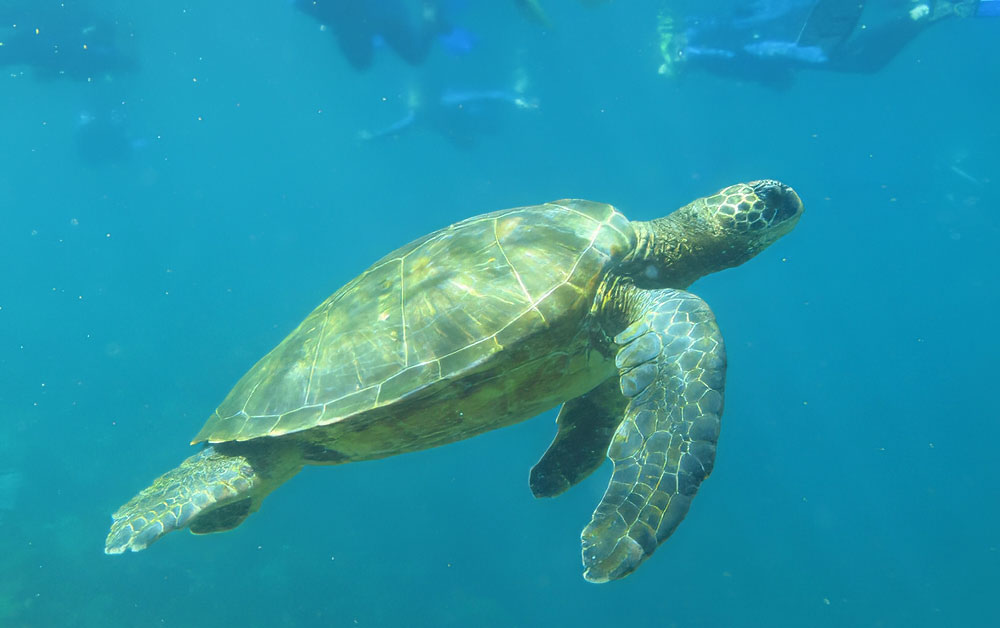
After breakfast, you will take a scenic boat tour of the bay, where you can observe local flora and fauna. You will then make a short crossing and walk along lava trails. Later, enjoy a swim at Las Grietas, followed by a snorkelling session in the bay, where you may spot colourful fish, rays, sharks and turtles.
Back in Puerto Ayora, there’s free time for lunch. You guide will suggest several good places to eat, many offering fresh seafood and sea views.
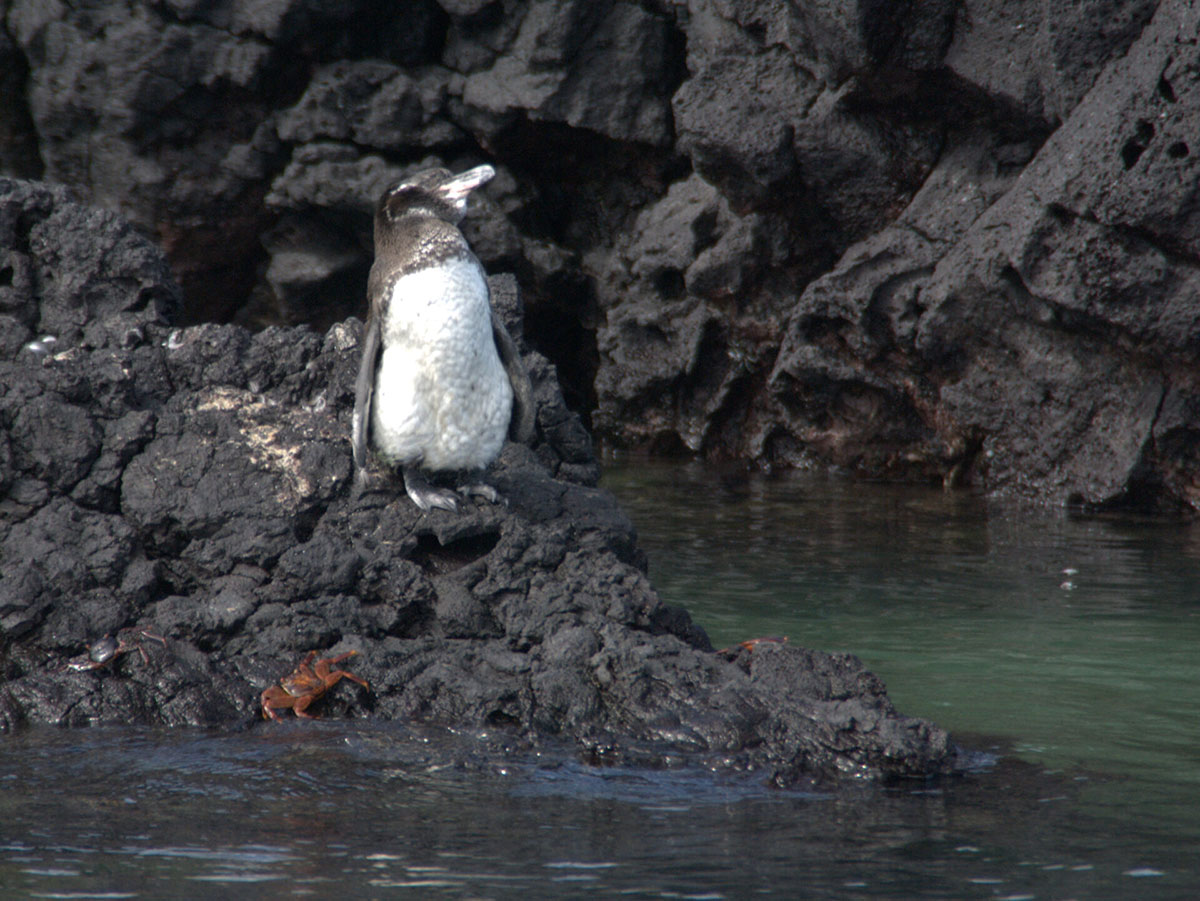
In the afternoon, you board a speed boat to Isabela Island, the largest and one of the least developed islands in the archipelago. Isabela is known for its wildlife, including marine iguanas, flamingos, giant tortoises and the Galapagos penguin, the only penguin found north of the equator.
On arrival, our representative will help you transfer to your hotel and recommend places for dinner. After checking in, you will have the rest of the evening free to relax. You may wish to take a walk along the beach or simply watch the sunset over the Pacific.
Overnight: Hotel Cormorant or similar
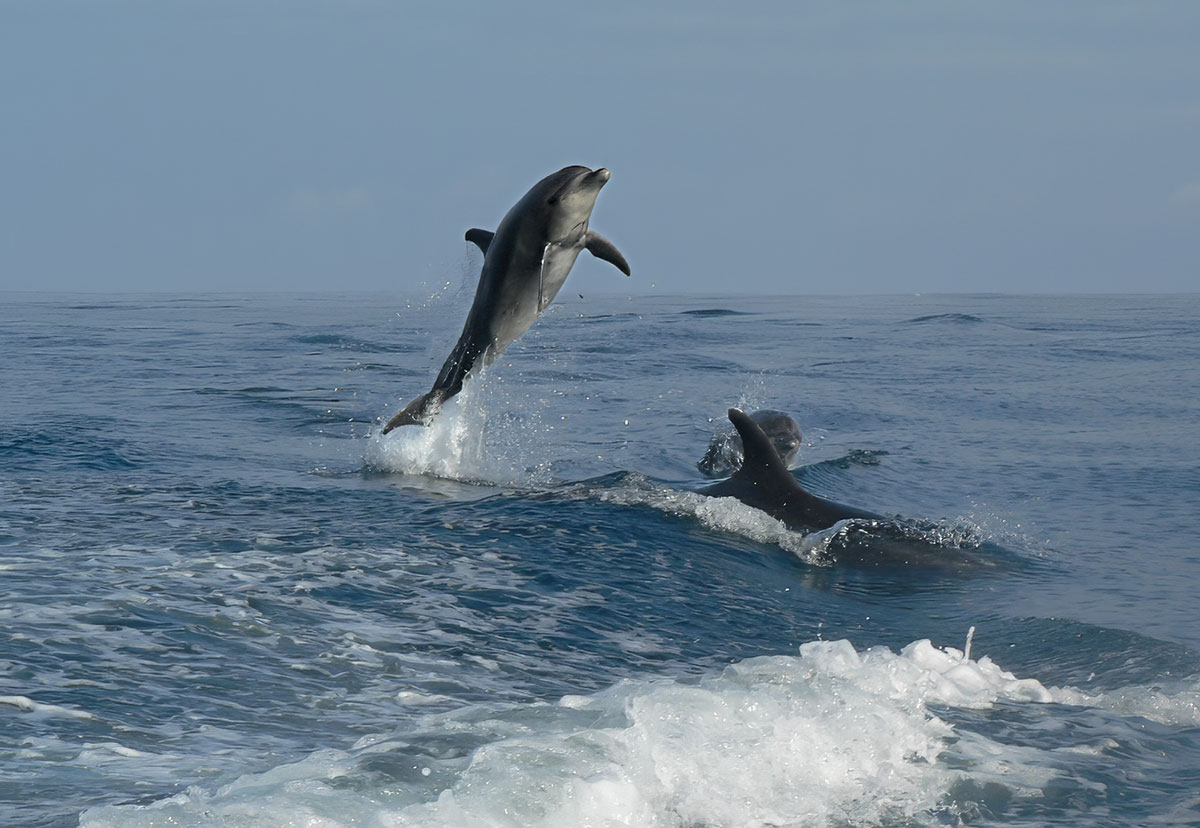
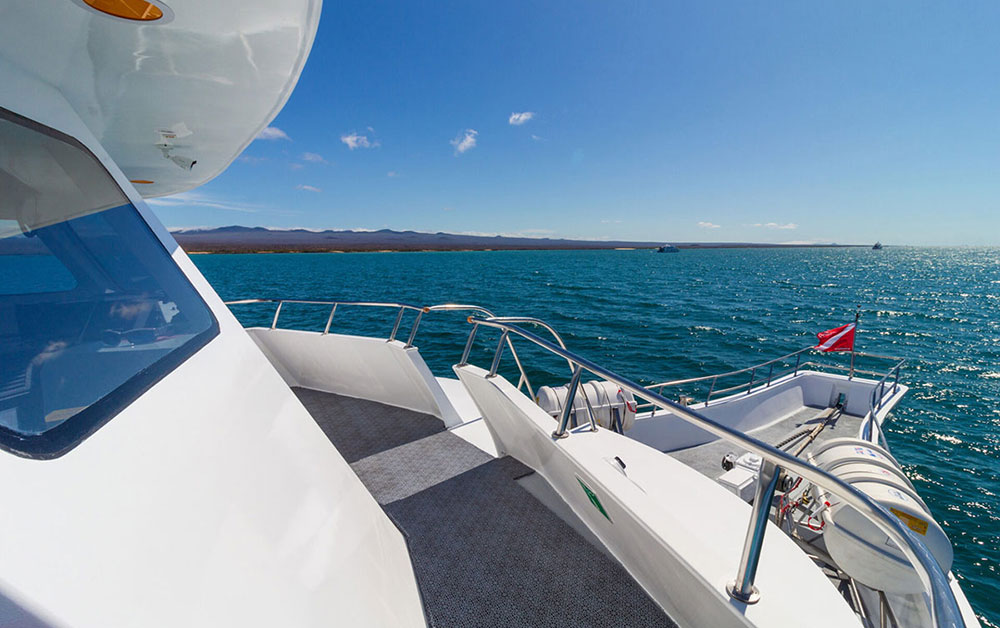
Residents and tourist alike use this method of transport regularly between the main inhabited islands. However, for this tour you’ll be on a private boat. Out on the open ocean, this is your best chance to see whales and dolphins. Each crossing takes about 2 hours. Less time if the sea is calm, more time if the sea is rough. Boats are usually 30-35 feet long and hold 20-30 passengers. You’ll be leaving bright and early most days when the sea is usually calm, but if you’re prone to seasickness or not sure, bring some seasickness pills just in case.
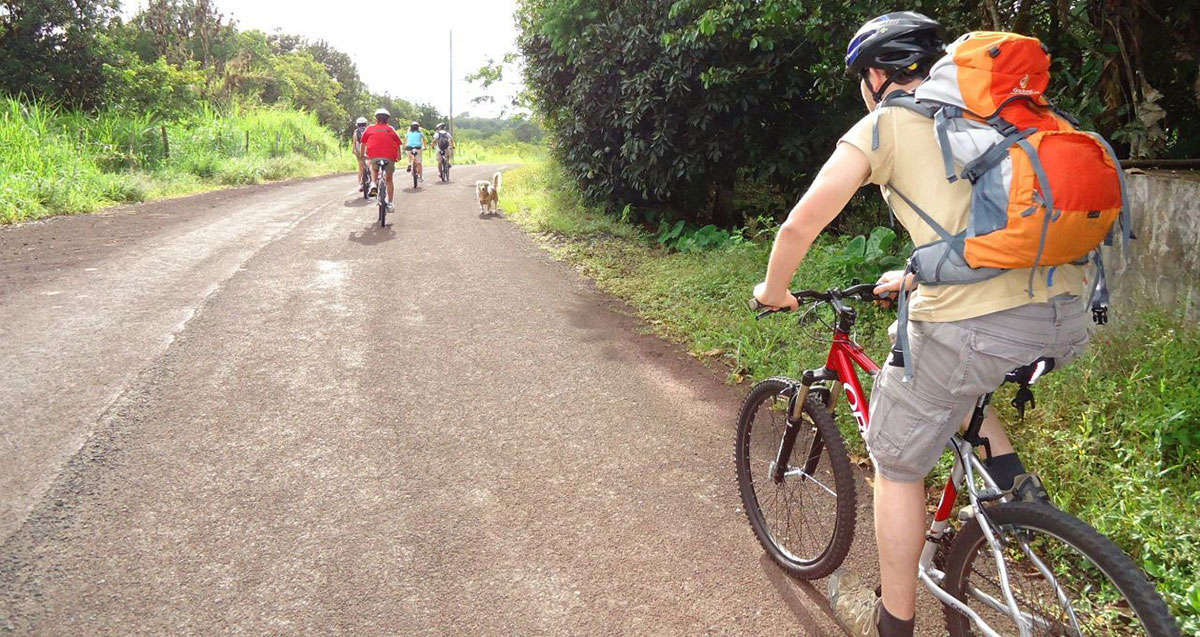
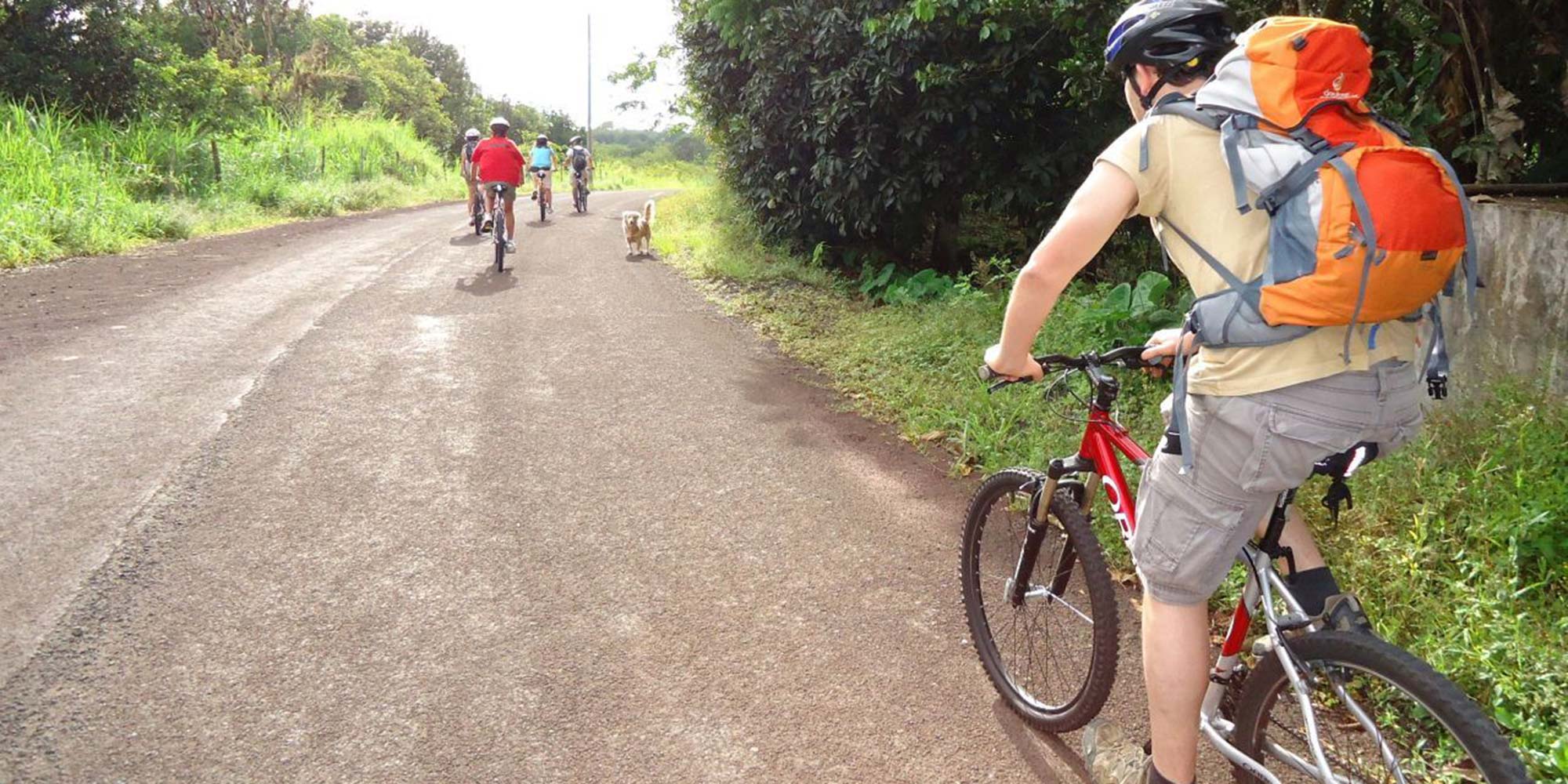
After breakfast, you set off on a bike ride along a dedicated trail that highlights the varied landscapes and ecosystems of Isabela Island. The day includes cycling, short walks and several stops that give a closer look at the island’s history, wildlife and conservation work.
First visit is the Wetlands, an area of lagoons, swamps and mangroves that support many bird species, including flamingos, herons and finches. As you cycle through this area, your guide will explain its importance to the island’s biodiversity.
Next stop is at the Wall of Tears, a historic site built by prisoners during the island’s penal colony period in the mid-1900s. Your guide will share the stories behind this difficult part of Isabela’s past.
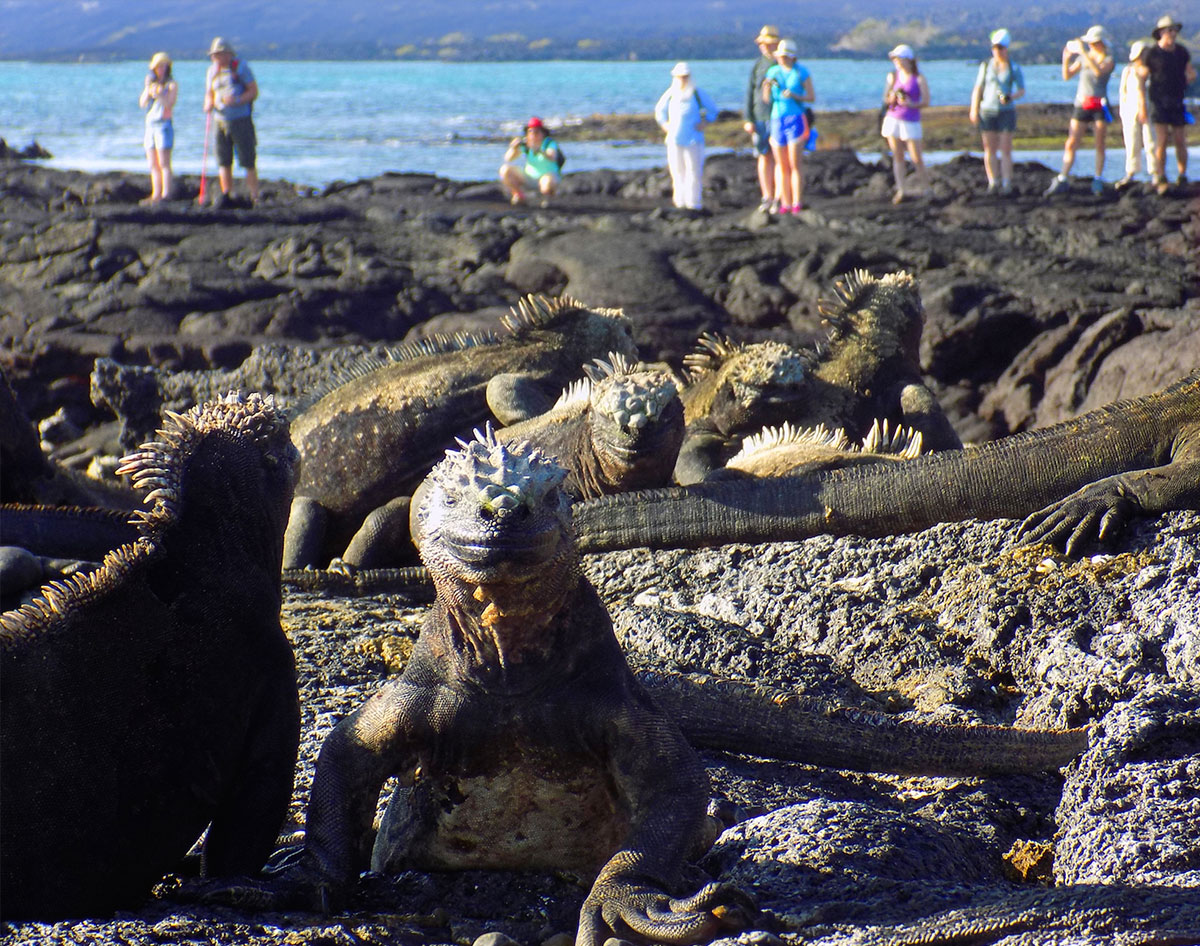
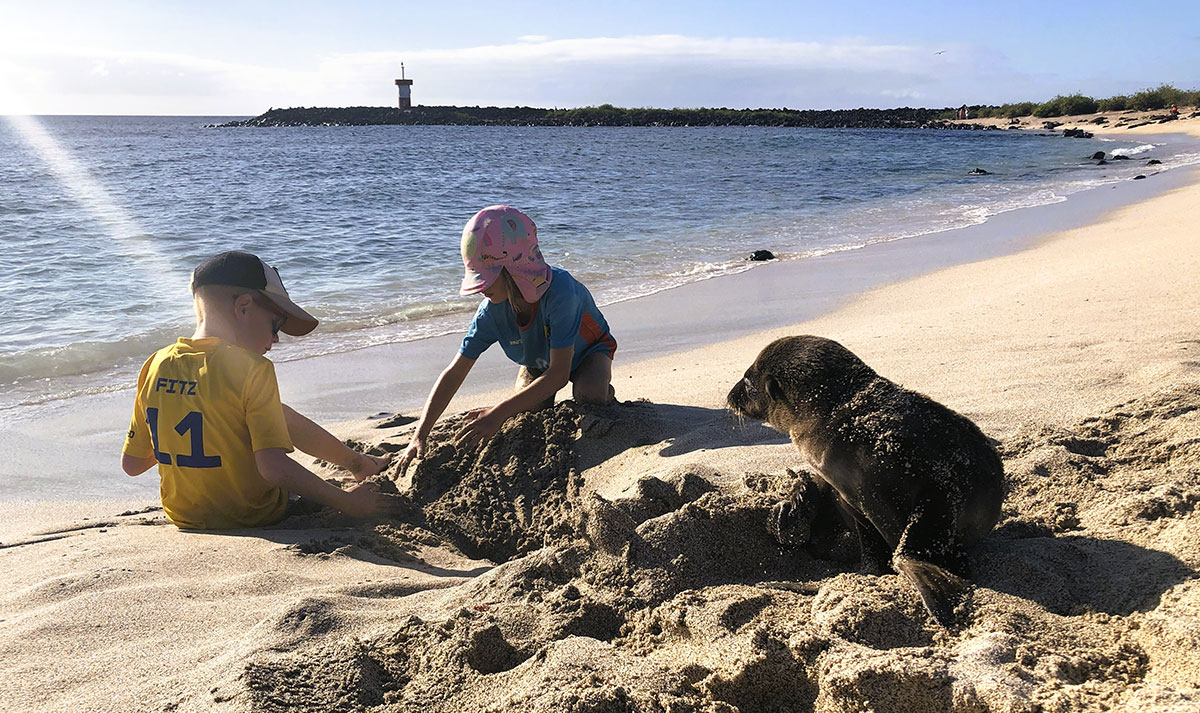
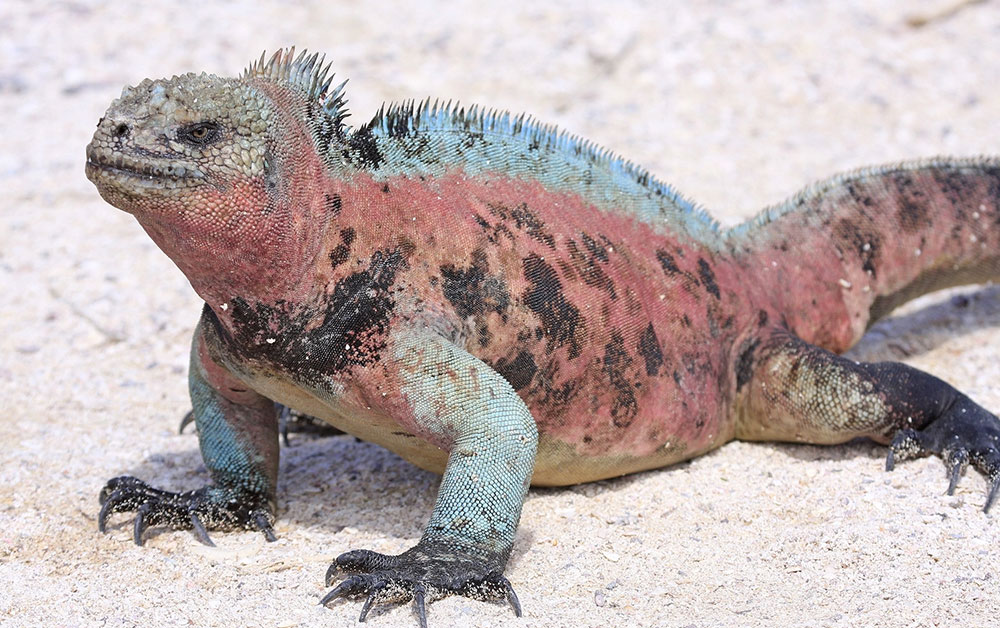
Then it’s on to Playa del Amor, known for its black lava formations and large population of marine iguanas. These iguanas, found only in the Galapagos, can often be seen warming themselves on the rocks or swimming in search of algae.
A highlight of the morning is the visit to the Tortoise Breeding Centre, an important part of the islands’ conservation efforts. Here, you will learn about the programmes designed to protect and increase the tortoise population. You will see tortoises at different ages, from hatchlings to adults, and understand the work being done to support the species.
After the morning activities, it’s back to Puerto Villamil for lunch.
The afternoon starts with a visit to Tintoreras Islet, a group of volcanic rocks surrounded by clear water. The islet is named after the white-tip reef sharks often found resting in the shallow channels.
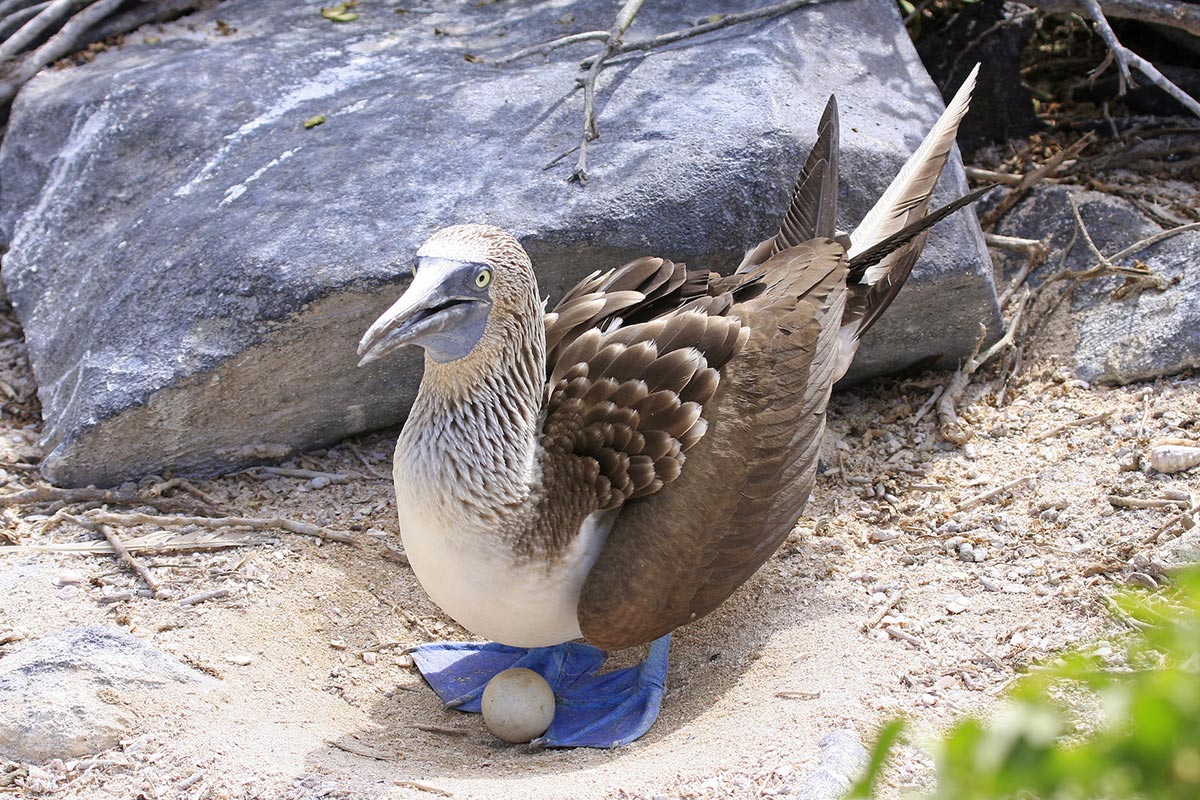
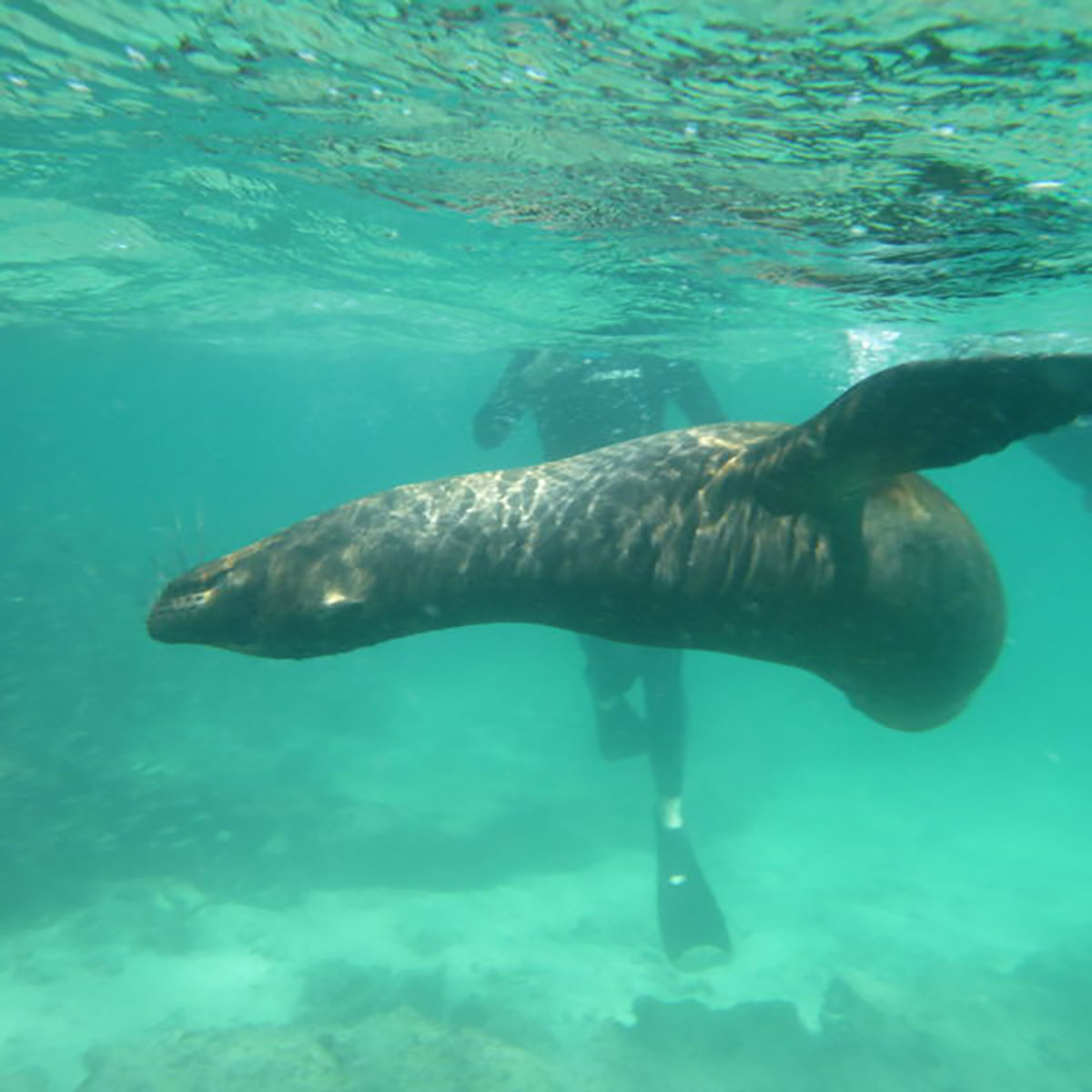
You can then go snorkelling in an area rich in marine life with the chance of spotting Galapagos penguins, blue-footed boobies diving for fish, sea turtles, sea lions, schools of fish and even marine iguanas feeding underwater.
For those who prefer not to snorkel, the views from the surface are impressive. The contrast between the dark volcanic rock, the clear water and the wildlife makes for excellent photo opportunities.
Overnight: Hotel Cormorant or similar
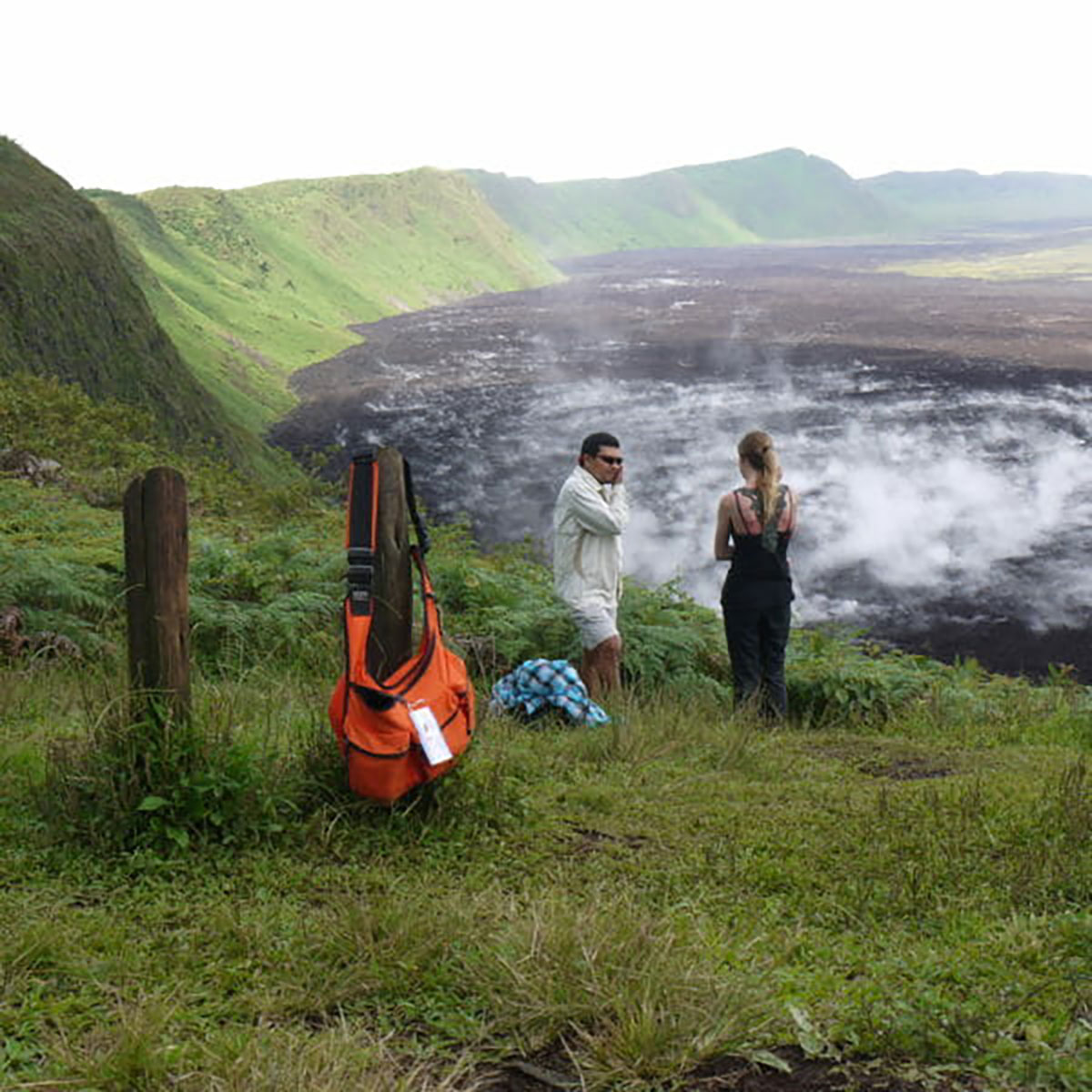
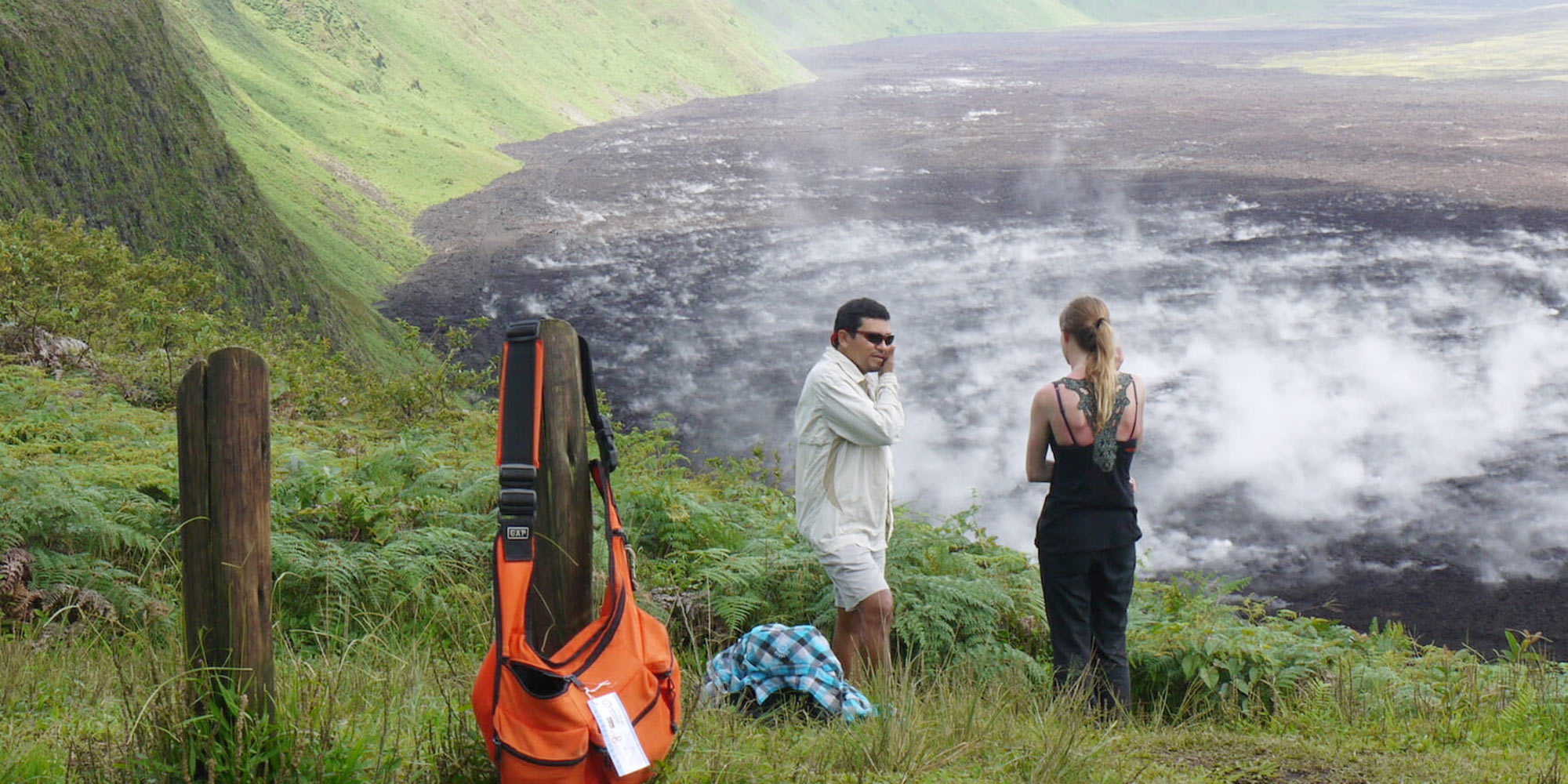
Today you head into the highlands of Isabela Island for a trek to the Sierra Negra Volcano, which has one of the largest volcanic calderas in the world, measuring almost 6 miles across. The walk is about 10 miles round trip and offers wide views of the landscape and a close look at the volcanic features of the area.
Following the rim of the caldera, you’ll see the volcanic material left from the 2018 eruption, which changed parts of the crater floor. On clear days, you can enjoy views across the island, including towards Elizabeth Bay, an area known for its mangroves and marine life. Keep an eye out for native birds such as the Galapagos hawk, finches and the vermilion flycatcher.
After the trek, you will have free time to relax and enjoy the sunset, with the sound of the waves in the background. If you have the energy to explore more, you can walk to nearby spots such as Concha Perla, a good place for a swim or a quiet rest by the water.
Overnight: Hotel Cormorant or similar
Volcano hike notes: From the National Park checkpoint, there’s about a 45-minute walk uphill to the rim of the volcano. The trail around the rim has only slight up and downs with a few short steep inclines. The lava fields of Volcan Chico are uneven and rocky in areas.
The path in and out is dirt: if it’s been raining, it could be muddy. There’s one proper bathroom at the beginning of the trail. The majority of walking is on level terrain and as long as you’re comfortable walking 4-6 hours, it’s definitely doable. If you have weak ankles, use athletic braces and wear hiking boots. If you have knee trouble, bring a hiking pole or two. This is a non-technical hike.
Today, you will visit Los Tuneles, one of the most distinctive snorkelling sites in the Galapagos. This area was formed by ancient lava flows that cooled and cracked, creating arches, tunnels and pools both above and below the water. It is now a sheltered habitat for many marine species.
As you travel by boat, your guide will explain how these formations developed and the ecosystem they support. On foot, you will explore the rocky arches and look for blue-footed boobies nesting on them. If you’re lucky, you may see their courtship display.
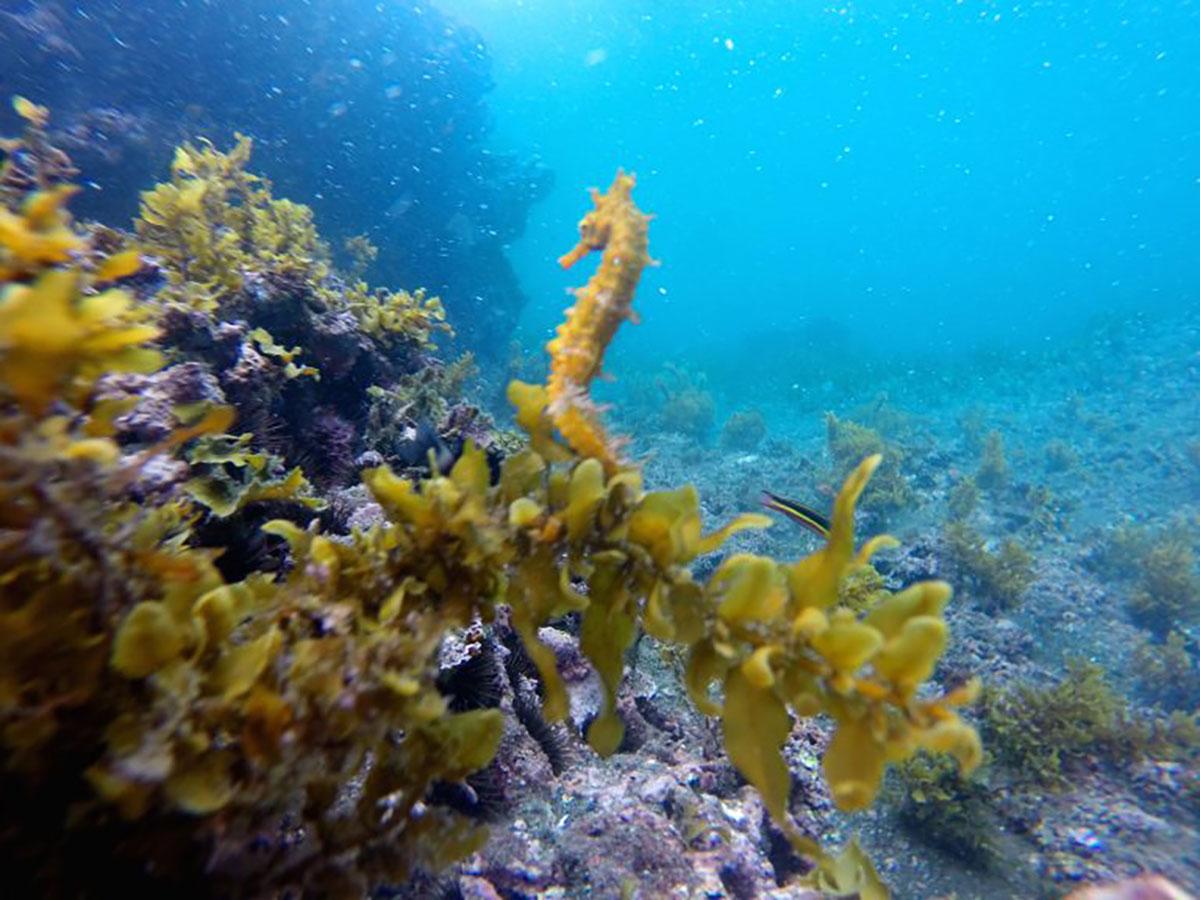
The snorkelling at Los Tuneles is a highlight. In clear water, you may see:
After lunch on board, we will continue to El Finado, another excellent snorkelling site. Once used by local fishermen as a shelter, it is now home to:
If you prefer not to snorkel, the views of the volcanic coastline and clear water from the boat are also impressive.
As the day winds down, enjoy an Ecuadorian wine-tasting social hour—a relaxed moment to share stories and reflect on the day. Afterwards, we will head into town for dinner at a local restaurant.
Overnight: Hotel Cormorant or similar
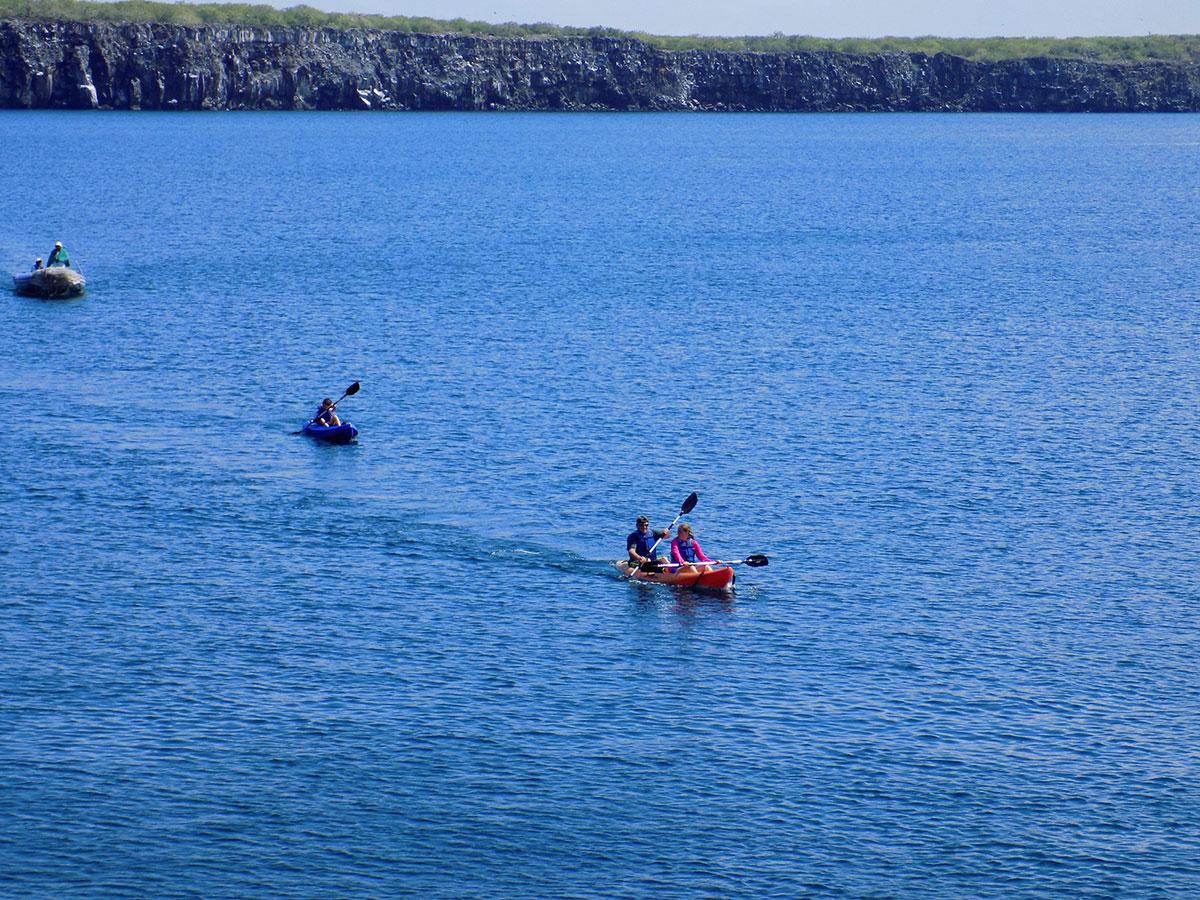
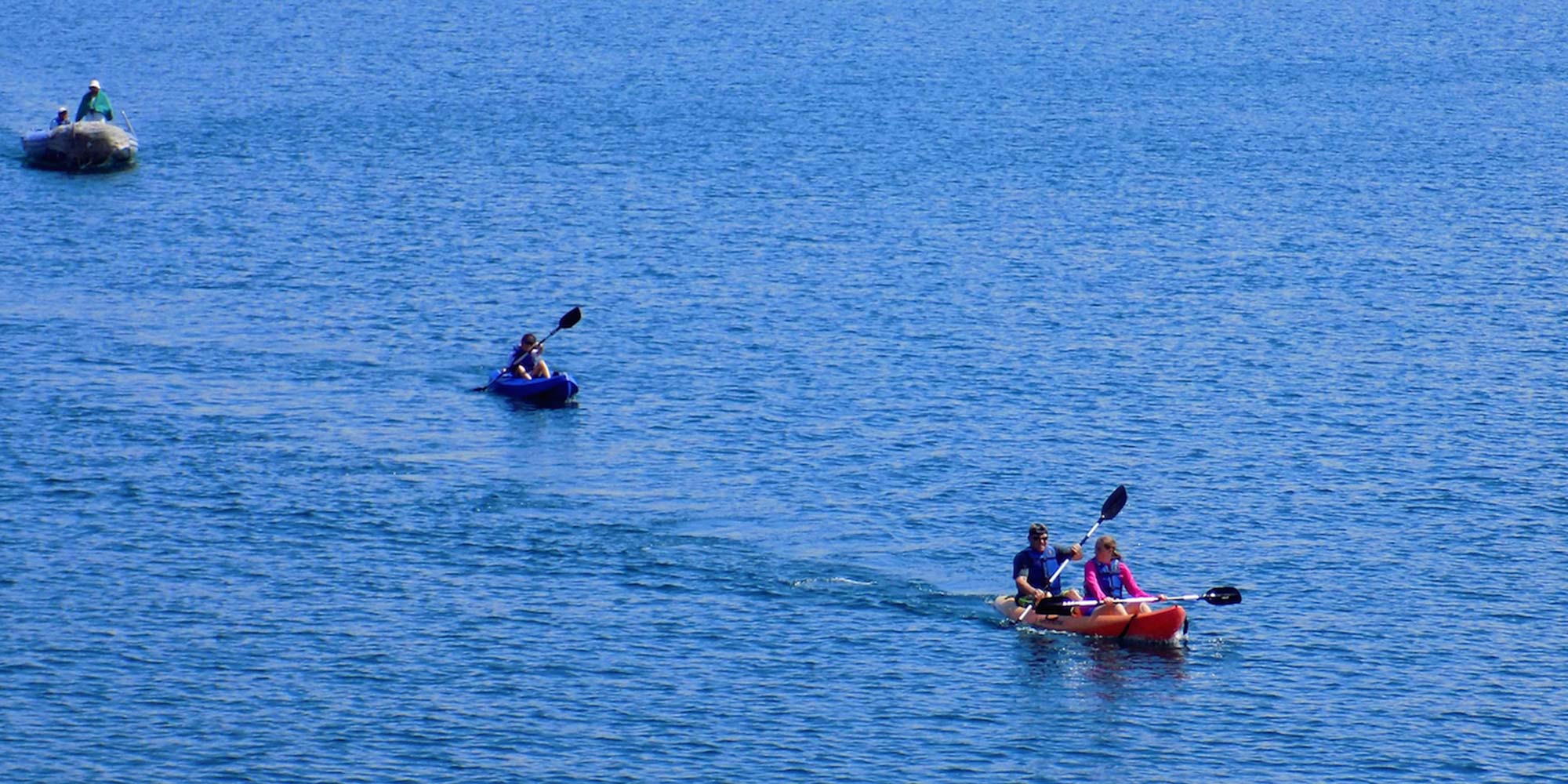
After an early breakfast, you will set out on a kayaking trip towards small islets formed by jagged volcanic rock. These rocks create narrow underwater channels that attract many marine species. Kayaking here is a special experience, as you paddle in the open Pacific surrounded by volcanic scenery and rich wildlife. Along the way, you may see Galapagos penguins swimming nearby, blue-footed boobies diving for fish, and sea lions approaching the kayaks out of curiosity. The calm water and close wildlife encounters make this a memorable outing.
Return to the hotel for check-out and lunch, then transfer to Isabela’s airport.
Next, you will take a short scenic flight to San Cristóbal Island, the fifth largest and easternmost island in the Galapagos. It is made up of several fused volcanoes, all now extinct. The island is named after St Christopher, the patron saint of sailors.
On arrival, our representative will meet you and assist with the transfer and hotel check-in.
The afternoon is free for you to relax or explore the island at your own pace.
Overnight: Hotel Seaside or similar
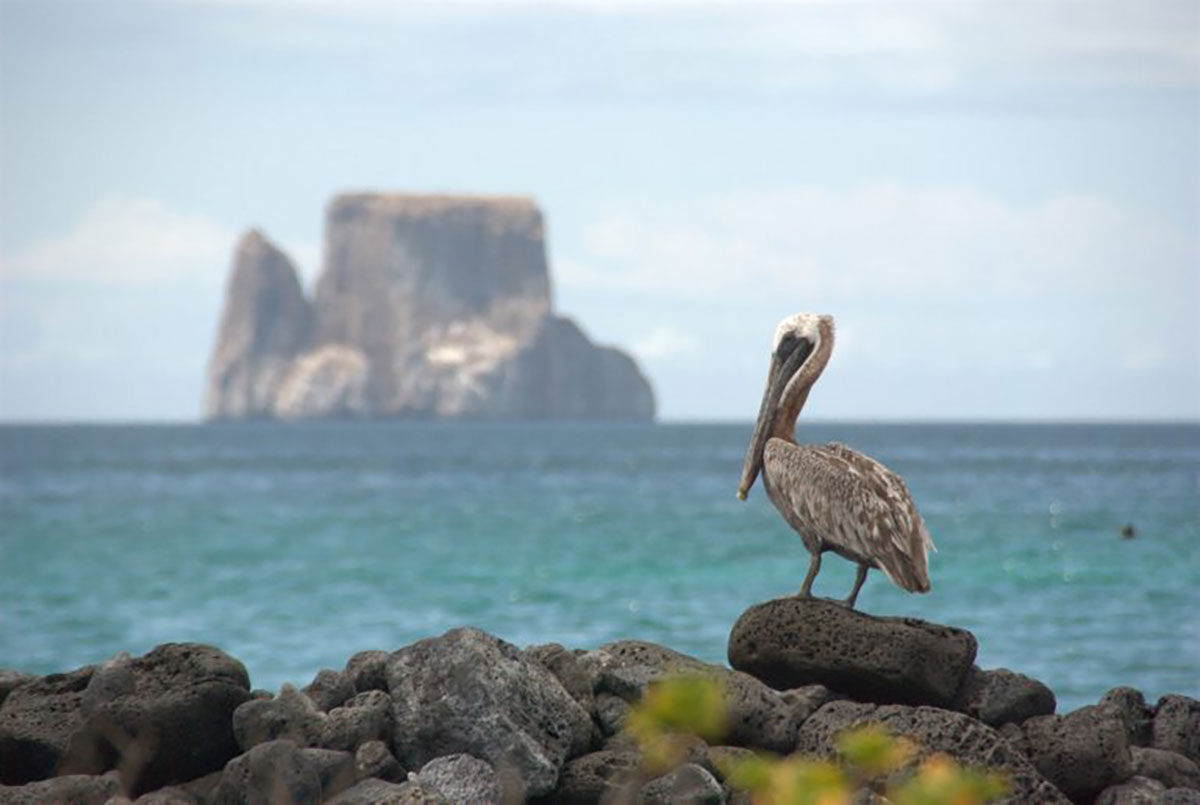
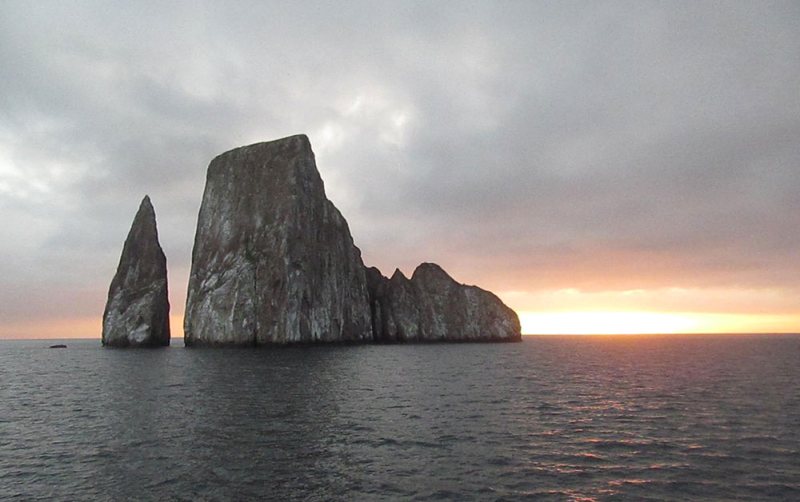
You will start the day with a 50-minute boat ride across calm blue water to Kicker Rock, one of the most striking sights in the Galapagos. This tall volcanic formation rises about 500 feet above the sea and creates a natural channel that is excellent for wildlife viewing.
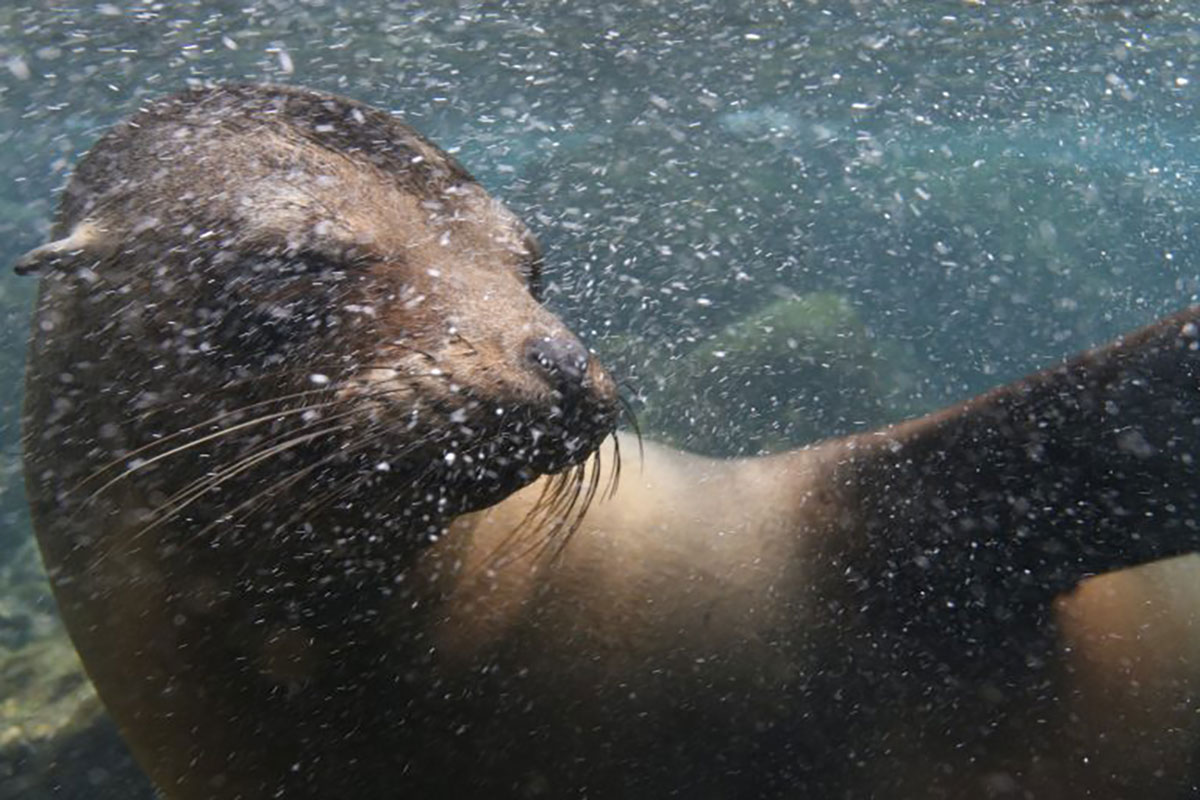
On arrival, get ready for your first snorkelling session in the channel between the rocks. Underwater, you may see white-tip reef sharks, rays, sea lions, sea turtles and many colourful fish. With luck, you might also spot hammerhead sharks. You’ll have two chances to snorkel here, giving you plenty of time to enjoy the rich marine life.
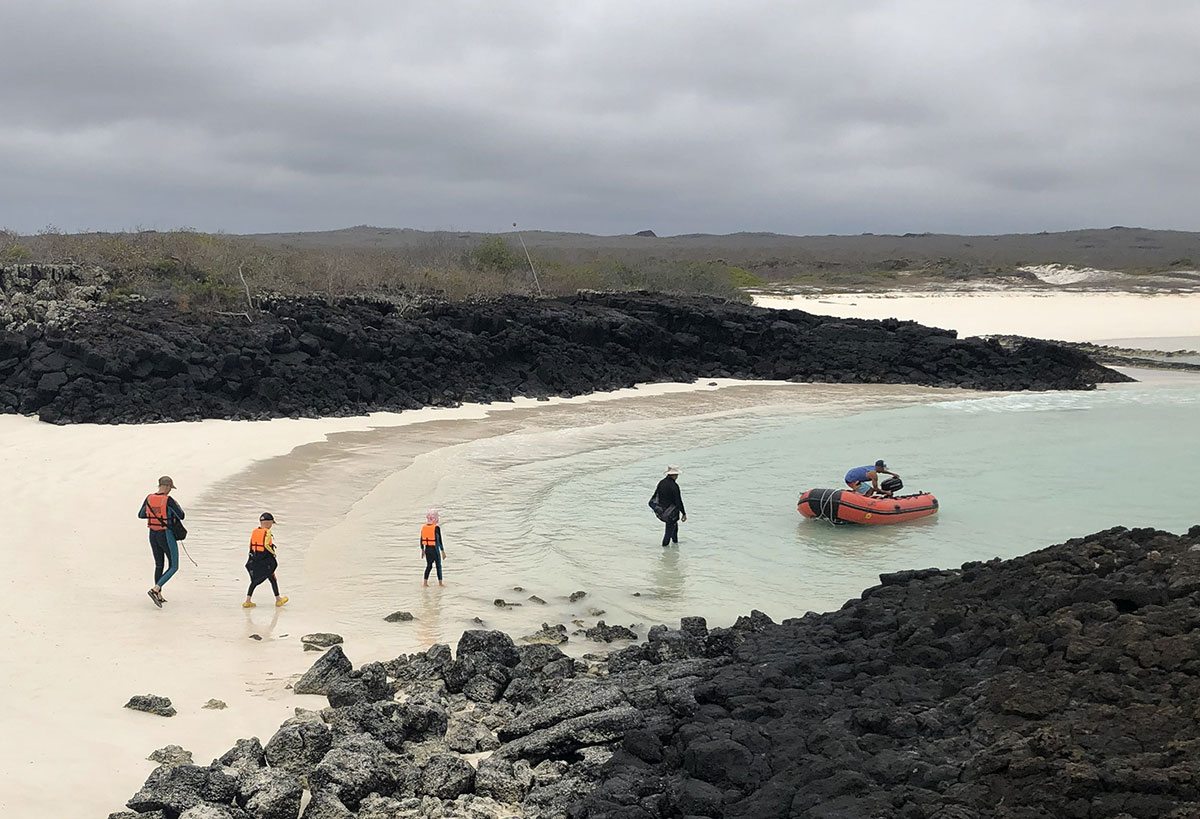
After snorkelling, you will visit a quiet white-sand beach within the reserve. You can relax on the shore and enjoy the peaceful setting. A freshly prepared lunch will be served on board.
In the afternoon, return to town for a cultural activity. You will visit the home of a local fishing family and take part in a traditional Ecuadorian cooking class. With their guidance, you will prepare dishes using local ingredients and learn about their customs and way of life. They will share stories about living in the Galapagos and the challenges and rewards of island life.
In the evening, you will have free time for a wander around town.
Overnight: Hotel Seaside or similar
After a final breakfast in the Galapagos, you will be collected from your hotel in time for your transfer to San Cristóbal Airport.
At the airport, board your flight back to mainland Ecuador, which typically takes 2-3 hours, usually with a brief stop in Guayaquil.
On arrival in Quito, our team will meet you and assist with your transfer to your hotel in the city
Overnight: Swissotel or Similar
Departure day! We’ll coordinate your transfer to the airport based on your flight schedule. To ensure a smooth check-in, we recommend planning your pick-up at least three hours before your flight.
Safe onward travel, we hope you leave with amazing memories of your Galapagos adventure!
Meals included: Breakfast



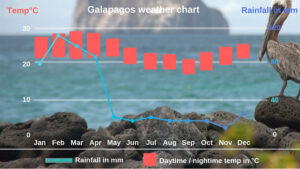
There is no real ‘best’ time to visit Galapagos on holiday as there is always wonderful wildlife and weather to enjoy. Read our blog for more.
Most animals – tortoises, sharks, sea lions and boobies – are found year round and many of the species here are non-migratory.
The Galapagos Islands are located right on the equator so air and water temperatures do not vary by much.
Having said that, there are two recognised seasons, and each months brings natural marvels for the visitor to enjoy.
Below is our quick guide to the weather and wildlife you can find on the Galapagos Islands.
Calm, clear warm waters, great for snorkelling, often without a wetsuit.
Great weather, with February and March being the hottest and sunniest months with blue skies and sunshine.
Occasional heavy bursts of rain in the afternoons.
Sea temperatures: 22-25°C / 72-77°F
Land temperatures: 21-32°C / 72-90°F
It’s a great time for marine life in the cooler seas. Snorkellers may want a wetsuit.
August and September the coolest when you may need a jacket in the evenings and the sea can be choppy.
There can be mist on the islands in the mornings (garua) which usually burns off by midday leaving overcast skies or a sunny afternoon.
Sea temperatures: 15-22°C / 60-72°F
Land temperatures: 18-24°C / 65-75°F