Since 1998, we've crafted journeys using knowledge gained on our own explorations of South America's spectacular wilderness, fascinating cultures and diverse wildlife.

Bring a sense of adventure and an open mind. We'll take care of the logistics and support you round the clock.

We only work with small, locally owned operators and guides. Your money stays where you travel, and a share of every trip supports local communities and the wild places they protect.
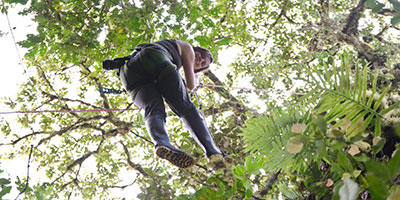
Ecuador’s cloud forest covers its rolling hillsides as they descend from the high Andean plateaus into the rain forest or down to the Pacific coast.
Most of this tropical forest lies between 1,200-2,700m (3,937-8,858ft) above sea level. It provides an evergreen, lush, and moist forest, teeming with birds, insects, and mammals.

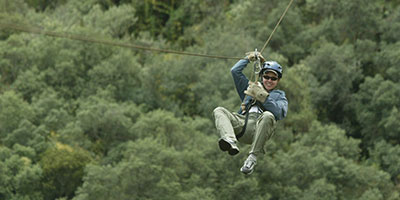
There are many lodges with virgin forest, home to a dazzling variety of hummingbirds, refreshing waterfalls for swimming, zip lining, and wildlife walks.
The humming birds, Cock-of-the-Rock leks, and the chance of spotting larger mammals such as the spectacled bears are some of the reasons to immerse yourself in this amazing ecosystem.
Much of the cloud forest is readily accessible from Quito making it perfect a two- or three-day stay.

Ecuador’s vibrant capital Quito sits in a stunning location, surrounded by the many snow-capped volcanoes of the Andean sierra.
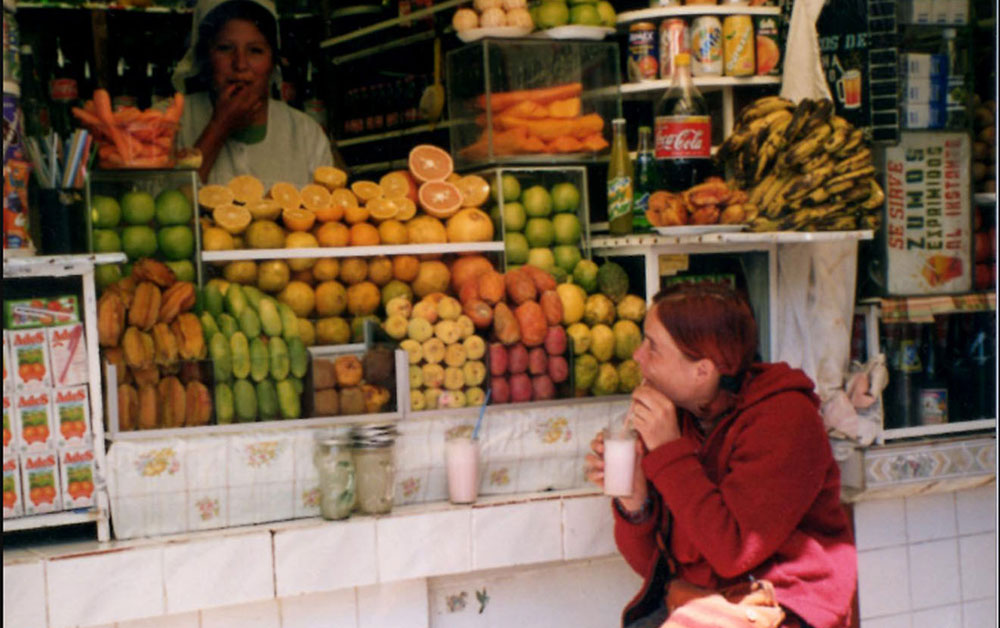
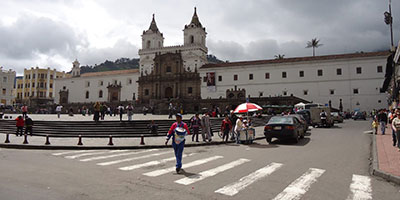
The old town of Quito is a UNESCO world heritage site, with many beautiful churches and colonial facades, a wonderful range of museums and picturesque squares. You can try your hand at chocolate making, browse vibrant markets replete with a kaleidoscope of exotic products.
Quito is the perfect starting point for high-altitude acclimatisation, sitting at 2,850m (9,350ft). Boost your lungs and visit the teleferico (cable car). You’ll ascend the eastern slope of Pichincha volcano, which offers an unparalled overview of the city and along the Avenue of volcanoes.
At night, Quito is a lively city. Head to the modern Mariscal area where tourists and locals alike find a great range of restaurants, bars, and night clubs. Sample Ecuador’s tequila, agave, before indulging in Ecuadorian cuisine that bursts with colour and flavour, or simply soak up the local atmosphere in a plaza while sipping the local coca tea.

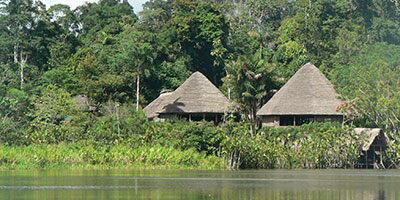
Some 40% of Ecuador’s land area is covered by wildlife-rich Amazon rainforest.
Yasuní National Park holds record numbers of amphibians, birds, reptiles, and trees per hectare, making it one of the globe’s most important biodiversity hotspots.
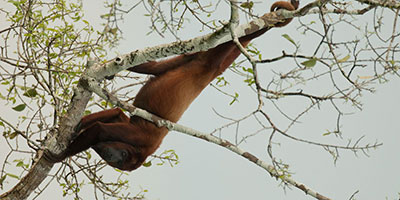
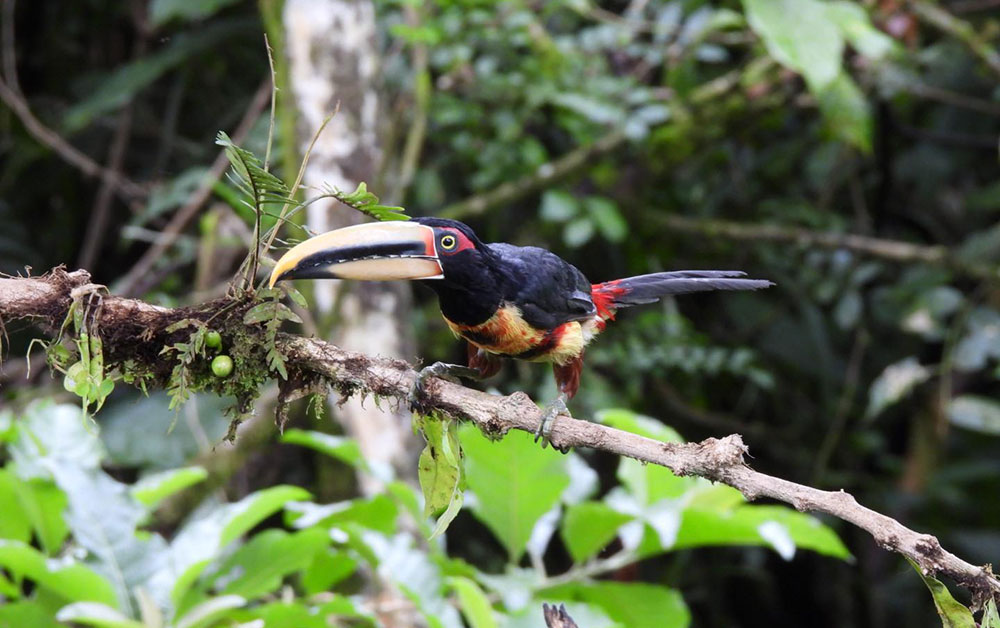
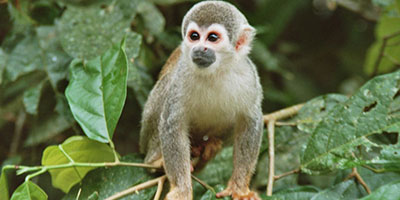
Native guides lead you on verdant trails to spot monkeys, tapirs, jaguars, and frogs on land. In the water, look for caiman, otters, and anaconda. Look up to see an array of birds, including toucans and macaws, flying majestically through the canopy.
Furthermore, Ecuador’s rainforest remains home to a multitude of indigenous tribes, some of which have opened their communities to guests.
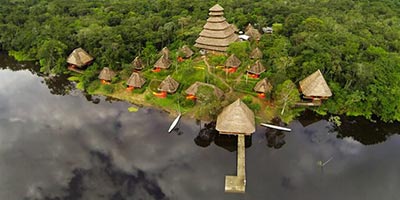
A 4 or 5-day visit to one of the quality lodges allows you to venture into beautiful primary rainforest, an environment like no other.

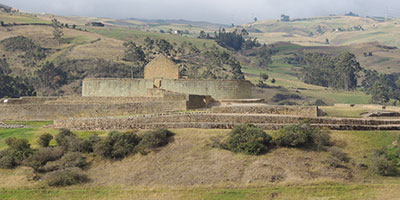
Ingapirca, meaning wall of the Inca, is just an hour drive from Cuenca, and is the most important and largest Inca archaeological site in Ecuador.
The site, perched at around 3,200m (10,500ft) comprises a main elliptical building thought to be a sun temple, with typical Inca features such as trapezoidal doorways and niches. Its original use was as a religious, administrative, scientific, and solar observation centre.
There are Inca trails leading to and from the site, so you can visit on a day trip or incorporate a visit as part of a trekking itinerary.
You can travel here from Cuenca or make it part of a trip from Baños to Cuenca.

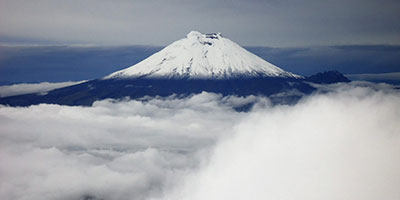
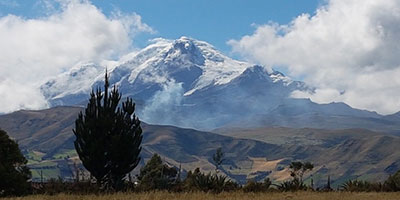
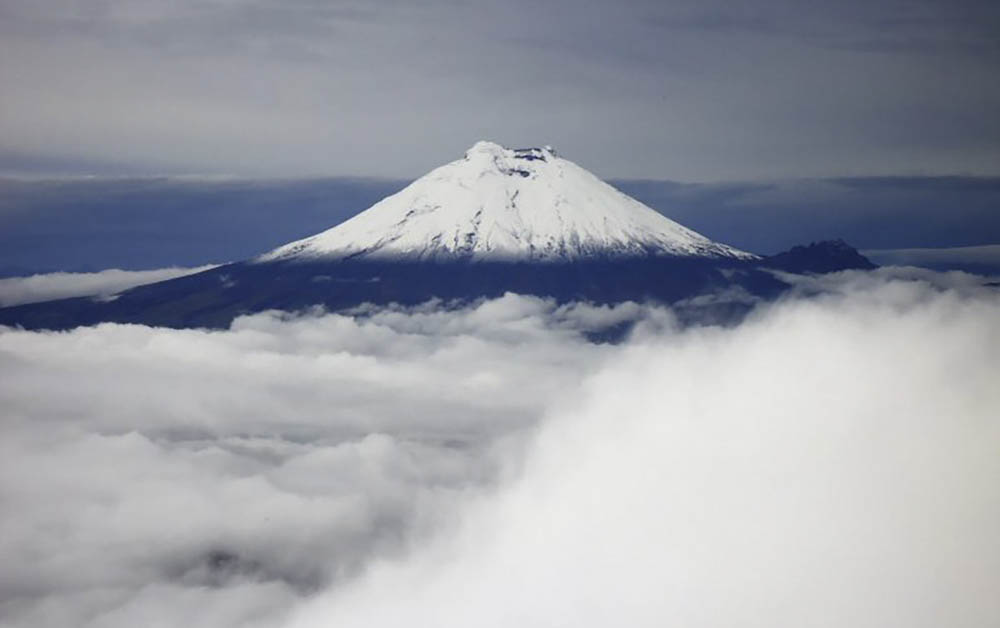
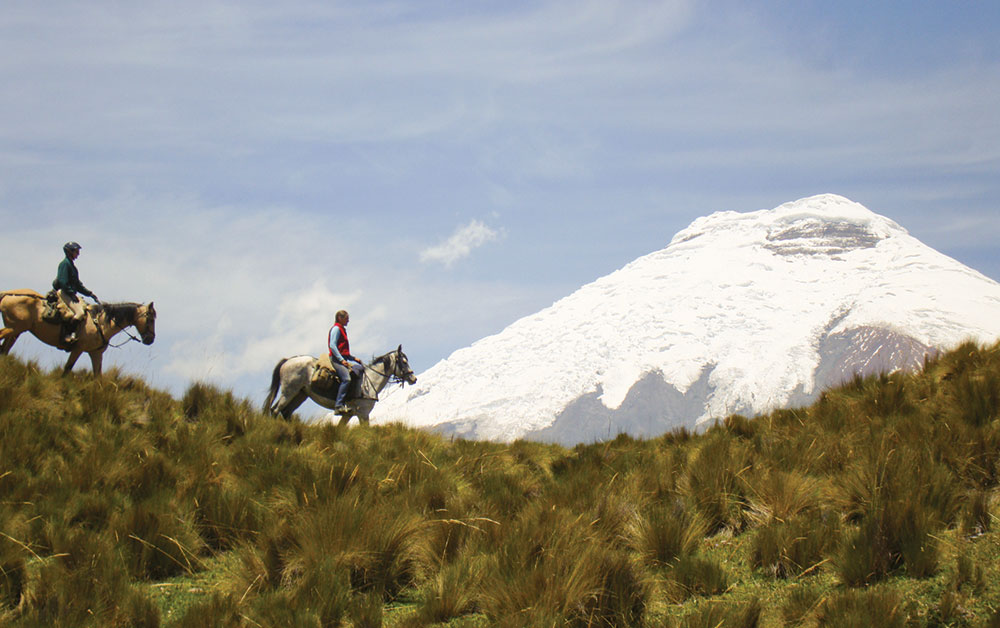
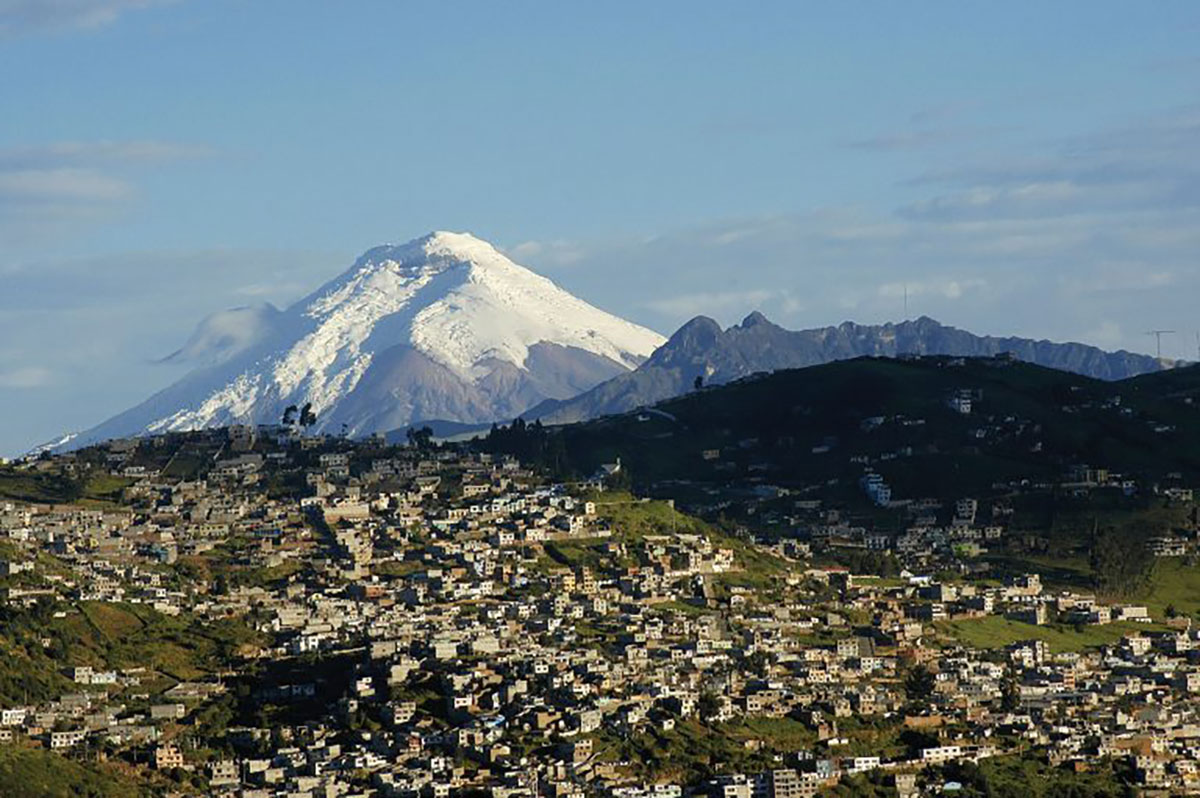
Cotopaxi National Park is dominated by the almost perfect cone shape of Cotopaxi (5,897m/19,347ft), an active volcano and the second highest mountain in Ecuador after Chimborazo.
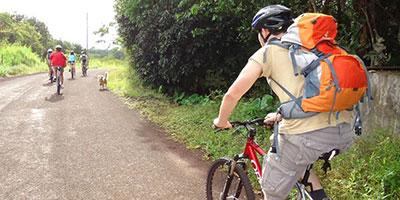
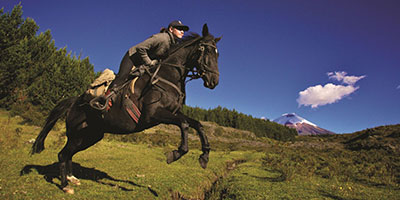
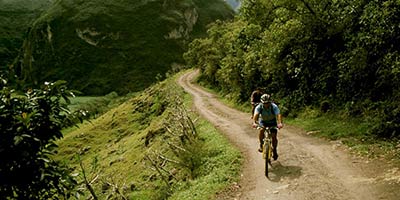
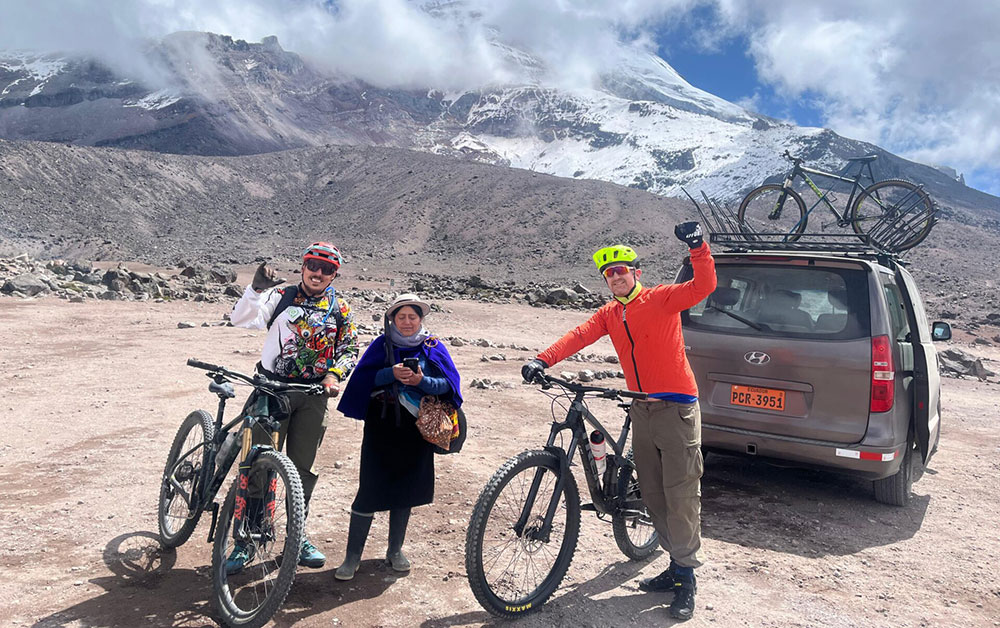
The national park is well worth a visit for trekking in the foothills, climbing smaller peaks like Ruminahui, downhill mountain biking, horse riding or just enjoying the National Park itself.
The surrounding páramo is good for bird watching – you may see condors soaring above.
There are lots of lovely hacienda and mountain refugios to stay at in and around the park, and from which there are a variety of walks, horse rides and bike rides for all levels.
From: $2670 per person
Duration

Ecuador is the smallest of the Andean countries, making it an ideal location to move around between its incredible travel highlights. It is perfect for active travellers, wildlife enthusiasts and families looking to maximise their Andean experience in this welcoming holiday destination.

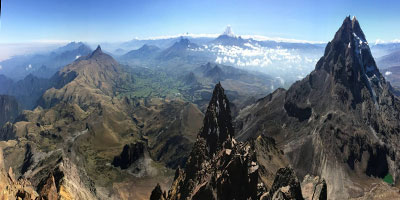
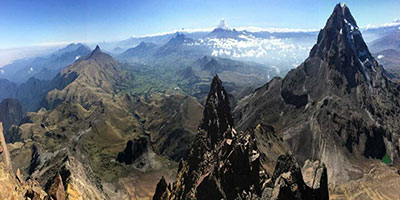
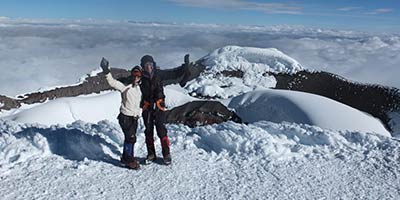
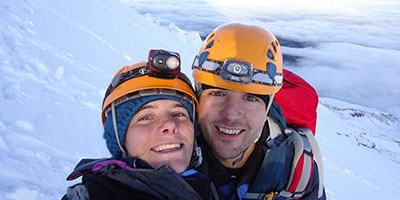
Top of the list of your active Ecuador holiday are surely the majestic Andes, with their impressive snow-capped giants in the Avenue of the Volcanoes. It’s a trekkers paradise, with fantastic lodge-to-lodge multi-day treks, or scenic day hikes in the foothills of mighty volcanoes. Stay at a working hacienda, enjoying the remote beauty of the Andean highlands. Those wishing to challenge themselves may decide to scale said volcanoes, with great opportunities for novice and experienced mountaineers to climb Cotopaxi, Cayambe and Chimborazo.
Wildlife enthusiasts will want to include some days in Ecuador’s rainforest. Some eco-lodges are on the periphery of the Amazon basin and offer a quick and easy escape into its humid woodland. Others require a short plane journey but will take you further into a wildlife-rich rainforest. Here you have excellent opportunities to spot monkeys, macaws, caimans, otters and other mammals.
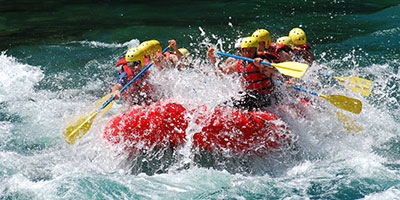
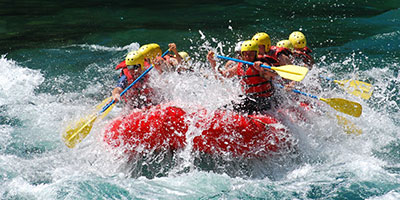
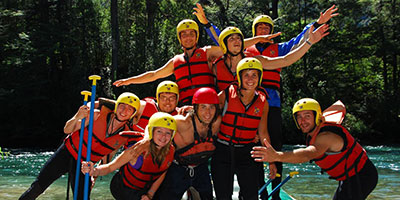
Ecuador tours also offer white-water rafting, whale watching and surfing on the Pacific coast, as well as some excellent horse riding and biking for anybody seeking thrills and action. Those travelling with young families will find plenty of softer adventures, too, and a network of roads that make travel easy while keeping distances small.

The Unesco World Heritage Old Town of Quito is a place to soak up the atmosphere with its cobbled streets and busy squares, its colonial churches and remains of a rich Inca and pre-Inca past.
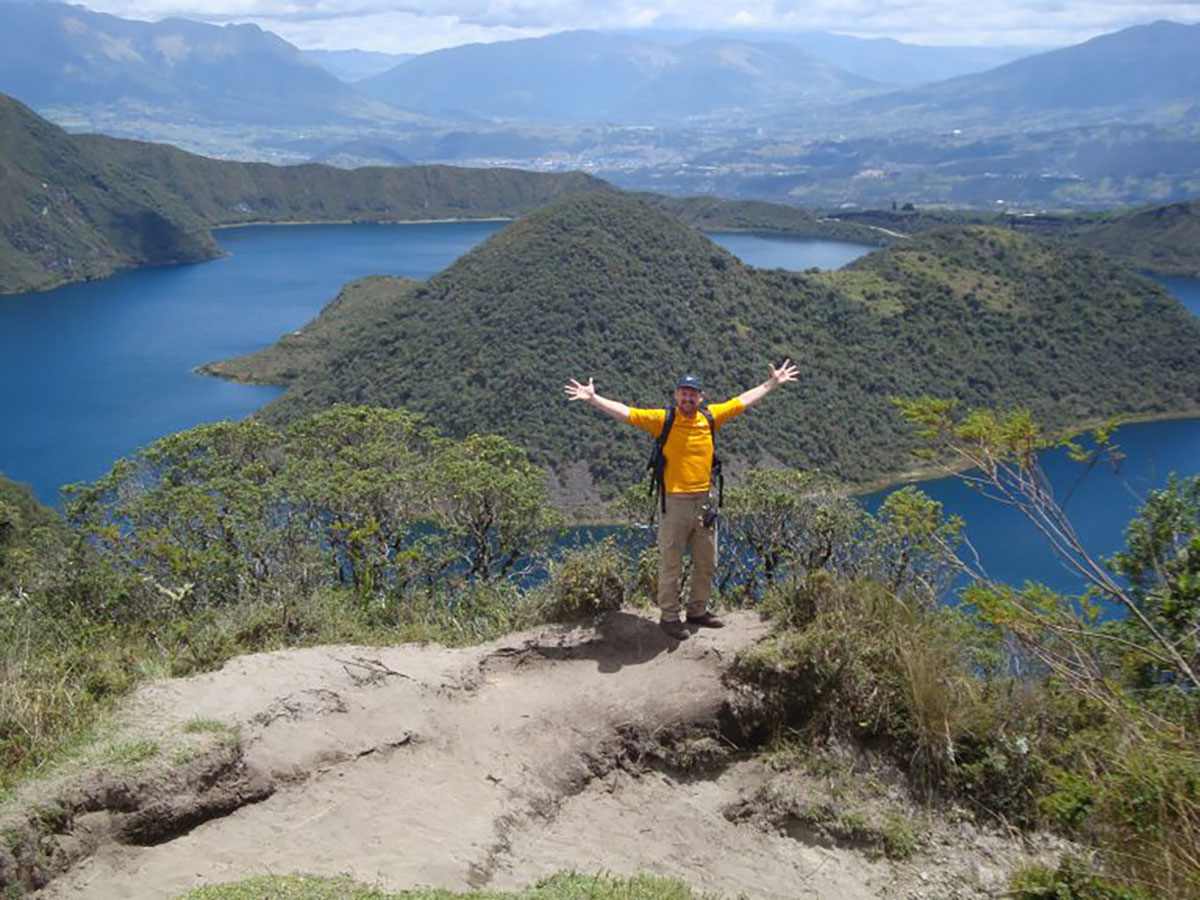
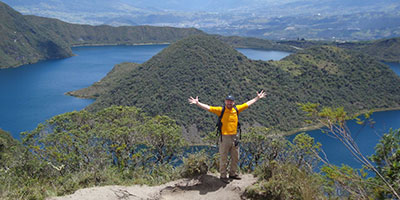
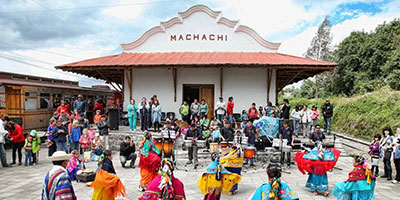
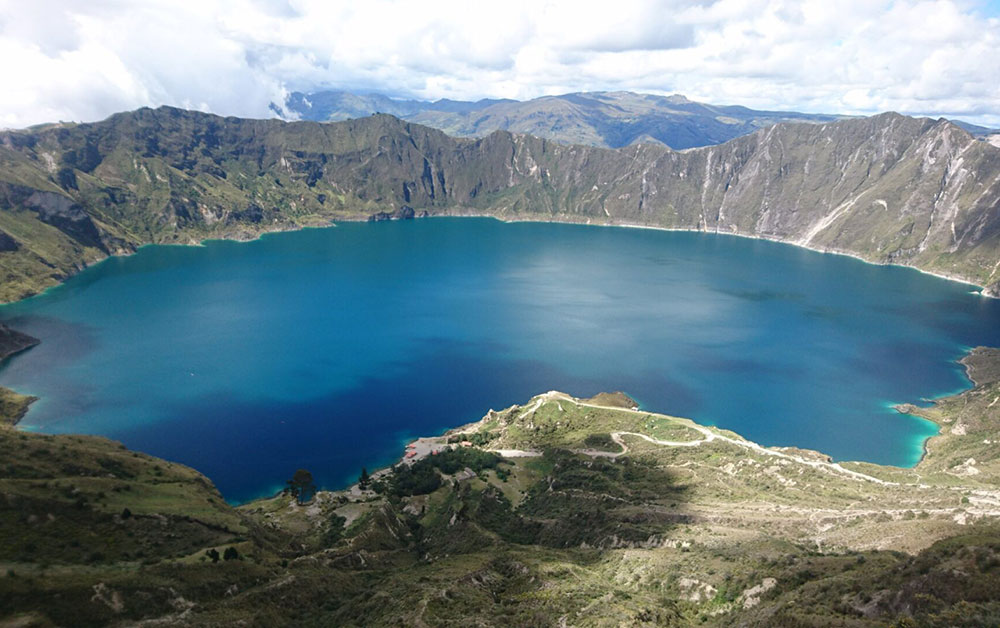
Near Quito, you will find colourful indigenous markets and small, traditional towns – the most famous being the Saturday market at Otavalo. Within an hour you reach the equator line, Mitad del Mundo, as well as Andean landscapes and volcanic crater lagoons. Beautiful traditional costumes and vibrant colours can be seen everywhere as you travel the countryside in our Ecuador tours.
Venture just a little further, a mere 2-hour drive, and base yourself at one of the fantastic eco-lodges in the cloud forest. Here you will find a forest at a higher altitude of around 2000m, home to a network of trails and a myriad of birds – and famous for its hummingbirds. Come here in bear season, and you are in for a special treat as you spot the Spectacled Bear foraging amongst orchids.

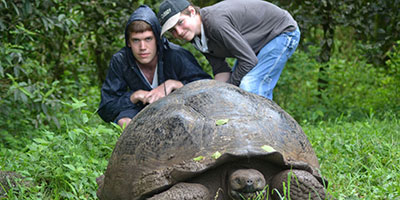
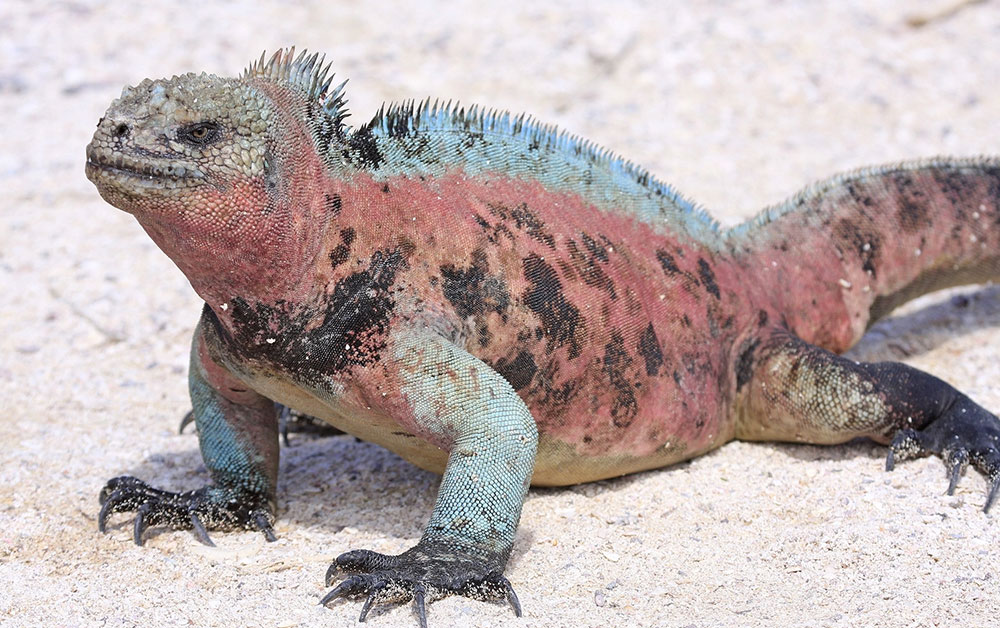
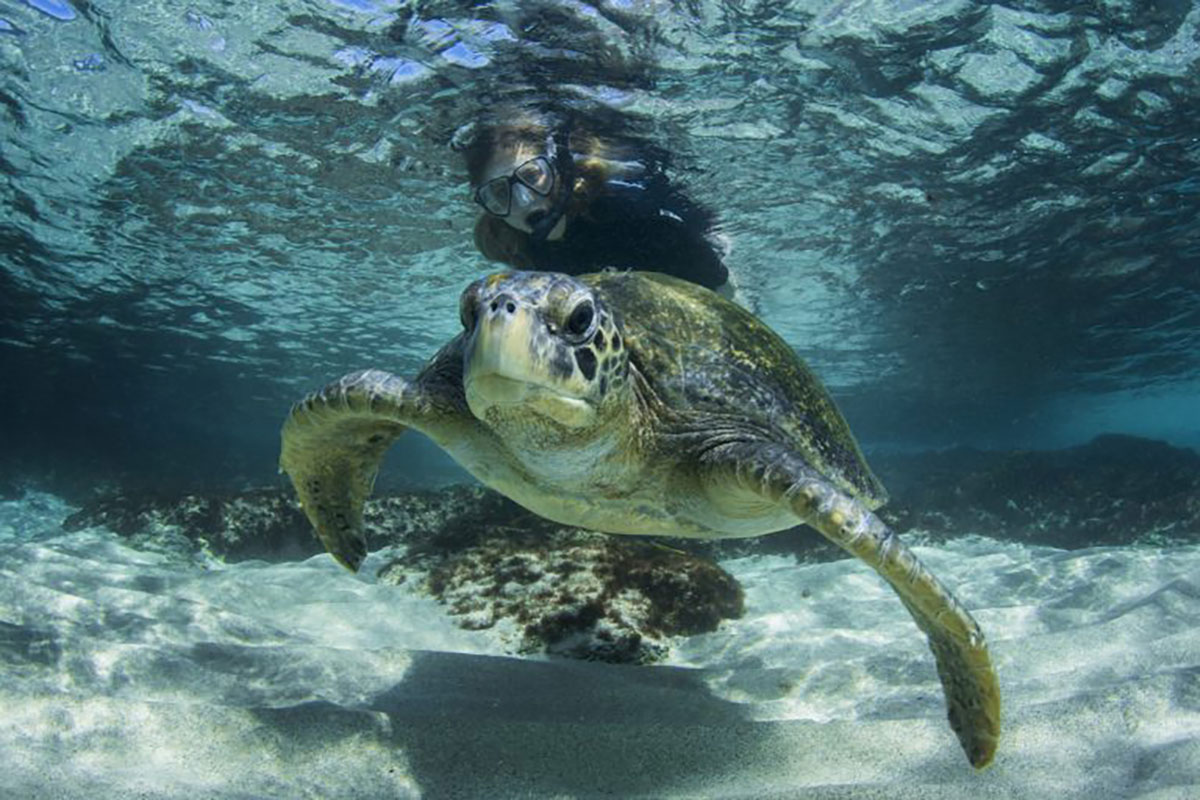
Leave Ecuador’s mainland behind and board a plane to the Galapagos islands. Join a Galapagos Cruise or explore the Enchanted Islands as part of an island-hopping land-based trip. You will find an incredible amount of wildlife in this archipelago, famous for its giant tortoises, tame sea lions, blue-footed boobies and Galapagos iguanas to name a few. The bird life is a dream, the underwater world a paradise waiting to be explored on daily snorkelling trips. Getting close-up to incredible wildlife will be a memory cherished forever – all in a setting of stark, iconic volcanic landscapes.
Don’t forget to read our Ecuador Travel Highlights Guide, discover our Ecuador tours or contact us for more.
A luxurious Galapagos cruise filled with extraordinary wildlife encounters, seamless travel, and unforgettable friendships.
A flawlessly organised South American adventure with great food, welcoming people, perfect timing, and the reassuring support of Andean Trails every step of the way.
From money advice to visas, from inoculations to which plugs to take, below you’ll find a wide range of travel tips, advice and information that will help you get ready to explore Ecuador.
Can’t find what you’re looking for?
Get in touch and we’ll be happy to help.
Being at altitude, especially in the tropics, is usually a pleasure as it isn’t so hot, there are few insects and the air is clear.
However, when gaining altitude, air pressure drops and the amount of oxygen reaching the lungs is reduced. Although we build plenty of acclimatisation time into our itineraries, certain ill-effects are possible. Nevertheless, all of these can be minimised or prevented if care is taken.
On reaching heights above 2,500m (approx. 8,200 ft), especially when ascent has been straight from sea level, heart pounding, mild headache and shortness of breath are normal, especially on exertion.
Acute mountain sickness (AMS) is a syndrome known locally as soroche, whose symptoms can include of bad headache, dizziness and nausea).
To avoid AMS, you should:
Ecuador lies between latitudes 4º south and 2º north. Overall, climate varies according to time of year, altitude and region.
In the Ecuadorian highlands, there is little temperature variation by season; this depends largely on altitude.
In Quito, shade temperatures range from 6 to 10ºC in the morning and from 19 to 23ºC in the afternoon, with cool nights. In the lower intermontane basins, it gets significantly warmer.
Rainfall depends on whether an area lies closer to the eastern or western Andes. To the west, June to Sept is the dry period and Oct to May the wet (with often a short, dry spell in Dec or Jan).
The best period to visit Quito and trek and climb volcanoes such as Cotopaxi is the west Andean dry season of June to Sept and Dec/Jan. This is also Ecuador’s high season. During the Oct to May wet season, most rainfall is in the afternoons.
To the east, Oct to Feb are dry and March to Sept are wet. Overall, the southern highlands are drier than the northern highlands.
The international code for Ecuador is +593.
Regions have dialling codes with a 0 prefix.
Ecuador’s landlines have 7 digits. To call landline to landline in the same city, simply dial the 7 digits.
If calling a landline in another region or city, start with a 0 followed by the regional code.
If using your own mobile phone to call a landline, dial the country code, the regional or city code without the 0, and then the number. For example, for Quito (code: 02), dial +593 2 1234567.
Mobiles have 8 digits and start with 09, making a total of 10 digits.
If dialling Ecuador mobile to mobile, simply dial the full number including the 09.
If using your own mobile phone to call an Ecuadorian mobile, dial the country code, omit the 0 of 09, and then the remaining 8 digits. For example: +593 9 1234 5678.
Almost all unlocked phones will work in Ecuador with a local SIM. Check with your provider before arrival to confirm compatibility.
Roaming charges may be high, so it is advisable to check beforehand.
Most hotels, cafés, restaurants and airports offer free and generally good Wi-Fi.
There are some locutorios (internet cafés) offering affordable and reliable internet access in most towns and cities.
Head to the official postal service, Correos del Ecuador.
Festival: Carnaval
Colourful parades and throwing water.
Location: Guaranda and countrywide.
Festival: Semana Santa / Holy Week
Gran Poder parade.
Location: Quito.
Festival: Mama Negra
Religious street parade featuring “Mama Negra” – a man dressed garishly as a woman.
Location: Latacunga.
Festival: Día de los Difuntos / Day of the Dead
Visits to cemeteries and “feasts” at the graves of loved ones.
Location: Otavalo area, Calderón and countrywide.
Festival: Paseo del Niño / Baby Jesus parade
Children parade the streets on horseback accompanied by their families.
Location: Cuenca.
Andean Trails can book all your international and domestic flights for this trip and for UK passengers; we have full ATOL bonding and can book flights with most airlines.
International flight prices are variable and usually can only be guaranteed at the time of booking. If you would like to upgrade to business or first class, or even arrive at an earlier date/depart at a later date we can also arrange this for you.
Typically, you fly to a country’s capital city and then overnight there or make a connecting flight (if available) to your next destination.
Please contact us for flight advice especially if you do make a connection on the same day. It is important to purchase a through ticket and not separate tickets for connections, so that you are covered for any delays. Passengers with separate tickets that are delayed run the risk of having to buy an entirely new ticket to continue their journeys.
Please note all airline schedules are subject to change and are out of our control.
Almost all flight tickets are now e-tickets. Any that are not will be handed to you on arrival in South America – this is most common for flights on smaller planes in Amazon areas such as Guyana/Bolivia.
The final travel instructions we send you some 2-3 weeks before departure will list the latest flight times, flight numbers etc as well as list your e-ticket numbers and booking reference code (6 characters i.e. GB75RK). This is what you will need to check in with.
Depending on the airline, we can reserve some seats for you at the time of booking your international flights with us.
If we cannot reserve seats at the time of booking, you have to wait for online check in to open (usually 24-72 hours before departure).
To check in online you will need to go to the website of the airline you are travelling with, and have your e-ticket number/booking reference to hand. Click check in online, enter your details, and choose your seat.
Some flights will allocate seats at the check in desk at the airport and some may not allocate seats at all.
The United States (USA) has an Electronic System for Travel Authorization (ESTA) which all travellers to and via the USA must complete BEFORE travel to/via its airports and shores.
More information can be found on their ESTA website.
Passengers who have not completed the form will be denied boarding.
Before you begin this application, make sure that you have a valid passport and credit card available.
This application will only accept the following credit cards: MasterCard, VISA, American Express, and Discover (JCB, Diners Club).
| On the coast | |
|---|---|
| Ceviche de pescado | Raw marinated fish, served with tostado (roasted maize). |
| Ceviche | Popular everywhere, best on the coast. |
| Ceviche de mariscos | Marinated shellfish. Most varieties such as camaron (prawn) and langostino (king prawn) are cooked before marinating. The exception is ceviche de conchas (clams), which is marinated raw. |
| Langosta | Lobster (increasingly endangered, but still fished illegally). |
| Empanada de verde | Ground plantain pasty filled with meat, cheese or shrimp. |
| Sopa de bola de verde | Plantain dumpling soup. |
| Encocadas | Dishes prepared with coconut milk, often shrimp or fish. |
| Patacones | Fried plantain chips. |
| In the Highlands | |
| Locro de papas | Potato and cheese soup. |
| Mote | Burst maize. |
| Caldo de patas | Cow-hoof soup (with mote). |
| Llapingachos | Fried potato and cheese patties. |
| Empanada de morocho | Ground maize shell filled with meat. |
| Sancocho de yuca | Vegetable soup with manioc. |
| Cuy | Guinea pig. |
| Fritada / Chicharron | Fried pork. |
| Hornado | Roast pork. |
| Humita | Ground maize meal wrapped in a maize leaf and steamed (sweet or savoury). |
| Quimbolito | Similar to humita, made from maize flour and steamed in a banana leaf (sweet or savoury). |
| Drinks | |
| Jugos | Fresh fruit juices including naranjilla, maracuya (passion fruit), tomate de arbol (tree tomato) and piña (pineapple). |
| Aguardiente | Unmatured rum (Cristal is popular). Also known as paico, trago or trago de caña. |
| Cerveza | Lager-type beer. Popular brands include Pilsener and Club. |
Landscapes vary from the drier south to the more humid north.
The Highlands, or sierra, encompass two Andean Cordilleras (the Central and Western), which run north to south through the country. Ecuador’s largest volcano is Chimborazo (6,310m) whose summit, because of its proximity to the equator, is the closest point on earth to the sun. Several of Ecuador’s volcanoes are still active, and it’s a great area for trekking.
Descending the steep, east-facing slopes of the eastern Cordillera, one passes through a transition zone comprising dense cloud forest and humid high jungle, before entering the Amazon lowlands.
This mainly primary rainforest covers a third of the country, accounts for 5% of the population and stretches across Ecuador, from its Colombian to its Peruvian borders.
The Galapagos Islands are simply unique. Lying 600 miles off the mainland, the archipelago comprises the summits of gigantic equatorial volcanoes.
The flora and fauna of the Galapagos, long separated from their continental cousins, have evolved differently. Charles Darwin used his observations there to develop his theory of Evolution.
Ecuador is the second smallest South American country, and one of the most varied.
It comprises three main geographical areas: the coast, highlands and Amazon plus is home to the Galapagos Islands.
Because of its relatively compact size, it makes a great holiday destination as you can move from highlight to highlight fairly easily and rapidly.
Learning a few words of Spanish can really ingratiate you with the locals you’ll encounter, adding to the enjoyment of your holiday. Below are some basics to get you started.
| Greetings | |
|---|---|
| Good morning | Buenos días |
| How are you? | ¿Cómo estás? |
| Good afternoon | Buenas tardes |
| Good bye | Adiós |
| Most frequently asked questions (theirs) | |
| Where are you (plural) from? | ¿De dónde eres (son)? |
| What time is it? | ¿Qué hora es? |
| Where have you come from? | ¿De dónde vienes? |
| Give me (frequent, unwelcome question) | Dáme / regálame |
| Most frequent questions (yours) | |
| How much is it? | ¿Cuánto vale? |
| What is this place called? | ¿Cómo se llama este lugar? |
| What’s your name? | ¿Cómo te llamas? |
| Do you have a map? | ¿Tienes un mapa? |
| In the street / places | |
| Where can I find a currency exchange? | ¿Dónde encuentro una casa de cambio? |
| Where is there a cash machine? | ¿Dónde hay un cajero automático? |
| Where is the underground/subway station? | ¿Dónde está la estación de metro/subte (Buenos Aires)? |
| Where can I find a taxi? | ¿Dónde puedo encontrar un taxi? |
| Where can I find a supermarket? | ¿Dónde puedo encontrar un supermercado? |
| Where is the hospital? | ¿Dónde está el hospital? |
| Where can I find a restaurant? | ¿Dónde puedo encontrar un restaurante? |
| In the hotel | |
| What floor am I on? | ¿En qué piso estoy? |
| Where are the elevators/lifts? | ¿Dónde están los ascensores? |
| How do I access the Internet? | ¿Cómo puedo acceder a Internet? |
| How do I call for room service? | ¿Cómo llamo para el servicio de habitación? |
| How do I call down to the front desk? | ¿Cómo llamo a la recepción? |
| In the restaurant | |
| A table for two/four please | Una mesa para dos/cuatro, por favor |
| I would like to drink… | Me gustaría tomar… |
| May I see a menu? | ¿Puedo ver la carta / menú? |
| I would like to order… | Me gustaría pedir… |
| Can you bring me the check/bill please? | ¿Me trae la cuenta, por favor? |
| Emergency | |
| I need help. | Necesito ayuda. |
| I have lost my passport. | He perdido mi pasaporte. |
| Someone stole my money. | Alguien robó mi dinero. |
| I have been robbed. | Me han robado. |
| I need to call the police. | Necesito llamar a la policía. |
| I need to call the (country) Embassy. | Necesito llamar a la embajada de (country). |
| Help! | ¡Socorro! |
Ecuador uses the US dollar as its currency.
Take small denomination, unmarked and undamaged bills, 1s, 5s, 10s and 20s being the best. You will find it hard to use 50s, and 100s are seldom accepted anywhere.
ATM debit/credit cards are now widely used in major restaurants, hotels and shops (with fees), and there are ATM (‘hole-in-the-wall’) machines widely available in towns and cities.
Don’t forget to read our Guide to Tipping in Ecuador, too.
Ecuador has a wide variety of food and drink to enjoy.
There are a few top end restaurants in Quito, where you can easily spend more than USD 100pp on food and wine.
Prices vary greatly, below is a rough guide to what you can expect to pay in Ecuador.
Beer/soft drink: USD 2
Menu del dia: USD 3-5
Coffee: USD 1
Beer/soft drink: USD 2-3
Main dish: USD 10 upwards
Coffee: USD 2
Ecuador uses 120 volts, with a frequency of 60 Hz.
Most cameras, phones and computers are dual or multi voltage and probably won’t need a convertor – please check before leaving.
Some items you may bring, such as hairdryers, may need a convertor. They may short if you use them without the correct convertor.
Ecuador and Galapagos boats mainly use two-pin, flat-pronged Type A plugs and some sockets take Type B plugs.



In large cities such as Quito and Guayaquil, you should guard against bag snatching, bag slashing and pick-pocketing.
Highway robbery should also be guarded against. We strongly recommend you take the following precautions:
Tipping is entirely voluntary and how much you give depends on how you feel about the service you have received.
This is a rough guideline:
We strongly suggest that everyone planning to travel to Ecuador visits their local doctor/travel clinic prior to departure for the latest vaccination information.
For people travelling to the Amazon/coast and regions below 1,500m (excluding Galapagos, which is malaria free):
You will need a valid passport with at least 6 months remaining validity.
British nationals do not need a visa for Ecuador.
Non UK residents please check with the Ecuadorian embassy or consulate in your country of residence.
ALL visitors to Ecuador and Galapagos must have valid health and medical insurance to cover their entire stay. Inability to show a valid policy on arrival at customs will lead to a refusal of entry.