Since 1998, we've crafted journeys using knowledge gained on our own explorations of South America's spectacular wilderness, fascinating cultures and diverse wildlife.

Bring a sense of adventure and an open mind. We'll take care of the logistics and support you round the clock.

We only work with small, locally owned operators and guides. Your money stays where you travel, and a share of every trip supports local communities and the wild places they protect.
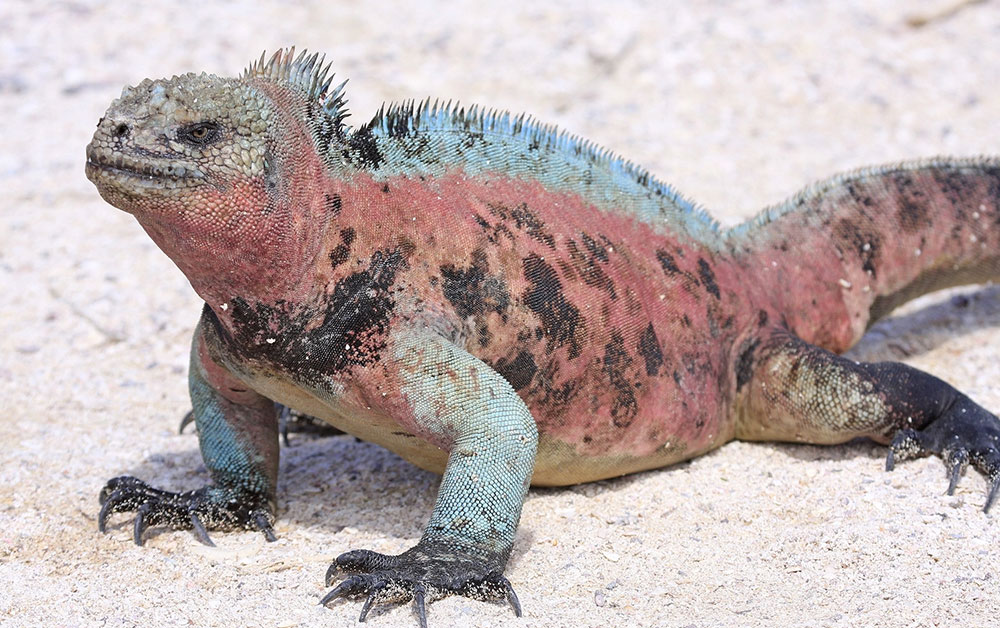
Snorkelling alongside the world’s only marine lizard—Galápagos’ marine iguanas—is like swimming in your own Jurassic Park film. These exceptional creatures feed underwater on algae, and often bask in the sunshine in huge numbers.
They’re found on many islands, with Fernandina, Isabela, Santiago, and Santa Cruz among the top destinations.
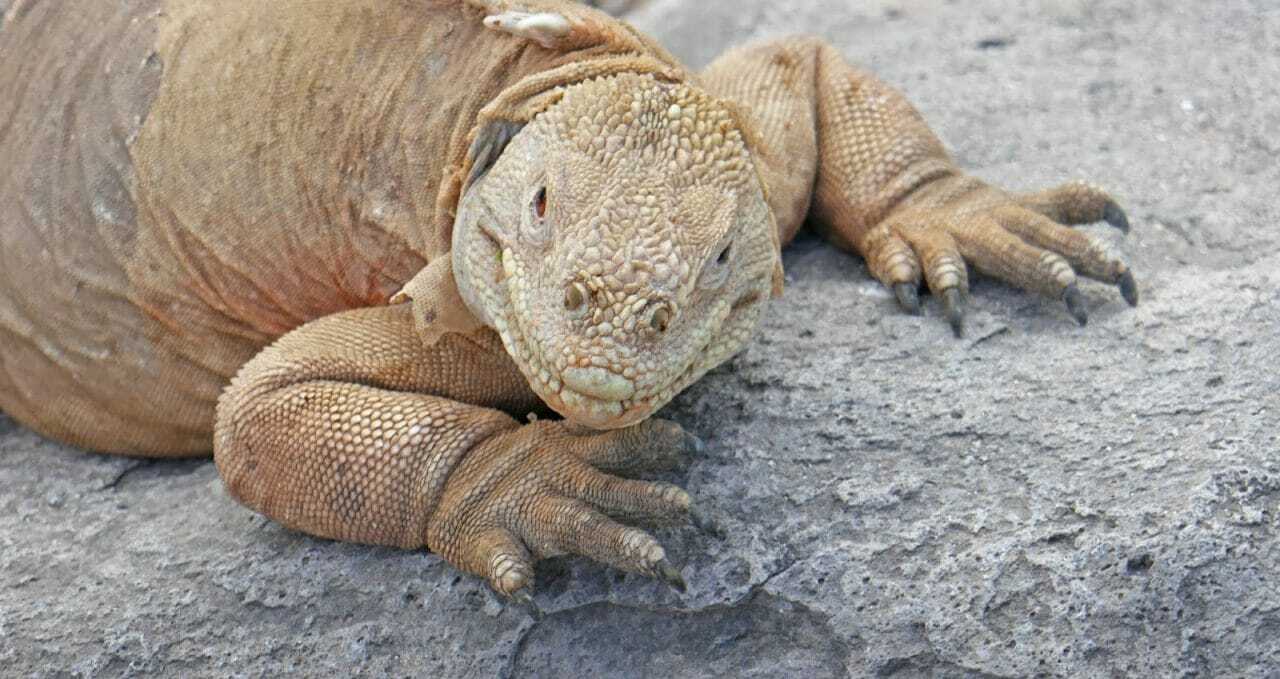
Land iguanas are just as intriguing. Ten million years of isolated evolution have made the Santa Fe land iguana a paler colour than other species in the archipelago, which display more vibrant yellow, black, and orange colours.
Wolf Island, which cannot be visited, is home to a striking pink land iguana. This species is distinct from other Galápagos land iguanas. Only around 200-300 survive, living in a small patch around the high slopes and caldera of the active Wolf Volcano, another threat to the pink iguana’s existence.
Elsewhere, on South Plaza, marine and land iguanas occasionally interbreed. The offspring are an infertile, land-based hybrid that mostly looks like a land iguana but uses its marine iguana sharp talons to climb trees and has a taste for seaweed.

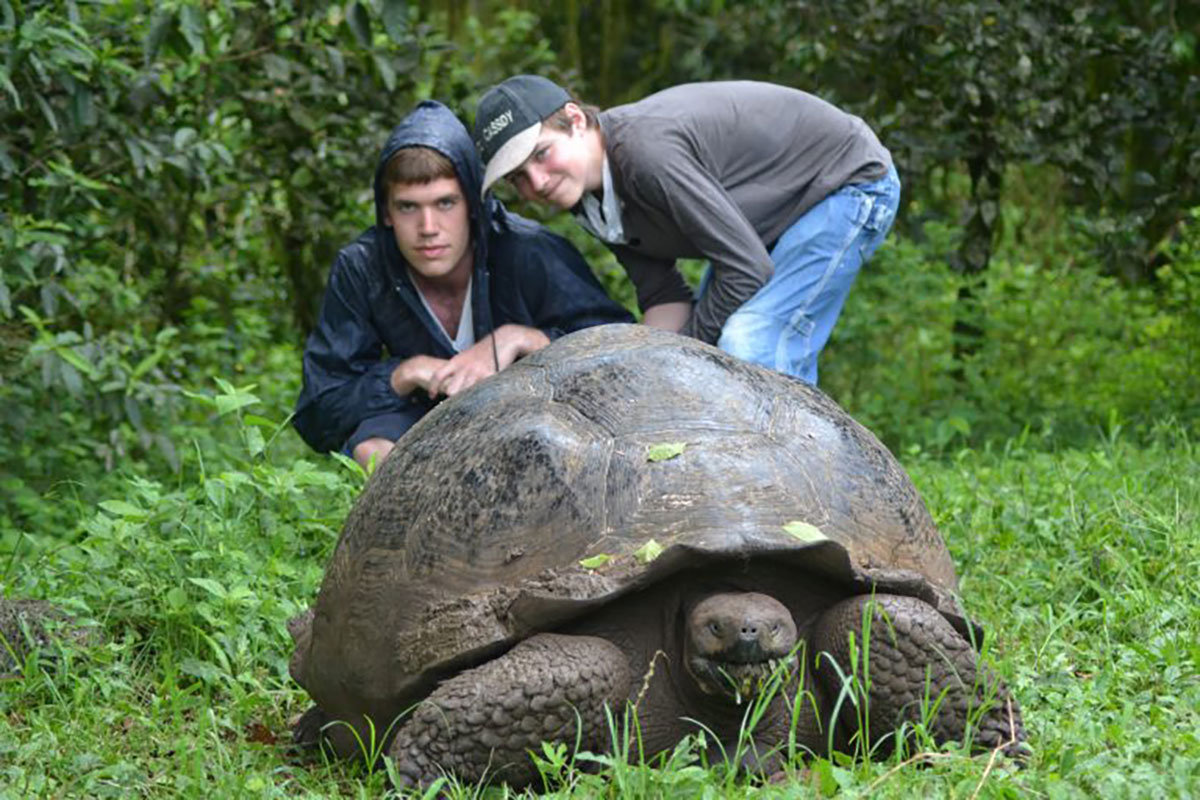
The giant tortoises of Galápagos are the symbol of the islands and the world’s largest tortoise.
These ancients lumber around the Santa Cruz Highlands (two species) and parts of Isabela (five species). You can also learn about the breeding and preservation programmes on both those islands.
Unique species live in the wild on Santiago, San Cristóbal, Pinzón, Española, and Fernandina islands. A chance encounter in the wild is testimony to the success of the conservation programmes that saved many of these huge creatures from extinction.
The cool season (June to Nov) sees large numbers of tortoises grazing in the lush highlands as they begin their seasonal migration. Tortoises are very active in the warm and wet season (Dec to May) when their babies hatch.

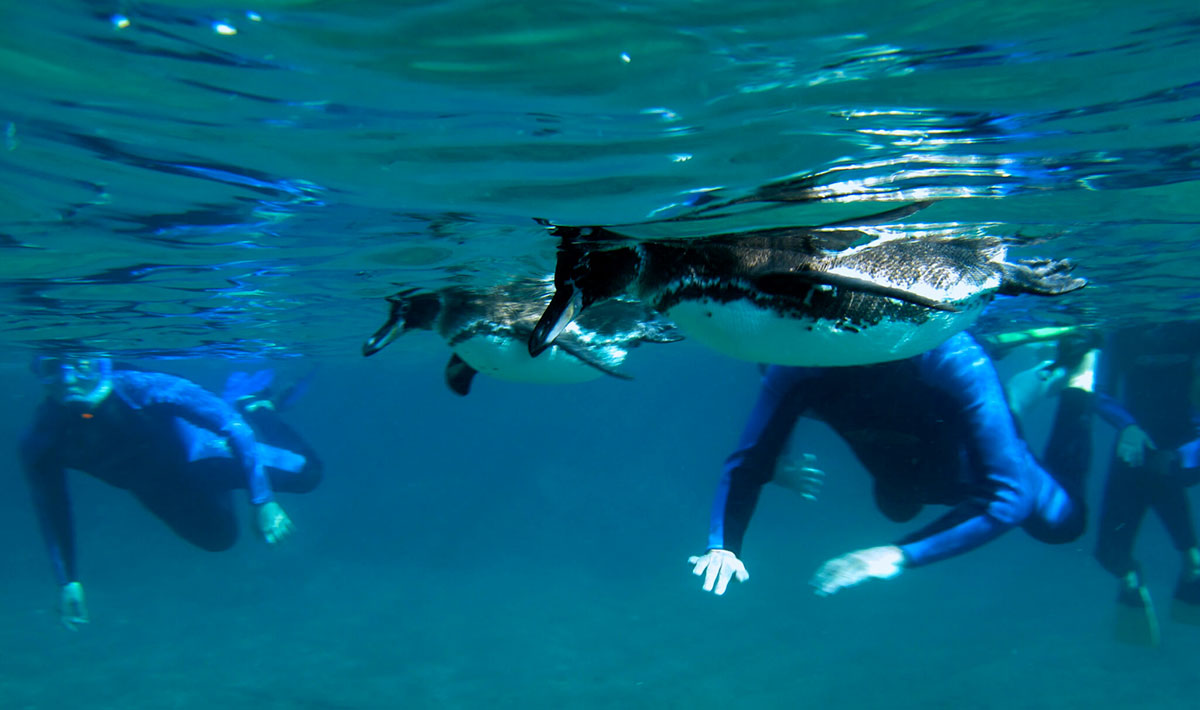
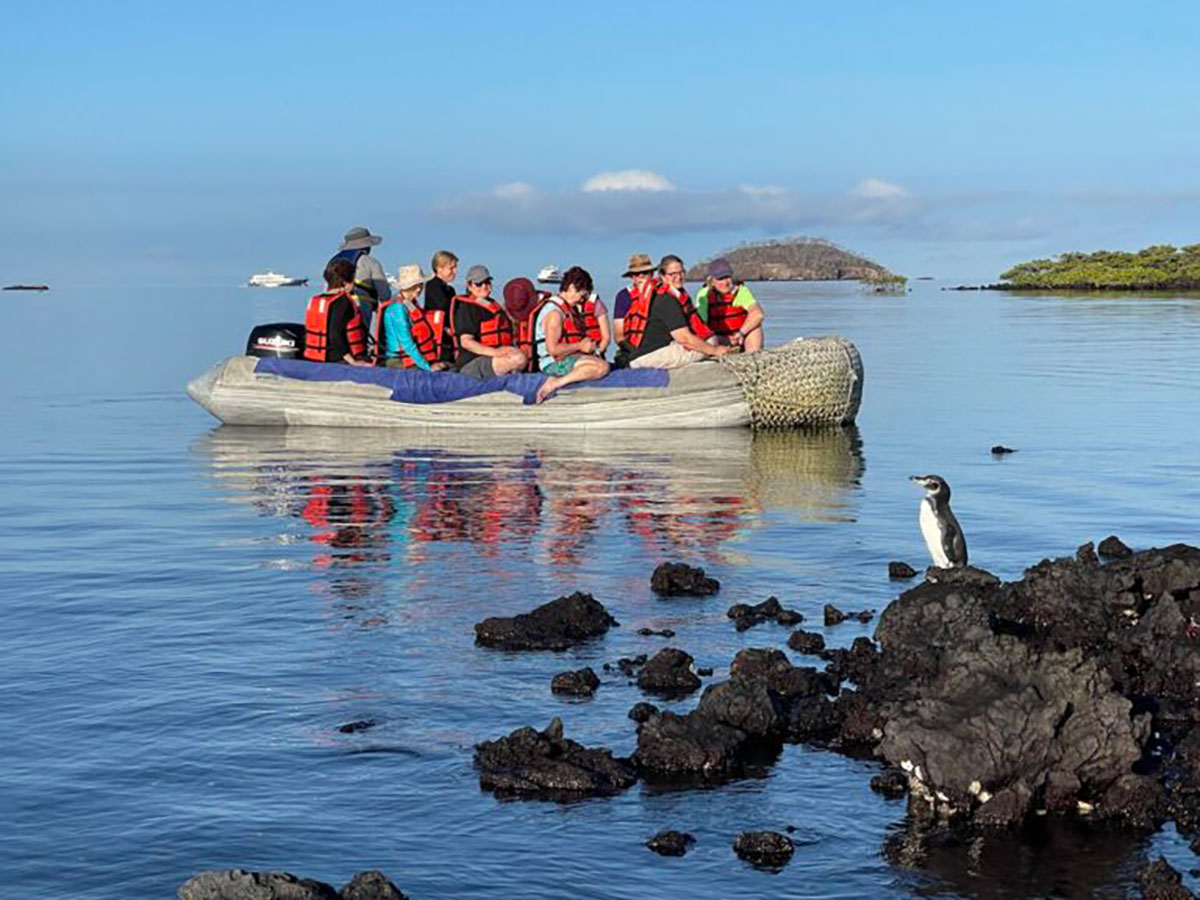
These cute little penguins are on many people’s bucket lists. The Galápagos Penguin is the only penguin found north of the Equator and one of the world’s rarest penguin species.
These little underwater tanks like to swim alongside snorkellers in their unique tropical habitat. Penguins love the younger Western islands of Isabela, Fernandina, and Bartolomé, and stay year-round. Cruise- and hotel-based trips heading west offer a great chance to see the cute Galápagos penguin.

This triumvirate of birds is among the Galapagos’ most iconic species.
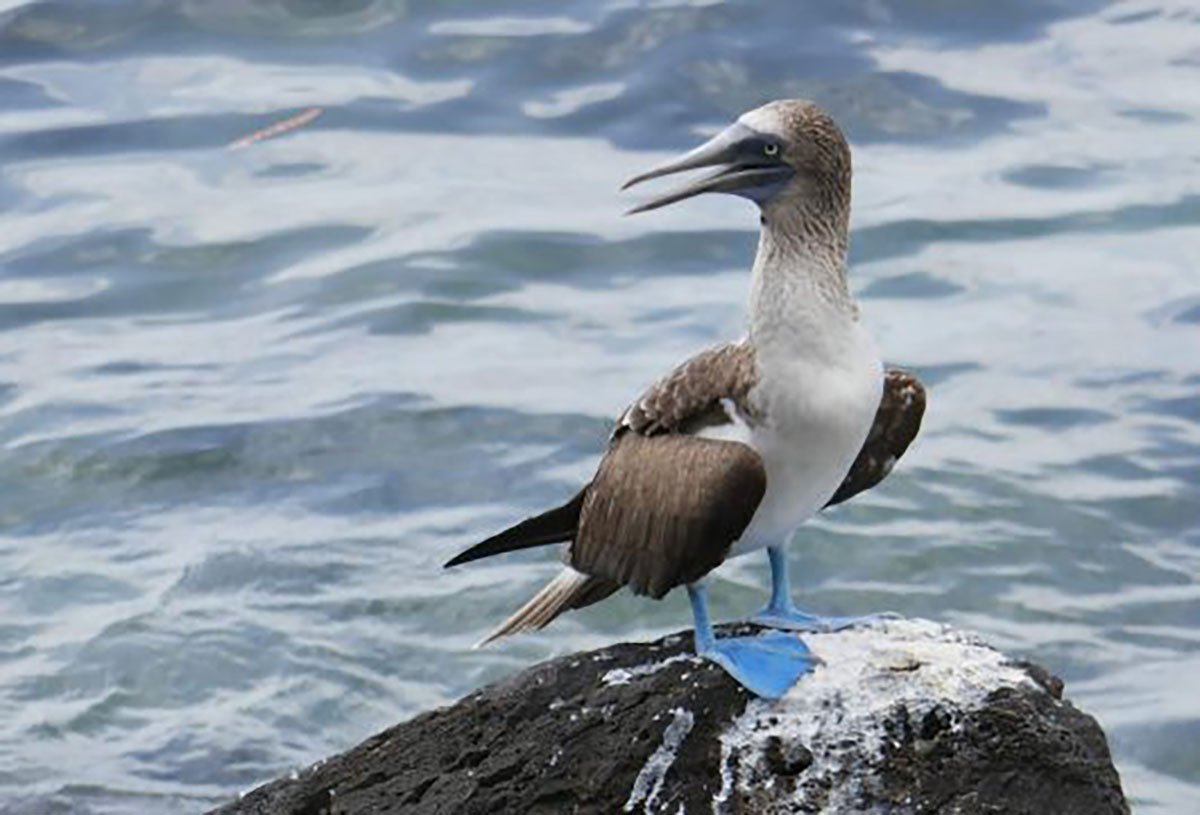
The Blue-footed Booby has gained fame for its fancy footwork during its courtship displays (April to August, peak is June to August). The brighter the feet, the healthier the bird!
Luckily, the Blue-footed Booby is a permanent Galápagos resident, seen almost everywhere, and unperturbed by humans.
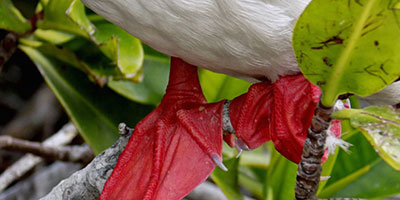
Similarly striking is the Red-footed Booby, whose bright feet can often be seen protruding from its preferred shrub nesting sites. They can amass in huge numbers when breeding on Genovesa in the north, with smaller populations on San Cristobal.
The less well-known Nazca Booby is a large seabird with a distinctive yellow-orange bill. It will delight with its group, missile-style diving hunting technique, called plunge diving.
Large flocks soar over the open seas and hunt pelagic fish, reaching speeds of up to 60 mph (97 km/h) as they strike, arrow-like, from heights of up to 30m/100ft. The Nazca Boobies hunt sardines, pilchards, and flying fish from just beneath the surface.
You might see these dramatic displays on cruises or boat tours, especially around Española and Genovesa.

The Galapagos is an ideal year-round destination, with its volcanic landscapes and tame wildlife.
Whether you cruise or stay in a hotel, you are guaranteed to see giant tortoises, sea lions, iguanas and blue-footed boobies to name a few, plus amazing volcanic formations and stunning beaches.
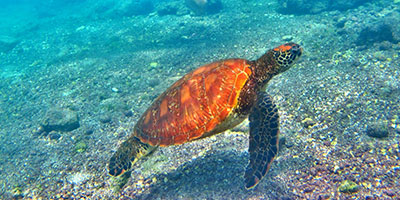
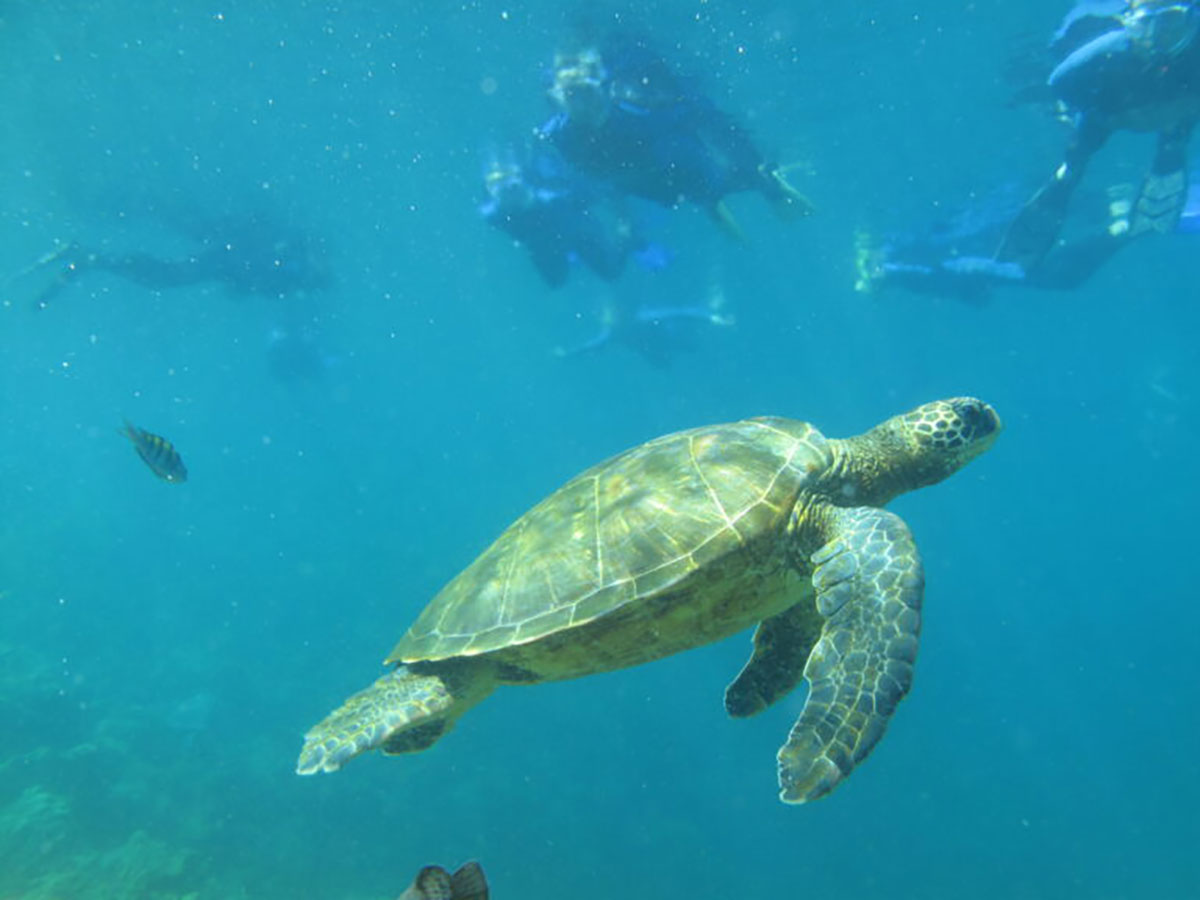
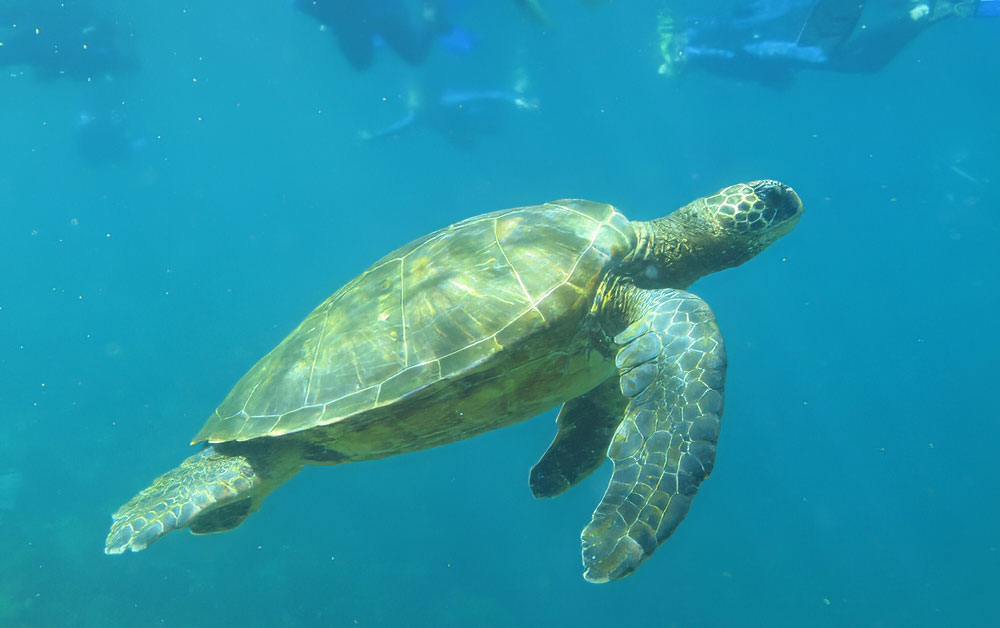
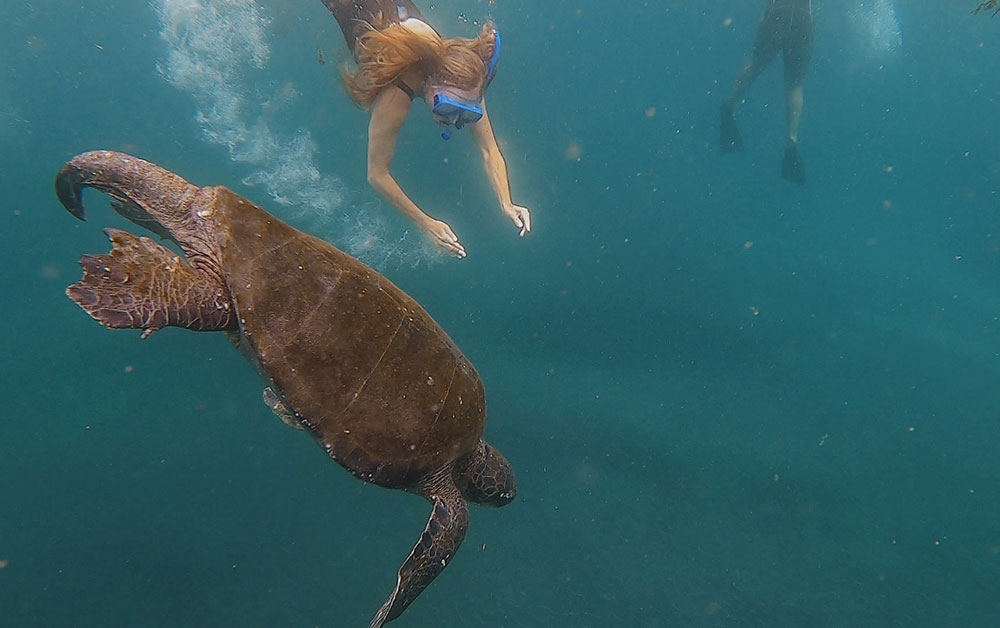
No trip here is complete without diving or snorkelling – turtles, rays, schools of fish, and for the lucky, hammerhead and whale sharks.
Divers can enjoy some of the best underwater diving in the world on liveaboard cruises to remote and spectacular dive sites.

Isabela is the largest and one of the youngest Galápagos islands. It’s also one of the least populated, combining wild landscapes of immense volcanoes, lava fields, and wildlife-rich seas in a beautifully remote location.
The laid-back town of Puerto Villamil—the only place to stay—sits beside a long white-sand beach with impromptu games of volleyball. The beach bars are perfect for a sundowner, or gazing at basking marine iguanas or scampering Sally Lightfoot crabs.
Those that stay on the island can enjoy a 5-6 hour hike to the vast caldera of Sierra Negra, one of Isabela’s active volcanoes, and across lava fields to Volcan Chico.
Unmissable snorkels include the extraordinary lava arches and clear-water channels of Los Túneles, replete with sea turtles, rays, white-tipped reef sharks, seahorses, and occasionally Galápagos penguins.
Closer to Puerto Villamil, Las Tintoreras offers snorkelling among lava channels inhabited by penguins, marine iguanas, turtles and reef sharks. Other activities available include biking, kayaking, and visiting the Arnaldo Tupiza Chamaidan Tortoise Breeding Centre.
Isabela combines adventure with plenty of downtime, making it particularly good for active travellers, families, and anyone seeking a land-based Galápagos stay with adventure, space, and tranquillity.
Cruise visitors can also reach Isabela’s remote western coast, where Punta Vicente Roca offers superb snorkelling beneath towering cliffs. Urbina Bay is one of the archipelago’s best places to walk among wild giant tortoises and colourful land iguanas. Nearby Tagus Cove provides amazing snorkelling and the chance to see whaler and sailor etchings on the cliffs, a fascinating insight into human history on Isabela.

Flung way out to the north of the archipelago, this spectacular island is a Galapagos in miniature.
Its remote location meaning very few people make it this far.
Sea lions, sharks and Flightless Cormorants will no doubt accompany you on snorkels in deep waters as well as close to the beautiful, white-sand bay.
A multitude of birds nest at Tower, and it’s the only place you’re sure to see the Red-Footed Booby, as well as the chance to spot petrels, owls, gulls and more.

Floreana is the least populated Galapagos island and yet home to its most scandalous tales!
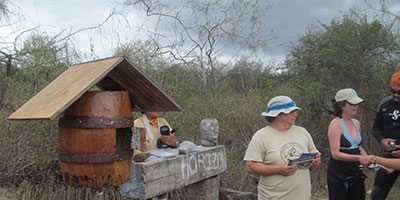
Gossip aside, it is home to Post Office Bay, where a post barrel was erected in the late 18th century by English whalers. Passing sailors took the messages onwards – and it still functions today.
The nearby Devil’s Crown is one of Galapagos’ most special snorkels.
A (at times strong) current pushes you past the remains of a submerged volcano with its crater ‘horns’ still exposed, and you’ll see a brilliant array of colourful fish and corals.
Great viewpoints at Asilo de La Paz and Baroness view, too.

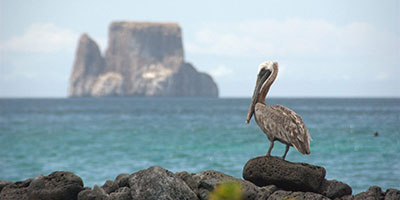
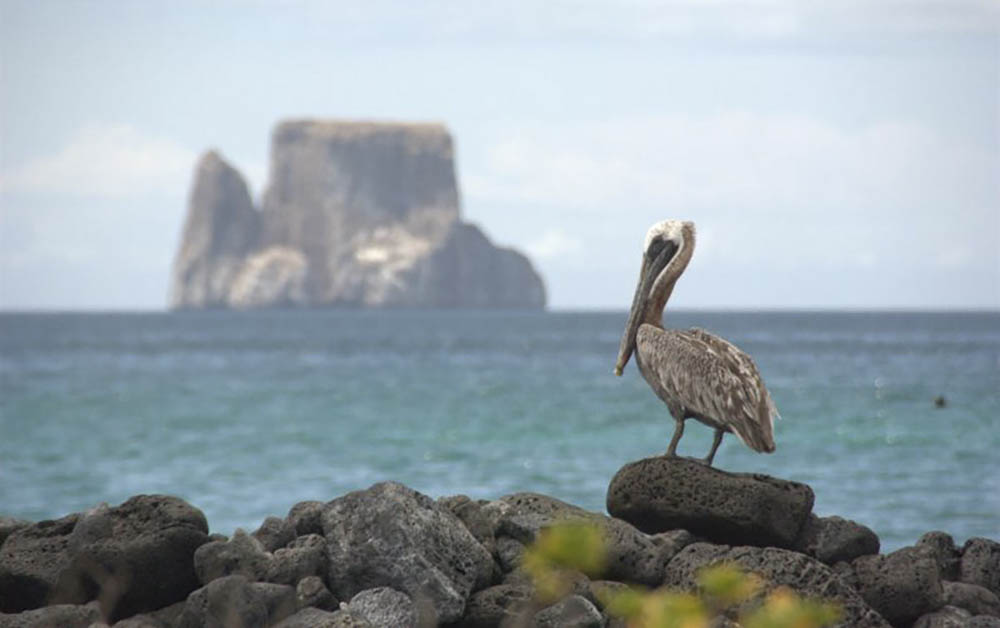
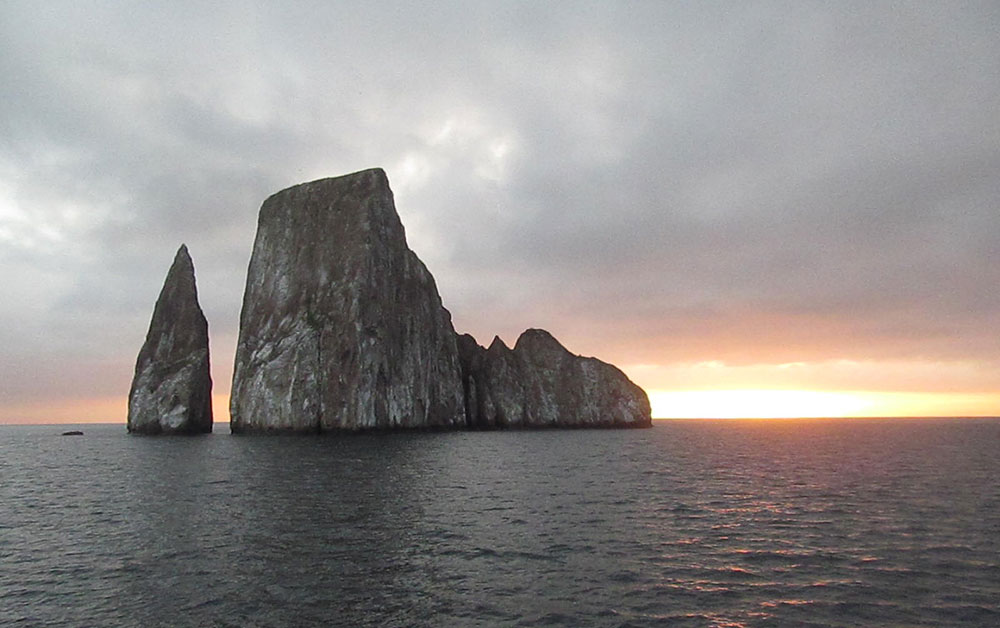
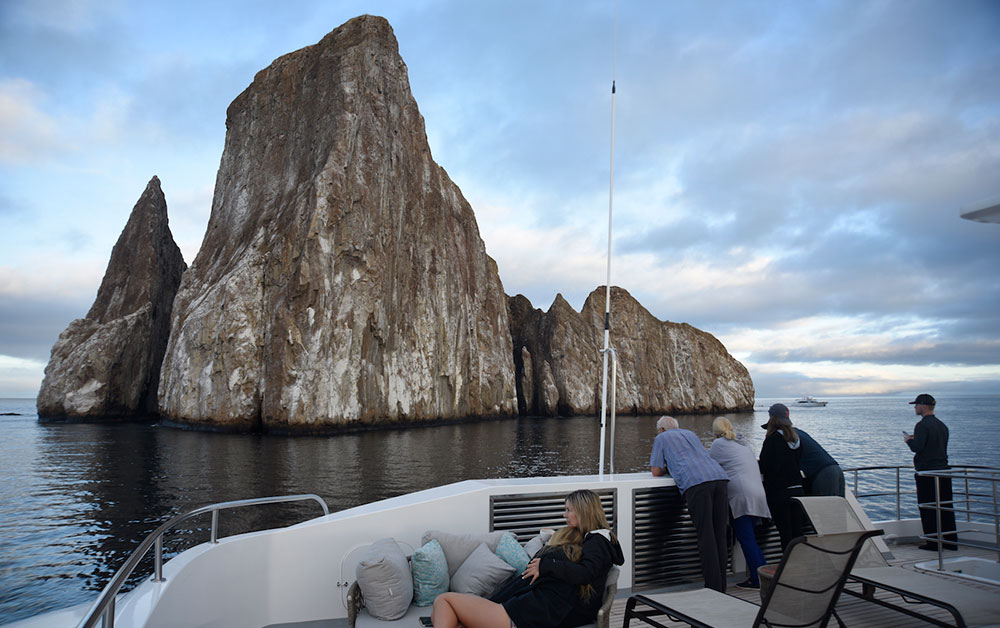
The iconic Kicker Rock, or León Dormido, is one of the most impressive sights off San Cristóbal: the remains of an underwater volcano rising vertically 150m/492ft out of the sea.
The exposed cone has fractured in two, leaving a wildlife-rich sea channel and one of the Galápagos’ classic snorkelling and diving sites. Beneath the surface, sheer rock walls plunge into deep blue water, making the setting almost as memorable as the wildlife.
Jump in the water and drift with the current through the cleft, keeping an eye out below for sea turtles, manta rays, rays, and maybe the usually shy Galápagos shark. Hammerheads are also occasionally seen here.
On the cliffs, spot Blue-footed Boobies, Nazca Boobies and magnificent Frigatebirds.

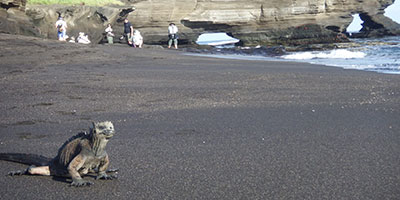
Curious, dark sand greets the visitor to this centrally-located island.
Marine iguanas may join you for a snorkel after warming up in the sun, along with white-tipped reef sharks, rays, surgeon and parrotfish and turtles.
Crabs, sea lions and spectacular blowholes line the shore.
On the other side of the island, red sand cliffs are home to many seabirds, and Bucaneer Cove tells its own whaling and pirate history.
A group of nearby small rocky islands called Bainbridge Rocks feature a stunning, turquoise saltwater lagoon that is home to flamingos.

Almost everyone will visit Santa Cruz during a Galapagos stay.
It’s popular because of the incredible variety of habitat and animals go alongside its strategic location.
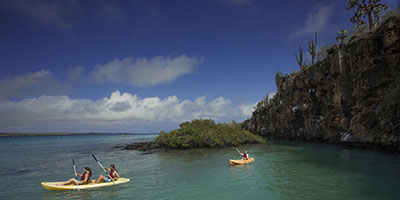
The famous Charles Darwin Centre is a must, as is a visit to see Giant Tortoises and a kayak in the turquoise waters at Garrapatero beach.
There are a plethora of great dive and snorkel sites nearby, lively bars and some good beaches for relaxing, like Tortuga Bay.
Most cruises start or end here, and the majority of flights come to Santa Cruz, plus there are many accommodation options, from basic to luxury.
From: $3063 per person
Duration
From: $4350 per person
Duration

Giant tortoises, sea lions, iguanas and blue-footed boobies are but a few of the species you’ll come face-to-face with on your Galapagos tour. When snorkelling, expect to swim with sharks, turtles, rays, schools of fish, and for the lucky – hammerheads and possibly whales.
This year-round destination offers guided trips throughout its wonderful sites.

There are a variety of travel styles around the islands from classic Galapagos cruises to our increasingly popular hotel-based island-hopping holidays.
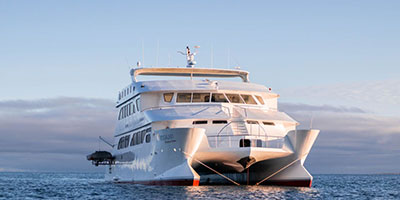
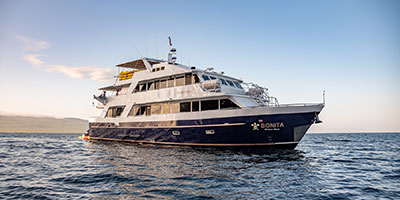
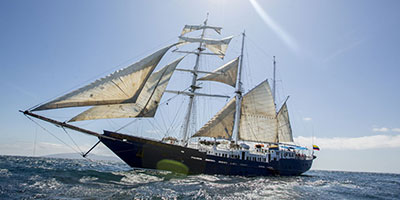
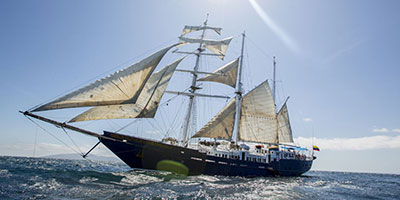
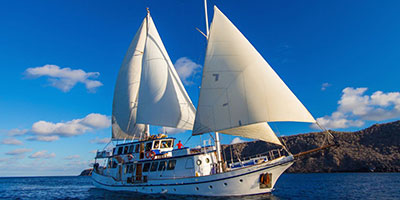
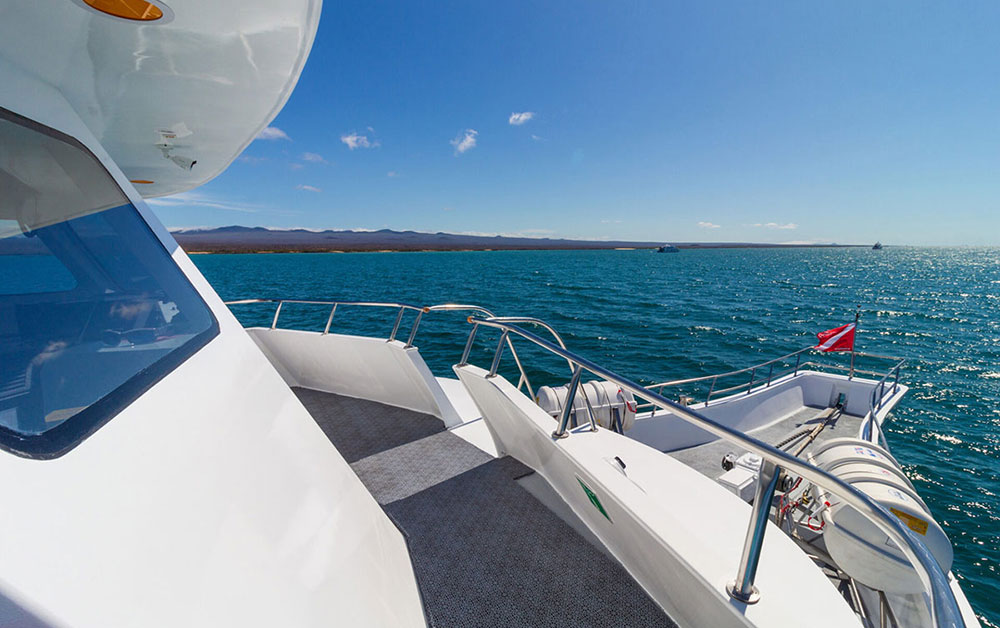
Galapagos boats are generally small yachts that take around 16 passengers. They vary in level of comfort and standard from superior tourist class (midrange boats) to first-class and luxury boats. We can arrange cruises on a number of bigger boats, too – and you can be assured that the group sizes for activities are kept small and intimate. Choose from a range of single-hull boats, sailing schooners or catamarans. Your typical day includes land visits and snorkelling activities, with Galapagos wildlife all around. Itineraries are carefully planned to include all highlights you’d like to see on your Galapagos Island holiday.
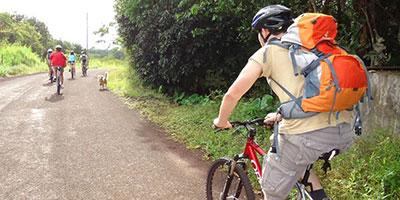
Or choose one of our hotel-based Galapagos tours and add kayaking, biking and trekking to your itinerary. This way of touring the Galapagos islands adds more flexibility to your itinerary, allowing you to travel at dates of your choice and choose from a large selection of hotel options, of different standards. Daily excursions on your land-based Galapagos holiday include day trips to surrounding uninhabited islands and will always come with plenty of opportunities to snorkel too. Evenings can be spent exploring the local communities and surroundings at your own pace.

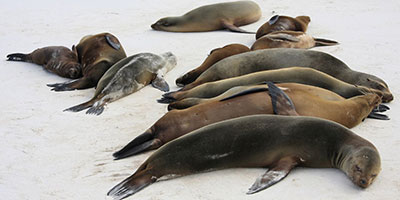
The wildlife you will find on your holiday in the Galapagos Islands is simply incredible. Sea lions greet you as you step off your boat, iguanas lying in the sun. Venture into the islands highlands and find Galapagos giant tortoises in the wild and a myriad of bird species, many endemic such as the Floreana mockingbird and the flightless cormorant on Espanola Island.
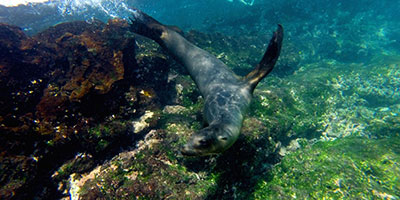
Keep your eyes peeled to spot a Galapagos penguin. Explore the underwater world and snorkel with playful sea lions, turtles, schools of colourful fish, Galapagos white tip reef sharks (harmless!) and many more. The very lucky ones may encounter a large school of hammerhead sharks. See dolphins and maybe even whales from your boat as you travel between sights.
Learn about the importance of conservation and research work, from your local, highly trained English-speaking guides and by visiting research centres, such as the famous Charles Darwin Research Station.
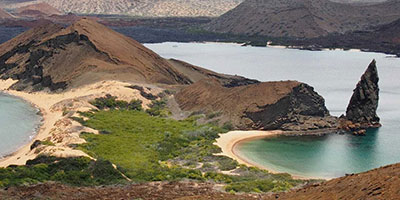
The volcanos that form the island landscapes are impressive, and there are options for walks to their large craters or explore lava tunnels formed over centuries. Some remain active with outbreaks as recent as 2019, when Sierra Negra Volcano on Isabela island erupted. The iconic and often stark landscapes create an amazing backdrop as you travel the Enchanted Islands. And don’t forget to spend some time at the fantastic beaches.
Do read our Galapagos Islands Guide, Weather Guide, advice about travelling to and around the Galapagos Islands, and our Diving Advice page.
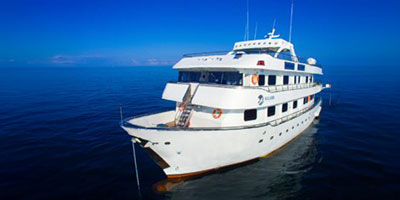
A spectacular Galapagos cruise aboard the Anahi, filled with fearless wildlife and stunning volcanic landscapes.
An amazing Ecuador adventure filled with volcanoes, crater lakes, biking and snorkelling, before the unforgettable wildlife and landscapes of the Galapagos stole the show.
Be prepared for your dream holiday to Galapagos with our helpful information.
From money advice to visas, from inoculations to which plugs to take, below you’ll find a wide range of travel tips, advice and information that will help you get ready to explore the Galapagos Islands.
Can’t find what you’re looking for?
Get in touch and we’ll be happy to help.
The international code for Ecuador is +593.
Regions have dialling codes with a 0 prefix. Galapagos uses 05.
Galapagos is a very remote destination and your mobile phone will most likely be out of range.
People on cruises will almost certainly be out of contact for most of the time aboard. Some boats are starting to offer Wi-Fi at expensive rates.
People staying in hotels will be able to access phones and very slow internet connections.
Ecuador’s landlines have 7 digits. To call landline to landline in the same city, simply dial the 7 digits.
If calling a landline in another region or city, start with a 0 followed by the regional code.
If using your own mobile phone to call a landline, dial the country code, the regional or city code without the 0, and then the number. For example, for Galapagos (code: 05), dial +593 5 1234567.
Mobiles have 8 digits and start with 09, making a total of 10 digits.
If dialling Ecuador mobile to mobile, simply dial the full number including the 09.
If using your own mobile phone to call an Ecuadorian mobile, dial the country code, omit the 0 of 09, and then the remaining 8 digits. For example: +593 9 1234 5678.
Almost all unlocked phones will work in Ecuador with a local SIM. Check with your provider before arrival to confirm compatibility.
Roaming charges may be high, so it is advisable to check beforehand.
To send postcards, you can leave them at Post Office Bay for fellow travellers to pick up and send on.
Otherwise, head to the official postal service, Correos del Ecuador, on Santa Cruz or San Cristobal.
Festival: Carnaval
Colourful parades and throwing water.
Location: Guaranda and countrywide.
Festival: Semana Santa / Holy Week
Gran Poder parade.
Location: Quito.
Festival: Mama Negra
Religious street parade featuring “Mama Negra” – a man dressed garishly as a woman.
Location: Latacunga.
Festival: Día de los Difuntos / Day of the Dead
Visits to cemeteries and “feasts” at the graves of loved ones.
Location: Otavalo area, Calderón and countrywide.
Festival: Paseo del Niño / Baby Jesus parade
Children parade the streets on horseback accompanied by their families.
Location: Cuenca.
Andean Trails can book all your international and domestic flights for this trip and for UK passengers; we have full ATOL bonding and can book flights with most airlines.
International flight prices are variable and usually can only be guaranteed at the time of booking. If you would like to upgrade to business or first class, or even arrive at an earlier date/depart at a later date we can also arrange this for you.
Typically, you fly to a country’s capital city and then overnight there or make a connecting flight (if available) to your next destination.
Please contact us for flight advice especially if you do make a connection on the same day. It is important to purchase a through ticket and not separate tickets for connections, so that you are covered for any delays. Passengers with separate tickets that are delayed run the risk of having to buy an entirely new ticket to continue their journeys.
Please note all airline schedules are subject to change and are out of our control.
Almost all flight tickets are now e-tickets. Any that are not will be handed to you on arrival in South America – this is most common for flights on smaller planes in Amazon areas such as Guyana/Bolivia.
The final travel instructions we send you some 2-3 weeks before departure will list the latest flight times, flight numbers etc as well as list your e-ticket numbers and booking reference code (6 characters i.e. GB75RK). This is what you will need to check in with.
Depending on the airline, we can reserve some seats for you at the time of booking your international flights with us.
If we cannot reserve seats at the time of booking, you have to wait for online check in to open (usually 24-72 hours before departure).
To check in online you will need to go to the website of the airline you are travelling with, and have your e-ticket number/booking reference to hand. Click check in online, enter your details, and choose your seat.
Some flights will allocate seats at the check in desk at the airport and some may not allocate seats at all.
The United States (USA) has an Electronic System for Travel Authorization (ESTA) which all travellers to and via the USA must complete BEFORE travel to/via its airports and shores.
More information can be found on their ESTA website.
Passengers who have not completed the form will be denied boarding.
Before you begin this application, make sure that you have a valid passport and credit card available.
This application will only accept the following credit cards: MasterCard, VISA, American Express, and Discover (JCB, Diners Club).
| On the coast | |
|---|---|
| Ceviche de pescado | Raw marinated fish, served with tostado (roasted maize). |
| Ceviche | Popular everywhere, best on the coast. |
| Ceviche de mariscos | Marinated shellfish. Most varieties such as camaron (prawn) and langostino (king prawn) are cooked before marinating. The exception is ceviche de conchas (clams), which is marinated raw. |
| Langosta | Lobster (increasingly endangered, but still fished illegally). |
| Empanada de verde | Ground plantain pasty filled with meat, cheese or shrimp. |
| Sopa de bola de verde | Plantain dumpling soup. |
| Encocadas | Dishes prepared with coconut milk, often shrimp or fish. |
| Patacones | Fried plantain chips. |
| In the Highlands | |
| Locro de papas | Potato and cheese soup. |
| Mote | Burst maize. |
| Caldo de patas | Cow-hoof soup (with mote). |
| Llapingachos | Fried potato and cheese patties. |
| Empanada de morocho | Ground maize shell filled with meat. |
| Sancocho de yuca | Vegetable soup with manioc. |
| Cuy | Guinea pig. |
| Fritada / Chicharron | Fried pork. |
| Hornado | Roast pork. |
| Humita | Ground maize meal wrapped in a maize leaf and steamed (sweet or savoury). |
| Quimbolito | Similar to humita, made from maize flour and steamed in a banana leaf (sweet or savoury). |
| Drinks | |
| Jugos | Fresh fruit juices including naranjilla, maracuya (passion fruit), tomate de arbol (tree tomato) and piña (pineapple). |
| Aguardiente | Unmatured rum (Cristal is popular). Also known as paico, trago or trago de caña. |
| Cerveza | Lager-type beer. Popular brands include Pilsener and Club. |
Read our blog about Cruise or Hotel? for more in depth information.
These cruise slowly around the islands, usually at night while you sleep aboard, and you launch in a small panga to visit the islands.
Boats range from Tourist motor boats to First Class yachts, and hotel-based trips from three star five stars, so there are plenty of options to suit your travel plans and budget.
First class boats will typically offer larger cabins with twin or double beds and private bathrooms, more deck space, faster cruising speeds and sometimes free extras such as a Jacuzzi, sea kayak or drinks. The boats could be sailors, yachts or catamarans and will be the most comfortable option.
Superior Tourist boats generally offer bunk beds in cabins with private bathrooms, and offer great comfort at great value. There are a huge variety of boats in this bracket.
Tourist standard boats will offer a standard service, ideal for those on a budget or backpacking. Cabins will be bunks, often with private bathroom, but may not have some extras such as air conditioning and hot water showers.
Land-based trips use a combination of pangas and speedboats to move you around to the various sites and you spend your evenings relaxing on the islands. Some land-based trips move around various islands, some offer day trips from one hotel, such as Finch Bay.
We have hotel-based group trips departing most months of the year, or we can design a private trip, perfect for everyone from families to honeymooners.
Choose from standard accommodation upwards.
Diving in Galapagos is mainly aimed at experienced divers – PADI advanced or more – with experience in cold, fast moving waters and with good buoyancy.
Beginners can now join day dives on land-based (hotel-based) packages.
Read more on our Galapagos Diving page.
The more experienced divers can choose hotel-based packages or live aboard a specified dive boat that only offers week long, dive-only cruises.
Diving is not permitted on almost all standard cruises, although some can now offer a few dives while the rest of the group is ashore or snorkelling.
Please ask for details as National Park rules are complex and dive availability in this form is scarce.
You have to arrive in Quito or Guayaquil at least the night before your flight to the Galapagos.
Flights to Galapagos leave from from Quito or Guayaquil early in the morning on the first day of your tour, landing Galapagos around midday.
There are two intercontinental airports on the Galapagos one is on Baltra Island and the other is on San Cristobal Island and is also known as the Baquerizo Moreno Port.
Flights are usually included in your package to ensure all passengers are arriving at the same time on the same flight and into the correct airport.
On Isabela Island there is a landing area available only to inter-island flights for small planes.
Flights from the Galapagos back to Quito or Guayaquil usually leave around midday or later (depends on the vessel).
You can sometimes connect in Guayaquil with a flight home on the same day you leave Galapagos.
Please check times with us before booking any flights – you need to make sure that the Guayaquil departure is in the late evening / night. If you miss the connection in Guayaquil, your international airline may or may not switch you to the next available flight.
Before you fly from Quito or Guayaquil airport, you need to pay USD 20pp for a transit control card. Some cruises pre-pay this and include it in your trip cost.
On arrival in the Galapagos, you will be asked by a representative of the Galapagos National Park to pay the Park fee in cash (currently US$ 100 per person, USD 50 per person for under 12s).
The dock tax is US$5 on Isabela Island, and the airport tax is US$15 for flights between islands.
All National Park fees subject to change without prior notice.
ALL visitors to Ecuador and Galapagos must have valid health and medical insurance to cover their entire stay. Inability to show a valid policy on arrival at customs will lead to a refusal of entry.
Almost all boat cabins are for double occupancy, with only a few boats offering a single cabin with no supplement. Demand is high for these cabins, so you need to plan in advance.
The only other way to guarantee a double cabin for single occupancy is by paying at least a 50-100% supplement of the cruise rate, depending on the boat.
A single passenger can avoid the supplement by sharing a cabin with another single passenger. Most boats offer same gender cabin shares, but some offer mixed cabin shares.
Single supplements for hotel-based trips are usually a lot lower.
These magical islands comprise of 50 volcanic islands of varying shapes and sizes, which lie 1,000 kilometres off the coast of Ecuador.
Here, unlike anywhere else on Earth, you can enjoy a thousand close encounters with a weird and wonderful variety of ‘friendly locals’, including giant tortoises, fur seals, sea iguanas, frigate birds and blue-footed boobies.
Read our Galapagos Islands Guide and more about diving.
In 1535, Tomás de Berlanga, Bishop of Panama, floated into this archipelago and named it Galapagos after the giant tortoises he encountered. Pirates used the islands for refuge and to bury their stolen treasure after that.
The islands’ most celebrated visitor was Charles Darwin, who arrived aboard the HMS Beagle in 1835. The rare life forms he encountered helped him formulate his theory of evolution, which he published in The Origin of Species by Means of Natural Selection.
It wasn’t until 1959 when it became part of Ecuador’s national park system that this fragile ecosystem with its rare and endemic species came under protection.
In 1979 the Galapagos archipelago was declared a UNESCO World Heritage Site.
Learning a few words of Spanish can really ingratiate you with the locals you’ll encounter, adding to the enjoyment of your holiday. Below are some basics to get you started.
| Greetings | |
|---|---|
| Good morning | Buenos días |
| How are you? | ¿Cómo estás? |
| Good afternoon | Buenas tardes |
| Good bye | Adiós |
| Most frequently asked questions (theirs) | |
| Where are you (plural) from? | ¿De dónde eres (son)? |
| What time is it? | ¿Qué hora es? |
| Where have you come from? | ¿De dónde vienes? |
| Give me (frequent, unwelcome question) | Dáme / regálame |
| Most frequent questions (yours) | |
| How much is it? | ¿Cuánto vale? |
| What is this place called? | ¿Cómo se llama este lugar? |
| What’s your name? | ¿Cómo te llamas? |
| Do you have a map? | ¿Tienes un mapa? |
| In the street / places | |
| Where can I find a currency exchange? | ¿Dónde encuentro una casa de cambio? |
| Where is there a cash machine? | ¿Dónde hay un cajero automático? |
| Where is the underground/subway station? | ¿Dónde está la estación de metro/subte (Buenos Aires)? |
| Where can I find a taxi? | ¿Dónde puedo encontrar un taxi? |
| Where can I find a supermarket? | ¿Dónde puedo encontrar un supermercado? |
| Where is the hospital? | ¿Dónde está el hospital? |
| Where can I find a restaurant? | ¿Dónde puedo encontrar un restaurante? |
| In the hotel | |
| What floor am I on? | ¿En qué piso estoy? |
| Where are the elevators/lifts? | ¿Dónde están los ascensores? |
| How do I access the Internet? | ¿Cómo puedo acceder a Internet? |
| How do I call for room service? | ¿Cómo llamo para el servicio de habitación? |
| How do I call down to the front desk? | ¿Cómo llamo a la recepción? |
| In the restaurant | |
| A table for two/four please | Una mesa para dos/cuatro, por favor |
| I would like to drink… | Me gustaría tomar… |
| May I see a menu? | ¿Puedo ver la carta / menú? |
| I would like to order… | Me gustaría pedir… |
| Can you bring me the check/bill please? | ¿Me trae la cuenta, por favor? |
| Emergency | |
| I need help. | Necesito ayuda. |
| I have lost my passport. | He perdido mi pasaporte. |
| Someone stole my money. | Alguien robó mi dinero. |
| I have been robbed. | Me han robado. |
| I need to call the police. | Necesito llamar a la policía. |
| I need to call the (country) Embassy. | Necesito llamar a la embajada de (country). |
| Help! | ¡Socorro! |
Good kit is vital for every trip.
Book with Andean Trails and get 15% off Páramo’s fantastic ethical and high performance outdoor gear.
Galapagos is warm and humid, and you will need t-shirts (moisture wick-away or breathable t-shirts can be very useful, it can get very hot in the day), shorts, lightweight skirt or trousers and bathing suits.
One or two cotton shirts can be used to protect you from sunburn, especially when snorkelling (not very elegant worn in the water over a swimsuit, but practical – and Galapagos is NOT an elegant place!).
You may want to change into different clothes for the evening, but don’t take anything dressy or smart – there really is a very relaxed atmosphere on board.
Pack something warm for going on deck in the early morning or evening a fleece, maybe, and a sweatshirt – and a waterproof for the Highlands.
Strong sandals, trainers, or light hiking boots are ideal footwear – you may like to have something suitable for easy walks and another for tougher terrain – your guide will advise you daily what the walking will be like. Most boats ask passengers not to wear heavy shoes on board.
Do take a hat!
Seasickness tablets if you think you will have problems – i.e. Sturgeon, or Mareol if you buy them in Quito. The sea can be choppy, so it is recommended to take them as a precaution.
The Galapagos Islands are a very fragile environment and the arrival of more and more inhabitants to the islands, as well as tourist have an impact.
Please try to minimise your impact by:
Pleasantly warm during the day, but can be quite chilly during the morning or at night when you might want a jacket or a fleece, plus a waterproof.
You may want to dress up a little more in the evening here, depending on where you are staying, and what sort of restaurant you like.
Conditions here are similar to Galapagos – hot and humid. T-shirts and shorts in the day, and like Quito, something smarter for eating out in restaurants at night.
Good kit is vital for every trip.
Book with Andean Trails and get 15% off Páramo’s fantastic ethical and high performance outdoor gear.
Galapagos is warm and humid, and you will need t-shirts (moisture wick-away or breathable t-shirts can be very useful, it can get very hot in the day), shorts, lightweight skirt or trousers and bathing suits.
One or two cotton shirts can be used to protect you from sunburn, especially when snorkelling (not very elegant worn in the water over a swimsuit, but practical – and Galapagos is NOT an elegant place!).
You may want to change into different clothes for the evening, but don’t take anything dressy or smart – there really is a very relaxed atmosphere in island hotels.
Pack something warm and windproof for being the inter-island speedboats – and a waterproof for the Highlands.
Strong sandals, trainers, or light hiking boots are ideal footwear – you may like to have something suitable for easy walks and another for tougher terrain – your guide will advise you daily what the walking will be like.
Do take a hat!
Seasickness tablets if you think you will have problems – i.e. Sturgeon, or Mareol if you buy them in Quito. The sea can be choppy, so it is recommended to take them as a precaution.
The Galapagos Islands are a very fragile environment and the arrival of more and more inhabitants to the islands, as well as tourist have an impact.
Please try to minimise your impact by:
Pleasantly warm during the day, but can be quite chilly during the morning or at night when you might want a jacket or a fleece, plus a waterproof.
You may want to dress up a little more in the evening here, depending on where you are staying, and what sort of restaurant you like.
Conditions here are similar to Galapagos – hot and humid. T-shirts and shorts in the day, and like Quito, something smarter for eating out in restaurants at night.
Ecuador and Galapagos use the US dollar as currency.
On Galapagos, there are a few ATMs on Santa Cruz island and San Cristobal islands, although they do not always work and you may not ever go near them as part of your tour.
Galapagos park entry fees and most Galapagos boats, hotels and restaurants only accept cash payments for food, drinks, tips, kit rental etc, so you need to arrive with plenty of USD cash.
There are ATMs at Quito and Guayaquil airports that dispense USD.
Take small denomination, unmarked and undamaged bills, 1s, 5s, 10s and 20s being the best. You will find it hard to use 50s, and 100s are seldom accepted anywhere.
On the mainland in Ecuador, ATM debit/credit cards are now widely used in major restaurants, hotels and shops (with fees), and there are ATM (‘hole-in-the-wall’) machines widely available in towns and cities.
Don’t forget to read our Guide to Tipping in Ecuador, too.
Galapagos has a growing range of places to eat and drink. They are not cheap due to the high costs of living on the remote islands, and almost everywhere will ask for payment in cash. Some more top end places take card payments on Santa Cruz and San Cristobal.
Prices vary greatly, below is a rough guide to what you can expect to pay in Ecuador.
Beer/soft drink: USD 3-4
Menu del dia: USD 8-15
Coffee: USD 2
Beer/soft drink: USD 3-5
Main dish: USD 15 upwards
Coffee: USD 3
On cruises, you must take sufficient cash (USD) with you. You will most likely not have an opportunity to get to an ATM and most boats do NOT accept credit card payments or traveller cheques.
On board you will need to budget for drinks (soft drinks from US$1, beer from US$3), extra snacks, souvenirs. Snorkelling gear and wet suits can be hired on most boats if not included in the price, but again anything hired needs to be paid for in cash. Tips (USD 50-100pp) also payable in cash.
Ecuador uses 120 volts, with a frequency of 60 Hz.
Most cameras, phones and computers are dual or multi voltage and probably won’t need a convertor – please check before leaving.
Some items you may bring, such as hairdryers, may need a convertor. They may short if you use them without the correct convertor.
Ecuador and Galapagos boats mainly use two-pin, flat-pronged Type A plugs and some sockets take Type B plugs.


In large cities such as Quito and Guayaquil, you should guard against bag snatching, bag slashing and pick-pocketing.
Highway robbery should also be guarded against. We strongly recommend you take the following precautions:
Tipping is entirely voluntary and how much you give depends on how you feel about the service you have received.
This is a rough guideline – please note that all Galapagos tips must be left in USD cash.
And then throughout mainland Ecuador:
We strongly suggest that everyone planning to travel to Ecuador visits their local doctor/travel clinic prior to departure for the latest vaccination information.
For people travelling to the Amazon/coast and regions below 1,500m (excluding Galapagos, which is malaria free):
You will need a valid passport with at least 6 months remaining validity.
British nationals do not need a visa for Ecuador.
Non UK residents please check with the Ecuadorian embassy or consulate in your country of residence.
ALL visitors to Ecuador and Galapagos must have valid health and medical insurance to cover their entire stay. Inability to show a valid policy on arrival at customs will lead to a refusal of entry.
There is no real ‘best’ time to visit Galapagos on holiday as there is always wonderful wildlife and weather to enjoy. Read our blog for more.
Most animals – tortoises, sharks, sea lions and boobies – are found year round and many of the species here are non-migratory.
The Galapagos Islands are located right on the equator so air and water temperatures do not vary by much.
Having said that, there are two recognised seasons, and each months brings natural marvels for the visitor to enjoy.
Below is our quick guide to the weather and wildlife you can find on the Galapagos Islands.
Calm, clear warm waters, great for snorkelling, often without a wetsuit.
Great weather, with February and March being the hottest and sunniest months with blue skies and sunshine.
Occasional heavy bursts of rain in the afternoons.
Sea temperatures: 22-25°C / 72-77°F
Land temperatures: 21-32°C / 72-90°F
It’s a great time for marine life in the cooler seas. Snorkellers may want a wetsuit.
August and September the coolest when you may need a jacket in the evenings and the sea can be choppy.
There can be mist on the islands in the mornings (garua) which usually burns off by midday leaving overcast skies or a sunny afternoon.
Sea temperatures: 15-22°C / 60-72°F
Land temperatures: 18-24°C / 65-75°F